Kylie Jaxxon’s The Trace, until recently located on the region of Celestial Realm, has appeared in a few articles in this blog, although I’ve never actually written directly about it. Given Kylie has now moved to a new homestead region she has named, appropriately enough, The Trace, I thought it high time I rectified matters and, with an apology to Kylie for my tardiness, actually sat down and produced a post on her home.
And it is certainly worth writing about; The Trace, in its current incarnation, is nothing short of a splendid Second Life watercolour. The level of composition here is extraordinary, from the lay of the land through the selection and placement of buildings to the region windlight settings, all of which come together to present the visitor with a most remarkable and natural coastal setting, which could have been lifted from almost anywhere in the western world, but which had me thinking of somewhere on the New England coast, or perhaps situated on England’s Norfolk coast (even allowing for the offshore islands!).
The west side of the island is low-lying sand dunes, waterlogged here and there and bearing wild grasses across them. A tide laps idly against the sand, and gulls wheel overhead (do have local sounds enabled when visiting).
A little further inland sit several beach houses, all mounted on sturdy wooden piles, suggesting these low wetlands can be subject to high tides or flooding through the year. Wooden board walks run between the houses like old railway sleepers, and point the way inland, where a line of low hills rise up to the east and north, their far sides forming a line of cliffs, complete with narrow beaches facing the sea. Nestled between the hills, towards the centre of the island is a little meadow-like area where sheep graze close to a potting shed.
Up on the hills one can find more to see, in the form of a Victorian folly, with outdoor seating positioned around old gas lamps – just mind you don’t stray too close to the sprinkler that’s caring for the grapes growing close by. From here, one can wander south to the old boathouse and the wooden lighthouse beyond, or travel north and uphill to the highest point on the island to a wooden pavilion which appears to be serving as the local school-house. This overlooks the cliffs and beach to the east of the island, and down below it to the west, a rather unusual tree house rising from fen-like waterlogged grassland and surrounded by a small copse of trees. A series of stone paving slabs laid atop the sands allows the visitor to reach the stairs leading up to the treehouse without getting their shoes too wet.
As you might gather from the description, this is a very open environment where visitors are free to wander or sit, depending on the mood, and which offers a relaxing environment for exploration, one which is ideally suited to taking pictures and with trying-out different windlights. And like a visit to a real coastal region, time spent at The Trace can leave you feeling reinvigorated and ready to face the challenges of Second Life once more.
Rezzing is allows in the region, so if there are props, etc., you’d like to set-out for a photo shoot, you can do so without needing to join a group. However, if you do, please do be sure to make sure you pick-up your things afterwards. and don’t forget The Trace Flicker group, where people are invited to post their shots of the region.
All-in-all, this debut of The Trace in its new home is more than worth a visit; should you choose to do so and enjoy what you see as much as I did, please show your appreciation via one of the donation cans located around the region.
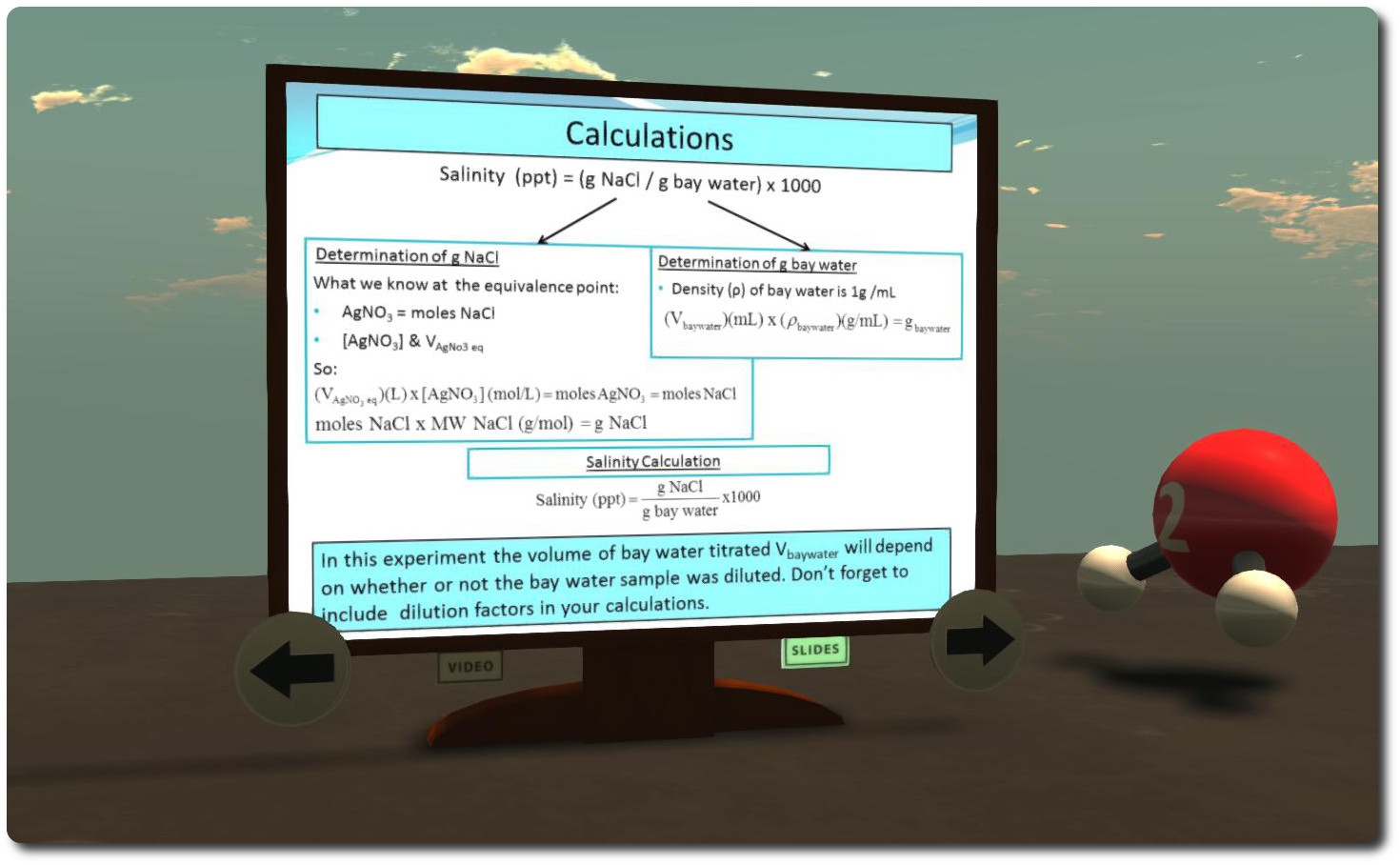
Students at Texas A&M University can learn about chemistry in a 3D environment in Second Life (image: Draxtor Despres)
Second Life’s role in eduction has been something of a focus of late. Earlier in April 2014 we had the 7th annual Virtual Worlds Best Practices in Education conference once again taking place in part in SL, and which featured the Lab’s CEO, Ebbe Altberg fielding a raft of questions from the audience. A recent segment from the Drax Files Radio Hour featured Liz Falconer, Professor of Technology Enhanced Learning at the University of the West of England (UWE), and Stylianos Mystakidis, E-learning Manager for the Library and Information Centre at the University of Patras, Greece.
Now the education theme continues with the latest instalment of The Drax Files, with a look at a unique experiment in learning being conducted by Wendy Keeney-Kennicutt of Texas A&M University and Kurt Winkelman from the Florida Institute of Technology, focused around students studying chemistry.
Dr. Wendy Keeney-Kennicutt (image via Texas A&M University)
“Specifically with chemistry, Second life is an amazing thing. So much of chemistry is based on [the] shapes of molecules and understanding the 3D nature,” Wendy says of the in-world science classes she oversees, and why chemistry in particular is a good match for Second Life.
She also notes the collaborative nature of the environment for learning as well. “You can walk around the molecule, you can sit on the molecule, I have interactive periodic tables. You have your friend with you, and your friend doesn’t have to be sitting next to you looking at the screen. Your friend can be at home, you’re in school together, you come in together, you build together. That’s important for the learning process.”
Texas A&M University operates an impressive, multi-region faculty within Second Life, complete with a dedicated web page in the university’s Instructional Technology Services website. Within the faculty regions sits “Dr. K’s First Year Chem Program”, which offers a grounding in chemistry in an open-air, interactive environment. This is where Wendy teaches chemistry in a manner she notes – and despite the cost of SL regions – is apparently more cost-effective than purchasing dedicated modelling software, because SL offers a much more flexible working and creative environment than dedicated tools may provide, and can thus be better utilised to suit the needs of her students.
A part of the interactive learning environment operated by Wendy Keeney-Kennicutt in Second Life for her students
Up in the air above a portion of the faculty regions, and restricted to access by students, staff and invited guests, sit a number of research areas. It is here that Wendy, alongside Kurt Winkelman, studies the impact and effectiveness of teaching within a virtual environment when compared to more traditional classroom-based teaching. The study is funded by a National Science Foundation grant, and has grown out of a pilot programme run in the autumn of 2013.
For this work, Wendy uses two groups of students, each of whom is following the same course programme, with one group working in Second Life on the sky platforms, and the other working entirely in the real world. Within the virtual learning environment, efforts have been taken to present students with much the same requirements and activities their counterparts have to perform in the real world: gases must be handled, weighed, measured, etc., just as they do in a real-world lab in order for valid results to be obtained. The study is currently at the half-way mark, and due to complete in April 2015.
The NSF-funded study environments are located in the sky over the main A&M faculty space in-world, and like the facilities on the ground use the full power of SL’s multi-media capabilities
One of the interesting outcomes of the study is that those students in SL behave in very much the same way as those in the real world chemistry lab. The same caution and responsibility is demonstrated in handling and manipulating butane as would be expected in a real chemistry lab, despite the risk of injury resulting from the flammable nature of the gas obviously being non-existent in SL. This in turn has resulted in the students working within the SL environment to retain a kinesthetic ability in using and manipulating the science equipment which is on a par with that demonstrated by the students working the physical equipment.
More interestingly, the students working in the SL lab reported they enjoyed themselves far more there than in the real lab, and felt they were much more focused, and suffered from less distraction. Even their ability to read-back and interpret data appears to be significantly better than seen within the real lab.
The kinesthetic learning (also known as tactile learning, wherein the student learns by carrying out a physical activity) results evident in the programme are interesting, as are the overall results to date.
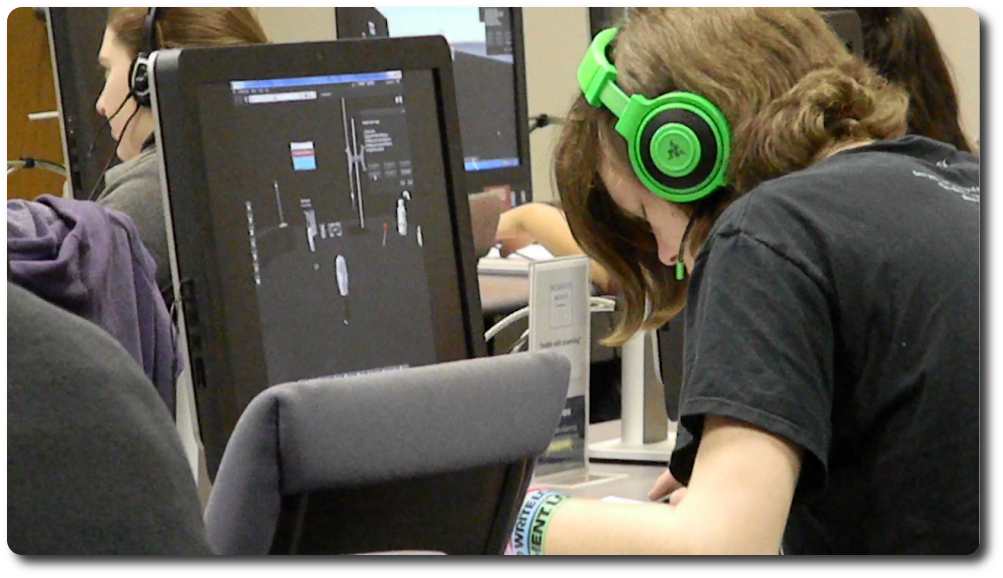
Students in the study reported a more enjoyable experience when using Second Life, and exhibited an aptitude at least on a par with those working in a physical lab while enjoying better results (image via Draxtor Despres)
The findings so far released as a part of the study – notably the results of the pilot programme – tally very well with the benefits of situational learning discussed by Liz Falconer in episode 15 of The Drax Files Radio Hour, where she noted the benefits students experience through narrative learning.
While chemistry is more a procedural activity than a narrative undertaking, the approaches used in the SL environment point very strongly to students working within the environment reacting in a similar manner to those placed in situational learning environments: their kinesthetic abilities are sharpened, even though the level of interaction with the equipment they’re using is very different to that of the physical lab, as noted above. Also of interest is the observation made as a result of the pilot programme that the artificial nature of the SL environment caused the students to be more focused on procedure and technique, rather than on results – a very important aspect of research chemistry.
There is still another year to go with the primary study, but the results, as indicated by Wendy in the video, seem to be reflecting those obtained during the pilot programme. as such, it’ll be interesting to see what does emerge when findings are fully published. In particular, it’ll be interesting to see if the finding examine the role played by aspects such as the viewer UI in shaping students’ experiences and learning abilities in the SL-based environments (e.g. were better results obtained purely because students found the virtual environment a more enjoyable environment for learning, or because the nature of the viewer UI encouraged a greater need for focus and help eliminate more common elements of distraction among students?).
Towards the end of the video, Wendy (Julia Tiraxibar in SL) talks more broadly about the potential of Second Life for education and educators, and makes some interesting and valid points about students travelling around SL (remembering that we’re talking here about students 18 and over, and therefore with the freedom of movement we all enjoy in SL). Her remarks here match the common-sense attitude expressed by Liz Falconer in episode 15 of The Drax Files Radio Hour.
This is another excellent video segment, one which takes a slightly different tack to others in the series, but which again offers much food for thought and which certainly stands as a very focused piece which would appear to be ideally suited for helping promote SL within the education sector. As such, it is one I’d strongly encourage teachers and educators to bookmark and not be afraid to show to colleagues – and indeed, for students to put before their teachers and faculty staff.
I’ve made a number of mentions in this blog on the subject of Whiskey Monday’s remarkable imagery, which has been displayed through various galleries, has been featured in SLB celebrations and is even available in RL.
Her work is thought-provoking, intelligent, evocative, mischievous, fun, pointed, and more – and all of it is certainly some of the finest expressions of art as a medium for social and general commentary I’ve ever seen. It’s also deeply personal, much of it reflecting on Whiskey’s real life and times in a frank, honest way free from pathos while laying bare her mindset and emotions.
For some time now, Crap Mariner has hosted a collection of Whiskey’s pieces, both her art and her Tweets as Picture series, located at The Viewing Room on his region of Edloe, and which sits directly under The Listening Room. However, Whiskey herself has been absent from the virtual for some time now – her last blog post having been made in November 2013, while she ceased activity on Twitter and Plurk some time before that.
While it is hoped that Whiskey will make a return to Second Life, time does march ever onwards, and Crap has been contacting those who knew Whiskey to let us know that he’ll be closing down The Viewing Room in the very near future as a part of some redevelopment work on Edloe.
So, if you’ve not seen Whiskey’s work there in a while, or haven’t had the chance to see her work up close, now is very much the time for making sure you hop over to The Viewing Room before it is too late.
History has a tendency to be a little ironic at times. Thirteen months ago, the United Kingdom and Russia issued a joint declaration that 2014 would be the bi-lateral UK-Russia Year of Culture. At the time they sat down to sign that agreement, little did Sergey Lavrov, the Minister of Foreign Affairs of the Russian Federation and William Hague, Secretary of State for Foreign and Commonwealth Affairs of the United Kingdom, would be facing one another across a quite different table and under less convivial circumstances in April 2014.
Not that the one should in any way negate or cancel the other. Rather the reverse, in fact. In the face of mounting political tensions, one would hope that the events staged in both the UK and in Russia as a part of the bi-lateral UK-Russia Year of Culture would stand as a reminder of each side’s humanity and the benefits of people of different nationalities looking beyond superficial national boundaries and collaborating with one another.
Bryn Oh / Vladimir Tatlin: Monument to the Third International, The Golden Age of the Russian Avant-Garde, LEA8
And collaboration is very much the focal-point of one of the pieces selected by the British Council for display in Russia, and it is one that crosses not only the political divide, but also the digital divide as well.
The Golden Age of Russian Avant-Garde is a large-scale exhibition project, created especially for the main exhibition hall of Moscow’s Manege Museum by Peter Greenaway (UK) and Saskia Boddeke (Holland) supported by the British Council. The primary part of this exhibition opened in Moscow on April 15th, and will run through until May 18th, 2014, in an exhibition space totalling some 5,000 square metres – which is enormous by any standards. This multimedia installation will feature, in the words of the British Council:
Polyscreen installations made with the help of the most up-to-date projection, light and sound equipment. It will represent a new approach to the history of art, creating new visuals and new possibilities for learning about the world around us through images. Using polyscreens as an artistic method not only allows us to explore new aspects in paintings or sculptures: synchronised images, bound together by a single idea, create new architectonics, bringing another dimension to the exhibition. Combining film and painting, animation and 3D technology helps create a unified atmospheric work, drawing the viewer into the space of Russian avant-garde.
But this is more than a real-world exhibition. A major element of the piece exists not in the real-world, but in Second Life, at LEA8, to be precise.
It is here that Saskia Boddeke, perhaps better known to many of us as artist Rose Borchovski has brought together seven artists from around the world, each with the task of recreating a famous element of the Russian avant-garde movement, also known as Constructivism, in-world (and some in the real world as well), and which forms a part of the overall exhibition space, real and virtual.
The SL exhibits are placed on multiple, interactive levels within a pseudo-industrial setting. Here direct re-interpretations of famous elements from the Constructivist movement – such as Bryn Oh’s representation of the never-built (at least in full size) Monument to the Third International by Tatlin (and also known as “Tatlin’s Tower” and regarded as a key work of the movement) and Popova’s stage design for theatrical director / actor Vsevolod Meyerhold, recreated by Nessuno Myoo through to broader pieces drawn from within and beyond the Constructivist movement and presented in both 2D and 3D installations.
A further cross-cultural element is evident in the SL installation. When exploring, you might come across avatars named AvanteGarde001 through AvanteGarde004. These are in fact controlled by visitors to the Manege Museum in Moscow, who are invited to extend their visit to the real-world pieces there into the realm of the virtual – and have been able to do so since the real-world exhibition opened.
Exploration of the SL exhibit space requires a reasonable amount of time – there is a lot to see; even the environment itself, designed by Bryn, makes a powerful statement. Not only does it frame the pieces on display and provides the means by which they can be explored, it also reflects the form and context of the Constructivist movement and the age they represented.
In terms of the pieces on display, each offers a unique view on the movement and / or the era. In this, I found Eupalinos Ugajin’s interpretation of We, Yevgeny Zamiatine’s dystopian novel particularly interesting, given its historical context. While the Constructivist movement celebrated and promoted the ideals of the socialist state, Zamiatine’s novel painted a far more negative image of socialism: that of a repressive police state. In doing so, it became the first work to be banned by the Soviet censorship board shortly after its publication. The inclusion of a piece reflective of We is given greater depth when one considers the manner in which Constructivism itself was to be suppressed (and some of its proponents forced into exile or murdered) following Stalin’s rise to power and repressive leadership of the state machine.
However, perhaps the most remarkable piece in the installation is Jo Ellsmere’s representation of V. Meyerhold’s biomechanics, a system he developed for training actors. This uses five beautifully scripted avatars moving in a series of synchronised movements which sees them move both as an individual unit, and as five unique elements of the whole, a slight syncopation to their movements giving them a time-lapsed grace which cannot easily be captured in still images and really has to be seen to be appreciated. There is much here that reaches beyond the immediacy of the installation and offers a lot of potential for synchronised movement in art and dance.
As one might expect, a piece of this magnitude, whether real or virtual, takes a huge amount of effort to bring together, and I am for one very glad that RL events didn’t result in either the real or the virtual aspects of this remarkable celebration from being derailed. This is not an exhibition to be missed and if you are fortunate enough to be able to see the real-world elements at the Manege, I envy you.
Definitely one for the books – and kudos to all those involved. When visiting the LEA installation, don’t forget you can also pick-up one of several (or all, if you like), avatars near the arrival point and make yourself a part of the exhibits offered for your delight and consideration. For my part, the LEA installation only presents one problem; such are the pieces on display here, that they each really deserve an individual review / exploration.
The 16th edition of The Drax Files Radio Hour delves into something many of us overlook: the people who actually work at Linden Lab and keep Second Life running and available to us. Having travelled to Santa Cruz, Drax gets to spend time with a group of Lab employees, and interviews one of the more senior folk there, Don Laabs.
Also discussed is the new user experience – where sadly, in some respects, views are expressed which come over as somewhat devoid of any appreciation – or at least acknowledgement – of what has been tried before and the fact that the Lab actually does have a lot of data on how well what we may consider to be “obvious” may not have actually turned out that well in the past. It’s both the new user experience element and the Don Laabs interview which form the mainstays of the show for me, so they’re what I’m focusing on here.
The new user experience discussion stems from Skyspinner Soulstar’s video, which has been featured on numerous blogs and subject to much debate. I have to admit that when seeing videos like this, I have two reactions.
The first is that the new user experience is a mess, and that more thought needs to be given to ways in which people coming into Second Life a) have a much clearer understanding of why they’re signing-up to the platform and what they might like to do, and b) how the sign-up / log-in experience can be better geared to ensuring those coming into SL can be better grasp the very basics of the viewer and can be delivered more readily to environments where they can connect with those things that caused them to sign-up to SL and which present them with the ability to connect to others who share that interest.
My second reaction is that, by their very nature, videos made by established SL users are somewhat biased from the outset, because they are invariably driven by what we think new users need, rather than what new users may actually require, or they are invariably seen as a means of reinforcing our own particular views on what we “know” is required in order to “solve” the issue of the new user experience. This latter point is demonstrated in the podcast itself, where Draxtor admits that the video reinforces his belief that the new user experience can be “solved” through the introduction of social interaction into the process (which, ironically, is not something I tend to actually agree with in general terms).
The problem here is that by reinforcing our own perceptions of what is “obviously” needed can perhaps blind us to other issues which may well be inherent in the overall process. Hence why, when it comes to discussions about how to solve the new user experience, particularly when they are directed at solution X or approach Y or idea Z, I find myself pointing to a comment Ebbe Altberg made during his VWBPE address:
In general, I’ve found that the customer is often wrong when they ask for something specific.
Now, when they say, “I have this pain” or “I have this need”, they’re pretty much always right. But when they say, “it needs to be solved this way”, they’re usually wrong …
The very attractiveness of Second Life and the fact that it is such a blank canvas to user engagement and retention really does mean there is no single solution that is going to work, and that what is needed is in fact a far more broad-ranging, holistic approach to matters which encompasses multiple approaches, leveraging things that both the Lab and the community can collaboratively supply.
Given the renewed openness and direct approach the Lab is presenting in its relationship with the broader user community, we are perhaps closer to reaching a point where such a collaborative, holistic approach could actually be undertaken by both Lab and users than we’ve been in a very long time. If the opportunity does arise, I hope both sides will grasp it without any need to rake over the coals of past mistakes in Lab / user relationships.
For his first Linden interview [25:32], Drax sits down with Don Laabs, Linden Lab’s Senior Director of Product for Second Life, and who is also known as Danger Linden.
Don Laabs, Senior Director of Product for Second Life at Linden Lab
I first made mention of Don Laabs back in September 2012, back when there was much gnashing od teeth over the misconception that the Lab was somehow “abandoning” SL in favour of developing new products. At that time, I pointed to the fact that the Lab had actually brought-in Don Laabs from EA games earlier in the year in order to ensure that SL would continue to be developed, while responsibility for emerging products was placed under the separate control of John Laurence, reporting into Don.
The interview is interesting and wide-ranging, starting as it does with a brief potted history of Don’s time with EA games, his thoughts on whether SL is a game or not – he characterises it as not a game, but “play”, and points to the over-arching difference between SL and the OASIS of Ready Player One being the latter having gameplay as central to its function, whereas SL has gameplay elements for those who wish to use them, before delving into a host of other issues, including the highly anticipated experience keys (also referred to elsewhere as experience permissions) which should further assist in the creation of tailored, region (/estate?) based activities – think Linden Realms with more on offer.
An interesting aspect of this discussions – other than it touching upon the fact that while SL may not be a game, it most certainly is a legitimate platform for gameplay mechanisms and activities – is that alongside of the developing the experience capabilities themselves, the Lab are in the process of putting together a couple of experiences they hope will showcase the capabilities and springboard their wider use.
Linden Realms, launched in 2011, was an initial release of what were to become known as the Advanced Creator Tools, the forerunner of the upcoming experience keys / permissions
While having the Lab provide in-world experiences tends to be a twitchy subject for some, taking this kind of approach – particularly if coupled with good supporting resources (wiki pages, etc.), isn’t actually a bad way to go. While it may be critiqued as looking and perhaps feeling a little twee, the Linden Realms game did, at the time it was launched, help promote what might be done with the initial experience permissions and tools (it was just a shame things went a be pear-shaped when the tools were initially rolled-out). As such, I do wonder – technical complexity not withstanding – how pathfinding might have been received had it been rolled out with a comprehensive example of what might be achieved using the tools, linked to the resources needed to create pathfinding based experiences.
A further interesting element touched upon in the interview is that maintaining something like SL is actually a lot more complex than people perhaps credit. As Don states, even if the SL code were effectively frozen today, changes in the world at large – to operating systems, to tools the platform uses (webkit and the issues around MOAP video & YouTube being a classic example – or indeed, the Mac Cocoa situation being another) mean than SL will still require ongoing and invasive maintenance even in order for it to remain accessible to users – and even to meet users’ changing habits.
The conversation here segues into a discussion of Second life and relevance. While it is true that Second Life itself doesn’t face any real competition in terms of virtual worlds (no disrespect here to OpenSim – but it is not of a scale which can be considered in any way competitive to SL, either in terms of established user base or – more particularly – in its ability to directly attract new users on a scale equivalent to SL), the platform does face enormous competition in terms of gaining traction on people’s time. This means that SL is competing with a whole range of other activities people could be doing – web browsing, playing games, engaging with family and friends through Facebook, and so on.
The problem here, in terms of relevance, comes in several forms. There is the matter of legacy content, for example – and the expectation by users that such content will always be around, no matter how dated it may look. This impacts on what can and cannot be done technically with the platform in terms of maintaining relevance with emerging capabilities and so on. At the same time, system performance needs to be managed, but the platform needs to remain relevant to content creators of all standards and abilities as a place for creativity without unduly limiting how they create (such as by limiting polygon counts on models, etc.). So relevance is a complex mixture of technical capabilities, maintaining legacy content, performance, and offering freedom of creative expression – anyone one of which can turn people away from SL as much as attract them.
This is again another excellent interview, and sets the bar for the upcoming shows and chats with other Lab staffers. Obviously, I’ve only touched on what interests me personally, and I do recommend that you take listen-in to all that is discussed.
Elsewhere in the show, the prickly issue of net neutrality is discussed, something which is having considerable air-time in the USA, but which isn’t garnering too much attention here in the UK, despite the fact we seem to be in much the same boat on the matter. Education also gets a further mention, with a most excellent OpenSim / Oculus Rift experiment at a school in Ireland getting media coverage. Despite being accused of “not understanding” the value of VR in SL, such work is actually where I see HMDs and added immersiveness in VWs as having value. Indeed, I’d go so far as to say that historical recreations like this, perhaps coupled with the new experience keys and something along the lines of Fuschia Nightfire’s intriguing Ghost Castle, as could offer uniquely interactive, educational, and eye-popping experiences within SL.
Fuschia Nioghtfire’s Ghost Castle, which recreates Corfe Castle as one explores the ruins, potentially points to a way in which VR HMDs and VW environments could be used to incredible effect
And even without the headset, I still recommend Fuschia’s installation as more than worthy of a visit.
Most people in SL are familiar with the Linden Endowment for the Arts (LEA) at least in name, if not in purpose.
The LEA is a collaborative venture between Linden Lab and the arts community, established to help create a center of arts activity in Second Life. It is committed to providing access to engaging experiences in the arts for the SL community, through exhibitions, programmes and events, all helping to foster awareness of artists’ contributions to our virtual world and encouraging others to get involved or to be inspired.
While the regions used by the LEA (some 29 in total) are provided by Linden Lab, the LEA itself is run by a committee of SL artists and residents, supported by an advisory board. However, given the LEA does have 29 regions, all playing host to a range of art installations (some permanent fixtures, others representing the LEA’s Artist In Residence programme or other dedicated activities), finding one’s way around all the regions and knowing what is going on at any given time isn’t always easy.
One of the art pieces (by Maya Paris) at the new LEA gateway
True, there is the LEA blog, with notifications of upcoming openings and events, and there’s the LEA website, for information on the various LEA programmes, and the regions almost always offer visitors the opportunity to grab a HUD to help them navigate their way around all the exhibits. However, there has never really been anything resembling a central gateway, a place where visitors can go to and find out what is going on and where, ask questions, and have the means to teleport to anything that interests them, and then back again should they wish to continue their explorations.
LEA Committee member Honour McMillian recently blogged on behalf of the LEA that LEA3 is being re-purposed as a gateway / hub for the LEA regions. The work is being carried out by LEA committee members and volunteers (of which more in a moment), and while it has yet to be completed, much is already in place.
Central to the gateway is a map to all 29 LEA regions, complete with teleport links, while nearby is an event board listing all upcoming events and activities. A short walk from this is a set of information givers which provide note cards on the various installations within the LEA. Around these areas is a mixed land / water park wherein a number of pieces from various SL artists are displayed and open to be explored. The selected items will change over time, helping to reflect the diverse range of art on offer within the LEA regions.
The welcome area will be staffed, as time an availability, by the LEA Volunteers, overseen by Honour herself. Although there are over 40 volunteers already, they undertake a variety of tasks, including providing guided tours of the regions, assisting the artists using the regions, helping with opening events and other activities, and so on. As such, new recruits are always being sought; so if you’re of a mind to volunteer your time, contact Honour in-world, and she’ll get you into the group and onto the training and orientation course.
As noted above, there’s still more work to be done at the gateway, but it as now open, so if you’re thinking of exploring the LEA regions, there’s now an even easier way to get yourself started!
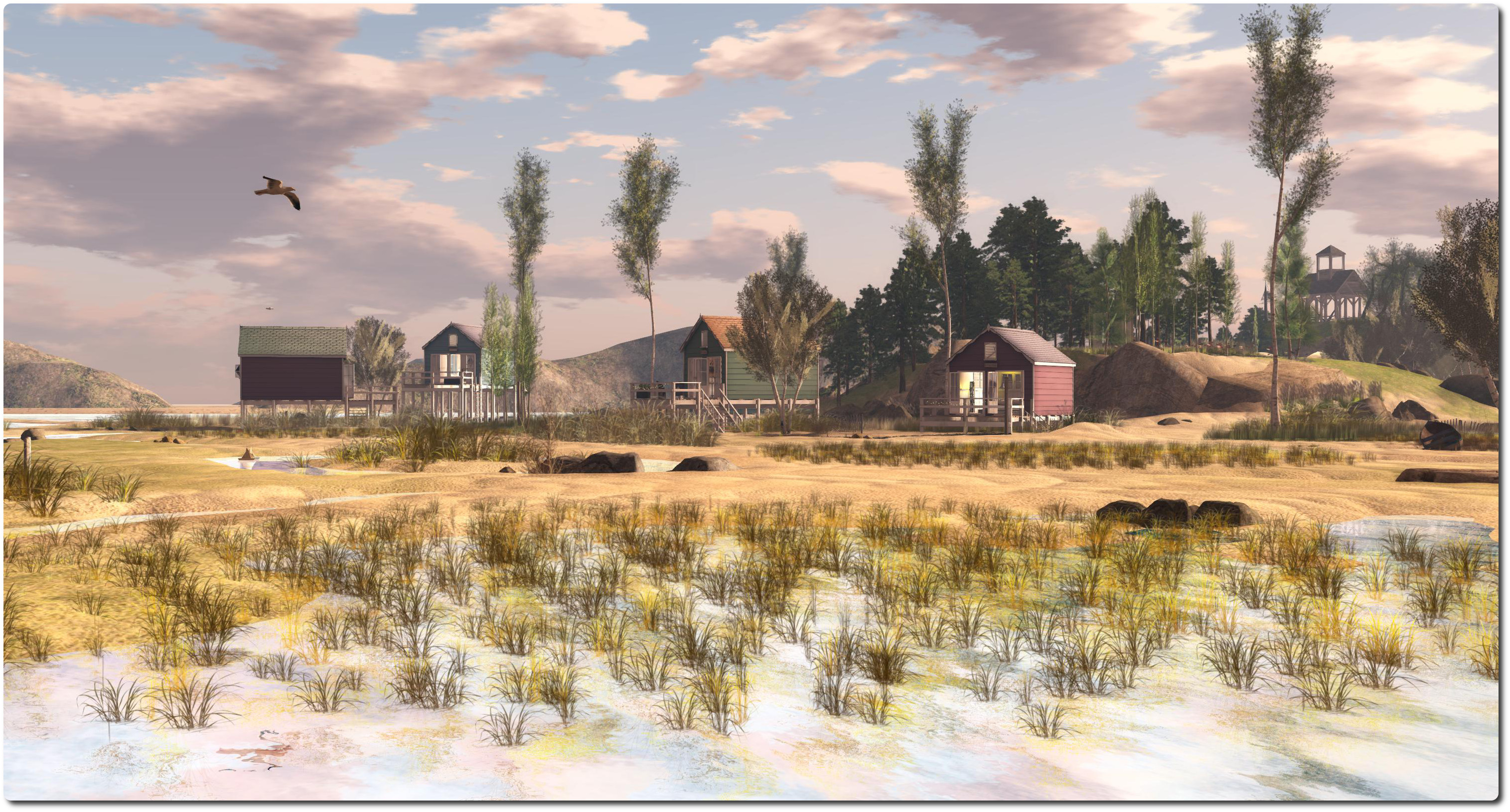 The Trace, April 2014
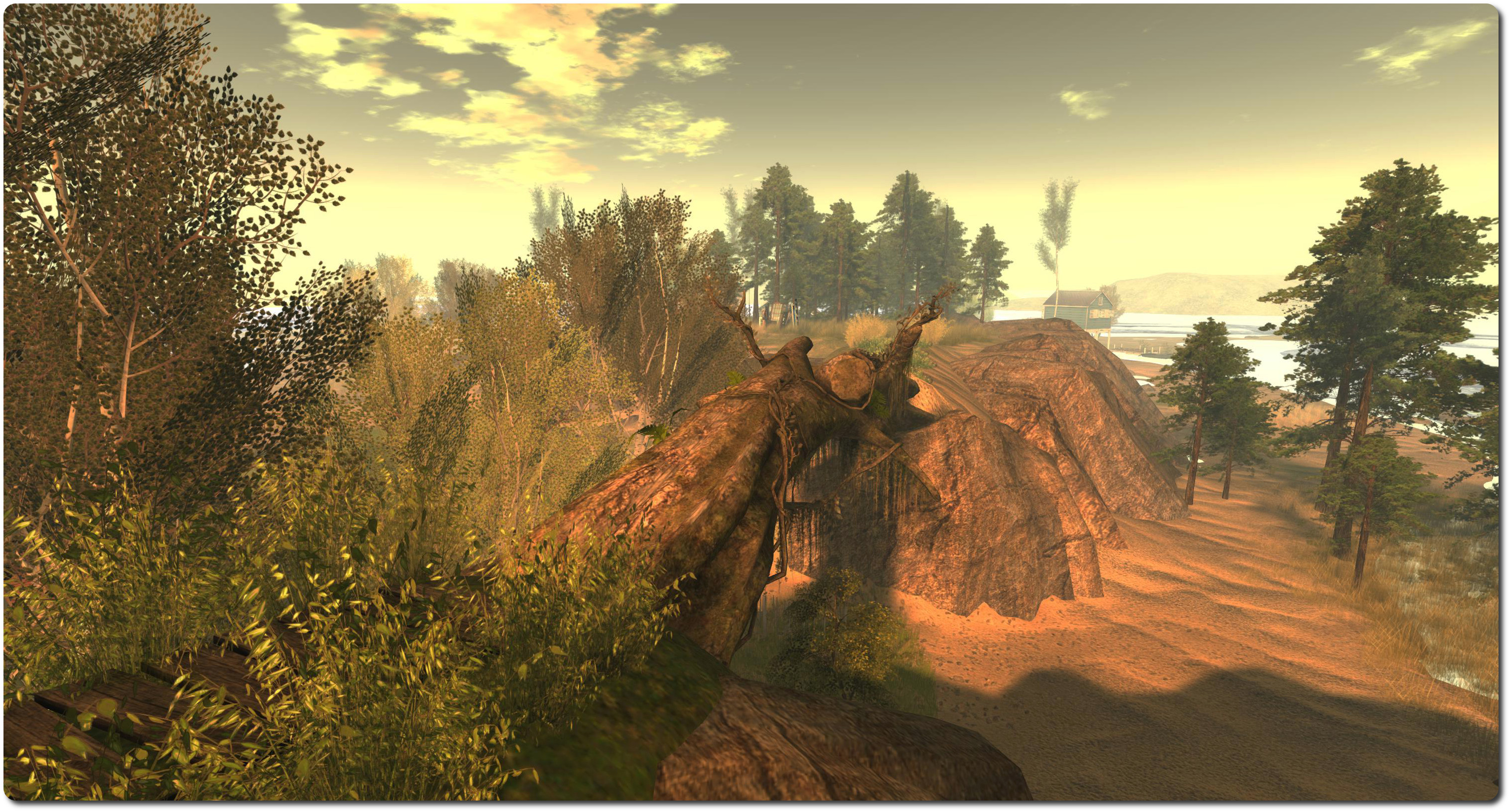 The Trace, April 2014,
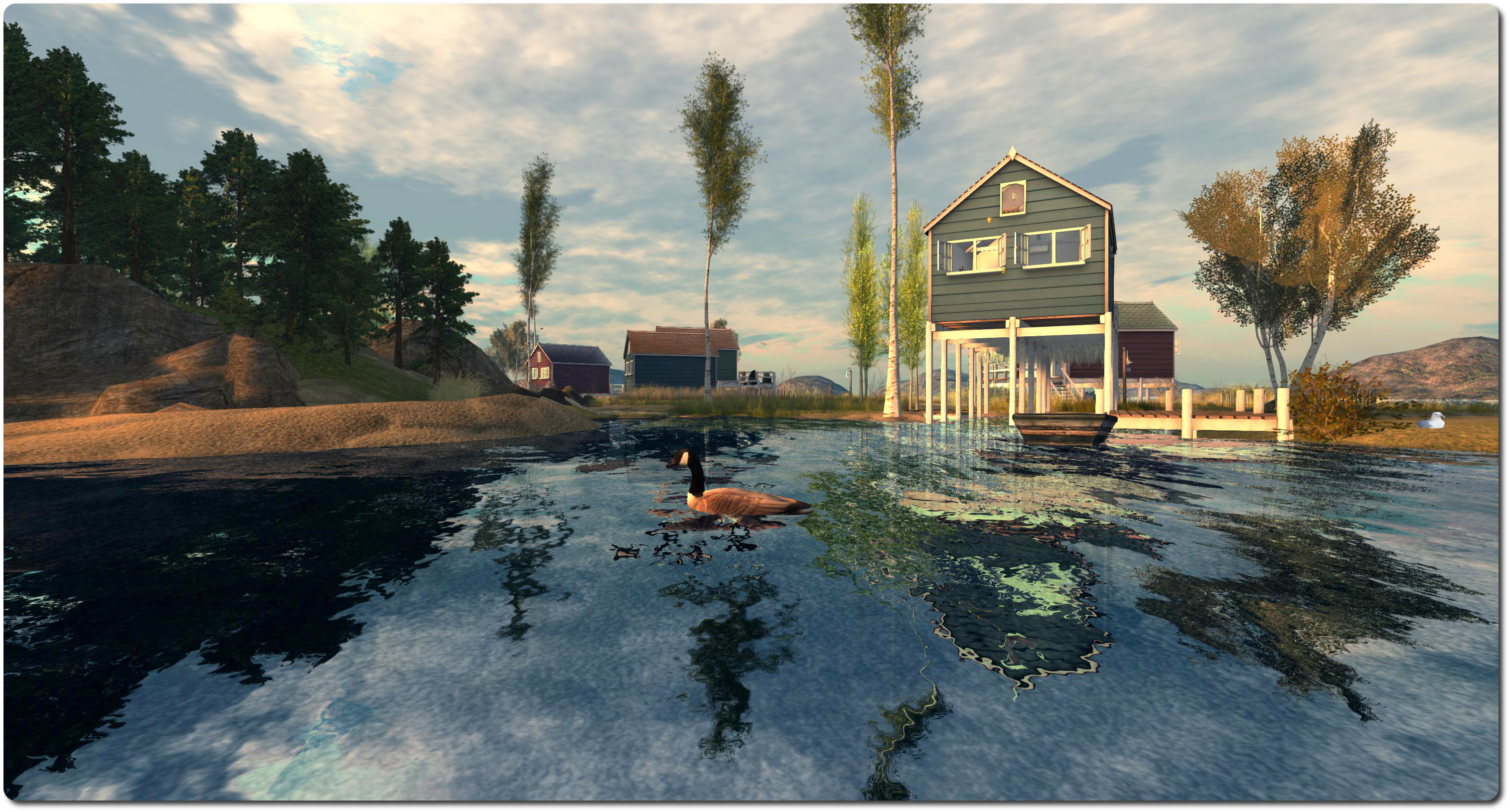 The Trace, April 2014
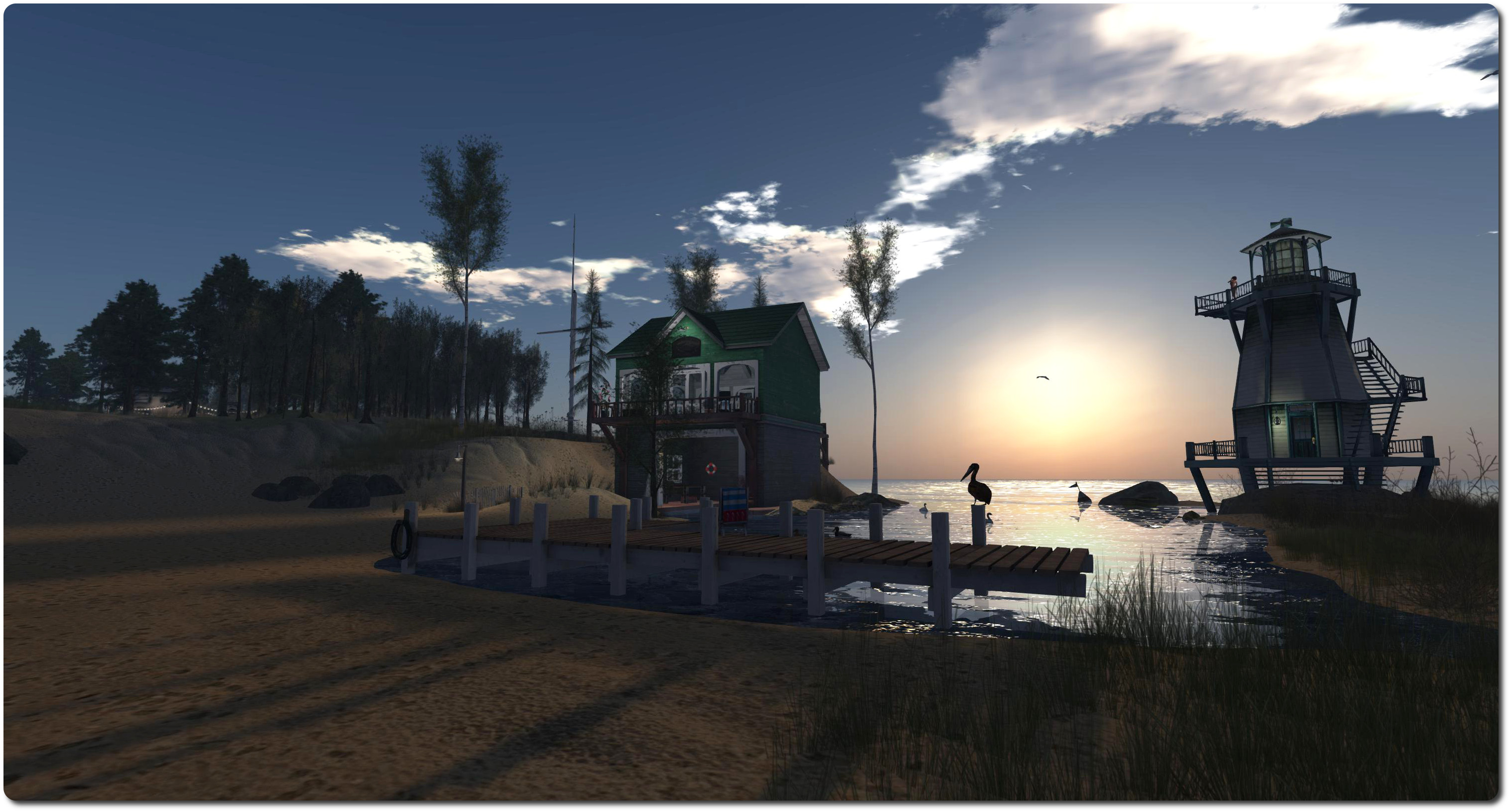 The Trace, April 2014