The first Linden Endowment for the Arts (LEA) Office Hours will take place on Friday July 25th, between 10:30-11:30 SLT.
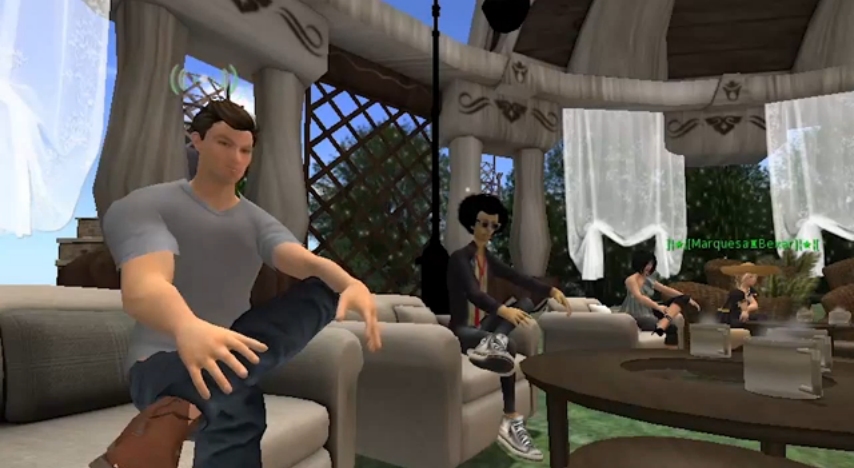
LEA committee member Solo Mornington will be hosting the event, which will take place at the LEA Gateway.
The meeting is open to all (subject to region limits!), and those interested in art in SL, the work / purpose / structure of the LEA, etc., are invited to bring their questions.
On Monday July 21st, 2014, the University of Western Australia (UWA) announced the opening of their new combined Art and Machinima challenge, Transcending Borders, which brings together their 7th MachinimUWA and their 5th UWA Grand Art Challenge into one event.
Transcending Borders is sponsored by Tom Papas & SciFi Film Festival, LaPiscean Liberty & SL Artists, AviewTV, Taralyn Gravois and Arts Castle Gallery, TheDoveRhode and Peace is a Choice and S&S Gallery of Fine SL Art, Jon Stubbs & UWA Student Services, as well as The UWA Virtual Worlds Project, and the prize pool is an impressive L$1,030,000, with a further L$240,000 available as special audience participation and other prizes!
Those wishing to participate are free to enter either the art or the machinima challenge – or both, if they wish; just so long as all entries are received no later than midnight SLT on October 31st, 2014. Winners will be announced in December 2014.
Entrants are invited to interpret the challenge theme, Transcending Borders, in any way they please. It might refer to transcending borders between space and time, or the past and present or the present and future, the borders separating nations or cultures or languages, or any one of the many borders we encounter as we navigate our physical and virtual lives.
The major rules in submitting any artwork or machinima to the challenge are (please also refer to the UWA blog post for the full set of rules and requirements):
Artwork entered should be able to be interpreted by the casual viewer as representative of the theme. If the link to the theme is difficult to ascertain, it should be referenced in a note card accompanying the work
Any submitted artwork should not exceed 150 Land Impact, and should preferably by submitted with COPY permissions, and art entries are limited to one per entrant
Machinima entries should preferably be no more than 4 minutes and 30 seconds in length, although this is not a “hard” rule
There is no limit to the number of machinima entries which may be submitted by an entrant, however, the average viewer should be able to determine how any given film fits with the theme; if this is difficult to ascertain, it should be referenced in the notes accompanying the film on the web
All submitted machinima must be made specifically for this challenge, and must include “For The University of Western Australia’s MachinimUWA VII: Transcending Borders” in the opening credits.
Art submissions should be made via the art entry receiver at the UWA Art Chellenge Platform in Second Life. Machinima entries should be uploaded to any publicly-accessible location, but preferably to YouTube or Vimeo, and the details of the entry (name, creator, location, etc.) supplied to Jayjay Zifanwe and LaPiscean Liberty in-world or by e-mailing the details to Jayjay (jayjayaustralia@hotmail.com).
L$515,000 in prizes in both the art and the machinima categories, with each category having a L$100,000 first prize.
There are also two special Curator Prizes, one for art and one for machinima (the latter will be awarded to best film which features one artwork from the current art challenge or a winning entry from past UWA art challenges).
For full information on the challenge, including infromation on the theme, all rules, submission guidelines, prizes (including audience participation prizes) and details of the judging panel, please refer to the UWA blog post.
On Sunday July 20th, the Linden Endowment for the Arts announced the successful applicants for the 7th round of the LEA’s Artist-in-Residence (AIR) programme.
They are: Ais Aeon, BabypeaVonPhoenix Bikergrrl, Ellie Brewster, Uan Ceriaptrix, Giovanna Cerise, Peli Dieterle, Mac Kanashimi, Neeks Karu, Frankx Lefavre, Sowa Mai, Lor Pevensey, KatanaBlender Resident, MarioZecca Resident, FirleFanz Roxley, Searby, Pixels Sideways, Mandel Solano, Betty Tureaud, Octagons Yazimoto and Kimika Ying.
The LEA received over 30 applications, and those selected were viewed as presenting “truly outstanding proposals that represent a diverse range of virtual art.”
The successful applicants will each be allocated a full region within the LEA for a 6-month period. They have up to four months to prepare their projects, which range from full-sim immersions, to innovative builds geared specifically for multimedia works such as sound and machinima. Each installation must be open for a minimum of two months of the 6-month allocation, and it is expected that some will be open in advance of the four-month build deadline. All exhibits must be open to the public by the end of October 2014 at the latest.
On Monday July 7th, Linden Lab CEO Ebbe Altberg and the Lab’s Director of Global Communications, Peter Gray, met with members of the education community to answer questions on the future of education in Second Life.
The video is embedded below, and the transcript is time stamped against it for reference. When reading / listening, please remember:
This is not a word-for-word transcript of the entire meeting. While all quotes given are as they are spoken in the recording and the audio files, to assist in readability and maintain the flow of conversation, not all asides, jokes, interruptions, etc., have been included in the text presented here
If there are any sizeable gaps in comments from a speaker which resulted from asides, repetition, or where a speaker started to make a comment and then re-phrased what they were saying, etc, these are indicated by the use of “…”
The transcript picks-up with the first question asked.
0:04:42 Aldo Stern (AS): Will the educational discount be stable over time, so that education organisations can take [it] into account for their budget cycles? So I think that reflects right off of the top one of the things that people will have a concern about.
0:05:00 Ebbe Altberg (EA). Yes. Well, it’s very unfortunate that back in the day … that the discount was taken away. I thought it was very fortunate that it was re-instituted before I showed-up here, and I can tell you we have absolutely no intent whatsoever to make the pricing worse for you guys. none whatsoever.
And over time, as some of you have heard about, we’re starting work on a next generation platform, I think that ultimately an extremely large and vibrant and successful virtual world, prices have to come down all the time.
Today, we’re constrained by a number of factors: technology, business models, what have you, and user experience, that sort-of limits the size of the market for a product like this. for example, if we were to cut prices in half, we would have to get at least twice the number of users – or more, actually – to end up with the same revenue. Right now, I’m not convinced we have a product that could attract two extra users at half the price.
But I’d be happy to lower prices to get more users and make it up in volume, once we know we have a product that can achieve that. I think it’ll be an interesting conversation at that time, especially with the educational sector. would an even lower price … let’s say we take the current discount that you have, which I think is about a hundred and fifty bucks for a region; if we cut that in half again and say it’s seventy-five bucks, would we have twice as many of you buying simulators? If that’s the case, then it might be worthwhile for us to do; but if it only increases by 5% the number, then it’s just hurting us and our ability to invest in the future.
But I feel very confident in stating that we’re not going to mess with the current pricing you have in a negative way for you.
0:07:55 AS: I think that’s very encouraging to us, and I wanted to ask if anybody had any further comment before the next question?
0:08:08 Comment: Well, it is encouraging to hear that; but I think there are a number of related issues that make the current platform problematical for educators, and a number of questions we’ve identified I think will get at that, if you want to move down the list.
Ebbe Linden (Ebbe Altberg) and Pete Linden (Peter Gray) at the meeting with representatives from the education and non-profits community
0:08:26 Comment: I did want to say something about the pricing real quick. If you did lower the price for educators you might not see the number of buyers go up right away, because I’m not sure if you understand how the education funding cycle works, and probably everyone in the room here can explain that much better than I can. But that is the issue: getting into the funding cycle ahead of time to make sure that you have funds available for your projects. So if you implemented that today, cutting it in half again, you have to give the education community time to get that in their budget and make that happen.
0:09:27 EA: Absolutely, and there’s way to solve that. I could say, it’s a hundred and fifty bucks now and it’s 75 bucks starting next quarter, so you can put it in your plans. how much advanced notice do you need to be able to get it into your budget cycle?
0:09:48: About a year.
0:09:49 EA: My lord! (Chuckles).
0:09:53: And that’s why, when the funding was cut, it was so devastating, when the discount was cut, because no-one had enough notice to get their funding back up to what they needed, and so it was very frustrating for a lot of educational folks.
0:10:14 EA: I understand. I can’t even begin to understanding the reasoning behind why that whole thing happened. I’m just very glad it was reversed before I came here, otherwise I would have done that myself. So you can at least be confident that we’re not going to make that mistake again.
The Portal Park offers access to The Cornfield, Linden Realms and other experiences, as well as places of its own to explore
On Monday July 14th, the Lab announced the opening of their new Experience Keys activity – The Cornfield. I didn’t have much of a chance to look at things myself at the time, but simply had a quick nose around. This being the case, I hopped back when time allowed and took a closer look.
First, the new Portal Park. Whereas the Linden Realms Portal Parks were fairly minimalist, being intended purely as waypoints to get to that game – which, I understand, the Lab has plans to update at some point in order to take advantage of Experience Keys – the new Portal Park design is far more of a hub, and so has a richer design.
A central landing point offers a paved area with seats, flowerbeds and access to eight areas reached by short paths. These are: The Cornfield, Linden Realms, the Premium-only Magellan Hunt, the Wilderness Experience (which I missed noting during my brief visit on July 14th), what appears to be an as yet unnamed entrance to a sci-fi / post apocalyptic experience (not currently open), a social area, a Gnome Village and a Tea Party glade (where the LDPW and members of Linden Lab were enjoying themselves following the opening of the Park on July 14th). Whether these latter two are intended to become the entrance-point for future experiences or simply places for users to meet and chat, I’ve no idea.
Each of the active games has a dedicated teleport portal, and the area in which the portal stands is themed on the game itself; so The Cornfield has an old barn containing its portal, for example, and the Linden Realms portal sits in a little meshy / cartoony space. Only The Cornfield is currently Experience Keys enabled – Linden Realms, the Magellan Hunt and the Wilderness Experience are all pretty much as they always have been since each opened in SL.
The sci-fi area of the Portal Park – the location for accessing a future Experience?
An interesting point of note with Experience Keys is that until such time as the viewer-side updates have filtered through to all viewers, you don’t actually need to run the Project viewer in order to participate in an experience; any viewer is capable of receiving an initial invitation to join and Experience, and will allow you to do so. However, as the Experience Keys project viewer provides a lot more information about any given Experience and allows you to see what is happening with your avatar, it is perhaps preferable to use it until the viewer-side code is more widely integrated into viewers.
The Cornfield
As you approach the teleport portal for The Cornfield, a dialogue box is displayed, asking if you wish to participate. The information displayed by this dialogue box will vary, depending upon whether you are using the Experience Keys project viewer or not.
If you’re running the Experience Keys project viewer, clicking on the name of the Experience in the dialogue box opens the Experience Profile, allowing you to find out more about it.
An Experience dialogue box. On the left, as it appears in an Experience Keys enabled viewer, with options to display the Experience Profile (by clicking the Experience name link) and to accept / refuse the Experience and to block the Experience (so you’ll never see a prompts anywhere for it again) or to block just the current inviter. On the right, how the same dialogue appears in a viewer that is non Experience Keys enabled – you can only opt to accept or refuse the invitation
Allowing the Experience via the dialogue box will permit you to pass through the portal and be delivered to the start of the game area, inside another barn. Here you’ll find yourself equipped with a large basket, some basic armour, a large plank of wood, and a HUD. Clicking the “?” on the HUD will deliver the game instructions to you.
The Cornfield is, at its most basic, very similar to Linden Realms – you spend your time running around, avoiding monsters (mutated “griefers” in this case), collecting corn cobs, jars of moonshine, and coins, rather than different coloured gems. However, there is also a lot more going on here.
The Cornfield game area (the game actually uses a darker windlight to enhance gameplay)
Matoluta Sanctuary is a newly opened role-play region with a difference. Offering people the opportunity to engage in equine role-play (i.e. actually taking on a horse avatar), the focus of the region and the community behind it is to raise awareness of the plight of the Colonial Spanish Horse on the North American continent.
These horses, perhaps more familiarly known as Spanish Mustang by some although there are in fact several strains and sub-strains, are descendants of the original Iberian horse stock brought to America from Spain, and are one of only a very few genetically unique horse breeds worldwide.
As with other breeds of horses introduced to the North American continent from Europe, some Colonial Spanish horses escaped into the wild, where, due to their nature and abilities, they became the preferred mount of the Great Plains tribes of native Americans. In more recent times their numbers have greatly reduced, and the breed’s extinction status is regarded as critical.
The arrival area in the region in located overhead. Here you can obtain visitor information on the sanctuary, and background on the herd itself – which is modelled on a genuine herd of Colonial Spanish horses in Oklahoma. You can also join the Sanctuary’s access group here. The fee is L$250 to join – and is required for access to the region below (although there will be free access periods – check the calendar on the Matoluta Sanctuary website). Rezzing rights on the region cost L$500, and all fees go directly towards the upkeep of the region, events, etc.
Note, as well, that visitor access is restricted to 10:00-20:00 Mondays-Saturdays; casual visitors arriving outside of these hours will be deposited at a corner tile on the region and will not be able to proceed further. From 20:00 through 10:00, access to the region is for members of the roleplay group and bloggers / photographers only. The latter can apply for special access by e-mailing matolutasanctuary@gmail.com with their credentials and then apparently going through an interview process. I’m not entirely sure how this works, as I e-mailed, but have yet to actually hear anything in reply, so am just quoting the information note card.
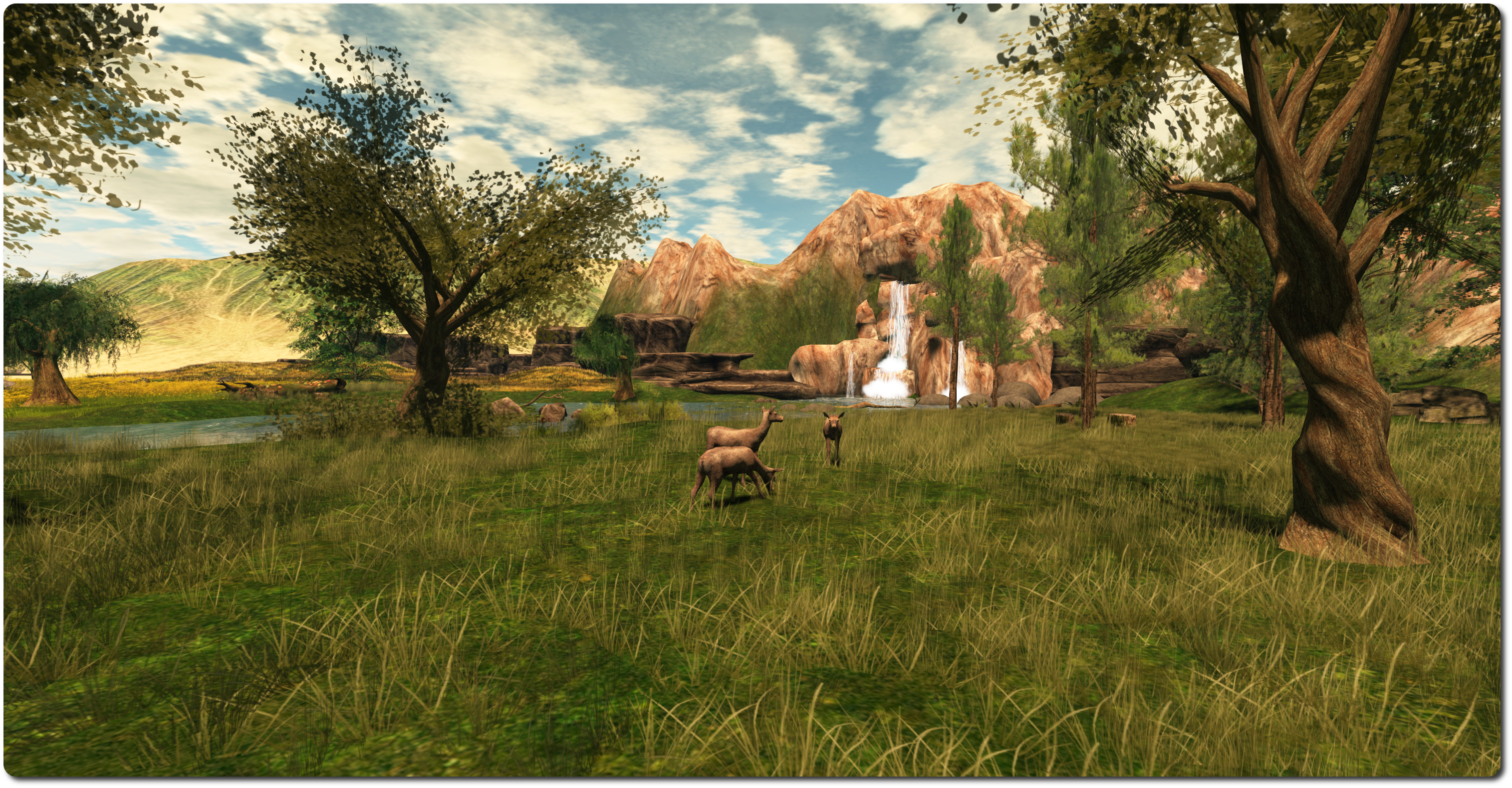
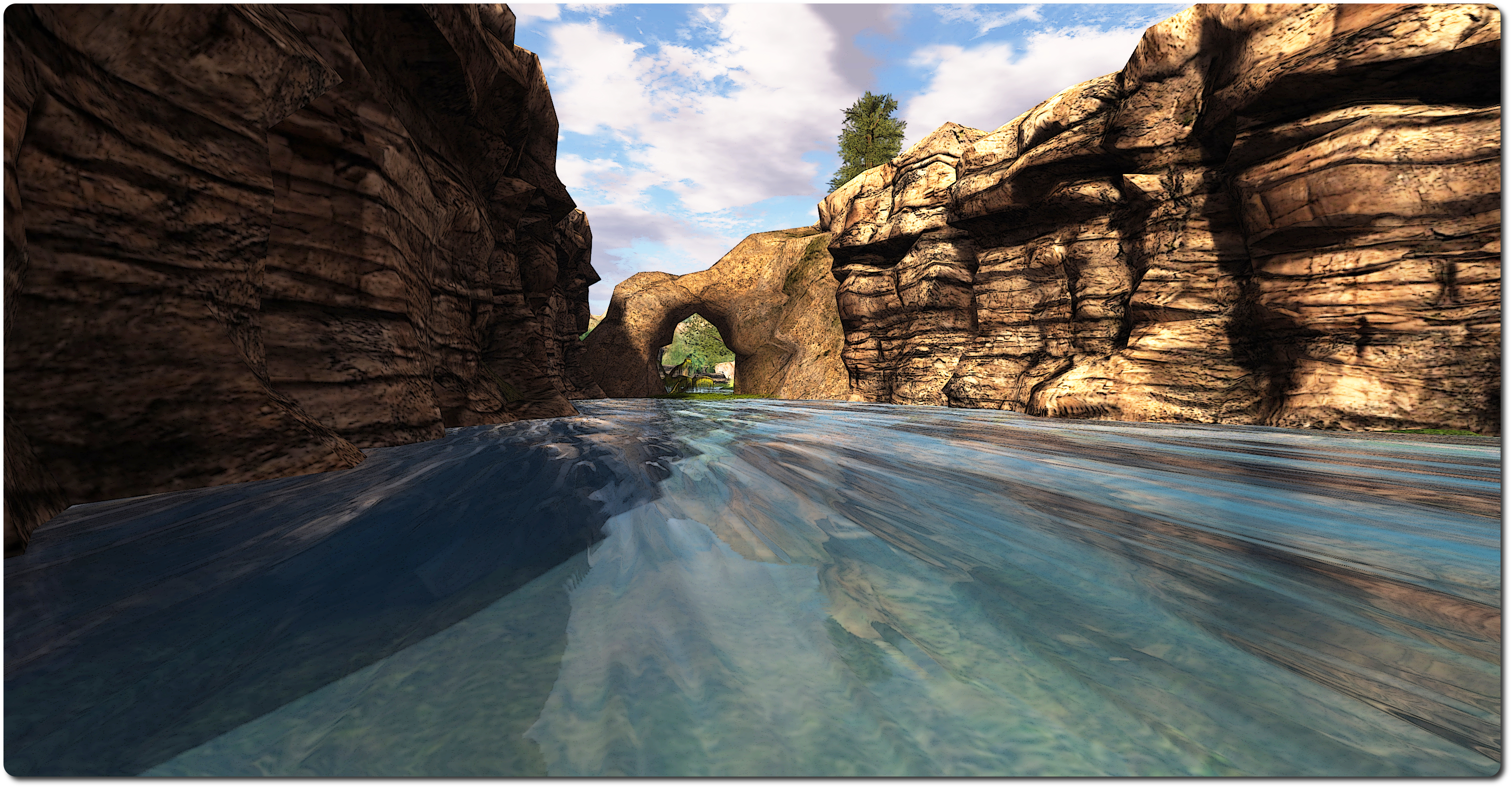
A teleport disc takes visitors down to ground level, and to one end of a watery canyon. Follow this down under the rocky arch and you’ll come to the sanctuary proper. Here a river flows outwards from distant falls and splits the land in two. On the left lays the open lands of what had been the Haskell Ranch, lost to a tornado in the 1900s, and now with only the broken remains of a windmill standing in memory of its passing. Across the water sits The Dark Glen, a place of tall trees and long grass, where many of the herd can be found.
The entire landscape has been designed by Mz Marville and, together with the sim surround, is somewhat evocative of the old American West, and is very photogenic. Wildlife is very much in evidence here: bears hunt fish in the river, eagles soar over the rocky outcrops, geese occupy a section of one river bank, while further inland sheep and deer can be found, as can, for the keen-eyed, badgers and beavers. And, of course, there may well be members of the herd roaming the landscape.
Those interested in joining the herd for role-play can do so by contacting Ursus Broono (also known as Manatou, the herd leader). When on-line, he can often be found up on the rocks overlooking the falls, near Badger’s Gap. There’s apparently a fair degree of etiquette involved in the role-play, so a chat with him beforehand by the curious might well be in order. Role-play on the region is entirely optional for visitors, although they are encouraged to join-in with the spirit of things if members of the herd are present. The welcome package includes a role-play attachment, and any animals visiting the region are encouraged to use the animal channels on the attachment for discrete chat.
This is an interesting concept in role-play and conservationism, and further information and news on activities and events can be found on the Sanctuary’s website, which also has information on a special photography contest being run to mark the opening of the region.