The Drax Files Radio Hour: healing and memories

Episode #37 of the Drax Files Radio Hour arrived on Friday September 19th. I’m little out-of-step with things, having missed segment #36, so my apologies on that and the late arrival of this article.

The two major topics of interview with this episode are remembering Joe Miller (Joe Linden) and on SL as a tool for counselling and support, as seen by Dr. Tammy Fletcher.

Joe Miller (Joe Linden) remembered in the show (Image: Sportvision.com)

Jeska Dzwigalski remembers Joe Miller early on in the show (the 02:56 mark). Mr. Miller, who passed away in July 2014,  served as the Lab’s Vice President of Platform and Technology Development from May 2006 through until December 2010, and as such, oversaw many of the key technical developments within Second Life.  Jeska is well placed to recall him, as she worked with him through his time at Linden Lab, where he was highly respected by colleagues and by SL users.

A lot of Jeska’s comments are reflected in the short piece I wrote on Mr. Miller, but her time working with him obviously gives her recollections a very first-hand and personal feel, and her comments on the arrival of voice – which was added to SL pretty much as a result of Joe Miller’s involvement at the Lab – help shine a light on how the Lab believed it could add a whole new level of immersiveness to the platform.  She also touches upon his genuine passion for the platform, and his direct influence on her as a mentor, thus providing a warm insight to one of the great heroes of Second Life.

Prior to going to the interview with Dr. Fletcher, the show touches on a number of areas, including the plight of young LGBT people, who are forced from home by their parents. This is something Vilvi Rae actually covered through a Second Life machinima film called Sun Dog, focusing on the estimate that around a quarter of all homeless young people in Western countries identify as LGBT, who cite conflict at home as the main reason for leaving and taking to the streets. The film was second runner-up in the University of Western Australia’s / Screen My Shorts’s Project Homeless challenge, being one of three films made in Second Life on the subject of Homeless which topped-out the machinima section of that challenge.

During the VR commercial break ;-), the discussion sort-of edges towards the idea that VR and AR may merge.  I’ve given up waving my arms at Drax and chanting, “castAR, castAR” as an early example of technology already well down this road, so instead, I’ll cut to my own commercial break 🙂 – the last few minutes show the AR / VR combination element.

We get to the chat with Dr. Tammy Fletcher (known as Avalon Birke in SL) starting at 27:48 with an introduction by Drax. A therapist providing individual and couples counselling, Dr. Fletcher is a long-time believer in the role virtual environments can play in mental healthcare and support.

In some respects, this interview travels further through a door opened during the episode #35 interview with Jacquelyn Ford Morie, which also touched upon the use of VWs in therapy work, specifically mentioning the ICT’s work with VR and virtual environments (and which will be the focus of one of my promised further articles on the ICT), the use of the SimSensei, which I wrote about in August, and also Jacki’s work with Dr. Valerie Rice of the US Army in using mindfullness-based techniques within VWs to assist US service personnel and veterans deal with PTSD.
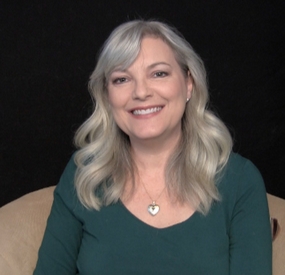
Dr. Tammy Fletcher
Dr. Tammy Fletcher (via fletchertherapy.com)

Which is not to imply that this conversation is simply a re-run of topics already covered. Far from it; the discussion is very broad-ranging and offers considerable food for thought, looking as it does at the complexities, benefits and potential problems of providing or seeking counselling and support through a virtual medium such as Second Life.

For example, how can you, as an SL resident for example, be sure that the person offering to provide counselling is actually qualified to do so, when you have nought but an avatar name to (initially) go on? How can you be totally assured of confidentiality of information – either as a person seeking support or as a therapist wishing to provide support. All of this and more enters the discussion, and Dr. Fletcher’s own experiences as both a Second Life resident and as a professional counsellor provides added depth to what is already a thought-provoking subject.

A frequent theme within the interview is countering the oft-held view (generally from outside the platform) that SL is somewhat itself a pathology. This is done very clearly and directly on a number of occasions, such as drawing parallels between it and other, similar activities which present the same degree of involvement but which are regarded as “acceptable”, and by underlining the fact that by offering many and varied avenues for release and self-expression, SL is potentially an ideal environment for what might be referred to as self-therapy. Of course, as SL users, we may all feel we’re well-versed and understand how beneficial SL can be; nevertheless, Dr. Fletcher’s comments are well worth listening to, as they provide a perfect frame by which many of these negative views on SL can be positively countered.

That said, and in terms of the core issue of providing therapy and support within such an open virtual medium like SL, all is not necessarily sunshine and roses. There are a fair few thorny issues involved, which Dr. Fletcher both acknowledges and offers additional food for thought. Identity and veracity are two such thorns: how can you really know that a person hanging out a shingle to offer professional counselling is qualified to do so? How can those providing counselling and support actually determine the genuineness of those seeking their support? more importantly, how they can fulfil their legal obligation of attempting to intervene should threats of self-harm be raised by a patient.

This is perhaps where the mask of anonymity works against the platform, and not necessarily just within the healthcare community. Some groups have striven to address this through their own means; Dr. Fletcher makes mention of one group in the healthcare community, while the SL Bar Association have also established their own verification service to help those seeking legal advice via SL. But should the Lab be more directly involved? That’s a tough question to answer; certainly making the Lab the gatekeeper of activities over which they have no direct control (and may not be best placed to manage) may not be as straightforward as it sounds.

Similarly, there is often only so far a therapist / counsellor can go when issues of threatened self-harm are raised on the part of a patient; how can the proper authorities be informed when all you have is an avatar name? Where or how should the Lab be involved, can they be involved in an effective manner?

Issues like these can have an impact on the overall degree and effectiveness of providing support and therapy through a virtual medium, and Dr. Fletcher superbly sets out many of the boundaries faced by the virtual counsellor as well as pointing to the rich benefits that can be obtained through such immersive environments like SL, with its many and varied communities and subcultures, opportunities for positive release and for what might – as mentioned above – be referred to as self-therapy.

With reference to communities and subcultures, her commentary on both the furry and child avatar communities within SL are a definite must listen, and directly challenge the misguided preconceptions sometimes held by those outside such communities, and on the way each of them are sometimes quite wrongly viewed as being a pathology.

In fact, so much is touched upon within the interview – including a look ahead to the potential of the Lab’s next generation platform – that it’s impossible to encapsulate it all in written words. If you haven’t already listened to this segment of the Drax Files Radio Hour, then it is one that I’d really encourage you to find time to sit down and run through, whether or not the subject of psychology is of interest to you. It will leave you with a lot to consider and contemplate.

Loonetta: small, but beautifully formed

The Loonetta 31
The Loonetta 31

I entered the world of casual SL sailing via the Premium Gift sailboat. I know, I know, there are better offerings around! Well, those of you who have been nudging me to “upgrade” to something more will likely be likely be pleased to read that I have 🙂 .

September saw me hopping around looking at various boats and options, as I wasn’t sure what I wanted. I did know I didn’t want a racing yacht or racing sail boat; not that I have anything against racing, I just wanted something that offered comfort and a degree of style to sailing around SL. Two boats went fairly immediately to the top of my list, the MLCC Oceanic, and the MLCC Loonetta 31, both of which are created by Motor Loon, who has a well-deserved good reputation for his custom bikes and other vehicles (he’s also a regular at SL User Group meetings, which are where I first met him).

The Oceanic is the older of the two designs, and is a sleek sailing cruiser, a little over 25 metres in length which features a very comfortable& furnished cabin – seriously, you have to see the boat for yourself to appreciate the level of detail. The Loonetta 31 is the more recent of the two builds and 100% mesh. Around 9.5 metres in length, it might be thought of as the Oceanic’s chubby little sister.

Both come packed with features and capabilities, making them each very excellent value – I’m not going to spill the beans on everything included, as part of the pleasure with these boats is in the discovery. Suffice it to say check hatches and steps carefully 🙂 . Initially, I was swayed towards getting the Oceanic, but in the end opted for the Loonetta 31. This was for two reasons; firstly, Motor’s excellent video tutorial on customising it via a very smart scripted system and set of texture maps convinced me this would be something even I could manage, and secondly – and more directly – the Oceanic is a tad on the long side when manoeuvring alongside at the jetty in front of my house, and is too long to fit the dock alongside the house whereas the Loonetta 31 sits easily alongside either one.

Loonetta 31: closer look
Loonetta 31: closer look at the default finish

Which is not to say I’ve taken second best – far from it; the Loonetta 31 is an incredible little vessel, featuring a fully fitted cabin, like the Oceanic, and  has plenty of room for friends to enjoy a trip out with you. As I siad, the customising system is quite awesome, and it is packed with some really nice touches.

The boat is delivered unboxed and ready to go – simply move the folder from your Received Items to your inventory, then drag the boat into the water. The default colour is a white finish, but there are six more pre-set finishes you can pick from simply by clicking on the boat (not the wheel or the seats – you’ll end-up sitting! Top of the cabin is the best) then selecting SETUP from the displayed menu, and using the DESIGN + and DESIGN - buttons to page through the different finishes, which will render on the boat as they are selected.

The Loonetta's Cabin
The Loonetta’s Cabin – where you can use the radio to listen to an SL Coastguard weather report for Blake Sea

However, that’s not the end of the customisation options – you can select just about any part of the boat and change its colour / hue using the RGB buttons, you can change the degree of shine applied to various parts of the boat, both via the COLOR/SHINE button, and by following Motor’s very excellent video linked-to above, you can learn how to download the texture maps for the boat and use them to create your own texture finishes – which is pretty much what I did.

The menu is also used to control other options as well – lower / raise the anchor or sails, set the spinnaker, adjust the camera position, deploy / hide the fenders for docking, sound the bell or horn, set the boat to a moored status, adjust each of the 40 poses individually, and more. For those who prefer, text commands can also be used with the boat.

My customised Loonetta 31, "Exotix 2"
My customised Loonetta 31, “Exotix 2”

Customising the Loonetta 31 took me a couple of hours – a fair part of which was me trying to do a half-decent job with a graphics programme; I’m pretty sure that anyone with any reasonable graphics abilities could have done the same as I’ve achieved in half the time or less. Essentially, I used the hull map to create a red hull with a white stripe set on it, did the same with the stern plate, and re-coloured the cabin roof in a matching white. I also added a couple of graphics to the main sail and spinnaker, and created a custom name. I have to say I’m quite pleased with the results.

A point to make here is that the Loonetta 31 and Oceanic are both No Modify, so if you’re going to be engaging in some extensive customisation and are concerned about upload costs, you might want to re-sync your Aditi beta grid inventory with a password change, wait 24 hours, and then work on your boat there; once you’re satisfied with the results, you can then upload your modified textures to the main grid and apply them to the boat.

Sailing-wise, these boats are a real treat; Motor has spent a lot of time optimising them for sailing and region crossings. While it is still early days for me, a trip around the United Sailing Sims presented no problems with multiple region crossings under sail or motor. A nice touch is the smoothness of motion when turning; the boat turns gently and easily in a continuous motion, rather than the more step-by-step turns some vehicles exhibit (love the animation uses when turning the boat as well!). And if you don’t wish to leave the boat moored, you can pull out a stand from its contents and rest it safely on land.

Under sail
My customised Loonetta 31, “Exotix 2”, under sail

To say I’m pleased with the Loonetta 31 would be an understatement. It may not be the sleekest boat available (I can’t help but call it chubby!) nor the fastest, but it has won my affections. Motor has done a magnificent job with it, and despite my clunky flapping around with GIMP, I really enjoyed putting together a personalised look for it, one which keeps to my preferences for red-and-white :).

For anyone interested in seriously trying-out sailing in SL, I have no hesitation in recommending the Loonetta 31 or its big sister.

Related Links

Return to Matoluta

Matoluta Sanctuary and Bay; Inara Pey, September 2014, on FlickrMatoluta Sanctuary and Bay (Flickr)

My first visit to Matoluta Sanctuary came in July 2014, so it might seem a rather brief period between visits; however there is a reason for my return: on Saturday September 20th at 10:00 SLT, the “new” Matoluta opened its gates to the public.

The Sanctuary is both a role-play environment and a place to promote the conservation of the Colonial Spanish Horse on the North American continent. At the time the Sanctuary originally opened, it comprised a single homestead region. With the re-opening, it will comprise two connected homesteads – but the changes don’t end there.

Matoluta Sanctuary and Bay; Inara Pey, September 2014, on FlickrMatoluta Sanctuary and Bay (Flickr)

Matoluta Sanctuary itself, still devoted to the conservation work, now occupies the region Hudhufushi, representing the autumn (fall) and winter seasons.  Here, as one explores, the leaves on the trees gradually turn from green to reds and golds, snow lies on the surrounding mesas, and eventually one comes to a wintry snow-covered landscape, where wolves and bears roam.

Matoluta Bay, located on the region of Satre, which formed the Sanctuary’s original home, is dressed in the colours of spring and summer, and retains much of the original Matoluta build: distant surrounding mesas, rocky outcrops, fast-flowing waters and lots of wildlife. Between the two, on the edge of Matoluta Bay, sits a sandy beach where visitors to the Bay arrive.

Matoluta Sanctuary and Bay; Inara Pey, September 2014, on FlickrMatoluta Sanctuary and Bay (Flickr)

Between them, the regions offer a range of activities and lots of opportunities for photography, with Matoluta Sanctuary remaining the focal-point for role-play. Visitors are asked to respect the rules for the regions and to remember that most of the horses on Matoluta are avatars, and suitable interaction with them is encouraged (they might even consent to carrying riders, if asked!).

Role-play isn’t a requirement, and visitors are free to roam as they please through until Monday 22nd September, when Matoluta Sanctuary reverts to group access for roleplay. Until then, people can wander freely, sit, enjoy the activities, and simply observe and role-play which might be underway. Those interested in joining the herd and engaging in equine RP can do so by contacting Ursus Broono (also known as Manatou, the herd leader).

New to the regions are a dance area, which also includes seating and yoga; ice skating and snowballing fighting, and boating. A range of sitting and cuddle spots can be found throughout.

Matoluta Sanctuary and Bay; Inara Pey, September 2014, on FlickrMatoluta Sanctuary and Bay (Flickr)

I enjoyed my explorations of the updated regions, and there’s sure to be a lot to attract visitors as the gates open.

Related Links


Taking a vision quest with Black Elk

BE-8_001
Black Elk, LEA1

Livio Oak Korobase returns to the LEA on Wednesday September 17th, with a new installation entitled Black Elk at LEA 1. The installation draws on the life and writings of Black Elk, a medicine man (wičháša wakȟáŋ) of the Oglala Lakota,  born in 1863, and author of The Sacred Pipe and Black Elk Speaks, a book responsible for sparking a renewal of interest in Native religions, based as it is on Black Elk’s experiences and those of the Lakota people.

Livio takes for the central theme of the installation, Black Elk’s great vision, which came to him as a boy of nine, while ill. In the vision, he was visited by the Wakinyan, Thunder Beings, who took him with them to the centre of the earth, and to the central mountain of the world, the axis of the six sacred directions, watched over by the Grandfathers.

This was the first of many vision he had throughout his life, and which, when he related it to the medicine men of his tribe when 17 years of age, established him as a great medicine man himself.

Black Elk, LEA1
Black Elk, LEA1

Symbolism is strong in the work at LEA 1 – as you might expect, given the focus – with horses, birds, bison, fish and more featuring large (literally as well as figuratively), together with more sacred characters. Around and among these hang quotes from Black Elk, powerful statements on who we are, where we come from and what we are a part of – that we are all, really, one nation; joined together and sharing hopes, loves, fears, life – and death. These words were formed through an early life marked by war and conflict and events such as Wounded Knee.

Given this, it should come as no surprise to see a quote by John F. Kennedy sitting alongside those of Black Elk. The quote is from Kennedy’s June 1963 Commencement Address at American University, given in the wake of the Cuban Missile Crisis, an event which came so close to visiting a global calamity on the world, and time when Kennedy, whose early adult years were also shaped by war and conflict, resolved that East and East must find the ways and means to live and work together as peoples of a single world. In this, they offer something of a latter-day reflection of Black Elk’s words.

Black Elk, LEA1
Black Elk, LEA1

When visiting, I would recommend that you use the region’s default windlight setting – used to take the images seen here – as this will allow you to experience the installation to the fullest, the use of reflective surfaces is very well executed, and gives a further depth to the piece. Also, if you don’t feel like walking everywhere, there is a horse rezzer, so you can ride around the pieces in the installation – and don’t miss the two teleport arrows at the arrival point to get you to the more elevated parts of the installation; and do keep an eye out for Livio’s signature Creature!

All told, a thought-provoking piece, beautifully executed and well worth visiting.

Black Elk, LEA1
Black Elk, LEA1

Related Links

Testing the water and pretty in pink at Holtwaye

Hows the Water? Holtwaye ArtSpace

Eupalinos Ugajin fired over an invite for my to join a group of friends trying out How’s the Water? This is a giant catapult Eupalinos has been able to install over the Holtwaye ArtSpace.

I last visited the gallery, which is co-managed by WayneNZ and Holter Rez, back in June, not long after it had opened. So as well as visiting How’s the Water? I took the opportunity to see what was going on down in the gallery itself.

How’s the Water? is a wonderfully huge piece of interactive art / fun involving – as noted – a giant catapult. But this isan’t any catapult; at one end, where the “missiles” sit, is a huge wash basin with hot & cold taps, and a large counterweight at the other. Across a void sits a tall tower. The aim – literally – of the game is to add one or more objects to the basin using the cold water tap, and then fire them at the tower using the hot water tap.

Hows the Water? Holtwaye ArtSpace
Hows the Water? – Missile away! Holtwaye ArtSpace

The objects which are “fired” can be selected from a menu, and feature pieces from a number of artists, some of which can be sat upon, if you wish to take a ride yourself! When the hot water tap is touched, a giant strawberry (what else? 🙂 ) descends from the sky to add its mass and velocity to the counterweight, swinging the catapult into action.

Hitting the target tower – despite its size – isn’t easy. But should you do so, there’s a bit of an explosion, and rather than collapsing, the tower is bent back from the force of the impact, juddering and weaving with the imparted energy before righting itself for the next onslaught.

A small red canon and lawnmower at the base of the tower may also be worth investigating…!

If you’re looking for art that is a little … calmer … in nature, then down on the ground and inside the Gallery is a new exhibition entitled Be Our Art: Pink Edition, featuring pieces by Tomais Ashdene, Bryndarkly Cazalet, Awesome Fallen, Hottie Biscuit Lockjaw, Ziki Questi and Bianca Xavorin, all of which have, as the name suggests, a pink theme to them. Fuschia Nightfire also presents a piece for the exhibit in the media room, entitled Faerie Grotto. You’ll need to stand just inside the room and have media enabled to play this.

Be Our Art: Pink Edition
Be Our Art: Pink Edition, Holtwaye ArtSpace

Also still on display in the various gallery areas of the building are works by Chuckmatrix Clip, Fordis Flores, JJ Goodman and Waynenz, which I reviewed last time around, and Olio, a series of images by my friend and fellow SL aviator, Tomais Ashdene; while sculptures by Bryn Oh, Nessuno Myoo and others can be found in the gallery and its surrounding grounds.

If you’ve not had the chance to visit Holtwaye ArtSpace before now, I do recommend to add it to your list; not only are the exihibitions there worth seeing, as I noted in my original piece, the building itself – designed by Waynenz, who also designed the beautiful Toru, the Enchanted Forest.

Olio - Tomais Ashdene, Holtwaye ArtSpace
Olio – Tomais Ashdene, Holtwaye ArtSpace

Related Links


2014 Project Sci-fi launches with $5,500 Aus available in prizes

project-scifi-2014

Sponsored by the Parramatta City Council, and a part of the Parramatta Sci-Fi Film Festival activities, the 2014 Project Sci-fi competition, in partnership with Screen My Shorts, challenges filmmakers from around the globe to write, film, edit, produce and upload to YouTube a 3-10 minute long film with a science-fiction theme. On offer are prizes totalling $5,500 Australian dollars.

The competition is open to both live action and machinima entries, and filmmakers are responsible for putting together a team, cast and crew (producers, directors, cinematographers, writers, etc..), as well as securing equipment, locations, and costumes. Each team needs to be represented by a Producer. The challenge sets no limits on age or budget and welcomes all filmmakers.

Films can be submitted by individuals and groups but those wishing to participate must register with the competition by October 3rd, 2014.

When submitting their entires, participants are asked to nominate two of the following themes for their film:

  • Sci-romance – love between aliens, robots and more! (Can be happy, sad, tragic)
  • Sci-comedy – sci-fi that is humorous in nature. The Hitchhiker’s Guide to the Galaxy is a good example of sci-fi comedy
  • Save the Environment: a theme focuses on saving the dying planet and/or ecosystem
  • Zombie / disease: a theme focuses on the effect of a disease in the future
  • Apocalyptic / post-apocalyptic sci-fi: stories about the extinction or near extinction of humankind either by forces of nature or by our own means. Post- focuses on telling the tale of the survivors of an apocalypse
  • Spy-fy: Science fiction about futuristic spies and espionage, and the effects of technological advancement on their professions
  • Super hero: stories related to super heroes who get their powers from technology or because they are from another world. Often focuses on futuristic superheroes
  • Robots / AI – fiction in which the science of Artificial Intelligence and robotics is a central theme, typically relating to Robot stories
  • First contact / alien: the various scenarios in which humanity makes contact with other civilizations
  • Social sci-fi: – fiction in which future societies are extrapolated, explained and often criticised, usually for the purpose of social satire. The social sciences are the over-riding theme in this type of fiction; however, science and technology will usually play a central role in the structure of the extrapolated society.

Prior to Kick Off of the competition on Friday, 3rd October 2014 at 7 pm (19:00) local time in each participating city and town
, the organisers will then e-mail each entrant with one (1) of their nominated  subjects/topics. The entrants then have 30 days in which to make and edit their film. All films must be uploaded to YouTube (and set to Private) no later than midnight local time in each participating city and town
 on Sunday November 2nd November 2014. An e-mail with the YouTube link should be sent to info@scifilmfestival.com as notification of the film’s completion.

Above: Tutsy Navarathna’s “The Residents“, overall winner in the machinima category of the 2013 Project Sci-Fi challenge

The total prize list for the competition comprises (all in Australian dollars):

  • SciFi Best Film $2000
  • Project SciFi Runner Up Film $1000
  • Project SciFi Best Performance – $500
  • Project SciFi Best Cinematographers – $500
  • Project SciFi Best Special Effects – $500
  • Project SciFi Best Production Design/Art Direction – $500
  • Project SciFi Best Machinima Film – $300
  • Runner up Machinima Category – $200

In addition, the UWA has determined that machinima makers wishing to enter the same film to both this challenge and the UWA’s Transcending Borders Machinima Challenge may do so, providing the theme requires of both challenges are met in the same film.

Judging will be by a panel of selected jurors, and a special awards ceremony will be held on Sunday, November 16th 2014 at the RiversIde Theatres, Parramatta, commencing at 18:30 local time, as a part of the Parramatta Sci-fi Film Festival.

For further information, please refer to the links below.

Related Links