Exploring Mineral Ridge in Second Life

Mineral Ridge; Inara Pey, December 2016, on Flickral Ridge – click any image for full size

Update: January 16th: Mineral Ridge has unfortunately closed.

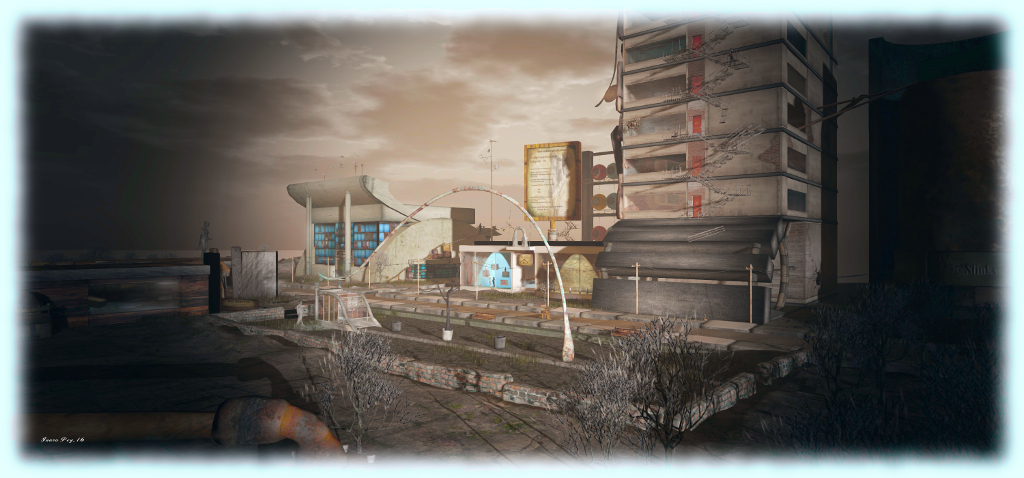
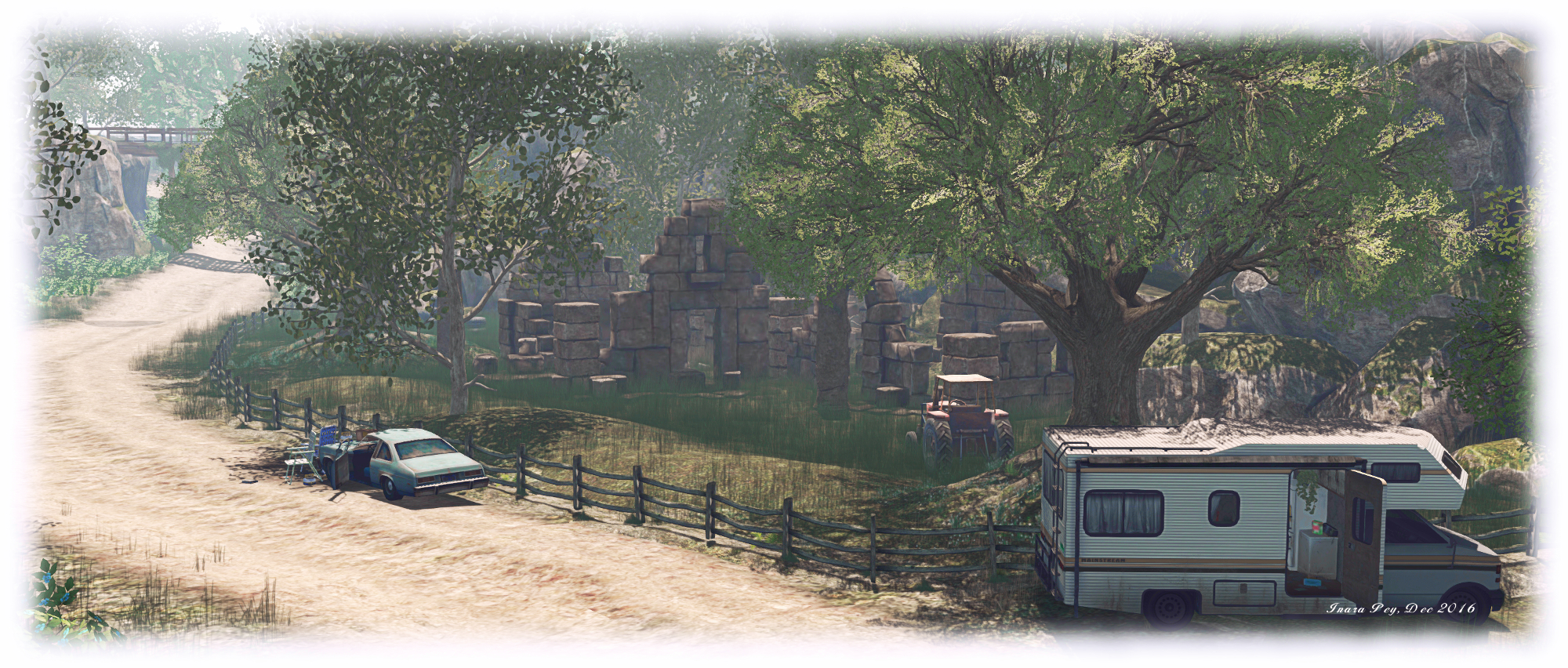
In the 1930s, Mineral Ridge was once a wealthy, booming mining town, its fortune drawn from the precious secrets hidden within the rocks of the high plateaus on which it sits. But, as the saying goes, nothing lasts forever. Today Mineral Ridge sits as a place well past its heyday, fading and rusting under the sun, a curio for tourists to come and visit, and a place where the dispossessed and – maybe – those on the wrong side of the law – can find a place where they can settle or hide.

Or that’s how you might interpret the back story to this Full region, designed as a group effort principally by Norman Dobler, Aiden Cauldron, and thejunkyard. It’s a relatively new addition to Second Life, but one which is both atmospheric and which makes good use of the available space to create a scenic environment offers plenty of space for exploration as well as reflecting the theme of a once-wealthy mining town now well past its heyday.
Mineral Ridge; Inara Pey, December 2016, on FlickrMineral Ridge

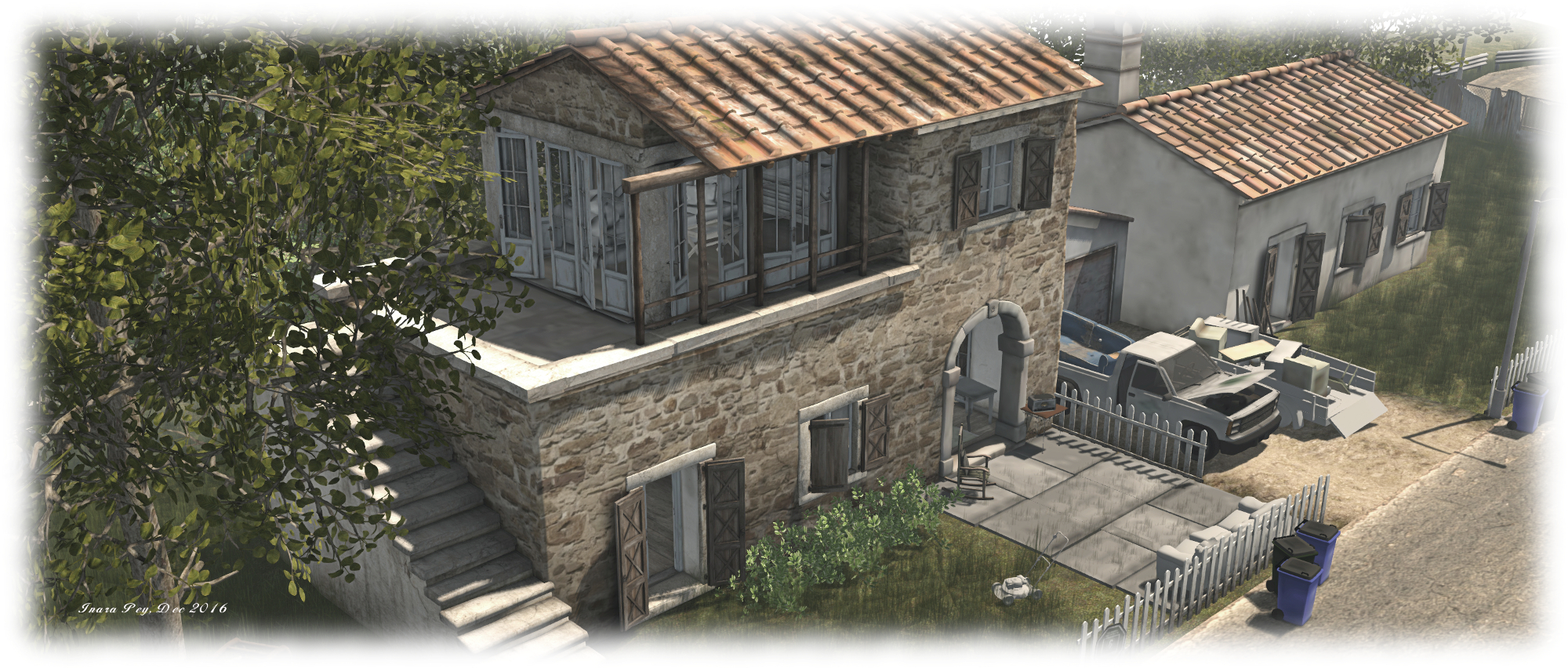
On the highest plateau of this rugged place, sits part of the town: grand houses  – including a villa of distinctly Tuscan looks – doubtless built by those who gained their fortune out of the mines below, but which have all seen better days. Some appear deserted, other still occupied – although whether by the original owners is perhaps open to question.

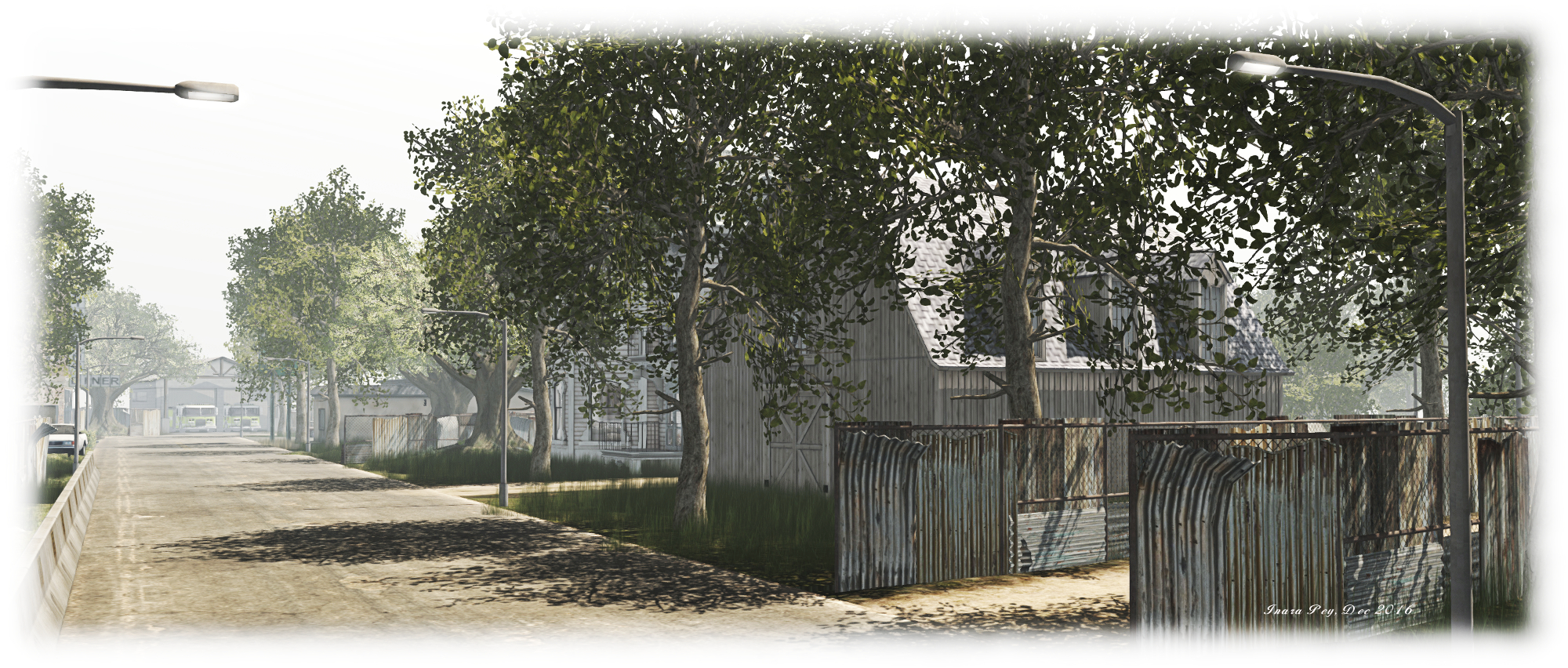
A road, cracked in places, loops around them, stables sitting between one or two, rough tracks now forming alleys between others. At one end of this road sits a more recent addition to the town – a motel. But even this has the same air of tiredness and age hanging around it as it faces a diner across the street, the offices above that long since abandoned and boarded-up. Only the emergency services building  and the Sheriff’s office around the corner from it, have a feel of upkeep about them.
Mineral Ridge; Inara Pey, December 2016, on Flickr Mineral Ridge

As the road twists a noose around the houses, a wide track drops away from it, winding its way down into a sheer sided canyon by way of an ageing farm before splitting under the gaze of an old radio tower, one part offering access to the west side of the region, the other running down into the canyon floor proper. Follow it down towards the latter, and if you keep your eye on the rocky wall beyond the trees and bushes lining the track, you might spot the hidden entrance to the old mines on which the town built its wealth, while down on the canyon floor sit ruins far older than the town.

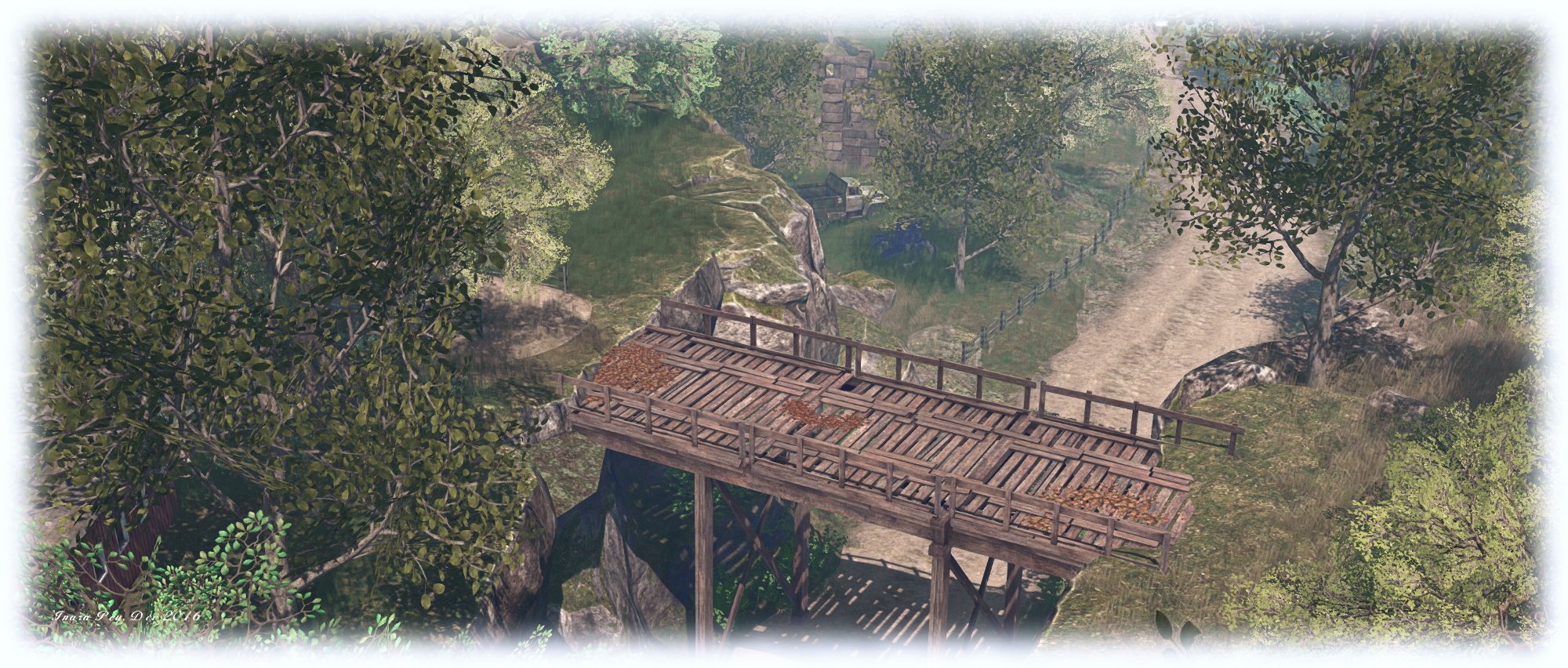
The west side of the region can be reached not only via the dirt track, but also over an old trestle bridge. This offers a convenient short-cut to the west ridge of the region, a gap in the wire fence, at some point faced with corrugated iron sheets as if it had been armoured, allowing it to once more join with the dusty track, presenting explorers with the choice of visiting a decrepit shack or making their way up to the the old radio tower.
Mineral Ridge; Inara Pey, December 2016, on Flickr Mineral Ridge

All told, Mineral Ridge is an interesting and considered design, sitting somewhere between a role-play environment and photogenic region with some little mysterious edges. Photographers looking for somewhere just that little different as a backdrop to their work, in particular may enjoy a visit to the town. Once again, many thanks to Shakepeare (SkinnyNilla) for passing over the LM!

SLurl Details

Bryn’s Hand in Second Life

Hand - Bryn Oh
Hand – Bryn Oh

Hand, Bryn Oh’s latest full region installation officially opens in Second Life on Saturday, December 10th at 12:00 noon SLT. It offers visitors an immersive experience which mixes art and storytelling with a touch of mystery and discovery.

On arrival, visitors are asked to accept the experience HUD (which will initially be blank) , and which can be minimised by clicking the dancing figure icon. As there is a lot of text to be read as one progresses through the experience, the HUD can also be further enlarged by clicking the Extra Large Text button on the HUD.

Hand - Bryn Oh
Hand – Bryn Oh

Instructions for viewer settings are also provided at the landing point. These are geared towards Firestorm and specifically the use of Phototools. Those on other v4-style viewers will find the settings under Preferences > Graphics and the Advanced Settings… button (Advanced Graphics Preferences floater). Bryn also uses Firestorm’s client-side windlight by altitude capability, so those on other viewers may need to manually change windlights (listed in About Land) as they move up through the installation.

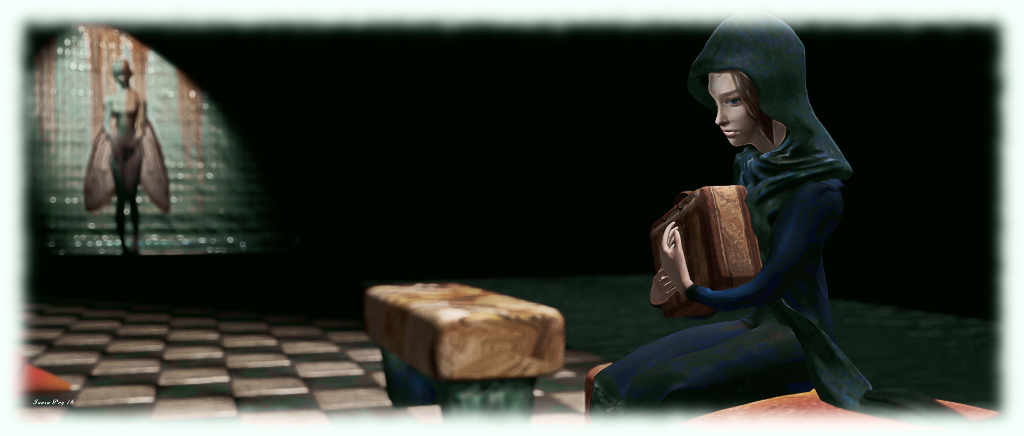
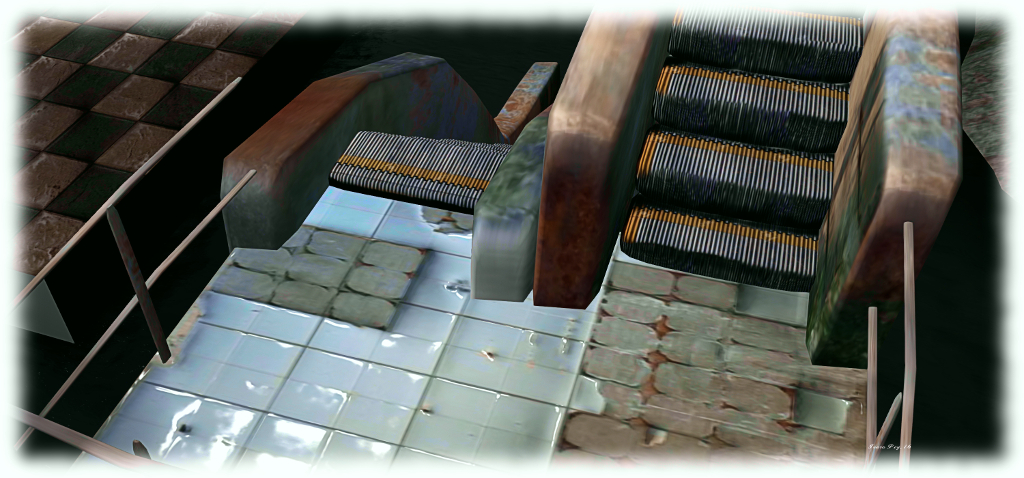
From the landing point and instructions, a teleport sphere carries visitors to an underground tram station, and their first encounter with the principal character of the piece, Flit – or as she is sometimes known – Flutter. It is her story we are invited to follow, the narrative (and the way through it) indicated by Flit herself, as she stands within certain scenes or points the way along the route we should follow – such as walking a collapsed aerial mast like a tightrope walker, or standing on a stairway as if waiting for us to join her and continue up them.

Hand - Bryn Oh
Hand – Bryn Oh

This journey takes us through a strange, broken urban setting with decaying, collapsing buildings; a place where adults are almost (but not entirely) absent, apparently leaving their children to fend for themselves. Technology is still active – drones  buzz around and project adverts on walls and floors for whoever might watch them – presumably as a form of currency / earning, and lights flicker and play. Walking through the streets and buildings there appears to be nods to dystopian sci-fi: a hint of Soyent Green here, a reference to rampant consumerism there. While Flit and the other children brought to mind shades of And The Children Shall Lead, minus the space alien angle.

Whether any of this was Bryn’s design or simply my over-active imagination, I’ve no idea – but Hand’s narrative naturally invites you to fill in the blanks: what has happened here? Why have the adult withdrawn? Why is the city so ruined? Lack of maintenance because there are no adults  – or something else (there are hints to be found pointing to a fear of nuclear war). Thus, in experiencing Hand, we also extend it, by exploring carefully and letting the hints  – posters, objects, etc. – suggest things to us.

Hand - Bryn Oh
Hand – Bryn Oh

There are also links and hooks into Bryn’s other work to be found here as well. Some are present within the story, others may be harder to find. As Bryn states, don’t be afraid to touch things as you explore. Take the lacewing beetle, for example; touching it will introduce you to Scissors a machinima by Bryn. Elsewhere, a broken cellphone lying on the kerb might lead you skyward to poignant piece of art based on an equally poignant image; and so careful exploration is required.

Byrn produced a trailer machinima for the installation (below), featuring music specially composed by Phemie Alcott. Phemie was due to perform at the opening of Hand, but Bryn reports that as Phemie’s mixer decided to commit suicide, the performance will now not take place until 14:00 SLT on Sunday, December 18th. Bryn isn’t sure how long Hand will remain in place – so be sure to visitor sooner rather than later, and please consider a donation towards Immersiva’s continued existence.

SLurl Details

  • Hand (Immersiva, rated: Moderate)

A Petrovsky Flux gone from Second Life

A Petrovsky Flux - no longer in Second Life
A Petrovsky Flux – no longer in Second Life

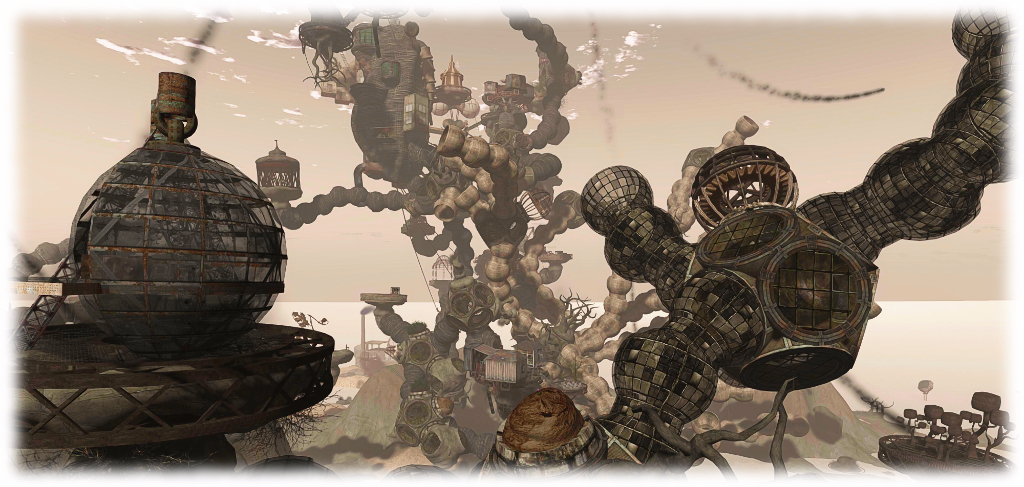
A Petrovsky Flux, the stunning, ever-changing cluster of devices that would assemble themselves and grow almost organically, only to blow apart and rebuild themselves over and over again, taking on a new form each time – has gone from Second Life.

Designed by Cutea Benelli and blotto Epsilon, the installation had, since 2010, been curated by the University of Kansas at their Spencer Art Museum region in SL, where it had over the years been a popular draw. However, at a time when eyes were all on the opening of the Horizons regions (see here) and return of Mont Saint Michel to Second Life in November 2016 (see here), the Spencer Museum of Art region quietly slipped away from Second Life, pretty much unnoticed.

It wasn’t until Chantal Harvey contacted me about the possible status of the Spencer Art Museum region that I found out something may had changed.  “I’ve been trying to get there for weeks now,” she informed me via IM, “I was filming there. but it seems it is gone, do you know?”

A quick check on the map confirmed the region had indeed gone from the grid, and a check through Tyche Shepherd’s excellent Grid Survey summaries showed it had been removed from the grid during the week ending Sunday, November 13th, 2016.

It’s not clear if the removal is permanent or not – as I reported in 2014, the region came close to vanishing from Second Life, due to something of a miscommunication involving the Spencer Art Museum, the University of Kansas and the artists. As a result of that situation, I’ve written to Stephen Goddard, the Spencer’s Associate Director/Senior Curator of Prints & Drawings. He was responsible for the Museum’s presence in Second Life, so hopefully, he can shed some light on what has happened. Should he reply, I’ll offer and update.

In the meantime, here’s Toxic Menges’ 2010 machinima of A Petrovsky Flux to remind us of this fabulous build.

Giovanna’s sky harbour in Second Life

The Last Harbour: sky platform

In July 2016, Giovanna Cerise invited me to explore The Lost Harbour, her (then) new gallery space in Second Life, shortly before it opened to the public (see here). Occupying the north-east corner of a region, it’s a superb open-air exhibit space, and Giovanna recently extended it with the introduction of a new skyborne section, which can be reached via an Anywhere Door at The Last Harbour’s landing point  (just follow the arrows on the floor to the door), or alternatively, you can teleport directly to it.

The extension continues the theme found at the gallery’s ground level, offering a series of platforms on which elements and reproductions of Giovanna’s 3D installations are displayed, with her 2D work occupying panelled wall sections mirroring some of the floor areas on the ground level.

The Last Harbour: sky platform

Of particular note to me on my arrival were two scale reproductions of elements from Giovonna’s Monochrome (open until the end of December 2016 and which I reviewed here), and her Ice Castle, which recently formed a part of her display at Holly Kai Park (see here). All of the pieces are offered for sale to the collector, and included a scripted resizer.

As a long-time admirer of Giovanna’s work, I can only say that the sky platform is a superb extension to The Last Harbour, offering an excellent reason for a re-visit  – or for those who have not taken the opportunity to drop in, to have twice the reason to jump over and enjoy Giovanna’s art.

The Last Harbour: sky platform

SLurl Details

LHOOQ: coastal scenes in Second Life

L2 Studio & LHOOQ Gallery, LHOOQ; Inara Pey, December 2016, on Flickr L2 Studio & LHOOQ Gallery, LHOOQ – click any image for full size

I’ve been paying an annual visit to Lindini2 Lane’s home region and location for her store, L2 Studio, since 2012. She has always presented the region as a landscaped setting which changes with the seasons, open for people to explore and enjoy whether or not they are  seeking one of her house designs.

Previously located on a homestead region, Lindini2 has now expanded to a Full region, L2 Studio & LHOOQ Gallery, and for those seeking a break from the snowy scenes of winter now appearing across the grid, it could be just the ticket. The move has given Lindini the chance to really flex her creative muscle, displaying her designs in a coastal setting, beautifully landscaped, with a demo rezzing area for her buildings high overhead.

L2 Studio & LHOOQ Gallery, LHOOQ; Inara Pey, December 2016, on Flickr L2 Studio & LHOOQ Gallery, LHOOQ

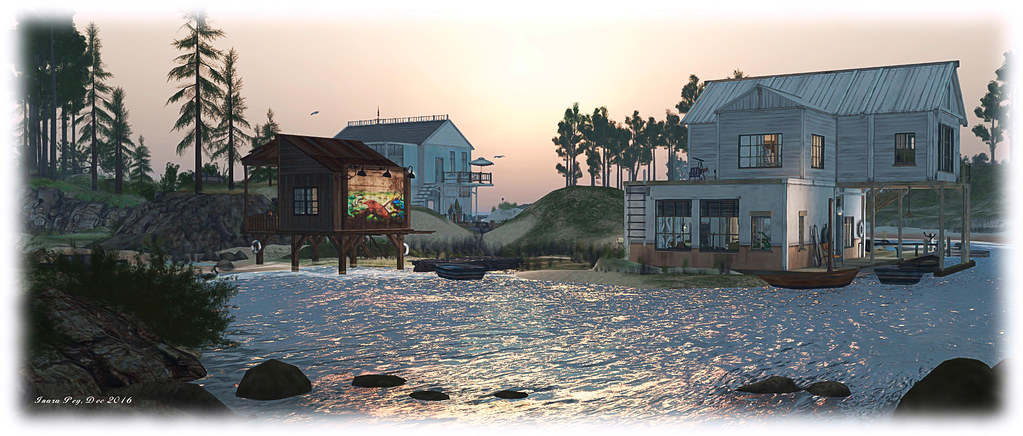
Visitors using the main landmark arrive in the L2 Studio store in the south-east corner of the region. Just across the water from this, a set of steps lead up to a major new feature for Lindini’s land: the LHOO art gallery, currently displaying work by Jessica Belmer. To the north and west of this, the landscape becomes more rugged. Pine trees occupy rocky land cut by deep inlets, stone steps offering a way up onto their fingers, before the land falls away to a curving beach and narrow channel separating a sandy island from the rest of the landscape.

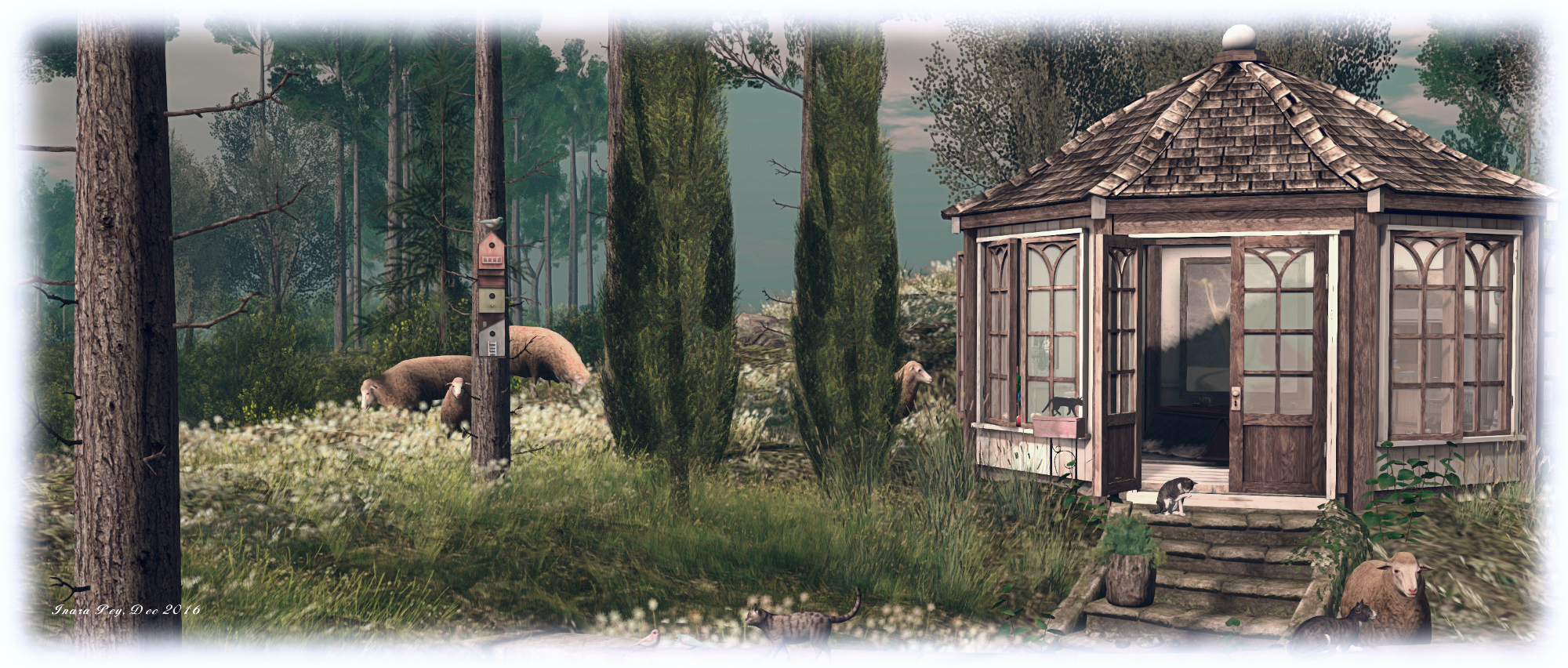
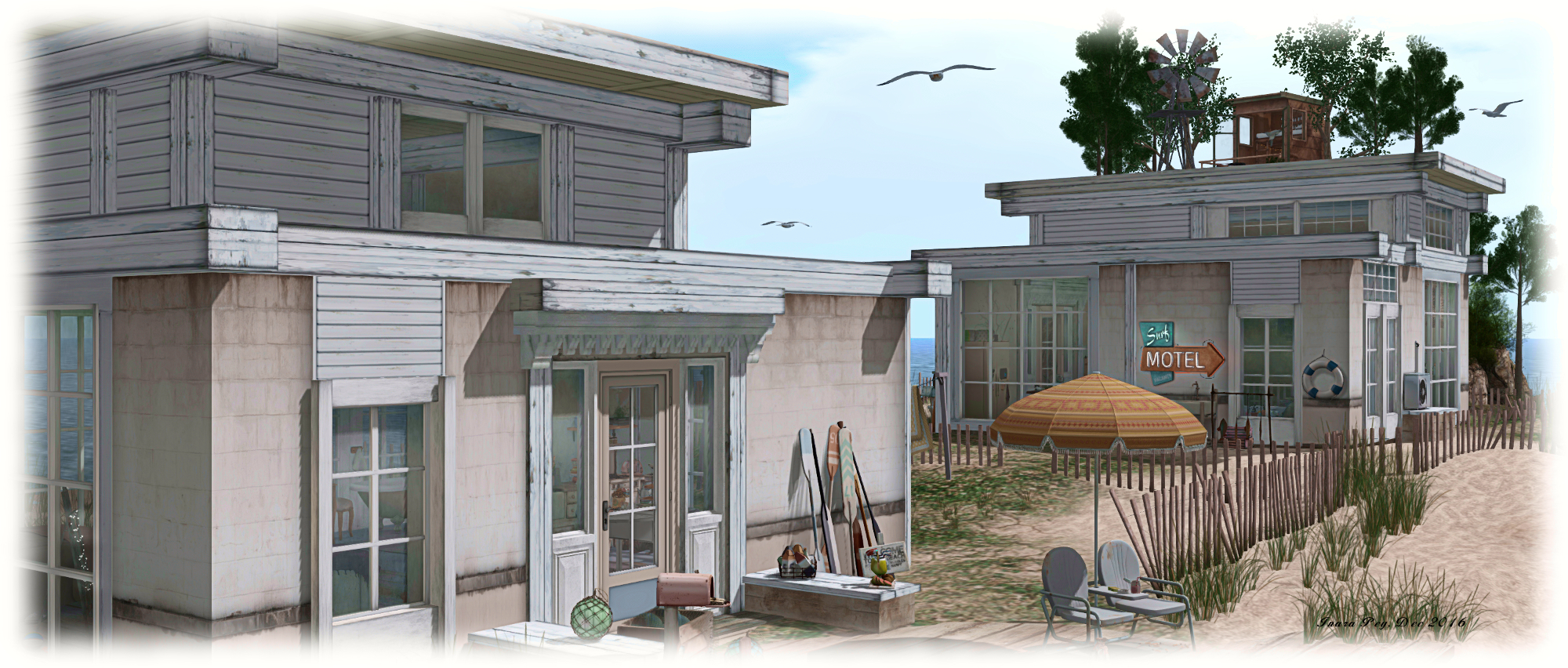
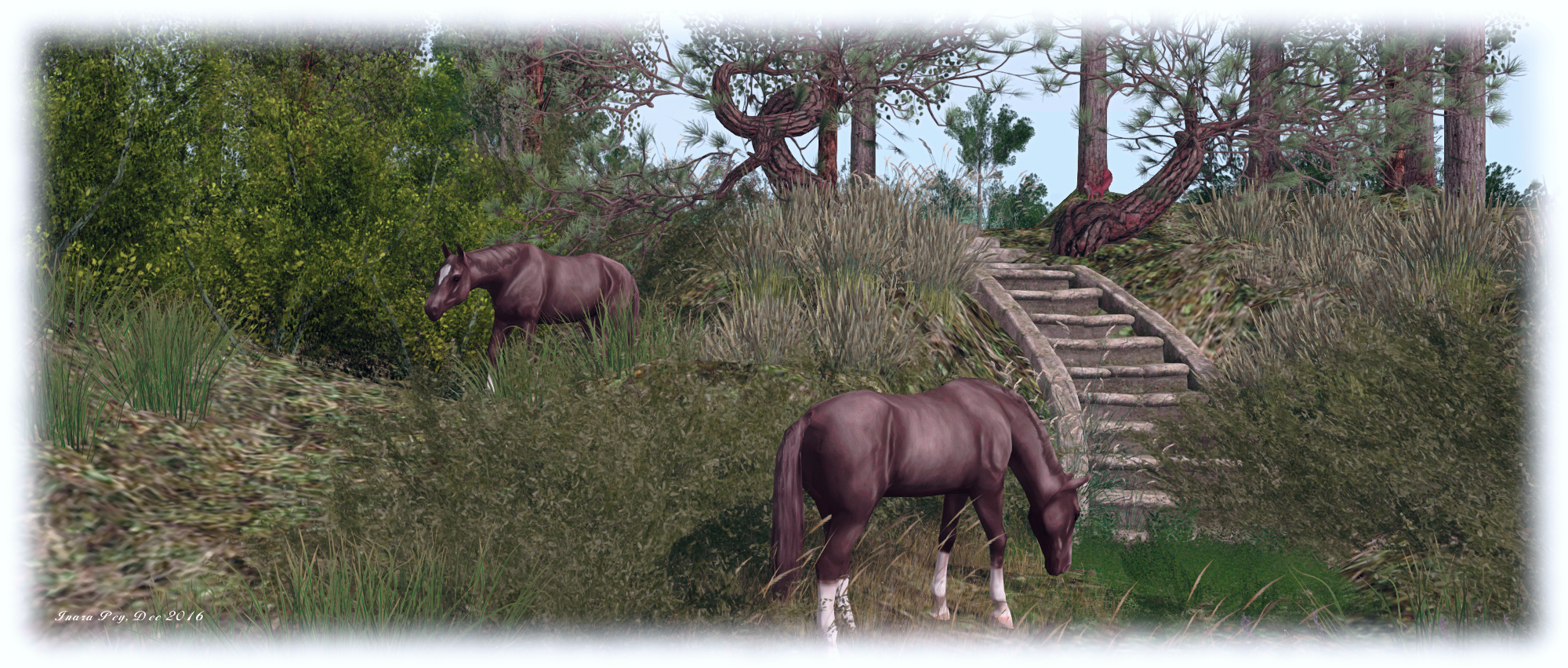
Within this setting can be found several of Lindini’s designs, set out in a manner suggestive of a small coastal community. Additional designs by Van Auster and others add to the natural feel to the setting, assisted by sheep grazing up on the craggy hills and horses wandering narrow trails, Cats can also be found here, keeping their eye on things, while a gentle, ambient soundscape completes the sense of immersion.

L2 Studio & LHOOQ Gallery, LHOOQ; Inara Pey, December 2016, on Flickr L2 Studio & LHOOQ Gallery, LHOOQ

The landscape is designed to encourage exploration – getting from A to B sometimes isn’t as straightforward as might first appear; diversions around inlets and across beaches are required. This further adds to the feeling of this is a place, rather than a showroom, as does the way all of the houses have been carefully furnished.

Throughout the region there are places to sit  – indoor and out , on the ground and in the trees – little places to discover and a lot to photograph and enjoy. If I have a quibble at all, it might be that there’s perhaps a little too much; at times my system struggled mightily with rendering.

L2 Studio & LHOOQ Gallery, LHOOQ; Inara Pey, December 2016, on FlickrL2 Studio & LHOOQ Gallery, LHOOQ

Nevertheless, L2 Studio and LHOOQ Gallery offers a pleasing and eye-catching break from the wintry destinations we might otherwise drop into;  the only wintertime concession can be found on the beach to the north-east – and even that is made of sand rather than snow 🙂 .

SLurl Details

Fris’ Land: a little treat in Second Life

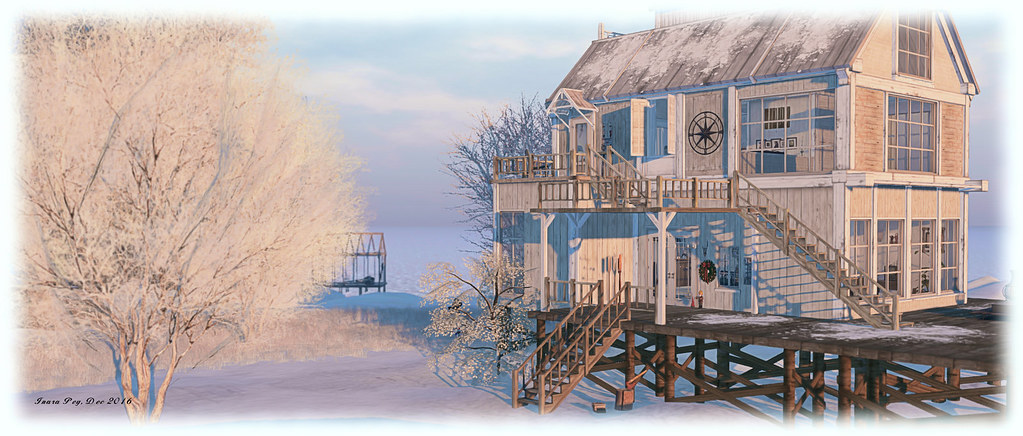
Fris' Land, Liebe; Inara Pey, December 2016, on Flickr Fris’ Land, Liebe – click any image for full size

In 2014 I, like many other Second Life users, paid my first visit to Frisland, the region designed by Charlie Namiboo, Anna Barzane and Frislanda “Fris” Ferraris which was based on the phantom island that appeared on virtually all of the maps of the North Atlantic from the 1560s through the 1660s.

The region became an instant hit with visitors, changing its face to match the seasons, and drawing people back time and time again. So much so, that when it did finally come time to say goodbye, it was obvious many would miss it.

Fris' Land, Liebe; Inara Pey, December 2016, on Flickr Fris’ Land, Liebe

It seems that Charlie and Fris also found it hard to leave their beloved creation behind, because they’ve just opened up Fris’ Land. While in no any way intended to be a replica of their original vision, it nevertheless offers those of us who miss Frisland with the opportunity to recapture memories of its wintertime look.

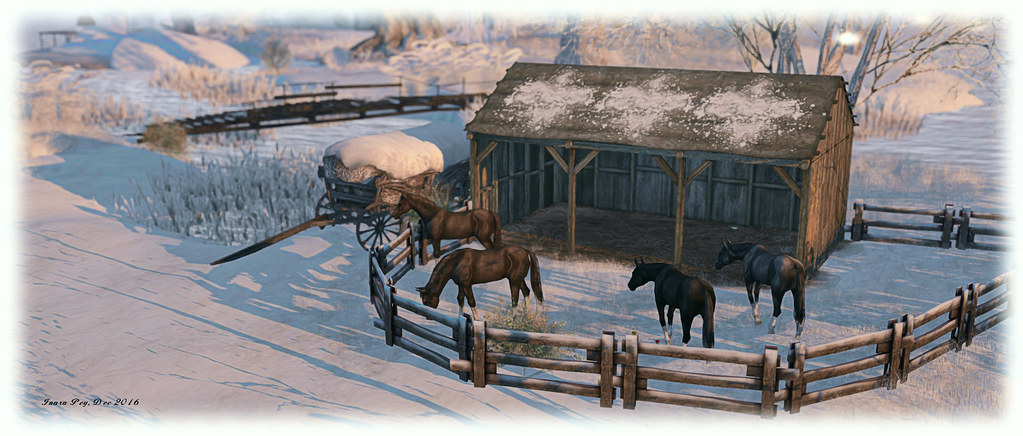
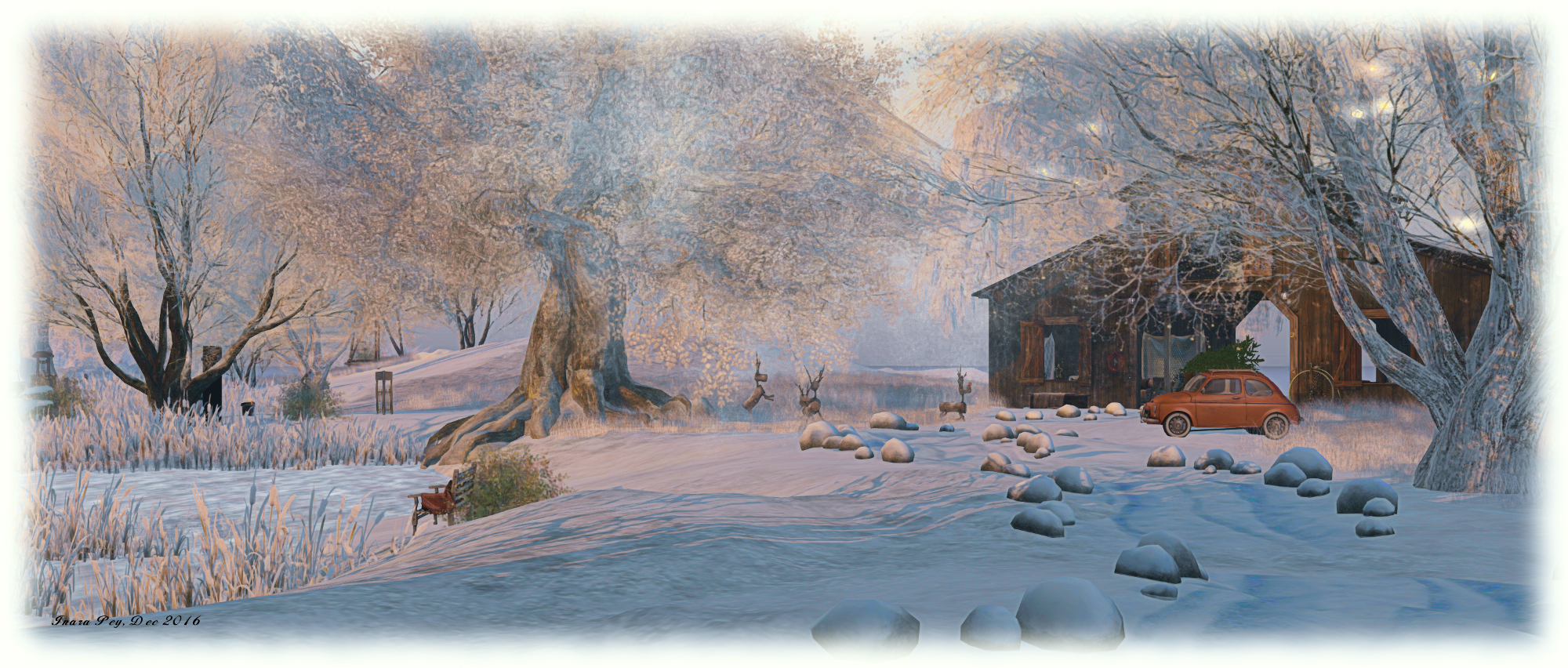
Occupying the eastern half of a Homestead region, Fris’ Land presents a snowbound landscape in which familiar pieces from Frisland – the little church, the horses and their little barn, the deck sitting over frigid water – sit alongside barns and houses not seen with the original, offering as new setting to explore and enjoy.

Fris' Land, Liebe; Inara Pey, December 2016, on Flickr Fris’ Land, Liebe

From the landing point, located near a large barn offering indoor seating, complete with pot-bellied stove and fireplace to ward off the cold, visitors can wander north or south across the snow, to where either the little red church sits at the north end of the region, or to where a large timber-frame house occupies a study wooden deck on the southern side.

Along the walk to the church, visitors will pass a small deck extending out over the waters between the islands, chairs arranged alongside another pot-bellied stove, just as they did in Frisland (do, as well, keep an eye out for the little black kitten on the deck – he’ll certainly be keeping both eyes on you!). When heading south, be sure follow the stone-line track which meanders past the horses and their hay shed.

Fris' Land, Liebe; Inara Pey, December 2016, on Flickr Fris’ Land, Liebe

Throughout the region, there are plenty of places to sit, indoors and out, including an old greenhouse frame sitting on a small dock behind the main barn. However, when exploring, and while there are bridges leading to them, do please keep in mind the island to the west are private residences, and not open to the public.

It’s a delight to see Fris and Charlie sharing their creativity again – and my thanks to Charlie for sending the invite for us to visit. Firs’ Land will remain open for “a couple of months” – so enjoy it while you have the chance!

SLurl Details