Artistry at THE EDGE in Second Life

THE EDGE Art Gallery: Artistry – Ladmilla and Eli

Open through until December 23rd 2019 at THE EDGE Art Gallery, curated by Ladmilla, is the gallery’s final exhibition for the year. Entitled Artistry, it is again an ensemble exposition, bringing together an interesting mix of talents and a stirring of 2D and 3D art, with images from both the virtual and physical realms.

In all, eight artists present displays at the gallery, their number rounded-out by a further display of art by Lamilla herself, accompanied with words by her Second Life partner, Eli Medier. As usual, the majority of the artists participating in this session display their art within the gallery’s individual Tuscan-style houses set around the gallery’s grounds / gardens, with Ilyra Chardin presenting her pieces within the garden itself.
THE EDGE Art Gallery: Artistry – Ilrya Chardin

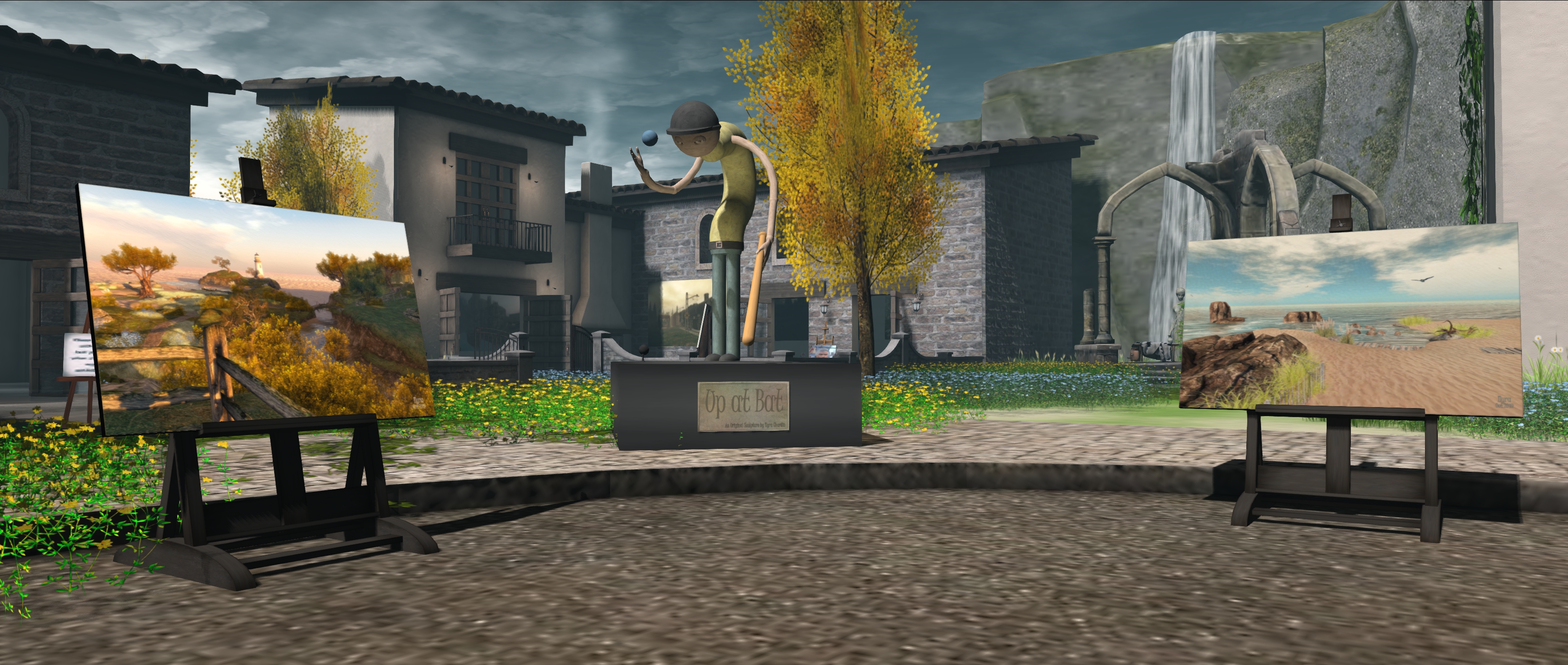
It is the latter that mixes 2D and 3D art, with Ilyra’s 2D digital mix media, most of which originate with photos taken within Second Life, sharing the space with six very distinctive pieces of mesh sculpture.

Two artists making a return visit to THE EDGE having been a part of the September / October ensemble exhibition at the gallery are Davenwolf Dagger and Loegan Magic.
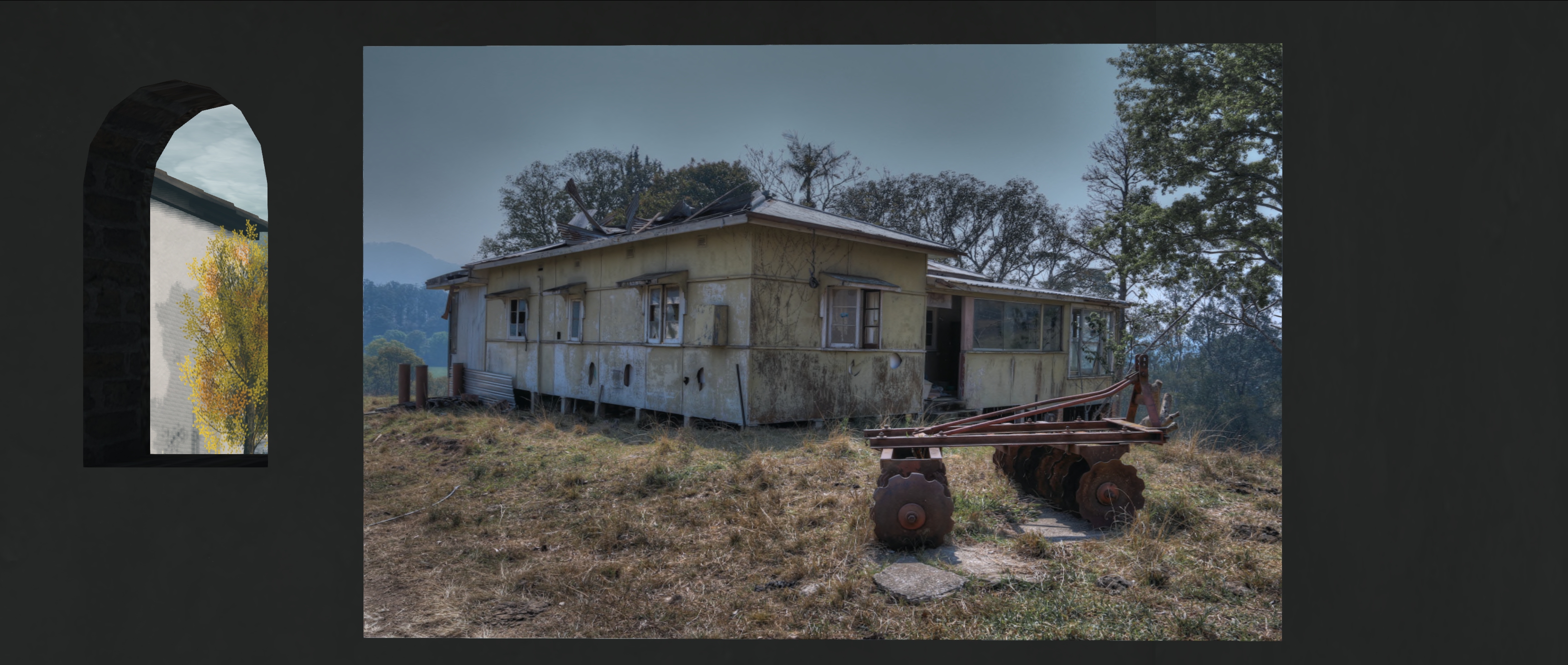
THE EDGE Art Gallery: Artistry – Davenwolf Dagger

As I’ve admitted to in past articles on his work, I’m something of a fan of Davenwolf’s evocative photography, in which he captures physical world locations in the most captivating way, and through his pictures, weaves a pictorial narrative. With Broken Dreams, he takes this a stage further, combining words with his images (please read the text panels before examining the art) to present a haunting story of a once-loved house and home (and a place which now, thanks to Australian bush fires, may no longer exist).

With Simple Things, Loegan offers more of his enticing looks at Second Life, offering a marvellous selection of focused images that convey stories about the digital spaces in which we chose to spend so much of our lives – but which also contain within them moods and thoughts that extend beyond the digital and into the physical, thus tying the two together in an elegant reflection of how our physical and digital lives intertwine.

THE EDGE Art Gallery: Artistry – Loegan Magic

Through Out of the Mist, Thomas Crown simply presents as series of images of Second Life that offer unique glimpses of this world through his eyes, and the landscapes and residents that bring it to life. And by “residents”, I’m not referring to avatars; a world is brought to life as much by its animals and wildlife and even by the vehicle humans have created to assist them in their travels through the places they inhabit. So it is these “residents” – wild fowl, horses, steam trains, boats, and cattle, to which I refer and which are evocatively portrayed here.

Avatars are very much the focus of Tresore’s From Dark to Light, in which she presents her avatar in a variety of story-laden setting and styles from period to fantasy and back, in which colour – notably red and black – play as much a role in many of the pieces as her avatar’s pose and style of dress. Colour and depth are also very much present to great effect in Raging Bells’ untitled selection of SL photographs, offering as they do a sense of the richness of life and opportunity within this virtual realm.

THE EDGE Art Gallery: Artistry – Raging Bells

I admit to not having to have previously come across Zia Branner’s work in Second Life, or that of BigZee. Zia is a physical world artist who constructs marvellous images through the use of acrylics (mainly on canvas) together with structure paste, gel, sand, glue, bandages and paper, and perhaps oil crayons and acrylic ink to accentuate parts of a an image. Held under a layer of mat or gloss varnish, this gives such pieces a sense of physical texture that is clearly evident when presented through a digital medium like SL. BigZee meanwhile, presents images from Second Life that offer their own sense of texture and life through his use of especially vibrant and attention-grabbing colours.

In Shadows, Ladmilla and Eli round-out the exhibition with a series of very tonal images by Ladmilla combined with words by Eli. Utterly captivating in their own right, the narrative in each image is given even greater depth and poignancy through Eli’s words as they perfectly amplify the mood and feeling exuded by each piece.

THE EDGE Art Gallery: Artistry – Zia Branner

As always with THE EDGE, a fascinating selection of art and artistry.

SLurl Details

Winter’s blanket at The Four Seasons in Second Life

The Four Seasons, November 2019 – click any image for full size

Elyjia Baxton has a long association with regions designs in Second Life, be it those of her own, or those created with Brayan26 Friller, and I’ve been fortunate to cover a number of them in these pages. In 2018, she produced Snow Falls, a winter wonderland rich in detail (and later to become A Way of  Life – see: Enjoying some Snow Falls in Second Life and A Way of Life in Second Life). Now, for 2019, she has (with Brayan’s involvement) returned to the theme of Snow Falls, turning her current Homestead region The Four Seasons into another winter wonderland.

It’s a setting that has a certain Scandinavian feel in that the region is intended to be surrounded by tall, snow-capped mountains which, together with the crystal clear (and cold-looking) waters, bring to mind a location sitting within a deep fjord.

The Four Seasons, November 2019

I say “intended”, because the region seems to be a victim of BUG-225295, which can make whether or not a region surround rezzes something of coin toss. During our first visit, we saw the region entirely sans surround, for example, and when I returned to take the photos seen here, it only popped-up when I was well into the second hour of my visit, despite several attempts on my part to force it to rez.

However, whether or not the surround pops up for you is actually  – to me – neither here nor there; the region is attractive in its own right with our without the frame of mountains ringing it. In fact, I’d go so far to say that I found the lack of the surround allowed more of the colours evident in the region’s windlight setting to be better reflected within the region itself – as I hope is apparent in the majority of the photos in this article.

The Four Seasons, November 2019

Certainly, the lack of the surround, should it fail to rez for you, doesn’t actually detract from the beauty of the region, which is a wonderful mix of a low-lying landscape running south to north from the landing point, and Arctic-looking waters that cut into it to form channels and bays frozen into stillness by the cold, and on which snow is in places lying.

The landing point, with its parade of shops, offers the suggestions that beyond it, there just might be a bustling town, while the land to the north, with its wooden cabins, stone-build pavilion and gazebos and timber church, speak to the “rural” outlying regions of that town; a place where winter brings with it a sense of Yuletide spirit and celebration by means of crisp walks in the snow and cuddles under blankets before open braziers.

The Four Seasons, November 2019

From the shops and landing point, a rutted, snowy track points the north, an invitation to set forth and explore and visit places like the timber chapel, the pavilion and Santa in his gazebo. Along the way, there is plenty of detail to appreciate, from foxes to snowmen to reindeer and more. Rowing boats bravely left out on the water now sit frozen in place, offering more places to sit and appreciate the landscape.

This is very much a place that puts one in the winter spirit: the weather has been handled such that just looking at the setting makes you want to bundle up in warm clothes before going out into the snow and exploring – to the degree that I felt my avatar was positively under-dressed in jeans, shirt and western boots and at risk of catching a nasty cold!

The Four Seasons, November 2019

As well as following the main path around the region,  there’s also the opportunity to head westwards from the landing point and visit a glass-sided pavilion where shelter from the weather might be found in front of a decorated tree (although a little fireplace would help add to the appeal!). Meanwhile, across the first bridge and off to the east, a cosy little cabin offers a similar refuge from the cold, warmed by a cast iron stove.

Rounded-out by a soft sound scape over which a slightly mournful bell slowly tolls (perhaps bringing to mind the words of John Donne), The Four Seasons offers a rich, wintertime setting for the time of year, with many opportunities for photography. Those taking pictures may like to consider submitting them to the region’s Flickr group.

The Four Seasons, November 2019

With thanks to Shawn for the pointer to the region!

SLurl Details


2Lei and a return to a Lost Town in Second Life

Lost Town: Cecilia Nansen – 2Lei 10th edition

In previewing the 2019 2Lei No Violence! season to raise awareness of the annual International Day for the Elimination of Violence Against Women, I was surprised to see that one of the exhibition centres for this year is Lost Town – La Citta’ Perduta.

Surprised, because between 2012 and 2014, the Lost Town was a regular destination for me in exploring the arts in SL (in fact, it’s the place where I first made an attempt at a “full” SL machinima). However, somewhere along the way, I lost track of the location (I actually thought it had closed!) – so my apologies to sivi Kelberry, the region’s holder, for doing so.

Lost Town: Eve Pearl – – 2Lei 10th edition

For the 10th 2Lei edition, Lost Town is hosting exhibitions by Cecilia Nansen, Dixmix Source, Eve Pearl, Hillany Schofield, Mistero Hifeng, Moya Patrick, and Nevereux. This is an accomplished group of artists, and the art is equally so. As such, each of the displays presented in Lost Town has a particular attractiveness and message.

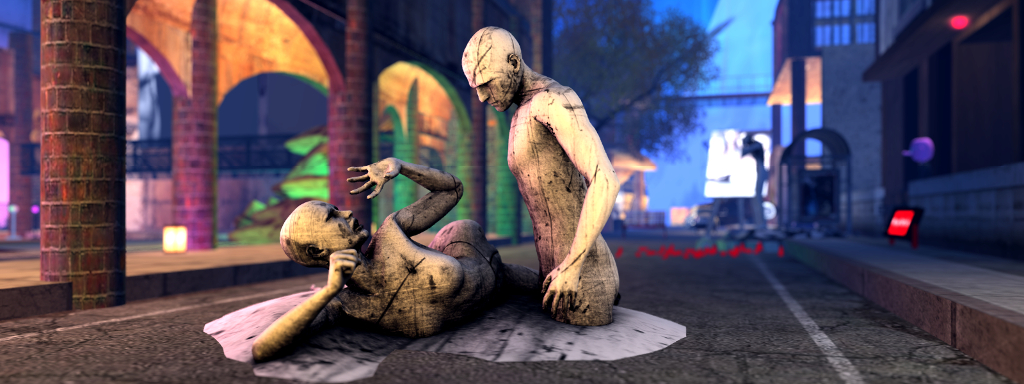
Some of the exhibits tackle the subject of violence against women head-on, as with Mistrero Hifeng’s Di quel che e’ stato non resta, which is startling in its context and presentation. Others focus more on the beauty and femininity of women, an approach that is particularly effective given the primary subject matter for the season. This can be seen through Eve Pearl’s images, for example.

Lost Town: Mistero Hifeng, – 2Lei 10th edition

Still others provide something of the hidden truths of the violence that can exists within a seemingly loving relationship. Note the hard, cold look evident in the male of Dixmix’s images, and the pose / look of the female – her looks suggestive of a desire to please that could go beyond a “simple” desire to show love.

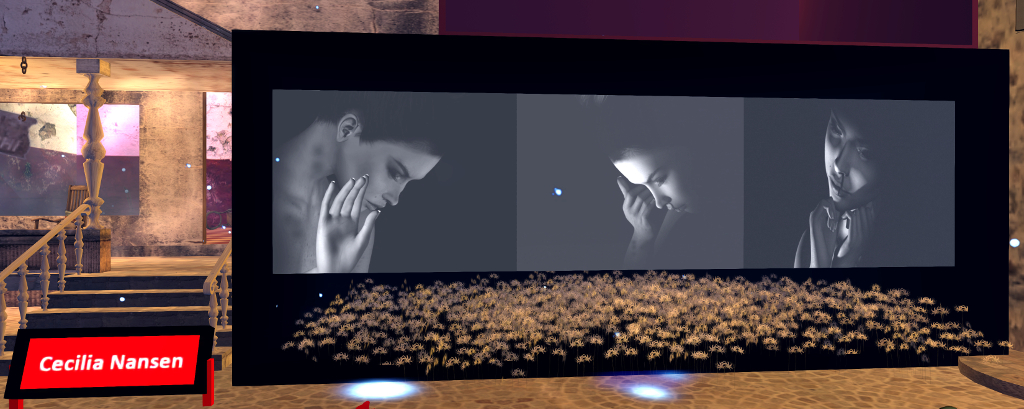
However, I confess to finding Cecilia Nansen’s triptych of monochrome images especially powerful. From the hand raised in a appeal to stop / to be left alone, through the eyes closed against tears, to the line of blood trickling from a nostril, these three images convey all that needs to be said about the hurt and terror of domestic violence.

Lost Town: Dixmix Source – – 2Lei 10th edition

Evocative throughout, all of the displays offered in Lost Town are all emotive in content and should not be missed. For more information on the 10th Edition of 2Lei’s No Violence! season, please refer to my preview piece: No Violence! the 2Lei 10th edition in Second Life.

SLurl and Links

Let it Snow 2019 in Second Life

Let It Snow! November 2019 – click any image for full size

Winter is coming to the northern hemisphere, and for Second Life, it means regions are starting to get snowy make-overs and – in some cases – Christmas and end-of-year holiday décor has started to appear. Given this, we’re entering the time of year when a lot of winter / holiday themed regions will be subject to blog posts and Flickr photo streams.

This being the case, I thought I’d get things started here after Caitlyn and I received an invitation from Milly Sharple to visit this year’s edition of her Let It Snow! region design. I’ve actually been writing about Milly’s wintertime designs since 2014 (allowing for a break she took with them), and I’ve always looked forward to seeing them each year, as they’ve tended to offer something beautifully photogenic and with a sense of magic.

Let It Snow! November 2019

For 2019, Let It Snow! offers something a little different to previous years – at least to my eyes. There is the same winter feeling – a crisp, cold looking sky which looks as if the air entering your lungs would give you that cold, hard thrill of being alive; there’s the familiar blanket of snow thrown across hill and dale with the trees coated in frost, and there are the trappings of the season: hot chocolate, holly strung above shop doorways, lights strung across lintels and over tree branches and so on.

But at the same time, there is something that feels a little different with this year’s build. In the past, Let It Snow! has perhaps been a contiguous landscape, flowing from place to place, while the flow is present in 2019’s design, but so to is a feeling that elements of the setting stand a little apart from the rest, as if they are mini vignettes, the surrounding landscape as much a buffer between them and the rest of the region as it a means of connecting them.

Let It Snow! November 2019

Which is not to say this year’s Let it Snow is any the less photogenic than previous years or is in any way disjointed in its presentation of its different locations. There is still a lot – as always – to appreciate, from the little village square that brings with it a touch of England with its red telephone box, Royal Mail pillar box and  country-style pub, through the crystal palace crowning a flat-topped hill and the skating rink and cabins sitting among snow and frost heavy trees.

From the landing point, visitors can turn north to the village or south towards the crystal palace or eastwards across the low-lying part of the region. The latter direction leads visitor past some of the detailed touches within the region: one of the furnished cabins, stone rings, snowmen and ruins.

Let It Snow! November 2019

Scattered throughout are places to dance or to sit – one f the more amusing of the latter being the opportunity to pose with a seated snow sculpture in the village.

There are also some familiar touches to the design – motifs seen in past iterations of Let It Snow! – that help to give a sense of connection between this and the past versions of the setting for those who remember them. Chief among these is the aforementioned crystal palace, whilst elsewhere are deer wandering in the snow, and little hideaway snugs.

Let It Snow! November 2019

For those who like a little activity, the skating rink to the west of the region, while the cable car close by offers a ride up to the hilltop overlooking it, where a toboggan-style sled rid awaits those waiting to ride back down the hill.

With plenty of opportunities for photography, Let It Snow! once again offers a charming visit and opportunity to welcome in the coming winter season in Second Life.

Let It Snow! November 2019

SLurl Details

Mary Cassatt at the Museum of Fine Arts in Second Life

Museum of Fine Arts: Mary Cassatt

Currently open at the Museum of Fine Arts in Second Life is the third part of a series celebrating les trois grandes dames of French Impressionism. Having featured Marie Bracquemond in the first part of the exhibition (see: The Museum of Fine Arts in Second Life) and then Berthe Morisot in the second (see: Berthe Morisot at the Museum of Fine Arts), this final part turns to the work of Mary Stevenson Cassatt (May 22, 1844 – June 14, 1926).

Cassatt is perhaps the most unusual of the grand dames, in that she was born in the United States, the daughter of a stockbroker of French descent. Her parents were able to afford to provide her with a well-rounded education that included travel and study in Europe, where she gained her first exposure to music and the arts. It was at this time that she likely gained her first exposure to  some of the great masters including Edgar Degas, would later be both colleague and mentor.

Returning to the United States, she started to formally study art – albeit it against her parent’s wishes – a path that would lead her back to France in her early 20s. At the time, women were unable to the École des Beaux-Arts, Paris – one of the most influential schools of art in the country – and so sought be be privately tutored. It was this bias against women in a foremost school of art that likely further reinforced Cassatt’s support for equal rights, which formed as much a part of her life as her art.

Museum of Fine Arts: Mary Cassatt

Learning under the tutelage of Jean-Léon Gérôme,  Charles Chaplin and Thomas Couture, it was at this time (1868-1870) Cassatt had her first pieces of art accepted for exhibition. Following a visit home to her family in 1870/71, Cassatt returned to France where she enjoyed further success with exhibiting her art, although she became increasingly cynical and outspoken about the male bias against women artists event in many of the art salaons. In return, she was increasingly seen as “troublesome” for her views and straightforwardness – something that perhaps moved her more towards the Impressionist movement, who were just starting to mount their own independent (or “fringe”, as those practising more accepted forms of art may have regarded them) exhibitions.

It was at this time that she came directly into contact with Edgar Degas, who invited her to join their exhibitions and movement. With Degas she formed a life-long, if often strained, friendship, which included experimenting with form and colour, and she continued to enjoy moderate success.

In 1894, Gustave Geffroy referred to Cassatt as one of les trois grandes dames (the three great ladies) of Impressionism alongside Bracquemond and Morisot. However, by that time, Cassatt no longer regarded herself as part of any movement, but rather as an experimentalist and teacher. Similarly, her popular reputation is based on an extensive series of rigorously drawn and tenderly observed paintings and prints on the theme of the mother and child, works which she embarked upon after she had started to move away from the impressionist movement – which is not to diminish her role within the movement.

Museum of Fine Arts: Mary Cassatt

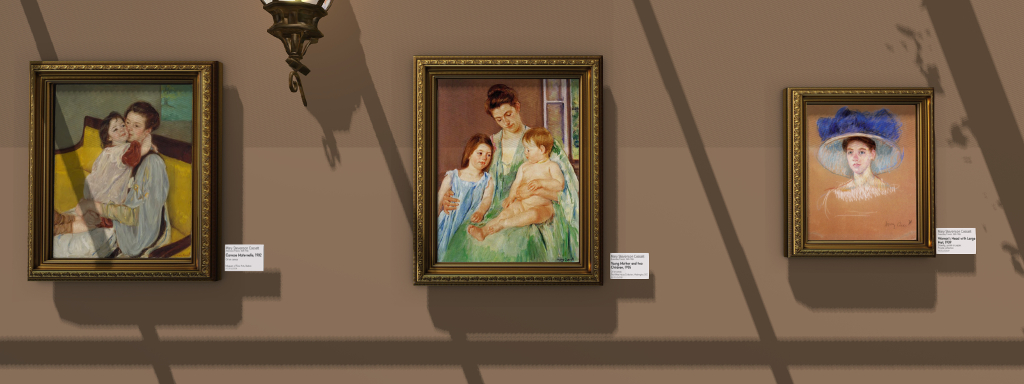
The exhibition of Cassatt’s art at the Museum of Fine Arts can – as with the previous exhibitions of Bracquemond’s and Morisot’s work can be found in the pavilion buildings, behind the main gallery. It is broadly split into two parts: the pavilion to the left (as you face them) is predominantly focused on Cassatt’s  work from the 1870s through her time in the impressionist movement, while the pavilion to the right  focuses more on her later work including the aforementioned series of mother and child pieces.

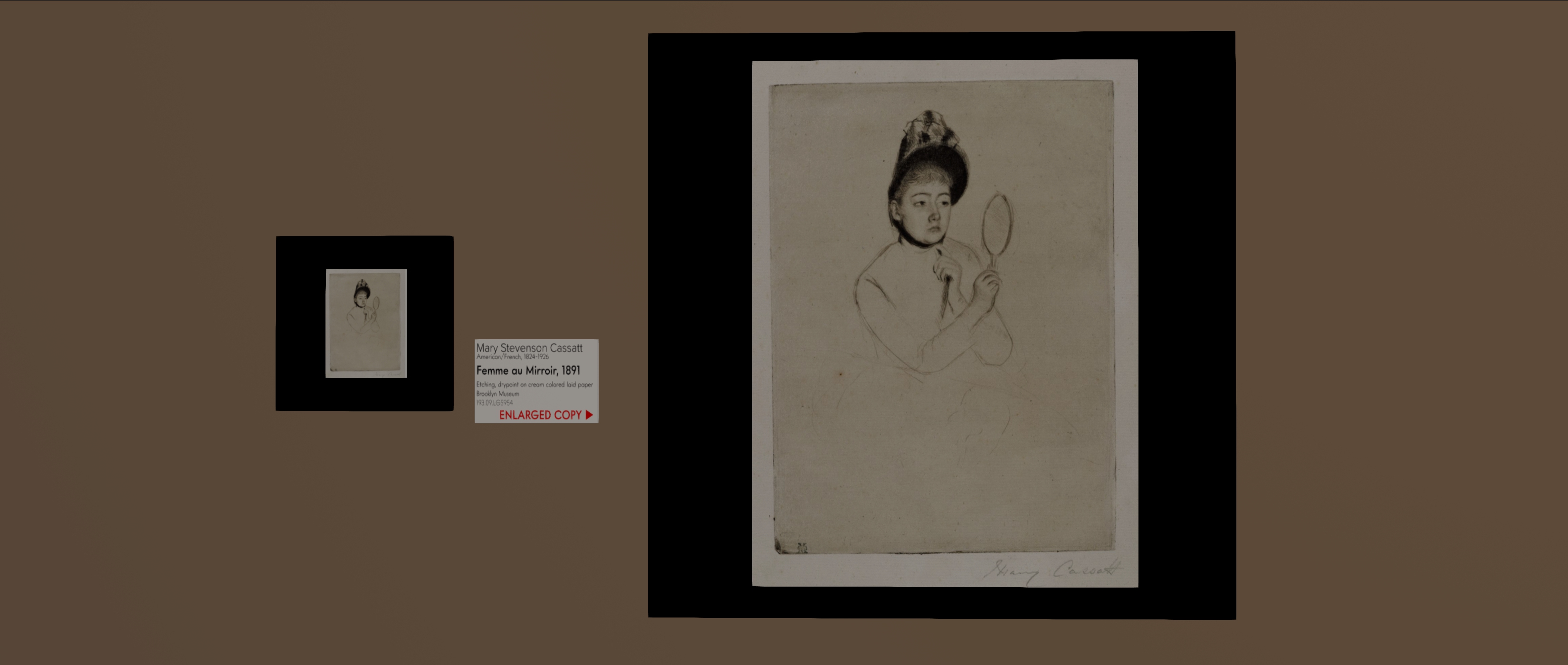
As is the practice at the gallery, the paintings are drawings are presented with wall-mounted information cards, and touching any reproduction will display the information relating to the piece in local chat. All the the pieces are also offered in scale with one another – which, as I’ve noted in past reviews, can make some pieces hard to fully appreciate. To counter this, the gallery offers some of Cassatt’s drawings to scale – but with a larger-scale version alongside to offer the opportunity for clearer appreciation. It’s a simple, but effective approach.

Museum of Fine Arts: Mary Cassatt

One of the attractive features of these exhibitions at the Museum of Fine Arts is that that bring together works  that might never all be seen together under one roof; as such, this is again an exhibition that connoisseurs of fine art will not want to miss.

SLurl Details

Images and words in Second Life

Virtual Rhyming, November 2019

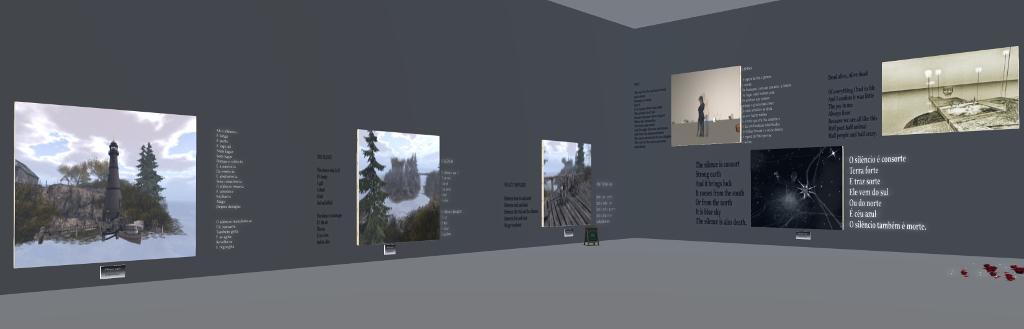
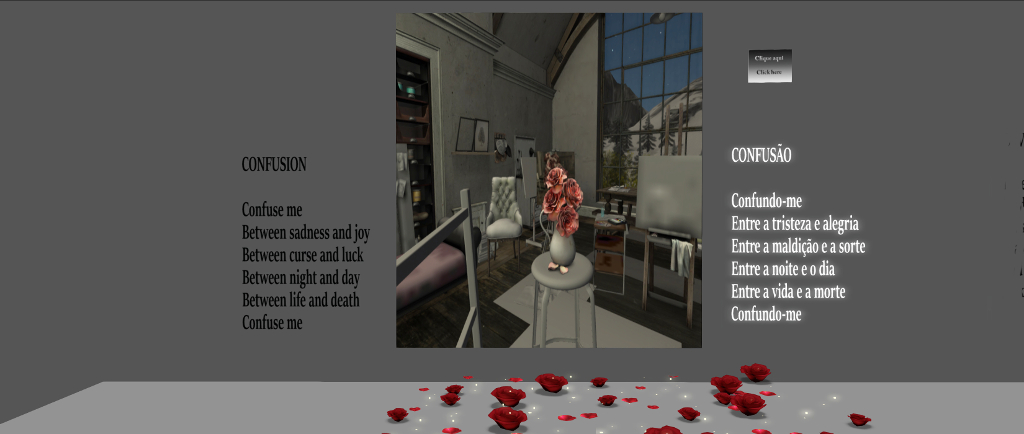
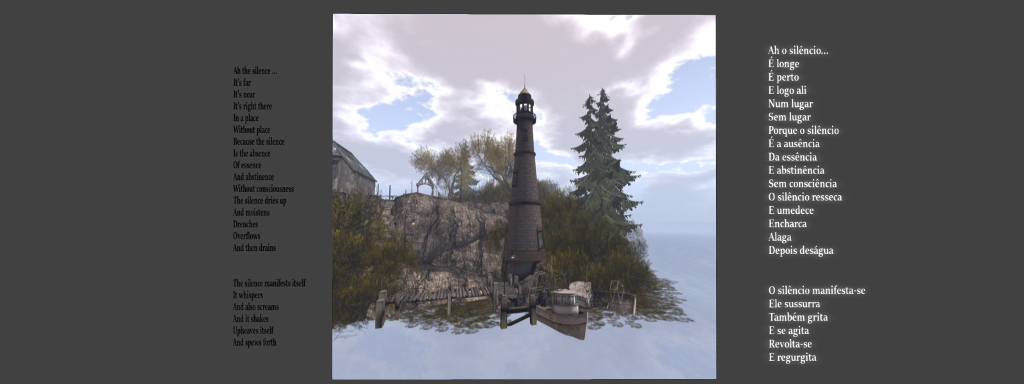
Virtual Rhyming is a small, semi-interactive exhibition of Second Life photography and poetry by Sunset Quinnell and Guerreira Xue (Brazilian social media writer Hilda Milk in the physical world), two friends in both the virtual virtual and physical worlds. It features nine images by Sunset flanked on either side by a poem in both Portuguese and in English by Guerreira.

I took the photos in different locations in Second Life, then sent them to Guerreira so she could see them fresh and be inspired to write about them.

– Sunset Quinnell, describing the process behind the exhibition

Virtual Rhyming, November 2019

The nine images with their accompanying poems are grouped into set of three, with one set focused on NevaCrystall’s Borneo; one set on Kekeland – Bardeco by Terry Fotherington and Bridget Genna and, between them, a triplet of pieces focused on the arts, and featuring pieces by Bryn Oh, Cherry Managa and Kicca Igally and Nessuno Myoo.

The approach of Sunset taking the photos and sending them to Guerreira, rather than them both visiting the locations together, perhaps gives the poems an extra level of sensitivity, approaching as they do each piece not just in terms of interpreting the scene presented, but possibly Sunset’s mood in taking the pictures. Thus, there is something of a personal sensitivity present in both words and images.

Virtual Rhyming, November 2019

For those who are curious, seven the pieces have interactive elements: just click on the sign below them and follow the instructions that come up in local chat (in both Portuguese and English). These offer a mix of activities intended for a little fun, rather than necessarily adding to the interpretation for the image / poem.

SLurl Details