Discovering an old friend for the first time in Second Life

Vecchi Amici
Vecchi Amici – click any image for full size

I recently received an invitation from Patti Peregrine to visit her quarter region holding at Serena Pirates Wells, called Vecchi Amici (“Old Friends”) Winery. As I’m familiar with Patti’s work from her time at Hestium I where she worked with my friend Boudicca Amat (and which you can read about here),  I made it a point to hop across to take a look as soon as time allowed.

Currently featured as at Editor’s Pick in the Destination Guide Vecchi Amici is a simply done but delightfully eye-catching corner of Tuscany brought to life in Second Life by someone with an eye for layout and ambience. And for those who enjoy their wine (/me moves her glass out of sight), it is just the spot to while away an afternoon.

Vecchi Amici
Vecchi Amici

Located atop a gentle slope on the north-east side of the region, Vecchi Amici presents a small, active vineyard before which sit a little orchard (so is cider also produced here?). A path meanders through a little grove of trees, passing the vines on one side and a large pond on the other, as it winds its way up to a converted villa.

Fronted by a low stone wall and a line of fir trees and with walled gardens shouldering it on either side, the villa offers visitors a comfortable place to sit and relax, with a small café area to one side of its large, single room and comfortable chairs and sofa on the other. Outside, water splashes in a fountain, and a bench seat is shaded by a young maple tree. A small terrace to one side of the villa offers a swing seat and access to one of the walled gardens, where butterflies weave patterns over the flowers and wooden benches offer further places to sit. The garden to the other side of the villa offers another pleasing mix of flowers, benches, butterflies and – for the hungry – a little afternoon tea set out on a dainty table.

Vecchi Amici
Vecchi Amici

Those with a taste for wine may well be waylaid on their way up the villa by opportunities to sample the local produce either from the bottle or – if it is ready – straight from the tap of an ageing barrel. Just across the path, the pond offers a little retreat where samples can be enjoyed while watching the local swans and dear.

Small and simple it might first appear, but there is an elegance to Vecchi Amici which more than lives up to its name; a visit is like a return to a familiar old friend of a place; there’s a refined, aged fell to the villa, and the setting lends itself to photography. Should you enjoy your visit, do please consider a donation towards the vineyard’s continued presence in Second Life.

Vecchi Amici
Vecchi Amici

SLurl Details

A return to The Shire in Second Life

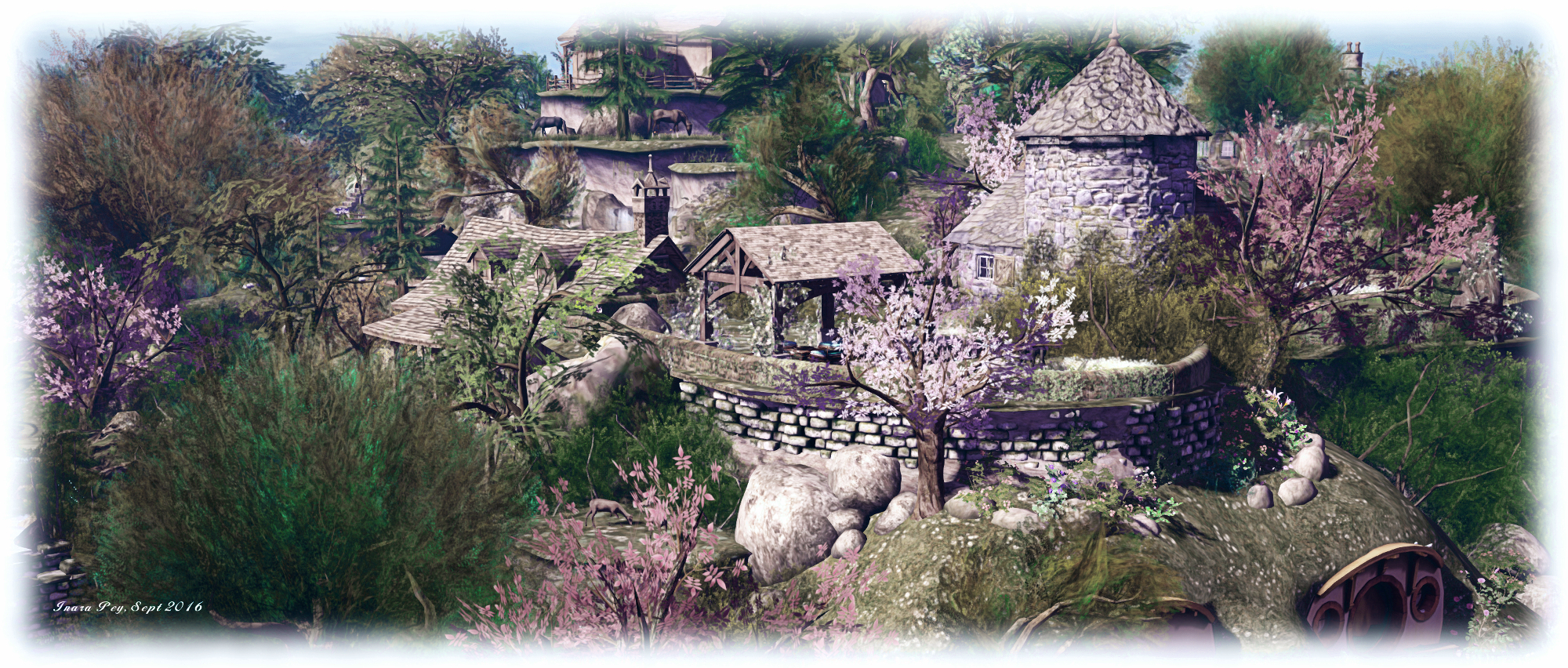
The Shire; Inara Pey, September 2016, on Flickr The Shire – click any image for full size

The Shire. For anyone who has entered the realms of J.R.R. Tolkien’s Middle Earth, that is a name synonymous with Hobbits, the house at Bag End, and the place from which Bilbo and Frodo Baggins each in turn left behind all they had ever known to set out on quests very different in nature, but ultimately part of the same history. It is also a place beautifully brought to life in Second Life by Chocolate Aftermath, working with region holder Imabean Algorythm (Ima Peccable).

I first visited The Shire, Second Life, in March of 2015, and was utterly delighted with all I saw; a beautiful blending of places for Little and Big Folk, complete with a touch of Elven mystery. I confess to not having made a return trip in nigh-on a year, so seeing it featured in the Destination Guide highlights for September 16th put me in the mind to renew my acquaintance with the region, see what has changed and – most importantly of all – introduce Caitlyn to Chocolate’s interpretation of this corner of Tolkien’s world.

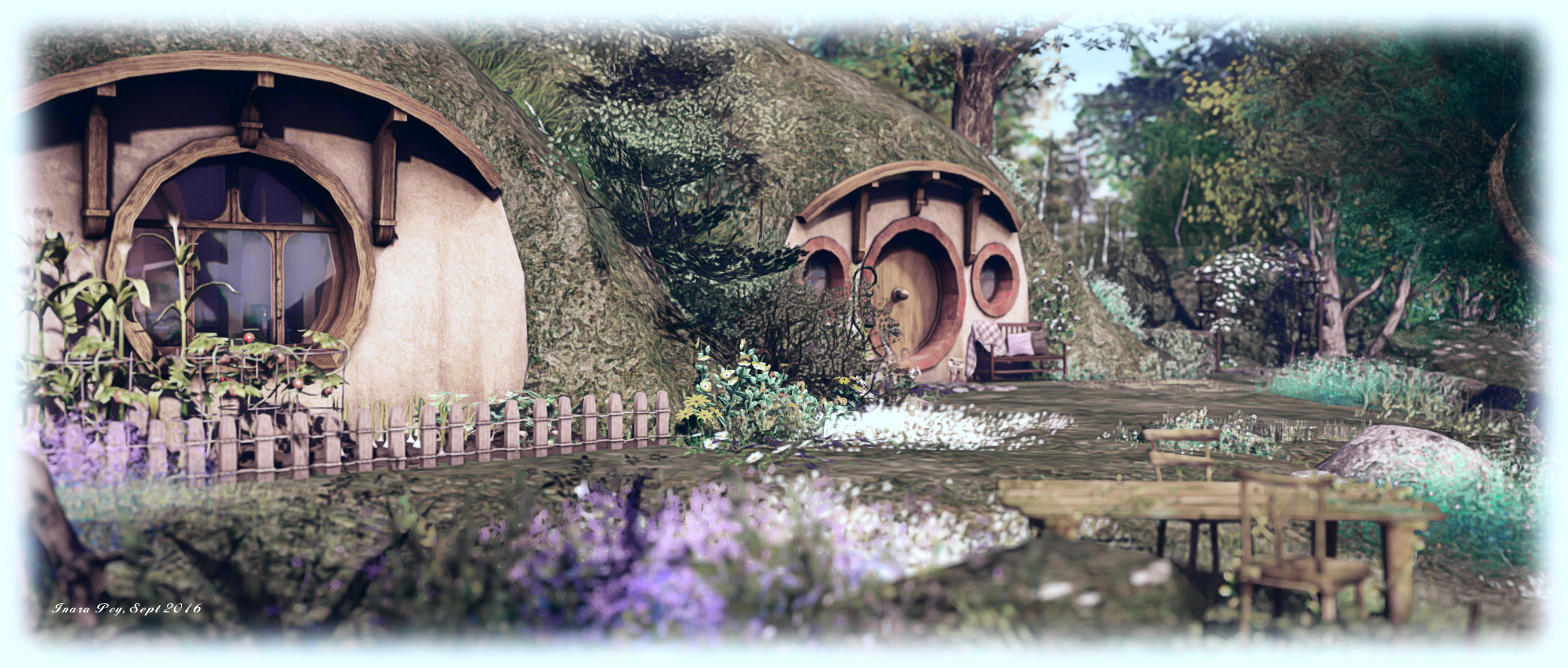
The Shire; Inara Pey, September 2016, on Flickr The Shire – click any image for full size

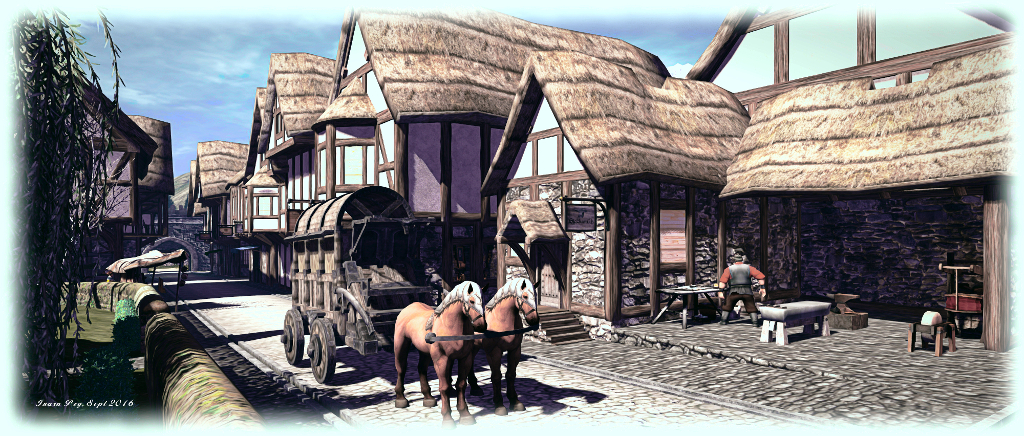
And I’m utterly delighted that while things have greatly changed since my last visit in (I think) August of 2015, all of the magic and delight of The Shire remain, offering a balanced mix of public spaces and private, for-rent residences. The latter comprise for the Little Folk, familiar double-fronted Hobbit Holes with large round front doors and little steps leading up their humped backs to “rooftop” seating areas; whilst for the Big Folk, more traditional slate-roofed cottages and farm houses are scattered across the region.

All of the hobbit holes and houses are placed within their own grounds and spaced across the region and both upon its hills and lowlands in such a way that tenants have a good feeling of privacy from one another, while the fences and walls surrounding their plots serve to steer casual visitors  along the public paths and tracks without huge risk of unwanted intrusion by the polite Second Life Explorer.

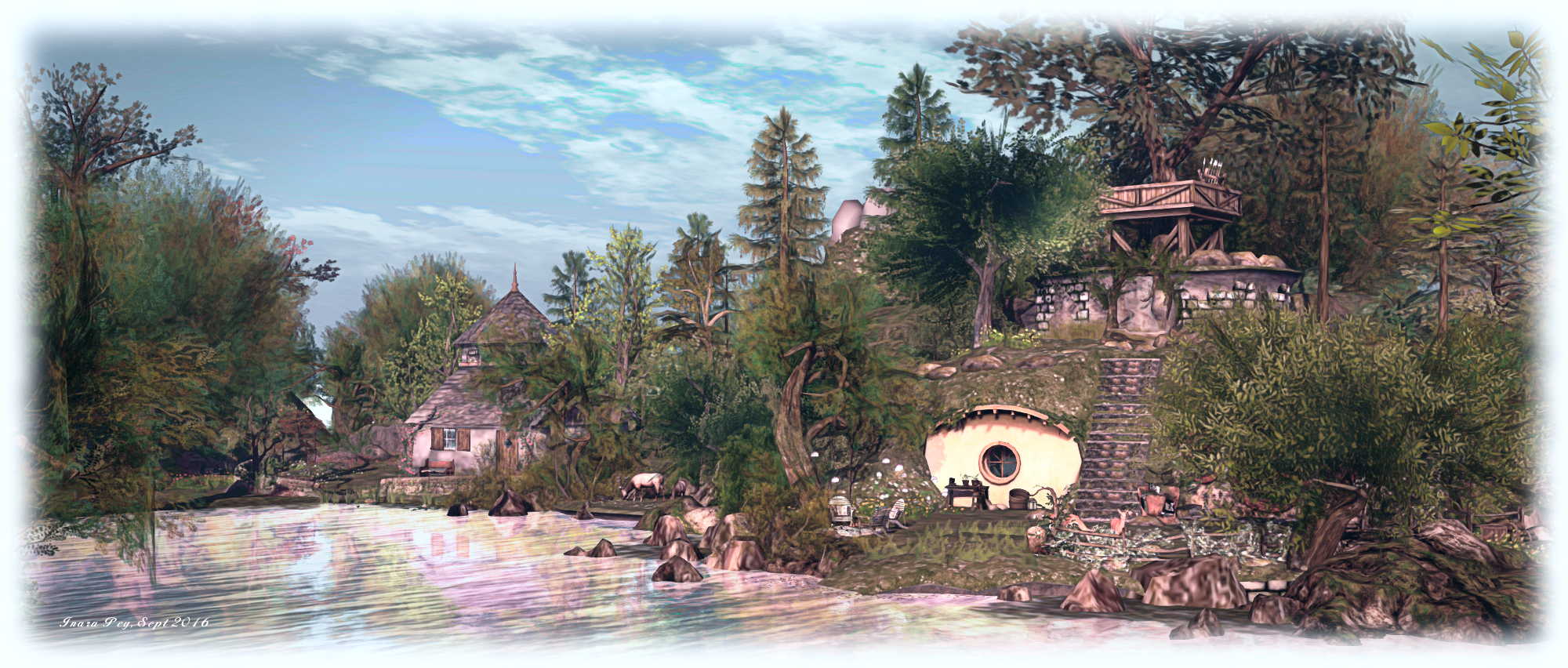
The Shire; Inara Pey, September 2016, on Flickr The Shire – click any image for full size

Visits to the Shire begin towards the south-east corner of the region where Bilbo Baggins’ (eleventy-first?) birthday is being celebrated. I didn’t notice any of Gandalf’s fireworks awaiting their time to be lit, but I’m sure they are there 🙂 . The Shire “proper” lies on the other side of a narrow sliver of water across by a set of stepping-stones which – in a nod to wider aspects of Tolkien’s world, is watched over by an Entish tree spirit.

Once over the water, the path divides, and where you go is really down to where your feet carry you. As noted the homes spread across the region are private, so please do note the rental status at the gates / paths leading to them and respect the privacy of the tenants. The paths and tracks wind their way gently around and over the hills of the region, presenting plenty of opportunities for exploration and to sit down (Hobbits love a good natter, you know).

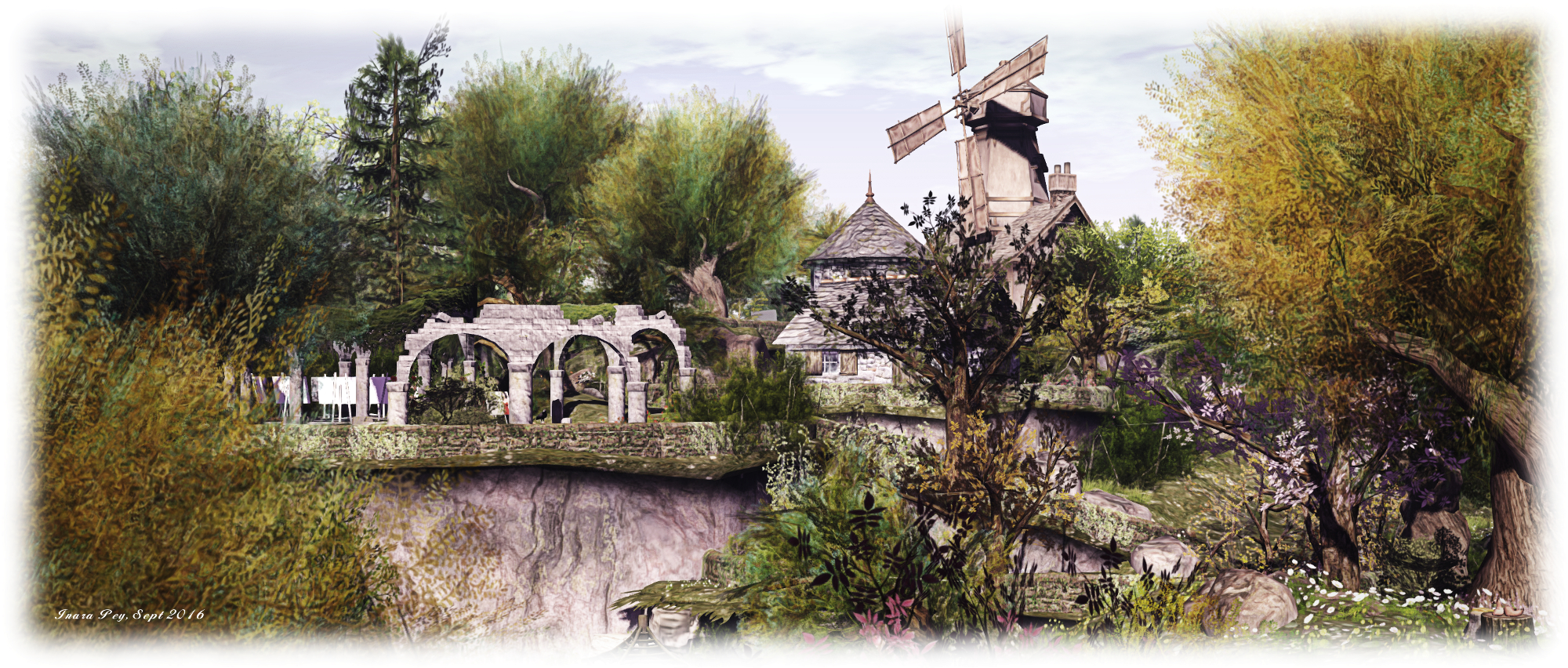
The Shire; Inara Pey, September 2016, on Flickr The Shire – click any image for full size

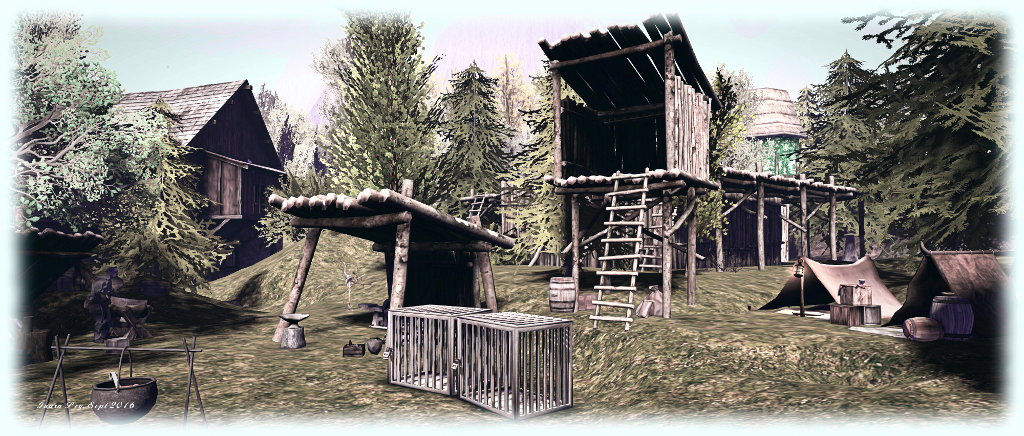
There are other hints of un-Hobbity things to be found as you explore this little corner of the Shire as well. There’s a touch of dwarvishness to be found under hill, and little touch or two of an elven influence up on the hill (one of which has the region’s open-air art gallery which currently features Jewell Wirefly’s images). There’s also a hint that  trouble may have found its way to this part of The Shire – it’s not every day one comes across a watchtower with a rack of spears in the land of the Hobbits – has Saruman been up to mischief?

The Shire is, without a doubt, a joy to visit. Bird song fills the air and with all the hobbit holes, open windows and doors, it’s not hard to imagine the smell of baking and cooking being wafted gently on the breeze. Those interested in renting a hole or cottage can find information on cost and LI allowances on the rental boxes at the entrance to each plot. Those interested in photography will find plenty of opportunities, and those with a love of Tolkien will feel right at home!

SLurl Details

A vacation at Pandora Resort in Second Life

Pandora Resort; Inara Pey, September 2016, on Flickr Pandora Resort – click any image for full size

Note: this vision of Pandora Box of Dreams has closed.

Pandora Resort is the latest full region design undertaken by Lokhe Angel Verlack (Jackson Verlack). It’s a place I’ve eagerly been awaiting the opportunity to blog in detail about because it is, quite frankly, one of the most stunning regions I’ve had the privilege to visit and preview.

When writing about places to see in Second Life, it is easy to slip into hyperbole; everything is superb, excellent, wonderful, stunning, and so on – and more often than not, such descriptions are deserved. However, with Pandora Resort, it’s actually very hard to over-state anything: this really is an utterly gorgeous region in which superb use is made of space, both horizontally and vertically, to present  something truly unique and breathtaking.

Pandora Resort; Inara Pey, September 2016, on Flickr Pandora Resort

A visit begins at the local train station located on the west side of the region, where diesel locomotives stand, hissing and grumbling, hand carts of luggage awaiting their owners. The open doorways of the station beckon, leading new arrivals out into the sunshine and the little township of Iron Falls. Built around a garden square and church, and surrounded by tall craggy cliffs with snow-capped mountains beyond, this sleepy-looking town has opportunities for commercial rentals – and more.

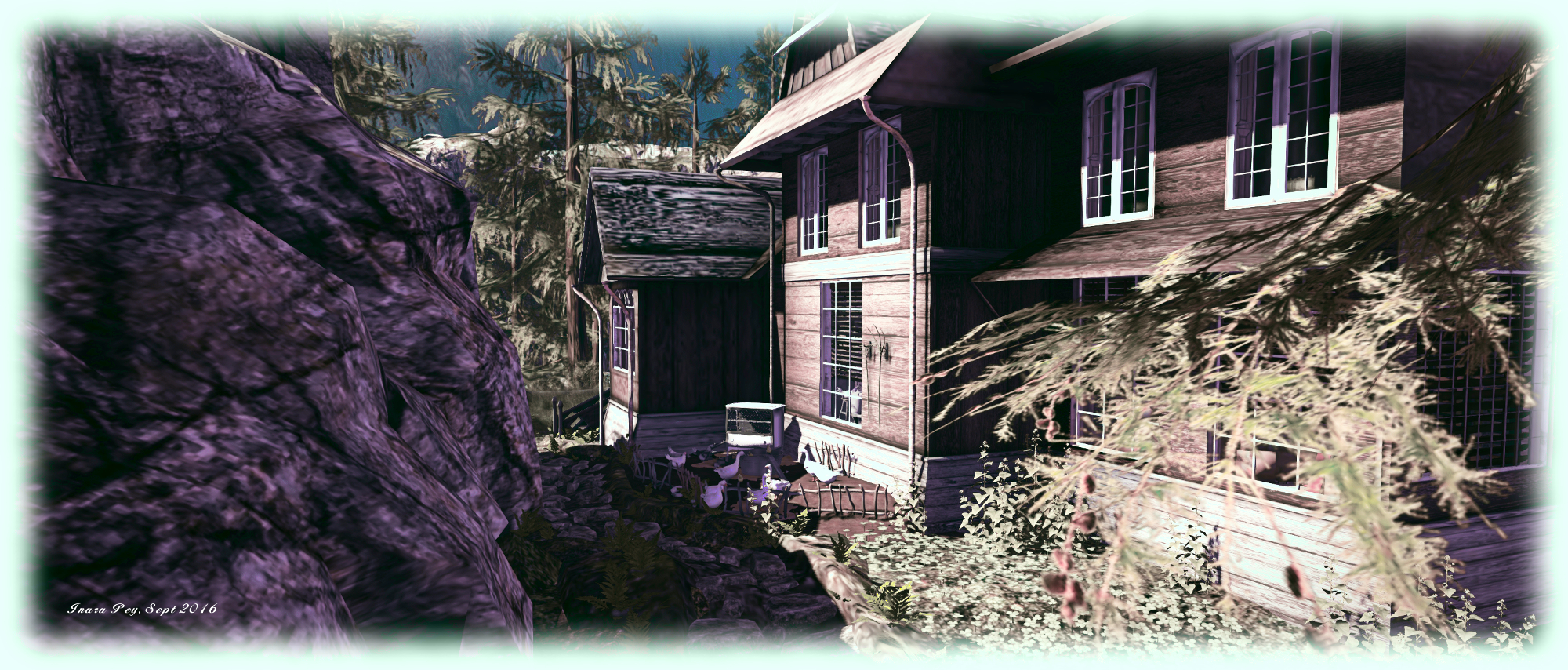
A single road points the way from the station, forking left and right before the central garden and church, flowing around them in either direction to become whole once more at the steps and rocky climb up to the resort’s hotel. This is a grand wooden structure, looking out over the town from its elevated position nestled against tall cliffs. Depending upon which branch of the road you take around the gardens,  you may find other points of interest, such as the little café and the baker’s store, both of which look out over a craggy river gorge which has cut its way down through the rugged landscape over the aeons, and now offers fishing opportunities for holiday makers.

Pandora Resort; Inara Pey, September 2016, on Flickr Pandora Resort

Further along the road from these sits a secluded garden where wedding receptions can be held – with the weddings themselves taking place in the little church (newly-weds even get to enjoy a stay in the Honeymoon Cabin for a night, with the entire region locked down so they won’t be disturbed!) .

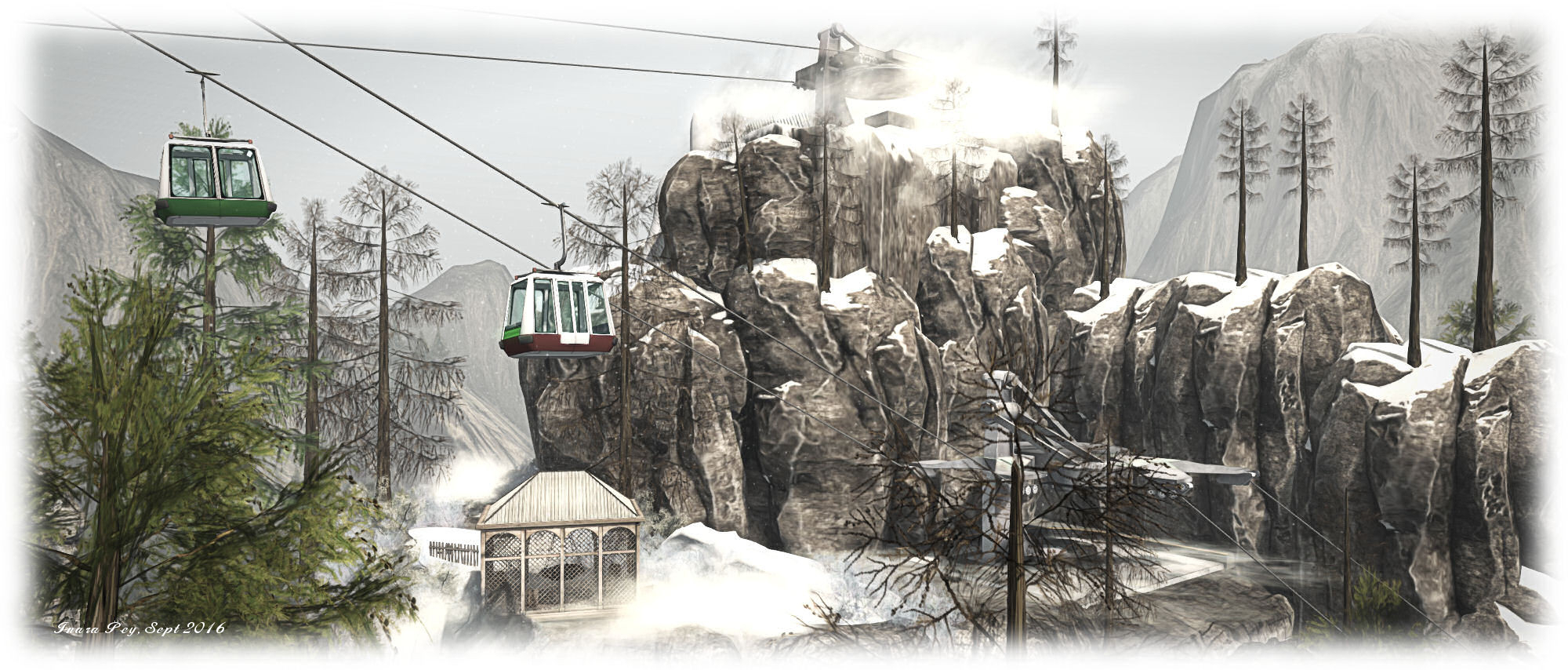
So far, so good; all of this makes the region sound photogenic, and the provision of business premises and a wedding venue are interesting but hardly unique – so what exactly makes this region so special? To answer that takes a little careful exploration. One clue comes in the cable cars, climbing up into the snow line above the resort hotel. These carry visitors by way of station and isolated peak, up into the foothills of the mountains, crossing deep gorges and – for the observant – revealing winding paths through the rugged land. It is these trails, snaking around rough shoulders of rock, skirting the edges of deep chasms, which lead visitors towards the hidden secrets of the resort.

Pandora Resort; Inara Pey, September 2016, on Flickr Pandora Resort

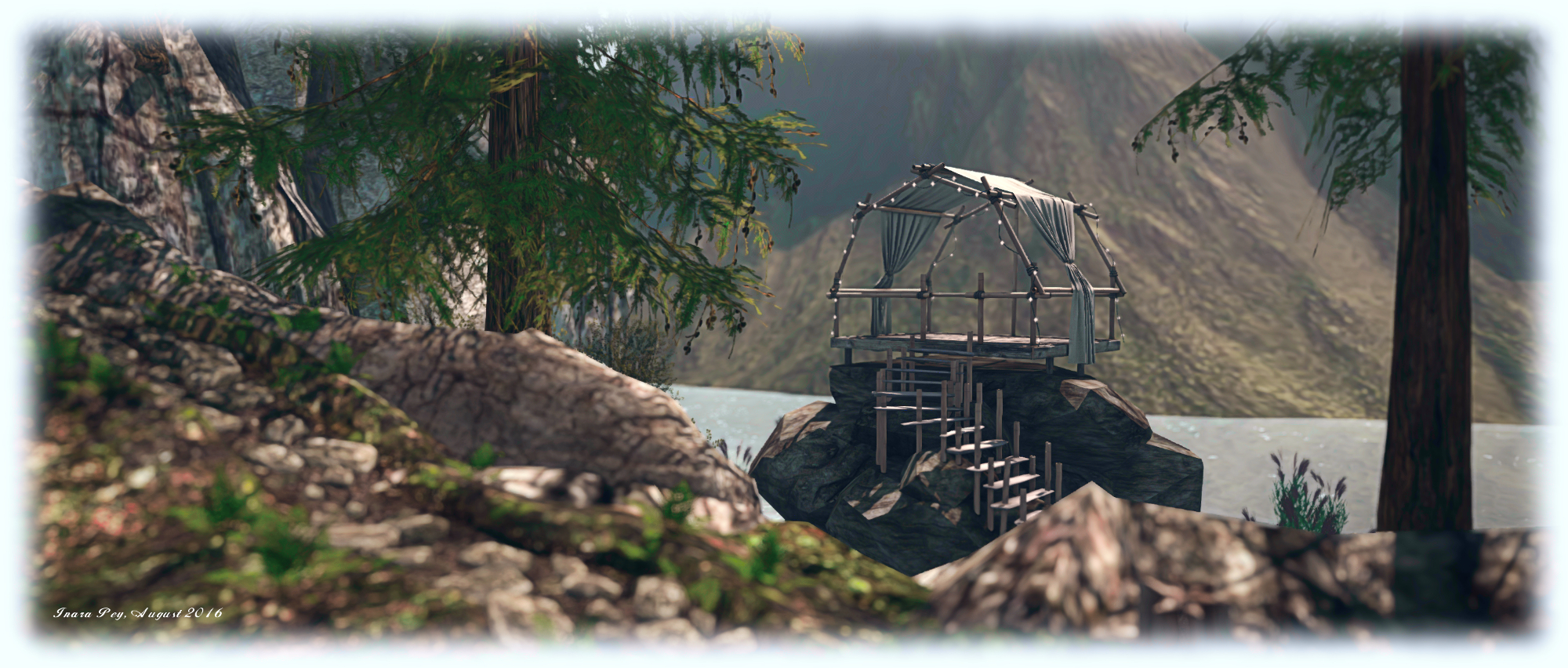
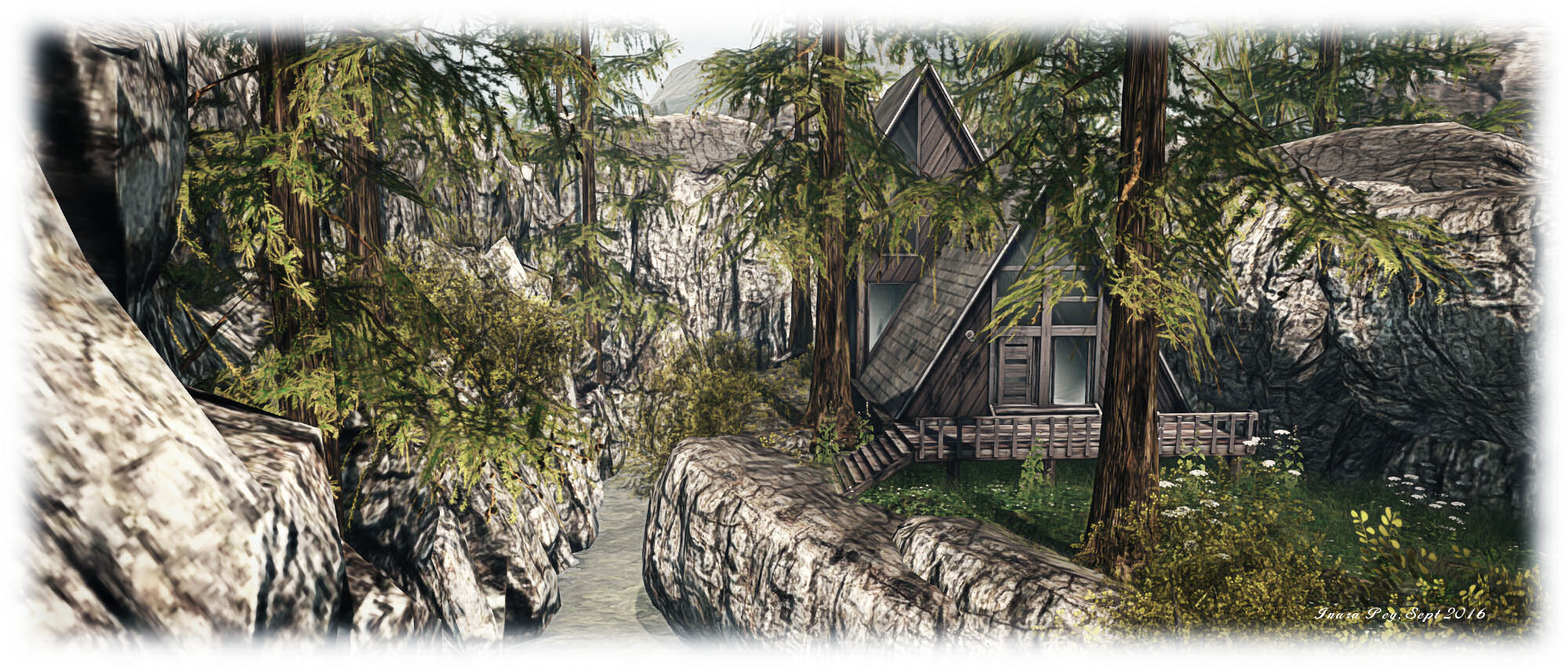
Accessible from ground level for the keen-eyed, the paths offer a number of routes through the more hidden areas of the region. In doing so, they lead visitors past camp sites and cuddle spots and  – for those wanting a place to stay – the vacation cabins which re available for rent, with a 75 LI allowance (the same as the commercial properties).

Finding your way around these paths should be done directly;  resist the urge to flycam on a first visit, as the impact of the scenery could well be lost. By simply allowing your feet to carry you along the trails as you find them offers the chance to be genuinely surprised with just how expansive the region seems to be, and the different sights you’ll come across.

Pandora Resort; Inara Pey, September 2016, on Flickr Pandora Resort

This really is a remarkable region design; for photographers, Pandora Resort offers some extraordinary opportunities. Rezzing rights can be obtained through a L$99 group membership to help with props. Those interested in renting any of the facilities should contact Sapphirejolla Resident or Glitta Magic.

For SL travellers, I cannot emphasise enough that this is not a region to be missed. Should you enjoy a visit, please consider making a donation towards the region’s upkeep. Congratulations to Lokhe and Miza on the opening – and a special get well soon to Lokhe, who was kept from the celebrations due to being unwell.

Revenland: fantasy / medieval role-play in Second Life

Revenland: the castle and town

Content creator and friend Cube Republic – who is responsible for some superb plants and landscaping kits  – pointed Caitlyn and I towards a fantasy / medieval role-play region he’s been helping out with, and which is open to the public although still under development.

Set no later than the 15th century, Revenland offers a rich environment for role-play utilising a variety of races  – although there are some constraints on what is and isn’t allowed within the information pack available in the skyborne arrival area. Largely the work of littlenixie, the region represents the continuation of an idea which initially started in AOL before moving to the immersive spaces offered by Second Life.

Revenland: Revenland Forest

The region itself is divided into two primary areas: the human-controlled castle and town of Redfoem, together with the Ter’li Fields, separated from the rest of the region by a wooden palisade. Beyond these lies Revenland Forest, home to non-human characters, regarded as a bandits by humans, and the Undercity, home to underground dwellers. Mention is also made of the Honeysuckle Falls – which I think can be found towards the centre of the region – and the Lost City of Lava, which is part of the work-in-progress along with some of the underground areas, as region Admin inboccaallupo informed me:

[They’re] a work in progress. The Undercity is something that will be for a faction and come back new and improved build wise. While some things are a bit more for events, such as the catacombs are on sim and accessible but highly dangerous for the time being, and thus would require a skirmish or group to enter in order to stay safe. Nixie is constantly building her own mesh to update, improve, and bring a more unique look to the sim.

The backstory offers insight into the region and role-play here.

In the past there was a rift between humans and other species, as well as the magical arts. Certain territories (Redfoem, Ter’li Fields) are human-controlled, meaning any who do not look or act human or display magical abilities will be run off, tortured, perhaps even killed (this is up to you). However, don’t expect to stroll into these territories and have nothing bad happen if your character does not seem to fit in with the townspeople.

Like-wise, humans might be ill-received in certain other territories on land, such as in the Undercity.

Revenland: Redfoem
Revenland: Redfoem

Non-humans wishing to pass safely within the human areas are advised to either shape-shift into human form, or find an alchemist who can furnish them with a transformation potion. Combat may also form a part of game play; where it does, it is dice-driven rather than metered, although free-form combat is also permissible by mutual agreement. A 1d100 dice HUD is provided in the information pack for most combat situations, together with guidelines on character creation and general rules – the latter of which as noted as being fluid, so as not to stifle developing RP and stories.

If the number of areas within the region seem to be a lot, you needn’t worry about things feeling crowded; such is the design, everything fits together at ground level to leave a good feeling of open space to Revenland. This is greatly assisted by the merging of the region with a mountainous sim surround. So effective is this, that is possible to walk up to the region boundary without realising and then find yourself bouncing off of it whilst trying to continue onwards!

Revenland: Revenland Forest - bandit territoy!
Revenland: Revenland Forest – bandit territory!

Good use is also made of space both above and below ground. Some areas where this occurs may be obvious, others less so, thus demanding people spend time exploring – although again, those in character had best do so with cautious, depending on their race and where they are!

Visitors to the region who do not wish to participate in any ongoing role-play are asked to wear the Observer tag, which is available in the information pack and via the packing crates at the teleport points. Other than this, and a request that they don’t engage in local cha to disrupt and role-play, visitors have a free hand in exploring the region – but do keep in mind there are places available for rent which may be people’s private homes.

For those seeking a new medieval / fantasy RP environment, Revenland might be just the place to hop over to and tour.

SLurl and Links

Revisiting Roche in Second Life

Roche
Roche

I first visited Roche in 2012 (see here). Then held by ddsm2 Mathy, the region offered a rural setting which was instantly attractive, making it a popular destination for SL travellers. In 2015, it was announced Roche would by closing. However,  Ricco Saenz pointed out to me, it later re-opened as Up to U, a collaborative effort between Fio and ありえす (ArieS Magic), offering a new look and beauty, which I wrote about here.

Over the course of the next year, I lost track of the region, so I was intrigued to catch word from Annie Brightstar that Roche would once again be closing at the end of September, as announced by the region’s current holder, Uta (xoYUUTAox). Intrigued, Caitlyn and I went to have a look.

Roche
Roche

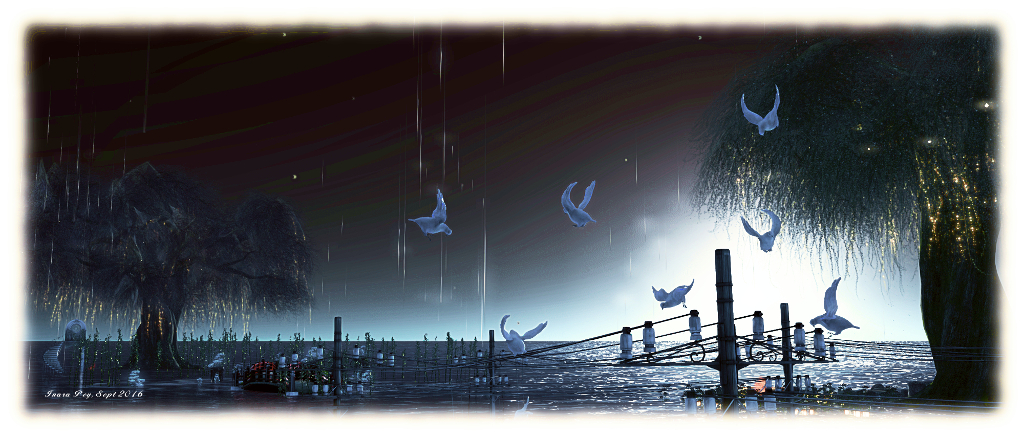
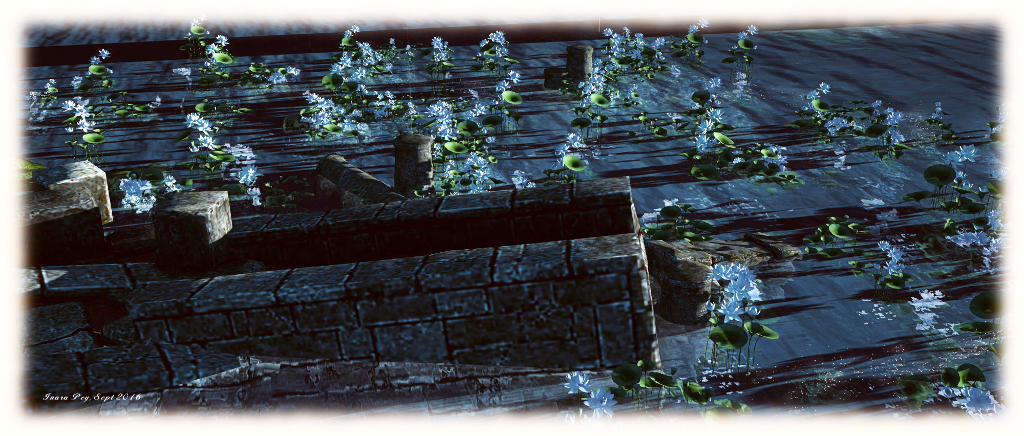
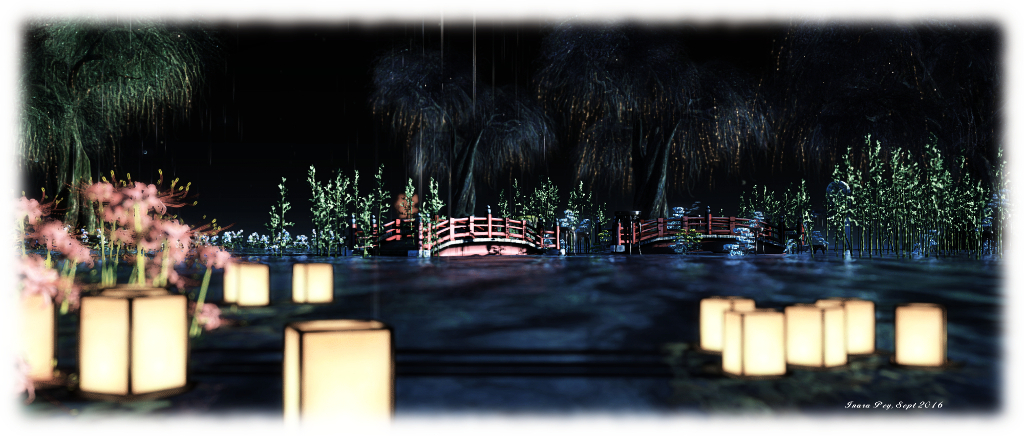
Mostly given over to water, the region sits beneath a dark sky, lit to one side by a bright white star caught forever just above the horizon, giving the region a magical, otherworldly feel. Tall trees are scattered across the shallow waters, their willow-like branches glowing dimly and strung with lights as much as leaves. Blue and red lilies carpet the water under some of the trees,  whilst a grove of bamboo stands guard around two oriental style bridges, which rise from the water to span the water, sharing the space with tables of alien-looking blue plants caught in the light of that distant star.

Ruins can be found among the carpets of lilies, and to one side of the region a single rocky outcrop pushes its way clear of the dark water, a giant piglet asleep on its grassy head.  The remaining occupants of the region can be found flapping above a dual line of old electrical poles, or fussing around the litter of chairs and seats scattered in the lee of the poles.

Roche
Roche

With light falling like raindrops from a cloudless, starry sky and lanterns floating on the water, Roche is a strange, but enchanting place. There is no ambient sound scape; instead the gentle sound of piano solos is offered via the audio stream. For those seeking somewhere to sit, places can be found among the jumble of chairs and seats, at the top of a curving flight of steps, among the ruins, or against the giant piglet on his island.

Roche has always offered unique environments, and Uta’s design is no exception. Whether or not the next incarnation of the region maintains that tradition remains to be seen; as does whatever comes next from Uta’s imagination; I gather she is already thinking about something new elsewhere. In the meantime, if you’ve not paid her vision for Roche a visit, you might want to do so before the region changes hands once again.

Roche
Roche

SLurl Details

  • Roche (Rated: Moderate)


Peacehaven – A New Beginning in Second Life

Peacehaven - A New Beginning; Inara Pey, September 2016, on Flickr Peacehaven – A New Beginning – click any image for full size

In April, I wrote about Peacehaven, a beautifully rugged and picturesque region designed by Purr (PurrBlaize). At the time, the region was slated to close in May 2016, although it remained open a while longer before the doors finally closed and the region passed into new ownership.  Now, and as featured in the Destination Guide, it is back, albeit on a smaller scale, occupying a quarter of a region; but smaller doesn’t mean any less photogenic.

Peacehaven – A New Beginning presents visitors with a compact corner of beauty and peace ready to be explored and enjoyed. Journeys here start in the north-east corner of the land, on a concrete causeway at the foot of the tall spire of a lighthouse.  Two arches on the landward side of the causeway beckon people forward; the first is a natural formation of rock, its top broken in ages past, mosses coating its inner and outer faces. The second is of carved stone blocks and columns, apparently remnants of an ancient structure.

Peacehaven - A New Beginning; Inara Pey, September 2016, on Flickr Peacehaven – A New Beginning

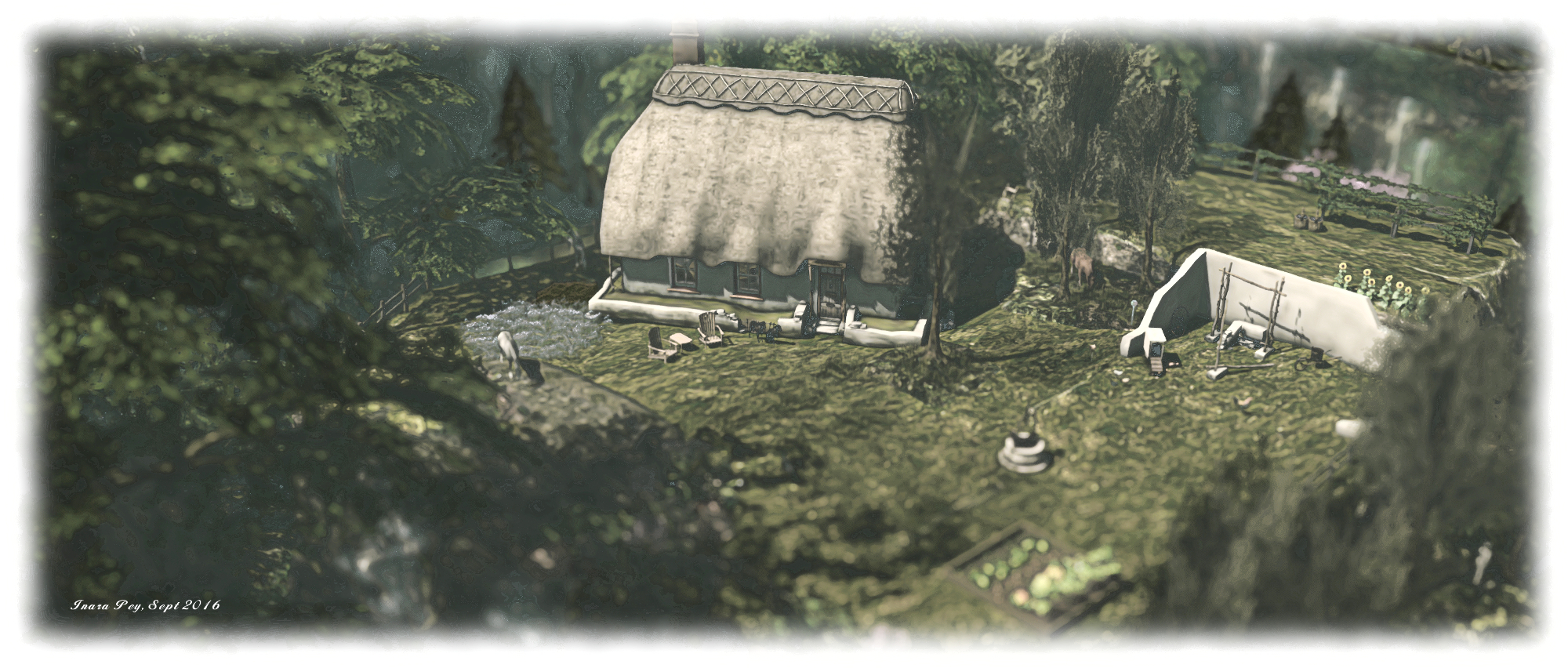
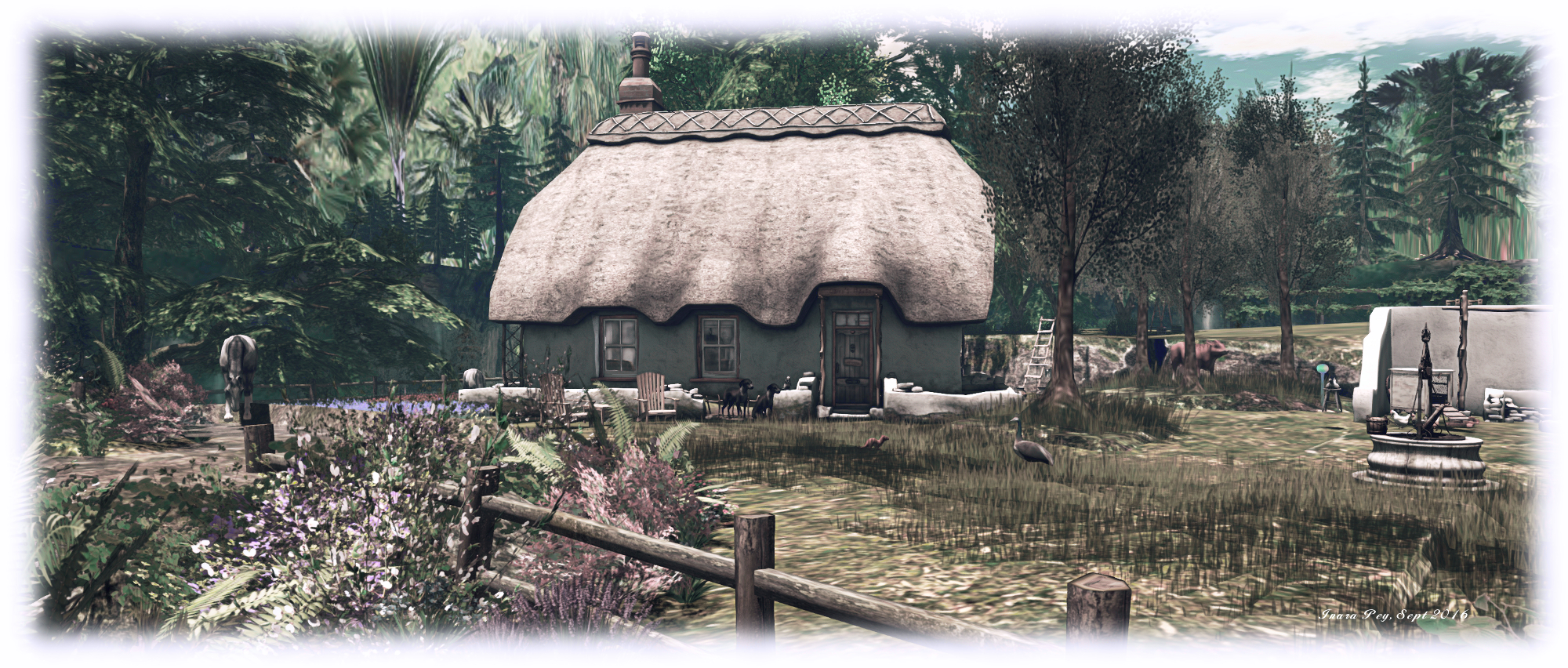
Beyond them both, and across the sweeping curve of a river channel which reveals this part of the land to in fact be a small island, the ground thrusts upwards into a rocky plateau. Water tumbles down one face of this mesa, cutting a further channel to link with the river’s curve. Flatted-topped, the plateau is home to a thatched cottage, the short grass around it offering grazing for  horses and cattle, a wide pool – the source of the waterfalls – providing fresh water for them to drink. Behind the cottage, the rock again pushes upwards to form a small flat shoulder, where sits a modest growth of vines from which a harvest of grapes has not entirely been plucked.

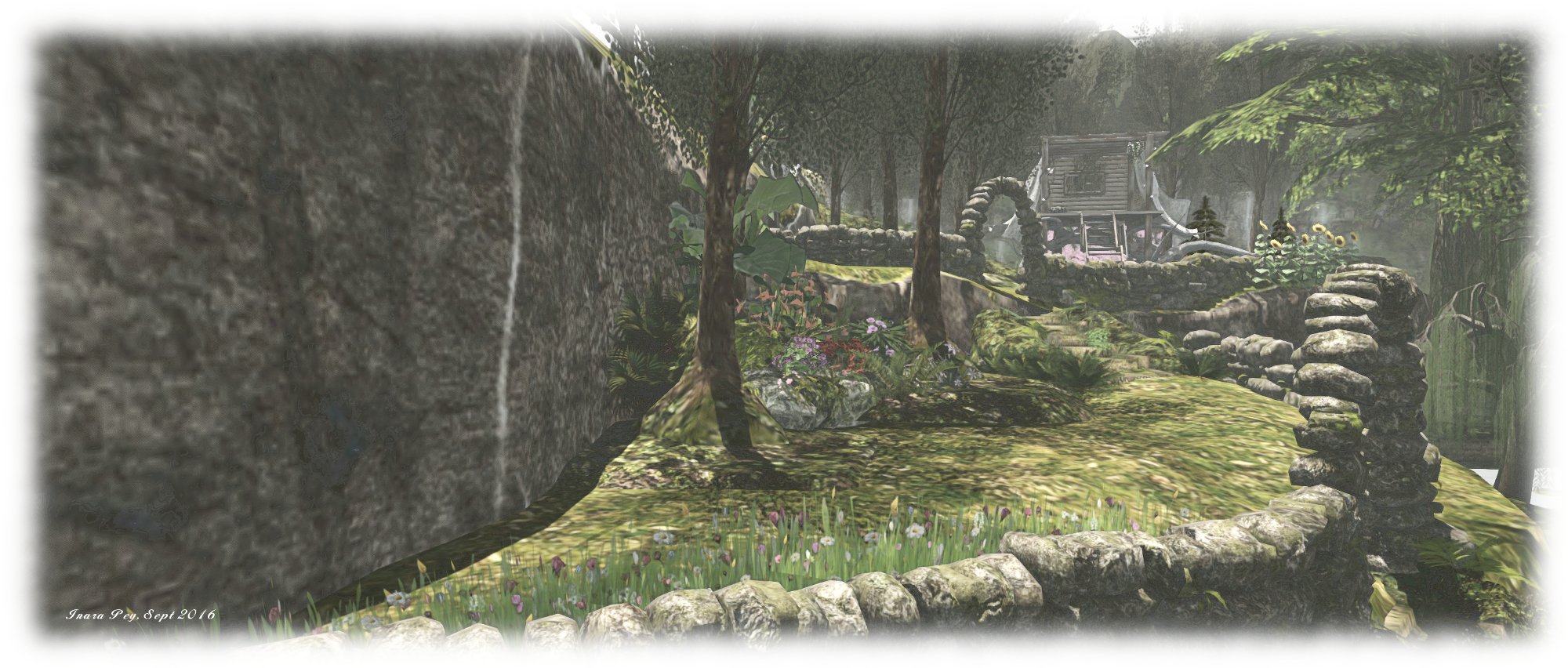
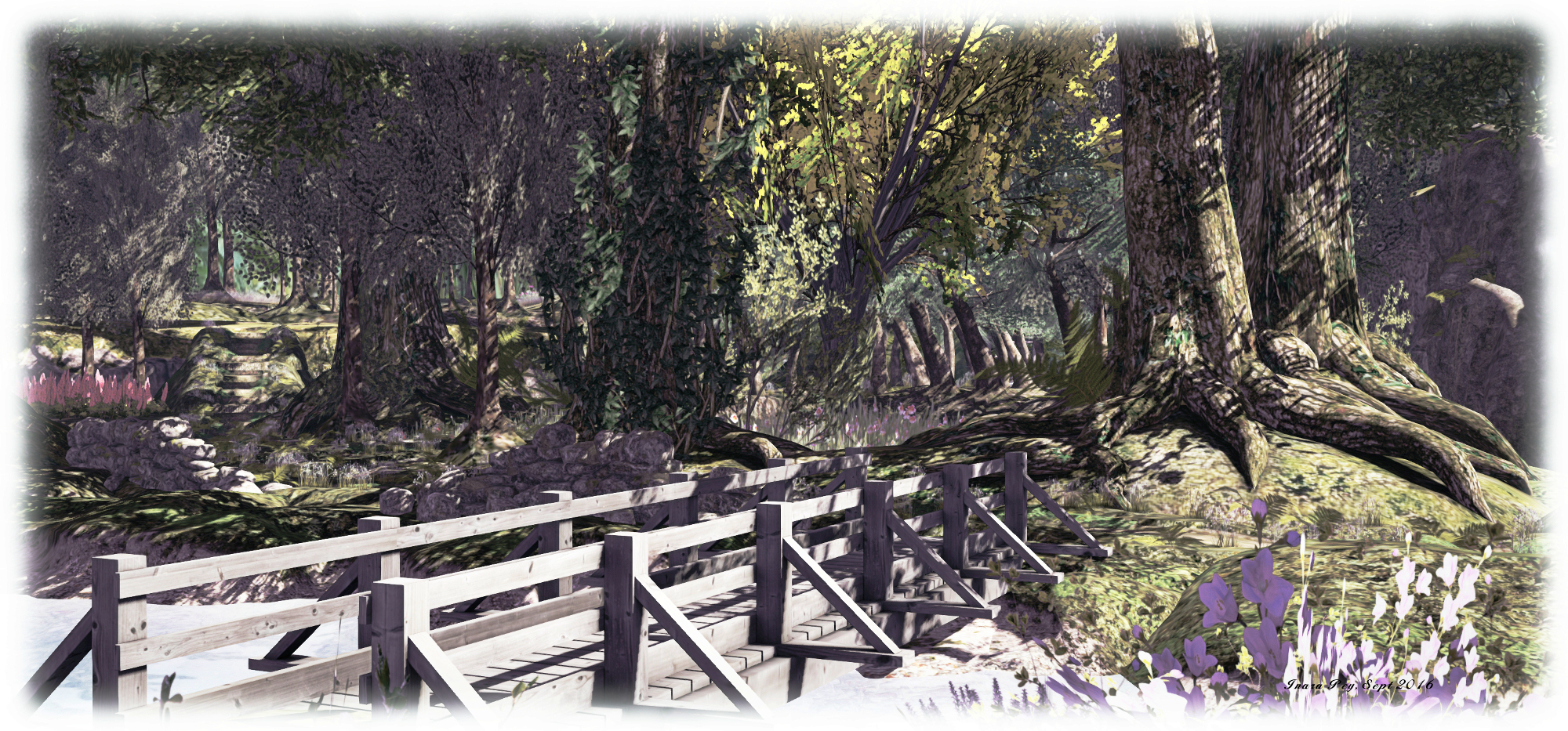
The route up to this high perch is via path and stair, which wind between dry stone walls and up shelf-like steps of rock, passing bright splashes of flowers and  a tree-house snug along the way. Or, for those so inclined, a path at the base of the rugged plateau offers the chance to walk around it, passing a freshwater pond where lilies grow in one direction, or over a stout stone bridge and under the shade of trees to where the path divides, presenting a second wooden bridge leading back to the small, wooded island in one direction, or the choice of two further paths between the trees – but I’ll leave it to you to visit yourselves and see where they may take you.

Peacehaven - A New Beginning; Inara Pey, September 2016, on Flickr Peacehaven – A New Beginning

For those who prefer their time in the sun, Peaceheaven – A New Beginning offers two beaches, one to the north and the other to the east, both watched over by the lighthouse and set with parasols and dance systems, with one reach by another stone arch, a further reminder of an ancient presence here. Those in a romantic or reflective frame of mind are also catered for, with places to sit and snuggle – one or two of which might take a little careful finding.

Peaceheaven – A New Beginning is another demonstration that you don’t necessarily need an entire region to build something special. Exploring it is a genuine pleasure, with the snuggle spots and beaches ideal for resting-up afterwards, the sound of birdsong in the trees and waves on the sand forming a suitable backdrop for lazing away the time.

Peacehaven - A New Beginning; Inara Pey, September 2016, on Flickr Peacehaven – A New Beginning

SLurl Details