The Mill at Lemon Beach in Second Life

The Mill, Lemon Beach; Inara Pey, May 2019, on FlickrThe Mill, Lemon Beach – click any image for full size

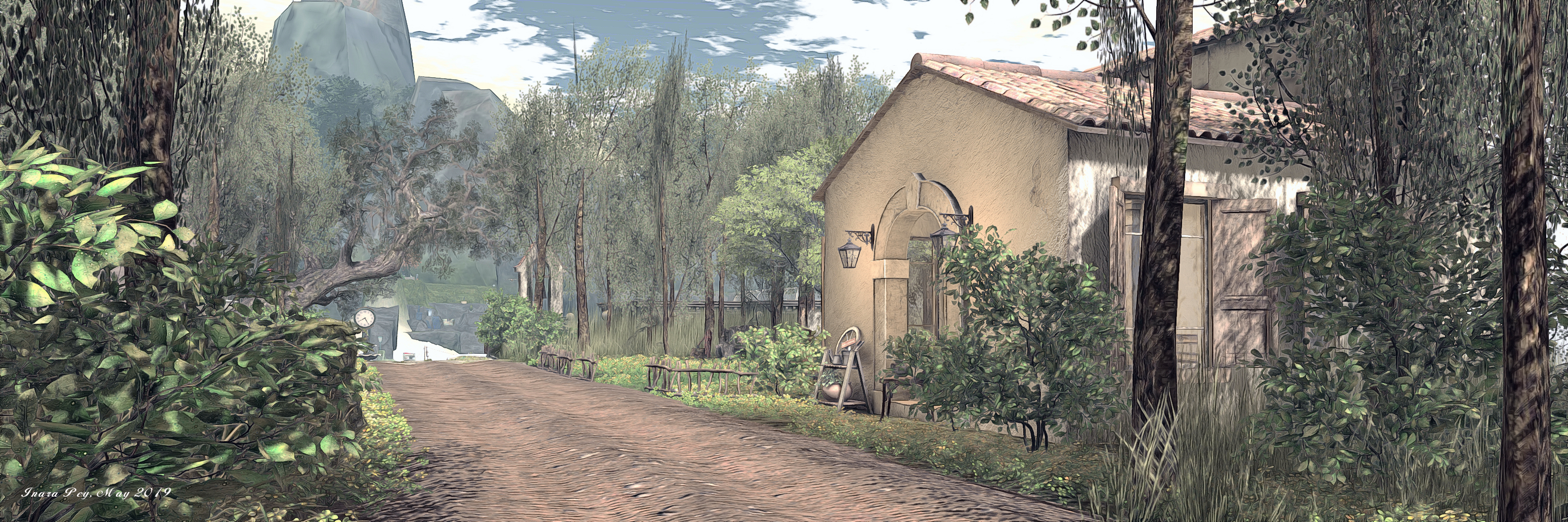
Lemon Beach has seen many designs from various region holders over the years, some of which have been documented in this blog (see here, and here, and here and here, for example). The region is currently under the care of Sylvana Dench, who follows the tradition in offering it for the enjoyment of visitors as The Mill.

This is a wonderfully provincial setting that has hints of France about it, although to me it could perhaps easily be anywhere along the coasts of Belgium, The Netherlands, Denmark or Germany. Low-lying, the region, whilst a island, had an almost headland feel to it; a finger of land tickling the sea, a place where farmlands give way to sands and salt water.

The Mill, Lemon Beach; Inara Pey, May 2019, on FlickrThe Mill, Lemon Beach

The landing point sit off to the north-east, close to the edge of the region. A sign bids a warm welcome, framed by a small lighthouse sitting just off the coast. A further welcome is offered by a little café sitting close by, sitting under a thatched roof – although as we walked by, I couldn’t help but wonder if the smell from the fishmonger across the narrow track of a road might not be a little off-putting to patrons should the breeze be in the wrong direction!

A small cottage sits alongside the fishmonger’s barn, perhaps his home, while a larger house sits on a bend in the road, while the titular mill rises from a small rise in the land just behind the café and its little farm shop. Taken together, and with both sheep grazing on the coastal grass not too far away and the large meadow behind the house where horses frolic, this little grouping of mill, café and house all have the feel of being perhaps owned by the one family.

The Mill, Lemon Beach; Inara Pey, May 2019, on FlickrThe Mill, Lemon Beach

They, and the fishmonger’s house and barn, are not the only buildings here, however. Scattered across the landscape is a walled farmhouse, an old Tuscan-style villa converted to a place of business and another little cottage daintily fronted by walled flowerbeds, all awaiting discovery.

They are all easily reached by following the track that leads southwards away from the landing point. Meanwhile, and further westward, sit a couple of properties that might be holiday homes for those fortunate enough to be able to have a getaway sitting on the coast. One of these sits just off-shore to the south-west, and given it is within its own parcel, it might be intended for private ownership in the future – although at the time of our visit it was open to the public.
The Mill, Lemon Beach; Inara Pey, May 2019, on FlickrThe Mill, Lemon Beach

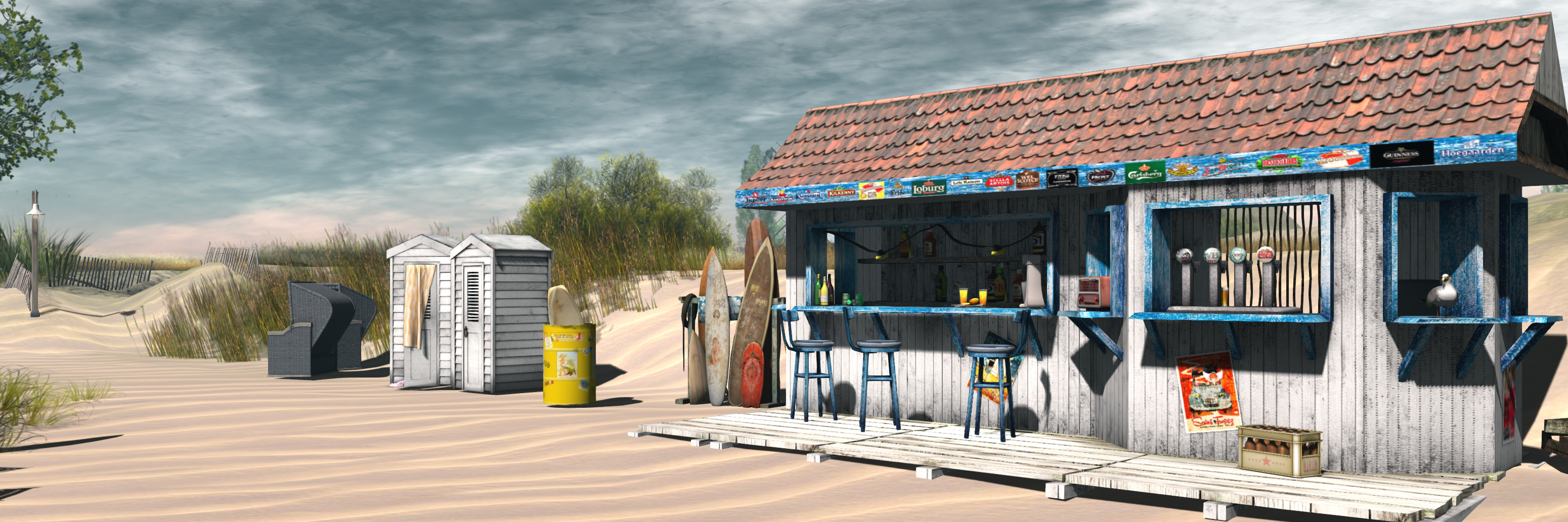
The second house sits above the western beach and is clearly set for private occupancy, as demonstrated by the ban lines that become visible should you stray too close. However, it shares a stretch of beach with plenty of room for wandering or sitting, and which also features a bar and what might be a cosy surfer’s shack. Surf boards (traditional and wind) sit on the shore, but aren’t open for public use.

With it sheep and cows grazing peacefully, horses enjoying the freedom of their meadow and with a delightful sound scape, The Mill offers an inviting visit with enough to see and appreciate without it feeling overcrowded or putting undue load on the viewer. Yes, there are a few details that could be tidied a little, notably some of the floating bric-a-brac around the antiques store (or perhaps that’s the influence of the slightly creepy doll sitting on one of the benches outside! 🙂 ), but these are small enough so as not to unduly spoil things.

The Mill, Lemon Beach; Inara Pey, May 2019, on FlickrThe Mill, Lemon Beach

And while the surf boards might not be available for use by visitors, this is an excellent place to for horse riding, if you have a wearable Animesh horse; while those who might be disappointed he surf boards can’t be used might want to keep an eye out for the little boat with an outboard motor, as it can be used for pootling around the coast; just keep an eye out for the odd Orca and bather!

Our thanks to Shawn Shakespeare for the LM!

SLurl Details

  • The Mill (Lemon Beach, rated: Moderate)
Offering Atonement in Second Life

Atonement; Inara Pey, May 2019, on FlickrAtonement – click any image for full size

Update, August 20th: Atonement has closed and the region cleared. SLurls in this article have therefore been removed.

Occupying the full private island aptly named Canyon Creek, and making use of the additional full region land capacity bonus, Atonement is a relatively new – and utterly stunning – rental / public region.

We were pointed towards it by a number of friends, including MorganaCarter, Miro Collas and Shawn Shakespeare – and our thanks to everyone who did so.

Atonement; Inara Pey, May 2019, on FlickrAtonement

Designed by Aiden Caudron and Zomborg Vollmar, the region comes with an intriguing description:

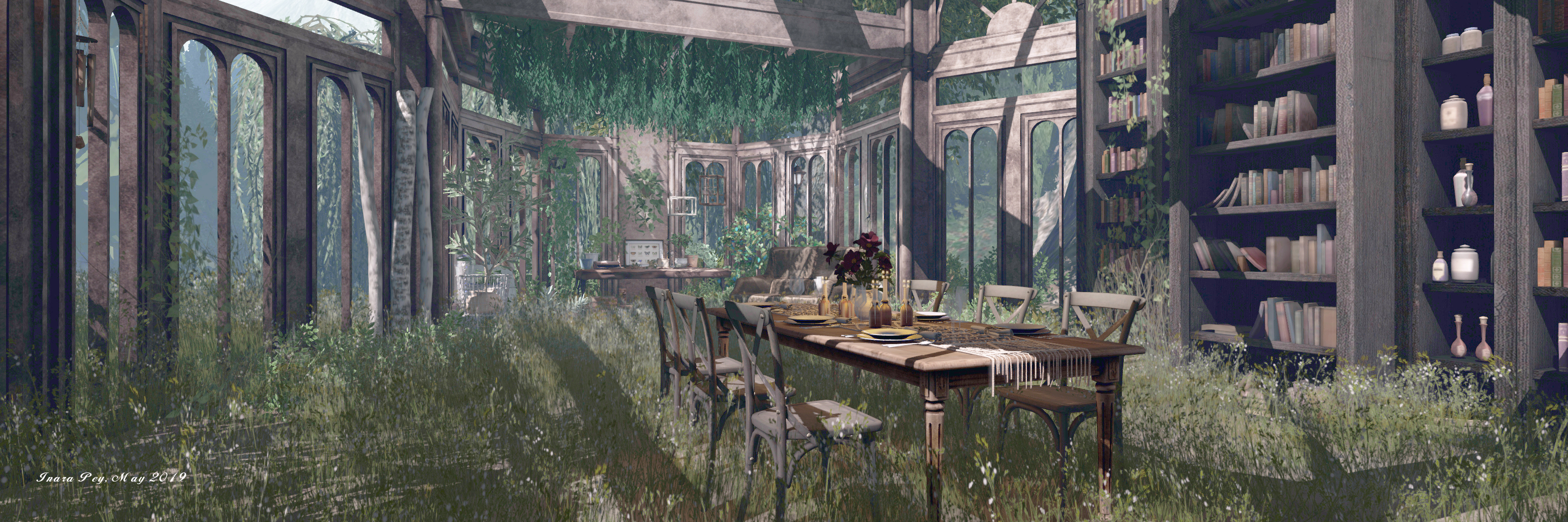
An overgrown forest sim that has been abandoned overtime leaving homes buried between thick brush and twisted vines. You can find residential properties scattered around the sim with enhanced privacy provided by mother nature. Hidden caves leading to special destinations within the sim. Blogger friendly.

Atonement; Inara Pey, May 2019, on FlickrAtonement

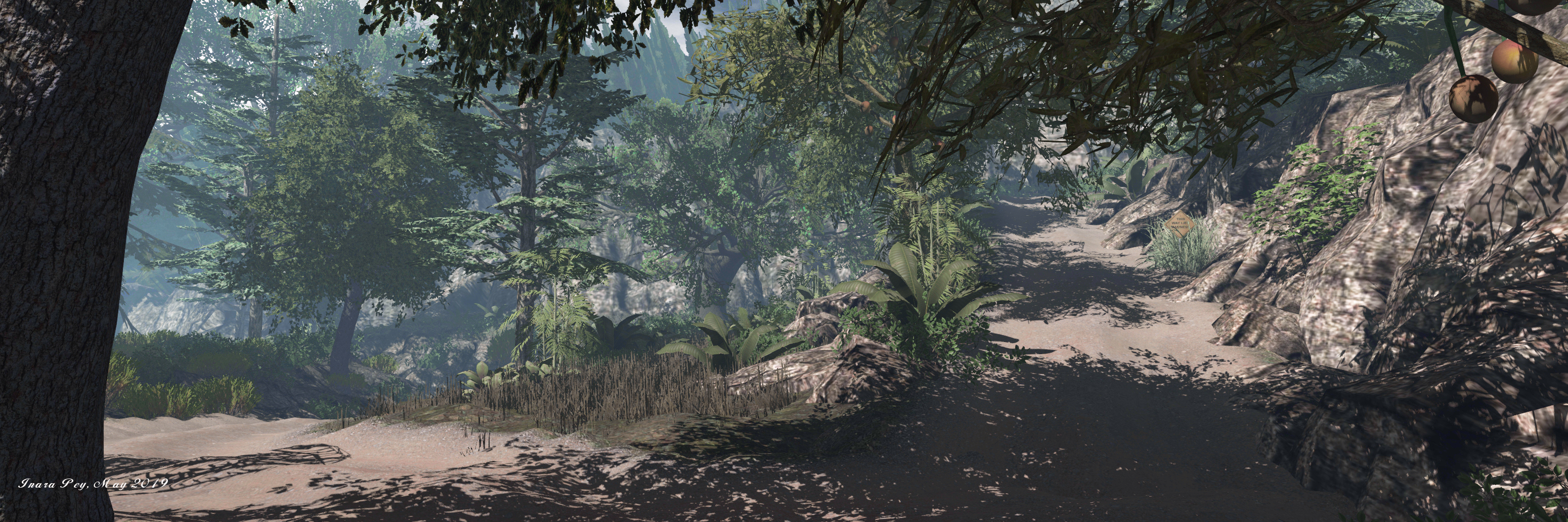
This is a region that is perhaps best not described as experienced. Represented a mountainous region, far off in the wilds, it’s easy to imagine coming across Atonement in the Rockies of North America, and its elevated setting is given an added sense of depth through the careful positioning of region landscaping and sim surround, such that from most viewing angles within the region, the two appear to blend seamlessly together in to whole as the mountains rise beyond the tree line.

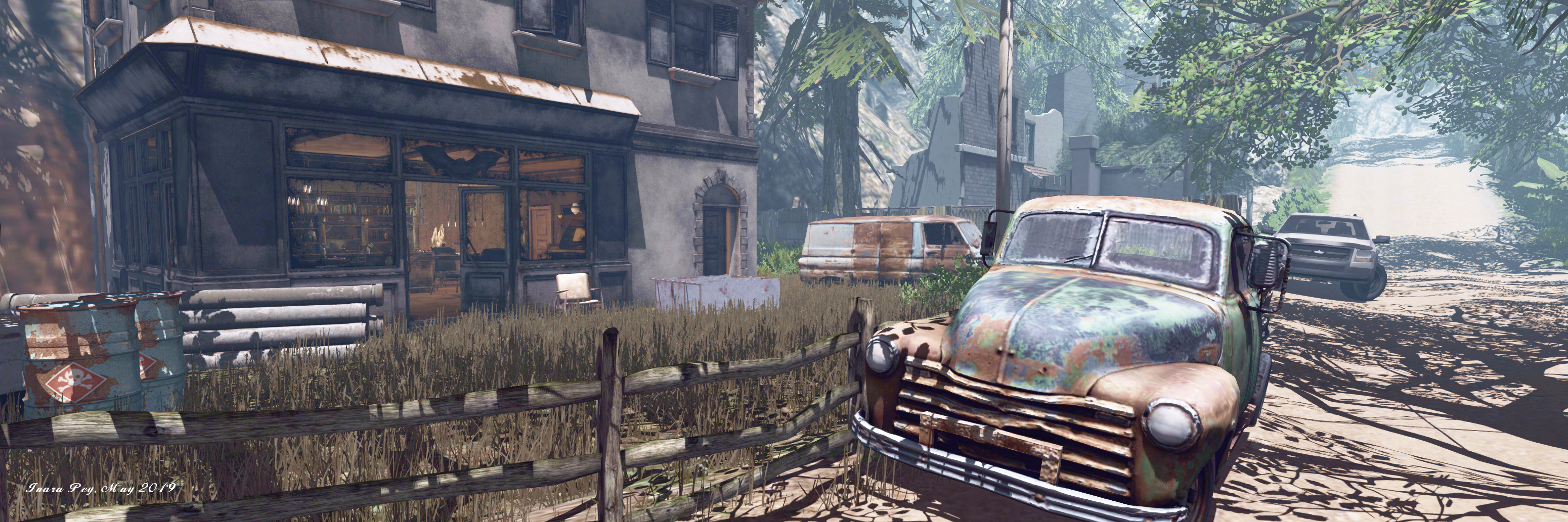
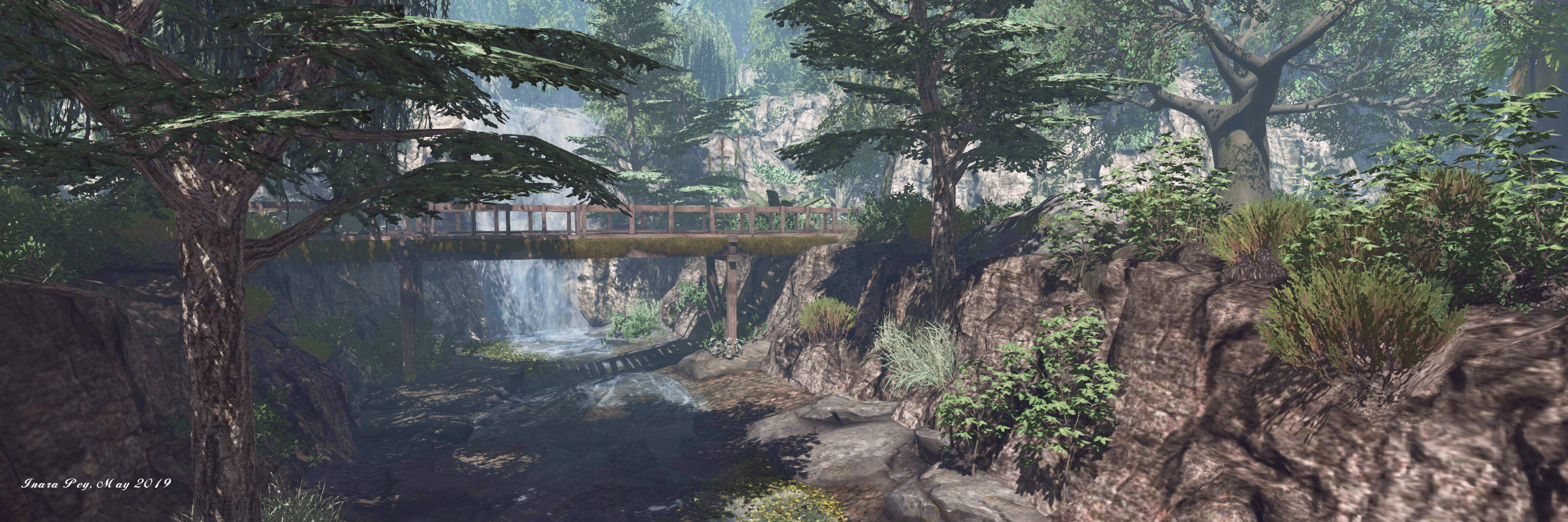
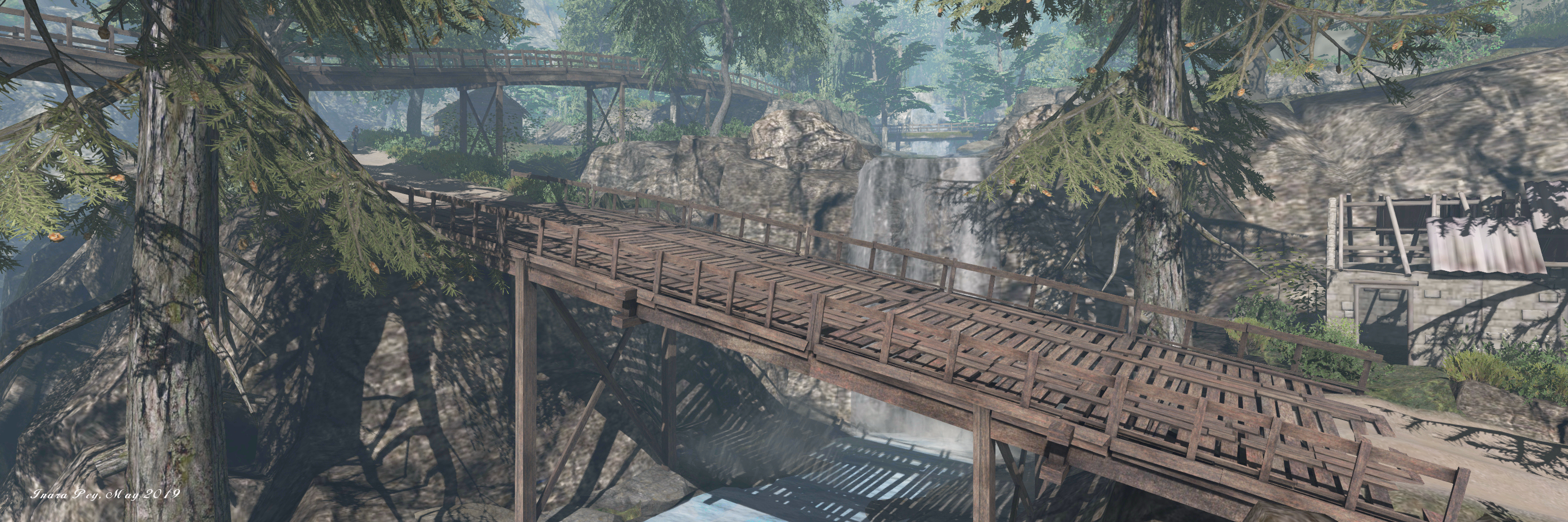
Falling from east to west in a series of tiers, a single narrow gorge, feed by tumbling falls and fast-flowing waters, the region is as the description states: richly forested and with a feeling of abandonment. The road winding through it is unpaved, footpaths are bare rock, the grass tall and wild where trees aren’t casting their shadows. Throughout all this are houses and buildings that have all seen better days, the bridges offering links between roads and paths looking as though they could perhaps benefit from a little TLC.

Atonement; Inara Pey, May 2019, on FlickrAtonement

Many of the houses are available for rent – so exploring with care is advised to avoid accidental trespass should any be occupied at the time of a visit. Elsewhere – such as the local pub – which most certainly has seen better days – there are twists of whimsy and humour that when discovered, are an unexpected delight.

Perfectly photogenic, the region’s mystique is given further depth by the question of why it should be here. Why locate a small town so deep in the rocky wilds? Perhaps the answer lies within the network of tunnels and caverns awaiting discovery  – be sure to accept your torch at the landing point. While appearing entirely natural, there is a hint that perhaps they might have once been worked, perhaps for mining gold or silver or something else equally enticing to the hands and pockets of humans.

Atonement; Inara Pey, May 2019, on FlickrAtonement

Although to be found throughout the region are places t be enjoyed when visiting, such as the rusting metal carcass of an old observatory far up at what is effectively the region’s peak: a table of rock that the old conservatory shares with a radio mast. Within the old frame can be found a cosy setting that is both at odd with, yet complimentary to, the overgrown interior of the old building. Elsewhere, those who explore far enough might find a games room / clubhouse, and there’s also the aforementioned pub.

Beautifully conceived and executed, Atonement can be a little taxing on systems if you’re running with a lot of the viewer’s bells and whistles active. however, it more than counters for this with its detail, unique approach and highly photogenic nature.

Atonement; Inara Pey, May 2019, on FlickrAtonement

Kun-Tei-Ner: a water world in Second Life

Kun-Tei-Ner; Inara Pey, May 2019, on FlickrKun-Tei-Ner – click any image for full size

Update: in keeping with Lotus and Fred offers different regions designs through the year and at different locations, Kun-Tei-Ner has closed. Slurls have therefore been removed from this article.

Kun-Tei-Ner is the name of the latest region design by the combined talents of Lotus Mastroianni and Fred Hamilton (frecoi). Between them, Lotus and Fred have been core parts of the design teams behind the likes of The Missing Whale (see The Missing Whale in Second Life), Little Havana (see A trip to Havana, with a little Voodoo In My Blood) and, most recently HoPe (HoPe: a world without humankind). In some ways, Kun-Tei-Ner, which opened on May 19th, 2019, is a continuation of HoPe.

With HoPe, we were presented with an environment that had suffered some kind of catastrophe, at least one part of which appeared to have been some form of natural disaster. In Kun-Tei-Ner, the theme of the natural disaster / event is continued, with the world apparently having suffered a massive ecological and environmental change, leaving it pretty much a water world, as the description of the region explains:

This is a place years ahead of us with no land. Humans have produced a lot of things…and many things are [now] useless. A city grows up on a huge mountain of containers filled with broken technological stuff, abandoned or fallen from ships.

Kun-Tei-Ner; Inara Pey, May 2019, on FlickrKun-Tei-Ner

And so it is that we are invited into one of the most unique and original environments currently to be found in Second Life: a marvellous mini archipelago of tall, close-packed islands rising from the sea, built from shipping containers gathered from who-knows-where, brought together to create the shoreline, hills, apartments and places of commerce this corner of humanity’s survivors treat as home.

Stacked together like Lego® bricks – and almost as colourful – the containers form everything one might expect from a close-packed group of islets: there are high peaks, valleys, ocean fronts, low-lying “flatlands” … Yes, all are obviously painted metals, but attempts have clearly been made to make things look more natural and return a hint of nature to the setting, with ivy and vines strung from the sides of some containers, well clear of where they might otherwise be splashed and contaminated by salt water.

Kun-Tei-Ner; Inara Pey, May 2019, on FlickrKun-Tei-Ner

The containers that have been converted into homes have had holes cut into their sides or have had their end or doors removed, the holes replaced by wooden frames, sliding doors, and windows cut from what looks to be sheets of acetate plastic. Others offer places of commerce: a pizza bar here, an little Japanese-style food market there ….

These, with their lit neon signs, at first look incongruous given the overall theme of the setting, but it is clear that power is not an issue here: the upper reaches of the container “hills” are lit by flashing neon billboards, and someone has taken the opportunity to place traditional wooden advertising hoardings up as well. Perhaps some of the power for the neons signs comes from the wind turbines sitting just of the “coast” of these iron islands, but there are signs of other industrial activity as well: great pipes rise from the waters to plug themselves into containers, while others run from one set of containers to another as a tall smoke stack belches orange smoke to drift in the wind.

Kun-Tei-Ner; Inara Pey, May 2019, on FlickrKun-Tei-Ner

It is clear from this that there is some form of heavy plant hidden within some of the stacked containers. Does it provide power? is it helping to grow foodstuffs hidden by corrugated steel walls? That’s up for you as a visitor to decide. There are other signs that technology has survived as well: a large satellite communication dish points its eye towards a spot in the sky, while a satellite receiver appears to be obtaining video signals from another orbital system.

Finding your way around the islands is a matter of following the LED arrows on the floors and walls of the containers, while bridges formed from wood and rope, open-ended container and metal gantries connect the different islands. The arrows point to multiple routes and passages around the islands, making exploration a walk of discovery, at least some of which is observed from above by a flying sculpture of a whale shark.

Kun-Tei-Ner; Inara Pey, May 2019, on FlickrKun-Tei-Ner

The paths offer a lot to see, from the interiors of the living containers, to the food market and pizza bar to multiple places to sit, indoors and out. They can also offer plenty of opportunities for photography.. Just be sure to give the region the time it deserves when visiting.

The region designs by Lotus and Fred are generally available for around a month before they kick-off their next project. So, in case that will be so for Kun-Tei-Ner, a visit sooner than later might be advisable to avoid missing what is – as noted – a fascinating setting worthy of exploration.

A farewell to Chouchou?

Chouchou, 2018

Update, October 1st: it has been announced Chouchou will remain in Second Life as part of the Second Life Region Preservation Society (SLRPS) – see Chouchou set to remain in Second Life – and there’s more for details).

Update, May 23rd: following an e-mail exchange on May 23rd, Second Life user Rikutojam from Japan, who managed to contact Juliet Herberle, one half of ChouChou, Rikutojam was able to confirm that it is the couple’s wish that the Chouchou region close in late June.

Reports that the ChouChou regions look set to close “soon” have been doing the rounds over the last 24 hours, together with hopes that Linden Lab might be able to step in and preserve the regions as a part of Second Life’s cultural heritage.

Designed by Japanese pianist Arabesque Choche and vocalist Juliet Heberle, who together form the successful musical duet of Chouchou, the regions are among some of the longest running, unchanged private island environments to be found in Second Life, and are an absolute delight for all who encounter them. I made my first visit in 2012 (see Chouchou: blending music and art in SL), and have been back many times since, being particularly drawn to the sky build of  Memento Mori (located on ChouChou V), a quite remarkable cathedral.

Chouchou: Memento Mori

A Collaborative build by Juliet in collaboration with Miya Grut, and with the support of Yuki Aabye, this is a build pre-dating mesh and is utterly stunning in the intricate beauty of its construction. It’s a place to go when one wants to contemplate thoughts and gain a measure of piece – and which marks ChouChou is a place worthy of preservation entirely on its own.

But it stands far from alone; from the timeless minimalist beauty of the waterlogged ground level, through to Memento Mori and passing by way of Islamey, another sky build, ChouChou is truly an artistic delight.

With its tea house built over water, and walks under cherry blossoms, Islamey was once the venue for concerts, and remains another place for quiet contemplation; somewhere you can come when you want to give free passage to thoughts and ideas, or when you simply want to let Chouchou’s music gently soothe you.

ChouChou: Islamey

As I noted in my last article on ChouChou prior to this one (see Return to Chouchou and a musical crossing of the divide, from 2018), the regions are quite transcendental in presentation and emotional response. Therefore, and if you have not visited it before or if you wish to renew your memories of these stunning regions lest they do vanish from Second Life, I would strongly suggest you visit them in the next few days.

In the meantime, and if I may, I’ll leave you with my own 2018 video of Memento Mori.

SLurl Details and Links

On the road in Bellisseria in Second Life

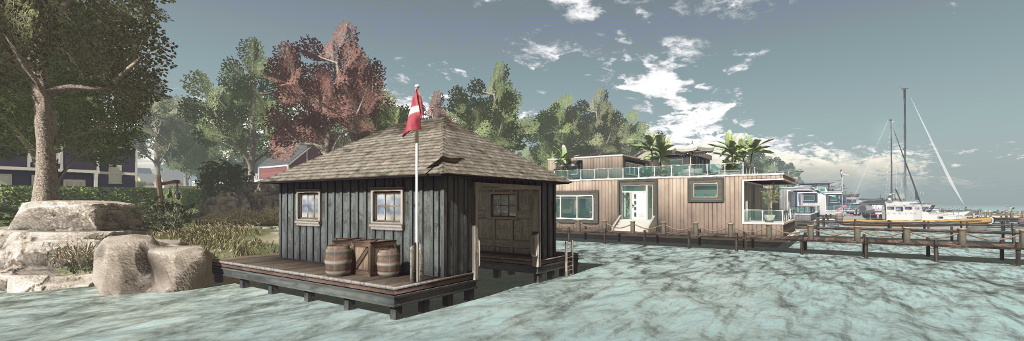
The boathouse at Fourze, a way point on a drive around parts of Bellisseria

Since it opened, Bellisseria, the new Linden Homes continent, has started to develop into a thriving community of those not only interested in having a home there, but also in developing a community spirit. To assist with this, the Lab incorporated a number of social areas throughout the continent, such as the pool area in Gaim, which serves both the coastal houses and house boats in the area, and – most recently, it terms of this article – the Squishy Pickle bar in the houseboat regions added in May 2019.

However, residents have also added their own, creating the first public rez zones in the continent on their own properties and their own social spaces, such a pubs. where people can gather. As such, I thought I’d take a little road trip around the continent, using some of these locations as way points.

The beach-side pool at Gaim, the starting-point for my little drive

My starting point was the pool area at Gaim, selected simply because it is the closest public social area to my houseboat. From here, I took the coastal road north, heading up to Normandale, a region with several public spaces within walking distance of the local houses, including a picnic area looking out towards the Coral Waters airstrip off the coast. From here, and before reaching New Bigby, with its extensive west-facing beach, I turned inland.

The route led me past one of numerous show homes scattered across the continent. Like many such house, this one, by Apple Fall is open for people to come in and get ideas for interior décor for their homes. Sadly I couldn’t stop as I’d risk seeing my car go poof, so I continued east, passing through Greenbow, then taking a short run through the still-to-be-named SSPE228 with a brief turn north into Rockham and then east once more to Fourze.

The Apple Falls show home, one of many scattered across Bellisseria

This took me past a riverside seating area before turning north along the coast, past one of the many little boathouses that are open to the public (as which I thought might be earmarks to become rezzing zones at some point); this one, pictured in the banner of this articles, looks out over one of the lighthouses that do have rezzing areas. Continuing north took me through Kiva and on to Maple Cross, with its hilltop garden area (which perhaps could use a little smoothing in some of the terraforming).

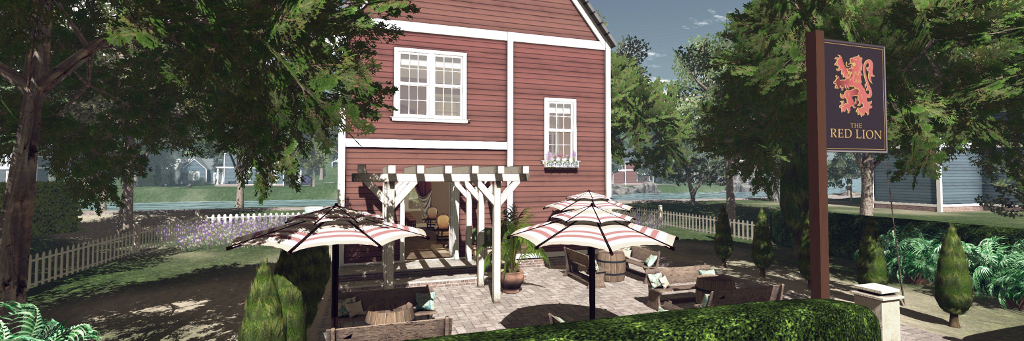
One of my primary destinations for this trip was Buitenwijk, and the Red Lion pub. Now, I’ll be honest, whenever I hear or read the words traditional English pub, I tend to shiver, as so often the words don’t tend to measure up to what we in the UK might regard as a “pub”. However, the Red Lion’s owner, Matty (Matty Luminos), is also from the UK, and the Red Lion does indeed offer the look and feel of a modern boutique-style pub, where a selection of beers, ales, wines and more might be pleasantly imbibed either indoors or out in the garden. With its riverside location.

The Red Lion pub

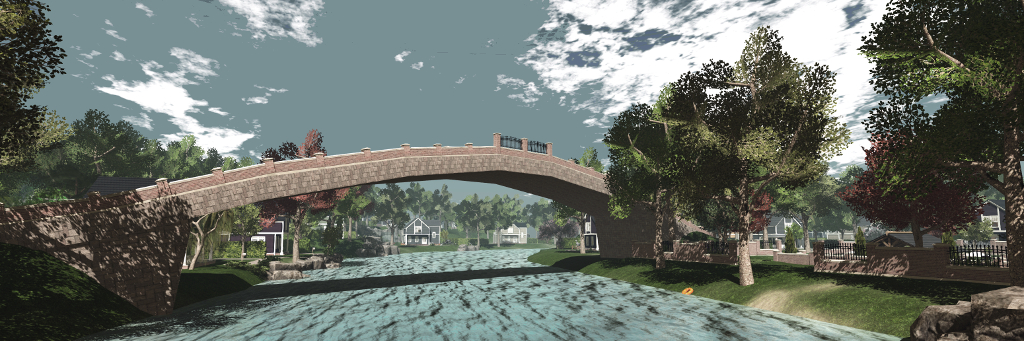
While the Red Lion offers open rezzing, calling-up a car in the garden would be rude, so instead, I resumed my travels via my trusty Roadrunner scooter, by Ape Piaggio (see A Second Life Roadrunner for more). Riding this, I again headed north, passing the impressive arc of the Capitol Springs Bridge, before continuing on through the houses to the rez point at what is currently called SPPE133. At this point, I cheekily swapped my scooter for my MD900 helo (which I quickly shoved onto the grass alongside the road after sitting in it!), and took to the skies for a quick flight back to my houseboat.

I’ve seen Bellisseria being referred to by some bloggers as a “ghetto”. I’m not sure where that perception comes from – outside of perhaps not having visited. Yes, the styles of homes are (for the present) somewhat limited (four variations of house and four variations of houseboat). But as any trip along the roads or waterways of Bellisseria or flights across the continent demonstrate, there is already sufficient variety of house style, coupled with people’s approaches to decorating their homes and gardens – including the various “extension” and “party packs” for interior / exterior supplements – to make Bellisseria a diverse and pleasant environment, entirely undeserving of the epithet.

Capitol Springs Bridge, one of many landmarks in Bellisseria

For my part, I’m becoming increasingly persuaded by the attractions of Bellisseria and the growing community spirit within it – hence why I’ll be writing for The Bellisserian, the continent’s new resident-run newspaper.  I plan to spend more time travelling through Bellisseria and, from time-to-time writing about places of interest within the continent like the Red Lion and the various Linden / Mole defined public spaces. In this, I would perhaps like the Lab to make the land-based rez points more obvious – it’s great having Yasmin’s HUD (see Finding rez zones in Bellisseria – Yasmin’s free HUD for more) – but having the rez points marked by a sign like those found on other mainland continents with road routes, would be handy – and could be done at the humble cost of 1 LI apiece.

In the meantime, my thanks to Gingir Ghoststar for her note card of points of interest and to the folks of the Bellisseria Citizen’s Group for pointing out additional public places they’ve discovered.

Visiting Rosa Scotia in Second Life

Rosa Scotia; Inara Pey, May 2019, on FlickrRosa Scotia – click any image for full size

A recent arrival in the Destination Guide is Rosa Scotia, a Homestead region designed by Pokute Burt, who describes the region thus:

Here you will find a small island filled with wonderful décor, and a great place to hangout! Lots of event treasures arranged in a very artistic way. Relaxing, good for photography, or just hanging out in a place that is peaceful.

And, I have to admit, in making our visit, this is a region that is exactly as it is described, and quiet wonderfully so.

Rosa Scotia; Inara Pey, May 2019, on FlickrRosa Scotia

The island really is quite small, a rugged postage stamp in the middle of the region, flanked to the north-east and north-west by two small islets, one of which is home to a lighthouse, the other a small, flat-topped  islet featuring what appears to be an empty, ivy-covered structure.

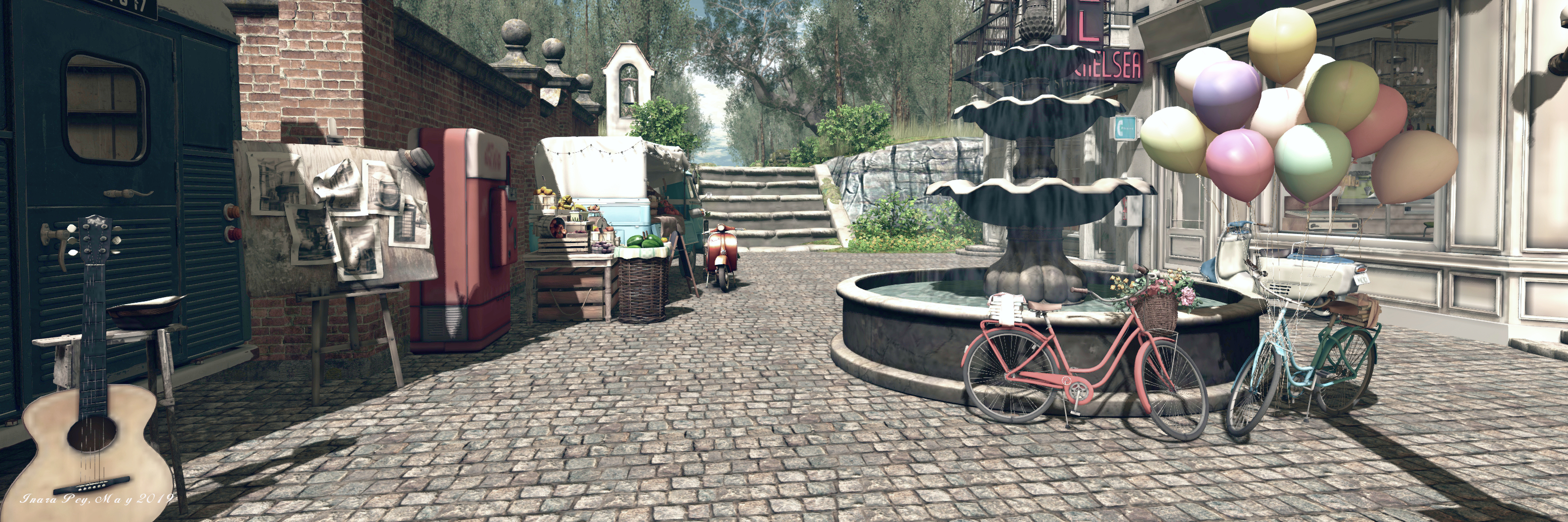
Small it might be, but the region packs a lot into it. The landing point sits on the west side of the island on a small wharf. Above this sits a little commercial area set out around a cobbled square. The square is in turn bracketed on one side by a truly delightful café, and on the other a bar is sandwiched between a barber’s and a pizzeria. These appear to occupy the ground floor of an old hotel – the sign is still prominently displayed – while stairs lead up to furnished apartments and a small  music club.

Rosa Scotia; Inara Pey, May 2019, on FlickrRosa Scotia

A path cuts through the middle of the island, west-to-east, providing access to a beach on the east side. Slightly tired-looking, this offers an old volleyball net, an aged pier with rickety bar at the end of it, and that might have once been a lifeguard station or fisherman’s cabin.

Between the two, sitting either side of the path are two buildings: a Tuscan-style villa and a single-room cabin with grapes growing on the vine outside. Whether the two are related to one another or not is open to personal interpretation; however, both are fully furnished and offer excellent places for meeting and hanging out or for photography – something that can also be said of the other buildings on the island.

Rosa Scotia; Inara Pey, May 2019, on FlickrRosa Scotia

With their surrounding curtain of trees isolating them from the rest of the island, the two houses have a nice clubhouse feel to them, with the woodlands offering a place for wildlife to roam. These touches help give the feeling that the island is, despite its small size, not in any way crowded.

A final feature of the island lies on the south-east, with a bridge spans the water to provide access to a tiny block of rock on which the raised hand of the Statue of Liberty, complete with torch, sits within a little walled garden.

Rosa Scotia; Inara Pey, May 2019, on FlickrRosa Scotia

Small to the point of cosiness without feeling claustrophobic and with a westward view towards Loki Eliot’s Escapades island – a place that is itself well worth a visit – Rosa Scotia is a small, pleasing destination ripe for visiting and exploration.

SLurl Details