Frogmore’s Cornish twist in Second Life

Frogmore, June 2020 – click any image for full size

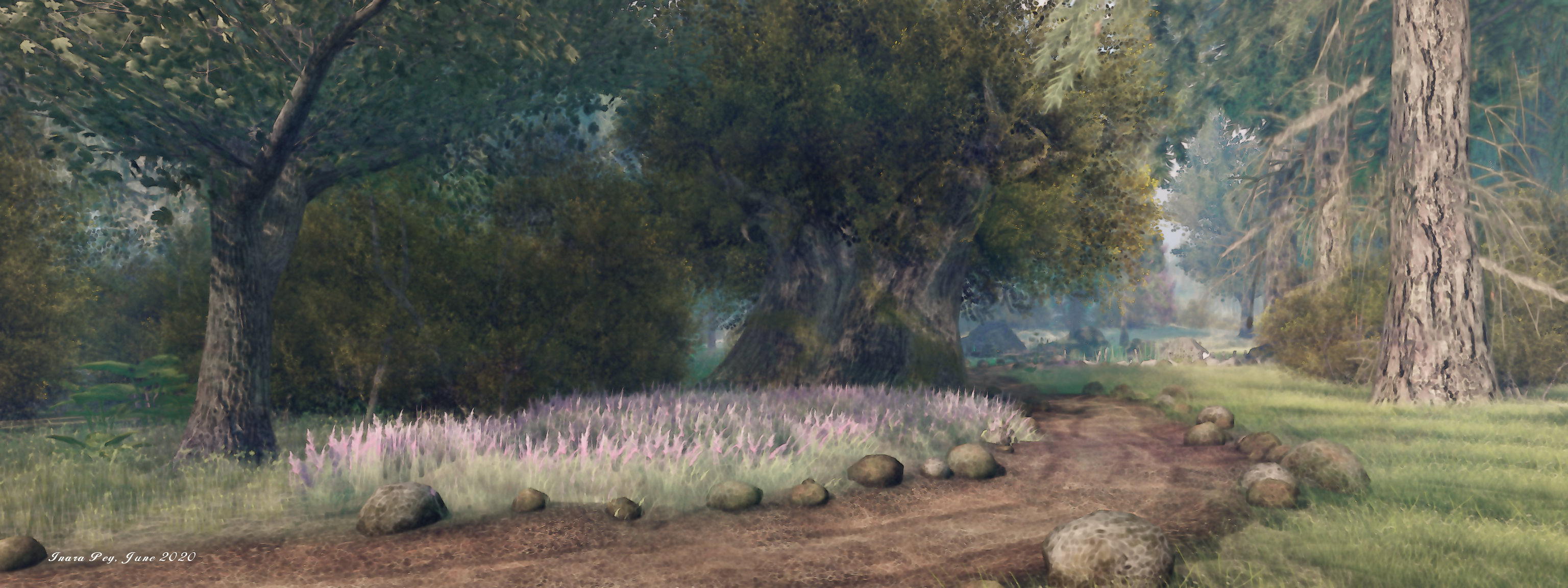
We recently made a return trip to Frogmore on the recommendation of Shawn Shakespeare, who nudged me about it having received another seasonal update, and with it a change of influences.  Still held by Tolla Crisp and once again laid out by Terry Fotherington, the region now draws on a summery England for inspiration – specifically the county of Cornwall in the south-west of the country.

This is a multi-faceted design, surrounded on all four sides by water rather than making use of any region surround. “Multi-faceted” because it draws on multiple influences from the Cornish landscape, rather than being a representation of any specific part of that county, while the lack of any region surround allows it to be presented as an island setting in is own right and a place unique to the world of Second Life.

Frogmore, June 2020

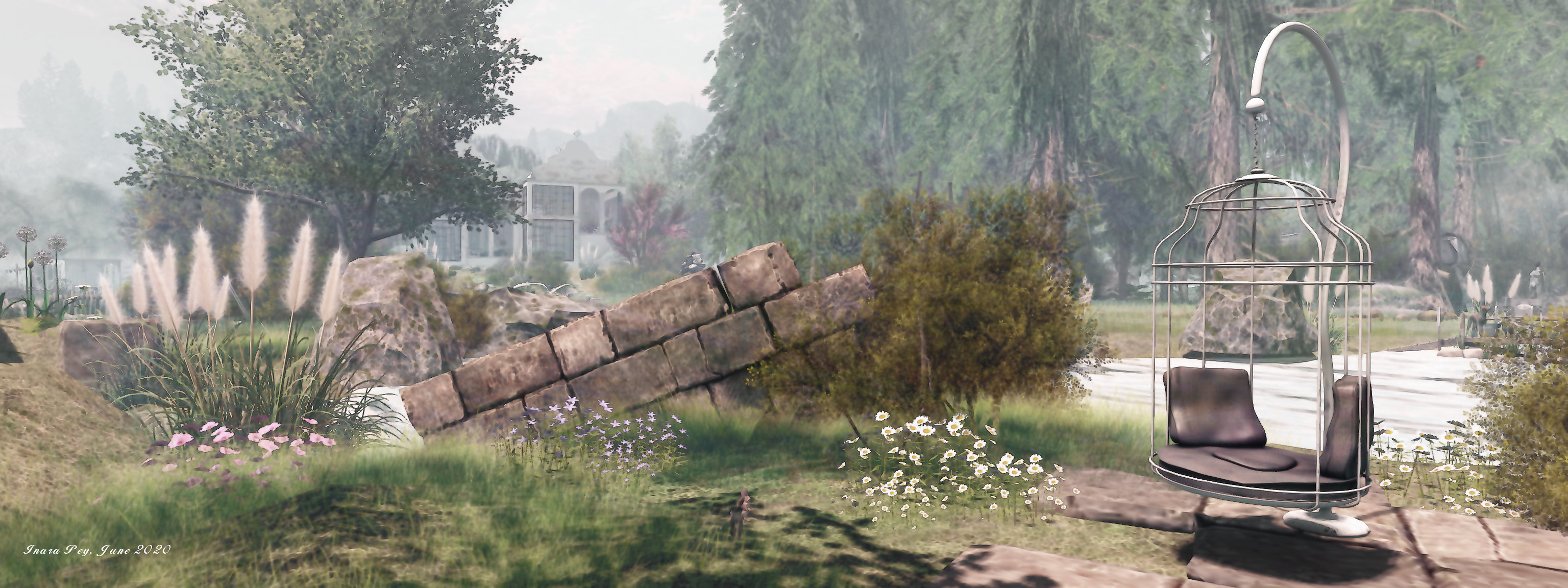
These Cornish influences are reflected in right across the region, from the shaping of the land through to many of the buildings found within it. For example, the landing point sits to the south-east, in an upland region that might represent the more rugged aspects of the country’s moorlands, the ruins at its top perhaps suggestive of the ruins of one of the old wings of Bodmin Jail (although admittedly, in the physical world, the core of that building is in much better shape than the ruins in the region).

Similarly, across the region, in the north-west corner lies a secluded beach back by a rugged curve of hilly coastline. It is typical of many of the little coves that might be found around the Cornish coast, whilst the round rounded structure that guards one end of the beach carries echoes of Restormel Castle or Trematon Castle.

Frogmore, June 2020

Exploring the region is a case of following the path down from the landing point and around  and between the rocky shoulders of the hills to reach an inland bay. Here, tucked into the curve of the southern uplands is a small tidal harbour, clearly with the tide out, although the breakwater still has its feet in the water, rowing boats sitting high and dry on the seaweed-edged sands. West of here is a working waterfront of unusual design – I’ve no idea if it is inspired by an actual place, but the lay of the stone built wharves and water channels is intriguing, and potentially a magnet for camera lenses.

To the north, a narrow causeway links the bulk of the region with its north side element, laid out as a line of smaller islands. The first of these is home to the secluded beach mentioned above, complete with an old lighthouse (another building design that has gained a lot of popularity among region designers of late).

Frogmore, June 2020

Beyond this and daisy chained to it by bridges, the second island appears to be drawn from a number of Cornish influences, both coastal and moorland. Within this is a cosy little bar waiting to be found, whilst the third island offers another classic building oft found within region designs: the Runestone castle, here used to offer a cosy home with a slightly bohemian feel.

For those who have visited it, exactly how much the region captures the heart of Cornwall is a matter of personal familiarity with the subject. As noted at the top of this article, if you enter the region in the expectation that you’re visiting a reproduction of a part of Cornwall, you’ll likely be a little disappointed. However,. take the region as drawing on a number of Cornish influences rather than a particular place, and the echoes and motifs are hard to miss, whilst allowing Frogmore to stand as a place in its own right.

Frogmore, June 2020

What cannot be denied, is the fact that it is a very photogenic region, although some who have shadows enabled on their systems may want to disable them when moving around between shots in order to maintain frame rates.

To mark the region’s new look, Tolla is running a photography contest between now and July 15th, 2020. On offer is a total prize pool of L$17,500, to be split between three winners (L$10,000 going to the first place winner).  Submissions can be made via the Frogmore Flickr group, and must be on the subject of the region (and can include avatars / be post-processed). Group membership to the in-world Frogmore group is not required, but all submissions must be titled Frogmore 3.0 Photo Contest 2020, and include the artist’s name. Entries will be judged by a panel of three.

Frogmore, June 2020

SLurl Details

Viewing Yoon’s F.E.A.R. in Second Life

FEAR. Face Everything And Recover, May 2020 – click and image for full size

F.E.A.R. is the first region-wide design Yoon (Onyxxe) has attempted, as she notes in her profile and through her blog. While the name might sound as if it references a place that is intended to invoke a sense of dread – and is actually taken from a Stephen King novel (Doctor Sleep) – Yoon uses it in one of its two more familiar forms: Face Everything And Recover (the other being – for polite company – Forget Everything And Run), a term often used in dealing with addiction. In selecting the acronym, Yoon notes:

Another thing I did was attend a webinar from a UK health organization, helping people with anxieties and more … It was like someone shaking me up and telling me: You RUN instead of FACING it. Hiding in too much protection is safe but not always the best choice. So at that very moment I decided my RUNNING was over again. I kept my head together and spoke with and to myself a lot to get it back in shape for being the ‘Face Everything and Recover’ mind.  

– Yoon on the origins of FEAR as a region name

F.E.A.R. Facing Everything And Recover, May 2020

Given the resultant Homestead region design offers a place of rugged solitude, perhaps of a Scandinavian or North American origin, using it as a means to confront her anxieties and need to hide in isolation may seem odd, but it really isn’t.

This is because throughout this design, Yoon lays herself open in many ways. She has clearly put her entire creative heart into the region’s look and feel, which can be revealing enough; but it it also clear that she has poured her own desires and artistic soul into the look and feel of the two houses within the region – notably the larger of the two. Thus, in opening the region to visitors, she is figuratively baring her artistic heart for all to see, an act that absolutely requires facing one’s fears and pushes her into the spotlight.

F.E.A.R. Facing Everything And Recover, May 2020

And the results really are gorgeous. Backed by off-region mountains that don’t quite meet the landscaping but which nevertheless offer a feel for this being a mountainous coastal area, perhaps the upper reach of a fjord, they help present a place where water tumbles from falls to roll and tumble down a shallow rocky slope into the landward end of the fjord’s watery tongue.

As noted, two houses sit within the landscape, both on the edge of the rapids-like outflow of water. Both are open to the public, with the A-frame house on its high deck the nearest to the region’s landing point. It is easily reached by walking the south-pointing raised board walk that extends away from the latter, and over the first of several stone bridges to be found within the region. It is a house was a light, cosy look and feel set within a parcel offering a late evening / sunset environment.

F.E.A.R. Face Everything And Recover, May 2020

The larger of the two houses – one that seems to have recently caught the eye of a number of region designers, as we’ve encountered it several times of late (and it is actually a design that is very well integrated that I’d love to make use of myself, although it is probably a little too roomy!) – also sits within a twilight environment setting. Here it forms a home-come-art studio, featuring a rich vein of 2D and 3D art from both the physical and virtual realms, with both it and the A-frame also revealing Yoon’s appreciation of the late David Bowie.

There are a number of places to set and / or enjoy the views across the region scattered around the setting await discovery. Getting to those on the east side may appear to be less than obvious at first glance due to the presence of the big house and the fact it has no obvious point of egress on that side, but just walk around it over the grass and you’ll find your way to where a further bridge spans the water to reach the eastern headland.

F.E.A.R. Face Everything And Recover, May 2020

Highly photogenic, F.E.A.R. is rounded out by a rich sound scape and accompanied by Yoon’s blog post mentioned above, and that comes as recommended read. Our thanks to Shawn for the recommendation to visit!

SLurl Details

The history of Second Life 1999-2020

The Tower – History of Second Life 1999-2020, May 2020

Sniper Siemens is perhaps Second Life’s most dogged historian, over the years presenting us with a unique look into the platform’s long history using immersive installations. First seen in 2014, with the assistance of the former Linden Endowment for the Arts, they have been outstanding in their curation of information, facts, figures, images and trivia about Second Life.

Unfortunately, circumstance dictated that Sniper had just two weeks to bring everything together for the 2014 installation, which meant some information had to be missed. This was corrected in 2015 with an expanded LEA installation which I had the pleasure of writing about at the time (see Previewing a walk through SL’s history, February 2015).

Inevitably, time marches on, and Second Life, like anything else with a life of its own, continued to evolve. So in 2017, Sniper unveiled Second Life 1999 / 2017 – The Story. Building on the work completed in 2014 and 2015, this brought SL’s story up-to-date at the time, whilst also adding further depth to the information previously presented (see: Sniper’s Second Life 1999 – 2017: The Story, March 2017).

The Tower – History of Second Life 1999-2020, May 2020

Now Sniper has further updated the installation to include the period 2017-2020. The Tower – History of Second Life 1999-2020 follows a similar format to previous iterations, presenting information in a garden-like environment. However, there is one major difference with this installation: the history is presented using a tower, with information presented chronologically as you ascend through the floors via teleport.

The lowest level of the tower – Floor 1 – includes an outdoor area with reproductions of maps of the mainland continents, and a circa 2008 that, whilst missing private islands and estates (and with them Blake Sea) and excluding Bellisseria (as it obviously didn’t exist in 2008), still presents the mainland continents in something of a “world-like” form.

Pretty much all of the significant points in SL’s history are covered, from the Lab’s inception all the way through to the arrival of EEP. The teleport stations include a summary of the key points in SL’s history that can be found on each floor, making direct teleport to a specific point of interest possible as well as making it easier to jump directly to a given floor should you opt to explore the installation over two or more visits.

The Tower – History of Second Life 1999-2020 – the original Linden Homes

Information  provided in a variety of ways – text boards, images, click-to view (via You Tube) videos and links to web pages – with both technical and social aspects of Second Life’s development covered. Some of the latter may be familiar to people – the 2003 tax revolt, the closure of “private banking”, the various CEOs Linden Lab has in its 21-year lifetime; and some may not be so familiar in terms of their history or the facts surrounding them – such as facts behind the 2008 FBI review of Second Life, or the rise (and fall) of the SLLA.

Much of the information is presented as extracts from the official SL / Linden blogs produced at the time. This helps give a further sense of perspective to things, but it can also leave some matters a little open-ended, which can result in a loss of context in places (e.g. the arrival of the Basic viewer is recorded, but not its eventual end); adding a footnote to such excerpts would perhaps add further context.


One of the earliest video ads for Second Life

For me, what makes this installation (and its past iterations) particularly interesting is that – the aforementioned official blog post extracts notwithstanding – this is also a personal trip through SL’s history. Having originally joined the platform in 2005, Sniper has been involved with SL throughout the greater part of the platform’s life, so there are numerous stories events that are included that have a personal connection to her – Gene Replacement / Plastic Duck, personal commentary on some of the non-blog post boards, etc. These give the installation a more tactile, personal feel.

This “tactile” feel is enhanced be the further inclusion of what might be called “trivia” elements of SL’s history – such as Kermitt Quark and Tringo, carried over from the past versions of the history, together with a new series of boards listing some of the more notable original last names the platform offered to users when signing-up (prior to 2010) and their possible / likely origins.

The Tower – History of Second Life 1999-2020 – the original Orientation Island

Given SL’s history is do vast, The Tower – History of Second Life 1999-2020 is an extensive installation. True, not every single event in Second Life long history is covered – but to try to do this would be a huge challenge in terms of the time needed to curate, organise and present it, and in trying to present the best means to present the information and for people to navigate their way through it.

As it is, the amount of written information on offer can be overwhelming, such that even with the floor summaries at the teleport stations, more than one visit might be advisable if you wish to fully absorb everything. These teleport summaries also allow The Tower to be used as resource by those interested in examining a specific point is SL’s history.

The Tower officially opens on Sunday, May 31st. When visiting, and should you be inclined, you can pick up a Linden World Primitar to wear (and which I was happy to pass on to Sniper 🙂 ). Do, as well, consider making a donation towards the continued presence (and potential update!) to The Tower.

SLurl Details

The serenity of Wision in Second Life

Wision, May 2020 – click any image for full size

Wision is a Full region designed by Mexi Lane, and intended as a place where:

Virtual projects are created for the real world… The sim hosts conferences and art exhibitions, but is available to photographers of the metaverse or to those who wish to stop in its suggestive quiet corners.

– From the region’s About Land description.

Wision, May 2020

A wildness region, largely given over to trees and open trails, ruggedly raised to the south-east, it is otherwise predominantly flat. It is home to three structures: an ancient turret of hewn stone sitting on the shoulder of the south-east hills, a far more recent warehouse-like building sitting within the trees to the west, and a futuristic geodesic dome on the west coast.

Wision, May 2020

The latter would appear to be the location for conferences / presentations, given the way it is laid out with concentric arcs of comfortable chairs facing a single pair set ready for group leaders. Admittedly, the dome has seen better days, the mesh of its walls torn and broken in places, but this adds a sense of depth to it. A terrace and stage outside offer space for events related to the dome.

Within its circle of trees, the warehouse also looks aged and careworn. Inside it offers what might a good sized exhibition space together with a separate café bar and mezzanine seating / reading area. With classic film posters on the walls, cases stacked with books and deep-set armchairs, its interior has a sense of cosiness about it.

Wision, May 2020

Beyond this, the landscape is open to wandering, and is ideal for photography. The north side of the region may look a little barren: the trees and rock abruptly end, giving  way to an expanse of flat grass that may seem at odds with the rest of the setting. However, there is a reason for this, which I’ll be covering in a blog post in the near future.

Scenic, serene and simple in composition, Wision makes for a relaxing visit, Rezzing rights, for those requiring them, can be obtained by joining the local group. however, if you do use props, please remember to pick them up again when done. Information on using the region can be obtained directly from Mexi.

Wision, May 2020

SLurl Details

  • Wision (Wision, rated General)

An empire of books in Second Life

The Empire of Dreaming Books, May 2020

We received an invitation to visit The Empire of Dreaming Books by the region’s co-creator, Num Bing. Together with Clifton Howlett, she has created an environment to honour the Zamonia series of books by German comic creator and author, Walter Moers.

Captain Bluebear tells the story of his first 13.5 lives spent on the mysterious continent of Zamonia, where intelligence is an infectious disease, water flows uphill, and dangers lie in wait for him around every corner.

– A description of the Zamonia books and their protagonist, Bluebear

The Empire of Dreaming Books, May 2020

In particular, the setting recreates a part of the city of Buchhaim., located in western Zamonia on the Dull plateau  on the dry, flat, steppe country not far from the border with the South Desert. The city sits on the convergence of many trails across the plains, and is famous for two things. 

The first is Buchhaim’s countless book stores and second-hand bookshops, printers, publishers and all things involving literature. It’s a place where the evening hours are traditionally called “wood time”, when poets of all kinds present their works in dining rooms and everyone can listen at will. The second is the extensive network of catacombs lying beneath the city.

The Empire of Dreaming Books, May 2020 – click any image for full size

It is said that it is in the centre of the city is where the influence of the Buchimists (alchemists who mainly experiment with books, words and literature) of Buchhaim is the greatest. It is also the the part of  the city Clifton and Numb have recreated for their build. Specifically, they present the Schwarzmanngaße, the oldest alley in city, which spirals its way inwards to shop number 333, the home of Phistomefel Smeik and his bookimistic laboratory.

Number 333 is also where you can find the landing point for the build. From here you can step inside Herr Smeik’s store and thus find your way to the catacombs (via teleporting), or follow the Schwarzmanngaße on its outward spiral to the city’s edge, where paths offers routes of exploration around the outlying lands.

The Empire of Dreaming Books, May 2020

Wandering these outlands will reveal multiple places to appreciate the city from a distance. These retain bookish themes – some in quite a novel ways: even the bird stands offer a book or two to read! Thus, it’s worth taking time to explore on the ground before using the teleport to reach the catacombs.

I say this because the latter really are extensive – after two visits, there is still a lot I’ve yet to reach – so going to the catacombs could distract from ground-level explorations. While it is possible to “cheat” by flycamming around the tunnels and chambers, doing so is hardly keeping in the spirit of exploration, and also risks missing the finer details awaiting discovery. The tunnels wind their way up and down, connecting chambers one to the next – although some are also dead ends in terms of finding a way through all of the tunnels, thus adding to the sense of exploration and discovery.

The Empire of Dreaming Books, May 2020

Books feature strongly throughout the catacombs, which can make things feel a little “samey” in wandering through them – but the chambers offer their own individual themes that more than compensate for this. From cosy lounges to vast, tiered libraries, there is a wealth of detail to be found throughout these chambers – so much so, more than one visit may be required to appreciate them all.

Many of the chambers offer a further surprise in keeping with the catacombs of Buchhaim: they are home to buchlings (booklings). Often depicted as bloodthirsty cyclops species in Zamonian legends that eat everything that gets in their way, buchlings are actually the most intelligent and educated form of existence of the catacombs of Buchhaim. They worship, collect, maintain and read books, and believe they are the ones who have the most literature, because they only have to read it while others have to write, proofread, publish and sell it.

The Empire of Dreaming Books, May 2020

Within Numb’s and Clifton’s catacombs, the Buchlings are to be found  in tunnels and chambers, sometimes standing innocently and sometimes getting up to a little mischief (or trouble). Their presence further reinforces the region’s homage to the Zamonia books, as does the name for the setting: The Empire of Dreaming Books was the title of one of the volumes of work by Hildegunst von Mythenmetz, the most famous Zamonian writer of his time.

A truly magical setting, The Empire of Dreaming Books is well worth the time taken to visit and explore.

The Empire of Dreaming Books, May 2020

With thanks to Cube Republic and MorganaCarter for their suggestions to visit the region as well.

SLurl Details

Visiting A Favela in Second Life

A Favela, May 2020 – click any image for full size

A favela is a unique, low and middle-income, unregulated settlement or neighbourhood in Brazil that has experienced historical governmental neglect. With a history dating back to the 1800s, most modern favelas appeared in the 1970s due to rural exodus, when many people left rural areas of Brazil and moved to cities, but could not find regulated places to live, and the 2010 Brazilian census reported that around 6% of the country’s population lived in favela or similar housing.

Around Rio de Janeiro, the favela cling to the sides of the hills, looking from a distance like colourful buildings – a colourful façade can oft disguise the crowded nature of a favela, with their tightly packed houses with little inthe way of open space, and where people strive to find a little corner of a rooftop in place of having any form of yard or garden.

A Favela, May 2020

The largest hillside favela in Rio de Janeiro (as well as in Brazil as a whole, and the second largest shanty town in Latin America) is Rocinha; and this mini city-in-a-city might well be the inspiration for the latest design by Lotus Mastroianni and Frecoi called, appropriately enough, A Favela

Unlike their past builds, such as RioSisco Studio Pictures, ChatuChak or Kun-Tei-Ner, all of which covered a complete region, A Favela occupies a 4096 sq metre parcel, and sits as a sky build. This makes a a very compact build, but the space is effectively used to recreate the look and feel of a portion of a favela: the houses are stacked vertically, some buildings looking like there might be multiple apartments, others looking like that are single homes with one room atop the last; some have traditional water tanks, others have the famous blue roof-top tanks provided by power and water company Cedea.

A Favela, May 2020

As with their physical world counterparts, these buildings are made of a variety of materials, their roofs concrete or sheets of corrugated sheets of metal. Between them, a single road winds up the side of a rocky hill, the houses forming deep canyons, the “cliffs” of which and dotted with verandahs and windows. Towards the top of the setting, the road levels before apparently vanishing into a tunnel, above which a backdrop rises, offering a sense of the favela continuing up the mountainside while Christ the Redeemer stands with arms outstretched on a more distant peak.

Like a real favela several of the buildings have steps leading up to rooftop areas that offer places to sit, whilst walls are given life through the application of graffiti paintings or thanks to clothes and towels hung to dry from rails placed outside of windows. Further life is added to the setting through the inclusion of dogs and cats in passages on and rooftop “yards”, while pigs and chickens wander the road’s twists below, ignoring the old cars and trucks parked at the roadside (one of them so out of condition, it needs the help of large stones to hold it in place). Birds circling overhead and a sound scape give a further depth to the setting, rounding it out nicely.

A Favela, May 2020

A small, detailed setting ripe for photography and offering a small glimpse of life in parts of Rio and Brazil.

SLurl Details