February 2024 brings us a touch more whimsy from Cica Ghost, with the opening of her latest installation, Colourado. Continuing the theme found within several of her more recent installations, Colourado presents a seen designed to raise a smile and allow with child within each of us a little room to come out and play, a sentiment reinforced by the quote accompanying the installation:
Inside every old person is a young person wondering what happened.
– Terry Pratchett
Cica Ghost: Colourado, February 2024
It’s a sentiment I find increasingly true with the passing years, although I also admit that I try to live by Ashleigh Brilliant’s words as well¹, so whimsy and fun always appeal.
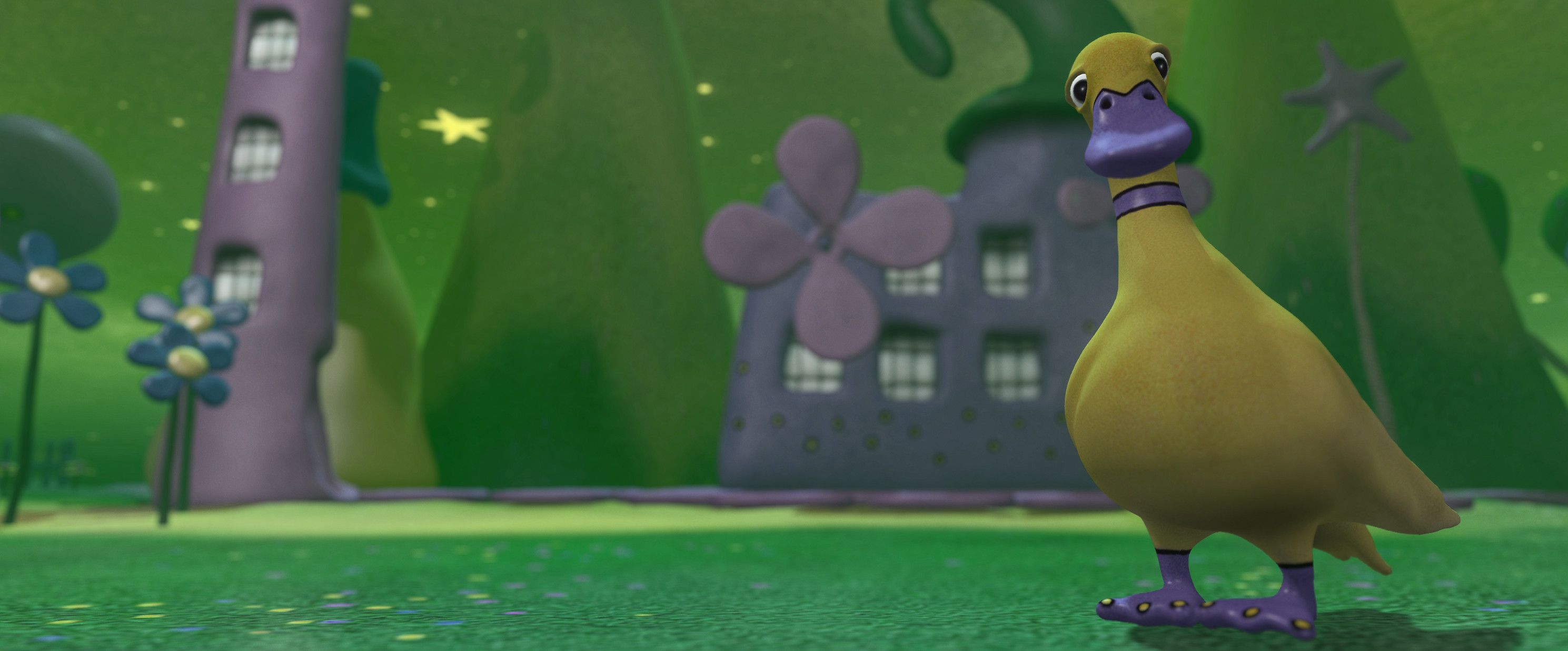
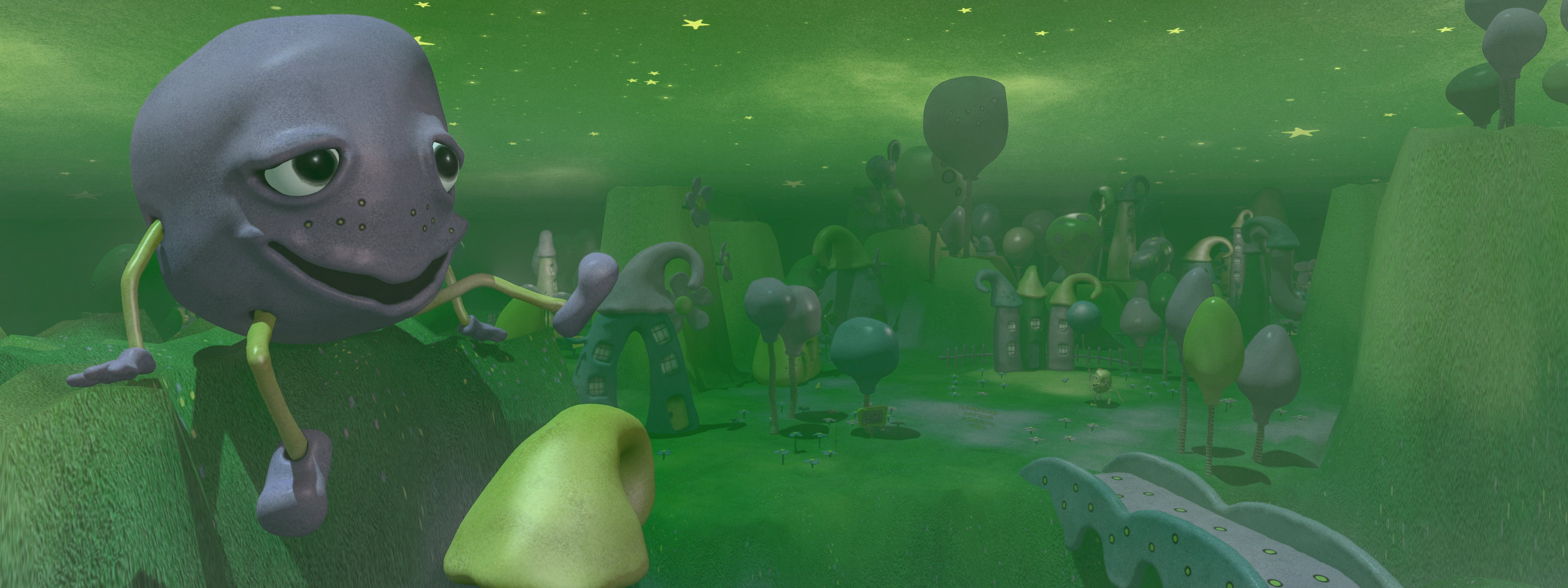
Within the installation, we are presented with a sleepy village with its houses scattered among open spaces and high plateaux and peaks which go some way to explaining Cica’s play on the installation’s name and that of a certain US state (the name also obviously reflecting the setting’s colour palette). And when I say “sleepy”, I’m not writing figuratively; the houses all wear curly night caps of the kind beloved of cartoon, and some have a look about them suggesting they are ready to toddle off to the land of dreams (particularly those with wide-open fronts, even if the large space is really for people to practice balancing on the gently pogoing stools within).
Cica Ghost: Colourado, February 2024
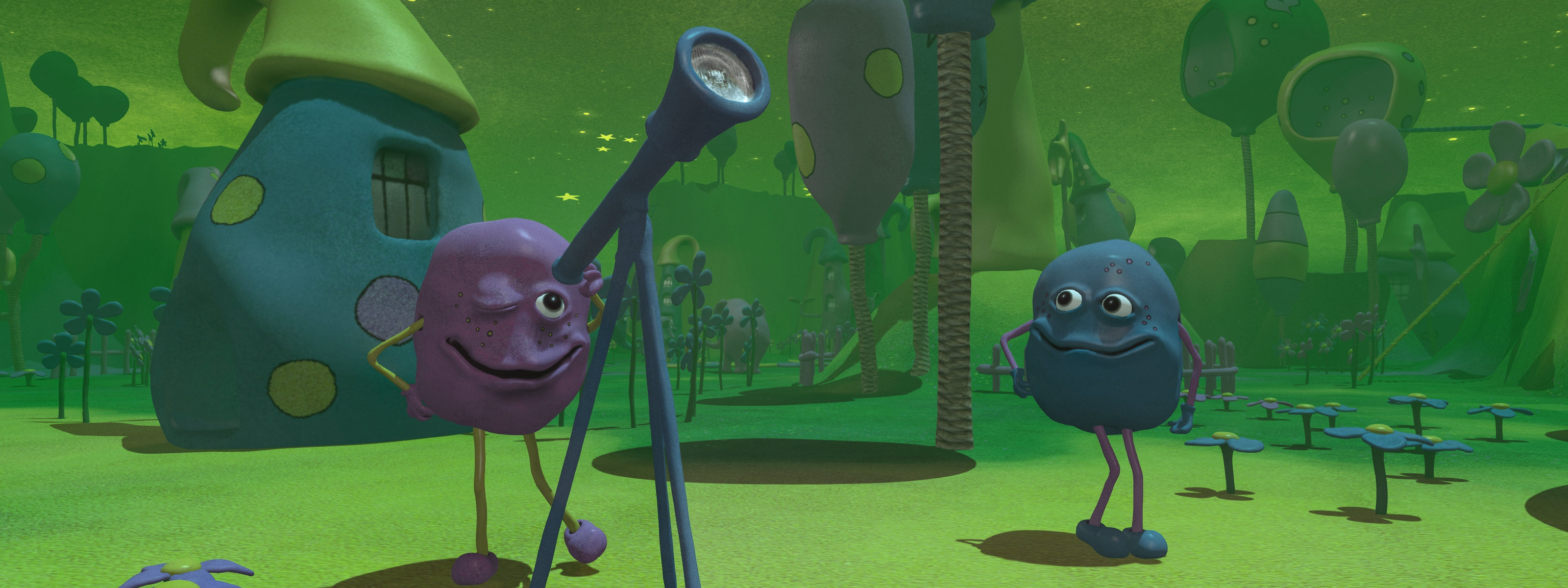
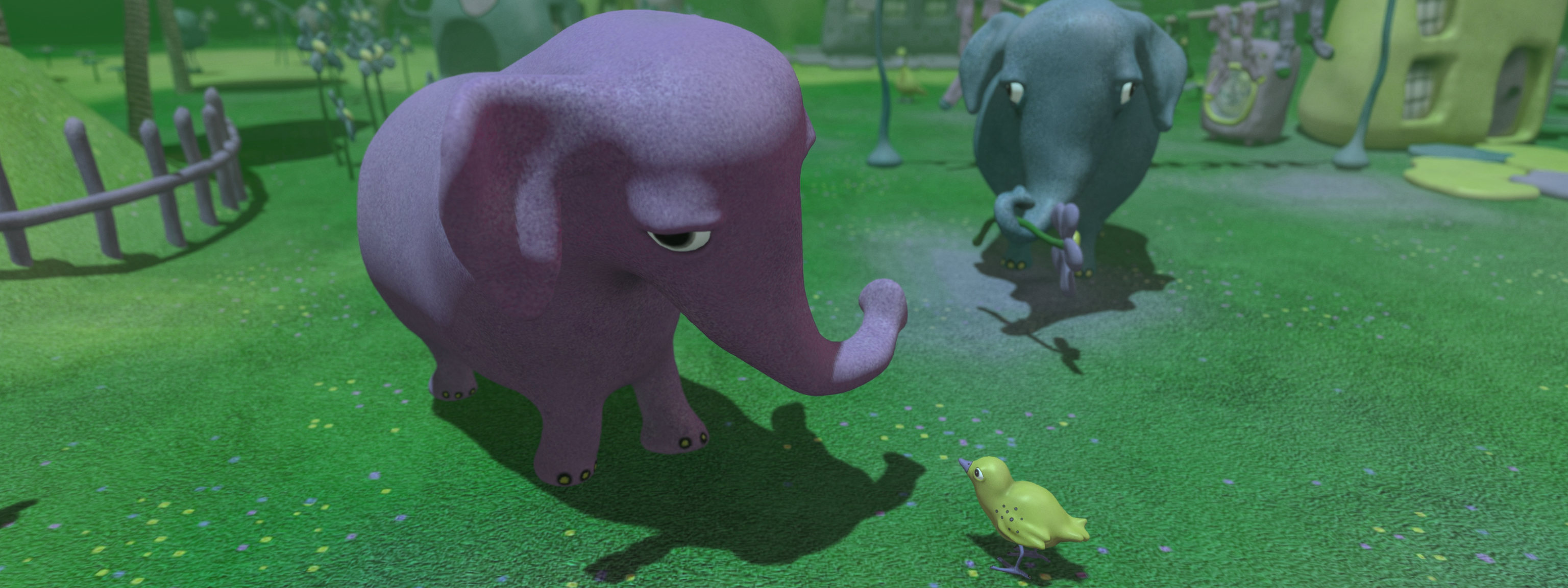
On first encountering them, I thought the denizens of this little hamlet were fruit. I think this was because the first ones I encountered were purple in colour and they put me in mind of the adverts for a certain blackcurrant cordial drink we have in the UK (and which may well be known by other names elsewhere). However, they are in fact potatoes, small and (very) large, and are far from limited to being purple in colour. These happy villagers share there space with a mix of wildlife, all of whom appear to be equally at home in the village and its surroundings, and equally friendly.
As is common with Cica’s installations, there are several interactive elements, so you can sit and chat with a potato, try the stool balancing mentioned above, express your joy through dance under the eaves of house or the balloon-like trees, climb and cross ladders – you can also go for a spin if you wish, although wearing a swimming costume and being prepared to hold you breath are both advisable!
Temple of the Prim, one of the many Mole builds to be found around Second Life
Sunday, February 4th, 2024, marks the annual Mole Day celebrations in Second Life, and all SL residents are invited to attend festivities at the Bay City Fairgrounds, North Channel.
First held in 2010, Mole Day honours the members of the Linden Department of Public Works (LDPW), affectionately known as the “Moles”, resident builders and scripters contracted by Linden Lab to work on a wide range of projects in support of Second Life.
Since their inception, the Moles have have been responsible for many of the larger in-world Mainland development projects – most notably Bellisseria and the Linden Homes, although they created many of the more famous sights in Nautilus and elsewhere, as well as undertaking initial development of Zindra, the Adult continent and the futuristic-themed Horizons. They also maintain the Mainland road and rail infrastructure and Mainland waterways.
Beyond that, the Moles help develop content such as “new starter” avatars, including the Senra brands; they help develop and build Linden Games (and the Portal Park), play a key role in support Linden Lab partners in developing themes regions (such as the Motown Experience), and provide input and support to some of the out-world LL web properties.
One of the first major projects undertaken by the Moles was that of developing Bay City – hence the City’s annual celebration honouring them.
Normally held on the same day as Groundhog Day in the United States, Mole Day is open to all residents wishing to join in with the festivities, and will take place at the Bay City Fairgrounds on February 4th commencing at 11:00 SLT. The event will feature DJ GoSpeed Racer of KONA stream followed by a live performance from Evee Blackstar (Harleen Jester) at 12:00 noon SLT.
About Bay City and the Bay City Alliance
Bay City is a mainland community, developed by Linden Lab and home to the Bay City Alliance. The Bay City Alliance was founded in 2008 to promote the Bay City regions of Second Life and provide a venue for Bay City Residents and other interested parties to socialize and network. It is now the largest group for Residents of Bay City.
The following notes were taken from my audio recording and chat log transcript of the Content Creators User Group (CCUG) meeting held on Thursday, February 1st, 2024.
The CCUG meeting is for discussion of work related to content creation in Second Life, including current and upcoming LL projects, and encompasses requests or comments from the community, together with viewer development work.
The notes herein are a summary of topics discussed and are not intended to be a full transcript.
Official Viewers Status
The Maintenance W RC viewer – bug and crash fixes – updated to version 7.1.3.7701974306 on January 31st, January 31, 2024.
The remaining official viewers stood unchanged from the start of the week at the time of the meeting:
Release viewer: version 7.1.2.7215179142, formerly the glTF PBR Materials Maintenance RC, issued December 15, promoted January 8, 2024 – numerous bug fixes and improvements.
glTF PBR Materials Maintenance-2 RC viewer, version 7.1.3.7467259489, issued January 12, 2024.
Maintenance X RC, version 7.1.1.7088410646, December 7 – usability improvements.
Maintenance Y RC, version 6.6.17.6935642049, issued November 21 – My Outfits folder improvements; ability to remove entries from landmark history.
Project viewers:
Puppetry project viewer, version 6.6.12.579958, May 11.
General Viewer Notes
The Emoji viewer is still on the path towards an RC update, and it is still hoped it will get promoted to de facto release status Soon™.
Graphics / glTF
The “glTF featurettes” work is progressing, with the viewer following the current glTF Maintenance-2 RC viewer set to include:
Geenz Linden’s work on Hero reflection probes and reflections / mirrors and Cosmic Linden’s work on applying glTF materials to terrain.
Updates which will allow the glTF / PBR swatch boxes in the Build / Edit floater display previews of the materials being selected, rather than grey boxes.
Possibly, the first series of additional glTF extensions – Index of Refraction.
These capabilities (together with 2K textures support – see below) will be sitting behind debug settings, and so a) will need to be enabled by those wishing to test them; b) should be understood to be incomplete features subject to update and change / possible breakage.
2K Textures:
The Lab is starting to assess the potential to allow 2K textures within SL. Such support will require “careful assessment” in terms of VRAM footprint, the risk of out of memory crashes on older systems and the like.
Runitai Linden believes that if there are issues with the viewer attempting to load a full 2K texture even when it is very small (or very distant), then it is a case of making the viewer “smarter” it terms of how it handles and samples / loads textures.
Support for 2K textures is available for general testing on Aditi (the Beta grid) within the RumpusRoom 2048 region.
One identified win is seen as terrain texturing, as 2K terrain textures at the region level should not overly tax systems and eliminate the current issues of blurriness / low texel density.
Mirrors
Work has been continuing of late, with what is described as a “significant” increase in reflection quality, and is starting to look “correct” as well as working with PBR.
Further performance tuning is required, and the clipping is “off in a lot of circumstances”.
The focus is on presenting planar reflections (utilising a cub map generated by a “Hero” reflection probe which is selection on the basis of the avatar’s proximity to it), with Geenz Linden noting it has the potential to allow more “fancy things” down the road.
It was noted that the approach taken has to offer a balance between intended use (to create actual mirror surfaces) against unintended uses (such as using the mirror capability within a highly polished floor), rather than trying to enforce some nebulous rule of “this functionality is ONLY for mirrors”), as well as taking into the consideration that it needs to be relatively easy to use.
Terrain
Cosmic Linden has indicated that once the PBR shader, etc., is working for terrain as per her current project, consideration is being given to allowing the same terrain shader to in-world objects.
So, for example, a mesh tunnel might be created and placed in-world, and then the outer face of the model set to display whatever the surrounding terrain might be.
“Combat Committee”
A reminder that:
The first meeting of the “Combat Committee” User Group will be held on Thursday, February 8th, at 13:00 SLT, and so will be alternating with the Content Creation User Group.
Rider Linden acknowledged the fact that I (aka “someone”) had pointed out having two user group meetings with the same abbreviation (CCUG) alternating between the same time slot on the same weekday might be confusing for some (even if the meetings are in different locations), so the name for this meeting might be changing.
In Brief
The transition from Jira to Github Issues / Canny is still in progress at LL and is taking up resources and time, hence the slow-down in some areas of work (such as RC viewer updates. As per previous reporting, the work is due to be completed by the end of February, when Jira will cease to be used.
The use of Canny remains a source of unhappiness among those who tend to raise bug reports, largely as a result of its limited functionality in some areas (such as no support for any other attachment type other than static images).
The Lab is continuing to work with the Canny development team to try to improve things.
As was noted in the previous CCUG meeting, the placing of incomplete features (such as the glTF terrain and mirrors functions mentioned above) behind debug settings is a part of a more general move to add features and capabilities to the viewer more iteratively, allowing individual capabilities to be added (and potentially tested on a limited basis by those interested), but only fully exposed to all users once they have been validated / have any required supporting functionality / capabilities available to them.
There was a general discussion on the viewer UI and how it tries to meet the needs of very different groups of users – content creators and “general” users, and how it might be made more responsive to specific modes of use – if you are using the viewer to explore, take photos, play a game in-world, and carry out basic building / editing, etc., then the viewer can be run in a “generic” mode to do all of these things, but if precision tools are required for design and creation, then the viewer can be switched to a mode which provides more specialised options through floaters and menus.
The question was asked that if SL is to support the “entire” glTF specification, including animations, does this mean future support for custom skeletons, and if so what does that mean for the current animation marketplace (e.g. preventing confusion as to what will / will not run against different skeleton types).
Runitai Linden’s viewer was that if custom skeletons are to be supported, then it would require suitable tools which allow for animation / joint retargeting (e.g. animations made for the current Bento skeleton could be retargeted of any other given skeleton, and vice versa). However, whilst there are tools to achieve this, they would require investigation and assessment.
There are limitations on how far retargeting will go, however (and it will not be entirely devoid of creator intervention), so if custom skeletons were to be allowed in SL, it was noted that expectations could be in part managed by specifying with which actual skeleton(s) the offered animation / avatar, etc. has been designed to work.
Concern was raised as to the constraints which might be applied if SL has an open gateway to importing glTF meshes from external sources such as SketchFab, where the content may well look pretty but is hardly appropriate for real time game rendering, the view being the Land Impact alone is not going to be sufficient.
The view from the Lab is that there will be some form of weighting system at import, at least analogous to Land Impact, but better suited for the acceptance / rejection of content, and this will vary for different content types (e.g. glTF scenes might be assessed of number of nodes, how many bytes in the asset, how many instances of the asset, etc.).
† The header images included in these summaries are not intended to represent anything discussed at the meetings; they are simply here to avoid a repeated image of a gathering of people every week. They are taken from my list of region visits, with a link to the post for those interested.
Gallery Asaki Yume Mishi, Jan / Feb 2024: Noa Cloud – Photopoetry
I recently had the opportunity to visit two small and very different art exhibitions presented by two diverse creative talents in Second Life; and while they are entirely unrelated in terms of their visual composition and content, both appealed to me in such a way that writing about both within a single article struck me as not unreasonable.
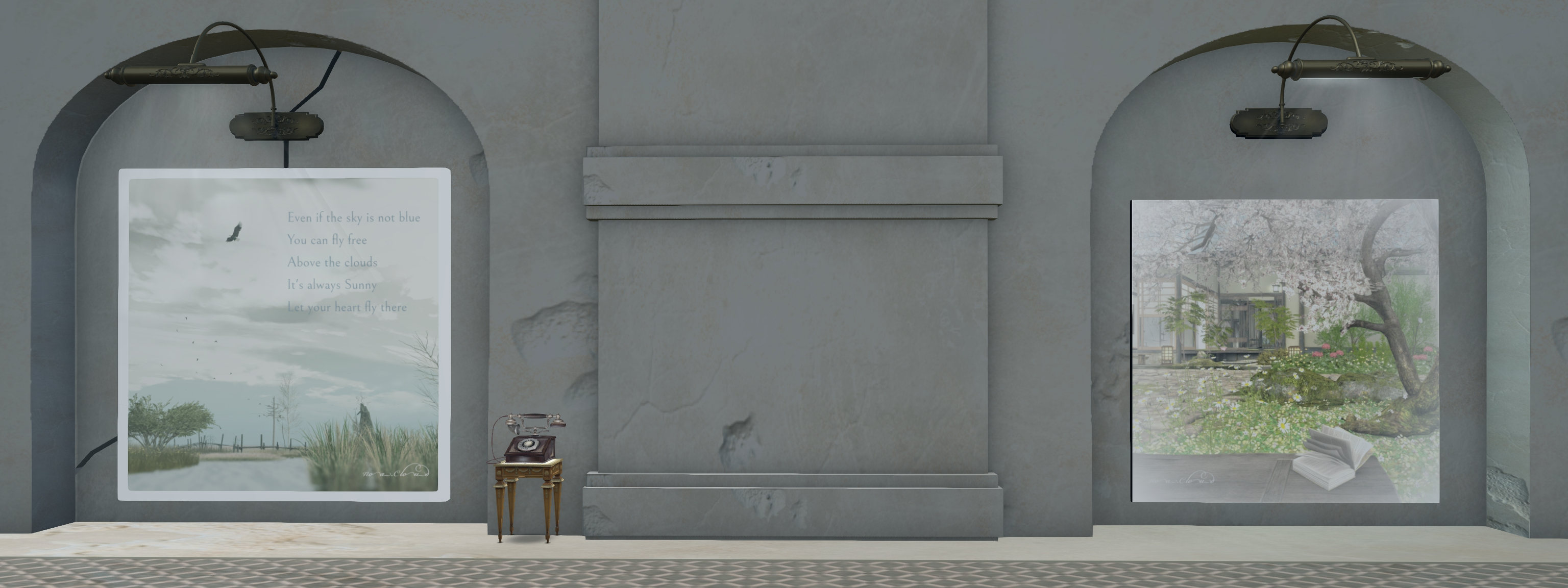
The first is a very modest – I wish it were more extensive! – exhibition by Noa Cloud, presented at the Gallery Asaki Yume Mishi, which has a novel underwater setting. Noa is perhaps best known amongst SL explorers as the holder and creator of [REN], with its seasonal designs and opportunities for photography (and which is also the home of his own gallery); however, he is also a gifted writer, a musician and actor, and an explorer of Second Life as well as an expressive photographer of both avatars and Second Life landscapes.
Gallery Asaki Yume Mishi, Jan / Feb 2024: Noa Cloud – Photopoetry
Within Photopoetry, Noa combines both his writing and his photography both directly and indirectly. Directly, because within the selection of pieces is a slideshow featuring all six of the presented pieces taken from around Second Life, each with its own single-stanza poem presented in both Japanese and English. As I don’t speak Japanese myself, I cannot say of they all form traditional Haiku, but the flow of their English metre suggests they are free-form Haiku (which do not necessary follow the 5-7-5 on), and each certainly has an implied kigo.
Indirectly, because while the combination of each image with a poem leans the observer into a line of thought suggested by the poet-artist, Noa also includes the six pieces individually around the gallery space (and within the slideshow prior to its accompanying poem gently fading-in), allowing visitors to view them free from any suggestion of rhyme and meaning. Thus, each piece is able to speak to us in its own right – and there is much each has to say; Noa’s photography carries within it a mix of homage to Nature’s beauty – often combined with a sense of spiritual reflection or uplift – together with a hint of mystery or social commentary, all of which makes for a thoroughly engaging visit.
Nitroglobus Roof Galley Annex: Frank Atisso – Shadows and Strength
Frank Atisso is also well-known within Second Life. He was the founder of the Art Kornersl blog which later morphed into the Art Korner Exhibits HUD and the Art & Photography Calendar. He also founded the Art Korner Gallery and currently co-runs the Artsville Hub, exhibitions at both of which have been, and continue to be, featured within this blog. And if that weren’t enough, Frank also keeps himself busy as a DJ in-world! However, his work as a photographer is something which may be less well known, and so his exhibition at the Annex of Dido Haas’ Nitroglobus Roof Gallery offers an excellent opportunity for those who have not done so to acquaint themselves with it.
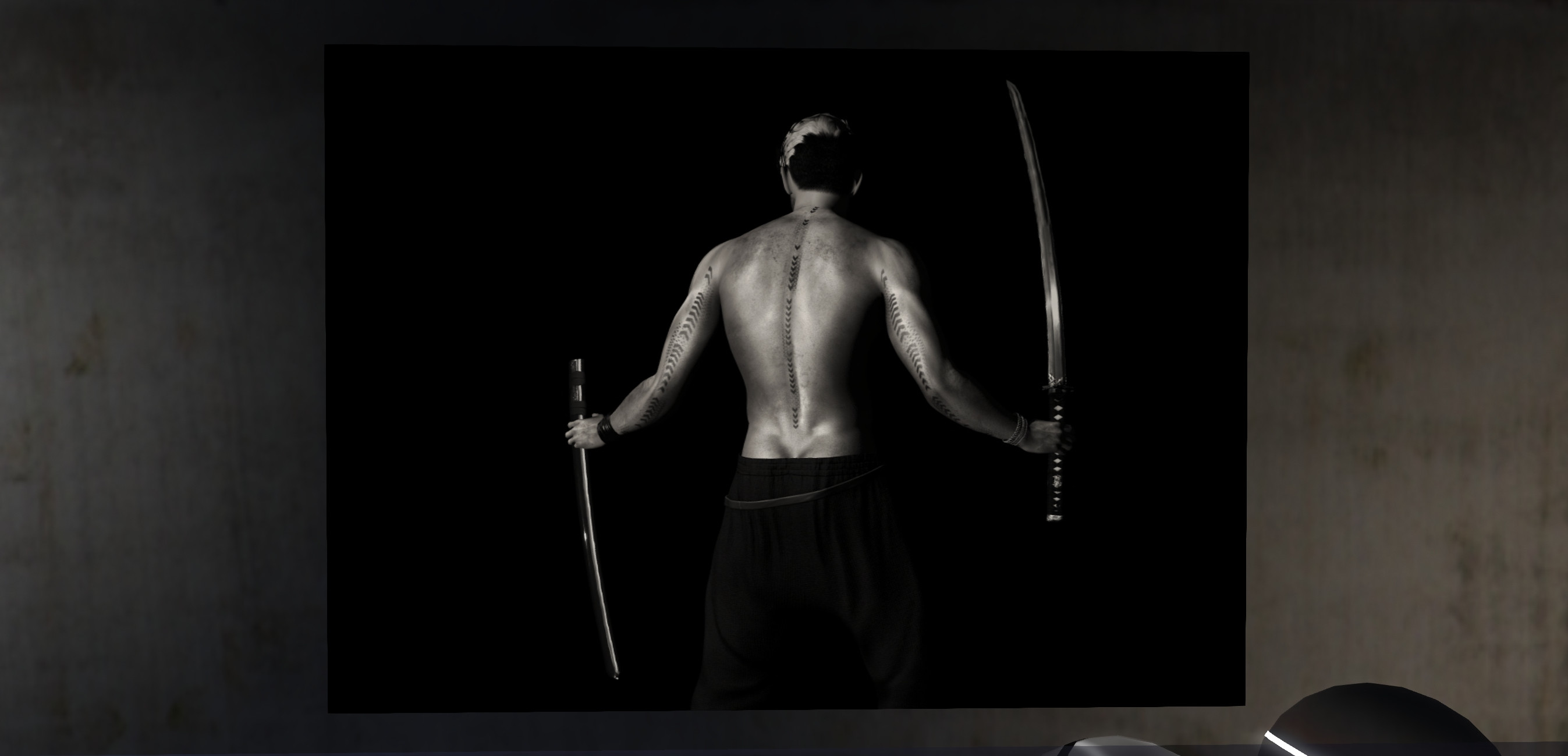
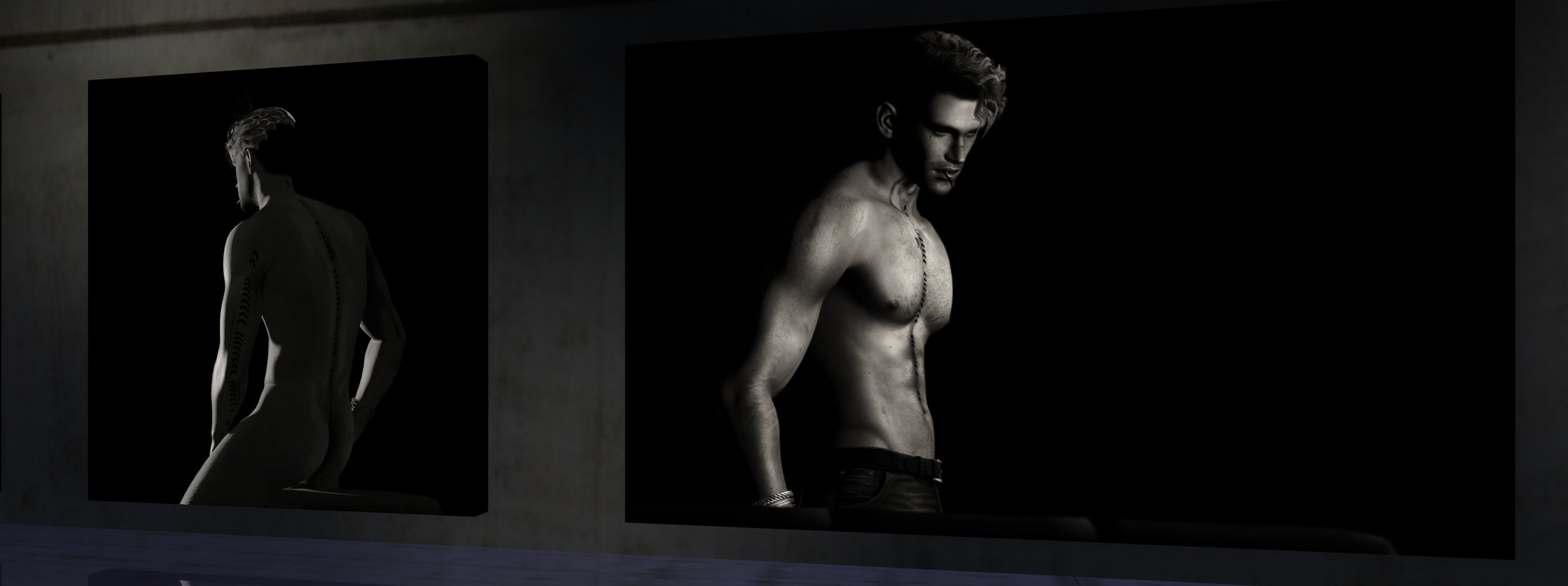
Entitled Shadows of Strength, this is an exhibition of male semi-nudes (something of a rare subject in SL!) which are specifically designed to explore the complex interplay of light and shadow within photography. Presented as chiaroscuro greyscale pieces, the nine images comprising Shadows of Strength are on a technical level a perfect embodiment of the technique: using bold contrasts (light / dark) to frame the entire composition and achieve a sense of volume and depth in modelling three-dimensional objects and figures within a two-dimensional canvas.
Nitroglobus Roof Galley Annex: Frank Atisso – Shadows and Strength
However, these are pieces that achieve for more than a technical embodiment of a technique. Such is the subtle interplay of contrasting light and dark in all their varying volumes and as determined by the subject’s pose and the positioning of the (off-camera) illumination, the eyes is naturally drawn to the manner in which both light and shadow ebb and flow across the subject, both of them giving subtle emphasis in their own way to changing skin and muscles tone which also highlighting features and hiding others to give an intrinsic and life-giving depth to each piece.
Thus, within each of these pieces we have not only a single-frame study of the human form and the use of light and shadow, but also an exploration of mood, thought, emotion, even vulnerability (particularly in those images where the subject is not looking at or towards the camera), conveyed as narrative threads to further engage the eye and mind.
Nitroglobus Roof Galley Annex: Frank Atisso – Shadows and Strength
Both Photopoetry and Shadows of Strength will remain open through February 2024, and I recommend both to fellow patrons of the arts in Second Life.
The following notes were taken from the Tuesday, January 30th, 2024 Simulator User Group (SUG) meeting. They form a summary of the items discussed, and are not intended to be a full transcript. A video of the meeting is embedded at the end of this summary, my thanks as always to Pantera for recording the meeting and providing it.
Meeting Overview
The Simulator User Group (also referred to by its older name of Server User Group) exists to provide an opportunity for discussion about simulator technology, bugs, and feature ideas.
They are open to anyone with a concern / interest in the above topics, and form one of a series of regular / semi-regular User Group meetings conducted by Linden Lab.
Dates and times of all current meetings can be found on the Second Life Public Calendar, and descriptions of meetings are defined on the SL wiki.
Wednesday, January 31st would have seen the Gingerbread RC update deployed to the BlueSteel channel. However, a late-breaking bug has seen this deployment postponed for a week, so the RC channels will likely be restarted without any simulator version change.
No changes at the start of the week, leaving the list of official viewers as:
Release viewer: version 7.1.2.7215179142, formerly the glTF PBR Materials Maintenance RC, issued December 15, promoted January 8, 2024 – numerous bug fixes and improvements – No Change.
glTF PBR Materials Maintenance-2 RC viewer, version 7.1.3.7467259489, issued January 12, 2024.
Maintenance-W RC viewer, version 7.1.3.7453541295, January 9, 2024 – bug and crash fixes.
Maintenance X RC, version 7.1.1.7088410646, December 7 – usability improvements.
Maintenance Y RC, version 6.6.17.6935642049, issued November 21 – My Outfits folder improvements; ability to remove entries from landmark history.
Project viewers:
Puppetry project viewer, version 6.6.12.579958, May 11.
Jira End-of-Road – Reminder
Linden Lab is ending its use of Atlassian Jira for the filing of bug reports and feature request, and is instead moving to Github / Canny. For specifics, please refer to the following:
The new means of filing bug reports / feature requests is via the Canny feedback portal.
Combat Committee User Group
The first meeting of the Combat Committee User Group will be held on Thursday, February 8th, at 13:00 SLT, and so will be alternating with the Content Creation User Group.
I have pointed out to Rider Linden that having two meetings abbreviated to “CCUG” (Combat Committee and Content Creation user groups), which are held at the same time on alternating Thursdays could lead to some confusion among attendees of either, even allowing for some cross-over between the two, so the Combat Committee may yet see a change in name.
In Brief
A general discussion on the upcoming llGetNotecardLineSync(), including caching (both when and length of time).
Further (often negative) feedback on CANNY as the bug / feature release front-end, including news from Signal Linden that the Canny devs are working to take onboard issues raised with them by LL to help improved the system, some of which (such as providing a wider text input field on tickets) will be deployed in the very near future.
A general discussion on a “HUDs/dialogue box 2.0 feature” to replace / improve upon the current dialogue box system and scripted HUDs. Suggestions included enabling / allowing dialogue boxes to be generated with radio buttons, dropdown boxes, and checkboxes; offering a client-side scripting capability to provide HUDs (and idea also being tossed around at recent Content Creation User Group meetings), although this got largely derailed by the hoary old (and highly subjective) “Pie Menu is better than Context Menus” debate.
Details of all above in the video, below.
† The header images included in these summaries are not intended to represent anything discussed at the meetings; they are simply here to avoid a repeated image of a rooftop of people every week. They are taken from my list of region visits, with a link to the post for those interested.
Oblivion, January 2024 – click any image for full size
There are many beautiful regions in Second Life presenting all manner of settings and environments and put together with care and love for the enjoyment and appreciate those who visit them. It has been my privilege and joy to visit many of them over the years, and to write about them. Some have faded away with the passage of time, but remain in photos and memory; others are reinvented periodically to offer something new and enchanting or mysterious or fun to visit, and some – and their designers – have become established in a growing catalogue of places I regard as personal favourites; places I will happily revisit time and again.
One such region was that of Winter Moon, a place I visited on several occasions between 2013 and 2020 and wrote about on three of them. A Homestead region held and designed by Dream Shadowcry, it was always a place of serene beauty and opportunities to decompress and renew. However, and for reasons unclear to me – or perhaps because the region was retired at some point; I genuinely have no idea – I lost track of Winter Moon in late 2020; so when a little bird whispered in my ear that Dream was back with a new setting (and with a new name for herself – Dream Softpaw), this time occupying a Full region, I knew I’d have to play a little catch-up.
Oblivion, January 2024
Oblivion – for that is the name of the setting – offers all that I found so attractive in Winter Moon, but with a richness of detail which can only come within a Full region’s additional Land Capacity. A veritable tour de force of design, it is – without hyperbole – simply magnificent in presenting a place that is rich in celebrating nature’s beauty; a veritable tapestry of ideas and themes deftly woven together into an engaging whole.
The “official” landing point (not actually enforced, so people can teleport out and back in anywhere within the region) sits at the southern end of a suspension bridge which appears to have been modelled after Liberty Bridge connecting Buda and Pest across the Danube. However, rather than spanning a river, here the bridge links a large sandbar occupying the south-east portion of the region with the main landmass. Also unlike its namesake, this bridge has only one suspension span, and is not a walkway in the traditional sense; rather, it is a garden space reaching out over the water to the rocky northern tip of the sandbar, where it drops down by way of steps to ain unsurfaced path leading to a grove of fir trees crowning the highest point above the surrounding sands.
Oblivion, January 2024As well as suggesting the region enjoys a temperature rather than tropical climate, the trees lay gathered around and on the sandy hill in a manner which suggests the surrounding beaches – despite the deckchair and parasol placed close to the current water’s edge – might well be subject to periodic submergence by the tide; a suggestion additionally made by the fact the sandbar’s lone wooden deck extends out over the sands whilst raised well above them on stout timbers.
Both ends of the bridge are marked by boxwood hedge arches, with the northern end also having steps descending from it to a small headland of sand dunes matted by wild grasses, together with a beach where a large deck has been constructed, complete with a walled garden area and upon which comfortable chairs, braziers and parasols have been set out to allow visitors to relax and enjoy a cocktail or glass of wine, together with selections of fresh fruits, – just don’t sit on the furry occupants of one of the chaise lounge!
Oblivion, January 2024
Westward, and beyond another boxwood arch, the path climbs the slopes of the main island, meandering through and between grasses, ferns and wildflowers and beneath the tall fingers of high fir trees and redwoods as they form a not-too-dense woodland. Branching mid-climb, a part of the path wriggles its way to stone steps as they slip down to a further deck, this one raised over the rocks and cliffs sitting at the landward end of the setting’s sheltered bay. Meanwhile, the rest of the trail continues upwards to run along the spine of the island, skirting the edge of a wash of lavender as it adds a splash of deep colour to the greens and browns – and even the pinks and reds of the blossoming trees sitting amongst the fir trees.
Bursting clear of the trees, the path provides access to a huge glass-and-iron greenhouse, now converted into a chandelier-hung bar, a further place to sit and relax. Beyond it, on the high headland, an eye-catching floating stage reached by wooden steps and held aloft by three large balloons as it overlooks and small and slightly overgrown dance floor to outside and the cliffs that drop away to a further beach on the other. The latter is marked by a massive rock arch which itself sits close to a final sentinel at this end of the island: a stone pavilion raised at the end of a slender finger of sand – although how you reach it is a matter for you to determine 😉 .
Oblivion, January 2024
Across the endite setting are hints of fantasy and romance gently woven into the setting to add to its beauty: a gentle voice might in places be heard singing on the breeze; an empty mausoleum has been converted to a quiet retreat; the beacon-like braziers point blades of light towards the sky; an armchair surrounded by (mostly!) quiet cattle content to simply observer whoever uses it, awaits those in a contemplative mood; a clockwork owl keeps a careful pair of eyes on the comings and goings of visitors…
Oblivion is without a doubt one of the most visually engaging, soul warming settings it has been my pleasure to explore; the depths of detail Dream has provided are wonderful to find – hence why in some cases above I’ve given hints, not directions, on what you might witness! – and the sheer natural flow form location to location is utterly sublime, while the many places to sit and share or rest in solitude further add to region’s welcome – and increase the desire to spend time within it.

 Since their inception, the Moles have have been responsible for many of the larger in-world Mainland development projects – most notably Bellisseria and the Linden Homes, although they created many of the more famous sights in Nautilus and elsewhere, as well as undertaking initial development of Zindra, the Adult continent and the futuristic-themed Horizons. They also maintain the Mainland road and rail infrastructure and Mainland waterways.




 Inara Pey: Living in a Modemworld