In the Press: Ars Technica returns to Second Life

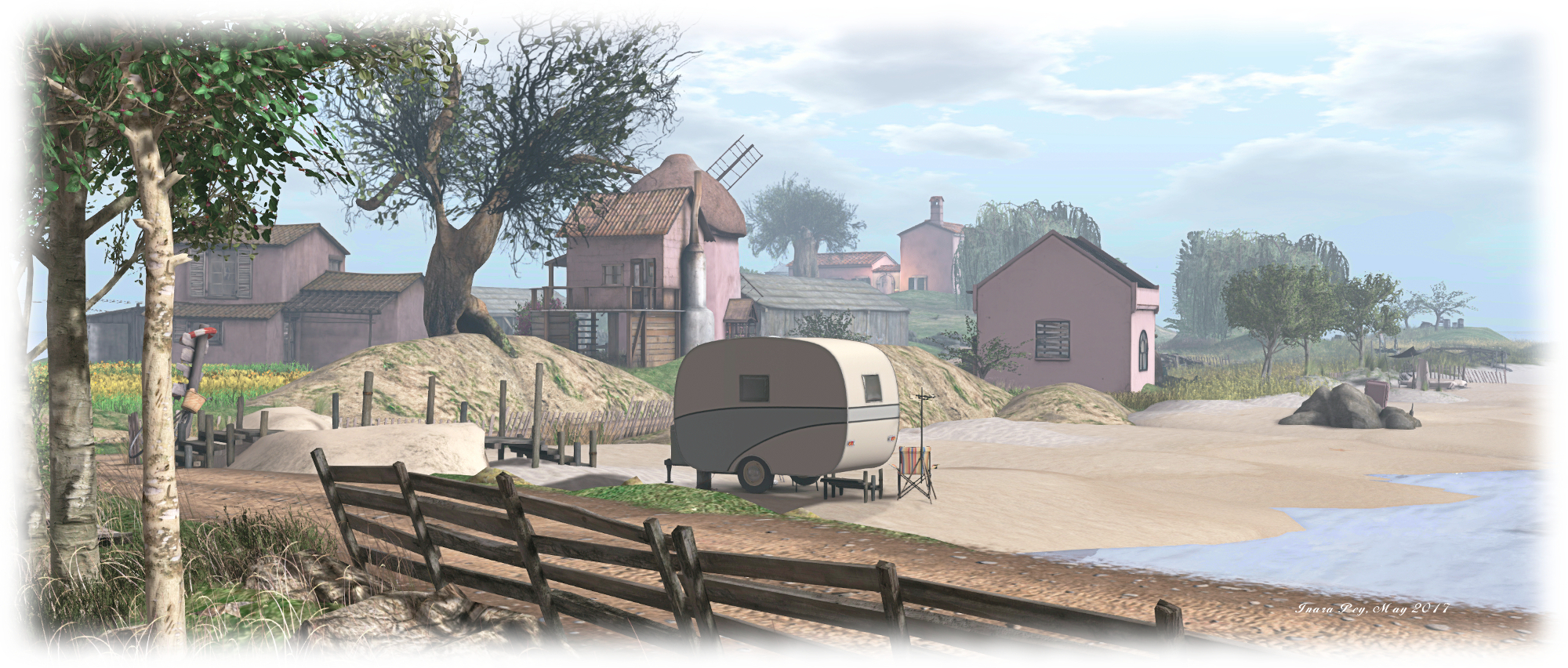
Khodovarikha; Inara Pey, October 2017, on Flickr Follow Your Bliss, Second Life

Writing for Ars Technica on Monday, October 23rd, Samuel Axon, the Senior Reviews Editor, tells of his time Returning to Second Life. It’s a lengthy, involved piece, and perhaps one of the most broadly integrated write-ups on Second Life to have appeared in a good while.

Mr. Axon is no stranger to SL, having been dipping in and out over a number of years up until around 2012. As such, he brings to the piece first-hand experience based on more than just random exposure to the platform. In addition, he spoke directly with Peter Grey, the Lab’s Global Director of Communications, and Bjørn Laurin, Vice President of Platform – who has responsibility for both Second Life and Sansar. But that’s not all, he also sought out a number of Second Life creators to gain their insights as well.

The opening paragraphs encapsulate Second Life on a number of levels: the early hype around it being the “Internet 2.0”, the media hysteria of 2006/7, and an attempt to explain, as quickly as possible, was SL “is” for those who might view it as some kind of MMORPG.

From there, the article weaves a fairly comprehensive tapestry of several aspects of Second Life: commerce, creativity (and their relationship), social interactions and the changing face of discovery in SL, and more.

Samuel Axon, writing for Ars Technica

For example, with commerce and creativity, he brings together several threads: how both have given rise to what might be regarded as “unusual” (to the outside world) markets – such as breedables; how creativity has changed thanks to mesh and (for many) the move away from prims to external tools; the influence this has had with commerce, the rise of the Marketplace, and its impact on land in in-world stores.

The article also doesn’t shy away from issues. It delves into the question of why Second Life failed to become as all-encompassing as the early days seemed to promised. Here the finger is pointed squarely at social media being a major reason (outside of the overall hype surrounding SL), and I wouldn’t dispute it’s validity. Back when SL was at the height of its hype (2006-early 2008), Twitter was just starting out, as was the iPhone, Android had yet to arrive, and even Facebook had yet to start its meteoric rise in user numbers (2008 onwards). Thus, there wasn’t really anything out there by which SL’s real potential could be measured and the hype around it countered.

Sex in Second Life is also dealt with head-on, with a very tidily written sidebar to the main article. In it, Mr. Axon offers one of the most considered and well-balanced ripostes to those who insist Second Life is, to its larger extent, “all (/just) about sex”.

There are one or two elements in the article which might have been tackled a little differently. The changing face of discovery – where to go and what to do in Second Life  – is examined, with a degree of lamentation that the kind of exploration possible when SL was more mainland / very large private estate oriented (i.e. pre Homestead) no longer seems to be the case, with the bias now towards “siloed” activities on isolated private islands or “big public” calendared events, with information on them effectively coming through word-of-mouth.

However, rather than lamenting the change, I’d perhaps liked to have seen it examined more along the lines of how we tend to imprint our physical world activities on Second Life. It’s fair to say our social activities in the latter are “siloed” between our homes and public venues / calendared events. We visit family and friends via the most direct means possible, rarely taking time to explore what lay between; we rely on specific “word of mouth” to get news on events of interest – websites, social media, clubs / organisations, etc. So is it really that surprising social activities have evolved in a similar manner in SL, particularly as some of the tools – like Groups – naturally lean in that direction, and are very effective in their reach?

Later in the article, Sansar enters the equation – as might be expected, given there is much concern about how it might impact Second Life. Here, those concerns are confined more to the technical / fiscal:  that Sansar will draw off resources / investment from Second Life to its detriment.

While these – and other – concerns are valid, right now none of them are coming into play. On the technical / fiscal front, for example, we know the Lab is still recruiting skills specific to Second Life, and we’re still seeing user-visible capabilities added to the platform, Animesh being the most recent (albeit on a test basis), with things like the Environmental Enhancement Project and Bakes on Mesh (see my CCUG updates) following it down the pipe. The Lab is also continuing its overhaul of the infrastructure underpinning Second Life, up to and including an attempt to move SL services to the cloud.  If nothing else, and providing other factors don’t come into play, all of this work should help towards SL’s continued longevity.

I could go into greater lengths, but really, suffice it to say that in Returning to Second Life we have an informed, balanced piece on the platform, which reasonably attempts to reconcile past with present and offer honest insight into why, fourteen years after its public opening, the platform still has appeal, as well as offering viewpoints from both the Lab’s and users’ perspectives. As such, it is more than worth a read in its own right, and if you haven’t done so already, I urge you to do so.

Animesh project viewer arrives in Second Life

On Wednesday, October 18th, Linden Lab announced the release of their much-anticipated Animesh project viewer had been made available, marking the start of public testing for the Animesh project.

For those who have not been following my Content Creation User Group meeting updates, “Animesh” is an amalgam of “ANImated MESH”. The overall goal of the project is to provide a means of animating rigged mesh objects using the avatar skeleton, in whole or in part, to provide things like independently moveable pets / creatures, trees with animated branches, etc.

In short, an Animesh object:

  • Can be any rigged / skinned mesh which and contains the necessary animations and controlling scripts in its own inventory  (Contents tab of the Build floater) required for it to animate itself.
  • Can be a single mesh object or a linkset of objects.
  • Has been flagged as and Animesh object in the project viewer, and so has an avatar skeleton associated with it.
  • Uses three new LSL methods to run or stop animations, or check which animations are currently running:
Animesh allows you to take rigged mesh objects, add animations and controlling scripts to them, associate them with an avatar skeleton, and have them run in-world without the need for any supervising viewer / client

The Animesh project has been in development for the last several months, and has involved ongoing discussions and input from content creators at the Content Creation User Group meetings, which are held in-world at the Hippotropolis Camp Fire Circle most Thursdays at 13:00 SLT. As such, the arrival of the project viewer does not mark any kind of official release of the project. Rather, and as noted, it marks the commencement of public testing for what will hopefully become the first release of Animesh functionality.

Currently, testing can only take place on Aditi, the beta grid, where five regions are available with Animesh support enabled. These are: Animesh1, Animesh2, Animesh3, Animesh4, all rated Moderate, and Animesh Adult. Again, please note that Animesh functionality in the project viewer will not work on the Main grid at this time.

Animesh objects are created in-world, not uploaded as such. They must contain the animation(s) they are to run and a controlling script (l), and are enabled via Animated Mesh object in the Build Floater’s Features tab (centre). Note that if you select an unrigged / non-mesh object (or a No modify rigged object), the option will be greyed out and unavailable (right)

An Animesh User Guide is available to help people get started with Animesh, and a forum thread has been set-up for feedback and discussion, while specific bugs or feature request suggestions for the project should be reported via the Second Life JIRA.

Test content is also available to help people get started, if they don’t have suitable content of their own they wish to convert to Animesh objects. The test content can be found here.

In addition, those who test the viewer and Animesh are invited to attend the Content Creation User Group meetings and join discussion on Animesh (and other content related projects), and  / or are welcome to follow my Content Creation User Group meeting updates.

One of the aims in testing Animesh will be to see how many Animesh objects a region and the viewer can comfortably handle without impacting the performance of either

Eventually, Animesh will hopefully support fully fledged non-player character (NPC) creations which can, if required have things like an avatar shape associated with them, use a dedicated, avatar-like inventory, and utilise both the server-side locomotion graph for walking, sitting, etc., and the avatar baking service. However, these capabilities do not form part of the current Animesh project, but will be added as a future project, once other elements which can also help better support NPCs have been put in place (such as an update to the baking service, which forms another project within the Lab).

Related Links

Our Digital Selves: living within a virtualised world

Coming to a screen near you in 2018  – and not to be missed. Via: Draxtor Despres

In 2016 I wrote about the work of Tom Boellstorff and Donna Z Davis (respectively Tom Bukowski  and Tredi Felisimo in Second Life). Since 2015 Donna – a strategic communications professor at the University of Oregon specialising in mass media & society, public relations, strategic communication, virtual environments and digital ethnography – and Tom –  a professor of anthropology at the University of California, Irvine – have been engaged in a National Science Foundation funded study formally entitled  Virtual Worlds, Disability, and New Cultures of the Embodied Selfand more informally referred to as Our Digital Selves.

Their work, which will continue through into 2018, focuses on the experiences of people with disabilities – visible and invisible – who are using immersive virtual spaces to represent themselves, possibly free of the shadow of any disability, engage with others and do things they may not be able to do in the physical world.

Donna Z Davis and Tom Boellstorff (Tredi Felisimo and Tom Bukowski in Second Life), co-researchers in Virtual Worlds, Disability, and New Cultures of the Embodied Self, supported by the University of California, Irvine; the University of Oregon; and the National Science Foundation.

The work encompasses many aspects – physical, mental, technical, for example – of occupying both a physical space and a digital environment when living with both visible and invisible disabilities – the benefits that can be enjoyed, together with the potential risks / fears. Some of these aspects, particularly the more positive, are perhaps familiar to us: the power of being defined by who we are as a person, rather than in terms of a disability; the freedom presented by the ability to embody ourselves within an avatar howsoever we like, and so on. Other may not have been fully recognised for the fear they can create; while the “new era” for VR system may well be liberating for the able, it can be a frightening / debilitating threat for some with disabilities.

Given the extent of the study, it obviously crosses the physical / digital divide.  There have been experiments and discussions in-world. And there have been real-world interactions between Tom and Donna and those participating in the study.

One of those who has been following the study closely is Draxtor Despres. He has featured Tom’s work in The Drax Files World Makers, and is now engaged in producing a documentary  – also entitled Our Digital Selves – about the study, travelling with Donna and Tom to meet some of those participating in the work. While not due for release until early 2018, the first official trailer for the documentary was made public on Tuesday, October 11th, 2017.

Members of the study meet in-world. Credit: Draxtor Despres

“I’m not sure how long the finished piece will be,” Drax informed me in an exclusive one-to-one about the trailer and the film. “I’m aiming for around 40 minutes, but am currently editing an hour-long cut. It’s a massive project. We’ve been travelling across the United States and across the Atlantic meeting with people and interviewing them.”

It’s a massive undertaking; Drax goes on to note that there are around 15 participants in the study who have been involved in the filming, and he has around 3 hours of recording with each. Some of this was necessary simply to get to know people and overcome perfectly natural barriers – shyness, nervousness, and so on – and establish trust; however, it still means there is a lot which needs to be synthesised into a cohesive whole, whilst also doing justice to the stories of all of those volunteering to participate in the film.

Part of the study has involved participants being provided with a 32m x 32m parcel on Ethnographia Island which they could use to share their experiences, insights, and thoughts on their disability. Shown here, Jadyn Firehawk sands before her exhibition space (May 2016).

Nevertheless, the first public trailer does much to establish the structure of the documentary and present an accessible framework against which the broader story will naturally unfold.

This promises to be one of the most engaging, moving and informative documentaries on virtual living, embodiment and personal expression since, perhaps, Login2Life, and something that should not be missed once available. In the meantime, I’ll leave you with the trailer  – and the hope that, subject to feedback from Donna, Tom, Drax and those involved the work, I’ll be able to bring more on the documentary and the study in the run-up to the release of the completed film.

Lab calls for Creepy Crawl 2017 venues in Second Life

Do you have a suitably creepy venue with space enough to entertain, indoors or out? Why not sign-up to be a part of the Lab’s 2017 Creepy Crawl for Halloween?

The Creepy Crawl is becoming something of a Second Life tradition, and is back once more. Xiola Linden has put out a call for venues interested in hosting the 2017 travelling meet-up with a chance to chat with members of the Lab’s staff, as it winds its way across the grid.

The event will take place on Tuesday, October 31st, between 10:00 and 14:00 SLT. In particular, the Community Team is looking for suitable venues where there is room for people to mingle, chat,have a little fun and offer suitable ambience for the time of year, as the blog post explains:

Are you unafraid of things that go bump in the night? Love a screaming good time with fellow Residents, and dressing up in your Halloween best? Well, it is that time of year when once more – a-haunting we will go!

If you’d like to host a stop along the Creepy Crawl, own a spot that will be decked out for the holiday, and don’t mind if a parade of Residents and Lindens come through, then you might be just what the witch doctor ordered. We’re looking for spots that will have music, are appropriate for general and moderate audiences, and can handle a crowd.

If the event is run along the same lines at 2016, it will likely see selected venues visited for around 30 minutes at a time (although this is subject to confirmation), and people will be welcome to join the entire Creepy Crawl, or drop in and out of it as they wish.

Here’s how to submit your venue for consideration:


Bloggies 2017: last chance to vote

via BVN

September 30th marks the last day of voting in the Blogger and Vlogger Network (BVN) 2017 Blogger and Vlogger Awards, also to be known has “The Bloggies”, intended to recognise bloggers and vloggers covering Second Life. Nominations took place in July / August, and voting  / judging opened on September 1st.

Nominations for public voting have been split into a number of categories, which cover topics such as fashion, accessories, home and garden, news, SL travel, humour, tutorials, and newcomer blogs. A number of special awards will additionally be given for a selected set of categories: BVN Member of the Year, Founders Award, Blogger or Vlogger of the year, Best Female Fashion Blogger, and Best Male Fashion Blogger.

I’ve so far steered clear of writing about the awards, as I’m actually a nominee in one category, and writing when nominated feels somewhat self-serving. However, there is a lot of variety within the various categories (including a number of blogs I’d not come across before (to my loss) and am now enjoying taking a look at as and when time permits.Also, given this is the last day for voting, it seems a good time to offer a reminder that voting is about to close for anyone still intending to vote, but hasn’t so far done so.

So if you haven’t already voted, hop over to The Bloggies  before the end of the day on September 3th, 2017, look through the nominated blogs in the categories, and vote on those you like – note that voting requires a Google account to prevent multiple repeat votes.

Winning nominees will be announced on Saturday, October 14th.

Going to the Max in Second Life

With thanks to Sophia Harlow

On September 22nd, Maxwell Graf issues a deeply personal, heart-breaking request via Plurk. Related to a personal situation, it included a request for people to buy from his store (in-world or on the Marketplace). The news was broken by Prim Perfect, and quickly circulated by other bloggers (my own report can a little late in the day, so to speak).

For obvious reasons Max didn’t feel comfortable in asking for more than this, despite the severity of his situation, but that hasn’t stopped friends and fellow creators from rallying around; and on Monday, September 25th, Going to the Max, a special shopping event, organised by Charlotte Bartlett, Sophia Harlow and Blazin Arubet, was announced.

Sponsored by Callie Cline, the event will run from Tuesday October 3rd through Tuesday October 10th. Details are still being put together, but the initial announcement for the event, posted to Plurk by Sophia Harlow and reproduced above,  reveals the line-up thus far.

Responding to the news, Max said:

I don’t know how to receive the massive amounts of love and kindness from so many I know and so many more I don’t…It is a foreign concept to me to get such a cosmic blast of positive affection and concern from so many people at once. It’s really overwhelming and I’m so small right now I can’t do anything but say this over and over, I am humbled beyond my ability to express.

In gaming parlance, this would be like if I was a tank amid a team of 10,000 healers and they all suddenly got very gracious on me at the same time and I started growing and then glowing and then my mana reached peak and my head exploded as I turned in to a demigod and could face any enemy.

Full details on the event  – SLurl for the region, etc. – will be posted in due course, again as things come together, as will more details on how people can get involved. Plurk is one place to keep up with the news, as is Scarlett Creative Facebook page (no Facebook log-in required). In the meantime, don’t forget you can still help Max directly by visiting Rustica in-world or on the MP and buying an item or two … or three!

Links