New Destination Islands – help or hinder?

In a low-key move, Linden Lab has rolled-out what appears to be a “new” new user experience and which seems to utilise some of the new game controls LL are shortly to be rolling-out to the community as a whole. However, what it is precisely aimed at doing is unclear.

On signing-up to Second Life, new users (or those with a new avatar account) are now delivered to one of 24 Destination Islands.  Like Linden Realms, these are a group of identical regions, each containing mesh trees from the game, with a central coliseum-like structure towards the centre which forms the arrival-point for new users.
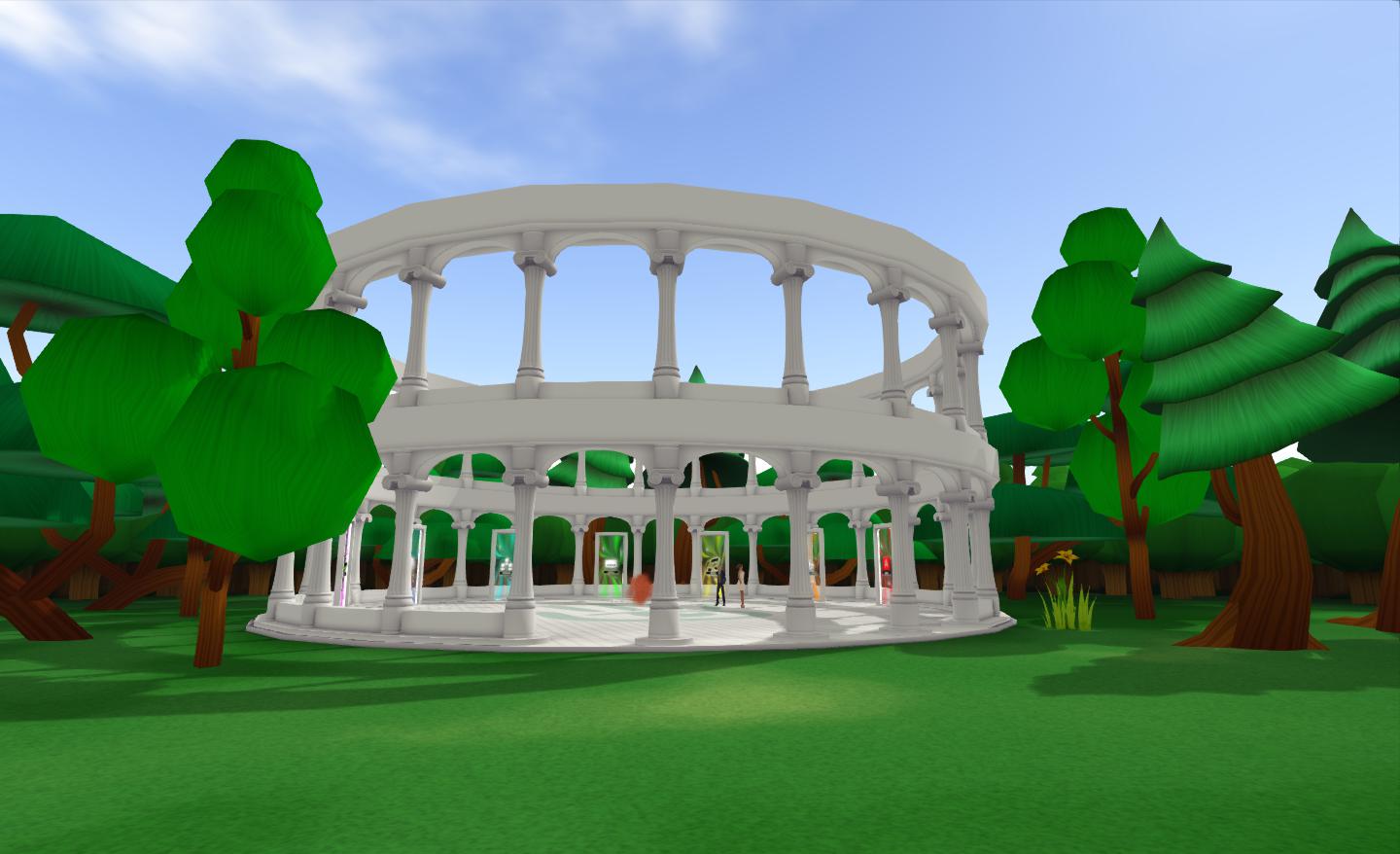
Once of the new Destination Islands

No real explanation is provided as to what the place represents or how to use it. Arrivals are instead presented with a series of glass-like doorways with arrows and footprints leading to them, and each with is own label.
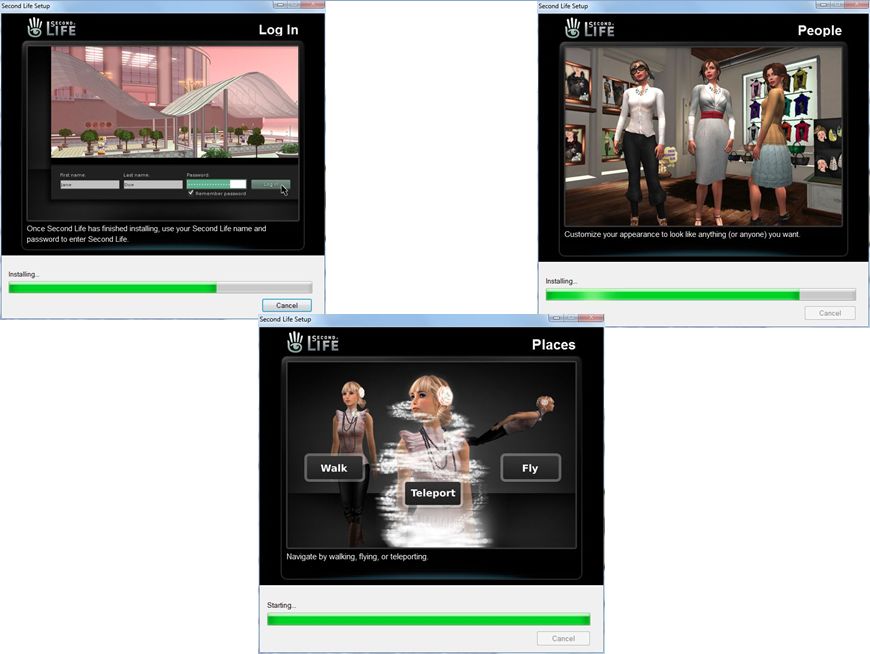
Information slides for those installing the SL Viewer for the very first time following sign-up

True, as a part of installing the Viewer for the first time (the download being a part of the sign-up process), new users are treated to a series of slides that provide a little more detail on using SL (see selected screen captures above), and they’ll have the Destination Guide open once they’ve logged-in to SL – but that’s it. Within the Destination Island areas there are no hints, tips or tutorials available to help the new user – there are just the seven doors (Art, Role-playing, Popular, Social, Music, Editor’s Picks and Adult), arrows and footprints.

Magical mystery tour

Walking through a portal will do two things: open the world-map at a potential destination and auto-teleport your avatar to a destination. Unless you’re using an unverified adult account and try the Adult portal. In this case you’ll simply get a flat nose and no explanation as to why. While an e-mail on this subject of adult verification is sent out to users as a part of the sign-up process, it would be nice if walking-into the door with an unverified account popped-up some kind of explanation rather than leaving people bouncing off the portal for no readily apparent reason.

Passing though other doors drops you into a destination based on the portal’s category. These appear to be selected at random from the Destination Guide. The process doesn’t seem entirely smooth: the world map opens during teleport (or it did for me. Twice), only to close on arrival. This is something that doesn’t happen in Linden Realms, so if the system i use at the Destination Islands is the same as the auto-teleport function used within LR, I assume this is a glitch that will be fixed, rather than a “feature” of the auto-teleport function.

Once you’ve left the Destination Islands there is no way back. Any attempt to teleport directly to them (assuming a new user understand the concept of teleporting) is met “Teleport Failed. You cannot teleport back to Help Island. Go to ‘Help Island Public’ to repeat the tutorial” and an OK button. Hence why you’ll have to create a new account if you want to test the system yourself.
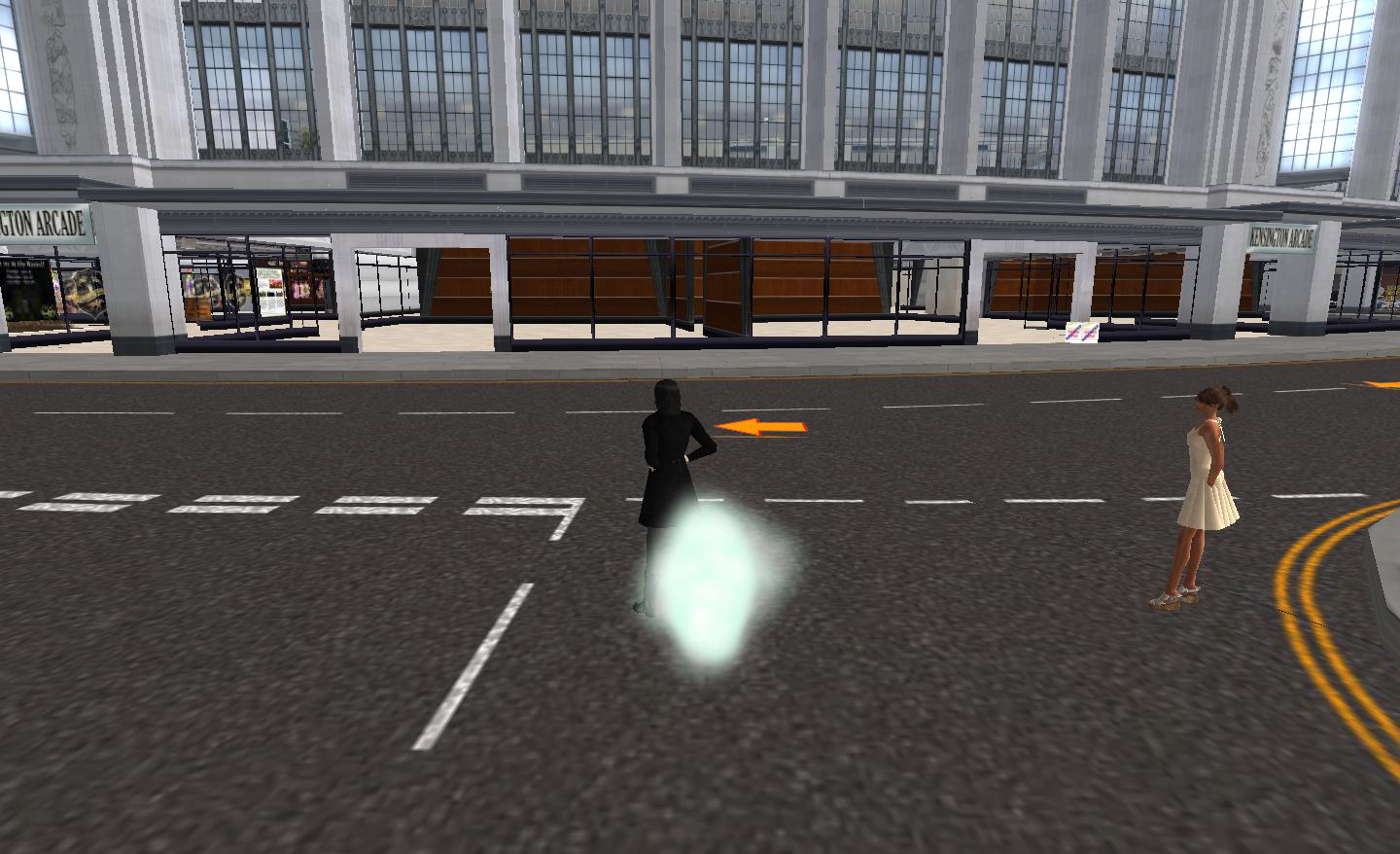
OK, where next? What next?

This isn’t the solution you’re looking for?

Much – perhaps too much – has been made of the new user experience over the past few years. We’ve had talk of the “first hour”, the “first five hours” and, at the opposite end of the spectrum, “the first five minutes”. From comments he’s passed, it’s clear that Rod Humble is swayed towards the latter – that if you don’t capture the heart and mind of a new user in the first five minutes, then you’ve potentially lost them forever.

I’m not about to debate his wisdom on that one – but I will say that it’s hard to see how this approach actually improves matters. While one doesn’t necessarily need to have masses of information on display at the Destination Islands, having at least some guidance provided would, I’d have thought, be beneficial. Of course, this may be coming – in which case LL have rather put cart before horse in hooking-up the new islands to the sign-up process ahead of the information arriving.

This is where I think LL missed a step in merging-up the Basic and Advanced modes of the Viewer. In the former, we had a very good introductory series of tutorials in the form of the HOW TO pages. At the time I felt these could be enhanced, but overall they provided a good starting-point. While HOW TO is still evidenced in the Viewer in the form of a button – it would be useful if the installation process at least drew attention to it. Much better would be for HOW TO to be open by default until the first time it is manually closed (as with the Destination Guide). It wouldn’t solve all the issues in getting new users semi-oriented to SL, but it would at least help them feel comfortable with the Viewer UI – not everyone is happy with randomly pushing on-screen buttons and seeing what happens.

My experience demonstrated that people arriving at the same destination as myself were very confused as to what was happening and what they were supposed to be doing. The flow of people into the region I arrived in was fairly steady, but all of those stating they had just joined SL (and the number was around one or two arriving every few minutes) all pretty much had the same three questions:

  • What just happened?
  • Where am I?
  • What am I supposed to be doing?

Few had actually appreciated there was a HOW TO button (more-or-less the first thing I directed them to), and I found that doing so, and pointing them to functions such as Search,  was greeted with verbal facepalming, e.g.: “Well, it would help to be told that from the start!”

It’s hard to see how this system relates to the Public Help Islands, which are still active. There are no links between the two (other than the message displayed when trying to teleport directly to a Destination Island, as described above). Whether information from PHI will be incorporated into the Destination Islands is an unknown and remains to be seen.

Right now, I’m curious as to where this idea is going. Is it offered-up as delivered, or will there be enhancements based on feedback or observation (and if based on feedback, where do people give it?). As it stands, it’s hard to see how this system helps new users – although LL are doubtless in a far better position to make a call on this than my casual observations. I can’t help feel the approach, as currently presented is potentially as much a hindrance as anything else, and getting to grips with SL is still a matter of dogged determination on the part of those signing-up.

But then, this isn’t the easiest of issues to address, as we’ve seen over the years.

I’d like to keep an eye on if / how the new regions develop. As such I’ve held back with a new account on one of the islands to see if anything changes. If it does, I’ll be following-up here.

Related Links

New users: the shared experience

Seeking new horizons: Humble and Short talk new products and more

Games Industry today carries an interview with Rod Humble and Emily Short. Along the way, Humble discloses what drew him to Linden Lab in the first place.

Humble’s reasons for joining the company are enlightening – he’d actually forgotten about the platform and had been thinking of developing something along the same lines when the opportunity to join Linden Research popped-up. A nice example of serendipity in action.

Since joining Linden Research, Humble’s focus has been on the platform’s usability, which the article describes as being “far from perfect” – something many users would doubtless regard as an understatement. While there is still a good way to go in making things “better”, only the churlish would refuse to accept there haven’t been improvements in a number of areas, and that Linden Lab is working to get some deep-rooted issues – stability, performance, region crossings, even (dare I say it) the official Viewer – properly addressed.

There are also some comments that are liable to have users cringing in some quarters. Humble’s comments on gaming mechanics in particular may well offer little comfort to some as to the future of the platform. While SL may not itself be a game, it is a perfectly valid platform upon which users can develop games of their own if they so wish. Indeed, one might argue many have been doing precisely that almost since the platform entered open beta 10 years ago. That LL are now making the capabilities to do so easier to use is demonstration that the company is working meet user demands and provide more effective means by which the platform can be leveraged by users themselves.

As well as wanting to get issues around SL’s usability sorted out, Humble reveals that one of his overall goals would be to expand LL’s portfolio of products – to put the “Lab” back into “Linden Lab”. Reading this, one is tempted to wonder if this desire formed a part of his  pitch for the CEO position, and was thus one of the reasons he was hired. Thirteen years with just a single product is a remarkable achievement for any company – but it is also a precarious position to hold.

In terms of the acquisition of LittleTextPeople, it appears to be something of a natural symbiosis more than a straight buy-out: Humble / LL were working in a particular direction and at the end of last year it became apparent that Short and Evans were working towards the same destination. Thus, the acquisition was to their mutual advantage. It’s also interesting to note that the Humble / Short / Evans relationship is a lot deeper than the EA Games link between Humble and Evans many of pointed to when news of the acquisition broke.

As to the product itself, little is said in detail, but what is mentioned helps frame the product more clearly. It will be primarily text-based with 2D graphics. It will be a story form, but deal with social interactions – how people treat each other and what say to one another. Most intriguingly of all however, is that it appears the product will be capable of supporting user-generated content. “Although it will launch with some very, very well crafted content, the overall plan – just like all Linden lab products – is to democratise the actual creation process. Other people will be able to make things on that platform. That’s really the business we’re in: building platforms that allow people to express themselves in different ways.” Humble informs Games Industry when mentioning the product.

Of the other two products currently being developed at the Lab, even less is said other than the intimation they will also support user-generated content – although Humble did hint this would be the case when the development of new products was first announced at SLCC-2011. However, this is the first time we’ve had it directly confirmed that three products are currently in the pipeline. Again, Humble has only previously hinted at this in a comment on New World Notes, wherein he made reference to the LTP project being “Product 3”, and there being a “Product 2” under way at the Lab as well – although at the time, some did speculate as to whether “Product 1” was perhaps Second Life.

The interview isn’t going to satisfy everyone within the SL community, but for my part, I found it a worth-while read, not so much the for the titbits of information that emerge about the upcoming new products, but because it again shines a light on Rod Humble’s thought processes and some of his strategic thinking where both the company and SL are concerned. Given the company has been pretty quiet when it comes to talking to the community as a whole on such things, it’s refreshing to gain this kind of near-candid insight, and actually does help restore one’s faith that, overall, SL is in a safe pair of hands right now – a perception that has been slipping a little of late.

Obviously, the new tools being rolled-out / developed for SL and the new products themselves aren’t going to lift LL out of the perceived mire, and it fair to stay the company is facing further clouds on the horizon –  particularly around the stormy issue of tier. But taken as a whole, this is a positive piece and carries with it the promise that we may well be hearing a lot more from LL as whole in the coming months – and that in itself will be refreshing.

Don’t just take my word for it – go read the article, and don’t miss the side-bar piece as well.

With thanks to Daniel Voyager for the pointer.

Direct Delivery: 21st March launch

In keeping with the time scale indicated by Oz Linden (as pointed to in these pages by Latif Khalifa), Direct Delivery will be launching on March 21st.

The news came via a post from CommerceTeam Linden in the Merchant’s Forum, which states:

Beginning on March 21, purchases on the Marketplace using Direct Delivery will go directly to recipient’s Received Items folder. The Received Items folder will NOT be used for other inventory transfers at this time. Magic Box purchases will continue to go to the Objects folder.

The Delivery folder will appear on the order and in all email notifications to the recipient.

At launch, we will be sharing additional details as well as updated Knowledge Base articles in all four languages supported on the Marketplace. We will also provide more details on migration.

Direct Delivery is the mechanism that will replace Magic Boxes for merchants using the SL Marketplace and which should bring improvements to the overall delivery of items purchased on the Marketplace. It has been in development now for around a year, and reached public beta in January this year, which presented the first real opportunity to report on the system in detail to a wider audience.

No Wider Use of Received Items – Yet

A core part of Direct Delivery is the Received Items panel. This was originally going to be a sub-section of the inventory floater and would be used to received items purchased on the Marketplace into your inventory. However, Linden Lab recently sought to extend the functionality of Received Items so that all new incoming items to your inventory would arrive in Received Items, essentially breaking-out the idea into a project of its own, which was not particularly well received by the community.

As a result of feedback on Received Items, and because of wider impacts of the system on SL functionality, LL have started revising aspects of the broader Received Items functionality. Because of this, and to repeat LL’s own statement, Received Items will only be used for SL Marketplace Deliveries at the March 21st launch. All other items incoming to your inventory will continue to be handled as they are now. 

Merchants have requested as to when the wider functionality might be rolled out, but LL has, at this time, declined to comment beyond re-confirming that the project is “on hold”.

While it would be nice to have a clearer roadmap as to Received Items itself, the fact that LL have listened to concerns from all parties – merchants, RLV users, those providing feedback to the initial survey and the follow-up is to be applauded, and one hopes that the dialogue will continue in the run-up to the Direct Delivery launch and thereafter through to the roll-out of the wider Received Items functionality (assuming this goes ahead), in order to ensure all potential adverse impacts are either avoided or at least reduced to manageable levels.

Problems

Direct Delivery itself, as a long-term project, both serves as demonstrating the complexities involved in making alterations to the overall SL infrastructure, and the need for open and on-going dialogue between the Lab and the merchant community / community as a whole; something that many feel has been distinctly lacking at times, with the project almost rolled-out inspect of known issues.

Even now problems potential remain, with questions still being asked about ANS functionality once Direct Delivery goes live, a subject Darrius Gothly gave considerable insight to last November. Potentially more damaging is the fact that little further communication on Direct Delivery appears to be on the cards prior to the launch, again as noted in the forum post:

At launch, we will be sharing additional details as well as updated Knowledge Base articles in all four languages supported on the Marketplace. We will also provide more details on migration

Direct Delivery is a major change in functionality, especially for merchants. While many have been involved in the development of the project and the initial “private beta” (even with its daft requirement to complete an NDA before merchants could find out what they were signing-up for) prior to the public beta, many equally have not – and precisely what has changed as a result of the public beta – if anything – many be equally unclear.

As such, there needs to be a positive communications campaign ahead of the launch in order to ensure merchants have all the information at their fingertips prior to the launch, and have time to ensure they are fully prepared for Direct Delivery going live. Similarly, a more pro-active approach to announcing the roll-out needs to be taken towards the user community as a whole – preferably through a full blog posting ahead of March 21st announcing the arrival of Direct Delivery and informing / reassuring users as to what to expect, with a follow-up on the day of the launch.

If nothing else, a more pro-active approach to the launch will help restore some of the trust between merchants and the Commerce Team / Linden Lab, which has been somewhat eroded during the development of Direct Delivery and through earlier projects, such as the morphing of XStreet into SL Marketplace (itself frequently a morass of conflicting communications) and other breakages.

I’m not alone in being concerned over the “wait until the day” approach when it comes to further information, as implied by the forum post: Tateru points to this with a comment on her blog about allowing 14 days for information absorption, and Darrius Gothly also posts on the subject as well.

It’s good that LL have been listening to concerns over Received Items and that they are responding to such fully and carefully by placing the broader aspects of the project on hold. I very much hope that they do listen to concerns being voiced around the matter of Dirrect Delivery announcements and documentation and continue to respond positively to these concerns by addressing them ahead of time, as suggested here and elsewhere.

Code change impacts RLV functionality

Update 12th March: As can be seen from the comment from Trinity below, Brooke Linden has responded to concerns over this issue, and has confirmed that the code causing it will be rolled-back from LeTigre and BlueSteel this Wednesday (RC channel release window) and won’t be re-deployed until the problem is fixed.

Kitty Barnett reports via JIRA SVC-7748, that functionality related to the InventoryAPI maintenance project adversely impacts the widely used RLV / RLVa functionality within Second Life.

RLV provides a means by which, and under controlled conditions (the user “opts-in” to the process by clicking an acceptance button), a folder is created within the #RLV folder under MY INVENTORY. Items are then delivered into the new folder, wherein a script runs to attach the items to the recipient avatar.

While this functionality does have a direct use within the BDSM community, it can have uses elsewhere as well.  However, changes rolled-out to the BlueSteel and LeTigre RC channels this week as a part of the InventoryAPI maintenance project, have inadvertently broken the functionality – the required redirection to use #RLV doesn’t occur and the associated script fails – hence JIRA SVC-7748.

The degree of impact on RLV is debatable. As Marine Kelley states within the JIRA:

On a positive note, if LL decides not to do anything and leave things as is (i.e. in a broken state), the RLV could simply check what’s coming into the “Received Items” folder and move it automatically under #RLV if the name matches. This would be transparent to the user and would overcome this breakage. 

Nevertheless, it would be preferable for LL to ensure the functionality isn’t broken in the first place (as Marine herself goes on to state).

A potential problem here is that, despite Kitty’s own efforts to point out that Received Items itself is not the problem per se, many of the comments appearing on the JIRA are further critiques of Received Items rather than a discussion of the problem as identified by the JIRA itself.

As strong as feelings are around the subject of Received Items, what is more important here is that functionality that is key to a range of user expectations / desired experiences has been inadvertently broken within LeTigre and BlueSteel, and there is a risk that this could become more widespread if the fix is rolled-out beyond these two RC channels. As such, it is important that LL hear, read and understand the core issue itself (i.e. via use-cases where the update breaks things), in order for them to try to correct the matter.

Given it is the weekend, it will likely be a while longer before any response on this matter is heard from LL – which also gives people more time to submit specific examples on the issue that outline the problem. It’s also worthwhile pointing out that LL are prepared to reconsider proposed actions – as has been demonstrated around the concern relating to llGetAgentStatus (which Oz has indicated is on-hold as a result of the number of clear-cut use-cases received), and have shown a willingness to re-think elements of Received Items based on constructive feedback from users.

Received Items: LL provide feedback

On March 1st, due to the level of concern arising from the initial beta, LL put out a call  for feedback in the form of a short survey (now closed). This weekend they provided feedback to those who participated in the survey in the form of a proposal on how the new functionality might be improved and a further request for people’s views on the proposal itself.

The notice of feedback came through a notecard from Brooke Linden which was delivered in-world via Dakota Linden. The notecard reads:

Hi all,

We’d like to thank you for your feedback on the use of the Received Items folder. Based upon the feedback, we have pulled together a similar, but hopefully improved, proposal. Please take a look and provide feedback.

After which there are links to the proposal and an additional survey.

The proposal offers the promise of some improved functionality over the initial beta, including:

  • Context-sensitive menus within Received Items that allow you move specific asset types directly to their system folder OR to the Objects folder (so that notecards can be moved directly to the Notecards folder, landmarks directly to the Landmarks folder, etc.), without the need to drag-and-drop manually
  • Selecting multiple items (as opposed to folders) within Received Items will display a similar context menu allowing the items to be moved to an appropriate folder or to the Objects folder
  • Selecting multiple folders will display a menu presenting options to move the folders either to the Objects folder or you MY INVENTORY root folder
  • The promise to “fix” current issue around offline delivery problems through the use of the Received Items folder.

There are a number of other changes outlined, some of which LL are requesting specific feedback against (for example: they are proposing capping the number of items a resident can receive in an hour to prevent the system being used for griefing, and they are looking for suggestions as to a reasonable number at which to cap hourly deliveries), as well as instigating measure that are presumably aimed at getting people to manage Received Items: such as blocking the ability to rez items directly from the panel (which may actually become a floater in its own right).

Overall, the proposal is a step forward compared to the initial beta system, but it is unlikely to address all concerns – which is why open feedback via the JIRA and on blogs / the SL forum relating to specific concerns remains important. However, what is being offered in terms of context menus, the ability to search (and hopefully sort) Received Items does make the idea something of a stronger offering, and if the system does solve issues around failed deliveries, etc., then that alone might well outweigh some of the shortcoming people might otherwise feel the system has – although there are still potential problems that need to be addressed.

It will be interesting to see how the RI project develops, and whether there are further revisions based on the feedback given to the new survey – and whether all the ideas outlined in the proposal are implemented. However, what is really important within this process is the fact that LL are demonstrating a willingness to pro-actively engage with the community and seek solutions where a fundamental change in the way most people work with SL is seen to be counter-intuitive to the ways in which people use the platform, or which seemingly fails to offer any significant advantages over current capabilities – and this is to be applauded.

Why LL fail to help themselves

The leaping-off point for this blog post is Rod Humble’s announcement about his promised round table, due to commence this week, as posted on his profile feed. To whit:

Hey folks, as I mentioned to some of you over the weekend I am going to do the next roundtable stuff in private one on one’s rather than as a free for all. That makes it more low key and doesnt turn it into something which is contentious. Thanks for all the feedback.

On the one hand, the reaction might seem understandable; the response to the news that last names won’t be making a return was massively negative which was itself pretty negatively voiced. That it wouldn’t go down well is hardly  surprising given the number of people supporting the move either via blogs, blog comments, on his own profile field, the SL forums and other forums (some of which Rod Humble himself frequents) or directly on the associated JIRA.

However, the backlash shouldn’t have been unexpected. Indeed, from the preamble in Rodvik’s post on the matter, it would seem he was aware that it was going to hurt, hence delaying the actual bad news until a good way into the post itself.

But this is no reason to suddenly shut-up shop when it comes to further discussions on SL and what might or might not happen. Yet that is precisely what has happened. When I read the profile post, I was struck by two things:

  • No details as to how people might engage are present in the profile post
  • Rod indicates that he has already spoken to some people on the matter over the weekend.

While the latter could simply be as a result of Rod responding to questions people fired at him on the subject of the forthcoming discussions rather than being anything deeper or more significant – taken together, and again, given the way LL has tended to operate in the past – does raise questions as to whether a “star chamber” for the discussion has already been formed, which itself could feed feelings of exclusion – and such feelings are never a good thing to present to a former audience.

Plus ça change, plus c’est la même chose

The decision to remove the discussion from more open participation is also a little sad, as it stands testimony to the old adage that the more things change; the more things remain the same. A lot has changed for the better within and around the Lab over the last 15 months. Looking back at a some suggestions I made last March, it’s interesting to see how some have indirectly been implemented, although not as I’d imagined a year ago, admittedly. We’ve seen improvements in many areas and attempts to get major technical issues under control and / or improved.

Unfortunately for the Lab, we’re a contrary lot. As such, we find it easy to overlook the positive (or even view it with a degree of fear and loathing) and continue to focus on the negative. As such, the removal of this discussion to some unspecified medium involving a select few is going to reinforce the negative attitude many feel towards LL.

When it comes to the matter of Last Names in particular, LL actually have no-one but themselves to blame, because the bottom line is, they bungled the issue from the moment Rod posted on the matter at the end of last year – a move that placed them in an impossible situation. In doing so, they once again fell victim to their own massively misplaced management of on-going communications with the user community as a whole.

Again this isn’t new nor surprising. God knows I’ve been hammering away (rather pointlessly it sometimes feels) on the subject of broader Lab / user communications that I sometimes think this blog reads like a scratched record.

And while it is true that repetition doesn’t necessarily make a point any more valid than the first time it was mentioned, the fact of the matter is that LL’s track record when it comes to what I call “corporate-level” communications pretty much speaks for itself. I’m also far from alone in this; others have also long been trumpeting the need for better, more focused communications from Linden Lab. In this, I’d take time out to point you to Ciaran Laval’s excellent piece on why, when it comes to the “shared experience” of Second Life (itself a source of recent controversy), it behoves LL well to actually lead the sharing itself.

So, rather than repeat myself yet again, I’ll attempt to put it in a forthright nutshell: Rod, Lab, get a bloody grip and for heaven’s sake start engaging with us through constructive, on-going communications through your own open channels. Like the blog. 

Carry the message; don’t hand the baton elsewhere or hide it up your collective jumpers through “closed door” discussions. At that does is put us in the FIC of things.

At the same time, please understand the scattergun approach doesn’t work – the last names situation should amply demonstrate that most effectively. In pumping out blog posts (with comments disabled), then shoving people off to the forums before making profile feed posts, all that again happened is that corporately, LL shot off yet another toe in falsely setting expectations.

Obviously, the flip side of this is that if LL attempt to listen to everyone, no matter how carefully they tread or in what format, they are going to end-up pissing-off someone. After all, as has been said often enough, ask 10 users for their views on X or Y and you’ll get ten different answers. Multiple that by just a few hundred impassioned users, and the chances are you’re going to take a right royal kicking from some quarter or other…

But again, this doesn’t necessitate slipping informal discussions behind closed doors. The risk of setting false expectations is one that can be handled by simply and clearly caveating such discussions with the fact that they are explorations of ideas, and that they don’t automatically equate to any promise on LL’s part to implement anything coming out of the discussions. This may not result in everyone being happy – but conversely, it could end up with more than a few happy faces and a renewed feeling of involvement if the outcome of such a discussion lead to LL realising that X or Y could actually be implemented and then doing so.

As it is, by making closing-off this discussion – whether as a result of a realisation that they “got it wrong” in the first place when it comes to last names or not – comes across as “evidence” that the Lab is no longer willing to engage with the user community, but rather hand down edicts from upon high.

Muddying

Certainly, it adds to the overall muddying of the waters that has been so much a problem where attempts at communication have been made. Again, with due respect to Rod Humble – who has, in many respects been more of a communicator than his predecessors – that he himself chooses so many different channels for engagement leads to confusion.

In this, there is a very thin line, admittedly; there is absolutely nothing wrong with using profile feeds, Twitter and other forums with which to broadly engage with users – as long as the content of the communication is balanced and accurately reflected back where it should be: through LL’s own blog channels. But time and again, this isn’t the case – just about anything else but the blog is used.

Again, LL don’t help themselves when they do blog – and promptly close-off comments. While no-one likes negative feedback – and sadly (dons her own tin hat and hides under the desk to continue typing) we SL users can be a pretty negative lot when it does come to giving feedback, even when it comes to what might otherwise be regarded as good news) – the truth is that shutting down channels of response simply enhances the feeling that you “don’t want to know”.

There’s a further knock-on effect to all this, because it means that where LL employees do make the effort – almost pleadingly so – for people to give the Lab a chance, their requests are met with a degree of derision that isn’t really called for.

Of course, this doesn’t mean one-to-one conversations don’t have their use. But it does come down to a matter of balance – and right now, things are decidedly lop-sided. Again, this creates issues wherein even when an individual from the Lab is speaking with the best of intentions on their part and the full weight of the Lab’s management behind them – their words are dismissed simply because (in many cases) the Lab’s performance as a corporate entity where communications is concerned has been so lax, people naturally distrust what is being said.

Which brings me to a final point in this rambling. In announcing the round table, one of the things Rod stated was that:

Conversations with many old Lindens and Residents have led me to conclude that we have lost something of the old frontier feel.  Like we were exploring the world together …

Yes, “we” and “together” – these were key to the old frontier spirit within SL. It’s somewhat ironic then, that in actually taking up the discussion Rod has, for many that might have wanted to participate, opted to remove the “we” from the equation.

Circles

When it comes to the matter of broader communications and engagement with the community as a whole LL do face something of a vicious circle of achieving engagement while facing negativity and suspicion. However, it is a circle that can only be broken by LL itself. The company needs to bring focus to its efforts to communicate and start being consistent in its approach. It needs to take the lead and – while things may initially hurt in terms of potential feedback – be front-and-centre about things and stop:

  • Stuffing items away in forum threads because they aren’t deemed to be “of interest”  – it smacks of evasion. If the company has something to say that has the potential to impact the community, it should say so openly, and allow individuals to determine how it may / may not affect them
  • Going out and vociferously using other channels at the expense of their direct channels (blogs)  – it dilutes the message and leads to confusion. Use other channels by all means, but use them to support your central channel, not instead of
  • Determining that things need to be closed-off simply because what is being said isn’t what you want to hear  – it blurs issues and raises suspicions. Stand by what you’ve said and accept the fact that you’re not going to please all the people all the time and that criticism isn’t something to be afraid of

Obviously, any change in approach on the part of the Lab – were it to happen – isn’t immediately going to be met with cheers and flag-waving. But that doesn’t mean it shouldn’t be tried; given enough time and a more focused, structured and pro-active approach to communications and engagement will yield more benefits than problems.