LL’s new products aren’t the end of Second Life

It’s been interesting to watch reactions toLinden Lab’s recent announcement on the forthcoming launch of two of their new products – Creatorverse and Patterns.

While many have responded positively to the announcement, it is fair to say that some have not, categorising LL’s diversification as a sign that either the company given up on Second Life, or that the company can now only develop products or continue to develop SL rather than doing both. I find both attitudes completely unfathomable, although in the case of the latter, not entirely new. When it comes to even trivial, easy-to-make changes that are essentially crowd pleasers, there can often be a response from commentators who feel that company is only doing so at the expense of working on more serious matters – as if LL can only do one or the other.

Patterns: some see LL’s move to diversify as a sign the company has “given up” on SL (image courtesy of Linden Research Inc.)

They’re Still Working On It

The view that LL are developing new products because they’ve “given up” on Second life is one I find curious because in the 13 months following Rod Humble announcing the company would be diversifying, Linden Lab has clearly shown that it actually is continuing to develop and enhance SL – and what’s more, the work is taking place alongside the development of their new products. Since the beginning of 2012 alone we’ve seen LL:

  • Making what they refer to as being one of the largest investments in hardware and infrastructure for SL to date (which came on top of a major hardware investment in 2011)
  • Investing heavily in manpower, time and effort to bring greater and broader capabilities to Second Life, including:
    • Pathfinding
    • Materials processing – which should revolutionise how SL looks compared to modern games
    • A new HTTP library capability aimed at eliminating many of the major issues we’ve long complained about, with texture load times and large group loading / management fixes being the first two to rolling-off the development line
    • Advanced creation tools which will (permissions allowing) help enhance SL in a wide variety of ways
    • Re-working interest lists and object rezzing to develop a faster, more logical way in which objects are rezzed around us when we teleport in-world
    • Providing a new avatar baking process to eliminate bake fail
    • Developing multi-threading region crossing to help eliminate sim boundary issues
  • Purchasing a Havok sub-licence arrangement which, despite worries over TPVs and connectivity, could in the future yield significant improvements to SL through the provisioning of dedicated Havok libraries accessed by the viewer
  • Pro-actively working to find a new audience for SL through the forthcoming link-up with Steam
  • Working to nail down long-standing issues within the viewer – memory leaks and so on – in order to make the whole SL experience less prone to bumps, thumps and outright crashes
  • Seeking to improve their customer support, and working towards providing better assistance for TPV users where it is logical for them to do so.
Materials processing: enhancing Second Life

True, we may not necessarily like the way the company is developing the platform (pathfinding being the current bug-a-boo). There are also decisions the company has made and is making which may confound us or seem counter-intuitive; I’m still very much frustrated at their willingness to even engage in an ongoing one way dialogue towards users, for example. While such moves and decisions may well cause us concern and / or regret, they don’t actually point to the company as having “given up” on SL; and we shouldn’t confuse the two issues.

It’s Not Time Taken from SL

When it comes to the actual development of the new products themselves, there appears to be a misconception among some that LL has only been able to do so by taking time and resources away from Second Life. Yet, outside of senior management, this would hardly appear to be the case. For a start, and since mid-2011, Linden Lab has been recruiting very specialist skills aimed specifically at developing new products separate from SL itself. Secondly, we need to remember that in the case of at least two of the three new products we know about, the creative resources have (at least in part) come from outside of SL. Dio is being developed by Richard Evans and Emily Short, both formerly LittleTextPeople, a company acquired by LL and who have had little if anything to do with SL; while Patterns is being produced in partnership with games developers Free Range Software.

Continue reading “LL’s new products aren’t the end of Second Life”

Of avatar height and size

Height has always been an issue within Second Life. Not only are default avatars unusually tall compared to the rest of the in-world scaling (most top-out in the 7-8ft range), the camera is offset at a difficult – if not unnatural – angle – which forces people to build oversized  structures in order to be able to accommodate it.

I’ve been solving the camera issue for the last couple of years using Penny Patton’s excellent camera offsets, which she first kindly allowed me to reproduce on this blog almost two years ago. Penny has also written extensively on getting a decently scaled avatar, and on the benefits of having realistically sized avatars in-world.

Avatar height issues have long been compounded by the fact that the height display in the viewer’s appearance editor does not accurately reflect the avatar’s height when compared to in-world scaling, with the avatar being around 15 cm (6 inches) taller in-world than is reported by the edit shape height display. This means that even when someone is trying to scale their avatar more realistically using the shape editing tools, they will, at the very least, invariably end up taller than they intend.

The good news here is that there is a good chance that the edit shape height issue may be addressed as a part of the avatar baking project. Nyx Linden will be “diving into” the code for the appearance editor as a part of that project, and may have time to do something about the inaccuracies in the height reporting. Assuming this does happen, it will still leave the problem of starter avatars still being abnormally tall / large, but it’ll certainly be a step in the right direction for those who do wish to size and proportion their avatars more realistically (something which is growing in popularity within SL).

I’ve actually been working on adjusting my own avatar since altering my overall appearance back in August 2010, gradually reducing my height to get down to something which might be regarded as relatively “normal”. Of late, however, I’ve noticed that even with my own downsizing, I’m starting to stand a good head or more taller than friends, and that at a touch over 2 metres in height in bare feet, I’m not always comfortable with my avatar’s height.

The problem is, how does one correctly scale one’s avatar, given the fact the editing tools are so very rough-and ready? Even allowing for the inaccurate height reporting noted above, the sliders are entirely abstract in meaning and at best relate only to an arbitrary start point. The abstraction is made worse by the fact that changes to one slider can impact the proportions controlled by several other sliders, reducing everything to a series of guessimates if using the sliders alone to define your shape.

Penny Patton again comes to the rescue here, providing a superb guide to defining a properly portioned avatar of almost any height and size, which in valuable whether you’re trying to get your avatar sized to realistic proportions or whether you wish to have an abnormally tall or short avatar that is properly proportioned of itself (such as a role-play giant or dwarf, for example).  I’ve been meaning to try her tutorial out for a while, but after tripping over a couple of friends recently, thought it was about time I did so :).

I like to think my avatar wasn’t abnormally sized to start with – but I have to admit, the results did startle me, and I’ve yet to see how things stack-up as I wander in-world.

My “usual” height has been just over the 6-foot mark (6 ft 3in, in fact), as mentioned above, and has been that way for a while. This is actually quite moderate in SL terms – or has been – a height which mostly leaves me looking reasonably-well proportioned against many in-world objects.

Me at 6ft 3in (+ heels…)

Using Penny’s tutorial I opted to scale my avatar to something approaching my real-world height and size (I’m 5ft 8in in real life, so a little bit on the tall side here as well :)). If I’m honest I did have a small problem with one section of the instructions, which I found a tad confusing to read (but then, put three shovels against a wall then ask me to take my pick, and I’m confused; so the fault is as likely to be mine as much as anything else), but, with a little trial and error, I ended up looking like this…
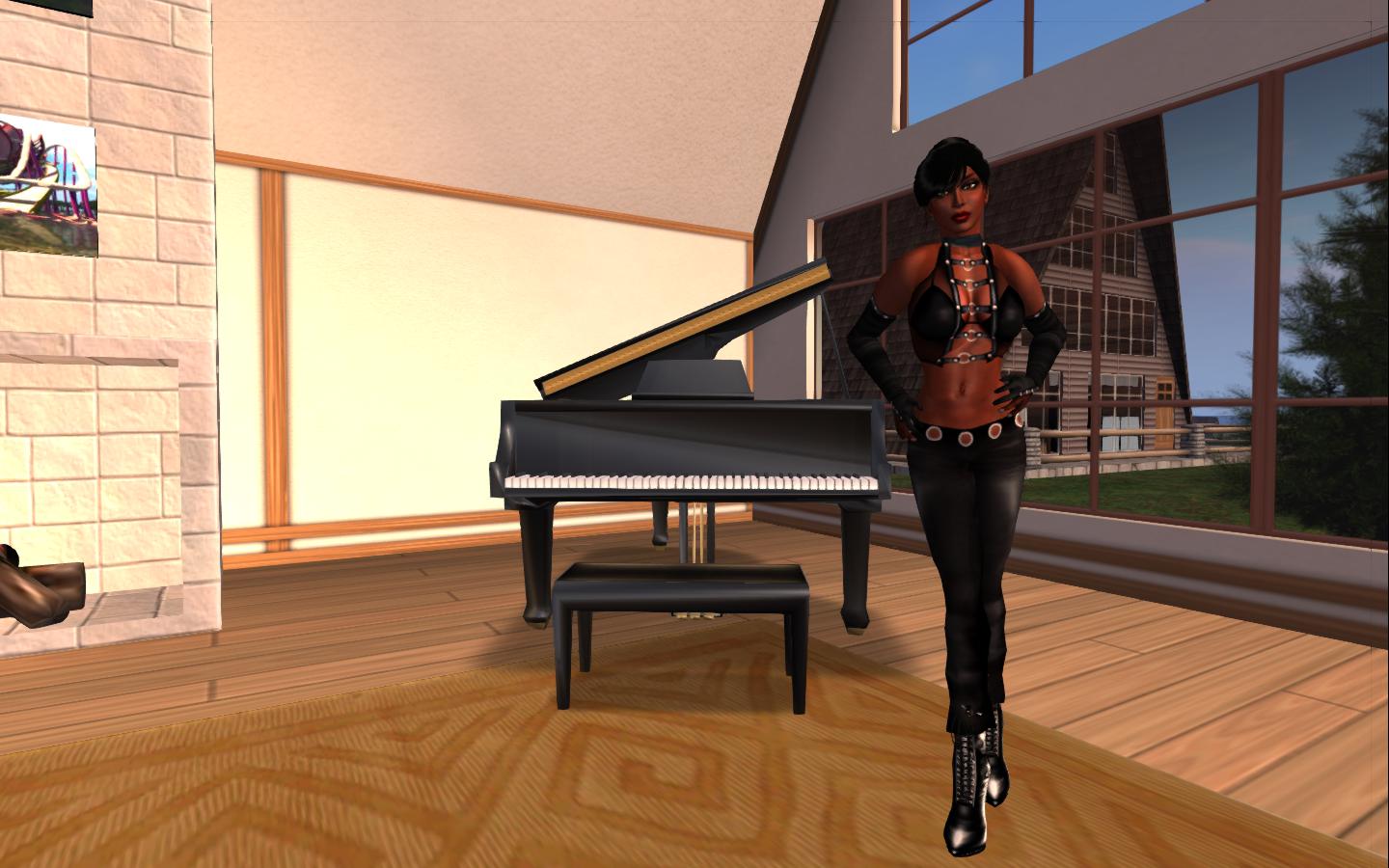
Me at 5ft 8in

The difference is perhaps a little hard to see, until one compares the two side-by-side (and allows for a slight perspective issue which does actually exaggerate the difference somewhat).

Me at 6ft 3 and me at 5ft 8 (there is a slight perspective exaggeration in the two photos when combined like this)

The finished result, if I’m honest, has me leaning two ways at once. On the one hand, and combined with Penny’s camera defaults, It does give a much better perspective of things in general, and does have major benefits building-wise; were we all properly scaled in-world, we wouldn’t need houses the size of the Royal Albert Hall in which to live. Even my Linden Home now has church-sized proportions about it from my new perspective!

However, on the other, realistic avatar heights open up a world of issues of their own. Take no mod furnishings, etc., for a moment. Adjust your avatar height and proportions and it’s easy to find you have a bed you need a car and a guide-book in order to find your way across from one side to the other. That said, I do more naturally “fit” my piano now, and my feet don’t vanish into the floor when seated…

I’m still adjusting to my new height, and confess to having my “old” shape sitting ready for recall. Even at 6ft+, it still works with Penny’s camera offsets; but I’m going to see how things go with the new economy-sized me for a while – and see how people react as I let her be seen more in-world.
Related Links

JIRA: feedback from the Lab

The dust is slowly settling from the recent announcement vis the effective closure of the Public JIRA for bug and issue reporting and the implementation of the simplified Bug Tracker approach and associated changes.

Comments passed from front-line staff by Linden Lab make it reasonably clear that the new approach to bug reporting and management has impacted more than just those users who have in the past been actively and positively engaged in the Lab’s JIRA; the Lab itself is undergoing something of a shift in how issues are handled, and that is it likely to be a few weeks before matters settle down internally.

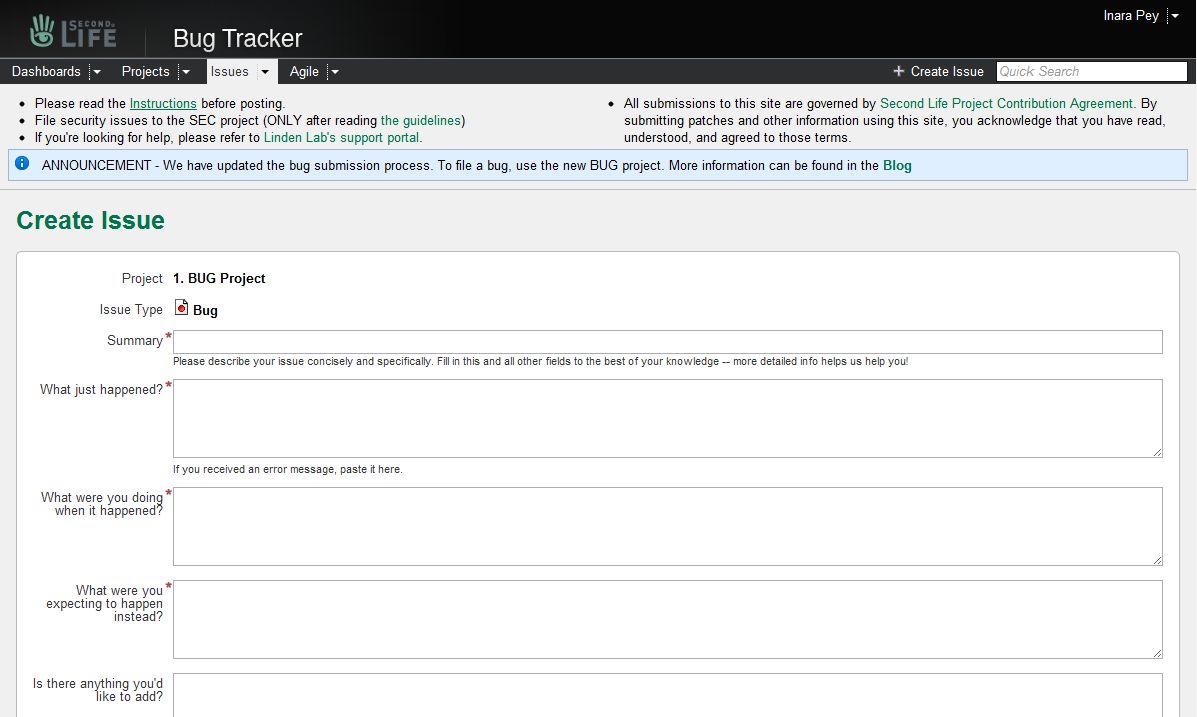
JIRA change: seen as a disappointing move by many

The Lab is also adamant that the overall aim of the change is to try an improve the utility of the bug reporting and management process from their own perspective – part of which was to eliminate the issue of having the JIRA used either as a forum for discussion and / or for posting irrelevant / angry statements, neither of which were seen as assisting the process of problem management and issue resolution. However, there has been an acknowledgement in some quarters as to whether or not the new system will increase or decrease the effectiveness of bug tracking  / management over time is an open question at the Lab, and that depending upon how the new system is seen to work over the next weeks / months, further changes may be made.

“JIRA Support Groups”

During the TPV/Dev meeting on September 7th, Oz Linden indicated that there are two “user groups” which are being established in relation to the new changes, and which the Lab will use to allow those residents with a demonstrable need to access a JIRA system and who are known to do so “responsibly” to have greater access to the new system.

Commenting after it became apparent during the meeting that some in attendance already had greater access to LL’s JIRA than others (including the ability to still comment on JIRA items), Oz said:

It should be noted that not all of you have exactly the same privileges. As part of this change [to the JIRA system] I created some access groups that do have somewhat deeper access … I haven’t actually figured out exactly what got set-up in the end … so be a little careful about asserting that, “Anyone can do such-and-such”, because if you’re in the active contributors’ group or the support helpers’ group, you have privileges other people don’t have … As I said, these changes have only been in effect less than 24 hours now [at the time of the meeting] … because there are a couple of levels of indirection involved, it’s not trivial to figure out what privileges a given person has – which is weird, but there you go … So, I have put in place a mechanism that I hope will make it easier for those of you who are actively collaborating with us on making the world better to continue doing so. It will probably take some time for all the bugs in that accommodation to be worked out.

Later in the meeting, he indicated one of these two groups, the “active contributors’ group” is being aimed towards the likes of TPV developers and those who have contributed to Second Life in terms of code and fixes, etc., in order to try to ensure they continue to have access to the new system which is beneficial to them (and more particularly, to LL) in order to better resolve bugs.

Similarly the “support helpers’ group” will be overseen by Alexa Linden and will comprise those who have demonstrated their value in assisting with the broader triage process (such as identifying duplicate issues, recognising where short-term workarounds for problems may exist, etc.).

Both groups were referred to as having greater ability to search reports in the new system, although the precise function and capabilities of these groups is liable to mature alongside the new system. While some people have already been added to the groups, this has been done as something of a “first pass” and appears to have been based upon first-hand knowledge of those involved. How additional people will be added to each of the groups is not entirely clear, although it is evident that in order to qualify for consideration, an individual must have a track record of positive and beneficial engagement in the JIRA process to triage and / or resolve issues.

Also during the meeting, Oz encouraged TPV developers who are concerned about the negative impact of the change and who have “Legitimate use cases that serve the needs of Second Life in general and Linden Lab in particular,” which may not be met by the new system, to write them up “In non-emotive form, … [but] in terms of how they are useful to Second Life residents and how they provide utility to Linden Lab … a calm exposition of the value to Linden Lab of doing something different would be.”

Forum Discussion Option

The JIRA situation was also raised at the Simulator User Group Meeting, also held on September 7th, Simon Linden put forward a suggestion that perhaps the forums could be used in some capacity. He was encouraged by those attending the meeting to pass the idea back to the Lab itself, with Toysoldier Thor suggesting a new Forum category of “Post-JIRA Forums” to facilitate general discussions. During the Content Creation User Group meeting held on the 10th September, Alexa Linden further indicated that the possible use of the forums was being considered.

Going Forward

The debate on the positive / negative aspects of this change are liable to continue for some time to come. That steps were taken to create two new “JIRA support groups” ahead of the launch of the new system tends to demonstrate that some within LL were not blind to the part played by users in the overall management and resolution of bugs. The hope appears to be that these new groups will offset the more negative aspects (lack of access, ability to contribute, etc.), presented with the launch of the new system.

Whether this proves to be the case will come down to how effectively the groups are managed, the level of access those within the groups are given, and whether or not the new system itself achieves the level of improved utility in the reporting, triaging and resolution of bugs the Lab hopes will be the case. Currently, it would appear that none of this is liable to be objectively known for the next several months.

Related Links

Linden Lab close public JIRA, launch Bug Tracker

Linden Lab today reported that they’ve effectively closed the Public JIRA system to users, and are launching a new “bug reporting project”.

The announcement, made in the Technology blog, reads:

User-submitted bug reports help improve the Second Life experience for all Residents, so we greatly appreciate all of you who take the time to provide this invaluable information to us. 

Because we want to make it even easier to report bugs, today we are making some changes that will streamline the bug reporting process, allowing us to more quickly collect information and respond to issues.

Following is a summary of the JIRA changes:

  • All bugs should now be filed in the new BUG project, using the more streamlined submission form.
  • Second Life users will only see their own reported issues.  When a Bug reaches the “Been Triaged” status, they will no longer be able to add comments to their issue.
  • Once a Bug reaches the “Accepted” or “Closed” status, it will not be updated. You can watch the Release Notes to see when and if a fix has been released for your issue.
  • Existing JIRAs will remain publicly visible. We will continue to review and work through these.

To those of you who have taken the time to alert us to bugs and provided the information we need to fix them — thank you! We hope that you will continue to help us improve Second Life, and this new process should make it easier for all of us. Ideas about how we can continue to improve the bug reporting process can be shared here.

For more information, visit:
How to report a BUG (Knowledge Base Article): 
Bug Tracker (wiki page):
Bug Tracker Status/Resolutions (wiki page)

As a part of this change the public JIRA is still browsable, but it appears the ability to comment on specific JIRA items has been turned off.

It’s hard to fathom why this has been done – and the stated reason actually makes little sense. If nothing else, the fact that users can only see the bugs they report will inevitably means that the system is liable to get flooded with duplicate entries  – far more so  than is was the case with the JIRA system. Beyond this are other aspects which seem to make this move counter-productive:

  • Users are often a part of the triage process. They can confirm when and how issues are occurring; they can test different hardware and different viewer options and ascertain if the problem is at all localised, or possible an artefact unique to the reporter’s system
  • Developers can similarly – and vastly – help the triage / resolution process, bringing their own knowledge and skills to bear on user-reported problems
  • Both users and TPV developers can speed the process on duplicate JIRA identification and cross-referencing, reducing the amount of work LL have to initially undertake.

All this move appears to do is further break another means of productive collaboration between Linden Labs and TPV developers / the user community, leaving everyone the worse off, and that in itself is hardly positive.

While there has been frustration within LL – and among those who do invest time and effort in trying to help LL deal with raised JIRAs – over the amount of (often pointless) feedback,  bickering than can occur with a particularly emotive JIRA (comments like THIS IS BAD!!!!!!! FIX IT NOW!!!!!!! certainly don’t help anyone), this move can hardly be called a proportional response to preventing such problems.

Unless there is more to come, such as TPVs at least being allowed to engage in the bug / issue reporting / triage / resolution process, there is potentially only one adjective which some might opt to apply to this move.

Asinine.

Popularity and the official SL viewer

In commenting on Firestorm’s achievements, Wolf Baginski asked a question about the popularity of official SL viewer:

From my POV, while I am glad I made the effort to shift from Phoenix to Firestorm, I would say there is an argument here which is missing their main point. 

Just what is wrong with the Linden Viewer UI?

What spoiled it for me was the jump from V1 to V2. Linden V1 has a range of colour schemes. V2 appeared in Beta with a rather dull set of colours, which I found difficult to use. I set out my reasons for wanting to see the same sort of choices that V1 had, and when that sort of choice appeared, I found I had to rely on a third-party developer, who had to repeat and test the work every time the Viewer was upgraded by Linden Labs.

Now they’re on V3, but I’ve never bothered to try it out. The Firestorm crew do a good job, and you can find these guys in-world. They’re people who take the trouble to use their Avatars. There are Lindens like that but, to be honest, I wouldn’t want Torley to be responsible for colour choices in the UI. Might not be the UI design… Maybe the question is, why don’t we feel safe with the Linden Viewer?

I’m not sure I share the contention that people don’t “feel safe” with the official viewer (not liking it is not the same as not feeling safe with it), although I do agree that people may well have a trust issue around LL (something I’ll  to come back to). However, Wolf’s question in interesting, as it actually touches on elements of the Lab / user dynamic that go beyond the viewer itself – or at least it set me off thinking in that direction, as well as a number of others; so much so that as I attempted to reply to his comment with my thoughts, I found them growing to essay length proportions. Rather then end up with a huge splurge in the comments section of a blog post, I decided it might be better to give my thoughts a post of their own.

It’s About the Options

Whatever its flavour, the official viewer has always been regarded by many SL users as a poor offering. Back in the days of Viewer 1.x, for example, we had Nicholaz’ Viewer, the RLV .EXE for the official viewer, Cool Viewer and Rainbow Viewer. Of course, we also had the infamous Emerald Viewer. Of them all, the latter probably lead to an explosion in TPV use, with people opting for the huge spread of options and innovative approaches to the UI that made their in-world experience easier and more informative. It also, it’s fair to say, paved the way for Phoenix’s huge success when shenanigans from within brought an end to Emerald in Second Life.

Even today, the major reason for the adoption of TPVs has little to do with the UI presentation and issues therein or with any matters of trust where LL is concerned. It comes down to a simple matter of the range of additional options and capabilities presented to the user in a TPV when compared to the official viewer.

The Failure of Viewer 2.0

The real problems for LL’s own viewer really began with Viewer 2.0 and broader matters occurring before and during the launch period, as summarised below.

Poor UI Implementation

Viewer 2.0: usability issues galore

The UI design was bad, period. Not only were there issues with the colour scheme and issues with the font style (which many with eyesight problems reported as being hard to read), and in the use of toasties / chiklets, etc., –  it was simply horribly unsettling to use.

The most obvious examples of this were the original sidebar, which rudely shunted the world-view off to the left rather than functioning as an overlay, what far too large and intrusive and included a series of eye-distracting side tabs jutting into the right side of the screen, and the bizarre decision to split up the camera controls into mutually exclusive panes on the same floater. Neither of these were destined to find favour with established users, and LL were to prove equally unwilling to accept this.

Setting False Expectations

An image from Massively’s sneak peek at “SL 2.0” (credit: Massively / Tateru Nino) – click to enlarge

Prior to V2.0 appearing, a lot of false expectations were set as to what it would be. Not all of these were LL’s fault, in fairness. Some, however, were. In late 2009, LL allowed Massively a sneak peek at various elements of the “new” viewer, which largely received positive feedback from users.

Such was the buzz about the new approach, LL actually issued what amounted to a warning statement shortly after Massively published the piece, stating: “What we ship later this year will be very different from what appeared in that post. We’ll share a sneak peek of the “real” Viewer 2009 later in the year, with plenty of time to receive and incorporate feedback before the final iteration ships.

Not only did the Massively sneak peek present a UI that was reasonably familiar – and comforting – to users, it also offered insight into new and useful functionality which ended up being tossed aside prior to the release of the “finished product”.

Thus, and despite issuing their cautionary response to the Massively article, LL had managed to tweak people’s expectations: we were going to get a viewer that looked something like V1; it was going to have cool additional features we’ve been looking for. What’s more, and as shown in the Massively article, there was even going to be a fairly simply UI skin that would potentially be easier on the eye for those with vision impairments.

Use the page numbers below left to continue reading

Steam: some news, further speculation

The TPV/Developer meeting on the 24th August included an interesting, if brief, discussion on the forthcoming link-up with Steam, in which a little more information was revealed, and comments were passed that allow for further speculation as to how things might be handed.

In keeping with the Steam format, there will be a promotional video for Second Life which will be available for Steam users to view prior to initialising the Steam download / installation process. This video (produced by Linden Lab) apparently does not promote Second Life “intensely as a game”, but rather as a “place with a lot of cool content”, with the overall approach to the video being described as “kaleidoscopic” and fast-paced in terms of images shown.

Perhaps the most interesting comment however, came from Oz Linden in response to a question relaid by Jessica Lyon, on users being able to log-in to SL “from Steam”, in which he said, “Yeah, it creates a Second Life account…I don’t know how the name gets created … the two are connected somehow.”

This sparked a short discussion on how this might be possible, and what the mechanism would be for handling names, with some in the meeting wondering if the link-up would allow them to use their Steam user IDs with SL. I’m going to go right out on a limb here, and suggest that when it comes to creating an SL account “from Steam”, we might already have the answer sitting in front of us.

How Steam Works

For those unfamiliar with Steam, obtaining a new game is a matter of using the Steam client or web page to browse available games (listed in several categories). Individual games can be previewed in a dedicated panel / page, which includes the options for promotional videos and stills to be added, as well as a description of the game provided.

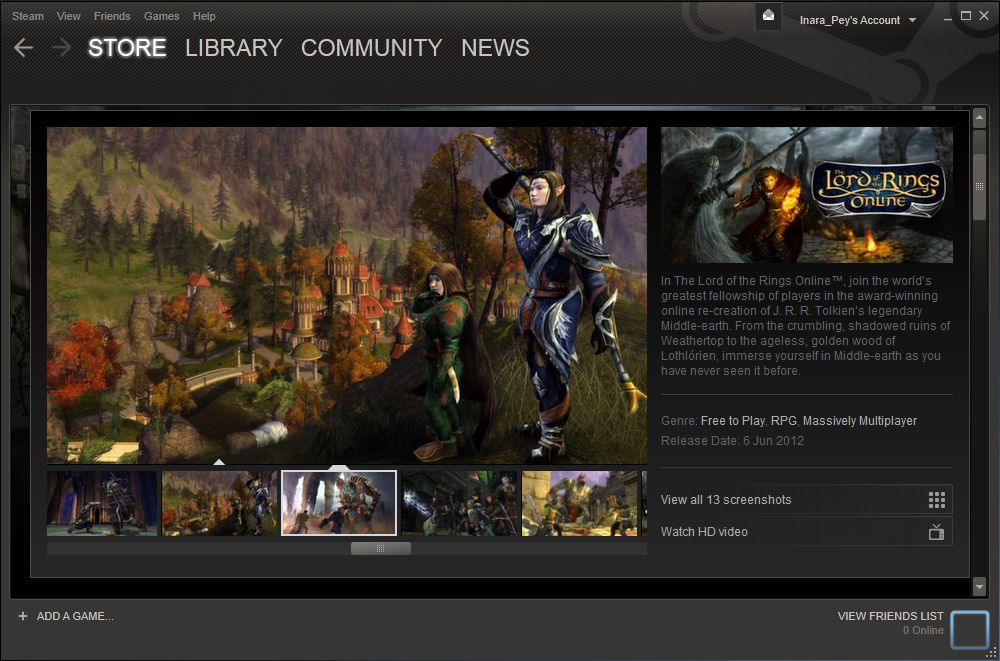
A typical Steam client game preview panel

Should the user opt to play the game, they can start a download / install process from within Steam (on PCs running Windows 7 32-bit, games are installed into C:\Program Files\Steam\steamapps\ common, for example). Links are created to the user’s Steam library, allowing games to be launched from there as well as through things like short cuts on the desktop, etc.

What is interesting here is that many of the games have some form of sign-up process. However, rather than being incorporated in Steam itself, these generally take the user to an external website to complete the sign-up process. Could Second Life simply take the same route?

The Answer, My Friend, is (Maybe) Written in the Viewer (apologies to Bob Dylan)

Last month, I commented on changes made to the SL Development Viewer’s splash screen – specifically the dialogue box pointing the user to the need to sign-up for an account in order to access SL.

SL Development Viewer 3.4.1.263582, (August 16): initial prompt asking the user to create an account – included for the Steam link-up? (click to enlarge)

This has been included in all subsequent Development viewer releases since August 16th, but is only displayed if there are no avatar account files located on the host PC. Once somone has logged-in to SL and the account files created, the prompt is no longer displayed in starting the viewer.

At the time I reported this update I speculated as to whether it might be related to the upcoming Steam link-up. It’s hard to see why else LL would add such a prompt to the viewer’s splash screen – and the arrival of the update, just a couple of days after the original announcement did seem rather timely (although the splash screen changes have yet to be seen in any other flavours of the official viewer). Certainly, handling things this way would eliminate the need for complicated links between the Steam client / website and the SL website / sign-up page, and eliminate the need for any API interaction between the two.

If this is the case, however, one assumes steps will be taken to update the SL sign-up pages – the final step of which is to download the viewer; as Steam users will have already have effectively done this already, having the prompt without clarification could lead to some confusion.

The potential rebuttal to this is that Oz is involved with the viewer – so if the sign-up process was simply a matter of adding a dialogue to the viewer in order to direct the user to SL’s sign-up page, he’d know? Or is he simply being coy in his response, pending the official launch?

Will SL be Promoted as a Game?

During the TPV/Developer discussion, speculation is voiced that SL will in fact be promoted by Valve as a game on Steam. If correct, then one assumes that SL will be appearing in the Free Games category on Steam. However, this did not apparently come from Linden Lab, but rather from one of the TPV developers at the meeting.

As it is, Valve are due to launch their non-game offerings (described as “creativity and productivity” software this coming Wednesday, September 5th (which some have taken to be the date SL will appear on Steam, although this again is by no means clear) – so we might gain some further insight as to how SL might be pitched then – assuming SL isn’t one of the first offerings on the list.

Given that the original blog-post from the Lab announcing the link-up stated it would be happening in “the next month or so”, it would seem that we may have a couple of weeks yet in which to speculate, rather than perhaps getting a definitive answer this week.

Time will tell, as they say…

Related Links