ToS in-world meeting, September 29th: a personal perspective

An in-world meeting was held on Sunday September 29th to discuss the controversial wording of Section 2.3 of the revised Terms of Service issued by Linden Lab in August 2013.

The overall goal of the meeting was, to quote the introductory note card: “to understand the situation, to agree on our interpretation, and to contemplate a next step, if necessary.”

As things were limited to a single region, attendance was capped at 40 attendees, most of whom arrived well ahead of of time. The planned format for the event was to have it moderator-led, with people directed to contact the moderator via IM and wait to be called to the floor to speak. Given the number of attendees, this was a sound approach which would hopefully avoid the meeting becoming a free-for-all.

The East, West, North Ampi-Theatre, venue for the ToS discussion meeting, Sunday September 29th

This is a summary of what I feel to be the key points from the meeting. It is not intended to be a verbatim transcript (I leave it to others to post these), nor should it be taken as representing the views of the meeting organisers. It is a personal perspective, followed by a personal opinion.

After a brief opening statement from the meeting host, Ernie Farstrider, ToySoldier Thor gave some information about an on-line survey to which content creators are being pointed. At the time of the meeting, the survey had gained some 65 responses at the time of the meeting, with 26 claiming the changes are sufficient for them to cease uploading new content to the platform.

The survey is still open, and those wishing to take it can find it at Survey Monkey.

Tali Rosca pointed out that the re-worded ToS can be incompatible with the licences supplied by third-party content creators (e.g. CG Textures and Renderosity), thus causing them to ban further use of their products in Second life.  As such, she suggested that contacting other suppliers of materials used within SL, obtaining their feedback and using it to help the Lab understand that the ToS changes do present an issue.

Crap Mariner pointed to the issue facing artists and performers in Second Life: that the ToS potentially impacts the ability of artists and performers to strike exclusive deals outside of Second Life (e.g. a publishing deal) for material they may have first presented / performed within Second Life.

Mathilde Vhargon raised the impact of the changes for those who operate galleries and exhibition spaces within Second Life, and who invite artists from outside of the platform to display or perform their work. The re-worded ToS requires such artists and performers to assign rights to Linden Lab they may well have no desire to assign, thus leaving them unwilling to display or perform their work.

Mathilde also indicated she feels it important for Linden Lab to understand that for those who  are handicapped or otherwise unable to work, the platform represents their livelihood. As such, apparently arbitrary decisions by the Lab can have extreme personal and social consequences.

As a result of the meeting, a new in-world group, the United Content Creators of SL, has been set-up for those who wish to be a part of a “grassroots movement” to try to influence the Lab’s thinking.

Continue reading “ToS in-world meeting, September 29th: a personal perspective”

ToS Changes: The “Desura connection” and a personal perspective

Upset over LL’s re-wording to their Terms of Service continues, with high-profile reports of some content creators of long standing opting to withdraw their content from SL, and another third-party content supplier forbidding the use of their items within Second Life.

Elsewhere, people are starting to point to a “Desura connection”, with Nalates Urriah speculating that the re-wording might be in connection with the Lab wishing to provide the means for SL content creators to sell content through Desura.

A possible “Desura connection” was actually first mooted in passing by Kuurus in a September 15th comment on this blog, after I obtained a statement on the ToS changes from the Lab. Kurrus’ comment in turn prompted me to take another look at Desura’s former Terms of Use (replaced at the end of August by LL’s ToS, but still available via  things like the wayback machine), to see how that handled third-party content. What was interesting here was that the wording in the Desura ToU bears remarkable similarity to that of the revised LL ToS, as I commented upon at the time. Specifically, Section 2 of the old Desura ToU stated:

You expressly authorise and permit Desura to exercise and to authorise others to exercise all of the rights comprised in copyright and all other intellectual property rights which subsist in the Content and you irrevocably consent to all such exercises. Desura is not required to compensate you or any other person in any manner for any such exercise or authorisation. In particular, Desura may use, reproduce, modify, create derivative works from, distribute, transmit, broadcast, and otherwise communicate, and publicly display and perform the Content and other works which are based on them (including by way of adaptation or derivative works) in any form, anywhere, with or without attribution to you, whether or not such use would otherwise be a breach of any person’s moral rights, and without any notice or compensation to you of any kind.
Desura's former Terms of Service included language similar to that found in LL's ToS
Desura’s former Terms of Service included language similar to that found in LL’s ToS

While the phrase “sell / resell” is notably absent from the above, the overall assignment of rights to Desura of any and all work uploaded to the Desura website (including forum comments, etc.), is actually very similar to those the Lab set-out in their revised ToS. Note in particular that Desura can reproduce and redistribute (aka give away and / or sell)  in any form, anywhere – a phrase which strongly echoes, LL’s own ToS statement that they can use content “for any purpose whatsoever”.

This clearly doesn’t negate concerns over the ToS changes or put anything to rights, nor am I suggesting it does. Rather, it suggests that the rewording of the ToS is a direct consequence of trying to merge two disparate terms of service / use, which has resulted in a clause which perhaps should have been more thoroughly considered in terms of implications rather than as an exercise in re-wording.

Following-on from my initial contact with the Lab about the ToS changes which elicited their original statement on the matter, and as a result of looking into the Desura ToU, I again wrote to the Lab on September 17th in an attempt to obtain further feedback from them on the matter. At the time this article went to press, I had yet to receive any reply.

Is the ToS Change Related to Making SL Content Available on Desura?

Determining what the Lab may or may not do isn’t easy. The company tends to hold its cards close to its chest on matter of future planning and directions. However, there are several points to consider when looking at the whole SL content / Desura angle.

For example, unless there are plans to curtail the Marketplace completely, one has to question whether such a move would actually be seen as worthwhile to merchants. The Marketplace may have its flaws, warts and issues, but at least it is directed at the audience most likely to purchase the goods on offer. As such, the effort in opening Desura to the sale SL content may not actually reap real benefit in terms of SL content creators actually using it.

Which is also not to say it shouldn’t perhaps be tried, if it doesn’t take-up too much effort. And who knows? In time, the Lab may well be looking towards moving away from a market environment which only allows content to be sold into one platform, and to one that allows them to potentially offer merchants the means to reach multiple grids. Again, not that this will happen overnight, were it to turn out to be a part of the Lab’s thinking.

Certainly, both Humble and Scott Reismanis, Desura’s founder, appear to share some grand ambitions for Desura’s future. I recently drew attention to quote from Humble on this, in an interview he gave to Gamasutra:

[We want] to make it the most open, developer- and user-friendly distribution service for all kinds of digital goods, starting out with games and mods and going from there. For us it’s a natural step… We’re about user-to-user transactions and empowering people’s creativity.

[my emphasis]
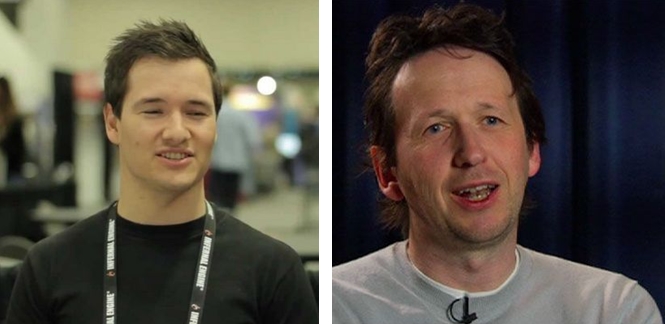
Scott Reismanis (Desura) and Rod Humble have expressed similar ambitions to grow Desura
Scott Reismanis (Desura) and Rod Humble have expressed similar ambitions to grow the platform

Continue reading “ToS Changes: The “Desura connection” and a personal perspective”

Be he ever so Humble: my interview with LL’s CEO

Back in June 2013, I had the opportunity to interview Rod Humble for Prim Perfect magazine. As explained in the piece, things didn’t entirely go according to plan, and I have to admit to being a little disappointed with the end result. Due to various reasons, the piece didn’t see the light of day until Issue 49 of Prim Perfect, which appeared in September 2013, and which is available on-line and in-world. What follows here is the article in full, reprinted with permission.

=========================

2013 marks the 10th Anniversary of Second Life as a publicly accessible platform. In that time, Linden Lab has seen it grow from a small venture into a product which, whilst still niche, generates revenues in the region of $75 million a year, and keeps people from around the globe logging-in to it as a part of their daily routine.

In that time four men have helmed the Lab through highs and lows: Philip Rosedale, the man responsible for starting it all, Mark Kingdon, Bob Komin, who also served as the Lab’s CFO, and Rod Humble, known to us all as Rodvik Linden.

Rod Humble, with a little reminder from his past

Humble, a veteran of Virgin Interactive, Sony Online and EA Games, brought considerable games industry experience with him when he joined the Lab at the start of 2011. Since then, he’s been the driving force behind a huge amount of work on Second Life, and in trying to expand the company’s product portfolio with a growing range of apps and games.

As part of Second Life’s anniversary celebrations, he spent a lot of time being interviewed in many venues and through a variety of media platforms. Our request to be included generated a warm and positive response, but was then derailed somewhat by scheduling issues on all sides.

Originally, the idea had been to converse via Skype, but as the scheduling conflicts bit, we were forced to use e-mail as the medium of exchange. While not ideal, it at least gave me the opportunity to gain a small window into the mind of the man in charge of the virtual world we feel so very passionate about.

I started out by turning the clock back and asking him what initially drew him to accepting the CEO position at the Lab, specifically what was it about the company, as well as the platform, that attracted him.

I immediately saw and fell in love with SL when I was approached. I was delighted and amazed at the creativity within the world.

As a platform, Second Life puts an incredible amount of power in the users’ hands, which is obvious from the range and complexity of things people have created in-world. Beyond the platform itself, I think a key strength of Second Life is the model of allowing users to monetize their creations. That sets up a situation where everyone wins – users are rewarded for being creative, and the virtual world continually gets fresh and interesting content and experiences for everyone, beyond what would be possible if Linden Lab had to create everything.

claudia222
Secondlife allows for extraordinary creativity, as exemplified by Claudia222 Jewell’s amazing creations

His tenure at the Lab has not only been marked by the introduction of new capabilities to the platform – the most notable perhaps being mesh and pathfinding – but by a strong push to improve usability, and performance. Not long after he arrived, the viewer was given a major overhaul and underwent extensive user testing. More recently, we’ve seen a 12-month effort under the umbrella title of “Project Shining” aimed at massively improving SL’s performance and stability. Given this emphasis, I asked him if he saw matters of performance and so on as potential threats to the viability of the platform when he first joined the company.

Any active user of Second Life can tell you that performance is a big issue. It’s a hard one for us to solve as well, because of the inherent complexity of the platform and the huge number of variables involved – like differences in broadband speeds, hardware specs, etc. But, it’s an area that I’m proud to say we’re making great strides in with efforts like Project Sunshine. Users should see bigger performance improvements from that project as the server-side changes roll-out.

But there were also other usability issues – like the complexity of Magic Boxes for Marketplace deliveries and the confusing number of communications tools – that we’ve worked to improve.

Two long-term issues for the platform have been user sign-ups and user retention. When it came to sign-ups, Humble again quickly made his presence felt, overseeing a top-to-toe redesign of the account creation process. This resulted in a significant increase in the number of daily sign-ups, one which still sees some 400,000 new accounts created monthly. However user retention has remained elusive; only around 20% of new accounts are still active a month after signing-up.

By Humble’s own admission, this is not a an exciting figure, and he’s set himself and the Lab the goal of improving it, going so far as to say his ambition is to get all those who said “Meh” to SL “back”. As a part of this, the Lab has resumed its examinations of the “new user experience”, testing new “Social Islands” and “Learning Islands” alongside the existing “Destination Islands” in an attempt to find out what does and doesn’t work.

This renewed interest on the Lab’s part led me to wonder if it might mean we’ll be seeing something in the way of directed experiences, so that “modellers get to aeroplanes rather than a nightclub”,  to paraphrase a remark he famously made in the SL Universe forums in 2012.

Continue reading “Be he ever so Humble: my interview with LL’s CEO”

LL launch new video – first step in “getting them back”?

Linden Lab has just launched a new promo-style video, together with a blog post, which highlights recent changes and improvements to the platform.

Playing a little on SL’s birthday, the 57-second long piece is a typical sample of recent Second Life video promotions: plenty of fast cuts and beat-laden music. However, the text inserts included with it tend to suggest the target audience is perhaps those who may have tried SL and since wandered away, rather than those who have never tried it at all.

If this is the intended focus of the video, it shouldn’t come as any surprise. Around the time of the 10th Anniversary celebrations, Rod Humble made it clear in a number of interviews with the press, some of which I covered in these pages, that one of his aims has been to try to “win back” those 30+ million people who have tried SL only to walk away; and that it is something that has been on his mind for a good while. It’ll be interesting to see, therefore, if this is a one-off, or the first step in part of a much wider campaign.

Linden Lab launches SL Share and a look at the viewer

As spotted by Daniel Voyager earlier in the month, and reported here as a result, the Lab has now officially launched SLShare, which they describe as, “an easy way to share to Facebook while In-world.”

Now, before people start getting all worked-up about Facebook, being “outed” and generally getting knickers knotted, there are a couple of points which need to be understood:

  • SLShare is opt-in. If you don’t want to use it, you don’t have to, you can ignore it
  • SLShare will only work if you actually have a Facebook account – so LL aren’t doing any “sneaky back-door outing” or “forcing” anyone into Facebook.

The blog post announcing the feature reads in part:

SLShare is a new, 100% opt-in Viewer feature that will allow you to easily update your Facebook status, share photos, and check-in from Second Life locations to your Facebook wall.

Whether you’re at a great in-world event and want to let your Facebook friends know where to join you, want to show off a photo of your avatar modeling your latest Marketplace purchase, or just share a thought inspired by your in-world explorations, SLShare makes it easy to share pieces of your Second Life experiences with your Facebook network.

The blog post also notes that the feature “isn’t yet available for everyone”, however, the release candidate viewer with the SLShare capability – version 3.6.7.281331 – can be downloaded via the SL wiki.

If you do opt to manually download the RC viewer, note that it will, by default, overwrite your current release version of the SL viewer (if installed), so please see my notes on manually installing RC viewer versions if you wish to avoid this.

As noted in my original report, the Facebook capabilities are contained in a new floater, accessed via Me > Post to Facebook …, which in turn comprises four tabs.

The four tabs of the SLShare floater

The tabs are:

  • Status tab:  allows someone to post a text comment via their Facebook account
  • Photo tab: allows someone to upload a snapshot to their FB account. As with the current Profile Feed option in the snapshot floater, the resolution of the image can be selected at upload (minimum 800×600), and an optional SLurl / comment can be included with the image
  • Check-in tab: allows someone to share the SLurl for their current in-world location via Facebook, together with a short comment on the location and a map image if they wish
  • Account Tab: will allow those with a Facebook account to connect their SL account to it for the purposes of posting from SL to Facebook.

The last option will open a browser window allowing a user to log-in to their Facebook account and link their Second Life account to it for posting purposes (this must be done for any of the other tabs to actually communicate with a Facebook account). In addition, to make accessing the floater easier, the viewer introduces a dedicated Facebook toolbar button.

To help explain the new functionality, Torley has produced another of his TuTORials, and there is also a Knowledge Base page explaining the capability and its options.

Again, please remember that this is an opt-in capability, and no-one is being forced to use it. Whether SLShare will evolve to include other social media sharing, or whether additional capabilities for sharing with other social media platforms will be added to the viewer remains to be seen.

In the meantime, SLShare is available via a release candidate viewer, as noted above, and will be progressing as the de facto release viewer in due course.

Related Links

The Verge: an astute look into Second Life

Hazardous
Hazardous

The Verge has an article out about Second Life. Second Life’s Strange Second Life may not sound the most promising of titles, and the opening paragraph may not make for the most inspiring of reading material:

Do you remember Second Life? Set up by developer Linden Lab in 2003, it was the faithful replication of our modern world where whoring, drinking, and fighting were acceptable. It was the place where big brands moved in as neighbours and hawked you their wares online. For many, it was the future — our lives were going to be lived online, as avatars represented us in nightclubs, bedrooms, and banks made of pixels and code.

However, never judge a book – or in this case, an article – by its title (or its opening paragraph!). What follows is actually an astute look at the platform, as seen through the eyes of a newcomer, Chris Stokel-Walker, a freelance writer in the UK, and through those of long-time resident Fee Berry, as well as a few others.

Rougham Town
Rougham Town

Fee, who lives in Middlesex, England, is actually none other than Caliandris Pendragon, also once known as Misty Mole. She’s  been involved in Second Life since 2004, having migrated from the worlds of games such as Riven and Myst. She’s been both a resident of SL and she’s been employed – until June of this year, at least – by Linden Lab. As such, she is eminently qualified to talk about SL from all sides.

The attraction which brought Fee to Second Life is more than likely the very same attraction which brought each of us here in the first place and caused us to “stick”, as Stokel-Walker relates:

“It’s like every toy you ever had, all rolled into one,” she tells me in awed tones, recalling the power of the game to keep her playing nearly a decade on. It’s also liberating, she explains, allowing her to forget about the kids, the responsibilities, and the extra few inches she’d rather not have. It lets her cut free.

Fee provides a very clear and concise view of Second Life, one we can all perhaps identify with: the wonders that it presents to us; the opportunities for discovering new friends, learning new things; the initial shaping of the world by Linden Lab – and the fact that, when all is said and done, it’s entirely possible that not everyone at the Lab really gets the in-world culture the company gave birth to simply by allowing Second Life to be so open-ended.

Musiclandia
Musiclandia

It is this examination of the cultural and historical aspects of Second Life, unburdened by bias, that helps to set this piece apart from the more usual offerings the media serve-up when talking about the platform. Not only do we get Fee’s perspective, we also get to hear from Hunter Walker. One of the original Lab employees working on Second Life from before the launch, but since departed, Hunter also provides insight into the early days, again as Stokel-Walker relates:

It was conceived as a space that gave you a set of choices that were missing from reality. “In your first life you don’t necessarily get to fly. Here you can fly. In your first life you can’t choose what you look like. Here you can choose what you look like — and it’s malleable.”

Nor does it end there. This is a piece which has not been written as a late-coming feature built from SL’s tenth anniversary infographic. Rather, it is a piece that has come about through experimentation and research, with Stokel-Walker spending time in-world, going through all the pangs, trials and tribulations of a newcomer to Second Life. He is clearly someone who is attracted to the platform without – at least initially understanding why. And this brings an added element to the article, because his story will be so familiar with many of us:

For the longest time I didn’t get it. I’d spent several weeks pottering about, teleporting from one place to another. I stood on a dock of a bay, overlooking an azure sea and hearing the whistle of the wind. I walked through a cold, gun-metal gray futuristic world full of walkways that reminded me of any number of first-person shooters. I’d chased a woman, inexplicably sprinting, arms flailing, through the palazzos of Milan, looking at the fashion boutiques. I’d visited London — in reality a tired collection of worn clichés, a cardboard cut-out of the Beatles crossing the street down from a roundabout with a red telephone box on one corner. It was kind of cool, but it was also corny.

Continue reading “The Verge: an astute look into Second Life”