ToS changes: further ripples in the pond – Machinimatrix and Bryn Oh

There are further public ripples in the pond resulting from the August 15th changes to LL’s Terms of Service

Machinimatrix Refocus Terminology on OpenSim

Word is spreading that  the Machinimatrix team are responding to the recent changes to Linden Lab’s Terms of Service (ToS), having issued a blog post on the matter, which reads in part:

Dear customers;

Recently Linden Labs have changed their TOS. First and most important for you:

This has no direct impact on our support and we will continue our offers as before.

However we feel uncomfortable about the change of the TOS and we have made a few moves to support those who no longer have access to Second Life. And finally we have decided to reduce indirect advertisement for the Second Life platform.

The post goes on to state that:

  • Specific changes will see the team introduce a wider range of payment options for their products
  • All web documentation has had references to Second Life replaced by OpenSim, unless a reference is directly relevant to Second Life, in which case it has been replaced by “SL”
  • A top-to-bottom renaming within the Avastar user interface which sees all references to Second Life replaced with references to OpenSim,
  • A similar removal of references to Second Life in the Blender Collada exporter, with references to OpenSim replacing it. Other products within the Machinimatrix

The team also make it clear that in making these changes, no actual functionality has changed within their products.

Bryn Oh Resigns from LEA

Bryn Oh, perhaps once of the most high-profile members of the Linden Endowment for the Arts has publicly resigned from that body.

Having already commented on the revision to Section 2.3 of the ToS, Bryn has now written publicly on the subject from apersonal perspective, and does so quite damningly, highlighting one of the principal issues which has come about as a result of the wording of the section 2.3, noting:

One thing I do in both first life and Second Life is try to convince artists that they and their art are worth something.  You see, artists are quite often taken advantage of.  People will pay a plumber to fix a sink or a roofer to fix a roof because it is a skill they do not possess themselves, and they accept and recognize that.  However, most people also can not paint pictures, yet they will suggest that it would be great “exposure” to put things in their Law Office or Hotel.  When I was just out of art school I was convinced to do 25 pen and ink drawings for an expensive coffee table book.. for “exposure”.  They thanked me in the back of the book.  And somehow I felt like they did me a favour.  They probably paid everyone else but me.

She goes on:

As it stands now I don’t feel comfortable luring artists into creating content for Linden Labs who can pretty much do whatever they want with it.  I will take the risk with my own content but I wont encourage others to do so.  For example, if you developed a revolutionary method for treating people with Schizophrenia by using specific techniques combining art, original music and the virtual space then built or demonstrated it in SL, it would no longer be yours exclusively.  Linden Lab could scoop it up and put their money behind it, while you struggled to promote it from your basement … It is just another indignity artists and thinkers must suffer and I don’t want to be a part of it.

Bryn’s letter makes powerful reading, and underlines the fact that at the end of the day, it doesn’t actually matter why the Lab has seen fit to allow such sweeping statements as found in Section 2.3 of the ToS. It really doesn’t matter if it’s actually down to a short-sighted consequence of trying to combine the Desura Terms of Use with the ToS or whether there is some deeper, darker and hidden meaning people are exhausting time and effort trying to discern.

What actually matters is that the wording, as given in the ToS today, is untenable for many, and with very good reason, and is – as I’ve said before, and Bryn underlines – a further erosion of community / company trust which really should be more directly and clearly addressed by the Lab.

Sadly, and while continuing with efforts to encourage them do so elsewhere, I don’t actually believe they will.

Related Links

ToS in-world meeting, September 29th: a personal perspective

An in-world meeting was held on Sunday September 29th to discuss the controversial wording of Section 2.3 of the revised Terms of Service issued by Linden Lab in August 2013.

The overall goal of the meeting was, to quote the introductory note card: “to understand the situation, to agree on our interpretation, and to contemplate a next step, if necessary.”

As things were limited to a single region, attendance was capped at 40 attendees, most of whom arrived well ahead of of time. The planned format for the event was to have it moderator-led, with people directed to contact the moderator via IM and wait to be called to the floor to speak. Given the number of attendees, this was a sound approach which would hopefully avoid the meeting becoming a free-for-all.

The East, West, North Ampi-Theatre, venue for the ToS discussion meeting, Sunday September 29th

This is a summary of what I feel to be the key points from the meeting. It is not intended to be a verbatim transcript (I leave it to others to post these), nor should it be taken as representing the views of the meeting organisers. It is a personal perspective, followed by a personal opinion.

After a brief opening statement from the meeting host, Ernie Farstrider, ToySoldier Thor gave some information about an on-line survey to which content creators are being pointed. At the time of the meeting, the survey had gained some 65 responses at the time of the meeting, with 26 claiming the changes are sufficient for them to cease uploading new content to the platform.

The survey is still open, and those wishing to take it can find it at Survey Monkey.

Tali Rosca pointed out that the re-worded ToS can be incompatible with the licences supplied by third-party content creators (e.g. CG Textures and Renderosity), thus causing them to ban further use of their products in Second life.  As such, she suggested that contacting other suppliers of materials used within SL, obtaining their feedback and using it to help the Lab understand that the ToS changes do present an issue.

Crap Mariner pointed to the issue facing artists and performers in Second Life: that the ToS potentially impacts the ability of artists and performers to strike exclusive deals outside of Second Life (e.g. a publishing deal) for material they may have first presented / performed within Second Life.

Mathilde Vhargon raised the impact of the changes for those who operate galleries and exhibition spaces within Second Life, and who invite artists from outside of the platform to display or perform their work. The re-worded ToS requires such artists and performers to assign rights to Linden Lab they may well have no desire to assign, thus leaving them unwilling to display or perform their work.

Mathilde also indicated she feels it important for Linden Lab to understand that for those who  are handicapped or otherwise unable to work, the platform represents their livelihood. As such, apparently arbitrary decisions by the Lab can have extreme personal and social consequences.

As a result of the meeting, a new in-world group, the United Content Creators of SL, has been set-up for those who wish to be a part of a “grassroots movement” to try to influence the Lab’s thinking.

Continue reading “ToS in-world meeting, September 29th: a personal perspective”

ToS Changes: The “Desura connection” and a personal perspective

Upset over LL’s re-wording to their Terms of Service continues, with high-profile reports of some content creators of long standing opting to withdraw their content from SL, and another third-party content supplier forbidding the use of their items within Second Life.

Elsewhere, people are starting to point to a “Desura connection”, with Nalates Urriah speculating that the re-wording might be in connection with the Lab wishing to provide the means for SL content creators to sell content through Desura.

A possible “Desura connection” was actually first mooted in passing by Kuurus in a September 15th comment on this blog, after I obtained a statement on the ToS changes from the Lab. Kurrus’ comment in turn prompted me to take another look at Desura’s former Terms of Use (replaced at the end of August by LL’s ToS, but still available via  things like the wayback machine), to see how that handled third-party content. What was interesting here was that the wording in the Desura ToU bears remarkable similarity to that of the revised LL ToS, as I commented upon at the time. Specifically, Section 2 of the old Desura ToU stated:

You expressly authorise and permit Desura to exercise and to authorise others to exercise all of the rights comprised in copyright and all other intellectual property rights which subsist in the Content and you irrevocably consent to all such exercises. Desura is not required to compensate you or any other person in any manner for any such exercise or authorisation. In particular, Desura may use, reproduce, modify, create derivative works from, distribute, transmit, broadcast, and otherwise communicate, and publicly display and perform the Content and other works which are based on them (including by way of adaptation or derivative works) in any form, anywhere, with or without attribution to you, whether or not such use would otherwise be a breach of any person’s moral rights, and without any notice or compensation to you of any kind.

Desura's former Terms of Service included language similar to that found in LL's ToS
Desura’s former Terms of Service included language similar to that found in LL’s ToS

While the phrase “sell / resell” is notably absent from the above, the overall assignment of rights to Desura of any and all work uploaded to the Desura website (including forum comments, etc.), is actually very similar to those the Lab set-out in their revised ToS. Note in particular that Desura can reproduce and redistribute (aka give away and / or sell)  in any form, anywhere – a phrase which strongly echoes, LL’s own ToS statement that they can use content “for any purpose whatsoever”.

This clearly doesn’t negate concerns over the ToS changes or put anything to rights, nor am I suggesting it does. Rather, it suggests that the rewording of the ToS is a direct consequence of trying to merge two disparate terms of service / use, which has resulted in a clause which perhaps should have been more thoroughly considered in terms of implications rather than as an exercise in re-wording.

Following-on from my initial contact with the Lab about the ToS changes which elicited their original statement on the matter, and as a result of looking into the Desura ToU, I again wrote to the Lab on September 17th in an attempt to obtain further feedback from them on the matter. At the time this article went to press, I had yet to receive any reply.

Is the ToS Change Related to Making SL Content Available on Desura?

Determining what the Lab may or may not do isn’t easy. The company tends to hold its cards close to its chest on matter of future planning and directions. However, there are several points to consider when looking at the whole SL content / Desura angle.

For example, unless there are plans to curtail the Marketplace completely, one has to question whether such a move would actually be seen as worthwhile to merchants. The Marketplace may have its flaws, warts and issues, but at least it is directed at the audience most likely to purchase the goods on offer. As such, the effort in opening Desura to the sale SL content may not actually reap real benefit in terms of SL content creators actually using it.

Which is also not to say it shouldn’t perhaps be tried, if it doesn’t take-up too much effort. And who knows? In time, the Lab may well be looking towards moving away from a market environment which only allows content to be sold into one platform, and to one that allows them to potentially offer merchants the means to reach multiple grids. Again, not that this will happen overnight, were it to turn out to be a part of the Lab’s thinking.

Certainly, both Humble and Scott Reismanis, Desura’s founder, appear to share some grand ambitions for Desura’s future. I recently drew attention to quote from Humble on this, in an interview he gave to Gamasutra:

[We want] to make it the most open, developer- and user-friendly distribution service for all kinds of digital goods, starting out with games and mods and going from there. For us it’s a natural step… We’re about user-to-user transactions and empowering people’s creativity.

[my emphasis]

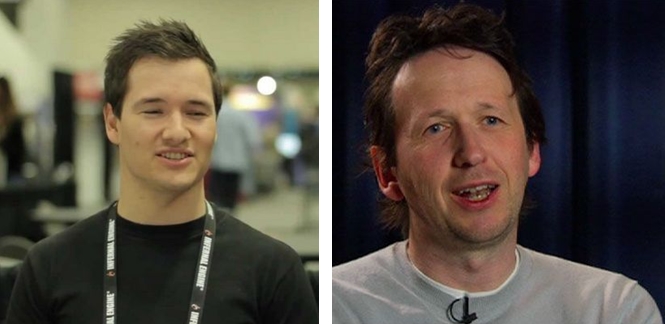
Scott Reismanis (Desura) and Rod Humble have expressed similar ambitions to grow Desura
Scott Reismanis (Desura) and Rod Humble have expressed similar ambitions to grow the platform

Continue reading “ToS Changes: The “Desura connection” and a personal perspective”

Liquid Mesh: looking from all sides

I’m prefacing this article by saying I’m not a fashion blogger, nor am I particularly fashion-oriented SL purchaser. So this piece isn’t an examination of “Liquid Mesh” clothing from a fashion / fit standpoint. Nor is it intended to be an in-depth technical examination of the technique and how it deforms, its pros and cons, creation issues, etc. It is simply intended to offer up general information on what the technique is, what the concerns are, and how people might best determine whether it is an option for them.

A Little Bit o’ History

When the capability to support mesh within SL was first being developed, that it could be used to create clothing etc., didn’t appear to factor into the Lab’s thinking, and so how such items might be made to fit avatar shapes properly wasn’t of major concern to them. However, during the Mesh Closed Beta, a method was proposed whereby wearables could be weighed to the avatar’s collision volumes, a technique which, if used, would allow them to deform somewhat to the avatar’s shape.

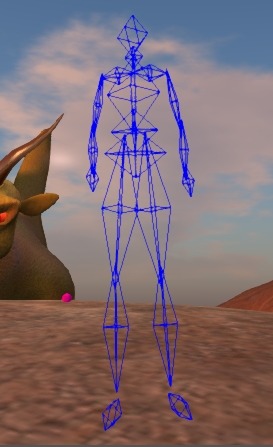
Avatar Collision volumes (image courtesy of Gaia Clary)
Avatar Collision volumes (Gaia Clary)

AshaSekayi Ra notes that at the time, Prep Linden requested clothing samples weighted using the technique be passed on to him so that the Lab could take a look at the idea. However, she didn’t hear anything further on the subject, despite supplying samples herself. Asha also thinks that Prep may have heard of the technique as a result of a conversation with RedPoly Inventor.

Collision volumes are essentially a simplified version of the avatar form primarily used to between your avatar and other avatars / objects. As Gaia Clary recently explained, they give a rough approximation of an avatar’s shape and they can be adjusted via the Edit Shape sliders. So, clothing items weighted to them can be adjusted somewhat in line with the avatar’s shape.

That said, there are limitations. For one thing, there are only 19 collision volumes; and this limits how and where they can be weighted by default, and how well clothing using them can deform with changes to the avatar’s shape. For example, there is no collision volume for breasts, so clothing using the technique won’t deform to breasts or breast size changes.

In June 2012, RedPoly Inventor again drew attention to the idea during a Content Creator’s meeting, releasing a video of the technique, as well as a demonstrator dress.

By his own admission, the solution was not perfect due to the lack of suitable weighting points in the collision volumes, as noted above. To overcome this, he suggested the development of addition “bones” (weighting points), which he called “cbones”. However, given there is generally little appetite within the Lab to tinker around with the avatar to any great extent, it was unlikely this latter idea was going to be taken-up, and after a while the use of collision volumes for mesh weighting / deformation seemed to quietly slip away.

Moving Forward

Since then we’ve had yet more delays with the development and release of the mesh deformer for a wide variety of reasons. That no official deformer has appeared has seen a number of content creators producing mesh wearables which use collision volumes for weightings / deformation in a manner similar to that demonstrated by RedPoly Inventor.  Perhaps the first on the scene was Redgrave, back in late 2012, with their Liquid Mesh range (the name which is now synonymous with the technique), with others such as Egoisme and Bax also producing their own items as well. As such, the debate around the approach has been ebbing and flowing for a while, and has recently seen renewed discussion.

The system isn’t perfect, as noted above; the need for alpha layers isn’t necessarily eliminated for example, and because collision volumes are only a rough approximation to the avatar shape, problems can still be encountered when making shape changes even where the two do align. But even with the potential shortfalls, the fact remains that in many cases, this method can result in clothing items which do fit an avatar’s shape more reasonably than by purely relying on a set of “standard sizes”, as Strawberry Singh demonstrated in a recent video which accompanied a blog post on the subject.


Continue reading “Liquid Mesh: looking from all sides”

The Rift and the hype

Ever since LL announced they were actively working on integrating Oculus Rift into Second Life, there has been a lot of upbeat blogging and speculation as to what it will do / mean for the platform. Reading some of the more enthusiastic posts on the subject, it’s hard not to escape the feeling that we’re apparently standing on the edge of a new age in virtual worlds interaction, and that Oculus Rift is going to bring new depth, new meaning (and new users) to Second Life.

Not all agree with the upbeat messages surrounding the headset and SL. Coinciding with the appearance of a photo showing the Lab’s CEO trying-out the headset, Mona Eberhardt and Will Burns each blogged on the Oculus Rift and some of the factors which could limit its wider use with SL. Both of them raise some valid points, and while I don’t agree with all their arguments, they do present food for thought.

Rod Humble tries out Oculus Rift in a photo released on July 18th
Rod Humble tries out Oculus Rift in a photo released on July 18th, 2013

Oculus Rift is a first-person experience, and this could immediately limit its appeal. The problem here is not so much interacting with the UI or in-world objects – the UI can be updated to handle such shortfalls; some TPVs already allow far greater access to the UI view and to in-world objects than the official viewer when using the first-person (aka Mouselook). Firestorm, for example, presents users with the toolbar buttons in Mouselook which can then be used to display and interact with various UI elements, and it also allows right-click/menu interactions with in-world objects. Ergo, it’s not exactly that hard to re-work things to make them more accessible when using something like Oculus Rift. Similarly, the  upcoming updated / new experience tools could also provide the means for better interactions with  in-world objects such as teleport portals.

Rather, the problem is that most people seem to intrinsically prefer the third-person view, with the greater freedom (e.g. camera movement, etc.) it presents for the vast majority of their in-world interactions and experiences. Coupled with the price tag for the headset (something I’ll return to in a moment), this could possibly count against the Oculus Rift in terms of general use.

Then, as Mona and Will point out, there is the problem that the headset isolates the wearer from the primary means they have of interacting with other people: the keyboard. While the conversations floater can easily be displayed (CTRL-H), it still leaves the problem of actually being able to see the keyboard in order to type accurately. This leaves those wanting to use Oculus Rift either needing to become very proficient touch-typists, or they’re going to have to settle for using voice.

SL is inherently keyboard-focused for the vast majority of users
SL is inherently keyboard-focused for the vast majority of users (image courtesy of Prad Prathivi)

Will Burns points to issues of headsets and open microphones as being a problem when it comes to voice. but I tend to disagree with him. For one thing, it’s not as if a headset / microphone combination can’t be worn with the Oculus Rift. More particularly, and from the in-world meetings held in voice I routinely attend, people actually do leave their microphones open, as the barking dogs, ringing ‘phones  and the clicks of lighters being flicked in the background tend to demonstrate. No, the problem is actually more basic than that.

It’s this: since its introduction in 2007, voice tends to have been avoided by what seems to be the vast majority of SL users. Many simply will not use it, period. So if voice is seen as the means for person/person interactions when using Oculus Rift, then it is quite likely to further marginalize take-up with the headset, no matter what the promise of Exciting New Things it might bring.

In his piece, Will also points to the limitation of the headset when trying to perform tasks such as building. Such critiques might appear to be unjustly harsh and leave people saying, “Well yes, but Oculus Rift isn’t designed to be used for everything!“. However, while such a reply is true, it actually underlines Will’s central point: that the headset is liable have niche applications in Second Life which could further limit its appeal among the wider user base.

Continue reading “The Rift and the hype”

Mesh deformer: moving ahead in InWorldz, but will it affect LL?

At the weekend, Tranquility Dexler, the CTO of InWorldz,  Tweeted about the work Qarl Fizz (Karl Stiefvater) has been undertaking in order to implement the deformer for InWorldz, and the fact that Qarl has a patch which should enable TPVs to integrate the”fast deformer” into their code.

Tranquility Dexler's Tweet from July 6th
Tranquility Dexler’s Tweet from July 6th

The link in the Tweet leads to a post on Qarl’s blog which gives further information on the project:

The team over at InWorldz recently asked if i could help them integrate the clothing deformer into their new mesh viewer. which is nice, I think, because people really want to fit their clothing. and so far they can’t.

But the InWorldz guys took it a step further – they asked if there was anything I could do to improve the code. and I said yes, it could be made faster. and they put-up a bit of money to make it happen.

Attached is a patch to the deformer code which (by my quick estimates) makes the deformation process 21 times faster. many thanks to David and McCabe for making this possible.

Qarl: working ti integrate the deformer code into the InWorldz viewer

This has led to some speculation as to what impact the patch might have on the Lab’s work with the deformer.

I would hazard a guess and say, “Initially, not a lot.”

I say this not to denigrate LL or to suggest that LL have no interest in implementing the deformer.

Rather, I say it simply because the Lab will likely proceed at their own pace as and when the resources are available to focus on the work they have – as a result of the many and varied robust discussions held on STORM-1716  – determined as needing to be carried out before they move the deformer to a released status.

This does, however, leave TPVs with a dilemma. Do they push ahead and adopt the code, and risk issues down the road when LL start to update the deformer themselves while opting to ignore Qarl’s latest work? Or do they play safe and wait to see what the Lab opts to do?

There is some speculation that were TPVs to incorporate the code into alpha / experimental versions of their viewers, it might tip the balance towards the Lab renewing work on the deformer (and / or adopting them code) sooner rather than later. However, there is a question mark over this.

While TPVs can produce “experimental” viewers utilising code which “breaks” the “shared experience”, it has always been intimated by the Lab that they can do so only as long as such viewers don’t enter into widespread use. While it isn’t easy to determine how LL would police this in practice (block a given viewer string? Issue a warning notice? Something else?), it might deter some TPVs with larger communities from making the code available except under very controlled conditions. If so, this might serve to dramatically reduce the visibility of a “working” deformer and possibly leave the Lab free to sail its own course.

Another option for TPVs – at least those who support OpenSim – is to integrate the code into their OpenSim versions. If nothing else, adoption of the code into OpenSim versions of various viewers might in turn see a more widespread use of mesh clothing on OpenSim, something entirely in keep with the initial goals of the project.

Posting on STORM-1716, Henri Beauchamp has already indicated he’ll be taking both routes: all three branches of his Cool VL viewer will incorporate the new code but only the experimental branch will use it when connected to SL; his legacy and stable branches of the viewer will only use the code when connected to OpenSim.

In the meantime – and again, absolutely no slight towards Linden Lab – kudos to the folk over at InWorldz for moving to adopt the deformer.

Related Links

My thanks to Tranquility Dexler for the Tweet, which alerted me to the work, and to Shug Maitland, for poking me to blog about it.