Bjorn and Widely Linden discuss Sansar

(courtesy of Linden Lab)

On Monday, July 31st, Sansar opened its door to the public Creator Beta, allowing anyone to sign-up for an account and give it a go. Unsurprisingly, people from Second Life have been among the first to take a look, so I opted to start my public coverage of Sansar with a getting started guide and then some suggestions on where to go and how to interact with things inside experiences.

One thing the Lab has always made clear about Sansar is that the July 31st opening was not the release of a polished, finished product. Sansar is going to take time to build-out, with features and capabilities being added on a rolling basis. Given this, what might be the Lab’s views and thoughts on Sansar’s development up to now and looking ahead?

Just ahead of the Creator Beta opening, Bjorn Linden (aka Bjorn Laurin, the Lab’s Vice President of Product) and Widely Linden (head of Product for Sansar), together with Pete Linden (aka Peter Gray, the Lab’s Director of Global Communications) and Xiola Linden (SL Community Team Manager), sat down with Sansar and Second Life users to discuss such things. The following is a synthesis of Bjorn’s and Widely’s comments in the two (of three) sessions I was able to attend.

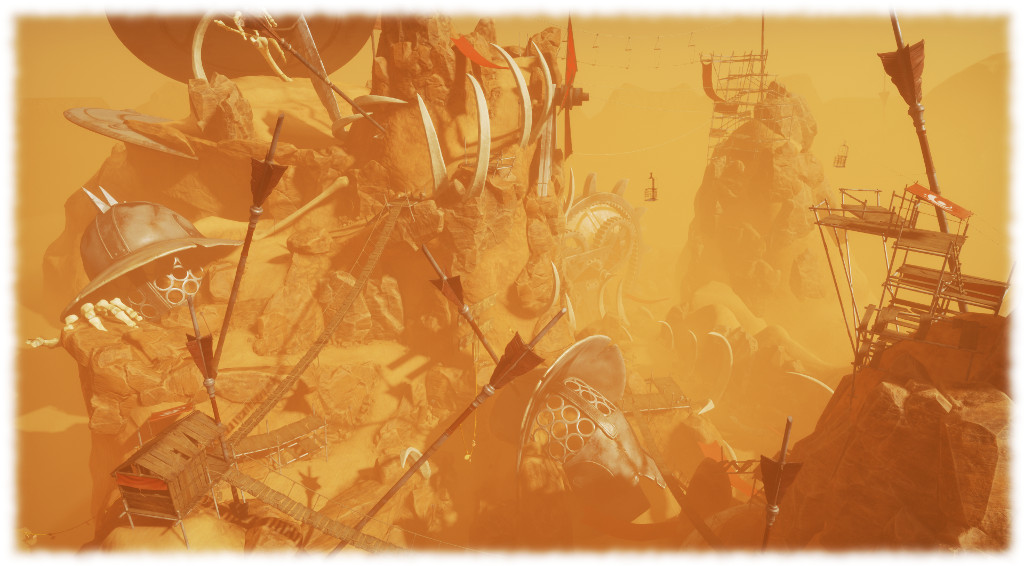
Sansar: Village of Breeze, Kayle Matzerath (WIP)

Why is the Public Beta Called “Creator Beta” Is it for Creators Only?

The beta is open to everyone, but because Sansar is still growing, the Lab’s focus remains on creators – those making both original content for upload and use in Sansar, and those creating experiences using that content (regardless of whether they made it themselves or purchased it through the Sansar Marketplace), to ensure they have the tools they need to build and design. At the same time, the Lab will continue to build Sansar out with other capabilities – avatar customisation, community tools and so on – which will be of benefit to all users, be they creatives or visitors.

Why Sansar Doesn’t Use Established Engines

Well, first of all Sansar is built on a whole new code-base. There is not a single line of code that is the same [as Second Life]. We’ve taken a lot of lessons from Second Life, a lot of the initial planners of Second Life were involved in Sansar; but we’ve rebuilt everything. That’s why its taken time. We decided not to use Unity or Unreal; we decided to build our own platform and create our own destiny.

One of the thing for that is about users. User creation in Unity and Unreal is extremely hard; we’ve seen that. For example, if Unity were to do a big upgrade, or Unreal, all the user creations [in Sansar] would break [and] they cannot fix that. That’s why we wanted to create our own destiny. We built out own platform … its taken a few years, but now I see its been worth it. We have our own platform, we control our own destiny; user creations will look the same after an update. That, for us, has been very important.  

  • Bjorn Linden

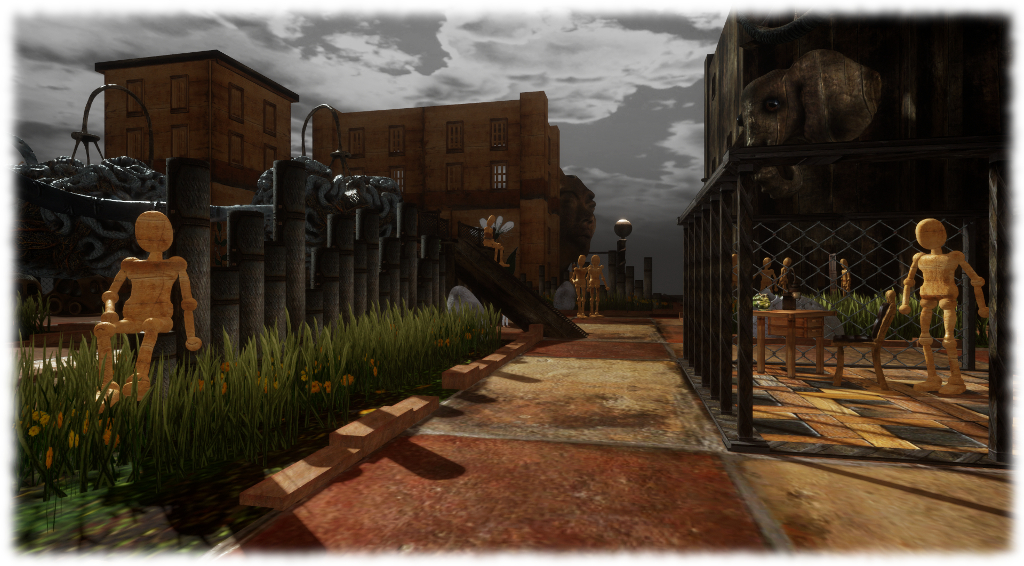
Sansar: Colossus Rising, Sansar Studios

Running Sansar in Desktop Mode

Right now, Sansar is very VR headset / controller biased. However, it does also run in a Desktop mode somewhat similar to Second Life (1st and 3rd person movement).  The Desktop mode is running a little behind VR mode, capabilities-wise (you cannot really manipulate things in the Sansar runtime environment via the Desktop, for example), so how does the Lab regard the Desktop mode?

When we build things, we have to start at the top and then go down. We start with the VR and all the features, then we’re going to bring those features, as many as we can, into non-VR as well, because we know VR is not going to take over the world tomorrow. But we can’t just make features and then add on VR; we have to make VR first and then bring it down fast. And we’re going to do it fast now, as we have a platform to build on. I want people to be able to pick up things on the Desktop and all that stuff, so it’s coming, we’re working on it very fast.

  • Bjorn Linden

So I wanted to speak to that. The HMD does allow a whole other level of immersion, and it’s really great and Sansar does it very, very well. But in the work it took us to be able to do it well, we made Desktop really good. Because VR is very technically demanding to do, and the desktop mode was very much the beneficiary of that effort. So what that means in more practical terms is the renderer is very efficient, is very fast. And then means you don’t have to have a crazy expensive gaming PC to run Sansar.

Is it going to run at 60 fps on a three or four year-old laptop or a five-year-old laptop? No. But it will run at least as fast as Second Life does on that same desktop, and look prettier doing it. So Desktop really benefited through our efforts in VR. And people are in desktop, and we know that; that’s why it’s really important, unlike some apps, you can with a single press of a button or an icon, just instantaneously switch back and forth between the modes … you just smoothly transition between desktop and VR modes.  And there are times you want to do one, there’s time you want to do the other. So HMDs, if anything,  helped to make Sansar even better for Desktop.

  • Widely Linden

Avatar Development

Currently, the Sansar avatars appear – to Second Life users – to be very basic: limited customisation, fairly generic looks, etc., no ability to add anything other than basic attachments at present (rings, hats, sunglasses, etc.). What is likely to happen with the avatars?

People are very interested in their avatars, and attachments [as enabled when the public beta launched] is a first step. I chose to let everyone do avatar attachments because I spoke to many of you, and you wanted that in Sansar. You can’t put it in the store yet, you can’t sell attachments, but this is just the first step … but it’s working, it’s solid, it’s not crashing.

I’ve been spending a lot of time working with partners, the big corporations that have given us access to technology that no other platforms are using how we are planning to use them. So, for example, if you sell a dress, I do want to have a one size fits all; when you put it on, it should fold and crease just like in real life. We have that working on our servers so we will roll that out all these things … we will reveal more of these things in the next couple of months, actually, how it will look and feel like. And you will get full access to everything … You will have access to all this stuff [like] you have access [to it] in Second Life. Just give it a bit time to make it right! Me and my team, we’re working very hard on it!

  • Bjorn Linden

Sansar: Connections, Cica Ghost

Second Life has really self-selected for an audience that is very interested in, and really enjoys playing with, avatars: customising avatars, dressing avatars, really focused on that. This is an area in which – and I’ll just be up-front – Sansar is not at parity with the degree of flexibility in regards to crafting an avatar that you currently have in Second Life. You can customise your avatar in Sansar, it looks pretty nice as you do it, but we still have a way to go there.

Now, that being said, we have some stuff coming on-line here over the next good chunk of time that will I think rapidly set the Sansar avatars apart, and allow  creators to achieve some effects that were impossible and are just so painfully difficult or costly to achieve in Second Life that it would be generally frowned upon. And so it’s going to be interesting times ahead in regards to avatars in Sansar.

And I think where they’ll start to really take off is as we work to make them more and more active and emotive; improving the face animations, getting those to be more expressive; getting hands to actually interact with objects and look like they’re actually touching the objects; not just in the right general vicinity, but actually have the fingers in the proper grip to hold objects. That stuff is on its way.

  • Widely Linden

The Sansar avatars are actually extremely, extremely advanced. I would actually go so far [as to say] they are among the most advanced avatars there is today, on any platform. Just the female avatar in Sansar has over 125 bones in the face, to make it work as we want it, to make it look realistic. That’s more than actually humans have.

I want you to build your own avatars. for now that technology we put in is so new, no-one else is using it, we’ll be able to use it for a long time, to make it look realistic, and that’s part of it.  When they talk normally it’s going to look better as well, it’s going to look better, in any language, it doesn’t matter. It may Chinese, could be English, could be Swedish, could be Portuguese, Spanish. It’s going to look good. We’ve spent a lot of time on that, and I’m super excited about these small things that make it immersive, that make us want to spend more time in there.  

But this is just the start. I talked about the 125 bones in the face [for comparison, the SL avatar has around 133 bones in total], that’s part of what is so complicated; because if you move one of those bones, it’s going to break everything. So we’re working on a way so we can lock those down, and there’s still going to be a way for you to be able to create like a werewolf, so it look normal when the werewolf talks, or holds, or whatever a werewolf does.  And we are working on that, it’s going to happen. Just give us some time. I want you to be able to have talking animals, talking trolls, whatever. It’s going to be there.

The next step for the avatars is you’re going to be able to make them bigger, smaller, fatter, thinner. All that stuff, it’s in the works and it’s very exciting.

  • Bjorn Linden

Continue reading “Bjorn and Widely Linden discuss Sansar”

Linden Lab announces Sansar Public Creator Beta

The Sansar Apollo Museum, by LOOT Interactive

On Monday, July 31st, Linden Lab announced the opening of the Public Creator Beta for Sansar, their new platform for creating and publishing social VR experiences. In announcing the launch, Linden Lab issued a press release which states in part:

SAN FRANCISCO – July 31, 2017SansarTM, the world’s leading social VR platform, today opened its creator beta to the public. Sansar empowers individuals, communities, schools, studios, corporations, brands and others to easily create, share, and ultimately sell immersive 3D social experiences for consumers to enjoy on HTC Vive, Oculus Rift, and Windows PCs. Developed by Linden Lab®, the company behind the groundbreaking virtual world Second Life®, Sansar is a brand new platform built from the ground up to enable everyone to become a creator.

At opening, Sansar’s Atlas directory already features hundreds of engaging virtual experiences, including multiplayer games, recreations of historic sites and landmarks, art installations, movie theaters, museums, narrative experiences, jungle temples, 360º video domes, sci-fi themed hangouts, and much more. Creators invited to the platform during a limited-access preview have published thousands of amazing public and private experiences, and with the opening of beta today, the world is now invited to join them.

Monkey Temple by Unit 9

The press release goes on to highlight some of the capabilities associated with Sansar, including:

  • Simplified Creation & Cross-Device Distribution: Intuitive drag-and-drop editing makes it easy to create a scene with assets imported from common 3D modelling tools or purchased from the Sansar Store.
  • Use of tools from the likes of Speech Graphics for accurate avatar lip-syncing and facial animations (via audio with or without a headset) and IKinema for accurate mirroring of user’s hand / arm movements when using HMD controllers
  • A relationship with TurboSquid to provide creators with access to hundreds of additional high-quality 3D models in the Store today, with thousands more being added in the coming months. This will be extended with integration with TurboSquid’s StemCell initiative to make it easy for TurboSquid’s community of 3D modellers to immediately upload and sell their creations in the Sansar Store, further augmenting the assets readily available to Sansar creators.
Sansar Dwarven City by David Hall

Sansar System Specification

Accompanying the press release were the recommended system specifications for running Sansar:

Sansar Pricing

Basic Sansar access is provided free to users, with subscription options available to those who need them.

Things to Note – Particularly from a Second Life Perspective

I’ll have more to say on using Sansar in separate upcoming articles. However, in the briefest of terms:

  • The Sansar Public Beta is not the “fully fledged” Sansar platform; rather it is another step in the platform’s development
  • This means that much of what is taken for granted in Second Life cannot at present be done in Sansar – do not expect to jump in and find loads of vehicles to drive / fly / sail or to start flying around yourself. These kinds of capabilities will come in time
  • The Sansar avatar is still being developed; therefore what you see on joining Sansar is not “all there is” to the avatar. Expect enhancements and greater customisation to come in time
  • Sansar does not offer “in-world” design / building capabilities in the same way as Second Life. It utilises a separate editing environment and a “published” run-time environment.
  • Do not expect to see tags over avatars heads – this can make the identification of other difficult, but has been done with a purpose (floating tags don’t work particularly well in VR without breaking immersion)
  • Sansar has both voice and text chat, the ability to IM people and to create Friends lists. Chat and IM work in a similar manner to chat and IMs in SL: open text chat and voice are restricted to the the current instance of the experience you are occupying; text IMs will go to friends wherever they are in Sansar relative to you.
  • Most moving between different experiences is achieved via the Atlas – Sansar’s equivalent of the Destination Guide. Teleporting is also possible, where provided
  • Adult content is currently not permitted in Sansar. This is because the platform currently lacks a maturity rating system of the kind we see in Second Life.


Sansar: thoughts around Kotaku’s hands-on

The Sansar Apollo Museum, unveiled LOOT Interactive’s The Art of VR event in New York on June 22nd, allows visitors to virtually explore true-to-scale models of the Saturn V rocket, Command and Service Module, and Lunar Excursion Module used to reach the Moon, then walk the entire mission from launch to re-entry via a Museum-length mission map; and teleport to a recreation of the Apollo 11 lunar landing site. Credit: LOOT Interactive / Linden Lab

While it doesn’t offer any revaluations of epic proportions about Sansar, and is headlined by the somewhat misleading Hands On With Sansar, the New Second Life, Cecilia D’Anastasio’s June 21st, 2017 piece for Kotaku, still makes for an interesting read, offering as it does further looks inside Sansar for those keen to get a look at environments there, and some food for thought.

Cecilia is a journalist I greatly admire, and who has excellently covered Second Life in the past (see A Perspective On Avatars and Identity and Motherboard Looks at Second Life). She got to spend time in Sansar, which appears to be currently on the road, visiting various events (Canada last month, now New York City) in which might be part of the Lab’s efforts in ramping-up public awareness of the platform as they roll towards an “open beta” phase with the platform.

Cecilia D’Anastasio: a hands on and thoughts about Sansar

Along the way, she visited several spaces within Sansar, and while treading the familiar ground of Sansar being the “WordPress of VR”, a “VR first” environment, etc., she also took time to point out the side of the platform which isn’t perhaps pushed quite so hard by the Lab: that it can be access and experienced by anyone using a PC system, regardless as to whether they have a VR headset.

True, the focus of development in Sansar thus far has leant towards the VR end of the scale because the Lab is convinced VR will be a major factor in people’s lives (and as readers know, I’m not so convinced of that argument), and the desktop side of things still needs work. However, that Sansar can be accessed via a PC sans headset, is something that perhaps should be underlined more, simply because sales of PC-based VR headsets really aren’t that stellar right now, and are likely to remain less-than-exciting for the next few years – something I’ll come back to in a moment.

Early in the piece, Cecilia drops a couple of comments which, while interesting, might require reading with care. For example, in one she references Sansar being subscription based. However, given the Lab hasn’t really been that forthcoming about the revenue model for Sansar, it’s impossible to determine what is meant by “subscription” in the article. Does it really mean anyone wishing to use Sansar will have to subscribe first, or is it a reference to that fact things like hosting space for Sansar experiences will have an associated fee?

But rather than nitpick, let’s come back to the “Sansar from a desktop” aspect of the piece. I found this particularly interesting because while the Lab has pointed to Sansar being “PC accessible” without a headset, many of those aware of it still see it only as a VR platform – and this could be a problem for Sansar, at least in the near-term.

Now, to be clear, and as I’ve tended to say in the past, there are vertical markets where VR – and thus, by extension, Sansar –  has exceptional merit and could gain significant traction in the near-term:

  • Gaming
  • Education – both for practical teaching, and for the ability to visit / recreate historical environments and bring them to a broader public. Hence the recreation of an Egyptian tomb created from LiDAR mapping, while the real tomb can only be accessed in the physical world with permission from Egypt’s Ministry of Antiquities,  and the just unveiled  Apollo Museum and the Harold Lloyd Stereoscopic Museum.
Another look at the Sansar Apollo museum, showing the complete “Eagle” Lunar Excursion Module (LEM) sitting on the Sea of Tranquillity (and with visitors!). Credit:  LOOT Interactive / Linden Lab
  • Architecture and design: allowing companies large and small work in VR to develop immersive models for clients, which can be toured, examined for issues or things like changes clients would like to see, all before any work is undertaken. Hence why (as I’ve previously pointed out), it was no accident that the first public demonstration for Project Sansar came during San Francisco’s month-long 2015 Architecture and the City Festival.
  • Simulation and Training: Sansar could again offer significant benefits to those requiring immersive and flexibility VR-based training and simulation without the need to heavily invest in dedicated work spaces / environments.
  • Healthcare: VR is already demonstrating its value in a wide variety of applications, including helping with post traumatic stress disorder, pain relief for burns victims, cancer care, and more.

BUT, the fact is that many of these sectors work just as effectively sans a VR headset. OK, so the depth of immersion would be lost, but that doesn’t mean they cannot be practically used. Thus, by pushing the VR-centric aspect of the platform so aggressively, the Lab could risk turning those institutions, companies, etc., that might be interested in exploring Sansar away from the platform, simply because they are unwilling to make the investment in VR systems, but are waiting to see how the market growth and what products appear.

No, it’s not a home in Second Life, it’s a home in Sansar. Credit: Linden Lab, via Kotaku

Within the mass market of home users, this focus on VR hardware could impact Sansar’s reach even further. Simply put, the “humble” PC with its “barriers” (as Philip Rosedale from High Fidelity would call them) of the mouse and keyboard, still has a far, far greater reach into people’s homes than VR is likely to achieve for several years at least. So again, putting the heavy emphasis on Sansar “being about the VR” could so easily turn people away from trying it, simply because they are also unwilling to put money into headsets and associated hardware, and won’t be until they see prices come down to the level of “affordability”.

Of course, the Lab state they are in Sansar for the long haul – pointing towards Second Life’s longevity; and as noted above, there are market sectors where VR perhaps is starting to gain traction and which Sansar could comfortably leverage. Even so and as Cecilia suggests, a more open approach to how Sasnar can be used with or without VR headsets and hardware, could broaden the new platform’s appeal even as VR goes through its own growing pains.

Lab engages on Reddit about Sansar

Sansar. Credit: Linden Lab

As Linden Lab gradually continue to ramp towards  more open access to Sansar, Peter Grey, the company’s Director of Global Communications has taken to Reddit and the Sansar sub-Reddit to address questions from those interested in Sansar and who may or may not be Second Life users.

While Peter’s responses to questions don’t reveal much about specific technical aspects of Sansar or reveal potential dates for the upcoming “creator beta” (again, the Lab has always indicated it using capability and functionality as the driver for opening the doors more widely, rather than a set-in-stone (or arbitrary) date marked on a calendar), his response to question thus far do make for interesting reading.

The thread starts with a simple enough question – has anyone been accepted into the Creator Preview yet? For those following Sansar, the response is fairly obvious (yes, several thousand now), and a re-iteration that more people will be invited over them coming weeks / months, together with an invitation for people to apply for access. Within the thread there is a series of questions which, although familiar with Sansar, have their answers summaries below for completeness:

  • There is no specific date on which the more open “creator beta” will be launched
  • Pricing for Sansar has yet to be finalised
  • Sansar is a platform for VR experiences that are also accessible via PCs (i.e. an Oculus Rift or HTC Vive recommended and preferred, but not necessarily 100% required)
  • What appear to be “delays” in opening the “creator beta” is because the Lab is approaching Sansar carefully as they effectively build it from the ground up.
Sansar. Credit: Linden Lab

However, perhaps the most interesting responses follow two questions which have been raised in numerous forums  besides this sub-Reddit:

  • How does the Lab think SL regulars are going to like Sansar?
  • Is there a policy on adult content in Sansar?

In reply to the first question, Peter states:

To be totally honest, I think there will initially be a mixed reaction from SL regulars. Some will love Sansar and what’s possible with this platform from the start, while others will be disappointed that it doesn’t (yet, at least) meet their expectations or hopes of what it should be.

I’ve seen both reactions from SL creators who have joined preview. Some are excited about what they can create and do now, and what they’ll be able to do in the future. Others – particularly if they’re expecting Sansar to be “SL2” – can be disappointed about things not working the way they’re used to in SL, capabilities that are important to them in SL but not (yet, at least) available in Sansar, etc.

We try to be as clear as we can in repeating that Sansar isn’t intended to replace SL nor to be a sequel version of it. I’d encourage SL regulars to check out Sansar from that perspective and to bear in mind that even when we open creator beta, there will still be many features and further functionality yet to come.

All that said, creators in preview have already made some awesome social VR experiences with Sansar, and some of my personal favourites have been made by SL users, so I’m eager to see the swell of creativity when we open creator beta and even more creators join.

That reaction has been mixed among SL users accessing Sansar isn’t surprising – and it is likely to be something that will continue through the “creator beta”, simply because the view that Sansar is supposed to be some kind of “SL 2.0” does persist quite strongly within the SL user base, despite repeated comments from the Lab to the contrary.

There are a number of areas where Sansar, in the first instance, will take getting used to by those more at home with the full spectrum of SL capabilities. Some of these will likely be a case of having to accept – such as the editing environment which will remain distinct and separate to the run-time environment where most users will experience Sansar environments and interact, even if “native” creation tools are added to it at some point. Others – such as the avatar and avatar customisation capabilities – may initially appear limited, but will hopefully improve over time.

Sansar. Credit: Linden Lab

In response to the adult content question, Peter stated:

Adult content won’t be allowed at the opening of Sansar’s creator beta this summer. Ultimately, we want Sansar to be an open platform that enables creators to make all kinds of experiences, but early on we also want to be careful that a single genre of content doesn’t come to define the platform and potentially limit its appeal to other creators.

While it may seem like censorship, limiting adult themed activities from Sansar does make some sense given the way that when Second Life did tend to hit the headlines from 2006 onwards, it was often in terms of the sexual content rather than the wider aspects of the platform. So  wanting to limit the risk Sansar will be similarly tarred is understandable. Of course, this still raises the question over how people react when “adult” content / activities are eventually permitted within the platform – but at least the Lab won’t be forced into fighting some kind of “rear-guard” action against any salacious reporting /  reporting bias towards focused only on adult activities from the minute the platform débuts to a wider public.

Sansar. Credit: Linden Lab

Taken as a whole, this Sansar sub-Reddit is worth reading in full, both for Peter’s comments and the broader questions and feedback from other users. Certainly, seeing peter engaging through it is positive, and it’ll be interesting to see if / how feedback like this grows over the coming months, and whether it extends to other forums.

Sansar: new video from Linden Lab

Sansar from Linden Lab

On March 7th, 2017, Linden Lab issued the most insightful video thus far on Sansar, their next generation virtual environment platform. While it may not plumb quite the depths some might like to see, it offers far more in the way of glimpses and outright looks of what Sansar will look like and gives a teasing look at some of the capabilities currently present within it.

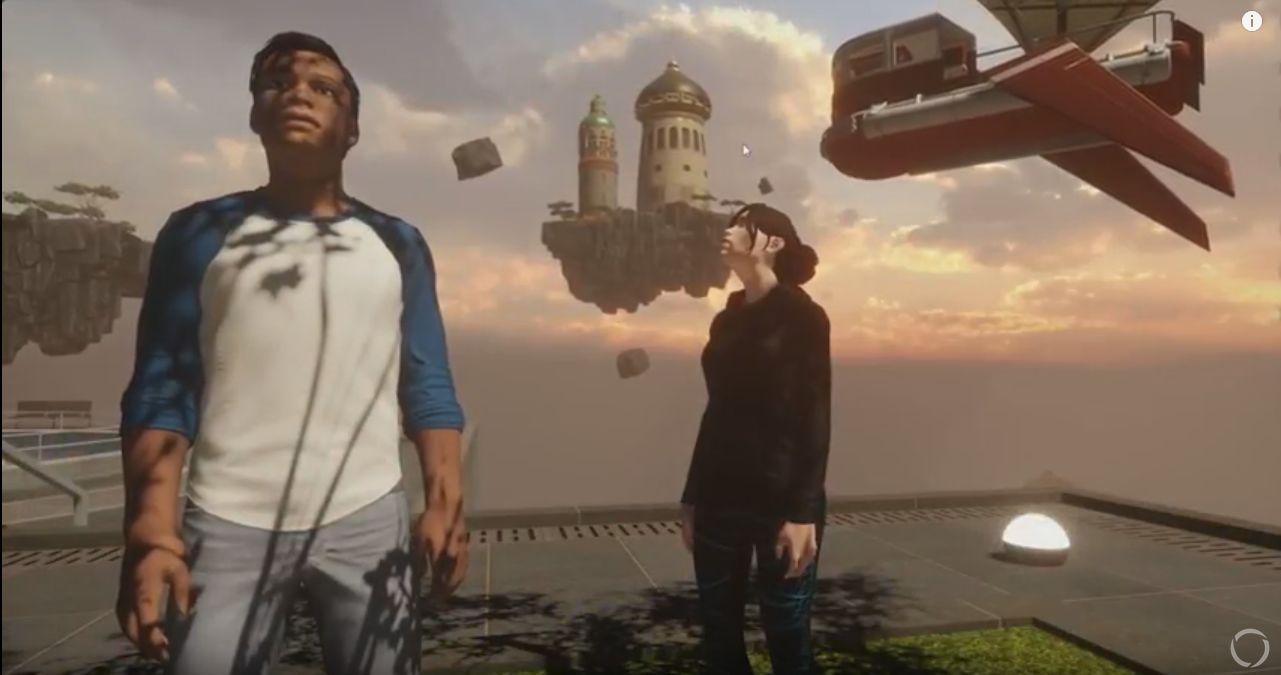
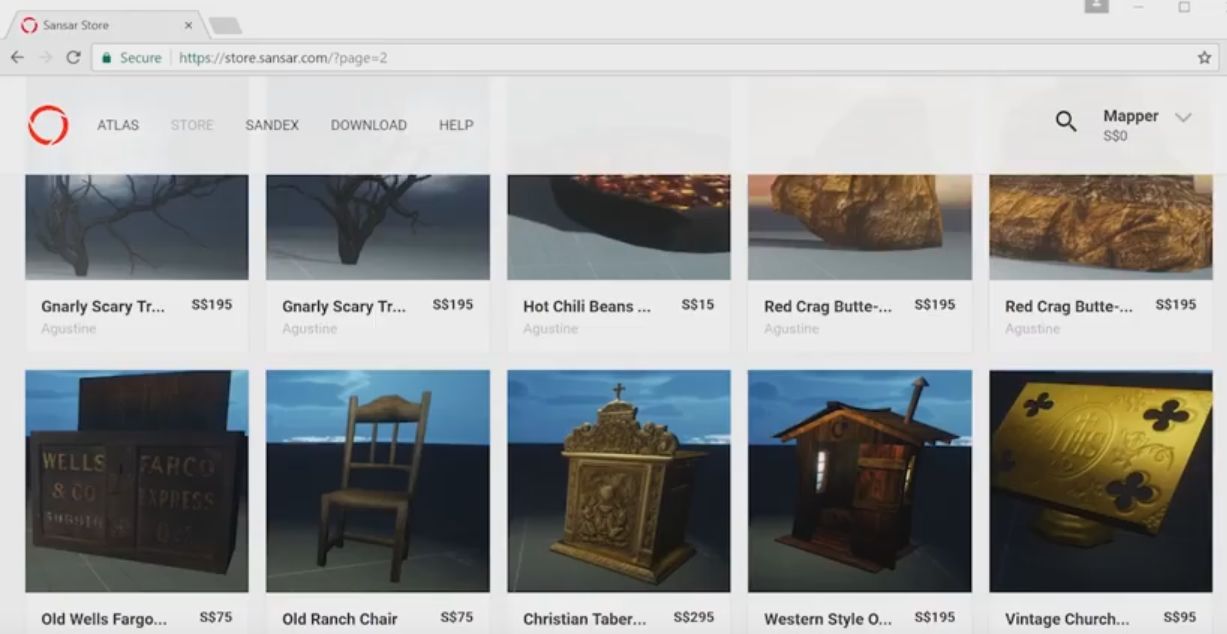
At just four seconds under the 2 minute mark, the video offers a narrative tour of the new platform, showing the runtime and editing environments, detailed shots of Sansar avatars, a look at the Sansar Marketplace – or Store – and more. It also touches on some of the market verticals and environments the Lab is hoping to attract to the platform, albeit with a clear slant towards education.

Sansar avatars. Credit: Linden Lab

Starting with the words, “Something is coming. Something revolutionary…”, over a slow, letterbox-style reveal of the platform, the video is polished, smooth and tantalising in what is shown. From scenes within Sansar we’ve witnessed before – the Golden Gate bridge, the fantasy realm with its enigmatic red door it flows to environments entirely new to the wider public eye. As such, it is an excellent piece of teaser advertising, clearly geared towards those the Lab hopes to being to Sansar’s worlds.

There is the inevitable pointer towards VR headsets – which is to be expected, given Sansar is primarily (although not exclusively) a platform for the fully immersed, consumer VR age, but it the video, by its nature, helps to demonstrate that Sansar can be used by those without head mounted displays (HMDs) as well.

A glimpse of the Sansar marketplace – or store. Credit: Linden Lab

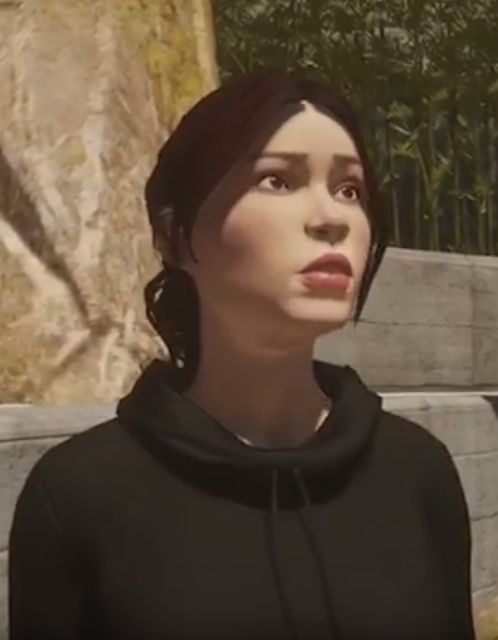
For me, some of the points of interest in the video are the snippets of the UI we get to see, particularly when in the edit environment, and the first close-up looks of Sansar avatars offered to the world at large. While the latter may well still be in development, they are already impressive, and potentially a match in looks for Second Life avatars.

A closer look at a Sansar avatar. Credit: Linden Lab

Admittedly, the avatars shown in the video are all restricted to humans, so we don’t get to see the fully range of potentials, but again given that Sansar is being pushed towards the idea of “social VR”, where people are interacting with one another as humans, the emphasis shouldn’t be seen as negative. There’s also the fact that it’s unclear at the moment how far down the road the avatar system is when it comes to supporting non-human avatar types.

Voice syncing is also very cleverly indicated in the video, when the female voice used to narrate the piece is smoothly integrated with a Sansar avatar right at the end of the video, suggesting she has been our guide through this inside look.

A further point of interest for me is the video closes by adding a strapline to Sansar: Created Reality.

Back in September 2015, Ciaran Laval and I ruminated on a domain name filing made by the Lab around the time that the company was filing papers for “Project Sansar” and “Sansar” (see “Created Reality”- possible contender for Project Sansar’s name?). At the time we speculated whether “Created Reality” might be a possible alternative name for the Lab’s platform (still  at that time known only by the “internal” name of “Project Sansar”). Obviously, that didn’t prove to be the case – but it is still interesting to see the term, if not the domain, finding use in reference to the platform

And for those wondering when they’ll be able to step into Sansar, the video offers “Spring 2017”. But enough of the waffling. Here’s the video.

Sansar via Road to VR: opening “first half” of 2017, monetisation and sundry thoughts

The new Sansar logo (courtesy of Linden Lab)
Sansar. Image courtesy of Linden Lab

In ‘Sansar’ Will Open to All in First Half of 2017 with a New Approach to Virtual Worlds (January 15th, 2017), Ben Lang of Road to VR becomes the latest tech journalist to sit down with Linden Lab to try out and discuss Sansar.  While he covers a lot of what has come to the for in other, similar recent articles, he also provides some further confirmatory / interesting tidbits, some of which allow for a little speculative thinking.

The biggest piece of information is perhaps right up there in the title: Sansar will open in the first half of 2017 (my emphasis). This actually comes as no surprise, as Sansar is a new project, and time frames for new projects of any description tend to slip a little as the work progress. Further, and as I noted in discussing Dean Takahashi’s recent look at Sansar, a degree of slippage appeared to be on the cards when he referred to Sansar opening to the public in “early” 2017, rather than the “Q1 2017” the Lab had previously indicated might be the case.

Ben Lang, Road to VR

At the top of the article, Lang touches on the aspect of Sansar being focused on “creators” rather than “consumers”.  Again, as I’ve previously mentioned, defining “creator” here is perhaps important.

By and large, “creator” in SL tends  to be used in reference to those who design and make the goods we use to dress our avatars and furnish our land. Outside of lip service, it’s perhaps not a term closely linked with those who obtain land in SL and create environments using the goods they have purchased, rather than building and scripting everything themselves. With Sansar, however, it is pretty clear “creator” is intended to encompass both, and thus perhaps encompasses a broader cross-section of users than might be seen as the case with Second Life.

The focus on “creators” shouldn’t be taken to mean Sansar is “only” for “creatives”. Spaces hosted on the platform will obviously require an audience, be it the public at large or drawn from specific, more niche audiences. It simply means that from a technical standpoint (and most likely outside of the UI), Sansar’s focus is tipped towards those wishing to build environments within it. As an aside to this whole “creator” thing, it’s also worthwhile noting that where previous articles had pointed to around 600 creators being involved in Sansar’s Creator Preview, Lang mentions the number might be around 1,000.

Further into the article, Lang references moving between Sansar spaces, specifically noting “hopping” from one to another via web pages. This is unlikely to be music to the ears of many in SL; however, it’s important to note that this approach is not necessarily the only means to move between experiences.

In the past, Ebbe Altberg has mentioned the potential for “portals” between environments which might be see as “linked” (although it is by no means certain this idea is still be pursued). More particularly, in June 2016, when talking to Mark Piszczor of Occipital about Sansar, he referenced the idea of “teleporting” between Sansar spaces, and more recently we’ve had a glimpse of a Destination Guide style capability in Sansar (apparently called “Atlas”) for moving between different spaces.  So the web page approach might simply be one of several means to get from space to space in Sanar. Time will tell on that.

Inside Sansar. Credit: Linden Lab, via Road to VR

When referencing creators being able to monetise their creations, Lang touches on the previously noted ideas of selling virtual goods and creations (up to and including entire experiences) through the Sansar marketplace, and the potential for creators to charge people an entry fee to their experience if they wish. However, beyond this, Lang indicates some of the broader brainstorming going on at the Lab – such as the ability for consumers to pay money to a virtual object which would hold the money and pay it out to its owner at regular intervals.

As Lang points out, this opens the doors to a whole range of potential items – pay-to-play pool tables, vending machines (think broader than the gacha machines we see in SL), rides, etc. So –  and slipping into the realm of pure speculation for a moment – might this allow experiences creators to “rent out” their experiences – say an events venue – to others, and receive a fee each time it is used / instanced anywhere in Sansar, rather than simply selling them for a one-off fee on each copy purchased? The could be an intriguing route to take, if at all possible.

Might Sansar offer the means for experience creators to "rent out" their spaces as a means to monetise them?
Might Sansar offer the means for experience creators to “rent out” their spaces as a means to monetise them? Credit: The O2 Arena

But to come back to Lang’s Road to VR article. He notes that in terms of capabilities, Sansar’s graphics are “actually quite good”, although the physics are lacking. The former is perhaps something of a step down from verdicts passed by other journos, while the latter is promised to be improved in a forthcoming update. He also underlines the “style agnostic” approach to Sansar, which again is a potential differentiator to SL in that creators of experiences in Sansar are likely to have far greater freedom in how they visualise the spaces then build than can be achieved in Second Life.

Overall, ‘Sansar’ Will Open to All in First Half of 2017 with a New Approach to Virtual Worlds, makes for a further interesting read on Sansar, offering some apparent insights that help build the picture of what the world at large might expect once allowed in the platform. Definitely worth a read – as are the comments which follow it.