VWBPE 2015: Ebbe Altberg – LL’s Next Generation platform

On Wednesday, March 18th, Ebbe Altberg gave the keynote presentation at the 8th annual Virtual Worlds Best Practice in Education (VWBPE) conference, which runs from March 18th through 21st inclusive, in both Second Life and OpenSimulator.
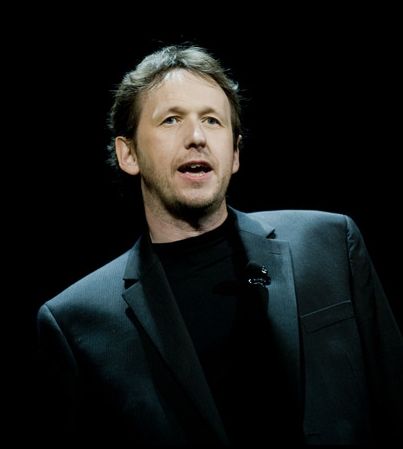
Ebbe Altberg: opening keynote at the 2015 Virtual worlds Best Practice in Education conference, March 18th

His key address lasted a little over an hour, in which he outlined the Lab’s approach to education and non-profits, provided some insight into what Lab’s future plans, and discussed further information on the Next Generation platform. Following this, he entered into a Q&A session, which ran beyond the main session time, switching from voice to text chat in the process.

The following is a transcript of his core comments on the Lab’s next generation platform. These commence at the 31:20 mark into the official video of the event, although obviously, mention is made of both in reference to education earlier on in his presentation, as Ebbe discusses education, issues of accessibility, etc. I’ve included audio excerpts here as well, for further ease of listening to his comments whilst reading. Time stamps to both the audio tracks and the video are supplied.

The Summary

Click the links below to go the relevant section.

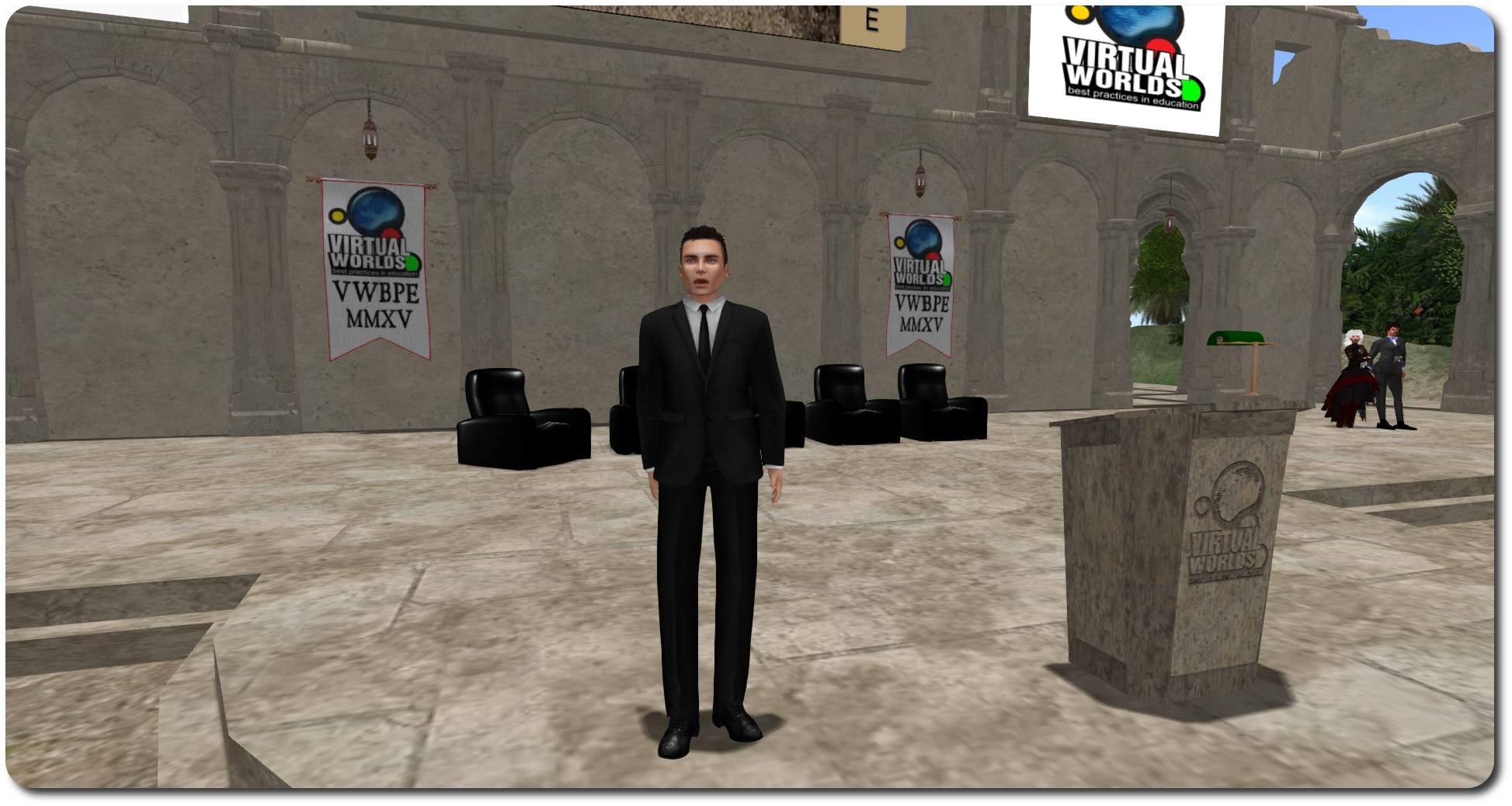
Ebbe Linden as he appeared in-world at the VWBPE 2015 conference

On the Name

[00:00 / 31:20] So, the future platform for virtual experiences. We’ve said that the next generation platform, we still don’t have a name for this thing; we have a code name internally, but we don’t want to leak that out or use that, because that could just be confusing and distracting, and it’s probably going to change soon anyway. So we just refer to it as “the next generation platform”.

[00:21 / 31:42] We do not refer to it as “SL 2.0”, because that might imply a little too much linearity, and we don’t want to necessarily constrain ourselves by the past; but we also want to obviously take advantage of, and leverage, our learnings from the past.

Progress to Date

[00:39 / 31:38] But the progress is going every well. I would say we’re about 8-9 months in on working on this; I would say the last six months have been absolute, full-on with a big crew. We’re talking close to 40 people or more; probably 30+ just engineers, and then obviously a bunch of product managers and designers working on this product.

New User Discovery and Experience

[01:12 / 33:33] And there’s a number of areas where we think about it quite differently from Second Life, and we did spend quite a lot of time thinking about why did Second Life hit the ceiling, if you will. You know, many years ago it peaked at 1.1 million monthly users and these days it’s around 900,000, so it’s not a huge difference from the highs and where we are today,

[01:38 / 32:59] But why didn’t it go to five million, ten million, 100 million?  And what can we do to  solve some of the things we thought caused it to sort-of max out there?

The Lab is hoping their next generation platform will bridge the gap between niche and mass adoption. This may prove easier said than done

[01:52 / 33:11] One area where we want to think quite differently is discovery; how do I discover an experience? Today you pretty much have to be inside Second Life to discover an experience, and we want to make it a lot easier for people to be able to discover an experience from the outside. So that you can create an experience, and [people can] much more easily find your experience and enter your experience without having to necessarily at that point being aware of the notion of this platform or what other types of things are available to them. They can discover those as they go along. Make it easier for you to bring your audience directly into your experiences.

Platform Accessibility

[02:36 / 33:55] Accessibility. Today, when you leave your PC, you pretty much leave Second Life behind, [so] what can we do to make sure it’s available on more platforms? It’s obviously getting more complicated now with all these VR platforms, so what used to be PC, windows and Mac, which we support today; and then mobile, which you can get access to today if you use a third-party service like SL Go or some other clients that support mobile.

[03:10 / 34:29] But we want to think about mobile as something we can support form the beginning; but again, the number of platforms across mobile, PCs and VR … [there’s] more and more of them. so it’s tough to keep up.  So we are building a next generation platform from the ground up to make possible for us to take advantage of all these different platforms.

Scalability and Creativity

[03:37 / 34:57] Scalability. This is a really important one; an event like this highlights it.  There’s a tremendous amount of effort that goes into putting on  a meeting like this with just a couple of hundred people in-world. We have to put together four corners and you have to do a lot of work, and it’s still creaking at the seams as we speak, to put something like this on.

[04:06 / 35:25] We want [with the] next generation platform to make the size of an event like this to be a trivial exercise, and then figure out how, with various techniques, to make it possible to do events like this for tens of thousands of people.

[04:26 / 35:46] That’s one way to think of scalability: how do you get more people in a region, how do you get more people to be able to participate in an event at the same time. but [there’s] also the scalability for creators. How do you make it possible for creators to not only be able to reach a larger audience, but also make more money, too.

[04:44 / 36:14] Take the classroom that Texas A&M put together for teaching kids chemistry. The developers of that experience of teaching chemistry, they probably did as a one-off, for some fee, job for Texas A&M to create that classroom. When the classroom is used by students at Texas A&M, you know, 20 students, whatever, then that experience is fully in use.

[05:22 / 36:41] What if that developer could have an unlimited number of copies of that experience to rent out or sell, and every institution could use that virtual classroom all at the same time? That makes for a much more appealing prospect for a creator of an experience, and gives them a greater opportunity to monetise their experience. And then we’ll get more high-quality content creators introduced into  the economy, and then everything sort-of heads upwards. So that’s something we think about a lot.

Quality and Ease of Use: Physics, Avatar Design, Shopping

[05:56 / 37:16] We also think about quality. Quality is a range of things: ease of use, quality of physics, lighting, basic performance of how smooth are things, how easy is it to do things, how natural an avatar can we make.

[06:21 / 37:41] The skeleton system in the new avatars we’re working on are way, way, way, more complex than what we have in Second Life.

[06:29 / 37:48] How can we make it easier for people to shop and get dressed and do these types of activities with much higher visual fidelity at the same time. So we think a lot about that.

Revenue Generation for the Lab

[06:46 / 38:05] And then monetisation – the way  we [Linden Lab] monetise. I’d say our business model is a little be strange in Second Life today. We charge you a lot for land, and then we charge you almost nothing for all of the transactions that happen in-world. So, I’ve said this before, but generally we think about how do we lower our property taxes by a lot and at the same time, we’ll have to raise sales taxes to make some of the difference.

[07:15 / 38:35] And then also how can we build a platform that [is] technically less demanding, so that it costs us less to operate all of this content that we’re running all of the time, so that we can have a lower barrier to entry, and make it possible for people to come it and create some really interesting things at very low cost. And so that’s a big focus for us. How can we make less money per user, almost, but have a lot more users, is kind-of the core of the puzzle we’re trying to solve for.

Continue reading “VWBPE 2015: Ebbe Altberg – LL’s Next Generation platform”
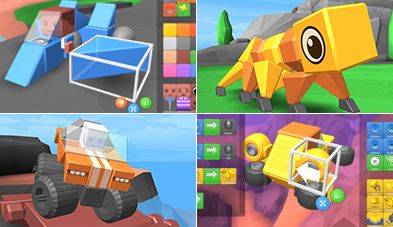
Ebbe Altberg talks Blocksworld, SL and the “next gen” platform

Dean Takahashi has a new article up at VentureBeat’s GamesBeat column, featuring a conversation with CEO Ebbe Altberg.

I admit to finding the title of the article, Linden Lab explores VR for its next-generation virtual world (interview), a little bit of a misnomer, given the article actually covers more ground than just the Lab’s new platform and VR. In fact, it’s fair to say that much of the focus of the piece is on Blocksworld, and not the new VW platform – which doesn’t make the piece any less interesting a read.

Ebbe Altberg discusses the Lab's next gen platform, Blocksworld and SL with VentureBeat
Ebbe Altberg discusses the Lab’s next gen platform, Blocksworld and SL with VentureBeat

The article starts out by noting the company’s longevity and the fact that it has been in something of a transitional state (as we all know), divesting itself of almost all its existing products save Blocksworld and SL, while at the same time announcing it is heading down the road of building a new virtual world platform.

Takahashi suggests the reason for the Lab divesting itself of products is down to some of the products failing to have the right mix of talent, traction and resources to make their mark.

This is perhaps debatable; while Creatorverse and dio were perhaps lame ducks in terms of appeal, it has to be pointed out that both Versu and Patterns had potential – the former has since gone on to stand on its own two feet, and the latter already had a reasonable user-base even whilst still in a pre-release status (and its termination drew no small amount of upset from Patterns user on Steam).

In fairness to Ebbe Altberg, he does acknowledge the fact that some of the Lab’s nascent  products didn’t really get a chance to grown their own legs, and that some of them might well have worked out for the good of the company. However, hard choices were required, the Lab really being too small to handle everything at once (and we know what happens when it grows beyond its means: remember, the June 2010 layoffs came after a sustained 18 months of recruiting that saw staffing numbers increase by 50% for no demonstrable increase in revenue).

Turning to the meat of the article, it has to be said the the recent sale of Desura had led to some questions over Blocksworld’s future. However, Altberg’s replies to Takahashi about that product should put paid to speculation:

We’re also very excited about Blocksworld. I don’t know if you’ve had a chance to check that out before, but it’s a small up-and-comer. It’s one of the portfolio of non-Second Life products that we decided to stick with. We liked the user experience, the ease of creation, and the audience it targets: a much younger demographic than Second Life. Also, right now, it’s iPad only. It gets us into a lot of experience dealing with a younger audience. … You need to think about ease of use and simplicity but still enable them to create really powerful things, as well as working with the new medium of mobile. We’ve had good progress with this product. It’s still early, but we have good traction. The kids love it.
Block-3
Linden Lab are said to be “very pleased” with Blocksworld’s performance

In addition, and further into the interview, Altberg indicates that the game has around 400,000 monthly users. How this translates to revenue flow beyond the actual purchase of the game is hard to judge. While additional building sets and expansion packs are available as in-game “purchases”, these are paid for through “coins” which users can earn, rather than having to necessarily buy. Even so, buying coins is the easier option, particularly where the expansion packs are concerned (see the video below), so there’s a reasonable chance that Blocksworld is proving a “nice little earner” for the Lab, even if it is nowhere on the scale of SL.

Beyond this, it would seem clear that the Lab have further plans to enhance Blocksworld, including the development of an in-game user-to-user economy, which will allow the sale of creations and builds between users, somewhat a-la SL. Also, Altberg’s statement that, “right now it’s iPad only”, suggests that an Android version of the game is still under consideration.

One of the blocksworld expansion packs

Continue reading “Ebbe Altberg talks Blocksworld, SL and the “next gen” platform”

Ebbe Altberg on DW: words and thoughts on the next gen platform

Ebbe Altberg discusses the Lab's next generation VW platform (among other things) with Designing Worlds
Ebbe Altberg discusses the Lab’s next generation VW platform (among other things) with Designing Worlds

On Monday October 6th, Designing Worlds, hosted by Saffia Widdershins and Elrik Merlin, broadcast a special celebratory edition, marking the show’s 250th edition, and the show featured a very special guest: Linden Lab’s CEO, Ebbe Altberg.

The interview covered a number of topics, and ou can watch the show via the links at the end of this article, or read the transcript. One of the items discussed was, inevitably, the Lab’s next generation virtual world platform.

The following is intended to provide a more direct look at some of what was said about the new platform, and to offer some speculation  / thoughts on my part. Audio clips are provided, but please note they do not necessarily include everything said about the new platform; my aim in including them is to present what I feel is the core comments made about it, and offer some thoughts of my own. Should you wish to hear the comments in the context of the interview, time stamps are included with each audio extract for the point at which they occur in the original video.

What’s in a Name?

One of the points of interest / speculation in the new platform has been on the subject of its name. The Lab have simply referred to it as their “next generation platform”, and users have variously referred to it as “SL 2.0”, “The New Thing” (or TNT) or “SL: The Next Generation”, and so on. Ebbe explained why there isn’t a more formal name for the new platform at present.

[1:10:10]

The second point bears thinking about. Consider the term “SL 2.0”; while innocuous-sounding, its use could encourage us to consider the new platform purely in terms of how we see SL. For example, using the “SL 2.0” label might cause us to think of land in the new platform as being the same as in SL – defined region types providing specific capabilities – when there is no indication that this will in fact be the case. Thus preconceptions are established which can have unwanted repercussions down the road. So while it might be handy to have a label, keeping things to a very generic “next generation platform” or “new platform” offers the easiest way of avoiding this from the Lab’s perspective.

On the Question of Open-source

Much has been made of the initial decision to make the new platform closed-source, with some commenting on the decision going so far as to describe it as a “mistake”. However, Ebbe points-out during the programmed that “closed-source” doesn’t necessarily mean that there can be no involvement on the part of TPV developers, nor is the closed-source nature of the new platform set in stone.

[0:54:08 and 0:56:50]

Will making the new platform's client extensible, rather than open-source, prove the best route? The Lab is open either way
Will making the new platform’s client extensible, rather than open-source, prove the best route? The Lab is open either way

Given that the new platform is intended to operate across different hardware environments and operating systems, there would appear to be a certain logic to the approach the Lab is taking in trying to make the client end extensible, rather than open-source right off the bat which might offer a way of achieving greater uniformity in how additional features are presented across these multiple devices.

Of course, a lot of the success of such an approach depends on the gateway the Lab put in place by which additional plug-ins (or whatever) are vetted and “allowed” where the client is concerned, their improved track-record with TPV and open-source developer contributions for SL notwithstanding.

Whether it might also mean that users get that Holy Grail long desired in SL – a client which is fully customisable by the user in terms of which features they “download” and use, or plug-in to their experience, remains to be seen. However, to lay eyes, it would appear that this approach might make it easier to achieve.

Compatibility and Portability

[0:57:39-0:59:03, 1:00:05-1:00:41, and 1:01:01-1:01:30]

When it comes to people’s inventory there are a couple of potential, but valid points that need to be made, both of which I hinted at in response to comments about the new platform on this blog back in June 2014.

The first is that while we may well have tens of thousands of items sitting in inventory representing a lot of expenditure, there’s a good chance that a fair percentage of those items are “dead weight”, having been long since superseded, replaced, gone out of fashion, etc. As such, any value in these items has already been written-off given we’ll likely never use them again. So perhaps we shouldn’t be so focused on “losing” the investment they seem to represent as might be the case.

The second point is the not-so-small questions on whether we actually have the right to transfer items in our inventory elsewhere, be it another grid or the Lab’s new platform. The IP for the items in our inventories resides with the creators of those items – and if they do not wish their creations to be ported to the new platform, we should be prepared to respect that wish. Hopefully, this is also something the Lab will be considering as well.

Continue reading “Ebbe Altberg on DW: words and thoughts on the next gen platform”

Lab slips out a formal announcement of their next generation platform

LL logoWe’re all aware that the Lab is developing a “next generation” virtual worlds platform. It’s been the subject of much debate, speculation, supposition and more.

The confirmation that the Lab were working on a new platform came during a TPV Developer meeting on June 21st, when it was mentioned almost as an aside by the Lab’s CEO, Ebbe Altberg. In the period of the SL11B celebrations, mention of it also appeared in a number of on-line media publications.

However outside of these interviews and comments, there appeared to be no formal announcement about the new platform. Well, not until July 11th, anyway; that was when the Lab issued a press release about it.

Entitled straightforwardly enough, Linden Lab Is Developing The Next-Generation Virtual World, the release reads in part:

Linden Lab has confirmed that it is developing the next generation virtual world that will be in the spirit of Second Life, an open world where users have incredible power to create anything they can imagine and content creators are king. With 2015 targeted for a beta, the new virtual world will go far beyond what is possible with Second Life, and Linden Lab is actively hiring to help with this ambitious project.

“Second Life is the most successful user-created virtual world ever,” said Ebbe Altberg, Linden Lab CEO. “Eleven years after first opening, it continues to thrive with more than a petabyte of 3D content created by users, a strong economy of user-to-user transactions in which tens of millions of dollars are paid out to creators every year, and an active community that spans the globe. There is a massive opportunity ahead to carry on the spirit of Second Life while leveraging the significant technological advancements that have occurred since its creation, and no company is better positioned to create this than we are.”

It doesn’t provide any more in terms of specifics than perhaps most SL users tracking the subject are already aware. However, it does at least pull together several key statements concerning the new platform, made throughout the epic forum thread on the matter, into a single reference source:

Linden Lab’s priority in building the next-generation virtual world is to create an incredible experience and enable stunningly high-quality creativity that’s easily accessible across multiple platforms. In order to not constrain development toward those goals, complete backward compatibility with everything created over Second Life’s 11-year history has not been set as an absolute requirement from the outset. However, Linden Lab does plan to make certain essential elements transportable for existing Second Life users, including users’ Linden Dollar balances, identities, and social connections. It’s likely that more modern content from Second Life, such as meshes, will also be transferrable to the new platform, but the specific details of compatibility will be addressed as development progresses.

You can read the entire release, including comments on the future of Second Life, on the Lab’s official press page.

Ebbe: hiring 40-50 new staff, new platform to launch in 2016

Linden Lab: hiring 40-50 new staff for their new VW platform (via FogBay.com)

In keeping with comments various made during the TPV Developer meeting where the latest news on the new platform effectively broke, the article confirms that it will debut in  beta form in 2015, and will potentially launch at some point in 2016.

Other reasons given in the article for the move include an observation that, like its active user base, Second life’s technology has plateaued. additionally, the piece further quotes Ebbe Altberg, “With technology, market interest, hardware and software available, now is the time to give it another big shot. We have the experience to do it more than anyone else.”

Baldwin indicates that the new platform will, “offer more robust tools for creators. Games, designs, goods, all the things that make the current incarnation of Second Life the go-to place for current users will be part of the new world.”

Nor is the “current incarnation of Second Life” left out in the cold. The article provides a brief overview of SL, albeit one slanted towards the commerce aspects of the platform and makes mention of the fact that SL has been continuously upgraded over the years. It also, unsurprisingly, refers to the Oculus Rift headset integration. Allowing for the fact he was using the SD-1 headset, which Oculus users have reported as given rise to feelings of motion sickness, Baldwin’s response to the work – which the Lab has stated still has a way to go in terms of development and refinement – is interesting / encouraging, “beyond the rising tide of uncertainty in my stomach, Second Life finally clicked for me. Years ago I logged on, flew around, got bored, and logged off. The headgear made the entire experience immersive and actually interesting.”

Related Links

Ebbe confirms: “we’re working on a ‘next generation’ platform” (with audio)

Back in October 2012, I was pointed to an interview with former Lab CEO Rod Humble in Gamesbeat, in which he talked about the Lab’s (then) new products, the Lab and Second Life. In reviewing that piece, I picked up on a statement that Linden Lab is “still investing in 3D virtual worlds.”

Rod Humble first hinted that the Lab is looking at virtual worlds beyond SL

In the middle of the comments following that article, Rod himself popped-up to reassure people that the Lab was (and is) still committed to Second Life. In this comment, he also acknowledged the use of the plural – “virtual worlds” – stating:

My comment about also investing in virtual worlds is correct. As you know I don’t like to detail things until we are close to something actionable, but we absolutely are investing in the large virtual world space which I think will make Second Life users, business owners and developers very happy…. but its a ways off 🙂

Making an unannounced visit to the TPV Developer meeting on Friday June 20th, Ebbe Linden (Ebbe Altberg, the current CEO at the Lab) went a lot further than hinting at “virtual worlds”. He made a clear-cut statement that not only  is the Lab working on a “next generation” platform, he’s been actively talking to the media about it, and that things have reached a point where they are ready for internal demos at the Lab.

Obviously, the idea that the Lab is working on something “other” that Second Life – particularly given it is another virtual world platform – is liable to cause a range of responses from excitement through to misgivings and outright worry (many of which were expressed during the meeting).

Ebbe Altberg popped-in on the TPV Developer meeting as Ebbe Linden, and spoke a little about the "next generation" VW platform the Lab is developing
Ebbe Altberg popped-in on the TPV Developer meeting as Ebbe Linden, and spoke a little about the “next generation” VW platform the Lab is developing

His comments on this platform can within a wide-ranging discussion on Second Life, issues of user retention, how best to tackle bringing new users into SL (including the role the existing user base can play, how users and Lab can support one another, etc.). I’ll have more on this in due course.

For the moment, I’m including an audio file of the conversation on the platform the Lab is developing, extracted from the wider discourse, together with some key bullet-points:

  • There are no clear details on exactly how the new platform will work and how it will be marketed
  • It is not going to replace Second Life per se, but will initially run in parallel to it. Second Life is still a viable product with a strong revenue stream. How long the two run in parallel and whether or not one or the other will eventually be closed down depends on a lot of variables, not the least of which will be the volume of users and the success of both in terms of continued revenue generation
  • It does not mean the Lab are stopping work on Second Life developments and enhancements – although it does mean that some projects (such as the introduction of a new scripting language or a complete overhaul of the avatar) are unlikely to go ahead within Second Life
  • The new platform is not Philip Rosedale’s High Fidelity, nor is it based on High Fidelity (although conceivably it could leverage some of what High Fidelity is doing  – and possibly vice-versa). As I’ve frequently pointed out in this blog, and others have elsewhere, High Fidelity is an entirely separate technology development being carried out by an entirely separate company (although the Lab were an early investor)
  • The platform may or may not have some compatibility with Second Life in terms of content, it is to early to definitively say which it will be. However, the direction which has been set is not to allow things to be constrained by ideas of backwards compatibility with SL or to become overly complicated as a result of thoughts about backward compatibility. Although there are some hopes for some levels of migration, given the new platform may well be revolutionary, rather than evolutionary, whether this will be possible , and at what level cannot at this time be determined
  • This does not necessarily mean there won’t be a means by which content can be exported from SL to the new platform, although the Lab is understandably concerned over the quality of content
  • It will initially be closed-sourced; whether this remains the case, hasn’t been decided
  • Resources at the Lab will be split going forward: Oz Linden will be leading a team of engineers focused on Second Life, and the Lab will use other resources / resources recruited into the company to build-up is liable to be run starting in late 2014 or early 2015, with people invited in to it under NDA.

The comments on the new platform grew out of a discussion about SL and the media, and the audio extraction picks-up from the end of the chat about PR.

Note that in the audio, questions are included from the 8:11 mark onwards, and Oz Linden adds a comment between 11:12-12:00. Following Ebbe’s comments on people accessing the new platform under NDA from the end of 2014 or in 2015, the conversation wound-down and he departed the meeting.


Speakers: Ebbe Linden, Oz Linden, Jessica Lyon, Latif Khalifa, Takoda (Lassie)

Related Links