Space Sunday: JWST, interstellar communications and Mars sailplanes

The “Pillars of Destruction” (aka Region R44) within the Carina Nebula, 7,600 light-years from Earth, as seen by the MUSE instrument on ESO’s Very Large Telescope. Towering fields of dust, the pillars are slowly being destroyed by the the stars they helped form; while the nebula is one of the focal-points for initial science imaging by the James Webb Space Telescope. Credit: ESO

Our first glimpse through the eyes of the James Webb Space Telescope (JWST) will be unveiled through a live broadcast on Tuesday, July 12th at 14:30 UTC. However, on Friday, July 8th, NASA announced details on what will be featured in the broadcast and the images that will be published during the presentation, promising that the latter will reveal an unprecedented look into some of the deepest views yet of the cosmos.

The targets were selected by an international committee of scientists from NASA, the European Space Agency (ESA), the Canadian Space Agency (CSA) and the Space Telescope Science Institute in Maryland, which manages the observatory. They include:

  • The Carina Nebula (NGC 3372): lying some 7,600 light-years away, and visible in southern hemisphere skies, where it appears to lie within the constellation Carina, this nebula is the home of the famous “Pillars of Destruction”, long finger-like structures of cosmic gas and dust.
  • Southern Ring Nebula (NGC 3132): appearing to lay within the constellation of Vela (also visible in the southern hemisphere sky) this distinctive nebula of gas and material surrounds dying star is some 2,000 light-years from Earth.
  • Stephan’s Quintet: a visual grouping of five galaxies, four of which (called the Hickson Compact Group92) are a genuine grouping of galaxies that are gradually being drawn together by gravity, and will all eventually merge. The fifth member of the quintet is the result of line-of-sight alignment, rather than an actual part of the group.
  • WASP-96 b: a “hot Saturn” exoplanet orbiting the star WASP-96, some 1,120 light-years away, within the southern constellation of Phoenix. With a mass roughly half that of Jupiter, the planet orbits its parent every 3.4 terrestrial days and is the first known planet with an entirely cloudless atmosphere, which has a profoundly strong sodium signature.
  • SMACS J0723.3-7327: an experiment in using gravitational lensing, using the gravity of relatively “nearby” galaxies to “bend” the light from much more distance galaxies to obtain a deep-field view of their stars.
The initial science images from JWST will be part of a science briefing scheduled for 4:30 UTC. on July 12th. Credit: NASA

The presentation and images will mark the first time “operational” data and images relating to scientific targets for the observatory have been made public since the completion of all tests relating to the calibration and commissioning of its four science instruments, all of which allow JWST to operate in a total of 17 different science modes.

It is believed that even though only initial studies of their targets, the images captured by the telescope have stunned science teams and already led to increased understanding of exoplanets, galaxies and the universe itself.

Could Stars be used as Communications Relays?

In June I covered a proposal suggesting the Sun’s gravity could be used to help image exoplanets orbiting other stars using gravitational lensing (see:  Space Sunday: exoplanets, starship and the Sun as a lens). Now a paper accepted for publication in The Astronomical Journal lays out the idea that the lensing effect of the Sun’s gravity, and that of other stars, could be used as some kind of interstellar communications network.

The study discusses the idea that gravitational lensing, involving the bending of light as it passes by massive objects like stars and black holes, could be used to focus communications between one point and another, amplifying the signal like an interstellar cell phone tower.

For the purposes of the paper, a team of students at Penn State University working under Jason Wright, professor of astronomy and astrophysics and the director of the Penn State Extra-terrestrial Intelligence Centre, used the Sun as a model, calculating that the gravitational focus on the solar lensing effect lies some 550 AU out from the Sun – or a distance equitable to roughly half-way between the orbits of Jupiter and Saturn.

Communications across interstellar distances could take advantage of a star’s ability to focus and directing communication signals through an effect called gravitational lensing. A signal from—or passing through—a relay probe would bend due to gravity as it passes by the star. The warped space around the star acts somewhat like a lens or transmitter, focusing the beam towards an itended target. Credit: Dani Zemba / Penn State

This is the point where a communications satellite could be placed such that it could use the Einstein Ring effect of gravitational lensing by the Sun to focus its signals on a distant target – and also receive incoming communications from that target as the Sun’s gravity focuses them down onto the satellite.

The most obvious use of such a system would be to enable communications with deep-space probes we might eventually send to nearby stars (assuming they could be accelerated to reach said stars in a reasonably time-frame). However, the students also noted that if the Sun were to be a part of so alien communications network, then we now have a sphere around it where we might detect any relay, which we might try to eavesdrop on.

Whilst a pretty far-fetched idea in terms of an “alien relay station” sitting in our own back yard, the study does offer some food for thought in how signals from ET (if they exist) might leverage stellar objects, and thus offers a potential new avenue to be explored within SETI and CETI (as in Communications) research.

Exploring Mars by Air: the Case for the Sailplane

The success of the Mars Ingenuity helicopter has been encouraging engineers to consider and reconsider all options for remote aerial observations of the Red Planet over the course of the past year. Additional methods for birds-eye views of Mars would not only provide higher resolution data on the landscapes where rovers can’t go — such as canyons and volcanoes — but also could include studying atmospheric and climate processes that current orbiters and rovers aren’t outfitted to observe.

Once such option that had been considered years ago and is now coming back into focus is that of a sailplane. In particular, students at the University of Arizona have been investigating the possible use of small, relatively lightweight (just 5 kg) unpowered sailplanes that could be carried to Mars as secondary payloads alongside larger missions.

Aerospace engineering doctoral student Adrien Bouskela (left) and aerospace and mechanical engineering professor Sergey Shkarayev hold an experimental Mars sailplane. They hope to one day send a custom version of a similar plane to Mars. Credit: Emily Dieckman/College of Engineering.

Protected through their entry into the Martian atmosphere, these sailplanes would fall free from their aeroshells to unfold their 3-metre wingspan to use the so-call boundary layer of atmosphere known to exist around Mars and which is of considerable interest to scientists.

You have this really important, critical piece in this planetary boundary layer, like in the first few kilometres above the ground. This is where all the exchanges between the surface and atmosphere happen. This is where the dust is picked up and sent into the atmosphere, where trace gases are mixed, where the modulation of large-scale winds by mountain-valley flows happen. And we just don’t have very much data about it.

– Alexandre Kling, NASA’s Mars Climate Modelling Centre

Potentially also using fully or partially inflatable fuselage, such sailplanes could ride the wind and air pressure, gathering data whilst exploiting atmospheric wind gradients for dynamic soaring to extend their gradual descent to the ground.

Despite their relatively light weight, the students believe the sailplanes would be capable of carrying an array of navigation sensors, a camera system to images the terrain below it, and temperature and gas sensors to gather information about the Martian atmosphere. As a part of their studies, the students have experimented with radio-controlled sailplanes adjusted to fly themselves and which have been lifted to altitude under weather balloons before being released to see how they manage the dynamics of a descent through Earth’s atmosphere.

he Mars sailplanes will contain a custom-designed array of navigation sensors, as well as a camera and temperature and gas sensors to gather information about the Martian atmosphere and landscape. Credit: Emily Dieckman/College of Engineering

In addition, the students have used computer modelling to research general vehicle handling within the far more tenuous Martian atmosphere. A particular technique used in sailplaning is to use updrafts and thermals in which a pilot can circle and gain lift to increase altitude. Mars is known to have similar phenomena, and the modelling shows that they could be used in a manner akin to sailplaning on Earth – with the added advantage that the higher effective wind speeds often recorded with such updrafts on Mars have the potential to help carry the sailplanes over much greater distances.

If such vehicles were released over terrain features such as Gale Crater (home of the Mars Science Laboratory rover Curiosity or Jezero Crater, home to the Perseverance Mars 2020 rover, they could be used for detailed high-altitude surveys of the craters, using updrafts as the crater walls to regain momentum whilst mapping the crater floors for surface exploration. However, they could also be used in the first highly-details studies of the nature of Vallis Marineris, the 5,000-km long “Grand Canyon” of Mars.

According to the modelling completed by the students, a sailplane could use the rugged, deep base of the canyon, rich in mesas and plateaus to regularly recover 6-11%  lift energy on a cyclic basis, which together with the higher atmospheric pressure within the canyon system could allow each sailplane to fly for “days”, offering unparalleled opportunities to study this unique environment.

A further attraction with sailplanes is that of cost: development of a suitable glider vehicle could be measured in years rather than decades, utilising common off-the-shelf parts, particularly where instruments are concerned, with most of the effort going into the delivery / deployment system, gaining a better understanding of the Martian atmosphere and its thermal qualities in order to better determine vehicle flight characteristics, and in how to develop the means to recharge the sailplane’s batteries to power its instruments and controls without relying on a potentially cumbersome solar array system.

Currently, the work by the students has been a project largely internal to the university; however, Kling has worked with the team, and he and professor Sergey Shkarayev from the university who has overseen the work, hope that a formal proposal to extend the research might yield NASA funding.

Space Sunday: life, planet, moons and robots

Scientists using data from NASA’s Curiosity rover measured the total organic carbon – a key component in the molecules of life – in Martian rocks for the first time, and have discovered that there is potentially more to be found on Mars than in the driest environments to be found here on Earth.

Organic carbon is carbon bound to a hydrogen atom and is the basis for organic molecules; they are created and used by all known forms of life, and it has been previously detected within Martian rock samples studied by the rover. However, the key difference between those results and those published within this study is that other attempts to examine rock samples for the presence of carbon have only looked for specific compounds that contribute to organic carbon or only represented measurements capturing just a portion of the carbon in the rocks; this study presents the total amount of organic carbon detected in samples gather by the rover during an intensive examination of exposed rock made in 2014.

Total organic carbon is one of several measurements [or indices] that help us understand how much material is available as feedstock for prebiotic chemistry and potentially biology. We found at least 200 to 273 parts per million of organic carbon. This is comparable to or even more than the amount found in rocks in very low-life places on Earth, such as parts of the Atacama Desert in South America, and more than has been detected in Mars meteorites.

– Jennifer Stern, NASA Goddard Space Flight Centre, Maryland

To make the measurement, Curiosity delivered the sample to its Sample Analysis at Mars (SAM) instrument, where an oven heated the powdered rock to progressively higher temperatures. This experiment used oxygen and heat to convert the organic carbon to carbon dioxide (CO2), the amount of which is measured to get the amount of organic carbon in the rocks. Adding oxygen and heat allows the carbon molecules to break apart and react carbon with oxygen to make CO2. Some carbon is locked up in minerals, so the oven heats the sample to very high temperatures to decompose those minerals and release the carbon to convert it to CO2. While the samples were gathered and analysed in 2014, it has taken years of ground-based analysis to fully understand the data and to put the results in context of the mission’s other discoveries at Gale Crater to reach a point of being ready for publication.

A mosaic of images captured by the Curiosity rover of the “Yellowknife Bay” rock formation, the location where the rover carried out its extensive search for carbon isotopes. The sedimentary rocks within the formation were laid down by an ancient stream and a lake that might have also contained the ingredients for life. “Yellowknife” was exposed about 70 million years ago by the removal of overlying layers due to erosion by the wind. Courtesy NASA/JPL / MSSS

A specific interest of the study was to identify the carbon isotope ratios. Isotopes are versions of an element with slightly different masses due to the presence of one or more extra neutrons in the nucleus of their atoms. In particular, two of the most common carbon isotopes are Carno-13, with seven neutrons tends to be of largely inorganic origin, while Carbon-12, with six neutrons, tends to be more associated with organic processes – and the study found this to be more abundant than had been anticipated.

But this doesn’t mean that it is absolute evidence that life may have formed on Mars. While the planet was once much warmer and wetter, with a dense atmosphere and free-flowing water on the surface that may have given rise to life, it’s important yo note the “more” used above for Carbon-12 -it can also be the result of non-organic processes such as vulcanism; and Mars was once extremely volcanically active.

Nevertheless, the confirmation that rock samples studied by Curiosity are richer than expected in Carbon-12, coupled with the general environment know to have once existed in Gale Crater – a place that once have an abundance of water and energy sources – further points to the crater being very conducive to life perhaps having gained a toehold there.

Exomoons as the Abode of Life?

We’re all familiar with the Star Wars franchise of films and TV series. In 1977, the original film in the series depicted a rebel base on the fourth moon of the fictional gas giant Yavin.

Many probably didn’t pay much attention to this at the time – beyond noting how the planet played a crucial role in keeping the base shielded from the Death Star, and its cool appearance in Yavin 4’s sky; however, the film was, in many respects well ahead of its time in its depiction of a  habitable Moon. In 1977, the exact nature of moons like Jupiter’s Europa and Saturn’s Enceladus as places of ice and, possibly, water, was suspected rather than known, whilst guesses were also being made about what might lie under the atmosphere of Titan. It would be a couple of decades before we really started to understand the potential for some of the Moons of our outer solar system to have the conditions in which basic life might gain a hold.

The idea of a moon of a planet being habitable was an idea ahead of its time when visualised in the original Star Wars film, but given what we’ve come to understand about the moons in our own solar system, such potentially life-hosting places may exist elsewhere in our galaxy. Credit: 20th Century Fox / LucasFilm / Disney

While our own solar system moons like Europa are cold place and any life than may form within them sitting within an evolutionary cul-de-sac, the mechanics that make them potentially life-bearing is now being looked at as having the potential to make exomoons like Yavin 4 possible elsewhere in the galaxy.

The major factor in the life-bearing potential of places like Europa and Enceladus is that of tidal forces. In short, as these moons orbit their parents, they are subject to the gravity of the planet exerting a pull on them at the same time as the other moons orbiting the planet also exerting forces on them, all of which causes the moon to “flex”, heating its interior. With Europa and Enceladus, this heating may have resulted un liquid water oceans being possible under their icy surfaces.

Of course, such is the distance between the Sun and these Moons of Jupiter and Saturn than the moons don’t get enough solar heating to remain warm. However, a lot of exoplanets orbit their parent stars a lot closer than our gas giants do to the Sun. While some are clearly too close to their parent, forming what are called “hot Jupiters”, others are at a distance such that any Moons orbiting them could be subject to both tidal action and receive enough solar heating to maintain a potentially temperate atmosphere.

There are question marks around the theory – would such moons be tidally locked with their parent planet, such that the same side of the moon always faces the planet and the same face facing the local star? Would the planet itself be tidally locked to its parent star? How would the atmosphere of a moon fare caught between the outflow of radiation from both star and planet? However, it also promises a new avenue of research for exoplanets and exomoons and the search for signs of life elsewhere in the galaxy, as has been proposed in a paper published in the Astronomical Journal.

What is particularly interesting about the paper is that while the team behind it initially focused on gas giants and their possible moons, their computer modelling suggests that solid rocky planets of the size of Earth or a little bigger / heavier that have Moons could actually become far more habitable themselves.

Could moons orbiting the planets in the “goldilocks zone” of TRAPPIST-1 help those planets avoid becoming tidally locked with their parent, and thus be more naturally temperate and amenable to life than might otherwise be the case. Credit: NASA

This is because the majority of Earth-sized worlds, such as those of the TRAPPIST-1 seven-planet system are so close to their parent star so as to be tidally locked, so with one side in perpetual heat and the other in perpetual cold (and darkness), it would be hard for them to offer a foothold for life. However, should such worlds have a reasonably-sized moon orbiting them in a 2:1 resonance, the team’s results showed the planet would itself be far more likely to maintain its own axial spin, thus helping to even-out temperatures across its surface and possibly help maintain an atmosphere.

Thus the importance of exomoons as aiding life, either by supporting it directly or by helping their parent planet remain habitable, has gained further significance, as has the detection of such moons by direct infra-red and spectrographic analysis of their parent worlds by the likes of James Webb Space Telescope and the Extremely Large Telescope.

Walking on the Moon

With humans on the cusp of a return to the Moon, notably via the US / International Artemis programme, a lot of research is going into support systems crews on the Moon will require , such as surface rover vehicles and robot assistants capable of going where astronauts might encounter issues – such as climbing down the steep walls of craters while an astronaut might easily fall.

These robot assistants are being developed by a range of companies and agencies around the world, and one of those with considerable experience in the field is the German Space Agency (DLR). They have come up with a range of small rovers that can operate autonomously or via tele-operation be crews within pressurised environments such as a rover or a base station – or even from orbit.

For the last couple of months, DLR have been testing some of their designs on the upper slopes of Mount Etna, Italy, where the volcanic ash and loose lava is of a similar consistency to lunar regolith. One of the most intriguing of these robots is called Scout, a squat vehicle with a segmented body and which travels not on wheels or tracks, but on rotating “legs” that allow it to “run” over loose ground with relative ease.

The DLR Lunar Scout walking on the slopes of Mount Etna. Credit: DLR

Fitted with camera systems and capable of carrying science instruments within its segments, Scout could be used to both  scout for safe routes through difficult terrain than astronauts might then use, and to carry out science functions of its own.

NASA Uses Cygnus to Boost the ISS Orbit

Not long after Russia invaded Ukraine, the head of Roscosmos, Dmitry Rogozin went on a bit of a Twitter / television bender, making a series of aggressive statements regarding Russian co-operation with the United States and the West in the matter of space activates and the International Space Station.

With regards to the latter, one of Rogozin’s claims was that Roscosmos could refuse to use their Progress resupply vehicles to carry out periodic “boosts” to the station’s orbit – required because, even at 450 km altitude, there is still sufficient drag exerted by the very tenuous atmosphere to cause the station to very slowly spiral back towards Earth. Since the US retired the space shuttle, Russia has carried out these boosts using their Progress vehicles. While Roscosmos pushed back against Rogozin’s rants, emphasising continued cooperation with the west with regards to the ISS.

Cygnus NG-17 docked with the ISS. Credit: NASA

After Rogozin’s threat concerning the required boosts, the US said little, other than noting Progress was not the only option for raising the station’s orbit. In particular, there are two other vehicles with the propulsive capabilities able to perform the task: the Japanese Kounotori HII Transfer vehicle and the American Cygnus craft.

The latter of these performed a proof-of-concept attempt, raising the station’s orbit by 90 metres, but given the use of Progress, nothing further was tried. So, in the light of Rogozin’s comments, and with Cygnus NG-17 docked with the ISS (it had arrived in February 2022), NASA decided to use the vehicle to carry out a required ISS orbital boost.

The first attempt to do so was made on June 20th, but a data hiccup caused the Cygnus vehicle’s motor to cut after just 5 seconds. A further attempt was made on June 25th, with a 301-second engine burn raised the station’s perigee by 0.8 km and apogee by 0.2 km. With the move a success, NG-17 – called Piers Sellers in memory of the Anglo-American astronaut who passed away in 2016 – departed the station on June 28th, loaded with trash and waste from the ISS and performed a controlled re-entry into the denser atmosphere to burn up.

Space Sunday: SLS, satellites and a rover

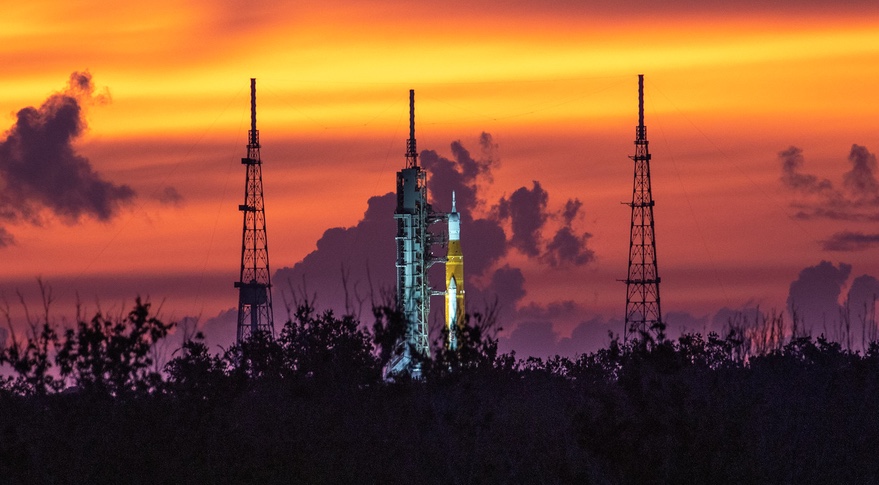
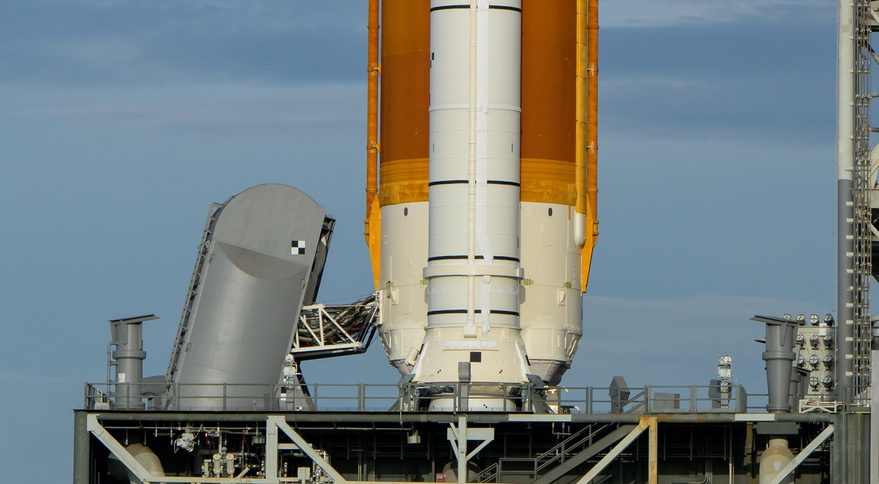
The Artemis 1 Orion MPCV and its European Space Agency service module sit atop the first NASA Space Launch System (SLS) on Pad 39B at Kennedy Space Centre, a full Moon framed between the vehicle and one of the pad’s lightning towers. Credit: NASA

NASA’s Space Launch System (SLS) has finally cleared the last significant hurdle in the preparations to launch the first of the vehicles on its much anticipated lunar flight.

On Friday, June 24th, agency officials declared the test campaign for the maiden vehicle to be almost complete after it finally cleared the critical wet dress rehearsal (WDR) test on a fourth attempt – the first three in May each ending with issues that forced NASA to roll the vehicle and its mobile launch platform back to the Vehicle Assembly Building (VAB) at Kennedy Space Centre, Florida, so both could receive modifications.

The final dress rehearsal started on June 20th, and concluded 20 seconds early due to a leak in a hydrogen bleed line. While this did not compromise the test itself, it did prevent 13 of the planned 128 command functions from being performed as a result. Most of these had been previously tested, so the curtailing any testing of them during the WDR was not seen as cause for concern.

However, mission managers opted to perform one additional test prior to rolling the vehicle back to the VAB for final inspections and launch preparations. This will be a test of hydraulic power units used to gimble the nozzles of the vehicle’s solid rocket boosters to provide directional guidance while the boosters are firing. One it has been completed, the roll-back to the VAB will be carried out on July 1st.

The Artemis 1 SLS vehicle sitting on its mobile launcher at Pad 39B, Kennedy Space Centre, imaged from orbit on June 18th, 2022 by a Maxar Earth observation satellite. Credit: Maxar Technologies

At the VAB, the vehicle and its launch platform will undergo a final post-WDR inspection, which will include replacing the seal responsible for the hydrogen leak. It’s expected that overall, the final check-out plus any required work will run through until early August. Providing nothing serious is found, the vehicle will be rolled back to the pad to commence 10-14 days final launch preparations. This will be in time to meet two immediate launch windows: August 23rd through September 6th (excluding the period August 31st-September 1st) and September 19th through October 4th, 2022.

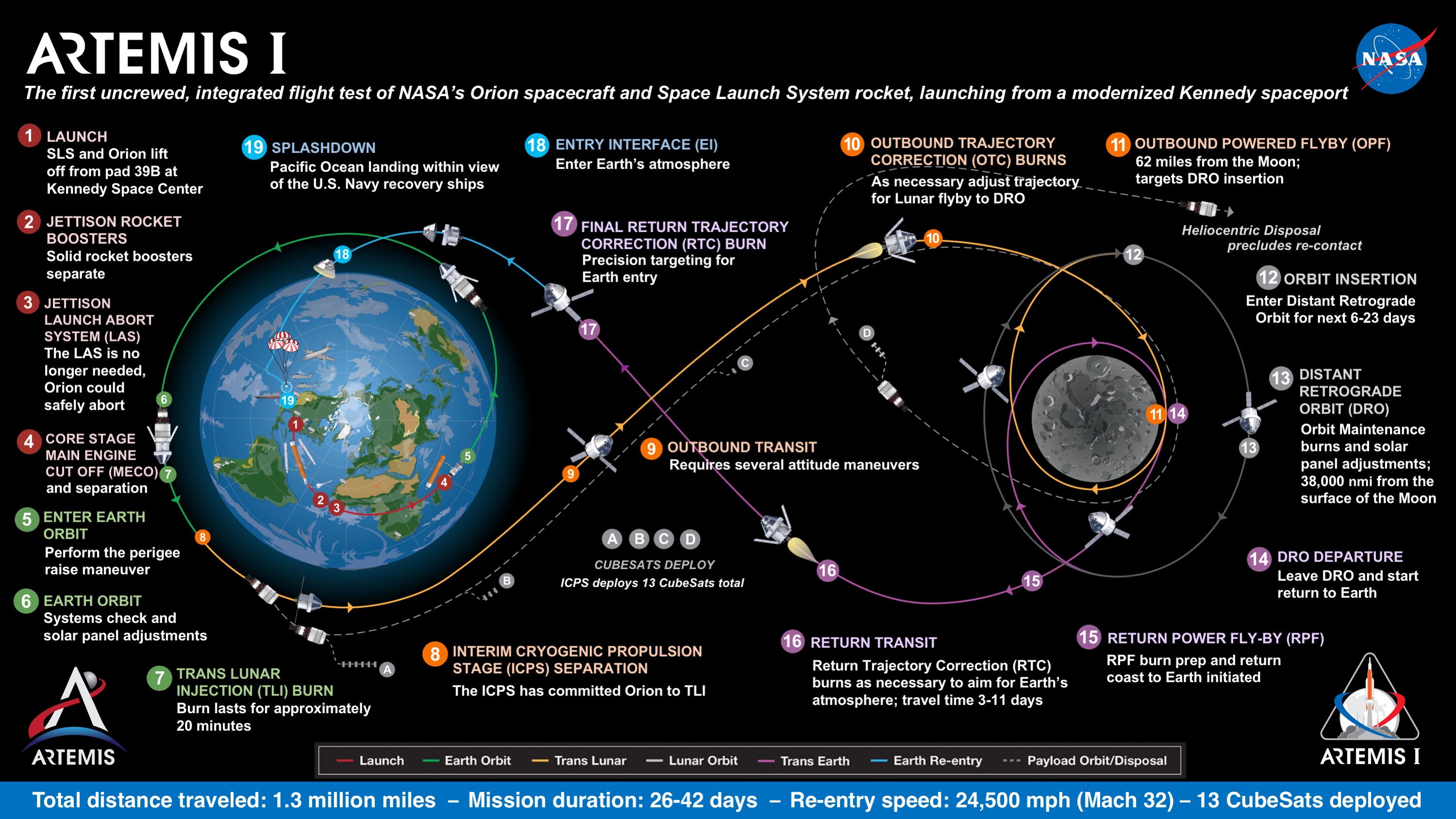
The Artemis 1 mission is designed to fly an uncrewed Orion Multi-Purpose Crew Vehicle (MPCV) on 20+ day mission to cislunar space including 6 days in lunar orbit. It will be a preliminary check-out of Orion’s life support, propulsion, guidance and communications systems during an extended mission, prior to repeating the flight with a crew on board with Artemis 2.

CAPSTONE

On Monday, June 27th, NASA will be launching another mission to cislunar space.

The Cislunar Autonomous Positioning System Technology Operations and Navigation Experiment (CAPSTONE), is a 25 kg cubesat the size of a microwave oven designed to study what is called a lunar near-rectilinear halo orbit (NRHO) – an extended elliptical orbit around the Moon that will bring the satellite to within 1,600 km of the lunar surface before lifting it away to up to 70,000 km. It is a similar orbit to the one that will be used by NASA’s planned Lunar Gateway station.

While extreme, such an orbit allows for continuous communications with Earth and allows for extensive study of the Moon. When placed in a similar orbit, Gateway will allow astronauts to reach almost any point on the lunar surface using suitable landing systems.

The CAPSTONE cubesat sitting on an engineering bench during testing of its solar arrays. Credit: NASA / Dominic Hart

CAPSTONE is due to be launched from New Zealand aboard a Rocket Labs Electron rocket at 10:00 UTC om Monday, June 27th, 2022. As the Electron is not capable of delivering CAPSTONE directly to the Moon, it will use the company’s Photon kick stage to push the cubesat into an extended 4-month flight to the Moon, where it will enter orbit on October 15th. The extended, slow flight will allow CAPSTONE to carry out a range of tests prior to reaching the Moon and is not reflective of the kind of transit time crewed flights will require to reach lunar NRHO (5-10 days).

Once in orbit around the Moon, CAPSTONE will spend a further 6-months studying the NRHO environment around the Moon and in communication tests both with Earth and with NASA’s Lunar Reconnaissance Orbiter, which has been orbiting the moon since 2009.

SpaceX Triple Header with a Touch of Mystery

SpaceX carried out three near “back-to-back” launches over the weekend of June 17th-19th, albeit from different launch complexes:

  • On Friday, June 17th, a Falcon 9 lifted-off from Pad 39A at Kennedy Space Centre, carrying aloft the company’s latest batch of Starlink satellites for deployment.
  • On Saturday, June 18th, a Falcon 9 lifted the SARah-1 radar imaging satellite to orbit on behalf of the German military, after lifting-off from Space Launch Complex 4E at Vandenberg Space Force Base in California.
  • On Sunday, 19th, the third launch lifted-off from Space Launch Complex 40 at Cape Canaveral Space Force Station in Florida, ostensibly to place the commercial Globalstar FM15 into a “parking” orbit as a back-up for the company.
A Falcon 9 lifts off June 17 carrying a batch of Starlink satellites, the first of three launches SpaceX performed over a little more than 36 hours. Credit: SpaceX

While all three saw the successful return and landing of the Falcon 9 first stage of each booster, the June 19th mission has raised eyebrows due to the apparent secrecy around it. The Globalstar FM15 is a relatively small satellite – just 700 kg – which should have allowed the Falcon first stage to return to the SpaceX landing zone at Canaveral; instead it landed on a drone ship at sea, suggesting it was flying a heavier payload that required greater thrust to push it to orbit.

SpaceX also did not cover the launch with anything like the kind of live streaming they generally put out for their launches; what footage that was put out suggested the vehicle was carrying an additional payload adaptor, hinting at a further payload – although nothing has been said to confirm or deny this.

Continue reading “Space Sunday: SLS, satellites and a rover”

Space Sunday: exoplanets, starship and the Sun as a lens

An artist’s impression of H260655b and H260655c orbiting their parent star. Credit: SciNews.

Two new “super Earth” exoplanets have been confirmed as orbiting a star just 33 light-years (10 parsecs) from our own, making them two of the closest rocky exoplanets to Earth to be thus far be located.

Such is their proximity, the planets – HD260655b and HD260655c – offer new opportunities for exoplanet and comparative planetology studies. They both orbit an M-type red dwarf star, the most common  – and one of the oldest – types of star within our galaxy; these stars are both smaller and a lot cooler than main sequence stars like own own, but can also be quite violent in terms of their stellar activity. HD260655 is unusual amongst its brethren as it is somewhat brighter then most other M-type stars, given its comparatively small size. From Earth, it appears to reside within the constellation of Gemini, and is also known by a number of different catalogue designations, including Gliese 239 and Wolf 287.

HD260655b, the innermost of the two planets, zips around its parent at a giddying 2.8 terrestrial days; it is some 1.24 times the size of Earth and has 2.14 times the mass. HD260655c is much more “sedate” in its orbit, taking an entire 5.7 days to go around its parent; it is 1.53 times the size of Earth with around 3.1 times the mass.

The to planets are so close to their parent they are liable to be tidally locked, keeping the same side pointing towards the star all the time, and their estimated temperatures mean they are unlikely to support life: “b” has a temperature of around 435ºC, and likely has no atmosphere (although this is by no means certain), and “c” has an temperature averaging 284ºC – but may have a hydrogen-deficient atmosphere (so no water).

Artist’s impression of TESS in its “P/2” orbit. Credit: NASA

The planets were discovered in a 2021 review of data gathered by the NASA / MIT Transiting Exoplanet Survey Satellite (TESS) mission. Normally the confirmation process for such transiting planets – those that pass between their parent star and the point of observation to produce regular dips in the brightness of their star – can take a lot of additional work, including looking at other data about the star, repeating observations, confirming there has been no instrument error, etc. However, with HD260655, the process was accelerated because it had been tagged as having a possible planetary system in 1998 following observations using the HIRISE (now ANDES) instrument on the Keck telescope, and in 2016 following observations by the  CARMENES instrument at the Calar Alto Observatory in Spain, and the data from these instrument-based observations did much to confirm the presence of both planets.

What is particularly exciting about these two worlds is the combination of their proximity to their star, its brightness and its proximity to our own solar system, all of which makes them ideal for study by the James Webb Space Telescope (JWST).

Among other things, JWST should be able to confirm whether or not either planet has an atmosphere and the composition of that atmosphere. Should it turn out that “b” has no atmosphere but “c” does, it allows for direct observation of the role of their star in characterising each planet over time, and the manner in which M-type stars influence atmospheric loss among their worlds; this in turn allows astronomers to gain a better understanding of the nature of exoplanets orbiting other M-Type stars. Finally, study of HD260655b and HD260655c and comparisons with the rocky planets of our own system could further add to our understanding of how planetary systems in general form.

Starship Update

On June 13th, the Federal Aviation Administration  (FAA) issued its long-awaited Programmatic Environmental Assessment (PEA) concerning the SpaceX Starbase facilities at Boca Chica – and the summary is, neither the FAA nor the other government agencies that were involved in the study have come up with any significant environmental issues that would prevent SpaceX continuing with its current plans with the site.

The report doesn’t, however give SpaceX any immediate clearance to launch their first starship / super heavy orbital attempt. That requires a launch licence, which the FAA has yet to grant – and as a part of that process is that SpaceX demonstrate compliance with 75 action points raised by the PEA. Further, some of the action points will be subject to on-going review and could impact the company’s ability to secure launch licenses beyond the first. Further, the company may yet have to face direct action on the part of environmental groups in light of the fact that activities within the Boca Chica area – also a wildlife refuge – has already impacted some of the rare species living there.

Even so, it currently seems probable the SpaceX could be in a position to make their initial orbital launch attempt with a starship / super heavy combination in August 2022. As it is, the super heavy earmarked for the attempt – Booster 7 – has been equipped with its full complement of 33 Raptor engines, whilst its companion starship, Ship 24, is in the process of being fitted with its engines.

The massive “mechazilla” lifting mechanism on the launch support tower at the Starbase orbital facility, Boca Chica, was put through its paces again in mid-June, in readiness for lifting Booster 7 onto the launch table, and later stacking Ship 24 atop of it (seen bellow and to the left of the mechanism’s massive arms. Credit: BocaChicaGal / NASASpaceflight.com
In the next few weeks, we’re liable to see both Booster 7 and Ship 24 return to the launch area, with Booster 7 going through a range of static fire tests on the launch table before being mated with ship 24.

Meanwhile, at Kennedy Space, NASA has finally signalled growing (and, frankly, belated) concern about the SpaceX plans with the Pad 39A facility.

As I’ve previously reported, SpaceX resumed building a second super heavy / starship launch facility within the Pad 39A facilities the company leases from NASA. Of particular concern to NASA is the fact that SpaceX is locating the new launch platform so close to the existing Falcon 9 facilities, that the shockwave from a super heavy launch could conceivably damage the Falcon 9 pad and thus impact NASA’s ability to send crews to the International Space Station.

Pad 39A, Kennedy Space Centre, June 2022. To the left is the current Falcon 9 launch platform, sitting on top of the Apollo / Shuttle launch ramp. To the far right is the first section of the launch support tower for starship / supper heavy launches, showing the relative proximity of the two. Centre is a crane and a green structure, thought to be the start of work to install large water tanks between the two in order to deflect soundwaves from a super heavy launch away from the Falcon pad. Credit: @FarryFaz, Twitter

SpaceX appears to be trying to assuage NASA’s fears in part by installing what appears to be massive water tanks between the new launch facility and Pad 39A, possibly with the intent that the structure deflects sound away from Pad 39A. However, there is a greater threat involved in operating starship / super heavy which has not (in public, at least) been raised by NASA. To understand this threat, we need to go back to July 3rd, 1969.

That was the date on which the Soviet Union attempted to launch the second of its answer to America’s Saturn V, the N1 rocket, from the Baikonur Cosmodrome, Kazakhstan. However, seconds after lift-off the vehicle suffered a major malfunction, crashing back onto the launch pad. On impact, around 15% of the 2,400 tonnes of vehicle propellants detonated in a blast measuring 1 kiloton, obliterating the launch pad and scattering debris up to 10 km away. Fortunately, as the propellants were spread amongst 8 individual fuel tanks across the four stages of the vehicle, 85% did not detonate, but were burned in the ensuing deflagration; had they detonated, the estimated blast yield would have been closer to 7 kilotons – almost half the blast force of the first war time use of an atomic weapon (15 kilotons).

Super heavy doesn’t use multiple tanks. It effectively has two massive tanks that share a common dome (that is, the top end of one tank is the bottom of the other).  This means that in the event of a catastrophic failure, it is exceptionally likely that any detonation will involve the entire 3,600 tones of propellants on super heavy alone, again yielding a blast in excess of 7 kilotons. Such a detonation on the ground or shortly after lift-off would not only level Pad 39A, it could cause at least moderate damage to the launch infrastructure shared by pads 39A and 39B.

Imagining Exoplanets Using the Sun’s Gravity

When it comes to astronomy, gravity can be a very useful tool thanks to the way it can affect light. Back in April, for example, I wrote about the use of gravitational lensing – the bending of light from an object far, far, away by the gravity of an object much closer – to give us our first glimpse of the most distant star from our own to have yet been captured.

The star, now called Eärendel, the Old English term for “morning star” – was imaged by the Hubble Space Telescope using the gravitational lensing effect of an intervening galactic cluster. However, a team led by Slava Turyshev, a physicist at NASA’s Jet Propulsion Laboratory, California, want to take the idea of gravitational lensing to a new level, using our own Sun to image distant worlds.

In this image from the Hubble Space Telescope, a luminous red galaxy (LRG) is surrounded by the Einstein Ring artefact created by the light from a much more distant blue galaxy being distorted by the LRG’s gravity. Credit: ESA / NASA

Turyshev and his team propose the use of a network of small satellites, preferably using solar sails, that could be deployed so as to image exoplanets using a 40 cm telescope in what they call the Solar Gravity Lens (SGL).

The idea has been in development for the last three years, and Turyshev’s team have determined how to resolved many of the idea’s specific problems. One of this is that while the Sun makes an excellent gravity lens, the corona is so bright it actually blots out the Einstein Ring  – the circle of light created by the more distant object – such that it cannot be resolved. To fix this, the team determined that a satellite could, within a solar sail of the right size, use it as both a means of propulsion and effectively cover the Sun and this corona, revealing the Einstein Ring to the telescope. Determining the best size of the solar sail then allowed the team to calculate the mass and size of a satellite – thus allowing them to arrive at the optimal size for the telescope.

From that, the team have been able to work on a series of simulations based on the likely pixel size Earth-sized (or larger) would be produced at various distance up to 100 years years away, which in turn allowed them to simulate how such world would appear after processing their Einstein Ring and then deconvoluting the resultant image.

A simulation showing how Earth would look in a 128×128 resolution image captured by a 40-cm 30 parsecs away and using gravitational lensing similar to that produced by the Sun:. Left: the original 128×128 image; (c) as the image would look were it to be captured using SGL and then extracted from it Einstein Ring artefact; (r) as it would look after full deconvolution. Credit: Turyshev et al.

Further work is required to define the overall carrier spacecraft, but as Turyshev notes, SGL could provide us with insights into worlds beyond our solar system which might otherwise take years or even decades to accumulate.

Space Sunday: SLS WDR-2; FRBs, JWST and UAPs!

Artemis 1 SLS on the Mobile Launcher 1 inside the Vehicle Assembly Building. Credit: NASA

Artemis 1, the planned first flight of NASA’s huge Space Launch System (SLS), is back on Pad 39B at Kennedy Space Centre and being prepared for another try at a full Wet Dress Rehearsal in what many are framing as a make-or-break for the new launch system. At the same time, the SLS programme has come under further critique by NASA’s own Office of Inspector General (OIG).

As I’ve noted in the past, the Wet Dress Rehearsal (WDR) is the final critical test for the SLS system, putting absolutely everything involved in a launch through its paces right up to just nine second before the rocket’s core RD-25 engines would light-off. The test is to ensure everything – the pad systems, the propellant loading systems, the rocket’s computers and avionics, the launch control systems, etc., are commissioned and ready for operational launch, with the data gathered from this first rocket going on to provide a baseline for checking future SLS vehicles as they go through pad preparations and launch in the future.

A graphic showing the tank filling which forms a core element of the WDR, currently scheduled for or around June 17yh, 2022. Credit: NASA

The first attempt at a WDR, back in April started with fanfare a high-profile roll-out of the pad by the first SLS, where it successfully completed a battery of tests prior to the WDR commencing, only to be followed by a series of issues that forced rocket and Mobile Launcher (ML-1) tower to be ignominiously rolled back to the Vehicle Assembly Building (VAB).

The June 6th roll-out was far more low-key, the rocket and ML own leaving the VAB atop the veritable crawler-transporter just after midnight and arriving at the pad in the morning sunlight. Since then, the vehicle and launcher have been going through check-out and connection to all the ground support systems, and a second WDR attempt is provisionally set for on or around June 17th, 2022.

In the meantime, NASA’s OIG has issued a report critical of another aspect of the programme: Mobile Launcher 2 (ML-2).

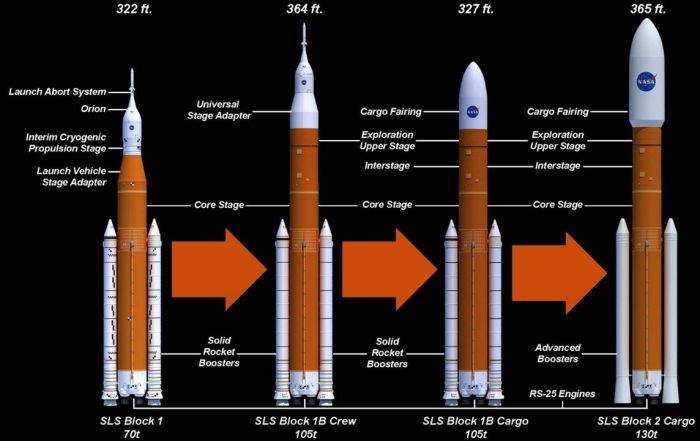
ML 1 was originally built for launching Saturn 1B and Saturn V rockets in the 1960s. It was then modified for space shuttle launches and again to handle SLS Block 1 launches. However, it is incapable of supporting launches of the bigger and more powerful SLS Block 1B and Block 2 vehicles (assuming the latter are built). So in 2018/19, NAS awarded a US $383 million contract to engineering firm Bechtel to supply a new Launcher – ML-2 – capable of supporting SLS Block 1B and beyond launches, with delivery slated for 2024, ahead of the then planned launch of Artemis 4, the first SLS Block 1B vehicle.

However, the OIG report reveals that ML-2 is spiralling out of control, with costs already exceeding US $440 million, and set to hit at least US $960 million, with doubt cast on Bechtel’s ability to deliver the Launcher in time for Artemis 4, even though that mission is unlikely to fly before later 2027 or early 2028.

Comparing ML-1 and ML-2. Credit: NASA

The report is primarily critical of Bechtel for multiple failures and lapses, but also points out NASA’s own folly in playing “yes man” to an accelerated Artemis programme. Originally, the US return to the Moon was to commence in 2028, but the Trump administration pulled that date forward to 2024; while that was clearly unachievable, NASA attempted to meet the goal. As a result, the ML-2 contract was awarded as “cost plus”, meaning that overruns would be met out of NASA’s pocket, rather than fixed price, which would leave Bechtel holding the purse for errors and delays on their part. NASA further compounded the issue by awarding the contract for the ML-2 design before the SLS Block 1B design had been finalised. As a result, the space agency immediately became liable for continued changes to the ML-2 design as the SLS Block 1B design evolved.

Currently, NASA is attempting to move the contract to a fixed price basis; unsurprisingly, Bechtel appear somewhat resistant to doing so.

FRBs: Far, Far Away – or a Lot Closer to Home?

First discovered in 2007, FRBs are intense, brief flashes of radio-frequency emissions, lasting on the order of milliseconds, thought to emit as much energy in a millisecond as our Sun does over three days – although such are the vast distances they must cover, by the time they reach us their signal strength is around 1,000 times less powerful than a mobile ‘phone signal being received from the Moon.

What causes FRBs is unknown. Most have been thought to originate outside our galaxy – although some have clearly originated within it. Many are heard only once; others appear to repeat on a highly random basis. By listening for and measuring some of the latter, it has been possible to localise their likely point of origin to an area of space. Then, using their dispersion measurement (DM) and overall red-shift, it has been possible to calculate their approximate distance.

ive hundred-metre Aperture Spherical radio Telescope (FAST. Credit:

The DM a measurement of the period between the high-frequency range of a radio burst reaching us and the lower frequencies, which tend to get more dispersed more the first they travel, and so take longer to reach us. It’s a small, but measurable amount. As the composition of interstellar space is known, this difference can be used to calculate signal attenuation over distance, and thus the approximate distance of the originating object from Earth.

This measurement can then be combined with the overall red shift exhibited by the signal to yield a similar distance result, thus allowing reasonable certainty as to how far away the originating object is. But that’s not the case with FRB 20190520B.

First detected in May 2019 by the Five hundred-metre Aperture Spherical radio Telescope (FAST) in Guizhou, China, in 2019, it was later picked up again by the Very Large Array (VLA) in New Mexico, USA in 2020 and subsequently by the Subaru telescope, Hawaii.

What is particularly interesting about this FRB is that taken on its own, its DM suggests it originates in a small galaxy beyond our own. However, when the DM / red-shift relationship is extrapolated, the result suggests the originating point is a lot closer to Earth – as in possibly within our own galaxy.

This might make 20190520B some weird outlier among FRBs – but as some have pointed out, it might also indicate to our entire assumptions about extra-galactic FRBs and the use of dispersion measurements as a kind of “cosmic yardstick” as being totally wrong; that we could actually be mistaking events occurring within our own galaxy that result in FRBs for something far more distant and exotic.

Right now, it’s too early to tell either way, but 20190520B has caused a considerable stir among astronomers, with many looking to step-up the search for more of these strange events.

Continue reading “Space Sunday: SLS WDR-2; FRBs, JWST and UAPs!”

Space Sunday: saving MAVEN, Tiangong readying to expand

An artist’s impression of MAVEN as it looks down on Mars’ Vallis Marineris. The NASA mission, which arrived in orbit in September 2014, is studying the Martian atmosphere

NASA’s MAVEN Mars orbiter has been in orbit around the planet since September 2014. For the majority of that time, and following science commissioning (Sept-November 2014), the spacecraft has been studying the Martian atmosphere, yielding valuable science. Except for the past three months, that is.

On February 22nd, 2022 – ironically the day Shannon Curry, appointed to take over the role of MAVEN’s Principal Investigator in August 2021, was making a three-hour presentation on the vehicle’s science findings at the conclusion of its latest 6-month mission extension – when Things Went Wrong.

We finally finished the presentation, I turn my ‘phone back on, and our project manager calls me immediately. I’m thinking, he’s calling me to be like, ‘Congratulations, you did it, you’re doing great!’ And he was, ‘Shannon, we’re in safe mode.’

– Shannon Curry

Shannon Curry was appointed to the role of Principal Investigator for NASA’s MAVEN mission in August 2021, and steered the project through its most serious issue between February and June 2022. Credit; via Wikipedia

Regulars to Space Sunday will know that “safe mode” is when a spacecraft has encountered a condition that exceeds its programmed parameters / expectations, causing it to shut down most of its non-essential systems and services and ‘phone home with a call of “I’m in a spot of trouble, folks!”

Safe modes are rarely easy to diagnose and resolve remotely, with MAVEN (Mars Atmosphere and Volatile EvolutioN mission), the issue would prove to be almost catastrophic.

In order to both study Mars and communicate with Earth, MAVEN must periodically re-orient itself. Up until 2017, it did so by using one of two Inertial Measurement Units (IMUs) to calculate its position, attitude and rotation. However, from 2017 through until the end of 2021, MAVEN has been reliant on just one unit – IMU-2 – after IMU-1 experienced data issues.

By the start of 2022, IMU-2 was starting to show issues of its own, so a project was started to write new software to enable MAVEN to orient itself using the stars in what the mission team called “stellar mode”, a project that would take until late 2022 to complete. In the meantime, the vehicle was instructed to switch back to using IMU-1, with the power to the unit being periodically recycled to help with keeping it operating smoothly.

However, on February 22nd, 2022, with MAVEN oriented to communicate with Earth, a power recycle was started and IMU-1 crashed, and when IMU-2 automatically started, it had absolutely no idea of where it was, and MAVEN went into a loop of trying to restart IMU-1 after shutting down all science operations.

When it was clear IMU-2 was “lost”, and IMU-1 was not going to recover, risking MAVEN drifting out of communications alignment, the mission team took a desperate step: heartbeat termination.

That term is not just for dramatic effect: basically, it’s like ripping the cord out of the wall. We ordered the vehicle to shutdown and reboot its primary computer without switching to the back-up. When that failed, we had no choice but to then swap to the back-up and we’ve never been on that before.

– Shannon Curry.

Whilst the switch to the never-used back-up computer was a risk, it nevertheless allowed position data to be given to  IMU-2 to ensure communications could be maintained with Earth. This allowed the mission team to accelerate the work on developing the “stellar mode” software.

On April 19th, the first version of the software was uplinked to MAVEN five months ahead of its due date. However, it could only be tested by shutting-down IMU-2. If the software failed, there was no guarantee either IMU would reboot, leaving MAVEN to drift out of its communications orientation within hours. Fortunately, the software demonstrated it could keep the vehicle correctly oriented, and the mission team were able to continue to refine the software and add the tasks required for MAVEN to use stellar mode for both communications and science operations.

In May, work had reached a point where the science instruments could each be brought out of safe mode and tested to ensure they had suffered no long-term damage. Then on May 28th, the order was given for MAVEN to fully transition all operations to use the stellar mode for navigation / orientation, allowing science operations to resume.

There will still be periods in MAVEN’s operations when it will have to rely on an IMU, but for now the mission team has brought the mission back from the brink of disaster, and are now focusing on ways in which the craft can better deal with possible data hiccups from the IMU systems.

Starship + Crew Dragon Update

Starship

The FAA report on the SpaceX starship facilities at Boca Chica, Texas, will now not be published until June 13th. In the meantime, it has been confirmed that the first orbital launch attempt will be undertaken by Ship 24 and Booster 7.

At the time of my last Starship update, Booster 7 had suffered a failure with a downcomer pipe, resulting in the booster being returned to the production facilities for examination, together with speculation that Booster 8 might replace it for the orbital launch attempt. However, repairs were made to Booster 7, enabling its return to the launch area.

Starship 24 undergoing liquid nitrogen cryogenic tests. A similar test at the end of May 2022 resulted in a header tank feed pipe failing, ejecting heat shield tiles from the underside of the vehicle. Credit: NASASpaceflight.com

At the end of Mays, Ship 24 was been rolled out to the test stands where cryogenic tests using liquid nitrogen commenced – only for a feed pipe connected to its LOX header tank to fail, throwing heat shield tiles off of the vehicle as the hull flexed. As a result, the pipe in question went through a rapid pipe redesign whilst on the test stand, with additional expansion joints being fitted to prevent any over-pressurisation.

With engines now being fitted to both ship and booster, and deliveries of liquid oxygen, liquid methane and liquid nitrogen being made to the tank farm, SpaceX appear confident the FAA report will give the green light for the orbital launch test – a test that will include a test deployment of Starlink satellites through the small payload slot.

This view exemplifies one of the issues SpaceX may still have with the Boca Chica launch facility. The orbital launch tower can be seen centre top; to the bottom left and in close proximity to the launch facilities, is the propellant and consumables tank farm, well within the blast radius should a starship / super heavy combination to explode at launch, the earth berm between tanks and launch stand notwithstanding. The horizontal tanks to the right of the upright tanks were installed after-the-fact in part to pre-empt concerns from the FAA on this matter. Credit: RGV Aerial photography

Even if this first flight test is a success (which is unlikely), it is perhaps important to note it is not a prototype test flight per se, but is rather an initial proof of concept. This is because the starship vehicle is far from its final configuration (Musk has announced first possible changes to the design). Nor is Ship 24 reflective of an “operational” starship: it has no means to carry the volume of payload promised (100-150 tonnes), the mechanism(s) required to support such a mass during launch, or the means to deploy it payload bay doors and their mechanisms. As such, there is a long way to go before starship reaches an actual prototype flight, with a lot more to prove. Even then, the realities of its promise are still highly questionable – something I hope to be looking at in a future Space Sunday.

Continue reading “Space Sunday: saving MAVEN, Tiangong readying to expand”