Space Sunday: of Earth and moons

Ice particles, with just a trace of phosphates, venting from near Enceladus’s south pole, as imaged by Cassini in 2010. Credit: NASA/JPL-Caltech/Space Science Institute

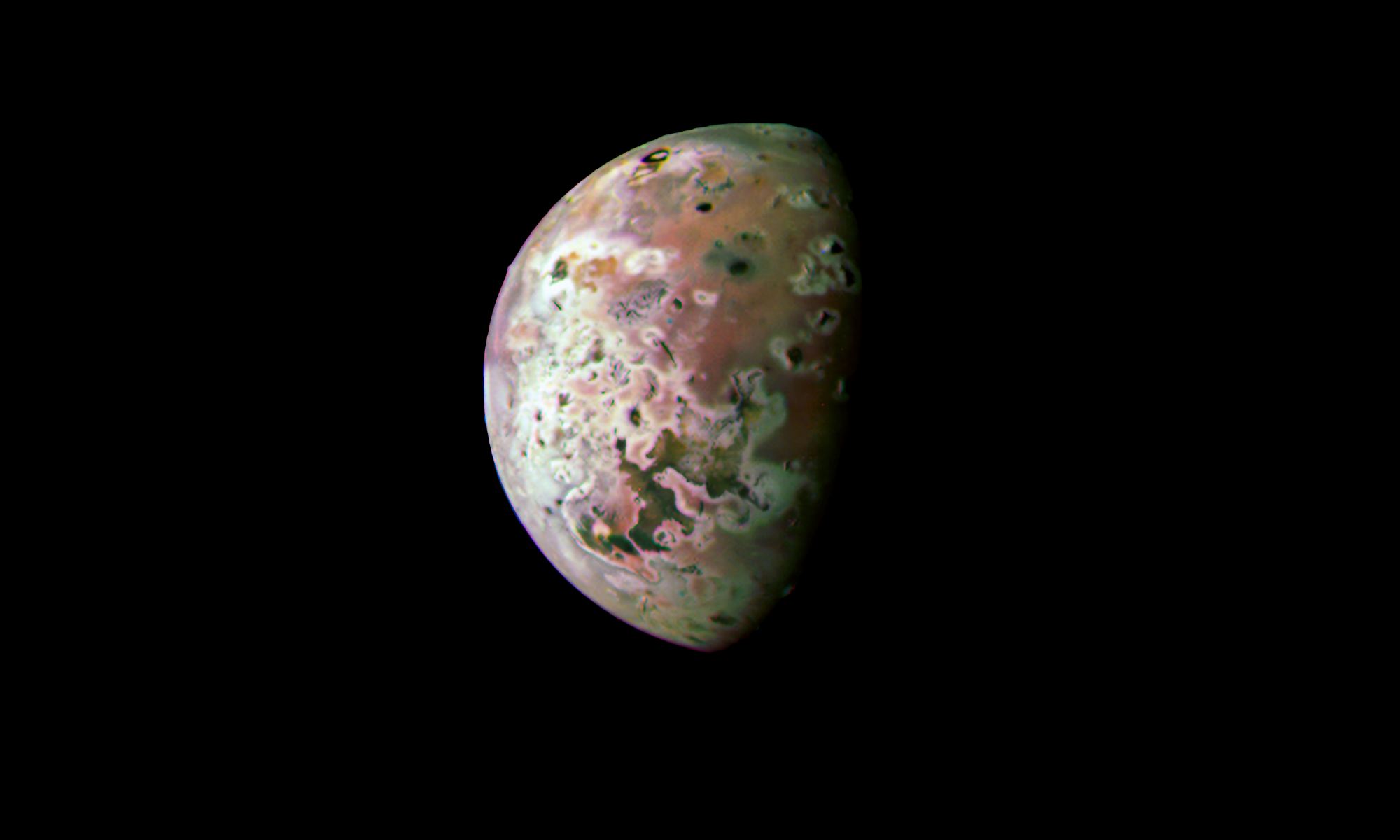
Even as Europe’s Jupiter Icy Moons Explorer (Juice) is commencing its long trek to the Jovian system in order to study Ganymede, Callisto, and Europa, three of Jupiter’s Galilean moons, more is being learned about Europa and its far more distant “cousin”, Enceladus, as the latter orbits Saturn.

In the case of Europa, the findings of a new study suggest that it may have formed somewhat differently than has long been thought, and that it may actually be less subject to deep heating and volcanism that has been thought – potentially decreasing the chances for it to harbour subsurface oceans and possible life.

As has been mentioned numerous times in this column, Europa is of fascination because it is covered in an icy shell which appears to cover a liquid water ocean, churning over a rocky mantle and kept liquid due to a combination of internal heat radiating out from the Moon’s molten core and the gravitational “push/pull” inflicted on it by both Jupiter and other three Galilean moons, which give rise to heating through subsea volcanism and hydrothermal vents (which might also pump the ocean full of biologically useful molecules).

However, Kevin Trinh, a planetary scientist at Arizona State University (ASU), and his follow researchers suggest that Europa may have formed a lot slower than previously assumed, and somewhat differently to how it is generally assumed planets and small moons form, and that even now, it may not have a fully-formed core – possibly a result of its distance from the Sun.

Internal evolution of Europa. Credit: Kevin Trinh/ASU

The accepted theory for the formation of solid planets and moons is that as they coalesced out of ice, dirty, rocks, etc., and were compressed under increasing gravity – assisted by the Sun’s heat – underwent melting, the heavier filling into the centre of the planet / moon to form the core, with the “middleweight” rocks forming a semi-liquid, hot mantle, and the outermost becoming the brittle crust.

But given its size and distance from the Sun, Europa may never have reached the stage of the heaviest elements separating out of its mantle to for the core – or that it is still going through the process, but at a much slower rate and assisted by the gravitational flexing imposed on it by the other large Jovian moons and Jupiter itself.

This doesn’t mean the moon doesn’t have an ocean – Trinh and his colleagues believe the evidence for the ocean is too great to deny –, but rather its formation was different to previously thought, and may have been the result of a metamorphic process, which continues to power it today. In short, the rocks of the mantle were naturally hydrated (that is, contain water and oxygen), as the interior heat increased, it caused the water and oxygen to be released, forming the ocean and its icy shell.

For most worlds in the solar system we tend to think of their internal structure as being set shortly after they finish forming. This work is very exciting because it reframes Europa as a world whose interior has been slowly evolving over its whole lifetime. This opens doors for future research to understand how these changes might be observed in the Europa we see today.

– Carver Bierson, ASU’s School Of Earth and Space Exploration.

Just how far along the formation of a core might be, assuming this ASU study is correct, is an unknown. The study suggests that the core started to form billions of years after Europa’s formation, and that full differentiation has yet to occur.

Credit: Arizona State University

If the theory is correct, it has some significant implications for Europa as a possible abode of life. As noted above, the traditional view is that the moon has had a hot, molten core which could, thanks to the gravitational flexing by Jupiter and the other large Jovian moons, power subsea volcanism and venting sufficient to create hotspots of life in the ocean depths. Without such a fully-formed core, however, it is unlikely that such is the case. But this does not mean that Europa is necessarily lifeless.

It could be that the heat within the rocky mantle – again driven by gravitational flexing – could lead to a more uniform heating of the sea floor, allowing for life to be more widespread around Europa and feeding on the minerals and chemicals released by the hydration process.  However, the flipside to this is that such heating could equally leave much – if not all – of the ocean little more than an icy slush, either limiting any life to a very narrow band of heated water very close to the sea floor, or frozen out in the slush.

In the meantime, while Enceladus is even further from the Sun and a lot smaller than Europa – but the evidence for it having a subsurface ocean is more compelling. The southern polar area has long been subject to out gassing material into space – material which is known to be contributing to the growth of Saturn’s E-ring.

The out gassing was first imaged by NASA’s Voyager 2 vehicle in the 1980s and again by the joint European-NASA Cassini mission, which saw the Cassini spacecraft actually pass through some of the plume of material several times, confirming the presence of water vapour and other minerals, all of which are almost contributing to the tiny moon having a very tenuous atmosphere.

A sequence of images of Saturn’s moon Enceladus taken by the Cassini mission. Image credit: NASA/JPL-Caltech/Space Science Institute

Data on the plumes gathered by Cassini have been the subject of extensive studies since they were gathered, revealing that do contain very simple organic molecules and even molecular hydrogen and silica. All of this indicates that chemical reactions between water and warm rock are occurring on the seafloor under Enceladus’ ocean, most likely around hydrothermal vents.

For the last 5 years, a team of scientists at Freie Universität Berlin, have been studying data from a number of sources – Cassini and Earth-based observations – relating to the materials found within Saturn’s E-ring, which, as noted, is at least in part made up of material ejected from Enceladus in an attempt to both better understand the composition of the ring and its relationship with material coming from the moon. What they’ve found has come as a surprise to many planetary scientists: phosphorus.

The importance here is that phosphorus is the rarest of six elements which life here on Earth utilises in various forms – such as combining it with sugars to form a skeleton to DNA molecules and also helps repair and maintain cell membranes. What’s more, the concentrations of the mineral within the plumes are about 500 times greater than the highest known concentrations in Earth’s oceans. While the phosphorus has been detected within Saturn’s E-ring rather than within the plumes rising from Enceladus, its discovery nevertheless is seen as offering “the strictest requirement of habitability” within the moon’s ocean, given that Enceladus is blasting material into the E-ring at the rate of 360 litres per second.

An image of Saturn’s moon Enceladus taken by NASA’s Cassini spacecraft. Image credit: NASA/JPL-Caltech

A 2018 study involving Enceladus’s ocean and the likely minerals in might contain had drawn the conclusion that any phosphorus concentrations on the moon would have been depleted in the moon’s oceans a long time ago, and thus unavailable for potential life. However, in reviewing the new findings, the team behind the 2018 study have stated their findings have now been overturned.

In particular, the Freie team also identified the presence of  orthophosphate within the phosphates of the E-ring. This is the only form of phosphorus that living organisms can absorb and use as a source of growth. This suggests that not only are phosphates “readily available” in Enceladus’ oceans, it is in forms simple life can make use off to help in its development. Coupled with the fact that the oceans of Enceladus are likely warm and rich in a broad range of minerals and chemical elements, further raises the potential for the moon to harbour microbial life. This had already led to renewed calls for a dedicated mission to the little moon for a more direct investigation.

Continue reading “Space Sunday: of Earth and moons”

Space Sunday: launches and landings

Shenzhou 16 lifts-off from the Jiuquan Satellite Launch Centre, May 30th, 2023. Credit: CGTN

Rotating crews to / from a space station is so routine here in the west that the comings and going of crews at the International Space Station (ISS) rarely gain much of a mention unless something extraordinary happens, or they happen to be entirely privately-funded, as with the Axiom Space Ax-2 mission (of which more below).

Not so for the Chinese, however, who are still adjusting to life with an orbital outpost that is meant to remain under permanent occupation and also provide a stepping stone towards the Moon. What’s more, they are gradually become more public about things as they continue to rake up successes.

Following the completion of “construction” of the major elements of the Tiangong space station with the docking of the second science module in November 2022, the Shenzhou 15 crew, comprising taikonauts Fei Junlong, Deng Qingming and Zhang Lu have been at work commissioning the module and carrying out further work in preparing the station for full-time operations, building on the work of the Shenzhou 14 crew, as well as performing a full science programme.

Chinese astronauts Gui Haichao (left), Zhu Yangzhu (center) and Jing Haipeng of the Shenzhou 16 space mission attend a see-off ceremony at the Jiuquan Satellite Launch Center on May 30, 2023 in Jiuquan, Gansu Province of China. Credit: VCG/VCG via Getty Images

On May 30th, they were joined by the crew of Shenzhou 16, who performed a “fast burn” flight to rendezvous and dock with Tiangong just seven hours after their launch from the Jiuquan Satellite Launch Centre in the Gobi Desert. This crew has garnered a lot of attention both nationally and internationally, as it includes China’s first non-military tiakonaut to fly in space: professor Gui Haichao, an aerospace researcher who has studied and taught in China and Canada.

The entire launch was covered live on Chinese national television, as was the rendezvous and docking, summarised for new broadcasts and viewing in the west in videos like the one below.

Gui is joined on the mission by commander Major General Jing Haipeng of the People’s Liberation Army Air Force (PLAAF), and rookie taikonaut Colonel Zhu Yangzhu of the People’s Liberation Army. Scheduled for a duration of 180 days, the mission will see Jing become China’s most experienced taikonaut, with four missions under his belt and clocking up over 225 days (cumulative) in orbit.

Following docking, the Shenzhou 16 crew remained with the three men of Shenzhou 15 Through until the weekend, when the Shenzhou 15 crew departed the space station late on Saturday, June 3rd (Beijing time), to commence a 9-hour return to Earth, where they touched down at the Dongfeng landing site within North China’s Inner Mongolia autonomous region at 06:33 on Sunday, June 4th (Beijing time – (22:33 UTC on June 3rd).

The landing was also covered in detail by the Chinese media, and as with the Russian approach to crew returning from long duration orbital flights, the three men were not allowed to spend time standing or moving under their own power; instead they were helped out of their craft and into waiting chairs, where they were interviewed by a China Central Television (CCTV) crew in a live broadcast. This focused on Senior Colonel Deng Qingming, quite possibly one of the longest-serving astronauts-in-waiting in the world prior to lifting-off on this mission, having been in the PLA taikonaut corps for 26 years! He is actually the last of China’s “first generation” intake of astronauts to fly into space, and his perseverance has made him an icon on the PLA space corps.

In between Shenzhou 16 lifting-off for Tiangong and Shenzhoou 15 returning, the crew of Axiom AX-2 also wrapped up their stay at the International Space Station and returned to Earth.

As the name indicates, this was that second Axiom Space crewed mission to the ISS, carried out as part of the company’s progress towards running its own space station, and delivered a crew of four astronauts to the ISS for a period of eight days. Aboard were former astronaut Peggy Whiston as mission commander, John Shoffner, an aviator and entrepreneur, Ali AlQarni, a captain in the Royal Saudi Air Force and Rayyanah Barnawi, and Saudi biomedial researcher and the first Saudi woman to fly in space.

The Axiom AX-2 crew (l-to-right): Peggy Whitson, John Shoffner, Ali AlQarni, and Rayyanah Barnawi

The mission lifted-off from Kennedy Space Centre atop a Falcon 9 rocket on May 21st, 2023, and the Crew Dragon Freedom docked with the Harmony module of the ISS a day later. During their time on the station, the crew performed public outreach activities along with scientific research, including studies into the effects of microgravity on stem cells and other biological experiments which had been agreed with the Saudi Space Commission as part of the deal to fly the two Saudi nationals on the mission.

For Whitson, it was a fourth opportunity to fly in space and add to an already impressive record: in her first mission, she spent an extended mission on the ISS, in her second she became the first woman to command the ISS (and later became the first women to complete two tours on the ISS as mission commander), she has completed the most EVAs (spacewalks) thus far for a woman, having spent a total of 60 hours and 21 minutes outside of the ISS performing various tasks; she has spent a total of 675 days in space during her career and remains the oldest woman to orbit the Earth. She was also the first woman to become NASA’s Chief Astronaut, the most senior position in the NASA Astronaut Corps.

For the rest of the crew, it was the opportunity to experience space for the first time, and for Axiom Space, a further opportunity to study managing orbital operations and research endeavours of the kind they hope to both manage and host on their own space station. The latter is due to start life as modules attached to the ISS (and referred to as the Axiom Orbital Segment) in the late 2020s, before becoming an independent orbital facility when the ISS is decommissioned at the start of the 2030s.

On May 30th, 2023, the crew re-boarded Freedom and departed the ISS, splashing down successfully in the Gulf of Mexico off the coast of Panama City, Florida in the early hours of May 31st, local time, where it was recovered by the SpaceX recovery ship Megan.

Spaceport Company Performs At-Sea Launches

Landing returning crewed spacecraft on the world’s seas – as with the AX-2 mission – has long been a thing for the United States. However, it has also been the dream of some to use the oceans as a means of launching vehicles into orbit – perhaps most famously (thanks to it being referenced in the Apple TV series For All Mankind), the simply gargantuan Sea Dragon. Planned in the 1960s but never built, this behemoth was designed to lift 550 tonnes of cargo to orbit – and to start its journey by floating in open waters off the US coast.

Obviously, Sea Dragon never came to be, but in 1999, a multi-national corporation – Sea Launch – commenced payload launches from the deck of a modified oil rig – the Odyssey, operating in the Pacific Ocean close to the equator – using a specialised version of the Russian Zenit-3SL. The company carried out a total of 36 such launches from 1999 through 2014, when Russia’s first military incursion into Ukraine (which ultimately brought an end to the company), suffering only four failures.

A sounding rocket is launched from a proof-of-concept “liftboat” developed by the Spaceport Company as part of their efforts to develop a US offshore launch platform capability. Credit: The Spaceport Company

Now a US company – the appropriately-named The Spaceport Company – has hosted four sounding rocket launches with the support of Evolution Space, from a platform in the Gulf of Mexico. The launches were the latest step of a proof-of-concept study the company is carrying out into the feasibility of conducting payload-to-orbit flights from mobile platforms operating off the US coast.

In particular, the company stated the operation – performed on May 22nd – was intended to exercise the procedures -including getting approvals from the Federal Aviation Administration and U.S. Coast Guard, clearing airspace and waters to allow for a safe launch  – before any actual rocket launch from the platform.

The company plans to plans to use the platforms – called liftboats – which can sail / be towed to a designated location before temporarily anchoring itself to the sea bed by means of four legs which can be extended down into the water to a depth of up to 50 metres, and also left the platform clear of the water. A second platform then acts as the launch control centre, freeing launches from the need of any land-based infrastructure, outside of a docking and servicing facility with the means to accept launch vehicles and move them onto the launch platform safely.

These platforms will be capable of being deployed almost anywhere of the US coast, although the company particularly hopes to leverage the increasing demand for launches out of both the Cape Canaveral Space Force Station and Kennedy Space Centre. presenting companies operating smaller rocket systems with a viable off-shore alternative.

Both The Spaceport company and Evolution Space (who providing the rocket systems for the May 22nd launches) kept quiet about the event itself, only releasing a post-launch briefing on the launches 24 hours after they had taken place.  Further test flights on the platform are expected over the course of the nest two years, and the company is targeting 2025 for its first full-scale, fully commercial payload launch.

Continue reading “Space Sunday: launches and landings”

Space Sunday: aiding three space telescopes

The Hubble Space Telescope, the Chandra X-Ray Observatory and the Spitzer Space Telescope. Credits: NASA

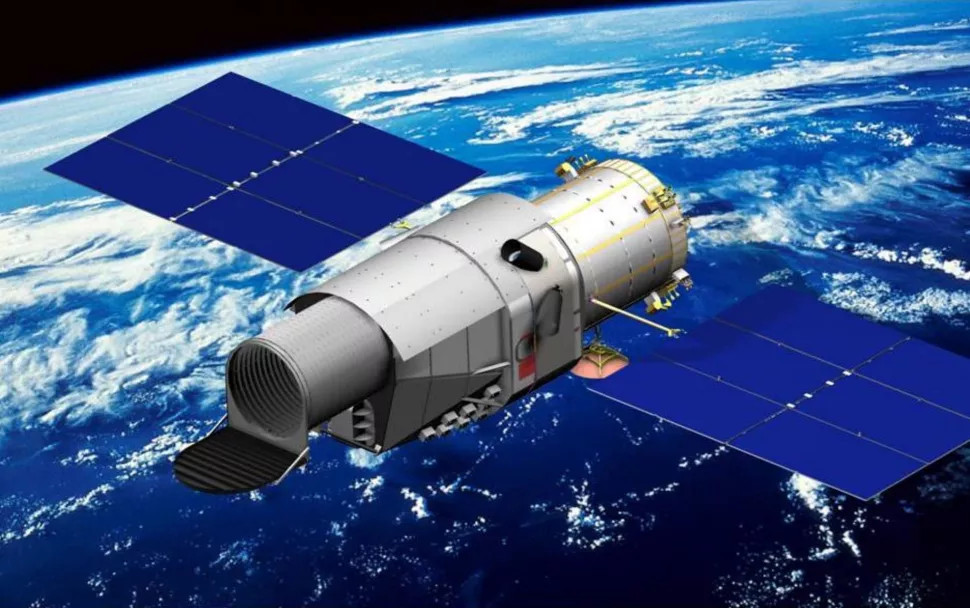
They are the grande dames, so to speak, of space-based astronomy, observatories launched into orbit around Earth and the Sun to provide us with unparalleled insight into the cosmos around us, born of ideas dating back to the early decades of the space age. They form three of the four elements of NASA’s Great Observatories programme, and all operated, or continue to operate well beyond their planned life spans; they are, of course, the Hubble Space Telescope (HST – launched in 1990), the Chandra X-Ray Observatory (CXO and formerly the Advanced X-ray Astrophysics Facility or AXAF – launched in 1999), and the Spitzer Space Telescope (SST, formerly the Space Infrared Telescope Facility or SIRTF – launched in 2003).

Today, only Hubble and Chandra remain operational. The fourth of the observatories (and 2nd to enter space after Hubble), the 16.3-tonne Compton Gamma Ray Observatory (CGRO), had its mission curtailed in June 2000, after just over 9 years, when it suffered an unrecoverable gyroscope failure. With fears raised that the failure of a second unit could leave the observatory unable to control its orientation, the decision was made to shut it down and de-orbit it in a controlled manner so it would break-up on entering the atmosphere and any surviving parts fall into the Pacific Ocean, rather than risk an uncontrolled re-entry which could shower major pieces of the observatory over populated areas.

Whilst the “youngest” of the surviving three observatories, Spitzer was placed into a “safe” mode in January 2020, ending 16.5 years of service. By then, the nature of the observatory’s orbit – it occupies a heliocentric orbit, effectively following Earth around the Sun  – were such that it was having to perform extreme rolls back and forth in order to carry out observations and then communicate with Earth, and these were affecting the ability of the solar arrays to gather enough energy to charge the on-board batteries. The “safe” mode meant that Spitzer could continue to recharge its batteries and maintain electrical current to its working instruments, potentially allowing it to be recovered in the future. However, while it is true that Hubble and Chandra continue to work, neither is without problems.

Hubble orbits close enough to Earth that even at over 500km, it is affected by atmospheric drag, causing it to very slowly but inexorably lose altitude. This used to be countered through the semi-regular servicing missions, when a space shuttle would rendezvous with HST to allow astronauts to carry out work, and then gently boost the telescope altitude using its thrusters. But the shuttle is no more, and the last such boost was in 2009 to 540 km; currently Hubble is at around 527 km, and at the present rate of decent, it will start to burn-up in another 10-15 years. However, a boost now could see Hubble – barring instrument / system failures – continue to operate through the 2050s.

The Hubble Space Telescope sitting on its holding platform in the cargo bay of the space shuttle Atlantis in 2009, seen through the orbiter’s rear deck windows during the 5th and final (and most extensive) servicing mission. Credit: NASA

Chandra, meanwhile, faces a different challenge. It lies in a highly elliptical orbit around the Earth, varying between 14,508 km at its closest and 134,527 km at its most distant. It has therefore been operating untended for its entire operational life, and is starting to show signs of wear and tear. In 2018, it suffered a glitch with one of the gyroscopes designed to keep it steady during observations (and orient it to look at stellar objects). Whilst the gyroscope was recovered, it was put into a reserve mode lest it fail again. This led to fears that should a second gyro fail, either orientation control might be lost if the 2018 gyro fail to come back on-line correctly to take over the work. Also, and while the main science instructions are in good order, they are aging and presenting concerns as to how well they are actually doing.

Ideas for both boosting Hubble’s orbit and carrying out a robotic servicing of Chandra have been floated for the last few years – but there are now signs both might actually get potentially life-extending missions.

In December 2022, NASA issued an RFI on how Hubble’s orbit could be boosted, and have received eight responses, one of which has also been publicly announced and would seem to offer potential. It involves two companies: Astroscale Holdings and Momentus Space, a US-based company. The former is in the business of clearing space junk from Earth’s orbit, and has already flown prototype vehicles capable of doing this in orbit. This includes the ability to carry tools to mate or grapple junk and then move them. Momentus, meanwhile, are in the satellite servicing business and recently demonstrated a small “space tug” in orbit that was largely successful in meeting its mission goals (7 out of nine small satellites deployed into individual orbits).

In their proposal, the two companies indicate Momentus would provide a variant of their tug, and Astroscale a dedicated capture tool designed to use the grapple holds on Hubble. Following launch, the Momentus craft would self-guide itself to Hubble’s orbit and rendezvous with it using the Astroscale mating tool. Once attached, the Momentus vehicle would use its thrusters to gently raise Hubble’s orbit by 50 km, then detach. The vehicle could then be used to remove orbital debris in orbits approaching Hubble, thus protecting it from the risk of collision.

NASA has yet to comment on any of the proposals received under the RFI, but the Momentus / Astroscale option, using equipment already being flight-tested and refined and which is of relatively low-cost, would appear to be a real option.

A similar, but more expensive and complex idea has been proposed by Northrop Grumman – the company effectively responsible for building Chandra – to help keep the X-Ray observatory going. This would involve the construction and deployment of a “mission extension vehicle”, a “space tug” capable of departing Earth and gradually extending and modifying its orbit to rendezvous with Chandra and link-up with it, taking over the operations related to orienting and steadying the platform using gyros, potentially extending the mission by decades.

This is important because Chandra has already proven invaluable in supporting the James Webb Space Telescope (JWST) which operates in the infra-red. The ability to observe targets in both X-ray and infra-red can reveal a lot more about them.

A set of X-ray images of regions of space – including supernova remnants and merging galaxies – captured by the Chandra X-ray Observatory, released by NASA in 2009 to celebrate the telescope’s 20th anniversary. Credit: CXC/NASA, SAO

NASA has given no word on whether it would finance such a mission, although Northrop Grumman has apparently forwarded the results of its own study on the idea to the US agency. However, given the most recent U.S. decadal survey in astrophysics, released in 2021, included mention of a new X-ray telescope to replace Chandra, a servicing mission – even one this complex – capable of extending Chandra’s operations for decades at a fraction of the cost of a new telescope, which itself would take years if not decades to develop, could be highly attractive.

Continue reading “Space Sunday: aiding three space telescopes”

Space Sunday: China, stations and bits

An artist’s impression of the Chinese lunar base by the late 2030s. Credit: Chinese Lunar Exploration Programme

China has been making a lot of space-related news recently, so it’s time to catch-up on things.

At the end of April, the country confirmed it intends to have boots on the Moon by 2030. This confirmation came during a wide-ranging interview with Wu Weiren, the head of the country’s lunar exploration programme, broadcast in China ahead of the “national Space Day”, held on April 24th.

As with the US-led Artemis programme, the Chinese aim to start with a short-term stay on the Moon, followed by additional missions intended to build up to a permanent presence within a research base called the International Lunar Research Station (LRS) by the end of the 2030s.

The CLEP logo of the crescent Moon and tiakonaut boot prints, combined to resemble the Chinese symbol for the Moon

In support of this, China is operating a highly integrated development programme – the Zhōngguó Tàn Yuè (Chinese Lunar Exploration Programme (CLEP) – overseen by Wu. This combines the development and operation of on-going and future robotic mission to the Moon along with the longer-term development of crew vehicles either designed specifically for, or in support of, lunar exploration. These activities fold into them the existing orbital and soft-landing missions of Chang’e 1 through Chang’e 5, and will continue in May 2024.

It is then that China will launch Chang’e 6, a mission to investigate the topography, composition and subsurface structure of the South Pole–Aitken basin, one of the sites seen as a potential location of a future lunar base. This mission will also see an attempt to return further lunar sample to Earth – the first time samples have been returned from the Moon’s far side.

Then in 2026, Chang’e 7 will visit the same region, leaving a communication relay satellite in orbit and delivering a lander and a miniature flying probe to the surface; in 2028, Chang’e 8 is likely to deliver of a small-scale 3D printing system intended to demonstrate the use of the Moon’s regolith in the construction of a lunar base.

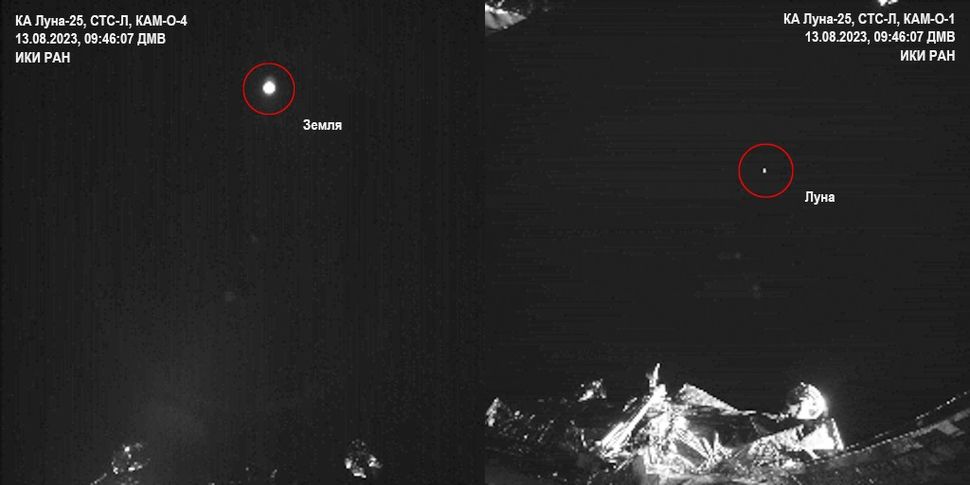
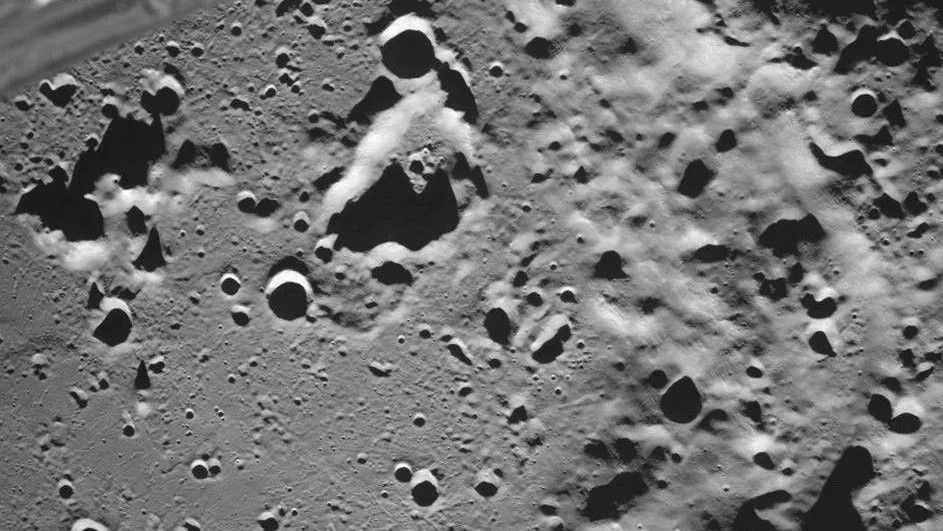
As well as the Chinese mission, Russia is expected to provide input to the programme as the first major partner to join with China in their lunar ambitions. This involvement is due to commence later in 2023 with the launch of the Luna 25 lander, to be followed by the Luna 26 orbiter and Luna 27 lander missions in 2027 and 2028 respectively. Russia will also provide personnel and equipment for the LRS.

Alongside of this, the China Aerospace Science and Technology Corp. (CASC) will work on crewed vehicles for transporting taikonauts to the Moon and delivering them to the surface and then back to orbit. If the plan progresses as intended, it is expected that the first phase of the International Lunar Research Station in operation by 2035 – potentially mirroring or possibly ahead of the US plans for an expanded Artemis base in the Moon’s South Polar Region.

Most recently for China has been the return to Earth of their ultra-secretive Chongfu Shiyong Shiyan Hangtian Qi (CSSHQ), an experimental spaceplane after 276 days in orbit.

An artist’s impression of China’s reusable Shenlong spaceplane. Credit: China Aerospace Studies Institute

Quite what the vehicle is remains unclear to western analysts – and matters have been muddled by differing statements made by Chinese authorities (some of which are doubtless intended to obfuscate matters), indicating that the vehicle is both an unscrewed cargo-carrying vehicle and a craft designed to carry a crew of 6 to orbit. However, this latter claim appears to be unrealistic; CCSHQ’s two flights have been aboard Long March 2F vehicles, which have a maximum payload capacity of 8.4 tonnes – but a vehicle capable of supporting a crew of six in orbit and returning them safely to Earth would have a mass well; perhaps as much as 20 tonnes at launch. The Chinese have also suggested the vehicle is a two-stage craft, using a scramjet engine for first stage propulsion.

The vehicle’s size approximates to that of the equally secretive X-37B spaceplane, some 8-9 metres in length and with a wingspan of between 3 and 4 metres. The May 8th return to Earth marks its second flight into space – the first being a modest 3-day flight in 2020.

The current mission commenced on August 4th, 2022, and gave rise to a lot of speculation when the vehicle deployed a small satellite, with some in the west claiming it was a  weapons platform – something China hotly denied. As it was, vehicle and cargo operated in close proximity to one another for a time, as if practicing rendezvous manoeuvres. In addition to this, CSSHQ performed more extensive manoeuvres, including altering its orbit, raising and lowering it.

The reusable test spacecraft successfully launched by our country at the Jiuquan Satellite Launch Centre successfully returned to the scheduled landing site on May 8 after flying in orbit for 276 days. The complete success of this test marks an important breakthrough in our country’s research on reusable spacecraft technology, which will provide a more convenient and inexpensive way to and from the peaceful use of space in the future.

– China Aerospace Science and Technology Corp. (CASC) statement

The Chinese space plane is roughly the same size and the US X-37B, shown above in its former USAF marking. Credit: Giuseppe De Chiara

As with the first mission, the launch commenced from the Jiuquan Satellite Launch Centre in the Gobi Desert and while accounts vary, it appears to have concluded with the craft landing at the Lop Nur military base in Xinjiang, as it did at the end of its maiden flight.

Some in the west have been keen to play down this mission, noting that the X-37B’s first flight lasted 224 days, and its most recent – which ended in November 2022 – was908 days in length. However, the X-37B has a development history going back, and took a decade to extend its flight envelope from 224 to 908 days. CSSHQ appears to have been in development for less than a decade, and saw its mission duration leap from 4 days to 276 in just two flights – so it is hardly something to be sneezed at purely on the basis of flight duration.

Vast Contract SpaceX to Launch “World’s First Commercial Space Station”

Vast (also styling itself Vast Space), a privately held American aerospace company founded in 2021, has announced ambitious plans to launch the world’s first commercial orbital facility, Haven-1 in August 2025, and that they have engaged SpaceX to handle the launch and deliver at least one 4-person crew to the station.

“Ambitious”, because prior to February 2023, all Vast has was a mission statement (to build artificial gravity space stations), a logo and a 10,700 square metre facility in Long Beach California; outside of the founders, it did not even have employees. That changed in February with the acquisition of another start-up, Launcher, a company developing 3D printed rocket motors and an orbital transfer vehicle; this afforded Vast assets, products – but not the expertise required to build a module capable of supporting 4 people in orbit for up to 30 days at a time.

An artist’s impression of the Vast Haven-1 module with a Crew Dragon docked against it. Credit: Vast Space LLC

However, Vast claim they can reduce the time required to build the unit by “repurposing” elements of the automated orbital transfer vehicle. If true, this still leaves them having to ensure the 10.1 metre by 3.8 metre module is fully capable of supporting life – something which is not a priority for robotic vehicles.

In addition, the module will have deployable solar panels capable of generating up to 15 kW of electrical power, a docking module at one end suitable for capturing Crew Dragon vehicles, and around 70 cubic metres of total pressurised volume. At 14 tonnes, it is intended to be launched with all the consumables needed to support a visiting crew during their stay, with additional crews able to carry further supplies with them aboard Crew Dragon.

Exactly what Haven-1 will be used for is unclear. “Research” has been mentioned, but it also seems to be about space tourism; as a part of a deal with SpaceX, which will see the module launched on a Falcon 9 rocket, Vast have committed to one 4-person Crew Dragon launch to the module (the “Vast-1” mission), and plan to sell these seat on to interested parties, who will also have to pay for training through SpaceX. The contract also includes the option to purchase a second Crew Dragon flight in 2026.

CAD drawings of the proposed “spinning stick” station (l) and a space wheel from Vast Aerospace, both of which will supposedly provide artificial gravity environments – the former by spinning the 7-metre diameter chain of modules around its longitudinal axis, a proposition that looks questionable at best. Credit: Vast Aerospace

Equally ambitious are the company’s longer-term plans. According to their website, they place to launch a much larger “Starship class” module with a diameter of 7 metres (but unspecified length) using the SpaceX Starship. This module class will then – they claim – be used to build 100-metre long “spinning stick” stations which will “provide various gravitational environments including Earth, Mars, Moon, and asteroid gravities” – although whether this is really practicable in a space just 7 metres across and spinning around its longitudinal axis is questionable at the least.

Vast claim these “spinning sticks” will be constructed over seven Starship launches apiece and support up to 40 people each, paving the way through the 2030s to a “proliferated space fleet” comprising “dozens” of stations of various types “across the solar system” in the 2040s. These, if the website is to be believed, will include units modelled on the classic “spinning wheel” stations beloved of science-fiction.

Just how well the company succeeds in these goals remains to be seen. I’m personally not holding my breath. I will give them full marks for the Haven-1 promo video, however.

Continue reading “Space Sunday: China, stations and bits”

Space Sunday: Ups and Downs

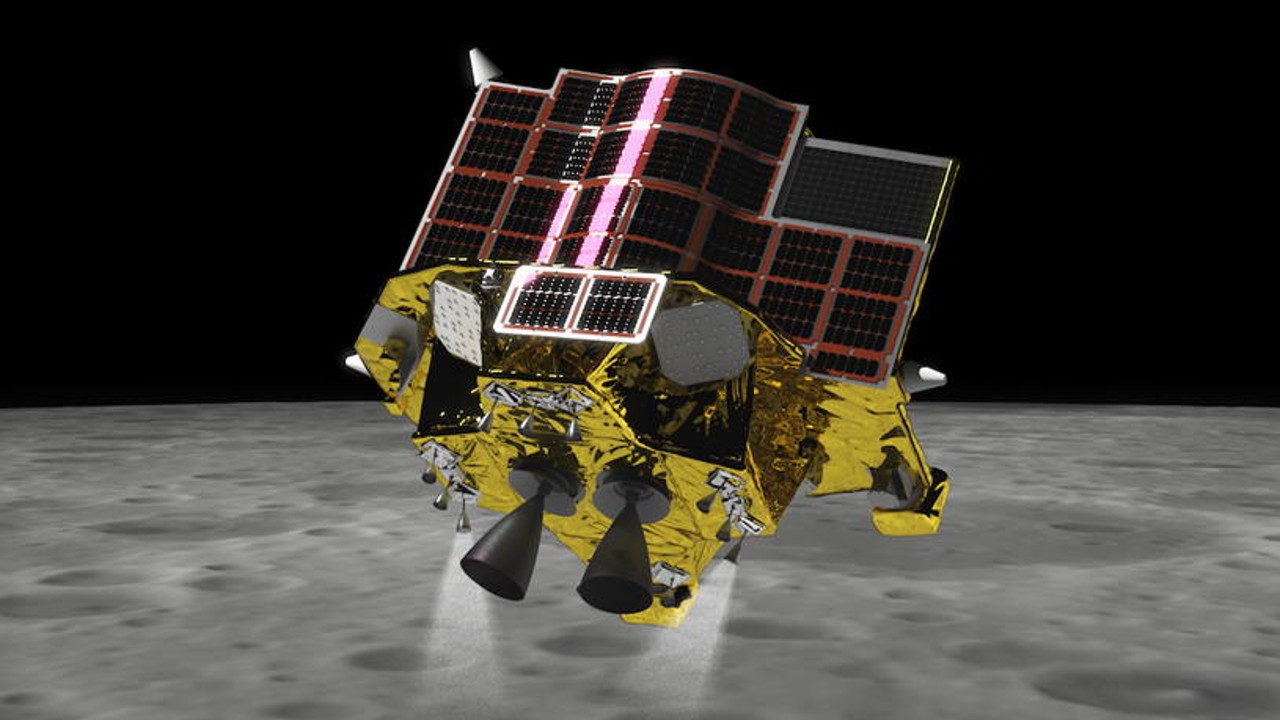
An artist’s rendering of the ispace HAKUTO-R M1 lunar lander. Credit: ispace

Japan’s first attempt at a lunar landing appears to have ended with the loss of the vehicle – once again proving that, for all its successes, spaceflight is nowhere close to being a certainty.

Launched by a SpaceX Falcon 9 in December 11th, 2023 on a low-energy ballistic trajectory that carried it 1.4 million km from Earth before starting on its return, with the Moon getting in the way to allow the vehicle enter an extended elliptical orbit on March 20th, 2023. Over the course of the next several weeks that orbit was circularised, allowing the vehicle to attempt a landing on April 25th.

Essentially a private mission – the lander was built by Tokyo-based ispace – the craft was carrying a set of private and government-sponsored payloads. Among them was Rashid, a small lunar rover developed by the Mohammed bin Rashid Space Centre in the United Arab Emirates, and a “transformable lunar robot” the size of a baseball from Japan’s space agency JAXA. Other payloads include cameras and technology demonstrations.

ispace originally started as a partner of Netherlands-based White Label Space, founded in 2008 to compete in the Google Lunar X Prize. The team then became White Label Space, Japan LLC. They then become Hakuto in order to compete directly in in the Lunar V Prize, developing the Sorato rover before finally transitioning into its present form. Credit: Syced

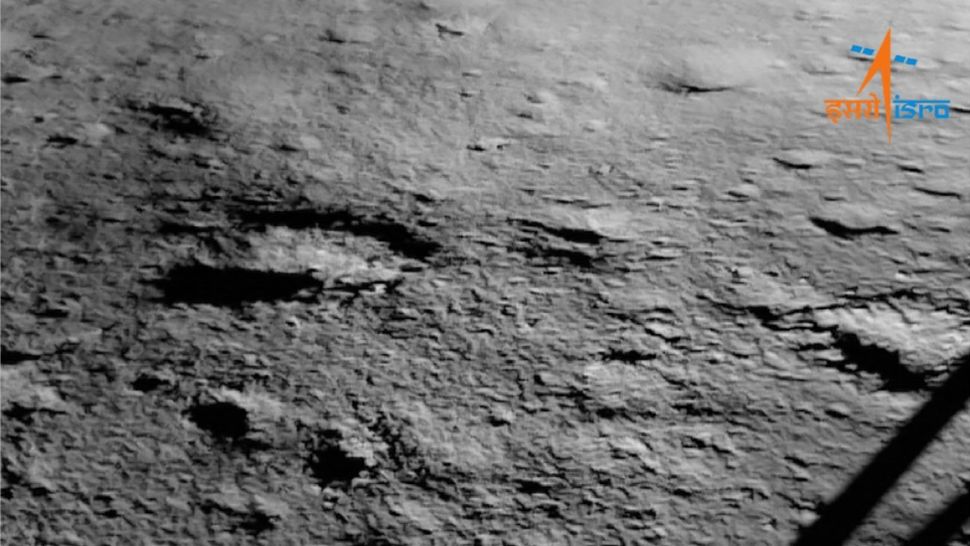
The landing was streamed live and appeared to initially go well, the HAKUTO-R M1 vehicle having survived its extended trip to the Moon with only minor issues, all of which ispace were able to rectify.  However, during the final part of the lander’s decent – whilst it was still some 80 metres above the lunar surface, close to Atlas Crater and descending at a rate of 48 km/h, the telemetry readings for the lander appeared to switch from live data to a simulation, with no subsequent confirmation of a safe landing or any further receipt of telemetry.

ispace initially acknowledged the potential vehicle loss 25 minutes after the planned landing. It came after repeated attempts at communication had failed; six hours after that, the company issued a statement confirming they believed the vehicle had been lost.

During the lander’s final approach to the surface [the] estimated remaining propellant reached at the lower threshold and shortly afterward the descent speed rapidly increased. Based on this, it has been determined that there is a high probability that the lander eventually made a hard landing on the Moon’s surface … it has been determined that Success 9 of the Mission 1 Milestones, successfully landing on the Moon and establishing communications, is no longer achievable.

– ispace announcement on the loss of the HAKUTO-R M1 lander

Despite the loss, Takeshi Hakamada, founder and chief executive of ispace, believes the mission yielded valuable data from both the development and flight of the M1 lander. This, he said would be fed into the company’s next lander mission – M2 – which is targeting a late 2024 launch. It will carry a set of customer payloads as well as a “micro rover” that ispace developed. That rover will collect a regolith sample that will be transferred to NASA under a 2020 contract awarded to ispace’s European subsidiary.

Ingenuity Snaps Perseverance

A panoramic view of Belva Crater captured by NASA’s Ingenuity helicopter during its 51st flight on April 22nd, 2023, the 772nd Martian day, or sol of the Mars 2020 mission. Within it can be seen – upper left and upper right edges – two of the helicopter’s landing feet, and just below and to the right of the image centre is the helicopter’s own shadow. Taken at an altitude of 12 metres, the picture also shows – top left (and just above and inboard of Ingenuity’s landing foot), at the foot of a create wall slope – the Perseverance rover. Credit: NASA/JPL.

Voyager 2 Gets Extended Mission Life

NASA engineers have developed a means to extend the science lifespan of their venerable Voyager 2 space probe beyond its already impressive 45 years – and could do the same for the Voyager 1 craft.

The twin Voyager programme vehicles, launched in August and September 1977 respectively, are the only human-made spacecraft to reach interstellar space.  Together, they are helping scientists understand the heliosphere, the protective bubble of particles and magnetic fields generated by the Sun, informing them as to its shape and its role in protecting Earth from the energetic particles and other radiation found in the interstellar environment. At the same time, the vehicles are helping those scientists also understand the nature of the environment beyond our solar system.

An artist’s rendering of Voyager 2 in deep space. Credit: NASA/JPL

However, whilst powered by radioisotope thermoelectric generators (RTGs), which convert heat from decaying plutonium into electricity, the two vehicles have a limited source of power, the RTGs generating less and less electricity as the plutonium degrades.

Thus far, the flow of electricity to the science instruments has been maintained by means of turning off other systems as they’ve ceased being required – such as the high-power camera systems – and those which do not contribute to the science mission or communications. Nevertheless it has been estimated by late 2023, Voyager 2 would be unable to generate sufficient power to manage its instruments, and NASA would have to start turning them off one by one.

To avoid this, engineers carried out a review of the craft’s systems, and realised that the voltage regulation system, designed to protect the science instruments against unexpected surges in the flow of electricity to them, has a small percent of power from the vehicle RTG specifically dedicated to it; a reserve that isn’t actually required, as it also works off the primary supply. The decision has therefore been taken to release this reserve and allow the instructions access it.

This does mean that if there is a serious voltage issue on the vehicle, the regulator might not be able to deal with it – but as engineers note, after 45 years of continuous operations, the regulators on both of the Voyager craft have been perfectly stable and have never needed to draw on the reserve. While the amount of power freed-up by the move is small, it nevertheless means NASA can forestall any need to start turning off instruments until 2026.

The same approach can also be taken with Voyager 1, although the situation there is less critical at that craft lost one of its science instruments relatively early in the mission, leaving it with sufficient power to keep the remaining instruments through until the end of 2024 before decisions on releasing the power reserve needs to be taken.

Continue reading “Space Sunday: Ups and Downs”

Space Sunday: Starship orbital flight test

April 20th, 2023: the Starship combination of Ship 24 and Booster 7: (l) approaching Max Q, intact but with several engines shut-down; (r) tumbling as control is lost. Credit: SpaceX

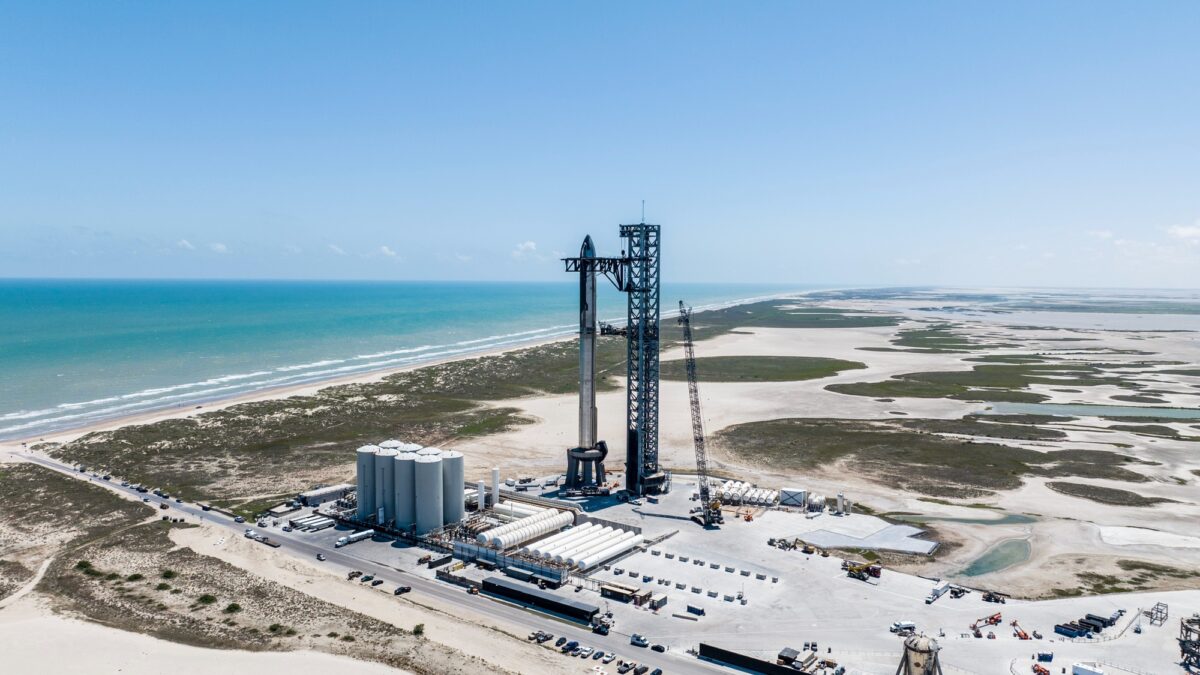
Thursday, April 20th saw SpaceX attempt the first orbital flight test of their Starship / Super Heavy launch vehicle combination. As most reading this article likely already know, things did not go entirely well with the vehicle’s flight termination system (FLS) being used to destroy it just under  four minutes into its ascent.

The flight was always going to be a risk; the Starship / Super Heavy programme has been an extraordinary public display of a rapid development cycle (some might say too rapid), with little in the way of comprehensive systems and integration testing to match that of the likes of NASA. In addition, and ahead of the launch attempt, SpaceX President Gwynne Shotwell went on record as stating the launch wasn’t a “focus” for the company; that lay in upping the production rate for starship vehicles and boosters – a rather surprising statement, all things considered, and one I’ll return to later.

Launch came at 13:33 UTC, after some two hours of propellant loading on both vehicles, and proceeded per the notes below:

T -00:02: 33 Engine ignition and hold on the Orbital Launch Mount (OLM) as trust builds.
T +00:04 Launch clamps release, and vehicle commences ascent, most likely with the failure of three Raptors, two forming a pair on the outer ring of engines, one within the steerable inner ring.
T +00:11 Ship 24 clears the launch tower.
T +00:15 Booster 7 clears the launch tower, first confirmation of three engine failures / shut-downs.
T +00:19 Vehicle exhibits diagonal vertical movement, potentially due to the off-centre thrust resulting from the failure of the two outer ring motors.
T +00:28 Visible flashes in exhaust plume followed by debris departing the base of the vehicle at high speed – thought to be one of the hydraulic pressure units (HPUs), used to gimbal the inner ring of Raptor motors and steer the vehicle.
T +00:40 Loss of 4th Raptor, the third for the outer ring.
T +01:01 Loss of 5th Raptor, the fourth for the outer ring, as vehicle enters Max-Q.
T+01:30 Vehicle exits Max-Q.
T +02:00 Vehicle starts to exhibit off-nominal exhaust plume.
T +02:23 In a split-screen view, vehicle is seen to start slewing in flight at the point it is expected to rotate, re-stabilise and allow the separation of Ship 24 from Booster 7.
T +02:46 Vehicle is clearly spinning / tumbling.
T +03:09 Ship 24 appears to start venting propellants (or possibly a reaction / attitude control thrusters firing).
T +03:12 Venting (or thruster exhaust plumes) visible on both Ship 24 and upper portion of Booster 7.
T +03:25 Vehicle now clearly caught in a flat spin, venting / thruster plumes still visible from the booster’s upper section and from Ship 24.
T +03:58 Flight termination system (FTS) automatically triggered. Vehicle is destroyed.

While the data is still being assessed, the most probable cause for the loss of vehicle is a combination of the loss of at least one of the HPUs and the loss (or partial loss) of two of the inner gimbaling motors, coupled with the off-centre thrust generated by the failure of two pairs of motors located in the same hemisphere of the outer ring of 20 engines leaving the vehicle unable to sufficiently compensate for the biased thrust, resulting in the start of the spin / tumble, which continued beyond the point of recovery, triggering the FTS.

Following the launch, social media was swamped with hails of the launch being either a “success” or a “failure” – with the former being based on statements by SpaceX that if the stack cleared the tower it would be a “successful flight”; hardly the highest of bars to clear for a vehicle intended to be “rapidly reusable”, and the latter based on the fact that the vehicle had to be destroyed – also hardly a fair assessment: rocket can fail – as evidenced earlier in the month by the loss of the smaller Terran-1 rocket on its maiden launch.

Two views of Booster 7, showing 6 failed Raptor motors (l), and what appear to be two more in the process of shutting down (r). Credit: SpaceX

Certainly, there was a lot of valuable data gathered on the performance of the Raptor engines – although not all of this was good. From images gathered, it appears a total of 8 Raptors failed either fully (6) or partially (2). That’s a potential loss of 25% of thrust; not something you’d want to see on a payload carrying mission. On the other hand, however, the uncontrolled spin / tumble showed the starship / booster combination was fully capable of passing through Max-Q and showed remarkable resilience in withstanding any break-up prior to the FTS being triggered.

In particular, the test proved – as many looking at the launch site objectively had long noted (including myself) – the Orbital Launch Mount (OLM), the so-called “stage zero” of the system, was far from up to snuff if it is to support multiple launches, thanks to the lack of any provisioning of a water deluge system or flame deflectors.

Both of these are essential elements within any high-thrust rocket launch system. Flame deflectors do pretty much what their name implies: deflect the heat and flame of engine exhausts away from the launch complex infrastructure and launch vehicle, working in concert with the water deluge system. This delivers hundreds of thousands of litres of water across the launch pad and under it, to both absorb sound to prevent it being reflected back up onto the vehicle as damage-inducing pressure waves, and to absorb the raw heat of the engine exhausts through flash vaporisation – seen as the white clouds of “smoke” erupting from the pads during SLS and former space shuttle launches.

NASA’s Pad 39B water deluge system delivers 1.8 million litres of water to the mobile launch platform when in place at the pad. This water takes the form of a geyser due to it exiting the top of the pipe which would normally connect to the underside of the mobile launch pad so the water is can be distributes to smaller outlets across the top of the platform to cover it in a sound-absorbing “blanket”. As the same time, water is also delivered to the spigots at the top of a flame deflector structure within the concrete flame trench. This water is flash-vaporised during a lunch by the heat and flame from the rockets engines, the deflector itself pushing the super-heated gases of the rocket’s exhausts and the steam along the trench and way from the vehicle and pad to prevent fire damage.  Credit: NASA

Continue reading “Space Sunday: Starship orbital flight test”