Space Sunday: Mars ISRU and a water world

A two-stage Earth Return Vehicle of the kind proposed in the Mars Direct mission outline (1990) on its way to the surface of Mars following entry into the Martian atmosphere, protected by its (still attached) heat shield. Mars Direct proposed this vehicle used in-situ resource utilisation (ISRU) to fuel itself for an eventual return to Earth with a 4-person crew aboard. Credit: The Mars Society / Orange Dot Productions

In 1990, engineer-scientists David Baker and Robert Zubrin published Mars Direct, a paper outlining a relatively cost-effective means to initiate the human exploration of Mars. The paper was primarily written in response to NASA’s own 90-Day Study on Human Exploration of the Moon and Mars, a sprawling document rolling out of George H.W. Bush’s Space Exploration Initiative (SEI), a plan which NASA estimated would cost some US $500 billion in 1989 terms, and require NASA’s budget at the time be increased by 50% (from US $11 billion to $16.6 billion annually), and then adjusted for inflation every year from then on for some 30 years – and that was without accounting for the funds NASA would need to carry out all its other programmes.

While the 90-Day Study (as it was abbreviated to) outlined the means by which the United States could achieve a permanent presence in low-Earth orbit, then on the Moon before going onwards to Mars, it contained much within it that was nonsensical or at least highly questionable in terms of reaching Mars with crewed missions. However, it was the price tag that very quickly killed it – no surprises there.

Mars Direct, by contrast – whilst also controversial in several areas – was written to provide NASA with a means to go, as the name implied, directly to Mars in a manner that could be achieved in a finite time frame (10 years from project initiation through to the first crew setting foot on Mars) and at a cost that would not break NASA’s budget (and additional US $1 billion a year). A key idea of the outline – and one greatly expended upon by Zubrin in his 1996 book The Case for Mars: The Plan to Settle the Red Planet and Why We Must – was that of ISRU (in-situ resource utilisation), the use of resources available on Mars that could be leveraged to both reduce the complexities of the mission and also provide the means for an outpost on Mars to have a degree of self-sufficiency in several key areas.

This recognised that Mars has a lot of natural resources that could help support human missions to Mars – notably, but not limited to – the planet’s carbon dioxide atmosphere, which Zubrin demonstrated could be leveraged to produce vehicle propellants, water and oxygen using processes based on the Sabatier Reaction. Zubrin demonstrated this capability at his own facility in Colorado, and NASA has more recently tested it for oxygen production using their Mars Oxygen In-Situ Resource Utilization Experiment (MOXIE) on the Mars 2020 rover, Perseverance.

The Mars Oxygen In-Situ Resource Utilization Experiment (MOXIE) experiment, carried aboard the Mars 2020 rover Perseverance, tested the idea of producing oxygen from the Martian atmosphere. Credit: NASA / JPL

Zubrin also pointed out that parts of the Martian surface are potentially mineralogically rich, and these minerals could be put to a wide range of uses in support of human operations on Mars, including producing fertilisers for growing food, producing plastics, ceramics and construction materials, generating oxygen and hydrogen, etc. Like many of the ideas Zubrin developed from 1996 through the early 2000s, his views on ISRU were met with a mix of conservatism and an attitude of “not invented here” on the part of NASA, leading to the agency largely downplaying or ignoring the potential for over a decade.

Since the success of MOXIE, NASA has encouraged research into ISRU. Now a new study led by the Planetary Sciences and Remote Sensing Group at the Institute of Geological Sciences, Freie Universität Berlin, not only outlines the wider potential for ISRU using hydrated minerals, it highlights regions on Mars which are not only rich in said minerals but offer potentially “safe” landing zones for crewed missions, they are in and of themselves interesting areas for scientific study.

The research paper – due to be published in the October 2024 issue of Acta Astronautica – initially focused on the extraction of hydrates for the production of water (and by extension, hydrogen and oxygen), a-la Zubrin’s ideas with Mars Direct (allowing for the latter focusing on doing so using the Martian atmosphere). However, as the study progressed, the research team – which included representatives from Germany, France and NASA – realised the extraction and use of hydrated minerals could yield additional benefits.

The hydrated minerals on Mars are the largest water reservoir on Mars known to date (mainly sulphates and phyllosilicates). Water can relatively easily extracted from sulphates and as described in the paper [it] is the most important resource, especially propellant production. However, the [resultant] minerals [obtained through the extraction process] can also be used as fertiliser for food production [while] the phyllosilicates could be used as building material or, for example, making ceramics.

Christoph Goss, Freie Universität Berlin, research lead

The team further noted that the extraction of these hydrates, which are located within the surface regolith rather than within the permafrost layer below it or deeper within the Martian crust, can be achieved through known techniques that are relatively fast and lightweight and do not require complex drilling and other deep-level extraction mechanisms. Thus, they could be achieved relatively easily via robotic means ahead of any human presence, in much the same way as Mars Direct proposes propellant production on Mars in advance of the arrival of any exploratory crew.

Robotic precursor missions could start mining and refining the resources, especially for propellant production. Also, for example, the robotic construction of habitats or the pre-production of oxygen are conceivable projects.  

Christoph Goss, Freie Universität Berlin, research lead

In analysing data gathered from a range of Mars observation satellites, including data gathered by the Compact Reconnaissance Imaging Spectrometer for Mars (CRISM) instrument aboard NASA’s Mars Reconnaissance Orbiter (MRO) and mineralogical maps produced by ESA’s Mars Express mission orbiter, the researchers identified several locations on Mars where crewed exploration could be undertaken whilst leveraging mineral ISRU. Two of these locations in particular are especially well suited for this purpose. These are Mawrth Vallis, an ancient flood channel that opens into the Chryse Planitia plains in Mars’ northern hemisphere, and Juventae Chasma, a 5 km deep basin located north of Valles Marineris. Both present excellent opportunities for landing multiple vehicle on Mars and for carrying out a range of geological and scientific research.

In this, Mawrth Vallis is particularly interesting as it was one of the regions considered for exploration by both NASA’s Perseverance rover prior to Jezero Crater being selected for that mission, and also as a possible landing zone for ESA’s (hopefully) upcoming ExoMars rover, Rosalind Franklin – although the nearby Oxia Planum was eventually selected as the landing zone for that mission.

Mawrth Vallis has some of the most spectacular colour variations seen anywhere on Mars, as revealed in this true colour image captured by the HiRISE imaging system on NASA’s Mars Reconnaissance Orbiter. These variations in surface colour are due to a range of hydrated minerals located with in and around the valley, marking it as a point of interest both for scientific study and potential ISRU exploitation. Credit: NASA / JPL

The study further points out that NASA and commercial organisations have looked at various technologies of ISRU utilising materials gathered from the surface of Mars. Whilst none are specifically referenced, one of the latter worth mentioning here was the MARCO POLO/Mars Pathfinder study conducted by engineers at Kennedy Space Centre in 2016.

MARCO POLO comprised an integrated system of a mock-up lander vehicle containing a “pressure cooker” designed to extract water, hydrogen and oxygen from an analogue of Martian regolith, and a robotic excavator, the Regolith Advanced Surface Systems Operations Robot (RASSOR). Operating on an automated basis, RASSOR demonstrated how a robot vehicle could harvest the analogue material from a test sandbox, and then deliver it to the mock-up lander for processing – with a robot “hopper” vehicle acting as a transfer vehicle between RASSOR and “lander” when the former was operating at greater distances from the that, so that RASSOR didn’t have to spend time making the transfer itself.

Ultimately, MARCO POLO went no further than the demonstration phase – the work was later re-targeted for use on the Moon in order to further develop concepts for use in the proposal Resource Prospector mission. However, the mission was cancelled in 2018 whilst still in its formulation stage.

This report might yet encourage the ideas developed by MARCO POLO (which also included the testing of a robot “hopper” tractor which could be used as an intermediary for transferring material from RASSOR to the “lander” thus allowing RASSOR to focus on gathering surface materials without having to constantly trundling back and forth to the lander to make the transfers itself) to once again be considered for future use on Mars.

Has JWST Found an Actual Water World?

LHR 1140 is a nominally unremarkable class M dwarf star located some 48 light-years away, and is now known to have two planets orbiting it. The first, discovered in 2017 and called simply LHS 1140 b, was initially thought to be an gaseous “mini Neptune” some 1.7 times the size of Earth and orbits its parent star every 25 terrestrial days. However, studies using the James Webb Space Telescope (JWST) during a series of observations of the planet as it transited its parent star have shown the planet is actually a rocky “super Earth”, with around 5.6 times the mass of our planet; what’s more, these studies have turned up a curiosity with the planet: calculations of its density suggest it has an abnormally – by Earth standards, at least – high level of water, with between 10-20% of the planet being water by mass (for comparison, only 0.02% of Earth is water by mass).

An artist’s impression of exoplanet LHS 1140b, (foreground) orbiting its red dwarf parent. Located 48 light years from Earth, recent studies of data gathered by the James Webb Space Telescope (JWST) suggest the planet my have a high percentage of water content by density. Credit; European Southern Observatory (ESO)

This potentially means that LHS 1140 b is the first confirmed “water world” discovered outside of the solar system. However, whether than water exists as a liquid or as ice (in full or in part) is open to question. Obviously, for LHS 1140 b to have liquid water present on its surface, this requires a dense enough atmosphere – and it’s going to take another year of observations at least to determine whether it does have an atmosphere, its composition and its density. In some ways, the odds of this being the case are weighted against LHS 1140 b.

Planets orbiting their parent star as close as LHS 1140 b does to its star face two challenges. The first is that class M stars like LHS 1140 are generally very violent, prone to excessive outbursts of flares and mass ejections. This can, given enough time, rip away any atmosphere of a nearby planet – and at just 9.6% the average distance between the Earth and the Sun, LHS 1140 b is very close to its parent star. The second is that such proximity to its star means that LHS 1140 b is tidally locked with its parent, always keeping the same hemisphere facing the star and in perpetual light and the other in perpetual, freezing darkness.

The first might be mitigated by the fact that LHS 1140, by red / brown dwarf standards, exceptionally calm. Therefore, it is possible that LHS 1140 b may have had a dense enough atmosphere to survive the star’s more violent phases and even now remains dense enough to support liquid water on its surface – at least within one hemisphere; the other will undoubtedly be frozen, and the regions separating the two subject to storms.

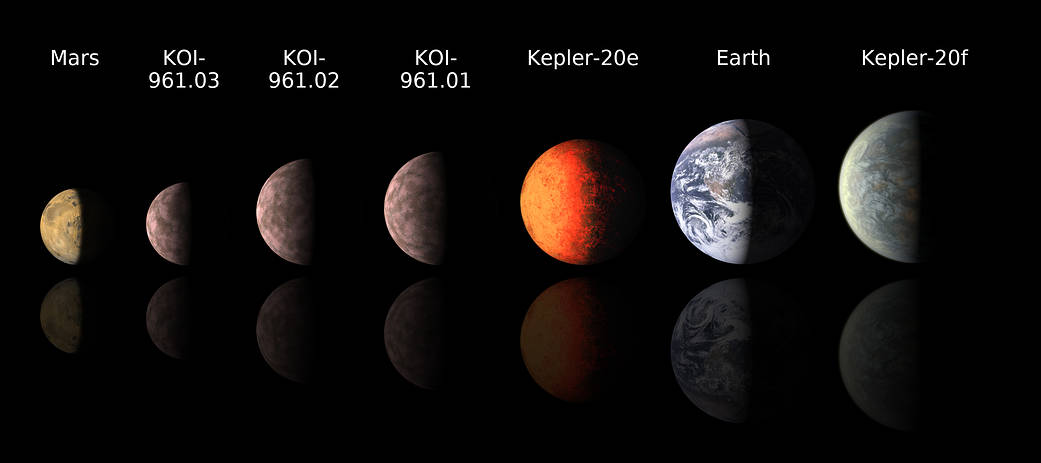
Size comparison of the two known planets of LHS 1140 with Earth. Credit: Martin Vargic

But even if the planet does not have an atmosphere, this also doesn’t necessarily all of the water it may contain is frozen; it may actually mean the planet is a gigantic “exo-Europa”, a planet covered in a shell of ice tens of kilometres thick and with a liquid water ocean beneath it, thanks to a mix of natural heating from the planet’s core, a degree of gravitational flexing as it is influenced by the gravities of both its parent star and the other known planet in the system, LHS 1140 c, and as a result of direct heating from the star itself.

This in turn raises a further point of intrigue and speculation. If LHS 1140 b does have an atmosphere, it could mean that whilst the majority of the planet is covered in ice, a single ocean – a “bull’s eye”, if you will – might exists at the point where the planet consistently receives the greatest amount of heat and light from its parent star. Estimates made by the astronomers studying the planet suggest that such an ocean could be up to 4,000 km in diameter – roughly half the size of our Atlantic Ocean – and with water temperatures reaching around 20oC, which is very approximately the average temperature of the Atlantic Ocean between the tropics.

Two possible looks for LHS 1140 b; with Earth sitting alongside for comparison. This rendering shows two of the speculated looks for the exoplanet: as a completely ice-covered world (with or without and atmosphere) similar to our own Europa, or as a largely ice-covered world with a denser atmosphere and a “bull’s eye ocean” sitting at a point where it receives the greatest amount of light and warmth from its star. Credit: B. Gougeon / UdeM

Obviously, if this were to be the case, then LHS 1140 b would be a truly unique world; the problem being that unless we manage to send to probe to it, we’ll never be able to look down on such a strange sight. And even putting aside the idea of such an exotic ocean existing on a faraway world, it’s going to take as much as a year’s worth of careful observations of the planet in order to be able to detect whether or not it has an atmosphere.

There is still a lot to be learned about LHS 1140 b, including whether or not it has an atmosphere, as noted above. But right now, all the evidence points to the fact that whether fully or partially ice, the fact that LHS 1140 b appear to have so much water in terms of its mass has important connotations for the potential of water being present on other worlds beyond our solar system.

Ariane 6 Launch Update

On Tuesday, July 9th, as as previewed in my previous Space Sunday article, the European Space Agency (ESA) successfully completed the maiden launch of its new Ariane 6 heavy lift launch vehicle (HLLV).

The rocket departed the pad at the Kourou launch site in French Guiana at 1901 UTC, making a flawless ascent, its two solid rocket boosters separating just over two minutes into the flight at an altitude of 62 km. The core stage, powered by its single Vulcain motor, continued to burn for another 6 minutes, carrying the upper stage to orbital velocity prior to shutting down and the core stage separating. The upper stage Vinci motor then fired to raise the vehicle onto its designated orbital track so that deployment of the rideshare payloads could commence from a 577-km altitude circular orbit.

Deployment of the core payloads proceeded smoothly and was completed within two hours of launch. However, problems were encountered during the demonstration of the Vinci engine’s ability to restart itself. Two engine burns were schedule for the flight, the second of which failed when the auxiliary power unit (APU) controlling the engine’s restart suffered an anomaly. This curtailed the planned de-orbit burn of the upper stage, leaving it in orbit. This caused the planned deployment of two re-entry test capsules to be cancelled. The upper stage is now expected to undergo a natural orbital decay and re-enter the atmosphere on its own in the future.

Despite this issue, the launch is seen as a success, and ArianeGroup and ESA are now focused on the next Ariane 6 launch, which is due to place France’s CSO-3 spy satellite into orbit later this year.

Space Sunday: Rockets and the Moon

Stills of the Tiānlóng 3 core stage during ascent, descent and following impact, as caught on the mobile ‘phones of residents in Gongyi city, China

Remarkable footage surfaced this week demonstrating what can happen when the static fire test (also referred to as a “hot fire test”) of a rocket booster’s engines goes awry.

Chinese private aerospace manufacturer Space Pioneer is developing a 2-stage, semi-reusable medium-lift launch vehicle bearing remarkable similarity to SpaceX’s Falcon 9 in form, flight systems and capabilities. Called Tiānlóng 3 (“Heavenly Dragon 3”), the first payload-carrying launch of the vehicle is scheduled for later in 2024, and ahead of that, the company has been carrying out a series of tests to ensure the vehicles is ready for flight, some of which I’ve covered in these pages.

A Tiānlóng 3 core stage, built by Space Pioneer. Credit: Space Pioneer

On June 30th, at a test facility just outside the city of Gongyi, Henan province, the company was carrying out a static fire test of the core stage of the booster when the test stand apparently suffered some form of structural failure, releasing the rocket into an uncontrolled flight. Lifting off, the vehicle climbed into the air for several seconds before the on-board flight systems apparently shut down the motors. Tipping over as an angle, the vehicle then dropped back towards the ground, falling into a valley some 1.5 km from the test facility and exploding 50 second after breaking free of the test stand.

There were no reported causalities or fatalities in the wake of the explosion, but it was close enough to Gongyi to not only be filmed by residents, but also cause some degree of panic among people outside at the time, with video recordings on mobile telephones revealing people running as the rocket plummeted back towards the ground. Given the location of the test facility is so close to the city, the accident reflects the risks involved in siting such facilities close to population centres. With the growth of private sector space activities, local authorities have actively encouraged companies to operate within their districts with sizeable financial incentives in exchange for high-tech jobs and training for locals.

Static fire tests are routinely used by launch providers – the most famous probably being SpaceX – and can go wrong on the ground; SpaceX has suffered a number of Raptor 2 engine explosions during tests at its McGregor, Texas test facility. They have also loss Felcon 9 vehicles in static fire tests – the last being in 2020, and the most high-profile being in 2016, which also resulted in the loss of its Amos-6 satellite payload. However, this is perhaps the first static fire test to involve the lift-off of the rocket, all caught on camera by the public.

Space Pioneer itself is the leader in China’s expanding space sector, having already successfully flown its Tiānlóng 2 rocket. It’s new carrier has been selected by the Chinese government as a primary launch carrier for a mega constellation of communications / Internet satellites intended to rival Starlink. The first launch of the Tiānlóng 3 is expected to take place in September 2024 utilising new, purpose-built facilities located alongside the Chinese government’s Wenchang Spaceport.

Ariane 6 Maiden Flight Ready to Go

A model of an Ariane 64 with the SUSIE vehicle forming its upper stage. Credit: ArianeGroup

After four years of delays and issues, Europe’s Ariane 6 rocket is due to lift-off on its maiden flight at 18:00 UTC on July 9th. If successful, it will mark an end of Europe’s galling dependence on other launch providers – notably SpaceX – in order to get its payloads into space since the retirement of its former workhorse launcher, Ariane 5 in 2023 and the on-going issues with its smaller Vega-C launcher since 2022.

Billed as Europe’s most powerful rocket to date, Ariane 6 has its critics on account of it being an expendable launch system rather than including any form of reusability. However, it is an impressively capable vehicle: it can lift up to 1.65 tonnes to LEO, 11.5 to geostationary transfer orbit (GTO) and 8.6 tonnes to lunar transfer orbit (LTO), with polar / Sun-synchronous orbits (SSO) and geostationary orbit (GEO) also possible.

Comprising a 2-stage core supported by up to four strap-on boosters, Ariane 6 is designed to have a lower operational / launch cost per vehicle compared to Ariane 5, but its development costs have been somewhat higher dues to the need for it to have new launch facilities – Ariane 5 having been able to use the same facilities as early versions of the Ariane family. A major element of Ariane 6’s flexibility of use is the Vinci motor used with the rocket’s upper stage. This is a multi-use engine, capable of multi restarts, offering considerable flexibility in delivering payloads to orbit.

Whilst initially a payload launcher, Ariane 6 has the potential to become Europe’s first operational crew-capable launch vehicle. As I’ve previously reported, in 2022, vehicle developer ArianeGroup announcing they would be pursuing development of the Smart Upper Stage for Innovative Exploration (SUSIE), a reusable upper stage for the 64 (or later) variant of Ariane 6 (the “4” indicating the version of the rocket using 4 strap-on boosters.  SUSIE is a reusable multi-role upper stage capable of autonomous cargo operations or carrying five astronauts to low Earth orbit.

For its maiden flight, Ariane 6 will be performing a rideshare launch carrying multiple payloads. This will be followed by a second launch at the end of the year carrying French military payload. After that, a total of eight launches are currently scheduled for 2025. As will all Ariane launches, the vehicle will operate out of the Guiana Space Centre (Europe’s Spaceport), northwest of Kourou in French Guiana.

Resurs P1 Follow-up

In my previous Space Sunday I covered the disintegration of the decommissioned 6.5 tonne Russian Resurs P1 Earth resources satellite in its near-polar low-Earth orbit (LEO) on June 26th. It event triggered a shelter in place alert on the ISS against the risk of the growing debris cloud intersecting the space station in its orbit. While that threat did not materialise, the risk to satellites, spacecraft and space stations occupying LEO orbits will remain for several more weeks or months until the debris orbit decays.

Since the incident, LeoLabs, the New Zealand organisation specialising in orbital debris, has continued to track the remnants of Resurs P1 and gather additional data. In a preliminary report on their findings, they confirm the debris cloud is consistent with a “low intensity explosion”. This confirms the satellite was not destroyed by a high-energy impact such as would be caused in something like an anti-satellite (A-SAT) missile test.

A model of a Resurs-P Earth resources satellite of the type which disintegrated in orbit, causing the ISS Expedition 71 crew and guests to shelter in place on their spacecraft whilst the risk of the ISS being struck by the debris cloud was assessed. Credit: Vitaly V. Kuzmin

This further confirms findings from the US Space Command immediately following the event that Resurs P1 was not the target of an unannounced A-SAT test of the kind Russia carried out in 2021 (and which also put the ISS at potential risk). Instead, it points to the idea – as I noted previously – that the satellite’s destruction was the result of some form of vehicle failure – although exactly what remains subject to speculation. One explanation is the vehicle was not properly decommissioned and volatiles on board exploded; however, images of the satellite taken by HEO, an Australian company that uses commercial satellites to image other space objects prior to the loss of Resurs P1, have shown its solar arrays were never fully deployed; as such, these may have caused some form of structural failure with the satellite, triggering its disintegration.

LeoLabs also indicated that in the time since the break-up, the debris cloud has growing to 250 trackable pieces in a cloud extending up to 500 km altitude and as low as 420 km.

Artemis: NASA Review confirms SpaceX Unlikely to be Ready Before 2028/29

In Space Sunday: landing humans on the Moon and an ISS taxi, I noted how SpaceX, despite have won (bullied their way into?) the original contract to supply NASA with a vehicle intended to land crews on the Moon for at latest one mission in the Artemis programme – the so-called Human Landing System (HLS), in NASA parlance – would almost certainly mission the 2026 target date for that mission.

The SpaceX HLS vehicle, intended to be used in the Artemis lunar landing missions targeting a 2026 launch date is – by NASA’s own reckoning – unlikely to be ready before 2028. Credit: NASA

This has long been suspected / hinted at – but the fact NASA kept the report, produced in December 2023, out of the public eye for six months is not encouraging. In fact, the only reason the report is known about is thanks to the Government Accountability Office (GAO) referencing it in their latest (June 2024) update on Artemis.

The report in question comes from NASA’s end-of-2023 Key Decision Point (KDP) review, one of a number of critical reviews NASA undertakes with its missions. The KDP is a means to assess whether or not a mission is on course to meet its intended targets.

In this case, the December KDP rated SpaceX as only have a 70% chance of being in a position to meet another critical milestone, the Lunar Orbit Checkout review, by February 2028 – between 18 and 24 months after the date by which it must be completed in order for Artemis 3 to meet its target launch date of September 2026.

Nor does the negative nature of the KDP end there: the February 2028 date for the Lunar Orbit Checkout review must be met if Artemis 3 is to launch at all in 2028. In other words, NASA’s own review believes that SpaceX has a 1-in-three chance of not being ready to launch their HLS on an actual lunar mission until early 2029.

In addition, the GAO report additionally casts double on whether SpaceX can meet its targets with its fixed-price contract, noting that such are the challenges the company has yet to overcome, costs are likely going to rise beyond the agreed US $2.89 billion for  SpaceX HLS development.

The December 2023 KDP goes some way to further explaining why Jim Free, the man at NASA charged with overseeing the Artemis programme, is talking more and more openly about SpaceX – which has been additionally contracted to allow its HLS vehicle to be used in the Artemis 4 crewed lunar landing (at an additional US $1.15 billion to the company) – being completely bypassed in terms of the first crewed landing, and NASA potentially bringing forward the Artemis 5 mission using the HLS system being developed by a partnership led by Blue Origin, and which appears to be far ahead of SpaceX in terms of vehicle and systems development despite starting work on their revised lander some two years after SpaceX.

Of course, some may point to Blue Origin “delaying” SpaceX in their HLS development by seeking to overturn NASA’s decision to contract with SpaceX in 2020. However, whilst that objection (also mounted by the other potential HLS contract contender, Dynetics) did delay SpaceX’s ability to start on its contract – it only did so only for 95 days. Since then, SpaceX has precious little to show by way of even a mock-up of their lander, in contrast with Blue Origin who are already engaged with NASA on their vehicle’s interior design and layout.

Obviously, the Blue Origin partnership has its own challenges to overcome; as such, whether NASA would take the step of replacing Artemis 3 with Artemis 5 is open to question. However, were they to do so, it could potentially call into question the need to utilise SpaceX at all, given the overall impracticality of its lander without a properly-prepared landing zone on the Moon.

Gateway Station Animation

As well as the SpaceX HLS, Artemis involves a number of elements which have been increasingly been seen as questionable in their relevance to developing a human presence on the Moon.

A conceptual image of Gateway Station passing close to the Moon in its NRHO. Credit: NASA

One of these is the Lunar Gateway station, called simply “Gateway”, and intended to occupy a polar near-rectilinear halo orbit (NRHO) around the Moon ranging from 1,500 km over the lunar North Pole to 43,000 km over the South Pole, with an orbital period of around 7 days. NASA claim such an extended orbit will provide ease-of-access to the lunar Polar Regions, minimise disruption in Earth-Moon communications and provide experience in human space operations beyond the Earth / Moon system.

While it is important to minimise interruptions to Earth-Moon communications (such as caused by spacecraft passing around the far side of the Moon), whether an entire space station is required to do this rather than a couple of far cheaper communications satellites, is an entirely valid question. As is whether any of the stated objectives for Gateway will actually be achieved or justify the expense involved in developing and constructing it (due to be almost US $1 billion a year from 2025 onwards). Hence why Gateway has a long line of critics – including the likes of “Buzz” Aldrin, and former NASA Administrator Michael Griffin.

NASA’s Idea For A Space Station In Lunar Orbit Takes Humanity Nowhere. Orbiting the Moon represents barely incremental progress; the only scientific “advantages” to being in lunar orbit as opposed to low Earth orbit are twofold: 1. You’re outside of the Van Allen belts. 2. You’re closer to the lunar surface”, reducing the time delay … Gateway is a great way to spend a great deal of money, advancing science and humanity in no appreciable way.

– Astrophysicist Ethan Siegel, writing for Forbes, 2019

Even so, NASA remains committed to Gateway, specifying by the 2030s it will be around ¼ the size of the ISS and comprise multiple modules, including docking facilities for crewed lunar lander vehicles and the Orion vehicle. On July 2nd, the agency released a video animation of how Gateway is planned to look when complete. At just under 2 minutes in length, it reveals Gateway as an engineering marvel – but cannot overcome questions about the station’s value.


Space Sunday: of samples and sheltering

Chang’e 6 on the Moon’s far side, June 2nd, 2024, within the South Polar-Aitken (SPA) basin, as captured by the camera system on its deployed micro-rover. The sample gather mechanism and drill can be seen attached to the lander’s robot arm. Credit: CNSA/CLEP

China became the first nation to successfully return samples gathered from the Moon’s far side to the Earth on June 25th, when the capsule carrying those samples made a successful soft-landing on the plains of Inner Mongolia.

The capsule had been launched to the Moon on May 3rd as part of the Chang’e 6 mission (see: Space Sunday: Starliners and samples), which targeted an area within the South Pole-Aitken (SPA) basin, where both the United States and China plan to lead separate international projects to establish permanent bases on the Moon. The craft initially entered a distant lunar orbit on May 8th, taking around 12 hours to complete a single pass around the Moon. The orbital was then gradually lowered of a period of several days prior to the mission settling into a period of observation of the landing site from an altitude of just over 200 km, allowing mission planners on Earth the opportunity to further confirm the proposed area of landing was suitable for the lander.

Then, on May 30th, the lander vehicle with is cargo of sample-gathering tools, ascent vehicle with sample canister and mini-rover detached from the orbiter / return craft and gently eased into its own obit some 200 km above the Moon, from which it could make its final descent.

I see you! Two images captured by NASA’s Lunar Reconnaissance Orbiter (LRO) combined to show a before-and-after animation of the Chang’e 6 landing zone, marking the arrival of the lander. Credit: NASA/GSFC/Arizona State University

Landing occurred 22:06 UTC, the vehicle using its on-board autonomous landing system to avoid any land minute hazards and bring itself down to just a couple of metres above the lunar surface. At this point, the decent motors were shut off in order to avoid their exhausts containing the surface material from which samples would be obtained, and the lander dropped into a landing, the shock of impact at 22:23 UTC absorbed by cushioning systems in its landing legs.

The surface mission then proceeded relatively rapidly thereafter. The mini-rover, was deployed not long after landing. Described as a “camera platform” rather than a fully-fledged mini-rover like the Yutu vehicles China has previously operated on the Moon. Once deploy, the rover trundled away from the lander to take a series of images to help ensure it was fit for purpose post-landing. The rover was also able to observe the deployment of the lander’s robot arm with its sample-gathering system, and make remote measurements of surface conditions around the lander.

Chang’e 6 stacked prior to being enclosed in its launch vehicle payload fairings. Note the mini-rover, circled. Original image credit: CAST

It’s not clear precisely when the samples were gathered, but at 23:38 UTC on June 3rd, the ascender vehicle with just under 2 kg of samples of both surface material and material cored by a drill from up to two metres below the surface, lifted-off from the back of the lander and successfully entered lunar orbit, rendezvousing and docking with the return vehicle at 06:48 UTC on June 6th. The transfer of the sample capsule to the return vehicle took place shortly thereafter, and the ascender was then jettisoned.

Throughout most of the rest of June, China remained largely quiet about the mission. However, based on orbital calculations and observations by amateurs, it appears likely the return vehicle fired its engines to break out of lunar orbit on June 21st, then fired them again to place itself into a trans-Earth injection (TEI) flight path, the vehicle closing on Earth on June 25th. As it did so, the 300 kg Earth Return unit separated and performed a non-ballistic “skip” re-entry.

This is a manoeuvre in which a spacecraft reduces the heating loads placed on it when entering the atmosphere by doing so twice; the fist manoeuvre see it skim just deep enough into the denser atmosphere to shed a good deal of its velocity before it rises back up again, cooling itself in sub-orbital ballistic cruise, at the end of which it drops back into the denser atmosphere for re-entry proper. Doing things in this way means that spacecraft returning from places like the Moon do not have to have hugely mass-intensive heat shields, making them more mass-efficient. For Chang’e 6, the skip was performed over the Atlantic, the ballistic cruise took place over northern Europe and Asia before it re-entered again over China and then dropped to parachute deployment height for a touchdown within the Siziwang Banner spacecraft landing area in Inner Mongolia, the traditional landing zone for Chinese missions returning from space.

Scorched by the heat of re-entry, the Chang’e 6 Earth return capsule lies marked by a post-landing flag planted by the ground recovery team as they await the arrival of the air-lift helicopter. Credit: Bei He/Xinhua via Associated Press

Following recovery, the capsule was airlifted to the China Academy of Space Technology (CAST) in Beijing. Then, on June 27th during a live television broadcast, the capsule was opened and sample canister very carefully removed so it could be transferred to a secure and sterile facility for future opening. Afterwards, Chinese officials responsible for the mission gave an international press briefing in which scientists, agencies and research centres from around the world were invited to request samples of the 1.935 kg of material gathered by the probe, the invitation made along much the same lines as made following the rear of the Chang’e 5 samples in 2020.

What makes these samples particularly enticing to scientists is that they are far a part of the Moon very different in terms of morphology and geology to that of the lunar near side, from where all sample of material have thus far been gathered. As such, the Chang’e 6 samples are of significant interest not only because of what they might reveal about the region where humans will – in theory – one day be living and working, but also for what they might reveal about what is currently a genuinely unknown geology and morphology on  the Moon, as thus further reveal secrets about it’s formation.

Technicians remove the Change’6 sample canister from the Earth return capsule at a facility within the China Academy of Space Technology (CAST), Beijing, during a China state TV broadcast, June 27th. Credit: CCTV

However, one agency which may not directly benefit from China’s offer is NASA. The 2011 Wolf Amendment prohibits the US space agency and its research centres to use government funds or resources to engage in direct, bilateral cooperation with agencies of the government of the People’s Republic of China, or any affiliated organisations thereof, without the explicit authorisation from both the FBI and Congress. Such authorisation was not granted in the wake of the Chang’e 5 sample return mission, and so it seems unlikely it will be given for this mission, no matter what the scientific import of the samples.

That said, the Wolf amendment does not prevent non-NASA affiliated US scientists and organisations from being involved in studying samples from the mission. Following Chang’e 5, for example, US scientists joined with colleagues from the UK, Australia and Sweden in a consortium which obtained samples from that mission, allowing several US universities to be involved in studying them. This is something that could happen with regards to the Chang’e 6 samples, once they start being made available by China.


Russian Satellite Break-Up Prompt ISS Shelter In Place – Including Starliner

Despite efforts by NASA, much of the media incorrectly continues to present the idea that two NASA astronauts – Barry “Butch” Wilmore and Sunita “Suni” Williams are “stranded” on the International Space Station (ISS) due to issues with their Boeing CST-100 Starliner Calypso. However, as I noted in my previous Space Sunday article, this is simply not the case (see: Space Sunday: capsules, spaceplanes and missions). Yes, NASA is being cautious around the Starliner vehicle’s issues, but this does not mean the vehicle “cannot” return to Earth.

In fact, practical evidence of NASA’s confidence in the vehicle to make a safe return to Earth came on June 27th, when the entire crew of the ISS were ordered to prepare for s sudden evacuation of the station.

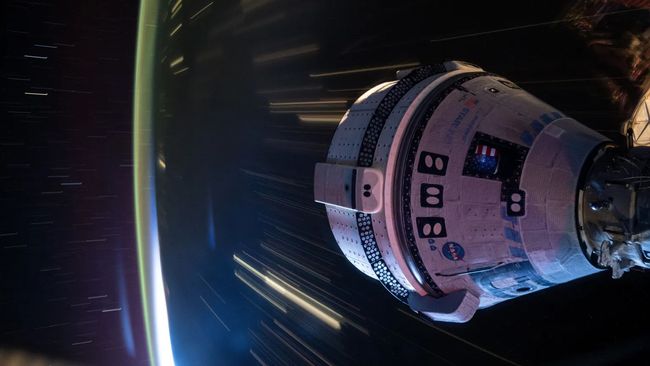
Boeing’s Starliner space capsule docked at the International Space Station. Credit: ESA

The emergency procedure – referred to as shelter in place – was triggered when the destruction of a decommissioned polar-orbiting Russia satellite was detected by debris-tracking organisation LeoLabs. Producing a cloud of around 180 trackable pieces of debris, the event was traced to the orbit of the 6.5 tonne Russian Resurs P1 spacecraft.

Orbiting at  some 470 km, the orbit of the satellite periodically intersected that of the ISS. As the explosion had caused a new orbital track for the resultant debris, it was necessary for the US Space Command to re-assess the passage of both the ISS and the growing debris cloud to ensure there would be no “conjunction” (that’s “collision” to you and me). As a precaution against this being the case, at 02:00 UTC, the entire Expedition crew were ordered into their spacesuit and then into their vehicles and power them up ready for a rapid departure, but not actually seal hatches and undock – and this included Williams and Wilmore on the Starliner.

While all this sounds dramatic, it is not; shelter in place has been the order on a number of occasions when there has been the risk of a collision with debris. Perhaps the most famous up until now came in 2021, after some idiot in the Kremlin ordered an unannounced test of an anti-satellite (A-SAT) missile, resulting in the destruction of another decommissioned Russian polar-orbiting satellite, this one causing a debris cloud of almost 2,000 trackable fragments at an orbital altitude close to that of the ISS.

A model of a Resurs-P Earth resources satellite of the type which disintegrated in orbit, causing the ISS Expedition 71 crew and guests to shelter in place on their spacecraft whilst the risk of the ISS being struck by the debris cloud was assessed. Credit: Vitaly V. Kuzmin

As news broke of the June 27th event, there was some short-lived concern the same A-SAT foolishness had occurred with Resurs P1; however, this was quickly ruled out by the United States Space Command, as a review of data showed there was no evidence of any missile firing in the period ahead of the satellite disintegrating. After analysis of the debris cloud’s orbit and period aby both USSC and LeoLab, the New Zealand based debris tracking agency which initially reported the loss of Resurs P1, it was determined there was no threat to the ISS, and the crew were informed they could secure their spacecraft and return to the station after around an hour.

It is currently believed the destruction of the Russian satellite was due to it not undergoing “passivation” when it was decommissioned at the end of 2021. Whilst not mandatory or 100% effective, “passivation” has been common since the 1980s and involves the removal of any potentially energetic elements of a decommissioned satellite to reduce the risk of future break-up as a result of an explosion or similar. Typically, batteries are ejected so they will eventually burn-up in the atmosphere, whilst remaining propellants are vented into space.


Space Sunday: capsules, spaceplanes and missions

The Boeing CST-100 Starliner Calypso docked at the Harmony module of the International Space Station during the Crew Flight Test mission. Two of the thruster “doghouses” which have been the source of issues, can be seen amounted on the service module. Credit: NASA

Boeing’s CST-100 Starliner spacecraft will now not depart from the International Space Station (ISS) until sometime in July at the earliest. The decision was announced by NASA on June 21st, marking the fourth such delay in the vehicle’s return to Earth during its Crew Flight Test, which lifted-off from Cape Canaveral Space Force Station, Florida, on June 5th, for what should have been a test flight of roughly a week’s duration.

Following a flawless launch and arrival in orbit, and as reported in these pages (see: Space Sunday: Bill Anders; Starliner &; Starship), the vehicle started to encounter further issues with its propulsion system, with further helium leaks (the cause of a number of delays ahead of the launch), together with faults with five of the reaction control thrusters as the craft approached the ISS for docking. However, these were largely resolved prior to docking – although problems with the helium purge system associated with the thrusters suffering leaks of decreasing size has continued to be a problem.

Members of the ISS Expedition 71 crew – NASA astronaut Kjell Lindgren (with the camera), Roscosmos cosmonaut Denis Matveev (centre) and astronaut Bob Hines (behind “Rosie the Rocketeer”, a sensor-laden mannequin which also flew on the uncrewed Orbital Flights Tests with Starliner), explore the CST-100’s cockpit. They were the first people who did not fly on the vehicle to enter it while in orbit. Credit: NASA / Roscosmos

However, despite claims made by some, the delays are not the result of the vehicle being “unsafe” or “broken”; simply put, they are to allow NASA and Boeing to carry out multiple additional tests on the thruster systems – including multiple test firings whilst docked at the ISS – and delve deeper into the issue of the helium leaks.

This is particularly important as the thruster systems will not be making a return to Earth; as a part the vehicle’s service module they will be discarded to burn-up in the upper atmosphere. Ergo, NASA and Boeing want to be sure that as much data has been gathered to facilitate further post-flight investigations. This is particularly important for the problematic systems, as they will not be returning to Earth: as they are mounted on the outside of the vehicle’s service module, they will be detached prior to the capsule’s controlled re-entry into the atmosphere and left to burn-up with the rest of the service module.

No date has been given for any return following the latest postponement, NASA stating they are being data-driven in making decisions, not date-driven. However, as the Expedition 71 crew have had to postpone two EVAs to accommodate Starliner’s continued presence at the ISS, and these need to go ahead at the start of July.

A final consideration for the vehicle’s return lies with the landing sight – the so-called “Space Harbour” at White Sands, New Mexico. NASA and Boeing would rather the landing there takes place under certain lighting conditions, if possible, so that cameras, etc., can gather as much data as possible as well. These opportunities occur every 3 or 4 days, allowing for the ISS being in the correct position in its orbit in order for Starliner to depart it and arrive over its landing site to meet those conditions during its descent.

Virgin Galactic Pauses Sub-orbital Flights; Announces New Astronaut Selection & Seeks to Boost Share Price

It’s a busy old time at Virgin Galactic, the sub-orbital space company offering both private and commercial sub-orbital flights to the edge of space.

On June 8th, 2024, the company’s only operational space plane, VSS Unity, undertook its seventh  – and final – passenger-carrying flight, this one was a mix of the company’s commercial research flights and  a tourism flight, marking the first time the two have been combined into a single Virgin Galactic flight, research flights having previously been carried out as dedicated flights. The mission also marked Unity’s 12th flight overall to sub-orbital altitudes.

The Virgin Galactic Mothership, VSS Eve, takes to the air from Spaceport America, New Mexico, with the SpaceShipTwo vehicle VSS slung underneath it, June 8th, 2024. Credit: Virgin Galactic

Galactic 07 featured Turkish research astronaut, Tuva Atasever, the second Turk to flight into space via a private mission – the first being Alper Gezeravcı, who flew to the International Space Station  (ISS) during the Axiom Space Ax-3 mission in January 2024 – and it was Axiom who arranged for Atasever to fly with Virgin Galactic. He was joined by space tourists Andy Sadhwani, a principal propulsion engineer at SpaceX who previously did research at NASA and Stanford University; Irving Pergament, a New York real estate developer and private pilot; and Giorgio Manenti, an Italian investment manager living in London.

Atasever carried out a total of seven research experiments related to medicine and health, and also oversaw automated payloads from Purdue University to study propellant slosh in microgravity, and a 3D printing experiment  from the University of California Berkeley, both of which were flown under the NASA Commercial Flight Opportunities Programme. The flight, which reached an altitude of 87.5 km, was commanded by Virgin Galactic veteran Nicola Pecile, making his fourth flight, with rookie Jameel Janjua, on his first spaceflight, as pilot.

Virgin Galactic founder Richard Branson (left) and company CEO Michael Colglazier (right) with the Galactic 07 astronauts: Andy Sadhwani, Irving Pergament, Giorgio Manenti and Tuva Atasever. Credit: SpaceNews/Jeff Foust

It has been previously announced that Unity would be retired from active service in mid-2024. However, at the time of that announcement – November 2023 – it had been assumed that the company could be switching to use their new SpaceShip III craft. These are visually identical to the SpaceShipTwo vehicle type represented by VSS Unity, but with an evolution of flight systems. In all two vehicles in the SpaceShip III class has been unveiled: VSS Imagine and VSS Inspire. Imagine was rolled-out with great fanfare in 2021, and had been due to commence flight testing in 2022/23, but this never happened.

With the June 8th flight of Unity, the company confirmed that the SpaceShip III project had been cancelled, and neither Imagine or Inspire will fly; instead being relegated to the role of ground test articles. Instead, the company will not focus on their next generation of space plane, the Delta Class.

VSS Unity (background) undergoing servicing, with the fuselage of Spaceship III VSS Imagine in the foreground, June 2020. Credit: Virgin Galactic

The Delta vehicle is said  – again – the be visually the same as the SpaceShipTwo and SpaceShip III vehicles; however, the airframe has been completely redesigned to make much greater use of composites, much updated avionics and the ability for vehicle fabrication to be sub0contracted out so that Virgin Galactic only has to focus on final vehicle assembly, operation and maintenance. As such, it is expected that the Delta vehicles will be easier to manufacture and have much lower manufacturing, operational and maintenance costs. The first Delta vehicle(s) are due to be delivered for testing in 2025, with commercial flights using the first of them commencing in 2026.

If all goes according to plan, one of the first Delta class flights will feature an all-female research team flying with it, in the form of US national Kellie Gerardi, who flew aboard Galactic 05 in November 2023, along with Canadian Shawna Pandya and Ireland’s Norah Patten. All three are part of the non-profit International Institute for Astronautical Sciences (IIAS), whose mandate includes testing technologies in suborbital aircraft and performing educational activities. Together, they will expand on research that Gerardi (also IIAS director of human spaceflight) performed during Galactic 05, focusing on fluid behaviour with applications to human health.

Three private astronauts assigned to fly one of the first Delta-class missions with Virgin Galactic, representing the International Institute for Astronautical Sciences.(l to R): Shawna Pandya (Canada); Kellie Gerardi (USA); Norah Patten (Ireland). Credit: Virgin Galactic)

Despite  a string of successful space tourist and commercial flights, Virgin Galactic has not been without financial issues; one of the reasons for the switch away from the SpaceShip III vehicles to focus solely on Delta is to reduce overall expenditure. More particularly, the company’s share price has tumbled from a peak of US $50 a share (2021) to around US $0.85 a share – meaning the company has been trading at below the New York Stock Exchange’s (NYSE) minimum share price of US $1.00. Because of this, they have been given 6 months to reverse matters or be removed from listed on the exchange.

As a result the company is – with board approval – going ahead with a 1-for-20 share reversal , meaning 20 existing share will become a single share, increasing its value by a factor of 20. It is hoped that this will, combined with the US $870 cash and equivalents the company holds, be sufficient to see it move forward to starting-up flights with the Delta vehicles. Virgin Galactic hope that flights with just two Delta Class vehicles will yield around US $450 million in revenue.

Voyager 1 on 4; Hubble on 1

An illustration of one of the twin Voyager spacecraft now in interstellar space. Credit: NASA/JPL

Two of NASA’s longest-running space missions, the Hubble Space Telescope and Voyager 1 having been facing troubles of late, as reported in these pages, which have proven equally hard to resolve, but for very different reasons.

With Voyager 1, the issue is that of distance: it is the most distant human-made object from Earth so far ever made; so far away, that two-way communications take almost 48 hours. The bad news is that in November 2023, the vehicle started returning gibberish to Earth during routine communications. The good news is that, as I reported in April 2024 (see: Space Sunday: Rocket Lab, Voyager, Hubble and SLIM), the root cause of the issue had been identified and corrected, leaving engineers and scientists to bring the craft’s remaining four science instruments back on-line.

On June 13th, 2024, the space agency announced all four instruments – which measure plasma waves, magnetic fields and particles in interstellar space – are back on-line, gathering data, and that data is being correctly transmitted to Earth without being converted to garbage.

In order to get things running solidly, the final step to returning Voyager 1 to a fully-operational status was a full communications sub-system software update: the first time an interstellar software update has every been carried out.

However, the news that Voyager 1 is once again telling us about the interstellar medium has been a bittersweet moment, coming has it did two days after the announcement that Edward C. “Ed” Stone, the man who oversaw the entire Voyager project from its formal inception in 1972 through until 2022, had passed away.

Ed Stone lead the Voyager programme from its formal inception in 1972 through until 2022. He passed away on June 9th, 2024, just before Voyager 1’s science capabilities were fully restore. Credit: NASA/JPL

Allowing for declining energy from its decaying from their plutonium-238 power supplies (and the degradation of the thermocouples that turn the heat from that decay into electrical energy), both Voyager 1 and Voyager 2 should be able to continue to transmit data through until 2030 – or even the mid-2030s -, although it is possible than one or more of the remaining instruments on either will have to be turned off in the intervening time.

For Hubble, meanwhile, the issue is not distance, but capability; in short, and again as I’ve previously reported, while the telescope might be operating in Earth orbit, we no longer have a vehicle suitable for rendezvousing with it in order for astronauts to swap-out worn-out parts or make other repairs. Again, as I reported in the Space Sunday edition linked-to above, one of the most delicate elements of the telescope is its gyroscopes – vital for pointing the telescope and maintaining its stability.

Normally, Hubble requires three gyros – which is good, because for the just few years, it has had only three of its original 6 in reasonable working order – and one of those has been unwell, as reported in the Space Sunday linked-to above. As that gyro cannot be reliably recovered, NASA made the decision to alter operations so that Hubble only uses a single gyro – the other of the remaining two being held in reserve.

The Hubble Space Telescope captured this image of the galaxy NGC 1546 while in single gyro mode. Credits: NASA, ESA, STScI, David Thilker (JHU)

As a result, a new technique has been developed to ensure the telescope can correct point itself at targets and remain steady during imaging, and the results of initial testing are more than promising. On June 20th, NASA released an image of NGC 1546, a galaxy 50 million light-years away. Capturing such an object at such a distance requires both precise pointing and rock-steady stability: and Hubble managed both, revealing the galaxy in as much detail and clarity as if it had been operating on all three gyros.

This is great news for deep-space operations with Hubble, and means the telescope can once again keep producing good science; but there is a price. Pointing and steady the telescope means that Hubble’s operational has to be cut by 25%, and it cannot track objects moving a reasonable speed – such as comets and asteroids inside the orbit of Mars. Even so, better that, than losing Hubble altogether.

Space Sunday: Bill Anders; Starliner & Starship

William “Bill” Anders (centre) flanked by his fellow Apollo 8 crew members Frank Borman (l) and Jim Lovell, pictured prior to the launch of their mission on December 21st, 1968. Credit: NASA

Another of the first cadre of humans to visit the Moon and its vicinity was lost to us on June 7th, with the death of William Alison “Bill” Anders at the age of 90.

Born in 1933 in the (then) British Crown Colony of Hong Kong, Anders was the son of a US naval officer on deployment to Hong Kong and China, the family becoming embroiled in the Sino-Japanese War when it broke out in 1937. This forced Anders’ mother to flee Nanjing with her son and survive by wits alone to get them both back to the United States, where they were reunited with Anders’ father, who had been wounded and subsequently rescued by British forces after the Japanese dive-bombed his patrol vessel out from underneath him.

Initially opting to follow his father into the Navy, Anders studied at the US Naval Academy at Annapolis, gaining a degree in electrical engineering. However, enamoured with flying, on graduation he opted to take a commission into the US Air Force and became a fighter pilot. After a series of non-combat operational tours, he sought to become a test pilot – which required he have an MSc. Initially studying aeronautical engineering, he switched to nuclear engineering, gaining his MSc in 1962. However, at that time NASA was recruiting its third astronaut intake and applied and was accepted.

“Bill” Anders in an official NASA portrait photograph from 1964, when he responsible for developing astronaut procedures for dosimetry, radiation effects and environmental controls. Credit: NASA

In late 1966, Anders was assigned to the crew of Apollo 9, alongside Frank Borman and Michael Collins. Together, they would carry out the second Earth-orbiting, crewed check-out of the Apollo Lunar Module (LM), following-on from the Apollo 8 mission crewed by James McDivitt, David Scott and Russell “Rusty” Schweickart. However, by mid-1968, and with both flights due before the end of that year, the LM was not fit for supporting astronauts in space. Fearing the Russians were about to fly a crew around the Moon, NASA decided to switch gear: Apollo 8 would become a cislunar mission, flying with just the Apollo Command and Service Modules (CSM), and Apollo 9 would then complete 1 Earth-orbit crewed test of the LM.

Only McDivitt and his crew didn’t want to go around the Moon, feeling their expertise was better suited to the LM test flight. So instead, the crews were swapped – Borman and Anders, now joined by James “Jim” Lovell, Michael Collins having suffered a back injury requiring surgery – became the Moon-orbiting Apollo 8 crew, and McDivitt’s mission was re-designated Apollo 9, to fly in early 1969.

Thus, on December 21st, 1968, Apollo 8 lifted-off for the Moon, racking up a number of firsts along the way: the first crewed flight of the Saturn V rocket, the first crewed spacecraft to leave Earth’s gravitational sphere of influence; the first crewed  spaceflight to reach the Moon; the first crew to broadcast to Earth from lunar orbit – and most famously of all – the first humans to ever witness Earthrise, with Anders capturing what is now regarded as “the most influential environmental photograph ever taken”.

The picture was captured on Christmas Eve 1968, as Anders was using a 70mm Hasselblad camera loaded with a black-and-white film cartridge to image the lunar surface when he happened to look up through the Command Module’s window and see Earth starting to come into view over the Moon’s limb. Calling to Lovell for a colour film cartridge, he quickly re-loaded his camera with it and then took the iconic shot we all now know as Earthrise.

In doing so, he was actually the second human to photograph the Earth rising over the Moon’s limb; the honour of being the first actually goes to Frank Borman – only his camera was also only loaded with black-and-white film. Thus Anders is the first human to capture the sight in the colour image which has come to represent the beauty, loneliness and fragility of the world we call.

The iconic Earthrise image, as captured by Bill Anders on December 24th, 1968. On the left, the enhanced, post-processed version turned through 90-degrees. On the right, the original as it appeared to Anders from within Apollo 8, dur to his orientation in the vehicle. Credit: NASA
If you can imagine yourself in a darkened room with only one clearly visible object, a small blue-green sphere about the size of a Christmas-tree ornament, then you can begin to grasp what the Earth looks like from space. I think that all of us subconsciously think that the Earth is flat … Let me assure you that, rather than a massive giant, it should be thought of as the fragile Christmas-tree ball which we should handle with considerable care.

– Bill Anders describing how he felt when seeing the Earth appearing from behind the limb of the Moon

Bill Anders would only make that one flight in space. In May 1969 he was appointed to the influential position of executive secretary of the National Aeronautics and Space Council (NASC), where he did significant work in developing US space policy. In 1973 he was appointed to one of the five leadership slots of the US Atomic Energy Commission (AEC), transferring to chair the Nuclear Regulatory Commission (NRC) when that was formed in 1975.In mid-1976 he was appointed (at his request) as the US Ambassador to Norway, prior to moving to the private sector and the start of a highly successful career in business in 1977, finally retiring in 1994.

Passionate about flying, Anders, together with his wife Valerie and two of his sons – Alan and Greg – founded the Heritage Flight Museum in 1996, regularly flying the museum’s pistoned-engined aircraft and air shows around the United States. He also owned and operated a T34 Mentor training aircraft, and on June 7th, 2024, he took to the air in this aircraft to fly circuits over Puget Sound, Washington State, where he lived. During this flight it appears – via eye witness video – he attempted a low-altitude loop in a channel between two islands, but the aircraft failed to pull up in time, slamming into the water and breaking up, likely killing Anders instantly. The accident is now under investigation by the US National Transportation Safety Board (NTSB).

Anders is survived by his wife of 67 years, Valerie, and their six children.

Starliner Launches; Issues Persist

Boeing’s much-troubled CST-100 Starliner finally lifted-off on its first crewed test flight at 14:52 UTC on Wednesday, June 5th, finally sending astronauts Barry “Butch” Wilmore and Sunita “Suni” Williams on their way to the International Space Station (ISS) in a flight intended to help clear the Starliner capsule for use in ferrying up to four crew at a time to the ISS, and in an emergency (and depending on available seating), returning up to 7 to Earth.

June 5th, 2024: Boeing’s Starliner spacecraft climbs into the sky atop a United Launch Alliance Atlas V-N22 from Cape Canaveral Space Force Station in Florida at the start of the Crew Flight Test. Credit: Joe Raedle via Getty Images

As I’ve reported in past Space Sundays, the Crew Flight Test of the vehicle has been plagued by problems – many with Starliner itself, but also extending to launch systems on the ground and systems within its launch vehicle, the Atlas-Centaur V-N22. However, the launch on June 5th was flawless, and marked both the first time in history that humans have flown atop the veritable Atlas V, which is more usually employed for cargo carrying launches, and the first time since Apollo 7 in 1967 that a crewed vehicle has lifted-off from facilities at Cape Canaveral Space Force station (then called the Cape Kennedy Air Force Station).

Fifteen minutes after launch the Starliner separated from the Centaur upper stage, entering a sub-orbital trajectory around the Earth, allowing for a preliminary vehicle check-out and a rapid return to Earth in the event of issues. With the crew and ground personnel satisfied all was well, Wilmore and Williams used the vehicle’s propulsion system to increase its altitude and velocity, enabling it to enter orbit 31 minutes after lift-off.

Starliner Calypso sits just off the ISS prior to docking on June 6th, 2024. Credit: NASA

The rest of June 5th saw the crew carry out a series of tests with the vehicle as it climbed towards the ISS, putting it through various manoeuvres and testing communications and other systems. During this time further helium leaks were detected in the vehicle’s thruster system – a known leak having been the cause of one of the delays to the mission’s launch – and 6 of the vehicle’s 28 thrusters were shut down. This did not impact vehicle performance, but the fact that four further helium leaks were detected on top of the known leak indicates there may be a systematic issue within the design of the propulsion system.

Further issues occurred during the vehicle’s approach to the ISS on June 6th, when five of the reaction control system (RCS) thrusters were automatically deactivated, forcing the actual docking to be delayed, Starliner held in a station-keeping position by Wilmore and Williams some 200 metres from the station whilst a team on the ground recovered four of the recalcitrant thrusters, enabling the vehicle to dock with the Harmony module on the station. Hatches between vehicle and station being opened 2 hours after docking, to allow for further post-flight checks on the dock seal within the vehicle and for Williams and Wilmore to change out of their pressure suits.

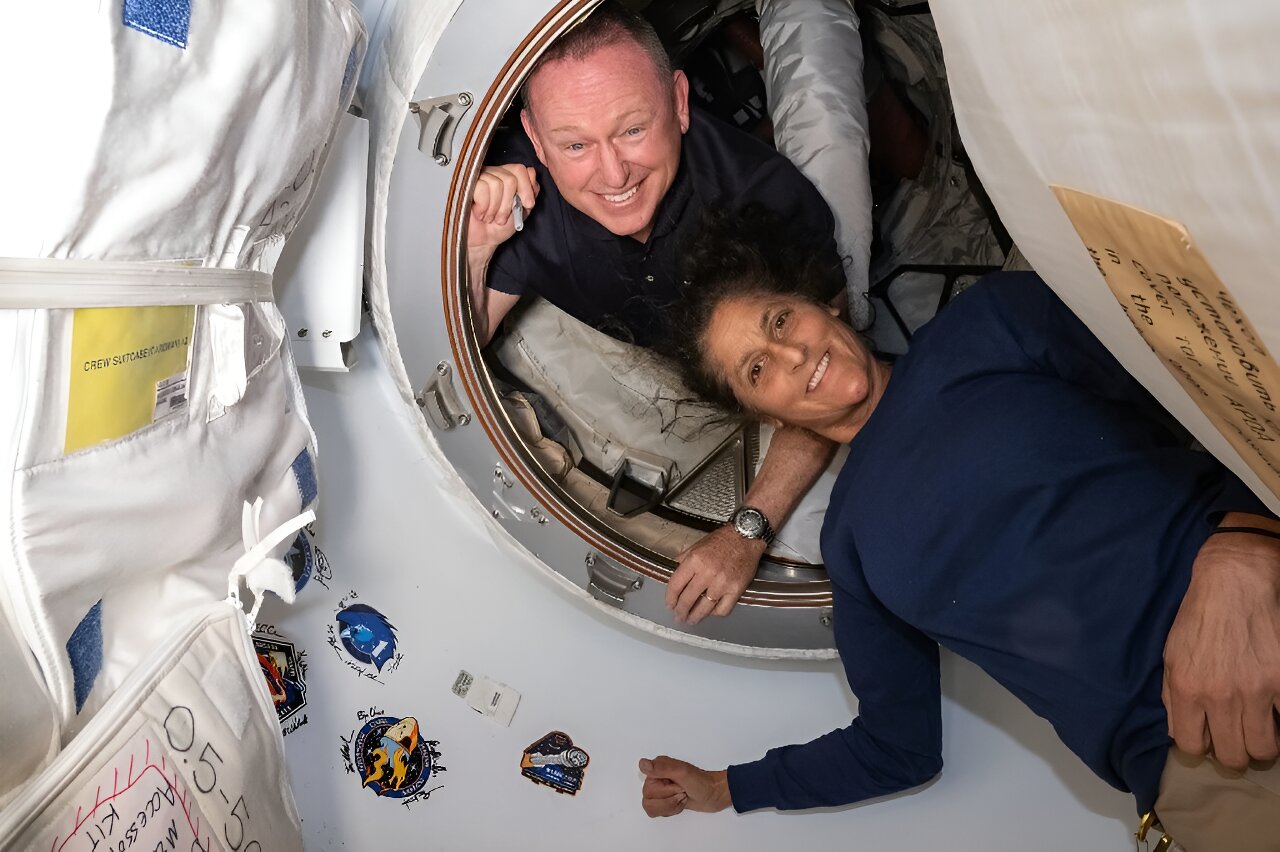
“Suni” Williams and “Butch” Wilmore (in blue NASA jumpsuits) celebrate their arrival aboard the ISS with the crew of Expedition 71. Credit: NASA

The vehicle will remain docked at the ISS for several more days prior to departure with Wilmore and Williams for a return to Earth and a soft landing in New Mexico on June 14th.

Continue reading “Space Sunday: Bill Anders; Starliner & Starship”

Space Sunday: lunar aspirations

A depiction of China’s Chang’e 6 mission landing on the far side of the Moon, June 1st (UTC), 2024. Credit: CCTV

China’s sixth robotic mission to the Moon successfully touched down on the lunar far side at 22:23 UTC on Saturday, June 1st, marking four out of four successful landings on the Moon (the early Chang’e missions being orbiter vehicles).

Chang’e 6 is the most ambitious Chinese lunar surface mission yet, charged with placing a lander and rover on the Moon, collecting samples from around itself, and then returning those samples to Earth for analysis by scientists around the world. It’s not the first sample return mission to the Moon – nor even the first by China; that honour went to the previous surface mission, Chang’e 5. However, it will be the first lunar mission to return samples gathered from the Moon’s far side and from the South Polar Region of the Moon, which is the target for human aspirations for establishing bases on the Moon, as currently led by China (the International Lunar Research Station (ILRS) project) and the United States (Project Artemis).

As I’ve previously noted, the mission – launched on May 3rd – took a gentle route out to the Moon and comprises four elements: an orbiter charged with getting everything to the Moon and bringing the sample home; and lander responsible for getting the sample gathering system, the sample return ascender and a small rover down to the Moon in one piece; the ascender, charged with getting the samples back to lunar orbit for capture by the orbiter, and the returner, a re-entry capsule designed to safely get the samples through Earth’s atmosphere and to the ground.

China’s ability with its robotic landers is impressive. Chang’e 6, for example, carried out its landing entirely autonomously – the only way for it to communicate with mission control is via two Queqiao (“Magpie Bridge-2”) communications relay satellites operating in extended halo orbits around the Moon and with a time delay that while measured in seconds was still too long for mission control to manage the lander directly.

Instead, the vehicle used a variable-thrust motor to descend over its target landing location close to Apollo crater. On reaching an altitude of 2.5 kilometres, the vehicle started scanning its landing zone using imaging systems to find an optimal landing point and then continue its descent towards it. Then at 100 metres altitude, the vehicle entered a short-term hover and activated a light detection and ranging (LiDAR) system alongside its cameras to assess the ground beneath and around it and manoeuvre itself directly over the point it deemed safest for landing.

Following landing, mission control started a thorough check-out of the lander’s systems, including the sample gathering scoop and drill in readiness for operations to commence. The first order of business will be to gather up to 2 kg of surface and subsurface material for transfer to the ascender vehicle, which could be launched back into orbit within the first 48 hours of the start of operations.

An artist’s rendering of a Change 5/6 lander on the Moon’s surface (the craft being almost identical), the ascender vehicle sitting on top of it. Credit: China News Service

As well as this, the lander will carry out an extensive survey of its landing zone, in which it will be supported by its mini-rover. The latter is apparently different to the Yutu rovers carried by Chang’e 4 and Chang’e 3 respectively, being described as an “undisclosed design”. Overall mission time for the lander and rover is unclear, but will be at least a local lunar day.

Chang’e 6 marks the end of the third phase of China’s efforts to explore the Moon.  The next two surface missions, Chang’e 7 (2026) and Chang’e 8 (2028) form the fourth phase, and will be geared towards preparing China to undertake its first crewed landings on the Moon in the early 2030s, and with the development of a robotic base camp on the South Polar Region which can then be extended into a human-supporting base.

Starliner Hits Further Delay

June 1st was the latest target launch date to be missed by the Boeing CST-100 Starliner on its maiden crewed flight after a computer issue caused the attempt to be scrubbed just under 4 minutes prior to a planned 16:25 UTC lift-off.

As I’ve been reporting over the last few Space Sunday updates, Boeing and NASA are attempting to clear the “space taxi” designed to fly crews to and from orbiting space stations for normal operations by having it complete a week-long flight to, and docking with, the International Space Station (ISS). However, the vehicle and its launcher, the veritable Atlas V-Centaur combination, have hit a further series of hitches.

An image captured from one of the video camera at Launch Complex 41 (LC-41), Cape Canaveral Space force Station, showing the Boeing CST-100 Calypso sitting atop its Atlas Centaur V-N booster with just under 8 minutes to go in the countdown towards the June 1st launch attempt, and just under 4 minutes out from the GLS system aborting the launch. Credit: NASA / ULA

If there is light at the end of the tunnel, it is that this and one of the previous causes for a launch delay sit not with the Starliner vehicle, but with a ground-based computer system or with the launch vehicle’s Centaur upper stage respectively. In the June 1st launch attempt everything was proceeding smoothly right up until some four minutes prior to launch, when there was an apparent error in one of the Ground Launch Sequencer (GLS) computers housed within the launch pad.

The GLS is a triple redundant system charged with overseeing all the actions the launch pad must make in sequence with the launch vehicle at lift-off. These include things like shutting off vent feeds from the space vehicle through the umbilical support system, separating and retracting the umbilical systems as the vehicle lifts off, and firing the pyrotechnics holding in place the launch clamps keeping the vehicle on the pad, and so on.

These events have to happen rapidly and in a precise order, and all three GLS computers must concur with themselves and one another that everything is set and ready and they can collectively give the command for the launch to go ahead as the countdown reaches zero. In this case, one of the three GLS systems failed to poll itself as rapidly as the other two, indicating it had a fault in one of its subsystems. Such an issue is regarded as a “red line” incident during a vehicle launch, and so the GLS computers triggered an automatic abort call, ending the launch attempt.

Mission commander Barry “Butch” Whitmore and pilot Sunita “Suni” Williams depart the Neil A. Armstrong Building at NASA’s Kennedy Space Centre before boarding the crew bus that would take them to neighbouring Canaveral Space Force Station and their CST-100 starliner. Credit: John Raoux via Associated Press

United Launch Alliance (ULA) who operate the launch pad and the launch vehicle, traced the fault to a single card within one of the GLS computers, and initially hoped to perform a rapid turn-around swap/out so as to have the pad ready for a further launch attempt on Sunday, June2nd. However, at the time of writing, it appears the launch has now been postponed until no earlier than Wednesday, June 5th.

Orion: Heat Shield Woes

On May 2nd, 2024, NASA’s Office of Inspector General (OIG) released a report titled NASA’s Readiness for the Artemis 2 Crewed Mission to Lunar Orbit, a determination of the space agency’s readiness to undertake its circumlunar crewed Artemis 2 mission currently slated for 2025. It did not make for happy reading for some at NASA.

In particular, the report notes that following the Artemis 1 uncrewed flight test around the Moon in November / December 2022 the vehicle’s heat shield suffered numerous issues despite carrying out its primary role of protecting the craft through re-entry into the atmosphere to allow it to achieve a successful splashdown at the end of the flight.

November 28th, 2022: an image capture by a camera mounted on one of the solar arrays of the Orion MPCV of Artemis-1 as it reaches its furthest distance from Earth (432,210 km) and well beyond the Moon. On December 5th, the craft passed around the Moon at an altitude of just 128 km, where it performed and engine burn to start it on its way back to Earth. Credit: NASA

The heat shield is a modern take on the ablative shielding used on capsule-style space vehicles, as opposed to the thermal protection systems seen on the likes of the space shuttle and the USSF X-37B, SpaceS Starship and Sierra Space’s upcoming Dream Chaser. The latter are designed to absorb / deflect the searing heat of atmospheric entry without suffering significant damage to themselves. Ablative heat shields however, are designed to slowly burn away, carrying the heat of re-entry with them as they do so.

However, in Artemis 1, the heat shield – which should “wear away” fairly evenly (allowing for the space craft’s overall orientation) –  showed more than 100 instances where it in fact wore away very unevenly, in places leading to fairly wide and deep cavities pitting the heat shield, potentially pointing to the risk of the structure suffering a burn-through which might prove catastrophic.

NASA and heat shield manufacturer Lockheed Martin have not been unaware of the problem; they have been working to try and locate the root cause(s) for well over a year; however, the OIG shone a potentially unwelcome light on the situation, both highlighting the extent of the damage – something NASA had hitherto not revealed publicly – and also drawing attention to additional issues that collectively threaten the agency’s attempt to try an complete the Artemis 2 mission by the end of 2025.

An image captured from a camera inside the Orion capsule during atmospheric re-entry, December 11th, 2022. Black lumps of material torn from the heat shield, rather than being ablated, can be seen in the vehicle’s wake. Credit: NASA

The additional issues include the fact during the Artemis 1 uncrewed flight, problems saw in Orion’s power distribution system which lead to electrical power being inconsistently and unevenly delivered to many of the vehicle’s critical flight systems. Again, NASA has stated the power issues issues were the result of higher than expected radiation interference during the Artemis 1 flight, and has sought to implement “workarounds” to operational procedures for the vehicle, rather than addressing the problems directly – something which has drawn a sharp warning from the OIG:

Without a permanent change in the spacecraft’s electrical hardware, there is an increased risk that further power distribution anomalies could lead to a loss of redundancy, inadequate power, and potential loss of vehicle propulsion and pressurisation.

– OIG Report into the Orion MPCV flight readiness for Artemis 2

Following the release of the OIG report, NASA responded with what can only be called a statement carrying a degree of petulance within it, with associate administrator for Exploration Systems Development Mission Directorate Catherine Koerner apparently referencing the OIG’s report as both “unhelpful” and “redundant” – an attitude which raised eyebrows at the time it was issued.

In this, some at NASA might have been angered by the OIG not only underlining problems they have been struggling to deal with, but by the fact the report included images showing the extent of the damage to the heat shield which until the OIG report, has remained out of the public domain – and they are rather eye-popping.

Two of the official NASA images showing the severe pitting and damage caused to the Orion MPCV heat shield following re-entry into Earth’s atmosphere at 36,000 km/h at the end of the uncrewed Artemis 1 mission, December 11th, 2022. These were made public within the NASA OIG report on the readiness or Orion for the Artemis 2 mission which the agency has said will take place by the end of 2025. Credit: NASA / NASA OIG

In the wake of the OIG report and NASA’s somewhat petulant response, Jim Free, the NASA associate administrator in overall charge of the agency’s ambitions to return to the Moon with a human presence has stepped into the mix, stating the heat shield issue will now be additionally overseen by an independent review panel charged with assisting both NASA and Lockheed Martin and guiding them towards a solution that will hopefully rectify the problem and safeguard the lives of those flying aboard Orion in the future. But whether this result in the mission going ahead in 2025 or being pushed back into 2026 remains to be seen.

Dear Moon – We’re Not Coming

In what comes as no surprise, Japanese billionaire Yusaku Maezawa has cancelled his booking to use a SpaceX starship to fly him and eight others around the Moon and back to Earth. First announced in 2018, the flight – called “dearMoon” – was seen by Maezawa as an “inspirational” undertaking that would see him and a mix of artists, musicians and writers make the trip and then produce pieces of work based on their experience. It was announced with great fanfare in 2018, with the flight slated for 2023 – which, as I noted at the time, just wasn’t going to happen.

I signed the contract in 2018 based on the assumption that dearMoon would launch by the end of 2023. “It’s a developmental project so it is what it is, but it is still uncertain as to when Starship can launch. I can’t plan my future in this situation, and I feel terrible making the crew members wait longer, hence the difficult decision to cancel at this point in time. I apologise to those who were excited for this project to happen.

– Statement from Yusaku Maezawa, June 1st, 2024

The dearMoon crew (with two back-ups). Left to right: Kaitlyn Farrington (USA – backup); Brendan Hall (USA); Tim Dodd (USA); Yemi A.D. (Czechoslovakia); Choi Seung-hyun (South Korea); Yusaku Maezawa (Commander – Japan); Steve Aoki (Pilot – USA); Rhiannon Adam (Ireland); Karim Iliya (UK); Dev Joshi (India); and Miyu (Japan – back-up)

At the time the announcement of the flight was made in 2018, starship hadn’t even flown, so the idea the entire system could be designed, finalised, tested, flight, achieve a rating to fly humans and be capable of making a trip around the Moon and back was nothing short of a flight of fancy – which is why, in part, that little mention of it has been made since.  However, the mission concept served to boost Starship / Super Heavy in the public eye and bring and bring undisclosed (but described by Elon Musk as “very significant”) sum of money to SpaceX.

It’s not clear if the money has or will be refunded to Maezawa, who subsequently turned to more conventional means to reach space, flying aboard a Soyuz vehicle as a “space tourist” to spend 12 days at the ISS in December 2021.