LL completes Tilia sale to Thunes: What you need to know

via Tilia.io

Update: Linden Lab has now blogged on the change-over – see: A New Chapter: Tilia Joins Global Payments Leader Thunes, together with a FAQ. I have further updated this piece to include details on user data security, as given by Brad Oberwager in April 2024, as a result of being was on this subject.

On Thursday, 29th, 2025, Linden Lab Executive Chair Brad Oberwager and members of his team held a Zoom call with bloggers and creators to provide an update on the acquisition of Tilia.io, the all-in-one payments platform the Lab launched, and which handles payments processing, USD account balances, etc., for Second Life, to Singapore-based Thunes, based business-2-business (B2B) payments infrastructure firm.

The following is a summary of the core points of the discussion, some of which re-trod the subject of account security, as I’ve already covered in Linden Lab: keeping your Second Life account safe.

Acquisition and Change-Over

  • The acquisition is due to complete on Wednesday, June 4th, 2025.
  • On this date, there will a series of steps taken by both Linden Lab and Thunes to complete the change-over.
  • Perhaps most notably, Second Life web pages referencing Tilia Inc., will instead reference Thunes Financial Services LLC, and the Tilia website will be rebranded.
  • While there are chances of some hiccups given the back-end complexity of the change, these should be minimal, and the SL support teams will be ready to help any users who may experience issues.
  • In short: “Don’t Panic” when/if you see the changes happening.

What This Immediately Means to Users

For the majority of users, there should be no visible difference to the processes of buying L$ or cashing-out.

  • User Data Security: An important point to note with the acquisition of Tilia is that Second Life user data is not changing hands.
    • Tilia will have new owners and will be renamed, but the lock-down of Second Life user data resides in two places: Tilia (for financial information) and Second Life (actual user data).
    • As a financial services company, Thunes is required to keep financial data as secure as it currently is with Tilia, and the data will not be removed from the current Tilia systems and moved elsewhere.
  • There will be no changes in existing fees charged by the Lab for cashing-out or buying L$.
  • No-one needs to create an account with Thunes to keep buying L$ or cashing-out, etc.
  • There will be no change in how support issues relating to finances are handled: users will continue to deal with the Lab’s own billing support team. you will not have to deal with Thunes directly.
  • Linden Lab will continue to manage the LindeX, and nothing will be changing on this front.
  • However:
    • Following the change-over, users may be required to acknowledge the change via a check-box the first time they engage with the rebranded service.
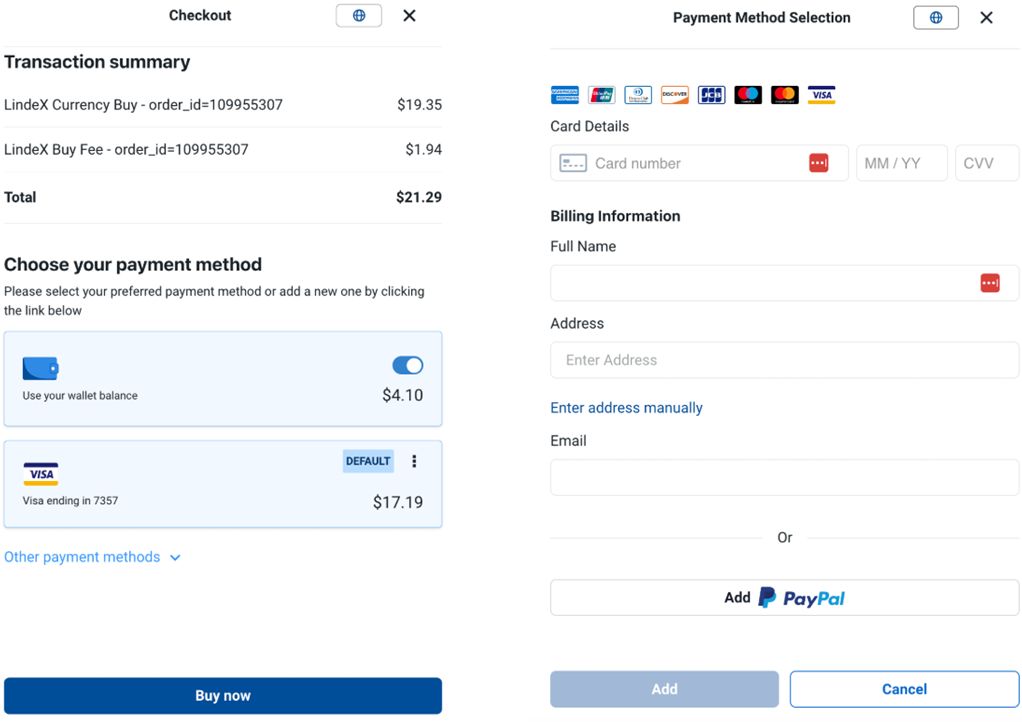
    • Some users may have to re-submit information such as their credit card details or re-confirm a payment account as a result of the change-over.

What It Means Going Forward

  • Potentially more methods by which to receive payments from Second Life (e.g. to different accounts, through different services, etc.) or by which to purchase L$ – Thunes supports pay-outs across 130+ countries and 320+ payment methods globally.
  • It is possible that as new payment methods are added to Second Life, they may be subject to increased fees as a result of charges made by the payment method.
    • To aid in understanding of fees charged, the Lab will start to provide a breakdown: how much they are charging & how much of that due to the payment method. This is to allow users to decide whether they wish to use a newer payment method, which might offer certain advantages (e.g. faster processing), or not.
  • LL has a 5-year agreement with Thunes to prevent Thunes forcing increases on existing services provided to LL (although this obviously does not prevent LL making changes to fees should they need to).
  • Much better fraud controls and investigation, leveraging Thunes own capabilities as well as LL’s support team.

Benefits to Linden Lab

  • The company is no longer engaged in trying to operate and maintain what is essentially a fintech company, with all the costs involved therein.
  • Ability for management to focus solely on building and improving Second Life.
  • The payments team can be focused solely on Second Life, rather than having to also focus on regulatory requirements and deal with multiple payment services, etc., as these will now be the responsibility for Thunes to manage.

Related Links


Lab launches Creator Partnership Programme

via Linden Lab

On Wednesday, April 23rd, 2025, Linden Lab announced the launch of the Second Life Creator Partnership Programme, an imitative intended to allow creators in Second Life “play a central role in shaping the future of Second Life”, through a collaboration with the Lab to co-create content and experiences aimed at both new and existing users of the Second Life platform.

The Creator Partnership follows on a number of recent collaborations between the Lab and various creators / groups in Second Life (e.g. MadPea, Seraphim) and perhaps most notably, on the heels of the new Avatar Welcome Packs.

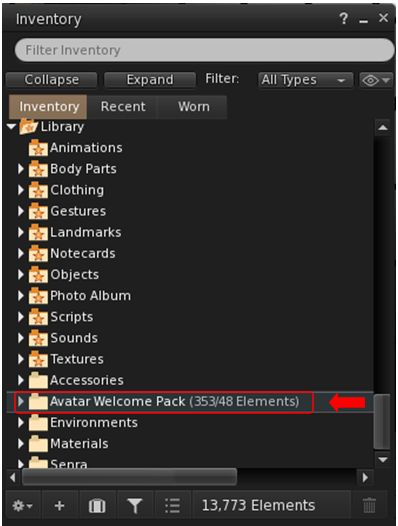
The Avatar Welcome Packs are contained within the System Library, accessed via Inventory

The latter were rolled out quietly recently (although LL are promising to provide more details in the near future), and feature assorted “lite” and “basic” female and heads and bodies, together with a range of accessories and clothing, again from recognised creators (e.g. Lelutka, Addams, MeshBody, Velour).

I’ll actually have more on them in an upcoming post, but for now, the curious who may not be aware of them can find them in the System Library within their inventory.

Through the newly-announced Creator Partnership programme, Linden Lab is looking to work with creators on – initially – three core areas:

Welcome Packs: building on the approach taken with the aforementioned Avatar Welcome Packs, these are aimed specifically at incoming new users in order to help get them started on their Second Life. Such packs could comprises non-human Avtar Packs; Clothing and Accessory Packs; Home furnishing Packs, and similar.

The Lab notes these packs could be distributed through newcomer-friendly areas inworld (possibly for limited time frames), as well as on the Marketplace or Viewer.  But all Welcome Pack content should be optimised for new community members not yet familiar with all the intricacies of Second Life.

Community Perks: the Lab is also hoping to improve the community perks for more established residents. These might include: enhanced paid membership perks; free seasonal and special giveaways; expansion of the Mobile Daily Rewards initiative to include virtual gift; and future programs and promotions that include virtual perks and prizes.

Community Gateways: the Lab is hoping to partner with talented creators of high-quality in-world experiences which can feature as newcomer-friendly destinations available from Community Gateways and the like.

In return for their involvement, participating creators have the opportunity to introduce their brand and content to a wider and loyal audience, with the potential for inclusion in major on-boarding and promotion campaigns, together with the potential to have strategic impact on improving Second Life by working hand-in-hand with Linden Lab.

We’re looking to expand our community collaborations even further – and we invite creators of all types to help us build and improve the next generation of Second Life new user experiences and beyond. Whether you’re a fashion designer, avatar builder, home goods creator, experience developer, or just someone with a standout idea—we want to hear from you.

– Linden Lab blog post

How to Get involved

Further information via the official blog post.

VWBPE 2024: Catching Up With the Lindens – a summary

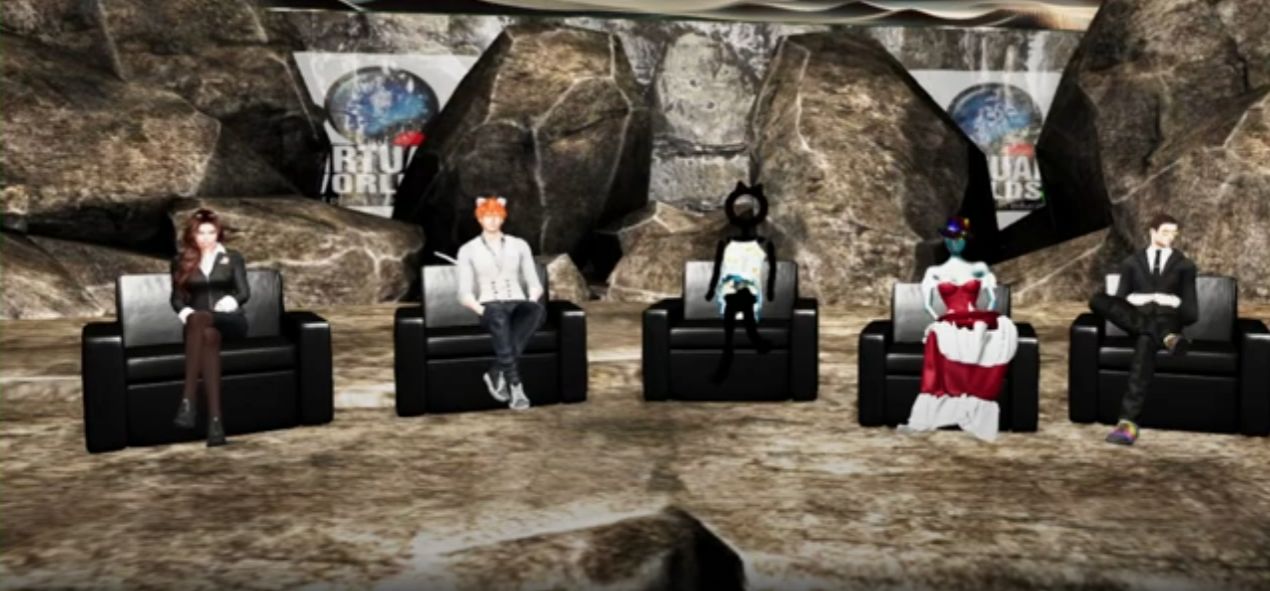
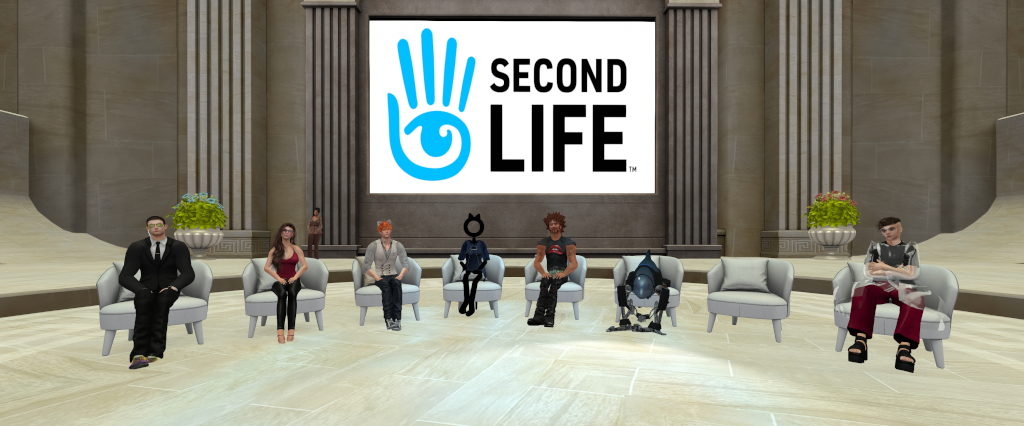
Screen cap of Catching Up With the Lindens (l to r): Elli Pinion, Patch Linden, Grumpity Linden, Kali Linden and Kyle Linden
On Friday, April 4th, 2025 the Virtual Worlds Best Practices in Education (VWBPE) conference held another of in their sessions featuring representatives from Linden Lab and various called over the years Above the Book, What’s Up at the Lab and now Catching Up With the Lindens.
Table of Contents

The following is a summary of the session covering the core topics raised. Notes are based on the official video of the session, which is embedded at the end of this article. Time stamps are also provided to the relevant points in the video for those who wish to listen to specific comments.

On hand for the session, hosted by Elli Pinion, were:

  • Grumpity Linden, Senior Vice President of Product and Engineering.
  • Patch Linden, Senior Vice President of Product Operations.
  • Kali Linden, Director of Engineering Web & Platform
  • Kyle Linden,  Product Manager (viewer).

Notes:

  • This is a summary, not a full transcript, and items have been grouped by topic, so may not be presented chronologically when compared to the video.
  • Timestamps are included to allow a direct jump to a subject.
  • Given these sessions are part of the VWBPE annual conference, there is obviously a lean towards matters of education and learning.

SL Mobile and Project Zero

SL Mobile

Resources:

[Video: 4:14-13:37]

  • A re-cap on work to date on SL Mobile, from the baseline starting point: could an app be built that could render avatars much as they appear within the viewer?
    • All the work tends to be iterative in nature – so, for example, avatar appearance and fixes form a tranche of on-going work as they are refined and improved.
    • Features are being added in terms of “journeys” – what would people like to do in SL when using a mobile app + what is practical to be able to to on a mobile device, and then building-out a specific “journey”.
    • The first such “journey” was called “going to a club” (although it can be applied to other in-world activities), and which incorporated capabilities  such as logging-in, seeing Friends on-line, finding an event / location, going to it, being able to chat / IM, listen to music, interact with objects, etc.
  • As the project has been opened out through the on-going Beta:
    • Development has been adjusted to try to take into account feedback and feature requests from users. developed and more and more feedback has been supplied by users (e.g. feature requests), and all of this is reviewed and considered in building-out the development roadmap.
    • One aspect of the Beta has been the need to better support incoming new users – hence the integration of the new user sign-up process with Mobile, the provision of an arrival / “welcome” area specifically for new users coming into SL via Mobile, etc.
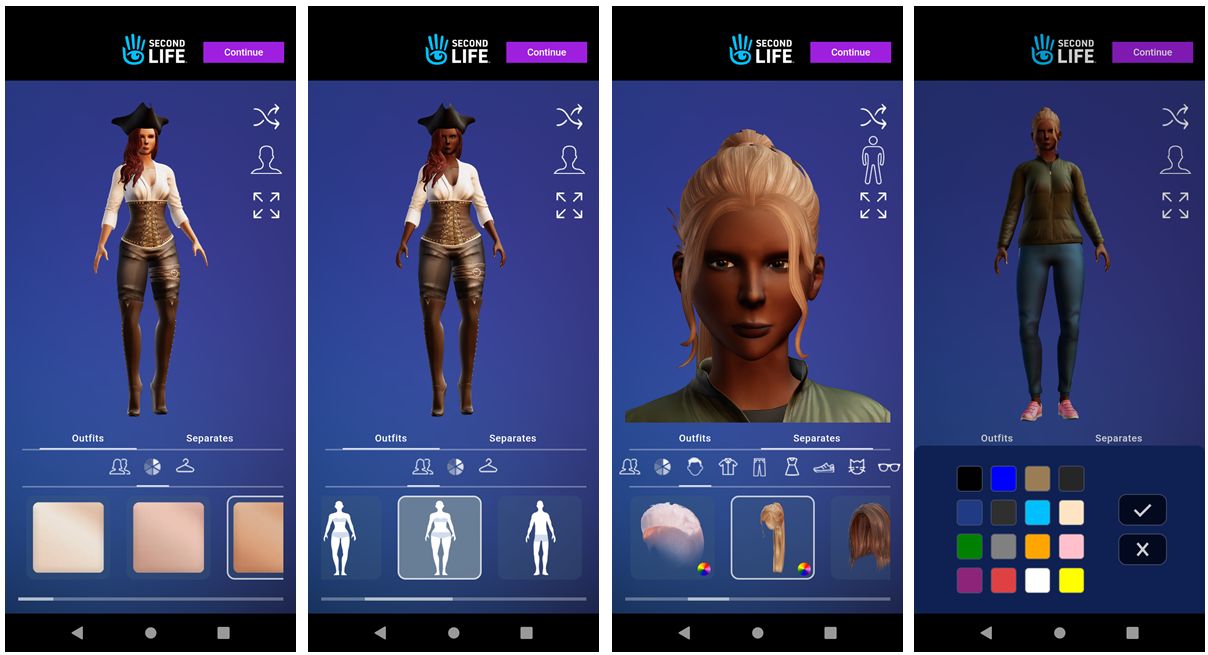
One of the recent updates to SL Mobile was to integrate the new starter workflow – including avatar selection  – into it
  • The goal with the Mobile app is to have it as a companion means of accessing Second Life alongside of the desktop experience, with the eventual aim of having it stand on its own as a window into SL – but there is a lot of work / functionality to add before that point is reached.
  • However, some functionality will not be fully developed – such as the ability to build content from within  Mobile; screen size and other limitations do not allow for this, but users can expect the ability to interact / move content around on Mobile to customise spaces.

Project Zero

Resources:

[Video: 13:38-21:13]

  • Multi-faceted project:
    • Providing easier on-boarding for incoming / returning users by offering a direct path from sign-up to using the official viewer within a browser (Project Zero).
    • Providing a suitable new UI to with with the viewer when offered through a browser (React / HTML) (Project Zero).
    • Providing ability for existing users to access Second Life using a third-party viewer.
  • The payments aspect is in flux; streaming has costs associated with it, which LL need to cover (at the time of writing, around US $1.75 an hour per session – see: here and here for more), but at the same time those costs are gradually decreasing.
  • Firestorm Zero (see: Project Zero Update: Firestorm in your browser as well) has been a “first pass” at trying to offer access to a third-party viewer via a browser. This has been:
    • A limited-availability (in terms of available passes) offer.
    • A experiment in charging a nominal fee for access (L$250 for 5 hours) to see how that was received by existing users.
    • Testing the ability to have viewer settings persist across multiple log-ins using a browser-based version of the viewer.
  • LL are aware of the appetite among users to have browser-based access to SL, and more will be “coming, but not immediately coming.”
  • In terms of pay-to-use: LL are looking at various ways to reduce the cost to users (e.g. bundling so many hours of access per month to the SL subscription tiers before users on those tiers would have to start paying) – but this is all very much still in discussion.

WebRTC

[Video: 21:15-24:52-31:25]

  • Project recap: replacing Vivox Voice service and plug-in with the WebRTC communications protocol (RTC=”real-time communication”). Key benefits:
    • WebRTC supports a wide range of real-time communications tools in common use (e.g. Google Meet), supporting audio, video and data communications, and is thus something of a “standard” approach.
    • Offers a good range of features: automatic echo cancellation, better noise cancellation and automatic gain control, much improved audio sampling rates for improved audio quality.
    • Opens the door to features and capabilities to voice services which could not be implemented whilst using Vivox (e.g. text-to-speech / speech-to-text).
  • Currently, the majority of up-to-date viewer support both Vivox and WebRTC, and regions are running either WebRTC or Vivox on the back end.
    • The intention remains to turn off Vivox altogether on the back-end at some point, leaving only WebRTC.
    • This has been delayed due to the (now decreasing) number of users still using older versions of viewer which do not have the WebRTC updates, and so are reliant on Vivox.
    • It is hoped that, all things being equal, the switch-over can be made before the end of the second quarter of 2025 (e.g. by the end of June 2025).
  • In the meantime, region / estate holders wishing to try WebRTC on their regions can submit a support ticket to have their region moved from Vivox to WebRTC, with the understanding that (at the time of writing) WebRTC is still under development and might be a little unpredictable.

Combat 2.0

Resources:

[Video: 31:45-34:28]

  • Recap: a project (currently on hiatus) to overhaul the Second life Combat System (SLCS) and update it to support better combat capabilities and options, and make user engagement in combat simulations easier and more enjoyable.
  • Key additions to SLCS thus far include:
    • Damage Limit, Regeneration Speed, consequence of death (e.g. teleport victim home as per current SLCS or to a telehub  / landing point or take no action).
    • An on_damage event to account for intervening elements which may result in less severe damage being caused (e.g. when riding inside an armoured vehicle).
    • A new Region Combat Event Log (aka “Brigadier Linden”).
  • More work to come, with discussions often taking place during the weekly Simulator User Group meetings.

AI Integration

[Video: 35:51-40:45]

  • Recap:
    • LL originally launched the AI Character Generator utilising Convai, a platform for developers and creators proving an intuitive approach to designing AI characters, and with limited access in December 2024.
    • There was a lot of negative feedback, prompting the alpha test to be suspended, prior to re-opening in March 2025, with increased access, as a part of the March Membership Madness promotions.
  • LL is looking to work with various groups to make the capability more accessible / usable.
  • Due to the negativity from many towards AI (and some of the issues the wider use of generative AI has genuinely caused), the the Lab is looking to follow-up on Philip Rosedale’s promise to have a dedicated Town Hall / Community Round Table on the subject of AI, and get such a meeting scheduled.
  • There is acknowledgement that AI characters have a use within SL (e.g. the AI helper for new users that can answer questions, provide assistance, etc), and such use-cases could be widespread.
  • In developing AI capabilities for use with / in SL, LL is trying to be as thoughtful as possible, and respective of people’s views.
  • Concerns have been raised about people being able to know whether the character in front of them is an AI-driven agent rather than an avatar operated by a human.
    • Traditionally, the requirement has been for any scripted agent used in-world to be noted as so by the creator.
    • However, LL acknowledges that AI agents have a more nuanced capability over that of scripted agents (“bots”), and so a more granular distinction is likely required so that people do understand the nature of the avatar which whom they are interacting.

In Brief

From approx. 42 mins to end.

  • Mention of the SL server-side implementation of Luau scripting – referenced as “SLua”, currently in alpha testing on Aditi (the Beta grid).
  • SL22B: general notes that the birthday event will run from Friday, June 20th, 2025 through until Sunday, July 20th, and that (at the time of writing) performer and exhibitor applications are open.
  • Mention of the first cut of the glTF mesh model import to run alongside COLLADA – see my Content Creation User Group summaries for more.
  • Mention – without specifics – of two Linden Home releases that are on the horizon.
  • A reminder that SL users are welcome to attend all user group meetings.

March 2025 Community Round Table summary with video

March 2025 Community Round Table (l to r): Kyle Linden, Roxie Linden, Patch Linden, Grumpity Linden, Philip (Rosedale) Linden, Sntax Linden and Signal Linden
On Friday, March 14th, 2025, Linden Lab held a Community Round Table event entitled Enhancing Project Zero and the 2025 Roadmap. Attending the event and providing both updates and answering questions (most submitted in advance of the event) were:

  • Philip Rosedale, Linden Lab’s Chief Technology Officer.
  • Grumpity Linden, Senior Vice President, Product and Engineering.
  • Patch Linden, Senior Vice President, Product Operations.
  • Signal Linden, Engineering Director, Second Life Server & Viewer.
  • Sntax Linden, product lead, Project Zero.
  • Roxie Linden, leader developer, Project Zero and WebRTC.
  • Kylie Linden, Product Manager, Second Life Viewer
Table of Contents

The event was livestreamed, and that video is embedded below. However, this article is not intended to be a full transcript, but a summary of comments / responses. In addition:

  • Notes are not necessarily in chronological order; where it has appeared logical to do so, I have attempted to group comments under common headings.
  • So that the context of questions and answers might be fully understood, links are provided to the specific point in the video where they are made and the question can be heard.

Event Introduction – Philip Rosedale

[Video: 5:20-5:58]

So, what we’re going to do today, as Grumpity said, is we’re going to present a rough roadmap for the software development work we’re doing in 2025 … and after we give that overview, we’re going to respond to both pre-submitted and live questions and discuss it. And, of course, we’re going to change that which we’re about to say based on what we’re going to hear. We will continue to have roadmap session like this on at least a quarterly basis, so you can expect a second one in the second quarter. 

– Philip Rosedale, March 14th, 2025

Project Zero Updates and Discussion

Firestorm Zero

[Video: 6:00-10:05]

  • Firestorm Zero (FS0) is the name given to a collaboration between Linden Lab and the Firestorm team to provision the current release version of Firestorm (7.1.11) as a part of – but separate to – the Project Zero viewer-in-you-browser project.
  • Firestorm Zero is specifically aimed towards existing SL users (and those who have used SL in the past), particularly those on lower specification hardware, allowing them to have richer, ore graphically intense experience without the need for a costly CPU / GPU combination.
  • There is a nominal fee for this – L$250 for a 5-hour pass to access the service.
  • The number of available passes is limited – but the service should scale to meet the demand of passes purchased, with (hopefully) no waiting time beyond the initial log-in and streaming load times.
  • Issues with with service can be reported via the Firestorm Zero category in the Feedback Portal.
  • Related blog posts:

Project Zero Discussion

[Video: 10:06-14:22 + as noted in the bullet points]

Project Approach and Hopes
  • Making Second Life accessible through people’s web browser is a major initiative at Linden Lab.
    • It is recognised that there are many more people wanting to use SL (and see it at its fullest potential) than have the kind of high-end gaming PC set-up required to see SL at its best.
    • There is also the growth of portable devices – tablets etc., by which people prefer to access the web, and which may be seen as a preferable alternative for day-to-day use when updating from lower-specification PCs (unless there is a specific gaming interest, obviously).
  • As already noted, Project Zero now has a two-prolonged approach Zero itself, providing the Second Life Viewer (SLV), which is aimed toward incoming new users (who have an initial 4 hours on the service) and Firestorm Zero, providing streaming access to SL to existing users.
  • As a part of the work for Project Zero is being used to experiment with a number of new ideas around the UI and UI elements  [using, I believe, HTML and React] to help make SL more accessible to new users, whilst keeping the existing UI available.
    • [Video 59:04-1:00:48] The idea here is to offer new users the ability to interact with the viewer UI in new, easier ways, without limiting existing users / forcing them down the same path, as it is recognised that changing the UI and forcing users to re-learn how to use it can be as damaging as making new users learn a complex UI.
    • One such new way is that new users coming into SL via Project Zero current have [a to be expanded] Go menu, recommending around a dozen places for them to possibly visit as the browser is loading – and LL are able to monitor how well this is responded to.
  • [Video: 58:00-58:36] LL have already seen the willingness of new users to complete the sign-up workflow and then access SL through Project Zero is “many times higher” than those signing-up and then being directed to download and install the viewer – which had been expected as Project Zero was being developed.
  • Given the above, expect to see project Zero iterate and grow.
  • Overall, Zero – both the SLV and Firestorm – is aimed towards getting “more and more people” to access SL through their browser, and hopefully expanded the platform’s reach in acquiring new users.
    • Obviously, those already using high-end computers / gaming rigs at home will still be able to run SL locally and obtain all the performance benefits Zero offers to those on lower-specification machines.
  • [Video: 35:45-36:07] Currently there are options in Project Zero / Firestorm Zero which are not available (e.g. uploading textures, etc., saving snapshots to your local disk), hopefully some of these capabilities will become available within the streaming versions of the viewer as the projects are enhanced.
  • [Video: 36:21-37:32] Sntax Linden:
    • Project Zero remains in progress, and can be regarded as a separate project wo Firestorm Zero.
    • Project Zero remains free-to-use, but with limited slots to existing users and sessions limited to 1 hour.
    • The UI work is still in progress.
  • [Video: 38:06-39:09] Can Project Zero / Firestorm Zero be used on mobile devices / tablets? – Roxie Linden:
    • Yes, both will stream to mobile devices, however, given the small screen form, accessing the UI on things like smartphones is not user-friendly.
    • Both will stream to tablets [I’ve accessed Project Zero via an Android Tablet utilising a keyboard and mouse], however, there are some keyboard input issues which may limit this.
    • If there is interest in pursuing such access (allowing for SL Mobile), then then could be looked into.
  • [Video: 39:27-40:46] Requirements for streaming the viewer to a browser – Roxie Linden:
    • A connection suitable for streaming Netflix, Zoom, Google Meet, etc. (e.g. around 3Mbps down).
    • Any system with at least a dual-core CPU and 2Gb RAM, and with the likes of Chrome, Firefox, Safari or Edge installed.
    • Should even work using tethering to a smartphone [data costs allowing!].
  • [Video: 40:50-41:20] Voice support – Roxie Linden:
    • Vivox Voice is supported.
    • There are known issues with using WebRTC Voice, and these are being addressed, and should be fixed ahead of any switch-over to WebRTC.
    • Voice quality and interactions should be the same quality as on a desktop viewer.
  • [Video: 48:33-49:42] Streaming SL (both Project Zero and Firestorm Zero) is currently running out of the West Coast of the United States. However, plans are in-hand to start using other Amazon end-points, most likely staring with Éire (the Republic of Ireland).
  • [Video: 1:17:59-1:18:31] It should be possible to provide support for game controller through Project Zero / Firestorm Zero; support for the likes of the 3D Space Navigator will have to be investigated.
Cost and Fees
  • Currently, use of the official viewer through Project Zero remains free, but is focused on incoming new users over supporting existing users.
  • As I noted in Project Zero Update: Firestorm in your browser as well] Streaming the viewer from Amazon services is currently costing Linden Lab around US $1.75 per user per hour, which is still well above the L$250 for 5 hours initially being charged for Firestorm Zero.
  • This means that the Lab is running both aspects of the streaming service at a loss, and this may come to affect pricing down the road.
  • However, there is confidence that the costs involved in streaming in general can be reduced in a number of ways such that streaming can be an affordable option for those users who wish to use it in preference to their own hardware in order to gain that better experience.
    • [Video 34:45-35:26] One of the reasons streaming SL is so expensive (to LL) right now is because it is being provisioned through Amazon’s high-end GameLift service. Philip noted that other service are available, and this will help reduce pricing.
Data and Content Security

[Video: 1:12:45-1:14:59]

  • Neither Firestorm Zero nor Project Zero place user or other data on the browser which might be accessed by third parties. Both are streamed services, just like Netflix, et al, which means they are essentially a video stream with no useful data to be scraped.
  • The connection between the browser and the server supplying the viewer data is also somewhat more secure that connecting view a desktop viewer, as the connection is more akin to a VPN (e.g. the IP address associated with the viewer instance will be that of a server in Amazon’s cloud).
  • Using the viewer through a browser in this way also means that it is not possible to copybot  / rip content through the streaming viewers, as no object data is actually being downloaded and stored locally, as is the case with the desktop viewer.

SL Mobile

Notes:

  • The Mobile User Group meeting is generally held on last Thursday of every month at 12:00 noon SLT (Voice and text) at Campwich Forest.
  • I provide meeting summaries in this blog.

[Video: 15:19-17:49]

  • The interest in SL Mobile from existing users has been high. However, thee has been an organic increase in interest with SL Mobile from new users.
  • The interest from new users has been something of a surprise, as SL Mobile hasn’t been developed with new users primarily in mind – those who have followed the project know that it has been developed along the lines of being more of a companion app for existing users / returning users to use alongside the viewer as a means to access SL when away from the latter.
  • The focus remains on trying to provide existing users with as much access to Second Life as possible through the Mobile app, but at the same time, there has been a swing towards helping new news to engage with SL through the app as well [hence why the early addition of the new user workflow in January 2025?].
  • Bug fixing and feature building are being processed as quickly as possible.
  • Mention of the current (at the time of writing) Mobile Millions challenges and log-in Streaks rewards.

Server and Viewer Updates

Notes:

  • Simulator User Group meetings are generally held very Tuesday at 12:00 noon SLT (text only), and at this location. I offer summaries of these meetings (together with videos by Pantera Północy).
  • Viewer development is discussed at the Third Party Developer (TPVD) meetings  (Voice + text), the Open Source Developer meetings (text only) and at the Content Creation User Group (CCUG) meetings (Voice and text).
    • I provide summaries of the TPVD meetings and CCUG meetings together with videos by Pantera Północy.
    • Dates and times for meetings are available through the SL calendar.
    • Note that the Open Source Developer meeting and the TPVD meeting might be merging, and the venue / time / frequency of one or both change as a result.

General Discussion

[Video: 17:59-22:05]

  • The Lab is attempting to move both simulator and viewer updates to a monthly release cadence.
    • For the simulator code, this includes moving a release through the Release Candidate channels are required, through the a release on the Main channel.
    • For the viewer this includes taking each release through the familiar iterative release candidate process prior to promoting it as the de facto release viewer. However, this will generally be on a per viewer release, rather than having multiple release candidates in flight as has been the case in the past.
  • The idea is to have each release focused on a usability improvement and and “major initiative” [feature, etc.].
  • Currently the three core areas of usability issues are seen as being:
    • Avatar loading (without issues of items failing to load, meshes flapping around in the air prior to being correctly rigged, etc.).
    • The viewer start-up and world loading time overall.
    • Smoother regions crossings (particularly in vehicles).
  • Additionally, releases will also be focused on addressing issues, etc., raised through the Feedback Portal and which receive user upvoting.
    • Part of this work will involve more regular updates to the Roadmap section of the Feedback Portal.

WebRTC

Note: officially announced in March 2024, WebRTC (RTC=”real-time communication”), is the replacement for the Vivox Voice component of Second Life.

[Video: 22:19-24:42]

  • Work has been stalled in completing the roll-out for two reasons:
    • Getting a critical mass of users onto versions of the viewer supporting WebRTC functionality [essentially getting users to run a PBR-enabled version of the viewer].
    • As the lead developer on the project, Roxie Linden has been heavily involved in the Project Zero work over that last couple of months, and so has not been able to focus on WebRTC.
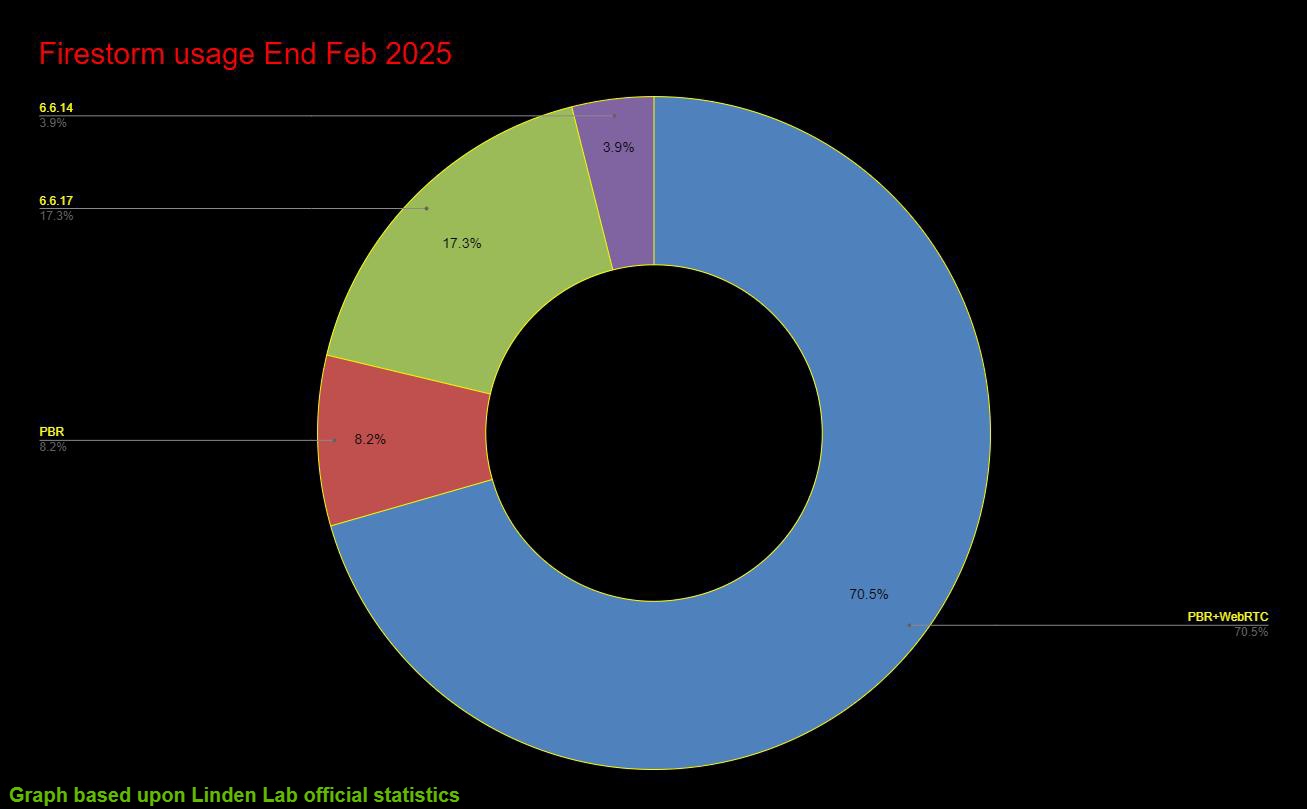
  • [Stats from Linden Lab and published by Firestorm, indications are that overall, given that Firestorm has the largest percentage of Second Life viewer users, that critical mass of users on WebRTC supporting viewers is fast being reached.]
Breakdown of Firestorm users by viewer version. note the 70%+ now on WebRTC-supporting versions. Credit: Linden Lab / Firestorm viewer
  • As it is, multiple regions on the Main grid (Agni) are supporting WebRTC, and support tickets can be filed by region holders wishing to have WebRTC enabled on their regions.
  • WebRTC should provide a much higher fidelity Voice service  compared to Vivox [and will end the viewer’s reliance of a third-party “black box” plug-in to run Voice].
  • As it is directly supplied by the Lab, WebRTC will also allow rapid iteration of voice-related capabilities, such as:
    • Voice captioning – see what people are saying in Voice as closed captions a-la you tube.
    • Improved translation capabilities.
    • New voice changing / morphing options.
    • Better voice moderation / control at the parcel level.
  • There is no set time frame for switching solely to WebRTC support on the back-end. However, in the March 14th, 2025 TPVD meeting, Signal Linden indicated LL hope to get to it sooner rather than later.

Viewer Updates

[Video: 26:05-27:08]

  • Recap on the promotion of the ForeverFPS viewer, with its focus on performance improvements to de facto release status, with the following noted:
    • Water Exclusion Surfaces which allow Linden Water to be “hidden”. At the time of writing, WES can only be enabled via scripted means (and support legacy invisiprim scripts insofar as “hiding” Linden Water is concerned), but but new UI elements are coming to the viewer to allow them to be created from there. See my summary on WES functionality.
A very(, very) basic example of a Water Exclusion Surface hiding Linden Water
    • Improvements to managing VRAM use in the viewer (e.g. be fixing the maximum resolution of the in-world view).
  • [Video 29:19-31:50] Signal Linden:
    • The faster release cadence is seen as important in ensuring Second life receives regular updates and to support code contributions from the open source community, rather than having them languishing for months or years. It does not mean that LL will no longer be taking on large projects, but rather will be developing them more responsively.
      • One example of this is the re-focusing of efforts within the glTF project to provide a means to upload glTF mesh model using the existing mesh upload floater in the viewer in order to counter Blender announcing the deprecation of COLLDA mesh support.  – see my summary of the Thursday, March 6th, 2025 CCUG meeting for more.
    • To further support contributions from the opensource community, there is a proposal for revamping the open source programme to make it more streamlined, accessible and responsive.
  • [Video: 53:50-56:31] Further performance improvements – Signal Linden:
    • The (at the time of writing) current viewer release – ForeverFPS – has numerous performance improvements.
    • The next release [viewer 2025.03, still in development] will have further performance improvements within it .
    • There is also an internal (to LL) version of the viewer for native support of Apple Silicon which significantly improves viewer performance on that chipset. This viewer is likely to go to Project Viewer status, but will have limited functionality initially, due to the need to rebuild many of the third-party libraries used to build the viewer, together with issues around the viewer being able to recognise navmesh.

SLua – SL Lua Scripting

[Video: 27:15-29:09]

Promoting Second Life to Creators as a Revenue Earning Platform

[Video: 1:06:30-1:09:05]

  • SL is one of the most capable platforms for revenue generation among content creators, offering much lower costs to creator in terms of fees etc., when compared to other platforms such a Fortnite and Roblox. will it be promoted as such?
  • Yes. Marketing efforts have restarted, and one aspect of this is on the subject of content creation and revenue earning.
  • In December 2024, VenturBeat published Linden Lab has spent $1.3B building Second Life and paid $1.1B to creators (which I summarised here), in which it was noted creators have a greater chance of earning more through SL than Roblox, despite the latter’s much larger user base.
  • Linden Lab is also attending the 2025 Game Developer Conference (March 17th-21st, 2025) in San Francisco to promote Second Life and the ability for content creators to earn money through the platform.

In Brief

  • [Video 4:08-5:19] The meeting was attended by those protesting the use of AI in Second Life, both in terms of AI generated / modified advert (e.g. for products listed on the MP), art, and LL’s introduction of the AI character generations project.
    • There is a document outlining objections to AI on the Feedback Portal.
    • Philip Rosedale indicated he will look to hold an open forum / debate on the use of artificial intelligence within Second Life, at which the pros and cons – and user concerns – can be discussed. He urged those with concerns to formulate their thoughts – including constructive recommendations on how AI should be handled within SL – and attend that event, when announced.
    • [42:22-44:24] Philip additionally noted that there are a range of aspects to the use of AI within second Life – such as the use of AI toolset in support of SL, such as with re-time translation – which are beneficial; but there are broader issues to address (through the proposed “AI Town Hall”) on the use of AI in-world. He also acknowledged there a multiple questions around AI that need to be address more broadly.
  • [Video: 24:56-25:40] Second Life Community Discord Server will be opened to all users, most likely during the week commencing Monday, March 17th, 2025. User will be able to use Discord Connect to link their SL accounts to the server and access all of the available channels.
  • [Video: 44:48-46:44] After the contraction of the Support and Trust & Safety teams late in 2024, these are again being expanded, with new hires coming-in. As this happens, support hours should again be increased to provide weekend support.
  • [Video: 51:23-53:30Multi-factor authentication (MFA):
    • A reminder that MFA has been implemented across all of LL’s web services (Dashboard, Marketplace, Project Zero or Firestorm Zero web pages) for those opting-in to the capability.
    • Encouragement was given to make use of MFA as an added layer of account protection for all those currently not using it.
  • [Video: 53:53-54:35] What happens to a Second Life Business if it is cleared of DMCA wrongdoing?
    • Once the legal team has completed investigations and made a determination they there is no infringement, then the business and the associated account is “cleared”, with the case closed.
  • [Video: 1:09:10-1:10:54] Chat and Message Persistence Between Viewer and App:
    • Messages received on SL mobile are not carried over to the viewer (and vice versa), which can limit usage of the Mobile app in favour of the viewer providing a single place for message receipt and recall.
    • LL are working on better Chat persistence across the various platforms, which should allow for this to happen in a number of ways (Push notification, IMs, chat history).
    • One reason for this taking time to implement is due consideration of security, encryption, and protection of chat and messages in the cloud.
  • [Video: 1:11:24-1:12:14] Linden Homes:
    • The next Linden Home theme – “Alpine” – will be for Premium subscribers and will feature options “never seen before”.
    • A reminder that a selection of 512 sq m Linden Home styles are now available to Plus subscribers (see here for more on this).

User Group Meetings

There are numerous User Group meetings held in-world each month by Linden Lab, which focus on a range of subjects – simulator development, viewer development, Marketplace and web services, land, content creation, skill gaming, etc. The meeting are open to anyone to attend, with some held in text, some in Voice and some a mix of both. Questions on the topics they cover are welcome, and further details can be found as follows:

Lab announces migrations to Tilia Wallet complete

via Linden Lab

On Friday January 17th, 2025, Linden Lab announced improvements to the financial and billing systems used by Second Life as provided by Tilia, the Lab’s trusted billing partner- see: Enhancing the Financial Experience in Second Life.

On Friday, February 7th, the Lab provided an update on this work: Faster Payouts Are Here! Second Life Completes Migration to Tilia Wallet.

In the interests of clarity and first-hand reading, I’m not going to list everything in here; better than people read the Lab’s own post. However, the following points are worth highlighting:

  • All USD balances are now securely managed through Tilia Wallet, providing a centralized and compliant way to handle fiat currency transactions.
  • Whilst maintaining all current pay-out connections:
    • Pay-out transactions should now process faster through Tilia.
    • There will be an introduction of direct bank deposits for the receipt of pay-outs (exact implementation time frame for this still TBA at the time of the update)
  • Updates to the Second Life Marketplace, Cashier, and Account dashboards to make managing payments smoother and more intuitive.
  • Enhanced Security & Compliance: Tilia is a fully regulated financial institution, ensuring that all transactions are secure, fully tracked, and compliant with global financial regulations.
This upgrade also marks a significant step forward in enhancing the financial and billing experience for all residents, ensuring greater security, reliability, and flexibility. Tilia has managed payments, tax forms, and KYC processes for Second Life for a while now. With this upgrade, they now also handle all fiat currency transactions, including securely holding USD earnings in Tilia wallets and processing credits (pay-outs). 
This upgrade also brings both familiar and new pay-out options, including PayPal, Skrill, and the newly added MassPay.

– From the Lab’s blog post

Again, please refer to the official blog post for full details.

Lab announces improvements to the financial and billing systems used by Second Life

via Linden Lab

On Friday January 17th, 2025, Linden Lab announced improvements to the financial and billing systems used by Second Life as provided by Tilia, the Lab’s trusted billing partner.

The full details of the changes being made can be found in the official blog post Enhancing the Financial Experience in Second Life.

In the interests of clarity and first-hand reading, I’m not going to list everything in here; better than people read the Lab’s own post. However, the following points are worth highlighting:

  • The changes and updates are being deployed over the rest of January 2025, and on a rolling basis. Therefore, users will see them come into effect as they are applied.
  • The will result in a series of updates in how information is displayed within various web properties (e.g. the Cashier page, the Add Payment Method page, etc.).
  • There will be no changes to fees for existing services. However, new pay-out types and speeds that will be coming soon may have different fees based on the underlying costs involved with those pay-out methods.
  • From January 30th, 2025, Skrill will no longer be available to add as a new payment or pay-out method.
    • Those already using Skrill as a payment or pay-out method, you may continue to do so as long as it remains active in your account.
    • However, if anyone using Skrill removes it as as their payment / pay-out methods after January 30th, 2025, they will not be able to re-add it.
  • Once these changes are active, the following countries will no longer be supported with new pay-out connections: Azerbaijan, Belarus, Bosnia-Herzegovina, Kazakhstan and Russia.
Through our partnership with Tilia, these updates create a more modern and sustainable foundation for managing Second Life’s economy. The system now automatically reconciles transactions nightly, allowing for accurate and efficient handling of payments and balances. Users will continue to have the flexibility to manage their balances and payment methods while benefiting from improved security and reliability.

– From the Lab’s blog post

Again, please refer to the official blog post for full details.