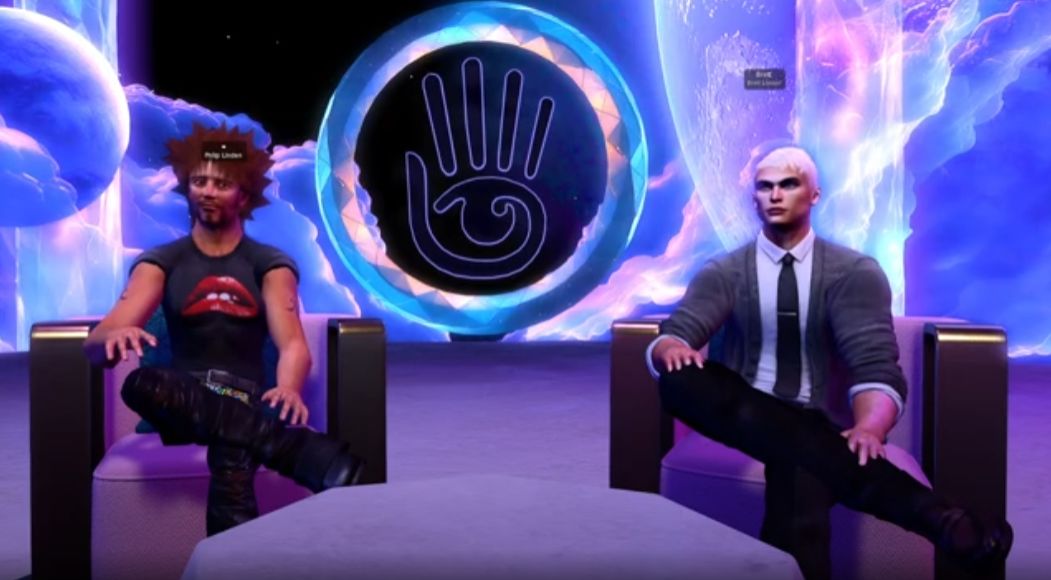
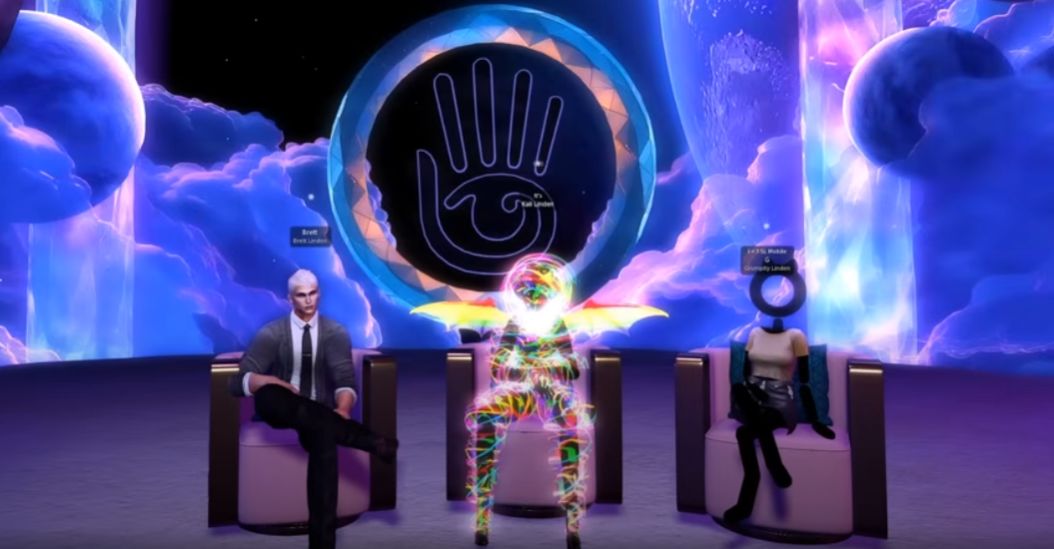
The following notes were taken from my audio recording and chat log of the Content Creation User Group (CCUG) meeting of Thursday, May 1st, 2025. Please note that this is not a full transcript, but a summary of key topics, and timestamps are to the official video, embedded at the end of this report. .
The CCUG meeting is for discussion of work related to content creation in Second Life, including current and upcoming LL projects, and encompasses requests or comments from the community, together with related viewer development work.
This meeting is generally held on alternate Thursdays at Hippotropolis.
Dates and times of meetings are recorded in the SL Public Calendar, and they are conducted in a mix of Voice and text chat.
Official Viewer Status and Updates
Viewer Status
Default viewer: 2025.03 7.1.13.14343205944, issued April 9th and promoted April 15th.
New UI element for water exclusion surfaces: Build / Edit floater → Texture Tab → Hide Water checkbox.
The maximum amount of Reflection Probes can now be adjusted to better accommodate low VRAM scenarios.
Values will be set automatically depending on your chosen graphics quality. OR
Use Preferences → Graphics → Advanced Settings → Max. Reflection Probes to manually set.
An issue with being unable to see Sky Altitude values in the Region/Estate window has now been resolved.
Preferences → Graphics → Max. # of Non-Imposters has been renamed Max. # of Animated Avatars for clarity.
Bug and performance fixes and memory optimisations.
Chat Mentions (Early Support): Type @ then pick a name. To follow: audible alerts and highlight colour pickers.
My Outfits subfolders: now supports the use of subfolders.
Key updates:
Build Floater improvements: increase to scale boundaries; Physics Material Type now updates when selecting linked objects; Repeats per Meter value no longer incorrect for non-uniform sized objects.
Hover height: the minimum/maximum is now +/- 3 meters – requires a simulator-side update, currently in the process of being deployed.
Snapshot floater: L$ balances can be hidden independently of the rest of the UI.
Preference Search bar: general usability and readability improvements.
Refer to the release notes for full updates and fixes.
Second Life Project Lua Editor Alpha, version 7.1.12.14175675593, April 2nd.
Internal discussions on what form this should take remain in progress.
As a result of delays with 2025.03 and 2025.04, coupled with a need to consider how to better offer viewers with features / capabilities user will find valuable, rather than simply lobbing buckets of changes and updates into each release, the viewer team is backing off of the idea of a monthly release cadence for the immediate future.
Overall, the focus remains on getting the flow of model uploads working smoothly and in providing the same capabilities when uploading glTF models as is currently the case for COLLADA models.
However, there will be some constraints on capabilities:
Higher vertex limits on uploads will not be supported for glTF, as it is described as requiring a “whole mesh format upgrade”, which requires further thought before moving in that direction. As such the current 65K vertices per face limit will apply to glTF model uploads.
Due to the complexity, and until things can be re-thought, glTF materials cannot be imported as a part of a glTF mesh (outside of the Base Colour map); they must be imported separately and then applied. Direct import of glTF materials as a part of a glTF mesh requires an large refactoring of code which is not possible in the immediate future.
The above point prompted the question from Geenz on whether people would prefer the Base Colour to be uploaded, or simply just have a blank face provided until such time as full glTF materials can be imported with the mesh. Opinion at the meeting leaned towards the blank surface.
[Video: 15:25-20:21] Are there plans to support Unreal Engine? – No, and defined as “probably never happening”.
This led to a question about supporting Unreal Engine plug-ins and perhaps getting plug-in support for Marvelous Designer, often used as an adjunct to making and rigging SL clothing (in fact, Linden Lab struck a deal with MD so a plug-in could be provided for the Sansar platform and its avatars).
While not averse to the idea of plug-in support, it was noted that in respect of rigging to the avatar skeleton, the latter would need additional work to make it offerable to third-parties to support.
This led to a general acknowledgement and discussion on the need for better pipelining to support popular tools, what those tools might in fact be, beyond Blender, how widespread is their use, availability of SDKs, convergence in trends (e.g. towards OpenUSD) – although how this might all be achieved is a head-scratcher.
Overall, such work is seen as “worth discussing” but well beyond the current roadmap.
[Video: 20:24-25:52] In terms of the SL skeleton, it was stated that “everyone” uses Avastar – including the Lab -(although the MayaStar plugin by Cathy Foil also gets good usage), due to the SL skeleton having issues.
Geenz suggested the way to offer easier compatibility between the SL skeleton and commercial tools like MD would be to get the skeleton files updated and offer them as glTF and / or OpenUSD downloads.
This grew into a general discussion on the skeleton, its complexity compared to other games / platforms, etc.
[Video: 25:52-33:30] A general discussion on the Avatar Welcome Pack, specifically some of the shortfalls in how it has been put together.
Some of the issues are known, and have been raised by the creators who provided the content for LL to bring together, others may not have been identified.
The request is for any issues identified by experienced users opting to try / test the avatar, etc., to be filed as a bug report.
It was also noted that clearer instructions were not provided with the Avatar Welcome Pack – such as *copying* a body folder / outfit from the Library to Inventory, rather than adding / wearing an avatar or outfit directly from the Library (and thus spawning multiple copies in Inventory.
In relation to the above, Kyle Linden suggested the Lab offer the pack’s contents on a Lab-driven Marketplace store to help with discoverability, and this was positively received.
[Video: 33:35-38:24] A discussion on lighting – “block” (aka volume) lighting, improving the flexibility of lighting in SL, implementing physically based lighting capabilities, etc.
[Video: 41:20-46:29] A discussion on filling the “voids” between continents and regions with water / air open space to allow free passage to boats and aircraft, and why this currently in not feasible on technical or financial grounds.
The system complexity of doing is so enormous … to do that, we’d have to either run a single server in each one of the void spaces, which would obviously put us out of business overnight [fees to Amazon] or… to build mega regions. But the trick to those mega regions need to sit on top of existing regions, or something. Because otherwise, you have the protocol for cross-region communications at the boundaries, and you no longer have cardinal boundaries. Every programmer here can imagine the horror of going from having one neighbour to your left to having between 1 and 600 neighbours to your left, or something. We just didn’t code Second Life that way, so that we could have regions of different size adjacent to each other. I don’t know how to solve that … I don’t have an easy answer off the top of my head.
Philip Rosedale
[Video 48:13-54:30] General comments on providing VR support – options, issues, technical hurdles.
A selection of the old-style Meadowbrook homes, soon to depart the gird, and one of their local community points, a swimming pool
As I’ve recently noted in writing about the release of the Aspen Linden Homes and new house styles for the Log Home theme (both themes being available to Premium and Premium Plus subscribers – read here and here for more), Linden Lab has started making renewed noises about retiring the “older” generation of Linden Homes, first introduced in 2010.
On Friday, May 2nd, 2025, the Lab further confirmed the upcoming closure of the older style of Linden Homes (all of which stand on 512 sq m parcels within their own theme mini-continent scattered across the grid), with a post entitled Honouring the Past, Embracing the Future: Your New Linden Home Awaits.
Clearly aimed at users who have not as yet made the move from these older themes and styles of home to the “modern” Homes on Bellisseria, the post reads in part:
As we continue evolving and improving the Linden Home experience, we want to ensure that our residents have access to the best and most modern living spaces available. A couple of years ago, during SLB, we announced our long-term plan to phase out all legacy Linden Homes. The time has come to make that transition, and while saying farewell to your current home may feel bittersweet, we are confident that the next chapter will bring even more possibilities, personalization, and comfort.
We also recognize the lasting impact these homes have had, and we are planning a special tribute to honour the legacy Linden Homes and the memories they have held. We will share more details soon.
Whilst no deadline is given in terms of how much longer the older Homes will remain on the grid, the post does tend to make it clear their days are now definitely numbered. I honestly have no idea as to how active people are / were when in terms of living-in and utilising these older Linden Homes, or exactly how much “community” they fostered. However, they do represent a point in time in SL’s history that is worth remembering in some way; many of us actually appreciated having them – as limited as they are by today’s standards!
However, what piqued my interest was the idea of “honouring” these older homes – and very much hope that whatever is planned goes beyond just the houses themselves. While I’ve no idea how popular the approach was, at least one of the little continents presenting these older Linden Homes carried with it something of a little “backstory” to Second Life; one likely utterly obscure in this day and age, but one my mind immediately sprang to on reading the Lab’s post.
Cape Ekim, May 2025
It’s called Cape Ekim, and the legend wrapped around it involves another mythical Linden explorer in the form of Professor Linden (totally overshadowed by the feats and ego of Magellan Linden – possibly because the Professor never survived long enough to be embodied in some manner!), and his hunt for a great and benevolent dragon said to have once roamed the grid.
It’s a fun little mystery (if one a little long in the tooth and genteel / pedestrian in this age of scripted Experiences, mesh, Animesh, and all the rest we can use in SL to create adventures and games), and one I wrote about more than a decade ago.
It may not tax the grey matter too much, but it does features riddles, books, secret passageways, and a cipher to solve to unlock a door (no pesky double-click TPing!), and is of an age and style that allow it to stand as a glimpse of SL’s past as much as the houses close to where it sits. As such, I really hope LL will give thought to the idea – and to any other similar spots which may exist within the old Linden Homes continents.
Cape Ekim, May 2025
Certainly, if the history of SL and nostalgia are your thing – and just in case it will soon vanish – why not try exploring / revisiting Cape Ekim for yourself?
On Tuesday, April 29th, 2025, Linden Lab announced the latest Linden Home theme to receive an update: the Log House Theme.
As well as continuing to periodically release new Linden Home themes, the last being the Premium / Premium Plus Aspen theme (which I looked at here), the Lab has been revamping older offerings, expensing them with additional styles and options. For the Log Homes, this means for new designs which both fit the existing styles whilst also offering something new. They also appear to have a touch of PBR in their finish.
Linden Log Homes update: the Pinecone
Mixing stone and timber builds, the four new style comprise:
Bearstone: a partially stone-framed, two storey unit with covered verandas to the front and rear (1/2 length). The front door opens open a lobby space with dog-leg stairs going up and rooms opening to the left and right. The left, L-shaped ground-floor room is accessed either through an open arch or via a door under the stairs. A further door provides access to the rear veranda. The room to the right is also accessed via an open arch, with windows to the front, side and rear aspect. The two upstairs rooms (one large, one small) are accessed via a landing area at the top of the stairs.
Oakridge: a two-storey unit again with partial stone rendering and with potentially the largest footprint of the four new units. The front door provides access to a lobby area with stairs to the upper floor and a door leading to a small front room. The rear of the house is taken up by a full-width room, strategically-placed archways indicating that it could be spilt into two. Glazed double doors provide access to a full-width veranda to the rear, partially covered. Upstairs, a small hall provides access to three rooms, one overlooking the front aspect and two the rear. The larger of these has a narrow balcony space.
Linden Log Homes update: the Bearstone
Pinecone: potentially the smallest in terms of footprint / space. A covered deck runs almost all the way around the unit’s perimeter. The central front door opens direct into a room with stairs to one side. These serve a central landing with rooms opening off it to the front and rear. An archway connects the ground-floor front room to one of near-equal size to the rear, with a door from here opening onto what amounts to a narrow hall leading to the back door.
Timberline: a single-storey unit in the form of a cross. Two large reception rooms run front-to-back through the house, linked by archways. Above the front reception room is a large gallery space overlooking the rear reception room with its large fireplace, and large windows overlooking the front aspect. Bedrooms open off of this gallery to either side, each with a further rectangular room beneath it opening off of the reception rooms.
Linden Log Homes update: the Timberline
These updates are different enough to the original Log Homes to likely be popular among those using the theme, while their overall styling matches the overall look of the original styles such that they won’t stick out like a recently hammer-hit thumb when placed among the older styles.
And – could it be that someone at LL actually heard me bemoaning the lack of back doors among the Log Homes (and Aspen?†. Some of these designs do indeed sport doors to the rear aspect. In fact, the Oakridge is such that, depending on how it is placed in a parcel (and your feelings on such things / the road access you have) the side of the house with its glazed double doors could conceivably act as the front of the house.
Footprint-wise, the majority of these new offerings feel larger than most of the originals, and do provide (for the most part) more rooms to furnish. I’m quite sold on my Lincoln style Log Home so in no hurry to change things around; however, I have a feeling I might be trying on the Oakridge for size at some point, if just for curiosity’s sake.
Linden Log Homes update: Oakridge rear view
For those who don’t have a Log Home and wish to try out the new styles for themselves, they can be previewed at the BelliHub Linden Home Demo area and at the demo area within the Second Life Welcome Hub.
“Old” Linden Homes Removed from Linden Home Portal
As I noted at the time, the Aspen Homes release coincided with the announcement that the Lab is finally looking to move ahead with the “retirement” of the original 2010 Linden Homes (now referred to as “legacy Linden Homes”). To that end, the release of these new Log Home styles came as the original Linden Homes were removed from the Linden Homes pages.
† Short answer: No. I raised the point two weeks ago, and obviously, Linden Homes don’t just sprout up in an instant; design and testing, approval, etc., all need to come first. so clearly the provision of back doors was already well in-hand!
The following notes were taken from the Tuesday, April 29th, 2025 Simulator User Group (SUG) meeting. They form a summary of the items discussed, and are not intended to be a full transcript, and were taken from my chat log of the meeting.
Meeting Overview
The Simulator User Group (also referred to by its older name of Server User Group) exists to provide an opportunity for discussion about simulator technology, bugs, and feature ideas.
Meetings are open to anyone with a concern / interest in the above topics, and form one of a series of regular / semi-regular User Group meetings conducted by Linden Lab.
Dates and times of all current meetings can be found on the Second Life Public Calendar, and descriptions of meetings are defined on the SL wiki.
Simulator Deployments
On Tuesday, April 29th, the Main SLS channel was restarted without any update
On Wednesday, April 30th:
BlueSteel and a snack channel should be updated with the Elderberry simulator update (see below).
All remaining RC channels should be restarted without any change.
Upcoming Deployment – Elderberry
A new option to llDerezObject – DEREZ_TO_INVENTORY, which returns the targeted object to inventory and saves its current state (e.g. has the same behaviour as Build → Object → Save Back to Object Contents.
llIsLinkGLTFMaterial – which can can determine if a face on a linked prim is PBR.
REZFLAG_DIE_ON_NO_REZZER – which will cause a rezzed prim to die if its rezzer is no longer present in the region.
llSetGLTFOverrides, rather than changes to llSetColor and llSetAlpha to work with PBR, as changing the latter was “starting to lead down some very scary paths WRT ‘What is the right thing to do'”.
Possibly a fix for llSetGroundTexture, which currently has the NE & SW values swapped. The question was asked in this was in the release, but the question wasn’t fully answered.
SL Viewer Updates
Default viewer: 2025.03 7.1.13.14343205944, issued April 9th and promoted April 15th – No Change.
New UI element for water exclusion surfaces: Build / Edit floater → Texture Tab → Hide Water checkbox.
The maximum amount of Reflection Probes can now be adjusted to better accommodate low VRAM scenarios.
Values will be set automatically depending on your chosen graphics quality. OR
Use Preferences → Graphics → Advanced Settings → Max. Reflection Probes to manually set.
An issue with being unable to see Sky Altitude values in the Region/Estate window has now been resolved.
Preferences → Graphics → Max. # of Non-Imposters has been renamed Max. # of Animated Avatars for clarity.
Bug and performance fixes and memory optimisations.
Second Life Project Lua Editor Alpha, version 7.1.12.14175675593, April 2nd.
A (reasonable) request was made to have simulator release names (“Elderberry”, “Puff Pastry” or whatever) actually reflected on the release notes rather than referencing them solely by release number.
Is the clean-up procedures after de-rezzing any different to other objects? Should not be, the; the object is killed from in-world on receipt of the derez command, then a new asset is generated to replace the deleted one in the rezzing object’s inventory.
Is DEREZ_TO_INVENTORY to to any capability? No. The code was originally set up to respond to a message from the viewer and so would report messages back that way; however it is being updated to be smarter than that to avoid missed messages, etc.
A feature request to allow attachment rezzing directly from another object’s inventory has been received (e.g. to assist with changing outfits). It is regarded as a large project and, if accepted, has yet to be added to the development roadmap.
A feature request to Add function to get a list of objects in the region (somewhat similar to the Area Search in some TPVs) has been submitted and is currently being tracked. Upvote if you’d like to see it get onto the roadmap for implementation.
A discussion on prim manipulation and LSL and differences between viewer-side and simulator-side disconnects (e.g. LSL cant set sphere taper, and viewer can’t set floating text or particle). This drifted into discussion of prim / linkset ordering and an actual node hierarchy for the same that is known to the viewer, together with a means to set the linkset number for a given object in the linkset / “click and assign” root prim for a linkset.
Leviathan Linden offered some feedback to those testing the SLua regions on Aditi:
One thing I was working on a week or two ago but currently on hold: people on the Lua servers were using the faster scripts to thrash a log of prim properties, which would generate a storm of Full Updates. Someone noticed some hot spots in the generation/sending of those updates, slowing things down making the problem look like Lua’s fault. So, I was working on a speed-up there. Wasn’t done, got side-tracked. Will get back to it.
† The header images included in these summaries are not intended to represent anything discussed at the meetings; they are simply here to avoid a repeated image of a rooftop of people every week. They are taken from my list of region visits, with a link to the post for those interested.
Logos representative only and should not be seen as an endorsement / preference / recommendation
Updates from the week through to Sunday, April 27th, 2025
This summary is generally published every Monday, and is a list of SL viewer / client releases (official and TPV) made during the previous week. When reading it, please note:
It is based on my Current Viewer Releases Page, a list of all Second Life viewers and clients that are in popular use (and of which I am aware), and which are recognised as adhering to the TPV Policy.
This page includes comprehensive links to download pages, blog notes, release notes, etc., as well as links to any / all reviews of specific viewers / clients made within this blog.
By its nature, this summary presented here will always be in arrears, please refer to the Current Viewer Release Page for more up-to-date information.
Outside of the Official viewer, and as a rule, alpha / beta / nightly or release candidate viewer builds are not included; although on occasions, exceptions might be made.
Official LL Viewers
Default viewer: 2025.03 7.1.13.14343205944, issued April 9th and promoted April 15th – No Change.
New UI element for water exclusion surfaces: Build / Edit floater → Texture Tab → Hide Water checkbox.
The maximum amount of Reflection Probes can now be adjusted to better accommodate low VRAM scenarios.
Values will be set automatically depending on your chosen graphics quality. OR
Use Preferences → Graphics → Advanced Settings → Max. Reflection Probes to manually set.
An issue with being unable to see Sky Altitude values in the Region/Estate window has now been resolved.
Preferences → Graphics → Max. # of Non-Imposters has been renamed Max. # of Animated Avatars for clarity.
Bug and performance fixes and memory optimisations.
Second Life Project Lua Editor Alpha, version 7.1.12.14175675593, April 2nd – No Change.
Saturday, April 26th saw the opening of the latest addition to Tolla Crisp’s Frogmore / Witherwood Thicket estate (Tolia also holds Goblin’s Knob under the Frogmore banner, but that sits apart from Frogmore / Witherwood Thicket on the grid). All three locations tend to be collaborative works by Tolla and landscaper Dandy Warhlol (terry Fotherington), and I’ve covered them on numerous occasions in this blog.
However, the new area is entirely Tolla’s own work, and has been causing no small amount of excitement in the Frogmore group in the run-up to it opening.
Nemo, April 2025
It is called simply Nemo, and it’s name should give away the fact that it is an underwater environment. In this it both stands apart from the Gothic mystery of Witherwood Thicket itself whilst perhaps also adding another chapter to that location’s enigmatic presence.
Whilst comparatively small in size when compared to the above water element of the region in which it sits, Nemo is by no means a quick, easy visit. There is rather more to be discovered than might at first be apparent from an initial cam-around on arrival (part of the setting are nigh-on a half-region walk from the Landing Point. It is also a setting rich in detail – and I really do mean rich; a casual hop-in / hop-out a waste of time – Nemo is a place to be experienced.
Nemo, April 2025
That said, it is also a place leaning heavily into the use of PBR materials. I’m not sure of Blinn-Phong fallbacks are provided (I no longer run any non-PBR viewers), so if you’re not running a PBR-capable viewer, consider this a warning that Nemo might not appear at its best for you.
In terms of design, the setting really does bring together a lot. Tolla has made superb and considered use of lighting, colour density, reflection probe ambience and animated mesh elements to give a real sense of being undersea. The sea floor is beautifully carpeted in a mix of swamp grasses and ferns, corals, seaweeds, sea anemone, trees and vines as to create the sense of a living, breathing ecosystem warmed by groups of fumaroles.
Nemo, April 2025
Within this environment, all manner of (largely tropical) fish swim, including clown fish. Turtles might also be found together with the odd shark – although his grin suggests he’s not into causing mischief – while jellyfish rise and fall. The Landing Point sit within a ruined structure, its arches suggesting it might have once been a place of worship – although given the Witch King styled statue standing to one side, one has to ask who or what might have once been worshipped…
It is actually one of several submerged structures to be found within the setting. some of these appear to be as equally old; others perhaps more recent, their wooden forms having yet to give in to the predations of water and salt. There is an intriguing mix of detritus and jetsam to be found. An old canon which might be indicative of a ship having come to grief here (and indeed, there is a partial wreck a short distance away) vies with the car from a Ferris wheel for the attention of local growths, the car also sitting close to part of a carousel, suggesting both might have been tossed into the sea intentionally.
Nemo, April 2025
Paths wind through all of this, leading to ruins and structures, caverns and corners as if in a natural maze. Paths are lit by sunlight filtering through from above, the glow of phosphoresce from plants and from what might have once been aboveground lamps which sometimes share space with marble and stone statues. Rock walls also mark routs and divide these underwater gardens into more discrete settings.
With a name like Nemo, the “Finding” part (as I’ve used here) easily comes to mind – but is the setting really about fishy adventures? Sure, there are clown fish – there’s even one on his own waiting to be found. However, to consider the name a direct reference to the Disney / Pixar film (and its sequel) might be a mistake. There is another Nemo worthy of consideration here; one again the subject of the Disney treatment – albeit in live action format in his case, as embodied by James Mason (although he is far from the only actor to have taken on the role in question).
Nemo, April 2025
I’m of course referring to Jules Verne’s anti-hero, Captain Nemo, commander and designer of the marvellous Nautilus. The reason I feel the “Nemo” reference is more to him than a clown fish is simple: within the set it is possible to find Nemo’s Study, a very human retreat, albeit it now flooded. There is also a submerged library – and Captain Nemo was most certainly a learned man; while clown fish may have many gifts, I’m not convinced reading is one of them!
Of course, we’re all free to let our imaginations construct theories and stories to go with the setting – and leave us not forget, it does lie under waves that wash against Witherwood Thicket, as if the setting might once have been a part of that landscape. So perhaps there is a story there as well. But whatever paths our imaginations take, one thing is abundantly clear, Nemo offers a richly engaging visit.