A visit to Gothic castle in Second Life

Castle Dracula, October 2023 – the Count visits my chambers – click any image for full size
Fate recently called upon me to travel to the Transylvanian town of Bistrița, and from there into the Inner Eastern Carpathian Mountains. It was no ordinary trip, for I was following the footsteps of cleric and solicitor Jonathan Harker, who had travelled there to complete business with a client from the region, only to seemingly disappear and causing much distress to his fiancée,  Mina Murray. 

Or at least, that is how the start of a visit to Castle Dracula: A Gothic Horror Experience might read when written as a journal entry by someone participating in its interactive adventure. The work of long-time resident and content creator, Wanders Nowhere (also famous for Prehistorica), this is an adventure reputedly “14 years in the making”.

How literal that might be, I’ll leave to others to cogitate upon; what I will say is, for anyone who is a fan of Gothic Horror and / or enjoys Bram Stoker’s classic novel, this is an Experience-led adventure which is engaging without being overly taxing, whilst offering a twist on the opening elements from the novel to offer a first-person narrative which takes Harker’s visit to Castle Dracula as the jumping off point for a related tale of an encounter with the Count. 

Castle Dracula: approaching the castle entrance through the inner courtyard

The adventure begins within a welcome area, reached either via the SLurl above, or by taking the teleport portal from the main Prehistorica lading point. This area contains all the information visitors require in order to enjoy the experience – or participate is a second, also set within the Castle and entitled Carmilla: The Love of the Dead, which can be entered into on payment of L$200 and which offers special rewards for those completing it. I opted to save this for a later option, focusing solely on Castle Dracula. 

Castle Dracula: a brief enCOUNTer…

I’m not going to trot through all of the info at the welcome area – it offers clear enough notes; suffice it to say you should accept the local shared environment and to have local sounds active. Whether or not you have Shadows enabled is a matter of choice; I actually found things a little too dark with them on.

Once all the notes have been read, the adventure can commence by stepping through the teleport portal to Castle Dracula; just be sure to Agree to the notes which will pop-up in a dialogue box when you attempt to do so, and also accept the local Experience – the latter will enable automatic teleports and also equip you with the necessary progress HUD.

Passing through the portal delivers you to the first of three locations – a train carriage as you sally forth from Bistrița to the village of Vesnic in the mountains, following the invitation of Harker’s mysterious client, Count Dracula. The carriage ride provides a narrative introduction to the adventure (s noted at the top of this article) and also introduces participants to the quest element of the story: locating 16 pages from Harker’s journal, which together might reveal his location – or fate. 

To get participants started, the first page of the journal is located alongside the carriage doors, providing a visual reference of what should be sought when looking for additional pages. When touched, the journal will deliver its page on-screen, allowing it to be read, after which clicking on it will place it on the game HUD, which is also the repository for other papers and notes, etc., found when exploring. Any item in the HUD can be expanded again by clicking on it.

Stepping “out of” the carriage doors on arrival at Vesnic will deliver participants to the garlic-strewn interior of the local hostelry, amusingly called The Stake and Hammer. It is here that the second page of Harker’s journal might be obtained, sitting on a table between arrivals and the exit.

More garlic is to be found outside the tavern, notably in the form of wreaths guarding the doors to local homes and places of business, with great sacks of cloves placed – strategically? – around the square as well. Outside of the church and the tavern, there is not a lot to see here,  but there is a horse-drawn carriage awaiting those wishing to reach the castle. Approaching it will bring a greeting from the driver, and sitting within it will start you on your way to your final destination, by way of a climb up through the mountains. Personal experience may vary here, but I found I needed to use the Camera floater and controls to get my camera out of the bottom of the carriage in order to see anything of the lands through which the ride passes – but I do use a custom camera preset rather than the SL default (and given the scale of things, Castle Dracula does seem to be built in expectation of oversized avatars using the SL default camera position).

Castle Dracula: creeping through the crypt

It is on your arrival that the fun begins. From being greeted by the Count himself through to attempting to find the remaining 14 pages of Harker’s journal, there is a lot to see and explore – and potentially touch for interactions. There are some very nice touches to be appreciated – such as the count himself, a phantom NPC which is perfectly animated. Through the castle’s many rooms are elements from the novel as well as from other Gothic horror influences (perhaps most notably Mary Shelley’s Frankenstein: The Modern Prometheus) to touches of Giger-like neo-Gothic, together with what might be taken as nodes to M.C. Esher and others.

After being shown to your room by a rather chatty Count, you are free to commence your explorations – where they may take you is down to the route you chose on starting, and the branches you take thereafter, so I’m not about to give a room-by-room account. However, entering major locations in the castle – the entrance hall, the library, the ballroom, the Gallery, the Midnight Garden and so on – will be recorded on the HUD map in the form of clickable points you can use to jump between rooms, if necessary. But do take note – these are not the only locations within the Castle; you will need to explore carefully, as some of those which are not recorded on the map may well contain elements of Harker’s journal.

Castle Dracula: “It’s ALIVE!” – the upper level of the extensive laboratory, which includes nods towards Mary Shelley’s great work within its lower floors

There is no reward to completing the quest per se outside of learning of Harker’s fate and the luxury of reading his journal entries – which follow most of the events found in the novel relating to his time at the case – in the correct order. However, finding all 16 pages will trigger the start of your own fate: will you be able to escape the Castle before the Count finds you (and without simply teleporting away!), or will you find yourself his next victim?

And even then; is it death that awaits you – or will you awaken in the hold of a ship bound for England (a hold in which you may well find yourself able to collect a few little mementos of your time at Castle Dracula before heading home)? Why not pay a visit and find out?

SLurl Details

Abstracts & Artifacts – challenging perceptions in Second Life

Virtual Peale, Second Life

It’s been a goodly while since I’ve written about the The Peale Museum in Second Life; however, an invite from Eme Capalini offered an intriguing invitation to hop along and take a look at their latest exhibition, featuring a very unique artist by the name of Lee Boot.

ICYMI, September 2020 saw the opening of a new public experience in Second Life entitled Virtual Peale, a collaborative effort between Virtual Ability Inc., Linden Lab and – most importantly, The Peale Centre for Baltimore History and Architecture, located in the first purpose-built museum building in the United States (and today a US National Historic Landmark) the Peale Centre. This has, since 1814, been a centre for art, history, community and learning, and within Second Life, the Virtual Peale has continued this long tradition, offering exhibitions of art and learning, centred on an in-world reproduction of the physical World Peale Centre in Baltimore, USA. However, rather than wibble on about it here, please feel free to read more about the project within Baltimore’s Peale Centre in Second Life, a piece written to mark the opening of the centre in SL, and which I was graciously allowed to preview ahead of time.

The new exhibition – Abstracts & Artifacts – is fascinating on a number of levels. Encompassing both the physical world Peale Centre and virtual Peale, it marks the first major gallery-oriented exhibition of Lee Boot’s work for about two decades. It is deeply rooted in Boot’s background as an artist and a researcher – he is the Director of the Imaging Research Centre (IRC) within the University of Maryland, Baltimore County (UMBC) – and is also innately (if tangentially) linked to The Peale’s unique history as a place of learning and education, something he touches upon in an introductory video to the exhibition and which I’ve taken the liberty of embedding here†.

Within Virtual Peale – and as is usual for the Centre – Abstracts and Artifacts is located in the “upper floor” gallery space. To reach it, either use the TP board close to the landing point or enter the Peale Building and take the stairs up to the upper floor and walk through the “doorway” to the exhibition area – you’ll be automatically teleported up to the exhibition space (where a door on the wall behind you on arrival will take you back down to the main building).

On arrival you will have the opportunity to view the introductory video, whilst a sign under it notes that there is a sequence to the exhibit visitors are asked as to follow, using the arrows on the floor. The first of these directs visitors back to an opening statement, framed as a question:

What if it were normal for artists to have careers working side-by-side, on equal footing, with other researchers and policymakers who determine how we improve education, or public health, or how we catalyse economic development in our communities?

– Abstracts & Artifacts, Virtual Peale, October 2023

This is a question of immediate intrigue in its scope and context – and one which might well have some throwing up their hands in horror at the idea of the “trendies” and “lefties” (or whatever) stirring the mix and exerting influence on matters of health and education. However, as the introduction goes on to note, there is a strong justification for considering the idea it represents:

It’s hard not to talk about culture and think about the arts. and artists make media which now, more than ever, are the central systems and currencies of our lives.

– Abstracts & Artifacts, Virtual Peale, October 2023

Virtual Peale, October 2023: Lee Boot – Abstracts and Artifacts

There are truths within the above statement that may have about them a certain dichotomy. All too often, we are used to considering the cultural and societal of art in a historical context: what it says about the generations who came before us, their outlook on life, the nature of their culture; how it might aid us in similarly understanding the nature and structure of civilisations which came well before our own, and to whom their surviving art is the one expression we can physically grasp in terms of offering a window into their times.

However, in looking back in time, it is important to note that throughout much of humanity’s history, both art and science were closely intertwined; it is only relatively recently that they have branched away from one another – and then largely as a result of artificial constructs modern society has opted – possibly to our detriment – to enforce (e.g. those  in education being required to choice between the study paths of “the arts” and “the sciences”, with often limited opportunities to combine the two beyond a certain point). Further, art is ever-evolving, harnessing new means to present itself – to utilise the very capabilities wrought through “the sciences” to communicate, to enhance and enrich, to inform.

Virtual Peale, October 2023: Lee Boot – Abstracts and Artifacts

This is the trust of Lee Boot’s work;  he has combined his Master of Fine Arts (painting) with the disciplined approach of research, evaluation and data interpretation / analysis, to develop and direct science-driven research enterprises. This has allowed him and his fellow researchers and students at URC to prototype and develop novel media and visualisation technologies specifically aimed at promoting awareness / understanding of a broad range of social issues: the aforementioned health/wellbeing, education and economics development through to the likes of social justice, democracy and climate change.

Twenty-five years ago, media artist Lee Boot stepped away from a promising artworld career to join scientists and others doing research to find ways to meet some of our most significant public challenges. For more than twenty-five years he has brought artist’s thinking into rooms where it is seldom seen. Literally and figuratively, he has coloured outside the lines, spilled paint on his colleagues, flipped the script and reframed conventional thinking to reimagine how we meet the challenges of our time and better ground our efforts in the cultures, experiences, and lives of the people they are intended to serve.

– Lee Boot biography

Within Abstracts & Artifacts the artist offers (in keeping with the title of the exhibition) pieces of abstract art, together with text elements which frame ideas as questions. The individual pieces of art partnered with the text elements might at first appear to be entirely random but each has a form and substance within it when studied, serving to illustrate and amplify the ideas posed within the written interrogative.

That the clarity of meaning may not spring forth at once should not be taken as a negative; the art is as much about altering perception as it is about illustrating an idea; ergo, it should engage the grey matter sitting between the ears, and may do so is so subtle a manner that repeated study of individual piece might well be required. In this, and as Boot notes in his video introduction, each section of the exhibition should not be considered as text + images, but as a visual interpretation of ideas drawn from a sketchbook used to formulate concepts and thinking.

Virtual Peale, October 2023: Lee Boot – Abstracts and Artifacts

Within the centre of the exhibition space is an area devoted to previous projects formulated by Lee and the URC, and it is worth taking the time to view these. Those elements taking the form of video screens (like the TVs within the main exhibition) can be touched to receive an introductory note card on each exhibition and a link to watch the video through a browser on Vimeo†.

All told, a genuinely engaging exhibition revealing the rarely-seen work of an artist-researcher at the forefront of disassembling the artificial barriers between art and science / research – my thanks to Eme for the invitation, and apologies for not making the opening. While visiting, do be sure to take in the ground level Peale Centre’s displays, both indoor and in the grounds.

SLurl Details

† Please note the videos presented in the exhibition may require you to log-in to Vimeo.

2023 SL SUG meetings week #43 summary

Ashemi Rising, August 2023 – blog post

The following notes were taken from the Tuesday, October 24th Simulator User Group (SUG) meeting. They form a summary of the items discussed, and is not intended to be a full transcript.

Server Deployments

  • No deployments for the week. However, all simhosts (SLS Main and RC) will be restarted.

Upcoming Deployments

  • The “fall Colours” simulator update is being held back due to a blocking bug which causes the viewer to hang. This requires both a viewer fix and an simulator fix, both of which are in progress. Despite the delay, the hope is to have this release to RC status before US Thanksgiving and grid-wide after Thanksgiving.
  • The simulator-side code for game controller support is also within the “Fall Colours” simulator update.
  • code will also be presented in initial work on updates to the SL damage system – specifically making damage a property of the object (e.g. a bullet), rather than being a script property (see the previous SUG meeting notes and this forum thread discussion) will now hopefully be available for testing on Aditi in week #42 and are being lined-up with the upcoming “Fall Colours” simulator update.
  • The rez_object_fail update planned for the upcoming “Fall Colours” simulator update is likely to slip back to a later simulator release.
  • The ability to turn an avatar invisible when they are sitting is being targeted for a simulator release following “Fall Colours”. This will help address issues such as allowing avatars to sit on small vehicles without them having to be deformed and folded up inside them to fit. This may additionally encompass the likes of feature requests BUG-232678 and/or BUG-233175.

Viewer Updates

No updates to viewers for the start of the week, leaving the official viewer pipelines as:

  • Release viewer, version 6.6.15.581961, promoted October 2 (formerly the Inventory Extensions Viewer).
  • Release channel cohorts:
  • Project viewers:

Games Controller Update

  • The documentation for the Game Controller SL event can be found with the SL wiki.
  • A projects viewer is available via Github actions, but per the above, simulator support is pending the Fall Colours RC release.
  • Pending main grid availability, the simulator support is available on Aditi (the Beta grid) within the following regions: Ahern, Cloud Sandbox 3, Cloud Sandbox 4, Mesh Sandbox 2, Sandbox Wanderton, Snark, and Tyl.
  • Currently, only 6 axes are supported on game controllers.

In Brief

  • A further discussion on combat and games in SL, updates to llDetectedDamage. This includes feature requests BUG-234583 “Detected Damage (combat updates)” and BUG-234584 “Detected Rezzer/Parent (combat updates)” and Linden damage. This also covering projectile rezzing, health regeneration, the ability to hve a Damage event trigger, rules enforcement (e.g. via scripts / experiences), etc.
  • The conversation spun out to touch other areas of interest to, but not reliant on gameplay in SL:  the ability to crawl under objects, an actual crawl option within the locomotion graph, ideas such as feature request BUG-233175 “llSetAgentParams: a way to customize certain agent attributes”, whether or not the existing system for combat should be retained and enhanced or replaced – or a new system introduced with the old behaviours retained for those wishing to continue to use it.
  • Much of the discussion was speculative / requests, and it took up most of the meeting.

† The header images included in these summaries are not intended to represent anything discussed at the meetings; they are simply here to avoid a repeated image of a rooftop of people every week. They are taken from my list of region visits, with a link to the post for those interested.

2023 SL viewer release summaries week #42

Logos representative only and should not be seen as an endorsement / preference / recommendation

Updates from the week through to Sunday, October 22nd, 2023

This summary is generally published every Monday, and is a list of SL viewer / client releases (official and TPV) made during the previous week. When reading it, please note:

  • It is based on my Current Viewer Releases Page, a list of all Second Life viewers and clients that are in popular use (and of which I am aware), and which are recognised as adhering to the TPV Policy. This page includes comprehensive links to download pages, blog notes, release notes, etc., as well as links to any / all reviews of specific viewers / clients made within this blog.
  • By its nature, this summary presented here will always be in arrears, please refer to the Current Viewer Release Page for more up-to-date information.
  • Note that for purposes of length, TPV test viewers, preview / beta viewers / nightly builds are generally not recorded in these summaries.

Official LL Viewers

  • Release viewer, version 6.6.15.581961 (formerly the Inventory Extensions Viewer), promoted October 2 – No Change.
  • Release channel cohorts:
    • Github Actions (GHA) RC viewer, version 6.6.16.6566955269, issued October 20> (with major CEF update and number version numbering).
    • Maintenance V(ersatility) RC viewer, version 6.6.16.582201, October 16.
  • Project viewers:
    • No updates.

LL Viewer Resources

Third-party Viewers

V6-style

  • No updates.

V1-style

  • No updates.

Mobile / Other Clients

  • No updates.

Additional TPV Resources

Related Links

Space Sunday: 3D printing for space, and asteroids

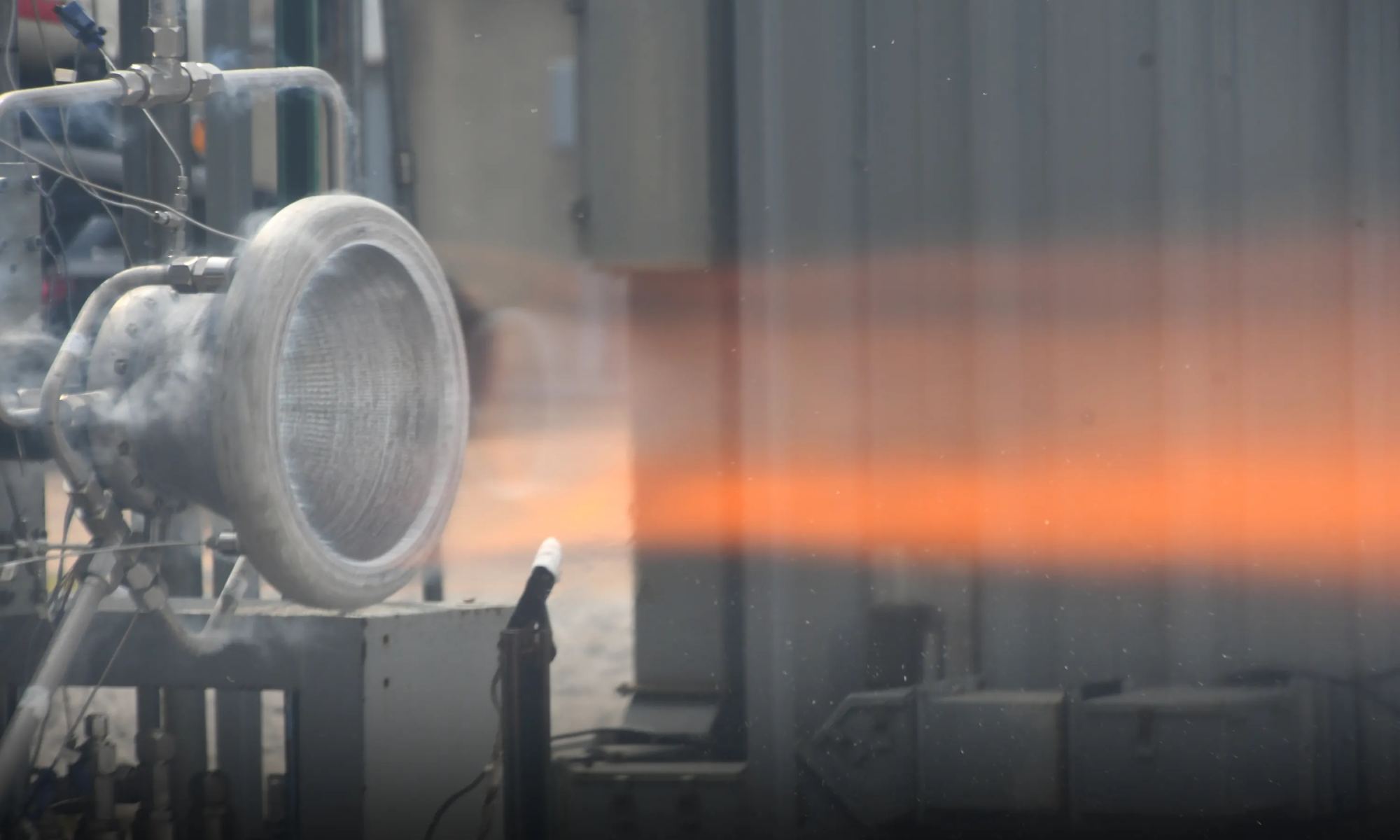
A RAMFIRE rocket engine nozzle performs a hot fire test at NASA’s Marshall Space Centre, demonstrating the viability of 3D printed, aluminium rocket nozzles. Credit: NASA

3D printing may be a relatively new technology, but it is one that is revolutionising may sectors of industry and commerce – and that includes space exploration. I’ve already covered the work of Relatively Space to manufacture and operate the world’s first 3D printed rocket systems in the form of the (now retired after it maiden launch failure) Terran 1, and the highly ambitious, semi-reusable Tarran R. However, NASA has actually been charting the potential for 3D printing in space and on Earth for almost a decade.

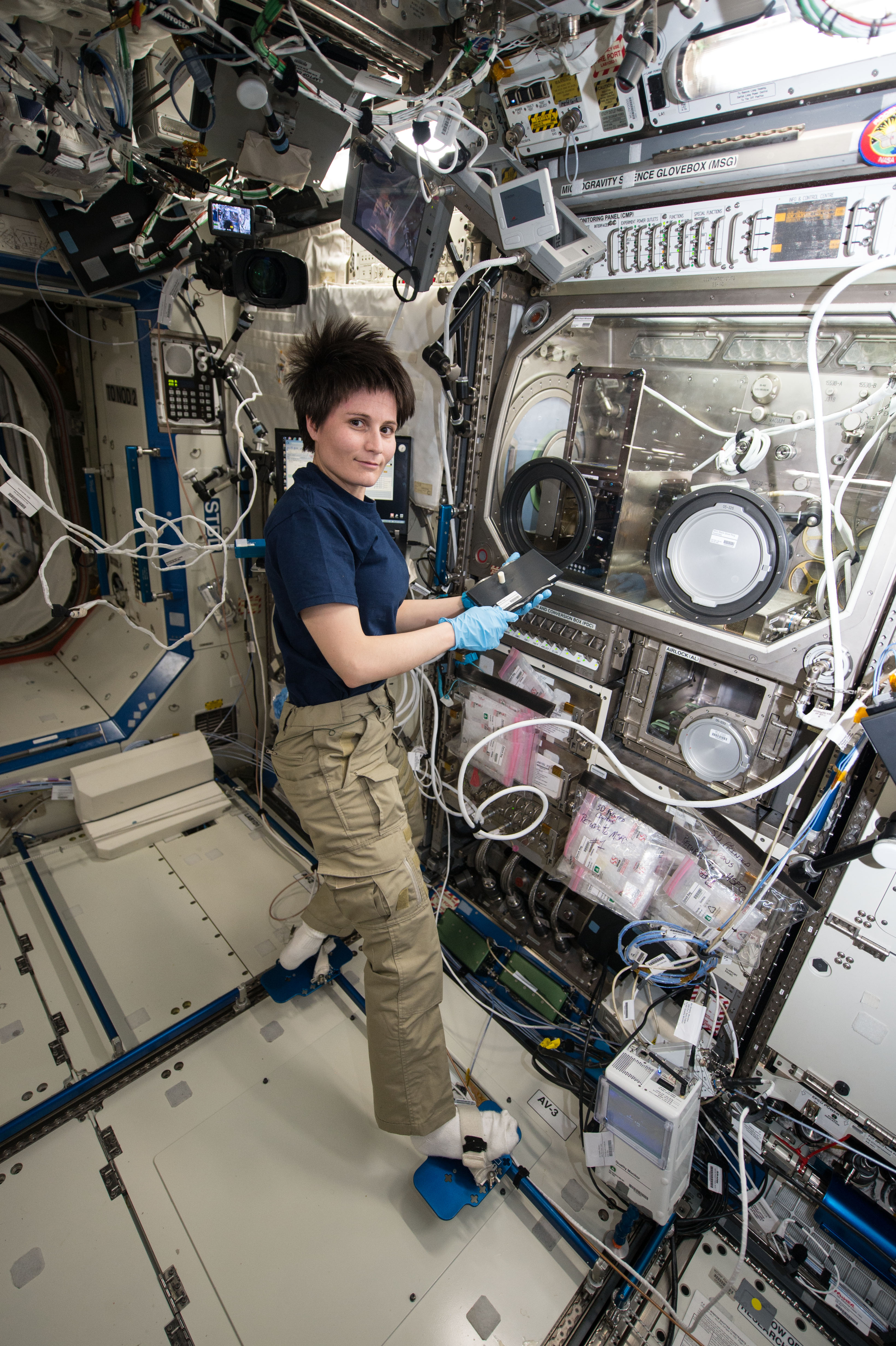
As an example of this; the first 3D printing system installed on the ISS arrived in 2014. It was a modest affair primarily designed to research whether or not practical, plastic-based 3D printing could be used in the microgravity of space. As the analysis of the printed parts demonstrated, there were no weaknesses or deficiencies in their construction when compared to identical items produced on Earth using the same process. Thus, the initial project was expanded to encompass the production of usable items – a wrench, plastic brackets, parts of an antenna system, for example – using a variety of industrial-grade plastic filaments.

ESA astronaut Samantha Cristoforetti using the 3D Printer aboard the ISS. Credit: NASA

The capability was then enhanced with the arrival of ReFabricator – a system which could take plastics used on the ISS and recycle them into plastic filament for use by the printer, with Recycler later adding the ability to do the same with other “waste” materials on the station.

In 2023, the European Space Agency and Airbus Industries went a stage further with Metal3D, a printer capable of producing metal and alloy parts for use on the ISS. It is part of a broader project to develop in-situ orbital and lunar 3D printing systems capable of manufacturing everything from replacement parts to entire assemblies such as radiation shields, vehicle trusses, etc. ESA plan to use an enhanced Metal3D system to use lunar regolith as its raw material in the production of equipment and components.

Meanwhile, NASA has also been busy on Earth with a range of 3D printing projects and studies, one of which  – RAMFIRE – which earlier in the year had its (quite literal) baptism of fire.

Standing for the Reactive Additive Manufacturing for the Fourth Industrial Revolution,  RAMFIRE is a unique process which combines an entirely new aluminium alloy called 6061-RAM and 3D printing to create rocket nozzles for space vehicles. To understand why it is potentially so revolutionary, three points need to be understood:

  • As a rule, aluminium is a poor choice for rocket engine (and particularly engine nozzle) construction as it has a rather nasty habit of melting when exposed to high temperatures – such as those generated by a rocket engine nozzle.
  • While aluminium can be strengthened to withstand higher temperatures through the use of additives, the additives themselves can make it susceptible to cracking and microfractures if the aluminium has to be wield to itself or other items as is again required in the production of rocket nozzles.
  • At the same time, being able to print an entire engine nozzle as a single unit and in aluminium, has the potential of both greatly simplifying the process of rocket engine production (as the nozzle now comprises a single part, rather than up to 1,000 individual parts as is currently the case, and for the engine to be significantly lighter without any reduction in thrust, allowing for a potentially large payload to be carried.

Using 6061-RAM with a 3D printing process developed in partnership with Colorado-based Elementum 3D, NASA has been able to produce single-piece aluminium rocket nozzles which, by a combination of the additives used in the alloy and a series of special cooling channels printed into the nozzles, both withstand the heat of combustion in their chambers and also passively cool themselves in the process.

Over the summer period, two small-scale RAMFIRE nozzles were put through their paces at NASA’s Marshall Space Centre in a series of hot fire tests, the results of which were published by NASA on October 16th. The nozzles were tested using two cryogenic propellant mixes – liquid oxygen and liquid hydrogen in one batch of tests, and liquid oxygen and liquid methane in the other. It had been anticipated the nozzles would manage a pressure of up to 625 psi in their chambers, and run for a handful of minutes apiece. As it turned out, they functioned above the anticipated pressure without damage and racked up a cumulative burn time of almost 10 minutes.

This level of burn time and pressure is well in excess of the major requirement for such engine nozzles: within cargo transports carrying payloads to the surface of the Moon and landing them safely, bore lifting off again for the return trip to Earth to collect more cargo. However, the technology being developed by NASA and Elementum 3D has the potential to be used in a wide range of space vehicle applications, from propellant tank manufacture through to providing a means to provide very lightweight, thrust-efficient aerospike engines, one of the holy grails of space transportation systems.

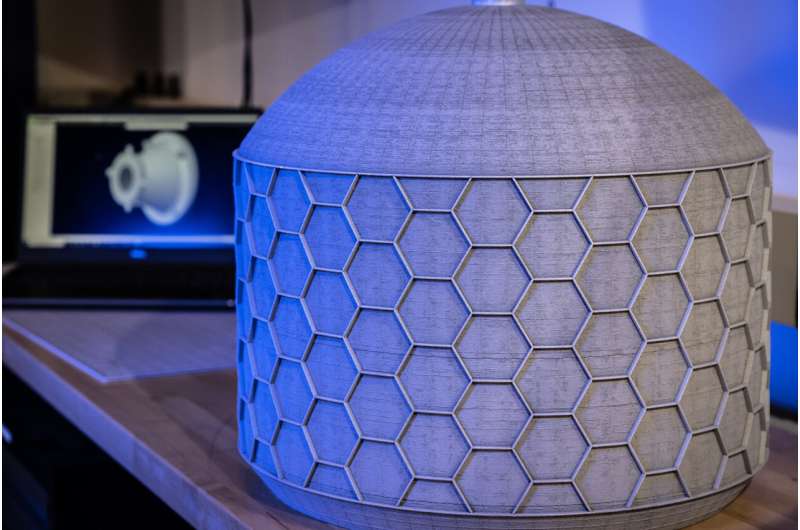
The 6061-RAM2 aluminium and its associated 3D printing process also has the potential to produce other items required by spacecraft. The above is a demonstrator for a single-piece printed propellant tank, complete with the same cooling channels to help keep cryogenic propellants cold. The result is a lightweight single-piece tank structure with primary side walls just 1.5 mm thick.  Credit: NASA

There is still further R&D to go with RAMFIRE, but NASA and Elementum 3D are already looking at licensing 6061-RAM and the printing process to commercial organisations interested in adapting it for use in their space-based efforts  – and possibly further afield in aerospace research sectors.

Continue reading “Space Sunday: 3D printing for space, and asteroids”

2023 week #42: SL CCUG meeting summary: PBR

Meditation Mountain, August 2023 – blog post

The following notes were taken from my audio recording and chat log transcript of the Content Creators User Group (CCUG) meeting held on Thursday, October 19th, 2023. Unfortunately, my recording software glitched (I tend to be afk when the meeting is in progress), so only the first 18 minutes of the meeting were actually recorded to disk, as represented here.

  • The CCUG meeting is for discussion of work related to content creation in Second Life, including current and upcoming LL projects, and encompasses requests or comments from the community, together with viewer development work.
  • As a rule, these meetings are:
    • Held in-world and chaired by Vir Linden.
    • Conducted in a mix of voice and text.
    • Held at 13:00 SLT on their respective days.
    • Are subject to the schedule set within the SL Public Calendar, which includes the location for the meetings.
    • Open to all with an interest in content creation.
  • The notes herein are drawn from a mix of my own chat log and audio recording of the meeting, and are not intended to be a full transcript.

Viewer Updates

Friday, October 20th saw the release of the Github Actions (GHA) viewer, version 6.6.16.6566955269. This is the first official viewer to be built via Github Actions rather than TeamCity.

  • Outside of a major version update to CEF (Chromium Embedded Framework) which includes several performance updates and security fixes, this viewer contains no user-observable differences to the current release viewer…
  • .. Other than having even more crunchy digits in the version number for us all to chew on.
  • Release viewer, version 6.6.15.581961, promoted October 2 (formerly the Inventory Extensions Viewer).
  • Release channel cohorts (please see my notes on manually installing RC viewer versions if you wish to install any release candidate(s) yourself).
  • Project viewers:

glTF Materials and Reflection Probes

Project Summary

  • To provide support for PBR materials using the core glTF 2.0 specification Section 3.9 and using mikkTSpace tangents, including the ability to have PBR Materials assets which can be applied to surfaces and also traded / sold.
  • The overall goal for glTF as a whole is to provide as much support for the glTF 2.0 specification as possible.
  • Up to four texture maps are supported for PBR Materials: the base colour (which includes the alpha); normal; metallic / roughness; and emissive, each with independent scaling.
  • In the near-term, glTF materials assets are materials scenes that don’t have any nodes / geometry, they only have the materials array, and there is only one material in that array.
  • As a part of this work, PBR Materials will see the introduction of reflection probes which can be used to generate reflections (via cubemaps) on in-world surfaces. These will be a mix of automatically-place and manually place probes (with the ability to move either).
  • The viewer is available via the Alternate Viewers page.

Further Resources

General Status

  • The back-end communications / bandwidth fix has been deployed to all PBR test regions, per this blog post from the Lab.
  • The push is now on to get glTF PBR to a point where the simulator side code can be more broadly deployed to an RC channel. This may result in some regressions being noted, but this will be subject to point releases to correct, should they occur.
  • On the viewer side, there will be a focus on getting the Mac version up to match the performance seen with the windows PBR RC viewer.
  • Because of the above, and as the viewer moves forward, the recommendation for those testing PBR is to read the available documentation – particularly the viewer release notes.
  • The general word to those testing PBR is that if they do come across anything that could be a major issue, to be sure to Jira it ASAP and in as much details as possible, and if active in the content Creation Discord Channel (which, for those who ask, I have been specifically asked by LL not to provide links to in these pages), to speak up.
  • This focus on trying to get PBR Materials out means that the work on real-time mirrors and on glTF terrain has been put on a temporary hold to maximise the resources available for Materials work.

Mirrors

  • Mirrors are a part of the glTF / PBR materials project, but something of a separate tranche of work.
  • The idea is provide the means to have via high resolution reflections (i.e. mirrors) within a scene.
  • Initially only one active mirror surface per scene will be active for any viewer.
  • The process will use the PBR reflection probes mechanism, combined with a automated “Hero Probe” mechanism which with generate high resolution (512×512) “reflections” for the mirror.
  • The system will operate on the basis of avatar / camera proximity to a mirror surface triggering the closest reflection probe to become a “Hero Probe” for that avatar / camera. This means that if there are multiple mirrors placed within an environment, only the one closest to a given avatar / camera will be active and display the “reflections” generated by the reflection probe.
  • Depending on testing and performance, the number of mirrors might be expanded to two – one for mirror surfaces and one for Linden Water to generate high resolution water reflections where appropriate.

Status

  • As noted above, work temporarily on hold to focus resources on PBR Materials.

In Brief

  • There was a general discussion on how best to change an preserve overrides on materials when allowing for the likes of colour changes when making changes via LSL (and how best to batch similar changes). This was seen as something that could be better handled outside of LSL directly (thus avoiding multiple calls to set / preserve specific changes), but is something to be looked at after the initial release.
  • At this point the recording flatlined 😦 .

Next Meeting

† The header images included in these summaries are not intended to represent anything discussed at the meetings; they are simply here to avoid a repeated image of a gathering of people every week. They are taken from my list of region visits, with a link to the post for those interested.