On Thursday, April 3rd, 2025, Linden Lab announced a further promotion to encourage the use of the SL Mobile app through a giveaway of Linden Dollars. The promotion – called Dash for Cash – is available to all Second Life users – Basic and any subscription tier.
How It Works
Throughout April, the Lab will send out a notification to Mobile users.
Users then have a limited time period to log-in to Second Life via the Mobile app and claim a L$ prize.
To ensure a chance to claim:
Make sure you are using the latest release of the Mobile app (at the time of writing, 2025.3.548 (Android) / 0.5.537 (iOS)).
Enable push notifications on the app to receive the Dash notifications via Menu → Settings → Notifications → enable App Communications, per the images at the top of this article.
Note you may have to click on a blue button at the bottom of the Notifications screen and confirm you wish to allow the app to send notifications, if you are doing this for the first time.
You’ll also see a Dash for Cash announcement in the mobile app’s Lobby, reminding you to check in daily.
You can view the official Dash for Cash blog post in your device’s browser directly from the SL Mobile Lobby, if required.
Wait for the Dash for Cash notification & on receipt, log-into SL via the Mobile app.
Those doing so within the specified time will have the amount specified in the notification credited to their SL account.
Notes
Linden Dollar amounts may change.
Everyone can win, but Premium Plus, Premium and Plus members are eligible to receive higher L$ rewards than Basic users.
Note that Dash for Cash is in addition to the Streaks Rewards, which currently remain unchanged in format and availability.
The following notes cover the key points from the Web User Group (WUG) meeting, held on Wednesday April 2nd, 2025. These notes form a summary of the items discussed and is not intended to be a full transcript.
A video of the meeting, recorded by Pantera Północy, is embedded at the end of this summary, with sections of this summary times stamped to the relevant points in the video for those wishing to refer to the audio. My thanks as always to Pantera for recording it and making it available.
The Web User Group exists to provide an opportunity for discussion on Second Life web properties and their related functionalities / features. This includes, but is not limited to: the Marketplace, pages surfaced through the secondlife.com dashboard; the available portals (land, support, etc), and the forums.
As a rule, these meetings are conducted:
On the first Wednesday of the month and 14:00 SLT.
Meetings are open to anyone with a concern / interest in the above topics, and form one of a series of regular / semi-regular User Group meetings conducted by Linden Lab.
Dates and times of all current meetings can be found on the Second Life Public Calendar, and descriptions of meetings are defined on the SL wiki.
Fixes for spaces within Map links, with more fixes for incorrect spaces in links still to come.
Requests were again made to be able to search maps.secondlife.com by region name, which is apparently a little harder to implement than had been thought.
Minor fixes to the Marketplace:
See Mature Content link was not working as expected.
Translations updates and added.
Project Zero / Firestorm Zero (SL in a Browser) Update
Recent work has been focused on stability and performance.
Work has resumed on the new viewer UI for the Project Zero SL Viewer, and the first iteration, featuring very small changes should be released “pretty soon”.
Firestorm Zero
A core focus has been on the Firestorm version of Zero (Firestorm Zero, launched in March), running through bugs and issues reported with that. Some issues include:
People purchasing time and having issues launching a session.
People being locked-out of Firestorm Zero after a session (or even during) – most likely as a result of Cookies being corrupted, thus requiring Cookies to be cleared from the browser & the browser restarted.
It’s also been suggested that using a private / incognito version of a browser works better, as this should clear all Cookies on exiting.
Note: I have experienced multiple “locks-outs” (one both “public” and “private” browsers – Chrome, Firefox, Opera, Brave) and have found that clearing / resetting Cookies within the browser does not work, and it requires LL to bang on things (indeed, as of this moment, I cannot access Firestorm Zero!). If you encounter the same, please file a report.
General to Both
It was acknowledged there there is a degree of confusion around Project Zero and Firestorm Zero, and the fact there are differences between them:
Project Zero is effectively the official viewer, offered on a limited capacity basis, with the focus more towards incoming new users / returning users.
Firestorm Zero is the “paid” service utilising the Firestorm viewer and focused more towards current users.
Some aspects of this confusion might be seen in:
The link found at the top of the Second Life Dashboard (Launch Second Life in a Browser) will launch Firestorm Zero.
The fact that at the WUG meeting, people conflated issues of logging in to Project Zero which were likely due to the limited capacity / new user focus more than anything else, with a discussion on specific issues those attempting to use Firestorm Zero were experiencing.
As a result, Sntax Linden noted that there should be more / better differentiation between the two.
Shortfalls with both Zero and Firestorm Zero were (again) noted as:
Lack of ability to directly upload (mesh, textures, etc.) to your account.
Lack of ability to save snapshots, etc., to a local disk.
The noticeable latency in camera movement (and similar) for those more distant to the host computer running the viewer. [It has been hinted that this could be address by relocating host computers for Project Zero / Firestorm Zero in additional Amazon GameLift end-points such as Éire.]
A feedback request to Add marketplace policy regarding AI generated content sparked a request for clarification on what people would like (e.g. disclosure of the use of AI generated content / listing images; outright banning of anything related to the use of AI tools; filtering out content made purely with generative AI (as opposed to content which has been created by someone and which happens to use some AI elements), something in-between; limiting some forms of AI content, etc.).
Within the meeting, disclosure (e.g. clearly indicating a item uses AI generated content / the listing images are AI generated, etc.), was preferred by most.
It was noted that using purely AI-generated images (e.g. created using Midjourney) as a non-representative means to promote / sell content on the MP is already against policy (misleading advertising) and so can currently be reported.
Kali Linden indicated LL are looking to add reasons for flagging content, and something along the lines of “violates LL policy” might be considered, to make such reporting easier.
It was acknowledged that those using generative AI tools (e.g. Meshy) for content on the MP probably are not going to self-identify through marking check-boxes etc.
It was also noted that some people using generative AI images for advertising on the MP are not doing so with intent – but rather because it is the New Shiny for them to play with, and so some allowance should be made for this.
There’s also the issue with people who may take images of their creations and then heavily post-process them to the point where they are no longer fully representative of the item it promotes – so what should be done in these cases? Or with those using art pulled from the physical world?
Part of this conversation inevitably rolled over the idea of AI “companions” / bots and an expressed desire to “ban everything” about AI – including bots, despite there being nuances – such as with the latter (e.g. in-store CSRs, more dynamic role-play NPCs, etc.).
In Brief
Please refer to the video for details on the following.
[Video: 1:32-4:44] General discussion on the Second Life booth at the 2025 Games Developer Conference, which some at the meeting felt to be underwhelming based on the photographs posted to social media, etc.
LL also appear to have received feedback from the SL creators who attended the event, and it appears lessons are being learnt for future possible events / appearances.
[Video 17:32-18:50] Further discussion over the lack of a visible-by-default chat bar in the official viewer.
[Video: 22:03-35:15] Discussion on use of the in-viewer browser vs. using an external browser – most preferred the external browser option.
However, most browser-based shopping stats the Lab has for the Marketplace point to the viewer’s internal browser being primarily used for purchases.
Sntax Linden noted that as the internal browser is the only option for accessing the web from within Project Zero / Firestorm Zero, LL do want to improve on it – such as making the responsive MP not only work on small device screens, but also work better within the in-viewer browser.
Traditionally, the in-viewer browser has been avoided due to concerns of general security (e.g. clicking on phishing links and opening them within the in-viewer browser). This led to a discussion on ways to block “bad links”.
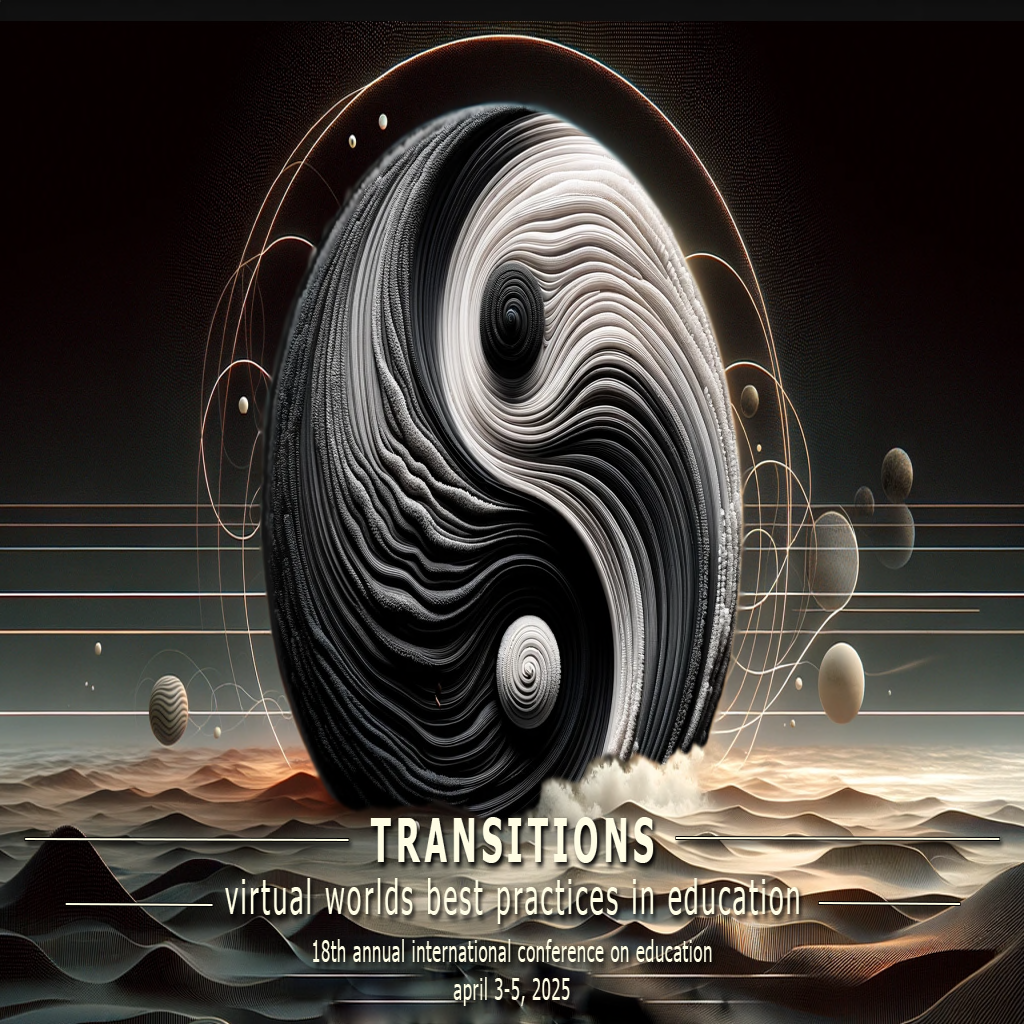
A grass-roots community event focusing on education in immersive virtual environments, VWBPE attracts 2200-3500 educational professionals from around the world each year. Its primary goals are to foster discussion on, and learning about educational opportunities presented through the use of such virtual spaces, a defining core values and best practices in doing so, including:
Helping to build community through extension of learning best practices to practical application of those ideas and techniques;
Providing networking opportunities for educators and the communities that help support education; and
Offering access to current innovations, trends, ideas, case studies, and other best practices for educators and the communities that help support education.
In the context of the conference, a “virtual environment” is an on-line community through which users can interact with one another and use and create ideas irrespective of time and space. As such, typical examples include Second Life, OpenSimulator, Unity, World of Warcraft, Eve Online, and so on, as well as Facebook, LinkedIn, Twitter, Pinterest or any virtual environments characterised by an open social presence and in which the direction of the platform’s evolution is manifest in the community.
Every year, the event has an over-arching theme. For 2025 this is Transitions, which the organisers describe thus:
Transitions, like pivotal shifts in a story, capture the profound changes educators and students have faced in recent years. These shifts highlight the need to adapt and redefine social dynamics within virtual environments as education evolves to meet new challenges.
Join us as we all share experiences and successes in how virtual technologies used in the classroom have helped shape education for the better.
VWBPE 2025 Gateway
Programme
As with previous VWBPE conferences, this year’s event includes speakers, workshops, presentations, social activities and more.
The best way to find out what is going on over the three days of the conference is through the VWBPE programme page, However, here are some of the highlights of major events (note: all times SLT and held at the main auditorium unless otherwise stated):
08:30-09:00: VWBPE 2025 Kick-off event at the VWBPE Gateway.
09:00-10:00:
Lecture Area A – VW Illustrations and AI Avatars Enhance Engagement, presenter: Kayako Mayako (RL: Kay McLennan, Tulane University, School of Professional Advancement).
Workshop Area B – CyberX: AI Personalized Learning in Virtual Worlds, presenter: Ran Hienrichs (RL: Ran Hinrichs).
16:00-17:00: Lecture Area A – We Stand in the Middle, presenter: Jenaia Morane (Jena Ball).
Saturday April 5th:
07:00-08:00: Workshop Area B – Immersive AI Companion Design, presenter: ErlinaAzure (Helena Galani, TESOL International).
08:00-09:00 Lecture Area B – Navigating Transitions Through Community Learning, a roundtable discussion with host: Rhiannon Chatnoir (RL: Joyce Bettencourt, Avacon, Inc.).
10:00-11:00: Workshop Area A – Round the Campfire on Student Agency, presenter: Bluebarker Lowtide (Vasili A. Giannoutsos, VBCPS).
12:00 noon-13:00: Lecture Area B – Go Ahead, Accept Failure, Fall Forward, and Fly, presenter: Zinnia Zauber (Renne Emiko Brock, Peninsula College).
14:00-15:00: Lecture Area A – Transitioning from Virtual World Student to Pro, presenter: Kreatya Shannon (Shannon Broden, Graduate, San Jose State University).
If you cannot get in-world to attend any of these or the other major talks and presentations at the conference, note that you can watch them via You Tube – check the VWBPE Livestream Guide for the full schedule of events streamed to the VWBPE You Tube channel.
WWBPE Wetlands Visitor Centre
Region Themes and Facilities
For 2025, the conference continues with its Earth build, with each region representing a different terrestrial biome, including wetlands, desert, badlands, grasslands, and forests. Conference attendees will be able to explore 3D immersive virtual representations of these biomes.
The VWBPE Gateway
At the VWBPE Gateway you can find information on the conference – including the schedule for the day, a Swag Bag which includes the conference teleport HUD for easy access to all locations and venues, information on the biomes comprising the conference regions, and more. And, of course, VWBPE volunteers are on hand to answer your questions!
The VWBPE 2025 Swag Bag (from the conference gateway) includes a Teleport HUD for hopping around the conference more easily
Core Facilities and SLurls
Within these regions the following core facilities for the conference can be found – but please refer to your conference Swag Bag (and teleport HUD!) for full information on all locations and facilities at this year’s conference.
The Quieting, April 2025 – click any image for full size
I’ve covered the region design work of Elo (WeeWangle Wumpkins) a number of times in these pages, both in terms of regions she has landscaped on behalf of others (such as Persephone Smythe (LeriaDraven) – see here) and in her own right, perhaps most notably – but by no means exclusively – with The Forgotten, which I originally blogged in April 2022 and again in January 2024.
While The Forgotten has since closed, its memory, in some ways at least, is carried on within The Quieting, a homestead region design by Elo which opened in March 2025. It abuts the home of Aardvark Animesh Pets & Animals, the store operated by Elo’s SL partner, Dash Phantom, with whom she landscaped that region.
The Quieting, April 2025
Although I’ve not met Elo, we appear to have a lot in common: a slightly whimsical / crooked sense of humour, an love of cats, books and fantasy, and an adoration of nature and natural settings. In fact, such is the beauty, whimsy and humour of The Quieting, that a simple description of the region just is not enough; it is a place deserving of careful exploration and observation, because it folds so much into itself. In this, it carries on the spirit of The Forgotten, and the words I used to describe that setting hold true here as well:
This is a place that offers itself as a book; the landscape seamlessly flowing from shore to shore … leading the visitor through vignettes and elements which stand as chapters to a story, each one unique unto itself but also joined to those which came before and which follow after, their tales combining to draw the explorer onwards as the words flowing across written pages draw the reader deeper into their narrative.
The Quieting, April 2025
In fact, it is not unfair to say that whilst having its own unique personality, The Quieting has enough about it – the over-large full Moon that seems to reflect the light and colours of the clouds passing below it, the ritual stone circle with its central glowing crystal, the use of ruins – that those who recall The Forgotten will immediately sense the flow of unity between the two settings, even as The Quieting unfolds its own delights and stories.
From the Landing Point, located alongside a body of water that cuts deeply into the east side of the region, it is possible to strike out in several directions. Eastward, across a log bridge, offers a path through cavern rich in crystals and a tunnel to the beach, or if you prefer – a path up to the headland above said cavern and southward to where a little bookstore / reading corner sits within its own terrace. From there it is possible to pass through an avenue of trees and reach aged ruins enclosing a garden – a place also to be reached by stepping westward from the Landing Point and then heading south across the grass.
The Quieting, April 2025
Further to the west, beyond the greenhouse kitchen (where there appears to have something of a mishap!), it is possible to reach a pair of little cottages and, close by, the remnants of anther ancient structure huddled in a bowl of land alongside the walled and flower-carpeted walk to the local chapel standing within a darkly humorous (Here Lies Lester Moore, Four slugs from a .44 – No Less, No More) as well as quite touching. Above both chapel and ruins, sitting on the crown of a hill might be found a large greenhouse and yet more ruins which sit well-like in the hill, thick mist filing its deep.
Meanwhile, south of the cottages, the land rises to woodlands in which the noted ritual ring resides, surrounded by an almost mystical fog, reached via paths from both the grasslands and the high walls and walkway connecting the setting with Aardvark.
The Quieting, April 2025
Each of these locations – and the all points between offer their own stories, touches and humour. Some of these – the mentioned greenhouse kitchen, the mandrakes of folklore finding themselves the subject of unwanted attention from an Eagle, the goofy / homely charm of the bookshop / reading corner (keep an eye out for the chicken having a frank exchange with a bespectacled mouse).
Others might be more easily missed (whilst you may spot the piglet taking to the air in a makeshift balloon basket – will you spot the red-coated (and red faced!) individual about to bring piglet back to Earth with – if not a bang, then certainly a rata-tat-tat?!). Or how about the hang-gliding mouse, or the snide-looking llama almost daring you to blame it for the broken state of the chair next to it; or how about the little beagle behaving like a virtual interpretation of Greyfriars Bobby? And that’s barely scratching the surface of all that is waiting to be seen here.
The Quieting, April 2025
The fact is, The Quieting offers multiple vignettes, large (such as the ruins and their garden, the chapel and its graveyard) to the very small which sit both within the larger settings and entirely on their own (again, keep your eyes open as you follow the path around the base of the hill covering the cavern and tunnel, for example, or the opportunity to take to the air by a whimsical means).
Marvellously brought together, rich in details (and I haven’t really mentioned much of the wildlife scattered around, The Quieting is a richly engaging visit.
The following notes were taken from the Tuesday, April 1st, 2025 Simulator User Group (SUG) meeting. They form a summary of the items discussed, and are not intended to be a full transcript, and were taken from my chat log of the meeting and Pantera’s video, embedded at the end of this piece.
Meeting Overview
The Simulator User Group (also referred to by its older name of Server User Group) exists to provide an opportunity for discussion about simulator technology, bugs, and feature ideas.
Meetings are open to anyone with a concern / interest in the above topics, and form one of a series of regular / semi-regular User Group meetings conducted by Linden Lab.
Dates and times of all current meetings can be found on the Second Life Public Calendar, and descriptions of meetings are defined on the SL wiki.
Simulator Deployments
On Tuesday April 1st, the SLS Man Channel was updated with the Durian Scones update, which includes the SSL certificate renewal, making it grid-wide.
On Wednesday, April 2nd, the RC channels will be restarted without any deployment, other than a WebRTC update which will be deployed to the Preflight RC channel.
Planned Updates – LI Calculation Change (Recap)
Signal Linden highlighted a Feedback Ticket he has raised, proposing the removal of scale from Land Impact calculations.
This is being possibly earmarked for a simulator update after Durian Scones.
This essentially means that the LI of object should not dramatically change as a result of resizing (particularly when increased in size). It could also mean that some large objects in world could see LI reductions.
Understandably, this announcement led to a lot of discussion / debate throughout the meeting.
Please refer to the the video for details on the following.
A request was made for linkset larger than the current 64m limit. This would have to be “thought about”, although it led to an extensive discussion on the idea (including issues of linkset visibility / draw distance / limits on older hardware).
Arbitrary link distances sounds like a neat idea, however I suspect such a change would only exacerbate some interest list bugs. I wonder what would happen if two 1cm^3 cubes were linked at 256m. The “position” of the linked object would be one of the prims. Its measure of “visibility” should be… what? The size of one or the size of the linked set?
– Leviathan Linden
The above led to a broad conversation on prim / object types, physics, prim torturing, etc.
Signal linden noted on the status of SLua:
Updates on SLua may slow down as we got a lot of good information from the alpha. We need to make some changes and prepare for a beta and production rollout.
Rider Linden also dropped a request into the meeting:
I’m looking for someone to write an extension. When I open a script file using VSCode check the current workspace. If it finds a file with the same base name, “link” the two files. 1) Copy the file from the workspace to the SL script temp file every time the WS file is saved.
† The header images included in these summaries are not intended to represent anything discussed at the meetings; they are simply here to avoid a repeated image of a rooftop of people every week. They are taken from my list of region visits, with a link to the post for those interested.
I have a genuine love of poetry; be it Wordsworth, Shakespeare’s sonnets, Poe’s laments, T.S. Eliot’s journeys in verse, or evocative pieces from the likes of Masefield (Sea Fever) or William Blake’s The Tyger.
Both of the latter are perhaps populist pieces; there are few, if any, lovers of poetry who cannot quote at least their opening lines. However, both contain a wealth of imagery and a depth of reflection on life – something often missed when reading either, such is the strength of the overlying imagery within them.
Of the two, Blake’s the Tyger is perhaps the more structurally and visually impressive, mixing as it does trochaic tetrameter and iambic tetrameter, alliteration and focused imagery, whilst also containing a deeper questioning which reaches beyond its own form, notably in reference to its “sister” (and potentially less well-known) piece The Lamb.
The Tyger is also the subject of a new poetic experience by the master of visual poetry in Second Life, Sheldon Bergman (SheldonBR).
I’ve covered Sheldon’s work in these pages, both in its own right, and with regards to his collaboration with Angelika Corrall both as artists at and curators of the former DaphneArts Gallery in Second Life. As such, I was delighted to receive a personal invitation from Sheldon to visit The Tyger, and took the first opportunity I could to immerse myself within it.
Now, when I say poetic experience with regards to Sheldon’s work, I mean just that; The Tyger is powered by a Second Life Experience, and it is essential you accept it on arrival at the installation if you are to proceed further, and then ensure your viewer is set as instructed in the pop-up (with the caveat that you only perhaps need to set Advanced Light Model (Preferences → Graphics) if you are running a non-PBR capable viewer and don’t run ALM as standard). Once you are set, click the Continue option on the HUD pop-up to deliver you to the installation proper.
The Tyger, Sheldon Bergman, April 2025
A quick point of none here is that your screen will go into a “letterbox” display format, courtesy of the HUD – and it is essential you should leave it in place. A second note here is that I’m not going to go into a deeply analytical piece on Blake’s works, by they The Tyger, The Lamb, or the volumes from which they are drawn (Songs of Innocence and Songs of Experience), nor am I going to dwell overlong on Blake’s use of The Tyger as an exploration and questioning of 18th/19th century Christian religious paradigms. While these all fold into Sheldon’s The Tyger, they have all been written about extensively elsewhere.
Rather, what I will do here is offer thoughts on what appears to be a much broader canvas on which Sheldon paints, using The Tyger and its religious reflections as his foundation; a canvas which – to me at least – appears to offer thoughts not so much on our relationship with God, but our place within, and relationship as a whole with, the cosmos around us.
The installation initially begins within a twilight setting, at one end of a path formed by the waters of a stream rushing outwards from high waterfalls. The watery path is lit at intervals by pairs of candles, one to each bank. As well as lighting the way, they perhaps suggest the opening line of the poem and the flashes of colour one might see of a tiger passing through the shadows of the jungle. However, of more practical tone-setting (to my way of thinking, at least), is the initial quote offered by the HUD on arrival:
The clearest way into the Universe is through a forest wilderness.
– John Muir, environmentalist and philosopher
The Tyger, Sheldon Bergman, April 2025
This offers an intrinsic link between Sheldon’s use of the poem and its ability to question Christian tenets and paradigms with his broader theme as intuited above. One which grows as we follow the watery path as it travels through the gorge its has cut (symbolic, perhaps of the path we cut through life?) before the water turns to the left and enters a broad pool, and the visitor is left facing the open maw of a tunnel.
This opening, into which the flicking eyes of the candles lead us, is prefaced with a quote oft attributed to Joseph Campbell (although so far as I’m aware is not something he wrote):
The cave you fear to enter holds the treasure you seek
It’s a statement that potentially takes us in several directions: caves can be thought of of dangerous and the home of predators; thus we remain rooted somewhat in the poem: whilst not a cave dweller itself, the tiger is perhaps the apex predator among land animals today. Further, caves can represent a journey into darkness and the unknown – just as life itself is a daily journey into the unknown; just as we have no idea what awaits at the end of our walk through the tunnel, we cannot comprehend what awaits at the end of our journey through life. Might it be the “treasure” of the kingdom of heaven as Christianity and its ilk would have us believe? Or might it be a quiet return to the nothingness of the Cosmos which, ultimately, birthed us?
Within Sheldon’s tunnel we have the opportunity to reflect both on Christian thinking – and the joining of Blake’s The Tyger with The Lamb – complete with the opening lines of the latter (look for the side tunnel after passing the seaward opening in the tunnel walls). This is itself a layers element within the installation, encouraging us to consider Christian tenets (the Lamb of God, the Christian flock, etc.), whilst also underscoring Blake’s reflections on God’s apparently capricious nature as the creator of both the defenceless lamb and the deadly tiger:
When the stars threw down their spears, And water’d heaven with their tears, Did he smile his work to see? Did he who made the Lamb make thee?
The Tyger, Sheldon Bergman, April 2025
It is also here – or at least, a little further down the tunnel – that the installation opens more fully onto questions of our place in the universe, starting with a further quote. This one from one of the great thinkers of the 20th century (and one of my heroes), Carl Sagan. It is a image he used a number of times in his writings, but it appears here in what is perhaps its most widely-quoted form:
The cosmos is within us. We are made of star-stuff. We are a way for the universe to know itself.
Carl Sagan, Cosmos: A Personal Voyage: The Shores of the Cosmic Ocean (1980)
It is a quote that leads us, figuratively and literally, to a god’s-eye view of a spinning galaxy, a further marvellous metaphor and visual prompt for all that we might ascribe to Sheldon’s installation. It is also the perfect means to embody our unity with the universe, because to proceed, we must step through it.
The Tyger, Sheldon Bergman, April 2025
To do so is to enter the core of The Tyger, a space filled with the most incredible symbolism, questioning and statements for those willing to listen. From a vocal rendition of Blake’s poem, through the use of the Lacrimosa from Zbignew Preisner’s Requiem for My Friend (1998) to the lifting of the veil of blackness and revelation of Sheldon’s floating Tyger and its potential for layered interpretation, it is utterly breath-taking.
To itemise in words the richness and depth of all that’s offered here – from the poem, through the particular selection of Preisner’s Lacrimosa (hint: the piece has perhaps most memorably used to overlay the birth of the universe at the start if The Tree of Life, and we are perhaps particularly focused on the cosmos within this space) as well as its role within Zbignew’s Requiem (and indeed, the Catholic Requiem mass as a whole) to the presence of the floating Tyger and all that surrounds it – would be to defeat the purpose of the installation’s purpose.
Instead, I urge you to go and witness it; immerse yourself in The Tyger, its imagery, the richness of the poem itself and of Sheldon’s installation, and allow it to speak to you directly. It is magnificent.