The Project Zero User Group provides a platform for open discussion about Project Zero, the cloud-streamed version of the Second Life Viewer. Topics can range from sharing the goals for Project Zero, demoing the current experience, and gathering feedback to help shape the future of cloud access for Second Life.
These meetings are conducted (as a rule):
The second and fourth Thursday of every month at 13:00 noon SLT.
Meetings are open to anyone with a concern / interest in the above topics, and form one of a series of regular / semi-regular User Group meetings conducted by Linden Lab.
Dates and times of all current meetings can be found on the Second Life Public Calendar, and descriptions of meetings are defined on the SL wiki.
[Video: 0:00-7:48; initially no sound on the video, as local chat is being used]
LL continue to experiment with sending some new users accessing SL via Project Zero to different start locations.
Part of July saw these users directed to the sandbox of the Welcome Hub; currently, they are being directed to Ahern.
LL is paying attention to what new users do when they get there and how likely they are to come back.
There is an intentional move to avoid traditional tutorial zones with these users, primarily because these tutorial areas are focused on the Desktop viewer, and Project Zero, within its emerging UI is starting to differ from the Desktop viewer.
There may in the future be a tutorial area designed specifically for Project Zero.
Suggestions for other locations new users could be sent to were sought.
Work is being carried out to move Project Zero’s Go menu to a sidebar within the browser window, so it operates in a similar manner to the Avatar Picker.
The number of available locations on the Go menu may also be expanded to more than three choices.
A focus remains on helping new users how to better understand avatar customisation and making new avatars.
A further focus is the development of a new web-based (presumably React / HTML5, as has been previously discussed) UI for Project Zero. This is designed to be a simplified UI specifically aimed at encouraging new users to give SL a try.
General Discussion
The general discussion revolved in part around further questions of a similar nature asked of users in the July Web User Group meeting. previous meeting: what was your first purchase; have you ever used a complete avatar; what originally brought you to Second Life; why did people say; were the first things you obtained in SL purchased or free; how did people obtain their first Linden Dollars (purchased, camping, etc), etc.
Obviously the responses were mixed, and mostly given in text chat.
On Thursday, July 24th, Linden Lab held a Zoom Call with bloggers and content creators to provide a series of updates and take questions on a number of initiatives, changes and issues that have been the subject of recent discussion through forums such as the Zoom Calls, and recent announcements made through the likes of the Meet the Lindens sessions at the SL22B.
The following is an attempt to summarise the discussion and questions raised. Note that the order of topics does not necessarily reflect the order in which they were discussed..
Support: Status and Ticket Backlog
Most support issues have a 72-hour (3 business days) SLA for turnaround, with some priority items having a 12-hour or 24-hour (1 business day) turnaround SLA.
This includes carrying a “balance” forward of around 1000-1500 tickets
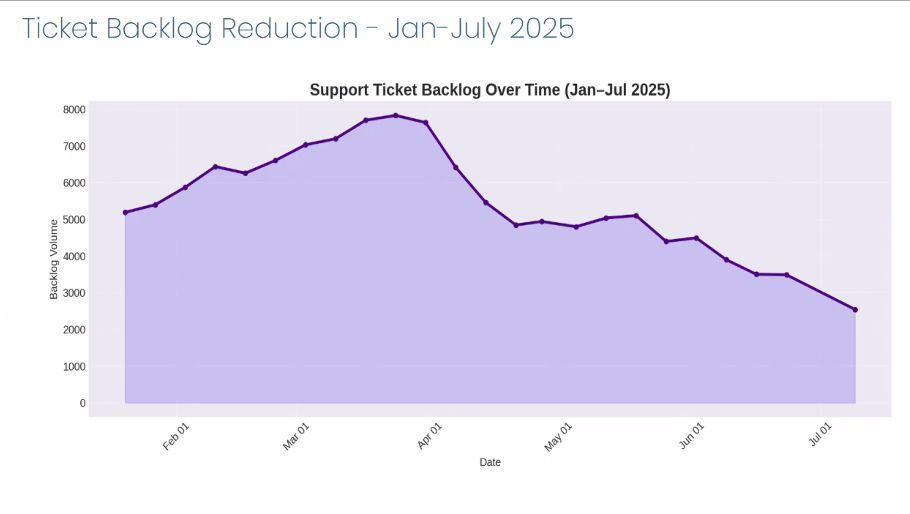
There has been a significant backlog of tickets due to things like the support reorganisation in late 2024, but the number of outstanding tickets is being brought down, per the graph below.
Graph supplied by Patch Linden showing the declining in the size of the support ticket backlog
In addition, and as Patch indicated at SL22B, weekend support hours have returned, so there is now 7-day a week support from 06:30 through 15:30 SLT.
In addition, new in-world support and Discord support options are in development and should be announced soon.
As anticipated, there were some issues with pay-outs for some immediately following the completion of the sale; however, the majority of these should now be sorted out.
Whether the sale will potentially increase / decrease the time taken to complete pay-outs depends on a number of factors:
When LL moved to offering real-time pay-outs, Second Life became the target for attempts at fraud by outside forces, and the Lab wasn’t quick enough to catch all cases.
Ergo, before moving back towards real-time pay-out, the Lab is now focused on the issue of account security at their end of things.
Additionally, LL is looking to Thunes to be able to offer more pay-out options to SL creators, some of which might also reduce the times taken to receive money.
However, time frames for introducing the latter are a matter for Thunes, not LL.
Linden Dollar Exchange Rate and the Economy
Concerns have be raised about the recent increases in the Linden Dollar exchange rate (roughly a 5% increase thus far over the course of 2025), with questions on whether the Lab will intervene / cap the increase, and whether the increases were due to user behaviour or system tweaks.
The LindeX operates entirely independently of Linden Lab on an open order book basis: anyone can participate in placing buy / sell orders, with matching engine determining which orders can be fully or partially filled. There is no direct intervention by the Lab.
One of the negatives of the open order book mechanism is that it is subject to the laws of supply and demand: if the supply of Linden Dollars exceeds the demand for them, the LindeX is going to move.
LindeX volumes, 2005-2025
Whilst the 5% increase thus far over the course of 2025 is concerning:
It is perhaps not excessive when seen in terms of the economic disruption going on in the world at large.
Across 20 years of history, the LindeX has actually been remarkably stable (see: LindeX Exchange: Market Data and click on the All option beneath the graphs at the top of the page), particularly when compared to more recent crypto-currencies – or even when compared to natural inflation in the real world.
In this latter respect, SL might be seen as a city which, for 20 years, has seen almost zero inflation.
Quantitatively, the LindeX should have been moving at a rate of around 2% a year, forcing creators to periodically adjust their prices. Had this happened, it would have become the norm, and no-one would have been alarmed at the current increases.
That this hasn’t happened is largely down to market sinks – actions that cause Linden Dollars to “disappear” from the LindeX.
This tends to happen when the Lab accepts L$ as a payment for something that does not have a real-world cost associated with it (so the Lab does not make money on the L$, nor does it lose money in providing the service for which the L$ payment is made). When this happens, it can cause the supply of Linden Dollars to be reduced, boosting demand.
In the years prior to the COVID pandemic (i.e. 2017-2020), the number of sinks had been decreasing, causing the LindeX to rise. However, during the pandemic, demand for L$ rose exponentially, reversing the trend completely. Since COVID the trend has reversed once more, with supply again outstripping demand and leading to the current volatility.
What Can Done?
The Lab could directly intervene and change how the LindeX operates, either by becoming a market maker, or pegging the market rate for L$.
Neither option is seen as optimal for various reasons (e.g. the perception that LL is now manipulating the market to their benefit; the potential for increased fees to be charged, etc.).
However, the market maker is an option the Lab could possibly experiment with alongside the open order book in the future.
Currently, two potential actions are in development at the Lab. These are focused on the supply side of things with the aim of alleviating some of the current upward trend. Neither option was specified in the meeting, but one is liable to be launched in the near future, while the other is more medium-term.
Longer-term, the solution is seen as redressing the supply and demand balance in favour of the latter. There are two primary ways of doing this:
Find the means to introduce more sinks into the market, so that L$ can be “taken out of circulation”.
Stimulating demand for L$ – most particularly through bringing more active users in to SL so they engage in the economy (see below for more on this), and through short-term promotions such as the April 2025 50-hour reduction in L$ buy fees.
In terms of providing more sinks for L$, the Lab is open to suggestions from the user community at large on how this might be achieved – however, a sink only works if it involves no base cost to Linden Lab. For example:
While paying for a subscription (Plus, Premium, Premium Plus) using L$ might some like a sink, subscriptions have a base cost for LL, which is covered by the revenue LL obtains through the fiat money subscription fee. So if L$ are used instead, that revenue is removed and in order to recover it, LL must sell the L$ back into the market, keeping them in circulation and eliminating the sink.
The above is also true to ideas such as allowing region holders to pay for multiple regions using L$.
Platform Growth Initiatives
This was both an update on the impact of Project Zero (the viewer in a browser) and SL Mobile in bringing-in new users – and how established users can help with this.
Both Project Zero (viewer in a browser) and SL Mobile, together with new on-boarding initiatives and advertising has seen a month-on-month grow in the number of people trying SL over the last three months.
This has resulted in a tenfold increase in the number of people trying out Second Life than has historically been the case.
However, this is only translating to around a twofold increase in the number of retained users (those logging-in to SL repeatedly over a 30-day period) – or approximately 1 in every 100 who try SL for the first time.
While the Lab is trying to improve on this by directing incoming new users to meaningful locations, they are seeking help from users and creators.
If creators (e.g. content creators, region holders, etc) / communities can create in-world locations specifically to engage with and encourage new users to become more involved in Second Life, LL is willing to work with those creators / communities to drive incoming traffic to those locations.
As a part of this, LL will also work closely with the creators on these new user experiences / flows to help understand what is working and what is not, where new users might be getting frustrated (and possibly leaving), how to address this, provide relevant stats on all of this, etc. The overall aim being to help iterate and build experiences and processes that result in more new users becoming more fully engaged in SL.
For the Lab, the focus is on trying help new users get to grips with the basics – how to dress and customise their avatars – rather than the more esoteric aspects of SL (e.g. managing land and / or Groups).
There are some general things existing users can do to help new users.
This could be as simple as engaging with them in conversation, to the likes of clubs and stores not blocking access to accounts under a certain number of days (30, 60, whatever).
Yes, the latter may mean having to deal with trolls / idiots, on throwaway accounts – but there are tools to help with this, and making new users feel more welcome as they hop around SL trying to find places they might enjoy (and spend L$) than making them feel utterly unwelcome.
Copyright and IP Infringements
A number of meetings with content creators earlier in 2025 raised the issues of copyright / IP infringement, content ripping, and similar (some based around the appearance of a viewer that had a focus on content ripping).
In response to the concerns, LL has been pro-active in trying to address the “top” problems with content theft, with those doing so receiving “more than nasty letters”, and as a result departing Second Life.
This was supported by the opening of a special support channel to respond directly to matters of content theft.
As a broad indicator of the change, the number of reports of content theft (not DCMA filings, which tend to remain constant) has fallen from around 300 per year to just 27 since the new measures were introduced earlier in 2025.
Content creators at the meeting largely agreed with the Lab’s point of view, confirming that some of the more notorious content thieves have not gone from SL, and the aforementioned content ripping viewer appears to now be blocked.
It is acknowledged that this likely does not eliminate all content ripping completely from SL, but should be taken as indicative that LL and their legal team are not prepared to be complacent on the matter.
 Recap of the reason for the sale (completed in June, see: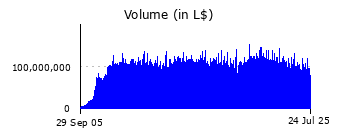
 Inara Pey: Living in a Modemworld