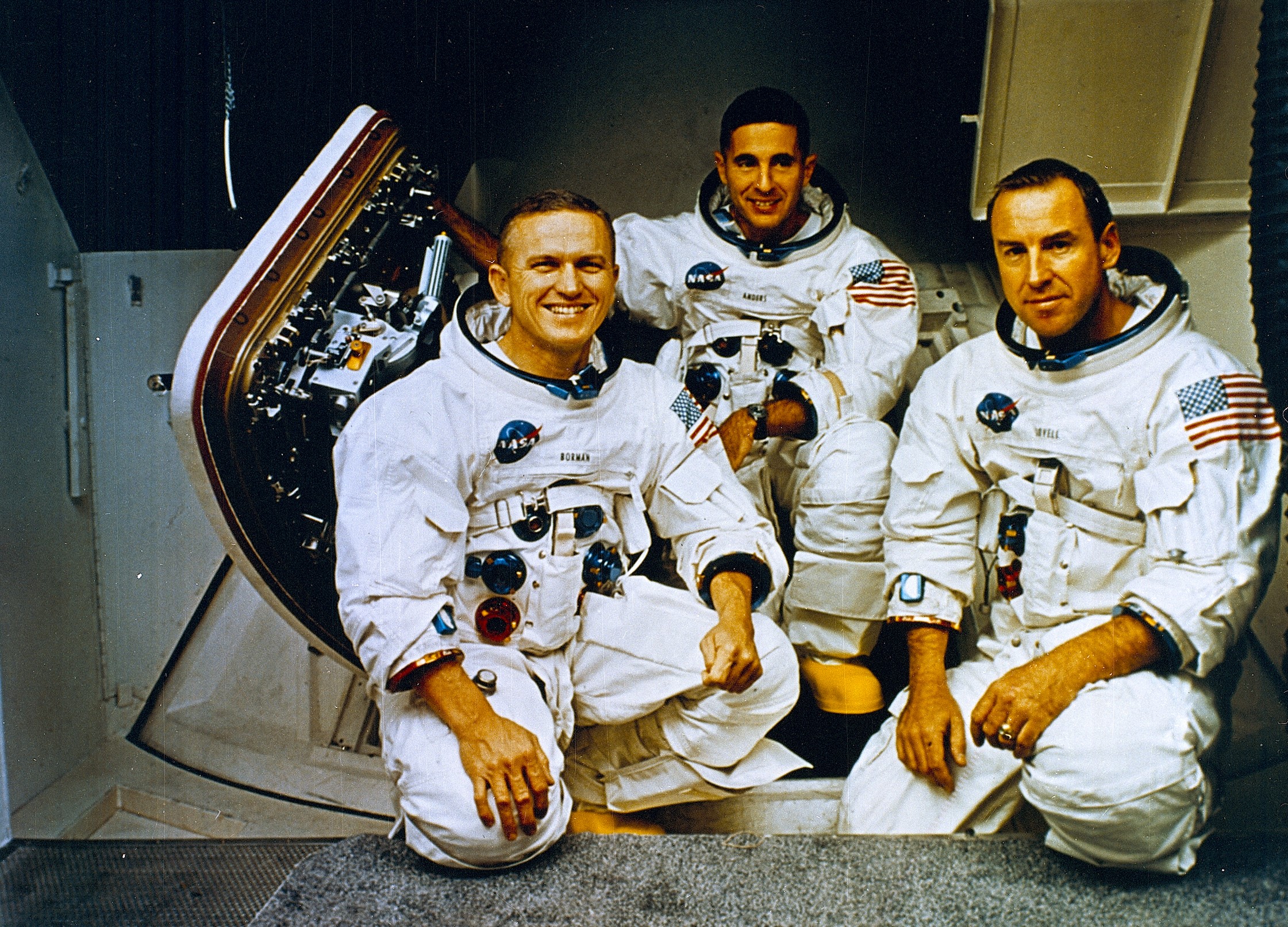
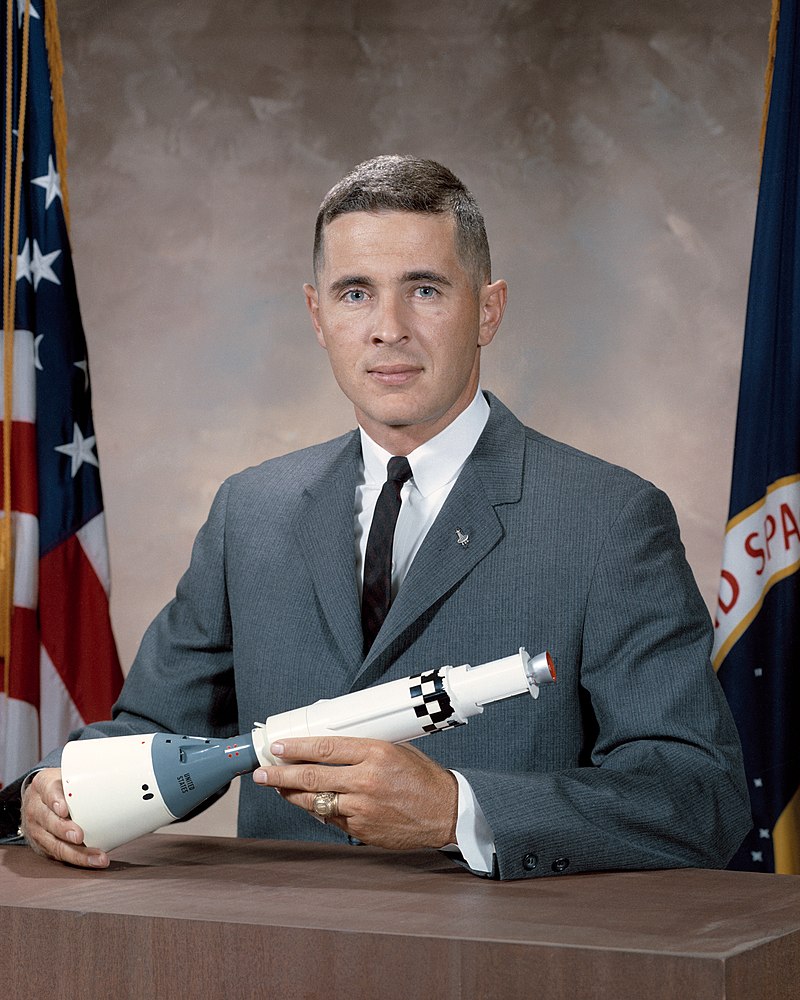
Another of the first cadre of humans to visit the Moon and its vicinity was lost to us on June 7th, with the death of William Alison “Bill” Anders at the age of 90.
Born in 1933 in the (then) British Crown Colony of Hong Kong, Anders was the son of a US naval officer on deployment to Hong Kong and China, the family becoming embroiled in the Sino-Japanese War when it broke out in 1937. This forced Anders’ mother to flee Nanjing with her son and survive by wits alone to get them both back to the United States, where they were reunited with Anders’ father, who had been wounded and subsequently rescued by British forces after the Japanese dive-bombed his patrol vessel out from underneath him.
Initially opting to follow his father into the Navy, Anders studied at the US Naval Academy at Annapolis, gaining a degree in electrical engineering. However, enamoured with flying, on graduation he opted to take a commission into the US Air Force and became a fighter pilot. After a series of non-combat operational tours, he sought to become a test pilot – which required he have an MSc. Initially studying aeronautical engineering, he switched to nuclear engineering, gaining his MSc in 1962. However, at that time NASA was recruiting its third astronaut intake and applied and was accepted.
In late 1966, Anders was assigned to the crew of Apollo 9, alongside Frank Borman and Michael Collins. Together, they would carry out the second Earth-orbiting, crewed check-out of the Apollo Lunar Module (LM), following-on from the Apollo 8 mission crewed by James McDivitt, David Scott and Russell “Rusty” Schweickart. However, by mid-1968, and with both flights due before the end of that year, the LM was not fit for supporting astronauts in space. Fearing the Russians were about to fly a crew around the Moon, NASA decided to switch gear: Apollo 8 would become a cislunar mission, flying with just the Apollo Command and Service Modules (CSM), and Apollo 9 would then complete 1 Earth-orbit crewed test of the LM.
Only McDivitt and his crew didn’t want to go around the Moon, feeling their expertise was better suited to the LM test flight. So instead, the crews were swapped – Borman and Anders, now joined by James “Jim” Lovell, Michael Collins having suffered a back injury requiring surgery – became the Moon-orbiting Apollo 8 crew, and McDivitt’s mission was re-designated Apollo 9, to fly in early 1969.
Thus, on December 21st, 1968, Apollo 8 lifted-off for the Moon, racking up a number of firsts along the way: the first crewed flight of the Saturn V rocket, the first crewed spacecraft to leave Earth’s gravitational sphere of influence; the first crewed spaceflight to reach the Moon; the first crew to broadcast to Earth from lunar orbit – and most famously of all – the first humans to ever witness Earthrise, with Anders capturing what is now regarded as “the most influential environmental photograph ever taken”.
The picture was captured on Christmas Eve 1968, as Anders was using a 70mm Hasselblad camera loaded with a black-and-white film cartridge to image the lunar surface when he happened to look up through the Command Module’s window and see Earth starting to come into view over the Moon’s limb. Calling to Lovell for a colour film cartridge, he quickly re-loaded his camera with it and then took the iconic shot we all now know as Earthrise.
In doing so, he was actually the second human to photograph the Earth rising over the Moon’s limb; the honour of being the first actually goes to Frank Borman – only his camera was also only loaded with black-and-white film. Thus Anders is the first human to capture the sight in the colour image which has come to represent the beauty, loneliness and fragility of the world we call.

If you can imagine yourself in a darkened room with only one clearly visible object, a small blue-green sphere about the size of a Christmas-tree ornament, then you can begin to grasp what the Earth looks like from space. I think that all of us subconsciously think that the Earth is flat … Let me assure you that, rather than a massive giant, it should be thought of as the fragile Christmas-tree ball which we should handle with considerable care.
– Bill Anders describing how he felt when seeing the Earth appearing from behind the limb of the Moon
Bill Anders would only make that one flight in space. In May 1969 he was appointed to the influential position of executive secretary of the National Aeronautics and Space Council (NASC), where he did significant work in developing US space policy. In 1973 he was appointed to one of the five leadership slots of the US Atomic Energy Commission (AEC), transferring to chair the Nuclear Regulatory Commission (NRC) when that was formed in 1975.In mid-1976 he was appointed (at his request) as the US Ambassador to Norway, prior to moving to the private sector and the start of a highly successful career in business in 1977, finally retiring in 1994.
Passionate about flying, Anders, together with his wife Valerie and two of his sons – Alan and Greg – founded the Heritage Flight Museum in 1996, regularly flying the museum’s pistoned-engined aircraft and air shows around the United States. He also owned and operated a T34 Mentor training aircraft, and on June 7th, 2024, he took to the air in this aircraft to fly circuits over Puget Sound, Washington State, where he lived. During this flight it appears – via eye witness video – he attempted a low-altitude loop in a channel between two islands, but the aircraft failed to pull up in time, slamming into the water and breaking up, likely killing Anders instantly. The accident is now under investigation by the US National Transportation Safety Board (NTSB).
Anders is survived by his wife of 67 years, Valerie, and their six children.
Starliner Launches; Issues Persist
Boeing’s much-troubled CST-100 Starliner finally lifted-off on its first crewed test flight at 14:52 UTC on Wednesday, June 5th, finally sending astronauts Barry “Butch” Wilmore and Sunita “Suni” Williams on their way to the International Space Station (ISS) in a flight intended to help clear the Starliner capsule for use in ferrying up to four crew at a time to the ISS, and in an emergency (and depending on available seating), returning up to 7 to Earth.
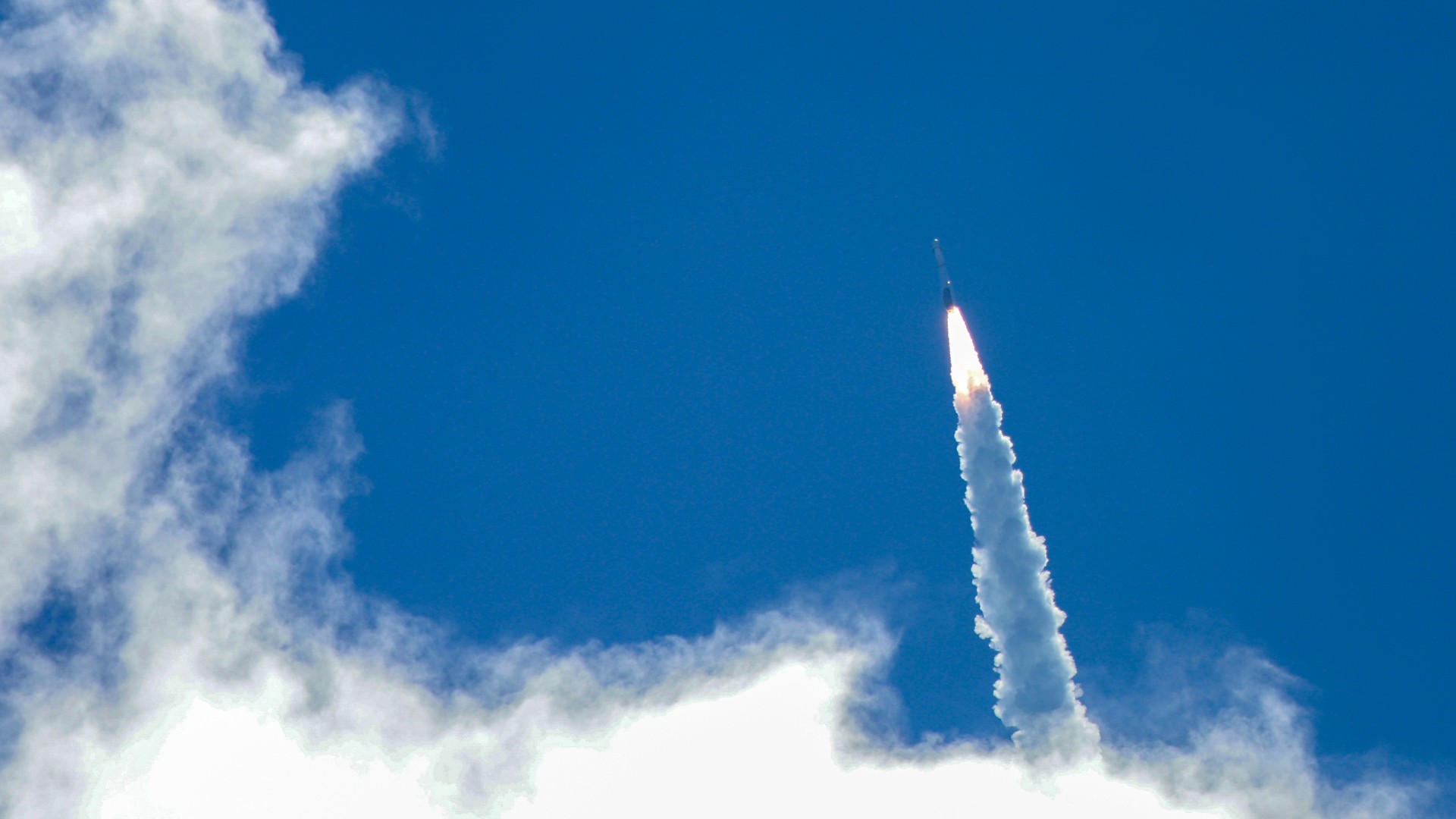
As I’ve reported in past Space Sundays, the Crew Flight Test of the vehicle has been plagued by problems – many with Starliner itself, but also extending to launch systems on the ground and systems within its launch vehicle, the Atlas-Centaur V-N22. However, the launch on June 5th was flawless, and marked both the first time in history that humans have flown atop the veritable Atlas V, which is more usually employed for cargo carrying launches, and the first time since Apollo 7 in 1967 that a crewed vehicle has lifted-off from facilities at Cape Canaveral Space Force station (then called the Cape Kennedy Air Force Station).
Fifteen minutes after launch the Starliner separated from the Centaur upper stage, entering a sub-orbital trajectory around the Earth, allowing for a preliminary vehicle check-out and a rapid return to Earth in the event of issues. With the crew and ground personnel satisfied all was well, Wilmore and Williams used the vehicle’s propulsion system to increase its altitude and velocity, enabling it to enter orbit 31 minutes after lift-off.
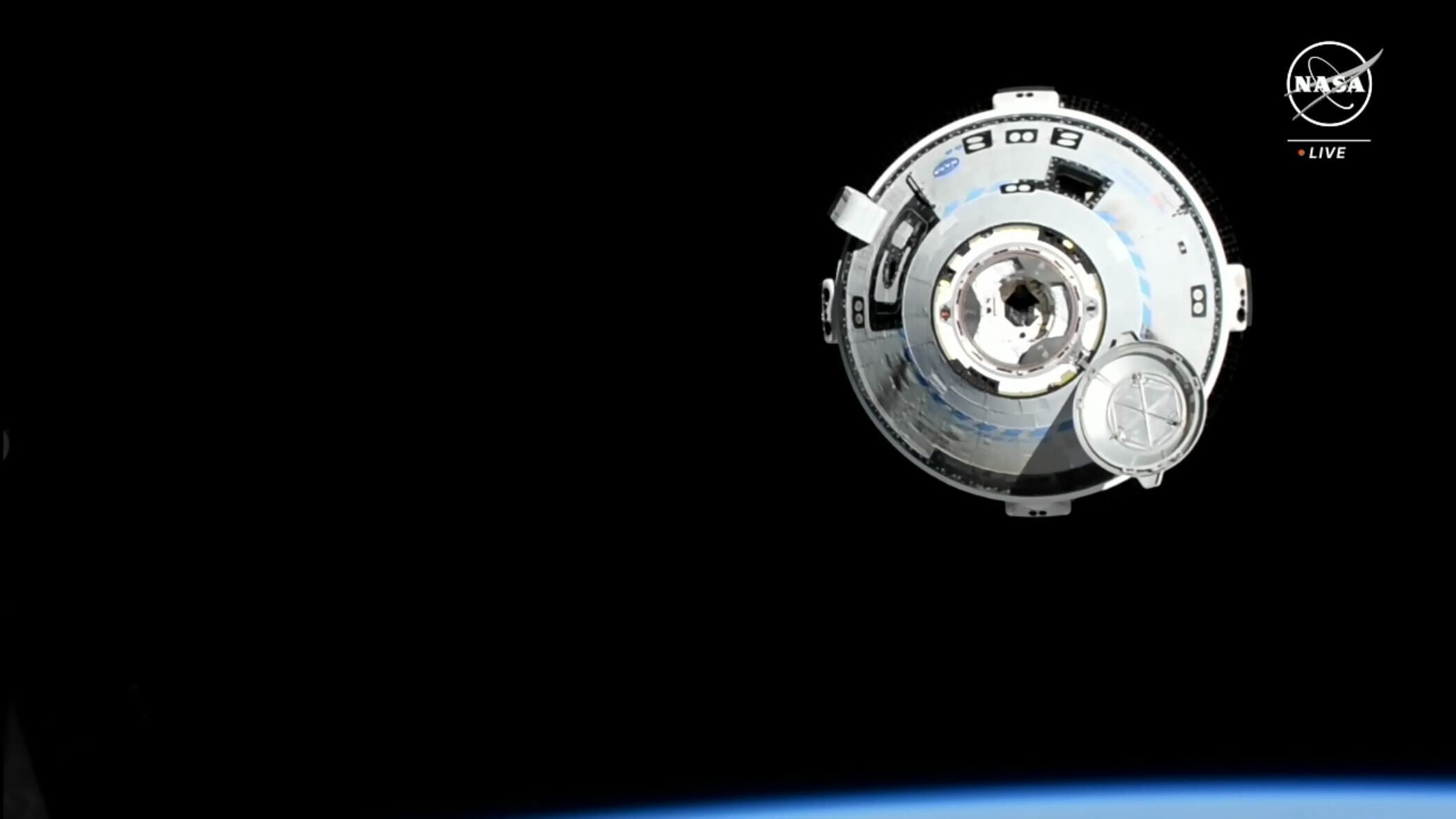
The rest of June 5th saw the crew carry out a series of tests with the vehicle as it climbed towards the ISS, putting it through various manoeuvres and testing communications and other systems. During this time further helium leaks were detected in the vehicle’s thruster system – a known leak having been the cause of one of the delays to the mission’s launch – and 6 of the vehicle’s 28 thrusters were shut down. This did not impact vehicle performance, but the fact that four further helium leaks were detected on top of the known leak indicates there may be a systematic issue within the design of the propulsion system.
Further issues occurred during the vehicle’s approach to the ISS on June 6th, when five of the reaction control system (RCS) thrusters were automatically deactivated, forcing the actual docking to be delayed, Starliner held in a station-keeping position by Wilmore and Williams some 200 metres from the station whilst a team on the ground recovered four of the recalcitrant thrusters, enabling the vehicle to dock with the Harmony module on the station. Hatches between vehicle and station being opened 2 hours after docking, to allow for further post-flight checks on the dock seal within the vehicle and for Williams and Wilmore to change out of their pressure suits.
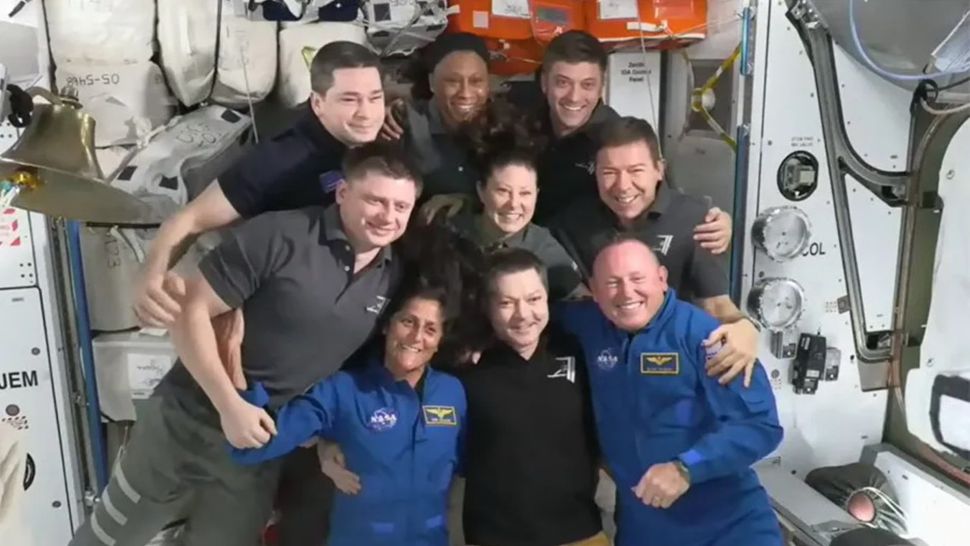
The vehicle will remain docked at the ISS for several more days prior to departure with Wilmore and Williams for a return to Earth and a soft landing in New Mexico on June 14th.
Continue reading “Space Sunday: Bill Anders; Starliner & Starship”


 Inara Pey: Living in a Modemworld