Space Sunday: looking at 2024

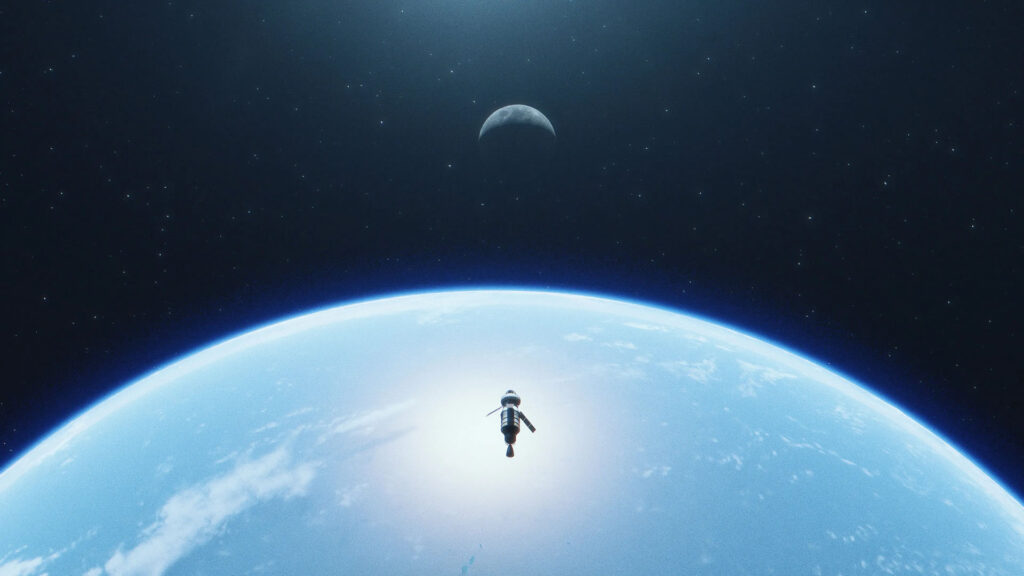
A computer-generated image of NASA’s Artemis 2 mission about to depart Earth orbit for its loop about the Moon – one of the major space missions targeting 2024. Credit: NASA / Liam Yanulis

With the ending of a year comes the start of another and with it an opportunity to take a look at some of what I consider to be the notable space events of 2024.

Space Missions

India

2024 is scheduled to get off the pad with the January 1st launch of the India Space Research Organisation’s (ISRO)  X-ray Polarimeter Satellite (XPoSat), another ambitious mission designed to further demonstrate India’s ability to stand alongside the likes of the United States, China an the European Space Agency at the forefront of space science.

ISRO’s XPoSat with solar panels furled, undergoing ground-based systems testing. Credit: ISRO

XPoSat’s 5-year primary mission lifespan of 5 years is to study cosmic ray polarisation by observing the 50 brightest known sources in the universe, including pulsarsblack hole X-ray binariesactive galactic nucleineutron stars and non-thermal supernova remnants using its two primary instruments. Studying how radiation is polarised gives away the nature of its source, including the strength and distribution of its magnetic fields and the nature of other radiation around it.

January 7th should see India’s Aditya-L1 solar observatory, launched in September 2023, enter its operational halo orbit at the L1 Lagrange Point, located between the Earth and Sun at some 1.5 million kilometres from Earth. Once in place, it will spend an initial 5 years carrying out continuous observations of the solar atmosphere and study solar magnetic storms as they develop, together with their impact on the environment around the Earth.

In February, the most expensive Earth observation satellite should launch. The NASA-ISRO Synthetic Aperture Radar (NISAR) is intended to observe and understand natural processes on Earth, and will be able to observe both of the planet’s hemispheres over a period of at least 3 years. Intended to measure some of the planet’s most complex natural processes, including ecosystem disturbances, ice-sheet collapse, and natural hazards such as earthquakes, tsunamis, volcanoes and landslides, NISAR data will be made globally available within days of it being gathered – or in near-real time should it detect any natural disaster, so that agencies and organisations responsible for disaster relief might use the information in their planning and operations.

Also scheduled for the first quarter of 2024 is the first uncrewed test flight of India’s Gaganyaan space vehicle. Designed to carry crews of two or three into orbit, the capsule and its service / propulsion module, will be capable of spending up to 7 days at a time in orbit, and is the formative part of an ambitious programme to establish a national space station in orbit and send crews to the lunar surface.

A screen capture of Vyommitra, obtained during a telecon organised by ISRO featuring the robot responding to prompts. Credit: ISRO

Depending upon its outcome, the fully automated, 2-day Gaganyaan-1 mission could be followed before the end of the year by two further test flights, at least one (if not both) will include Vyommitra (from Sanskrit: vyoma, “space” and mitra, “friend”), a complex robot in the form of a female human upper body.

Initially intended to assess the effects of g-forces and weightlessness on humans flying in Gaganyaan, Vyommitra could in fact play an active role in crewed flights as well in place of a third person. It is not only programmed to speak Hindi and English, recognise various humans and respond to them, it can perform multiple mission-related tasks, including environment control and life support systems functions, handle switch panel operations, and give environmental air pressure change warnings.

Once the 3 uncrewed flights have been completed, the first crewed flight of Gaganyaan is set to occur in 2025, and if successful will mark India as only the fourth nation in the world to independently fly crews to orbit after Russia, the United States and China.

Finally (for this article that is – India has a number of other missions planned for 2024), at the end of the year, ISRO should launch their Venus Orbiter Mission, unofficially known as Shukrayaan (from the Sanskrit for Venus, “Shukra”, and yāna, craft”/ “vehicle”). Intended to study the atmosphere and surface of Venus, the mission will include an “aerobot” balloon it will release into the Venusian atmosphere.

United States – NASA

NASA obviously has a lot going on all the time, so the following really is an abbreviated “highlights” list.

In February, the remarkable Juno vehicle will complete the second of 2 extremely close approaches (both to 1,500 km) to Jupiter’s innermost Galilean moon, Io. These very close flybys (the first having occurred on December 30th, 2023) allow the probe to observe the most volcanically active place in the solar system in extraordinary detail, with the February flyby also allowing the spacecraft to reduce its orbital period around Jupiter and its moons to just 33 days.

Another mission to Jupiter will commence in 2024, with the October launch of NASA’s Europa Clipper at the start of a 5.5 year cruise out from Earth to Jupiter, with assistance from Mars and Earth (in that order) to get there. Once in orbit about Jupiter in 2030, the mission will commence a 4-year primary study of the icy moon of Europa to help scientists better characterise the moon, including the potential for it have an extensive liquid water ocean under its icy crust.

A rendering of the Europa Clipper vehicle. Credit: NASA/JPL

In terms of NASA’s human spaceflight operations and ambitions, 2024 should see three landmark flights:

  • April 2024 should see the first test flight of Dream Chaser Cargo to the International Space Station (ISS). An automated space plane which is launched via rocket (generally the ULA Vulcan Centaur) but lands like a conventional aircraft, Dream Chaser is intended to deliver up to 5.5 tonnes of cargo (pressurised and unpressurised) to the ISS, although for this first flight, the Dream chaser Tenacity will be limited to 3.5 tonnes. The flight will be the first of at least six the Dream Chaser system will make in support of ISS operations through until 2030, carrying both supplies to, and equipment and experiments from, the space station.
  • April 2024 should also see the long-overdue Crewed Flight Test (CFT) of Boeing’s CST-100 Starliner to the ISS. The eight-day mission is due to see test pilots Butch Wilmore and Suni Williams fly the reusable capsule to a rendezvous and docking with the space station. If successful, the mission will clear the way for operational flights of the Starliner vehicles carrying around 4 people at a time to the ISS from 2025 onwards.
  • Artemis-2 . Targeting an end-of-year launch, this mission – officially referred to Artemis Exploration Mission 2 (EM-2) will return humans to the vicinity of the Moon for the first time since 1972 and Apollo 17. Utilising the third Orion Multi-Purpose Crew Vehicle (MPCV), Orion CM-003, the 10-day mission will see the four-person crew of Americans Reid Wiseman, Victor Glover, Christina Koch and Canadian Jeremy Hansen launched on a flight that will loop them around the Moon, with Glover and Koch respectively becoming the first person of colour and first woman to fly in space beyond low Earth orbit. The focus of the mission is to carry out multiple tests of the vehicle in preparation for the commencement of missions to return humans to the surface of the Moon with Artemis 3, officially targeting at end of 2025 launch date, but more realistically slated to fly no earlier than early-to-mid 2026.
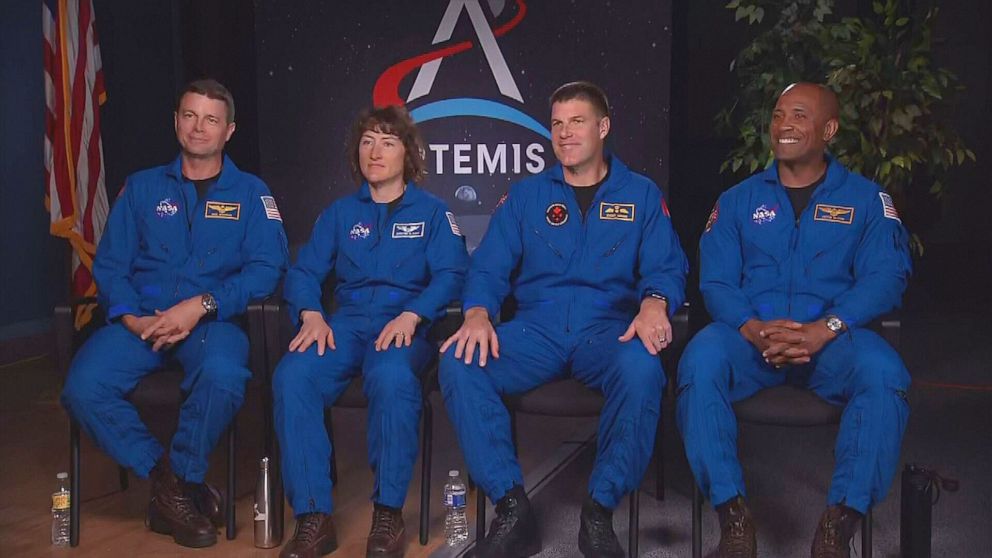
The Artemis EM-2 crew (l to r): Commander Reid Wiseman (USA); Mission Specialist 1 Christina Koch (USA); Orion Capsule Pilot Victor Glover USA); Mission Specialist 2 Jeremy Hansen (Canada). Credit: ABC News

The US, with the largest share of the commercial spaceflight market will also see numerous private venture missions – some in support of NASA’s lunar exploration ambitions – take place. For me, the most notable commercial flights taking place in 2024 are:

  • January 8th, 2024: the maiden flight of the Vulcan Centaur rocket. The new workhorse launch vehicle for United Launch Alliance (ULA), this first flight will hopefully see the much-delayed launcher send the Peregrine Lander to the Moon. Also a private development (by Astrobiotic Technologies) the Peregrine Mission One has been funded under NASA’s Commercial Lunar Payload services (CLPS) programme to deliver science and technology payloads to the Moon. If successful, the launch should be the first of 7 Vulcan Centaur launches for the year on behalf of NASA, the US military and commercial customers.
  • August 2024: the maiden flight of Blue Origin’s heavy lift launcher, New Glenn. With a first stage designed to be reused up to 10 times, New Glenn is intended to be Blue Origin’s entry into commercial and government-funded space launch operations, capable of delivering large payloads to a range of orbits around Earth and sending them into deep space. For its first flight, New Glenn will be responsible for sending NASA’s EscaPADE (Escape and Plasma Acceleration and Dynamics Explorers) orbiters to Mars.
  • Starship IFT-3: the third attempt by SpaceX to achieve a semi-orbit around Earth with their controversial-come-questionable Starship / Super Heavy launches combination. The exact date for the attempt is unknown given the on-going investigation into the failure of the second integrated flight test and the further loss of both vehicles.
  • Polaris Dawn: the first in a trio of privately-funded crewed orbital missions utilising the tried and trusted SpaceX Crew Dragon. Spearheaded by billionaire Jared Isaacman (who funded and flew the Inspiration4 flight in September 2021), the mission will feature Isaacman and three others – form USAF fighter pilot Scott “Kidd” Poteet and SpaceX employees Sarah Gillis and Anna Menon – none of whom are professional astronauts. As will as carrying out a range of experiments and raising money for St. Jude’s Children’s Research Hospital in Memphis, Tennessee, the mission will attempt to set to records: become the highest Earth-orbiting crewed spaceflight to date (1,400 km above the Earth) and perform the first ever commercial spacewalks, utilising EVA suits designed and developed by SpaceX.

European Space Agency

The European Space Agency hopes to finally launch its Ariane 6 booster on its maiden flight around the middle of the year. Another launcher development programme that has had its share of issues, Ariane 6 is intended to replace the already retired Ariane 5 as ESA’s workhorse medium-to-heavy lift carrier, capable of achieving all of the common Earth orbits with payloads of up to 21.6 tonnes (LEO) and able to lob up to 8.6 tonnes into a lunar transfer orbit (LTO). The maiden flight will see the vehicle hopefully deliver an international mix of government and private missions to LEO in a rideshare arrangement, and will be followed by a French space agency / defence agency mission before the end of the year.

An artist’s impression of ESA’s Hera spacecraft studying the 170-metre across Dimophos asteroid, with its two cubesats called Milani and Juventas on their way to attempt soft landings on the asteroid. Credit: ESA

Later in 2024, ESA will utilise a SpaceX Falcon 9 booster to send its Hera spacecraft to rendezvous with the binary asteroids Didymos and Dimorphos, which it is scheduled to do in December 2026, 26 months after launch. Once there, Hera’s primary focus of study will Dimorphos, the target of NASA’s DART Impactor mission, which slammed into it in September 2022 in an attempt to assess the theory of kinetic impact as a means to deflect an asteroid on a collision course with Earth. As well as examining the physical aftermath of DART’s impact on Dimorphos, Hera will attempt to characterise both asteroids in detail, land two cubesats – Milani and Juventas on Dimorphos before itself attempting a landing on Didymos at the end of its mission.

2024 will also see the launch of the joint ESA-JAXA (Japan Aerospace Exploration Agency) EarthCARE (Cloud, Aerosol and Radiation Explorer) mission, designed to investigate the role that clouds and aerosols play in reflecting incident solar radiation back into space and trapping the infrared radiation emitted from Earth’s surface to better understand the evolution of Earth’s temperature.

Continue reading “Space Sunday: looking at 2024”

Bay City New Year 2023/24 prim drop in Second Life

Get the Red Carpet treatment at the Bay City Prim Drop 2023/24

Sunday, December 31st 2023 will once again see Bay City celebrate the turning of the year with their annual Prim Drop festivities.

An outdoor, black tie attire and/or full dress event, the Prim Drop is open to all Second Life residents, with festivities opening at 23:00 SLT at the Bay City Fairgrounds in North Channel. Marianne McCann will be providing the music and fireworks in a 2-hour extended DJ set, and food and drink will be provided.

This will also be the final opportunity for 2023 to donate to Child’s Play Charity,  a US 501c3 non-profit organisation which helps seriously ill children around the globe during their hospital stays with the purchase of games and gaming equipment. So even if you can’t make it to the event itself, do please consider taking a couple of minutes out of your SL day and stopping by the Bay City Fairgrounds and making a donation via one of the collection bins there.

The Bay City Prim Drop 2022/23: seeing in the new year in Second Life

About Bay City and the Bay City Alliance

Bay City is a mainland community, developed by Linden Lab® and home to the Bay City Alliance. The Bay City Alliance was founded in 2008 to promote the Bay City regions of Second Life and provide a venue for Bay City Residents and other interested parties to socialize and network. It is now the largest group for Residents of Bay City.

SLurl Details

A 3-in-1 artistic treat in Second Life

Akijima, December 2023: Sisi Biedermann

Currently open through the end of 2023 within Akiko Kinoshi’s (A Kiko) Akijima events region are three exhibitions of art I have absolutely no hesitation in recommending to readers of this blog. All three are located within the same sky platform, and thus between them make for an excellent joint visit, whilst between them presenting very different selections of art.

Sisi Biederman is someone who really needs no introduction to established patrons of art in Second Life; she is one of the most accomplished and engaging digital mixed-media artists in SL, as well as a skilled artist working in more “traditional” mediums such as photography and acrylics. Her work is utterly unique and completely captivating, offering a richness of imagination, style and colour. Her subject matter tends to be wide-ranging, covering everything from the natural world through in-world settings to the fantastical and even touching on the abstract and the near-surreal.

Akijima, December 2023: Sisi Biedermann

For this exhibition she presents some of her favourite pieces produced in 2023, bringing together a mix of images visitors can literally trace by month / season, and which although primarily digital in form, wrap themselves around genres such as abstractionism, watercolour and expressionism. With a strong focus on floral scenes, also folded into the collection is at least one memory of a place Sisi appears to have visited (and which is among my personal list of favourite places around the global I’ve been fortunate enough to visit and witness), and perhaps hints of others as well. Vibrant and fairly pulsing with a sense of vitality, this is a superb selection with which to whet one’s appetite for witnessing more of Sisi’s work.

Another physical world artist who has established a deserved reputation of producing some of the most visually expressive art in Second Life is Milly Sharple, who is the second of the three artists at Akijima.

Akijima, December 2023: Milly Sharple

For those unfamiliar with Milly, she is a successful artist and photographer in the physical world whose work has not only sold on a global basis, but has also been used as book and CD cover art, within promotional pieces including posters for theatrical productions and has even be used on bank cards. In 2020 she was invited to do a collaboration representing the COVID pandemic with Salvador Dali’s protégé, Louis Markoya.

Within Second Life, Milly probably initially became recognised for her fractal art – being one of the first artists to introduce this particular art-form to Second Life audiences. For several years she was also responsible for the Timamoon Arts Community, which in its day, hosted over 40 resident artists and was regarded as one of the most successful and popular art communities on the grid.

Akijima, December 2023: Milly Sharple

Here Milly presents a glimpse of the breadth and depth of her digital work, only touching lightly on her SL fractal art “roots” (if I might use that term). To attempt to describe these pieces would serve no purpose; as the images accompanying this article hopefully show, Milly’s work transcends mere written description and should be seen first-hand

I first witnessed the work of Guille (Antoronta) whilst visiting the Annexe of the Limoncello gallery in 2021, which at the time was hosting his exhibition Unseen Beauty (see here). He is in fact the virtual incarnation of Antonio Guillén, a noted doctor in Biology and professor of Natural Sciences whose research projects have spanned the environment, microbiology and astrobiology.

Akijima, December 2023: Guille 

And when I say “noted”, I mean precisely that; his work has been exhibited in such august centres as the National Museum of Natural Sciences, Madrid, and has garnered awards such as Spain’s National Prize for Scientific Photography and the Giner de los Ríos Prize, the country’s most prestigious educational award, whilst his project The Hidden Life of Water received the first world award at a Google Science Fair in 2012.

Within Second Life, Guille has sought to bring the incredible beauty and diversity of the microscopic world which inhabits all of us as much as we inhabit the visible world, through such exhibitions as Unseen Beauty and his 2022 exhibition Invisible Beauty (see here) and – whilst it has now apparently closed – through his former in-world education centre El Universo en una Gota de Agua – the universe in a drop of water.

At Akijima, Guille once again allows us to dive into this unseen universe of tiny life forms through a collection of images captured via CCD and microscope, allowing is to witness this unite world of algae, ciliates, amoebae and other micro-organisms in all their glory and (at times almost geometric) forms. Offered as a set of individual slideshow focused on a specific aspect of the microscopic, these are fabulous glimpses into a universe we otherwise rarely get to see; my only small regret being that unlike Guille’s past exhibitions, this one (for whatever reason) is sans any accompanying text for the pieces (which should not be taken as a critique of the exhibition or the artist, but as a purely personal observation).

Akijima, December 2023: Guille 

None of the art presented by the Artists is offered for sale; this is a trio of exhibitions purely for the eye and mind to appreciate. However, if you are looking for art to hang in your Second Life home, the fourth building on the platform may also be worthy of a visit. This is home to the Second Free Museum, where are from numerous artists is available free-of-charge to anyone wishing to obtain copies.

SLurl Details

An atomic beach in Second Life

Hillvale Beach, December 2023 – click any image for full size

Las Vegas is a place long renowned for its showmanship. Best known for The Strip with its casinos, bright lights, bling and the ratcheting rasp and chugging pings of one-arm bandits and slot machines, the Neon City has something of a Marmite touch to it: people either love it or hate it. Dubbed Sin City in the age of Prohibition, for a short time in its history the once sleepy little town on the rail route to California became a destination for something quite unexpected: the ability to witness first-hand the atomic bomb tests carried out by the US military.

For a period of 12 years through the 1950s and up to the Partial Test Ban Treaty (PTBT) of 1963, the US military detonated, on average, one nuclear bomb every three weeks at test grounds some 60-80 miles away from Las Vegas – timing them to take place when weather patterns would carry the fallout into the desert rather than towards the city.

Hillvale Beach, December 2023

In all, some 235 bombs and warheads of various sizes were detonated, and the Las Vegas Chamber of Commerce saw each of them as a means of further enticing people to visit the city and participate in what the New York Times once referred to as “the non-ancient but nonetheless honourable pastime of atom-bomb watching”. Calendars and community announcements would be published months in advance, hotels offers special deals and host “Bomb Parties” so people could drink and dance the night away and then pop outside to witness the distant flash lighting up the sky followed by the roiling mass of a mushroom cloud climbing into the heavens.

These were the heady years in which the future of America was seen as being driven by the awesome power of “atomics”, an age when people would soon be living in ultra-modern towns where everything would be powered by the miracle of  nuclear fission, allowing it to become less a weapon system to be feared and more an unlimited, cheap, and an available-to-all source of energy.

Hillvale Beach, December 2023

This odd little period in US history when the raw power of nuclear fission was both feared and celebrated, forms the cornerstone of imagining for Hillvale Beach, a public /private Full region designed by Lauren Bentham as the latest in her on-going series of settings which are rightly recognised for their richness of character and ability to immerse visitors. It represents a town which came of age in the 1950s – possibly the result of it being located near some now long-forgotten off-shore weapons testing, but which has, as the Destination Guide description notes, has been bypassed by time to be left to rot slowly and darkly, forgotten and lost.

Thus on arrival, visitors are greeted by an environment rich in symbols and icons of the 1950s – the roadside family diner, the broad billboards promoting rosy new ways of living within new environments, the smiling, happy presence of the Atomic Boy giving the thumbs-up to a wonderful nuclear-powered future – and more.

Hillvale Beach, December 2023

However, none of this is pristine or shiny; Hillvale Beach is a place to which time has not been kind. Forgotten by most, it has slowly eroded and collapsed upon itself both physically and metaphorically, become what is essentially a carcass of a bygone era; a place where the sands are slowly reclaiming the roads, where amusement parks offer dangers more than thrills as they slowly collapse and surviving attractions appear more like grotesques than invitations for fun.

In this one might perhaps discern another story here; one darker still, whereby the decay and ruin of the town is not so much due to it being lost and forgotten as time marched ever forwards, but rather the result of one of those tests that once draw tourists and thrill-seekers here  having gone horribly wrong, leaving only destruction in its wake. Hence why, perhaps, a faintly glowing cloud of material swirls over the roads and buildings and attractions, whilst the western sky is dominated by a nebula-like form that might so easily be the detonation of an air-burst weapon.

Hillvale Beach, December 2023
It is in these twists of potential narrative that Hilldale Beach – like so many of Lauren’s designs – captivates when visiting. This is a setting which simply offers the imagination to take flight, to see within it what we will and got where whatever strands of story suggest themselves to us. And, of course, there is the inevitable attention to detail and considered placement of buildings, artefacts and items which is (again) Lauren’s hallmark, and which serves to further weave a sense that we are indeed travelling through a place extruded from the 1950s into our present-day.

From the advertising hoarding reminiscent of the period through to the inclusion of Betty Boop (whose original 1930s films enjoyed a resurgence in popularity after Paramount Pictures sold them for syndication on US television) passing by way of the assorted car designs and the subtle pointers to Las Vegas and its role as a destination for the Nuclear Tourist, Hillvale Beach is a thoroughly engaging and engrossing setting; a dystopian time capsule from some version of the 1950s, if you will. And whilst it offers bother rentals as well as public spaces, the former are neatly, naturally and clearly separated from the latter, allowing visitors to explore in the confidence that they will not unknowingly encroach on the privacy of local residents.

Hillvale Beach, December 2023

SLurl Details

A Kitten in The Wastelands of Second Life

Artsville Galleries, December 2023 – Kitten: Tales from the Wastelands

Update, January 15th, 2025: Artsville has relocated.

It shames me to think that despite us both having been active in Second Life for over a decade and a half, and given the fact I have visited on a number of occasions, I’ve yet to actually write about The Wastelands.

I have no excuse to offer on this, nor would I insult NeoBokrug Elytis, the community’s founder and curator, in trying to do so; the most I can offer is an apology to him and the community as a whole for not as yet having made the effort to blog about their work, and to offer here views of The Wastelands as seen through the eyes of another traveller (and more particularly – artist), whose meanderings through the 12 regions that make up this post-apocalyptic setting form an end-of-2023 exhibition at Frank Atisso’s Artsville Galleries.

Kitten (Joaannna Resident) is a Second Life artist-photographer whose landscape work I first encountered in 2022, although it wasn’t until later in that year that I blogged about it after catching Noir, a series of avatar-centric studies in celebration of the film noir genre both in terms of her approach to the pieces and the tone in which they were presented, and the fact that they offered an unfolding tale much in keeping with the genre (see A Kitten’s Noir World in Second Life).

Artsville Galleries, December 2023 – Kitten: Tales from the Wastelands

Within Tales from the Wastelands (presented in Gallery 3 at Artsville) Kitten once again takes this approach; starting with an introduction in her own words to both the exhibition and the setting (complete with a landmark giver for those wishing to make their own foray through The Wastelands), this is a series of 10 images which carry us through various aspects of the regions in a manner of a non-linear story.

Which is not to say this selection is in any way derivative of Kitten’s earlier work; it is not; within Noir the story was ever-present within each image, if open to interpretation as to what it might be. Tales, by contrast offers moments from a traveller’s story; scenes which are not quite vignettes, but which offer enough within themselves for our imaginations to paint a unique story around each one. As such, they can be shuffled together howsoever we prefer when viewing them, each scene / story standing in its own right as a complete piece – but at the same time, as freely shuffled as they might be, the 10 scenes remain joined through a subtle sense of narrative in that each represents a chapter in a broader story.

Artsville Galleries, December 2023 – Kitten: Tales from the Wastelands

Predominantly presented in Kitten’s trademark panoramic style, the 10 images are a tour de force not only in her ability to capture a story-in-a-frame, but also in her skill as a compositional artist; the framing of each piece is both natural and cropped to perfection; the use of both colour and black and white images demonstrating a measured and skilled ability to evoke feelings and emotions. The use of angle, depth of field and focus both masterfully drawing us into the scenes and stories as if we are in fact part of them whilst we remain separated by the fourth wall of the camera lens; thus a further sensation is invoked within us: the desire to follow in her footsteps and see this world of anarchy and danger, beauty and hope, for ourselves.

Visiting a Japanese shrine for Christmas in Second Life

WQNC Shrine, December 2023 – click any image for full size
The last time I wrote about WQNC – formerly Wo Qui Non Coin – the series of region designs I’ve been dropping into every so often since 2021, I’d no sooner published than the setting had poofed away into the ether. So, having caught a Christmas Day invitation from Maasya, the brains behind the various WQNC builds, to pay a visit to the latest WQNC build, I’m hoping to get this article out so that there is enough time to visit between me publishing and the setting vanishing! With each of his builds, Maasya presents some new and different in tone and theme for the last for people to explore, photograph and generally appreciate. With this design, he appears to have taken his inspiration from a combination of sources, notably the Mishima Taisha shrine (at least, going by his comments on the Twitter-circulated invitation to visit), and Japan’s rugged (and oft snowy at this time of year) uplands and mountains. The result is a setting with a genuine sense of coldness about its climate, together with a suggestion of mystery as it lies amidst tall trees and rocky outcrops.
WQNC Shrine, December 2023
The geographic sense of the location is that of a gathering of low islands set within a lake enclosed by tall peaks, isolating it somewhat from the world at large. Perhaps the islands had once been a single hump of rock rising from the lake, but over time – possibly aided by earthquakes – the water has split the mass with narrow channels to form a large island which cups its V-shaped form around two smaller, but equally predominantly flat-topped isles, the smaller of which remains physically connected to the largest by a heavy arch of stone the water has burrowed under. Massya appears to offer two landing points for the setting – one of which may have been left-over from a prior build (as none are strictly enforced), so I’m going to go with the one supplied in his invitation to visit. This delivers visitors towards the south-east corner of the region, and a point where steps descend into the waters – or would descend into them were it not for the fact the lake’s surface is frozen – as if providing a place to draw into with boats, reinforcing the sense that this is an island retreat.
WQNC Shrine, December 2023
Snow has partially obscured the broad paved walkway leading away from the landing point, but such is the width of the path that even without the huge Torri gate straddling it, it is hard to miss. Sweeping across the island’s arm, the path meets with an equally broad bridge spanning the narrow channel separating the main island from the larger of its two siblings. Beyond the bridge, which is supported by what are clearly man-made additions to the banks of the channel, the path marches onwards, its route marked by lanterns, banners and further huge Torii gate standing guard above a set of steps climbing over a low lip of rock. Prior to reaching the bridge, however, the path is joined by a smaller one as it emerges from a conga line of smaller Torri gates as they snake across the landscape, packed so closely together so as to almost for a tunnel under which the path runs. At their far end is the first of a number of smaller shrines awaiting discovery within the region. Its doors are closed, but they can be opened on touch to reveal an unexpected find inside, whilst the path continues onwards and to the left of the shrine, to march on to where a little sake stand affords those who need it with the opportunity to fortify their innards against the surrounding cold and warm their digital extremities in the heat being radiated by its bright stove.
WQNC Shrine, December 2023
Meanwhile, the main path crossing the landscape continues onwards from the second large Torri gate to reach a stone bridge and steps which respectively re-cross the channel separating the two larger islands and climb to the square of the temple / shrine proper. Three buildings occupy this space: a small, stove-warmed hut offering a place to sit out of the cold and similar in style to one sitting a little back from the main path as it makes its way to the square; a larger (and cosier) coffee house; and the main shrine itself. The latter is still a relative small building, but very well presented in terms of the lighting used (non PBR-enabled users should make sure Advanced Lighting Model is active via Preferences → Graphic in order to fully appreciate the lighting here), and impressive in what lies within to receive visitors (it’s not Buddha or anyone like that!).
WQNC Shrine, December 2023
Two further paths lead away from the shrine’s square. The first offers a direct path over that arch of stone to reach the smallest of the three islands, and the Samurai-guarded little shrine that sits at the end of it. The second path is bounded by dry stone walls and lit again by lanterns as it passes through the surrounding trees before taking a sharp turn to the right to follow the island’s shoreline to where paving once again passes under red-painted Torri gates before arriving at a veritable field of katana blades, their tips spiked into the ground and stone, seeming to block the way between wall and icy waters and stand between those who walk the path and the shrine lying at its end. Caught within a cold haze and snow falling from an overcast sky, the WQNC Shrine offers an engaging mix of ancient and modern, imbuing itself with a sense of both age and history. The dry stone walls suggest this is a place that has long be used down the years, even if the buildings found across the islands are not necessarily of a great age in themselves. Meanwhile, the stoves, seating and the like found within the various rest houses all point to very modern influences, whilst the main temple / shrine adds a futuristic twist to everything, thanks to the floating point-lights and the very sci-fi leaning cage lights and neon-edge lanterns, and the Omikuji racks present a nice traditional / seasonal touch given the time of year.
WQNC Shrine, December 2023
In other words, Massya again presents a place which makes for a worthwhile visit, but which is – again be warned – here for a limited period of time. So to avoid disappointment, best you visit sooner rather than later!

 SLurl Details