
NASA has a tradition of inviting people to have their names added to various robot missions – I’ve mentioned some in this column, and have had both my birth name and my avatar name included on various missions, including both the 2012 Mars Science Laboratory mission and Mars 2020, so they are currently trundling around Mars on the Curiosity and Perseverance rovers, for example.

In just under a year from this article’s publication, NASA is set to launch Europa Clipper, a mission to Jupiter with a focus on studying the icy, potentially watery world of Europa, the second innermost of Jupiter’s Galilean moons.
On entering Jupiter’s orbit in April 2030, the mission will use multiple fly-bys of Europa to study its ice crust and probe the mysteries of what lies beneath it so we might better understand what kind of ocean might exist under its protective shell. In addition, the mission will look for places where a future lander mission might safely touch-down for in situ studies of Europa.
As a part of the Europa Clipper mission, and through until the end of 2023, the public have once again been invited to have their names engraved on a microchip and flown to the Jovian system.
This project, which has been appropriately called (given the mission’s links to water) Message in a Bottle, also sees NASA link up with the current US Poet Laureate Ada Limón. Limón has penned a poem highlighting the watery link between Earth and Europa, together with humanity’s insatiable quest for knowledge. Entitled In Praise of Mystery: a Poem for Europa, it is also being flown on the mission.
Water connects Earth and Europa, the two ocean worlds NASA’s Europa Clipper spacecraft travels between on its journey. The existence of a vast ocean on a moon of Jupiter – which the Europa Clipper mission is equipped to decisively confirm and characterize – is what makes Europa such a promising place to better understand the astrobiological potential for habitable worlds beyond Earth.
– NASA Message in a Bottle
To participate in the project and have your name flown out into the depths of our solar system as a part of the Europa Clipper mission, visit the NASA website Message in a Bottle, and enter your name and requested details. Whilst there, you can also learn more about the mission and also take an interactive tour of Europa Clipper itself, discovering its instruments and their purpose along the way.
If you’d like to know just how names get to be flown on these missions, then the video below should reveal all:
US and European Launch Systems Update
2024 is looking to be a busy year as new US and European launch systems are set to finally (and in some cases, finally finally) debut operationally. Here’s a quick summary of some of the key craft.
Boeing’s CST-100 Starliner, this is the craft intended to join with SpaceX’s Crew Dragon in delivering personnel to the International Space Station (ISS) and returning them to US soil, and which had originally been set to start crewed flights to the ISS in 2018. However, the programme has been beset by numerous (and at times embarrassing for Boeing) issues, coupled with COVID-2 related shutdowns, which have repeatedly pushed the flight back.
Currently, the first crewed launch – which is still technically a test flight – is scheduled for April / May 2024, and the latest report issued by NASA and Boeing indicate that the vehicle performing that mission and carry NASA astronauts Butch Wilmore and Suni Williams to the ISS for around an 8-day stay, is now 98% certified as being able to perform the mission.
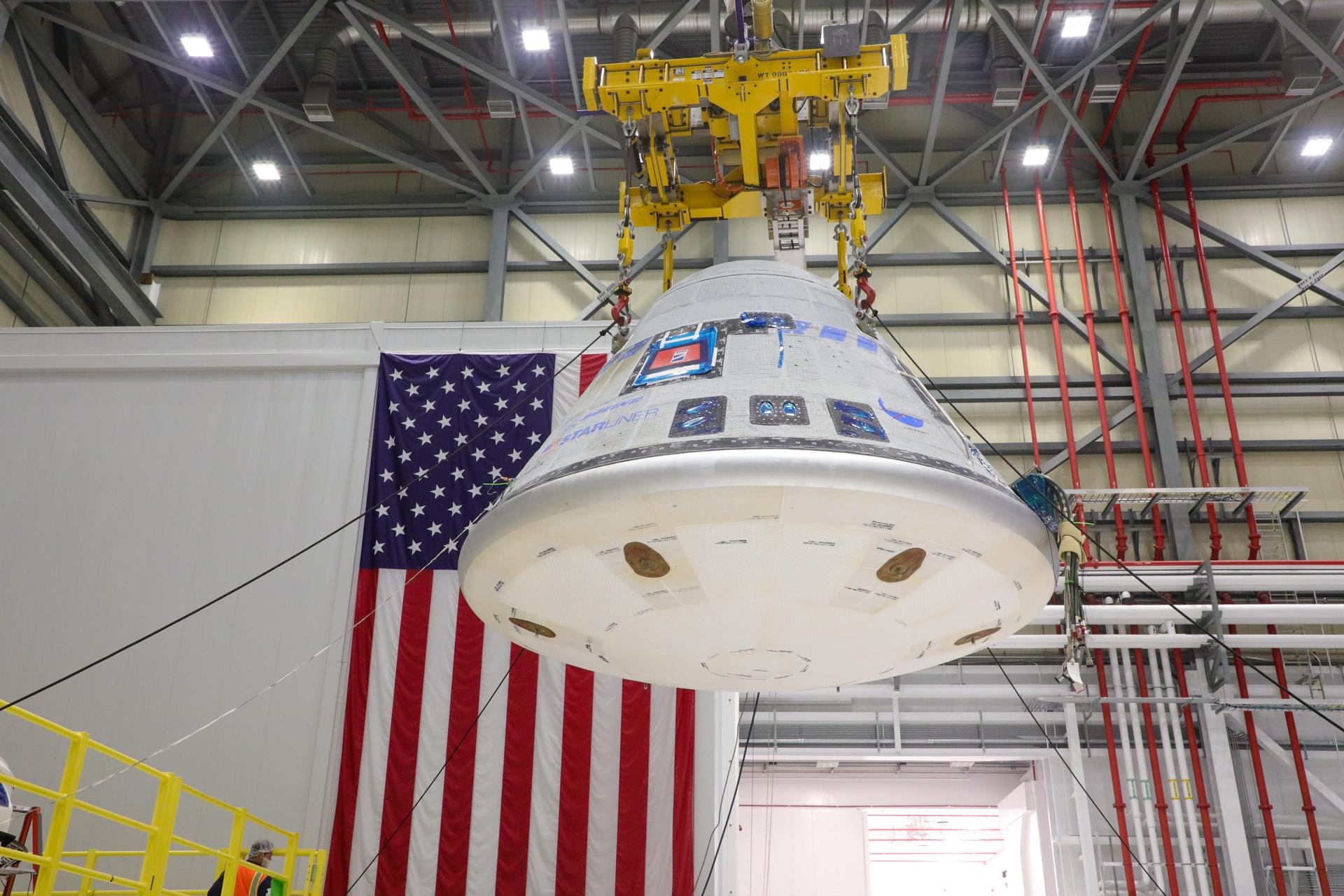
When the flight does take place – the exact date will be confirmed in the new year – it will chalk up one or perhaps two historical milestones. It will certainly be first crewed U.S. capsule to make a land-based soft landing, rather than splashing down in the ocean. In addition, it might be the first launch of a US crewed space vehicle from Cape Canaveral rather than the Kennedy Space Centre, since Apollo 7 in 1968.
However, the second of these two honours might yet go to SpaceX and Axiom Space. The former is currently converting their Falcon 9 launch facilities at Canaveral’s SLC-40 pad to support crewed launches. If it certified for such use before April 2024, it will likely be used to launch Axiom Space’s third private mission to the ISS, Ax-3, allowing SpaceX to use the fast-fuelling facilities at Kennedy Space Centre’s Pad 39A for the launch of a robotic mission to the Moon.
Blue Origin’s New Glenn heavy lift launch vehicle remains on target for a maiden flight in November 2024, which will see it not only lift-off for the first time, but then head to Mars carrying NASA’s Escape and Plasma Acceleration and Dynamic Explorers (ESCAPADES) mission, a pair of smallsats that will study the interaction of the solar wind with the magnetosphere of Mars.
A semi-reusable vehicle capable of hauling up to 45 tonnes to low Earth orbit (LEO) or up to 13.6 tonnes to geostationary transfer orbit (GTO), New Glenn’s first stage is designed to be flown up to 25 times, and the system has a planned cadence of 8 launches per year once operations commence – and Blue Origin have an initial batch of contracts to meet this target.
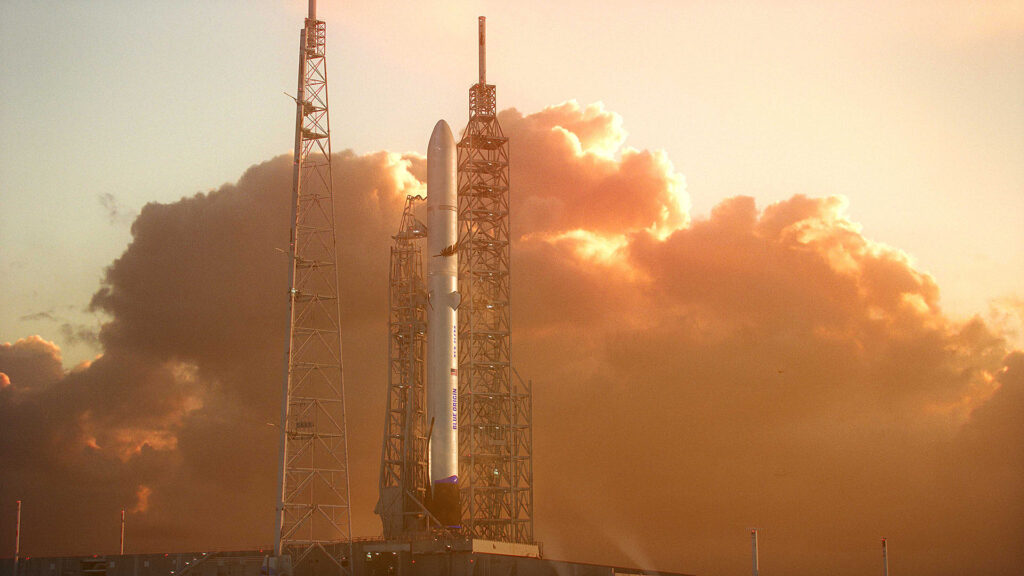
Unlike SpaceX, which has (despite claims to the contrary) relied exclusively on a mix of private investment rounds and both NASA and US DoD contracts for the majority of its development funding, New Glenn has – barring a US $500 million US DoD contract that enables it to met the requirements for flying classified payloads – been funded entirely out of company founder Jeff Bezo’s own pocket (to the tune of US $2.5 billion by the end of 2017 alone).
Dream Chaser Cargo, the lifting body space plane designed by Sierra Space to carry up to 5.5 tonnes of payload and supplies to the ISS has passed its latest milestone towards meeting a first planned launch in April 2024. The first operational vehicle – named Tenacity – has been completed, and construction is underway with the second “100 series” craft, built to the same specification as Tenacity. The Tenacity, meanwhile, is now to be transferred to NASA’s Armstrong Test Facility in Ohio for environmental tests, after which it will likely be transferred to Cape Canaveral Space Force Station where it will be readied for its demonstration flight to the ISS.
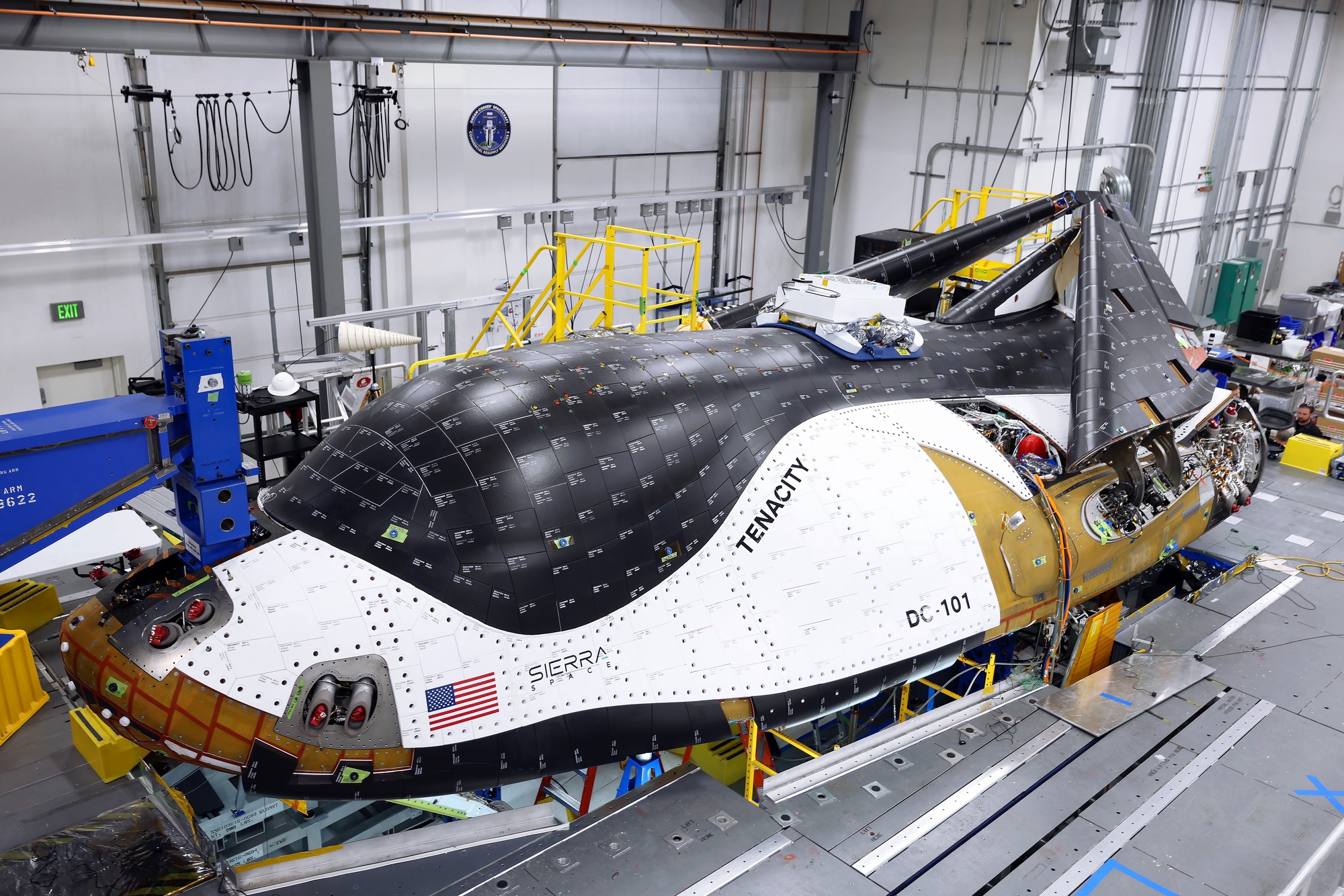
Sierra Space has itself been in the news this week after laying-off 165 personnel from the project. However, many of the reports failed to mention that the company had “surge hired” contractors over an 8-month period specifically to see Tenacity completed in order to transition company focus to the second vehicle and a “200 series” version of the craft the company indicated in January 2023 it would be developing – although to date, no further information on this vehicle has been supplied.
Some reports on the layoffs also failed to note that the company was also absorbing 150 personnel from parent company Sierra Nevada Corporation (SNC), as projects requiring staff with requisite security clearances transferred from SNC to Sierra Space.
Continue reading “Space Sunday: Message in A bottle – Send Your Name to Europa”
 Inara Pey: Living in a Modemworld