
On August 23rd, 2023, India became the 4th nation to successfully land a vehicle on the Moon, after Russia, the United States and China – and the first nation to manage to do so within the South Polar Region of the Moon.
Following its separation from the propulsion module on August 17th, the Chandrayaan-3 lander Vikram completed a series of small adjustments to which allowed it to reduce the lowest point in its orbit to just 30km above the Moon. It was from this altitude that the lander fired all four of its landing motors to drop it into a gentle ballistic descent towards the lunar surface easing it down to an altitude of 7.2 km over a period of 11.5 minutes.
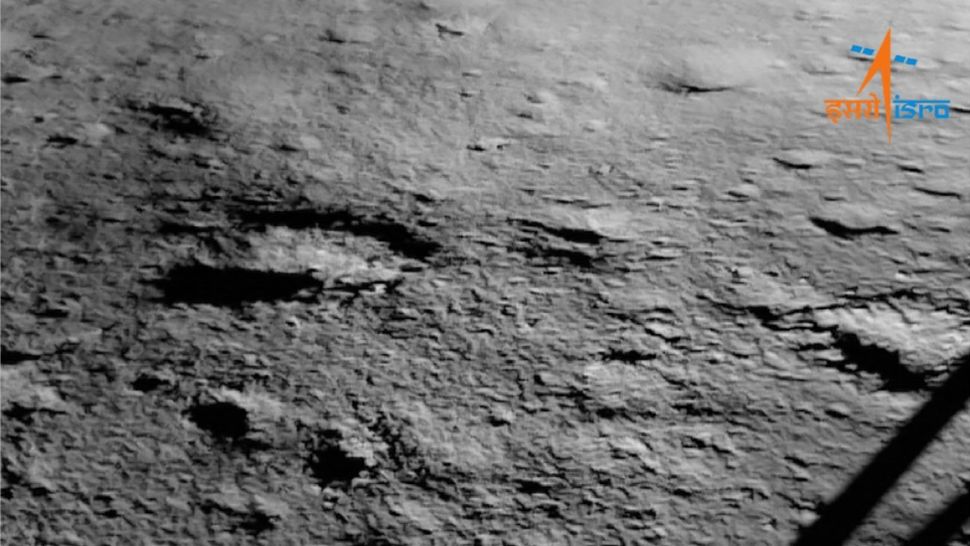
At this point the lander used its thrusters to orient itself into a vertical position in preparation for landing. Then, at 150 metres above the surface the lander held its position using two of its decent engines to hold position for around 30 seconds in order to carry out a final scan of its proposed landing area before continuing to a soft landing at 12:32 UTC.
The landing came as a source of national and international celebration – and some relief for the Indian Space Research Organisation, the mission in part being the result of the loss of the Chandrayann-2 lander / rover combination when they deviated from their planned descent to the surface of the Moon on July 22nd, 2019, striking the Moon at an estimated 50 m/s (180 km/h / 112 mph), rather than the required 2 m/s (7.4 km/h / 4.6 mph) required for a soft landing.
The entire mission operations right from launch until landing happened flawlessly, as per the timeline. I take this opportunity to thank navigation guidance and control team, propulsion team, sensors team, and all the mainframe subsystems team who have brought success to this mission. I also take the opportunity to thank the critical operations review committee for thoroughly reviewing the mission operations right from launch till this date. The target was on spot because of the review process.
– Chandrayaan-3 project director P. Veeramuthuvel
The mission has a number of objectives, with the lander and its small rover – called Pragyan (“wisdom”) – primarily focused on the probing the composition of the lunar surface and attempt to detect the presence of water ice and to examine the evolution of the Moon’s atmosphere. However, the mission is also about the rover itself and demonstrating India’s ability to build and operate a rover vehicle.
Following landing, and after surveying its surroundings, Vikram was ordered to extend a ramp ahead of the rover’s deployment. This occurred at 03:00 UTC on August 24th, 2023, when – after as series of checks, the rover was released from its locked on the lander and commanded to roll down the ramp onto the lunar surface, watched over by the lander’s cameras.
Following initial deployment, the rover paused at the foot of the ramp, before commands were passed for it to roll forward several metres and commit a turn to test its steering.
In all, both lander and rover are expected to operate for a total of 15 days within landing area – the length of time the Sun will be above the horizon in order to provide energy to the solar-powered vehicles. It is hoped that the studies the mission performs will add to our understanding of the Moon’s south pole and its role in host water ice – a resource of enormous potential and importance to future aims for the human exploration of the Moon, and being planned by the US-led Artemis programme (of which India is a member through the Artemis Accords) and China.

Yutu-2 Keeps Rocking
Meantime, on the lunar far side, China’s Yutu -2 (“Jade Rabbit”) rover continues to explore Von Kármán crater more than 4.5 years after arriving, making it the longest operational lunar rover to date, and the only rover operating on the far side of the Moon.
A part of the Chang’e-4 mission, the 6-wheeled rover is operating in conjunction with the mission’s lander, with both rover and lander having far exceeded their primary missions of 3 and 12 months respectively. For the rover, which has to contend with the harsh lunar nights, this is a remarkable achievement. During its time on the Moon it has covered a distance of around 1.5 km, exploring features within the crater and probing below the surface.
Footage of Yutu-2 captured from its initial deployment on the Moon in 2019, strung together into a movie. Credit: CNSA
The latter is achieved through the use of a two-channel ground penetrating radar (GPR) capable of “seeing” to depths of around 300-350 metres. This has revealed the Moon’s surface structure under Von Kármán crater to be remarkably complex, with at least 5 layers of rock stacked one above the last in a manner of sedimentation. However, rather than the result of water action, these appear to have been the results of volcanism, with at least three of the five layers primarily comprising basalt.
This points to the region having once been a site of significant volcanism and helps in further understanding of the Moon’s early history. In addition the different degrees to which the layers spread help inform scientists on how the decreasing thermal activity within the Moon directly correlates to the loss of volcanism and the settling of lunar features.
Following missions like Yutu-2 and Chang’e-4 isn’t easy, as the Chinese space programme is mixed in terms of the information and frequency with which it makes information publicly available. However, given the fact that this study is part of broader research into the Moon’s upper layers being carried out by the Planetary Science Institute in Tucson, Arizona utilising data provided by China, demonstrates the latter’s commitment to sharing the results of their robotic space research with science institutes around the world.
 Inara Pey: Living in a Modemworld