Mysteries, magic and monsters

It’s time to kick-off another week of storytelling in Voice by the staff and volunteers at the Seanchai Library. As always, all times SLT, and events are held at the Library’s Second Life home at Bradley University, unless otherwise indicated.

Sunday, May 14th 13:30: The Thin Man

New York, 1932. Nick Charles, a retired west coast private detective, and his wealthy socialite wife, are in the Big Apple for Christmas. It’s a place where Nick is perfectly happy getting drunk in their hotel room or in speakeasies. Which is not to say the couple are unhappy; far from it. They enjoy witty repartee and banter with one another, and Nora is every inch Nick’s match in wit and intelligence.

Things change when Nick is visited by Dorothy Wynant, the daughter of a former client, businessman Clyde Wynant, who has apparently vanished ahead of his daughter’s wedding. Nick reluctantly – and to Nora’s amusement – agrees to find the missing businessman (the titular Thin Man). But what starts as a search for a missing man quickly turns into the hunt for a murderer after Wynant’s secretary is found dead, with all the evidence points to Wynant himself as her killer.

Corwyn Allen, John Morland, Kayden Oconnell, and Caledonia Skytower read Dashell Hammett’s 1933 classic, which became the first in a series of films following Nick and Nora’s adventures, as played by the inimitable William Powell and Myrna Loy.

Monday, May 15th 19:00: Architects of Hyperspace
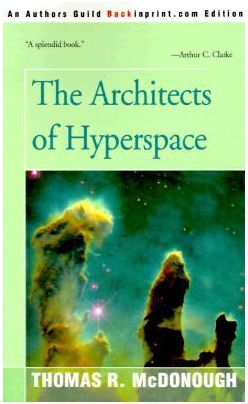
Humour, hard science and speculative science fiction all combine in this novel by Thomas R. McDonough, who has worked with both the SETI Institute and The Planetary society.

A trio driven by personal ambitions comes together after a dying man’s last words send them in search of the secrets of a lost alien civilisation. Critic’s review:

A wonderful tongue in cheek story backed by great speculative science. The combination of the sometimes screwball comedy with the specifics of how hyperspace could work and the details of the time lags of space communication, etc, made for a believable and well-formed diegesis. There were times reading this book that I just had to stop to laugh. The book reminds me a great deal of Red Dwarf.

Join Gyro Muggins as he reads this unusual story.

Tuesday, May 16th 19:00: Of Mice and Magic

Faerie Maven-Pralou reads the first in the Ravenspell series by David Farland

More than anything, Benjamin Ravenspell wants a pet. But when he buys a mouse named Amber, he gets more than he bargained for. No sooner does Ben take her home, than Amber turns him into a mouse too.

You see, Amber has magical abilities, and it so happens that Ben is a familiar, a creature that stores magical energy. Together they each form half of a powerful wizard. Alone, they’re just vermin.

Soon Ben and Amber find themselves pitted in an epic battle against a magical enemy who is as crazed as he is evil, and the fate of the world will rest on them learning to work together.

Wednesday, May 17th 19:00 The Atrocity Archives Part 2

atrocity-archivesBob Howard is a low-level techie working for The Laundry, a super-secret government agency. While his colleagues are out saving the world, Bob’s under a desk restoring lost data. None of them receive any thanks for the jobs they do, but at least a techie doesn’t risk getting shot or eaten in the line of duty. Bob’s world is dull but safe, and that’s the way it should have stayed; but then he went and got Noticed.

Now, Bob Howard is up to his neck in spycraft, alternative universes, dimension-hopping Nazis, Middle Eastern terrorists, damsels in distress, ancient Lovecraftian horror and the end of the world.

Only one thing is certain: it will take more than control-alt-delete to sort this mess out…

Join Corwyn Allen as he resumes relating stories involving Charles Stross’ unlikely hero, Bob Howard.

Thursday, May 18th 19:00: From the Shadows

Scary stories for stormy nights with Shandon Loring (also presented in Kitely hop://grid.kitely.com:8002/Seanchai/108/609/1528).


Please check with the Seanchai Library’s blog for updates and for additions or changes to the week’s schedule.

The featured charity for May through July is Alex’s Lemonade Stand, raising awareness of childhood cancer causes and funds for research into new treatments and cures.
Furillen City in Second Life

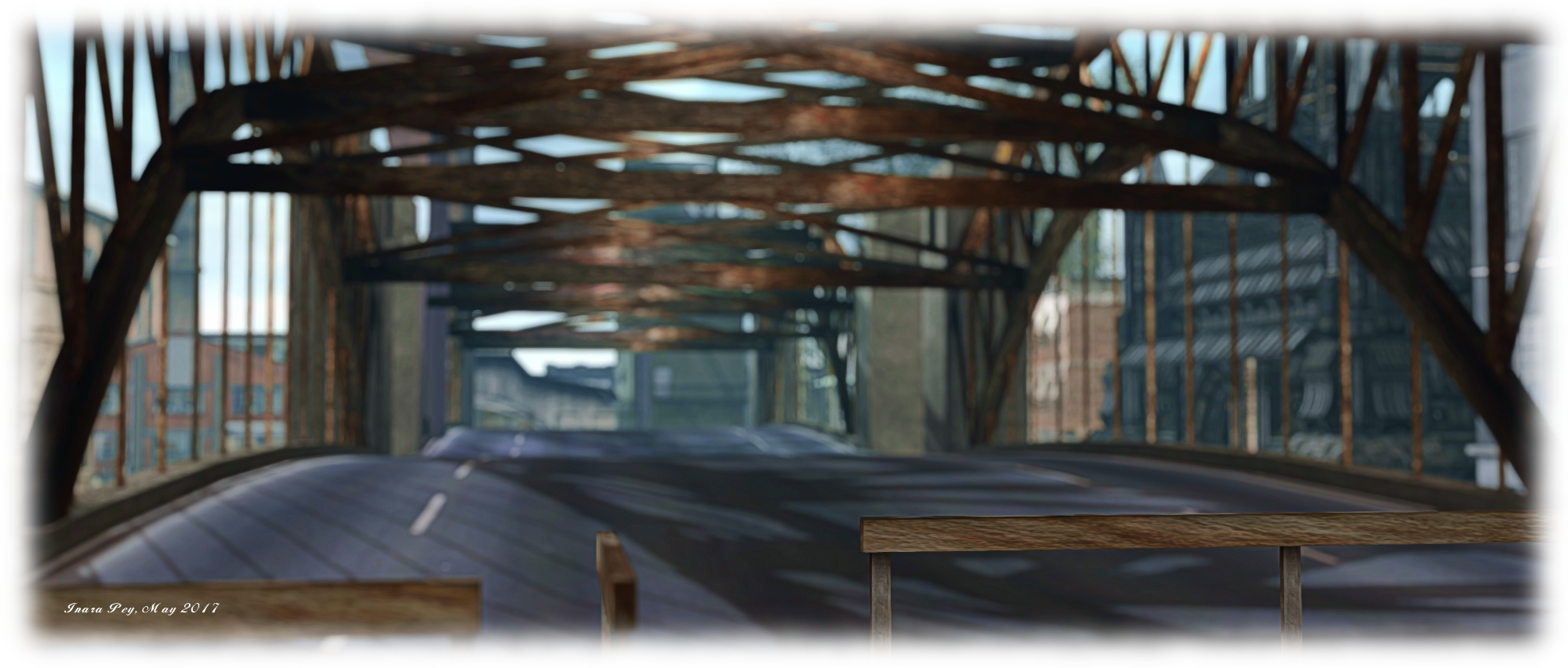
The Mill, Pale Moonlight; Inara Pey, May 2017, on Flickr Furillen, Pandora Empire – click any image for full size

Furillen, the atmospheric region designed by Serene Footman, has a new home in the full region of Pandora Empire. With the move comes another new design, one which sits both on the ground and up in the air over the region.

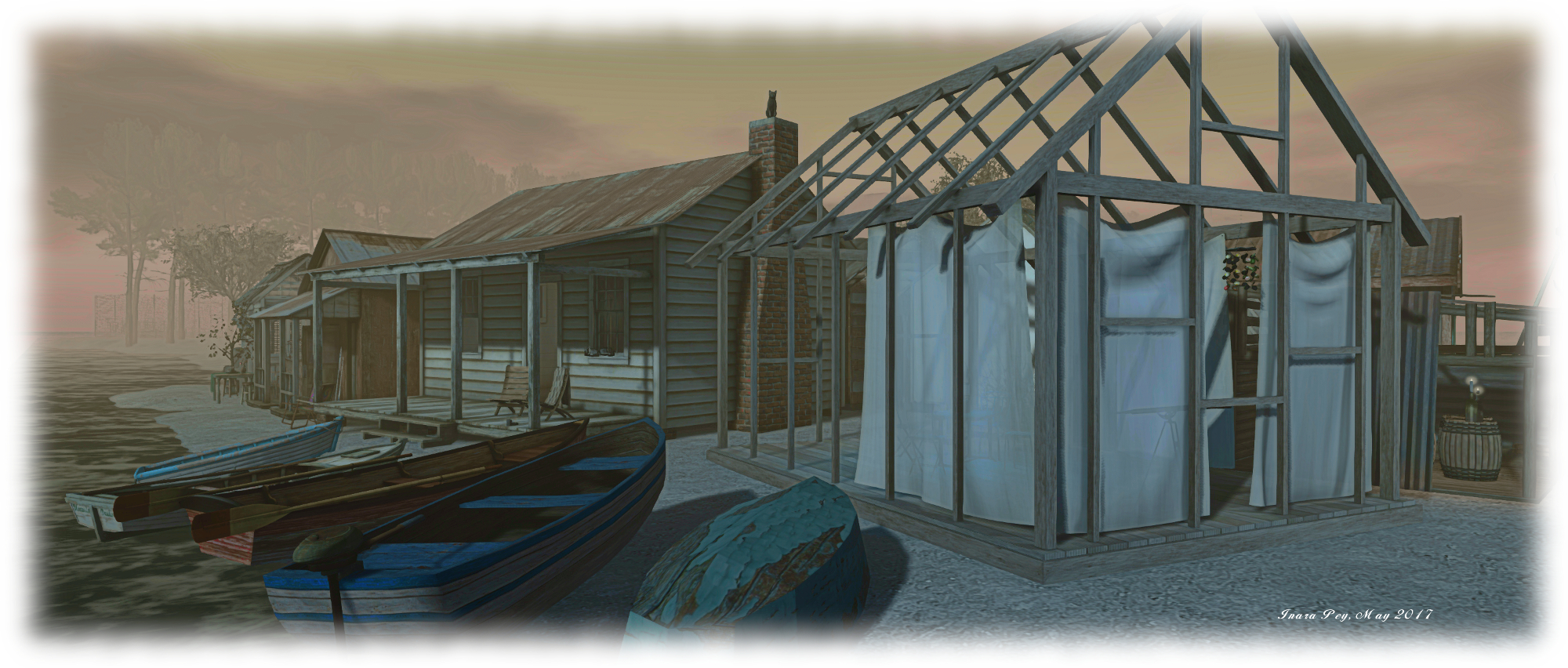
The ground level continues to reflect Furillen’s origins: an island off the north-east coast of Gotland, Sweden. In doing so, it retains the same misted, desolate beauty of previous builds, complete with a shell of the limestone factory and the hotel which now occupies the physical world island. However, with this iteration of the design, the factory footprint has been reduced and the hotel has a new, more homely look and feel.

The Mill, Pale Moonlight; Inara Pey, May 2017, on Flickr Furillen, Pandora Empire

Further afield can be found other reminders of the original Furillen build: the crane over the water, the hoppers, the caravan. But so to are there new places to explore, such as the fishing village in the north-east corner of the region or the club close to the old factory tower. These aspects, old and new, combine to offer a familiar but new look to the island which encourages fresh exploration.

But it is in the sky where things get even more interesting. A teleport disk near the landing point offers access, and the names of some of the destinations – penguin, joker, catwoman, riddler, batcave – offer hints as to what awaits visitors when teleporting, although I recommend that on a first visit, you head from somewhere like the square, as this will allow you to experience things more fully, delivering you to a town square.

The Mill, Pale Moonlight; Inara Pey, May 2017, on Flickr Furillen, Pandora Empire

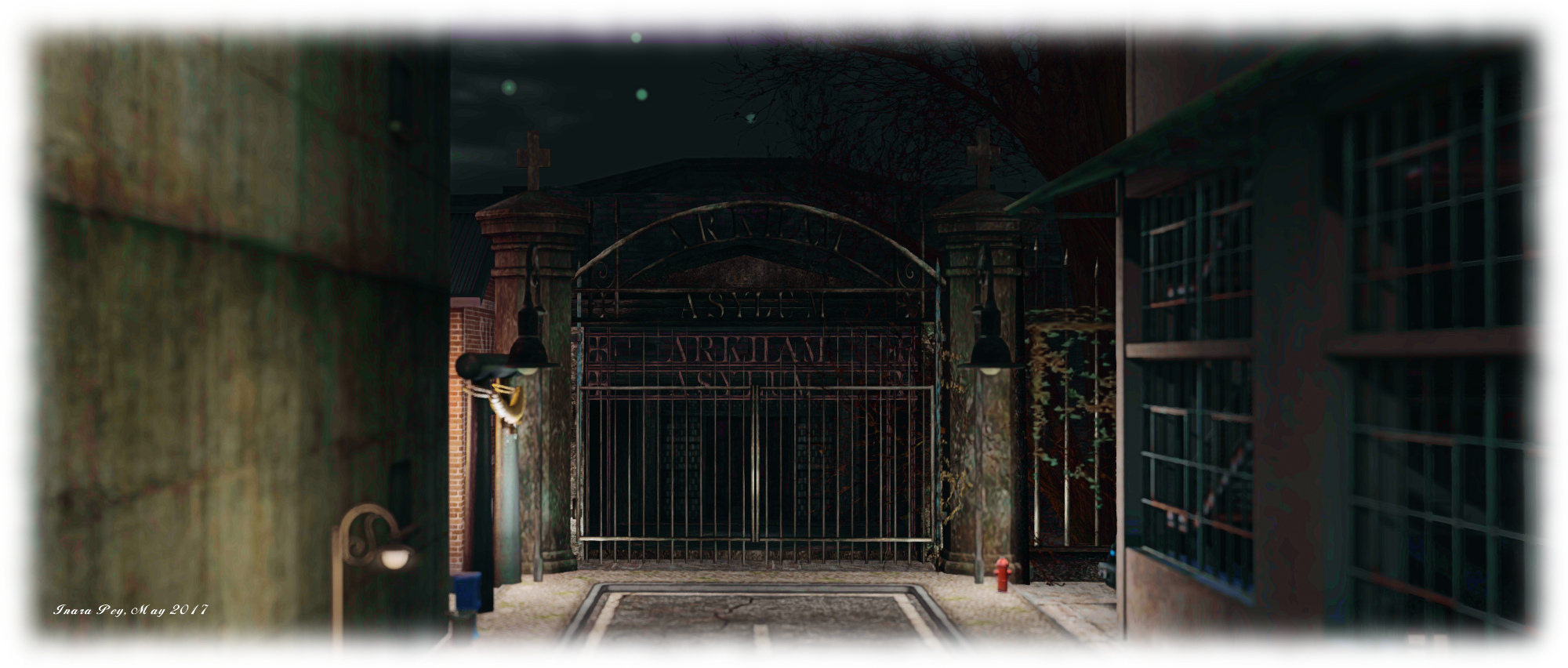
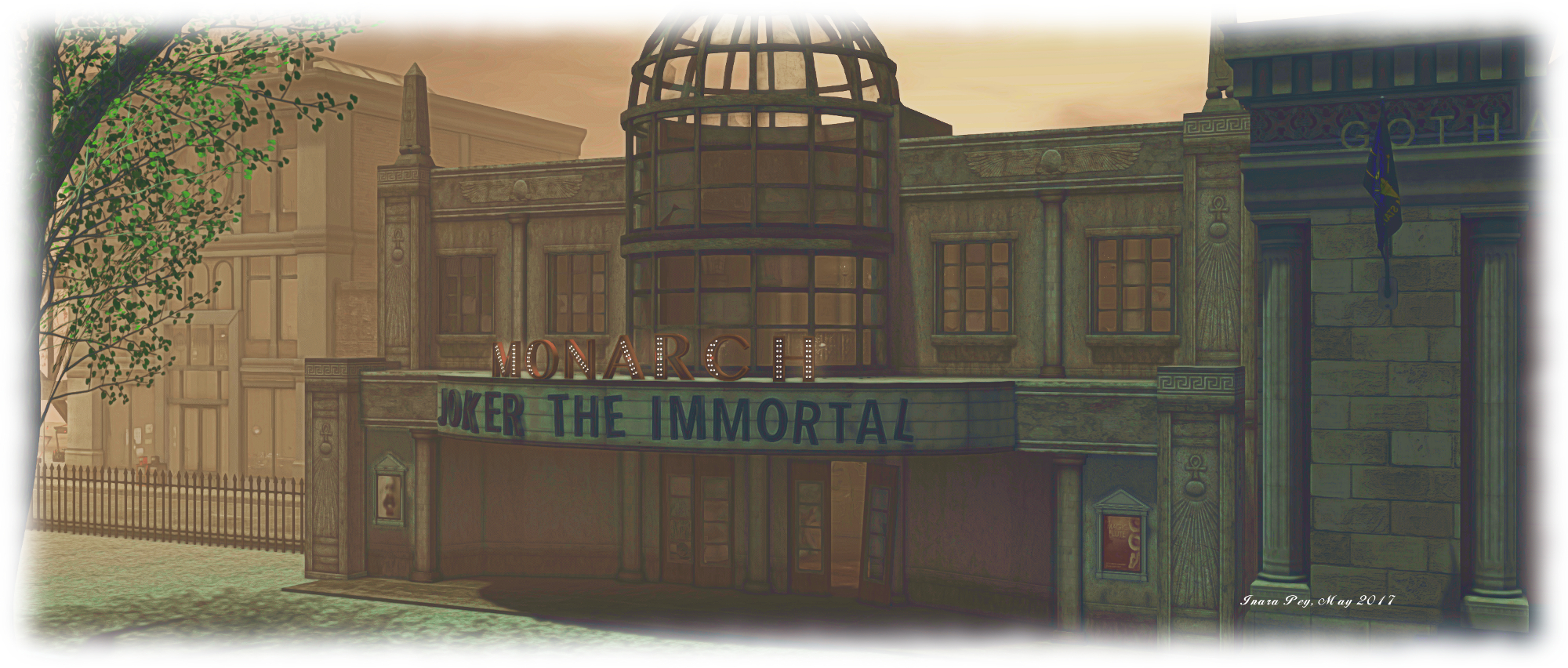
Seen under the same region windlight as the rest of the region, this cityscape also works under a range of daytime and night-time settings. In case you hadn’t already worked it out from the destination names above, this urban environment is a homage to Batman, from the comics, through the 1960s TV series to the more films of Keaton, Kilmer and Bale et al. However, it is not a homage that should perhaps be taken too seriously, as some of the visuals clues seem to suggest (such as the The Dork Knight club).

That said, the attention to detail is impressive, and fans of Batman will find a visit a treat, with plenty of nods to the entire franchise from familiar names such as Sionis Industries, Arkham Asylum and the Gotham Gazette.  Nor is this just a surface homage; follow the teleport disk around and there is plenty more to find from the Batcave (complete with the different generations of Batmobile), to the underground lair of the Penguin, to the more homely setting of Selena Kyle’s apartment.

The Mill, Pale Moonlight; Inara Pey, May 2017, on Flickr Furillen, Pandora Empire

And that’s just the start of things – but to reveal everything would be to spoil the surprise of discovery. This is a place which deserves time and exploration, and not just by teleport disk. Look closely enough, and there are secret ways to be found: tunnels and passages, all of which connect street level to a network of underground locations.

I’ve always enjoyed my visits to Furillen; each iteration – from the initial build, through the homage to Pink Floyd, to the reinterpretation of La Digue du Braek – Serene Footman has always offered unique and intriguing builds for people to visit. In its new home, and in this form, Furillen continues to do just that. When visiting, keep an eye out for the art gallery and consider joining the region’s group for information on events, and also check Furillen’s own website for news and updates.

The Mill, Pale Moonlight; Inara Pey, May 2017, on Flickr Furillen, Pandora Empire

SLurl Details

Crumbs from nightmares in Second Life

Crumbs From My Nightmares

How do we express our nightmares? What words would we chose, what lyrics would we consider suitable? What songs or images might we regard as reflecting those dark, frightening thoughts and dreams which pass through our tangled thoughts as we sleep?

Questions like these occupied Slatan Dryke as he developed Crumbs From My Nightmares, a personal look at the dreams which can trouble his sleeping hours.

Crumbs From My Nightmares

“How could I express what a nightmare is with simple words? The breaking into the nights of unknown and disturbing elements, made visible by the Imaginary as a bearer of psychic content, free from the control of the principle of rationality?”

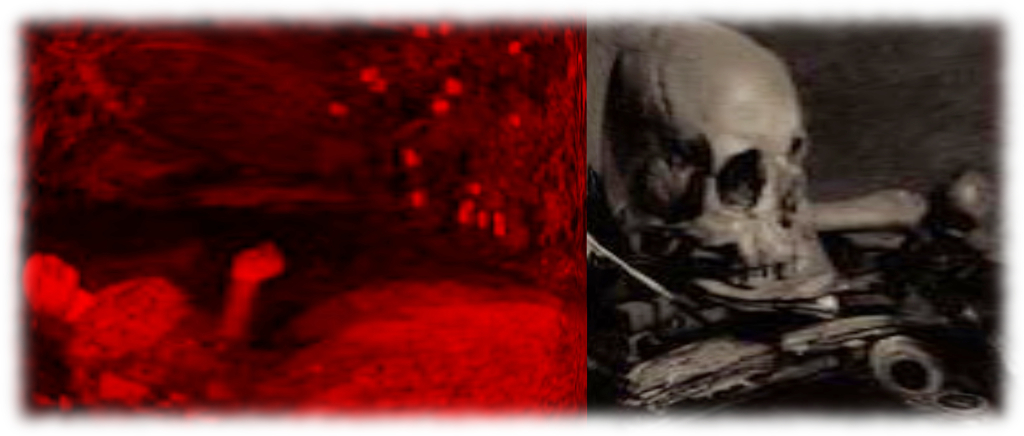
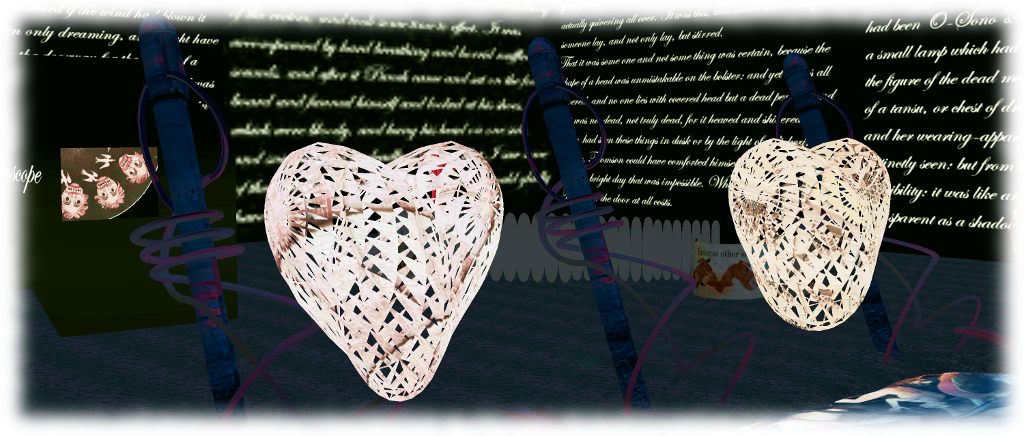
Using extracts from literature – M. R. James, Edgar Allan Poe, H. P. Lovecraft, Lafcadio Hearn and Ambrose Bierce, together with 2D images, 3D art and phenakistoscope, to present a vision from within the realm of nightmares: beasts feeding on flesh, hearts beating, words to chill the heart, bodies reposed apparently in death, ghoulish cartoon images, all held under a haunting audio scape.

Crumbs From My Nightmares

It’s a curious mixture; a rich tumbling of imagery in both form and words,  in places unsettling, in places familiar; sometimes edged in darkness, sometimes edged in the familiar or even the cartoonish. Just as we’d experience, perhaps, within a nightmare.

“The Imaginary is not real but true, messenger of a profound truth, therefore recognizable and unacceptable, Slatan continues, “The monsters represent the dark parts of the soul, in their various erotic, anxious or aggressive components. The Imaginary with its strange and disturbing images causes the turmoil that threatens the familiarity of the daily life.

Crumbs From My Nightmares

How much are our nightmares a part of us?How do they shape is, inform our natures? These questions also run through this piece, with Slatan further adding food for thought. “The perturbation as a feeling of fear and repulsion, arises from the risk of revealing the ‘ghost’ of desire and how much strong is the wish to control it. The irresistible necessity of controlling, natural in mankind, produces that protective mechanism that has enhanced the existence with monsters, vampires and ghosts, not only in dreams and nightmares.”

Crumbs From My Nightmares is an installation wherein the artist’s liner notes play an important role in helping focus thoughts and responses to all that we’re seeing in the installation. But while he may not that these may be his nightmares, many may find the symbolism here familiar, giving them pause to ponder within the framework of thought he offers.

SLurl Details

SL project updates 19/2: NEW projects – supplemental animations and animated objects

The Kubrick Roomsblog post

The following notes are taken from the Content Creation User Group meeting, held on  Thursday, May 11th, 2017 at 1:00pm SLT at the the Hippotropolis Camp Fire Circle. The meeting is chaired by Vir Linden, and agenda notes, etc, are available on the Content Creation User Group wiki page.

Audio extracts are provided within the text – although please note, these are not necessarily presented in the chronological order in which they were discussed in the meeting. Rather, I have tried to place a number of related comments by Vir on specific topics together – project scope, constraints, etc., where in the meeting they may have been discussed / reiterated at different times. Medhue Simoni recorded the meeting, and his video is embedded at the end of this report for those wishing to following the discussion chronologically. My thanks to him for the recording.

The meeting held two major announcements: supplemental animations and animated objects, both of which are being loosely referred to under the umbrella of “animation extensions”.

Supplemental Animations

This is an idea to overcome issues of animations states keyed by the server-side  llSetAnimationOverride() conflicting with one another. This problem has been particularly noticeable since the arrival of Bento, and a typical example is that an animation to flap Bento wings, if played to have natural wing movement while walking, results in a conflict with the walk animation, causing the avatar to slide along the ground.

  • Supplemental animations will allow additional animations to run alongside the basic llSetAnimationOverride() locomotion graph, requiring updates to the server-side animation code, rather than any viewer updates.
  • The changes will allow for more than one supplemental animation to run at the same time – so you could have wings flapping while walking and a tail swinging – providing the animations are restricted to using discrete sets of bones and do not clash (e.g. the wing flapping doesn’t call on a bone used in tail wagging or walking). If there is an overlap, the normal animation priorities would then determine which animation is played.
  • While the syntax still has to be worked out, it will likely be a call to add a set of supplemental animations associated with a specific state (e.g. walking) on attaching a relevant object (such as wings), and a call to remove the animation set when the item is subsequently detached.

Animated Rigged Objects

The Lab is starting work on adding the ability to animate rigged objects to Second Life – something which has been the focus of ongoing discussions within the Content Creation User Group for the past several months.

General Overview, Initial Limitations – *NOT* NPCs

  • At this point in time, this is not about adding fully functional, avatar-like non-player characters (NPCs) to Second Life.
  • It  is about providing a means to use the Bento skeleton with rigged mesh to provide things like independently moveable pets / creatures, and animated scenery features via scripted animation
  • The project may be extended in the future.
  • It will involve both back-end and viewer-side changes, likely to encompass new LSL commands to trigger and stop animations (held in an object’s inventory)
  • It’s currently not clear if this will involve a new type of mesh object, or whether it will need a new flag added to an existing rigged object type in order for the object to be given its own skeleton. But either way, it will be in the same family of rigged mesh objects which is current available.

  • While these objects may use the avatar skeleton, they are not avatars.
  • They will not:
    • Have any concept of body shape or avatar physics associated with them.
    • Use a Current Outfit Folder for wearables.
    • Utilise any system wearables (body shape, system layers, physics objects, etc.).
    • Be influenced by the shape sliders, or have any gender setting (as this is determined by the shape / shape sliders).
  • They will only be related to avatars in that they have associated animations driving them.

  • Given this is not an attempt to implement fully avatar-like NPCs in Second Life, use of the term “NPC” with them is not encouraged.
  • At the moment, the preferred term is simply “animated objects”.

Performance Concerns

  • There is liable to be two areas of impact for this capability:  in-world land impact, directly affecting the simulator, and a rendering impact on the viewer.
  • Right now, the Lab has no idea how great either might be, but they do mean that what can be supported could be limited (hence a reason for not jumping directly to providing “full” NPC capabilities).  However, it will be something that will be monitored as the project moves forward.

General Q&A

This news prompted a range of questions, which Vir sought to address:

  • Would this mean custom avatar skeletons?  – No, it would use the existing (Bento) skeleton, and attaching it to an animated rigged object. However, joint positions and offsets will be supported, allowing the skeleton to be modified to meet different uses.

  • Will this allow the use of Animation Overriders on objects?  – No. objects would at this stage not have  their own locomotion graph like an avatar does, and therefore would not have any notion of walking or flying, etc. All animations would have to be scripted.

  • Does this mean limits associated with the current avatar skeleton – such as the limit of placing a bone no further than 5 metres from the avatar’s centre via an animation – will still apply? Yes, any limits baked into animation will remain. The idea is for existing meshes and existing animations would be able to leverage this capability. In terms of the 5 metre offset limitation.
  • Could animated objects be attached to an avatar?  – This is not necessarily what is being looked at, which is not to rule it out; rather, the emphasis at the moment is getting things animated independently of avatars. There is also a concern over the potential additional impact of animated attachments to an avatar may have.

  • What happens if a script tried to drive the rigged mesh, rather than the avatar skeleton? – Normally, the scripts driving an avatar are in the attachments to that avatar, so “crossing the beams” is not something the Lab would recommend.
  • Is the Lab using this to help fix Pathfinding? – Not really. Pathfinding has its own set of issues and these are unlikely to be tackled as part of this project.
  • Can the skeleton for an animated object be assigned via script from an inventory object? – This might cause permissions issues.
  • How will a script know which object to animate? – The basic thinking is that the script would be inside the object it is animating (as is currently the case for placing scripts in an object), and so has permissions to animate that object. Using a single script to animate multiple independent objects would be more complicated and require some kind of object ID.
  • Could several rigged objects (rigged the same) be linked and have the same animation played? – Yes; the difference would be the object would be animated with respect to its internal skeleton rather than an actual avatar skeleton.
  • Would it be possible to sit on animated objects? – Possibly; although there might be issues, things might look odd. The Lab hasn’t investigated far enough to determine potential gotchas for this, but the hope is animated objects could work for vehicles.

  • Could animation scaling be used to adjust the size of an animated object? – It might make more sense to add some kind of “global scale” which would allow a skeleton to accommodate itself to the size of its object (rather than the object’s size being defined by the skeleton).

  • Will this allow animated objects to have wearables and attachments? – Not at this stage (although mesh clothing could in theory be a part of a the linkset making-up an animated object).  This is a very focused project at this point: playing animations in-world on rigged objects.

Other Points

  • A suggested name for the animated objects project is “Project Alive” – this might actually be adopted!
  • The are no plans for a blog post announcing the project. However, a mechanism will be provided for people to keep involved and comment on the work, possibly via a forum thread, as was the case with Bento. This might at some point utilise polls to focus down on people’s preferences.
  • The in-world forum for discussing this work will be the Content Creation User Group.
  • Between the 44:24 and 51:10 there is a discussion of adding a prim cube) as the root of the skeleton, allowing it to inherit physics and the abilities associated with a prim, morphing physics, plus using IK (inverse kinematics) with rigged object skeletons etc. Pros and cons of these ideas are discussed – largely in chat.  In short: the Lab are still considering how physics might be handled, although they are unlikely to opt for animated or morphing physics, while IK would also need to be looked at.
  • At present, there are no clear time frames as to how long these projects – supplemental animations and animated objects – will take, or when they will be implemented, simply because they are in their early phases. However, given the supplemental animations are restricted to server-side changes and do not require associated viewer updates, they might arrive sooner than animated objects.

Applying Baked Textures to Mesh Avatars

This remains under consideration, with Vir noting animated rigged objects could add a level of complexity to it, were it to be formally adopted as a project.


Revisiting Poetry of the Planets in Second Life

Poetry of the Planets: Uranus – The Magician

I returned to Caledonia Skytower’s Poetry of the Planets because when I first previewed it at the start of April 2017,  Jupiter and Mars had yet to open. This has now changed, with Cale recently completing both and opening them to the public, completing her “suite” of seven settings inspired by Gustav Holst’s famous suite, The Planets. Given this, and the fact that Bringer of War and Bringer of Jollity (the names of the planets were only added to the suite’s movements after their 1918 premiere) are perhaps the two most well-known pieces from the suite, a return to visit them seemed entirely appropriate.

Bringer of War, as one might expect takes us to the remnants of a campaign somewhere in the out reaches of Roman’s empire. From the landing point of the army’s camp, complete with banners and tents, visitors can follow the path down to the battlefield itself, where fires burn and the heaviness of death hangs in the air.

Poetry of the Planets: Mars, Bringer of War

It’s a setting entirely in keeping with Mars and its role as home to the Roman god of war, dark and foreboding. However, my own view of Mars is biased, being shaped by the images of Mars returned to us by the probes we’ve sent there: the winding depths of Vallis Marineris, the fractured chasms of Noctis labyrunthus, the towering peaks of the Tharsis volcanoes and the great cone of Olympus Mons. There is a grandeur to Mars as we know it today which I feel brings a new meaning to Holst’s piece; one less threatening, but more majestic than might have previously been the case. Which is not in any way to negate Cale’s vision, but rather demonstrates how our perceptions of the suite can be as much influenced by the planets as the music can influence our thinking about the planets.

Bringer of Jollity takes visitors to a marvellous crystalline maze, filled with columns reflecting and refracting light, through which a path runs, leading visitors between the columns to a set of golden steps. These in turn provide the means to climb up to a ballroom. One again, the theme of Holst’s piece is marvellously interpreted. It is not heard to image the passageways of the maze filled with the laughter of children as they chase one another up and down them, seeking whatever secrets the hallways might hide. Meanwhile, the ballroom offers a place of adult happiness among the dances – and dance itself might be said to reflect the beat and tone of the movement, with the almost eternal dance of Jupiter’s cloud system forming a backdrop.

Poetry of the Planets: Jupiter, Bringer of Jollity

Poetry of the Planets has a supporting website, and visitors to the installation are invited to submit poems, haikus and even short stories (up to a maximum of 2,000 words) inspired by one of more  of the settings, for publication on the website (authors retain the copyright on their work). Submissions can be made in-world via note card at any of the mail boxes within the installation, or directly to Cale herself.

Also, Poetry of the Panets will feature in the May 22nd instalment of Designing Worlds, and the show will be embedded in the Poetry website. The installation itself will remain open until the end of May for those wishing to visit or re-visit. As I noted in my preview, it is an inspired idea, bringing together fable, mysticism, music and words – and a wonderful means by which we can immerse ourselves in Holst’s suite.

Poetry of the Planets: Jupiter, Bringer of Jollity

SLurl Details

Kubrick and Wells in Second Life

The Kubrick Rooms

I was recently alerted to a couple of small exhibitions in Second Life with could be of interest to lovers of film and of science fiction: The Kubrick Rooms and the Wells Exhibit.

The Kubrick Rooms are the work of Rumpledink Robbiani. As the name suggests, this is something of a homage to legendary film-maker Stanley Kubrick. First opened in 2008 and available to visitors for a year thereafter, the rooms have been in limbo since then. However, Rumpledink’s friends encouraged him to bring them back in-world and he notes that this time, he hopes the money received in donations and from sales will help keep it around for longer.

Rooms is neatly designed around three of Kubrick’s most notable films: The Shining, 2001 A Space Odyssey and A Clockwork Orange, with The Shining taking overall centre stage by providing the setting. Visitors arrive at a small anteroom where instructions are offered (set the viewer’s time to midday), together with a single door. Step through this, and a familiar – to anyone who has seen The Shining – hallway from the Overlook Hotel opens up, complete with child’s tricycle.

The Kubrick Rooms

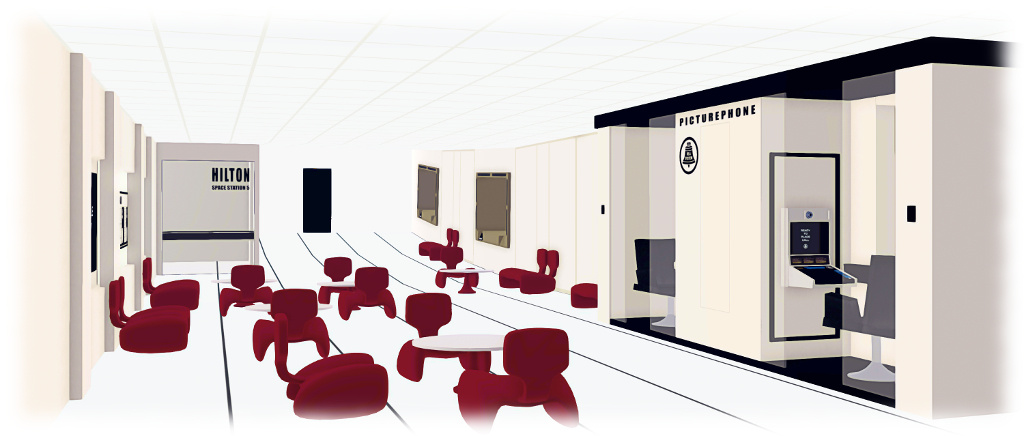
As one would expect of a hotel, the hallway is lined in either side with room doors, some of which have their keys in the locks. They offer access to sets from The Shining – a lounge, the restrooms, the bathroom – as well as to the main rotating hallway of Space Station 5 from 2001 A Space Odyssey, where Doctor Heyward Floyd stops-over en route to the Moon and TMA-1, and another featuring A Clockwork Orange.

Within some of the rooms there are videos which delve into The Shining and 2001 – just ensure media is enabled on your viewer and click the screens as you come across them. A small cinema at one end of the hallway offers the 2014 documentary Kubrick Remembered, looking back on the great man’s life. At almost 90 minutes long, this is more than worth watching, presenting a fascinating retrospective on the man. Alongside of this is a small gift shop.

Wells Exhibit

The Wells Exhibit can be found on the floor above Netera’s Coffee Lounge in Snug Harbour, and is curated by the lounge’s owner, Netera Landar. Use the teleport door set into the wall of the lounge, the disk on the floor, or the outdoor staircase to reach it. Examining the life and works of Herbert George Wells, the English writer, this is a somewhat more modest affair than The Kubrick Rooms, designed to fit within the space provided by the upper floor of the coffee lounge.

Information boards provide biographical information on H.G. Wells while the walls are home to archive photographs of him and a note card giver listing his publications. However, the majority of the exhibit focuses on Wells’ science fiction works. There are posters celebrating The Island of Dr. Moreau (1896), The Invisible Man (1897) and The Sleeper Awakes (1910), together with small pictures dedicated to A Modern Utopia (1905) and The Shape of Things to Come (1933).  Two slightly larger displays touch upon what might be his most well-known novels: The Time Machine (1895) and The War of the Worlds (1897).

Wells Exhibit

Information on Wells’ writing is actually a little light and could perhaps benefit from two or three additional information boards. However, the Wells Exhibit still makes for an easy-going visit for those with an interest in his work. For those looking for a more unusual outing, it and The Kubrick Rooms might be just the ticket.  

SLurl Details