Quill and Pen: Second Life authors and poets now in ebooks

Click image to open Quill and Pen volume 1

In June, Kultivate Magazine published the first volume of Quill and Pen, a new twice-yearly publication focusing on the work of writers and poets from across Second Life.

Quill and Pen features short stories (including flash stories), non-fiction and poetry, and is published each June and December.

The journal was initially made available through the Kultivate Magazine website in Issuu format, and via Smashwords in epub, PDF and Mobi / Kindle formats. However, as of August 15th, 2016, it is also available in  Kobo, Scribd and Nook formats.

The in augural volume features contributions by R. Crap Mariner, Eleseren Brianna, Glitterprincess Destiny, Kamille Kamala, Dawnbeam Dreamscape, Sabreman Carter, BayJoy, Judith Cullen aka Caledonia Skytower, Huckleberry Hax, Hobby Writer, Journey McLaglen aka Cindy Landers, Bryn Oh, Inara Pey, Ahn Avion, Pieni Resident, and John Herring aka Johannes1977 Resident.

I’m especially please and privileged to be a part of this newest publication in the Kultivate  portfolio, and doubly delighted to have witnessed the strong show of support for the first volume from the writing community in Second Life.

Where to Get It

If you’ve not already done so, you can read Quill and Pen, for free by either clicking on the cover image above right to open the Issuu version in your web browser, or by following one of the links below, according to your preference:

Submissions to Quill and Pen

The Quill and Pen is published twice yearly, in June and December. If you would like to see your work published, free of charge, submission in the following categories are accepted:

  • Poems: one poem per page, single spaced and left justified, maximum of six pages
  • Non-fiction: one essay up to 1500 words, double spaced, no extra space between paragraphs, white space for section breaks only
  • Flash stories: up to 500 words, double spaced, no extra space between paragraphs. White space for section breaks only
  • Fiction: one story up to 1500 words, double spaced, no extra space between paragraphs. White space for section breaks only.

Submissions must be made via the Kultivate Quill and Pen submissions form, which will be opened for a period of time prior to each publication. So, keep an eye on Kultivate Magazine (and this blog!) for announcements, and in the meantime start thinking about what you’d like to write, or dig out those stories or poems and get them ready to submit for publication!

Space Sunday: exoplanets, greenhouses and meteors

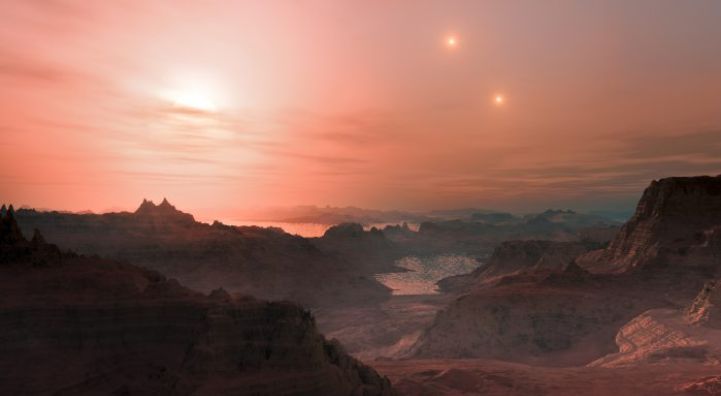
Sunset on an alien world: an artist's impression of sunset on an Earth-like planet orbits our nearest stellar neighbour, Proxima Centauri (seen closest, left), with Alpha Centauri A and B shining in the distance - story below
Suns over an alien world: an artist’s impression of the view from an “Earth-like” planet orbits our nearest stellar neighbour, Proxima Centauri (seen closest, left), with Alpha Centauri A and B shining in the distance – story below. Credit: ESO/L. Calçada

Last week I reported on the latest issue to strike NASA’s Kepler mission to survey other stars for signs of planets orbiting them. On July 28th, during routine communications with the observatory – which is following the Earth around the Sun roughly 121 million kilometres (75 million miles) “behind” the planet – it was discovered the photometer, the camera-like tool used to detect alien planets, had been turned off.

Power was restored to the unit on August 1st, but engineers were still mystified as to why it had turned off in the first place. Communications with the observatory on Thursday, August 11th, confirmed the photometer was still active and Kepler was gathering data, allowing the engineering team to focus on a possible cause for the unit powering off.

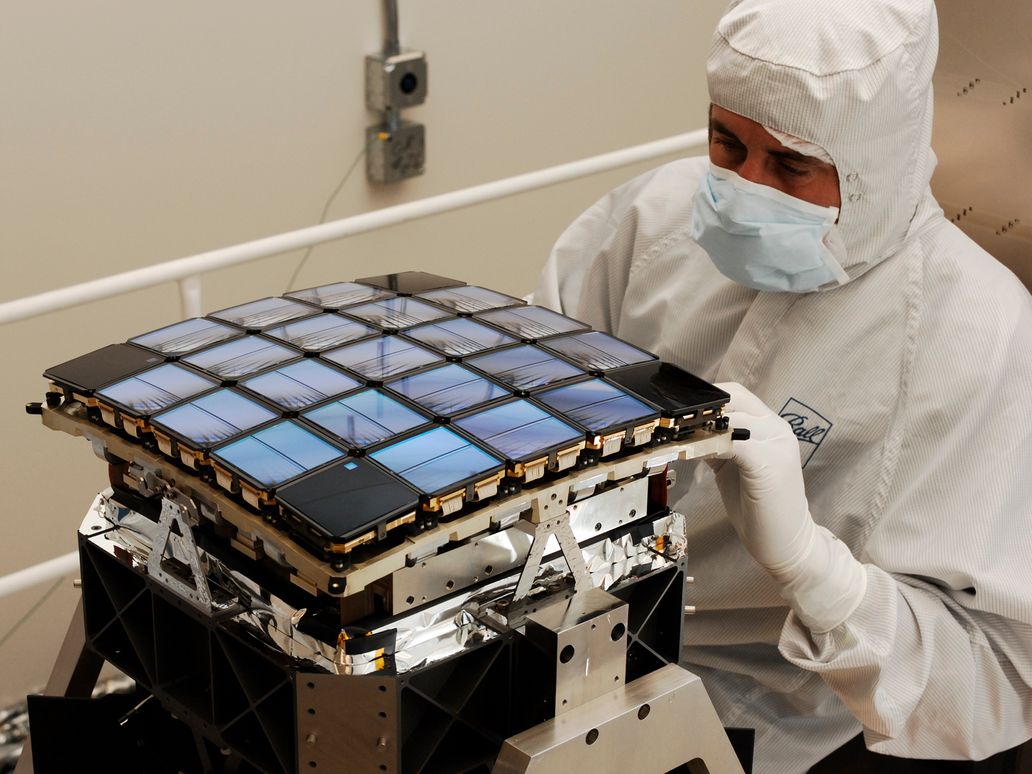
The Photometer includes a curved focal plane of 42 charge-coupled devices (CCDs) arranged within 25 individual modules. One of these modules – Module #7 – suffered a power overload in January 2014, disabling it. Most crucially, the failure prompted the photometer unit to power itself off – just as appeared to have happened shortly before July 28th, 2016, suggesting the most recent issue could also be related to the focal plane.

Kepler's focal plane, showing its array of 25 modules, being assembled at Ball Labs prior to Kepler's launch in 2009
Kepler’s focal plane, showing its array of 25 modules, being assembled at Ball Labs prior to Kepler’s launch in 2009

Analysis of the data received following the restoration of power to the photometer reveals that another module, Module #4,  had failed to warm up to the required operating temperature, strongly suggesting it has also failed, and thus triggered the power-down.

As a result, the science and engineering team responsible for the mission have determined that the targets that were assigned to Module #4 will yield no further science results, but this should not impact Kepler’s overall science campaign, which is expected to continue through until 2019, by which time all no-board fuel reserves will have been depleted, and much of Kepler’s work will have been taken over by the James Webb Space Telescope and NASA’s Transiting Exoplanet Survey Satellite (TESS), examined in my previous Space Sunday column.

An “Earth-Type” World Just 4.2 Light Years Away?

Kepler has detected over 4,000 exoplanet candidates, of which around 216 have been shown to be both roughly terrestrial in size and form, and located within the “Goldilocks Zone” (or more formally the circumstellar habitable zone (CHZ) or habitable zone) around their parent star – the region at which planetary conditions could be “just right” for life to arise. Unfortunately, most of these planets are a very long way away. Kepler 425b, for example, regarded as Earth’s (slightly bigger) “cousin”, and the first exoplanet to be confirmed to be orbiting in its star’s habitable zone, is some 1,400 light years away.

However, Kepler is not alone in the hunt for extra-solar planets. Observatories here on Earth are also engaged in the work, both in support of Kepler by undertaking detailed follow-up examinations of candidate stars, and also as part of their own programmes. A recent article in Germany’s Der Spiegel magazine now claims that one of these, the European Southern Observatory’s (ESO)  La Silla faclity, has found an “Earth-like” planet very much closer to home.

Quoting an alleged member of the ESO team, Der Spiegel states the new planet is orbiting Proxima Centauri, our nearest stellar neighbour, a mere 4.25 light years away, and which can be seen in the southern hemisphere night skies. A red dwarf low-mass star roughly one-seventh the diameter of our Sun, or just 1.5 times bigger than Jupiter, it is thought to be gravitationally bound to the Alpha Centauri binary system of stars, frequently the subject of science-fiction stories down through the decades.

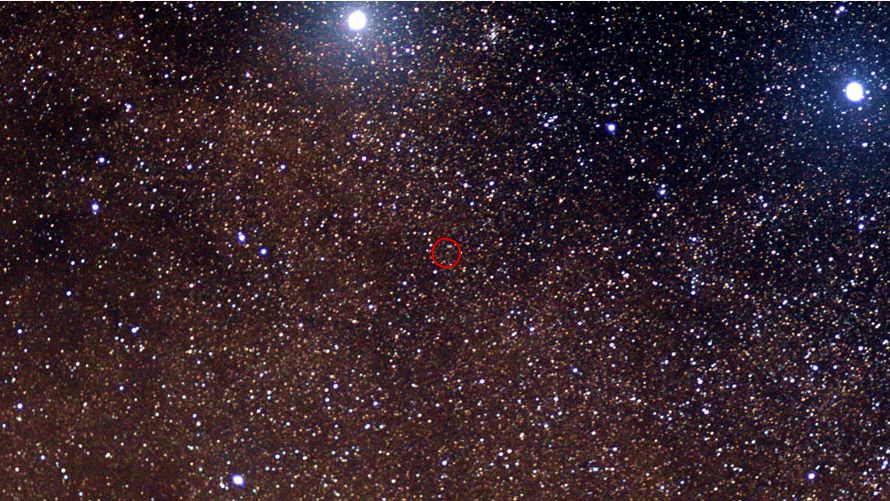
The Alpha Centauri system seen through a modest telescope. At the top, slightly left of centre is the Sun-like Alpha Centauri A, to the upper right is the K1 V Alpha Centauri B. The red circle denotes tiny Proxima Centauri

Given the two primary stars in the Alpha Centauri system are broadly similar to our own Sun  – Alpha Centauri A particularly so – and both are slightly older (around 4.85 billion years), the system has been a frequent subject for study, with the potential for either star to have planetary bodies orbiting it, or given the two stars orbit one another every 79.91 terrestrial years at a distance roughly equivalent to that between the Sun and Uranus, quite possibly around both of them. In fact, two recent papers have suggested two planets orbiting Alpha Centauri B. The first, from 2012, was subsequently dismissed as a spurious data artefact. The  second, from 2015, has yet to be confirmed.

So far, ESO representatives have refused to confirm or deny the Der Spiegel article, or whether an announcement on the matter will be made at the end of August as the magazine claims.  This has been taken by some as tacit confirmation of the discovery, and others that the data – if true – is still being verified. If the latter is the case, some caution at ESO is understandable: the La Silla Observatory was responsible for announcing the 2012 discovery of “Alpha Centauri Bb”, which as noted above, turned out to be a data anomaly.

Some are outright sceptical of the article, pointing out that Proxima Centauri has long been the subject of exoplanet searches by both observatories on Earth and the Hubble Space Telescope, and nary a hint of another other body, large or small, orbiting it has been found.

As a dwarf star – one of the smallest known – Proxima Centauri is also somewhat volatile, with about 88% of the surface active (far more than the Sun’s), and is completely convective, giving rise to massive stellar flares. While this doesn’t out the potential for planets to be orbiting it, the fact that the star’s habitable zone is between 3.5 and 8 million kilometres from its surface, any planet within that zone would be tidally locked to Proxima Centauri, leaving one side in perpetual daylight and the other in perpetual night, with the risk that any atmosphere would be stripped away over the aeons by the stellar flares. So even if the Der Spiegel article is confirmed, it would seem the planet might still be a pretty inhospitable place, even if it is within the Goldilocks zone.

Continue reading “Space Sunday: exoplanets, greenhouses and meteors”

Devilish plots, monstrous regiments and ailing aliens

It’s time to kick-off a week of story-telling in voice, brought to our virtual lives by the staff and volunteers at the Seanchai Library. As always, all times SLT, and events are held at the Library’s Second Life home at Bradley University, unless otherwise indicated.

Sunday, August 14th

13:30: Tea Time at Baker Street

Tea-time at Baker Street returns for the summer, featuring a new location – 221B Baker Street at the University of Washington iSchool in Second Life, and a return to His Last Bow.

A 1917 anthology of previously published Sherlock Holmes stories by Sir Arthur Conan Doyle, the volume originally comprised seven stories published by The Strand Magazine between 1908 and 1917. However, later editions of the book saw an eighth story included, The Adventure of the Cardboard Box, originally published in 1892.

In this episode, Holmes and Watson find their break in Cornwall interrupted, apparently by none other that Satan himself, in The Adventure of the Devil’s Foot.

Having gone to Cornwall on account of Holmes’ health, the two friends find their holiday interrupted by an unexpected visit by a local gentleman, Mortimer Tregennis, who is accompanied by the local vicar, Mr. Roundhay.

A distressed Tregennis reports how, after visiting his two brothers and his sister the previous evening, he had returned to their house in the morning to find all three still at the table where they’d all played whist the night before, his sister dead and his two brother apparently insane.

It had been the housekeeper who had first discovered the three, prior to Tregennis’ return, and she had fainted shortly after her discovery. Similarly, a doctor called to the house also collapsed for a short while. Tregennis, who has been living at the vicarage, is insistent what has happened is the work of the devil. Then, the following day, comes word that Mortimer Tregennis is also dead!

15:00: Magicland Storytime

It’s a Small World of Folktales at The Golden Horseshoe in Magicland Park with Caledonia Skytower.

Monday August 15th To the Vanishing Point
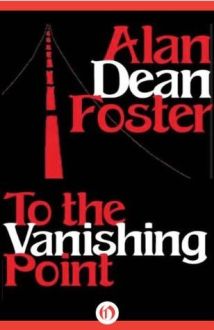
vanishing pointGyro Muggins continues his Monday Night treat of sci-fi with the conclusion of Alan Dean Foster’s To the Vanishing Point.

When Frank Sonderberg insists his family make their annual vacation a road trip, his wife and kids are less than impressed. When he pulls over to the side of the road to pick up a beautiful young hitch-hiker apparently stranded in the desert, his wife definitely isn’t impressed.

But no sooner has the young woman, calling herself Mouse, boarded their motor-home than reality changes – and not necessarily for the better. Mouse, it turns out, is an alien on a mission and in picking her up, the family is inextricably joined with her in that mission. The universe, with all its many realities, is coming apart because the Spinner, the creator of those realities, has a headache. Mouse has the cure, but in order to give it, she must reach the Vanishing Point – and she needs the Sonderbergs to get her there.

Tuesday August 16th, 19:00: Blueberry Summers: Growing Up at the Lake

Kayden Oconnell reads from Curtiss Anderson’s classic coming of age memoirs.

BlueberryBorn in 1928 in Minneapolis, Curtiss Anderson grew up in an extended family of Norwegian-Americans, among whom the highlight of the year was time spent among the lakes of northern Minnesota.

For young Curtiss, growing up in the 1930s and 1940s, these were especially idyllic years. Time spent in the farmhouse among this extended family presented an opportunity for him to escape the strained and troubled relationship he had with his parents and enjoy the company of others, aunts and uncles, the loving care offered by family friends Leigh and Clara, the companionship of the family dogs – and the chances to experience young love of his own.

Through the tales he relates of these summers, so Anderson also explores the notes and letters he wrote as a boy, carefully produced on a hand-me-down typewriter. Missives and notes which, although he never realised it at the time, were in fact his first forays into what would blossom in his adult life into a distinguished career as a writer, editor and publisher.

Wednesday August 17th: A Monstrous Regiment of Women (Mary Russell #2)

MonstrousReturn to 221B Baker Street at the University of Washington’s iSchool, Second Life, for the latter-day adventures of Mr. Sherlock Holmes (retired) and his young orphaned protégé, Mary Russell, originally from the United States, as written by Laurie R. King.

Taking a trip to London, Mary encounters Veronica Beaconsfield, a friend from Oxford, who in turn introduces her to the charismatic and enigmatic Margery Childe, leader of something called “The New Temple of God.” Sect-like, and seemingly involved with the suffrage movement, the New Temple and its leader offer both curiosity and intrigue for Mary, who is not convinced either are entirely aboard board.

Her suspicions appear to be correct when several of the Temple’s wealthy young female volunteers and financial contributors are murdered. With Holmes keeping a watchful eye in the background, Mary turns her curiosity into an investigation; in doing so, she faces her greatest danger yet.

Thursday, August 18th

Seanchai is taking the evening off to allow Shandon attend a family birthday celebration.


Please check with the Seanchai Library SL’s blog for updates and for additions or changes to the week’s schedule.

The featured charity for July-August is WildAid: seeking to end the illegal wildlife trade in our lifetimes by reducing demand through public awareness campaigns and providing comprehensive marine protection.

Additional Links
A pocket planetarium in Second Life

Space - A Planetarium
Space – A Planetarium

I’m a space nut, both science-fiction and science fact; regulars to this blog will recognise this is the case simply via my Space Sunday column, and via the occasional sci-fi reference. So, when Kinn (Kinnaird) covers a planetarium in SL I’ve missed, it is somewhere I have to hop over to and see.

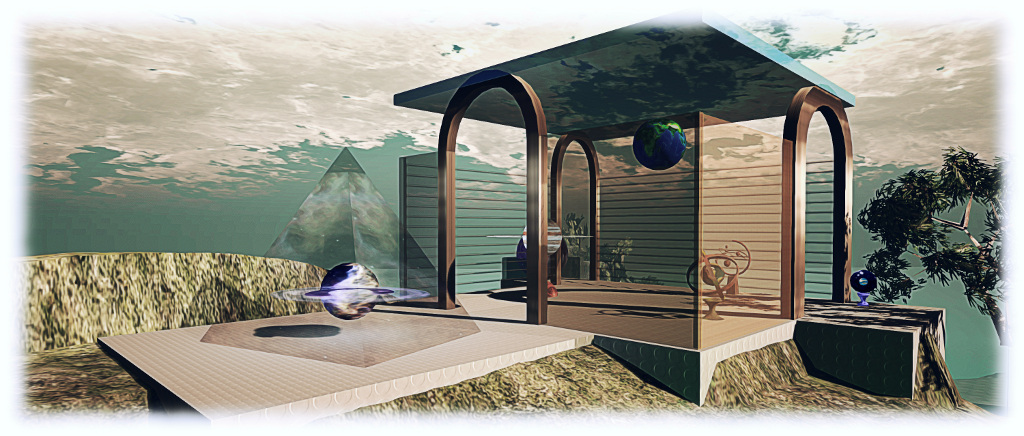
Space – a Planetarium, designed by Hazelee Haller, is located on Heterocera, not that far from the Unknown Theme Park in fact, which Caitlyn and I explored back at the start of July. It’s an interesting little place, offering what might be described as a more stylised approach to visualising the solar system. This is due in no small part to the planetarium occupying just 512 square metres of land – which is itself a remarkable achievement.

Space - A Planetarium
Space – A Planetarium

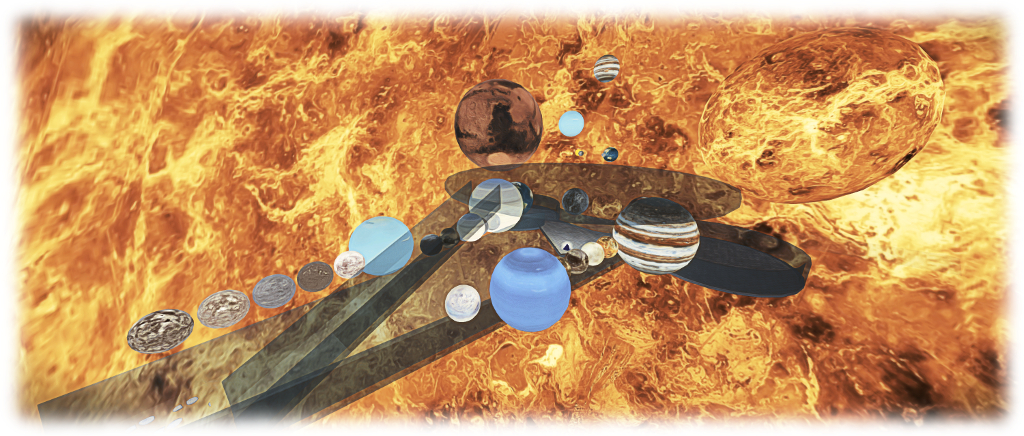
This stylised approach can be seen on the ground level, where mighty Jupiter sits within what can only be described as Saturn’s ring system (Jupiter’s own rings being far thinner and less well-defined). A teleport sphere located in one corner of the building will take you up to the planetarium proper.

Presided over by a huge Venus and Mars, the planetarium ins divided into two levels. On the lower are static displays of the major planets of the solar system together with their principal moons – although Phobos and Deimos are absent from Mars, possibly due to their tiny size. The planets and moons aren’t offered to scale relative to one another, but click on any one of them (other than the Earth), and you’ll be offered a link to their Wikipedia page.

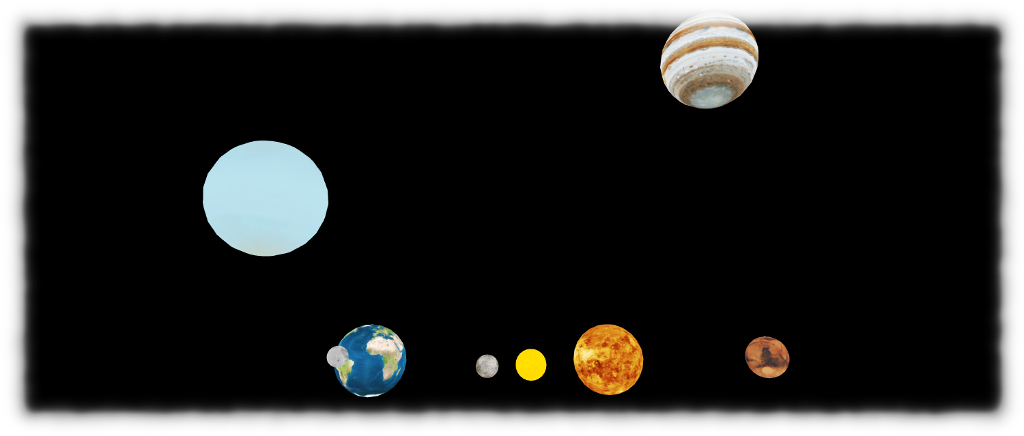
Space - A Planetarium: the orrery offered aginst a black backdrop rather than the planetarium's sun-like interior, which Jupiter (upper right) and Uranus (left, centre) looking on
Space – A Planetarium: the orrery offered against a black backdrop rather than the planetarium’s Sun-like interior. The Earth and Moon, Mercury, Venus and Mars can be seen orbiting the (not to scale!) yellow sphere of the Sun. These are offered roughly to scale with one another and in scale orbits reflecting their respective motions around the Sun relative to one another. Stationary Jupiter (upper right) and blue Uranus look on

The upper level, reached via a ramp between the two lines of gas giants and their moons, offers a little orrery-like model of the inner planets  – Mercury, Venus, Earth (and the Moon) and Mars all orbiting around the Sun. These all appear to be to scale relative to one another (although obviously, not to the Sun!). Beyond them hang further static models of Jupiter, Uranus and Saturn, which also appear to be to scale to the inner planets. In addition, the walkway on the lower level passes through the wall of the planetarium’s sphere to a platform offering a view of the sphere itself, which is textured on the outside with an image of the Earth.

Space – a Planetarium is a neat little pocket-size guide to much of the solar system, and certainly presents a way for those not well-versed in the planets around us and their major moons to become more familiar with them, without also getting overloaded with facts and information. Yes, it does lack some of the options which might be available on a larger parcel of land, but this doesn’t in any way lessen what is offered here; rather the reverse, in fact. It shows what can be achieved on even smaller parcels with limited land capacity.

Space - A Planetarium
Space – A Planetarium

SLurl Details

Storm Septimus: Invictus in Second Life

Invictus
Invictus

Update: To mark the anniversary of William Henley’s birth, Storm would like to hold a poetry event at Invictus at 15:00 SLT on August 23rd. She has a open invitation to Second Life poets and voice artists who would like to attend and read either their own work or that of their favourite poets (“even if it’s Dr. Seuss!” , she told me, eyes twinkling). If you are interested, please contact Storm via note card or via email.  

Invictus (Latin: “unconquerable“) is the name of the full region installation by Storm Septimus, which is now open through until the end of 2016. It is a stunning visual interpretation of William Ernest Henley’s famous 1875 poem of the same name.

The poem, untitled at the time of its writing (editor Arthur Quiller-Couch added the title when including it in The Oxford Book of English Verse in 1900), came at a time when Henley was facing severe challenges. Diagnosed at an early age with tuberculosis of the bone, he had lost half his left leg to the disease in 1869, when he was just 20. Rather than accept the loss of his right leg as well, he spent three years hospitalised between 1873 and 1875 while noted surgeon Joseph Lister (ultimately successfully) fought to save the limb, and it was at the time of these multiple surgeries that Henley wrote his poem.

Invictus
Invictus

It is this determination of the human will to overcome adversity, no matter how dark, even with the portal of death awaiting, which forms the central theme of the poem. It takes the reader on a journey through life’s hardship, enduring the battering of circumstance and chance, to the recognition that whatever circumstance we face, we alone determine our fate. Dark through the initial three stanzas, the poem emerges in an affirmation of spiritual fortitude; a triumphant proclamation of self-will over fate, and our ability to lay claim to our time on Earth.

It’s a powerful message, and one evocatively presented within the installation, which offers a visual journey through the poem. This begins on the upper floor of a tower. Notes on navigation are presented on a scroll, and touching it will deliver them in note card form – recommended lest you find yourself forgetting directions.

Invictus
Invictus

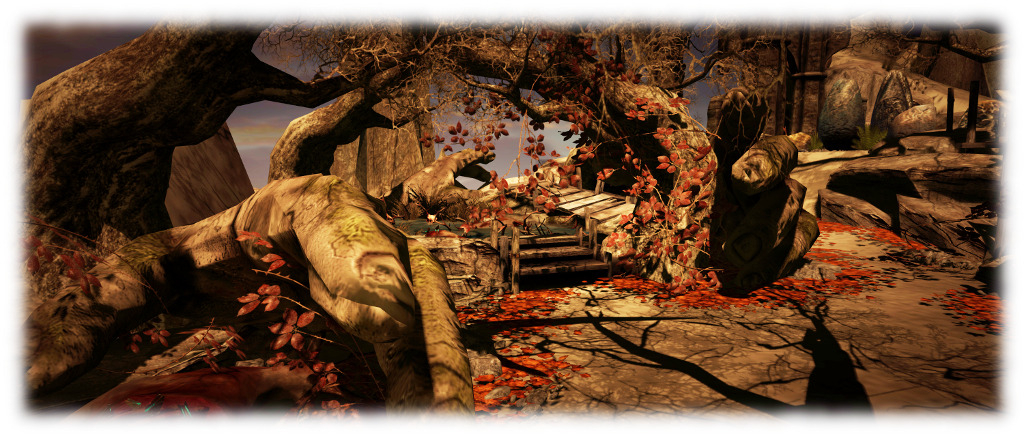
To descend the tower is to descend into the black pit of the poem’s first stanza, which awaits at the lowest level. Outside, the journey continues, winding down a mountain, passing the remaining stanzas along the way, their surroundings reflecting and interpreting each in turn through metaphor and symbolism.

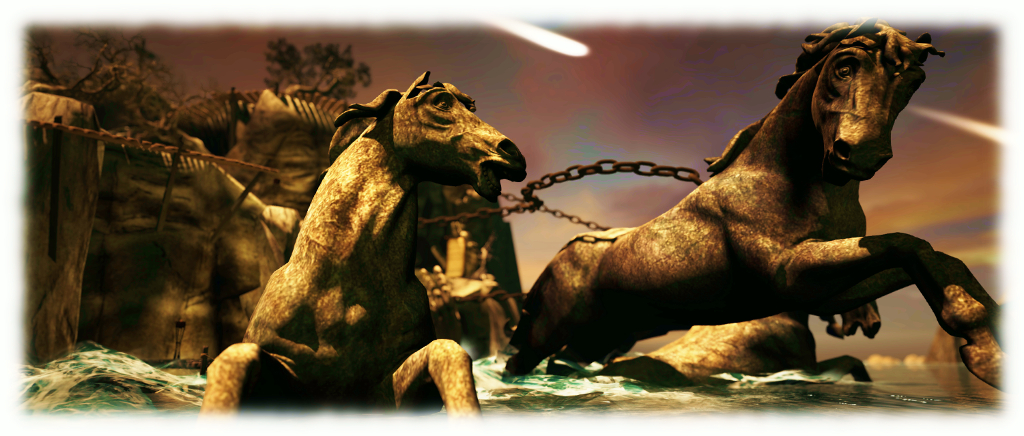
Any attempt to describe this journey is meaningless; it is something which is to be experienced first-hand. There is marvellously expressive symbolism to be found throughout; not only of the poem itself, but also the broader themes encompassed by its verses. Some of this is obvious, such as the giant hands grasping chain reins of great stallions, encapsulating the idea of taking control of one’s fate, reflecting the exultant final two lines of the poem.

Invictus
Invictus

Elsewhere, the symbolism is perhaps less obvious. Are the arrows found throughout the upper parts of the installation perhaps be a reference to “the slings and arrows of outrageous fortune”, a line from Shakespeare’s famous soliloquy on life and the nature of death? After all, the latter is not so very far removed from Henley’s own musings on the subject found within in the couplet, “Beyond this place of wrath and tears /   Looms but the Horror of the shade”.  Elsewhere we might also find reflections on the nature of life and death, and on he times in which Henley lived; the child-angels, for example, might be seen as a reminder of the high infant / child mortality rates in England in the mid-19th century.

This is also, I would suggest, something of a personal statement by Storm. Just as Henley used the poems written whilst hospital to explore his time as a patient, so Storm has used her art in Second life to explore her own circumstance through installations like 2015’s Failure to Thrive, exploring depression, or 2014’s examination of insomnia through The [Void] (which I wrote about here). Thus, within Invictus, it is hard to escape the feeling we’re being given a glimpse of Storm’s own self-affirmation the she, and not the challenges she faces, holds authority for her life.

Invictus
Invictus

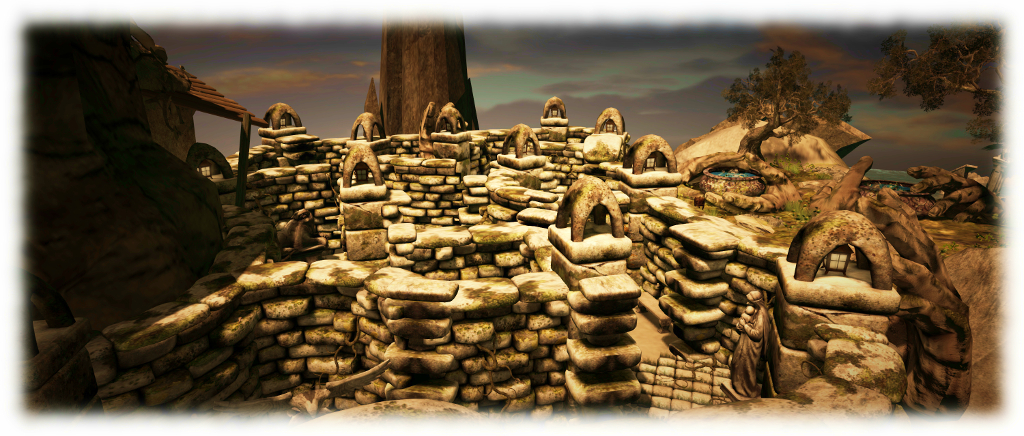
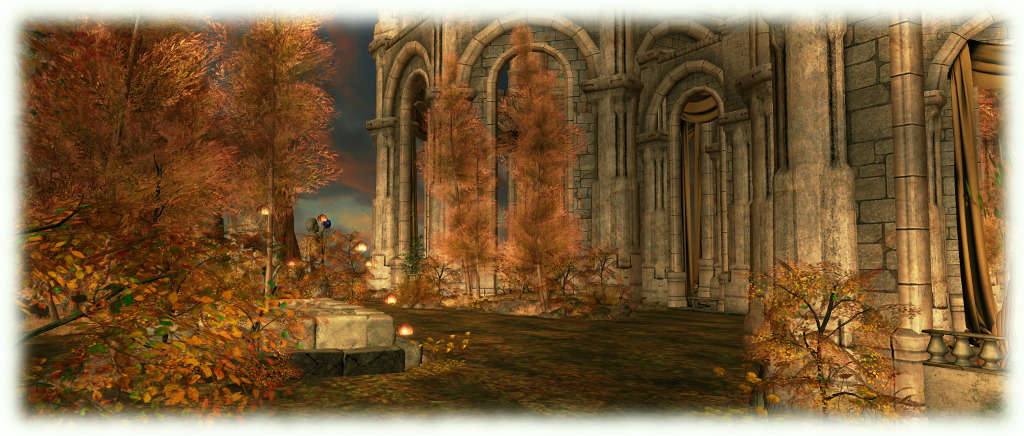
Across the water from the mountain and tower lies the ruins of a cathedral set within a garden. Storm indicates this is not strictly a part of the poem’s interpretation, being intended for photography and events. However, it would seem to offer both a further motif for the more spiritual lines from Invictus and a contemplation of the calm certainty which follows the poem’s final two lines. To reach it, visitors can either fly or – in a more light-hearted nod to those final lines – by taking the rowing boat waiting at the foot of the mountain, thus figuratively becoming the “captains of their souls”.

SLurl Details

2016 SL project updates 32 (2): TPVD meeting

Eclectica – Mysticablog post

The majority of the notes in this update are taken from the TPV Developer meeting held on Friday, August 12th. The video of that meeting is embedded at the end of this update, and references to it are indicated through the use of time stamps in the paragraphs below. My thanks as always to North for recording and providing it.

Server Deployment – Recap

There was only a Main (SLS) channel deployment this week. This saw the roll of the server maintenance package previously deployed to the three RC’s in week #31, on Tuesday, August 9th. This comprised internal fixes and an update to prevent BUG-37573.

SL Viewer

Release Viewer – Texture Handling Fixes

[0:35] The Maintenance RC viewer release on Monday, August 8th gained a rapid promotion to the de facto release viewer on Thursday, August 11th. Version 4.0.7.318301 (dated August 8th).

This viewer includes a number of fixes in the image pipeline (e.g. fixes for “bad” textures – those texture files which have invalid data in them). Also included is a fix to prevent the viewer crashing when you system runs out of main (not GPU) memory while  attempting to load a texture file. Instead, the viewer will substitute a plain grey texture. So, when you start to see grey everywhere instead of expected textures, it’s time to restart the viewer. This may be a pain to look at, but it is considered preferable to having the viewer crash at a potentially inconvenient moment.

[1:35] The Lab intends to move along similar lines for other issues within the viewer which can result in a hard crash, and also go through cleaning-up how exceptions are generated and caught by the viewer, and this work should be appearing in the next but one Maintenance RC update. The overall goal is to improve the image pipeline and some other points in the viewer where a relatively low-level thing results in the viewer crashing. Some of this work might also help prevent attempts to deliberately crash other viewers using textures.

In the meantime, issues have emerged affecting attachments and the Current Outfit Folder with this release – see BUG-37646 “Attachments get ghosted at login on 4.0.7.318301”; and BUG-37653 “Every time I delete Cache and Relog, my Saved Appearances do not load and I am left as a White Cloud in Second Life Viewer 4.0.7.318301”, for details.

Remaining Viewers in the Release Channel

[4:20] The VLC Media Plugin RC viewer, version 4.1.1.318152 dated July 28th at the time of writing, which contains the LibVLC-based replacement for QuickTime for Windows, is liable to be the next RC that will be promoted to release status.  A new RC version of this viewer, merged-up to the 4.0.7.318301 code, should appear in the release pipeline in week #33 (commencing Monday, August 15th).

[4:32] The plan remains to update the Mac version of the viewer to use VLC as a part of the 64-bit viewer development.

[6:10] The Visual Outfits Browser RC viewer, version 4.0.7.318263 dated August 1st at the time of writing, which allows users to preview images of outfits in the Appearance floater should be updated in week #33 following a merge with the 4.0.7.318301 code. This update will also include a further round of bug fixes for this project.

Project Bento

[7:35] A new project viewer is being readied, which includes bug fixes and which has been merged with the 4.0.7.318301 code. This should hopefully appear in week #33. See my Bento update 22 for more on the project.

Upcoming Viewers

[6:43] A new Maintenance viewer should appear in week #33. This will contain further fixes and improvements, although not the exception handling improvements referred to above.

[7:00] Work is expected to resume on the 64-bit versions of the official viewer in week #33.

SL Voice

[9:45] Work is progressing on Voice, with a further SL Voice plugin update expected from Vivox soon. Oz has been debugging an upcoming project / RC viewer with more Voice fixes – although this isn’t yet ready to be issued.

Avatar Complexity

It has been noted that Avatar Complexity values can fluctuate when seen from different systems, on average by around 5%. This is because it is next to impossible to come up with a single figure that s accurate across all systems, as the calculations have a degree of hardware dependency (GPU, rendering capabilities, etc),

However, the Lab will continue to tweak the calculations to try to make them as consistent as possible, but this will be a gradual process for reasons Oz discussed in the meeting, and which I’ve extracted in the audio file below

A couple of particular issues which have been reported for avatar complexity calculations are BUG-37631 “Rigged mesh with partially transparent texture on it have 4 times higher complexity”, and BUG-37642 “ACI randomly changes (often at login or following a TP)”.

Other Items

Memory Bloat Crashers

[8:50] With the arrival of Avatar Complexity, which provides protection against worn graphics crashers (just don’t set your Maximum Complexity slider to No Limit), it appears that inconsiderates in the virtual world are swapping to use attachments which cause memory bloat in order to crash viewers. There are, for example, attachments which can raise viewer memory to 4 Gb which immediately crasher 32-bit viewers, even if the offending avataris “Jelly Dolled”.

Oz has requested the Lab be supplied with examples, so they can start looking into the matter and hopefully come up with a fix.

Abuse Report Categories

[10:31] One of the possible issues for some Abuse Reports (ARs) appearing to go unanswered is that there are still viewers using the “old” AR categories, rather than the newer categories (as found in the official viewer). This is particularly true where users are still on versions of the viewer which do not have the revised list of AR categories.

To prevent this is the future, the Lab plan to make Abuse Report categories a capability handled by the simulator and downloaded to the viewer. This removes storing the categories in the viewer & having older viewer fail to reflect more recent category updates. It will also make it easier for the Lab to update AR categories to better meet users’ needs. A project viewer will be appearing at some point in the future supporting this new capability.

Also, within the official viewer, appending a snapshot to an AR is to become mandatory, rather than optional, to further help support identify issues and deal with them. Having a picture may not be relevant for all ARs, but for those where it could help in identifying issues, it ensures the picture is provided, rather than ignored.