Pausing at the Lost Gardens of Pompeii in Second Life

The Lost Gardens of Pompeii, June 2022 – click any image for full size

Update: The Lost Gardens has closed and the region has changed hands. SLurls have therefore been removed from this piece.

It’s been a while since I last wrote about one of Vita Camino’s region designs, so when Shawn Shakespeare sent me a landmark to The Lost Gardens of Pompeii, I immediately added it to my list of places to visit, and finally got the opportunity to do so at the start of June.

Occupying a Full private region leveraging the additional Land Capacity bonus, the setting – as you might guess from the name – is Romanesque is nature. According to its About Land description, it is also a work in progress; so there may be a chance things might change between my writing this and you getting to visit for yourself. There are also some rental villas tucked away on the south and east side of the region, but these are well to one side (and below!) the public areas, minimising the risk of trespass.

The Lost Gardens of Pompeii, June 2022

No landing point was enforced at the time of my visit, so I’ve arbitrarily set a SLurl in this post which will land you on the west side of the region, amidst a busy little waterfront setting. This is not a place of commerce per se, but where local fishermen bring their catch to shore each day and dry and smoke them to provide the village behind with food and, possibly, to trade with the odd passing merchant – at least going by the barrels of wine (or oil)!

The village itself appears to be rather prosperous; the houses solidly built, with room for trading on the lower level and living space above complete with balconies. Their general condition and the well-kept roads might be down to the largesse of the local patrician, whose expansive dwelling occupies the backbone of the region, a rocky table of a hill that steps its way up from the surrounding coast in a series of terraces.

The Lost Gardens of Pompeii, June 2022

It is this part of the estate in which visitors will likely spend most of their time, offering as it does multiple places to sit and appreciate the setting – and to do so in typical Romanesque comfort, complete with fruits and wine set out under tile-roofed pavilions or trellis-topped gazebos. Broad, carefully laid steps offer routes upwards through the terraces – some of which have been created or given shape by the skill of stonemasons rather than by nature – with paths also enticing willing feet onwards.

Water abounds throughout the gardens, with falls tumbling from a rock face to a crystalline pool below, and multiple ponds and fountains to be found throughout. In addition, there are two large bathing pools, each occupying its own terrace but joined by a single stairway which also provides access to the villa’s bath house.

The Lost Gardens of Pompeii, June 2022

Similarly, great care has been taken to both preserve and to plant trees to provide shade and further ornamentation, while statues of deities and (doubtless) ancestors or great leaders keep watch over all that is happening in and around the gardens. And to further ensure blessings be upon the estate and the village below, two temples await worhsippers and offerings (one of which is admittedly just a façade).

The crowning glory for the setting, however, is on the broad flat top of the hill. Here sits a square terrace centred upon an ornamental pond. With pavilions, gazebos, loungers and chairs, fruit and wine, all shaded by the broad growth of mature trees and with columns standing to attention around the periphery, it at first looks “typically” Romanesque. But look again, and certain things might become apparent, initially appearing anachronistic given the overall theme for the setting.

The Lost Gardens of Pompeii, June 2022

Take, for example the fountained pond; it is home to both koi and to red-crowned crane from Asia, whilst paper lanterns of Chinese styling and stone lamps that carry a hint of Japan might also be spotted. Of course, indirect trade between Rome and China (via India) was known to have taken place; so it is possible crane and fish came via that route; however, when taken within the setting as a whole, lamps, lanterns, fish and crane present a unique west-east fusion within the terrace that just works.

Elsewhere in the setting are other unusual elements that give The Lost Gardens of Pompeii a little twists – such as the opportunity to sit and partake of fruit and wine within a portion of the lost city of Atlantis (and no, it’s not under the waters surrounding the setting – it is more unique than that, but you can find it for yourself!). Meanwhile, those looking for textures for their landscaping can also visit Vita’s store, located beyond the northern end of the waterfront village and tucked neatly into a building matching the rest of the décor.

The Lost Gardens of Pompeii, June 2022

Light period role-play is apparently allowed – presumably free style and down to those who visit, rather than anything formalised – and period costume is encouraged but not required. Finished with a natural soundscape and, needless to say, highly photogenic, The Lost Gardens of Pompeii is well worth visiting and exploring.

SLurl Details

  • The Lost Gardens of Pompeii (Islas Ballestas, rated Adult)

A Blue Hour Winter Holiday in Second Life

Blue Hour Winter Holiday Village, December 2021 – click any image for full size
This will be a briefer than usual travelogue piece for today, as I’m currently going in several directions at once, both in and out of SL – it’s that time of year, after all! But I wanted to get notes down about Vita Camino’s most recent public offering, one specifically for the 2021 / 2022 winter holiday season.

Occupying a sky platform above Vita’s My Little Venice – a location I hope to visit in the future – Blue Hour Winter Holiday Village offers another winter / Christmas setting ideal for seasonal photography.  As the name suggests, this is something of a rural / urban setting; the landing point Vita provides drops visitors onto a track that is slowly being hidden by falling snow as it winds through woodland in the hours of twilight. Forming a large loop, and periodically lit by lanterns hung from tall posts, it connects a number of small, outlying rental properties with a small town centre.

Blue Hour Winter Holiday Village, December 2021

With a winter market at one end of its L-shaped street, the town is marked by a number pseudo-Tudor building that from shops on their ground floors and living spaces above, Along one arm of the street, these buildings face a row of houses that might be said to be more Victorian in look. The other arm of the street is bracketed by a park-come recreational area, a small café nestled  to one side to offer a warm welcome to those needing relief from the snow.

A large pond sits to one side of the shops, a place for a spot of skating, while the lights of cottages light the rocky outland beyond. While these are merely shells of buildings, their presence on the stepped rocks gives the setting a sense of depth.

Blue Hour Winter Holiday Village, December 2021

Additional depth is given through the presences of static NPCs indoors and out, together with vehicles carrying presents and Christmas trees home, as well as providing further opportunities for photography.

Easy to explore, rich in detail, Blue Winter Christmas Village is open for your enjoyment – and should you fancy a Christmas vacation in-world, a couple of of the rental cabins were still available during my visit. However, given this is a foreshortened write-up, I’ll leave you with a couple more images and the SLurl so you can see for yourselves.

Blue Hour Winter Holiday Village, December 2021

With thanks to Tara (TaraLiaMe) for the Landmark.

SLurl Details

Autumn at Solus in Second Life

Solus, October 2020 – click any image for full size

Solus is a Homestead region held by Vita Camino that she recently opened to the public as a place to visit and appreciate and where they can also see her mesh and ground textures in use.

For those who may be feeling a little over-exposed to Halloween and all its ways – even before we get to it – this is a region that can offer some relief (although there are still touches of the season to be found). Within the region, visitors will find an autumnal, rustic setting within its lowlands areas whilst its highlands present a more winter-like setting and a promise of the end-of-year season to close. All of which makes for a rich setting to explore and photograph.

Solus, October 2020

The landing point sits on the lowlands alongside what at first might appear to the a ribbon lake, but is in fact an inlet that meanders its way deep into the landscape. A dirt track curls around its innermost extent, the landing point sitting on the grass between track and water. To the east, the road, occupied here by an old pick-up truck, rises up the first part of the region’s highlands, turning south and passing an old stone farmhouse built into the hill as it does so.

Passing a wall of rock, the road quickly – and frighteningly, if you’re contemplating driving up or down it – steepens, passing from the greens and golds of autumn below to the depths of winter on the hilltops. Here fir trees stand in rows and hoar frosted tress stand over a frozen pond, and a Christmas tree shop is already open for business. However, someone appears to have opted for taking a sapling from the copse of fir trees , placing it into the back over their pick-up truck as it sits on the road.

Solus, October 2020

A sign by the truck promises a camp site along the flat tops of the hills, but after passing around the fir trees, the road drops back down to the the east side of the region and into the autumnal setting once more. Here old telegraph poles march along the roadside and geese wander along it, as it comes to an end in a broad area of flat land at the water’s edge.

Here the land is occupied by a couple of buildings:  a cottage for rent and an old industrial unit that may also be a place that could become available for rent, although at the time of our visit, it was standing empty and unmarked. The cottage has been extended with decks serving both its lower and upper floors, connected by wooden stairs. These decks offer a view across the water to far side of the bay – but if you want to reach it, you’ll need re-trace your steps back around the region.

Solus, October 2020

When investigated, these western lowlands reveal they are actually a tongue of land sitting between two inlets cutting their way into the landscape from the north, the far side of this second body of water marked by the highland plateau. Small places of business sit on the bank of the water (one of which is home to the rental kiosk for payments), while at the end of the road stands a large barn. This forms Vita’s texture store, a wooden board walk winding around the side of it to lead to a houseboat at the water’s edge – again, whether this is to be offered for rent or not wasn’t clear at the time of our visit.

For those who do like their touches of Halloween, the region does offer one or two; pumpkins and jack-o’-lanterns can be found here and there, the largest two of which stand guard over the entrance of what might at first appear to be a misty-wrapped graveyard. However, these two lanterns are hardly likely to cause anyone any fright, their demented grins awash with humour.

Solus, October 2020

Another board walk winds through the mist beyond the two lanterns, but aside from a single, static Gothic vampress, there are no graves here. Instead, the path leads the way to an old ruin, now a witch’s hideaway with a warning outside. Inside, however, barring the oversized spider’s webs, it offers a cosy retreat.

Throughout the region are lots of little details – chickens and geese helping to give a sense of presence to the farm, squirrels going after nuts, foxes awaiting discovery -, while a figure at the local gas station adds a further sense of life to the setting. For those who fancy tarrying a while, a small barn close to the store offers a cosy place for doing so.

Solus, October 2020

All told, a delightful place to visit and explore – and for those who need them – to possibly obtain a new selection of landscaping textures.

SLurl Details

  • Solus (rated: Moderate)

The Four Villages in Second Life

The Four Villages; Inara Pey, February 2019, on FlickrThe Four Villages – click any image for full size

We visited The Four Villages, a full region utilising the full 30K land capacity, early in January 2019, but its taken me a while to document it. Held and designed by Vita (Vita Camino), the region is region is a mix of public and residential parcels within a themed environment that makes for a pleasant visit.

The residential parcels are grouped into four  themed groups, including a beach side area and Mediterranean area, of which more anon. Public areas link these together, offering the means to explore all of then, and with two of them – the beach theme and the Mediterranean  – provide something of a community heart.

The Four Villages; Inara Pey, February 2019, on FlickrThe Four Villages

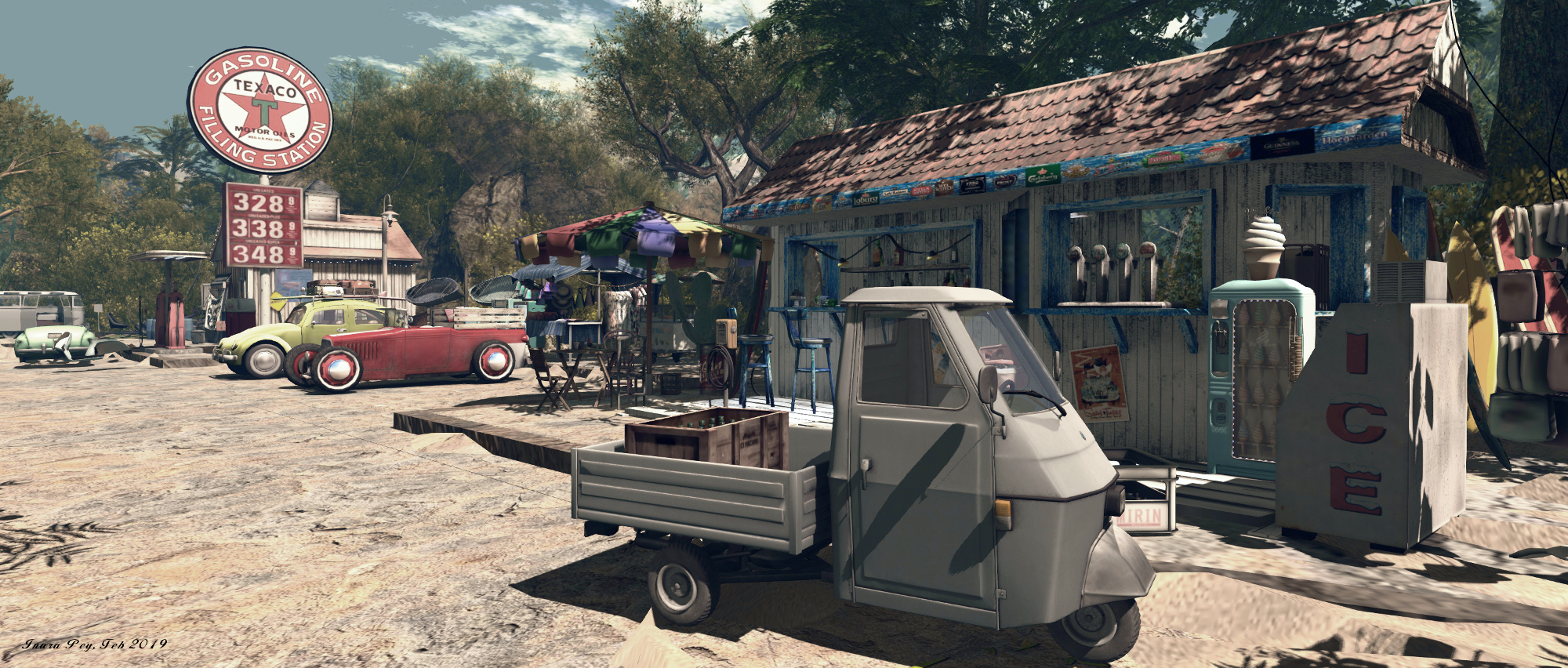
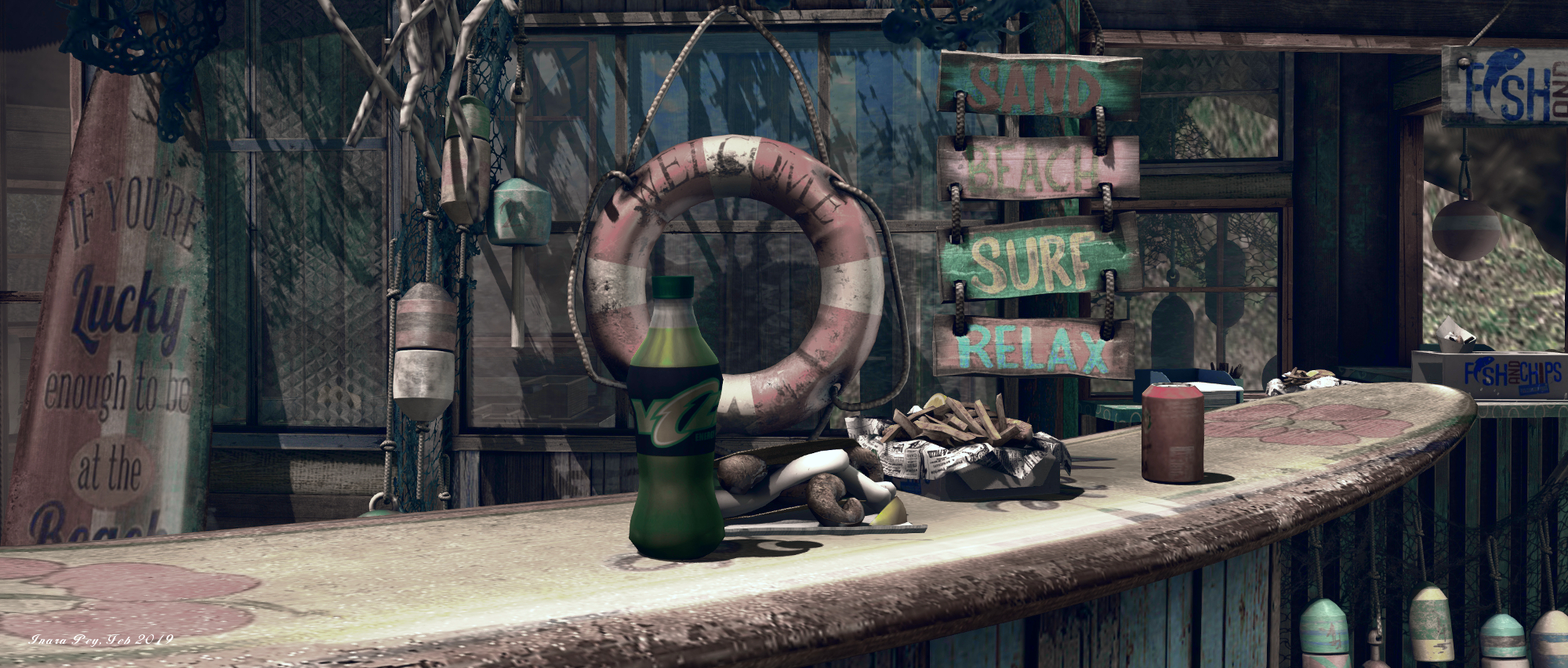
The beach area, referred to as the Beach Club, is located to the east side of the region, includes a sandy road that runs from nowhere to nowhere, offering a landing point. While the road may be short and without real start or destination, it has plenty of character waiting to be explored along its short length. It also overlooks the larger of the two waterways to the north, which is home to a small inland  fishing harbour, again rich in character.

The Four Villages; Inara Pey, February 2019, on FlickrThe Four Villages

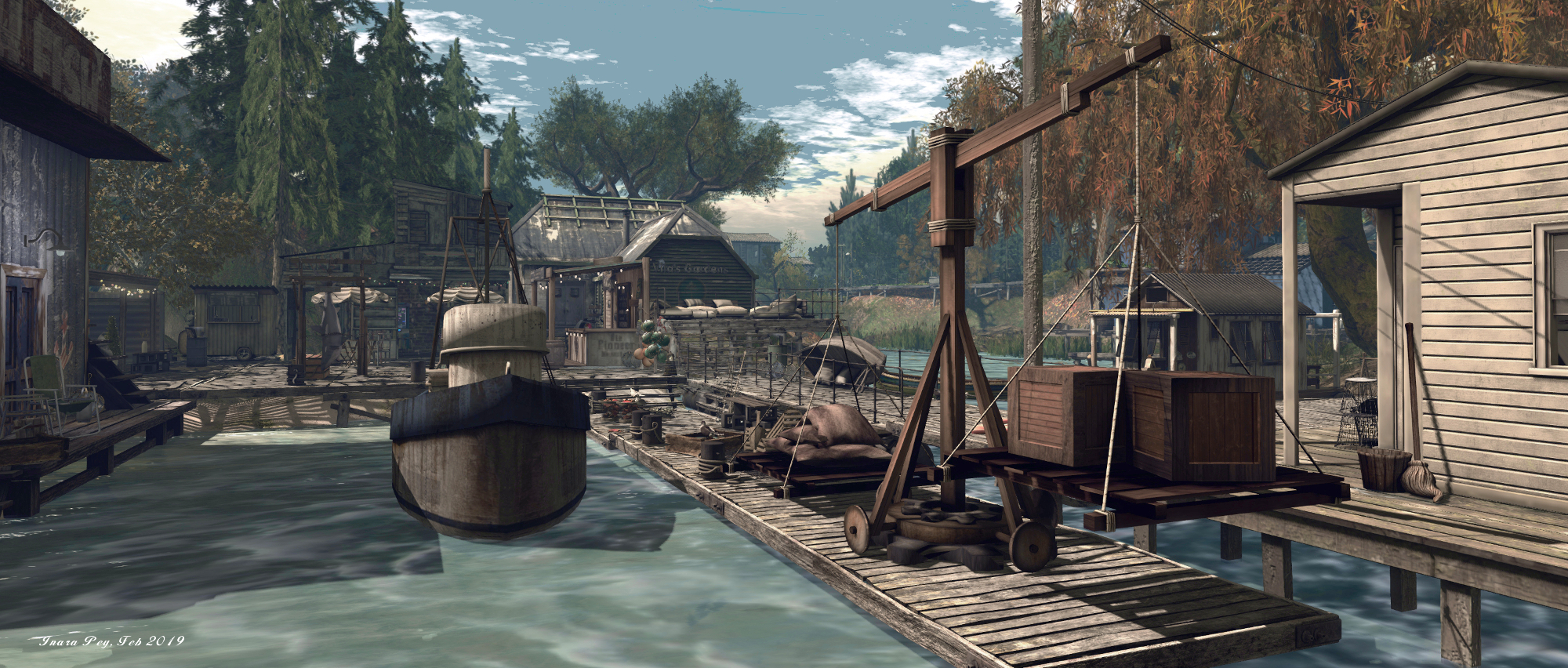
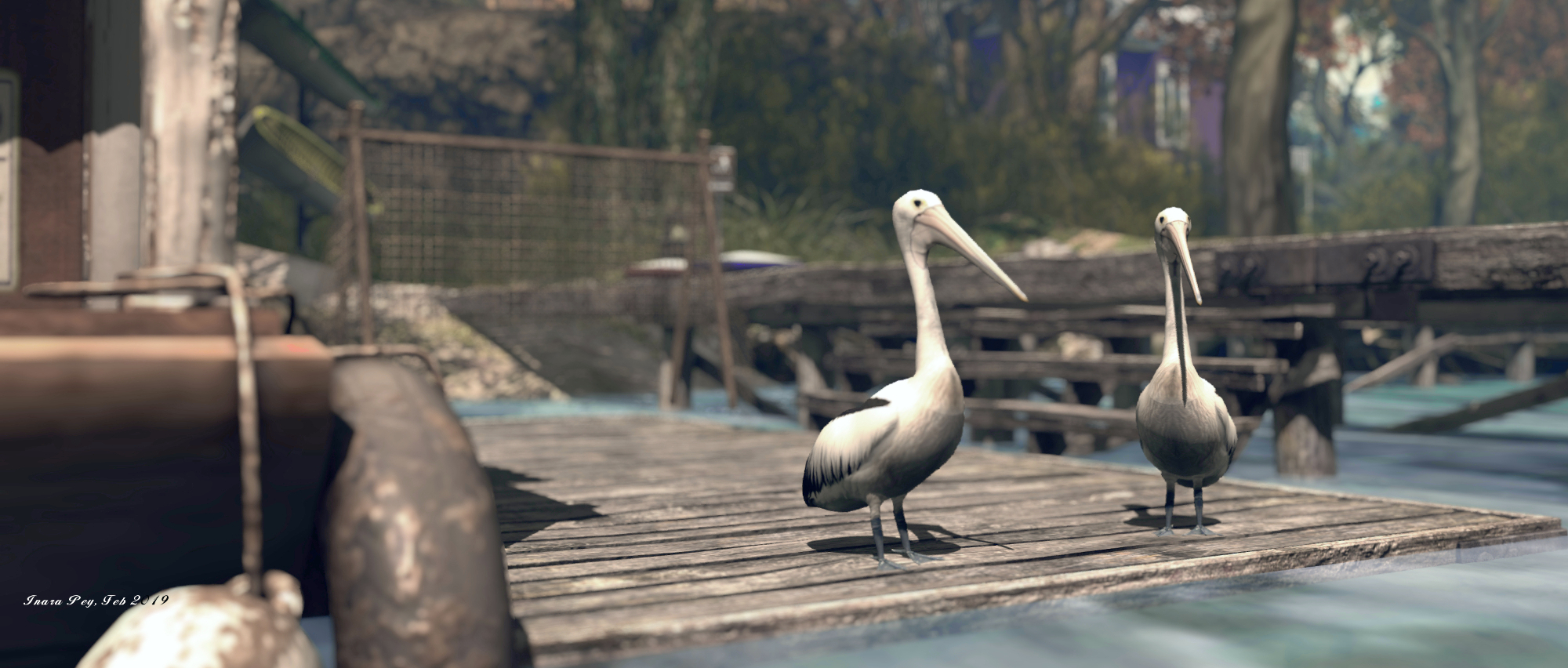
The harbour forms a further focal point that includes a small hang-out area atop a raised wooden deck and the Vitas Gardens office. The piers of the harbour effectively block navigation along the length of the river, but they do provide access to the north side of the land. This is home to the two remaining residential areas, respectively New England and Countryside, and both are landscaped in reflection of their names. A hiking trail extends into this area, raising up from the piers to a chapel, before running east and west – but do keep in mind it both runs by and ends at private homes.

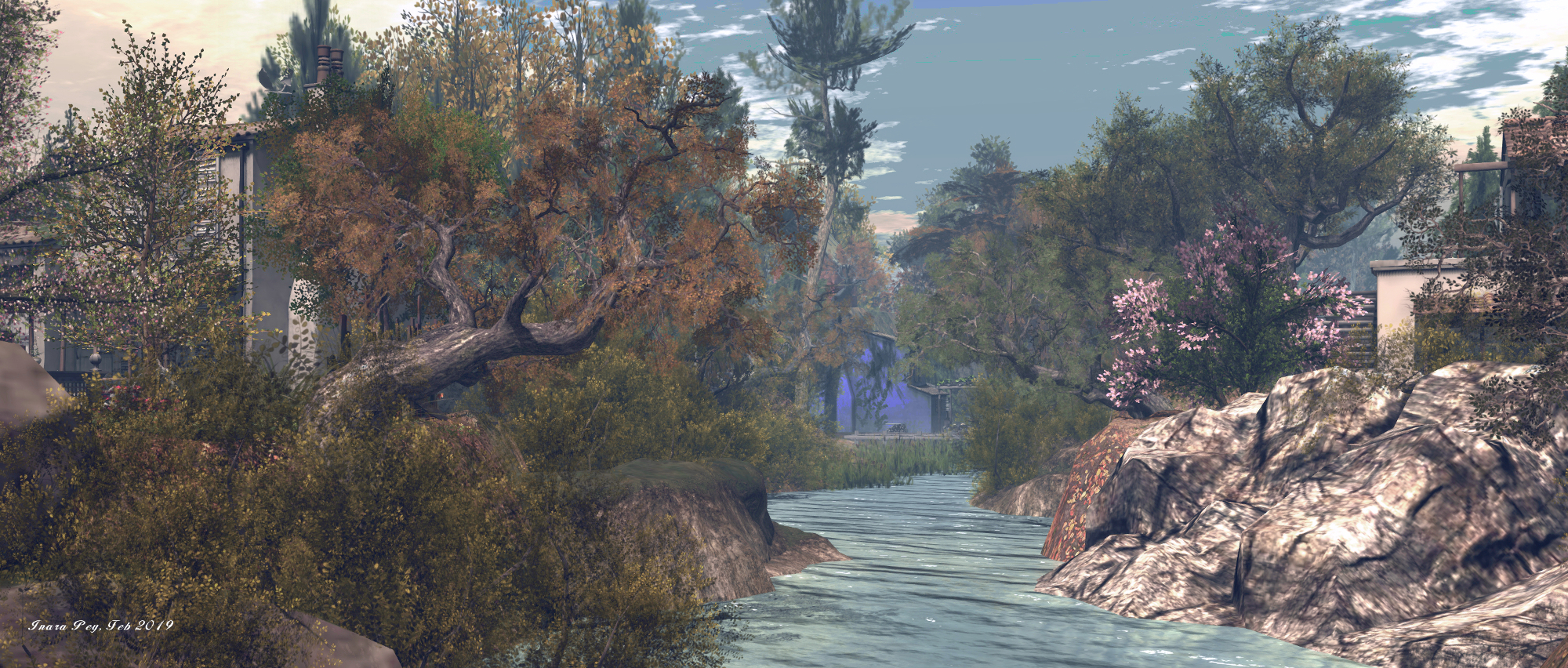
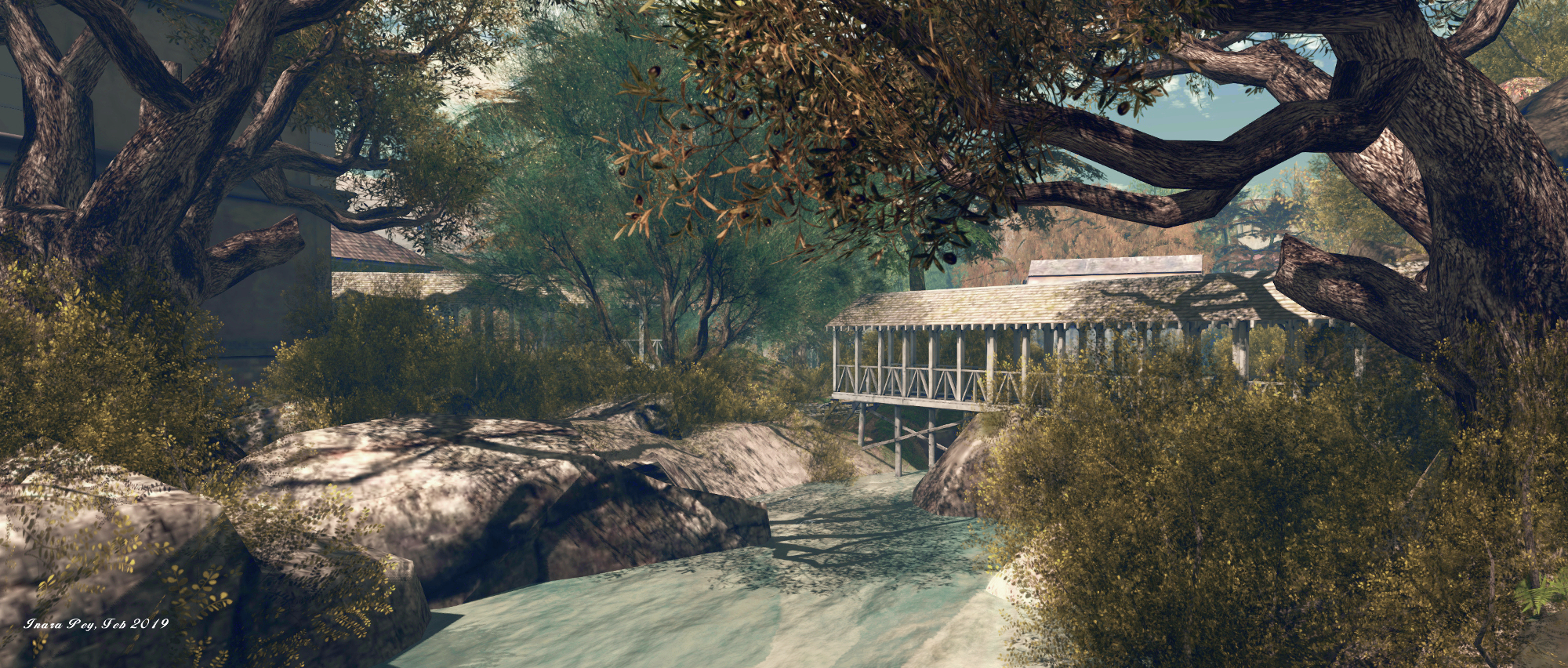
Covered bridges run from the beach area’s road over the second river splitting the region and a small pool. They carry visitors to the Mediterranean residential area – called Little Italy. Bordered by private residences, this offers more places to sit and relax, the opportunity to take a swim. Roman bath style.

The Four Villages; Inara Pey, February 2019, on FlickrThe Four Villages

To ease getting around the region, the Vitas Gardens offices sitting above the mooring piers offers a teleport board to all four of the residential areas, as well as to the principal public area on the region. If you’re looking for a place to rent, check the mailboxes outside of the residential parcels.

Providing care is taken when exploring, The Four Villages offers plenty to see., and provides numerous opportunities for photography, making for a pleasant visit.

The Four Villages; Inara Pey, February 2019, on FlickrThe Four Villages

The Four Villages; Inara Pey, February 2019, on FlickrThe Four Villages

SLurl Details