
This month has seen some interesting press pieces popping up concerning VR and Sansar since the opening of the Creator Beta. However, three in particular have so far caught my eye as they appeared, as they offer interesting perspectives and discussion points both on the Lab’s new platform and on VR and AR as a whole.
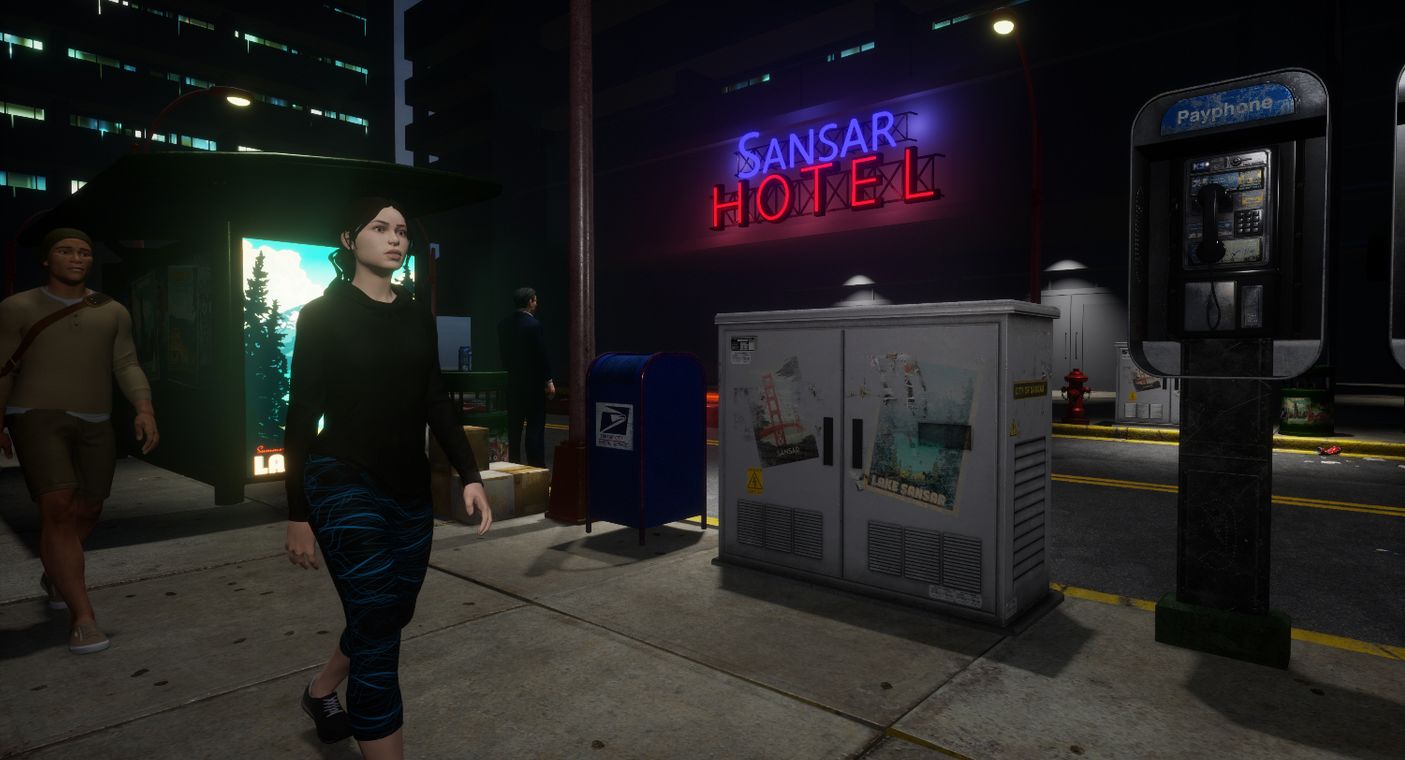
The first – and most recent, is Barely into Beta, Sansar is making social VR look good, by Alice Bonasio, which appeared in The Next Web on August 18th. The title caused some to question Sansar’s social capabilities, but the article itself was more about Sansar’s overall status and development, rather than zeroing directly into the medium of “social VR” per se. In this respect, it opens by clearly underlining the platform is still in its early days, and there is still much to be done, using a quote from Peter Gray, the Lab’s Director of Global Communications, to do so:
We wanted to make Sansar available to everyone as early as possible, and there are still a lot of features and capabilities that we’re excited to add to the platform soon, as well as many improvements to the current featureset.

From here, Ms Bonasio makes the point that despite the lack of features and capabilities which will be needed to fulfil on its promise of being a social hub, it already looks good and offers a lot to see, much of which points to the platform’s potential.
The piece also delves into some of the technical and economic factors which set Sansar apart: such as Linden Lab’s partnerships with IKinema and Speech Graphics. The former is key to the Sansar avatars utilising Inverse Kinematics in an advanced way, and which are and will play a key role in the Sansar avatar’s development. The latter is key to synchronising facial animations automatically to match speech patterns, a capability key to many of the social interactions Linden Lab hope will be occurring within Sansar.
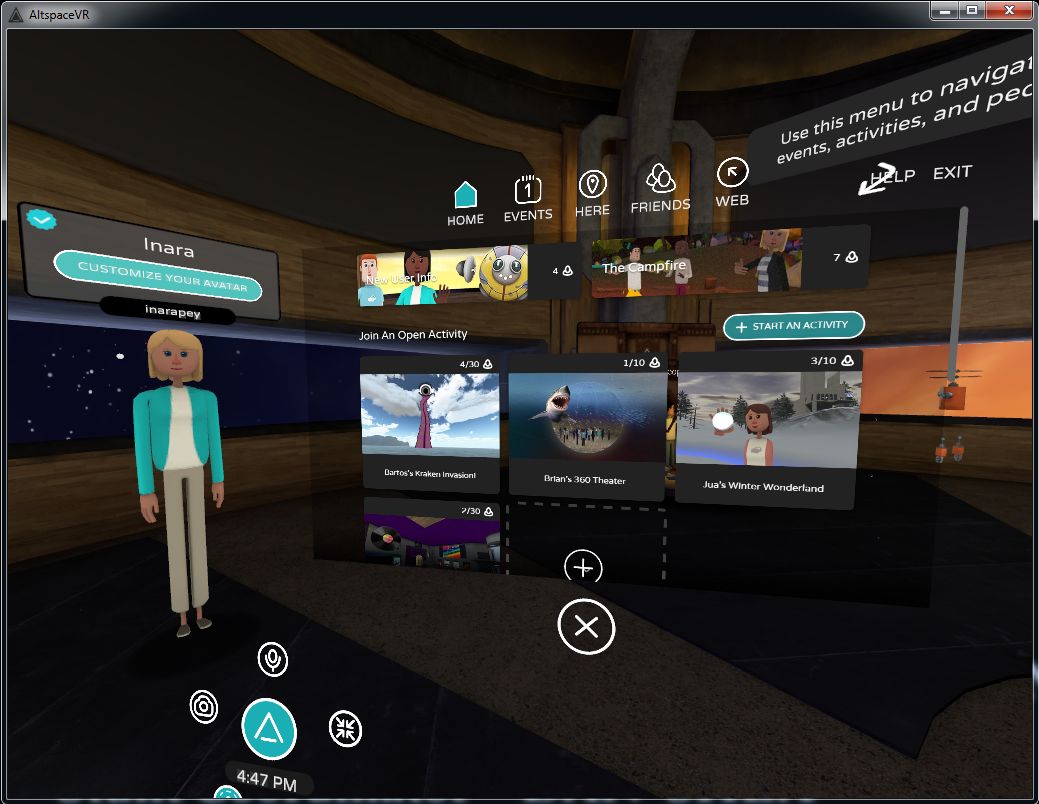
The article also touches on some of the key differences between Sansar and Second Life, the ability Linden Lab has to take fourteen years of running a virtual world to help shape the philosophy and approach it takes with Sansar. Passing – but important – mention is made of the Lab’s ability to self-finance Sansar; given the topsy-turvy situation with Altspace VR (which may have been saved from having to close), this is an important fact to keep in mind.
As noted above, the piece has received some feedback questioning the “social” element of Sansar at it stands at present, which given the broader thrust of the article might be considered a little out-of-context. However, it is fair to say that right now Sansar does currently lack elements which could be regarded as essential to supporting larger-scale social activities. Similarly, while social interactions are possible – as demonstrated through the daily meet-ups held “in-worlds” – it’s also fair to say these can be confusing and limiting for some. For example, undisciplined voice chat can mean that that multiple conversations in a single locale can overlay one another and become confusing to those not used to voice chat.
Hopefully these issues will be addressed, along with the provision of other social elements, and I’ll doubtless have more to say on them myself in the future 🙂 . In the meantime, this article provides a good summation of Sansar for the curious / those wishing to catch-up on things.

Over at The Fast Company, Samantha Cole uses Sansar to ask Will Virtual Reality Solve Your Conference Call Nightmares?
I’ll say up-front that I’m one of the non-believers that VR will become ubiquitous for business-style conference calls for a number of reasons, and its fair to say that Samantha Cole does a balanced job of presenting both sides of the argument – whilst also offering side pointers to those areas where VR is already showing benefits (and which I’d suggest Sansar could leverage).
Much has been made of VR’s abilities to add body language, hand movements, eye movement and contact – all vital elements in adding subliminal feedback / context to our day-to-day, face-to-face interactions to one another – to give more depth and meaning to tele- and video-style conferencing. In doing so, the likes of the telephone and “traditional” means of this type of conferencing have been somewhat “demonised”. Emphasis is laid on things like network latency, or the extra mental effort involved in reading into people’s words when you can only hear their voice or see their head / shoulders, as “limiting” such interactions.
But the truth is, we’ve been using the telephone for decades as a business tool. It’s fast and convenient, and as adults, we’re all pretty adept on picking-up on vocal nuances. We’re also, in a business context, far more prepared to communicate directly with colleagues; if there is something worrying / irksome within a work environment / business project, most of us are pretty willing to make thought known, be they over the ‘phone, face-to-face or via e-mail. So even with the faster, lighter, better VR technology we’re promised will be coming down the pipe, is it really any kind of “killer app” for business conferencing?
Eric Boyd, a professor of marketing at James Madison University points to emerging trends within the workplace as a whole being more a deciding factor here. Many companies have experimented with remote / home working over the past 2 or so decades, and the pendulum tends to swing back and forth. Right now, as the article points out, one of the first to enter the arena of remote working, IBM, is currently backing away from it. Thus, if working practices remain centralised, it’s hard to see VR overturning technologies already in place and supported by existing corporate infrastructure, no matter what the perceptions of their “limitations”. But for those organisations continuing to embrace remote working, VR could become a useful meeting tool.
Certainly there would seem to be far better uses VR could be put towards within a business environment: prototyping, training, simulations, and so on, which seem far more likely to drive its adoption by business and industry far more than the humble conference call. In this, Cole’s pointing to VR’s potential in training and simulation and in architecture is very salient; these are very much markets well suited to VR / AR / MR – perhaps more so that conference calls.

Writing for Xconomy, Bernadette Tansey sits down with Amitt Mahajan, a Managing Partner at Presence Capital to take the temperature at VR / AR at mid-year., which also touches on the potential for both as business platforms / tools.
While Sansar is only mentioned in passing (together with the downs and ups of AltspaceVR), the article is interesting as it encompasses the viewpoint of a company investing in VR and AR start-ups with funding in the US $100,000-500,000 range – which is small when compared to the likes of the big players, but has allowed the company to bask some significant start-ups, including STRIVR, who are in the VR training a simulation field mentioned above.
The article opens which a rapid-fire overview of the VR / AR market – including its niche status at present, which could be said to be largely down to the limitations of the current hardware (or lack thereof in AR’s case, although that is beginning to change) rather than anything else. However, the meat of the piece is where Mahajan sees the technologies going over the next several years.
What’s interesting here is that within Presence Capital, they are moving away from consumer-focused VR endeavours and more towards business and business-to-business (B2B) / enterprise VR applications as well as for AR; he points to the likes of AppliedVR and their development of an immersive platform to help comfort patients undergoing painful procedures, and also underlines VR’s application in training.
This year’s swing towards AR is also examined: Google, Apple and Facebook are all looking to develop AR platforms, and the discussion looks at these and at the questions of standards, formats, and enabling technologies. In this, Mahajan points somewhat towards the eventual merger of AR and VR to produce Mixed Reality, indirectly pointing to how AR – augmented reality – could actually become an enabler of VR (something the likes of Qualcomm are working towards with Android and their snapdragon chipset), simply because it will allow both to coexists as tools people can switch between according to needs.
All three article make for interesting reads, presenting a broad range of perspectives not just on Sansar (in the case of Alice Bonasio’s piece) but on VR and AR as whole.








 Inara Pey: Living in a Modemworld