The Drax Files 28: art and SL as cathartic renewal

“You know, when you first asked me to do the Drax Files, I said no,” Whiskey Monday states at the start of segment #28 of The Drax Files World Makers. I doubt anyone watching the show regrets her decision to actually go ahead and appear on the show.

Whiskey is well known throughout Second Life for her incredible artwork, which started with her single frame stories. Her work is thought-provoking, intelligent, evocative, mischievous, fun, pointed, and more – and all of it is certainly some of the finest expressions of art as a medium for social and general commentary I’ve ever seen. It’s also deeply personal, much of it reflecting on Whiskey’s real life; usually in a frank, honest way free from pathos while laying bare her mindset and emotions.

Whiskey Monday at work

It is on this latter aspect of her work that the show primarily focuses on, in what is once again one of the most compelling pieces of video journalism I’ve seen in a long while, with Drax almost completely absent from the piece and leaving Whiskey to tell her story in her own words. As such, what is delivered is an incredible journey through Whiskey’s lives (plural intentional) which allows us to witness first-hand how Second Life can be a platform for emotional release, self-expression and cathartic renewal in our lives, as well as a place where creative investment brings additional rewards which help spur us on.

“I have been going through a really difficult personal life the past few years,” Whiskey says just after he opening comment on the video. “And I have used Second Life as a medium to express my frustration with the real world; depression; my issues with my mother; my issues with my sister. It helped me get through those times, Drax. and I couldn’t do that as my physical identity.”
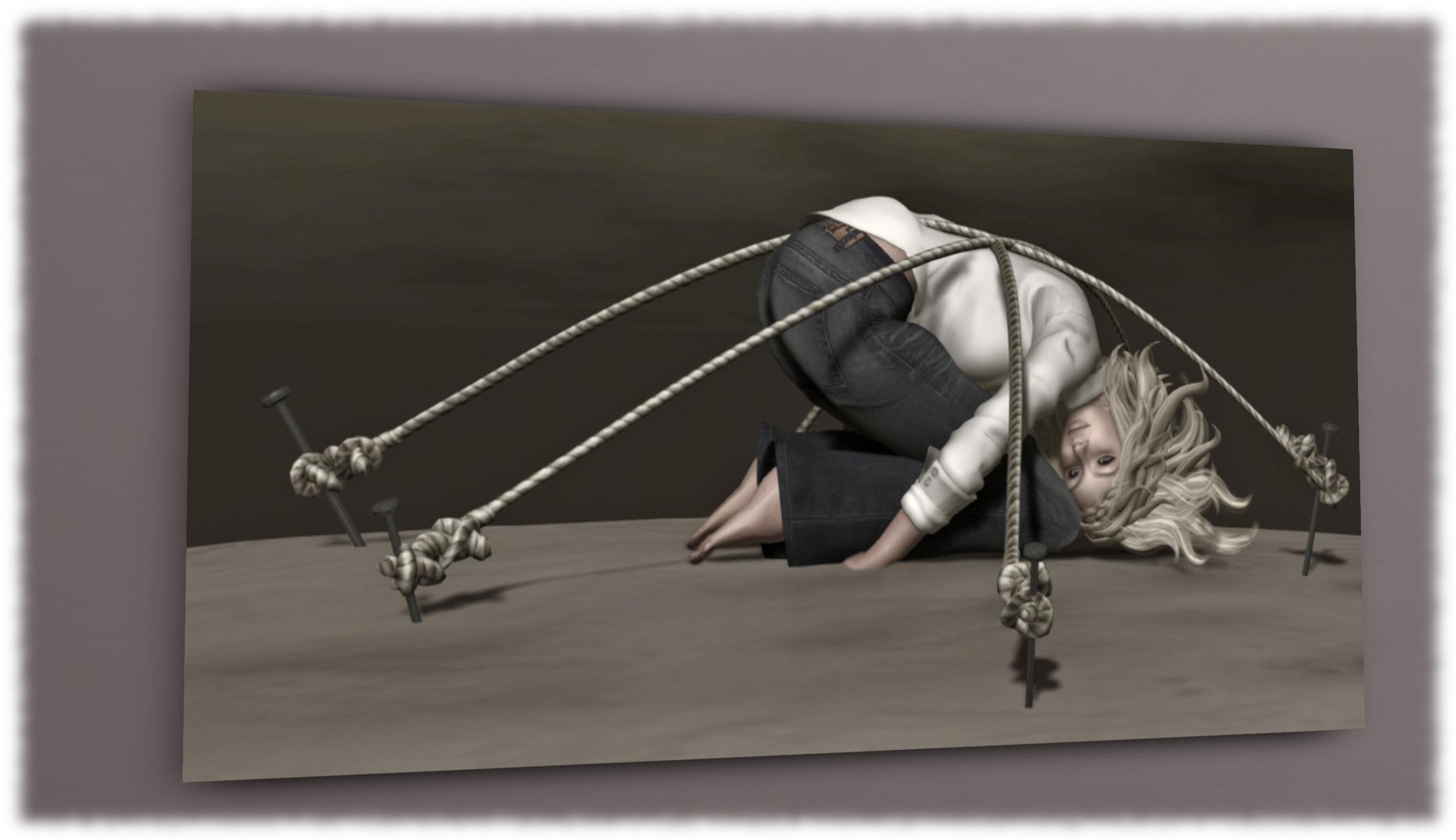
Whiskey's work is intensely personal, but also strikes many assorted chords for those who see it
Whiskey’s work is intensely personal, but also strikes many assorted chords for those who see it

This is an incredibly powerful, open, and honest statement to make; a baring of the soul that requires a huge amount of honesty and trust. That Whiskey is prepared to speak so freely  about matters is itself testament to the degree to which her creativity through Second Life has been cathartic for her.

Through the video, we get to share in Whiskey’s creative process, travelling with her from an initial idea, through to the completed image, with Whiskey describing each step of the journey in creating what are highly personal images. It’s a remarkable and painstaking process, as she honestly admits she’s not that comfortable with Photoshop, and so strives very hard to achieve as much of the finished piece in-world as she possibly can – something which itself speaks to the incredible creative power found within SL, either directly through the tools provided by the viewer, or via scripted tools and systems provided by other users.
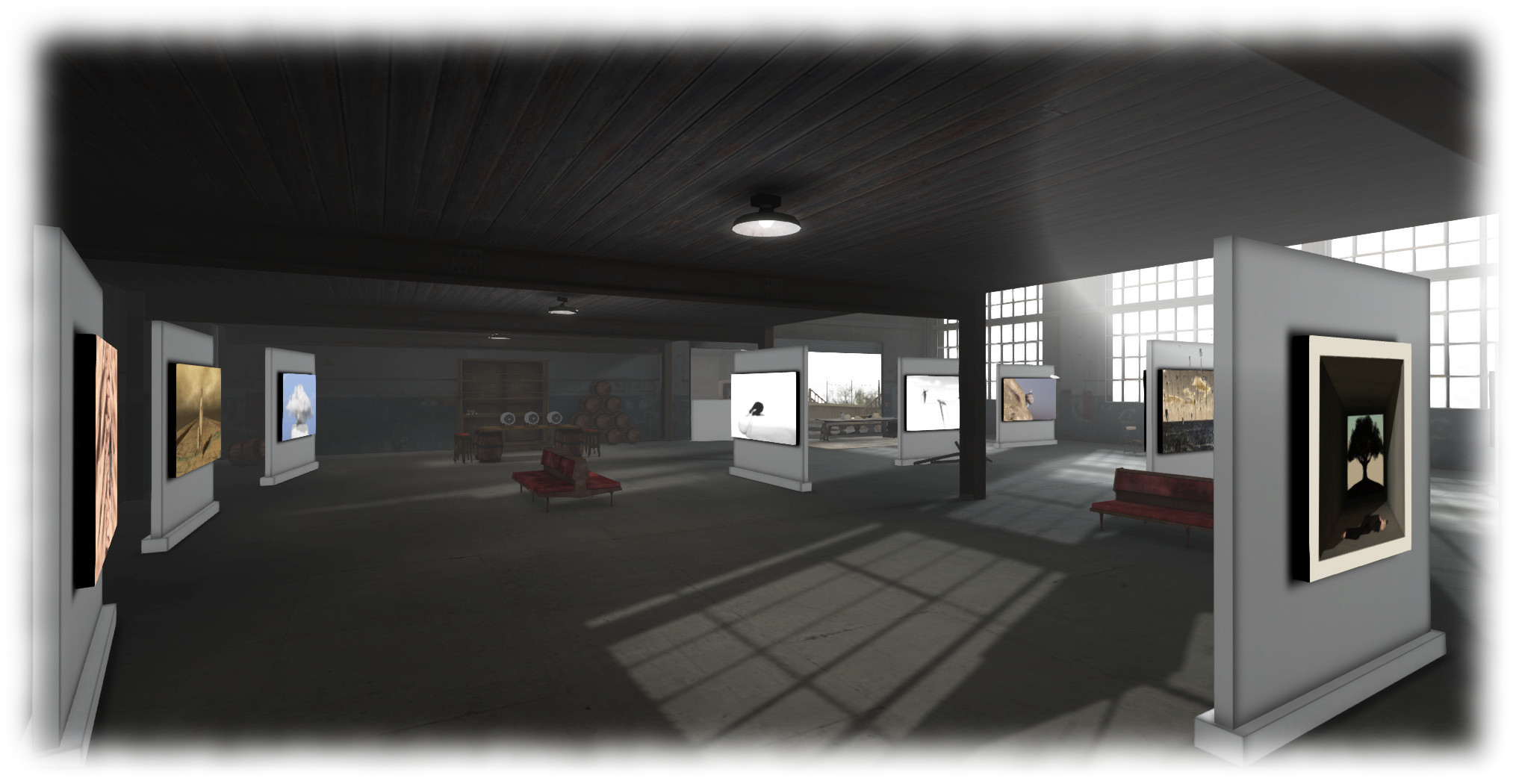
Whiskey's most recent exhibition, entitled  Recently, was the debut exhibition for the new– Dathúil gallery run by Max Butoh (see my review here)
Whiskey’s most recent exhibition, entitled Recently, was the debut exhibition for the new Dathúil gallery run by Max Butoh (see my review here)

Framing her images so precisely obviously requires the execution of a high level of control in terms of the subject matter and how the observer sees it. It’s a level of control Whiskey is very aware of; it’s also something that, given the context of her art, might be too easily dismissed as manipulating the audience.

Yet Whiskey makes no apology for this – and nor should she. She certainly isn’t the first artist to manipulate the environment (virtual or real) to focus the audience’s attention and direct their emotional responses; artists do it all the time be it through the initial framing of their shot or via cropping and editing after the fact, or through extensive post-processing. In fact, I’d argue that Whiskey is entirely right in the level of control she exercises – although I’d perhaps refer to it as compositional direction. At the end of the day, these images are her stories, and as the narrator, she has the right to shape the manner in which they are told.

What’s more, it makes her work all the more striking to those who witness it, as it more than likely strikes a far more personal chord within us than might otherwise be the case; hence why Whiskey also tries to leave the images as open-ended in interpretation as possible.

Continue reading “The Drax Files 28: art and SL as cathartic renewal”

The Drax Files 27: article no longer available.

The Drax Files 26: fashioning your life through Second Life

“You’ll know what your avatar looks like when you find your soul avatar. You’re like, ‘that’s it! That’s me. That’s who I am!’.” so opines Absinthe (aka Sinontherocks or AbsintheMontenegro) at the start of The Drax Files: World Makers episode #26.

This might sound like an obvious statement to make; but like many things that may first appear to be blindingly obvious, Absinthe’s comment contains a huge amount of depth; for many of us who come into Second Life, our avatar is such an extension of our personalities, that we can feel confined, or self-conscious or even inadequate until we find that visual look that encompasses what we feel within, but haven’t perhaps found a way to give it expression.

It is also a statement that opens a segment of the Drax Files which, in just five minutes, once again paints a broad and fascinating canvas encompassing matters of self-identity and expression, the power of Second Life as a creative medium, thoughts on the perceptions about Second Life and those who use held by people not involved in the platform, the way in which the platform can spur on into endeavours that reach back out into the real world, and more.

The matter of identity and our relationship with our avatar is encapsulated within the first 73 seconds for the show, as Absinthe talks about her relationship with her avatar – an SL fashion model – and her upbringing, and how the latter informed on aspects of the former’s looks. I actually feel a strong affinity with the remarks made in this part of the video, as Absinthe and I share something of a similar upbringing, and we’ve moved in a similar direction in terms of avatar looks which has little to do with matters of ethnicity or anything like that, but is simply an expression of various facets of our personalities and outlook; the primary difference between her and myself, is it probably took me a little longer to discover my “soul look” with Inara.

Absinthe offers insight into the relationship between person and avatar

From matters of looks, the programme transitions through a glimpse of the world of SL fashion modelling – something which some may look upon as slightly frivolous  / bordering on role-play, yet the fact of the matter is that modelling is one of the central pillars of the fashion industry within SL, which is itself one of the powerful engines of the platform’s economy. Absinthe provides insight into the complexities involved in working as an SL model – including matters of anxiety and nerves which can be experienced prior to a show.

However, the power of the piece  – for me at least – lies in Absinthe’s outlook on life, her work, Second Life and in how, as with others interviewed through this series, this virtual world we inhabit and which is so often sneered up by those outside, Second Life has been both a welcoming hobby and release and the focal point of growth and the catalyst for new opportunities for creative expression within the physical world. In Absinthe’s case, the creation of the Ferosh  project,

Ferosh HQ in-world
Ferosh HQ in-world

Ferosh, which absinthe describes as a “visual art and fashion experience [in which] our photographers, models and designers use products from Second Life to interpret real life fashion trends”. The result is a stunning publication, primarily offered as a e-publication on-line, but which appears to also receive at least some hard copy prints as well, going by the footage in the video.

It is a project that has allowed her to bridge the virtual and the physical in a unique way, not only becoming the medium through which she can explain her involvement Second Life to her family, but one which has also attracted the attention of digital artists from outside of SL who want to be  part of the project – thus opening doors to ways and means of encouraging people to look at the platform with unbiased eyes.

Ferosh has come about as the result of a number of things – not the least of which is Absinthe’s own determination and her zest for life. It has also, I’d venture to suggest, come about as a result of one other thing she has a lot to say about that should be heard – friendship. And it is in her comments on myriad ways in which people are drawn to Second Life, and the manner in which friendships are formed and  – to return to the open element of the show – we can find outward expression of our inner selves, that Draxtor puts together a little magic of his own.

Our avatars are us
Our avatars are us

The images of people alongside their avatars, the clips from earlier shows in the series and clips from the brilliant Login2Life documentary that presents a very poignant and clear message to all who watch the segment.

This is another quite brilliant piece, with a richness of content from both Absinthe and Draxtor that make it a powerful slow burner; I was privileged to watch its development over several iterations, I’ve watched and re-watched the finished item several times – and yet, each and every time I’ve watched it, it has had something new to say to me.

So if you haven’t seen it already, click the Play button below.

The Drax Files 25: adding to the substance of our existence

The Drax Files World Makers closes-out 2014 by reaching its 25 instalment, which arrived on Tuesday, December 30th. Since the original debut show in March 2013, the series has covered a huge amount of ground and given a tremendous insight into the impact a virtual platform like Second Life can have on people’s lives.

Over the months we’ve been allowed to see inside the lives and work of content creators, animators, artists, fashion designers, educators, film-makers, musicians, actors and more, and have been able to see not only the incredible creative freedoms the platform offers, or the unique opportunities for learning and giving it presents, but also how it can become fully intertwined into our physical worlds, allowing us to form friendships and relationships that otherwise simply would not have happened, and deepening our experiences in life and our understanding of the world around us in ways unimagined prior to setting through the magic portal of the viewer.

Oblee at work in his studio

Segment #25 of the show is very much a reflection of all of this. In it, we get to share time with Obeloinkment Wrigglesworth – Oblee for short, a musician who has found that success in Second Life does carry over into the physical world, although this is not his primary motivation for being in-world; it is simply a by-product of discovering the huge freedom and reach the platform has given his music – and his self-confidence in the process.

“I don’t see a conflict between the virtual and the natural world,” Oblee says of the time he spends in Second Life. “So little of our entertainment is a two-way street. So many people say, ‘oh I don’t have time for that,’ and then they’ll sit and they’ll watch TV for hours. Here we have a world that is built by its users and it’s filled with music, and it’s filled with visual art and its filled with all these wonderful things.

“It’s not an alternative to life. It’s adding to the substance of your existence.”

This is more than amply demonstrated in his own experiences and story. As both an individual musician and a session performer with other SL musicians, Oblee has been able to perform before international audiences through his gigs, the convenience of the virtual allowing him to share time with people on the opposite side of the world to him, and develop friendships and contacts as a result, be they with other musicians or the audiences he performs before. “You can do a world tour in one day,” he notes in reference to the platform’s reach.

That reach has allowed him to develop his confidence to the point where he’s recently released his first physical world album. This not only features songs written for his in-world gigs, but has also been entirely paid for through the tips he’s earned in-world through his performances. It has also achieved international sales on the iTunes store – thanks again to his Second Life supporters.

It is this idea of adding to the substance of our existence that, for me really resonates through this segment  of The Drax Files. It’s a beautiful term to describe our relationship with the platform, and one so clearly demonstrated in Oblee’s life, as noted. As such, I’ll leave the final words on this piece to him.

“Without Second Life, I don’t think I’d be doing the things musically that I’d doing today … If you have an idea in virtual reality, what’s to stop you from taking it to real reality?”

Continue reading “The Drax Files 25: adding to the substance of our existence”

The Drax Files 24: let the virtual world be our stage

ART-logoThe 24th instalment of The Drax Files takes to the boards to bring us a story of the theatre, performing arts, Shakespeare, plays, stage adaptations and more, as offered to the virtual community through the remarkable folk at the Avatar Repertory Theatre (ART), the oldest and longest-running live theatre company in Second Life – and probably the metaverse as a whole, as we currently regard it today.

Storytelling has been a central part of humanity’s development since pre-historic times, and has fulfilled many role: as a means of preserving history, educating the young, providing cultural structure through mythological / religious tales, and, of course, as a source of entertainment.

As such, it’s really no surprise that theatre is an art form which we have brought with us into the virtual realms. Like the spoken word, as exemplified by the likes of the Seanchai Library, or the use of film to provide machinima and episodic series like The Blackened Mirror, live theatre is presented with many opportunities and advantages within virtual environments which are not so readily available in the physical world.

For one thing, virtual environments offer any incredibly cost-effective means of presenting a stage production. Where else, for example, can a repertory company with an interest in Shakespeare establish its own reproduction of London’s Globe Theatre in which to stage their performances? How else could they recreate scenes for a production that can completely surround and immerse the audience itself?

The Avatar Repertory Theatre Company's reproduction of the Globe Theatre in Second Life
The Avatar Repertory Theatre Company’s reproduction of the Globe Theatre in Second Life

Then there’s the fact that the virtual medium has such a global reach, couple with a unique way of bringing people together. No longer is a company’s members or its audience constrained by geographic location, virtual reality truly makes a theatre production a world-spanning event.

These points are beautifully and engagingly made by MadameThespian Underhill, an actor / director with ART, and an actor in the physical world. Not that ART is made up entirely of professionals; another great power of the virtual is the way in which it forms a melting pot of creative talent, everyone working together equally to present a production to a live audience.

Through Madame Thespian’s eyes and words, we’re given an insight into the creative and technical complexities in bringing together a virtual world production which, as well as potentially offering greater immersive richness for the audience, present broader technical challenges for all involved – the actors, the backstage staff, the musicians, and so on. Actors, for example must bring together voice acting talents and controlled pupeetering of their avatars; gestures must be developed and tested, musicians must work to produce suitable pieces which can be pre-recorded and then added-in to productions at the required points, and so on and so forth.

Madame Thespian Underhill: "When people ask 'what's the purpose of doing theatre in virtual reality?' Well, we as human beings relate to each other by telling stories ... this is another avenue that has been opened-up to live storytelling
Madame Thespian Underhill: “When people ask ‘what’s the purpose of doing theatre in virtual reality?’ Well, we as human beings relate to each other by telling stories … this is another avenue that has been opened-up to live storytelling”

The virtual realm perhaps offers one of the richest environments in which technologies such as facial expression translation, motion capture, immersive headsets and so on all have a real and far-reaching use. In short, it’s an ideal testing-ground for such capabilities, as Madame Thespian notes towards the end of the video.

More than that, taken together, live theatre and these emerging technologies offer audiences something even more unique and not so easy to be translated into the physical world – they could potentially become part of a production, fully immersed in what is happening, and even – to a degree – participating in in as extras. The Basilique Performing Arts Company, for example (the subject of the Drax Files #18), used scripted pupeetering and custom-made avatars  to make the audience of Paradise Lost an integral part of the story.

There’s also a very human dimension here as well, growing out of the freedom of expression virtual environments like Second Life give to all of us.  “I’m ageing out of most Shakespearian roles,” Madame Thespian notes. She continues:

But then again, in Second Life, I don’t have that problem, because we have these avatars that we can make look like anything we want them to be. That levels the playing field when we interact with each other. The value for older people, not only for actors, is wonderful! The ability to be able to, from your home,  interact with other people from all over the world of other ages. You are being judged by what you say … the pure essence of who you are.

And that’s a powerful thought on which to close.

If you’d like to see the Avatar Repertory Theatre live, in addition to their scheduled productions, they offer an ongoing series entitled Plays Around, a kind of “open workshop in which the company performs a ser­ies of staged read­ings, mon­o­logues, drama and im­prov­is­ation. Generally held at the company’s theatre, Plays Around takes place on Fridays at 17:00SLT, and members of the public are invited to come along and watch.

Coinciding wit the release of The Drax Files World Makers on Friday, November 21st, the ART company is hosting a special Plays Around event, Shakespeare By Request, which you can read about here.

Related Links


The Drax Files 23: it’s all about empowerment

The 23rd video instalment of the Drax Files: World Makers series turns the spotlight onto Loz Hyde of Meshworx fame, and the designer of the iconic pier setting for The Arcade – a design based on England’s Brighton pier.

This is another fascinating look at the appeal of Second Life which comes with a unique perspective: in the physical world, Loz is a visual effects creator working in the US entertainments industry, and he’s worked on some pretty major movies in his time – 2012, Terminator Salvation, and Guardians of the Galaxy – as well as providing VFx for commercials, etc.,  yet he’s at least as engaged in SL as he is in his work for films, etc., if not more so.

“Coming into Second Life, I realised [that] here, I could create an entire world with real people in it. That really got me,” he says early on in the piece, before going on to encapsulate the magic of creativity and sharing in Second Life in a few simple, but powerful statements.

As a creator, commerce in SL is obviously of interest to Loz, and this gets a good amount of exposure through the conversation, with Drax underlining the potential for people to generate a revenue stream through the platform and Loz talking about some of the broader aspects of commerce in SL – notably it’s 24/7 nature and the nigh-on unlimited availability of goods.

Loz's iconic The Arcade pier under development in Maya
Loz’s iconic The Arcade pier under development in Maya (image: Loz Hyde / The Drax Files)

It is around the mid-point in the segment, however that  – for those of us familiar with SL at least – that things kick-up a notch, as we enter into Loz’s physical world, seeing him out and about in Los Angeles, camera in hand, and witness how it melds with his in-world creativity back at his studio.

“For me, creating a mood is really important,” he says of his approach to his work. “Taking reality, and what is there, and bringing it into Second Life is an organic process that take time to do. It takes me a month to do one building,” he says.

Clearly, as someone engaged in the VFx industry, where attention to detail is critic in creating an effective illusion that’s going to be projected onto a huge screen were even the smallest imperfection will be hugely magnified, potentially shattering the magic, attention to detail is bound to be a focus for Loz; but there is something more here. Listening to him talk about his work, you can’t fail but hear his passion and enthusiasm for the platform – and perhaps something else as well, an unabashed awe with the idea that one platform can offer so much. “I changed my career into 3D at the age of 40,” he says, pointing to another aspect of the magic of digital creation. “If I can do it at the age of 40, I think anyone can do it.”

Loz Hyde at work in the physical world
Loz Hyde at work in the physical world (image via The Drax Files)

But it’s not all about the content creation or the commercial opportunities; far from it. “People have tried to analyse why Second Life is so successful,” Loz observes. “There’s the environments themselves, and then there’s the people inside the environments, and I think I’m more deeply touched by the people. In Second Life, you get to know people from the inside out. There’s this protective layer that allows a more intimate relationship right from the start. you tend to focus more on stuff that really matters.”

There’s a fair chance that these observations will draw comments and finger-pointing at the likes of Facebook and their determination to focus on wallet identities for their users. However, such comments, if made, are really by-the-by in this context. Loz’s views are clear-cut and strike the nail on the head: Second Life in and of itself is a place where people are  – to use his words – more open to being open.

Whether this is a result of the anonymity presented to users of the platform or whether it is driven out of our self-identification with the avatars we create, or whether it is a combination of the two in whatever measure, is really irrelevant; it is the fact that Second Life does lead people in that direction, allowing them to express more of themselves in a positive, honest way that is important. That’s the very special magic of Second Life, and it is something that isn’t, as Loz again rightly points out, dependent upon having special gadgets.

This entire piece is about empowerment and – whether it be through creativity, running a business or in opening ourselves to others within the virtual domain – the ability of Second life to present ways and means for each of us to be positively empowered. This is perhaps the biggest thing detractors of the platform don’t get about it. Which is a shame, because as Loz notes at the end of the video, “If people on the outside could really see what is possible in Second Life, there would be a lot more people doing it.”