The Drax Files Radio Hour: getting inside the Laabs

radio-hourThe 16th edition of The Drax Files Radio Hour delves into something many of us overlook:  the people who actually work at Linden Lab and keep Second Life running and available to us. Having travelled to Santa Cruz, Drax gets to spend time with a group of Lab employees, and interviews one of the more senior folk there, Don Laabs.

Also discussed is the new user experience – where sadly, in some respects, views are expressed which come over as somewhat devoid of any appreciation  – or at least acknowledgement – of what has been tried before and the fact that the Lab actually does have a lot of data on how well what we may consider to be “obvious” may not have actually turned out that well in the past. It’s both the new user experience element and the Don Laabs interview which form the mainstays of the show for me, so they’re what I’m focusing on here.

The new user experience discussion stems from Skyspinner Soulstar’s video, which has been featured on numerous blogs and subject to much debate. I have to admit that when seeing videos like this, I have two reactions.

The first is that the new user experience is a mess, and that more thought needs to be given to ways in which people coming into Second Life a) have a much clearer understanding of why they’re signing-up to the platform and what they might like to do, and b) how the sign-up / log-in experience can be better geared to ensuring those coming into SL can be better grasp the very basics of the viewer and can be delivered more readily to environments where they can connect with those things that caused them to sign-up to SL and which present them with the ability to connect to others who share that interest.

My second reaction is that, by their very nature, videos made by established SL users are somewhat biased from the outset, because they are invariably driven by what we think new users need, rather than what new users may actually require, or they are invariably seen as a means of reinforcing our own particular views on what we “know” is required in order to “solve” the issue of the new user experience. This latter point is demonstrated in the podcast itself, where Draxtor admits that the video reinforces his belief that the new user experience can be “solved” through the introduction of social interaction into the process (which, ironically, is not something I tend to actually agree with in general terms).

The problem here is that by reinforcing our own perceptions of what is “obviously” needed can perhaps blind us to other issues which may well be inherent in the overall process. Hence why, when it comes to discussions about how to solve the new user experience, particularly when they are directed at solution X or approach Y or idea Z, I find myself pointing to a comment Ebbe Altberg made during his VWBPE address:

In general, I’ve found that the customer is often wrong when they ask for something specific.

Now, when they say, “I have this pain” or “I have this need”, they’re pretty much always right. But when they say, “it needs to be solved this way”, they’re usually wrong … 

The very attractiveness of  Second Life and the fact that it is such a blank canvas to user engagement and retention really does mean there is no single solution that is going to work, and that what is needed is in fact a far more broad-ranging, holistic approach to matters which encompasses multiple approaches, leveraging things that both the Lab and the community can collaboratively supply.

Given the renewed openness and direct approach the Lab is presenting in its relationship with the broader user community, we are perhaps closer to reaching a point where such a collaborative, holistic approach could actually be undertaken by both Lab and users than we’ve been in a very long time. If the opportunity does arise, I hope both sides will grasp it without any need to rake over the coals of past mistakes in Lab / user relationships.

For his first Linden interview [25:32], Drax sits down with Don Laabs, Linden Lab’s Senior Director of Product for Second Life, and who is also known as Danger Linden.

Don Laabs,
Don Laabs, Senior Director of Product for Second Life at Linden Lab

I first made mention of Don Laabs back in September 2012, back when there was much gnashing od teeth over the misconception that the Lab was somehow “abandoning” SL in favour of developing new products. At that time, I pointed to the fact that the Lab had actually brought-in Don Laabs from EA games earlier in the year in order to ensure that SL would continue to be developed, while responsibility for emerging products was placed under the separate control of John Laurence, reporting into Don.

The interview is interesting and wide-ranging, starting as it does with a brief potted history of Don’s time with EA games, his thoughts on whether SL is a game or not – he characterises it as not a game, but “play”, and points to the over-arching difference between SL and the OASIS of Ready Player One being the latter having gameplay as central to its function, whereas SL has gameplay elements for those who wish to use them, before delving into a host of other issues, including the highly anticipated experience keys (also referred to elsewhere as experience permissions) which should further assist in the creation of tailored, region (/estate?) based activities – think Linden Realms with more on offer.

An interesting aspect of this discussions  – other than it touching upon the fact that while SL may not be a game, it most certainly is a legitimate platform for gameplay mechanisms and activities – is that alongside of the developing the experience capabilities themselves, the Lab are in the process of putting together a couple of experiences they hope will showcase the capabilities and springboard their wider use.
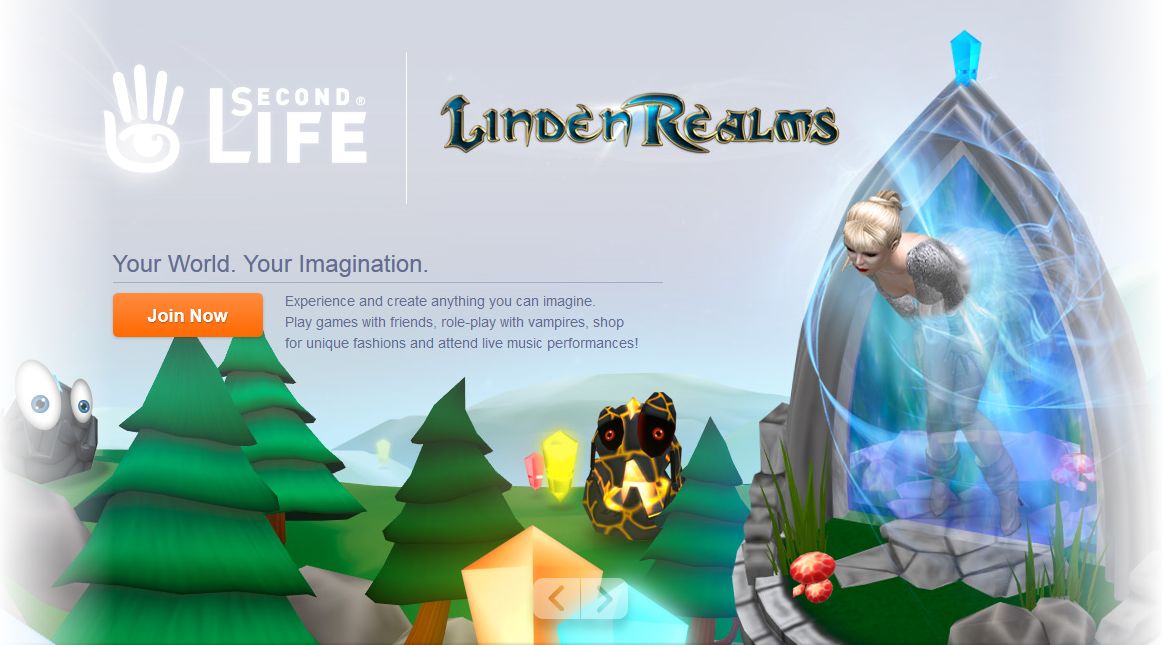
Linden Realms, launched in 2011, was an initial release of what were to become known as athe Advanced Creator Tools, the forerunner of the upcoming experience keys / permissions
Linden Realms, launched in 2011, was an initial release of what were to become known as the Advanced Creator Tools, the forerunner of the upcoming experience keys / permissions

While having the Lab provide in-world experiences tends to be a twitchy subject for some, taking this kind of approach – particularly if coupled with good supporting resources (wiki pages, etc.), isn’t actually a bad way to go. While it may be critiqued as looking and perhaps feeling a little twee, the Linden Realms game did, at the time it was launched, help promote what might be done with the initial experience permissions and tools (it was just a shame things went a be pear-shaped when the tools were initially rolled-out). As such, I do wonder – technical complexity not withstanding – how pathfinding might have been received had it been rolled out with a comprehensive example of what might be achieved using the tools, linked to the resources needed to create pathfinding based experiences.

A further interesting element touched upon in the interview is that maintaining something like SL is actually a lot more complex than people perhaps credit. As Don states, even if the SL code were effectively frozen today, changes in the world at large – to operating systems, to tools the platform uses (webkit and the issues around MOAP video & YouTube being a classic example – or indeed, the Mac Cocoa situation being another) mean than SL will still require ongoing and invasive maintenance even in order for it to remain accessible to users – and even to meet users’ changing habits.

The conversation here segues into a discussion of Second life and relevance. While it is true that Second Life itself doesn’t face any real competition in terms of virtual worlds (no disrespect here to OpenSim – but it is not of a scale which can be considered in any way competitive to SL, either in terms of established user base or – more particularly – in its ability to directly attract new users on a scale equivalent to SL), the platform does face enormous competition in terms of gaining traction on people’s time.  This means that SL is competing with a whole range of other activities people could be doing – web browsing, playing games, engaging with family and friends through Facebook, and so on.

The problem here, in terms of relevance, comes in several forms. There is the matter of legacy content, for example – and the expectation by users that such content will always be around, no matter how dated it may look. This impacts on what can and cannot be done technically with the platform in terms of maintaining relevance with emerging capabilities and so on. At the same time, system performance needs to be managed, but the platform needs to remain relevant to content creators of all standards and abilities as a place for creativity without unduly limiting how they create (such as by limiting polygon counts on models, etc.).  So relevance is a complex mixture of technical capabilities, maintaining legacy content, performance, and offering freedom of creative expression – anyone one of which can turn people away from SL as much as attract them.

This is again another excellent interview, and sets the bar for the upcoming shows and chats with other Lab staffers. Obviously, I’ve only touched on what interests me personally, and I do recommend that you take listen-in to all that is discussed.

Elsewhere in the show, the prickly issue of net neutrality is discussed, something which is having considerable air-time in the USA, but which isn’t garnering too much attention here in the UK, despite the fact we seem to be in much the same boat on the matter. Education also gets a further mention, with a most excellent OpenSim / Oculus Rift experiment at a school in Ireland getting media coverage. Despite being accused of “not understanding” the value of VR in SL, such work is actually where I see HMDs and added immersiveness in VWs as having value. Indeed, I’d go so far as to say that historical recreations like this, perhaps coupled with the new experience keys and something along the lines of Fuschia Nightfire’s intriguing Ghost Castle, as could offer uniquely interactive, educational, and eye-popping experiences within SL.

Fuschia Nioghtfire’s Ghost Castle, which recreates Corfe Castle as one explores the ruins, potentially points to a way in which VR HMDs and VW environments could be used to incredible effect

And even without the headset, I still recommend Fuschia’s installation as more than worthy of a visit.

The Drax Files Radio Hour 15: of Ebbe and education

radio-hourThe fifteenth installment of The Drax Files Radio Hour takes a look at Ebbe Altberg’s comments and Q&A session at this years Virtual Worlds Best Practice in Education conference which took place in both Second Life and OS Grid between April 9th and 12th.

The VWBPE session, which lasted a little under 90 minutes, featured some initial comments from Ebbe, followed by a wide-ranging Q&A session which many found both positive and perhaps a little revelatory (particularly given concerns ahead of his arrival at LL about him coming from “outside” LL / virtual worlds). Mal Burns videoed the session on behalf of VWBPE, and I have a full transcript for those who prefer to read rather than listen.

For those wishing to cut to the chase and jump to the clips from Ebbe’s presentation in the podcast and the discussion which follows, it starts around a quarter of the way into the show (14:19).

Ebbe Linden (LL CEO Ebbe Altberg) addresses the VWBPE conference on Friday April 11th, 2014

Some 15 minutes of Ebbe’s opening comments and the Q&A session are presented. These include his remarks on revisiting the Linden Lab Terms of Service (“we’re working on some simple tweaks to the language to make that more explicit”); his views on LL / SL and its position in the metaverse as a whole (“I think for starters, I’m mostly focused to get the ‘verse’ part right, and then we can think about ‘meta’ later on”); Facebook’s acquisition of Oculus Rift and more.

The excerpts are followed by a joint interview with Liz Falconer, Professor of Technology Enhanced Learning at the University of the West of England (UWE), and Stylianos Mystakidis, E-learning Manager for the Library and Information Centre at the University of Patras, Greece.

Intended to be a discussion of Ebbe’s VWBPE session, this actually covers much broader ground, from why issues such at the Lab’s bikini banner ads, can reinforce negative views of Second Life within the education sector, even though real life can be a lot more risky (and risqué) for students, through to the advantages of experiential learning and the potential of virtual worlds where such narrative styles of teaching are concerned.

Liz Falconer (t) and
Liz Falconer (t) and Stylianos Mystakidis

At close to 24 minutes in length, the interview has to be listened to in order to be fully appreciated; Stylianos and Liz offer a considerable amount of food for thought – so much, in fact, that it is hard distill everything down into an article like this without either failing to do the various elements of the discussion justice or presenting you with a wall of text to read. This being the case, I’m going to focus on those aspects of the discussion which particularly struck one or more chords in me, while urging you to listen to the interview in full, if you haven’t already done so,

The first thing that particularly caught my attention came when Stylianos asked what is the one question that seems to be most easily avoided or ignored when people talk about virtual worlds achieving mass adoption – and that’s the question of why should people turn to  VWs rather than continuing to use all of the familiar tools and options they have at their disposal and which offer convenience and ease-of-use: Minecraft, Facebook, Skype and so on?

While it is true that access to a complex virtual world like SL does need to be addressed and simplified in order to make it easier for people to access such environments, and it is equally true that things like VR headsets will offer additional means of appreciating and enjoying VWs for those using them, I am far from convinced that technology and technical solutions alone hold the key to VWs achieving mass adoption. This is something I touched upon in reference to Philip Rosedale’s  keynote at the VWBPE; as Botgirl Questi eloquently and succinctly put it following that particular keynote:

Mainstream use of virtual worlds requires compelling mainstream use cases that clearly trump other options. Better technology doesn’t matter to people who don’t know why they’d want to use a virtual world at all. That’s the challenge that no one has successfully addressed.

Continue reading “The Drax Files Radio Hour 15: of Ebbe and education”

The Drax Files Radio Hour 13: terms and conditions

The Drax Files Radio Hour 13 features Richard Goldberg, artist, creator, member of MadPea Productions (and a personal friend, I’ll say that up front 🙂 ), talking about the Linden Lab Terms of Service. As just about everyone is aware, these were changed in August of 2013, only to cause considerable upset and furore once the specifics of the changes – notably section 2.3 – became apparent.

Ahead of Richard, however, the show features a follow-up chat (3:30 into the show) with Dennis Harper, Senior Product Manager at OnLive, discussing OnLive’s revised pricing structure for their SL Go service (alongside a huge expansion of the number of countries in which the service is available). While pointing out that the service has met with an overwhelming thumbs-up in terms of the added accessibility it brings to Second life for those on the move, he frankly admits that it was clear pricing was an issue.

SL Go: pricing restructure discussed

The company actually moved rapidly in this regard as well. While we were asked not to make any public statements at the time, those of us involved in the preview programme (and, I assume those in the closed beta), were asked to complete a survey and provide feedback and thoughts pricing options and points. There were also some direct exchanges with a number of us on the matter as well.

From Dennis’ feedback, it seems those who did respond to the survey may have been indicating roughly the same amount for a monthly subscription (I suggested $15.00-$20.00 in the survey, with the lower figure being comparable to the company’s CloudLift monthly subscription), with the result that the company opted to go even lower, with the $9.95 charge, while retaining the pay-as-you-go (PAYG) option (which again, I personally felt was important and offered the greatest flexibility of appeal if offered alongside a subscription plan), which has also been dropped to a flat rate of $1.00 per hour.

An important point of note with the subscription mechanism is that it commitment-free. If you sign-up to the subscription service and find that you’re not using the service less than 10 hours a month, you can switch-over to the PAYG model. Similarly, if you start-out on the PAYG model, you can swap to the subscription model if you find it more cost-effective – then swap back, if your usage time then decreases; any unused hours you have under the PAYG plan will be “banked” for you until you switch back.

I’d actually asked OnLive about the status of SL Go for the iOS platform, but Dennis covers that topic in the interview ahead of my getting feedback from OnLive, saying that is it coming, but is still a little way down the road. He also manages to get-in a plug for the OnLive CloudLift service, which also launched at the same time as SL Go.

Richard A. Goldberg
Richard A. Goldberg

Richard’s interview comes at around the 21:30 mark, starting with Drax reading from Section 2.3 of the August 2013 Linden Lab Terms of Service, and specifically Section 2(.3).

Richard and I have been, and without going into specifics, very closely involved in matters relating to the Terms of Service since the changes were made. As such, I’ve come to respect his position and viewpoint – which admittedly, has been pretty closely aligned to my own. As such, this is an interview I’ve been looking forward to hearing since Drax indicated he’d be talking to Richard some three weeks ago.

Richard makes a very strong case as to why the ToS as we have it today goes too far. In essence, this can be defined in a single term: lack of limitations. There might actually reasons why the Lab may wish to extend their existing ToS – such as to offer content creators additional routes to market within the Lab’s stable of properties (such as through Desura), should creators wish to do so, or to make services like SL Go (whose servers must be able to cache data, much as the viewer does, on your behalf).

However, there appears to be no reason why, even allowing for these situations, the Terms of Service need to have a perpetual, unlimited scope or purpose. As Richard states – and the handful of IP and Copyright lawyers I’ve spoken to agree with him – it should be a relatively straightforward matter to sit down look at the ToS wording and revise it in such a way that allows the Lab to meet all reasonable goals and expectations required of their services and platforms and provide a comforting degree of limitation for content creators and artists  with regards to the licences assigned to the Lab (and their sub-licensees) in terms of the scope, purpose and duration of said licences.

Beyond the immediate issue of the ToS situation, Richard paints a very good picture of the broader issues of rights and copyright and the increasingly uphill battle artists and creators face. In this regard, I would recommend anyone wanting to better understand matters listen to this entire interview and consider listening to the views of Agenda Faroment and Tim Faith as recorded in these pages through my transcripts of the October 2013 ToS discussion panel on the ToS, and the SLBA March 2014 Copyright & Fair Use presentation.

Outside of these two items, there’s the inevitable mention of VR headsets, plus pointers to the various links on the web page itself. In reference to one of these – the Petrovsky Flux – I’d also point to my article on the subject and also Ziki Questi’s update, both of which should provide further information on matters.

The Drax Files Radio Hour 11: on the road to VR

radio-hourThe Drax Files Radio Hour 11 heads (back) along the VR road, covering the arrival (in July) of the Oculus SDK-2, which can be pre-ordered now and features an updated headset with low-latency positional head tracking, a price-tag of $350.00 (+ tax and shipping, I presume), and comes with a suggestion from OculusVR that those just wanting to try one out should really wait for the consumer version.

VR is an interesting subject, don’t get me wrong on that score, my doubts about it having quite the impact on SL as is perhaps hoped notwithstanding. But I have to say that two back-to-back episodes of TDFRH on the same subject coming on top of all the other flag-waving on the subject going on just about everywhere, did pushed me towards VR overload. Yes, I appreciate that the main reason for this was the Game Developer’s Conference, which itself was pumped full of VR from Oculus VR, Sony and others,  but VR fatigue is starting to take its toll hereabouts.

Nevertheless, I’ll include the video from Oculus CEO Palmer Luckey, who has some interesting things to say on the Rift and the upcoming SDK 2.

As well as the Rift, there’s mention of Sony’s Morpheus headset for the PS4, and just after the podcast came further news that Microsoft is definitely looking at the VR bandwagon as well, most likely in respect of the Xbox (and the obvious link with Kinect) and which may well be connected with their Project Fortaleza.

Outside of VR, a few other items are touched upon briefly in the show, such as the recent uptick in SL region numbers. While it is far to early to say whether we’re seeing a new trend or merely the usual March uptick is too soon to say.

The SL bikini banner ad campaign (if I can call it that) is poked at as well. It’s proving controversial on a range of blogs and social media. Some have said it’s simply following in the footsteps of IMVU’s advertising, others that it is simply celebrating spring and the approach of summer, while others have called it tacky. To me, and aside from saying, “all of the above”, it again demonstrates a couple of things. The first of these being that LL is again trying to reach a very narrow audience with this style of campaign and in doing so, it is just liable to turn people away from SL as much as attract them. Kudos to Drax for his observation on the lack of diversity evident as well.

My second thought is that it again leads me to the conclusion that the Lab are still utterly failing to harness the potential of the platform to tell its own story. I’ve long argued for the Lab taking a more narrative marketing approach to promoting the platform, and seeing ads like this one just leave me wanting to pull out my soapbox and start over again on the subject. The Lab has an enormous resource at their disposal by which narrative marketing could really work for them (witness Drax’s TDF video series), yet they persist in remaining blind and deaf to the idea.

Maybe I should get the soapbox and drum out again…

This segment of TDFRH was supposed to have included an interview with Richard Goldberg, but this has been pushed back a week, much to my disappointment. I’ve been working alongside Richard since September 2013, and have found him to be insightful and balanced in his views. I was therefore looking forward to him discuss the August ToS changes from a content creator and businessman’s standpoint, particularly as I know he and I very much share the same views.

Emily Short – via UC Santa Cruz IF Storytelling Symposium, 2013

Emily Short also declined to being interviewed specifically about Versu and LL. While this was another interview I was looking forward to, I can’t blame Emily for saying no. She has very eloquently and graciously said all that needs to be said on the matter via her blog and in an interview with Gamasutra. Nevertheless, I do hope she accepts a future invitation to join the show and talk about Interactive Fiction in general; it’s a fascinating genre.

With Richard and Emily absent this episode, and in keeping with the theme of the podcast, Ben Lang from The Road to VR took centre-seat for the main interview, and it’s here that the feeling of VR fatigue really started to kick-in – which is not to say I didn’t listen. Indeed, I found the interview somewhat fascinating, but perhaps not for the reasons one might expect.

Ben makes some interesting points on VR’s potential, should something like the Rift really enter mainstream consumer consciousness, and I certainly don’t nay-say his points, and it was good to hear him precede his comments with “if” a lot of the time – too many commentators seem to think it’s a done deal where the Rift is concerned, and that may not be true, even if VR itself does go on to achieve popular consumer success, which would seem a given over time and as headsets become more ergonomic and portable.

Continue reading “The Drax Files Radio Hour 11: on the road to VR”

The Drax Files Radio Hour 10: of headsets and hype

radio-hourEpisode 10 of The Drax Files Radio Hour focuses on the Oculus Rift.

The springboard for the show is the Lab’s call for beta testers to help check-out the Rift-enabled capabilities which are being developed within the viewer (and have been under development for some time now), which came coupled with the news that Oculus VR are now out-of-stock with Rift development kits and that components are in short supply. So if you have a headset – sign-up for the beta, and if you haven’t got a headset … oops.

Although that said, the pool of SL users with a headset is described elsewhere as “surprisingly large” …

Before getting to all things Rift, the LL Terms of Service are touched upon, with a reference to an upcoming interview with an SL content creator due for podcast #11. The ToS situation remains a bone of contention, despite reassurances from the Lab and clear-cut comments from Ebbe Altberg that the intention is not to “steal” content (as the more hysterical outcries against the August 2013 changes have claimed), together with an explanation as to why it would be suicidal for the Lab to even try to move in that direction. Being in the know as to who is slated to be interviewed for episode #11, I can say it’ll be a very balanced, informative point-of-view that is presented.

Of equal interest to me is the news that Emily short will also be participating in the next TDFRH podcast, talking about her situation vis-a-vis the Lab’s axing of Versu, which I’ve also covered here.

What I can’t help but consider to be VR hype pops up in a reference to Valve’s “VR room”, which was demonstrated at the Valve’s Steam Dev Days. This has Lee Vermeulen predicting homes having a VR room in “five years”. Whether he means a dedicated room or, as discussed in the show, a room of the house which is “VR / AR capable” with mo-cap, etc., is moot to me. Both predictions seem to be well ahead of the curve.

Gartner see VR as still being between 5-10 years away from reaching it's "plateau of porductivity" - the point at which it is in accepted, widespread use.
Gartner see VR as still being between 5-10 years away from reaching its “Plateau of Productivity” – the point at which it is in accepted, widespread use. so are people getting a little ahead of themselves in voicing expectations of what is coming in the next 3-5 years? (click to enlarge)

Call me a stick-in-the-mud for saying this, but a lot of what I’m hearing about VR right now seems to be far too close to the typical technology hype cycle for me not to look at a lot of what is being said vis-a-vis VR headsets in general with something of a jaundiced eye. Perhaps more so given that Gartner themselves see things like wearable UIs (seen as a necessary adjunct to VR headsets) as just starting on the slide into the Trough of Disillusionment within their own particular hype cycle, and VR systems themselves yet to start the climb up their own Slope of Enlightenment towards productive use – with an estimated time frame of 5-10 years before reasonable maturity and adoption may be reached.

WidelySo, what about the Rift and SL? Widely Linden is interviewed in the show. He’s overseeing integration of the Rift into the viewer. He dives into more of the technical elements of presenting the UI within “Riftlook” (to use Dave’s Rowe’s term for it), describing it as “following you” and being “fully customisable” and being fully familiar to those who have used the UI in its traditional presentation.

The idea that the UI is presented in a 3D form is intriguing – Maestro describes it as a toroidal form. Widely describes the 3D projection, and how far it appears to be from the user as customisable, and – most intriguingly – describes it as being somewhat Iron Man-ish, in that information is displayed peripherally towards the sides / top and bottom of the Rift display, ready to be looked-at when needed.

Continue reading “The Drax Files Radio Hour 10: of headsets and hype”

The Drax Files Radio Hour: Second Life is Go!

radio-hourThe ninth podcast in the The Drax Files Radio Hour unsurprisingly focuses on the launch of the SL Go service (Beta) by OnLive (review here).

As most people are now surely aware, SL Go is a means of accessing the full richness of Second Life on a tablet (or mobile device with a large enough screen) via OnLive’s streaming service, with the options of also accessing it via a computer or via a television (additional hardware required in the case of the latter). The mobile offering is initially Android only, but an iOS version is also promised.

SL Go is was launched as a part of the overall re-emergence of OnLive from an 18-month, self-imposed silence following the original company getting into difficulties prior to being bought out by Gary Lauder, who was an early investor in the original OnLive through his company, Lauder Partners.

As well as releasing the SL Go Beta on Wednesday March 5th, OnLive also launched their new CloudLift games subscription service ($14.99 a month) and their OnLive Go service (of which SL Go forms a part), which is specifically aimed at getting people up-and-running with MMOs and virtual worlds.

The SL Go website
The SL Go website

A key sticking point with SL Go where SL users are concerned has been that of pricing, with the pay-per-minute (or pay-as-you-go, depending on your preference in referring to it) plan receiving a broadly negative response. During the podcast, Draxtor interviews Nate Barsetti, Senior Manager of Customer Relations at OnLive, and Dennis Harper, the Senior Product Manager for OnLive, and the subject of pricing and potential future options is raised, as I’ve commented upon in a post on the SL Go pricing model.

Nate Barsetti is very much the voice of SL Go, having appeared on both Designing Worlds during a special programme about the new service and a follow-up Q&A session, as well as spending around an hour talking to Drax about the service, much of which appears in this podcast. Again, as I’ve previously mentioned, Nate is actually in a good position to discuss both SL Go and Second Life; he is both an ex-Lab employee (Scout Linden) and a long-time and very active resident, leading a Star Wars role-play community.  As such, he offers some interesting insight into the various decisions taken vis-a-vis SL Go.

Dennis Harper’s interview is equally interesting. Not only does it echo the potential for OnLive to revisit things like pricing models (this is only a beta, after all), but also because he talks about his own exposure to Second Life, which seems to amount to being given a copy of Wagner James (Hamlet) Au’s book and being told to get on with it! Dennis also offer-up and interesting view as to how OnLive themselves might at some point get more involved in Second Life, possibly helping those new to the SL environment. He also points-out that SL Go support is actually made-up of SL residents. Also interviewed about SL Go is none other thanStrawberry Singh, who offers a balanced view of using the service.

Away from this, The Drax Files Radio Hour gained a new sponsor in the week ahead of the podcast in the form of Leap Motion. To mark this, the show is giving away two Leap Motion devices, one each in two separate competitions. For this podcast, the competition is open to those who use Facebook,  while next week a second Leap Motion device will be given away in a competition exclusively for SL users who don’t use Facebook.

Draxtor has been involved in working with the Leap Motion controller with Second Life for a while, and produced a video on his attempts. More recently, Leap Motion reached out to Linden Lab about integrating the controller with the viewer, and members of the Firestorm team are now working with Leap Motion to make this happen.

Elsewhere in the show, SL advertising is touched upon, as is more unfolding news surrounding Bitcoin, and the re-opening of the SL JIRA gets a mention.

Even if you’ve read all there is to read on SL Go, the show is worth a listen-to. Both Nate Barsetti and Dennis Harper are pretty open and honest in their comments,  and the conversations with them really do help put aspects of SL Go into perspective.