On Tuesday June 10th, and spotted by Ziki Questi, the Guardian Online in the UK carried an article about how modern urban design is influencing city game design in computer games – and vice versa. As a follow-up to that piece, the Guardian has invited readers to share their favourite virtual cities, and the Lab suggest this is the perfect opportunity for Second Life users promote their favourite Second Life locations.
The Guardian asks readers to upload screen shots of their favourite urban locations via a Guardian Witness page (user-generated content pages curated by the Guardian), which explains:
We want to hear about your best-loved virtual places – from a beautiful view in GTA V to that 20-million-strong SimCity megalopolis you’ve been building (or possibly destroying). What would be the best video game cities to live in? The worst? Perhaps you’ve designed one you think would be better than your own city? Share your screen grabs and we’ll feature the best on Guardian Cities.
To contribute, readers can log-in to the page using either a Facebook or Google + account and then upload a screen shot of their own with some descriptive text, and / or recommend those uploaded by others. There are several locations from Second Life listed on the page already,
Caelestivm, Palau, March 2014, click for full size
Quick to spot a promotional opportunity, the Lab has suggested, via a Featured News blog post, that more SL users should submit their own favourite locations to the Guardian’s page, noting:
This is a great chance to share some amazing Second Life locations with The Guardian’s readers. Whether it’s a place you created personally, discovered (maybe through the Destination Guide?) and love, or just a spot you always find yourself returning to, the Second Life locations that ‘wow’ you are great ones to share to help show off Second Life to the uninitiated.
Assuming the Guardian doesn’t get overwhelmed by images from Second Life and feel a little narked as a result (and keeping in mind they’re asking for city-like images, which the lab’s blog post tends to brush over in referring for “locations”), this might be a way to shine a little light on some SL builds and get a message out about the user-generated nature of SL.
As well as the pointer to the Guardian, the Lab is inviting users to share their favourite SL locations (city or otherwise) via a forum thread, and to submit any which aren’t already listed to the Destination Guide.
An interesting article published by the Official Home Page of the US Army came to light recently highlighting the use of virtual worlds as a part of studies into providing better healthcare and support to US soldiers and veterans.
For the last three years, Colonel Valerie Rice, Director of the US Army Research Laboratory’s Human Research and Engineering Directorate located at Fort Sam Houston, in San Antonio, Texas, has been spearheading a team studying the use of Mindfulness-based Stress Reduction (MBSR) as way of teaching army personnel and veterans how to manage PTSD and similar disorders which have resulted from their military service. The work is part of a broader series of research activities funded by the US Army aimed at providing suitable care and support for those afflicted by PTSD.
Mindfulness – “being in the moment” – is a means of stress and anxiety relief using age-old techniques such as meditation and yoga to help focus and clear the mind. It has become a popular means of therapy and support in many areas of life.
The studies being undertaken by Dr. Rice and her colleagues have a twofold purpose. Firstly, to determine the effectiveness of MBSR techniques in helping US Army personnel and veterans deal with PTSD and related issues. Secondly, to identify whether a programme using these methods could be reasonably and effectively adopted by the Army for widespread use.
In this latter regard, MBSR is seen as a particularly worthwhile means of assisting service personnel and veterans because not only is it a proven means of treatment in civilian life, but also because instructors do not need to be qualified healthcare professionals; they only need to have successfully completed a comprehensive training and certification programme. This significantly eases the challenges involved in leveraging it for more widespread deployment and use.
MBSR is also something ideally suited to leveraging the use of virtual worlds, notably Second Life and All These Worlds LLC, which bring with them unique opportunities and benefits which are not necessarily achieved with courses and therapy conducted in the physical world.
The Mindfulness studies take place as 2-hour weekly sessions over a period of eight weeks apiece, and involve some 66 participants at a time, 36% of whom were soldiers on active duty, and the remaining 64% veterans. Half of each batch of participants meet face-to-face in real life, the other half in a virtual world environment.
In both the physical and the virtual environments, sessions are experiential in nature; participants in the study meet, go through various exercises designed to focus the mind, ease tension, and reduce stress. Classes as cumulative, each building on and reinforcing the last, providing techniques participants can carry with them into their daily lives. There are also opportunities for discussion and feedback on individual’s experiences with the techniques, and so on.
Those participating in the virtual classes are encouraged to physically perform the exercises rather than just perform them with their avatar. There is a high degree of interaction between session leaders and participants, and courses include homework sessions – exercises participants are asked to carry out when away from the sessions.
A typical US Army MBSR session being held in All These Worlds (via alltheseworldsllc.com)
Virtual world environments are seen as a particularly beneficial for conducting sessions due to the level of anonymity they offer. There is still something of a stigma attached to seeking help for disorders such as PTSD which can make individuals shy away from any involvement in actual behavioural health classes due to misplaced feelings of embarrassment, inadequacy or shame. The use of what is essentially an anonymous avatar in a virtual environment helps eliminate these feelings, and any associated stress or anxiety which might otherwise be experienced.
The multiple ways in which participants can provide feedback through a virtual world is also seen as beneficial. Giving voice to the feelings, responses and emotions one is experiencing when in a public forum is not always easy. But in a virtual environment, a participant can, for example, opt to give their thoughts and feedback via IM to the session leader, who can in turn relay the salient points to the class in a way that also doesn’t cause the individual any additional stress or embarrassment. Even the use of voice morphing is seen as advantageous, as it again offers participants relief from any fear that their voice might otherwise be recognised.
Participants in both the physical and virtual studies receive “homework” assignments (via alltheseworldsllc.com)
Additional benefits in using virtual worlds are those of accessibility and the ability to establish social networks among peers. Writing in Advanced Computational Intelligence Paradigms in Healthcare 6, Jacquelyn Ford Morie, the founder of All These Worlds, and who also one of Dr. Rice’s collaborators in the study, notes:
Today’s returning soldiers are most likely geographically dispersed, which may make it difficult to get to centres where medical help is typically aggregated. In addition, a social support structure may be lacking, leaving veterans unable to socialise with comrades in person on a regular basis … Online shared virtual worlds, however, are easily accessed from any personal computer, and can support the formation of social networks, facilitate access to care, and provide social activities between soldiers where geography is no barrier.
Jacquelyn Ford Morie. All These Worlds, her company, has also provided virtual environments for the US Army’s MBSR studies
She goes on to note that most service personal today are comfortable with using technology and in playing computer games, so accessing virtual worlds should not present them with significant barriers to entry or from engaging with online communities.
Dr. Rice and her team report that taken as a whole, the MBSR courses have seen positive results across both actual and virtual sessions, with participants registering lower blood pressure, reduced anger and increased calmness in their lives, as well as exhibiting increased energy levels and faster reactions. Her team also note that anecdotal evidence suggests that those who have participated in courses are still practicing techniques six months later.
However, the team also acknowledge that further research into the overall effectiveness of MBSR with military personnel is required before any definitive findings on its overall applicability to widespread use within the US Army can be determined.
Even so, despite the fact that such formal determination has yet to be reached, the work carried out to date is encouraging, and stands as another fascinating example of how virtual worlds can be used for the betterment of our health and welfare.
In May 2014, Linden Lab launched a new line of mesh avatars. These were made available on both the sign-up page for new users, and as library avatars within the viewer.
These avatars met with a mixed reception; many of the human avatars looked somewhat bland and perhaps suffered from weak skin textures, but some could also look pretty stunning given the inclusion of materials within them, as Caitlin Tobias powerfully demonstrated (sorry, couldn’t resist the pun).
The demon avatar supplied by LL and as pictured by Caitlin Tobias on Flickr – click for original
However, several of the new avatars did exhibit issues; there AOs resulted in their feet being buried in the ground, hair styles were not overly appealing. Perhaps most noticeable of all – although the avatars were promoted as taking advantage of fitted mesh, they were released with base shapes set to No Modify.
As I commented at the time of the release, making the base shapes No Modify pretty much undermined the entire fitted mesh aspect of the avatars, since it meant the avatars could not by default be customised using the shape sliders to adjust height, build, etc. To be able to do so meant swapping-out the base shape first, something new users would likely be oblivious of, and thus see the avatars as “not working”.
At the time of the launch, I raised this point directly with Ebbe Altberg, and in fairness, he took it on the chin:
On June 10th, The Lab announced this issue, and those relating to things like AO problems for those avatars supplied with AOs had been fixed, and the avatars duly updated. The blog post reads in part:
Following community feedback about these new avatars, we’ve made some adjustments, and today we’re re-deploying them with a few updates.
Most significantly, users will now have the ability to edit the avatar shape for the human form avatars. Because these avatars are mesh, not all sliders will affect the shape, but many of them will. Play around and personalize the body, torso, and legs using the sliders now supported with the updated, modifiable shape. Some of the head and eyes sliders will also now work to adjust the avatars’ faces.
Additionally, Sara (the blonde female avatar) got a fuller hairdo with more body and volume, and we’ve fixed the hover position for several of the avatars which helps prevent sinking into the ground.
I’ve only had the briefest time playing with the updated avatars, but they do now appear to work as expected. Some problems still remain – the hands on some of the female avatars still look like they’d be more at home on a guy, for example, but then the avatar meshes themselves doesn’t appear to have been reworked. Some people trying them did report some inventory related issues, which I confess I’ve not had time to poke at.
As it is, the update is welcome, and hopefully will see the new avatars enjoy wider use within SL. That said, I confess I won’t be using them. I’m still a stick-in-the-mud where mesh is concerned, and anyway, I’m more than happy with my avatar as she is, shape warts and all!
Jayjay Zifanwe (rl: Jay Jay Jegathesan, founder, UWA virtual worlds) brings word via the The University of Western Australia (UWA) in Second Life blog of how a Second Life machinima has, for the first time, been used in one of the major units for a degree programme at the university.
The film, Equity & Trusts: Estoppel Tutorial has been used within the LAWS5103 unit, Equity & Trusts, a 2nd Year compulsory postgraduate unit for the Juris Doctor (law degree), taught at the University of Western Australia. It is a collaborative effort between Metaworlds, based in Ulm, Germany, and the UWA, directed and edited by Laurina Hawks of Metaworlds and featuring a script by Professor Natalie Skead, Associate Professor – Faculty of Law at UWA.
Estoppel is a series of legal doctrines which preclude a person asserting something contrary to what has been expressed or implied by a previous statement or action by that person, or by a previous relevant judicial determination.
Professor Skead and students discuss the unfolding situation in the Equity & Trusts: Estoppel Tutorial movie (image courtesy of the UWA in SL blog
The film charts a situation which develops between a young student and her uncle, who initially offers to finance her tuition fees as she goes to university to study law – at his suggestion – before later withdrawing the offer.
At just under 8 minutes in length, the movie has been shown to students during tutorials designed to trigger discussions on the Estoppel principle of law. Following the discussions, students were asked to evaluate the effectiveness of the film, and the overwhelming response was positive.
Commenting on the outcome of the presentations, Professor Skead indicated the use of the video resulted in far more rigorous and detailed assessment of the facts as presented in the movie. She added that she felt the discussion on the topic which followed the film was far more sophisticated and detailed when compared to previous exercises conducted using more conventional methods, thus marking Second Life as a valuable tool for connecting students to real life experiences.
Commenting on the approach, Jayjay Zifanwe / Jay Jay Jegathesan said, “We are absolutely thrilled at how successful this has been, and hope to continue supporting more and more areas in the targeted use of Second Life where it adds value. We have the far have had various activities and outcomes across the School of Business, School of Education, School of Physiology, Anatomy and Human Biology aside from this newest venture with the School of Law.”
As well as this work, the UWA has also recently made a series of presentations on how they use Virtual worlds to support teaching, research, architecture, international community development, art & film at the Digital Education Show Asia, which took place in May 2014 in Kuala Lumpur.
On Wednesday June 4th, Linden Lab launched a re-vamp of the secondlife.com home page.
Gone is the old single image home page – which was perhaps already staid the day it was launched – and in comes a much bolder 3-part design with not only a fresh look, but a very welcome addition.
Obviously, to see the new page, you’ll have to log-out of your web Dashboard if you have been using it.
At the top is the expected splash-style image, with the familiar Join Now button replaced by a Play for Free button. This section of the page retains the login and local language options towards to top right corner, together with the Twitter and Facebook links, and a link to the Second Life You Tube channel.
The top section of the new Second Life website log-in / splash page
Scroll down from this and you get the What’s New section, which currently has – wait for it – a picture of the Oculus Rift headset-to-be (i.e. the image of how the production version should look, once it arrives), and a shot of the new starter avatars.
A Learn More button under the Oculus image opens the blog post on the Oculus Rift project viewer announcement, while a Join Now button under the avatars takes you to the sign-up page.
The What’s New section of the new page
Beneath this is a section which may surprise some, but which forms – from my perspective at least – the very welcome addition.
Entitled Global Community, it presents The Drax Files: World Makers, with a special trailer Drax has put together for the new-look home page, allowing newcomers to grasp more of what SL is about. In addition, a Watch More button will take them to the You Tube channel for the series, which lists all episodes made to date.
The Global Community section
The presence of the series here indicates another change as well: Linden Lab are now officially sponsoring The Drax Files: World Makers, allowing it to continue on a monthly basis well into the future. With the deal comes the promise that the Lab will not attempt to exercise any editorial or other influence over how the series is produced, or the stories it tells, nor will it impact any other projects Draxtor undertakes in relation to Second Life.
Below the Global Community section is the familiar corporate links bar.
The new design is crisp and clean, and the addition of The Drax Files: World Makers is an excellent move. Not only does this series truly capture the breadth and depth of Second Life in a way which perhaps hadn’t been seen prior to it, the trailer is fast and hits a good number of strong beats of what Second Life is and about, and the people who use it.
It will be interesting to see how the What’s New section is updated and the frequency with which it is updated. The danger with anything that’s labelled “What’s New” is that if it isn’t seen to be changing frequently, it can be mistakenly taken to mean that whatever it represents isn’t changing and is staid.
Whether this update is indicative of further changes to come with their web properties, remains to be seen. When I contacted the Lab to ask this very question, immediately after the new home page appeared, I was only given a tantalising “For now, this refresh is just of the SL.com homepage…” So we’ll have to wait and see if anything more does pop-up at some point down the road.
Overall, and from a first looks perspective, a most welcome move on the part of Linden Lab – and full kudos to them on striking the deal with The Drax Files: World Makers.
Update, May 28th: The Lab reports this work is now complete.
On Tuesday May 27th, Linden Lab gave warning that there will be a period of scheduled maintenance on Wednesday May 28th which will see log-ins suspended for around one hour, from approximately 06:00 SLT.
The Second Life Service will be closed for logins for approximately one hour on Wednesday, May 28 beginning at 6am PDT.
Residents in world will not be logged out, but may experience loss of supporting services such as search and inventory. New logins will not be accepted, and Residents in world should not attempt to transfer or manipulate L$ or valuable (no-copy) assets until the ALL CLEAR is given.
As always, if the scope or the schedule of the work changes, we will update this post.
Please check with the Grid Status page for updates nearer the time of the maintenance.
The maintenance work is most likely the work planned for Thursday May 22nd, which had to be postponed as a result of significant issues in Second Life services encountered on Tuesday May 20th. Among other things, those issues resulted in the server-side deployments for that day being curtailed, which directly impacted planned activities for the rest of the week.
Assuming the work is the same as that originally planned for May 22nd, it would appear to be focusing on database hardware, with the result that sims should have slightly faster access time after the work has been completed, although the emphasis has been that if this is the case, it will not be major or noticeable.
Following the problems encountered in week 21, Landon Linden issued a blog post explaining some of the causes of recent problems within the platform, which is recommended reading for those who haven’t yet done so.

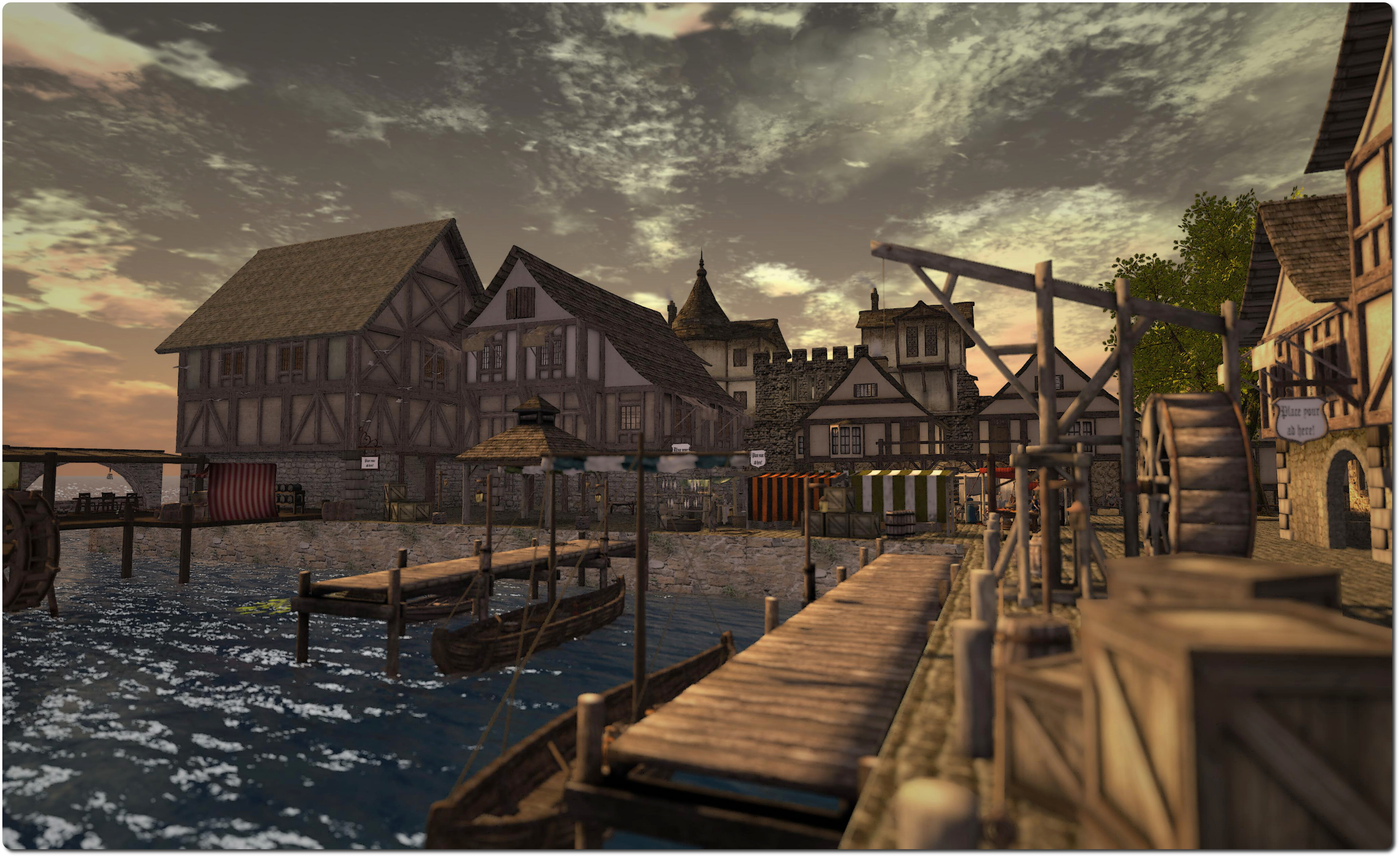 Caelestivm, Palau, March 2014, click for full size





 Inara Pey: Living in a Modemworld