Facebook acquire Oculus VR

Oculus VR: Facebook's latest acquisition
Oculus VR: Facebook’s latest acquisition

MENLO PARK, CALIF. – March 25, 2014 – Facebook today announced that it has reached a definitive agreement to acquire Oculus VR, Inc., the leader in immersive virtual reality technology, for a total of approximately $2 billion. This includes $400 million in cash and 23.1 million shares of Facebook common stock (valued at $1.6 billion based on the average closing price of the 20 trading days preceding March 21, 2014 of $69.35 per share).  The agreement also provides for an additional $300 million earn-out in cash and stock based on the achievement of certain milestones.

So opens a press release issued by Facebook on Tuesday March 25th, 2014.

This is a pretty stunning announcement, and shows that, as Mark Zuckerberg states in the release, “Mobile is the platform of today, and now we’re also getting ready for the platforms of tomorrow. Oculus has the chance to create the most social platform ever, and change the way we work, play and communicate.”

The news has sent shock waves rumbling across the social media sphere, with many reacting positively to the news, and other reacting negatively. Following the announcement, Cory Ondrejka at Facebook was unsurprisingly excited by the news.

oculus-FB-3

While Markus Persson of Minecraft fame responded to the news with as less favourable response, which was quickly picked-up by the games media.

oculus-FB-2

Others also didn’t appear to be initially impressed by the news, either, including those who funded the original kickerstarter. Meanwhile, Techcrunch reported a slide on Facebook’s share price which, while closing on the day overall, saw Facebook’s share value below its open price of $64.25, resulting in a loss of $1.5 – $1.8 billion market cap. However, as Techcrunch also notes, this isn’t the first time Facebook’s shares had dropped following the announcement  of an acquisition.

Theories as to why Facebook have made the move abound, with some pointing to the company tripping-up on the explosion of the mobile market and so are perhaps afraid they might miss-out on the growth of VR if it takes off suddenly. Others are suggesting Facebook is keen to jump on the possible marriage of the Oculus with mobile technology.

I’ve been somewhat skeptical that VR will explode in quite the immediate way many have been predicting – which is not to say I don’t think it will be big; I just think it’ll take longer to get there on all fronts (i.e. beyond gaming) than some pundits are perhaps allowing. It seems I’m not alone in thinking this. Speaking to The Verge, Oculus investor Chris Dixon believes Facebook are playing the long game – rather like Google did with their acquisition of Android in 2005.

It appears Zuckerberg agrees with him. Commenting in a teleconference held on the afternoon on March 25th to discuss the acquisition, Zuckerberg said, “There are not that many companies building technologies that could be the next computing platform, and Oculus is the clear leader.”

In this regard, Zuckerberg went on to say:

But this is just the start. After games, we’re going to make Oculus a platform for many other experiences. Imagine enjoying a court side seat at a game, studying in a classroom of students and teachers all over the world or consulting with a doctor face-to-face — just by putting on goggles in your home.

This is really a new communication platform. By feeling truly present, you can share unbounded spaces and experiences with the people in your life. Imagine sharing not just moments with your friends online, but entire experiences and adventures.

Oculus founder Palmer Luckey has a lot to smile about (image via Popular Mechanics)

Concerns have already been raised over the future of Oculus Rift as an open platform, something Oculus VR founder Palmer Luckey attempted to allay in a statement on the company’s Reddit page:

Facebook is run in an open way that’s aligned with Oculus’ culture. Over the last decade, Mark and Facebook have been champions of open software and hardware, pushing the envelope of innovation for the entire tech industry. As Facebook has grown, they’ve continued to invest in efforts like with the Open Compute Project, their initiative that aims to drive innovation and reduce the cost of computing infrastructure across the industry. This is a team that’s used to making bold bets on the future.

Whether such comments will quell concerns and upset, remains to be seen, although i’m not putting money on it doing so. Facebook undoubtedly have the financial and technical clout to boost Oculus Rift and VR into more mainstream consciousness. Whether this will come tied to a Facebook log-in requirements, again as some are already predicting, remains to be seen.

It’ll also be interesting to see how Facebook, after dabbing with virtual world environments through Cloud Party, consider virtual worlds, and the direction in which they might move. Could it be the “Facebookisation” of SL (or rather, perhaps, Linden Lab) may yet come to have a significantly new meaning? Or, less tongue-in-cheek, what about Philip Rosedale’s High Fidelity coming under the FB eye? Now there’s something to chew on (ETA: and in this regard, Palmer Luckey’s sign-off to his blog post announcing the acquisition is interesting: We’ll see you in the Metaverse!)

P.S. Techcrunch may score the biggest hit in this latter regard with their latest headline on the subject: Facebook Buys A Virtual World – that’s bound to get people rushing to their doors!

With thanks to Luke Plunkett at Kotaku.


Harvey tries the Oculus

Update: Loki Eliot has also provided a summary of his initial findings with the Oculus Rift and the Lab’s beta viewer. You can read his report here.

Harvey Crabsticks is one of those fortunate enough to have a Oculus Rift headset and get accepted into the Lab’s beta of their OR-enabled viewer beta.

While he admits he’s not had time to plunge all the way in to RIFT / SL usage, he has provided a preliminary report on his initial experiences. Hopefully, there will be more to come as he pokes at things some more, allowing for commitments with the preparations for the Paradise Lost curtain-up in April, and with the Romeo + Juliet AIR-6 installation.

Oculus Rift: Harvey Crabsticks gives some preliminary feedback

If you’re interested in the Rift and want an informed, balanced view on things, head on over to Harvey’s blog and take a read (and I recommend his blog in general for some good reading).

Related links

With thanks to Mona Eberhardt

Lab issues call for Oculus Rift beta testers

secondlifeOn Wednesday March 12th, Linden Lab issued a call for people willing to help beta test the upcoming Oculus Rift enabled SL viewer.

The call, made via a blog post, reads in full:

The Oculus Rift offers exciting possibilities for Second Life – the stereoscopic virtual reality headset brings a new level of immersion to our 3D world, making Second Life a more compelling experience than ever before.

Though a consumer version of the headset isn’t available yet, we’ve been working with the development kit to integrate the Oculus Rift with the Second Life Viewer. We now have a Viewer ready for beta testers, and if you have an Oculus Rift headset, we’d love to get your feedback.

If you have the Oculus Rift development hardware and would like to help us with feedback on the Viewer integration, please write to sl_oculus_beta@lindenlab.com to apply for the limited beta.

Oculus Rift: the headset-enabled viewer is now ready for beta testing

As noted in the post, the headset isn’t commercially available as yet, but the pre-release version with the Oculus Software Development Kit is currently available for $300.00 directly from Oculus VR themselves. If you have a kit already, now is the time to sign-up!

As I reported in December, VoidPointer Linden had indicated that the work on making the viewer operate with the Oculus Rift headset was “feature complete”. This fuelled an expectation that a project viewer might make an appearance either before, or soon after Christmas, 2013.

However, Oz Linden shortly afterwards indicated the “soon” might be something of a relative term. Since both of those announcements, the Rift viewer has been working its way through the Lab’s QA process, and while it didn’t appear as quickly as perhaps VoidPointer had hoped. Even so, when commenting on the status of the viewer back in December, he was able to confirm a few things about it:

  • The same viewer can be used in both a “normal mode” and a “Rift mode”
  • There will be no apparent changes to the viewer / UI when in “normal mode”
  • Frame rates when in “Rift look” will be very much down to the user’s own hardware  (unsurprisingly).

Elsewhere, it had been indicated that when in “Rift Look”, UI menus may float over the user’s head, keeping them out of the field of view until such time as needed. This was certainly the case when Simon Linden tried the viewer earlier in “013, but it is unclear if this approach has been carried forward – so that’s one for the beta testers to discover.

There is no timescale for how long the beta testing will last, but this announcement brings official support for Occulus Rift (users can also use David Rowe’s CtrlAltStudio viewer, which provides preliminary support for the headset) a step closer to reality.

SL projects updates 5/2: viewer, GPU table, Rift, Leap Motion

Server Deployments: week 5 recap

  • On Tuesday January 28th, the Main channel received the server maintenance project previously on the three RC channels, which contains a single fix for a crash mode.
  • On Wednesday January 29th, all three RC channels received a new server maintenance project, which includes a crash mode fix and a fix for llModifyLand() modifying the wrong location in region, when called in a child prim – see part one of this report for further details.

SL Viewer Updates

The following notes are taken from the TPV Developer meeting of Friday January 31st, a video of which is included below. My thanks, as ever, to North for the latter.

Fitted Mesh

As noted in part one of this report, a new version of the Fitted Mesh viewer arrived in the release channel as an RC on Monday January 27th. Version 3.7.0.285669 includes a number of fixes, included a hoped-for resolution for FITMESH-6 and FITMESH-20. However, there is an issue with the fix, as reported by Latif Khalifa of the Singularity team, and which the Lab has confirmed.  The viewer will therefore have a further RC update in week 6 (week commencing Monday 3rd February).  If the new RC proves stable and reliable, then the Fitted Mesh viewer will be looked at as a contender to go to release status.

Interest List

Despite having been reported as having a much improved crash rate, the Interest List RC, version: 3.6.14.285213 released on January 14th, still appears to be reporting higher than expected crashes. The Lab is not 100% convinced the crash measurements are correct, and they may be measuring high. This is being poked at, but means in the interim the viewer will remain an RC.

HTTP Viewer

The HTTP RC viewer, version 3.6.14.285253 released on January 16th, is performing well and now stands as the strongest contender for the next promotion to the de facto release viewer.

Maintenance Viewer and GPU Table

The Maintenance viewer, version 3.6.14.285499 released on January 23rd has generated interest due to the inclusion of MAINT-3131 “Death to GPU Table”.

Essentially, the GPU table is used to define your graphics card to the viewer and the default graphics settings which are applied as a result when you first start the viewer. As many will be aware, the GPU table is manually maintained, and as a result is not a very effective mechanism for managing GPU evolution.

MAINT-3131 is part of ongoing work which the Lab hopes will eventually eliminate the GPU table. Discussing the work, Oz said:

The idea is to do two things: ask the [graphics] driver [on a local system] what version of OpenGL it supports, and use whatever capabilities that can be relied on to find that out;  and then to measure the performance of the GPU by doing a series of memory bandwidth tests. Basically copying big blocks of video memory back and forth a few times and seeing how long it takes. The theory is that it ends up being at least as good a predictor of what the GPU is capable of as we’re currently getting by the guesses in the GPU table, and maybe better.

The code linked to MAINT-3131 is believed to be the code needed to carry out the memory bandwidth tests (and likely recording the results), the idea being that it can be monitored to note how well it measures the performance of things the Lab believe they understand, and see if it handles them more effectively / efficiently. Should this work proceed the way the Lab hopes, then the hope is the GPU table can be removed from the viewer in the future.  It is thought that the bandwidth testing, which will likely only take place when or shortly after the viewer has launched (and then only after the GPU identifier string has changed), will be a “pretty good proxy” for measuring a GPU’s performance a GPU compared to just asking the OpenGL driver what it can do.

Continue reading “SL projects updates 5/2: viewer, GPU table, Rift, Leap Motion”

SL project updates: week 49 (3): Fitted Mesh, AIS v3, Oculus Rift and more

The following notes are taken from the TPV Developer meeting held on Friday December 6th. A video, courtesy of Northspring, can be found at the end of this report. The numbers in braces after each heading (where given) denote the time stamp at which the topic can be listened-to in the video.

TPV Developer meeting (stock)

Release Channel Viewers

Name Updater Release Candidate

[00:17-01:40]

The Name Updater RC viewer, also released on December 3rd, has been updated to version 3.6.12.284506. This contains no functional changes to the viewer itself but contains two sets updates, hence the odd name.

The first of these is a fix for the viewer updater where problems can occur if a new update to the viewer is downloaded by the updater but deleted somehow prior to  the installer itself being executed. The second set of updates cover:

  • Changes to how the viewer packaging is done and cleans-up how the viewer channel (used to recognise the viewer and allow it to connect to the SL servers when logging-in) is distributed and established
  • Makes some changes to the viewer start-up parameters
  • Changes the package names to a uniform format which is the same for all of the operating system platforms.

The aim of these changes is to further improve the viewer build process and reduce the number of places changes have to be made in order to change the viewer channel name when building different flavours of the viewer (LL’s own or a TPV).

The RC has been performing well in terms of low crash rates, etc., and looks set to be promoted to the de facto release viewer in week 50 (week commencing Monday 9th December), and so will see-out 2013 as such if this is in fact the case.

Google Breakpad

It is possible a further Google Breakpad RC may appear in week 50.

Maintenance Release Candidate

[02:00-02:16]

The Maintenance RC viewer 3.6.12.284430, released on December 3rd  suffered an abnormally high crash rate, prompting it to be withdrawn in order for it to be looked at and crash issues diagnosed / fixed. Once these issues have been dealt with, the viewer will be returned to the release pipe.

Project Interesting Viewer

[39:24-41:07]

The Project Interesting (aka “viewer-interesting”) RC viewer has been in RC for a while and is suffering a high number of crashes, which are currently being investigated by the Lab. Unlike the Maintenance RC viewer, it has been left as an RC simply because issues are being found with it, because of both the number of people using it and the broad range of systems on which it is being run and which the Lab couldn’t possibly account for in their own testing.

At the moment, the Lab are trying to put together an update for the viewer, but they still have a couple of “pretty serious” crash issues which have yet to be resolved. However, the hope is that this may actually make it out into the world before the no change / code freeze window comes into force  on Monday December 16th, which affects all server releases and all viewer release channel releases. This would allow the updates made to get further “in the field” testing during the code freeze / holiday period.

That both the Project Interesting and Maintenance RCs are experiencing issues is something of a validation of the new viewer release process introduced by the Lab earlier this year, in that the problems being encountered with both of these viewers are not blocking the viewer pipe, unlike the situation of just over a year ago, where a series of crash issues with the old beta viewer completely halted all significant viewer updates.

Fitted Mesh Project Viewer

[02:20-03:16 / 32:05-39:20]

As noted in part 2 of this week’s report, the Fitted Mesh project viewer received a set of updates (including new avatar skeleton files) in the form of release 3.6.12.284458. The project viewer has so far received a very low number of downloads – somewhat unsurprisingly – with the total number of people using the viewer thought to be under 2,000. This means that it hasn’t as yet been used widely enough to generate meaningful crash statistics.

The response to the skeleton changes within the viewer has been “good”, and the viewer has seen a reasonable number of JIRA issues raised under the FITMESH project, etc., although the Lab cautions against anyone using the changes contained in the viewer in anything other than an experimental version of their own viewer until such time as the code reaches a Release Candidate status. The latter will not happen before the end of 2013, although there may be a further project viewer update for Fitted Mesh before the end of the year.

One thing which may happen when the viewer is approaching a release status is that it will bring with it a “significant bump” to the viewer version number, not the least of which is because users on viewers without the code may see some bizarre, or at least oddly fitting clothing on avatars using garments weighted to use the new system, as noted in my launch preview of the Fitted Mesh project.

Overall, it appears that the Lab is “pretty happy” with the way the work is developing, although they would like to see more people involved in using / testing the viewer, particularly anyone proficient in rigging mesh garments, etc, especially given the nature and state of the project, as Oz Linden pointed-out:

This is one of those times when things are in flux and can be changed… We have never made changes to the avatar skeleton casually, and we’re making a round of changes now; we’re wildly unlikely to make another round of changes for years. So if there is feedback to be had, this is the time to have it.

So if you are a creator and do have an opinion on how things might be better handled within the Fitted Mesh solution, now is the time to be involved and potentially influencing the Lab’s thinking. not every idea put forward may be taken-up; but on the other hand, waiting until the changes have been made and the viewer released will certainly mean that any ideas someone may have will have passed their sell-by date.

The Delay in Opting for this Solution

Part of the general feedback voiced when the Lab announced the Fitted Mesh viewer came in the form of questioning why it took the Lab so long to reach the decision to go with the approach. Part of the reason appears to be that mesh deformation and Server-side Appearance projects required the same expertise with the Lab to be applied to them, and so were vying with one another for manpower – and the decision was made to give the SSA project priority.

Oculus Rift Update

[24:46-26:26]

During the Server Beta meeting on Thursday December 5th, VoidPointer Linden indicated the work on making the viewer operate with the Oculus Rift headset was now “feature complete”, and that a (presumably project) viewer will be appearing “soon” with support for the headset. How soon is open to question, given VoidPointer had to be somewhat circumspect. However, following the TPV developer meeting, it appears that “soon” might actually be a little more in the realm of “later” than may be the case.

Oculus Rift viewer: "soon" probably not as close as either
Oculus Rift viewer: “soon” probably not as close as either “real soon (TM)” or “pretty soon (TM)”!

Continue reading “SL project updates: week 49 (3): Fitted Mesh, AIS v3, Oculus Rift and more”

SL projects update: week 49 (2): Oculus Rift Support “soon”

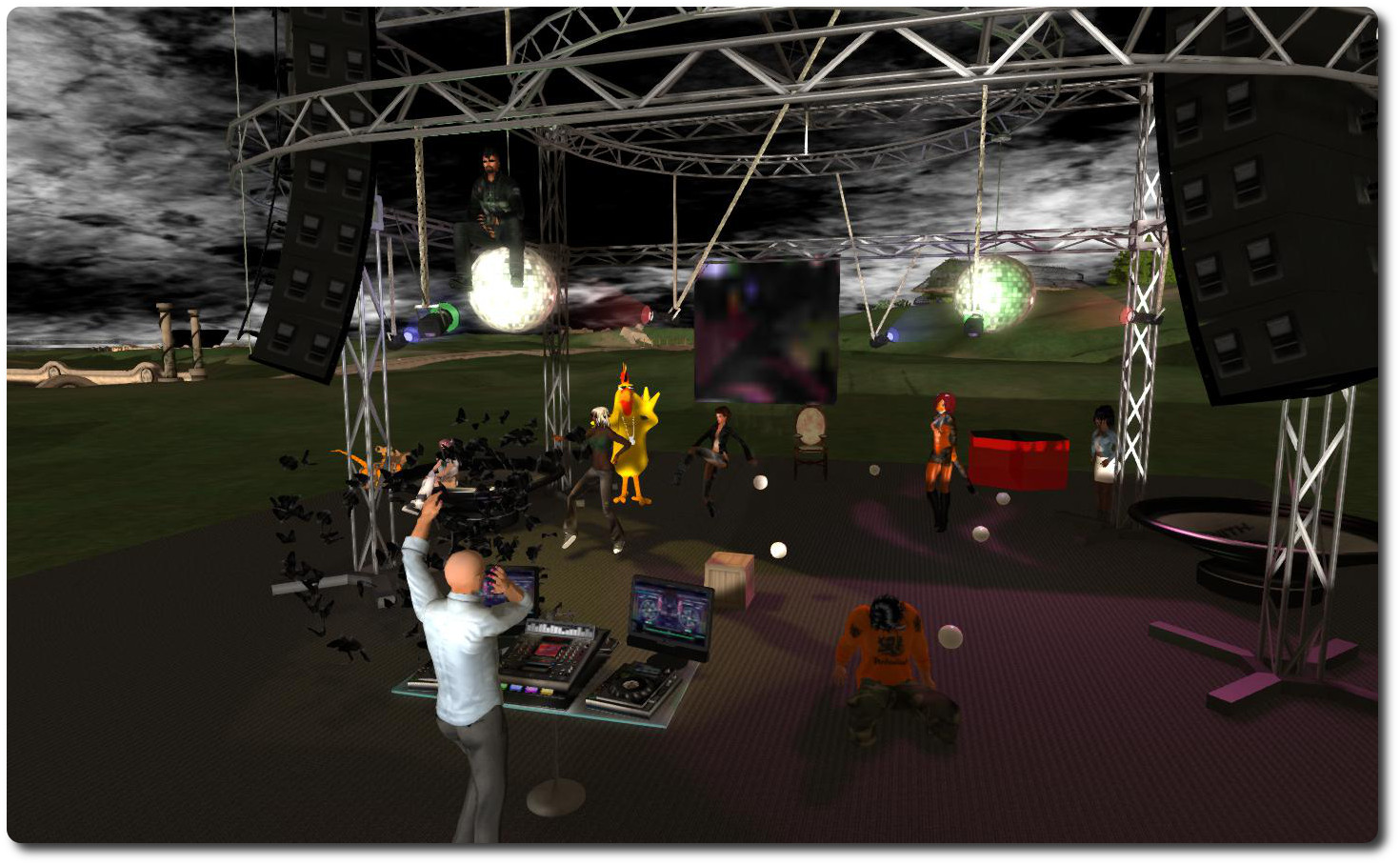
Maestro Linden (foreground) leads the Server Beta meeting. The colony of bats to his left is Voidpointer Linden, who is working on the Oculus Rift project
Maestro Linden (foreground) leads the Server Beta meeting. The colony of bats to his left is VoidPointer Linden, who is working on the Oculus Rift project

Server Deployments week 48 – recap

As always, please refer to the week’s forum deployment thread for the latest news and updates.

  • Main channel, Tuesday December 3rd: received the maintenance package deployed to BlueSteel and LeTigre in week 47

Issues with Main channel deployment

Two issues were discovered post-deployment of the Main (SLS) channel  updates:

  • BUG-4637 “”Can’t rez object at { x, y, z } because the owner of this land does not allow it”when rezzing any object from Library”
  • BUG-4635 “”Selected / sat upon:” incorrectly shows objects that are not actually selected or sat upon. “

Maestro has verified a fix for the latter issue, which he described as occurring with vehicles which get into a “funky” state, ” The vehicle gets ‘bad’ if it loses the passenger right at region crossing,” he said by way of explanation, leaving them appearing to have somebody sitting on them per parcel accounting rules, but who is effectively a “ghost rider”.

It is hoped that these fixes will form a RC release together with some additional small updates prior to the no change window / code freeze kicking-in on Monday December 16th.

Animation fixes

Commenting on the llGetAgentInfo() update deployed to the RC channels at the Server Beta meeting on Thursday December 5th, Maestro Linden said:

The only change which should be visible normally is a fix for avatars with crouch / crouchwalk animation overrides. Previously, the llGetAgentInfo() LSL function would only return AGENT_CROUCHING if the avatar was playing the default crouch or crouchwalk animations, so if your avatar had an AO which replaced those animations, (either with llSetAnimationOverride() or possibly with classic AOs too), scripts couldn’t tell when you’re crouching. But with the fix, the function is looking at whether you’re actually crouching, regardless of which animations are playing.

He went on to note that there is a similar issue with ground sit, wherein if you sit on the ground, the viewer only presents the ‘stand’ button if your avatar is playing the default ground sit animation. Originally, llsetanimationoverride() allowed the ground sit animation to be replaced with something else, but this led to situations where a seated avatar could not stand up.

To fix this latter issue, Kelly Linden implemented a workaround for this problem by making “ground sit” play two animations, the default ground sit and any custom ground sit specified by the user, with the priority of the default ground sit hopefully being low enough not to clash with any custom animation also used. The change was viewed as a compromise to make the AO system compatible with viewer 2x/3x, and is why the SL wiki alludes to in ‘ State “Sit on Ground” will play the default animation in addition to any override set. This is required for correct viewer behaviour. ‘

SL Viewer

The Fitted Mesh project viewer was updated to version 3.6.12.284458 on December 5th.  The update addresses:

  • LL internal JIRA MAINT-3311 (Skinning to some collision volumes is broken)
  • STORM-1985 (Mesh garments don’t adapt to changes in avatar shape)

In addition, it includes the updated avatar_lad.xml and avatar_skeleton.xml  file developed by Jeremiah Linden in accordance with his notes on FITMESH-2 (notes dated December 2nd, 2013).

Oculus Rift Support

Oculus Rift: release of a "feature complete" viewer with Rift support "soon"
Oculus Rift: release of a “feature complete” viewer with Rift support “soon”

Also attending the Server Beta meeting, Voidpointer Linden reported that support for Oculus Rift is feature-complete and should be released “soon”.

There will be a formal announcement when a viewer with Rift support is released (no date as to when this will be as yet), however, a few clues were given out during the meeting:

  • The same viewer can be used in both a “normal mode” and a “Rift mode”
  • There will be no apparent changes to the viewer / UI when in “normal mode”
  • Frame rates when in “Rift look” will be very much down to the user’s own hardware  (unsurprisingly). Voidpointer apparently attended the meeting using a Rift headest and reported that he was getting frame rates ” pretty comparable to normal,” but also noted he has a good machine on which to run SL.

Details on the presentation of the UI, etc., were not provided, as these are apparently still under wraps. In the past, it had been indicated that the UI had been set to be floating “overhead”, just outside of your normal point-of-view, so you had to look up to see them. Whether this is still the case, remains to be seen.

There have been reports of people using the Rift (in general, not just with SL) suffering from nausea and motion sickness. Commenting on this, VoidPointer said, “I’ve been using it for a while now and I don’t really have problems with nausea at this point. [But] the Rift is very sensitive to frame rate, vsync, and other things.   Before the rendering was fully hooked up or optimized,it wasn’t as fun, I’ll say that.” He also revealed the Rift headset can be somewhat adjusted so it can be worn over glasses, if necessary.

As the Rift is not currently commercially available, those with the headset and SDK will be able to make use of the new viewer once released, and will require a DVI cable connected to the headset and their system for the video output and a USB connection for the head tracking capability (so the screen view follows the wearer’s head move to present them with the expected view). Commercial versions of the system will use HDMI for the video.

Rod Humble tries out Oculus Rift in a photo released on July 18th

There was a lot of additional talk about possible future options for presenting in-world views with the Oculus Rift, however, as Voidpointer advised, “Heh, let’s get Rift support first, then talk about more :).”

Whether support for the Rift will be announced before or after the end-of-year break remains to be seen.