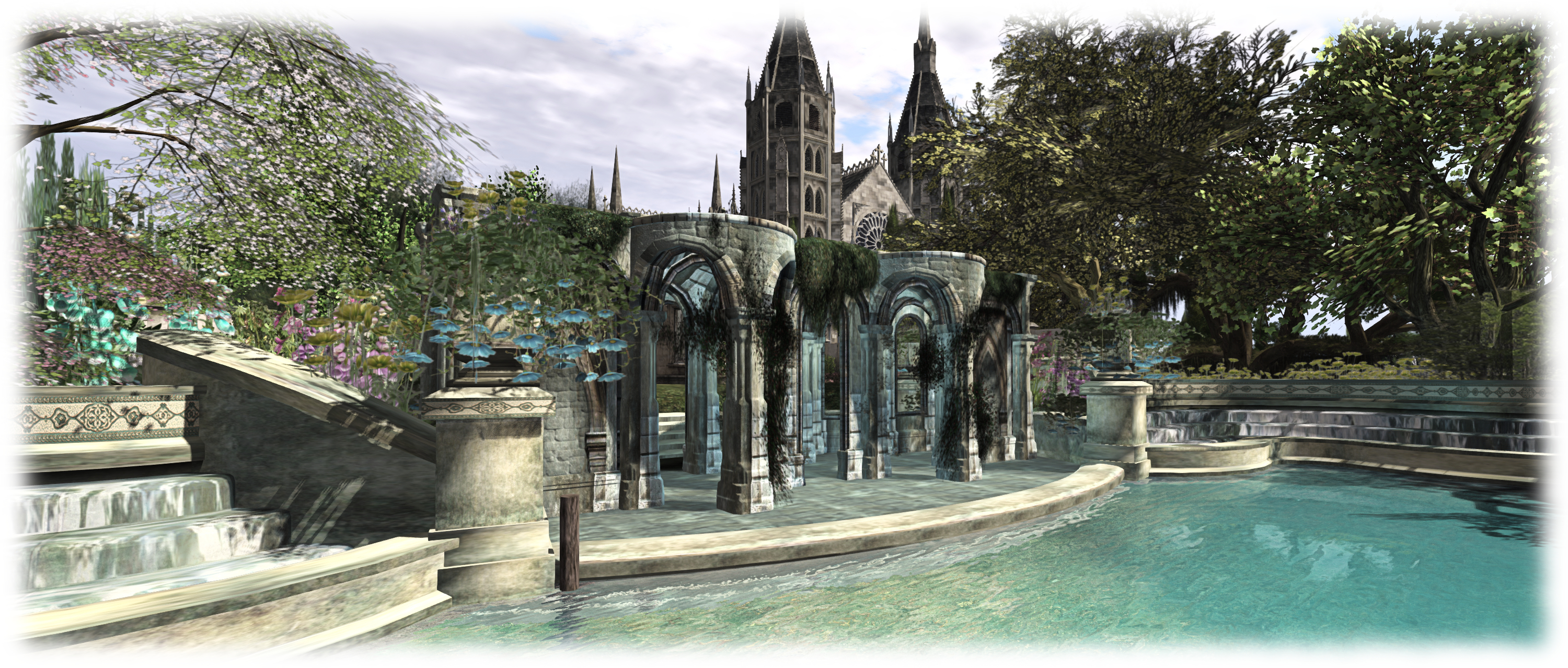
Of Heritage and Wrecks in Second Life

Heritage: Wrecks
Heritage: Wrecks

Wrecks, which opened on Monday, March 7th, is the concluding element of a two-part immersive art installation created by Gem Preiz, the master of the high-resolution fractal landscape. It’s a piece, together with the initial part of the installation, Vestiges (which you can read about here), is presented under the over-arching title of Heritage.

“Heritage is the theme of the two exhibitions,” Gem explains of the pieces. “The heritage passed to us by our predecessors, and the one we shall bequeath to our descendants in the endless fight of life against Time.”

Vestiges, which opened in January, examined the first part of this statement: looking at the heritage passed down through the ages. We were cast into the role of archaeologists examining past (or perhaps even alien) civilisations; those which had come before us, as who influenced our existence.  With Wrecks, Gem poses a question to us: what are we going to bequeath to those generations that follow us?

Heritage: Wrecks
Heritage: Wrecks

The inspiration for Wrecks comes from the recent global summit on the threat of climate change held in Paris at the start of 2016, and what will happen if we continue to ignore the warnings nature is giving us as to the consequences of our continued abuse of the planet’s ecosystem, presenting one possible future our descendants might face.

Thus we are taken on a journey into the 22nd century, and a vision of a world which has come to ruin directly as a result of our failure to act responsibly. We become a part of the crew and passengers aboard what is perhaps the last vessel capable of leaving Earth in the hope of finding a new home far out within the Kuiper Belt.

Heritage: Wrecks
Heritage: Wrecks

This voyage takes the form of a physical journey through 15 rooms, each one with one of Gem’s magnificent fractal pieces standing together with a journal entry. Some of the latter appear to be from passengers, other are clearly from the crew. All make soulful reading: personal fears, anguish, melancholy, even despair, at  all that has come to pass, founded on a lament for an Earth thoroughly ruined by the hubris and folly of humanity.

What if, as one entry hints, as the space vessel Orpheus transit the Moon, we had heeded the gentle warnings of the first astronauts to stand on those desolate plains, only to look back at Earth and recognise it as a fragile, precious jewel of life suspended in a coal-black sky?

Meanwhile, the images serve to both underline and also counterpoint the essence of the text. While the landscapes and scenes presented may appear desolate and shattered, so to do they remind us that humanity and nature are powerfully creative forces: what might come from us combining our inane abilities with those of nature, rather than simply putting our needs before those of nature?

Heritage: Wrecks
Heritage: Wrecks

If this sounds an overly dark piece, rest assured it isn’t. Rather it is a layered, nuanced piece which aims to get us thinking about matter of ecology, climate change, and our relationship to this one cradle of life we have: Earth. Yes, there is the warning that if we don’t mend our ways, if we fail to act responsibly towards this fragile environment surrounding us, then we are ushering in the potential of ruin and heartache for future generations.

But so to is there a message of hope; a reminder that it is not yet too late. Just as the crew of the Orpheus, in the final chapter of their voyage, find the means to return to Earth, to reunite with those left behind and offer a way to recover and restore the planet, so to are we reminded that there is still time. We can still take the firm, committed step of ceasing our self-centred denials, excuses and procrastinations and decide we will act more responsibility towards this planet, and in doing so lay the foundations by which we can bequeath a rich, vibrant and healthy world to our children and those who follow them. All it takes is a little collective courage.

Heritage: Wrecks
Heritage: Wrecks

SLurl Details

Impressions: a personal view of Second Life

Impressions; Inara Pey, August 2015, on FlickrImpressions, LEA 6 – (Flickr) – click any image for full size

When Secret Rage approached me in mid-July and asked me to consider producing a full region installation in which to display my images from around Second Life, my first reaction was to refuse. Not out of stuffiness or false modesty, but because I genuinely don’t regard myself as an SL photographer, and am far from convinced the images I produce for blogging purposes are of interest as an exhibit.

However, Secret is a very persistent (and persuasive!) person; so I’m now pleased – and more than a little nervous – to say that my first ever art-focused installation in Second Life is now open, and I’m calling it Impressions. It can be found at LEA 6.

Impressions; Inara Pey, August 2015, on FlickrImpressions, LEA 6 – (Flickr)

So what is this all about? Well, three things, all summed up in the word “Impressions”.

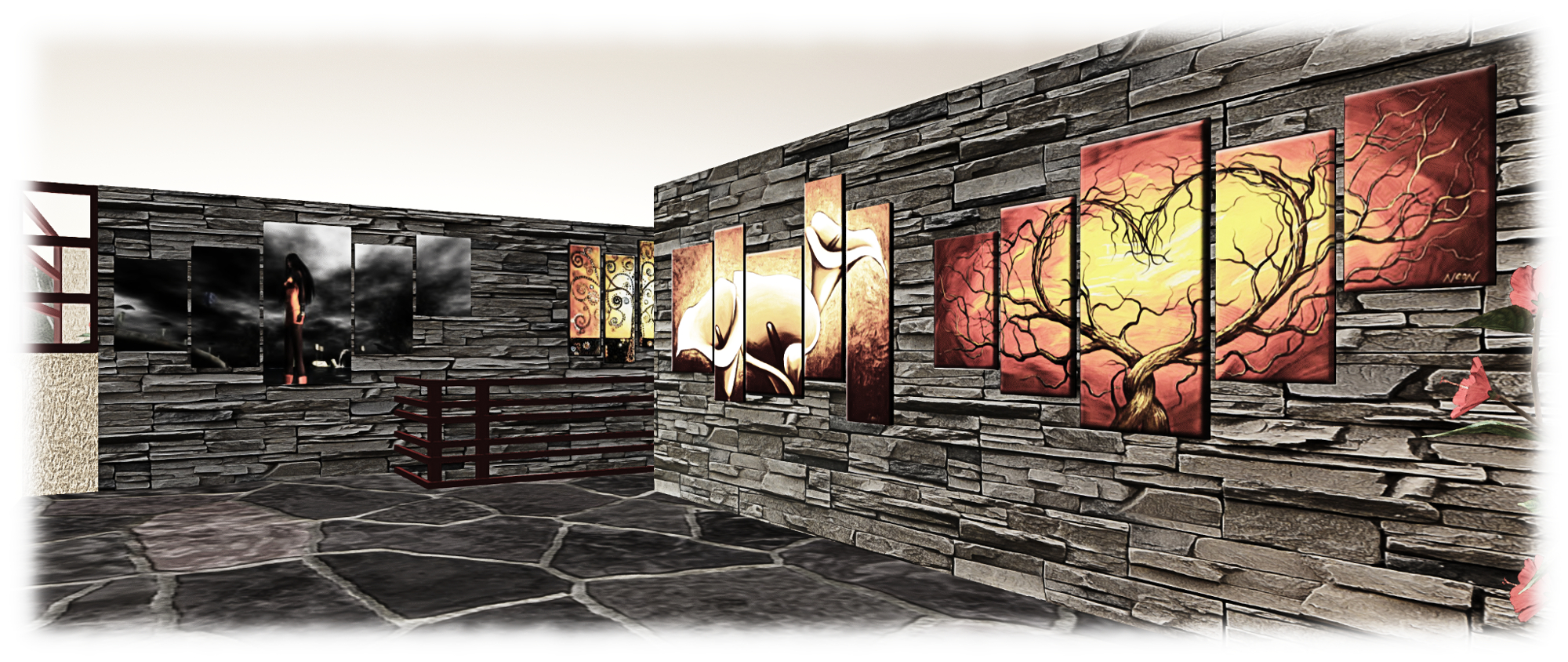
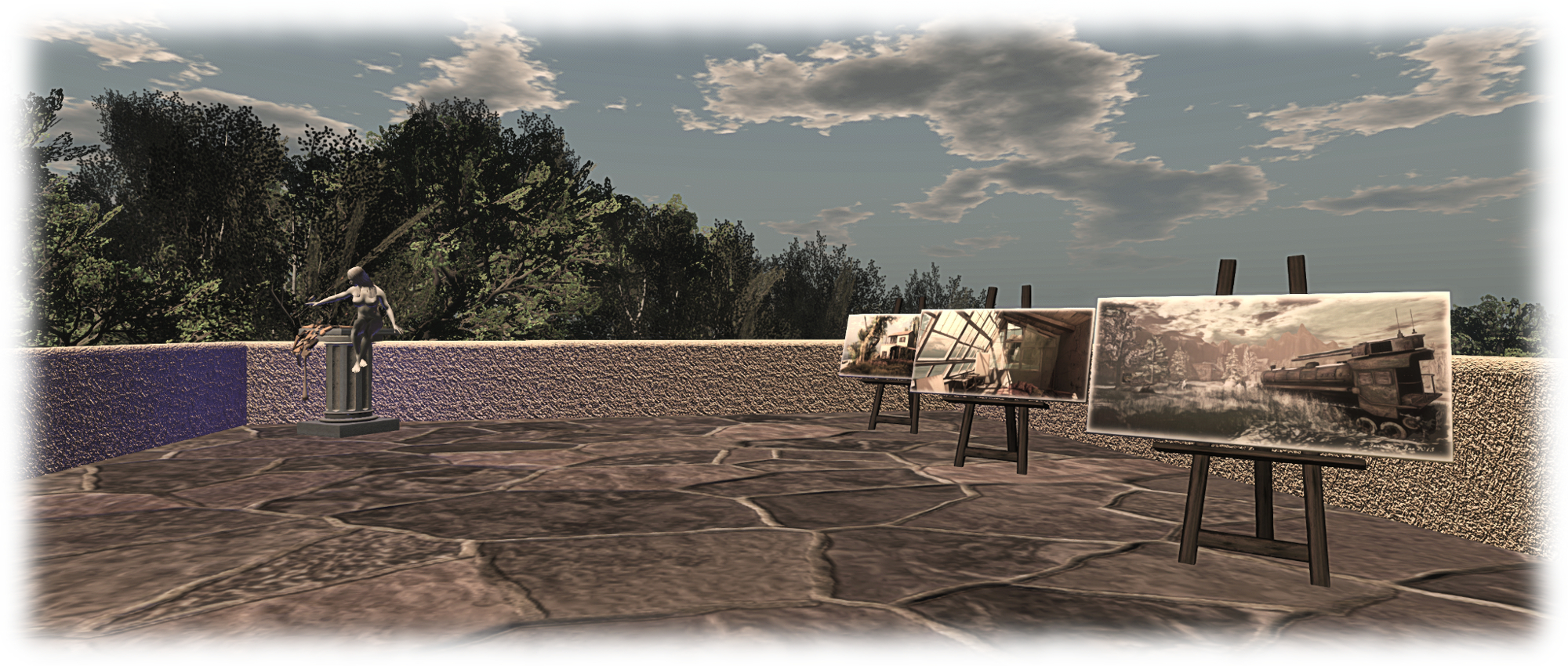
  • The first is a display of my more recent images and videos of places I’ve visited around Second Life – the impressions they’ve given me, if you will.
  • The second is the 2D and (particularly) 3D work of a talented Italian student, CioTToLiNa Xue – work that made quiet an impression on me when I happened across it.
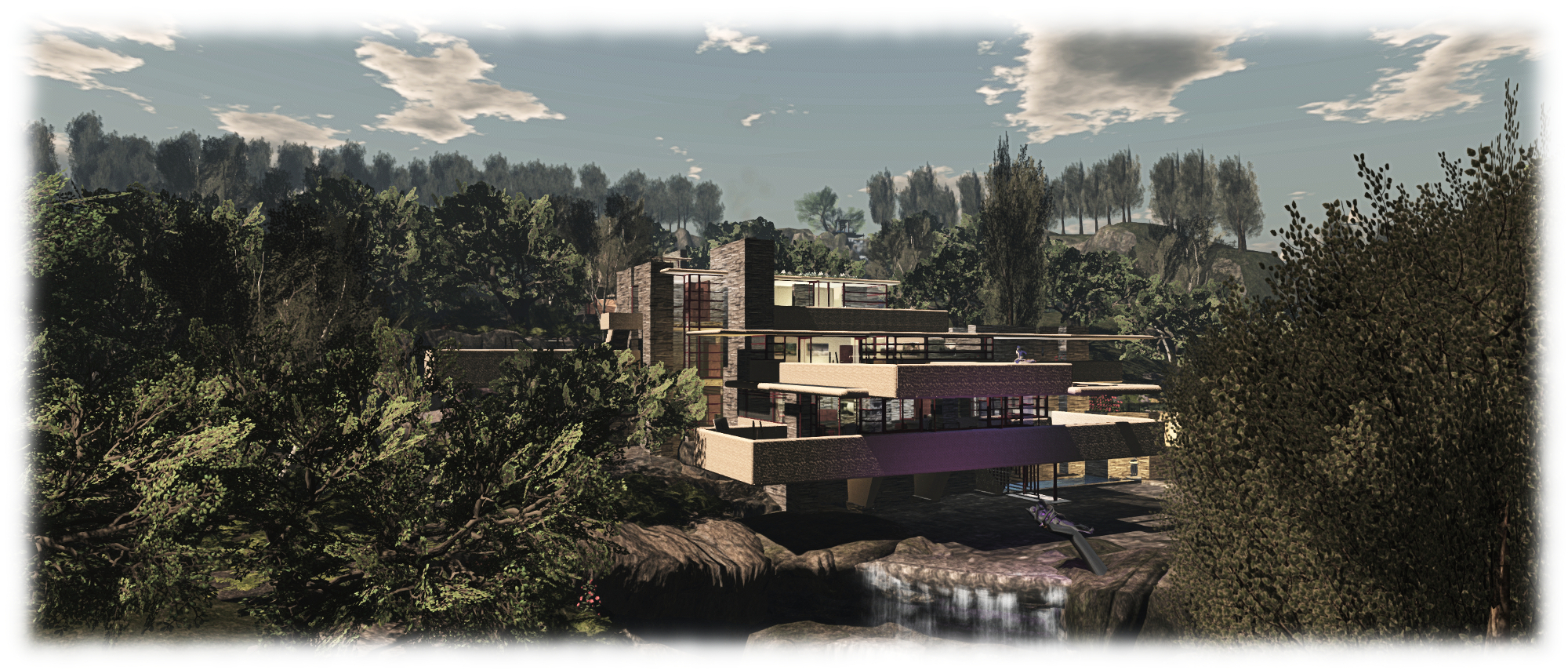
  • The third is the setting itself, an interpretation of and iconic American house of the 20th century, which has long made an impression upon me.

Impressions; Inara Pey, August 2015, on FlickrImpressions, LEA 6 August 2015 (Flickr)

I’m particularly pleased about the second of these bullet points. CioTToLiNa is an extremely modest woman who only started teaching herself 2D and 3D design six months ago, and I think what she is already producing speaks volumes about her developing talent. I came across her sculptures by chance whilst visiting Art on Roofs in July, and was really delighted when she agreed to display her work as a part of Impressions: they add a further depth to the house, the original of which features a range of sculptures and art pieces scattered around the buildings.

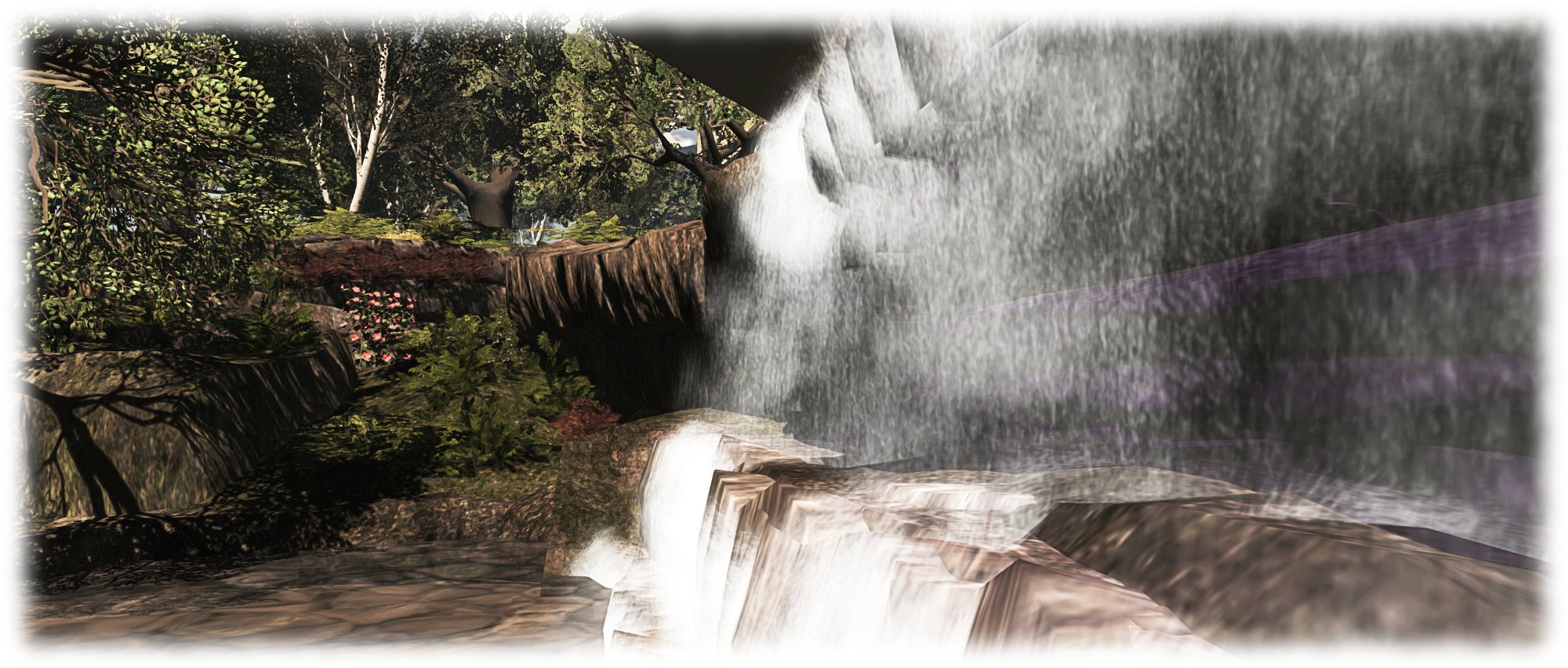
The house is a personal interpretation of a place I have yet to visit in the physical world, but have grown to love. I have attempted to be reasonably accurate in my interpretation ot the house and river over which it sits, but the rest of the region is purely made from my imagination, and offers places to sit in the sun or under moon, listing to the music, have a picnic, laze in a hammock, and so on.

Information givers at the landing point and in the great room of the house provide information on the art and images on display. So, I hope you’ll visit and enjoy! Impressions will be open through until the end of September – you’ll probably find me pottering around tweaking things here and there!

Impressions; Inara Pey, August 2015, on FlickrImpressions, LEA 6 August 2015 (Flickr)

There is no preferred windlight for the region – the sounds and lighting are designed to change with the SL day. However, if you wish to use a windlight yourself, I recommend the following for daytime lighting:

  • [NB]-MistyDay-5pm – set the Sun to around 11:00am-3:00 pm.
  • [TOR] MIDDAY – Baskaholic.

In closing, I would like to extend sincere and warm thanks to the following people, without their support, this installation would never have seen the light of day: Secret Rage, CioTToLiNa Xue, Jodi Serenity, Whirly Fizzle, Frankx LeFarve, and John.

With a very special and deep thank you to Cube Republic, whose generosity and support has been truly inspiring.

SLurl Details


The Seasons of Life in Second Life

Seasons of Life - LEA 4
Seasons of Life – LEA 4

Now open at LEA 4 is Seasons of Life by John (Johannes1977 Resident), a Second Life photographer who has been rightfully gaining a respected reputation in-world for his photographic studies, which straddle the virtual and the physical worlds. As a serving member of the US Marines, for example, he shot a series of photographs showing military life whilst on deployment to Afghanistan, and these were recently featured in an exhibition at The Rose Gallery, Angel Manor.

Seasons Of Life is focused squarely on John’s work as an in-world artist, and is his first exhibition at the LEA. In his words, it represents “a person’s life cycle combined with the scientific seasons of the Earth”.

It sees the region, which is largely flooded at ground level, divided into five areas. Four of these are devoted to the four seasons – Winter, Spring Summer and Autumn, each presided over by portraits of its Guardian, as modelled by Draakje Dailey (Spring), Eleseren Brianna (Summer),  Emma Portilo (Winter) and Issy Flatley (Autumn). The fifth area is given over to the Guardian of the Night, modelled by  Seashell Dench.

Seasons of Life - LEA 4
Seasons of Life – LEA 4

The portraits are individually and collectively fascinating, presented in a variety of styles which offer strong contrasts to one another, while at the same time complimenting their individual seasonal theme,

For example, the Winter Guardian is presented in two monochrome / grey-scale images, providing a subtle emphasis of the cold grip winters holds. However, where one has a bold, charcoal-like thrust to it, the other offers a more gentle, light-handed pencil feel to it. Thus they contrast with one another while at the same time complementing the scene they present – the stark boldness of the darker image emphasising the Guardian’s power as she towers over the landscape, arms raised and outstretched as if in invocation.

Similarly, Autumn uses a more painting-like finish to each of the images (both watercolour and oil), allowing colours to be over-emphasised, echoing the rich natural hues of nature at that time of the year.

Seasons of Life - LEA 4
Seasons of Life – LEA 4

Clever use is also made of animated gifs in places which again adds depth to the images concerned. The Guardians seem to shimmer into existence as you cam onto the portraits, for example, while in an Autumn images, the waters are the Guardian’s feet ripples gently. The animations can take a number of seconds to fully work given the rain, show and lightning effects in the installation, but the end result is certainly eye-catching.

All told, an intriguing installation which will be open through until the end of October, I believe – but do take care when walking around. Step off the walkways, and you might find the water a tad bit deeper in some places than in others 🙂 .

SLurl Details

A Tudor love story in Second Life

Love, Henry, LEA 8
Love, Henry, LEA 8

Now open at LEA 8 is Tahiti Rae’s Love, Henry. Created with the assistance of Sonic Costello, Augurer Resident, Caryl Meredith, Annu Pap, Mitsuko Kytori, Abel Dreamscape, this is an interactive examination of the relationship between King Henry VIII of England and Anne Boleyn, from their courtship to her becoming his wife and Queen Consort, through to events immediately prior to her death just 1,000 days later.

An outline sketch of events would be to say that Henry was bound in childless wedlock to Catherine of Aragon when Anne caught his eye (having in earlier years taken Anne’s older sister, Mary, as one of his mistresses), causing him to desire her to the point of having his marriage annulled so that he might wed her. Thereafter, and unable to provide him with a son and heir, she also suffered a fall from grace, largely engineered, to suffer execution in the Tower of London.

Love, Henry
Love, Henry, LEA 8

Obviously, the full story is far more complex, involving as it does several figures key to England’s unfolding political and religious landscape, including Cardinal Thomas Wolsey, Thomas More, Thomas Cromwell and  Thomas Cranmer, and the upheavals of the English Reformation; however, part of the intent of Love, Henry is to encourage people to explore Tudor history for themselves, so I’ll leave it at that.

As a love story, Love, Henry focuses on two things: a letter said to have been written or dictated by Anne Boleyn following her incarceration in the Tower of London, and a “new discovery” author Sandra Vasoli claims to have made. The provenance of the letter has been hotly debated over the years, and is believed to have never come before the eyes of the King, having been withheld and hidden by Cromwell. However, Vasoli claims to have found evidence that on his deathbed, Henry expressed remorse for his actions towards Anne. Thus Tahiti poses her question to visitors and invites their thoughts and feedback: did Henry come to regret his decision to have Anne executed?

Love, Henry
Love, Henry, LEA 8

The installation itself is split into three parts, which visitors are guided through in turn, from the welcome area, which offers information necessary to fully enjoy the experience together period costumes which can be optionally worn during the rest of the visit; through the Tudor Library, which forms the main interactive element of the installation, and is built around Anne’s letter from the Tower, together with notes on Sandra Vasoli’s “new discovery”; to a  ground level build focused on a grand Norman-style cathedral set within a beautiful garden space, in which there are secrets to be uncovered.

Love, Henry, deserves to be explored carefully. Not only because of the wealth of information it contains and opportunities to provide input and feedback of your own (which aren’t restricted just to the Library, which really does offer a lot), but because it is beautifully put together. For example, the garden contains a loggia which appears to have been inspired by the one at Hever Castle, Anne Boleyn’s home. Further, the cathedral the garden surround may be an imposing centrepiece, but it is also very symbolic, representing marriage and death, both of which have obvious significance where Henry and Anne are concerned, while simultaneously also reminding us of the religious strife their relationship caused. Nor are these the only touches to be found as one explores; hints of Anne’s fate might be seen, together with reminders of the brutality of the age.

Love, Henry
Love, Henry, LEA 8

The slant to the installation might be a little romanticised – the relationship between Henry and Anne was born as much out of ambition on both sides as out of love; but that doesn’t matter. This is supposed to be a romantic “what if”, one which encourages the visitor to explore one of England’s important periods of history, both through the information presented here and for themselves.

As mentioned above, do keep in mind when exploring that there are secrets to be found – including the gateway to the “final chapter” of Henry and Anne’s story. However, as bloggers have been asked not to reveal too much about these,  I’ll say no more here. Also, do make sure you have the audio stream enabled with exploring. Excellent and considered use is made of music by Canadian composer Trevor Morris, which adds further depth to Love, Henry.

Love, Henry
Love, Henry, LEA 8

Tahiti says that contributions from those willing to provide their thoughts and feedback will be incorporated into the installation, and she welcomes requests to bring in student or group tours to visit Love Henry.

Very definitely recommended.

SLurl Details

The mystery of the Egg in Second Life

The Egg
The Egg, LEA 19

Now open at LEA 19 as a part of the 9th Artist in Residence series is Livio Korobase’s The Egg. And a curious installation it is (slight pun intended).

The introductory notes provide a Theosophy Trust treatise on the role of the egg throughout human history. It’s a comprehensive piece, guiding the reader from the creation myth of the Cahuilla Indians by way of Scandinavia, Russia and China, through the Laws of Manu and asks us to consider the role of the egg in reproduction, the power of life, of creation, that it contains.  It’s also quite heady, and something that may well leave the reader just how it and the installation might relate to one another.

The Egg
The Egg, LEA 19

This presents a giant egg, supported atop a scaffold, and itself topped by a meditative frog. Below and around this lies a gently undulating landscape, semi-flooded and overlaid in places by mandalas. On this sits what I can only describe as a series of scenes, each one individual in style and presentation (and each uniquely identifiable as Livio’s work). Some of these offer elements those familiar with Livio’s past installations may recognise. Some of them are wonderfully interactive (touching and clicking is strongly encouraged, as is having local sounds enabled).

But what is their relationship with the introductory notes? Obviously, if one seeks meaning hard enough, it will be found; and in truth there are some subtle echoes between text and installation. The egg sits at the centre of everything, much as it is represented as being at the heart of all creation; and certainly, there is a lot of creation evident in the installation: scaffolds, ladders, wheelbarrows, and cement mixers. The egg is the source of life, and there are  references to life and love to be found. The egg is a cultural symbol, and there are cultural symbols in evidence here as well; some perhaps more obvious than others.

The Egg
The Egg, LEA 19

But all that said, I cannot help but feel that when all is said and done, Livio has approached this installation with a very large twinkle in his eye. While the Theosophy treatise on the egg may well stir the grey matter, he’s actually telling us not to look too deeply for a connection, but simply accept – and enjoy.

However you opt to interpret the installation, do be sure to visit – and make sure you spend time poking and touching and listening and enjoying. Above all, do make sure you pay a visit to the area under the egg, and follow the arrow (that is, click on it). It will lead you to the heart of the egg itself.

 SLurl Details

Cica’s Dreamers in Second Life

Dreamers, LEA 24
Dreamers, LEA 24

The ninth round of the Linden Endowments for the Arts (LEA) Artist In Residence (AIR) programme kicked-off on July 1st, with the awarding of the LEA’s 20 AIR regions to their respective grantees. Under the terms of the AIR grants, those awarded a region have up to 4 months in which to prepare it for their installation, and have it formally open to the public for at least two months – although the set-up period is flexible, and can be a lot shorter if the artist(s) wish(es).

Cica Ghost opted to really maximise the time people could enjoy her work. While she only received the region on July 1st, it officially opened to the public on July 6th (an event I had to miss due to being away between the 5th and 7th inclusive).

Dreamers, LEA 24
Dreamers, LEA 24

Dreamers is a marvellous build which extends from the ground up into the sky, where eight scenes await visitors. The ground level presents a fantasy environment, perhaps lifted from a dream, full of bright colours and fantastical creatures and wheeled vehicles on a huge scale, all waiting to be explored, and bearing Cica’s colourful paintings, making careful examination of all of them a must.

Within the midst of this marvellous landscape sit sixteen long-necked heads, faces lifted towards the sky, eyes closed – the Dreamers of the installation’s title. Touch eight of them, and they will each allow you to share in their dream, transporting you to one of the eight skyborne scenes Cica has created overhead.

Dreamers, LEA 24
Dreamers, LEA 24

These will each be immediately recognisable to anyone familiar with Cica’s work, presenting as they do little extracts from past installations she’s created. So it is that through the Dreamers we once more get to see the likes of Little Town, Ghostville, Ruins, and Living in a Bowl, to name but four of the scenes on offer.

Small in size, these little scenes are enough to either pique curiosity (for the first-time visitor) or awaken memory (for those who visited the originals), setting one on a personal daydream. I could write a whole lot more about Dreamers, but really the best way to experience it is to go see it for yourself and have a little fun; it is a bright, uplifting place, full of images and daydreams, and there are more than a few poses and things to be found throughout which let you become a part of the settings, at least for a while.

Dreamers, LEA 24
Dreamers, LEA 24

Given only eight of the 16 Dreamers currently allow people to share in their dreams, I wonder if Cica might be adding to the installation as time progresses through to December, and the end of this round of AIR grants, allowing the remaining eight heads to share their slumbering imaginings with us. Or perhaps something else might appear in LEA 24 in due course.

Either way, I took the liberty of making a short film of what is there to enjoy now, if only to give a further flavour and whet appetites. So – enjoy!

SLurl Details