The Portuguese Way

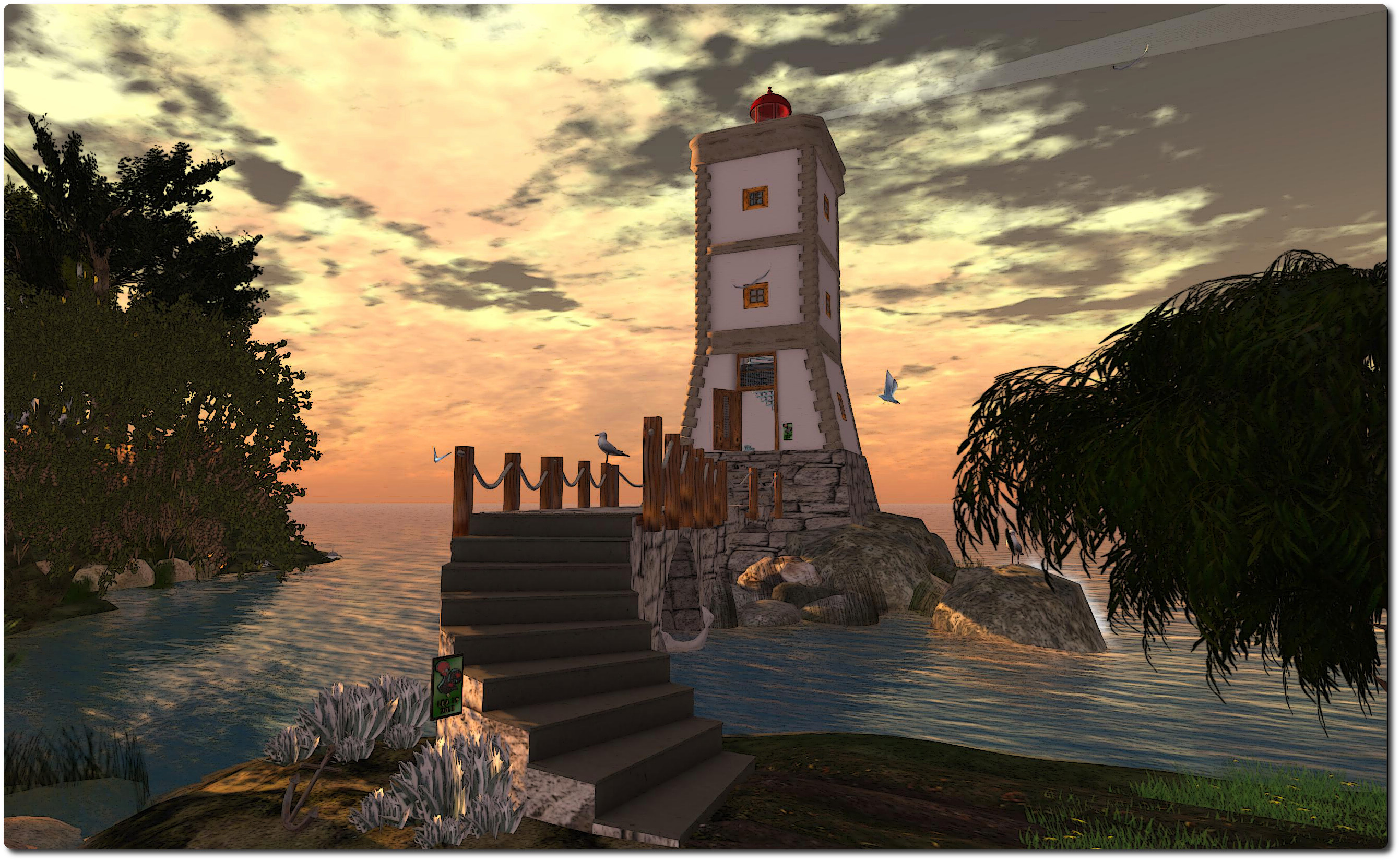
The Portuguese Way: a model of the lighthouse tower of Farol Cabo Carvoeiro

The Portuguese Way, a collaborative piece by Chagal Campestre, Flor Campestre, Janjii Rugani, Wan Laryukov, Winter Wardhani, is a little different from “the usual” (however you might define that!) exhibitions at the Linden Endowment for the Arts.

Explaining their piece, which opened on September 13th, the team said, “When we decided to present a project to apply for a LEA sim, we thought about doing something different from what we usually see in the LEA sims.

“So we opted to do a realistic sim, depicting RL Portuguese landmarks and at the same time, show our history and culture, hopefully breaking the stereotype that Portugal is all about sun and sea. We called it ‘The Portuguese Way.”

The Portuguese Way: a model of the 25th of April Bridge, one of the world's longest suspension bridges (2.2 km long), with the art centre beyond
The Portuguese Way: a model of the 25th of April Bridge, one of the world’s longest suspension bridges (2.2 km long), with the art centre beyond

Portugal is somewhere I’ve never had the pleasure of visiting. I rather suspect that, like a lot of other people, my view of it amounts to thoughts of Portugal in a modern context – as the team state, a destination for holday goers and of being “the country between Spain and the Atlantic”. It’s very easy to forget that it was once the centre of the longest-lived colonial empire in Europe, lasting some 600 years from the capture of Ceuta, northern Africa in 1415, through until the handover of Macau to China in 1999 (de facto) or the granting of sovereignty to East Timor in 2002 (de jure), depending on one’s point-of-view.

During that time, the empire held territories across what are now 53 different sovereign states, with some 240 million Portuguese speakers (making it the 6th most-spoken language in the world).

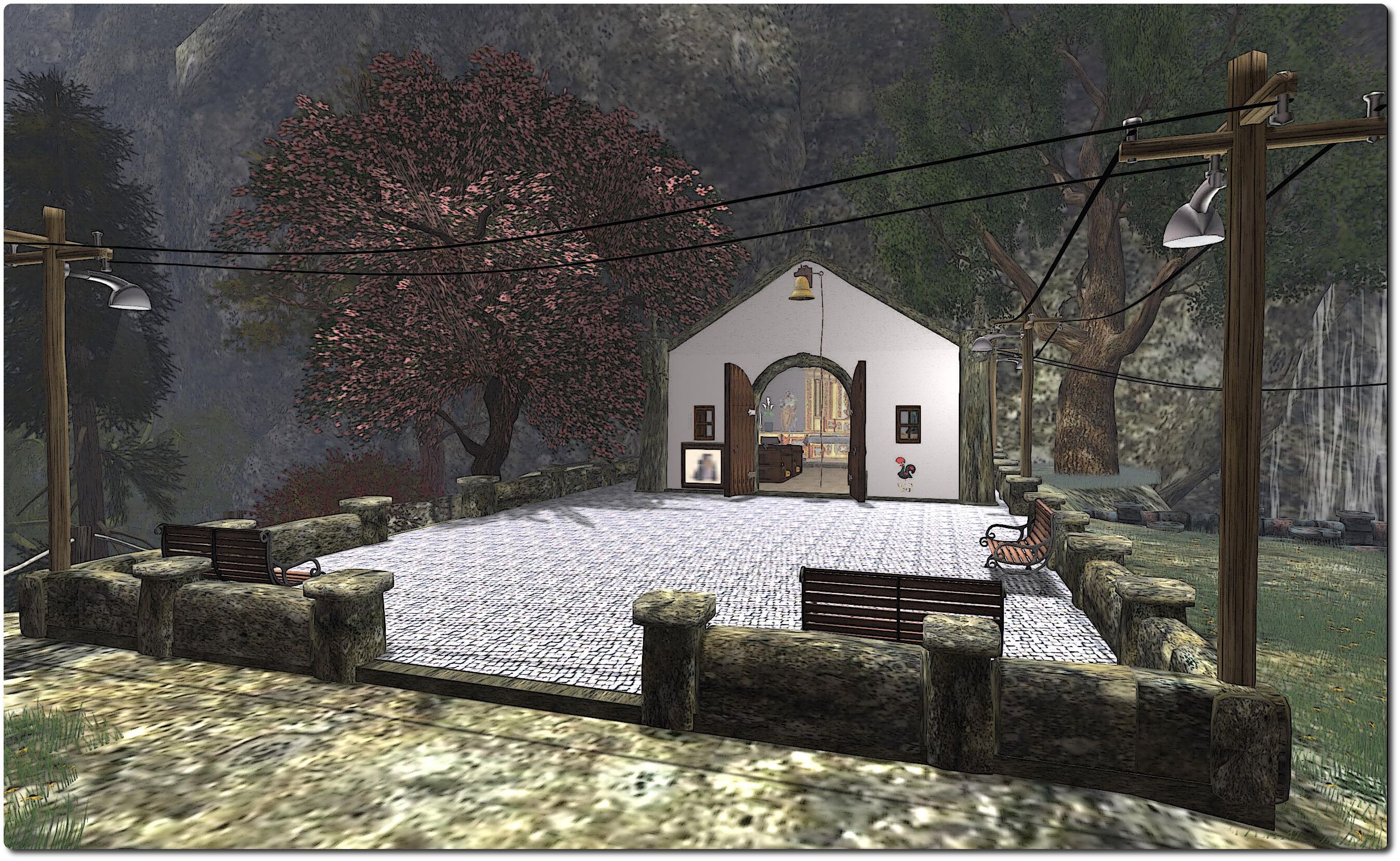
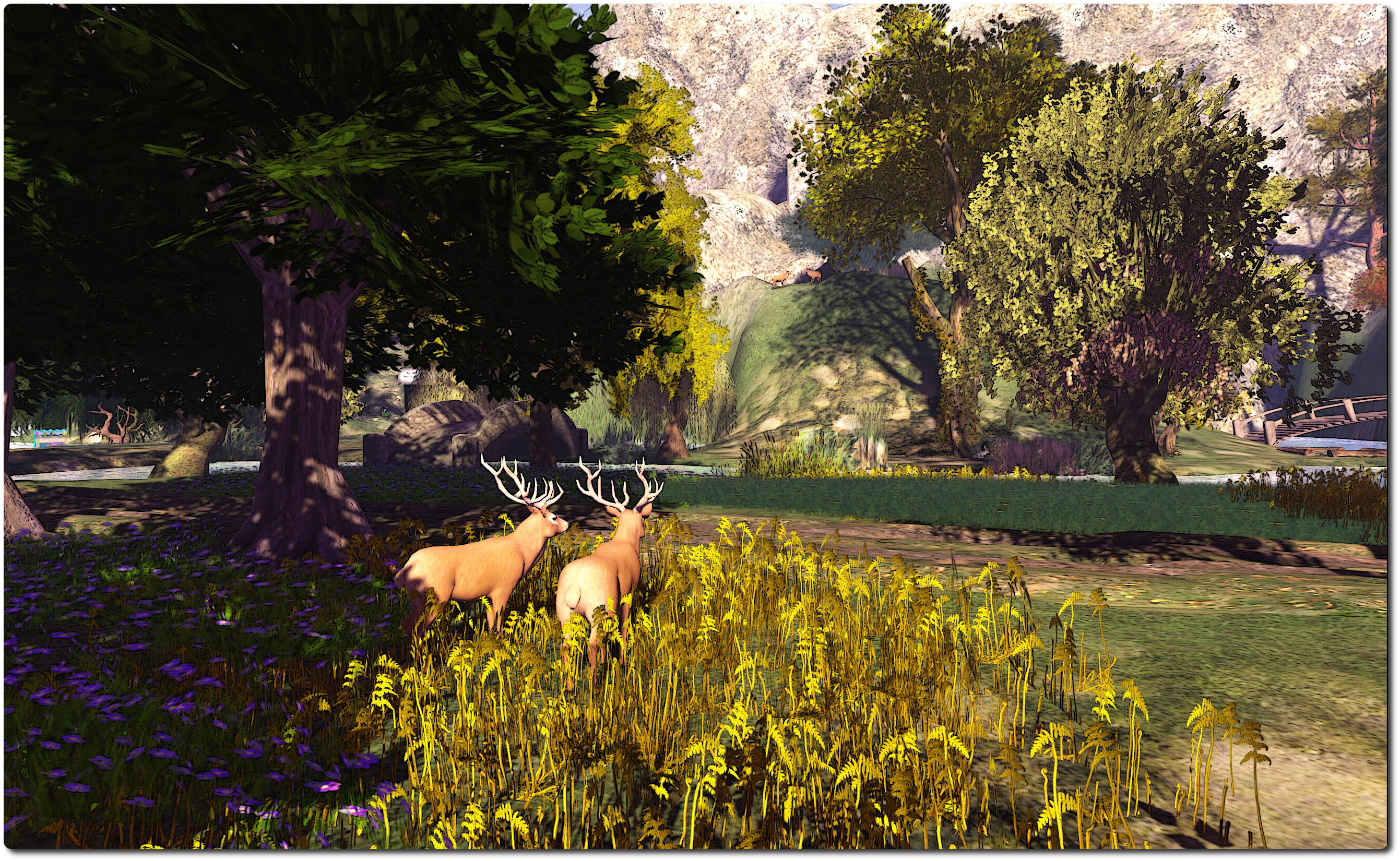
The exhibit itself presents a number of famous Portuguese landmarks and historical sites, as well as various rural scenes, in a landscaped environment one can explore in a number of ways – on foot (recommended), via balloon or via teleport links, for example.
The Portuguese Way
The Portuguese Way

There are information givers scattered throughout the region, each disguised to blend-in with its surroundings which provide a broad range of information on the country: history, political, economy, legends – such as that of Sebastian – culture, art and more.  On one side of the region sits a maze, inspired by Ensaio sobre a Cegueira ( Eng: Blindness), a novel by Portuguese writer and recipient of the 1998 Nobel Prize in Literature, José Saramago.

All told, the region packs a lot into it, so it is worthwhile taking the time to explore. The note cards are both informative and clearly written and help present one with insight into Portugal and its rich and diverse history and its position in the modern world. As well as the exhibit itself, the team responsible for The Portuguese Way are planning a series of cultural and musical events by Portuguese artists and performers working in Second Life.
The Portuguese Way
The Portuguese Way

Related Links

Musiclandia: in relation to music

Musiclandia, a full sim art piece by Livio Oak Korobase, opened on LEA-11 on Wednesday August 28th as a part of the 5th round of the Artist-in-Residence (AIR) programme. The piece is billed as an exploration of music as an art form, and offers-up the following teaser:

What is the definition of music? What is the relationship between music and mind? What is the connection between music and emotions? Search for your answer in Musiclandia.

Musiclandia
Musiclandia

It’s a fascinating piece, offering a watery landscape in which musical instruments form a series of set pieces inviting exploration. This is an interactive piece, requiring a reasonable amount of time in order to discover all of its secrets, so it’s worth taking your time to look around each of the pieces and discovering what there is to see and learn – note cards are offered at various points around the installation, providing further information and food for thought.

The arrival point provides some basic instructions – you’ll need sounds active to enjoy the exhibit (although not necessarily media streaming enabled) and you should drop draw distance to 128 or so metres to stop most distractions from the neighbouring regions creeping into your view. There’s no set order to exploring things, just go where your eyes take you, out from the little village square under the massive brick piano and across the water.

Musiclandia
Musiclandia

Some of the many roles music plays in our lives are explored here; how it can channel a freedom of personal expression, how it can play an emotional, spiritual or therapeutic role. In these explorations, issues of identity and self are also touched upon. Symbolism is also strong here; some of it obvious, some of it less so; when it comes to matters of self, a towering stag, harp held within its antlers, reminds us umuntu ngumuntu ngabantu – “you are who you are because of how you relate to others around you”.

The food for thought comes in a number of forms; the Musiclandia Beach, for example delves into the role of music and sound in creation myths, including the origin of that simple Biblical phrase “In the beginning was the word”. Elsewhere, the Lab and Jam area examines the role of music in therapy, while Feathers and Kites probes matters of self and identity.

Musiclandia
Musiclandia

In these explorations, Livio draws on the writings of a number of people; some may be recognisable – even notorious / controversial – to visitors, others perhaps not so; but the selected passages do invite further explorations; if you find this is the case, the sources are cited, and the Interwebz are your friend.

Which is not to say that it’s all a dry, intellectual piece; there are plenty of opportunities to find your own self-expression through music, be it via dance, interacting with objects or enjoying the sensation of simply playing an instrument.

Musiclandia
Musiclandia

The piece isn’t limited to the ground, either, there are a couple of sections up in the sky; Moby and Paradiso. The latter looks like it is intended to be used as live music / entertainment venue, although this is by no means clear (at least, I didn’t get a note card explaining its purpose on my arrival).

Getting around the exhibit can be done on foot, via the teleport map in the village square, or for those who are feeling serene, via a number of Harleywan Haggwood’s flyable kites. As mentioned above, this is a piece that requires a little time – and an open mid – to explore, and the kites are actually a fun way of getting around and letting thoughts and reactions to the piece flow freely.

Musiclandia
Musiclandia

Related Links

More MOSP for you to play with

I find the Machinima Open Studio Project intriguing, as past posts on the subject demonstrate.  Chic Aeon’s work to provide machinima makers and photographers with a range of facilities and sets is always evolving. As such, I tend to periodically pop back and see what is going on and look at what has changed since my last visit. I did so at the start of August, knowing that Chic has recently spent some time adding, tweaking and updating, and was curious to have a look at what’s changed / arrived, and report back on some of the updates.

Cherry Blossom Romance at MOSP

On the Ground

At the ground level, there are some new buildings, a place to go fishing (complete with casting animations, etc.), and a new rural / farm scene complete with green house, crops and plants and beasty of a tractor. These all combine to add a range of filming  / photography options in a natural, open setting.

One of the recent ground-level additions at MOSP

Up in the air there have been quite a few changes / updates since my last visit. The “green platform”, now called Sage, has received a number of new additions. There’s now a pond with a water wheel, a little campsite with caravan and barbecue, and a play area with a roundabout. The seats outside of the caravan are scripted, as are the places around the table set for a meal from the barbecue, which also give out utensils, etc.

Barbecue and caravab at Sage
Barbecue and caravan at MOSP Sage

Not far from it, and sitting as another outdoor set which could be used with it or those on the ground as well as suiting a period setting, is Cherry Blossom Romance, which looks particularly inviting at sunset.  While the Country Road continues the outdoor theme and features a long stretch of open prairie land road, with a water tower and a tractor out in the fields.

The Road to Nowhere at MOSP
The Country Road at MOSP

For those looking for something more urban, there is the full sim city I looked at last time I visited MOSP, and to which has been added the City of Lost Souls, a backstreet set with both an exterior street and several interiors which show the grungy side of town after dark.

Several of the sets I’ve previously visited have been given an overhaul as well, including the village, while a new set, Something Wretched, provides something for those into the horror / mystery / gothic scene, with a build incorporating materials for added depth.

Sci-fi film-makers are not left out either, as there is a ship’s interior which provides a corridor and a control room, and which has sections that are transparent from the outside to enable freer camera movement. I’ve no idea if more ship parts are planned, but would assume they can be provided were there a demand.

"Hailing frequencies open" - the ship's interior at MOSP
“Hailing frequencies open” – the ship’s interior at MOSP

The great thing about this project is that it is always being updated and new sets are always appearing. This makes listing all the changes a little hard – but if you’re into machinima and want to track what is going on and whether there are sets appearing which may interest you, then make sure you keep an eye on Chic’s own MOSP blog.

Don’t forget as well that there are always things being added around the sound stages, which offer smaller set-piece opportunities for filming, and the corporate offices, which can be used for a wide variety of roles. You can get the LMs for these from the arrival point, together with LMs to all the other sets / areas.

Whether you are a machinima maker or a photographer, if you haven’t visited MOSP before, it is worth while taking the time to do so; you never know what you might find there to help with a given project, and Chic herself can easily be reached to provide assistance and advice, if needed.

Related Links

LEA announce AIR 5 selection

LEA_square_logo_60On Friday August 2nd, the Linden Endowment for the Arts announced the successful applicants for the 5th round of the LEA’s Artist-in-Residence (AIR) programme.

They are: Marx Catteneo , Joey Aboma, Giovanna Cerise, Asterion Coen, Aloisio Congrejo, Gnupf Gufler, NaTaS Janus, Scotsgraymouser Janus, Karkassus Jigsaw, Gracie Kendal, Livio Korobase, Crap Mariner, Johnas Merlin, olgastr63, Takni Resident, Eupalinos Ugajin, Azwaldo Villota, Winter Wardhani, Kimika Ying and Newbab Zsigmond.

Nin9 by Marx Catteneo, part of the 4th round of AIR projects

The LEA received over 30 applications, and those selected were viewed as presenting “truly outstanding proposals that represent a diverse range of virtual art.” While round 5 sees some artists returning for a second time, the majority of those selected will be exhibiting at LEA for the very first time.

The successful applicants will each be allocated a full region within the LEA for a 6-month period. They have up to four months to prepare their projects, which range from full-sim immersions, to innovative builds geared specifically for multimedia works such as sound and machinima. Each installation must be open for a minimum of two months of the 6-month allocation, and it is expected that some will be open in advance of the four-month build deadline. All exhibits must be open to the public by the end of November 2013 at the latest.

All openings will, as usual, be announced in the LEA blog.

LEA open next round of AIR land grants

LEA_square_logo_60On June 16th the Linden Endowment for the Arts announced applications for the next round of land grants is now open in the Artists in Residence (AIR) programme. For artists not familiar with the LEA or the land grant process, the following is taken from the formal announcement:

The LEA Land Grant program seeks to promote and nurture the arts in Second Life, through a five-month land grant to recipients. Recipients can be individuals or groups interested in creating or curating art, or proposing cultural projects which would require/utilise a full-sim build and can be completed within the allotted time frame. The LEA is able to offer land grants through the generosity of Linden Lab.

Twenty regions, donated by Linden Lab and managed by the LEA, are generally offered under the land grant programme, and successful applicants will be granted the use of one full region for a period of five months. The region may then be used on an individual or group basis for such diverse activities as:

  • Full sim exhibitions and / or immersive installations
  • Curated projects, especially those which have a connection to physical exhibitions and events (augmented reality)
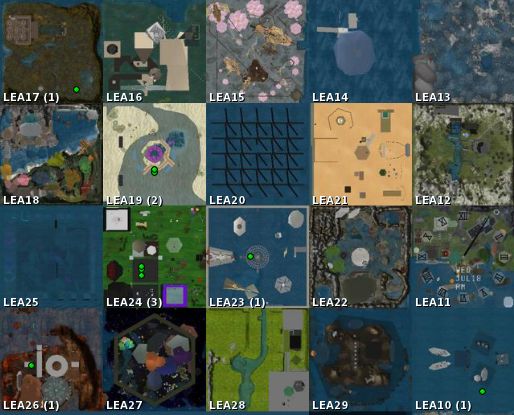
Land grant regions: LEA10 through LEA29

The announcement goes on to state:

Criteria

We feel one of the strengths of the LEA committee is that we come from different backgrounds – artists, architects, curators, historians, etc. – all of whom have different ideas on what makes virtual art great. We share a passion for this project, emboldened by differing viewpoints. What this means for the LEA Land Grant applicants is that there is no one ‘right’ project. Some committee members like immersive builds, others enjoy highly technical and scripted work, still others look for projects embracing collaborative, curatorial, or education projects. Some might wish to select those who have a history of successful exhibits in SL, while others are passionate about providing experiences to new and emerging artists. This is great news for applicants, as it means that ANYONE has a chance at getting sim, provided you show us you have an idea for a great project (even if it isn’t completely thought through, and we realise that this will most likely change in your working process).

APPLICATION TIMELINE

(Dates subject to change by LEA in the event of unforeseen circumstances.)

  • Applications open – June 16, 2013
  • Application deadline – July 16, 2013
  • Final Decision Committee Deadline – July 24, 2013
  • Notification period, and selection of alternates if need be – July 31, 2013
  • Sim handover and public announcement – August 1, 2013

HOW TO APPLY?

Complete the form at the end of the LEA blog entry, taking care to provide as much information about the proposal as possible and include relevant SLurls and web links to your work (if possible) in order to help the LEA committee make an informed decision.

Touring da Vinci’s World

I recently previewed Sniper Siemen’s new LEA exhibit, Da Vinci’s World. If you’ve not already visited, I really do urge you to do so: the exhibit runs through until the 21st July and is a fabulous piece.

In the meantime, I put together a little video from snaps I took when preparing my original article – please hit the YouTube cogwheel and up the quality to 720p for best results.

Related Links