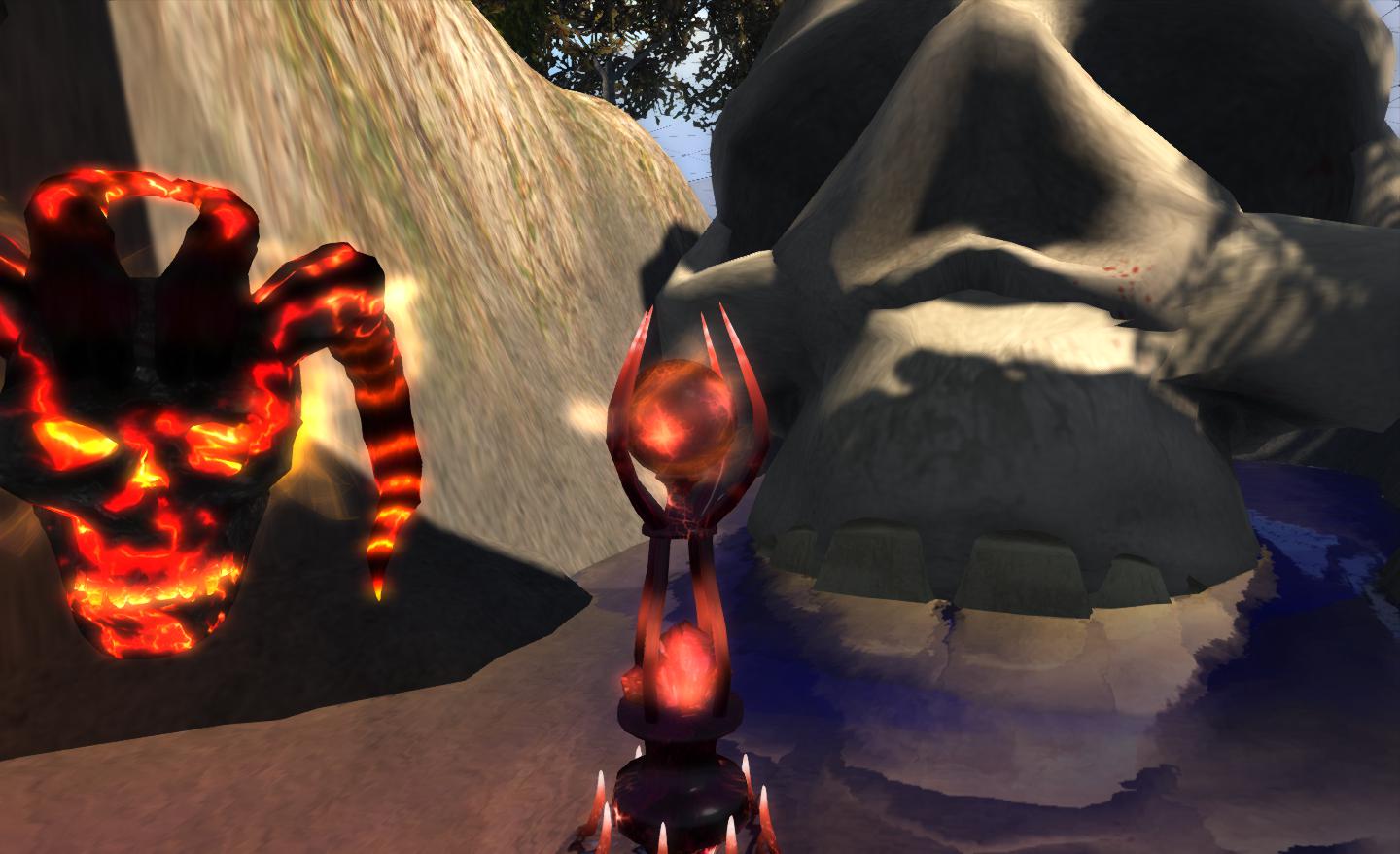
Rebeca Bashly is hailed as one of most successful artists in the Linden Endowment for the Arts Full Sim arts series. She deserves to be. A little over a year ago, in October 2011, she presented a stunning, immersive interpretation of Dante’s Inferno as the initial piece in the 2011/2012 Full Sim Arts series.
Now, in December 2012, she is back with a piece which is equally evocative.
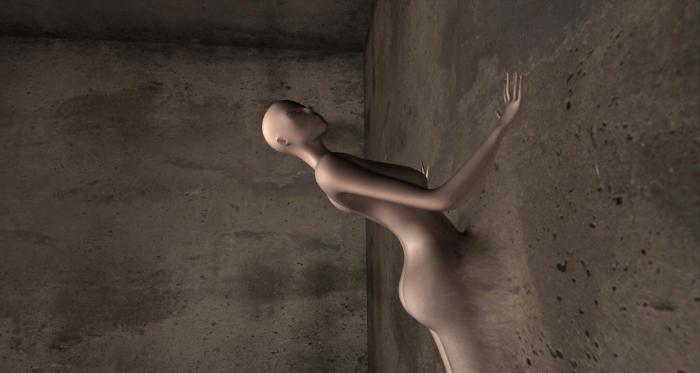
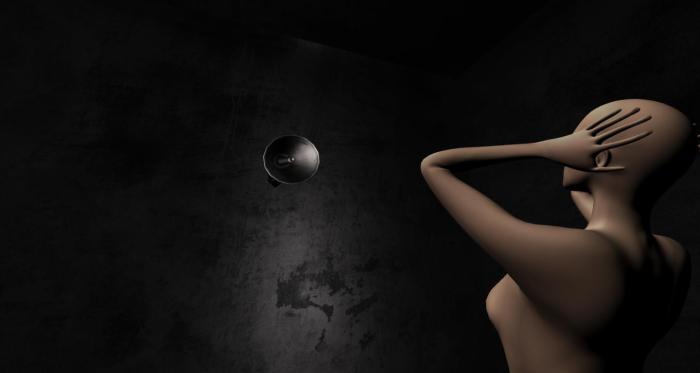
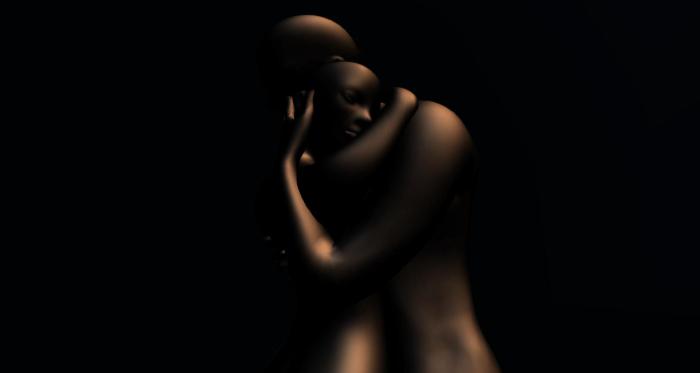
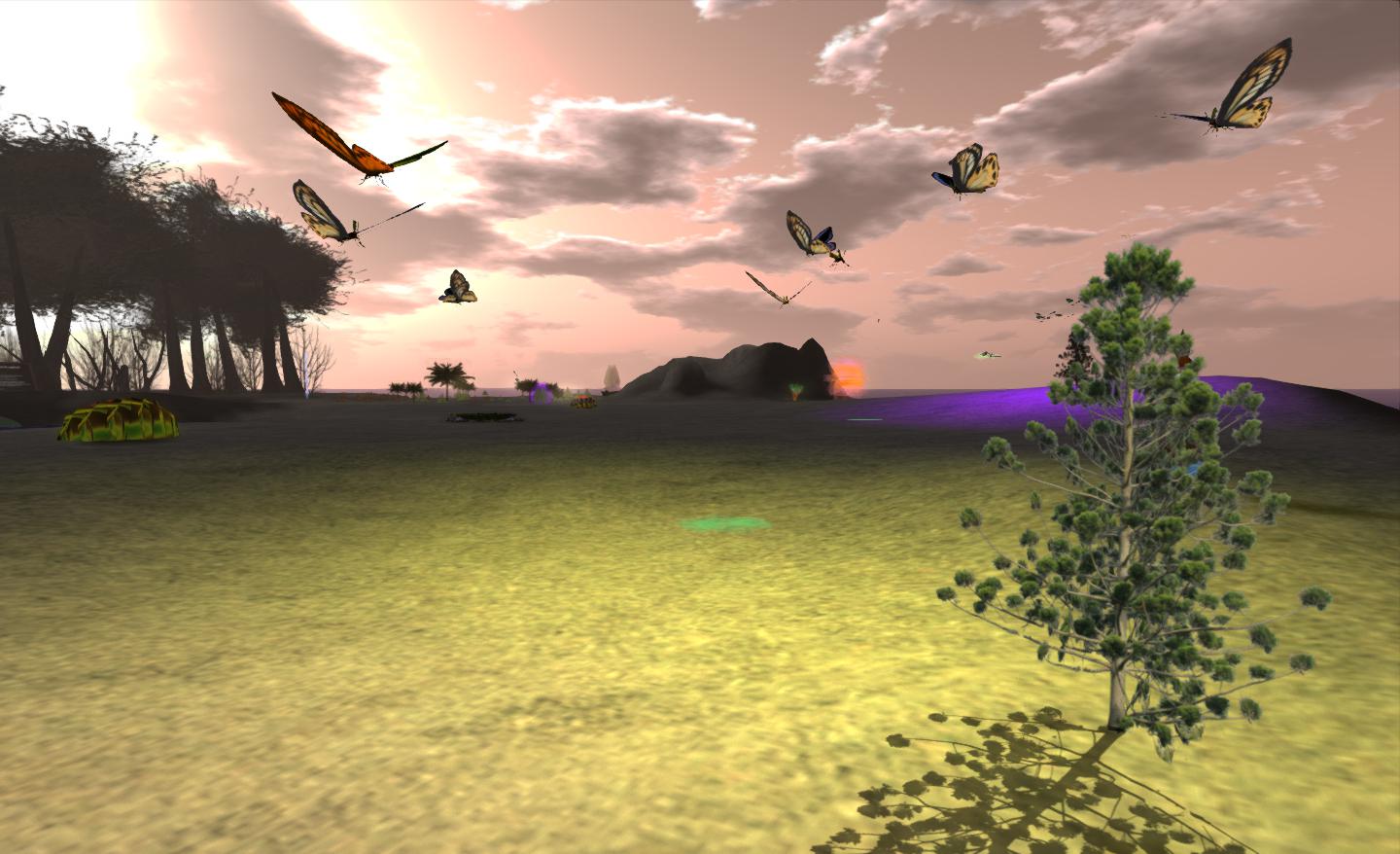
Rebeca describes The Tower as being “symbolic of restrictive areas, of closed minds, of self limitations and the like, as in kids fables.” It is a marvellous piece, not only because she established the entire installation in less than 24 hours, but because the scenes it presents are so emotive powerful.
It is a piece which needs no intermediary descriptions or explanations; it speaks loudly and clearly for itself. Simply use the orchid floating on the water to commence your journey, climb the stairs and look for further orchids as you pass through each level.
Everything is a testament to the artist’s vision and skill. The imagery is perfectly balanced by the ambience of the setting. It is also a tour de force demonstration of the visual power of immersive environments as a medium for art and expression.
The Tower is open through until the end of the month. Don’t miss it.
Of Sound Mind is a collaborative piece lead by Lorin Tone which explores the nature of sound and the ways in which it can be employed to add depth to a virtual environment such as Second Life. It opened on Saturday 17th November as a part of the Linden Endowment for the Arts Full Sim Art, and features Lorin’s work along with that of other SL artists and builders such as Madcow Cosmos (who with Lorin, brought the delightful Through the Lens of Dreams to Art Screamer last year), Glyph Graves, P4ndor4 Quintessa, Meriadne Merlin, Inventor Alchemi, Marcus Parrott, Mia Anais, Judi Newall, and will feature seminars and demonstrations from these and other SL artists.
Of Sound Mind
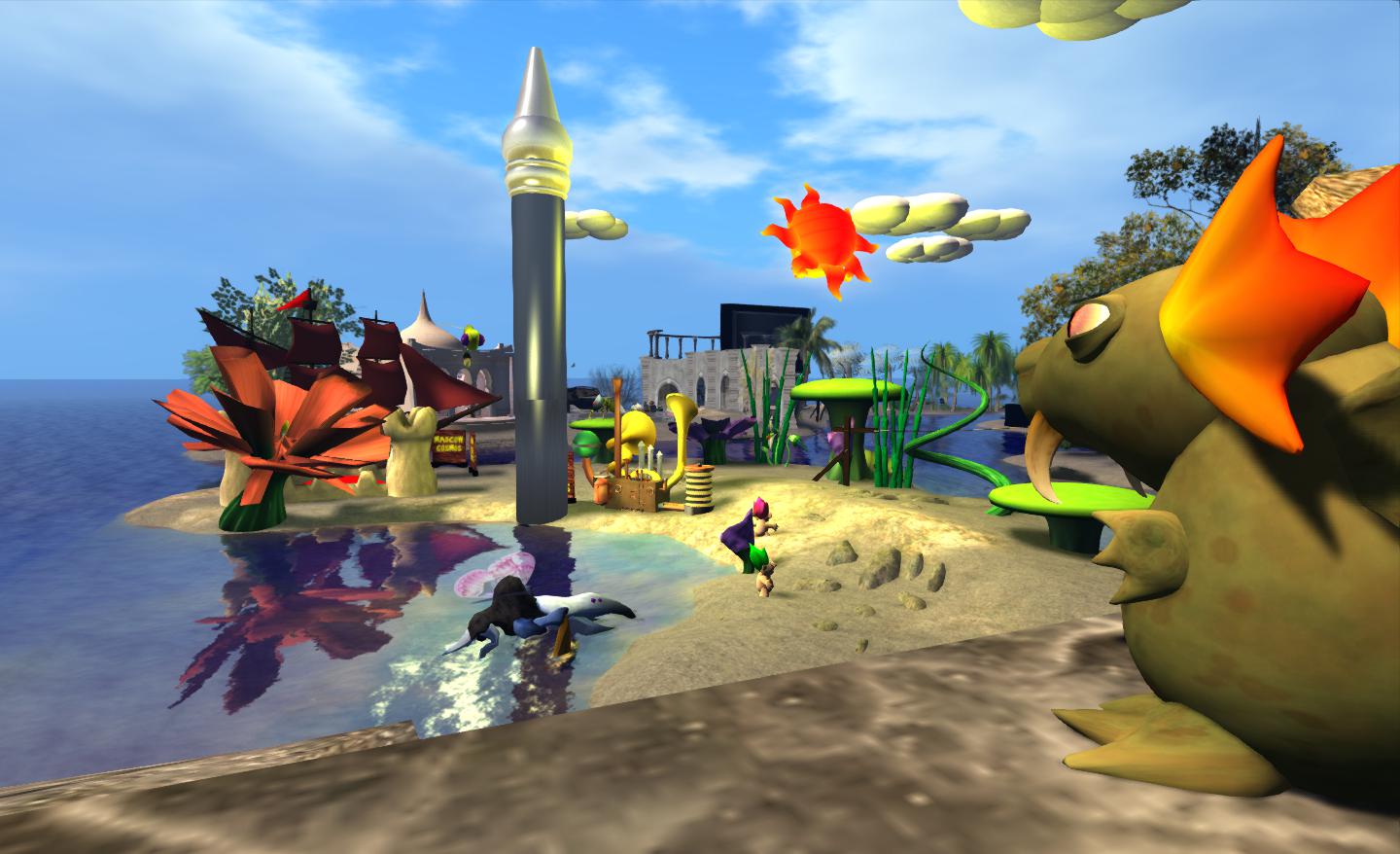
The installation comprises a landscape – sometimes whimsical in nature, sometimes more natural, sometimes with the obligatory spookiness (you’ll understand why I say that when you visit), and always inviting further exploration. Here one can experience and learn about the many and varied ways in which in-world sounds can by used in a virtual environment. As an aural, as well as visual experience, one obviously needs to have their sound on when exploring the region – although there is no requirement for either streaming or Voice to be enabled.
Of Sound Mind
The arrival point features a number of introductory notice boards which will deliver various notecards to you explaining some elements of the installation and introducing you to some of the artists. Similar notice boards are scattered across the region, introducing the various elements and other artists involved in the collaboration. However, the secret here is to simply explore, experience and touch.
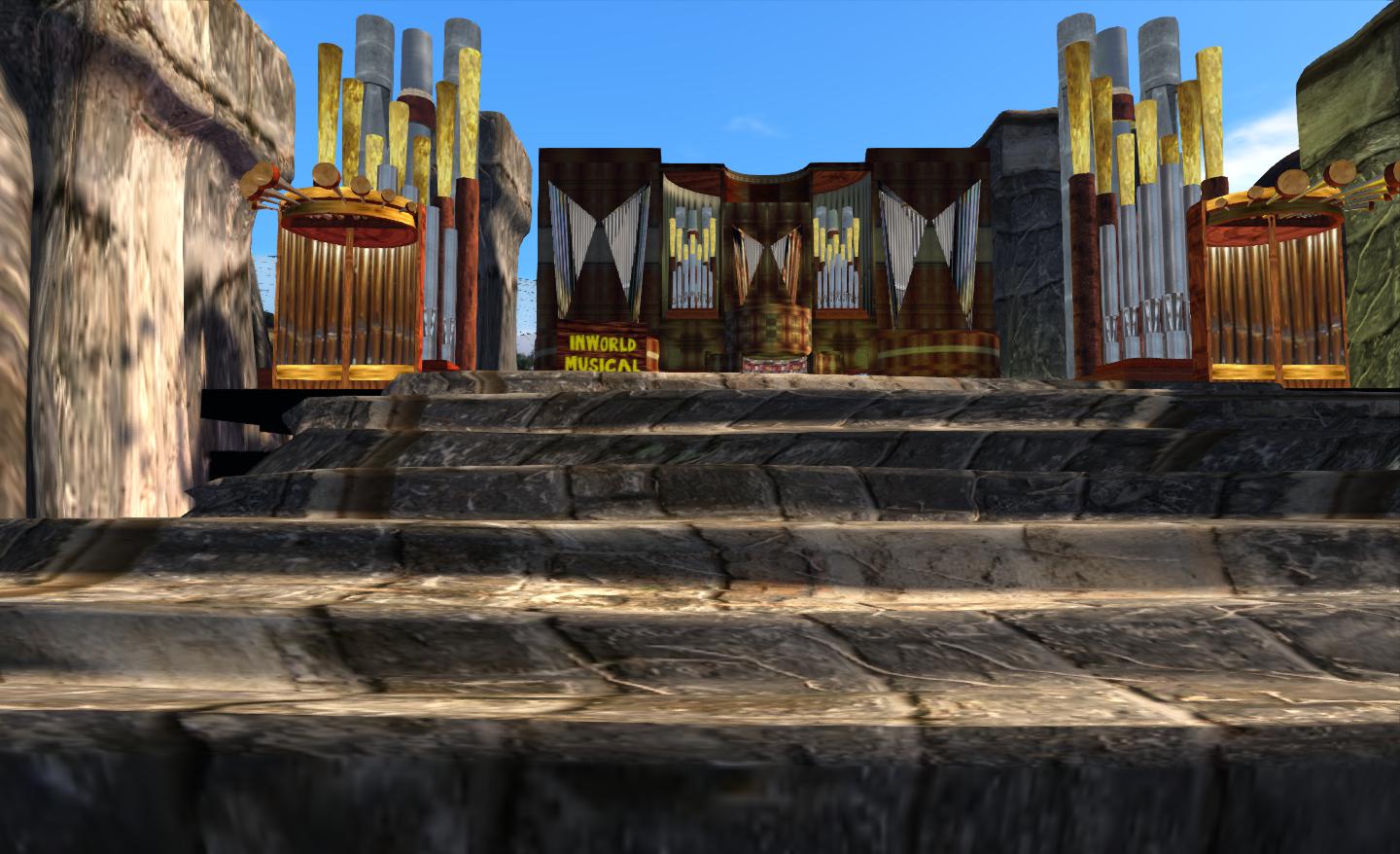
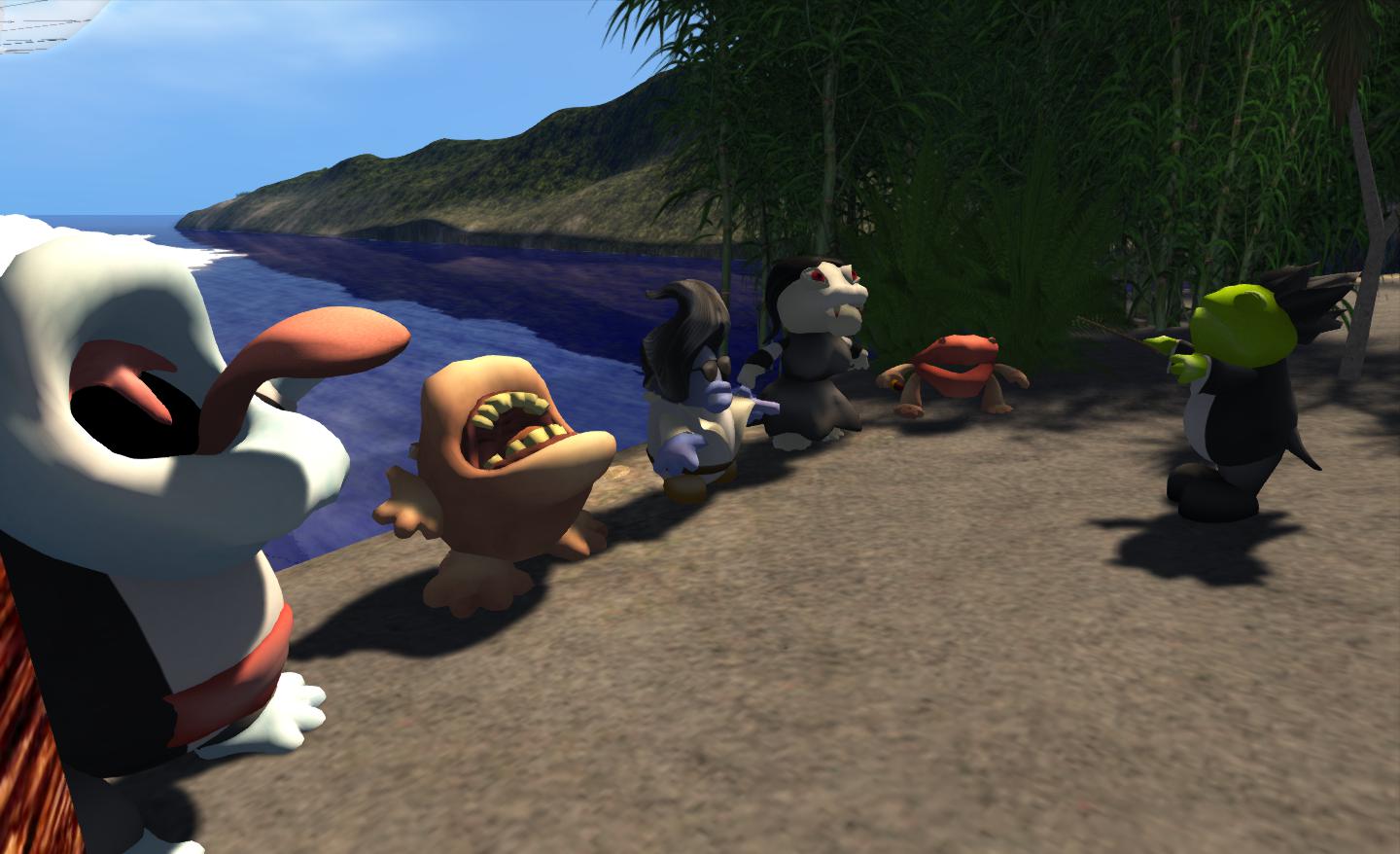
Of Sound Mind: the mighty SLurlitzer organ
And there is a lot to explore. Each area of the installation features demonstrations of how sound can be used (musically, to emphasise visual events, to create additional ambience, and so on) and the ways in which it can be triggered (by touching, by animating an avatar, though avatar/object collision, through object/object collision, and so on). Each area is visually and imaginative presented, with Madcow Comos’ visual genius very evident throughout, as well as elements created by the other participating artists. You can walk overground and underground, dive underwater, meet a certain homicidal computer with a door problem and pick up various scripts and other items along the way – and do much more.
Of Sound Mind
There is much to see overhead as well – bumper cars (in the form of chess pieces) demonstrate the use of vehicle sounds (as well as providing further comical boings and squeaks during collisions), there is also a stunning live performance stage area. Both of these can be reached via teleporter.
Also in the sky is Lorin and Madcow’s wonderful Castle of Airs, which can be reached via tour discs, available from the ground-level welcome area. Both the sound stage and the Castle of Airs have featured in the Machinima The Joy of Music by Chantal Harvey and featuring the work of several of the artists participating in Of Sound Mind.
Of Sound Mind
The live performance area was the venue for DRUM (Divine Rhythms of Universal Music), who featured during the opening of the installation on November 17th. DRUM describe their aim being, “To bring the world to you via the power of drumming. Our aim is to have fun and to create incredible, beautiful rhythms – live.” They are possibly unique in that their performances are not pre-recorded or simply streamed: they are created directly within SL, captured and then streamed to the listening audience. Definitely worth witnessing in-world.
Of Sound Mind
Seminars and presentations on the use of sound is SL will also be a feature at Of Sound Mind – although currently, only one is currently scheduled – Lorin Tone will be discussing environmental sound effects in SL on Monday, November 19th at 12:00 noon SLT. Expect notices of additional events to appear in the Upcoming Events noticeboard at the arrivals area.
Of Sound Mind is both visually and aurally immersive and a fun. Well worth a visit.
On Tuesday 13th November, Lizzie Gudkov and London Junkers unveiled their submission for the LEA’s Full sim Art Series.
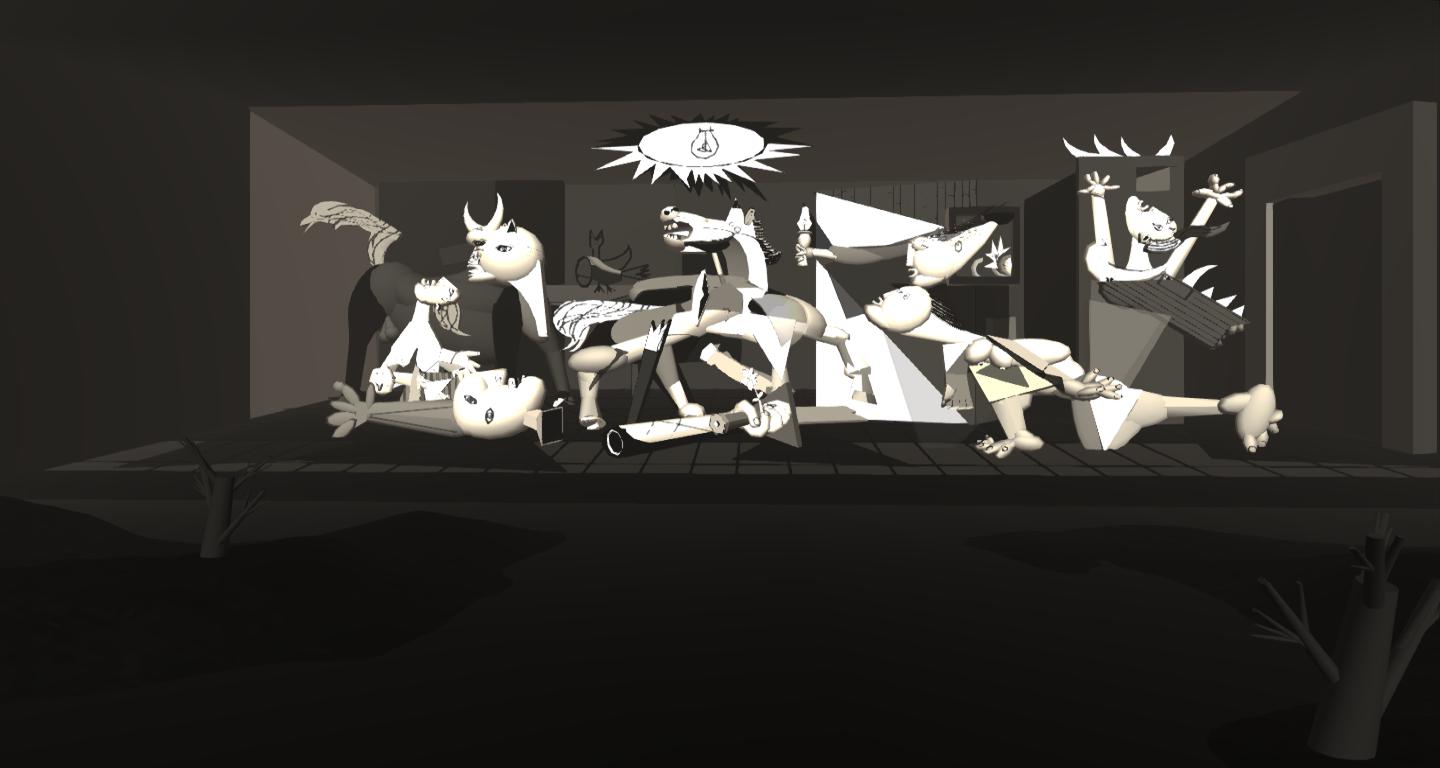
Guernica is a vivid reproduction of Picasso’s famous work, which has been beautifully reproduced in 3D within second Life in a manner which allows one to appreciate both as it was originally painted, or physically immerse oneself in the piece.
Commenting on the installation, London says:
In 1937 Spanish painter Pablo Picasso created one of the most important icons of the 20th century when he made the Guernica.
Painted in black and white, depicting the horrors of war, it is today as solid and modern as it was when it was first shown in the 1937 International Fair in Paris.
The intention of re-creating this masterpiece in Second Life comes from the love for the original mural itself and what it represents. After a lot of thought and experimenting with external 3D software, a decision was made, this installation would be built primarily in prims, as an exercise of the possibilities that LEA has given us. With this piece, we would like to pay homage to Picasso and let visitors learn more from it.
The original was created in response to the bombing of Guernica, a Basque Country village in northern Spain by German and Italian aircraft on 26 April 1937, during the Spanish Civil War. Guernica shows the tragedies of war and the suffering it inflicts upon individuals, particularly innocent civilians. This work has gained a monumental status, becoming a perpetual reminder of the tragedies of war, an anti-war symbol, and an embodiment of peace. On completion Guernica was displayed around the world in a brief tour, becoming famous and widely acclaimed.
The installation can be seen at LEA 6 in-world, where it is displayed full in keeping with the original. On arrival, you’ll be requested to accept the local windlight settings, which allow the mural to be presented as with the original – in black and white.
Guernica
The arrival point allows you to view the piece pretty much as Picasso originally painted it: in two dimensions. However, step down from the viewing gallery and you can become fully immersed in the image, seeing it – and the horrific outcome of the event it portrays – in a very personal way.
Guernica
It can be said that Guernica saw the final end of any romanticism of war. While much of this had already been washed away in the terrors of The Great War of 1914-1918, war before Guernica was often removed and isolated from the lives of “ordinary” people. After Guernica, this would never again be the case – as the unfolding tragedy of the Second World War would illustrate just two years later.
Guernica
The artists of this recreation recommend visitors view it via Mouselook – and I do recommend the same; while moving and flying around it might be a little harder using Mouselook, the added depth of perspective obtained more than compensates.
For those not familiar with the work or its historical context and impact, I would also recommend a little background reading as well.
Guernica will remain open at LEA6 throughout the remainder of November 2012.
Rowan Derryth, writing on the LEA blog, brings word of a fascinating SL / RL exhibit which is taking place through until November 25th in both Second Life and real life, and which allows avatars from the one interact with humans from the other, and vice versa.
EXTRACT / INSERT is a collaborative effort involving Second Life and the The Herbert Art Gallery and Museum in Coventry, England. Rowan describes the collaboration thus:
We avatars often struggle to explain our existence to those that dwell only in the physical world. But now, a new exhibit at LEA 24 helps us do what we aliens do best: INVADE!
EXTRACT / INSERT
EXTRACT/INSERT is a unique installation in both Second Life and at the Herbert Art Gallery in Coventry, UK. It is a collaborative effort between internationally renowned performance artist Stelarc, lecturer and actor Joff Chafer and artist and technologist Ian Upton. With support in SL from the LEA, and in RL from the Arts Council of England, they have been able to create an environment where avatars can co-mingle with real people visiting the Herbert!
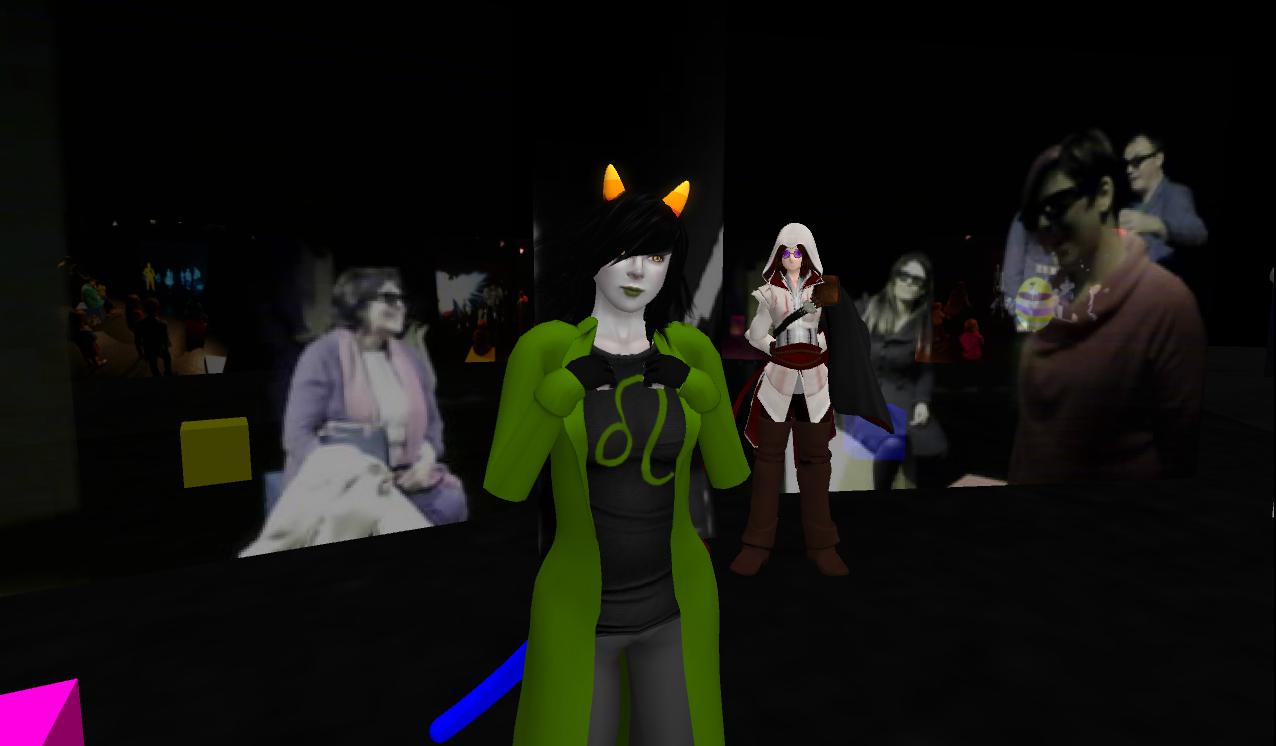
The Exhibit has already involved volunteers from across Second Life spending time at a special installation at LEA 24 where they have been able to meet and talk to visitors entering the exhibit’s “other half” at the Herbert Art Gallery in the UK. Avatars are represented in 3D in the real world exhibition space, and appear to be floating among the visitors there.
EXTRACT / INSERT
The organisers are currently looking for volunteers to participate in the exhibit this coming week. The work involves being on-hand at the LEA 24 installation, where you can meet and interact with visitors to the Herbert Art Gallery’s installation in Coventry UK – so it does mean working to UK times as the gallery is open between 02:00 and 08:00 SLT (10:00 and 16:00 UK) Monday through Saturday and 04:00 to 08:00 SLT (12:00 midday to 16:00 UK) Sundays.
If you would like to volunteer and chat with Herbert visitors, you need to:
Be using an SL viewer capable of displaying shared media
Use Voice to interact with visitors at the Herbert Art Gallery – text chat and avatars names are not visible to visitors there
Have a suitable avatar appearance to meet the requirements of a “General”-rated audience which includes children
Creativity is welcome with avatars – there is no need to restrict yourself to a conventional human form, so long as your avatar isn’t too large (as it will be appearing life-sized at the art gallery) and dress and behaviour are in keeping with the General rating.
If you are interested in volunteering, please contact Ian Pahute or Joff Fassnacht in-world in order for you to be added to the exhibit’s access list.
If you are in the UK, and wish to visit the real life half of the exhibit, you can find details on how to get to the Herbert Art Gallery and Museum on their website – booking for the exhibit is not required, and visitors are invited to “drop in” for a tour with the Gallery’s guides.
The Herbert Art Gallery’s side of the exhibit will remain open until November 25th, 2012.
UK-based performance artist Stelarc was present at the Herbert his last week, where he logged into SL from the gallery and gave a performance entitled “Involuntary and Improvised Arm”.
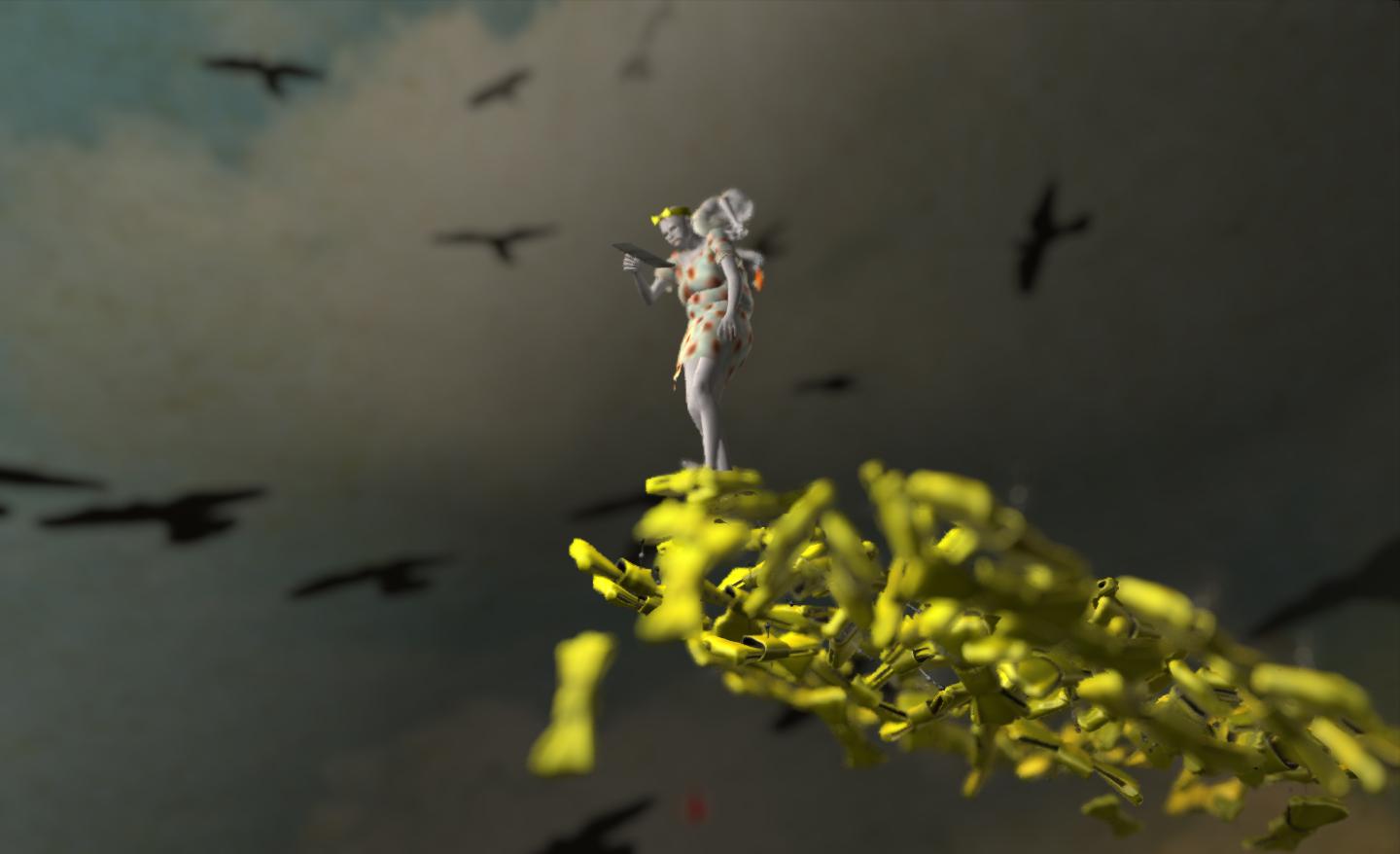
A Rusted Development is a collaborative art installation on LEA1 at the Linden Endowment for the Arts. It isn’t a new feature – anyone with an eye for art in SL will know it opened in May and is enjoying an extended run as part of the LEA’s Guest Curator initiative. I’ve taken my time getting to it as I wanted to leave others far more qualified than I to give thought and feedback on the installation – and then (to my shame) I forgot about it, only to be reminded when attending the opening of Solkide Auer’s new installation earlier in the week, and which sits adjacent to A Rusted Development.
A Rusted Development
The installation is curated by Rowan Derryth and the theme was inspired by her own works, although the overall structure and story for the piece came from Haveit Neox, whom Rowan credits as “The Conjuror”.
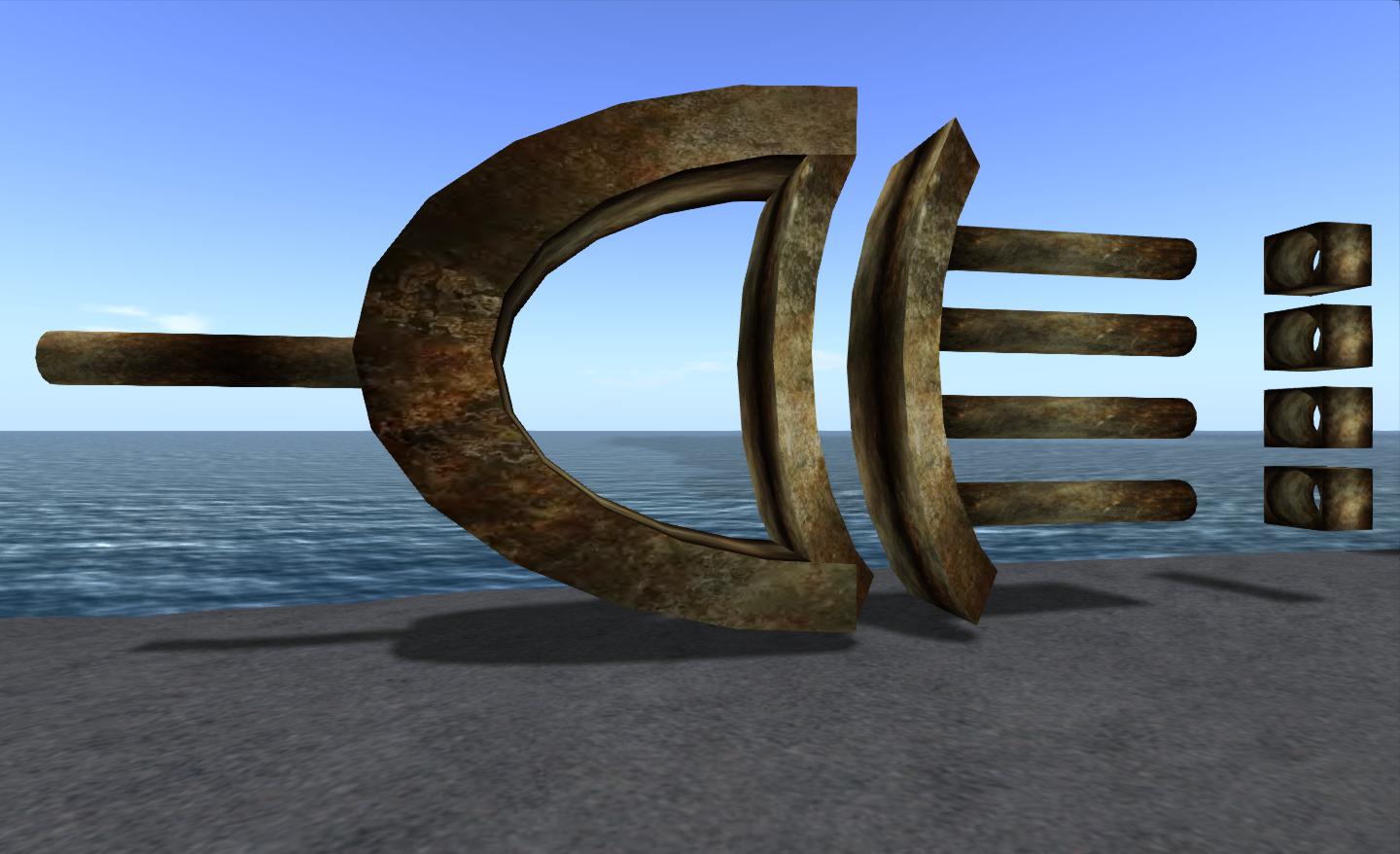
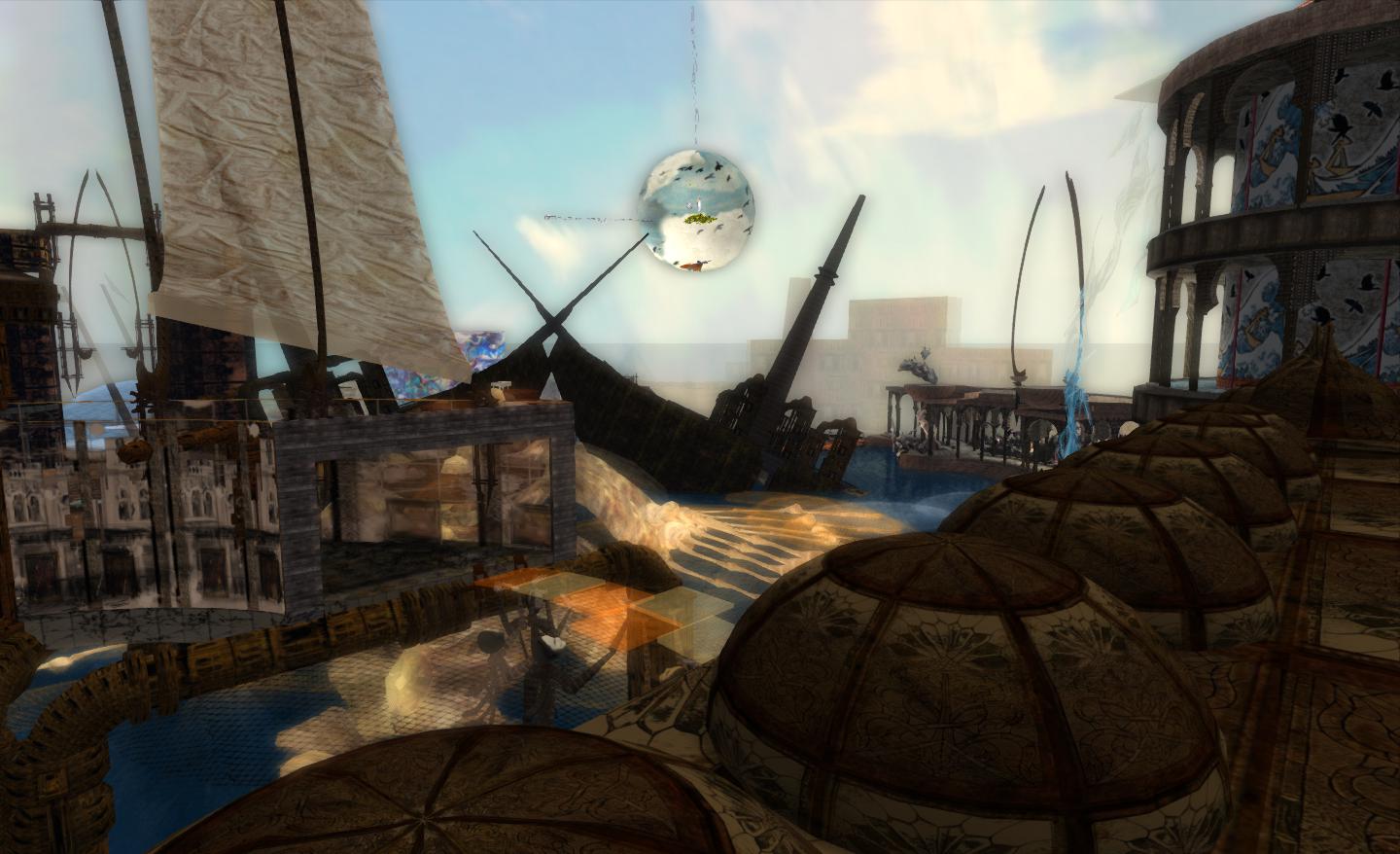
What firsts appears to be a bizarre conglomeration of industrial wasteland, water, bones, and scattered exhibits actually has a strong backstory, written by Havit Neox, which forms the basis for the installation itself, and provides a canvas for those collaborating in its final form in which to paint their own elements of a story.
The fabled merchant city that rode atop the back of a gigantic whale met with a calamity that ended its existence abruptly. In the middle of the ocean, a horrific storm caused two huge ships carrying toxic chemicals to collide into the swimming whale city. The whale and all the populace died in the flood of chemicals that saturated the waves.
The whale turned to bones, and the city to rust, it was nearly half a century before this city adrift was discovered. An expedition of artists, searching for land to build an art colony, came upon the decomposing city. With the intent to regenerate the place, they set to work by first towing to safe harbor the floating mass. Each artist then undertook their vision. The empty shell of the city suddenly filled in and expanded as each artist found their niche in the Rusted Development. No longer at the mercy of invisibility, the city humbles its rusted façade to the highlights of the art within.
Within Haveit Neox’s build, A Rusted Development features pieces from some of SL’s most highly regarded artists – Rose Borchovski, Artistide Despres, Claudia222 Jewell , Bryn Oh, Scottius Polke, Ziki Questi, PJ Trenton, Blue Tsuki, Stephen Venkman, Eliza Wierwight, and Trill Zapatero. Each is both an individual piece and also part of the larger whole, providing a further facet of the story, both in terms of the destroyed city itself and the lives of the artists who discovered it.
It would seem the community of artists who came across the ruins of the merchant city had been bound within a society where rules outweighed individuality and expression. Their reactions to the constraints under which they’ve lived, and what it has done to society as a whole appears to be a ventral running theme through many of the individual elements of the installation. Several pieces have a dark edge to them, perhaps reflective of the fate of those who once lived within the city as it was carried across the oceans.
There are works here which scale the range from the very large to the incredibly small and delicate. Each has its own tale – some dark, some perhaps edged with the macabre and others filled with a delicate pathos. Each offers a unique interpretation and a further expansion of the backstory. All of them present a genuinely immersive piece which requires more than one visit if one is to witness everything on offer, both above and below the waves.
I love Marcus Inkpen’s work. The Looking Glass is one of my favourite regions to visit, and I’m massively tempted by his Floating Victorian Home. In mid-June LEA opened a full sim installation featuring Marcus’ work, and I’ve finally managed to get myself over to see it.
The Returning is described as exploring “the spiritual connection we once experienced, as an integral part of life, now lost – but lying in wait for our return” – and it is simply enchanting.
There is a rich mix of cultural elements here, most of them seeming to come from Asia, but also with some European / Middle Eastern elements as well. You arrive at a wooden landing stage facing a lush rain forest-like environment, split by meandering waterways. Where you go from here is up to you – follow the wooden piers around the small lake to the woodlands, or take a row-boat. There are only two building here, and whichever route you take will eventually lead you to them.
The Returning
The main building carries echoes of many historical sites; some have compared it with Angkor Wat – and the similarity is strong. For me, and without wishing to sound like a cracked record, the building carries a strong Sri Lankan resonance, reminding me particularly of the great stupas and pools of Anuradhapura.
For me, the Sri Lankan element was certainly heightened by the fact the music stream accompanying the installation features pieces by Lakshman Joseph De Saram. Having the music stream on is not a vital part of a visit – if anything, I’d say that in parts it actually might detract from the overall atmosphere. However, I was curious as to what might be accompanying the installation and in what was undoubtedly a serendipitous moment, I turned media precisely as Beggar / Charles Is Dying from De Saram’s soundtrack for Bel Ami was playing – and so the mental association with Sri Lanka was cemented.
Inside the structure lay the deeper spiritual elements: manuscripts that appear to be from the Kabbalah, including what looks to be the Sēpher Yəṣîrâh; on the floor in the central chamber is a carving featuring the seven Chakras, adding a Hindu / Buddhist element, around which a pendulum slowly rotates.
The remaining building appears to be more western in style and design – almost a folly. It contains a device resembling an orrery, enticingly called Know Thyself. Around the walls are empty frames and pictures that appear to be from the 19th Century; perhaps another piritual echo – the memories of those who have passed before us.
Exploring the region will reveal strange incongruities. Alongside the “folly” run a set of power / telegraph wires; up on a hill you’ll find a US Postal Service mail box. Near the end of the reflecting pool at the front of the main building sits a pianola. Are these random placements, or do they carry meaning themselves? You’ll have to decide, as I’m saying nothing.
I’m not sure how long The Returning will remain open. If you haven’t visited already, I urge you to do so – and don’t be surprised if you find me sitting in quiet contemplation by the reflecting pool or among the trees.









 Inara Pey: Living in a Modemworld