Asterion Coen at LEA28: a follow-up

In December, I wrote a piece concerning Asterion Coen’s full sim installation formerly at LEA28. While I do admire Asterion’s builds – as I said in that article, they are a veritable tour de force of prim construction, and clearly demonstrate that the prim is far from dead as a building material – the installation itself appeared to be bereft of purpose.

As such, I wondered at the time I wrote my review as to the purpose of the installation, and the ideal behind it; questioning whether things had gone a little off-course due to something like a lack of cohesive guidance from the LEA or some other issue had caused the purpose of the installation to have become a little lost.

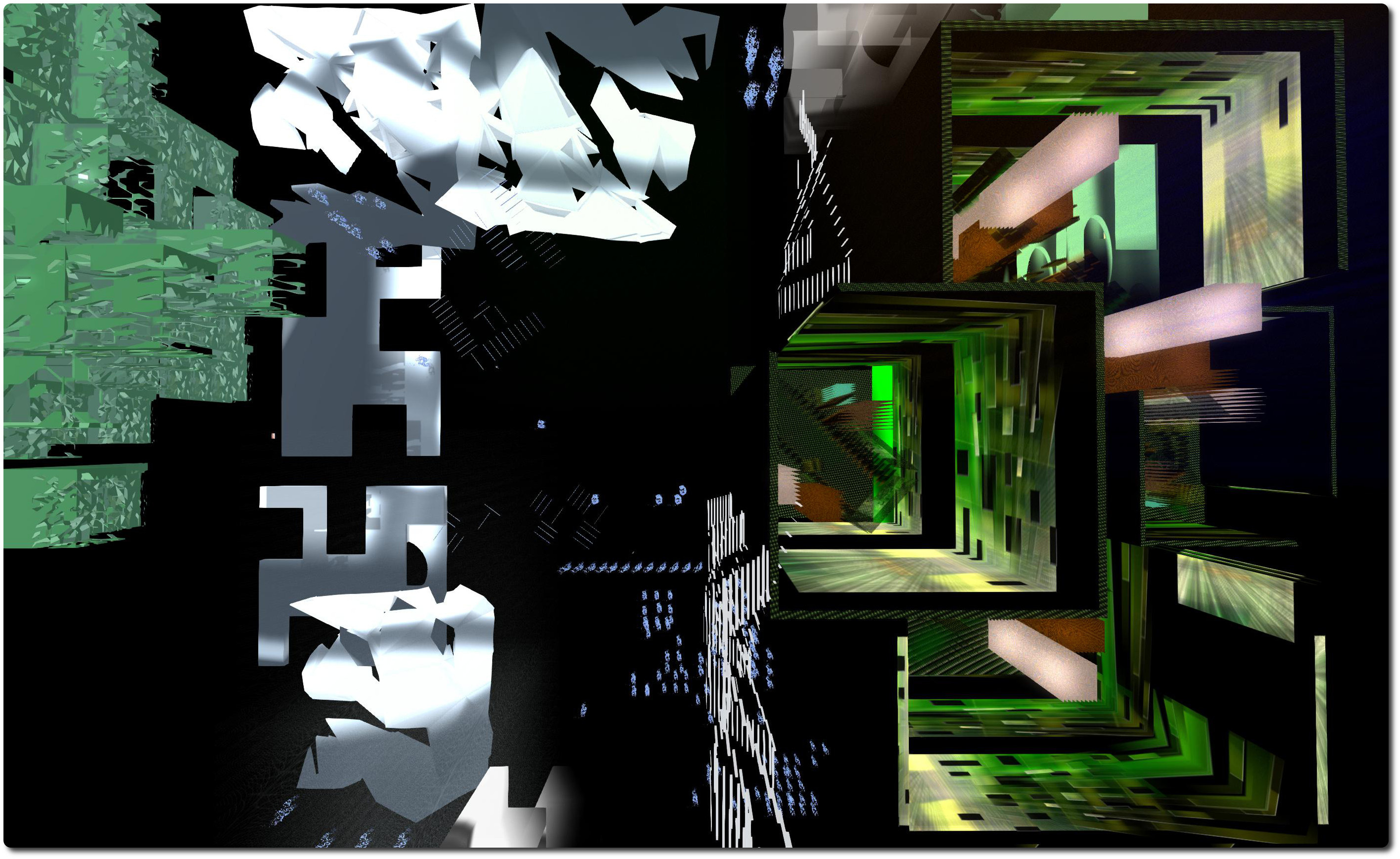
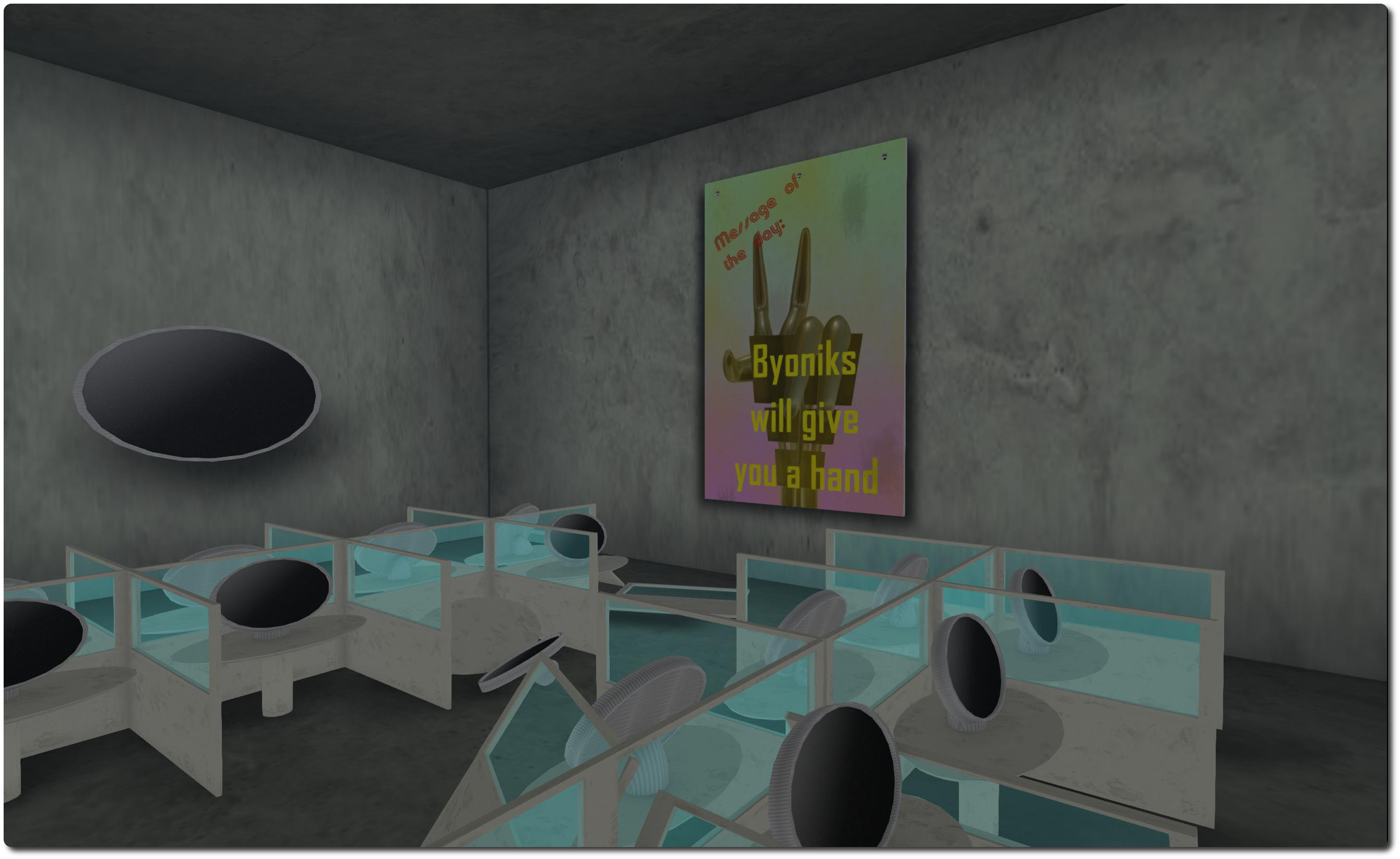
A part of Asterion Coen's LEA28 installation
A part of Asterion Coen’s LEA28 installation, December 2013

Asterion has since contacted me on the matter, and his comments have helped put things into a better perspective. Here, printed with his permission, is what he had to say:

About the content itself, The project should be as described in the LEA form, but some unwanted and unavoidable RL issues in my company meant I was unable to spend time on my SL projects (LEA and others).

If the LEA28 sim looked unstructured and just showroom, with lot of parts everywhere, it’s because I didn’t have time to finish everything as I had little time available for SL. Things were made worse because an inventory issue meant I lost a number of sections for the buildings. The military vehicles, for example, were to be a part of a museum I originally built for Bourbon Island [now apparently closed], but which vanished from my inventory.

Those issues, in addition to my RL ones, made it impossible for me to finish the sim. Had the time been available, there would have been another platform about space and an underground moonbase (in lava tubes). This platform would have been accessed via a shuttle, a lift and other vehicles. The project would have meant people would not be allowed to fly, and would be asked to move around using the vehicles provided and along designated paths.

We can never predict how RL will impact our SL times and work; when matters take an unexpected turn, sometimes we have no choice but to re-prioritise and deal with some matters later. In Asterion’s case, problems with RL appear to have coincided with a period of his SL life that was especially busy, and unfortunately, the latter suffered.

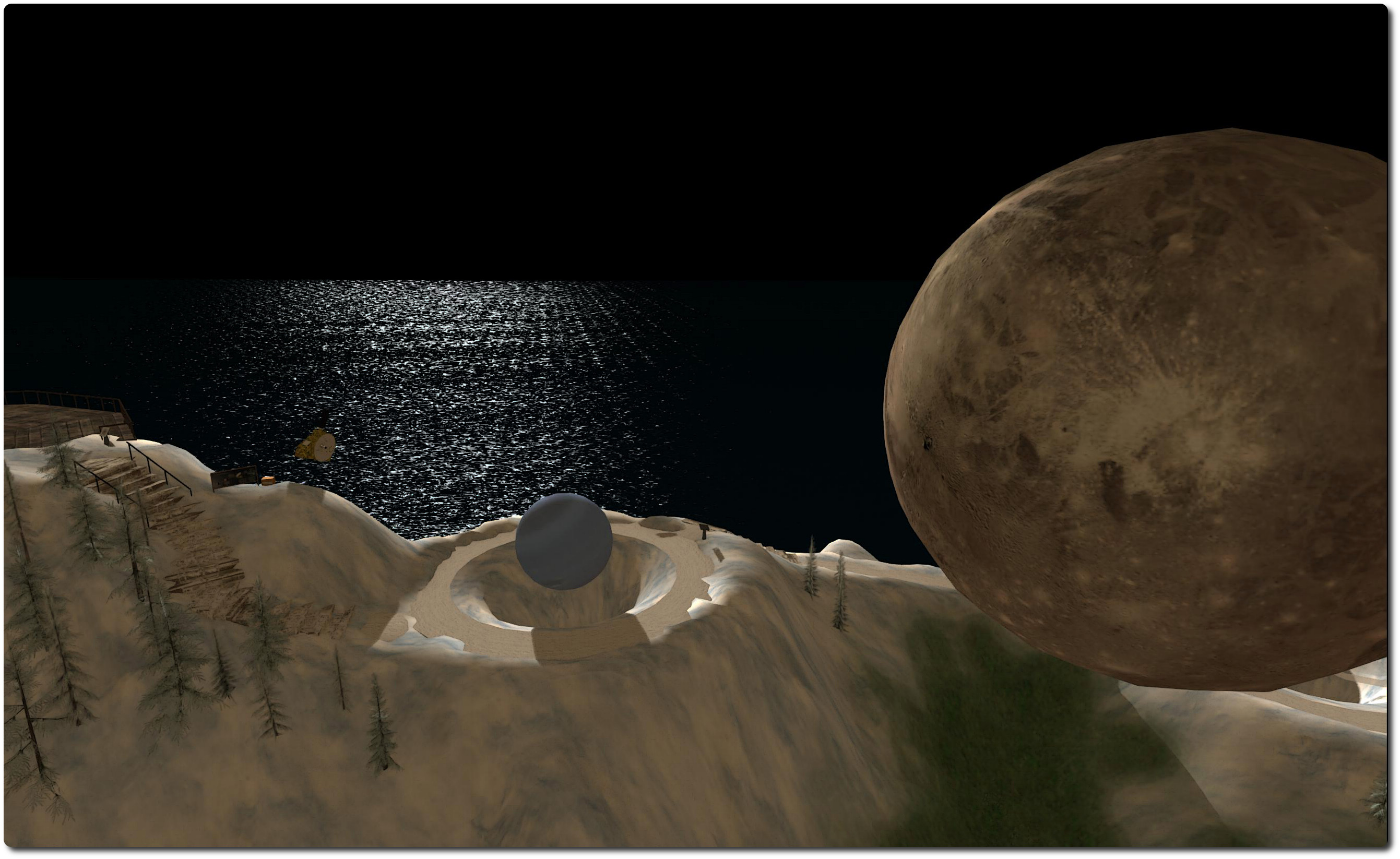
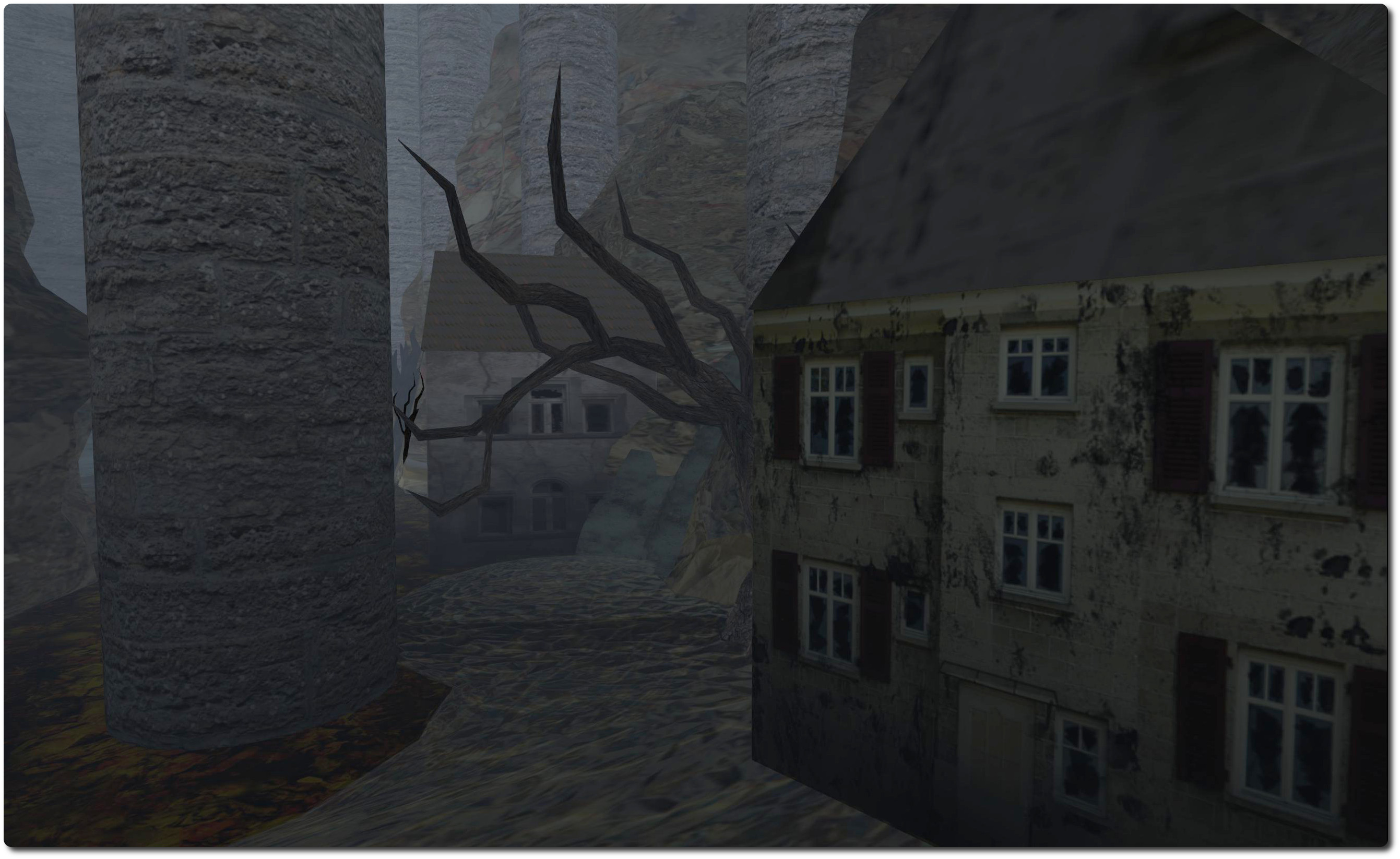
Asterion Coen at LEA28, December 2013

While it would be easy to second-guess what might have been done differently or how things might have been handled better, the fact is that at the time, things were dealt with in the best manner that appeared to be possible. The result was less than satisfying for those of us visiting LEA28 and equally – if not more so – for Asterion himself.

For my part, I’d like to thank him for taking the time to contact me and let me know more of the circumstances surrounding the installation at LEA28. I certainly and sincerely hope that real life does settle down positively for him in 2014, and look forward to seeing more of his creations – particularly those with a “space” theme (!) – within SL in the future.

Connecting with Plankton

Plankton
Plankton

In the late 1990s, I caught a series on Discovery (or possibly TLC before it got rebranded by Discovery UK), called Connections 2. It was the follow-up to a series originally made and broadcast by the BBC back in the ’70s or ’80s and called (oddly enough) Connections back in the ’70s or ’80s. In it, commentator, broadcaster and journalist James Burke demonstrated how various discoveries, scientific achievements, and historical world events were built from one another successively in an interconnected way to bring about particular aspects of modern technology.

I bring this up because I was put in mind of how that series drew connections between people, events and so on to present a narrative on how we arrived at a modern aspect of technology and / or thinking, while touring Takni Miklos’ Plankton, which is open through until the end of December as a Part of the LEA’s Full Sim Art series.

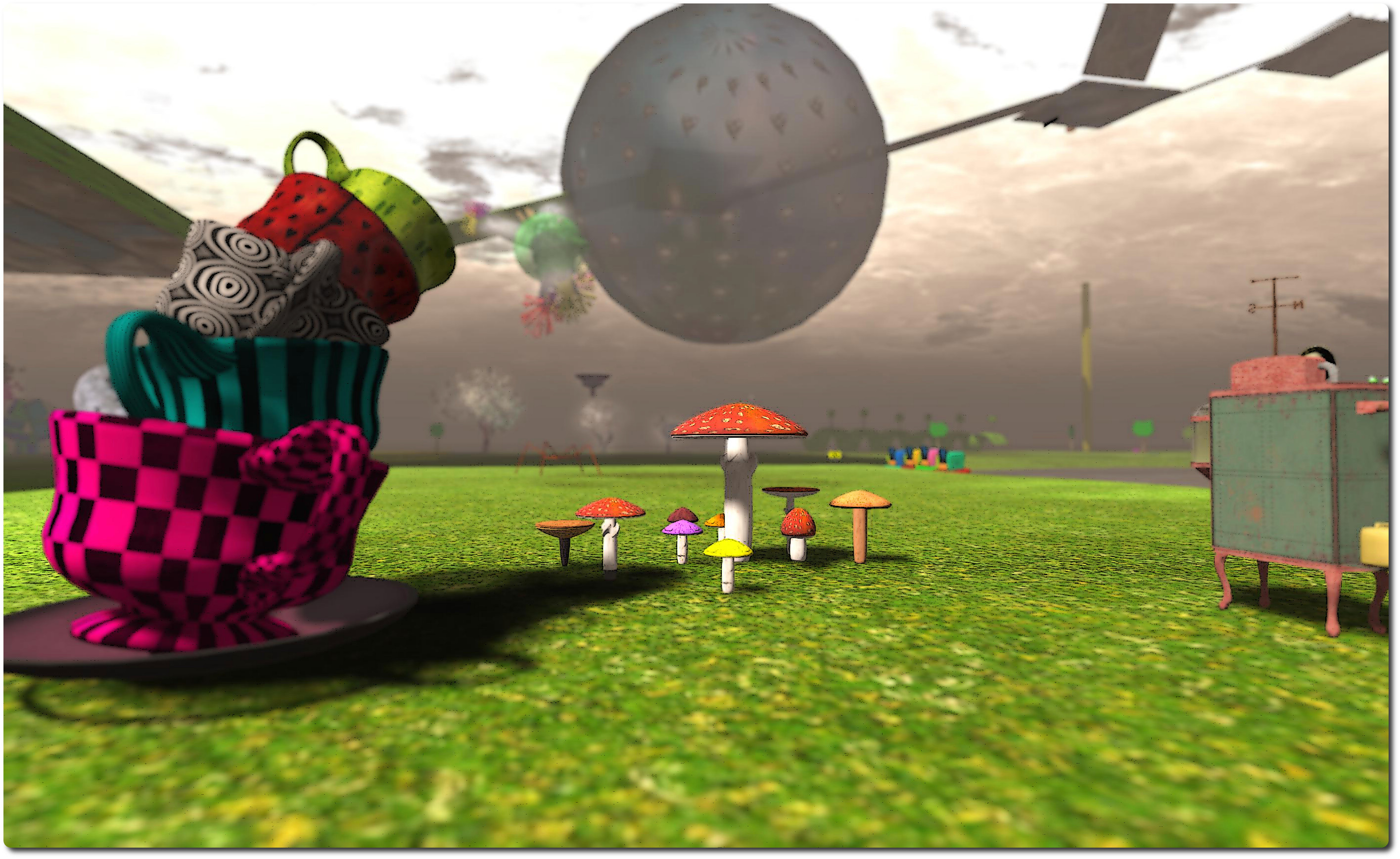
Like the television series, Plankton is about making connections. There are very strong cultural / historical elements here, rooted in particular in astronomy, leading to something of a theme of continuity running through some elements of the installation which connect the past right through to our lives. But unlike the TV series, there is no actual narrative, per se; one is very much left to draw one’s own through the process of exploration.

Plankton
Plankton

The connections in Plankton take several forms and are as much about how we connect with the installation as they are with themes or ideas. There are a number of ways in which to move around: “taxi” teleporters, point-to-pint teleports, elevators, walkways – you can even use your “inner pig” (presented to you on arrival) to reach other avatars in the region, thus offering the means to connect with them.

All of this means that any two experiences within the installation and the connections made when travelling through it are likely to be same. How you proceed, the choices you make in your explorations, lead to discoveries and connections which are not necessarily linear; making this a complex and involved place to explore.

Plankton
Plankton

Aspects of the installation extend from the ground, up through multiple platforms and spheres reaching high up into the sky. Not all of them are linked to the cultural / astronomy theme, so may even appear frivolous or confusing. But it is worthwhile taking your time in exploring and moving around.

One thing you can be sure of is that this is a lively space, with almost everything within it interacting with the visitor in some way, either responding to direct touch or to the nearby presence of any avatar. Even the landscape at ground level is in places changing, where objects will freely interact with one another as well as to the presence of visitors.

In all, I’m not sure words really suffice in describing it – better you go and see for yourself!

Related Links

Plankton
Plankton

Fisicofollia: a futurist’s landscape reimagined

Giovanna Cerise’s latest installation, Fisicofollia, opened at LEA6 on Monday December 16th as part of the LEA’s Full Sim Art Series.

Fisicofollia takes as its springboard the Futurist movement,  and particularly the works of Filippo Tommaso Marinetti, Fortunato Depero, Giacomo Balla, and Enrico Prampolini.

Marinetti effectively founded the movement following the publication of The Founding and Manifesto of Futurism (1909), in which he declared,  “Art, in fact, can be nothing but violence, cruelty, and injustice.” Violence became one of the themes emphasised and glorified by the movement, alongside others such as speed, technology, and youth, together with objects such as the industrial city, the car and the aeroplane; indeed, almost anything that represented the technological triumph of humanity over nature.

FF-9_001
Fisicofollia – LEA6 until December 31st, 2013

Futurist were slow to develop a distinctive style in the early years, initially basing their works on Divisionism, the breaking light and colour down into a field of stippled dots and stripes, before adopting Cubism as they looked to find a more individual means of expression through their works.

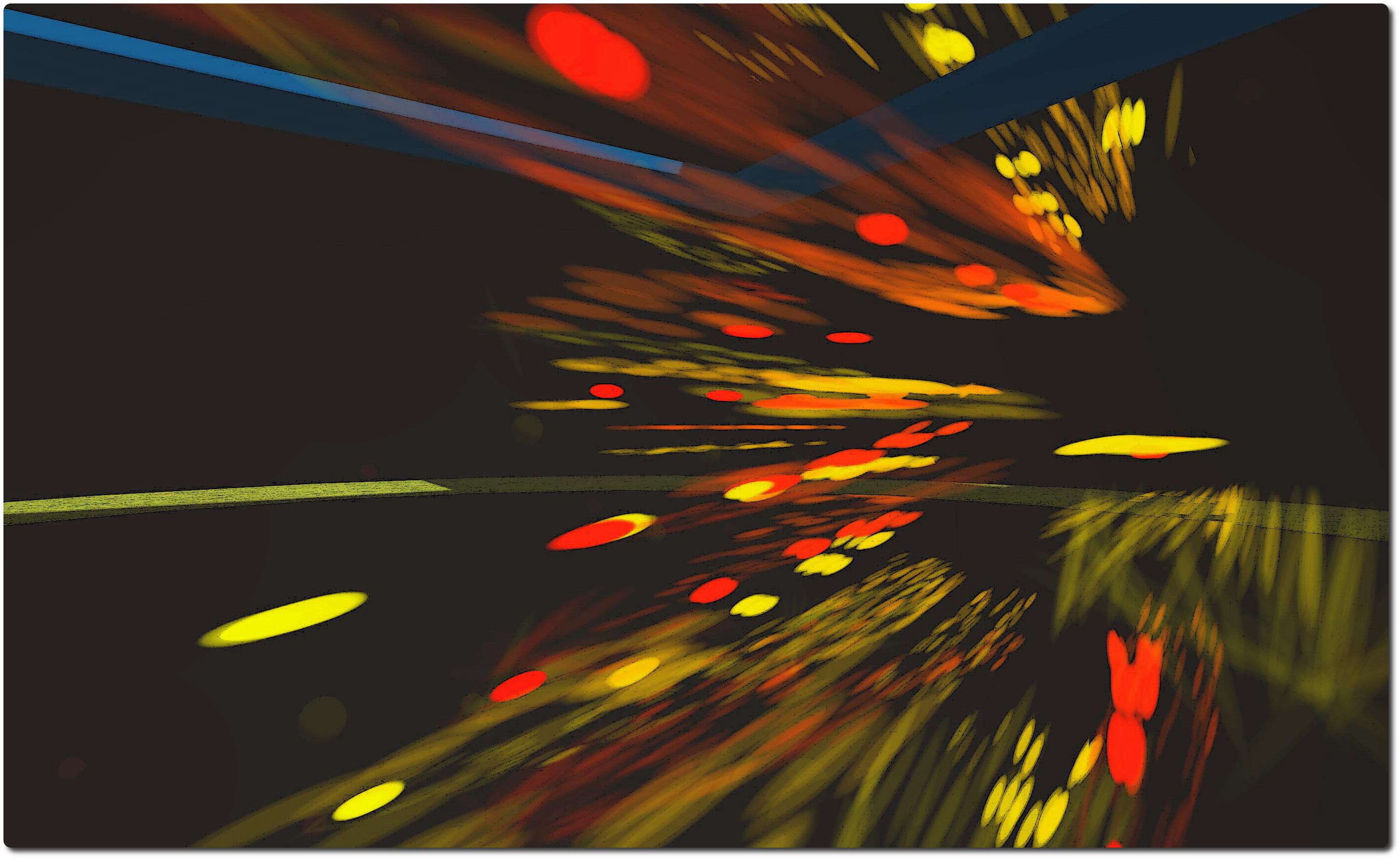
In terms of paintings, many of the works by Futurists exhibited strong lines and often imbued a sense of velocity through a blurring of lines and form. These aspects are somewhat reflected in elements of this installation. One section in particular uses colour and blurring to great effect. Elsewhere, there is a more free-form interpretation of the movement’s works, which embraced not only paintings, but sculpture, architecture, fabrics and fashion.

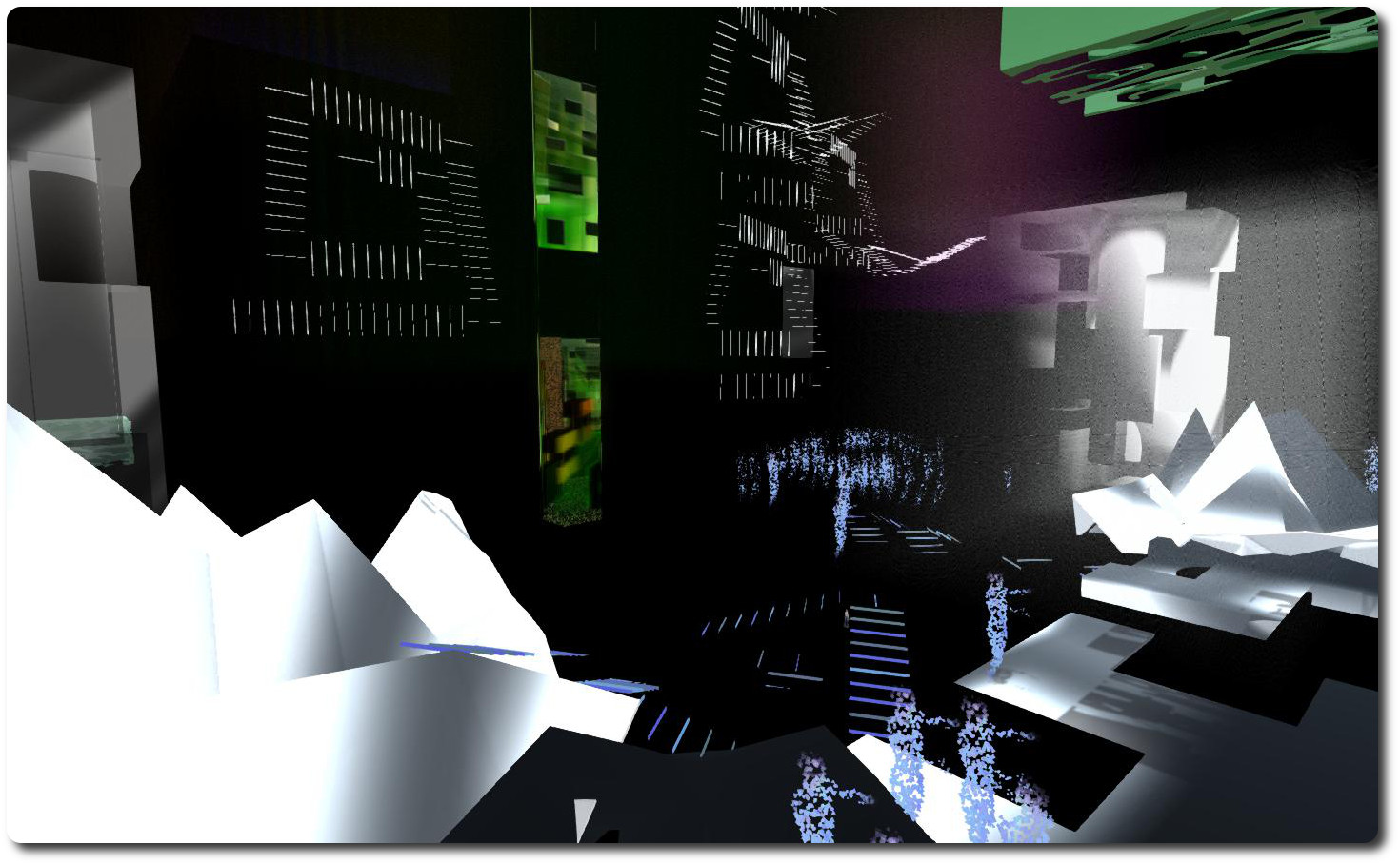
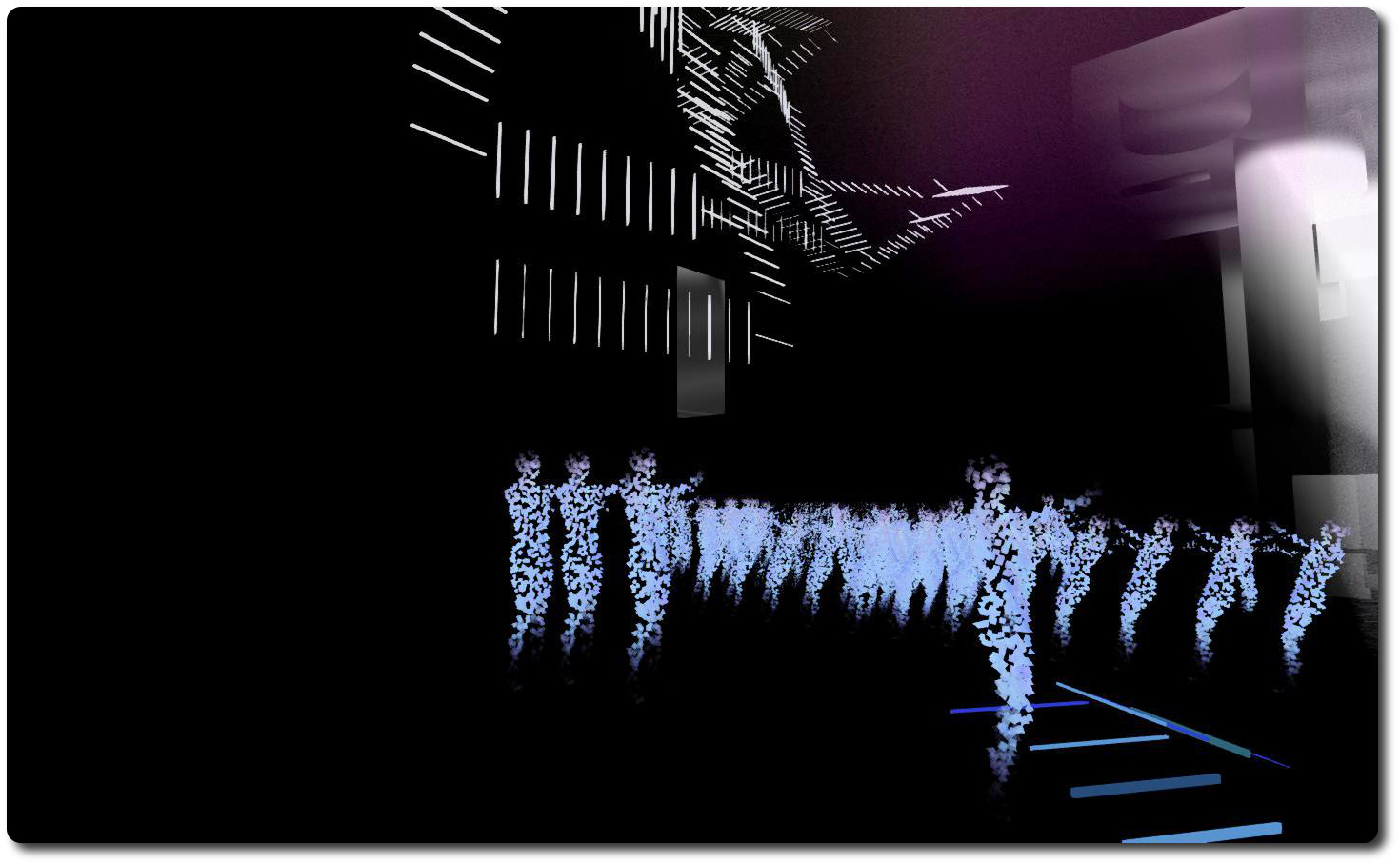
Throughout the main part of the build is the figure of a man, constructed from blue-shaded pyramids or tetrahedrons. Of varying sizes, it appears to be leaning back, arms raised horizontally, and is found in various sizes and numbers across the installation. Many of these figures are regimented into lines, some even into ordered into ranks. The latter are especially evocative of the movement’s militaristic leanings, their ordered rows, identical poses and colours suggestive of soldiers on parade. Draw in close to these figures, and they seem to mix and merge into a stippling effect, again perhaps again echoing the influence Divisionism had on the Futurists.

FF-4_001
Fisicofollia – LEA6

Geometry is used to great effect throughout the piece. One section of the installation appears to be draped in mist; approach it, however, and one discovers the mist is in fact a series of closely spaced, translucent grids, forming a moiré pattern which breaks-up  the landscape and which shifts and changes as one’s eye (and camera) moves.

Patterns are also formed through the use of multiple parallel lines, spaced and placed to give the impression of stairways. Higher-up, in what is very much as three-dimensional design, these come together, Escher-like, to form eternal stairways leading nowhere, presenting a place where, to use Giovanna’s words, “lines, planes, shapes and colours combine, alluding to an invention related to childhood and madness.”

FF-3_001
Fisicofollia – LEA6

Along with the visual elements of the piece is an accompanying sound scape, and it is recommended that the visitor has sounds enabled when visiting in order to benefit from the auditory elements present in the installation.

As well as describing Fisicofollia as a free-form interpretation of the Futurist movement’s approach to art, Giovanna also refers to the piece as:

A multi-dimensional performance space, in which light and shadow, colour and movement are the protagonists. The scene expands to create a multiplicity of perspectives in a continuous emotional tension … The visitor can interact with the environment simply going through it, resulting in different visual impressions.

FF-10_001
Fisicofollia – LEA6

Fisicofollia is open through until the end of December 2013.

Related Links

Asterion Coen at LEA28: at what price art?

Update, December 4th: Asterion took the time to contact me and explain some of this issues which impacted his installation at LEA28. I’ve therefore offered a follow-up to this article which includes his comments, which I encourage you to read.

The fifth round of the LEA’s Artist In Residence (AIR) programme is in its final two months, and will draw to a close on January 31st, 2014. Already applications are open for round 6, and in the meantime, we’re well into the minimum time frame those awarded a region under the programme must open it to public access.

Asterion Coen was one of those awarded the use of a full region under AIR 5, and his build can be found on LEA28. Quite what the intent is with it, and why it was considered an “outstanding” (to quote the LEA Committee’s statement on the quality of the proposals granted the use of a full region) is, frankly, baffling.

Asterion Coen, LEA28

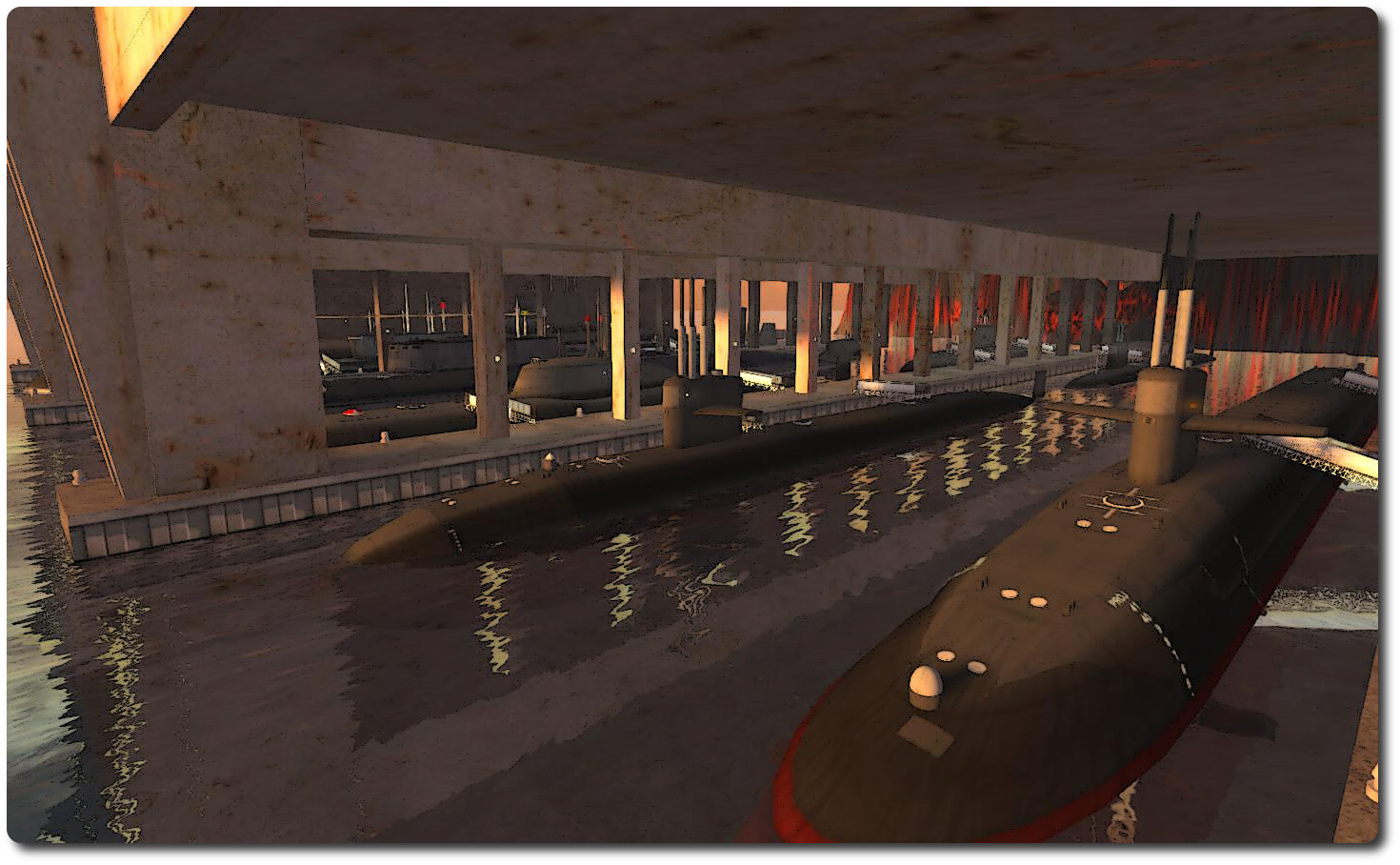
There is no doubt that he is a gifted creator. His military vehicles, ships and submarines,  military and civilian aircraft, trains and so on, are all beautifully executed, very well detailed and often a tour de force of prim design and construction. You can find them on the Marketplace, ranging in price from around L$900 through to over L$5,000 – and until the end of January 2014, you can find a good proportion of variants of those commercial models sitting on LEA28.

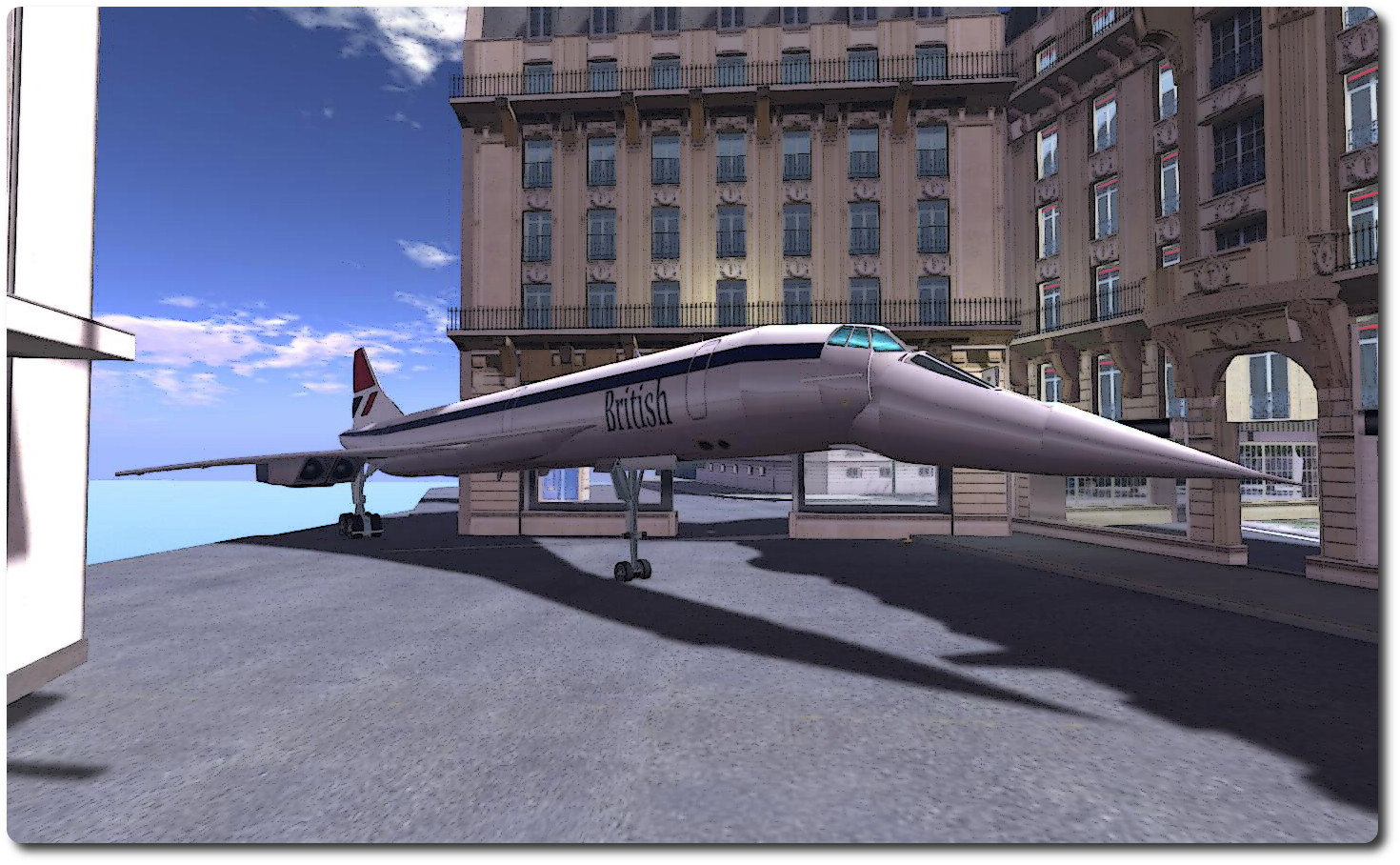
Tanks, trucks, buses, trains and a Concorde (partially embedded in a wall), sit on a platform of building false fronts and from which a Star Wars space ship is taking off / landing and above which a B-52 bomber looms. Under the platform sits a dockyard where many of Asterion’s ship and submarine models are docked. Quite why they are here, or what the build is intended to represent is unclear. A brief entry in his profile Picks suggests that it is simply intended to show the power of the prim to create a wide range of vehicles when many have turned to mesh.

Asterion Coen, LEA28

As a concept, this isn’t an invalid idea for an installation; in many respects the prim is still the backbone of content creation in SL – and still the only means to actually build in-world. I’m just sadly unconvinced that this installation actually achieves such a goal. Perhaps more guidance was needed from someone within the LEA to help visualise the strengths and attractiveness which were hopefully present in the original proposal. As it is, what is on display comes across as less of an exhibit and more of a private sandbox. Given that the majority of models do appear to be from Asterion’s commercial range of offerings (although none of them are actually on sale in the build), it also comes over as something of an inadvertent window into his SL Marketplace store. Not that there is anything wrong with an artist selling their works; just that in this case, the cart seems to be well before the horse, so to speak.

Others may see things differently; for my part, and given there were some 30 applications for the 20 regions on offer, successive visits to LEA28 have left me wondering what might have been, had the aforementioned guidance perhaps have been given, or indeed what might have been had the region been awarded to another proposal.

Asterion Coen, LEA28

Related Links

Oceania Planetary Park: a voyage through the solar system

Trton, the largest moon of Neptune, with its parent planet in the backgroun, part of the Oceania Planetary Park
Trton, the largest moon of Neptune, with its parent planet in the background, part of the Oceania Planetary Park

Opening on Saturday November 16th as a part of the Linden Endowment for the Arts Artist In Residence series, Oceania Planetary Park is the work of Kimika Ying.

Designed as an educational and informative piece, the installation provides visitors with a journey through the solar system – and more. The basic concept is simple to grasp, but actually hides a wealth of detail; as such, the visitor needs to have a little patience, a good hand for moving the camera around and a good eye for spotting things.

You arrive more-or-less at the centre of the region, which has been landscaped as a park surrounded by hills. You’re actually standing on a disc representing the Sun, and a path winding away from it leads you through the parkland and past each of the planets in the solar system in their order of distance from the Sun, winding slowly up towards an observatory sitting up in the hills.

Mars, Oceania Planetary Park

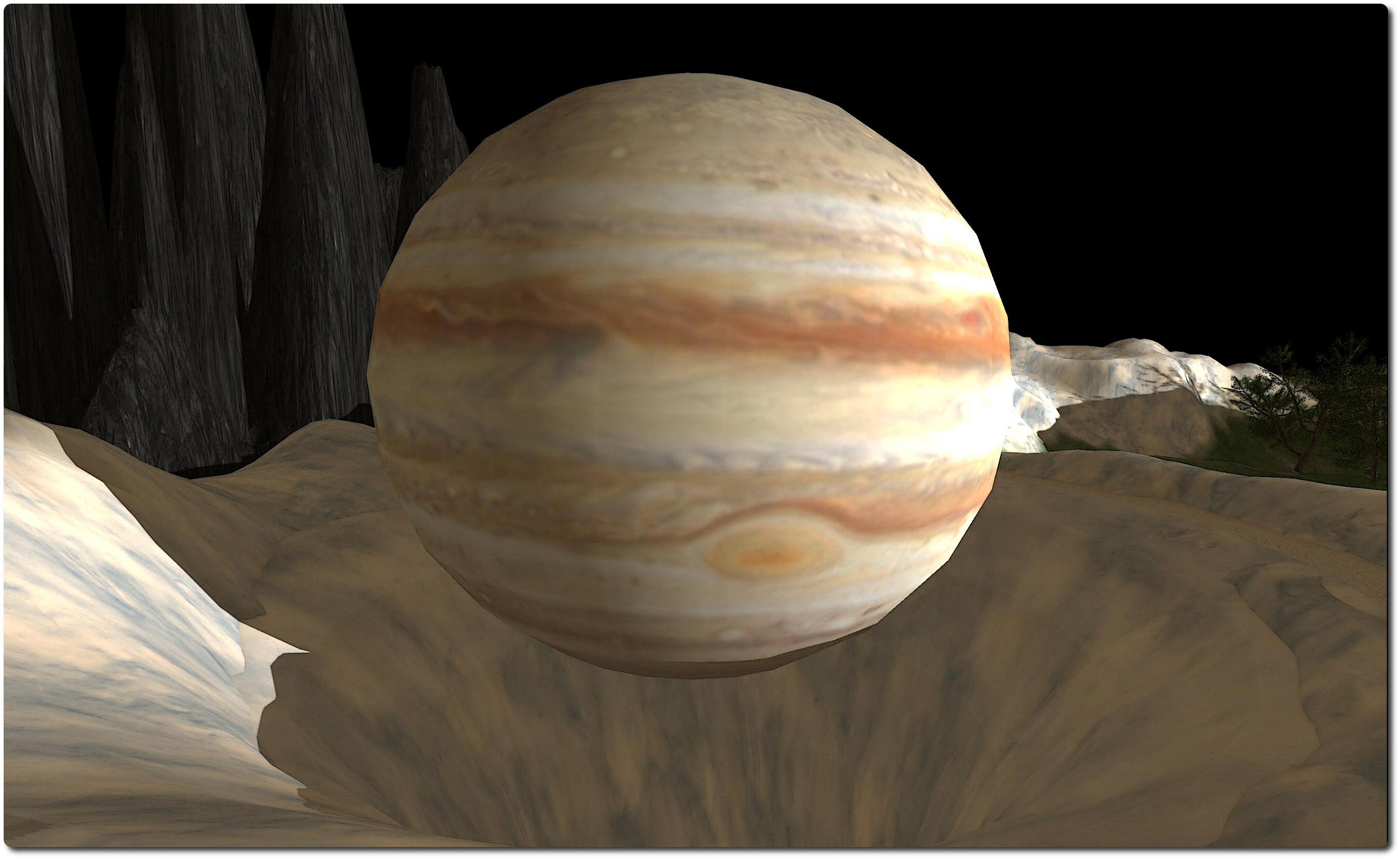
While the distances between the planets are not to scale, the models of the planets most certainly are, allowing the visitor to grasp the huge scale of the outer gas giants of the solar system when compared to the rocky inner worlds. The rotation of the planets is also to scale as well, with one minute of real-time representing 24 hours. This makes it possible to compare the familiar rotation of the Earth with the heady rotation of massive Jupiter, which spins on its axis every 9.9 hours, giving rise to the huge banded weather systems and turbulence visible in its dense atmosphere.

A further sense of scale can be obtained by keeping an eye out for the various moons of the planets which have been included, and which are also orbiting to a scale time of 1 minute to 24 hours. To see some, you have to carefully zoom out and pan around. In the case of Mars, however, you’ll have to zoom-in to the planet relatively closely to see tiny, tiny Phobos and Deimos, both likely captured asteroids, zipping around the planet, little more than dots compared to the bulk of the planet.

Phobos, the innermost of the two, is just some 9,377 kilometres above Mars, and zips around the planet in a little of seven and a half hours. So fast is Phobos’ orbit that, contrary to what logic might seem to dictate, it is slowly falling towards Mars as the result of gravitational tidal forces. At some point, Phobos will reach the Roche limit and well break up, showering the surface of Mars with its remains. Deimos, on the other hand, is further away from Mars (around 23,460 km) and orbiting more slowly than the planet is rotating. This mean tidal forces are having the opposite effect, slowly boosting Deimos away from Mars so that it will eventually break free of the planet’s hold on it.

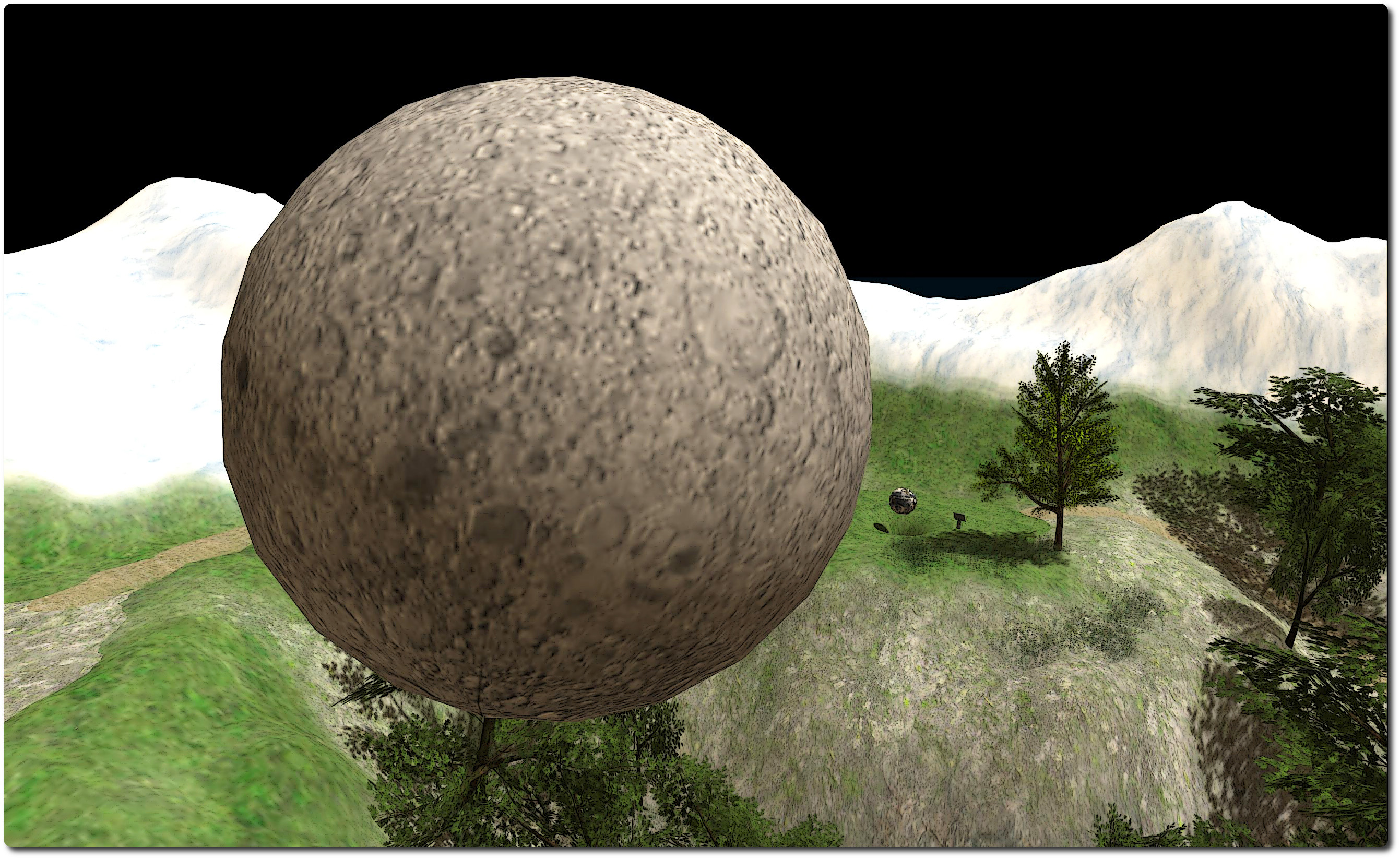
The far side of the Moon (often wrongly referred to as the "dark side" of the Moon) and below, the Earth
The far side of the Moon (often wrongly referred to as the “dark side” of the Moon) and below, the Earth

As the distances between moons and their “parent” planets are to scale, you’ll have to look a little further afield in order to see some of them, as noted above. Such is the case with our own moon, pictured above, and with Neptune’s Triton, seen in the picture at the top of this piece, which is nique among the large moons of the solar system as it is in a retrograde orbit about its parent. As you approach Jupiter, keep an eye out for Io, the most volcanically active place in the solar system, and the closest of the Galilean moons to their parent planet.  When you do find a moon, try clicking on it; a link to additional information may be offered to you.

Jupiter: Oceania Planetary Park

There are further touches here not to be missed. Each planet has its own information board which will give you a wealth of information on each planet, complete with links to external resources. The gravity well of each planet is neatly represented by a depression in the ground under it, making for a further means of comparison. As you  pass the planets, you may also note that texturing may appear to be missing on parts of them. It isn’t. Blank areas denote those parts which remain unseen by human and / or robotic eyes in our explorations of the solar system.

The path ends at the doors of the observatory. Just outside of this sit tiny Pluto and Charon, the largest of its five known companions.

Continue reading “Oceania Planetary Park: a voyage through the solar system”

Inside the Machine

The Machine
The Machine

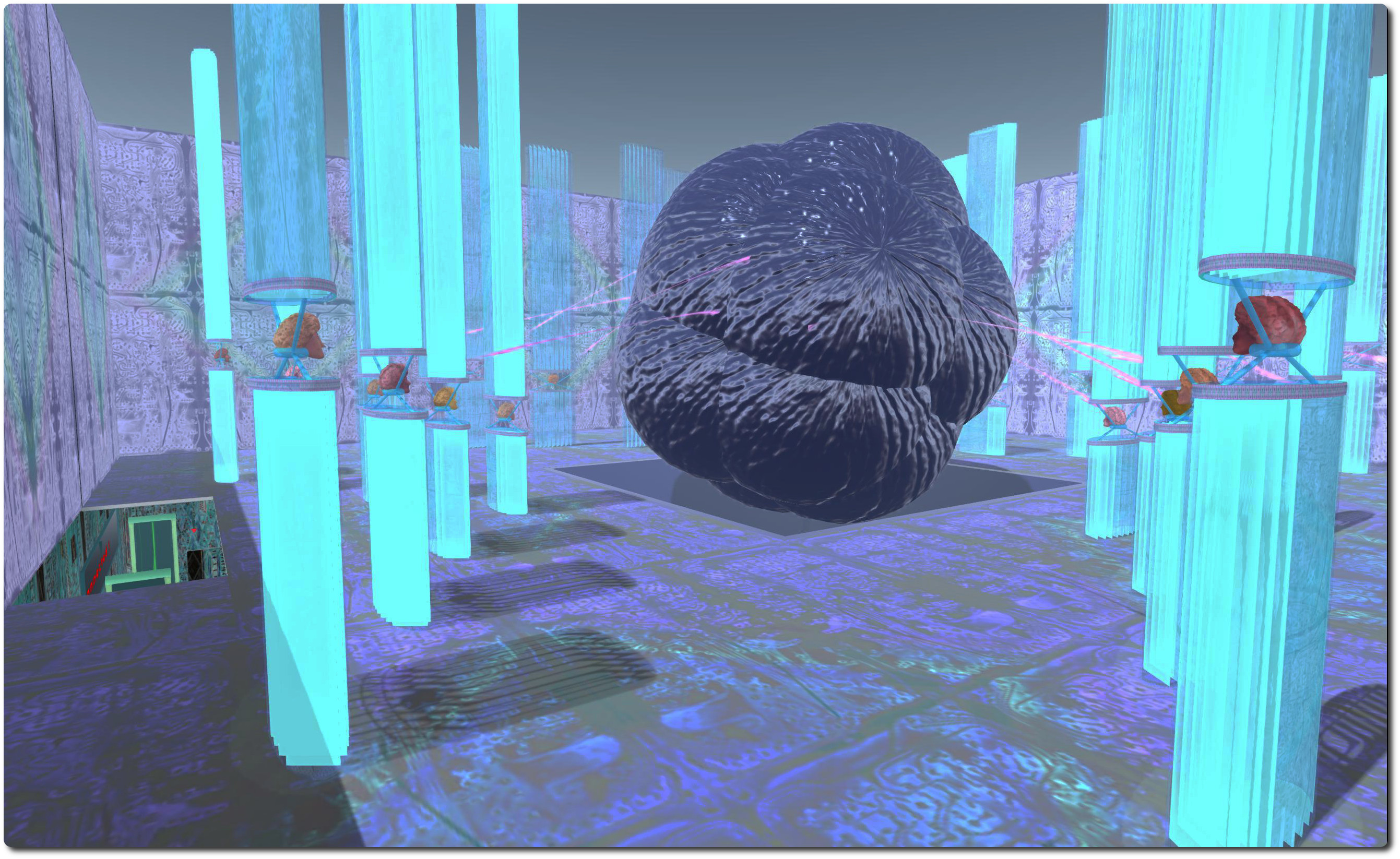
The Machine is the latest in the LEA’s 2013 Full Sim Art series to open, and will run through until the end of November. Located on LEA 6, the installation is by Lilia Artis & Moeuhane Sandalwood, and represents their view on what might happen if humanity seeks technological perfection above everything else. It presents, at first look, a self-fulfilling world where technology exists for the betterment of the human mind, and the human mind exists to maintain the machine – but is it really so?

The creatures have created a perfectly functioning world. They live in the ever-present. As a sound community. With joined minds and spirits. Interconnected. Completely. They run the machine – and are run by the machine. They are the machine. The peak of innovation. The end of evolution. Their creation.

They are a society without memory. Their history a mere shadow. Because there is no need to remember. Why remember what is of no value. They are perfect.

The Machine
The Machine

So states the opening description of the installation; and when you arrive, you get to see this perfection first-hand; in a technologically pristine environment sits the Machine, surrounded by the minds  that both gave birth to it and give it purpose, and who are given life and purpose by the Machine, in a closed  and chilling cycle, apparently devoid of past or future.

At what cost has this come? In the pursuit of perfection without thought of the consequences, what has humanity, as seen in this great hall, actually lost? This is the question visitors to the installation are invited to explore through their “inner archaeologist and ethnologist”.

The Machine
The Machine

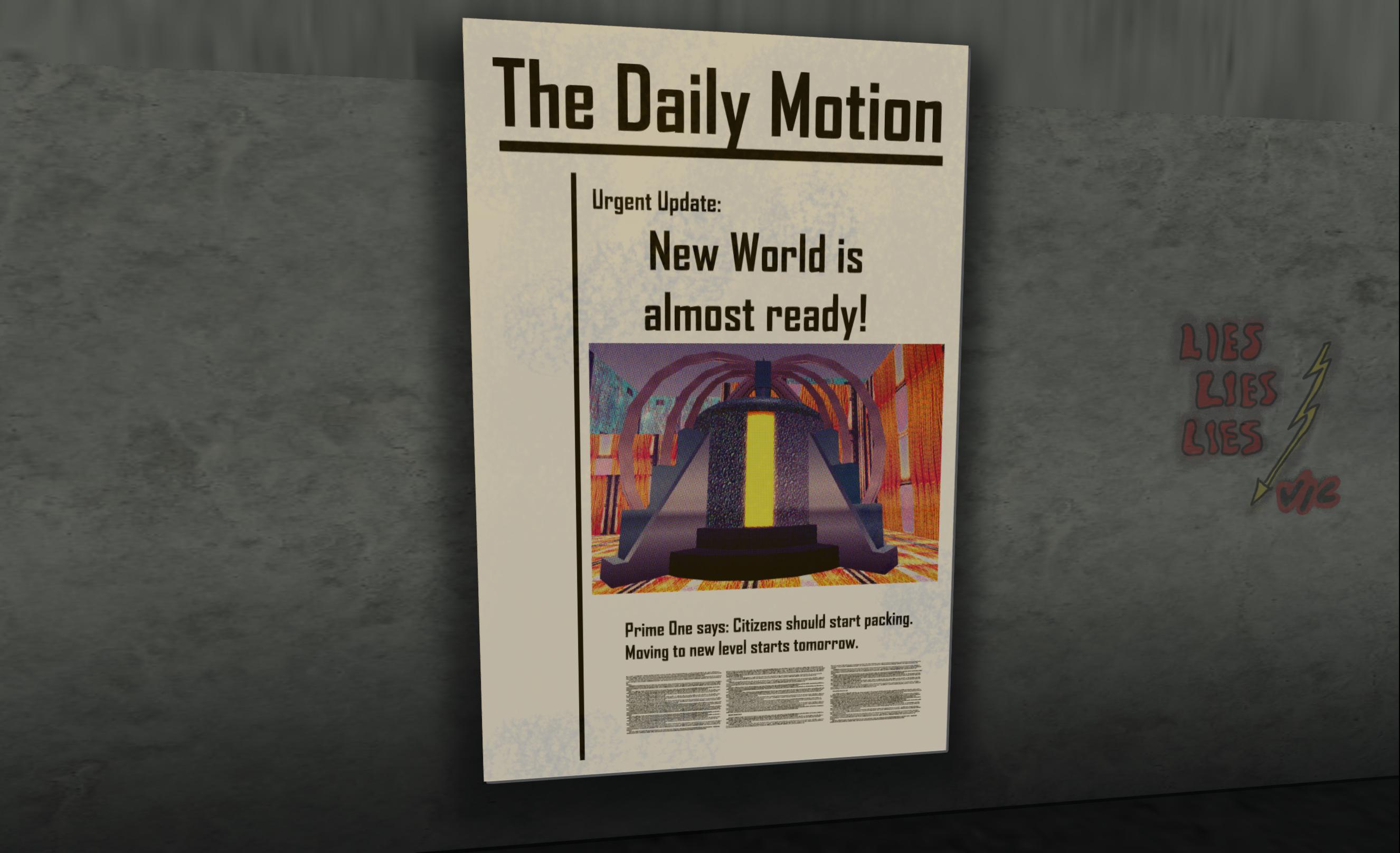
The machine and its “perfect minds” both literally and figuratively sit at the highest plateau  of human evolution; but explore the build and you’ll discover that the plateau itself is made up of many layers sitting one atop another, each harkening back to earlier times and hinting at what has been lost – and what may yet rise up once more to haunt those minds so earnest in their dedication to running the machine that runs them.

Each level is there to be explored in turn, although the passages between them may not always be obvious, so take your time exploring. The way down to the lowest level and the further point in the past – what we might consider the present – isn’t particularly obvious, keep your eyes peeled for a hole in the floor of a building.

The Machine
The Machine

This is a thought-provoking piece. As you descend through the various levels, you’ll doubtless form your own answer to that question as to the price of human evolution when only technology is seen as holding the key. In this, Lilia and Moe are to be congratulated in only providing the most subtle of pointers to direct any thinking on the matter, leaving it up to the observer to draw their own conclusions.

Related Links