Making a welcome return to Second Life – for a limited period of time, at least – is Wendy Xeno’s HuMaNoiD, which can now be seen at LEA 6, having last been available on the grid a little over a year ago.
I first encountered HuMaNoiD far back in 2012, on the recommendation of Chestnut Rau. At the time, it was a fascinating, contemplative visit, and throughout several return visits over the years, I continued to find it an evocative place; I’m pleased to say this it still is.
For those who have visited HuMaNoiD in the past, all of the familiar elements are there: the ground level watery landscape, the cello awaiting a player as J.S. Bach’s Unaccompanied Cello Suite No. 1: Prelude can be heard. Around this stand five doorways inviting visitors to open each in turn and step through, and explore the realms in the sky on the other side of each one.
Beyond these, water breaks the landscape into a series of vignettes the visitor is invited to explore. Again, for those who have been to HuMaNoiD in the past, there will be a pleasant feeling of familiarity and comfort to most of them, although one or two nuanced changes have been made from the original, the result of working within the dome needed to give the installation a feeling of an infinite open space;. However, it’s fair to say the changes enhance the region’s aesthetic; I particularly like the bridge suspended beneath balloons (seen at the top of this piece).
The sky spaces are in places similarly reworked, but all present environments rich in context and colour, and once again offer places of contemplation and introspection. With the sky a little darker than previously, but the elements of poetry still to be found and read, a visit to HuMaNoiD offers much to all, whether you recall the original or make this opportunity a first visit.
One definitely not to be missed, I understand HuMaNoiD will remain at LEA 6 until the end of July.
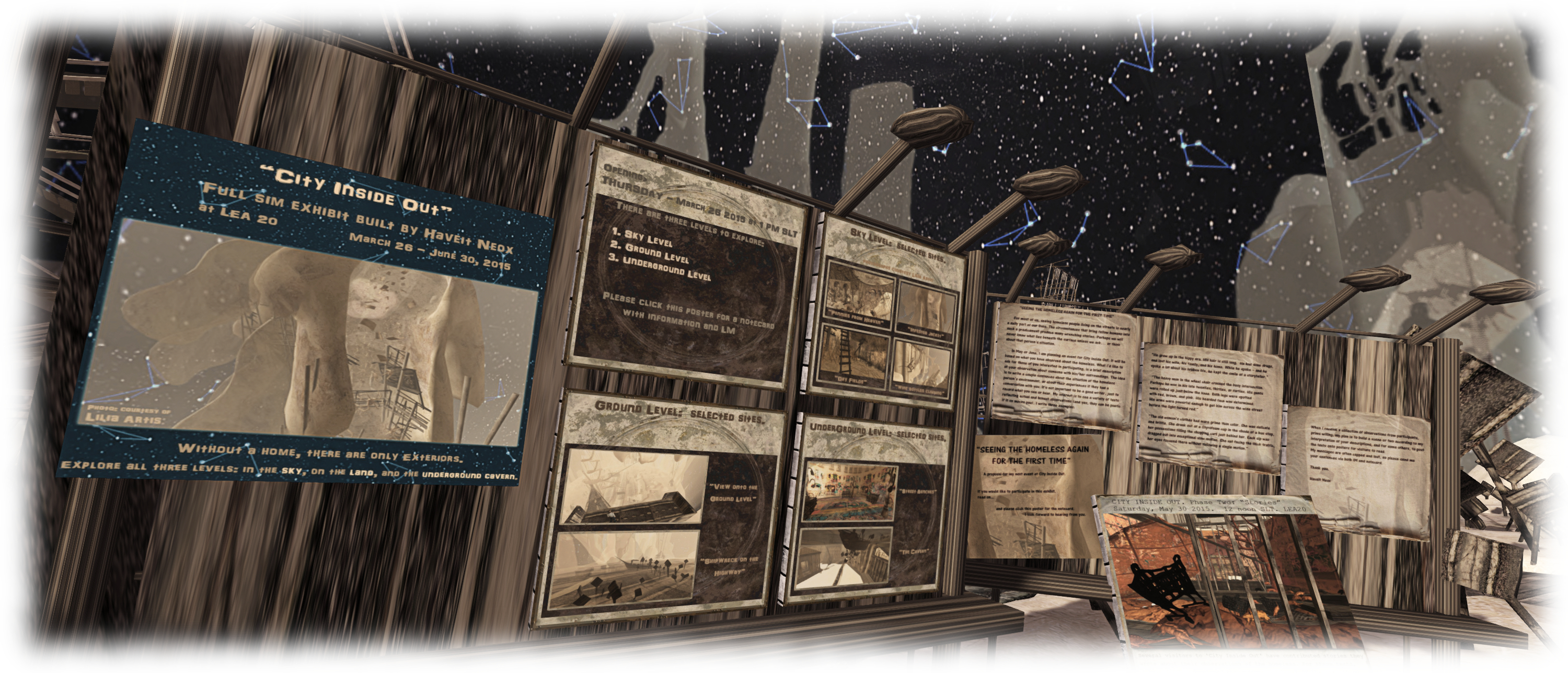
In March I wrote about Haveit Neox’s visually stunning City Inside Out, a full-region installation at LEA 20, which is displayed as a part of the 8th round of the Artist In Residence series.
On Saturday, May 30th, a new element in the installation, City Inside Out Phase II:“Stories” opened, and takes the visitor down under Haveit’s remarkable cityscape, where stories await.
To briefly recap on the original build, as per my initial post about it:
This is a city we’re asked to see through the eyes of the homeless, the dispossessed; those who have nowhere to be, nowhere to go. For these people, the city is a very different place to the one we know. It’s a place where everything is strange, alien, and threatening. A place bad enough in daylight, but as Haevit further explains, becomes much, much worse at night…
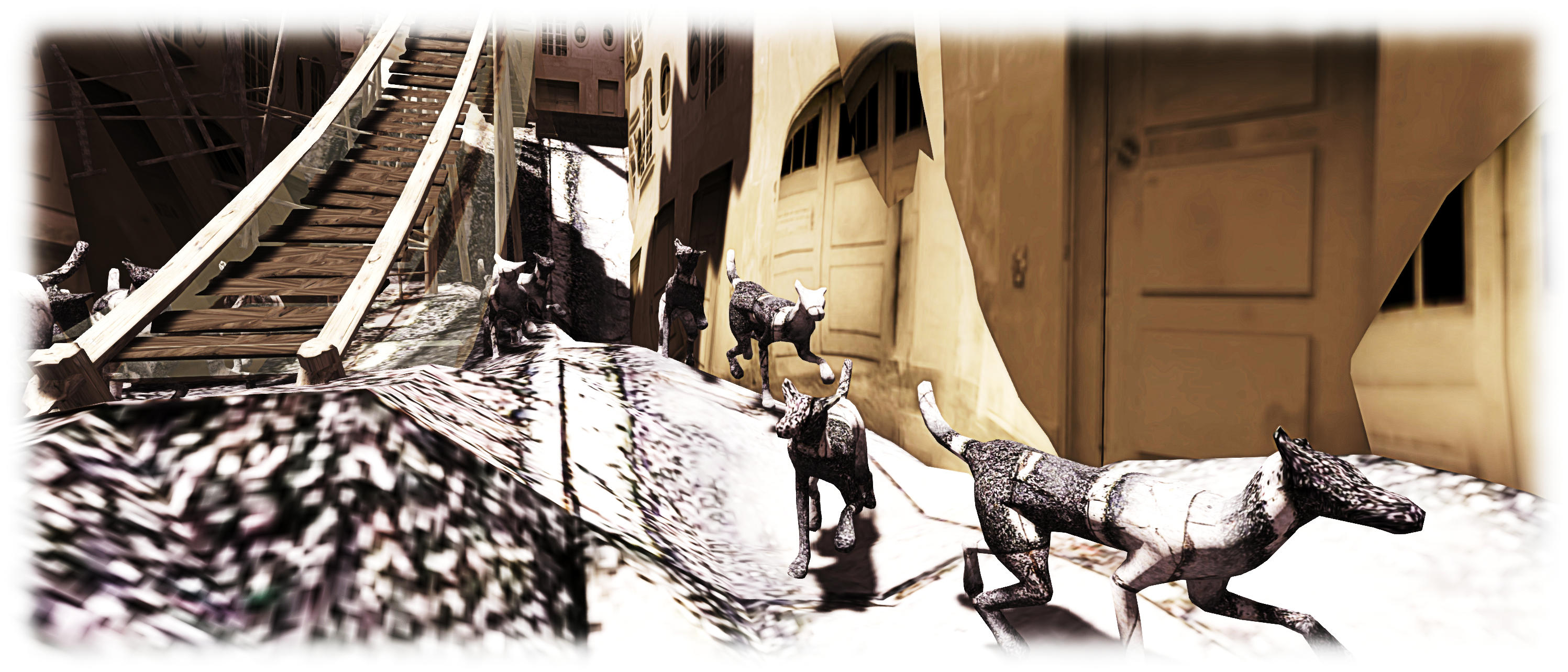
As I noted at the time, this premise of seeing a city somewhat in reverse, as a homeless person, makes for a remarkable – and is some places uncomfortable – place, where nothing is quite as it seems, be it the had offering money or the man walking his dog; threats real or imagined and spurred by fears and a sense of separation, can be found everywhere…
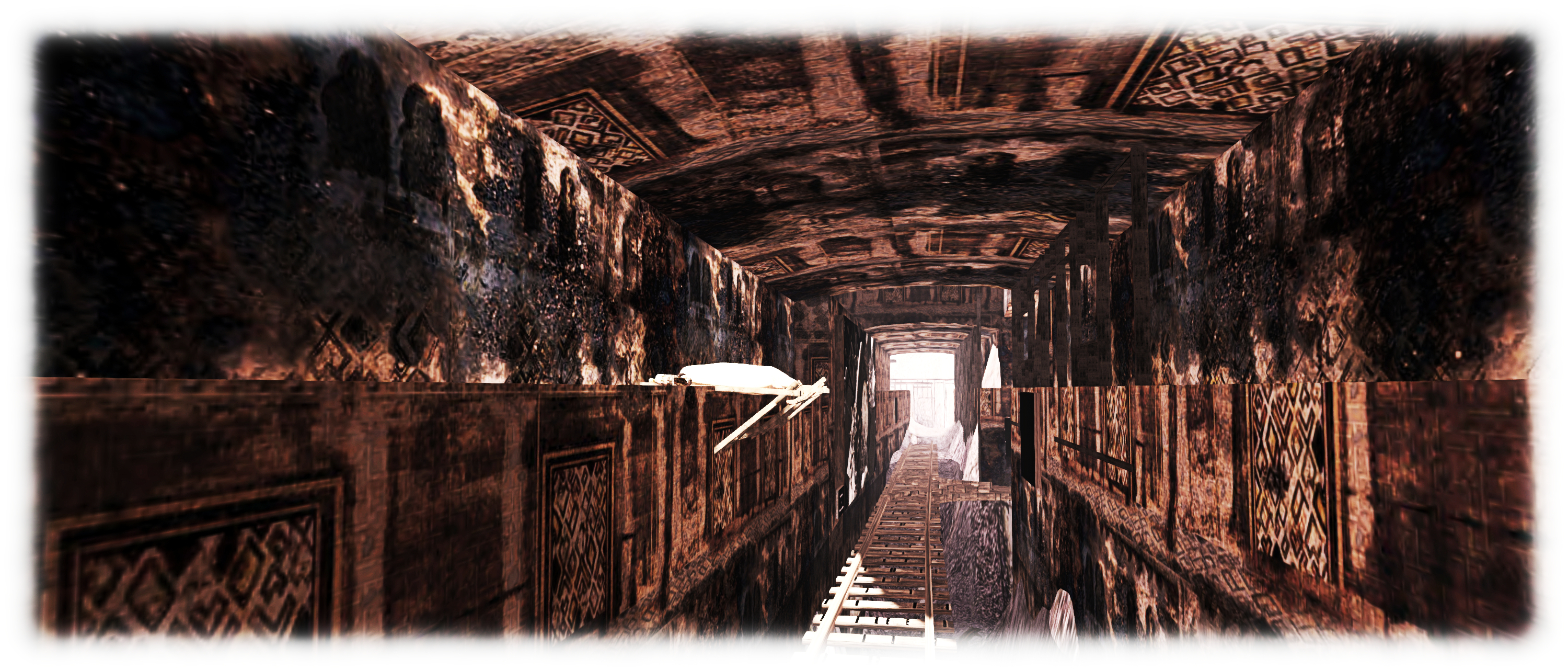
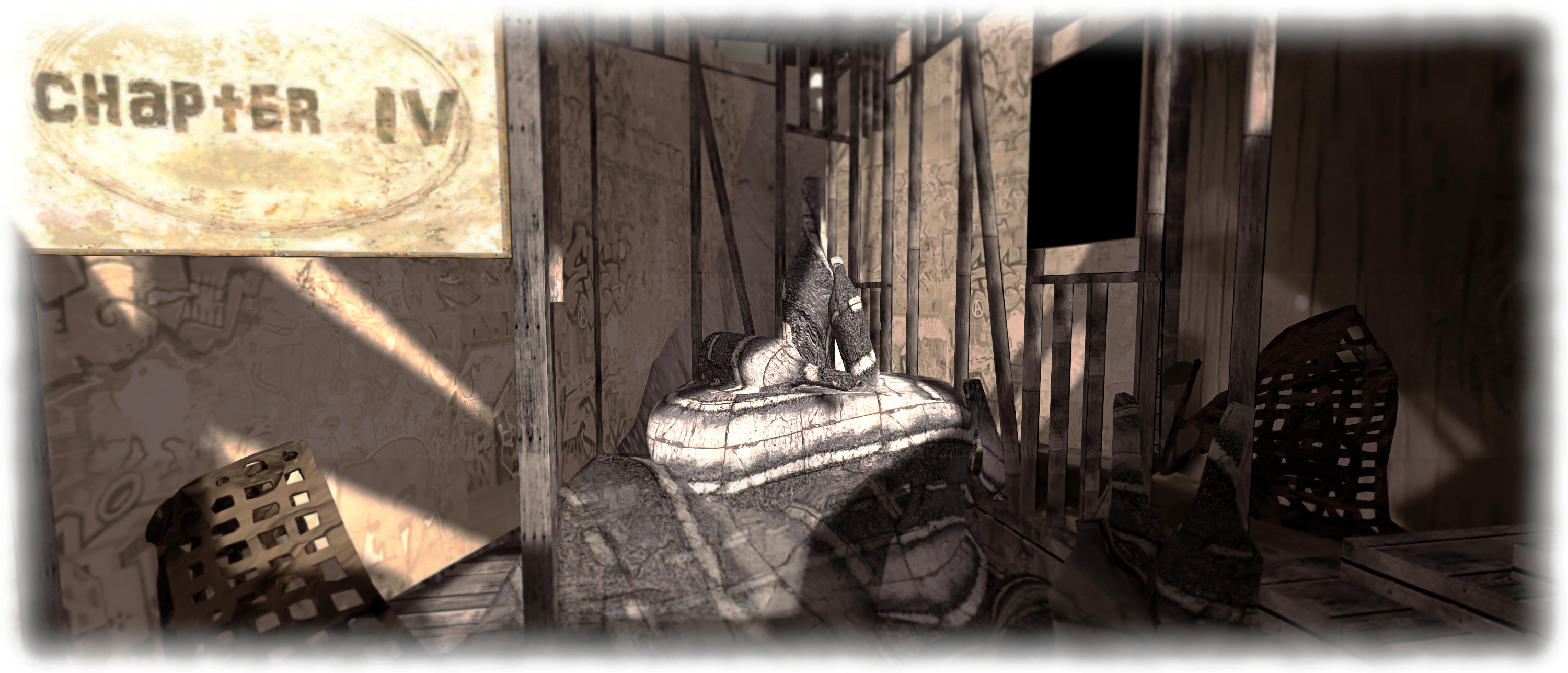
With Phase 2 of the build Haveit incorporates a series of short stories written by other Second Life residents on the subject of homelessness in the physical world as they perceive it. These are laid-out in an underground labyrinth sitting beneath the lowest level of the main build, and are arranged as a series of seven chapters reached by following subterranean paths.
There are a number of different entry points to these paths – simply walk onto one of the moving roadways and follow it, and you will drop into the underground world. However, to follow the chapters roughly in order, the best point to start is to walk to the dual carriageway that lies just behind the landing point information boards, and follow it eastwards. It ends in a slice in the ground that will lead you down to Chapter 1, which sits directly under the roads. Do note, however, that the route through the chapters from 1 to 2 to 3, etc., isn’t necessarily linear; spurs and turns can lead you through the middle chapters in different ways, depending on the route you take.
The paths also provide a hint of narrative as well the the story boards located along them. As you walk through them they change from a trench-like cutting to what could be long-abandoned mine workings or the underground vital intestines that keep a city alive, through to vast subterranean chambers suggestive of a city that has built over itself time and again, burying or hiding its past from view – just as we so easily can blot the homeless around us from our view.
This is a fascinating addition to what was already a brilliant installation, both in terms of the build and the stories it contains. It is also one in which you can play a role; Haveit is still accepting pieces on the subject of homelessness, and will add them to boards throughout the underground world as they are submitted. Simply send him your words via note card together with an IM notifying him you have sent something. Additions to the narrative will continue through until June 25th, and both phases of City Inside Out will remain open until June 30th.
If you haven’t already visited, I urge you to do so; and if you have been before, do make sure of a return visit and walk the underground paths.
Obedience is a new, mixed-media installation at the Jüdisches Museum, Berlin, created by Saskia Boddeke (Rose Borchovski in Second Life) and Peter Greenaway, which has an interesting cross-over with our virtual world.
The installation takes as its theme the story of Abraham and Isaac; a story which raises questions which are addressed differently by the three major religions – Jewish, Islamic and Christian – in which it can be found.
As the tale goes, Abraham is commanded by God to offer his son in sacrifice as proof of his devotion. Thus, the first question is framed: which is the stronger – devotion to the will of God, or the love of a father for his son? Within this sits a second question, one which holds relevance to us all today regardless of our religious leanings: which is the more important to us – obedience or trust, and where can the balance between the two be found?
Obedience seeks to explore these issues by leading the visitor through fifteen rooms in which Boddeke and Greenaway retell the sorry using a variety of mediums and approaches. In doing so, they offer a means of taking the narrative apart, creating emotionally charged scenes and vignettes which focus the visitor’s eye and thoughts.
The cross-over with Second Life comes via a special installation created by Bryn Oh and Jo Ellesmere at LEA 1, also entitled Obedience.
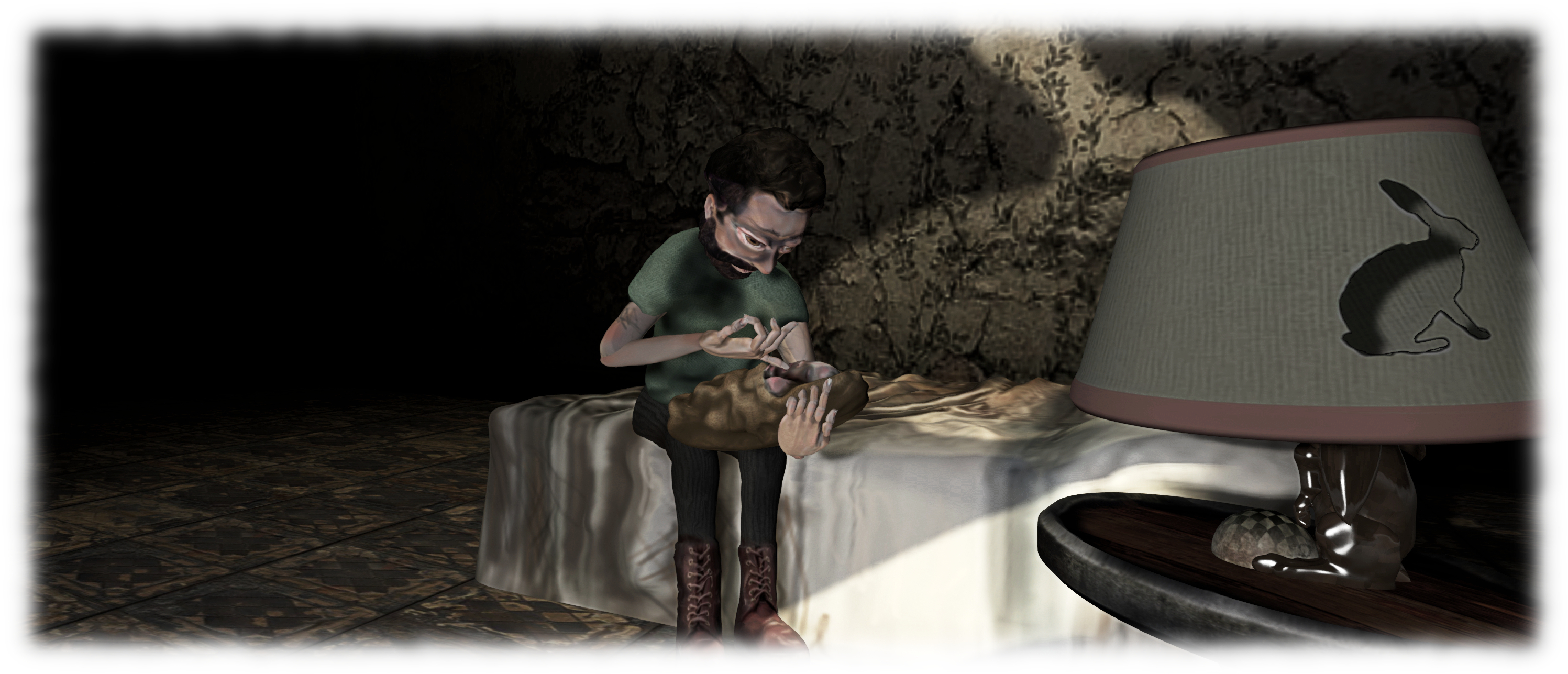
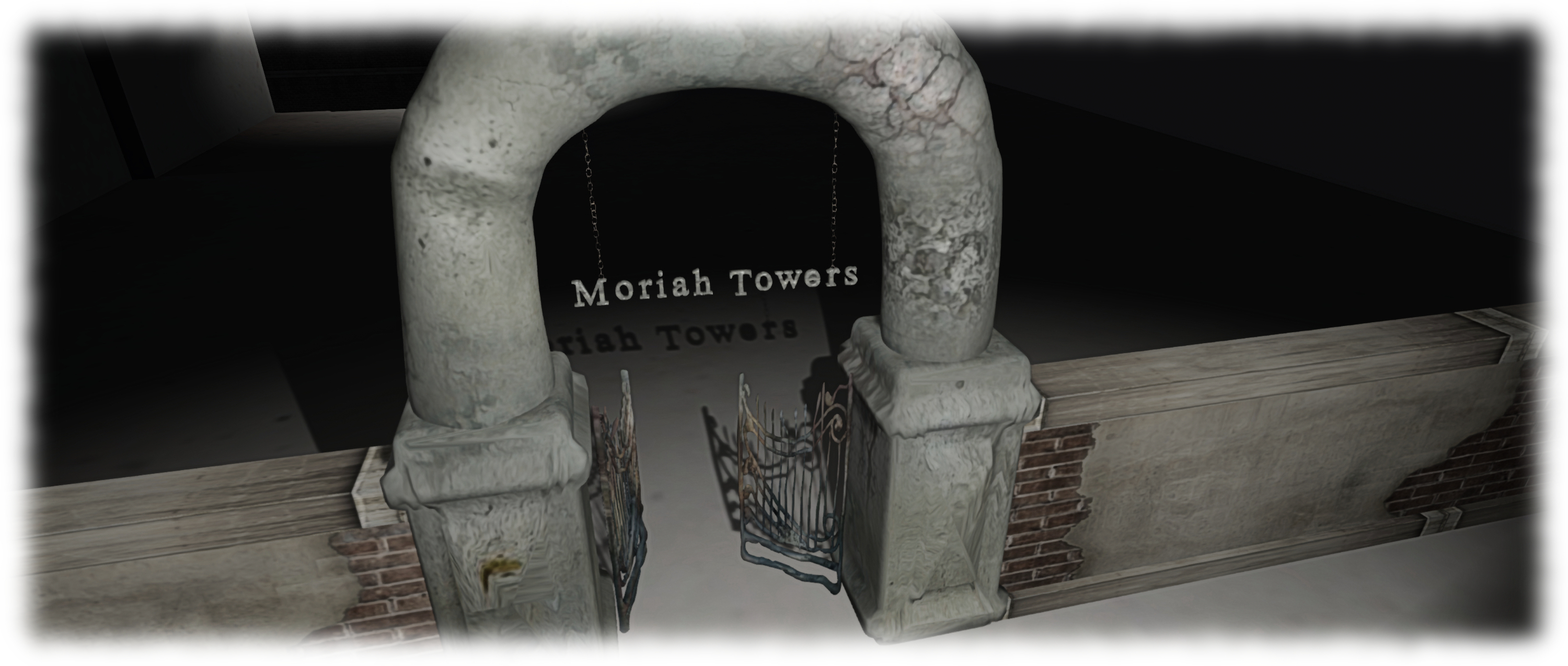
As with the exhibit at the Jüdisches Museum, visitors to the LEA 1 installation are encouraged to explore a series of “rooms” in which the story of Abraham and Isaac is presented through a set of distinct vignettes, all of which are given a contemporary turn – Abraham, see initially as a doting father, appears to hear the Voice of God through his television, for example, while the mountain range of Moriah from the Book of Genesis becomes a series of tall buildings called Moriah Towers.
Obedience, LEA 1: Abraham obeys the Voice of God, taking his young son out…
“This is a very important exhibition in that it is a high profile use of Second Life as an artistic medium and its mere presence within a museum of this calibre legitimises the virtual space as an art medium for some, who before now may not have associated it in this way,” Bryn states in her own introduction to the LEA 1 installation and its link to the Berlin work. “Credit for this should be given to both Saskia and Peter who are staunch supporters and believers in this medium, they could easily have created the work without using the virtual space yet pushed the idea on the Museum directors and have them interested as well. ”
The link comes not only in the presentation of the Abraham and Isaac story individually in the physical and virtual spaces, but also in fact that the virtual environment we can explore at LEA 1 is being shown on monitors within the Museum, and visitors there have the opportunity to to join us in-world and explore the installation here; through the use of two avatars, isaak001 and ishmael001. So if you see either of them wandering through the LEA 1 space, do keep in mind they are visitors to Second life from the Jüdisches Museum.
The story of Abraham and Isaac is not an easy read, and by bringing the story into a modern setting, Bryn underlines some of the more uncomfortable elements within it, whilst also drawing attention to the broader question of obedience and trust. It also raises an further uncomfortable questions, which I’ll come to anon. In terms of obedience and trust, the contemporary approach taken here offers potentially broader interpretations than the purely Biblical.
Take Abraham’s hearing the voice of God through his television. Here there seems to be a question lurking as to our relationship with the media upon which we rely; just how far can it be trusted? And what if it – say, as a state apparatus – demanded obedience? There are other possible subtleties here as well, such as the Lovecraftian nature of the chair in which Abraham sits, which seems to open doors into other lines of thought.
Nor does Bryn doesn’t stop short on showing Abraham’s willingness to sacrifice his son, either. This scene takes place atop of the aforementioned Moriah Towers,s and is brutal in its and terrifying in its vivid portrayal, despite God’s intervention, Abraham’s faith and trust having been demonstrated.
However, this is not the most powerful and poignant scene in the series. That comes last of all – providing you take the time to locate the teleport to reach it. Bryn carries the story forward in what, to me, is the most poignant scene of all. Here we see the aftermath of events. Abraham may well have proven his faith in God, but he has betrayed the trust of his son, who cowers against a wall, terrified. “What happens once Gods presence has withdrawn after testing Abraham’s faith?” Bryn asks, “How might the moments go when Abraham and Isaac are now alone and words are needed to explain?”
The Eternal Suspense is the title of Giovanna Cecise’s latest full region installation now open at the Linden endowment for the Arts, as a part of the 8th round of the Artist in Residence programme.
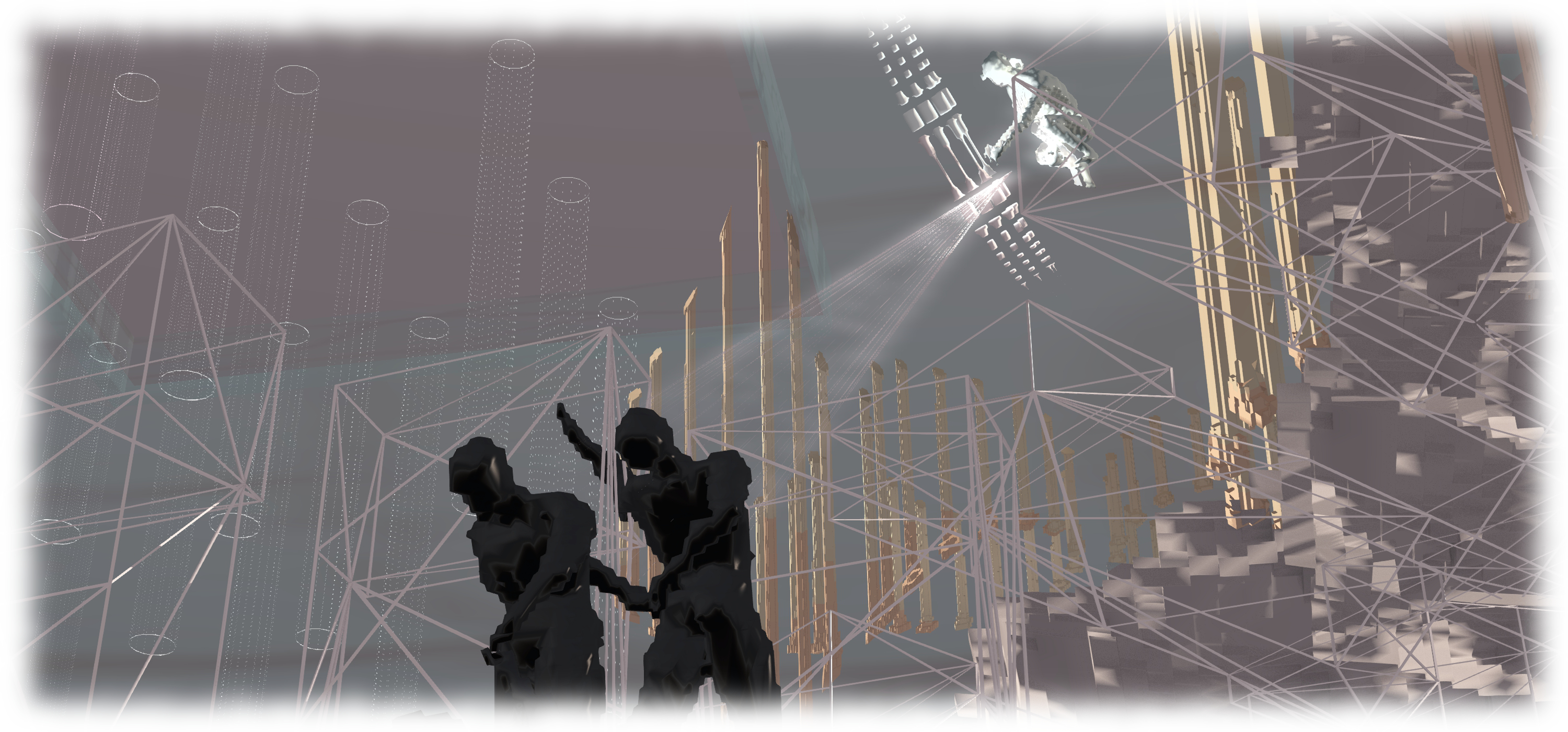
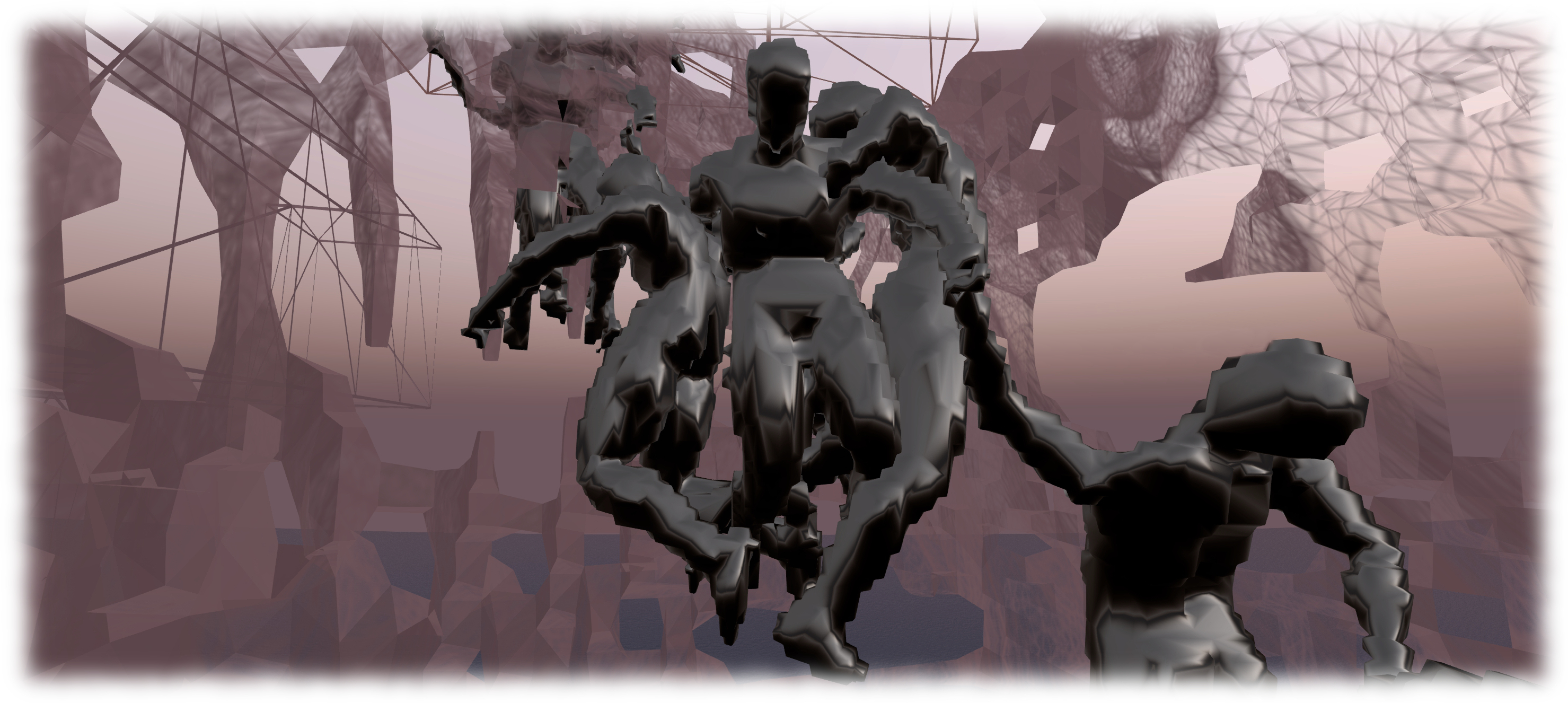
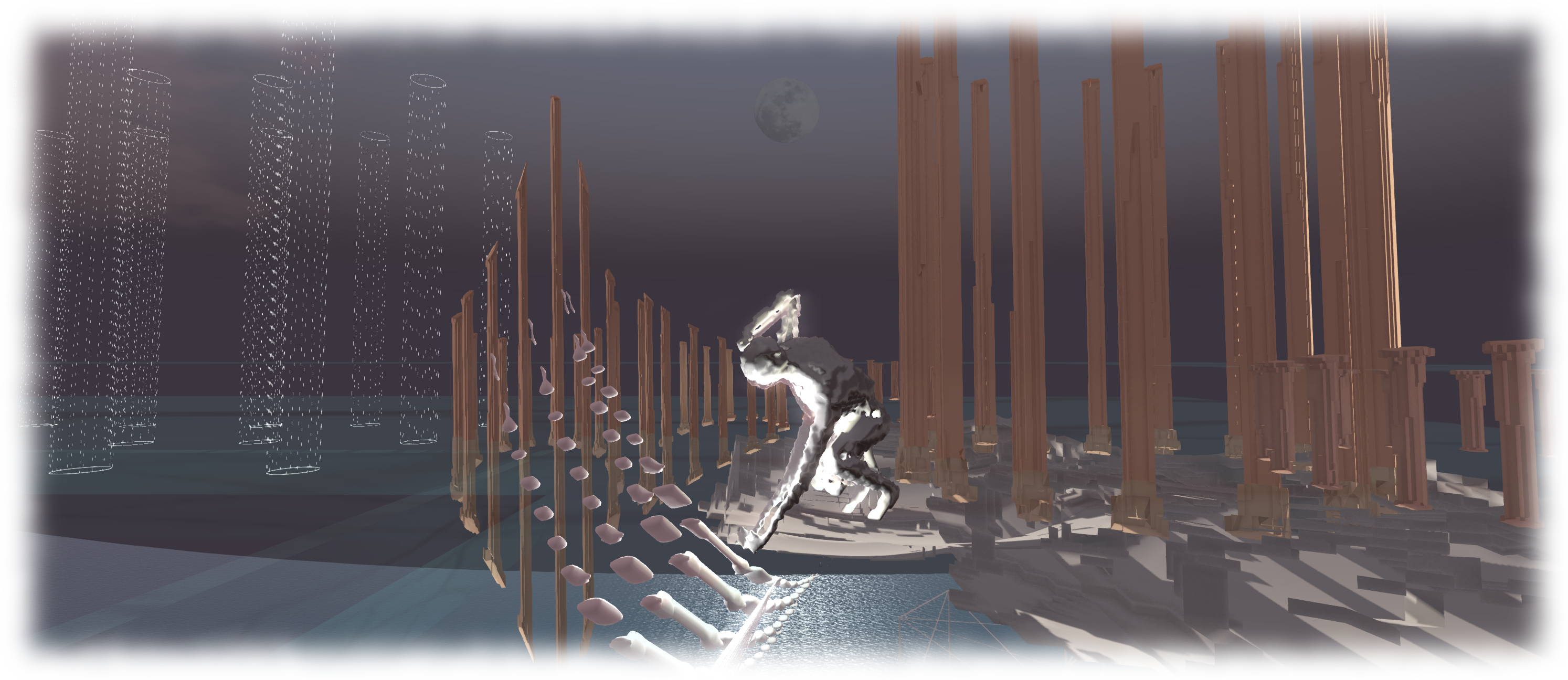
A complex piece mixing geometrical forms with human elements, the installation extends several hundred metres into the air, encompassing a number of distinct levels. Within the lattices and sphere which give a sense of order to the the build, there is also an element of disorder: human figures rising from the lowest platform, climbing the lattices upwards into the sky, stretching up towards a white figure crouched at the highest level.
Giovanna has taken as her theme the Apollonian and Dionysian philosophical dichotomy, perhaps most famously expounded within Friedrich Nietzsche in his 1871 study, The Birth of Tragedy. in which he examines the nature of Greek Tragedy before going on to use the Greek model to understand the state of modern culture.
The central concept of the Apollonian and Dionysian dichotomy is that Apollo is the god of reason and the rational, while Dionysus is the god of the irrational and chaos; therefore the core of all great tragedy grows out of the interplay between the differing world views they represent.
Within The Eternal Suspense Giovanna embodies and interprets this concept artistically. “Man is poised between two or more emotions, he is always in a delicate step,” she states, “in a hazardous environment. Its location is never easy, he is a tightrope imprisoned in constant tension between his Dionysian side and the Apollonian one. But [do] you have really to choose? Or you have really to find a balance?”
Thus, this interplay is defined between the lattice (ordered and rational) and the mass of figures climbing it (disorder, chaotic). But it also runs deeper. The figures themselves are rising from a scene somewhat chaotic in nature, with what appears to be roiling waves (or perhaps flames) mixed with revelry; but while their ascent up through the lattice may seem chaotic, it is both purposeful (rational) and encompasses cooperation (order), the figures all assisting one another. Thus the tension we can experience in trying to find a balance between our Apollonian and Dionysian “sides” is embodied in their form and efforts.
To get around the work, you can either fly, or use the teleport spinning tops (the first is located at the landing point). Right click on them and select TELEPORT, and they take you up through each level. Giovanna recommends a sunset windlight for the piece; I’d actually suggest something more towards a dusk level of lighting.
The Eternal Suspense will be open through until the end of June 2015.
I first became enamoured of Frankx Lefavre’s work at the start of 2014, when he participated in the LEA’s “interim” series of installations, and I met him at the piece he’d built which he informally called “light and glass” (and about which you can read here). Since that time, I’ve reported on a number of his set pieces at the Linden Endowment for the Arts, and for the 8th round of the LEA’s Artist in Residence series, he is back once more, with arguably one of his most ambitious projects yet – and one which was bound to grab my attention.
Cocytus: the 9th Circle of Hell, now open at LEA 18, is a dramatic 3D representation of the ninth and lowest of the circles of hell Durante degli Alighieri wrote about in Inferno, the first cantica of his Divine Comedy. This is the resting place – if such a term might be used – of those who have committed treachery or acts of fraud, and within it are four “rounds” leading inwards, and through which Dante travels with his guide, Virgil. Within each round, and according to the form of their treachery, are the souls of the damned, buried in ice to varying degrees, from semi-submerged through to completely entombed.
The four rounds of Cocytus are described by Dane as, Caina (after Cain from the Bible), where can be found those who betray their blood relatives; Antenora (after Antenor), where can be found those who betray their county; Ptolomea (after Ptolemy, the governor of Jericho) where can be found those who betray their guests; and Judecca (after Judas Iscariot), where can be found those who betray their benefactors and masters. At the very centre of this round lies Satan, bound up to the waist in ice.
Visitors to Cocytus: the 9th Circle of Hell take something of Dante’s journey through the Cocytus of Inferno, starting with their arrival in a dramatic, desolate landscape dominated by a red-rimmed Sun which fixes them with a baleful stare. A slender wooden bridge directs people to a path which zig-zags down to the maw of a cavern, and the first of the rounds of of which Dante wrote.
The path through the installation is also a zig-zag, and the windlights should change progressively as you make your why through the four rounds – I’ve used different lighting in the images here for effect). They are atmospheric in tone, but you may need to pick your way with care to avoid blind turns or dead ends. There are some torches along the way to mark a part of the path, so keep an eye out for them, and a further wooden bridge will bring you to the innermost round.
While representing Dante’s work, in a vivid manner, Frankx also takes a couple of diversions as well – his Satan is not the three-faced beast Dante witnessed, for example – which is not to say it is any the less imposing. More particularly, where Dante saw Cocytus as a frozen lake, Frankx’s use of the path through the caverns and over the four icy rounds gives the impression one is following the course of a frozen river, albeit one broken by sections of hard stone. In this way, the ice here carries an echo of the original Cocytus, the river of lamentation (or wailing) in Greek mythology, and one of the five rivers surrounding Hades.
This is the second interpretation of Dante’s Inferno I’ve seen mounted at the LEA, the first being Rebeca Bashly’s Inferno in October 2011, which marked the inaugural AIR / LEA installation. Like that installation, Cocytus: the 9th Circle of Hell is an involved and beautifully executed representation of of Dante’s poem. It will be open through until the end of June, and a visit is recommended.
Let it be known that the Moon heads towards Earth! Long range telescopes have detected there might be art on the moon. Be aware that Bad Astronomy calculated the impact for Thursday, May 7, 2015, 1.01 PM SLT time! Engineers have constructed the Moonrezzer to transport people to see this unique phenomenon, and a cadre of journalists will lift off on Monday May 4th to send early reports! Stay tuned!
Thus reads – in part – the announcement that Art Blue’s latest art installation / retrospective The Art Walk on the Moon, which official opens on LEA 14 at 13:00 SLT on Thursday, May 7th, and which has a special press preview on Monday, 4th May, also at 13:00 SLT (the tour is limited, numbers-wise, so a screening area has been set-up on neighbouring LEA 16 for late arrivals).
For those unfamiliar with Art Blue, he is a collector and curator; a futurist and historian. Over the years he has taken it upon himself to collect art created in virtual worlds and preserve it, offering for people to view through special presentations such has this, and his Ferrisquito exhibitions (the Bryn Oh retrospective of which I covered in September 2014. Part of his work also involves purchasing art pieces from their creators so that they can be preserved and exhibited on OpenSim.
Art Walk on the Moon – LEA14
The Art Walk on the Moon is an ambitious, immersive and interactive installation presenting a broad range of art pieces created over the years by many artists working in both Second Life and OpenSim, including (and not limited to) Molly Bloom, Feathers Boa, Brenda Geissen, Giovanna Cerise, JadeYu Fhang, Cherry Manga, Yooma Mayo. Fuschia Nightfire, Bryn Oh, Maya Paris, Gem Preiz, Nexuno Thespian, and Renn Yifu.
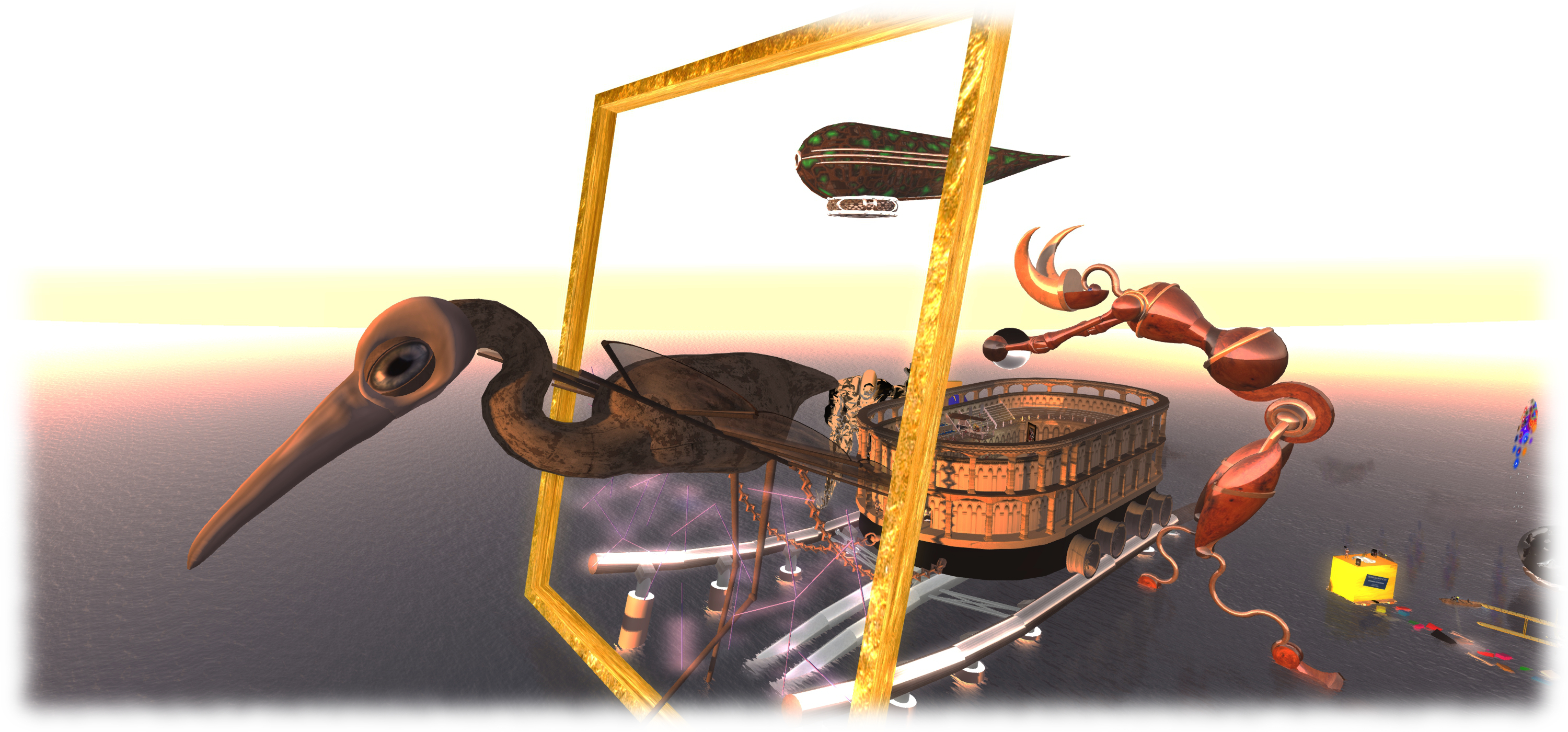
The installation actually comprises a number of set pieces which are both separate to one another, while in some cases sharing links with one another. For example, the art displayed in the lower exhibition space can be seen via a flycam tour located in the Moonrezzer Amphitheatre, while some of the pieces displayed can be reached via the teleport boards, or visitors can fly around them.
From the start-point – an airship which is itself an OpenSim creation floating over the the lower exhibition space – one can use the teleport boards to move around the installation. Before you do so, do make sure sounds and media are enabled, and that you’ve collected the introductory note card, and had a good look around. In particular, do note the blue “Creators Link” cubes; these can be found throughout the installation and when clicked will take you to a web page of information on a particular artist / object associated with them.
Art Walk on the Moon – LEA14
When starting your explorations, I’d recommend taking the teleport to the Moonrezzer Amphitheatre. Here you can take a flycam tour of the exhibits in and around the amphitheatre. Simply sit on one of the blue chairs, click on Wells’ time machine under the awning and tap ESC a couple of times to free your camera. After a few seconds, the flycam tour should initiate, taking you around the pieces on display and providing information about them in local chat.
Another launch-point for reaching exhibit spaces is the Moonrezzer Springfield Bet, which acts as a gateway to both the The Soulrezzer and The Moonrezzer installations (the latter of which can also be reached directly via the teleport boards). Make sure you obtain a code for claiming your gift at The Soulrezzer before you teleport up to it.
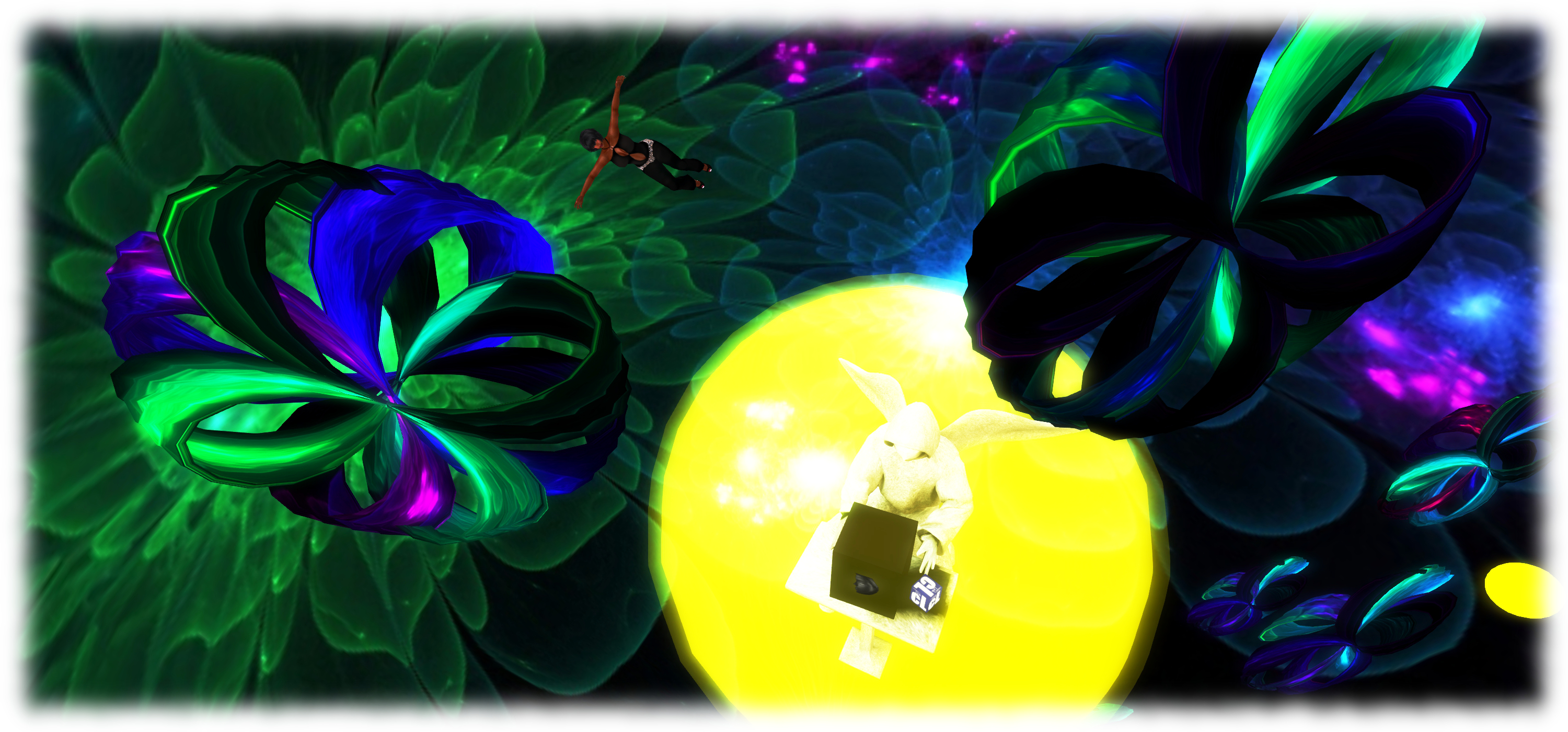
The Soulrezzer is a skyborne installation featuring fractal art by Aurora Mycano. Click on the yellow poseballs to drift with the art to the rather heavy beat of The Soultaker by Blutengel (see the image towards the bottom of this article). At the centre of the piece sits The Soultaker, guarding a box. Touch the box and enter the code you received at Springfield Bet on channel /1 to open it and claim your gift. An information display in the lower part of the sphere containing The Soulrezzer includes a teleport circle which will return you to the ground – or you can simply step outside and fly down.
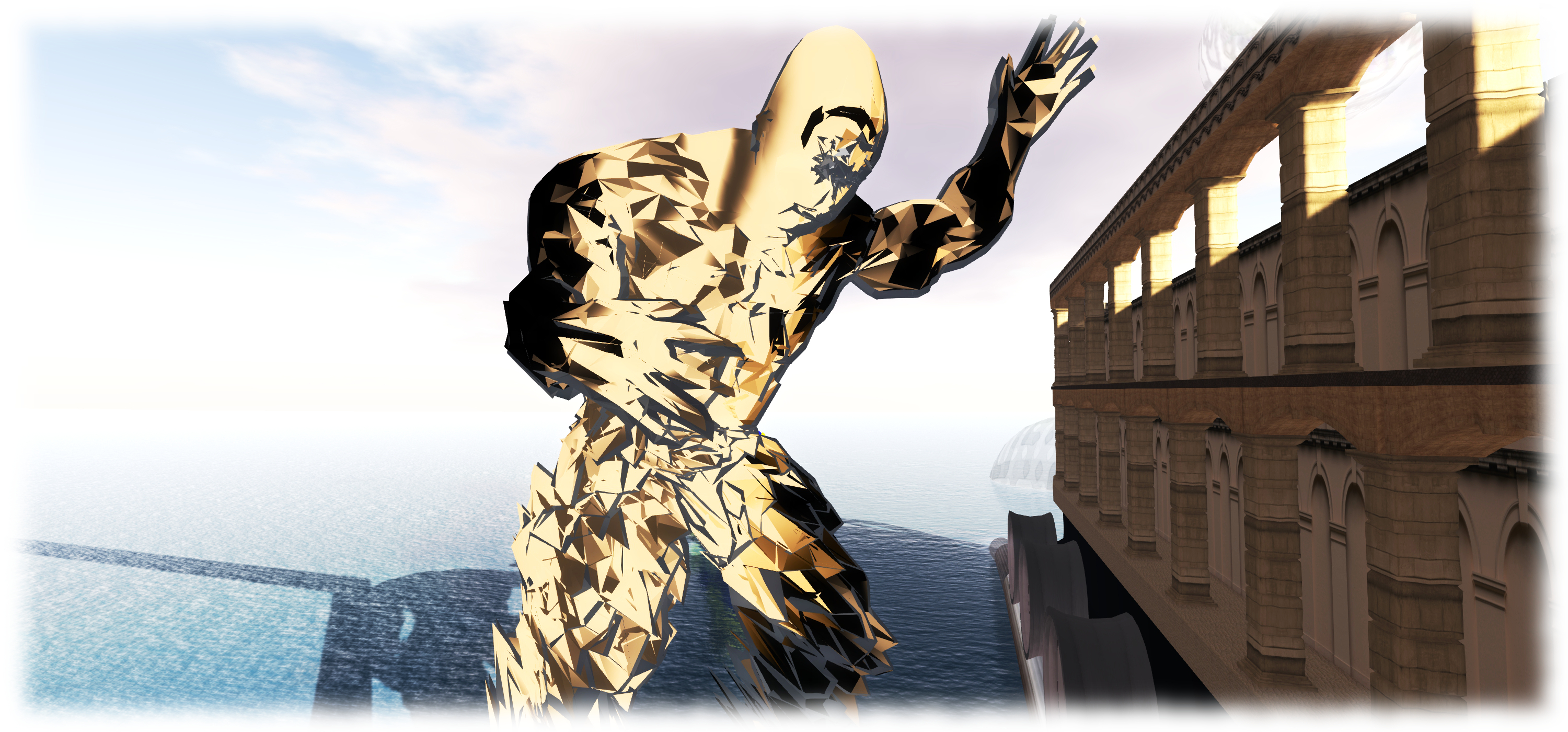
The Moonrezzer forms the nexus of the installation. Here you can opt to walk on a blue moon either under scripted control (click on the blue spheres being offered by one of the helpers), or under your own power using a pair of moon boots by Gem Preiz (take the boots from the large box, wear them, and then click on the green spheres being presented by a helper).
Scattered across this moon are twelve assistants who hold aloft various items of art – although you may have to cam out a way to be able to see them. To make things a little easier, a yellow teleport portal at The Moonrezzer’s arrival point will take you to a ship floating over the moon, where you can sit and watch the unfolding display of art below you – simply tap ESC after sitting to auto-focus your camera, or cam around freely yourself.
As well as teleporting around and the teleport boards have a number of additional destinations not covered here), you’re also free to fly / walk / swim around the various areas, and there are lots of small details to be found through careful exploration, and there are various Easter eggs to be discovered – sit at the chessboard at The Moonrezzer and see the king or queen appear on the board, inviting you to touch it, for example.
Art Walk on the Moon – LEA14
Utilising shared media (including videos by Wizardoz Chrome), streaming music, and supported through on-line information pages and Rez Magazine, The Art Walk on the Moon is an installation that does require time to be explored and appreciated fully and which can lead you in several directions. It is also, Art tells me, to be his last major installation in Second Life, and it’s closure on June 30th will be marked by a special performance at which, he says, “the Soulrezzer reveals the secrets of your soul, and the life of Art Blue ends in space as CODE64 will take him away.”
If you are interested in previewing the installation and blogging about it ahead of the opening, be sure to be at LEA 14 by 13:00 SLT SLT on Monday, May 4th. Otherwise, as noted, The Art Walk on the Moon officially opens at 13:00 SLT on Thursday, May 7th.
My thanks to Art Blue for his invitation to tour Art Walk on the Moon ahead of the press opening.







 Inara Pey: Living in a Modemworld