Grauland’s tropical beauty in Second Life

Grauland, January 2022 – click any image for full size
It was back to JimGarand’s Homestead region of Grauland for me to mark the start of the year. As regulars to this blog know, I’ve tended to drop into the region two or three times a year to witness Jim’s designs and work. In fact, my last came in October 2021, a couple of months after Jim had decided to move things away from Mobile – leaving it as the home of his SL business – and give his region designs a little more room in terms of land capacity.

That design for Grauland was something of a departure from the designs we have tended to associate with Grauland, offering as it did an examination of lighting in Second Life using an urban setting. However, with this current iteration, Jim returns to his more familiar island themes in which he folds art and landscape into a unified whole.

Grauland, January 2022

The landing point sits to the north-west of the island, tucked into the cover of a large concrete-and-wood structure of the kind that can so often be a feature of of the region. This faces a line of jet skis sitting on the water across the beach that are available for riding around the island’s shallows. But if you opt to do so, take note that these waters form a narrow ribbon along the north and west sides of the island, so careful navigation is required to avoid bouncing off the region boundary (there’s more room to the south and east).

Those who prefer can walk around the beach to the west side of the island, passing by one of Jim’s little touches that always make visits interesting: a telephone kiosk that sits on the sands under the single light of a street lamp.

Grauland, January 2022

The southern end of the beach provides access to the island’s most prominent natural feature: a sandstone headland. This is a place where time has allowed the sea to sculpt it into a series of large caverns, the eroded rocks in turn ground down to form a broad expanse of sand below that that now helps prevent the sea from washing way the narrow towers and walls of rock that support the high ceilings of most of the cavern spaces – although a part of these have actually collapsed to form an open ring of stone.

Follow the sand through the caverns and it is clear the sea is still shaping them on their east side, where a table of rock extends out into a large bay, leaving their top supported by broad legs of rock, although a blow-hole has been blasted through a part of the table, forming another ring of stone.

Grauland, January 2022

The easiest way to see this high ground is to climb the steps at the back of the landing point structure or take the stone steps rising from the beach close by to reach a cutting and path through the rock. Both of these routes offer their own attractions, with the staircase in the building allowing visitors to climb to the roof and thence to a path the heads south over the top of the west cliffs to where a zen garden awaits – something that helps link this design with past iterations of Grauland.

Alternatively, prior to climbing all the way to the roof of the landing point, visitors can opt to walk along a roofless corridor  that offers an echo of the previous version of Grauland, lit as it is by a series of coloured lighting strips. Beyond this sits a an artificial depression that forms part of an artistic statement, the second part of which is to be found beyond the zen garden, itself connected to the depression by a set of steps.  Beyond the zen garden a further path winds to where concrete columns rise from the grass and rock over the top of the southern caverns.

Grauland, January 2022

To the east of the island, paths run between its uneven surface, one from the stone steps and path running up from the beach, the other from the concrete depression. Both point the way to the island’s main house as it overlooks the sweep of the island’s southern bay and eastern and southern beaches – the later of which forms a broad finger of sand.  With its deck and pool and split-level nature, the house is open to the public and offers a cosy retreat. To the north of it, along a loosely paved footpath sits a further little hideaway for those seeking a little privacy

As a personal note, I’ll admit that I did find the sound scape – designed to represent the echoing sound of the sea within the caverns – a little overwhelming whilst wandering. Nevertheless, with places to sit throughout, including out on the water to the south (brave souls, given what lies beneath!) – so jet ski users be aware that others might be relaxing on the water – Grauland again offers an engaging and rich environment in which to spend time, together with (need it be said?) plenty of opportunities for photography.

Grauland, January 2022

SLurl Details

Patch Thibaud’s Hanging Gardens in Second Life

Hanging Gardens of Babylon, January 2022 – click any image for full size
In this palace he erected very high walks, supported by stone pillars; and by planting what was called a pensile paradise, and replenishing it with all sorts of trees, he rendered the prospect an exact resemblance of a mountainous country. This he did to gratify his queen, because she had been brought up in Media, and was fond of a mountainous situation.

– Berossus, priest of Bel Marduk, 4BCE, quoted by Flavius Josephus

The above words  – admittedly quoted almost 300 years after they were said to have been written – are the earliest mention of the fabled Hanging Gardens  of Babylon.

Hanging Gardens of Babylon, January 2022

Listed as one of the  Seven Wonders of the Ancient World by Hellenic culture, the gardens were said to have been constructed close to the city of Babylon and alongside the grand palace built by the Neo-Babylonian King Nebuchadnezzar II (642-562 BCE). As the quote from Berossus notes, they were said to have been a remarkable feat of engineering; an ascending series of tiered gardens containing a wide variety of trees, shrubs, and vines resembling a large green mountain constructed of mud bricks, which he ordered built in order to help his queen, Amytis of Media to overcome her homesickness for her native lands.

Hanging Gardens of Babylon, January 2022

Whether or not Berossus was writing literally or figuratively is unclear: a lot is known about Nebuchadnezzar II’s reign and works – and there is no mention of fabulous gardens built for Amytis (or any of his other queens) isn’t listed amongst them, nor do any other ancient Babylonian texts from the times around the period in which the Gardens were said to have existed make any mention of them; further, of all the ancient Seven Wonders, the Hanging Gardens alone are the one for which the location has not been definitively established.

Hanging Gardens of Babylon, January 2022

This has led some scholars to believe that the texts quoting descriptions of the Hanging Gardens are actually describing palace gardens that were known to exist, such those that Assyrian King Sennacherib (704–681 BCE) had built in his capital city of Nineveh (close to the modern city of Mosul in Iraq), and Berossus attributed them to Nebuchadnezzar for purely romantic / political reasons; others lean more the the belief the Hanging Gardens were simply the result of romantic imaginings.

Hanging Gardens of Babylon, January 2022

However, whether real or not, the legend has given rise the many descriptions of the Hanging Gardens, together with a plethora of illustrations and paintings, such that it is possible to (re)create how they may have appeared through 3D modelling – or to use the basic descriptions to offer an interpretation of how the Hanging Gardens may have appeared, complete with personal expressions and twists.

This is precisely what Patch Thibaud has done within Second Life, with his utterly fabulous Hanging Garden of Babylon, a Full region design (utilising the private Full region land capacity bonus), and which is currently highlighted in the Destination Guide. Patch is a long-time Second life resident who has, down the years created some outstanding builds in-world. In fact, I recently wrote (in part) about one of his most famous – The Cathedral – which has become both an outstanding statement of art in its own right and a venue in which art can be presented, courtesy of it being located within Chuck Clip’s Sinful Retreat arts estate (see: A Cathedral and Silent Beauties in Second Life).

Hanging Gardens of Babylon, January 2022

With this build, Patch (with the assistance of Cristabella Loon and Lιlly Hawk (NatalieRives)) brings together a genuinely stunning interpretation of  the Hanging Gardens that mixes into it elements that are not from the period in which the Gardens were said to exist but also from periods a lot more recent, including touches that might be seen has echoing the Greco-Romano period in which the legends of the Hanging Gardens began to gain wider circulation within the (then) Known World.

The centrepiece of the design is the great “mountain” of the gardens, here presented as a towering palace, tiered without and with multiple levels within, the structure rises from the waters and surrounding gardens to offer a place of rooms, stairs, walkways, rooms, outlying tiers where trees and shrubs grow as per the classic descriptions of the Gardens. Routes window up through the interior of the building and via outside stairways and ramps connect the various levels and eventually reach the “rooftop” gardens.

Hanging Gardens of Babylon, January 2022

The latter is a formal garden, richly laid out around a water feature, and of a kind that would look at home in the gardens of any grand European home or palace of the 18th or 19th centuries. Surrounded by building elements with the Greco-Roman lean, this “rooftop” garden also sits within rooms that have a distinctly Renaissance styling. Taken on its own, this rooftop area, complete with terraces and infinity pool, would be eye-catching enough, but it is just the jewel in a stunning crown of the design.

However, I’m not going to ramble on about the build here – I hope the photos I’m including here will encourage you to visit – what I will say is that this a genuinely engaging build, from the outlying gardens through the lower levels of the palace to the rooftop gardens. Throughout all there are numerous places to sit, paths to explore and – obviously – multiple opportunities for photography, the Hanging Gardens of Babylon is one of the Seven Wonders of our Digital World. And don’t miss the boat ride around and under the palace!

SLurl Details

A Winter’s Lost Dreams in Second Life

Lost Dreams, January 2022 – click any image for full size

It’s been three years since I last visited Cathy Vathiany’s (zaziaa) ever-evolving region design Lost Dreams (which started life as Les Reves Perdus (“Dreams Lost”), which has itself hopped around the grid a few times. So when I learned it had re-opened in a new location and with a new design in November 2021, I added it to my list of places to visit – although after initially dropping in in December, I had a couple of issues getting back to it in order to take photos.

Cathy has always had an eye for engaging, rural-themed region settings; places where Nature tends to stake a centre seat and where there is always a richness of detail waiting to be found and appreciated. Sometimes these looks have had a distinctly European / North American lean, although it has also taken us to the orient and to Scandinavia. With this iteration, we slip to somewhere that presents something of a sense of both Arctic and Antarctic climes.

Lost Dreams, January 2022

The current Lost Dreams might be mentally split into five areas: three on the main landmass, and the remaining two formed by a pair of outrigger islands. One of the latter is where the landing point can be found, a rocky plug of an island to the west of the region. Small, and dominated by two large trees, this island at first appears to offer little beyond the landing point itself. However, below the cliffs, a stone outthrust heavy with fallen snow has been taken over by penguins that lend that suggestion of the southern hemisphere to the region.

A bridge sitting upon high stilts connects the landing point’s island with the largest landmass in the region: a large, rugged space that can, as noted, be mentally / visually split into three. First, there are the rugged westerlands, sitting on the far side of the bridge, a hulking shoulder of rock splitting the path from the bridge into two. The left branch descends downwards close to the cold-looking waters of the bay in which the landing point island sits, passing through a narrow defile before rising once more to the uplands of the island.

Lost Dreams, January 2022

The second arm of the path twists around the rocky shoulder to reach a second bridge spanning a smaller cove formed by the outflow from waterfalls that mark the terminus of a fast-flowing stream. Here the path splits again, one arm twisting by to descend the down to the shingle shoreline that huddles around the feet of sheer curtain wall cliffs.

The other arm of the path passes across the second bridge before winding upwards, and doubling back on itself as it reaches the bank of the stream, itself fed from a further set of falls that drop from the highest peaks in the region. Crossing this is possible by way of a pair of tree trunks trimmed into a rough bridge to re-join the path rising up through the defile mentioned above.

Lost Dreams, January 2022

Once joined, the path lead up to the centre part of this large island and a large stone lodge sitting on an outstretched table of rock that is home to a skating rink, a children’s play area, a carousel and other outdoor points of interest. It is here that a more northern hemisphere aspect to the setting can be found in the form of deer wandering the grounds.

Paths wind around the grounds here, with one curling back down to the low-lying eastern end of the land, and the rest of the main landmass. This is home to a a cosy hideaway and, a little further away, a little folly. from here, a final bridge – this one made of stone – reaches the final aspect to the setting: a small, low island that is home to a pool of water and a little camp site.

Lost Dreams, January 2022

Such is the nature and aspect of this little island, that is it possible to image that once upon a time it many have formed a headland reaching outwards from the rest of the main island, but time and tide have intervened, creating a channel of cold water to separate the two and necessitate the stone bridge.

Within all of this, there are lots of additional elements and details: water birds stand along the coastal areas, there are outdoor sit points and places to dance awaiting discovery, and further wildlife give the setting additional depth, as does the local soundscape. All of which leaves us with another thoroughly engaging place to explore and photograph and not to be missed before a seasonal change comes along!

Lost Dreams, January 2022

SLurl Details

A return to WQNC in Second Life

WQNC, January 2022 – click any image for full size

Update: November 2022: WQNC has relocated – see me December 2022 article for more.

Back in September 2021, I visited Wo Qui Non Coin, a Homestead region design by Maasya, and which appeared to have drawn its name from Cowboy Bebop, an animated Japanese franchise covering television, movies and assorted media cantered on the adventures of a gang of bounty hunters in space. However, not long after I wrote about the setting (see: Wo Qui Non Coin in Second Life), the setting apparently vanished from Second Life – or it may have simply moved.

Courtesy of a recent tweet by Rig Torok, I discovered Maasya has greatly expanded the setting thanks to her now having a Full region utilising the additional private island Land Capacity bonus. Now simply called WQNC, the setting provides an extensive setting for exploration and discovery, mixing a number of environments together in a near-seamless whole, one with (again) a decidedly Japanese lean.

WQNC, January 2022

The main landing point is located on the ground level of the region, on the sidewalk of what might be a main road leading into a town. To one side the road is braced by a local railway line; on the other the town rises, grey concrete blocks of businesses and apartment buildings awash with illuminated billboards and crowned by advertising hoardings. Steps wind up between some of the buildings, offering a way into the town, crossing a second railway line as they climb the stepped slopes.

Further narrow streets run parallel with the slopes, offering different routes of exploration, with many of the buildings they pass being complete with interiors and fixtures to give them life.

WQNC, January 2022

Sitting towards the middle of the land, and behind the core of the town, a large torii gate provides access to a temple where, it would appear, a cat is central to worship (and quite rightly, as well; as the saying goes: dogs have owners, cats have … staff (or in this case, worshippers!)). Steps from this temple wind down the side of sheer-sided canyon through which a stream rushes, the steps providing a path that follows the stream’s bank.

Overlooking the town and the temple from an eastern hilltop is a large house. It is reached via a separate path, but is – so far as I can tell – also open to the public.

WQNC, January 2022

Throughout all this are numerous opportunities for photography, but the ground level of the town is not all the region has to offer.

Across the road from the landing point is a telephone box. It provides access to a sky platform, delivering visitors to the heart of a city  – and possibly a time removed from the ground level.  Once again there is a main street, this one with narrow side streets opening off of one side of it. However, this street is surrounded by high-rise buildings, billboards a mass of glowing signs and neon staring out from above doorways and shop windows.

WQNC, January 2022

However, this city is very different to the town on the ground, as a glance into the sky overhead will reveal. At either end of the main street float two giant portals – gateways to elsewhere, available for flying vehicles, as evidence by the flying vans, one of which is emerging from one of them, and the second that looks to be descending from the second gateway in preparation to refuel from a rooftop gas station.  Nor is this all, a platform is also floating close the the gas station, home to a couple of jet-engined sky bikes.

WQNC, January 2022

As with the streets of the ground-level tone, the side-streets here offer their own touches of detail, making a wake through and around them worthwhile, while posts and advertising on walls offer a further sense of life and depth to the setting.

I’ve still no idea if the region’s name is directly inspired by the song sung by Radical Edward (aka Edward Wong Hau Pepelu Tivruski IV as she likes to call herself) in Cowboy Bebop or indeed, whether any part of the setting is inspired by the show – although a sign visible on within the sky platform suggests that it is; but in its expanded location, WQNC still offers an engaging, photogenic visit – although do note, FPS can be low if running on a mid-range or lower system with bells and whistles enabled).

WQNC, January 2022

SLurl Details

  • WQNC (Bohemian Rhapsody, Moderate)

The pink salt lakes Of Florence in Second Life

Florence, January 2022 – click any image for full size

Just before the New Year, Gnaaah Xeltentat kindly sent me a personal invitation to visit the latest iteration of Florence, his Homestead region, which has once again been given a new look by Iska (sablina), assisted by Tippah.

At the time of my last visit, almost a year ago (see: Spring at Florence in Second Life), the region had just been given a clever re-working by Iska and Tippah that offered a new twist on the layout originally created by Minnie Atlass in 2020 (see: Witnessing Florence at Low Tide in Second Life). For this iteration, however, the region has been completely redressed by Iska, who has drawn her inspiration from a location in the physical world; the Salin d’Aigues-Mortes (salts of Aigues-Mortes), Camargue, in the south of France.

Florence, January 2022

A natural wetland sitting between the Mediterranean Sea and the two arms of the Rhône delta, it is home to what are regarded as the largest salt water marshes in Europe, one designated a Wetland of International Importance. It is also noted as an Important Bird Area, being home to over 400 species of birds (including being one of the few European habitats for the greater flamingo). And if that weren’t enough, the area is also the one of the largest producers of salt in Europe, producing around 500,000 tonnes annually.
Whilst relatively unknown outside of France, the salt marshes are a popular destination for the French – the rather vicious local mosquitoes notwithstanding ; the result of both the richness of the birds and wildfowl in the area, and the natural pink colouring to the waters of the marshes.

The latter is due to the microscopic algae, Dunaliella Salina (the same algae that gives flamingos their pink colour) which is common in high concentrations of enclosed salt water environments such as the waters of the Camargue. As the algae grow, they synthesise beta-carotene (which also gives some fruit and vegetables their red/orange pigment) to protect them from the Sun, and it is this that makes the water in the marshes appear pink.

Florence, January 2022

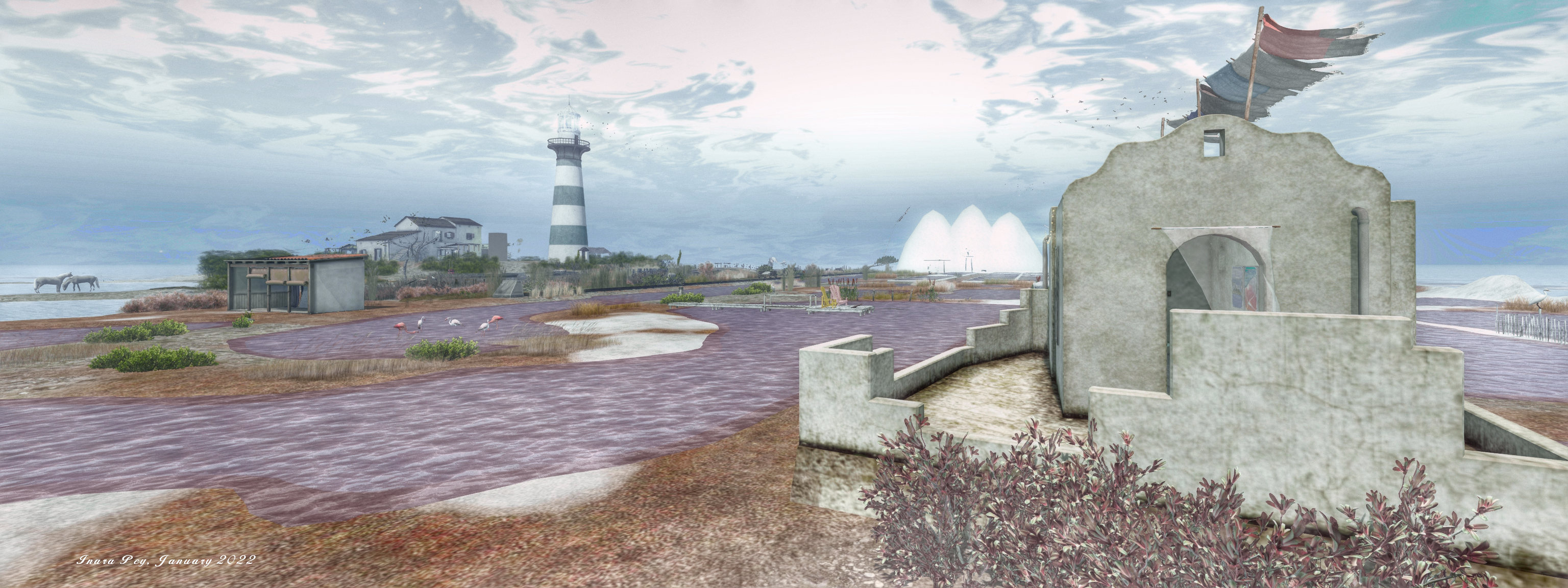
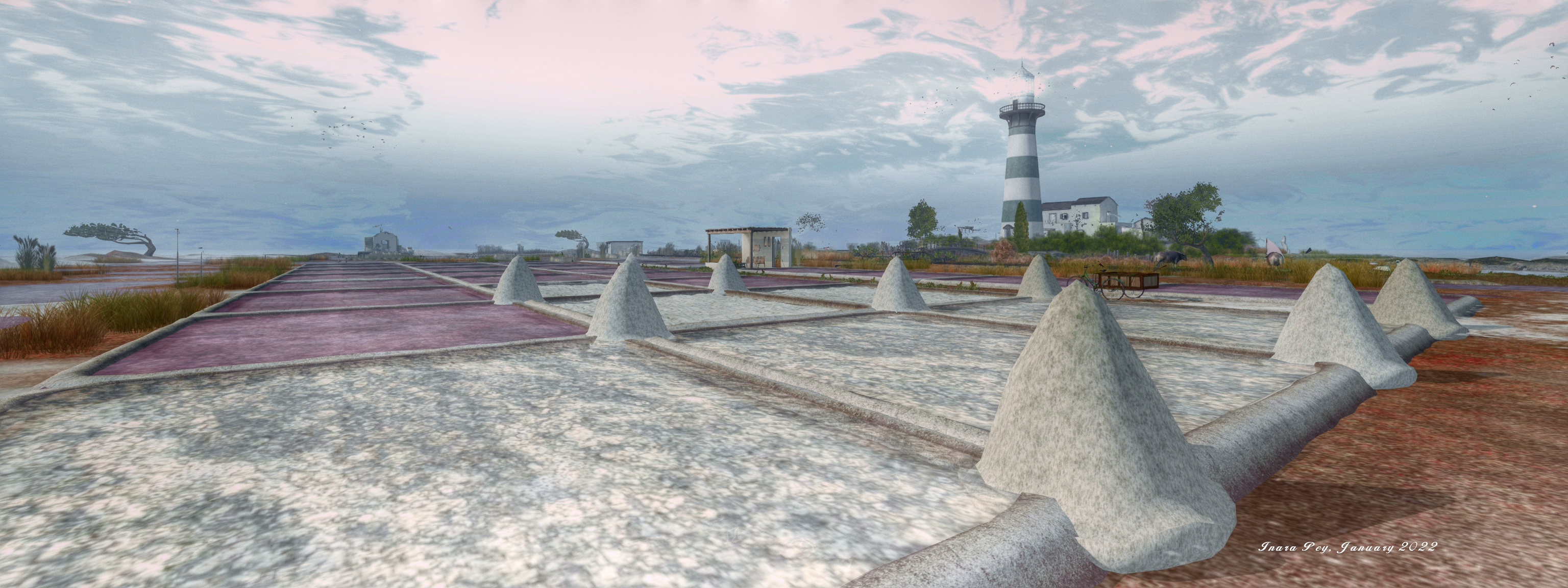
All of this is encapsulated in the new design for Florence in a simple, elegant layout that has much to attract the eye and camera. The landing point is located alongside a collection of 31 rectangular salt tanks, representing those used by the Salin Group to “farm” salt from the region. To the east, but close by are three high peaks of salt, representing the massive tables of salt that tend to be a feature of the region as the salt is gathered and dried..

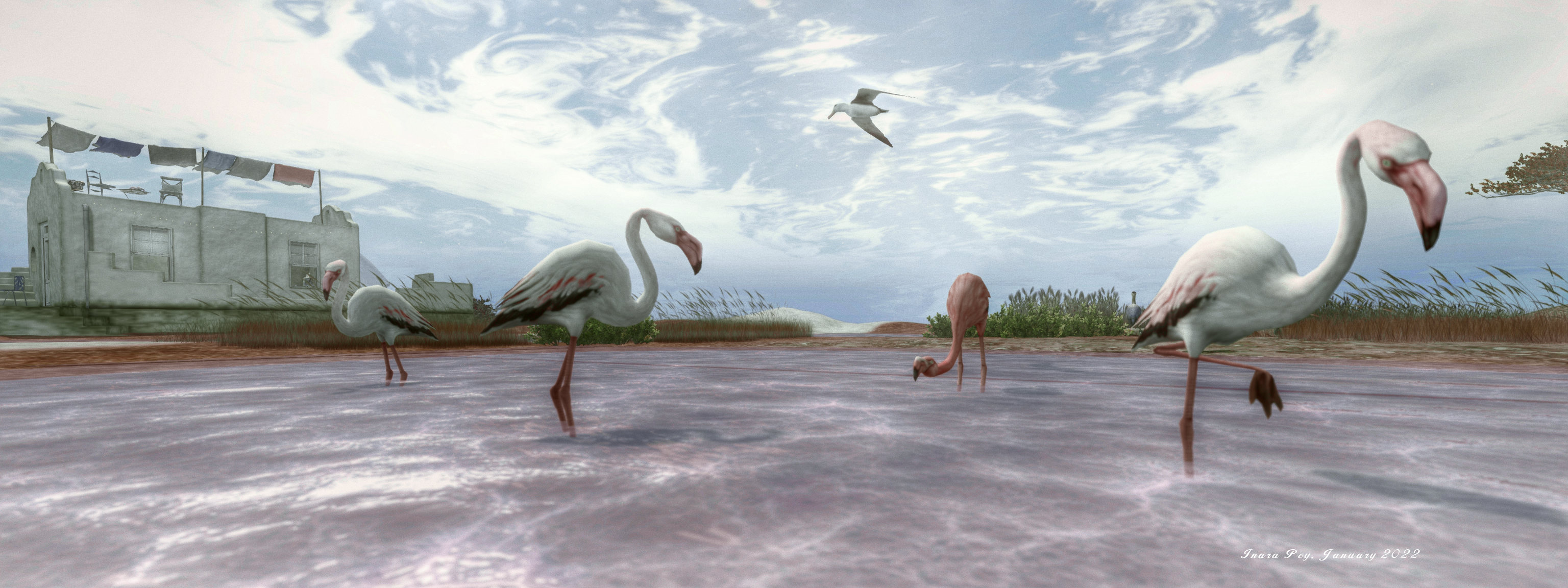
To the west, the land forms more natural bodies of salty water, sand / salt bars between them helping to form paths, and the waters being enjoyed by flamingos and other waterfowl whilst other birds fly overhead. Along one of the “sand bars” there sits a little artist’s retreat, its flat roof offering a good look-out point, while a wooden deck extends out into another pool, offering a further place to sit – or from which to fly a kite.

Florence, January 2022

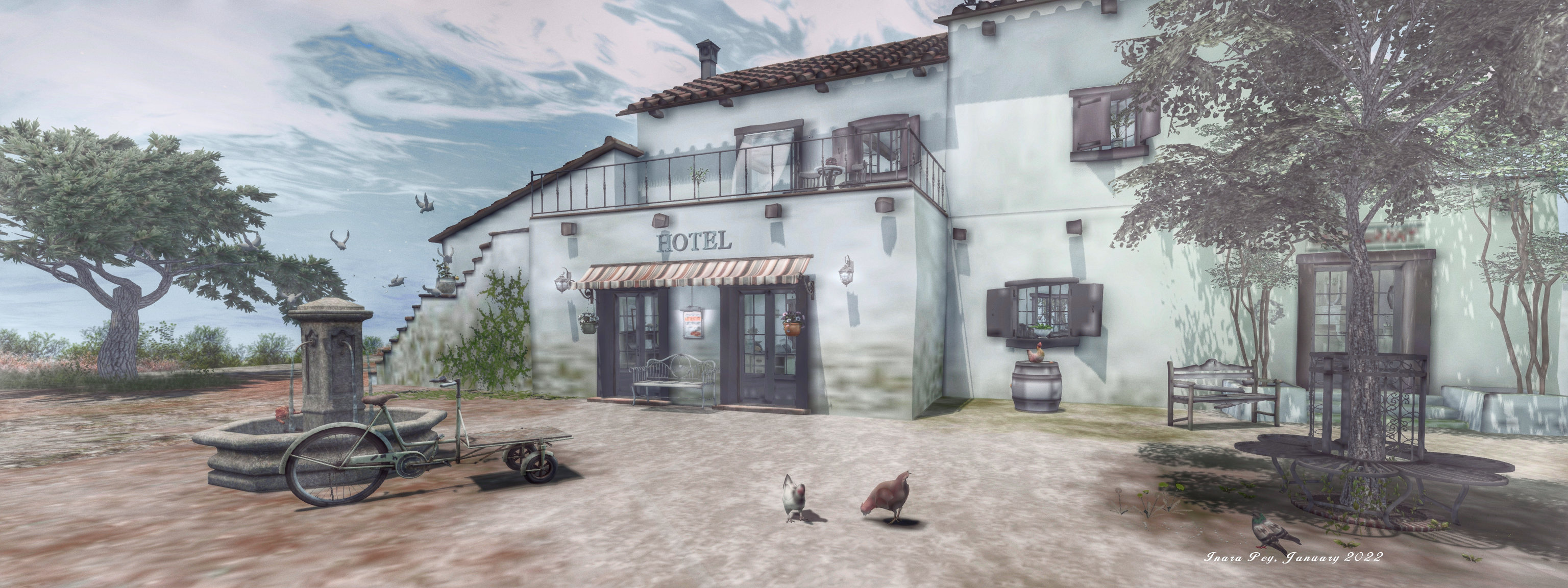
Crossing the region from east to west is a set of rail tracks long which flatcars of salt can be rolled, a rutted cart / vehicle track paralleling them. A bridge from here spans a water channel to reach a larger dry landmass, home to a lighthouse and the local hotel. The latter also reflects the relaxed nature of the area: unsupervised access to the salt lakes in Camargue is not permitted; visitors are expected to stay locally and join one of the guided tours offered by foot or bicycle – or, for those who like a little more comfort – in a 75-minute train ride (perhaps again reflected by the presence of rail tracks in the region).

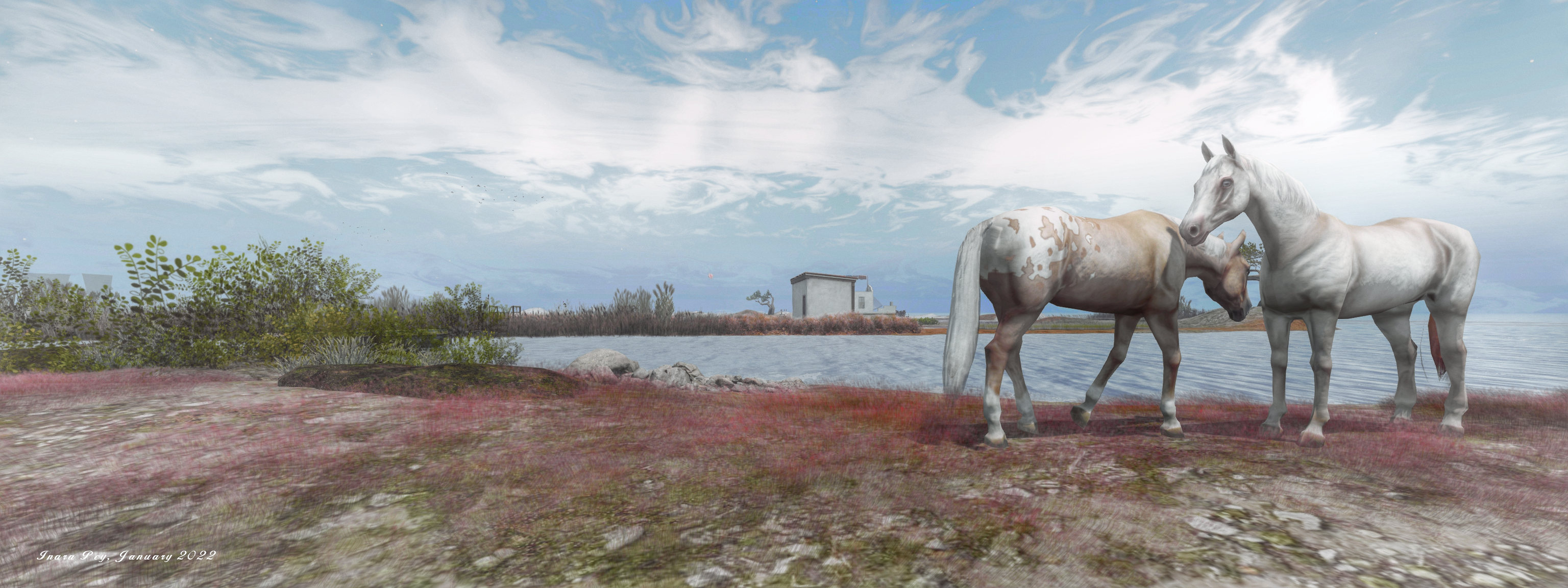
Also to be found in the region are horses, emblematic of the  Camargue horse, an ancient breed of horse of unknown origin and indigenous to the region, believed to be  one of the oldest breeds of horses in the world. These hardy little horses live in semi-feral conditions and are the traditional mount of the Camargue “cowboys”  who herd the black Camargue bulls. The latter are also represented in the region by a pair of cattle.

Florence, January 2022

As well as getting around on foot, the region offers a little motor boats visitors can putter around it, motoring along the water channel, or out to the little island that sits on its own, or around to the western side of the region, and the cover that awaits to one side of the hotel.

It is clear that a lot of care and consideration has gone into the creation of this setting such that it offers a good suggestion of the Camargue salt marshes whilst also being a very individual region design even if one does not reference them. There are multiple places to sit – outdoors and in, and – as noted – numerous opportunities for photography. But don’t take my word for it – get your 2022 off to a non-snowy start and pay a visit yourself!

Florence, January 2022

My thanks again to Gnaaah for the invitation!

SLurl Details


Pemberley: beauty and music in Second Life

Pemberley, December 2021 – click any image for full size

You won’t find Fitzwilliam Darcy waiting to host you at Pemberley, the Full region in Second Life held by Jude Mortensen and NataliaLinn. Nor, to be honest, will you find any grand manor house ready to captivate your gaze from afar, or signs of the gardens and English countryside across which  Elizabeth Bennet first caught sight of the house.

What you will find, however, is a public region landscaped by Dandy Warhlol (Terry Fotherington) that presents a rich rural environment  dusted in snow, surrounded by icy mountains, and watched over by the remnants of what might have been a once great manor – or, possibly, a fortified house or even a church.

Pemberley, December 2021
It is Pemberley, but not of old, time has passed, and the land has grown wild, and yet the magic lives on at Pemberley.

from Pemberley’s About Land description

The latter stands to the south of the region, on a table of rock that forms the main highlands for the setting but which is cut off from it via an narrow, stream-like channel that connects the east and west sides of the region’s surrounding water. Whilst rocks and debris offer various points where this little channel can be crossed, the primary means of doing so is via two bridges, one to the east and one to the west.

Pemberley, December 2021

It is the former – eastern – bridge that offers the most direct way up to the ruins. Constructed of stone, it links the snowy slope leading up the the broad steps of the ruins with a rutted road that meanders northwards to connect with the farms, homesteads, smaller ruins and other structures along the east and north side of the region on slightly elevated land. The core of the island remains mostly low-lying, a mix of small fields, outhouses, ruins and fences, interspersed with trees, shrubs and spaces where horses can roam.

The landing point to the region sits within these lowlands, lying towards the north-east. Its position means that explorers have the opportunity to freely choose where they want to go within the region. Paths are available that lead to various locations in the region, such as the little shingle beach on the east side, or the broader sandy beach to the north-west, and which comes complete with a rocky overlook, or the western cove with its old lighthouse. There’s also the promontory running between cove and water channel to reach a more recent lighthouse (with its own little footbridge connecting it with the slopes below the manor house ruins).

Pemberley, December 2021

But to return to the main ruins on the island. These form a point of interest not just for there visual impressiveness and photogenic nature, but also because they are the venue for the region’s music events. Details of these can be found both on the Pemberley website, as and when they are announced, or within the region’s event calendar. However, given this is New Year’s Eve, here are some highlights for those looking for something to do to celebrate, here’s some highlights:

  • Friday, December 31st:
    • 18:00-20:00 SLT – D.J. Mist.
    • 20:00-21:00 SLT – Samm Qendra live.
    • 21:00-23:00 SLT – D.J. Cati.
  • Saturday, January 1st, 2022:
    • 15:00-16:00 SLT – Fly Kugin live
  • Tuesday, January 4th, 2022:
    • 13:00-14:00 SLT – Tay live.

Pemberley, December 2021
The direct SLurl to the events space is provided at the end of this article. In the meantime, the region offers an engaging environment with many opportunities for photography. It also – at the landing point – presents visitors with the opportunity to join The Nature Collective group, described as:

The Nature Collective is a Second Life group created with the goal of cultivating a community around sims, spaces and projects which share a common focus on nature and nature conservation/preservation. It is our hope to foster a movement to help people engage and reconnect with the wonder and joy of nature, in the virtual world and beyond.

Click the poster on the the wall at the landing point for more information on the group. And for me – I’ll see you in 2022, when I’ll be resuming my travels through Second Life.

Pemberley, December 2021

SLurl Details

Note that Pemberley is rated Moderate