Return to Collins Land

Collins Land
Collins Land

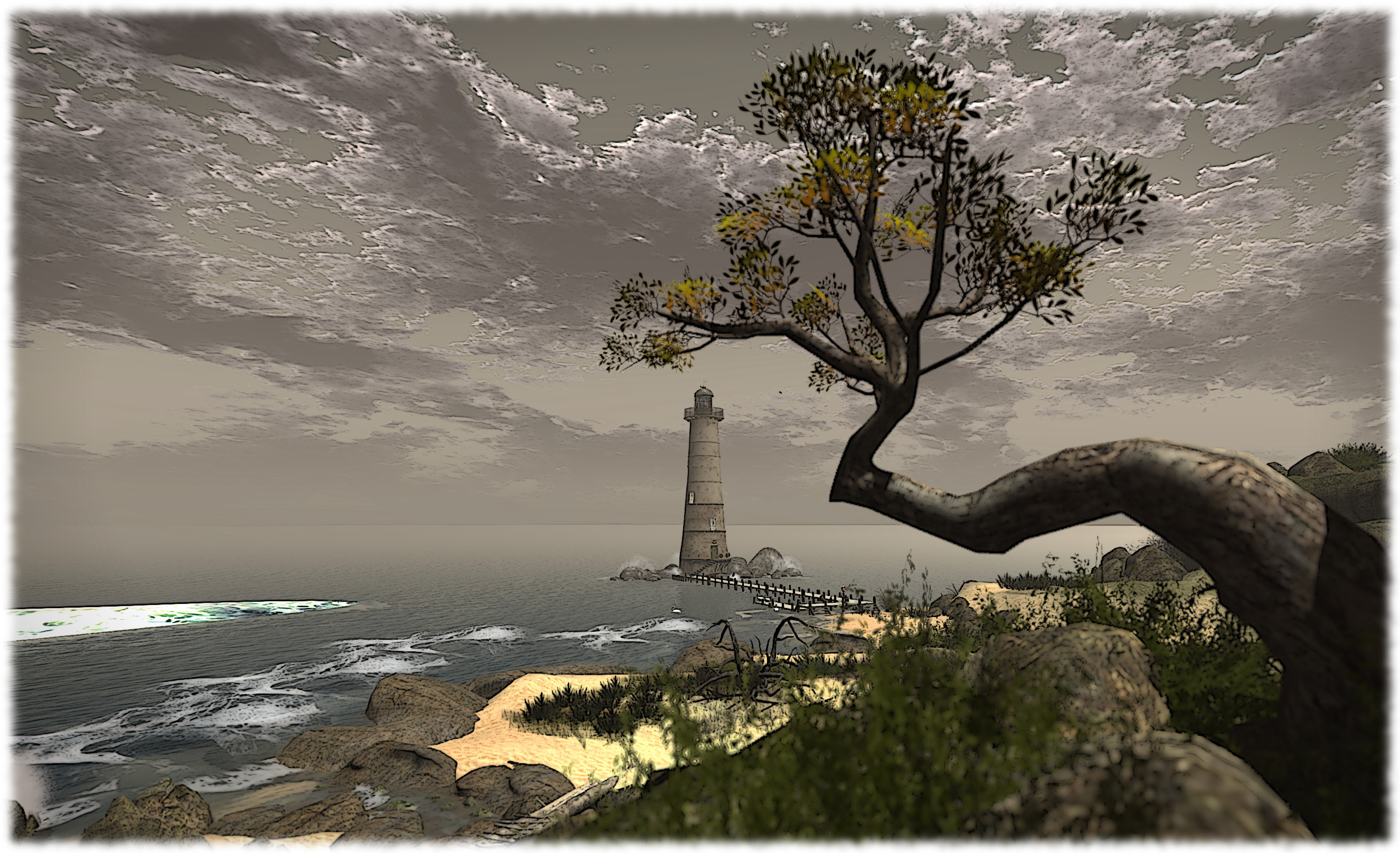
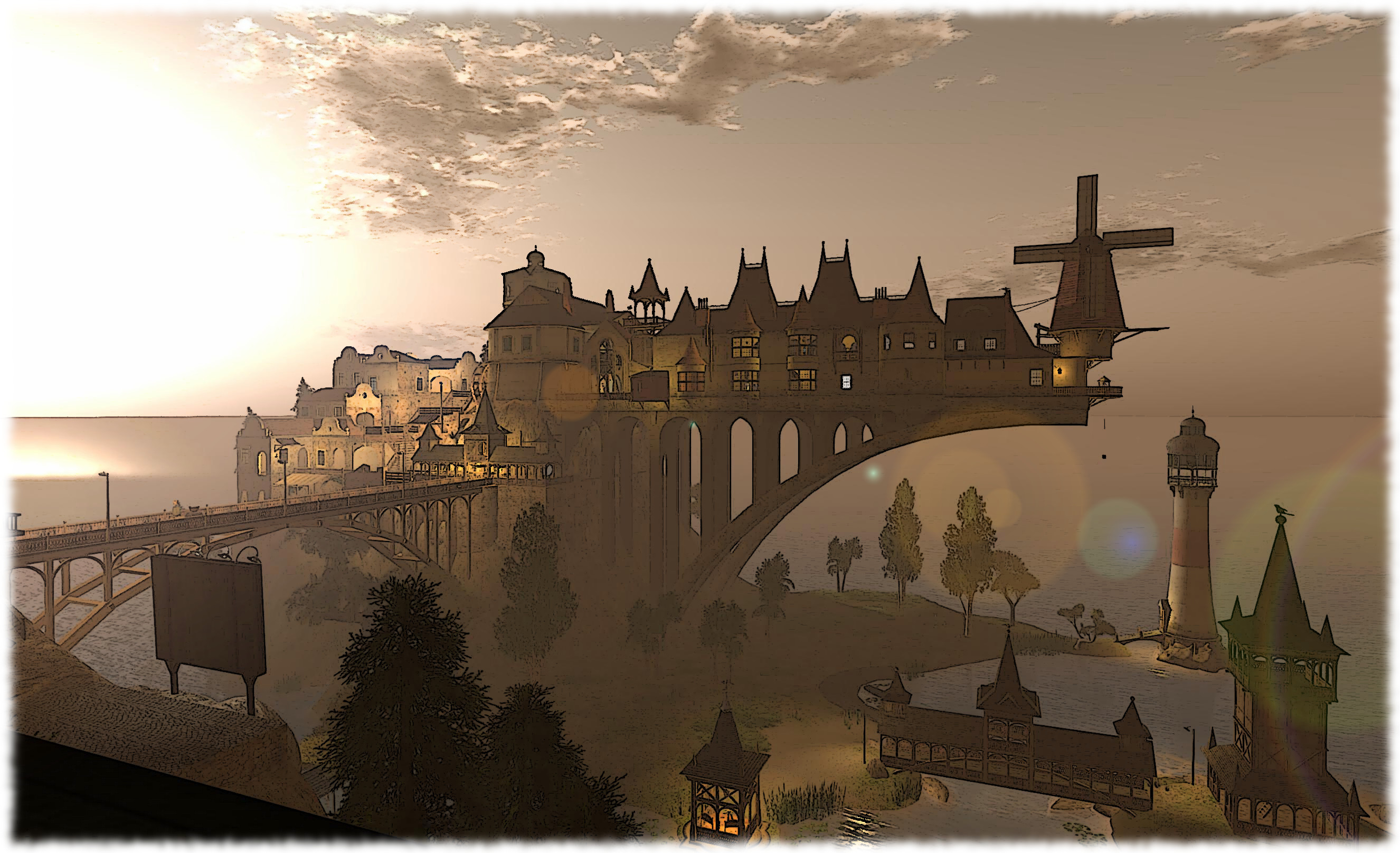
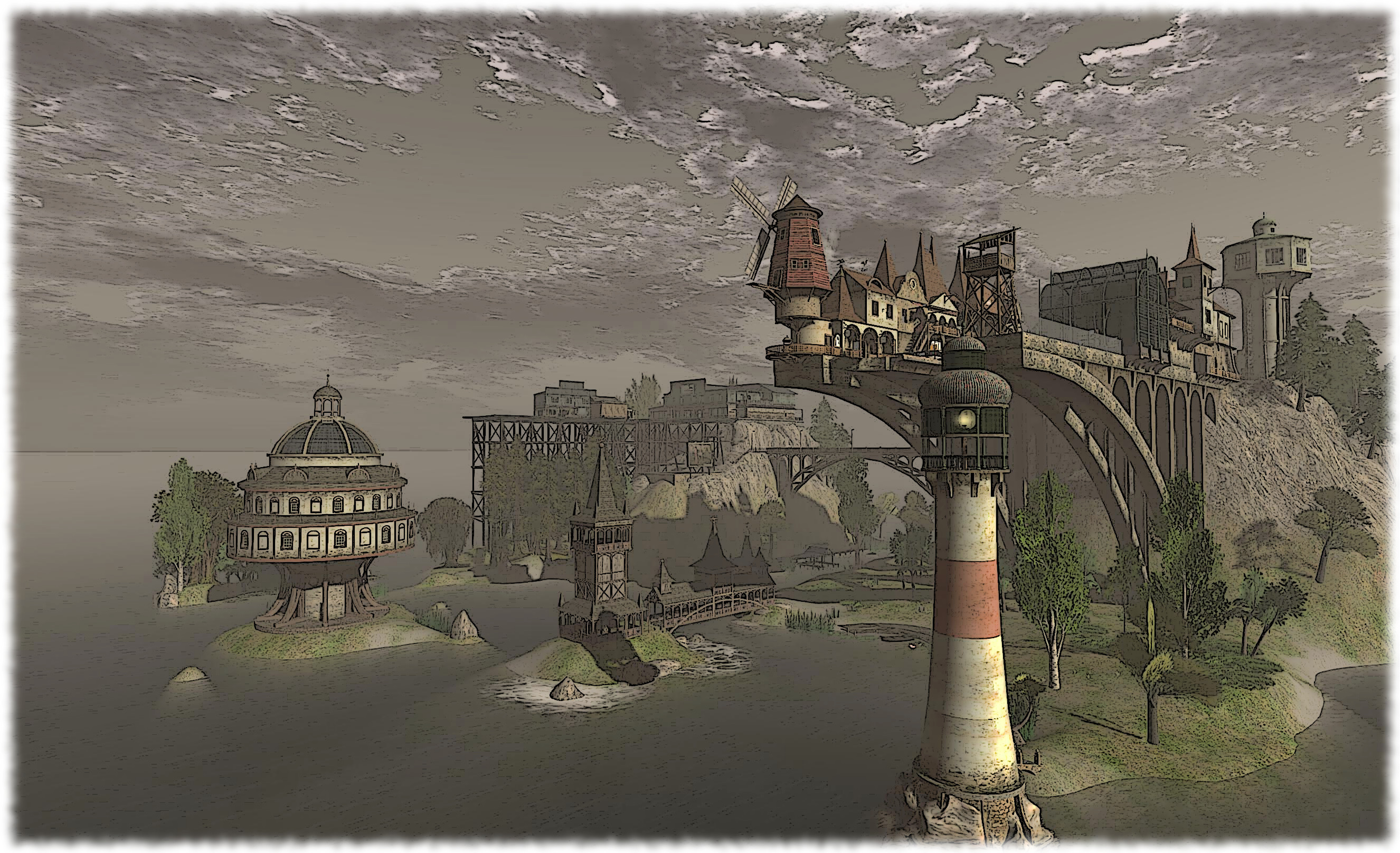
In August, I paid a visit to Collins Land, Cerys Collins’ homestead region at Aqua Shores. My time was a little pressed when I dropped-in, so I didn’t get to stay as long as I wanted back then. Even so, I found the region beautifully put together and striking in its contrasts.

Now I’ve had the opportunity to make up for my lack of time during that first visit, as Cerys has been busy re-working the region, and she extended a warm invitation to me to take a look at it ahead of it being opened to the public once more. And I have to say, she has again done a wonderful job.

Collins Land
Collins Land

The new design sees the region take on more of a low-level coastal feel – although there is still a rugged backbone of plateau-topped cliffs snaking through part of the region, splitting one of the islands in two. There are three main islands all told now, two of them low-level and grass-covered, one devoted to the outbuildings of a small farm, the other home to a tall stone-built church, a slender wooden bridge sitting atop the water connecting them. The third – with the hills running through it, is the largest in the group.

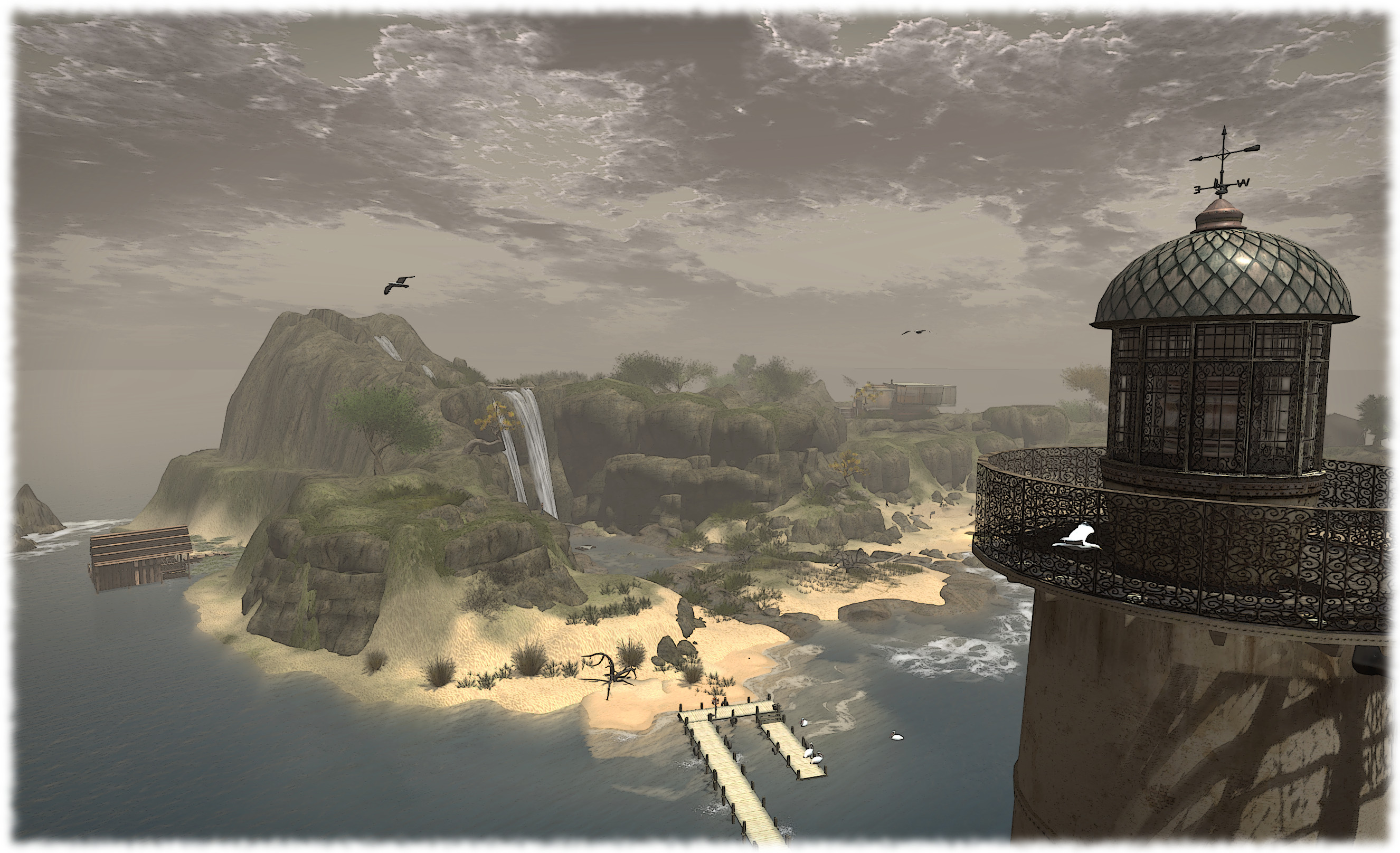
I say “main islands” as there is a forth, although column of rock might be a better description for it. This rises from the sea on the north-east side of the region, and atop it sits the arrival point, which will be instantly familiar to anyone who visited Collins Land in its last incarnation.

Collins Land
Collins Land

From here you can look out over the region and get a first glimpse of the changes which have been wrought. To get to the other islands, you have a choice of two rope slides (recommended!) or using the wooden elevator, which will take you down to water level, where you can hop into a rowing boat and paddle your way around the place – which is actually a nice way of seeing everything, and you can also pick-up a boat from the wooden pier on the main island.

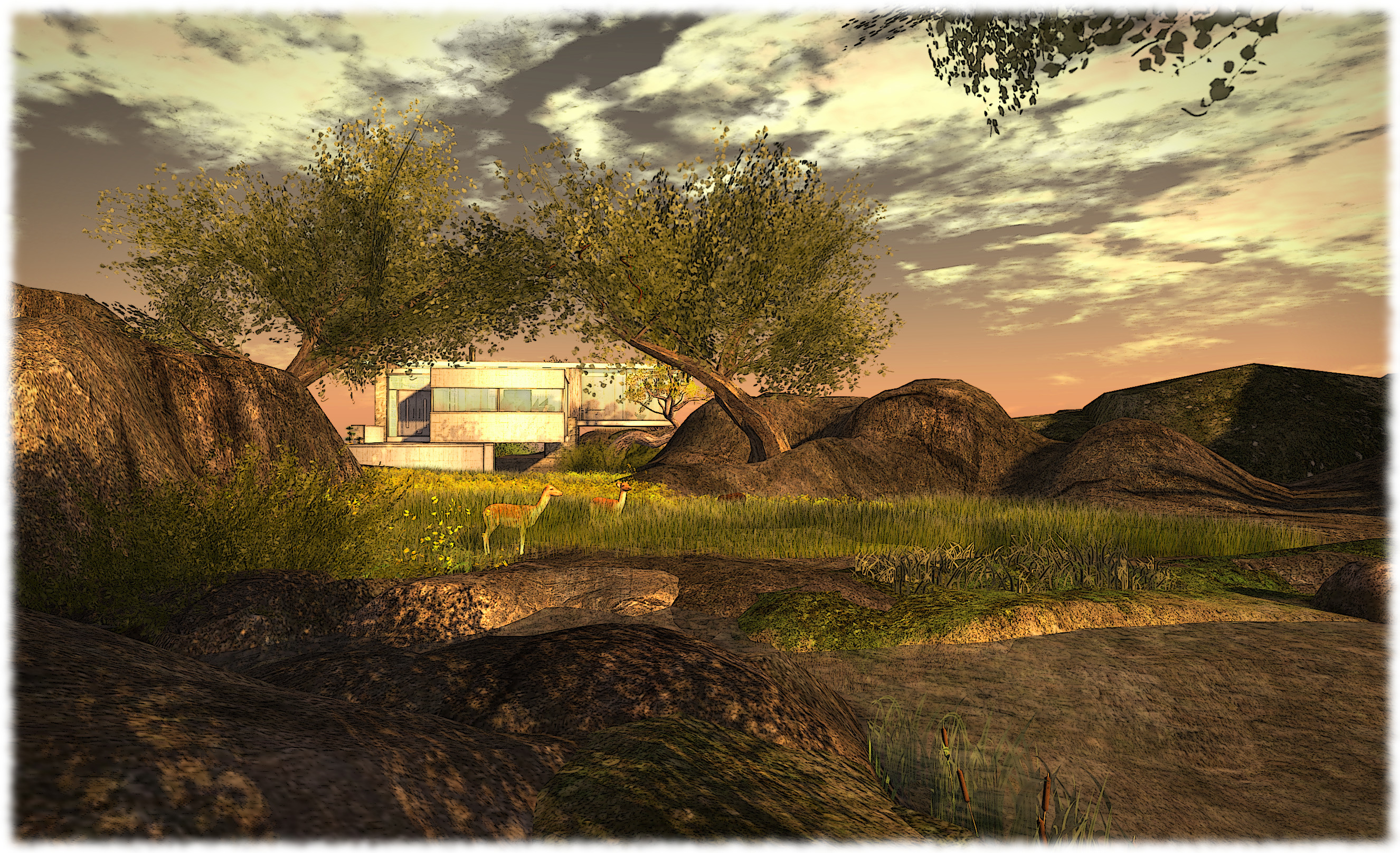
Collins Land is still very much a place of contrasts. For the most part, it is very rural in feel; grasslands, trees, a farm and country church, the plateau atop the cliffs a wooded park.. However, the main island also offers a slightly more urban feel to it – there is a paved road and sidewalks, street lights, a post box, bus stop and stone-built house with free-standing garage. There’s a children’s playground here as well, as a quayside pushing out to sea.  The road itself winds through a short tunnel under the park-topped hills, to the wooden pier where people can either sit and relax or take a boat out onto the waters.

Collins Land
Collins Land

Cerys’ attention to detail is again everywhere; I particularly like the little vignette which appears to suggest a slight altercation between a UPS delivery man and a dog as to whether or not three parcels should be delivered to the front door of the main island’s house …

I understand from Cerys that Collins Land will re-open to the public in October. Until then, access is by invitation only, but once the region does re-open to all, I really do recommend you pay a visit. You won’t be disappointed.

Related Links

The unique world of Pangloss

Everyone has a unique and unknown world churning underneath.  The ability to set yourself apart lies in whether or not you’re willing to pull up the roots of who you are, and then plant yourself on the surface for all to see.

So speaks Bowie Zeplin, creator of the marvellous Pangloss; and she has certainly revealed something of a world of her own, offering it to all in Second Life to see.

Pangloss
Pangloss

I came across Pangloss after bumping into the Caminante de Suenos (“Dreamwalker” or “Walker Dreams”) blog, which features it in a photo spread. And it is fair to say that something which features flying turtles does tend to be an attention-grabber.

A Homestead region, and still under construction at the time of writing, Pangloss is wonderfully surreal in look and feel, featuring items from some of SL’s most popular creators. It also places the visitor in a bit of a conundrum: are you actually on land, or are you walking through some fantastical undersea world? Are you in a fabulous sculpture, or touching on elements of dream, fairy tale and fiction?

Pangloss
Pangloss

The trees and flowing water, the surrounding hills, the wooden pier and rowing boat: all seem natural enough and speak of being out in the open somewhere. But then there are the turtles, two of them airborne, a third seemingly preparing to launch itself away from the ground. Are they really flying? Or are they swimming through a mystical sea? And what about the humpback whale, hovering over the north side of the region, fluke rising and falling, as if powering it through invisible water?

You decide.

There’s a certain poetry here in the juxtaposition of images  – one of which literally is poetry. It’s as if the gates of Bowie’s subconscious have been set wide, and images of dreams and echoes of thought and memory allowed to tumble out to be given form. Even the colours here are quite unlike any natural landscape or setting, adding to the surreal feel.

The subconscious is a huge storehouse of information and memories; little wonder, then, that along with the huge set-pieces like the turtles (which you can climb up to and wander their backs) are smaller tableaux suggestive of childhood memories and tales once told or read. Here, for example, a tall wolf strides purposefully upright, hooded cloak about his shoulders, followed at a distance by a young girl dressed in red, the hood of her own shawl raised against the wind. Over there is a table set for a tea party, complete with an odd assortment of chairs and stools – including one atop a pile of books, suggesting a rather small guest is expected. A dormouse, perhaps…?

Pangloss
Pangloss

And if this is the opening of the subconscious, then just like we can sometimes find uncomfortable thoughts and images welling up from beneath in our own minds, so too is Pangloss edged with a little darkness, such as the huge hands, clutching at the side of a hill but soon to vanish, leaving deep furrows in the land over which they passed, suggesting a desperate attempt to gain any kind of purchase in order to stop the inevitable slide into whatever lies beneath the calm-looking water.

That this is a place where dreams and the subconscious are set free might best be indicated by the tree-top bed lying towards the centre of the region, surrounded by the imagery and vignettes.

Everywhere you look there are images and scenes, most of which offer more than one possible interpretation – just like our dreams offer themselves to more than one possible meaning. Take a look at the alien in its little spaceship; it’s at once cute and fun-looking and also darkly disturbing as one takes-in the defenceless cow rising towards the ship in a green beam of light. Just what has the creature in mind for its helpless captive?

Pangloss
Pangloss

This rich collage of images, ideas, thoughts and symbolism make Pangloss a rich and varied feast for the eyes and the mind. It’s wonderfully immersive and captivating. And while I frequently say this about the places I visit, it is a SL photographer’s heaven, offering so much for those who want to capture the unusual and / or love to play with windlight and camera settings.

The default windlight for the region appears to be based on Will Weaver’s Phototools – Quidditch Light, and it works. However, given the very nature of the place, it cries out to you to play and fiddle with settings. I actually ended up rotating through a fair number of different options, twiddling with the sun, glow, clouds, haze and taking multiple snaps from the same angle, etc. But because I really couldn’t get away from the feeling of being both underwater in some mysterious realm, or perhaps exploring another world entirely, I gravitated towards Bryn Oh’s BLUniverse, which for me just seemed to fit the region and its vignettes.

Pangloss
Pangloss

Highly recommended. Just be sure to take your imagination with you – it’ll enjoy the experience as much as you.

Related Links

In the artist’s garden

Artist's Garden
Artists Garden

In July I paid a visit to The Untroubled Sound, Arty Skytower’s beautiful region modelled after New Zealand’s Marlborough Sounds. It’s a popular destination for SL photographers, and rightly so.

As a result of my visit, Arty dropped me a line inviting me to take a look at another region he’s been developing, the Artist’s Garden SL Botanicals New Zealand Bush Walk. It’s another beautiful  place, a landscaped coastal region with paths and walks which allow Arty to demonstrate his range of New Zealand focused flora and his landscape accessories.

Artist's Garden
Artists Garden

You arrive on wooden walkway which follows the coast of a bay, leading back to a white-boarded house in one direction, and in the other, onwards around a headland to a small beach area, before allowing visitors to explore onwards around the island.

There are some remarkable examples of New Zealand flora to be seen here; everything from plants through to trees (I love the Pohutukawa tree on a rock), any of which can be purchased via the packing cases you’ll encounter as you explore.

Artist's Garden
Artists Garden

Follow the paths around the island and you’ll find much to delight; places to sit, places to watch the world go by, and places to simply enjoy your surroundings, including a delightful central garden area with a large body of water for the local ducks to enjoy. I do recommend that when exploring, you have in-world sounds enabled; there is a wonderful soundscape to accompany the region.

It’s in the garden, located behind the main house, that artwork by FumbleBee (RL artist Janet Marshall) can be found. These are paintings of various scenes from England’s Cornwall, and which are also available for purchase. Inside the house itself are more examples of Arty’s flora and displays of Fumblebee’s art – stunning studies of birds native to New Zealand.

Artist's Garden
Artists Garden

Those who have visited The Untroubled Sound will find much that is familiar here; the region appears to be in a coastal sound, boats are present, both tied-up at the quay or anchored in the bay. There are similar waterfront elements with paths, the house and style of sim surround. But this is not to say the Artist’s Garden is merely a copy of The Untroubled Sound; far from it.

By using similar elements and style, Arty and FumbleBee have created a somewhere which feels as if it is a part of the same landscape as The Untroubled Sound; that if you were to cross the water and follow the coast around the high, rugged hills surrounding the place, you’d eventually find your way into another drowned valley – and to The Untroubled Sound itself. This feeling of continuity between the two does much to lend them to a side-by-side visit if you’ve never been to either.

For the SL photographer, the region offer as many opportunities as The Untroubled Sound.  Arty has supplied the region with a foggy default windlight, suggestive of an autumnal evening, but the region lends itself to a huge number of windlight options, while the sim surround positively invites tweaking the cloud coverage and planning with different windlight options to invoke different moods.

Artist's Garden
Artists Garden – one of Morgan Garret’s stunning birds

All-in-all another worthwhile destination which comes highly recommended. Enjoy!

Related Links

The rugged beauty of Toru

Toru. A land devastated by a major earthquake and underwater volcanic eruption hundreds of years ago, a cataclysmic event so devastating it split the land apart and left it barren for hundreds of years … But all is not lost as this land was rediscovered by an intrepid photographer who stumbled upon it, and its tragic history…

Toru
Toru

So reads the greeting, at least in part, when you arrive on Toru, a homestead region designed by Waynenz. Openly drawing inspiration from Hazardous, the region is dedicated to Wendy Xeno’s and Mandingo Quan’s work there, and to “all the designers and developers of SL who create content for us to fill this land and allowing us to share this space with residents and visitors of SL.”  It’s a beautiful place, one I knew I had to see for myself  after coming across it on Ziki’s blog.

There is a windlight preset for the region, but it’s really worthwhile taking the time to play with options and see what works for you – the layout from the cliff tops down to the lower-lying valley floor offers itself to a range of lighting options, and everything is perfectly positioned to offer the SL photographer a huge amount of choice and opportunity for framing many, many shots.

Toru
Toru

The cliff top area of the island is split into two, a single stone bridge spanning the narrow but deep gorge which separates them. On once side of the divide are signs of life returning to the island; a cafe has been built, as has a store (selling Wayne’s mesh creations), and other wooden building appear to be under construction. How well things are going for the inhabitants is hard to say, however; the cafe looks to be somewhat dilapidated, and there are a couple of rusting hulks of vehicles to be found – including one which looks like it might have been shaken from its parking spot by a more recent earth tremor…

Across the bridge there is the ruin of a stone-built structure, possibly a fortified house of some description given the remnants of two towers. There are signs of recovery here as well, with a stage set having been built, which suggests live gigs might be a thing of the future.

Toru
Toru

Follow the track away from the wooden buildings and you’ll find a set of stone steps leading you down to a smaller open space with a small cabin and outhouse, with further steps leading the way down to the photographer’s ultra-modern studio / home, which visitors appear to be invited to explore as well.

When adjusting windlight, make sure you give dusk / night settings a go; the island is prone to aurora displays just off the coast, possibly the result of underwater volcanic activity, which give rise to shimmering curtains just above the waves which look like a localised version of the aurora australis.

Toru
Toru

A fabulous region, beautifully conceived and put together and more than worth a visit. If you do, please considering dropping a contribution or two into the gratuities signs scattered around the buildings.

 Related Links

Take a ride on the wild side

Ah, the fun fair! The Ferris wheel, carousels,  and rocket rides; the roller coaster; the zombies, malevolent-looking giant clowns and staccato gunfire; the ….

Hang on…

…”The zombies, malevolent-looking giant clowns and staccato gunfire” …?

DeadPool
DeadPool

No, I haven’t taken leave of my senses. I’ve decided to drop-in on DeadPool, currently in the Editor’s Picks in the Destination Guide.   It’s an amusement park where time seems to have been frozen in the 1970s, or as the Destination Guide description puts it:

Aged elegance is re-animated in DeadPool, a new experience ripe for exploration. Watch as the bygone disco days rise again! Zombies roam the overgrown and wistful spaces of a forgotten amusement park, see the old roller-disco flash and strobe while amazing DJ’s pump dance-worthy beats.

DeadPool
DeadPool

Thematically, this is the place which sort-of picks-up where MadPea’s magnificent Carneval left off, although it is of a different colour and experience, and so shouldn’t be written-off as a variation on the theme; it is as unique as Carneval ever was, and comes with very different risks. At Carneval, for example, the roller coaster was actually ride-worthy (I use “worthy” here in the sense of the ride being in one piece); however, the roller coaster at DeadPool takes the warning, “Patrons ride at their own risk” to a whole new level – and it has some interesting pose positions hidden within it! :).

The amusement park covers the entire region and offers a lot to see; in this I do recommend fiddling with windlight, as while the default is very atmospheric, it does mean you risk missing the smaller details if you’re not careful. There are a lot of opportunities here for the SL photographer to enjoy; although you may need to keep one eye on your surroundings. The aforementioned zombies can be a bit of a pain in the neck … or wherever else they opt to bite you when they find you :).

DeadPool
DeadPool

Which leads me to the gunfire. Some of the zombies are evidently “shootable”, and during my visit several people were availing themselves of this fact …

For my part, I kept myself occupied by dodging the zombies and playing around with windlight to grab shots. I was actually unable to make up my mind as to whether I should keep it light and airy in order to catch the details, or dark and atmospheric, to match the environment; hence the reason some shots may appear to be somewhat removed from my usual fare.

DeadPool
DeadPool

There are some safe areas if you want to avoid the zombies. Standing under the two giant clowns at the entrance to the park is one of them. OK, so some with a specific phobia of clowns might find the definition of “safe” somewhat lacking in this context, admittedly. If this is the case, try the decrepit theatre across the region, up on the hill. It’s also zombie-free and offers something of a place to rest a while, and even to have a sit-down…

The park is the work of the region’s owner, Xjetx Chrome, together with Megan Prumier. It’s an altogether different destination, and one worth checking out if you’re into clubs, photography, amusement parks, a ride on the wild side – oh, and zombies, of course! Now, where exactly did I put my shotgun … ? 🙂

DeadPool
DeadPool

Related Links

Frolics in an autumn mist, in a land called Honah Lee

I’ve been flying out of Hollywood Airport on-and-off for a good while now, and frequently putting down at Honah Lee field as well, so you’d think I’d be familiar with the majority of Blake Sea and the vicinity. But it wasn’t until a recent flight that I spotted the huge dome of Palomar Observatory on the horizon (how I’d missed it before is probably down to having draw distance turned down to assist flying – or that’s my excuse and I’m sticking to it!). It immediately went down on my list of places to visit as and when time allowed.

However, plans changed when I received an IM from MarkTwain White extending an invitation for me to pay a visit to the observatory, based on our common interest in astronomy. So I took advantage of another lull in real life and dropped-in on the Honah Lee group of islands (specifically Honah Lee Point), to the south of Blake Sea and had a little bit of an explore.

Palomar Observatory, Honah Lee islands
Palomar Observatory, Honah Lee East

Now, it has to be said that these islands are steeped in legend, so when you visit, it’s really worthwhile taking time to follow the trails on foot or horseback – you can obtain a horse at the start of the trails – and avail yourself of the signs along the way; they’ll tell you a lot of about the legend, which may well have been handed down over the years until it reached the ears of Peter, Paul and Mary…

The trail leads around the main island, made up of six regions, taking you first south along one side of the central mountain ridge, offering a chance for the traveller to visit a number of famous and sometimes mysterious landmarks along the way.

The first of these is Puff’s Lagoon, where it is thought that large land and sea creatures may once have been seen, far back in ancient times, giving rise to the legend of the magic dragon referred to in song.  Just off the coast of the lagoon is a strange artefact, apparently millenia old, carved in stone, yet strangle unaltered or weathered in the passage of time. Facing out to sea, the Dragon Mother has no identifying tale associated with it and its purpose remains as much a mystery now, as when first discovered; and no-one knows whether it is somehow tied to the legends of the ancient creature said to have once roamed here, or something else entirely…

The Dragon Mother
The Dragon Mother

Further to the south of the island sits the Honah Lee Marine Nursery. Once a major tourist attraction and centre for marine studies, it has over the years become a much smaller facility than in its heyday, and marked by a small church and a wooden pier. Between it and Puff’s Lagoon are a number of places where tourists can rest awhile and watch the boats out on the water – but do be aware that there is also a private house sitting between the lagoon and the nursery.

The nursery is also where the trail divides – you can carry on around the island, or climb up to the plateau above and ride to the observatory. Taking the former option will bring you around to the east side of the island, past a couple more private residences and to Puff’s Meadow, an upland area of long grass again immortalised in song. A gazebo at the headland of the meadow offers a view out over the broad ocean.

Continuing my ride
Continuing my ride

Continue reading “Frolics in an autumn mist, in a land called Honah Lee”