A return to WQNC in Second Life

WQNC, January 2022 – click any image for full size

Update: November 2022: WQNC has relocated – see me December 2022 article for more.

Back in September 2021, I visited Wo Qui Non Coin, a Homestead region design by Maasya, and which appeared to have drawn its name from Cowboy Bebop, an animated Japanese franchise covering television, movies and assorted media cantered on the adventures of a gang of bounty hunters in space. However, not long after I wrote about the setting (see: Wo Qui Non Coin in Second Life), the setting apparently vanished from Second Life – or it may have simply moved.

Courtesy of a recent tweet by Rig Torok, I discovered Maasya has greatly expanded the setting thanks to her now having a Full region utilising the additional private island Land Capacity bonus. Now simply called WQNC, the setting provides an extensive setting for exploration and discovery, mixing a number of environments together in a near-seamless whole, one with (again) a decidedly Japanese lean.

WQNC, January 2022

The main landing point is located on the ground level of the region, on the sidewalk of what might be a main road leading into a town. To one side the road is braced by a local railway line; on the other the town rises, grey concrete blocks of businesses and apartment buildings awash with illuminated billboards and crowned by advertising hoardings. Steps wind up between some of the buildings, offering a way into the town, crossing a second railway line as they climb the stepped slopes.

Further narrow streets run parallel with the slopes, offering different routes of exploration, with many of the buildings they pass being complete with interiors and fixtures to give them life.

WQNC, January 2022

Sitting towards the middle of the land, and behind the core of the town, a large torii gate provides access to a temple where, it would appear, a cat is central to worship (and quite rightly, as well; as the saying goes: dogs have owners, cats have … staff (or in this case, worshippers!)). Steps from this temple wind down the side of sheer-sided canyon through which a stream rushes, the steps providing a path that follows the stream’s bank.

Overlooking the town and the temple from an eastern hilltop is a large house. It is reached via a separate path, but is – so far as I can tell – also open to the public.

WQNC, January 2022

Throughout all this are numerous opportunities for photography, but the ground level of the town is not all the region has to offer.

Across the road from the landing point is a telephone box. It provides access to a sky platform, delivering visitors to the heart of a city  – and possibly a time removed from the ground level.  Once again there is a main street, this one with narrow side streets opening off of one side of it. However, this street is surrounded by high-rise buildings, billboards a mass of glowing signs and neon staring out from above doorways and shop windows.

WQNC, January 2022

However, this city is very different to the town on the ground, as a glance into the sky overhead will reveal. At either end of the main street float two giant portals – gateways to elsewhere, available for flying vehicles, as evidence by the flying vans, one of which is emerging from one of them, and the second that looks to be descending from the second gateway in preparation to refuel from a rooftop gas station.  Nor is this all, a platform is also floating close the the gas station, home to a couple of jet-engined sky bikes.

WQNC, January 2022

As with the streets of the ground-level tone, the side-streets here offer their own touches of detail, making a wake through and around them worthwhile, while posts and advertising on walls offer a further sense of life and depth to the setting.

I’ve still no idea if the region’s name is directly inspired by the song sung by Radical Edward (aka Edward Wong Hau Pepelu Tivruski IV as she likes to call herself) in Cowboy Bebop or indeed, whether any part of the setting is inspired by the show – although a sign visible on within the sky platform suggests that it is; but in its expanded location, WQNC still offers an engaging, photogenic visit – although do note, FPS can be low if running on a mid-range or lower system with bells and whistles enabled).

WQNC, January 2022

SLurl Details

  • WQNC (Bohemian Rhapsody, Moderate)
The pink salt lakes Of Florence in Second Life

Florence, January 2022 – click any image for full size

Just before the New Year, Gnaaah Xeltentat kindly sent me a personal invitation to visit the latest iteration of Florence, his Homestead region, which has once again been given a new look by Iska (sablina), assisted by Tippah.

At the time of my last visit, almost a year ago (see: Spring at Florence in Second Life), the region had just been given a clever re-working by Iska and Tippah that offered a new twist on the layout originally created by Minnie Atlass in 2020 (see: Witnessing Florence at Low Tide in Second Life). For this iteration, however, the region has been completely redressed by Iska, who has drawn her inspiration from a location in the physical world; the Salin d’Aigues-Mortes (salts of Aigues-Mortes), Camargue, in the south of France.

Florence, January 2022

A natural wetland sitting between the Mediterranean Sea and the two arms of the Rhône delta, it is home to what are regarded as the largest salt water marshes in Europe, one designated a Wetland of International Importance. It is also noted as an Important Bird Area, being home to over 400 species of birds (including being one of the few European habitats for the greater flamingo). And if that weren’t enough, the area is also the one of the largest producers of salt in Europe, producing around 500,000 tonnes annually.
Whilst relatively unknown outside of France, the salt marshes are a popular destination for the French – the rather vicious local mosquitoes notwithstanding ; the result of both the richness of the birds and wildfowl in the area, and the natural pink colouring to the waters of the marshes.

The latter is due to the microscopic algae, Dunaliella Salina (the same algae that gives flamingos their pink colour) which is common in high concentrations of enclosed salt water environments such as the waters of the Camargue. As the algae grow, they synthesise beta-carotene (which also gives some fruit and vegetables their red/orange pigment) to protect them from the Sun, and it is this that makes the water in the marshes appear pink.

Florence, January 2022

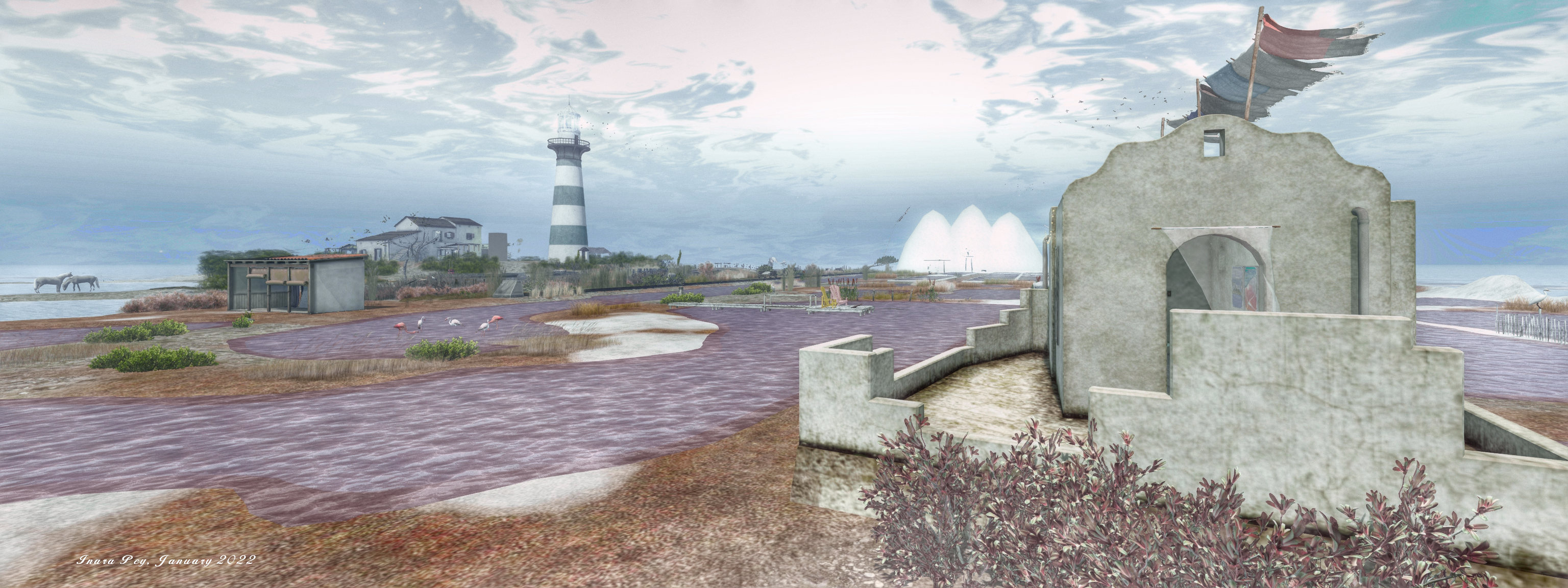
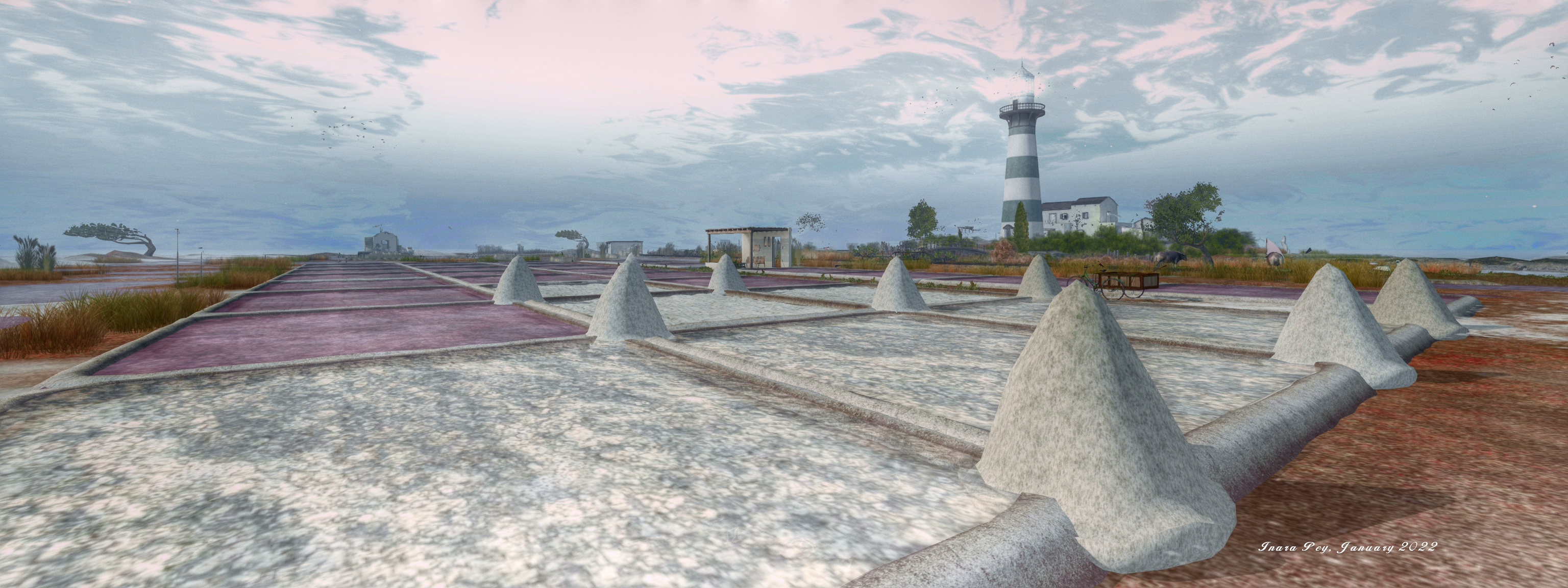
All of this is encapsulated in the new design for Florence in a simple, elegant layout that has much to attract the eye and camera. The landing point is located alongside a collection of 31 rectangular salt tanks, representing those used by the Salin Group to “farm” salt from the region. To the east, but close by are three high peaks of salt, representing the massive tables of salt that tend to be a feature of the region as the salt is gathered and dried..

To the west, the land forms more natural bodies of salty water, sand / salt bars between them helping to form paths, and the waters being enjoyed by flamingos and other waterfowl whilst other birds fly overhead. Along one of the “sand bars” there sits a little artist’s retreat, its flat roof offering a good look-out point, while a wooden deck extends out into another pool, offering a further place to sit – or from which to fly a kite.

Florence, January 2022

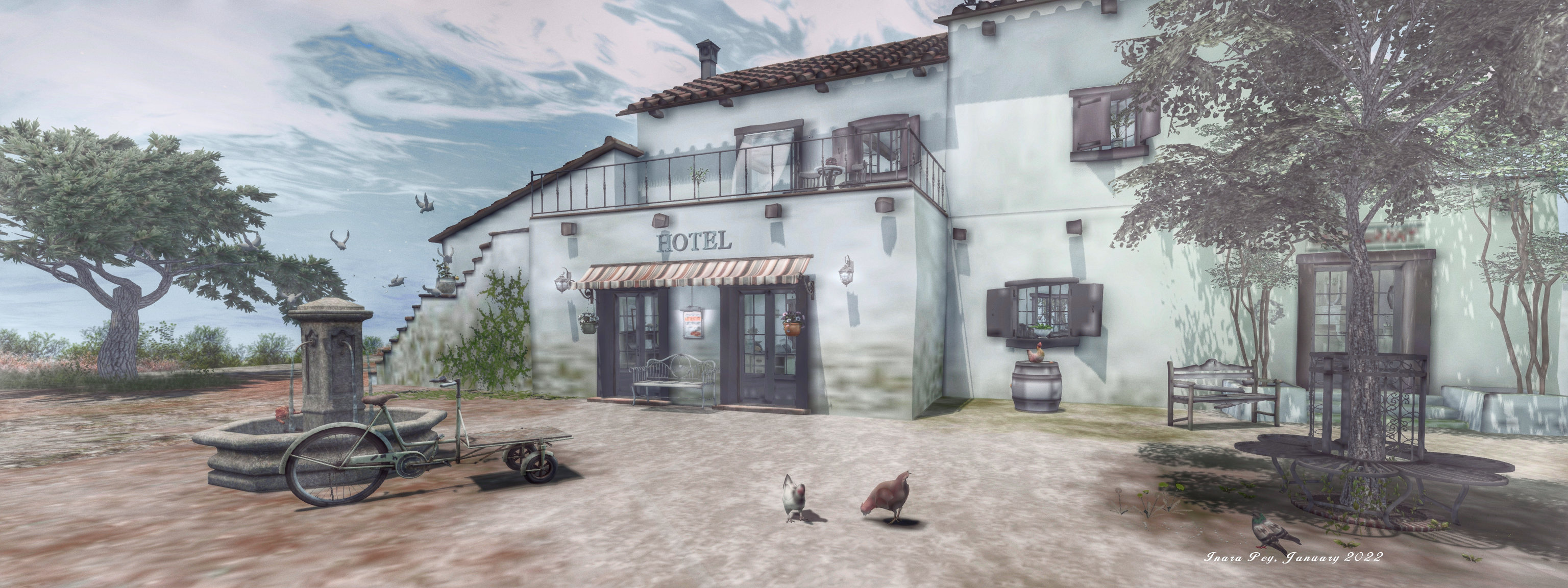
Crossing the region from east to west is a set of rail tracks long which flatcars of salt can be rolled, a rutted cart / vehicle track paralleling them. A bridge from here spans a water channel to reach a larger dry landmass, home to a lighthouse and the local hotel. The latter also reflects the relaxed nature of the area: unsupervised access to the salt lakes in Camargue is not permitted; visitors are expected to stay locally and join one of the guided tours offered by foot or bicycle – or, for those who like a little more comfort – in a 75-minute train ride (perhaps again reflected by the presence of rail tracks in the region).

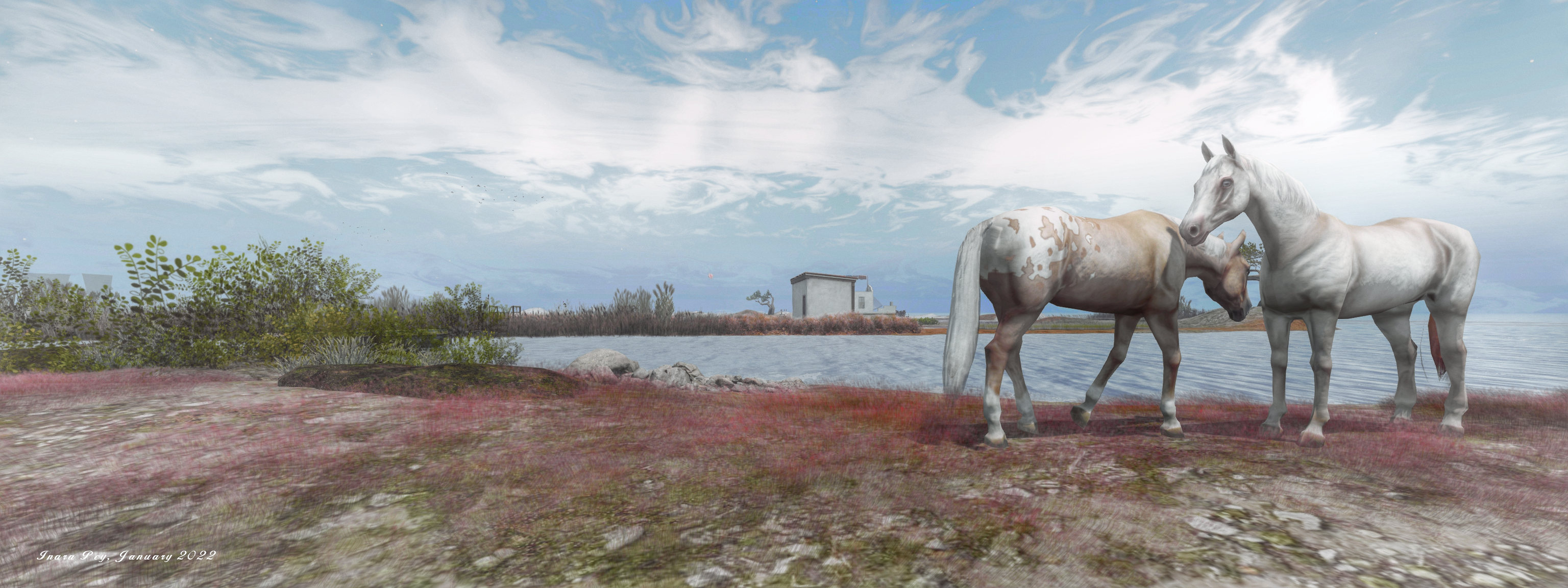
Also to be found in the region are horses, emblematic of the  Camargue horse, an ancient breed of horse of unknown origin and indigenous to the region, believed to be  one of the oldest breeds of horses in the world. These hardy little horses live in semi-feral conditions and are the traditional mount of the Camargue “cowboys”  who herd the black Camargue bulls. The latter are also represented in the region by a pair of cattle.

Florence, January 2022

As well as getting around on foot, the region offers a little motor boats visitors can putter around it, motoring along the water channel, or out to the little island that sits on its own, or around to the western side of the region, and the cover that awaits to one side of the hotel.

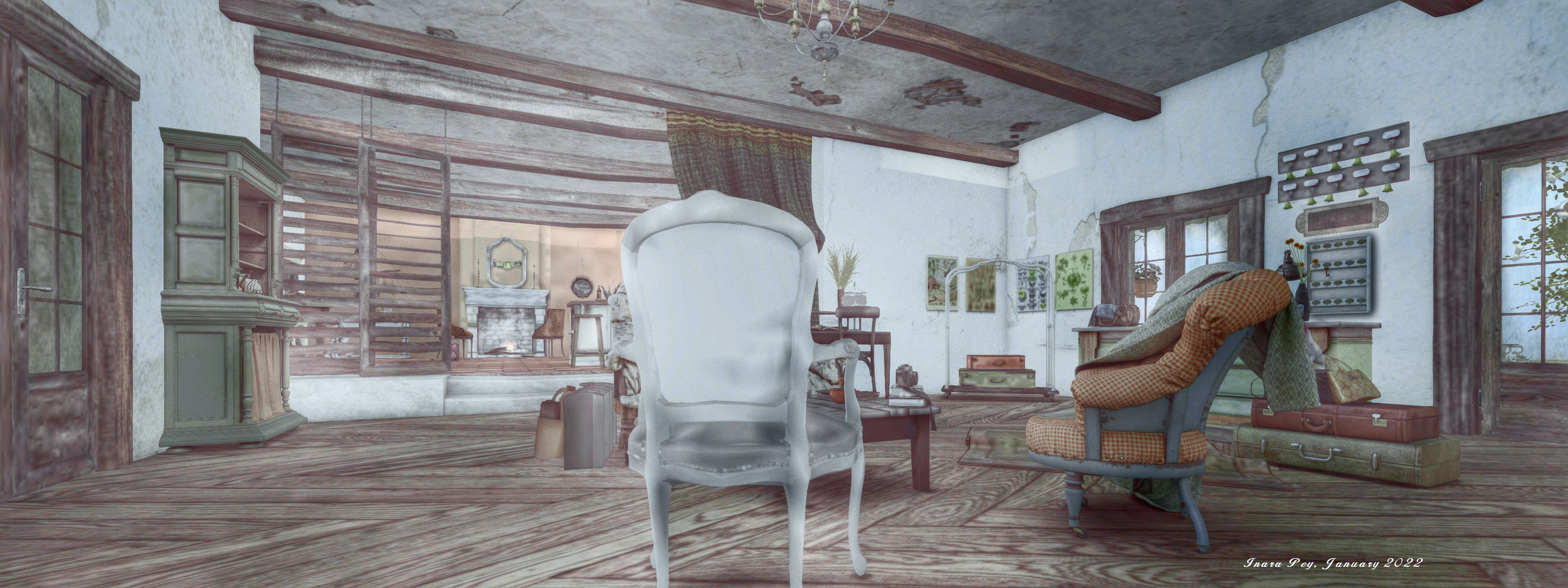
It is clear that a lot of care and consideration has gone into the creation of this setting such that it offers a good suggestion of the Camargue salt marshes whilst also being a very individual region design even if one does not reference them. There are multiple places to sit – outdoors and in, and – as noted – numerous opportunities for photography. But don’t take my word for it – get your 2022 off to a non-snowy start and pay a visit yourself!

Florence, January 2022

My thanks again to Gnaaah for the invitation!

SLurl Details