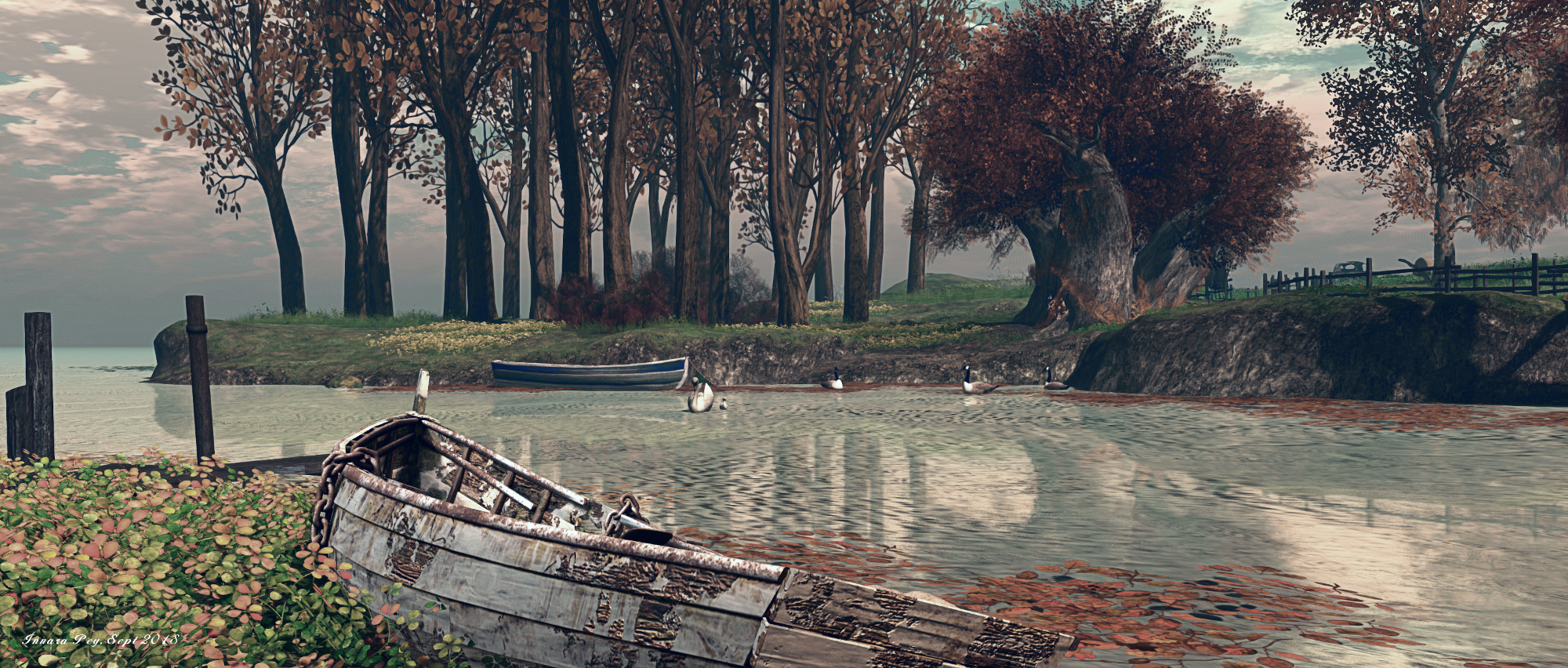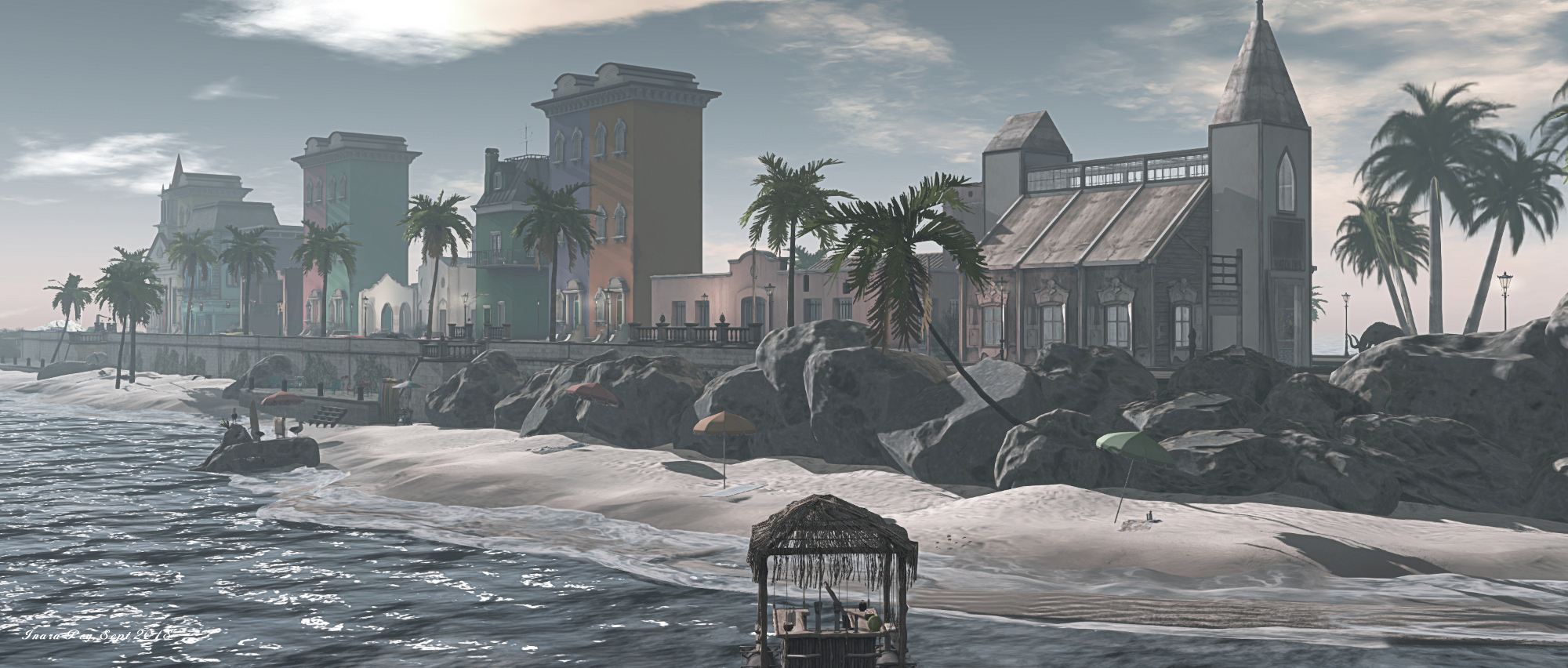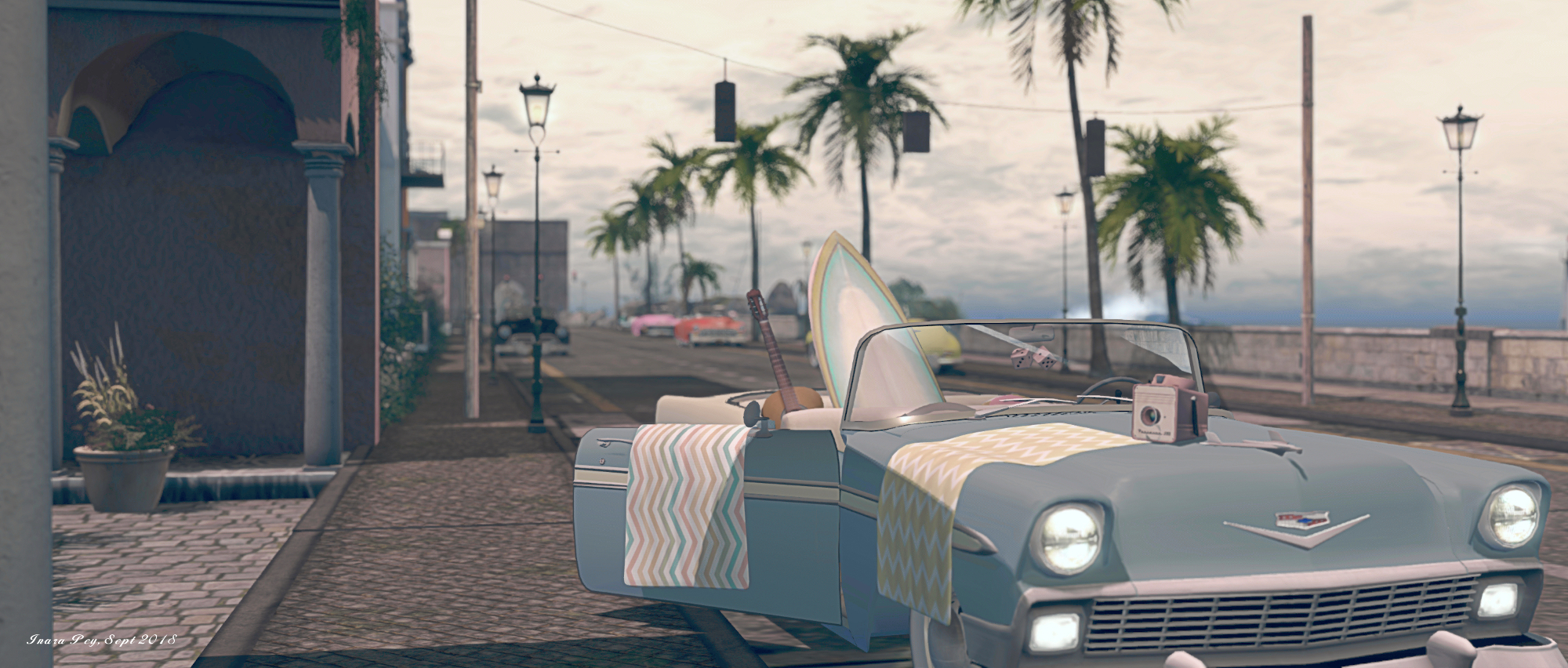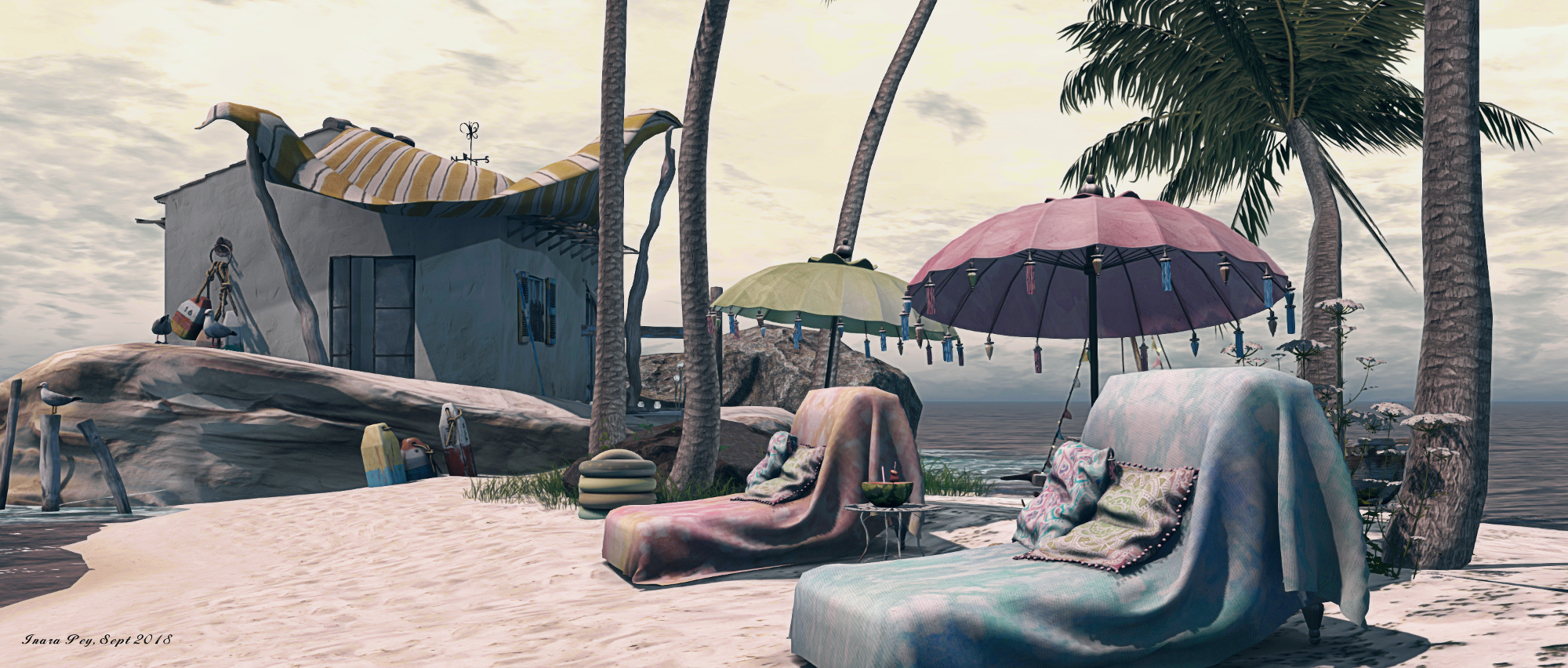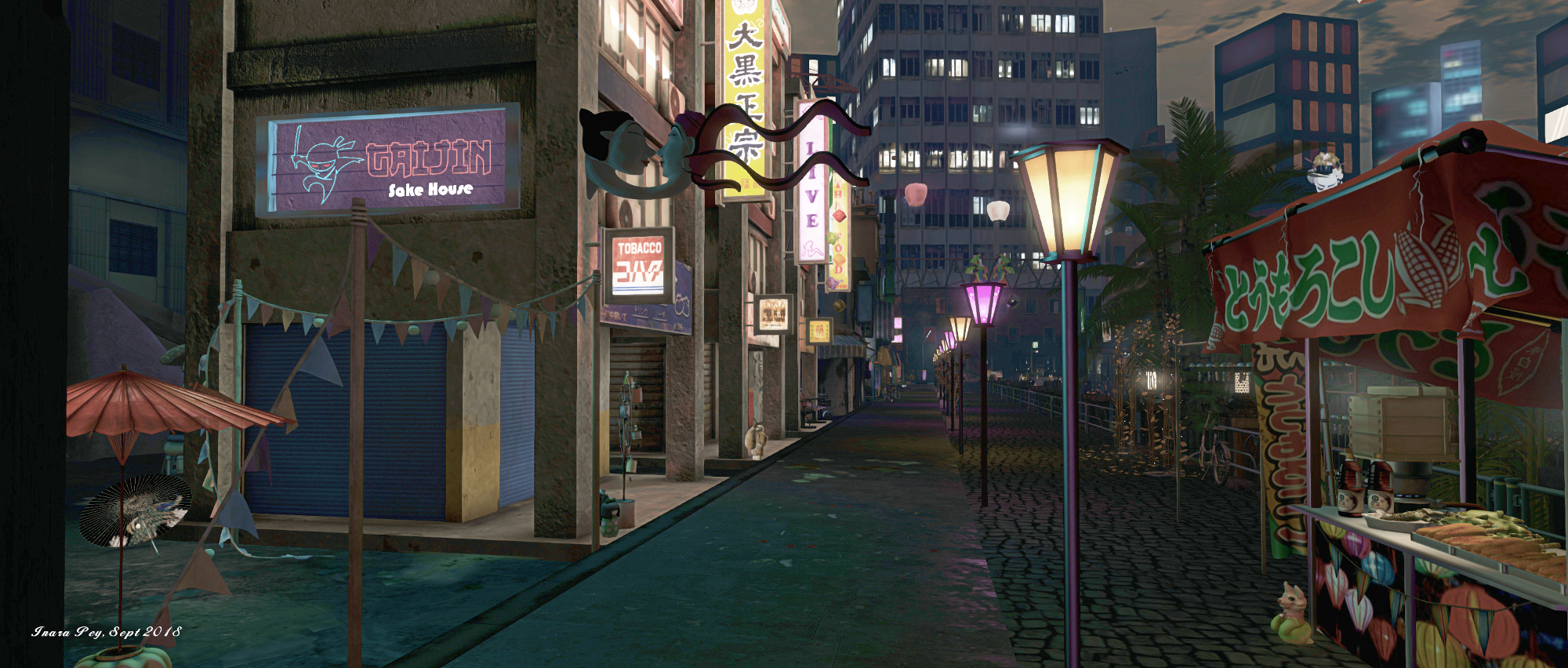
A rendezvous with Florence Bay in Second Life

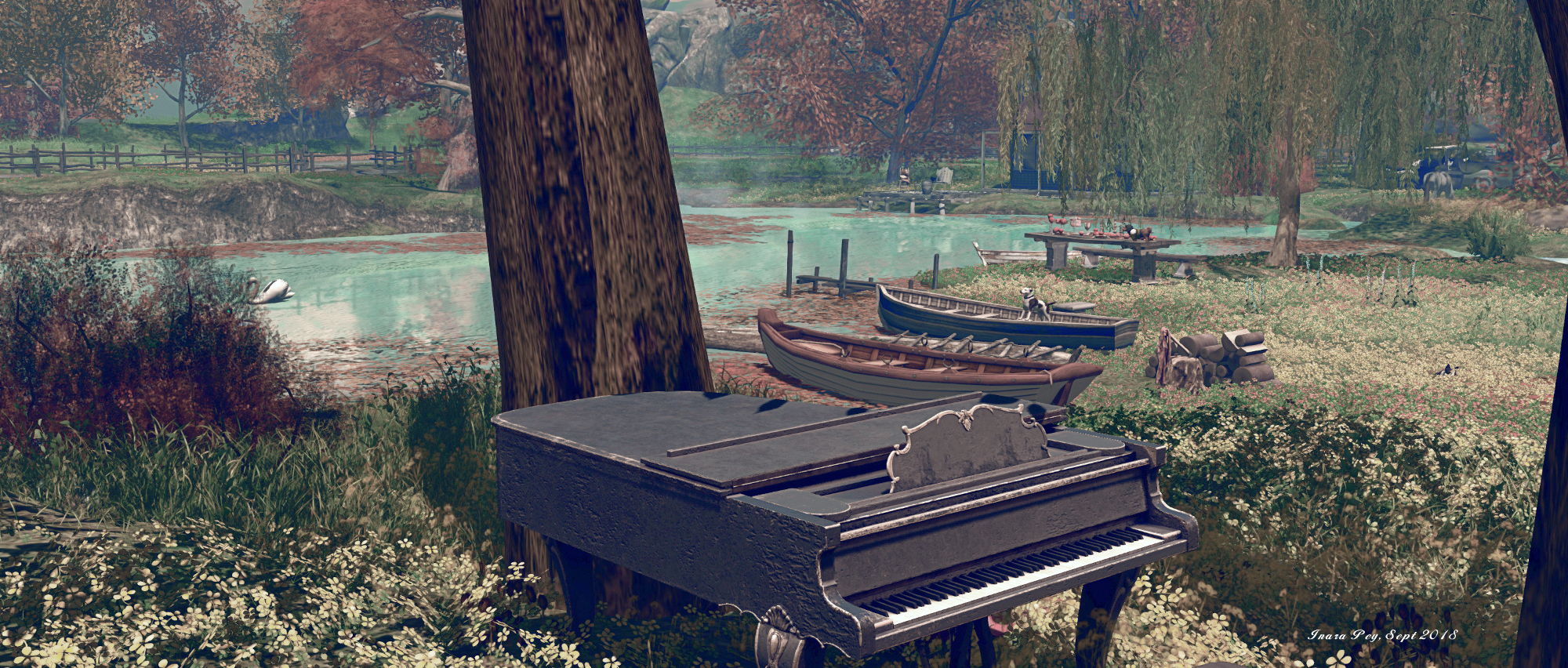
Florence Bay; Inara Pey, September 2018, on FlickrFlorence Bay – click any image for full size

Update, February 2020: Florence Bay has closed. SLurls have therefore been removed from this article. However, Florence at Low Tide is now open – see Witnessing Florence at low tide in Second Life for more.

Florence Bay is a homestead region held by Gnaaah Xeltentat and Tomaso Franizzi, with landscaping by Minnie Blanco (Minnie Atlass). Minnie both runs and landscapes the Soul 2 Soul region (some of which you can read about here, and here); given my fondness for hers work, I was curious to take a look at Florence Bay, so we recently hopped over to explore.

The region is listed by Gnaaah and Tomaso as “private, but please wander and enjoy”. Two large houses are located on the island; as these are private residences for both Tomaso and Gnaaah, people are asked to respect their privacy and consider both properties as off limits, although there are no security systems in place.
Florence Bay; Inara Pey, September 2018, on FlickrFlorence Bay – click any image for full size

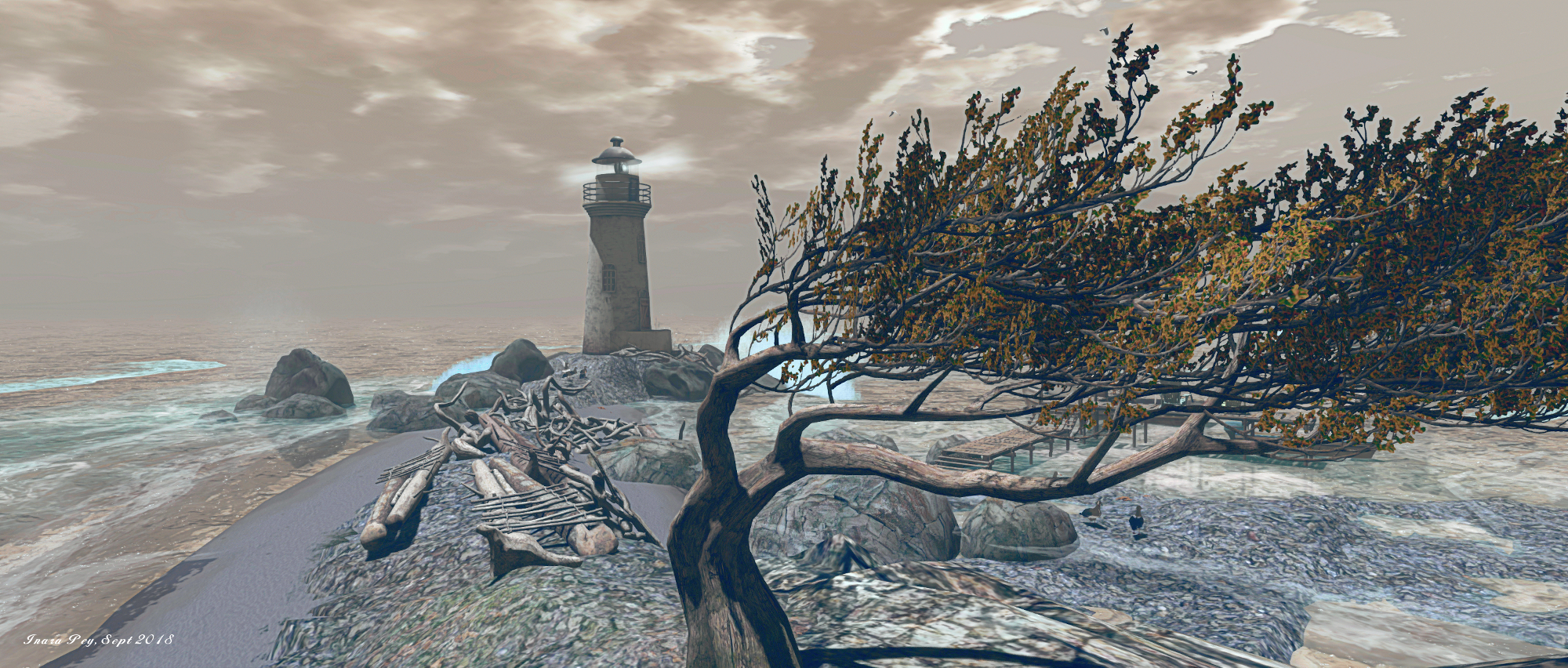
The setting is suggestive of somewhere in northern latitudes, the tall off-region peaks on two sides suggesting this is a rugged upthrust of rock just off a stretch of untamed coastline, caught under a cold, wintry sky. Fir trees and scrub grass are the dominant flora on this hunched landscape, their presence and the sound of the wind whistling its way in off the sea further enhancing the sense that this is somewhere well north of the Topic of Cancer.

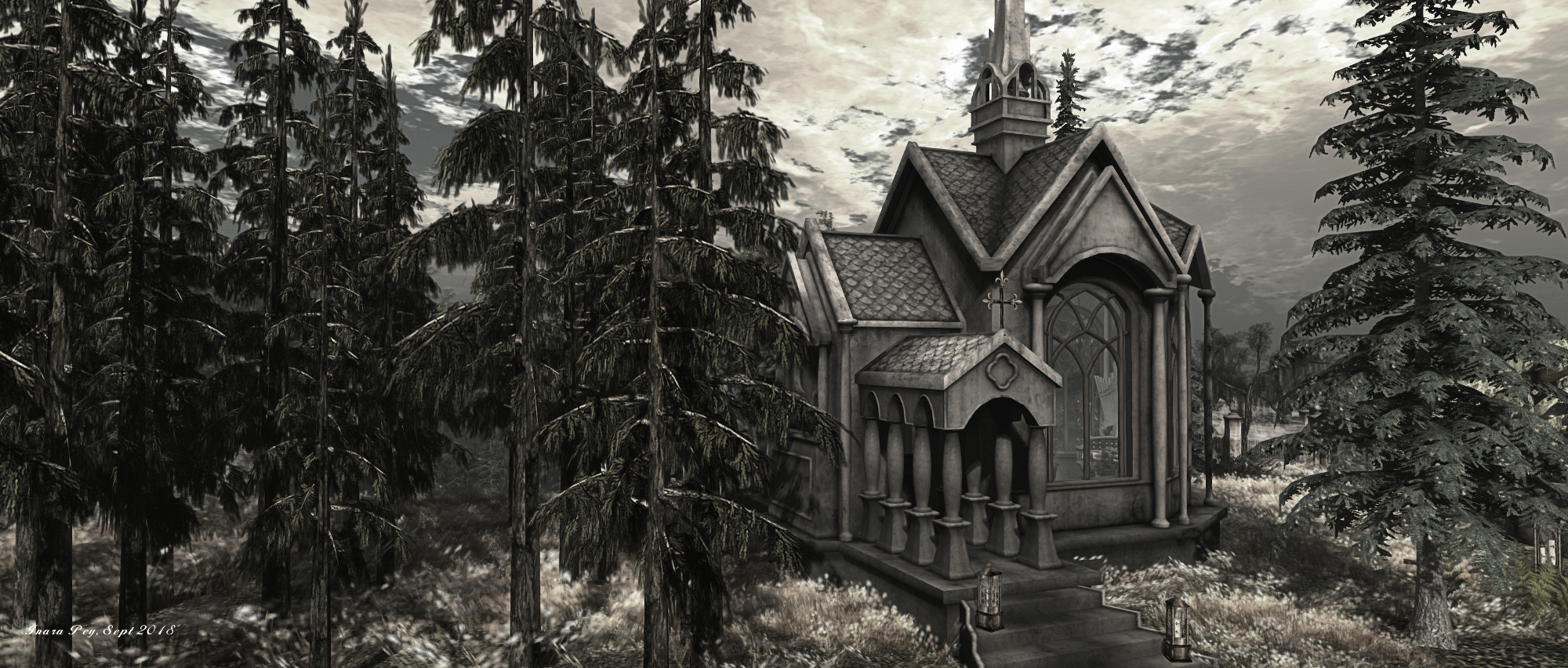
At the time of our visit, there was no enforced landing point for the region, so for this article I’ve arbitrarily selected a point in the south-east corner of the region, as it seems a logical place to start explorations. A narrow ribbon of shale beach curls around a low-lying promontory here, the home to a copse of tall firs and an old chapel. The latter appears to have been converted to a place for general meditation or reflection, rather than being a place a worship, the altar replaced by a warming fireplace. For those with a taste for adventure, a raft lies among the reeds of the shallows close by. This again offers a place of rest and shelter, although the manner in which its makeshift sail is catching the wind suggests it is eager to break free of whatever ropes or chains are holding it in place…
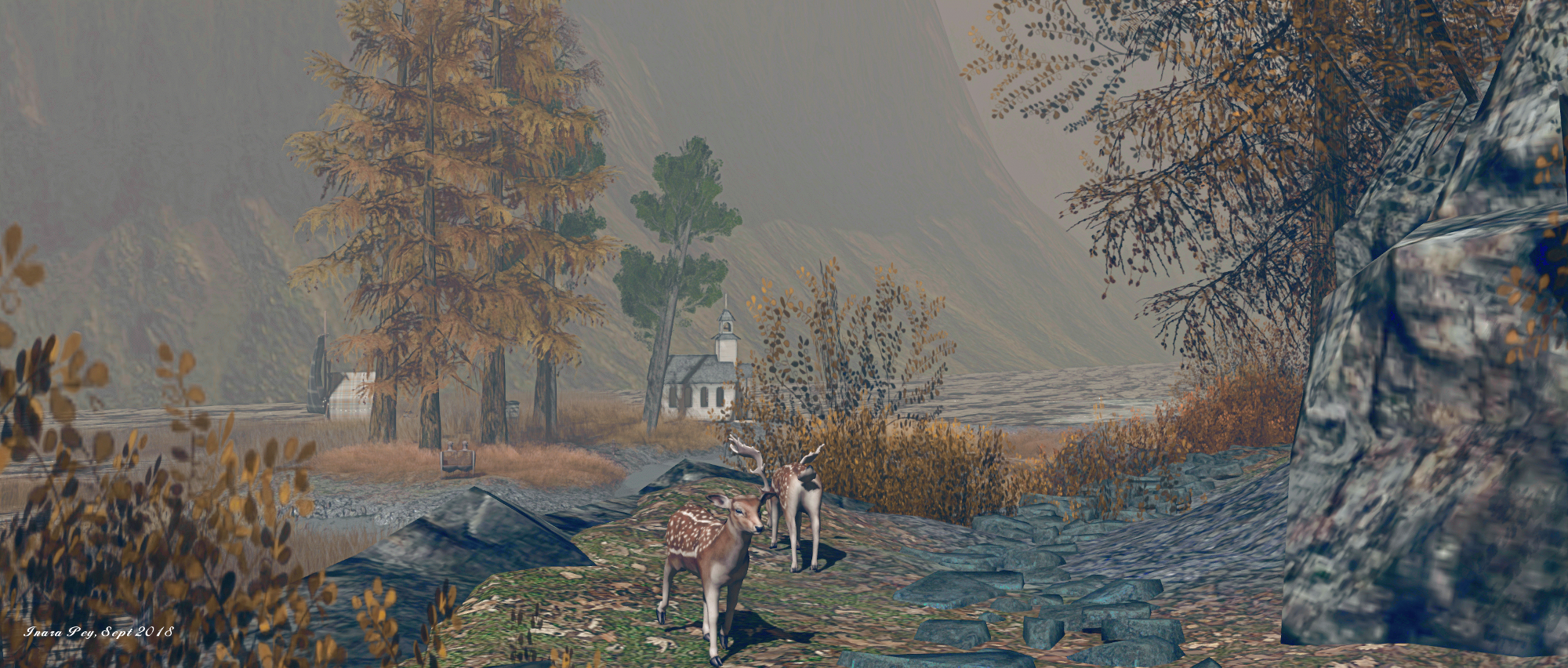
Florence Bay; Inara Pey, September 2018, on FlickrFlorence Bay

The little promontory curls around to connect to the bulk of the landscape, climbing as it does so. Here rocky paths can be found, one running west, the other north, each leading to the private residences. It is also here that things get a little confusing with exploring.

Beyond the western house is a little café and, sitting behind it on a second headland, a shed housing – rather incongruously, given the overall rugged setting – a car undergoing repair.  However, while the café would appear to be a public space, the only way to reach it is by walking directly in front of or around one of the two private residences, potentially impinging your presence, even in passing, on the property. It thus becomes a little confusing as to whether the café is a public space or not.
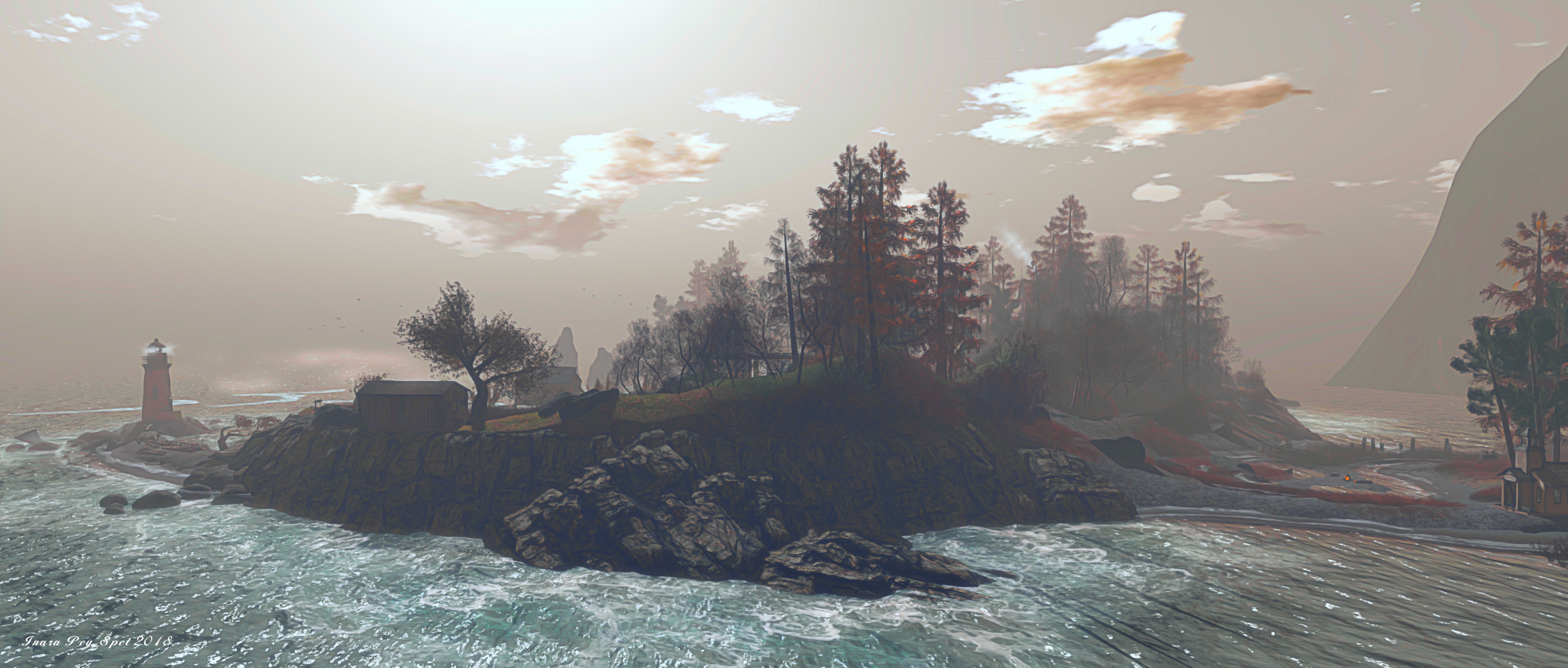
Florence Bay; Inara Pey, September 2018, on FlickrFlorence Bay

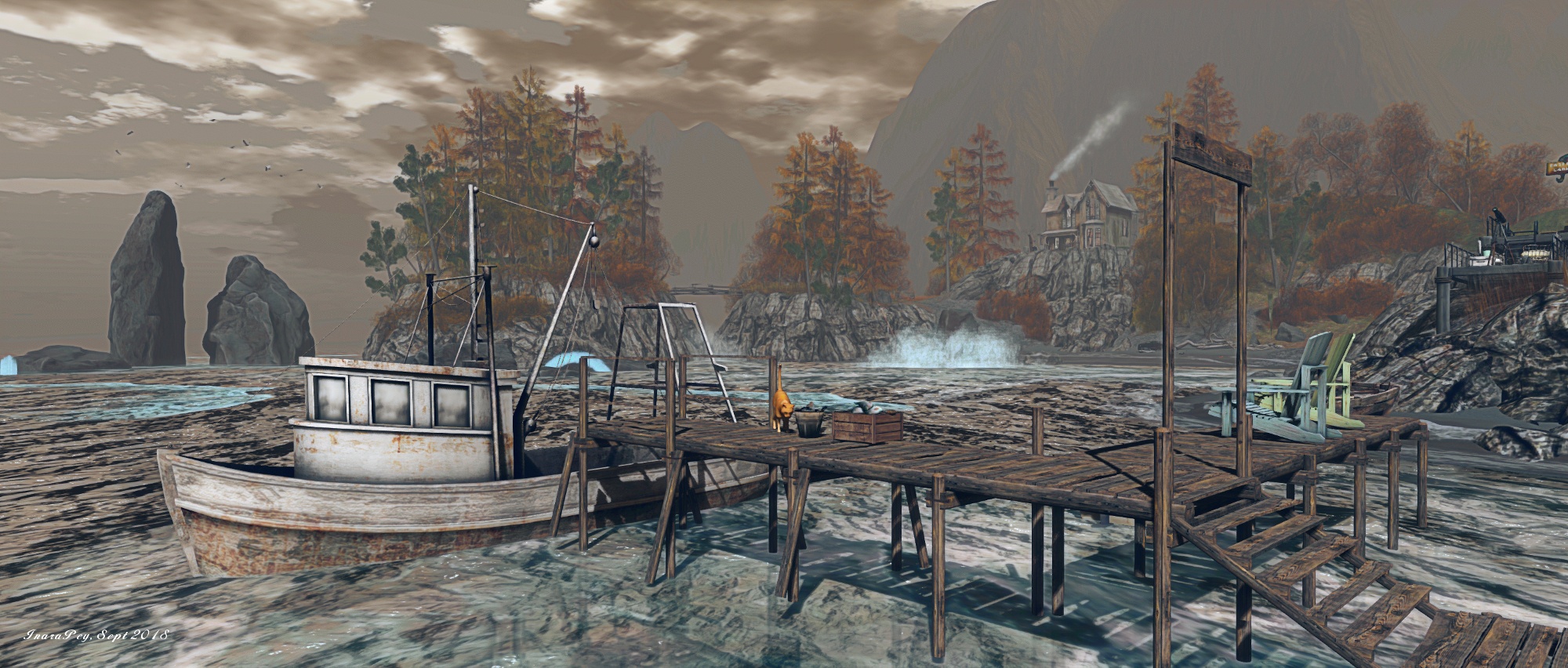
Similarly, beyond the headland with the garage, the land falls away to another low-lying finger of rock and shale beach, complete with a set of piers reaching out into the deep cut of the western bay. Chairs sit on the piers, and a rowing boat with sitting poses is moored alongside, together with a fishing boat, all of which suggests this is also a public space; but again, to reach it requires a degree of trespass through the garden of the private house.

This pier looks both eastwards and back inland to where the second of the two houses sits high above the frigid water atop a shoulder of rock, and north to were a narrow cleft splits the land, spanned by a wooden bridge. This can be reached by following the path from the my offering arrival point westwards and up over the low hump of a hill, before turning right and away from the first house and its gardens.

Florence Bay; Inara Pey, September 2018, on FlickrFlorence Bay

This route passes over another grey beach of shale curing within the large bay before rising to the western headland, offering a view down to a small, and previously hidden cottage sitting right on the coast, and access to a path running up to the bridge and the small knuckle of rock beyond – the home of firs trees and a bear with her cub.

There are odd little issues that might be found when travelling across the region: the rocks used to mark the paths can be seen hovering over the landscape in places, while there were a few points where we either bounced off of flora that wasn’t phantom or fell through rocks that unexpectedly were. But when taken in total, there is no denying the atmosphere exuded by Florence Bay, accentuated nicely by the region’s soundscape, and the fact that it lends itself as a perfect location for photography.
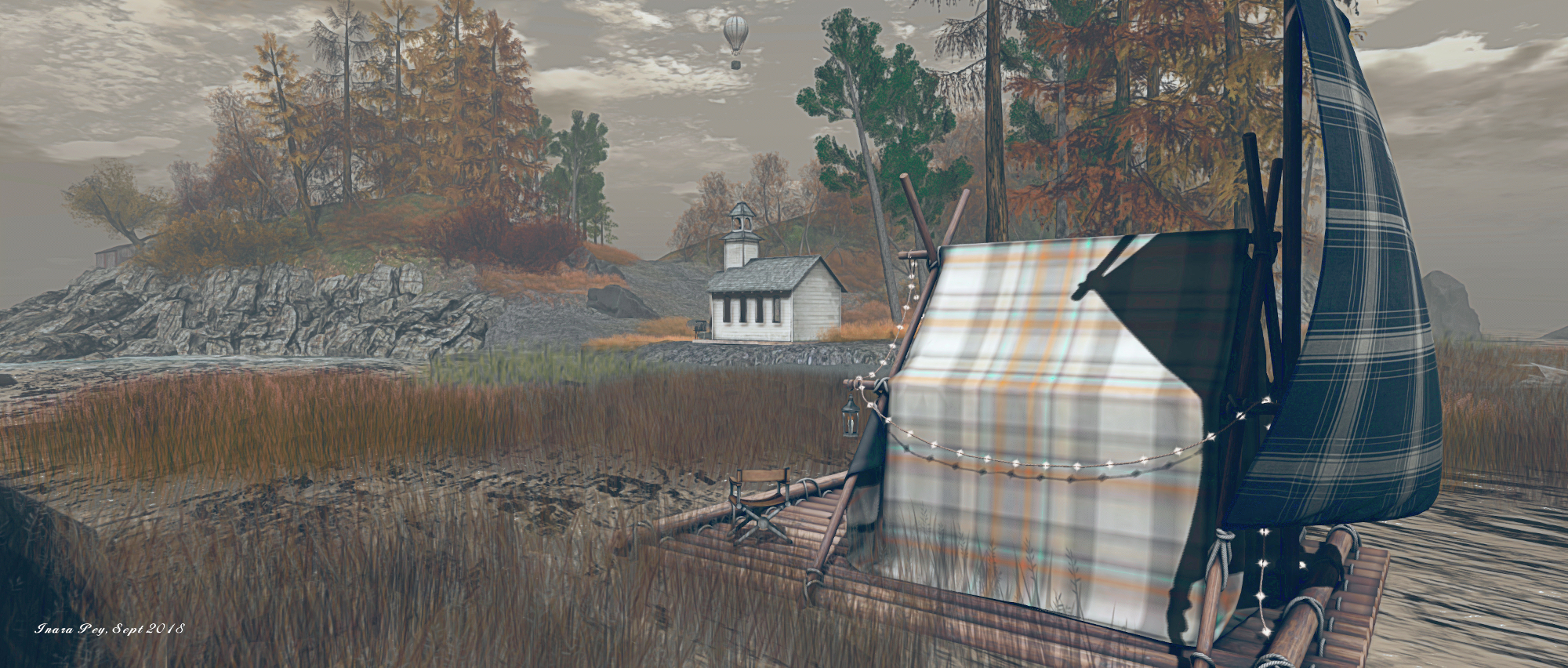
Florence Bay; Inara Pey, September 2018, on FlickrFlorence Bay
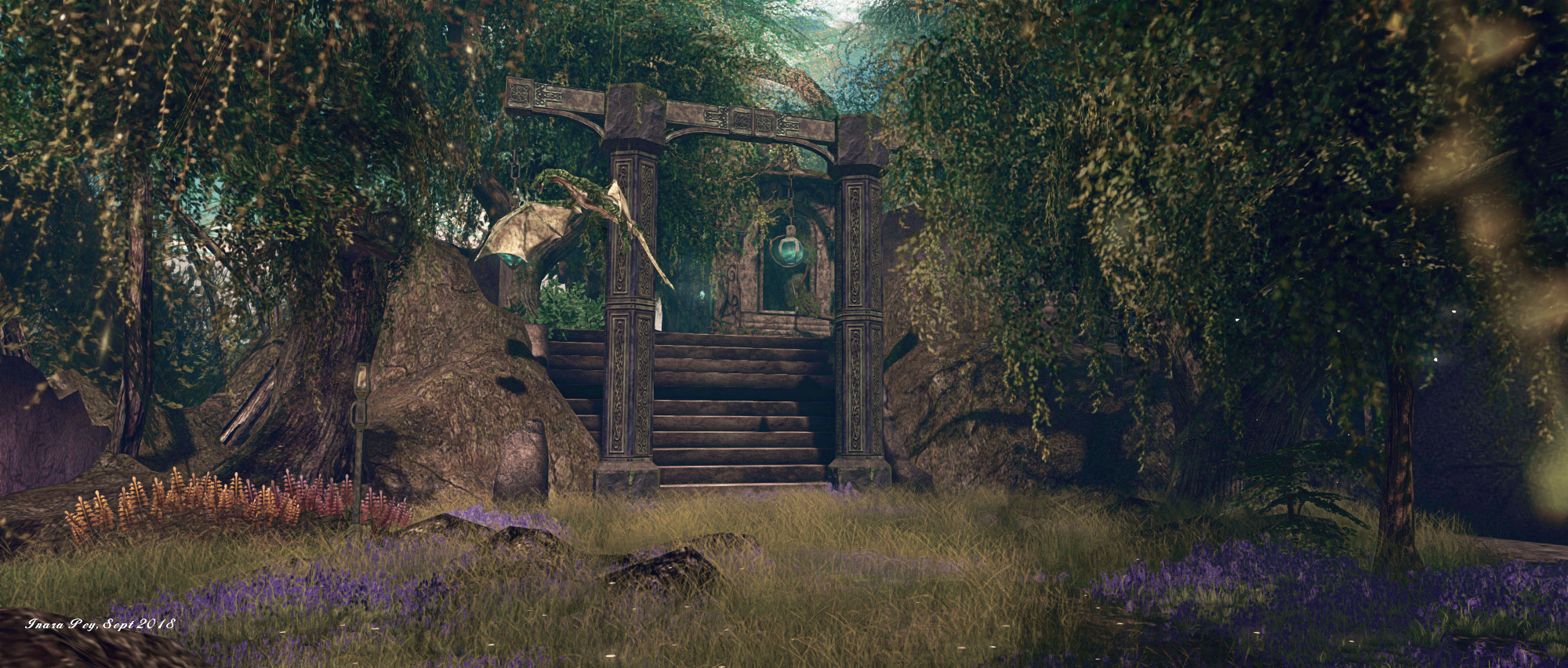


The autumnal beauty of Zone One

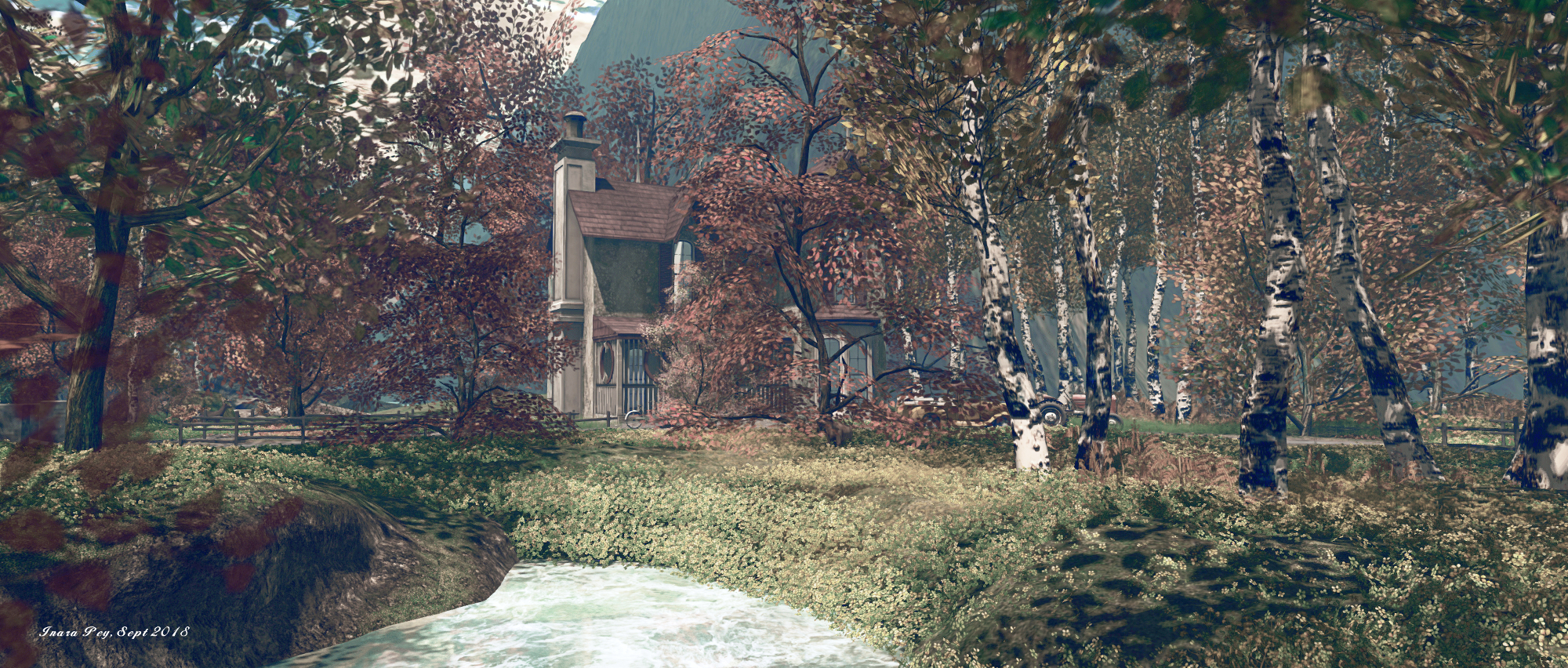
Zone One; Inara Pey, September 2018, on FlickrZone One – click any image for full size

Update: Zone One has closed. SLurls have therefore been removed from this article.

Lam Erin is a skilled Second Life photographer perhaps most noted for his landscape work, which has captured and uniquely accentuated many a region for posterity. Given his skill and eye, it should come as little surprise that were he to turn his attention to region design, he’d produce something equally as eye-catching as his art.

And thus it is with Zone One, the full region that is also the home of Lam’s Soul Identity store and Ohemo. We’ve been watching the development of the ground level of the region since work started in about June 2018, and have made several visits over the last few months to witness how things have grown, which itself has been intriguing to watch.

Zone One; Inara Pey, September 2018, on FlickrZone One

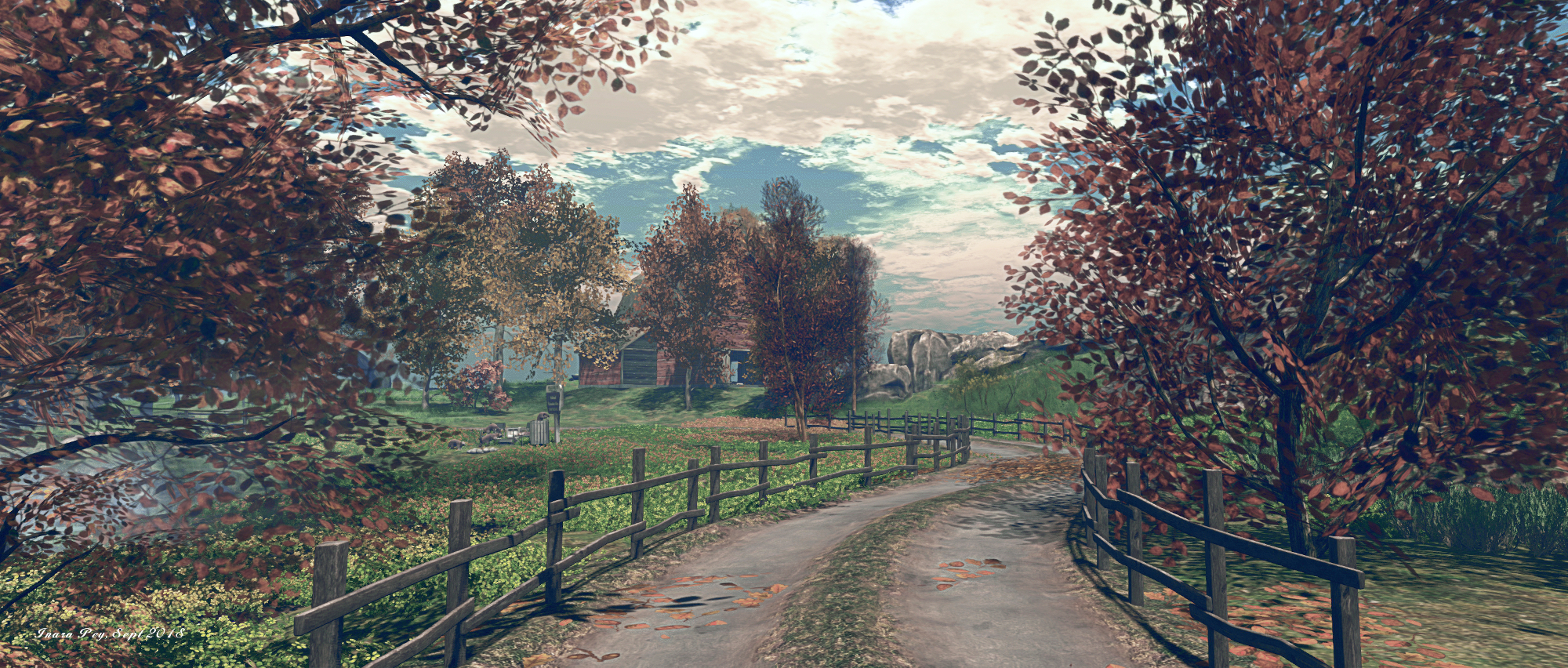
There is no set landing point, so I’ve arbitrarily selected one alongside the landmark giver for the region. This should also double as a teleport to the two stores, but at the time of our most recent visit in September, it didn’t appear to be working. The sign sits alongside a single road that almost circles the land, roughly following the line of an inlet slicing its way inwards from the east side of the region.

Alongside the inlet and along the road sit a number of houses, surrounded by trees that, in keeping with the time of year during our last visit,  are heavy with leaves turning to the colours of autumn. All but one of them are unfurnished, which did have me wondering if more work is yet to come with things. But even unfurnished, each house has its own character, thanks to both its setting and the décor placed around it, allowing each to be used as a photographic backdrop with it’s own look and feel.

Zone One; Inara Pey, September 2018, on FlickrZone One

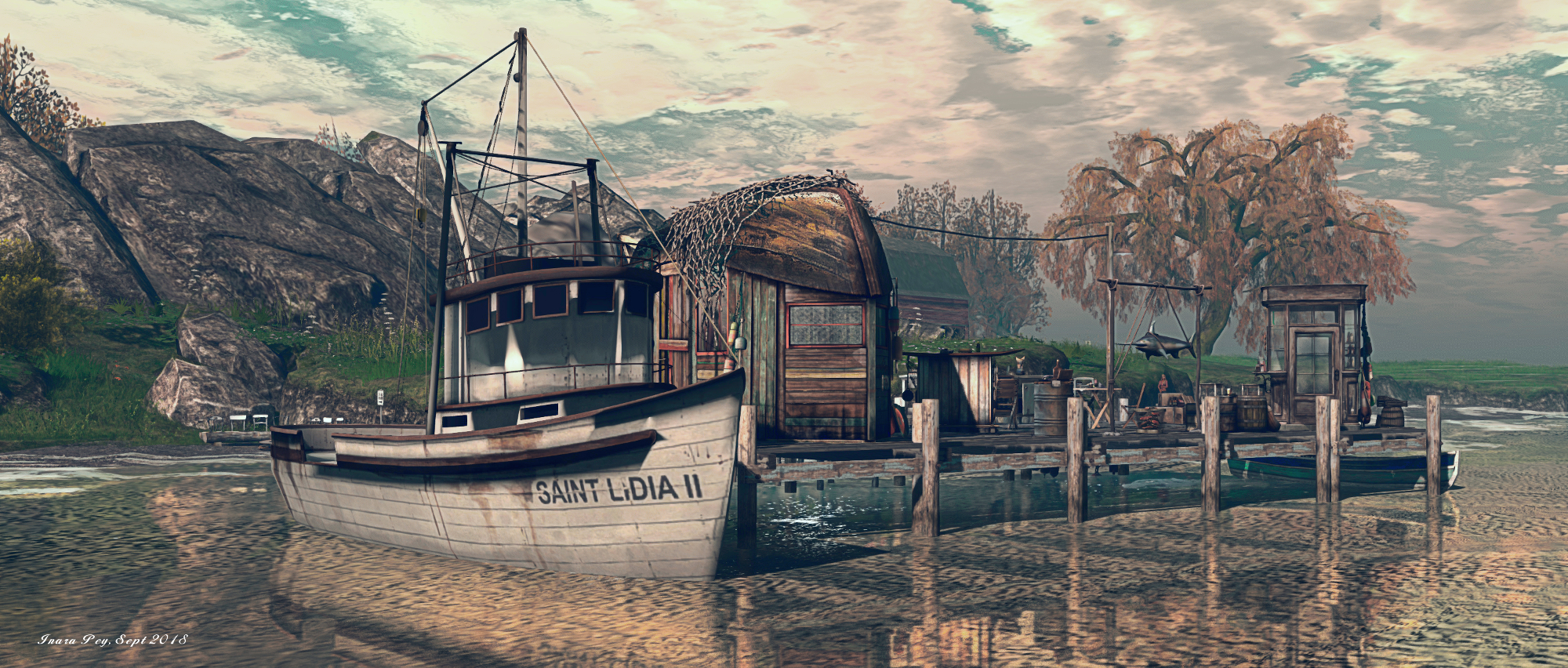
Follow the road south and west from the landing point, and it will point you to where a little wharf sits just offshore and connected to a cinder beach by a raised wooden board walk stretching over the shallow water. Reached via a short walk over grassland after the road has come to an end, it is the home to, among other things, a ramshackle fish and chips shop where one might assume the fish is super fresh, given the little trawler tied up alongside.

The inlet pushing into the middle of the region offers a pleasant place to tarry. wild flowers grow along the high banks, while on the water swans and ducks paddle and rowing boats offer places to sit and cuddle. A bench has been set with fresh apples to eat and goblets from which to enjoy a drink, but it would seem one of the region’s four-footed denizens appears to have had a little fun on the bench top – possibly in revenge for what he’s (or she’s) having to wear.

Zone One; Inara Pey, September 2018, on FlickrZone One

Zone One is a genuinely peaceful setting, offering plenty of opportunities for photography. You can join the local group to obtain rezzing rights for props, but please be sure to pick them up afterwards. It’s also a setting in which time can just be idled away, and it’s nice to see some of the décor includes sit options for “friends” as well as “singles” and “couples” – a small detail that can make a place that much more welcoming when exploring with a friend.

So, for those looking for an easy-to-explore photogenic location, Zone One is ready for your visit.

Zone One; Inara Pey, September 2018, on FlickrZone One

A trip to Havana, with a little Voodoo In My Blood

Little Havana; Inara Pey, September 2018, on FlickrLittle Havana – click any image for full size

We came across Little Havana as a result of an e-mail suggestion*. Occupying a Homestead region, it is a joint design between Sofie Janic, Fred Hamilton (frecoi), Alexa Maravilla (Spunknbrains) and Lotus Mastroianni. It’s an easy to visit region, offering a seafront location looking out over a sandy beach to where waves suitable for surfers are rolling in on the tide.

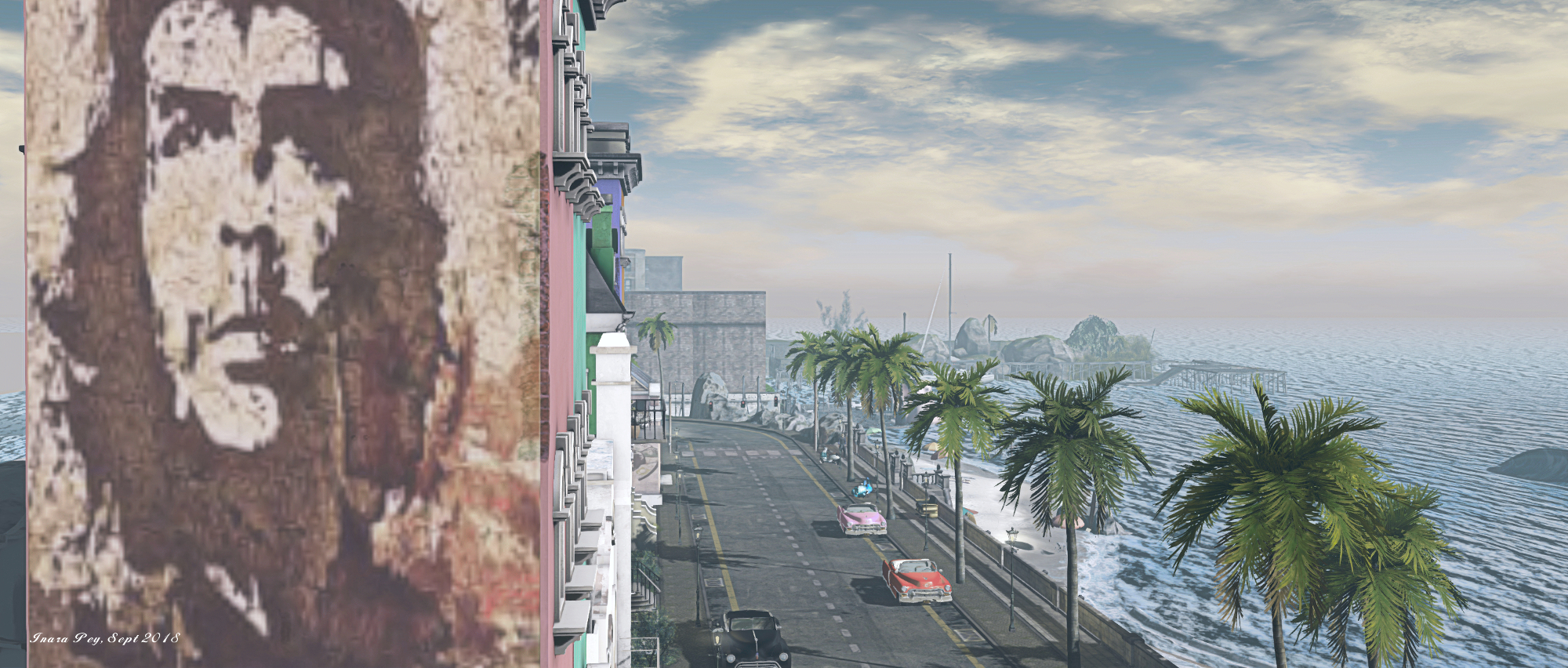
As the name suggests, the region takes its inspiration from Cuba. However, rather than trying to recreate anything specific from Havana – such as one of its more famous buildings of monuments, the team responsible for the design have opted to present a setting mindful of the images often seen in photos and postcards of Havana: wide streets, gaily painted buildings with something of a run-down air about them, little churches and, of course, the giant gas guzzlers, equally brightly painted and obviously lavished with care as befitting behemoths that have a design lifespan reaching back to the 1950s.

Little Havana; Inara Pey, September 2018, on FlickrLittle Havana

The seafront boulevard offers the best vista of the houses, buildings and cars, the street lighting offering opportunities for tourist-like night-time photography for those looking for an alternative to daylight photographs.

With the exception of the church alongside the landing point, which appears to be  a small gallery displaying images by Lotus Mastroianni, none of the buildings are furnished. Some do, however, carry hallmarks of el revolución cubana on their flanks. The heroic visage of Argentinian Marxist revolutionary Ernesto “Che” Guevara, arguably, and alongside Fidel Castro, a major architect of Fulgencio Basista’s overthrow and the remodelling of Cuba post-revolution, stares stoically outward from the side of one of the taller buildings, for example.

Little Havana; Inara Pey, September 2018, on FlickrLittle Havana

The northern end of the beach front road ends, quirkily enough, in an odd little helicopter landing pad, complete with a D-Labs helicopter that looks like it has been put together using bodywork from a car. When encountered, it is both unexpected and yet strangely suited to the setting.

A short distance across the water, north and west of this, sits a little sandy island given over to swimming, sunbathing and generally relaxing, a bar offering an excuse to swim over and stay a while.

Little Havana; Inara Pey, September 2018, on FlickrLittle Havana

The roads on the region also run along the east side of the buildings, where can be found more paintings typical of Cuba on walls, including one of Fidel Castro himself in all his bearded glory. This faces a recording studio sitting on another little island, this one reached via a wooden bridge. With an indoor pool and outdoor sun deck, it suggests a place of easy-going creation of Cuban music.

Ideally suited to photography, particularly avatar-centric images, Little Havana is connected via bridge at its south-western extreme to Voodoo In My Blood, the neighbouring full region. This features a design largely brought together by Megan Prumier, working with Sofi and Fred.

Little Havana; Inara Pey, September 2018, on FlickrVoodoo In My Blood

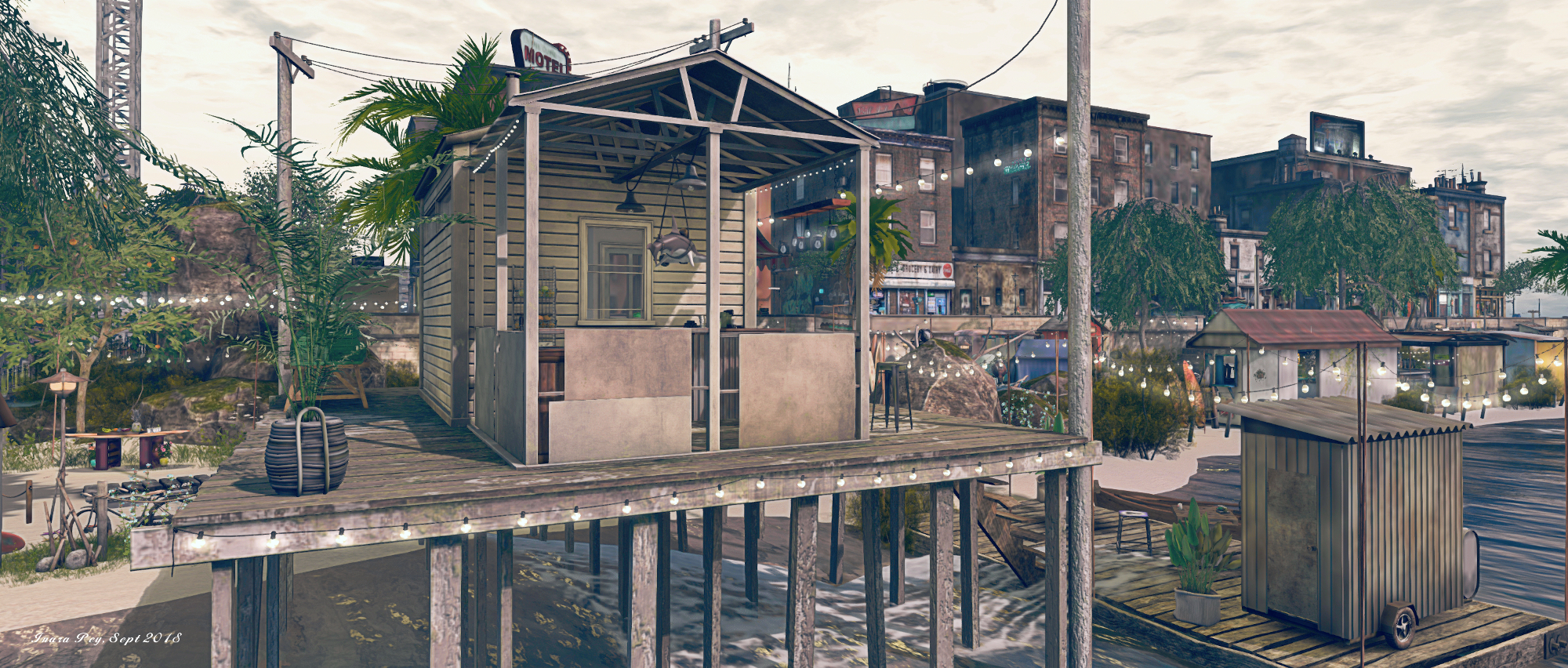
This is distinctly more run-down America in terms of tone, but equally as engaging visually. A good portion of the region is given over to commercial activities centred on but not limited to the Voodoo main store itself. However, explore southward beyond this, along the narrow, grungy alleys standing between the shells of ageing buildings, and you come to an open beach front setting. Tired it may well, but it is also packed with detail.

Running east-to-west across the southern side of the region, this beach opens out on its western side to become the sandy location of an ageing seaside fun fair. Whether the rides still work is up to you to find out, but the function here seems to have shifted over time: a music stage has been built, and the tents pitched on the white sand suggest there’s recently been a festival of some kind here.

Little Havana; Inara Pey, September 2018, on FlickrVoodoo In My Blood

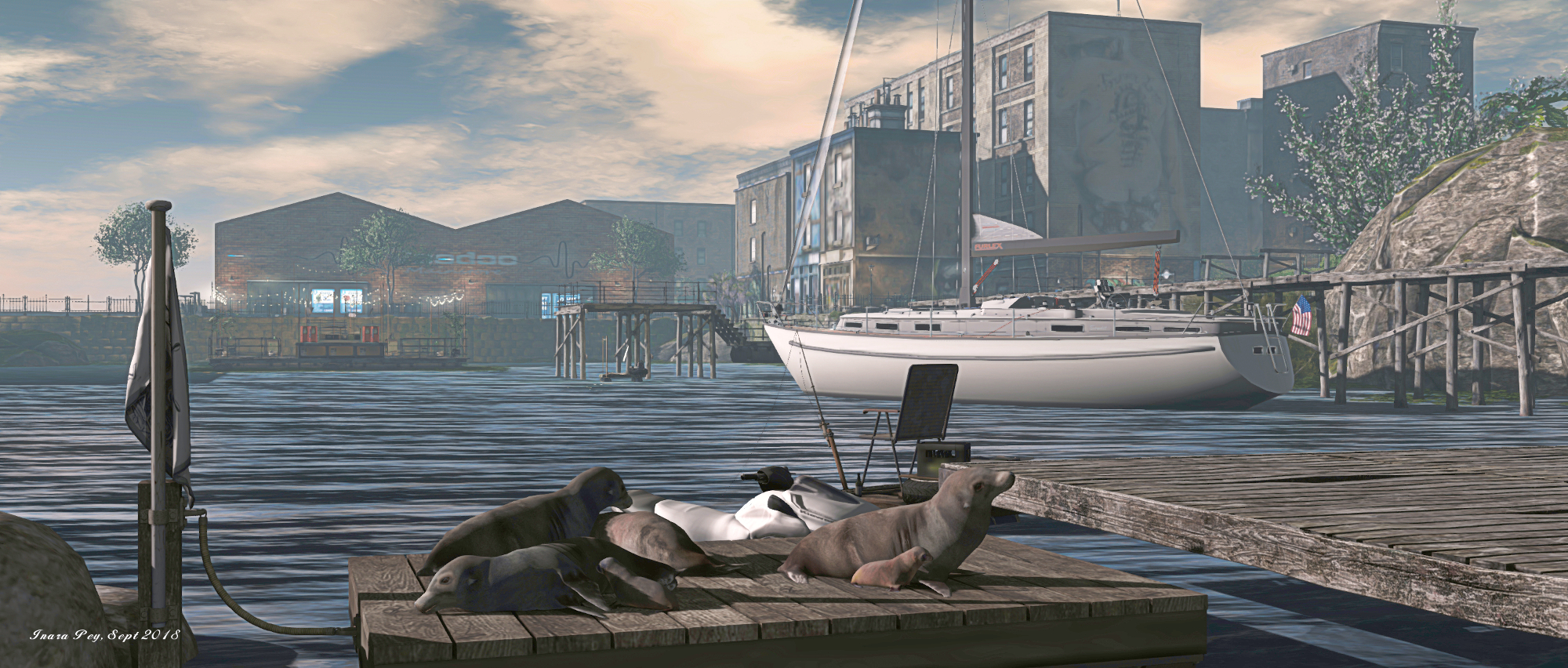
A set of trimmed hedges and paved paths sit above these tents, presenting a little formal place to take a stroll. On their north side the look towards a finger of rock pointing out to sea and reached via wooden board walks. Seals have claimed this rocky ribbon as their home, and lie resting on wooden piers – although one seems intent on receiving scooter lessons! The piers are also where boats might put in, as evidenced by the pristine yacht moored close by, the affluence it exudes contrasting with the aged look of the rest of the region.

Both Little Havana and Voodoo Blood are finished with local soundscapes – such as music blaring from a car radio as you wander the streets of the former, or the sounds of the seaside when exploring the southern seafront of the latter. This means that having local sounds enable while exploring is an absolute must.

Little Havana; Inara Pey, September 2018, on FlickrVoodoo In My Blood

Taken individually or together, Little Havana and Voodoo Blood make for interesting destinations for Second Life travel bloggers, explorers and photographers. Both had been designed to exude atmosphere and catch the eye, and both are very much worth taking the time to explore.

Those requiring rezzing rights in either region can obtain them by joining the respective groups, and each region has its own Flickr group for those wishing to share their images – see the About Land information within each region for the links.

Little Havana; Inara Pey, September 2018, on FlickrVoodoo In My Blood

SLurl Details

* I’m not offering a name, as the e-mail appears to have originated from a personal account, rather than one linked to an avatar name. If I have this wrong, the sender can ping me with an OK, and I’ll add their name for due credit. Otherwise thank you for the hat tip.

Tagus Enchanted Forest in Second Life

Tagus Enchanted Forest; Inara Pey, September 2018, on FlickrTagus Enchanted Forest – click any image for full size

I walk away from the world I know,
To a forest were each thing can change
And where the floor is carpeted in seasonal splendour.
It is here I feel magic,
In the enchanted forest.

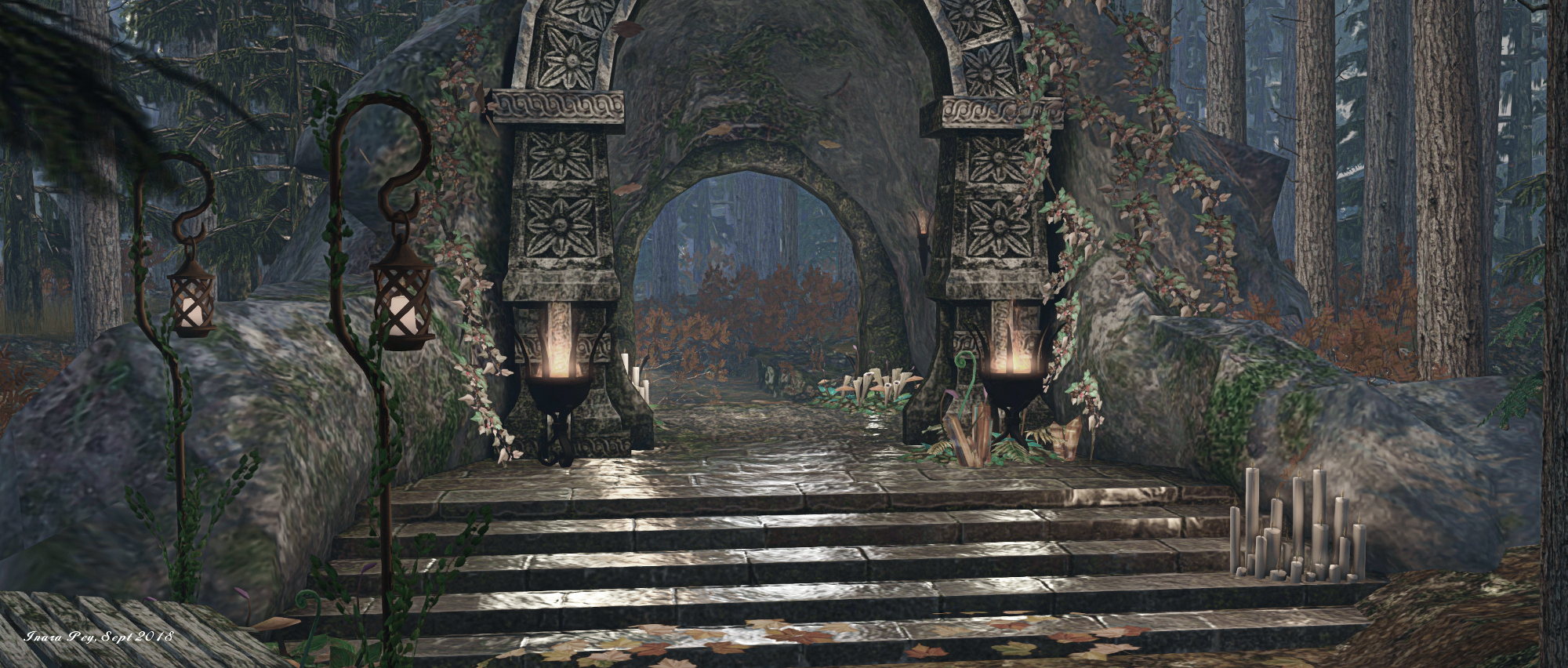
So reads the description for Tagus Enchanted Forest, a homestead region held and designed by Lady Amalthea (meganwhitlock). As the stanza suggests, this is intended to by a mystical, enchanted place; one given over to woodland in which assorted locations can be found, which lend themselves to a variety of fantasy themes – a hint of elves here, those of a magician or alchemist there; a touch of Game of Thrones along the wall of a crypt or the suggestion of witchcraft possibly lurking in the mists …

Tagus Enchanted Forest; Inara Pey, September 2018, on FlickrTagus Enchanted Forest

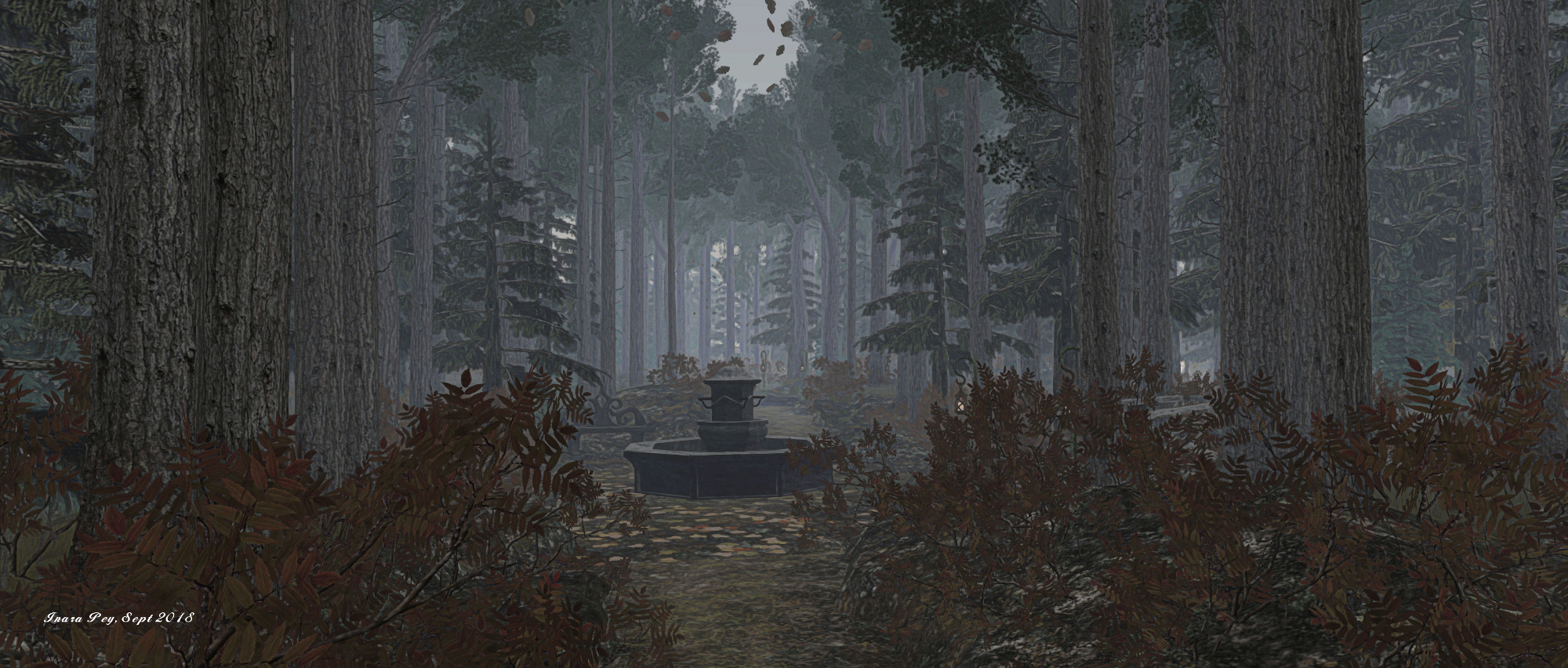
It is a wild, free place – a rugged island rising tall from the surrounding waters, crowned by tall trees between whose trunks paths and trail wind and loop, sufficient enough to guide travellers around the various locations to be found here, but with ample twists and turns to possibly confound one’s sense of direction.

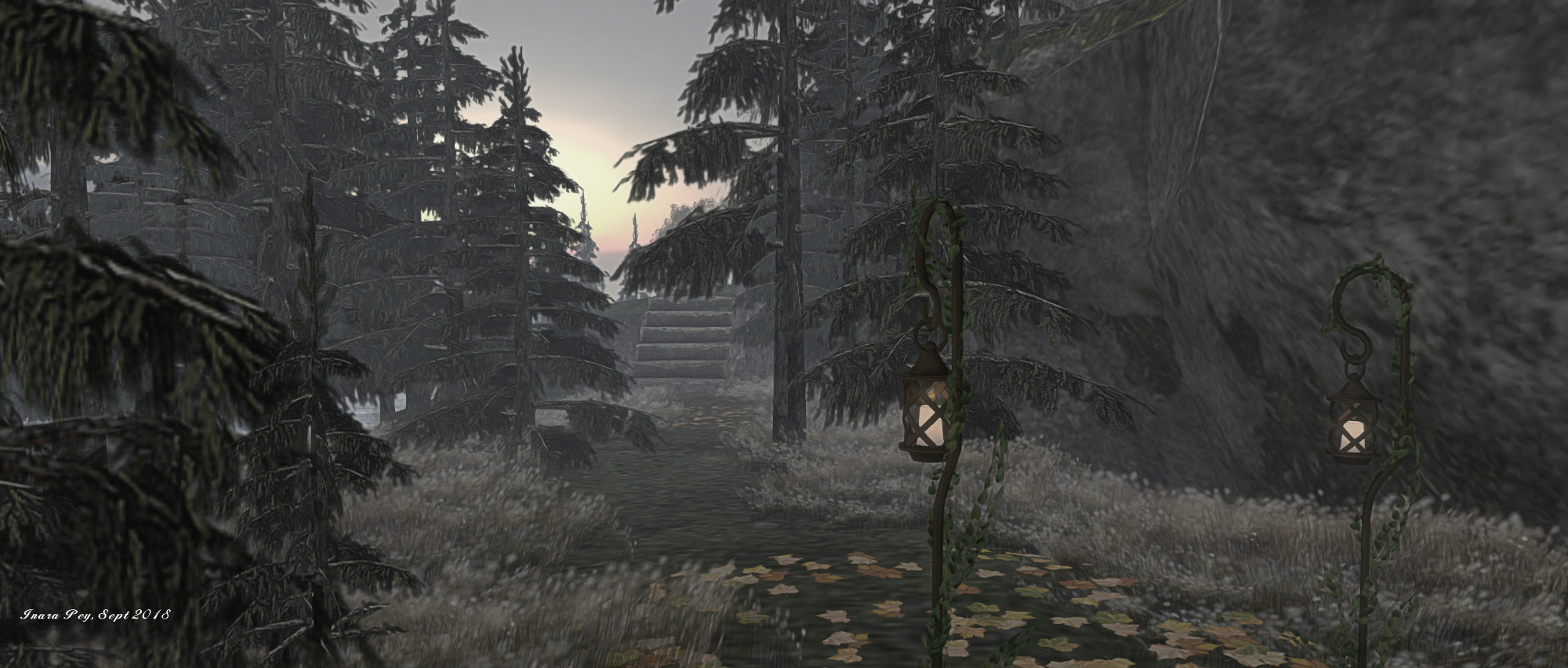
From the landing point, lantern-marked steps offer a way up inland or down to the waterside, where further islands, long and thin and equally as rugged, can be seen.  These can be reached via rowing boat offered at a small pier – although only one offers a similar boat for getting back!

Tagus Enchanted Forest; Inara Pey, September 2018, on FlickrTagus Enchanted Forest

It is on the largest of these outer island that the Game of Thrones reference can be found: a wall of faces of the dead waiting to be worn, sitting at the back of a cliff-top crypt. A short distance from this crypt, and situated upon the highest plateau of the island is a small chapel, its organ being played by a ghostly, skeletal figure…

The remaining islands are marked by high waterfalls, one the home of an alchemist, the other featuring the ruins of a tower in which an ancient elven throne resides. Across the main island, to its north-west, another low tower is to be found atop a ridge, the seat of someone fascinated with the movement of the stars and the planets – an astrologer or magician, perhaps….

Tagus Enchanted Forest; Inara Pey, September 2018, on FlickrTagus Enchanted Forest

Finding your way around all of the trails and paths on the island can be an adventure in itself. Some are obvious, others perhaps less so as you climb and descend stone steps – just watch for the lanterns hanging from their ivy-draped poles. Along the way are numerous points of rest: camp fires to sit around, tents to sit within, places to dance, places to rest alongside still waters… All of this given a further air of mystery by the selected windlight.

There are one or two rough points one might journey into: the physics alongside the chapel’s only working entrance can at times knock the unwary sideways, and there are some landscaping elements floating above their peers. However, these do not prevent Tagus Enchanted Forest from being photogenic – and there is a Flickr group for those who wish to add their pictures.

Tagus Enchanted Forest; Inara Pey, September 2018, on FlickrTagus Enchanted Forest

A mysterious, place, Tagus Enchanted Forest perhaps awaits those willing to weave a tale of those who might reside in its towers and buildings.

SLurl Details

Ashemi: an Oriental reprise in Second Life

Ashemi Reprise; Inara Pey, September 2018, August 2018, on FlickrAshemi Reprise – click any image for full size

Almost two years ago, we visited Ashemi, the second Oriental-themed region we’d explored that has been designed by the team of Ime Poplin and Jay Poplin (Jayshamime) and Shaman Nitely. Along with Imesha, it offered a gorgeous setting which quite captivated me on visiting both. Sadly, Ashemi disappeared from the grid a while ago – so when I heard via Shakespeare and Max it is now back, we had to jump over and take a look.

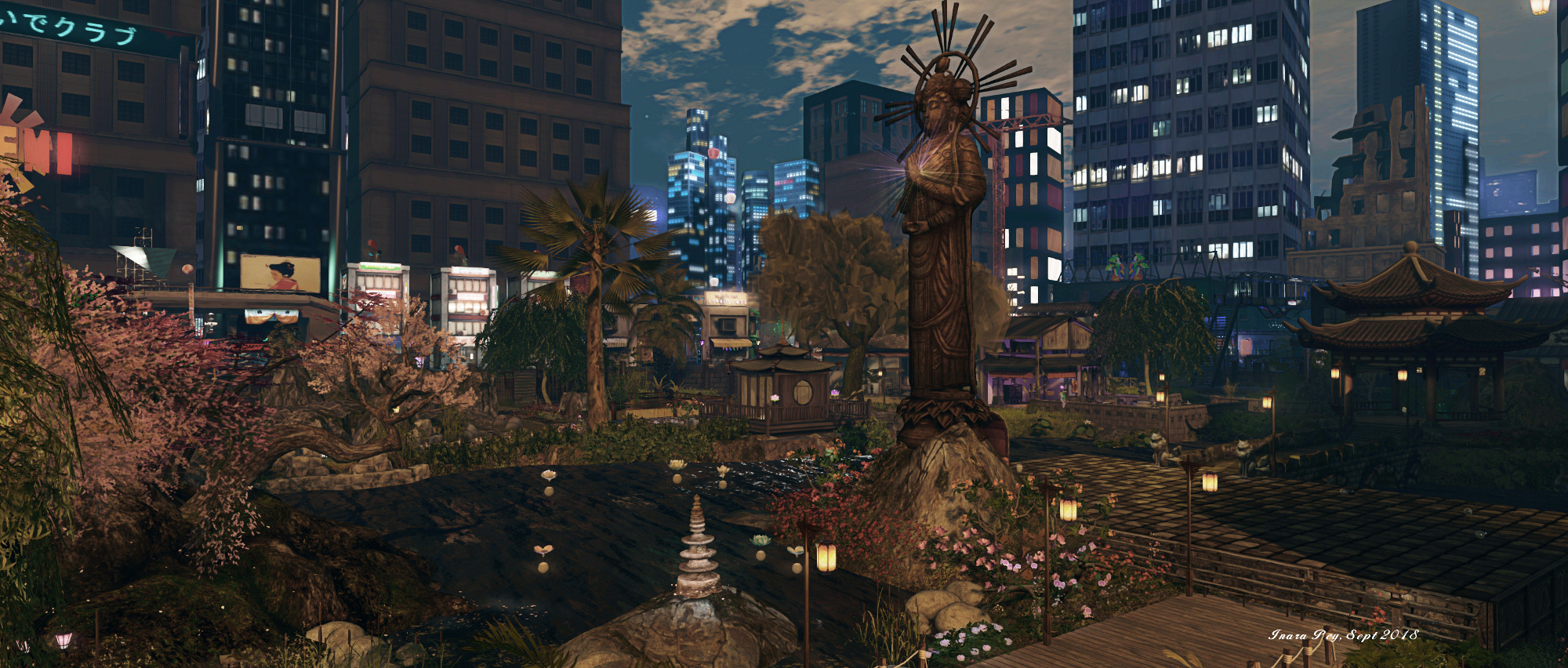
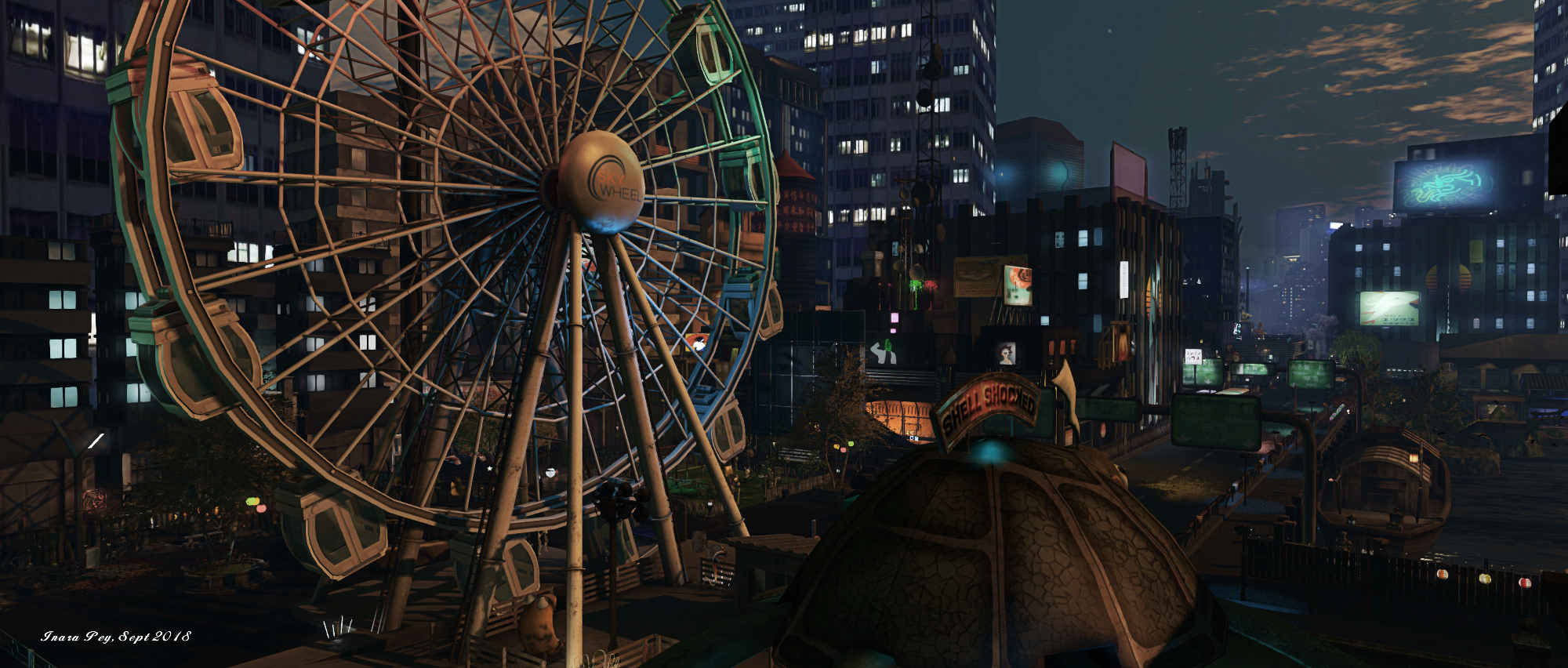
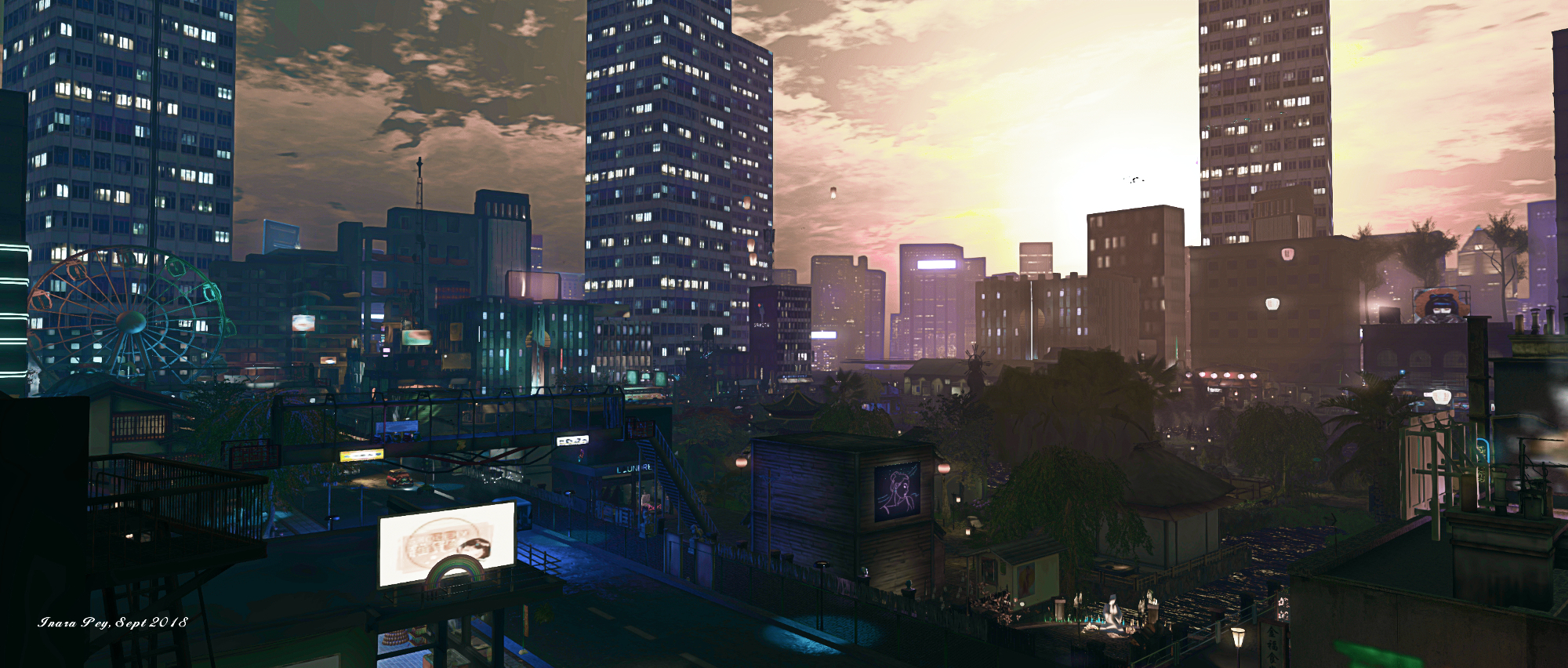
Now located on a full region and taking the form of Ashemi Reprise, this cityscape environment is once again an absolute delight to witness. As with Ashemi (which you can read about here), the new region – open just four days at the time of our visit, presents a dusk setting (although given the Sun is in the east, it could be early morning, depending on your preference). I did opt to go with a late afternoon windlight setting for some of the images here, just to offer a little contrast, but I do recommend seeing the region under its default, as a lot of effort has gone into creating an atmospheric experience. Good use is made of projected lighting, so having Advanced Lighting Model (Preferences > Graphics) enabled is an essential part of a visit.

Ashemi Reprise; Inara Pey, September 2018, August 2018, on FlickrAshemi Reprise

Several motifs from Ashemi’s previous incarnation are apparent in the build: the use of water in a central open area, the smooth merging of region with its surrounding backdrop, some of the statues and decoration, the placement of quiet little places, and the attention to detail. But make no mistake, this is a new design, offering a lot of extra detail and a rich mix of settings, the design sufficiently different to the original that it is easy to imagine that this is another district within the same city as the original Ashemi.

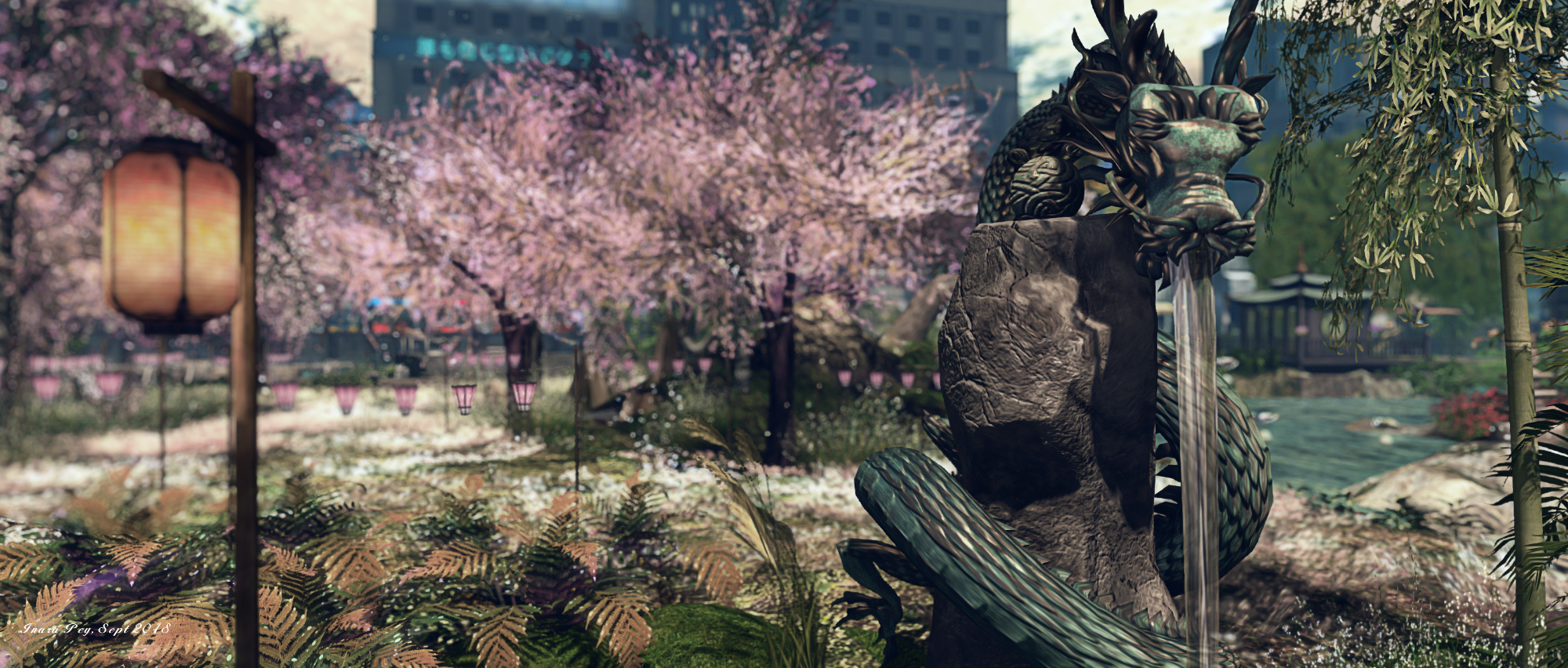
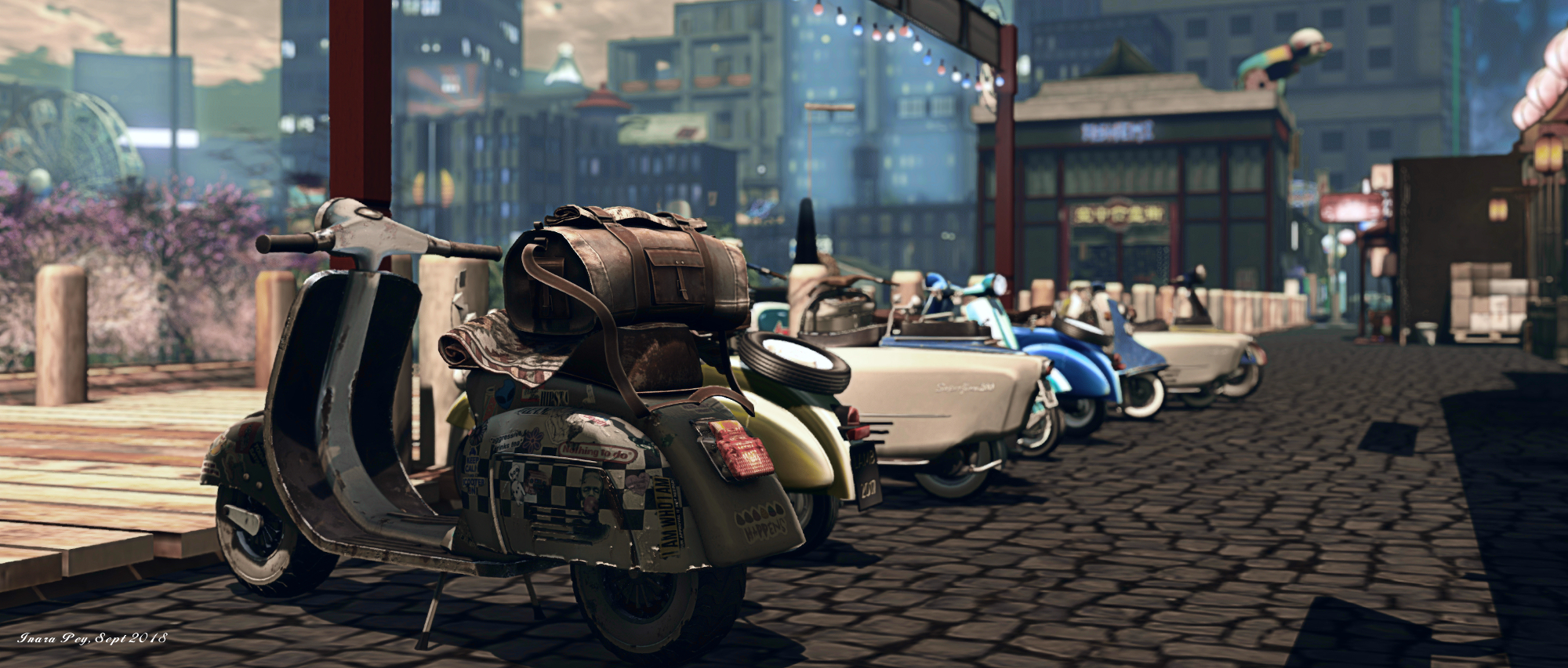
Broadly Japanese in its overall styling, Ashemi Repise includes touches from all over the orient and Asia. Those who remember the original will instantly recognise the tall Indonesian style statue watching over the central park / water area, while in the south-east corner, Ganesh sits in a smaller park, while tuk-tuks are to be found throughout.

We’re not afraid of mixing things. I think that makes it a bit more personal. Some small items scattered around that you wouldn’t expect.

– Ime Poplin, discussing Ashemi Reprise

Ashemi Reprise; Inara Pey, September 2018, August 2018, on FlickrAshemi Reprise

From the landing point, a wooden deck just off the centre of the region in the parkland / open water area, visitors are immediately faced with a choice of routes: explore the park and water front and work out to the surrounding streets, or follow the multiple paths through the park and over the water to see what they might find? Personally, I suggest the latter, as this – to me – shows the depth of the region’s design, and allows the details to become more apparent. Dragons guard a Torii gate marking the way from the landing point to the park – and thence to the rest of the region.

To the south, a grassy route under trees rich in blossom leads to the water’s edge where a small pavilion sits at the end of the wooden walkway, candle-lit lanterns floating on the water around it. Another path points west, to where a series of small traditionally styled Japanese houses sit with little gardens, before connecting with the western side of the region. Also to the west, and connected to the houses and their gardens, is a larger pavilion, reached by a stone bridge. But really, to describe all of this area would be to spoil it: this is a place deserving of eyes-on exploration, following the paths and bridges and discovering all seating areas, platforms, shrines little market stalls and more, broken up into little islets under trees and edged by rocks.

Ashemi Reprise; Inara Pey, September 2018, August 2018, on FlickrAshemi Reprise

Surrounding the central space is a square of roads mixed with low-rise buildings whose looks are suggestive of age, giving the setting a feeling of being an outlying, older district of a city, perhaps almost forgotten by the more distant skyscrapers and high-rise blocks, with their glowing windows and promise of big city life. The fact that this is a careworn place, lacking in attention is perhaps indicated on the southern side of the region, where a partially collapsed overpass can be found. Possibly the result of an earthquake, it has remained without repair long enough for an open-air theatre company to set themselves up amidst the remnants of the elevated road, which itself has become a place for advertising hoardings.

A market environment curls around the east and south sides of the region, sitting between water and the tired buildings lining the streets. It passes Ganesh in his little park, passing from under the flashing sign for China’s famous Tsingtao beer (fun fact: the Tsingtao brewery was founded by a group of German brewers in 1903, whilst under the ownership The Anglo-German Brewery Co. Ltd, but passed to Japanese ownership in 1916 before becoming wholly owned by the Chinese), to a construction site over on the west side, where a broad road points a straight finer to the fun fair that has shouldered its way into the setting.

Ashemi Reprise; Inara Pey, September 2018, August 2018, on FlickrAshemi Reprise

The attention to detail in several forms, not just visually (although do keep an eye out for the fat little Kermit taking a break in his explorations to a café, for example 🙂 ); extraordinary care has been taken with local sounds. In the market place are the sounds of commerce, for example, and around the warehouses are the sounds of people at work; while music plays in the fun fair and, if you pass a caravan on the back streets you might hear Jan Hammer’s Crocket’s Theme fade in and out as you walk by.

These back streets and alleys are another reason for the region’s sheer depth. They allow the seamless blending with off-sim buildings and scenes which in turn help blend the setting with the sim surround. So well done is this blending, it is very easy to find yourself bouncing off the region boundary and you explore, as the off-region areas look so natural.

Ashemi Reprise; Inara Pey, September 2018, August 2018, on FlickrAshemi Reprise

It is a delight to see Ashemi return to Second Life and take advantage of a full region, complete with the additional 10K LI. Due to appear in the Destination Guide soon, this is definitely not a region to be missed – and I strongly recommend allowing a good amount of time to explore it fully. Should you appreciate your visit, do please consider offering a donation towards Ashemi Reprise continued presence in Second Life.

SLurl Details

Savor Serenity: here be dragons in Second Life

Savor Serenity; Inara Pey, September 2018, August 2018, on FlickrSavor Serenity – click any image for full size

It’s been a year since we last visited Savor Serenity, the homestead region designed by Gidgy (Gidgette Adagio); since then the region has relocated and undergone something of a rebuild. So when CybeleMoon (Hana Hoobinoo) suggested we pay the updated setting another visit, we made time to hop over and take a look.

There is no set landing point for the region – or there wasn’t during our visit  -, so I’ve arbitrarily chosen one here, based on the location of a welcoming note card giver. It’s tucked into the south-west corner of the region, which is actually a good place to start explorations.  The introductory note card offers a quote from John Lennon that perfectly sums up Savor Serenity’s various incarnations:

I believe in everything until it’s disproved. So I believe in fairies, the myths, dragons. It all exists, even if it’s in your mind. Who’s to say that dreams aren’t as real as the here and now?

Savor Serenity; Inara Pey, September 2018, August 2018, on FlickrSavor Serenity

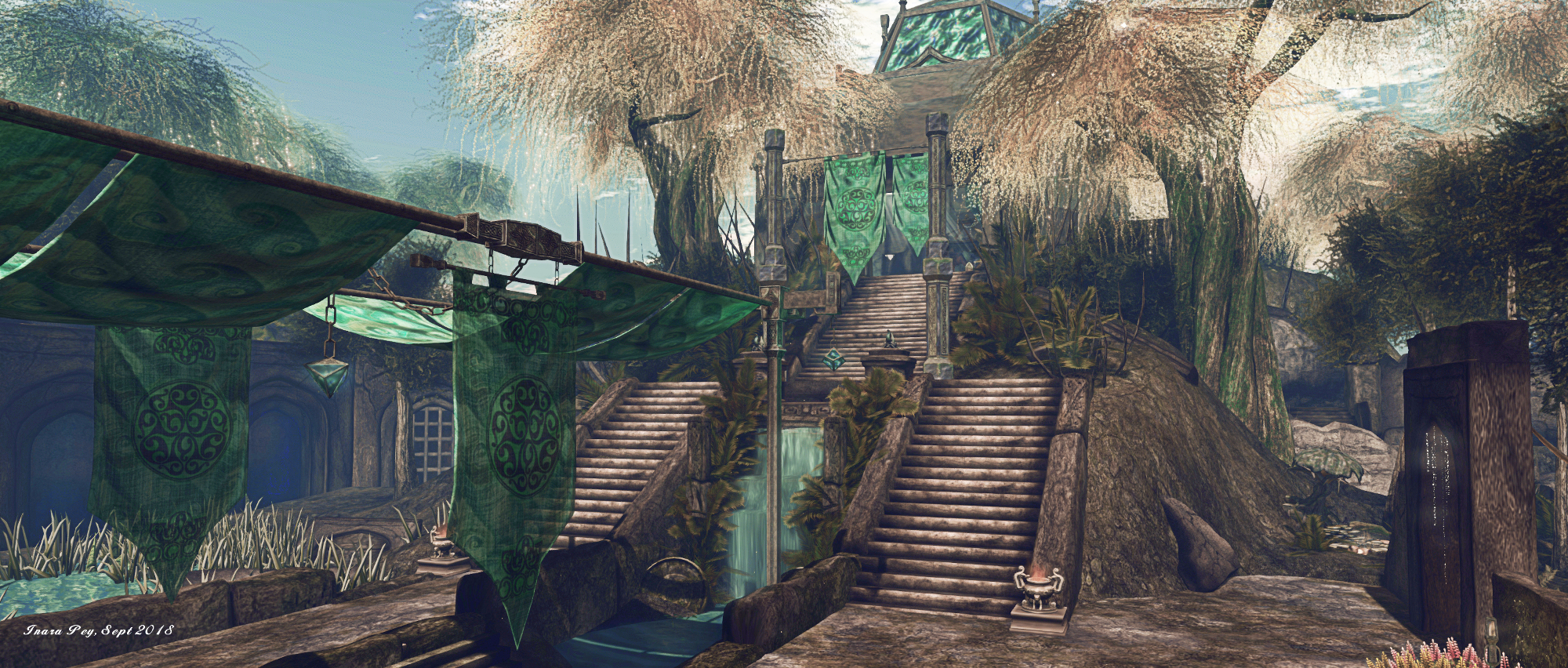
Those familiar with the region’s layout from late 2017 might, on camming over / reaching the centre of the land and in considering the region’s windlight and flora, be forgiven for thinking little has actually changed. A familiar pool of water sits at the heart of the region, partially enclosed by what might have once been a fully surrounding octagonal wall, while to the east, steps rise from the waterfront to structures of distinctly elven design. But first looks can be deceptive.

The great Mallorn trees with their elven flets and platforms that once rose from both within and without the flanks of the great wall are now gone, taking with them some of the Tolkienesque feel that Savor Serenity was part of an elven enclave.  In their place are ancient stone buildings, connected by raised paths and stairways wrought of stone and rock.

Savor Serenity; Inara Pey, September 2018, August 2018, on FlickrSavor Serenity

But these are places seemingly long abandoned; walls are pitted and broken, nature’s vines and trunks and shrubs are slowly laying claim to halls and footpaths. Only etching on the glass of the few remaining glazed windows gives a hint that this one once a realm where elves and beasts lived in harmony. Now, only the beasts show themselves, the dragons of Lennon’s quote.

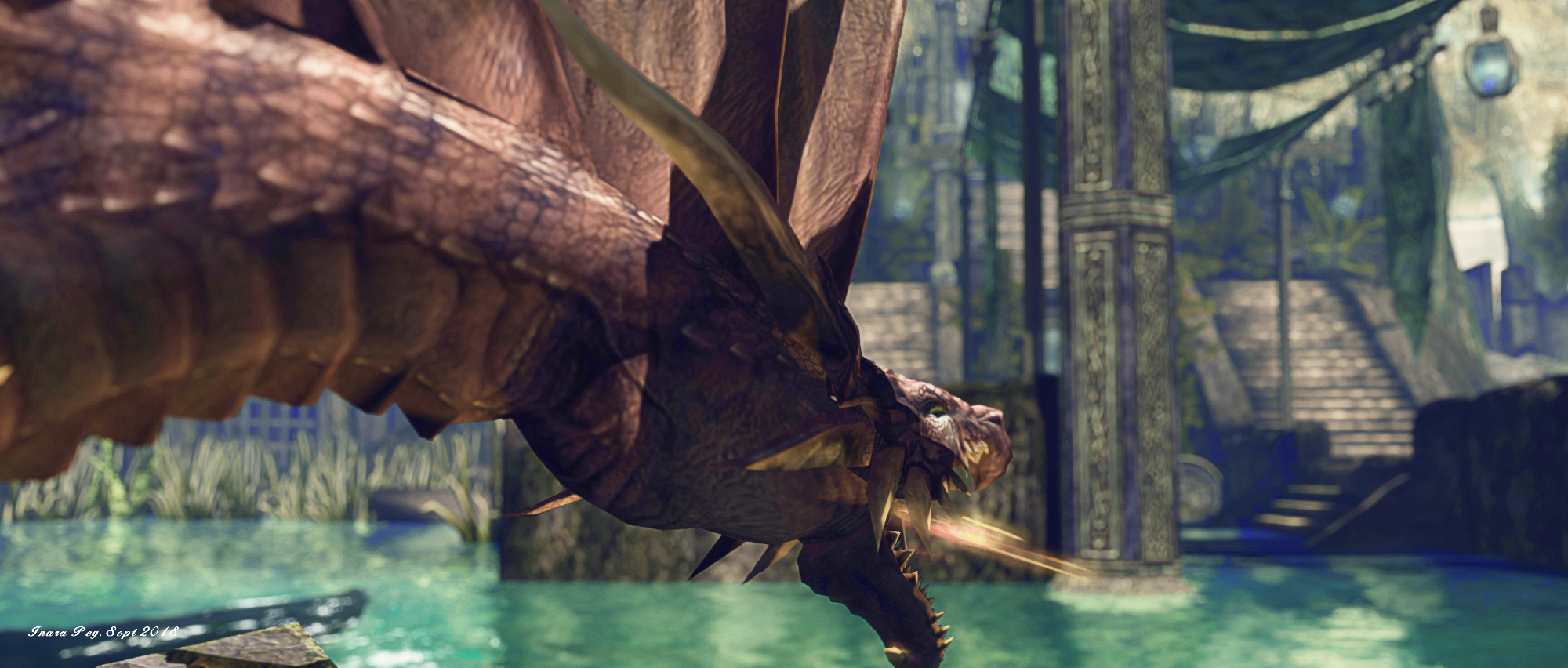
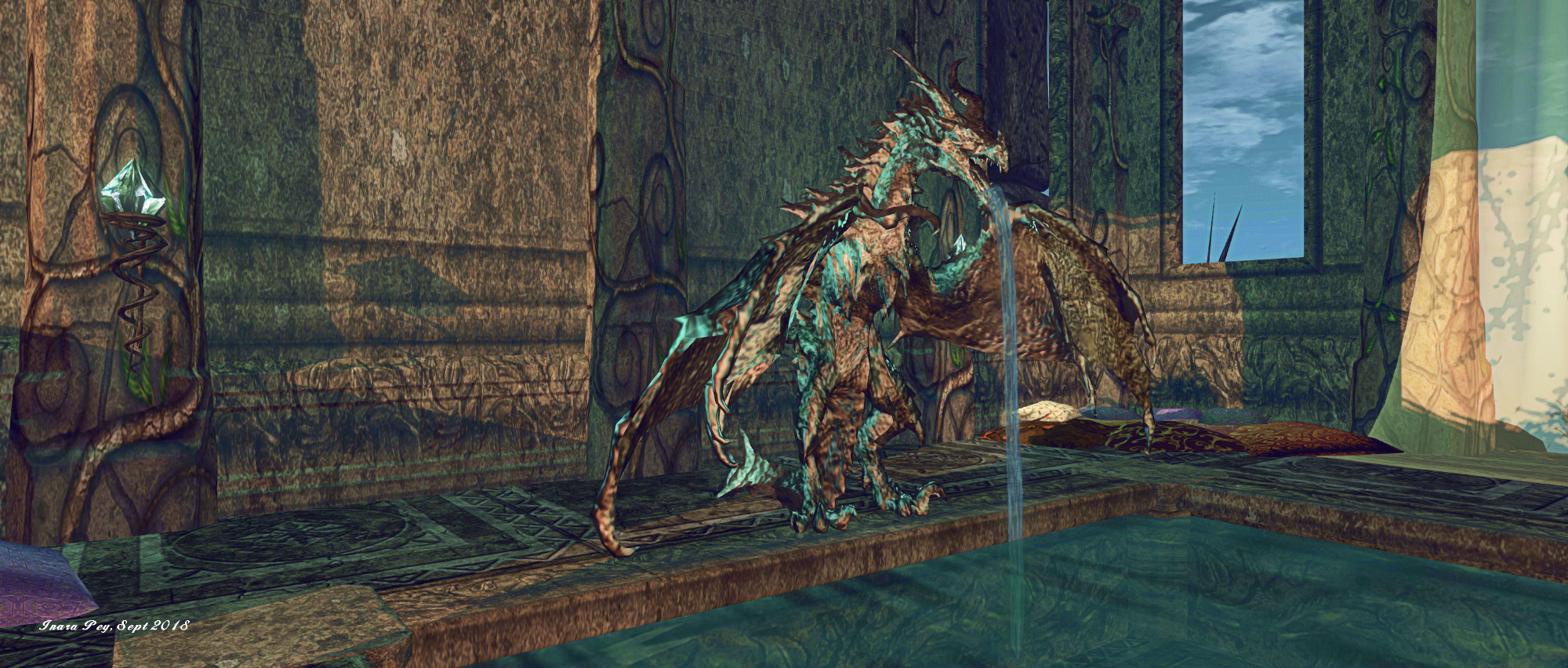
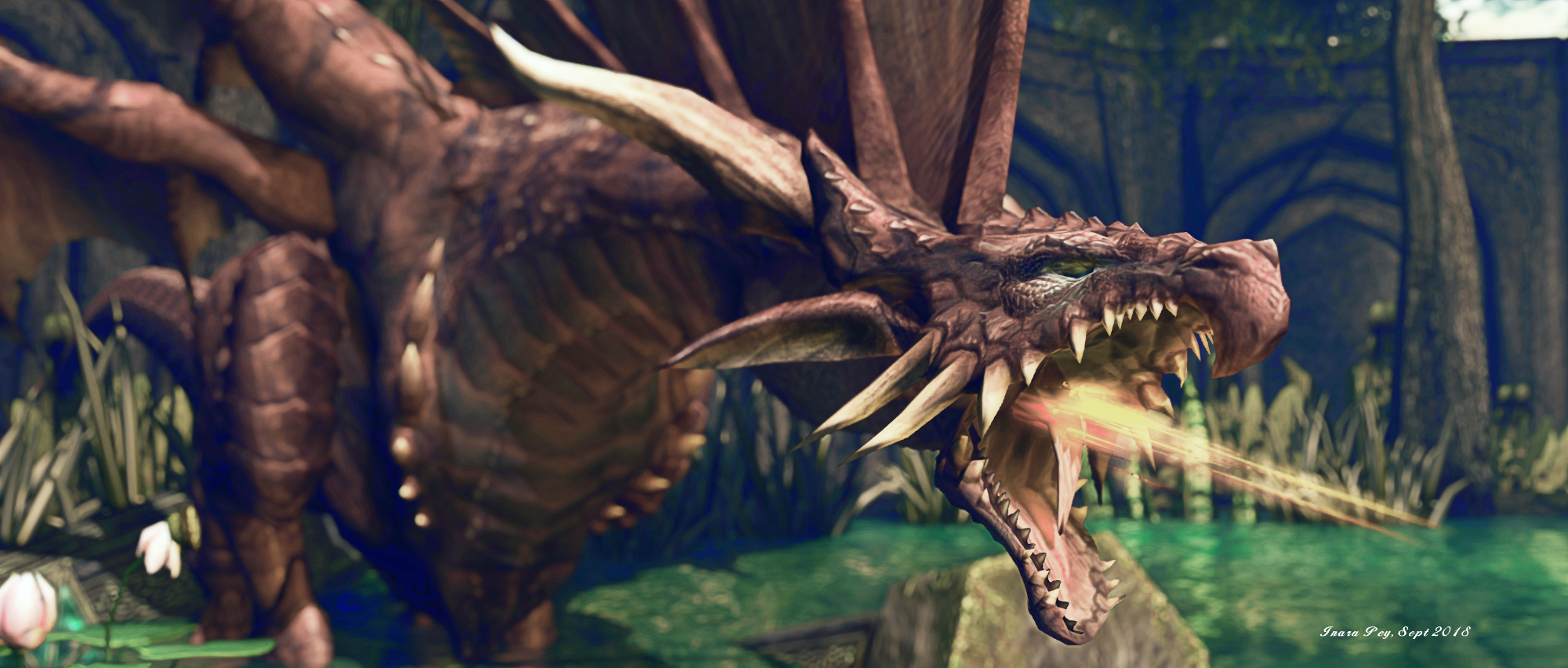
The largest of these wonderful creatures stand to one side of the great pool, wings magnificently spread, head and long neck lowered and stretched, great mane of spikes raised even has flames curls and flicker from wide-open mouth. It is a stance of warning, of guardianship; a great firedrake protecting the land it still regards as home. It is also a magnificent tableau of which visitors can become a part (suitable clothing advised to fully fit the scene!).

Savor Serenity; Inara Pey, September 2018, August 2018, on FlickrSavor Serenity

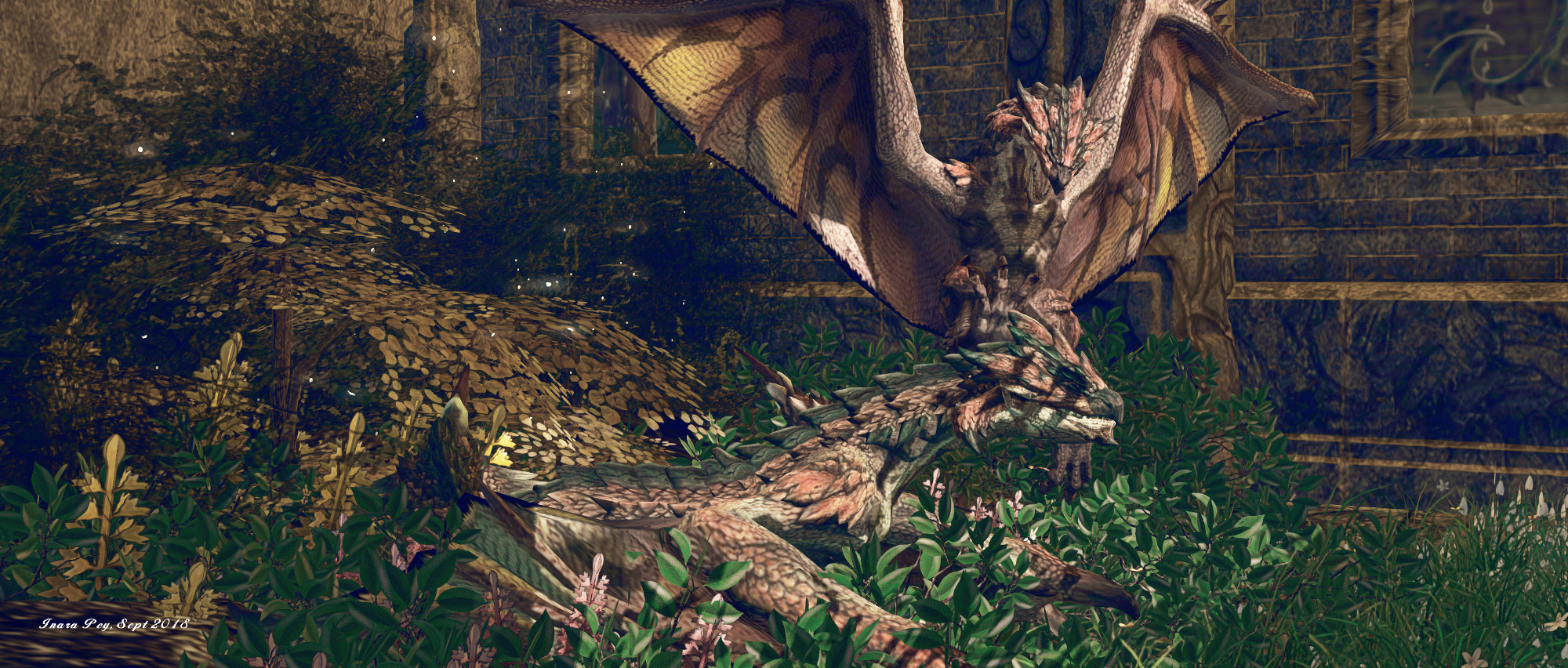
Elsewhere, smaller dragons sit within the ruins of the the stone buildings or guard the waiting throne high under the eastern dome, or offer lamps to light the way through darkling places, and are immortalised – if such beasts are not themselves immortal – in stone throughout. Their presence, together with the glass etchings, give flight to the imagination: just who were the people who once shared this place with these great breasts, and who nurtured them and clearly loved them? And from whence did they come – and where did they go?

And it is not only our imaginations that can take flight; located on the shore close to the great dragon is a sign allowing visitors to summon a winged beast of their own, and to take flight upon its back to experience something of the life and rapport the long-vanished people once enjoyed with their dragons.

Savor Serenity; Inara Pey, September 2018, August 2018, on FlickrSavor Serenity

Nor is that all. Within this land are secret, treasured places awaiting discovery. Follow the paths paths ruins and under tress and across rocky upheavals to a dragon-topped spire to the north-end, and you’ll find a gallery of CybeleMoon’s magnificent art; veritable tales and fables wrought each within a single image. Should you find your way to the foot of the great wall, you might also find a portcullis offering a way to passages that lead to further secrets in art awaiting discovery, and beyond it, a place to rest with the one with whom you shear your heart – or for just sitting in contemplation alone.

Beautifully conceived and executed, with places throughout  – on land or under it or on the water – awaiting discovery, which places also to sit or to dance, Savor Serenity remains an absolute delight to visit, and a joy for eye and camera to see. Photos can be shared via the Savor Serenity Flickr pool, and donations towards the upkeep of the region are appreciated.

Savor Serenity; Inara Pey, September 2018, August 2018, on FlickrSavor Serenity

SLurl Details