Roaming the fields of Second Life

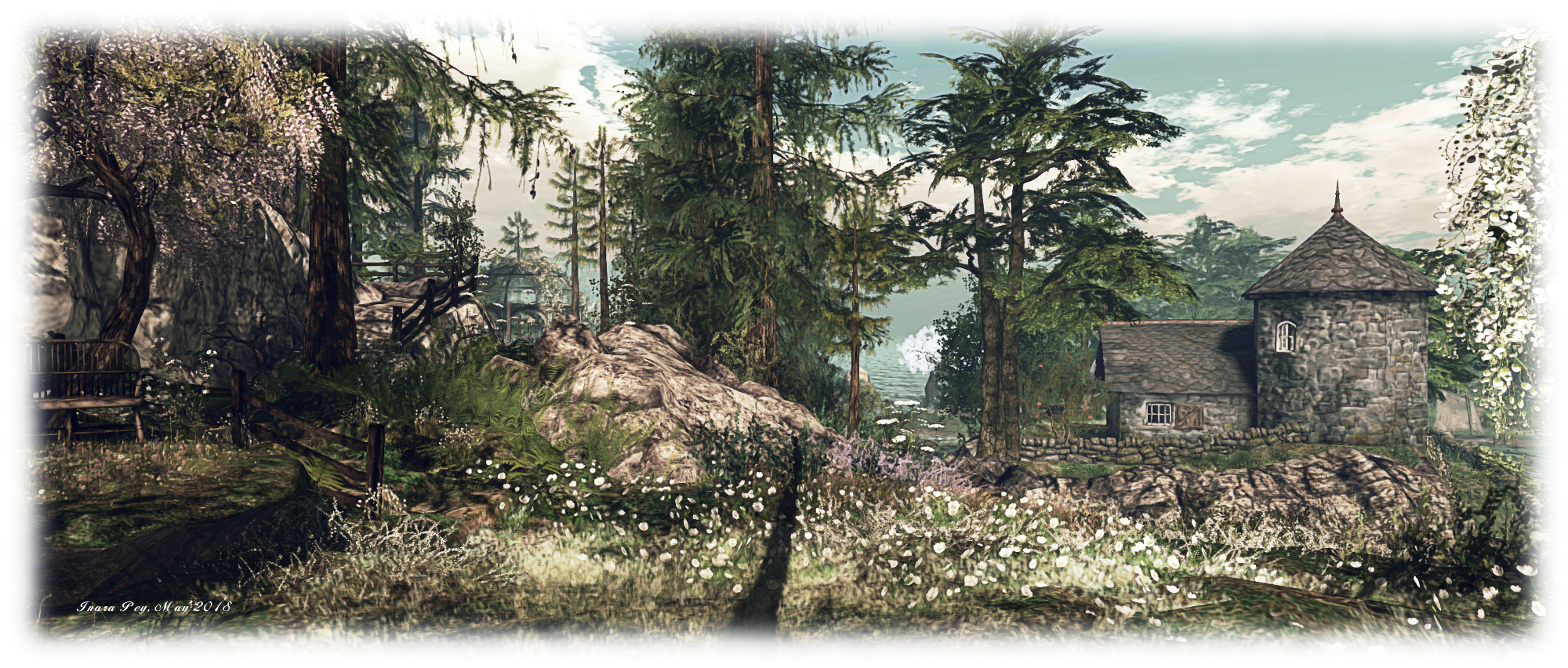
La Clef des Champs; Inara Pey, May 2018, on FlickrLa Clef des Champs – click any image for full size

La Clef des Champs (literally, “the key fields”, often used to indicate being out in the countryside) is a homestead region designed by Rose Ulrik (Rose Siabonne), which opened in April 2018. Caitlyn and I were able to visit not long after it opened – courtesy of a tip-off from Shakespeare and Max (♥ as always!) – and found it to be a simple, rustic design that is both restful and has what might be for some, a tiny bit of an edge to it.

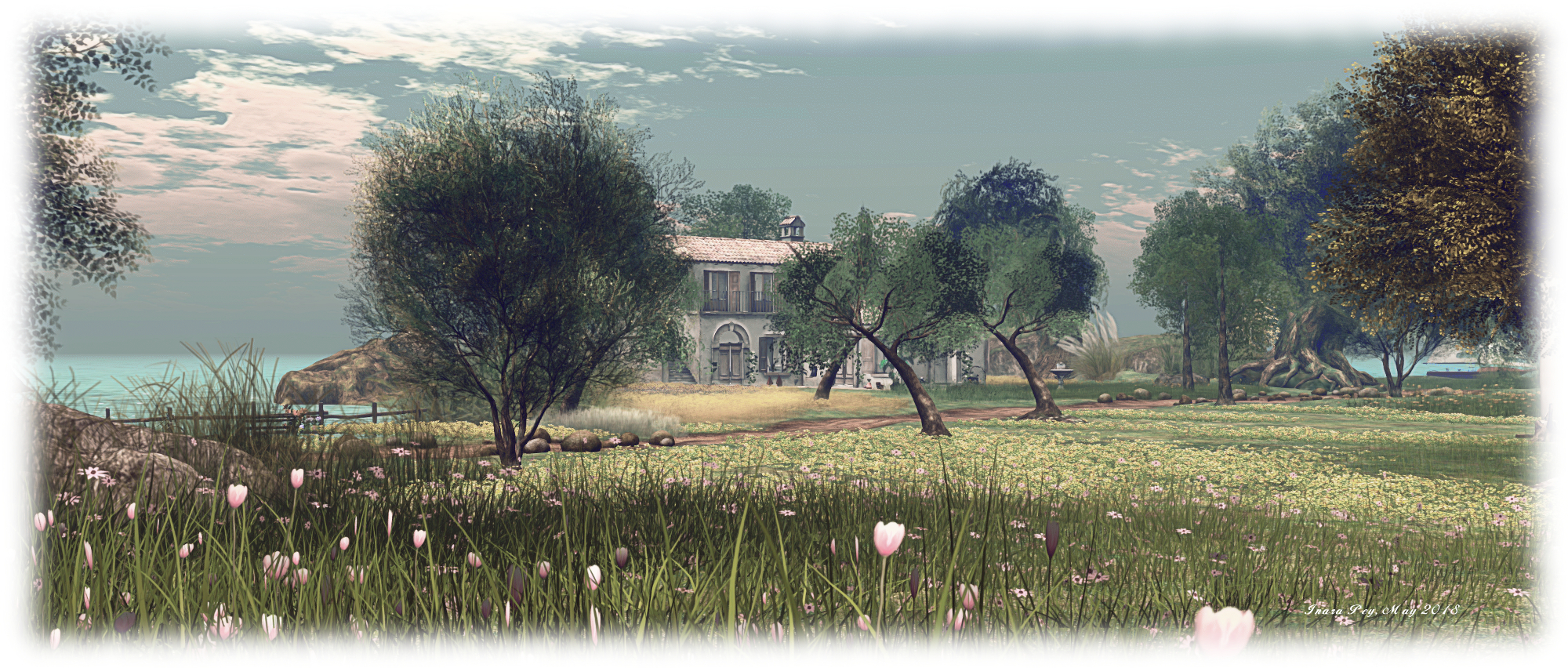
In keeping with its name, the region presents an open, undulating landscape on to which have been scattered a couple of continental farm houses and outbuildings, giving the suggestion the land might be open-sided fields. Visitors arrive in the north-east corner of the region, backed by cliffs and rocky slopes on three sides, while the fourth inclines gently down to the lands below, cut neatly by a farm track.
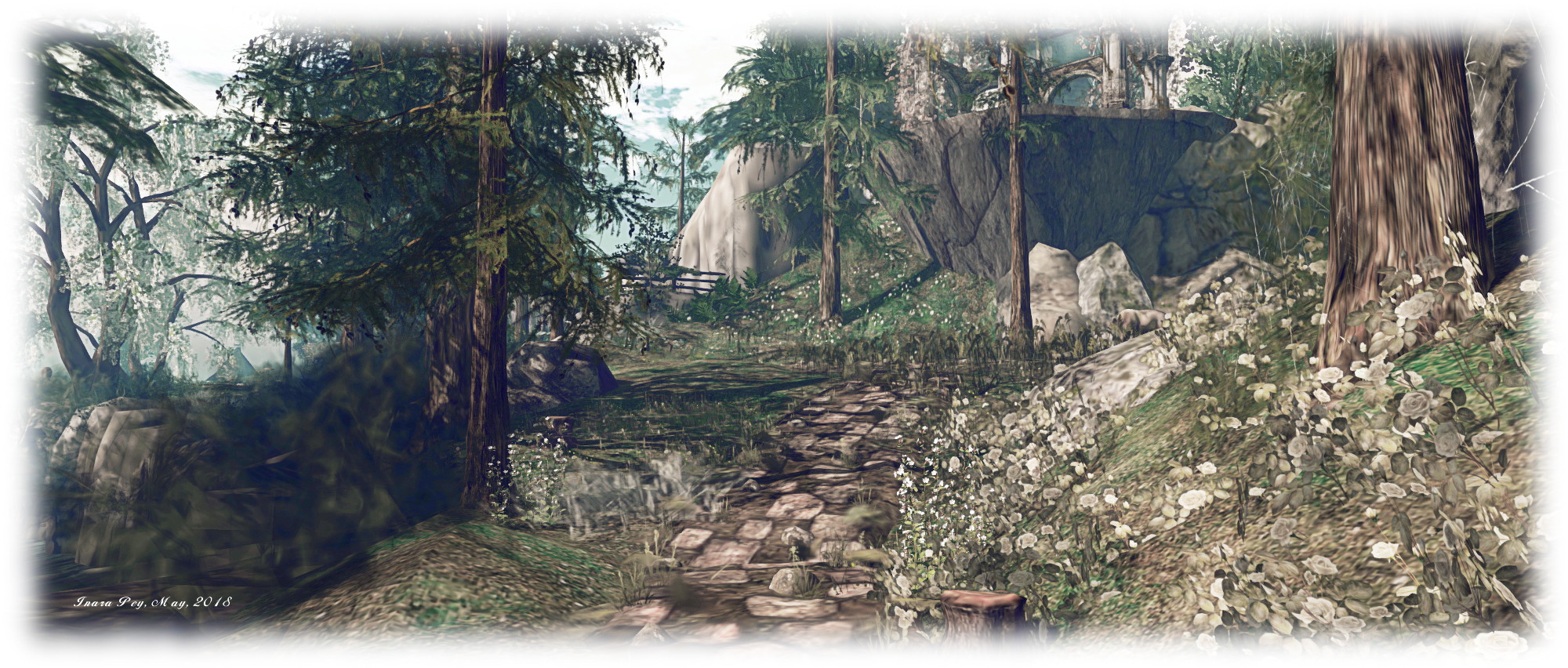
La Clef des Champs; Inara Pey, May 2018, on FlickrLa Clef des Champs

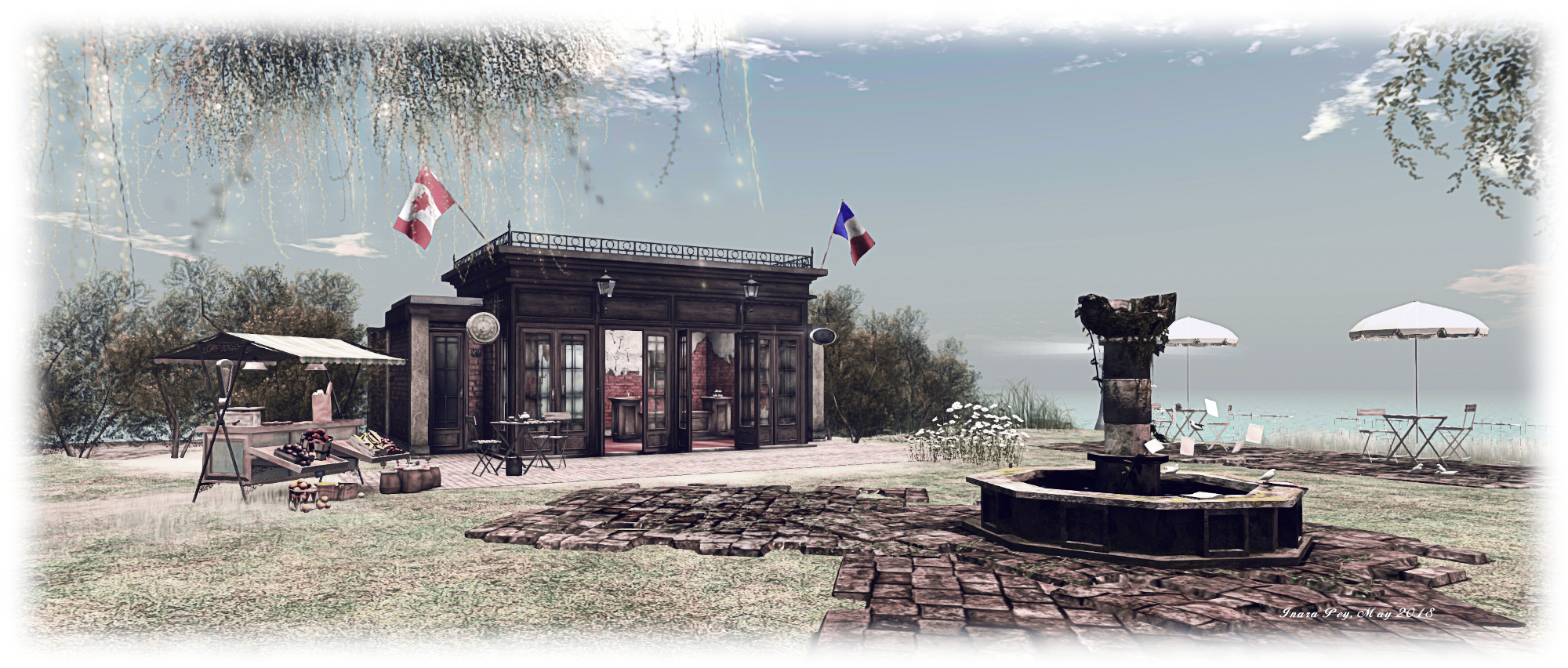
This hilltop is home to a modest café, proudly flying the French and Canadian flags and with a motif of the region – a series of large metal keys – hanging from one wall. From the worn patio outside of the café it is possible to look southwards over a small bay watched over by a lighthouse, to where one of the two farmhouses sits, its back to the sea, the track from the hill winding by a short distance away.

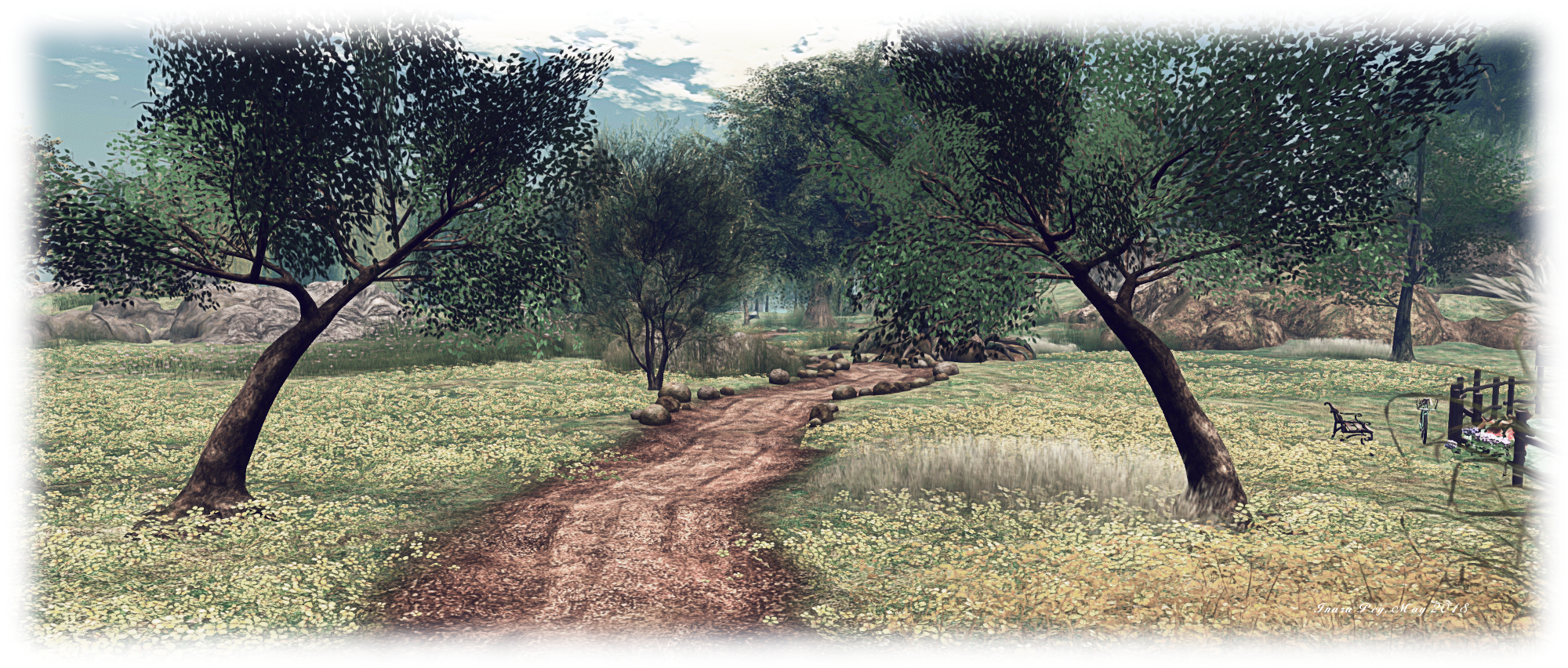
However, follow the track down the hill from the café, and before you get to the farmhouse, you’ll find the track forks, one arm continuing south past the little bay and towards the farm mentioned above, the second arm pointing a short finger west to where the second of the farms sits, chickens parading along its patio. Stepping stones offer a way onward, crossing the grass and skirting the house to curve past a little orchard and reaching on towards the farm’s outhouses, the way partially guarded by geese. A little way beyond this farm is a railway track, overlooked by an old warehouse sitting on a slight rise as the land reaches its western seaboard.
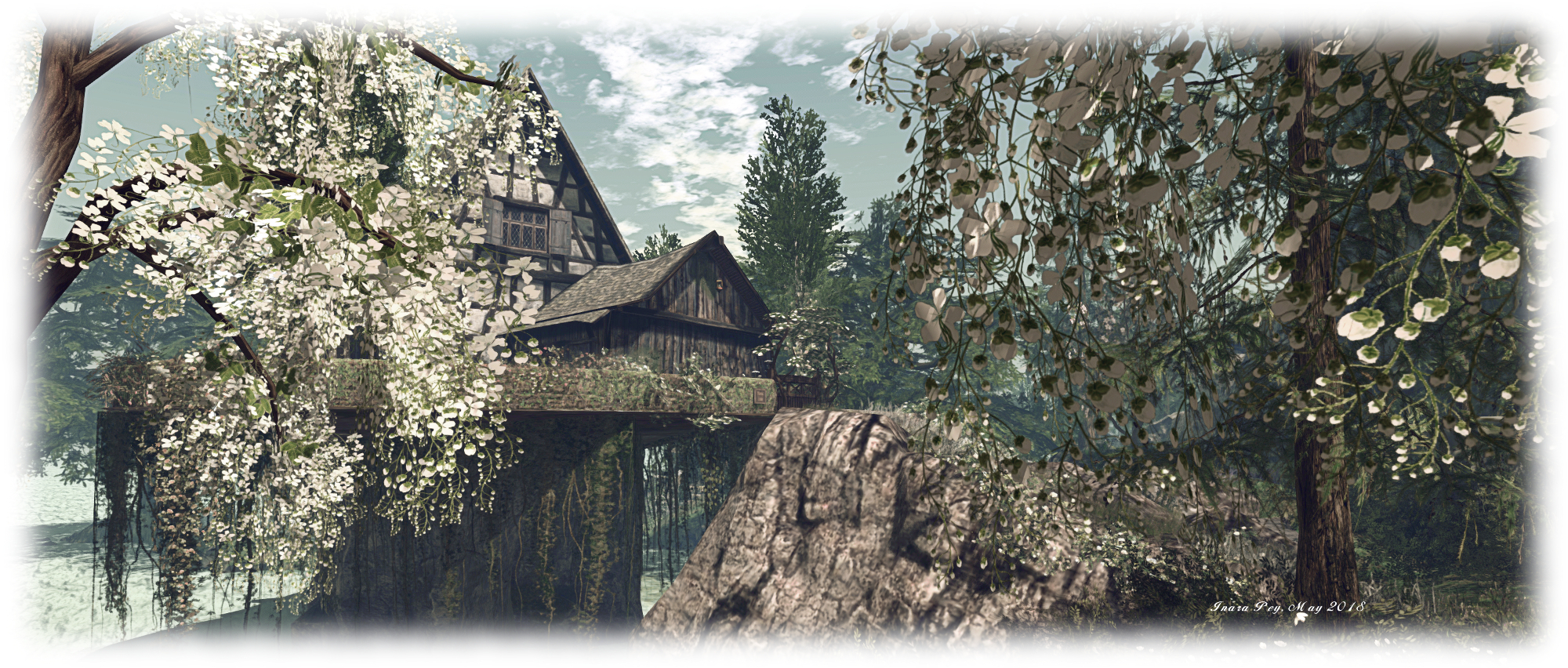
La Clef des Champs; Inara Pey, May 2018, on FlickrLa Clef des Champs

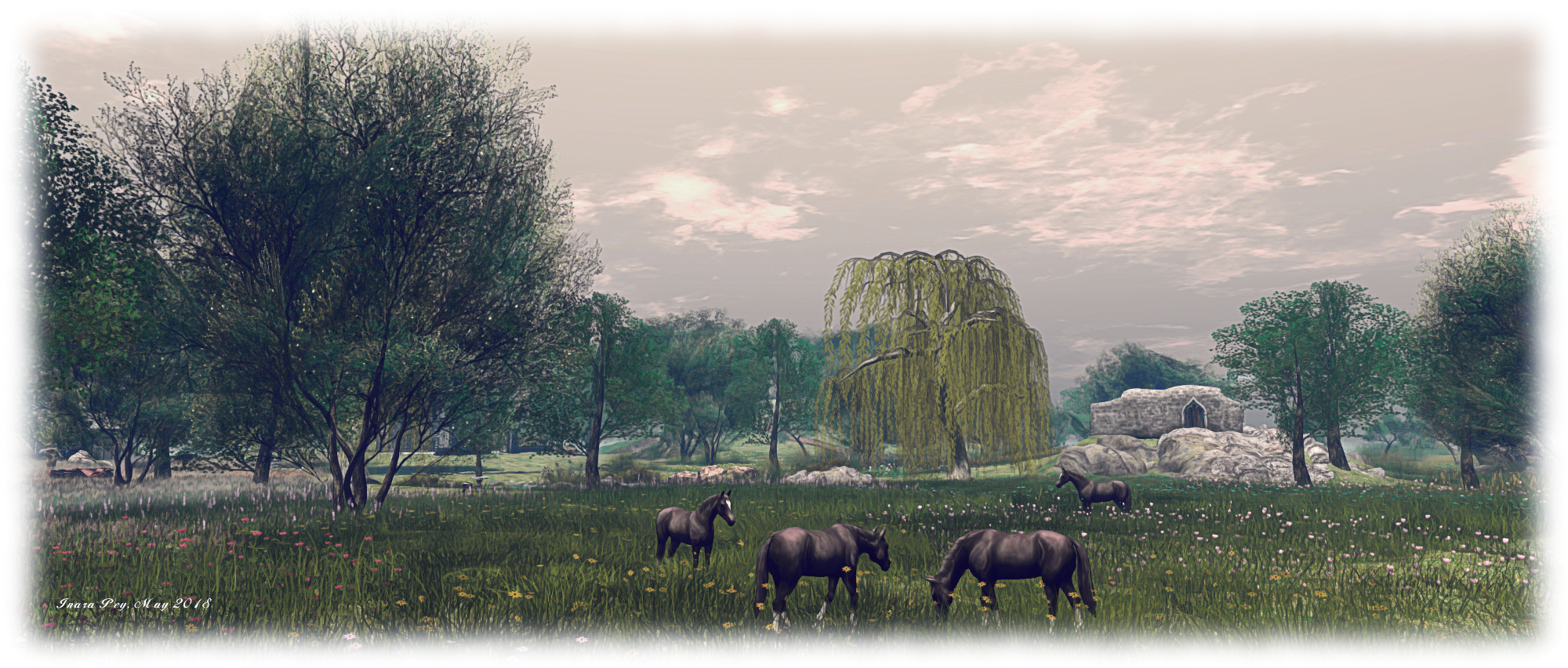
The fields between these two farms lie open to wander, a small pond offering a place to sit and, going by the bucket alongside the wooden chairs, plenty of good fishing. It looks south to where a single aged wall stands atop a low hill, the last remnant, it would seem, of a much larger structure that once occupied the hill.

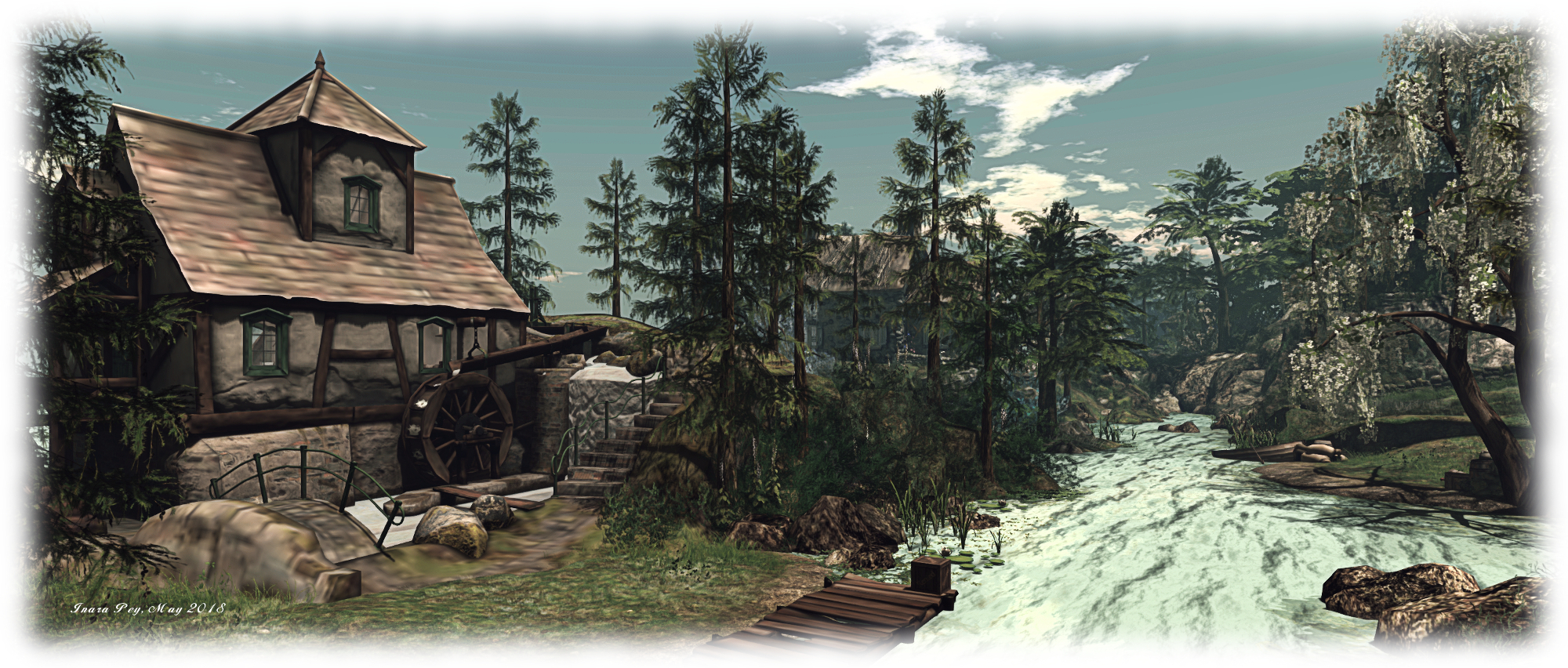
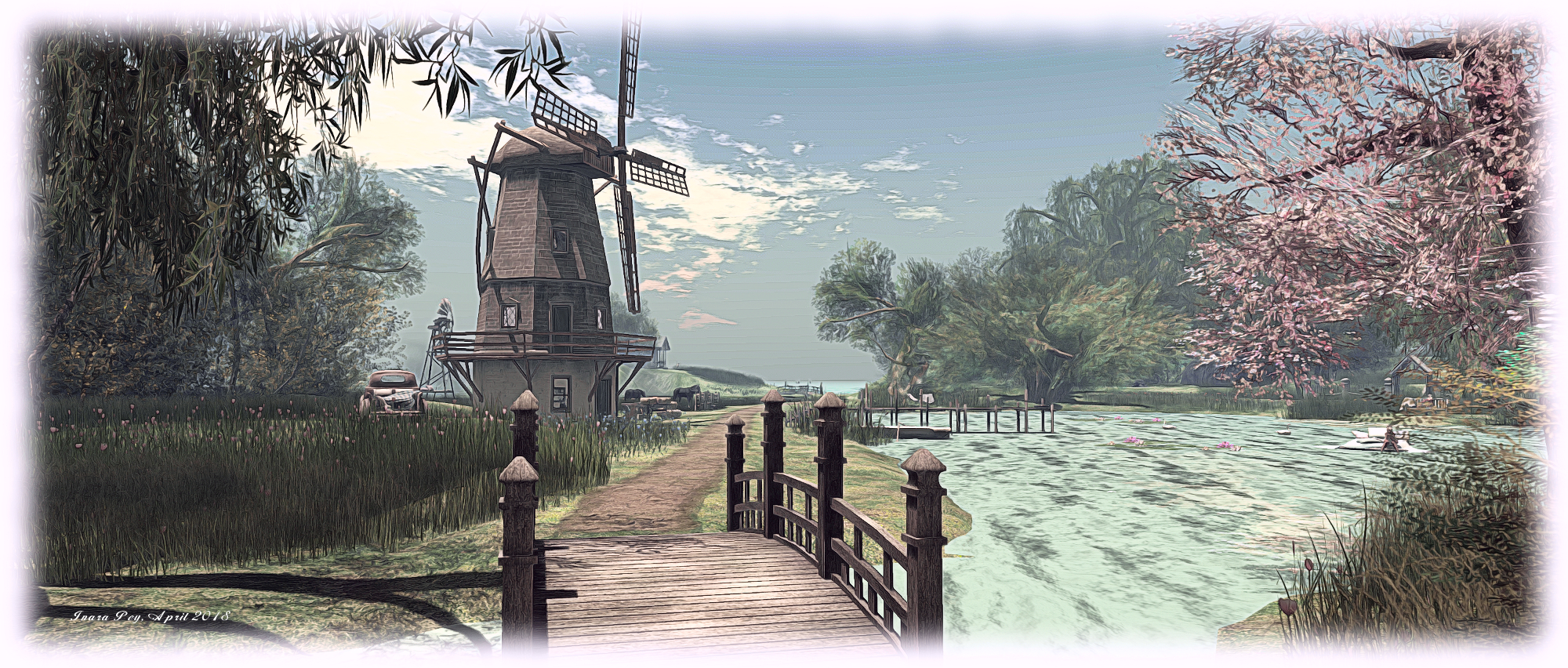
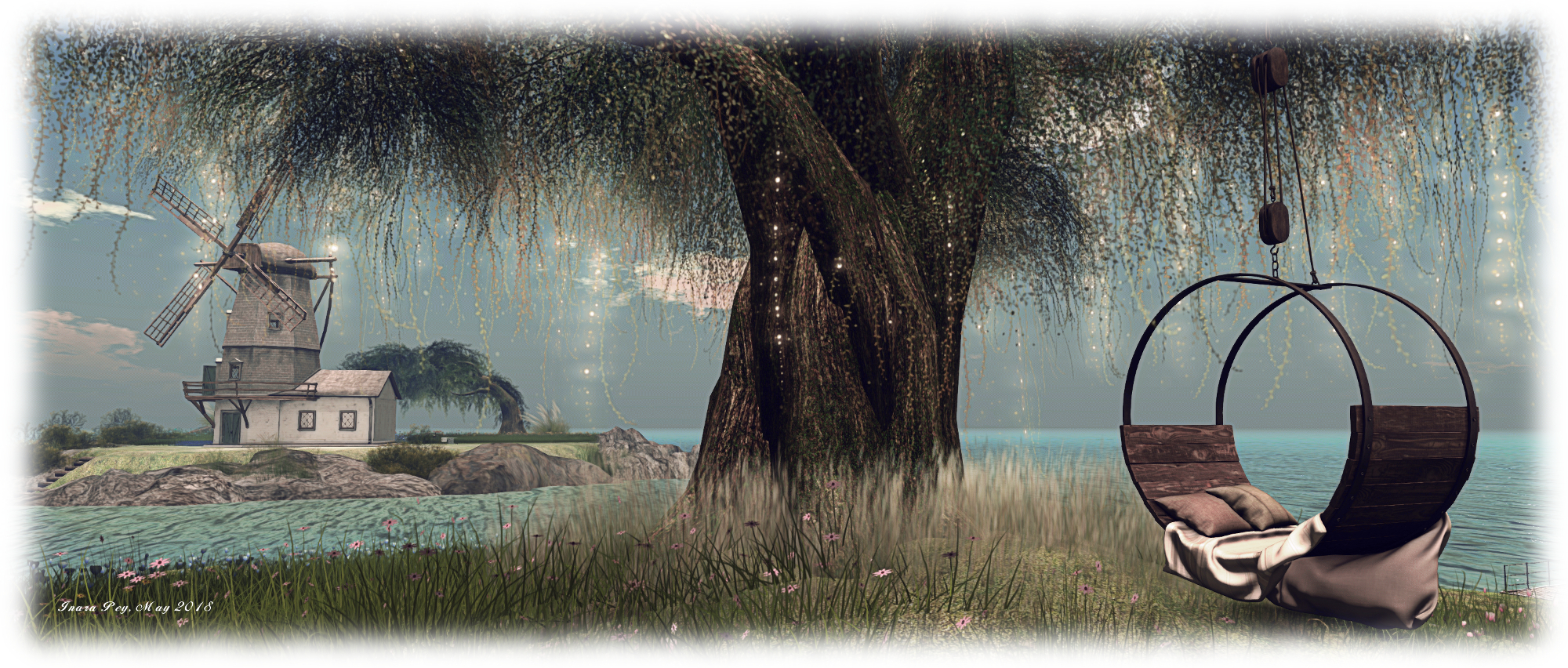
Just beyond the hill with its ruined wall, the landscape is again scooped into a shallow bay, a wooden deck set out over the water to face a small island bearing a windmill. A rowing boat can be obtained from the rezzer on the deck, allowing visitors to cross the water to this little island and explore the windmill and enjoy a little more privacy from the rest of the region.
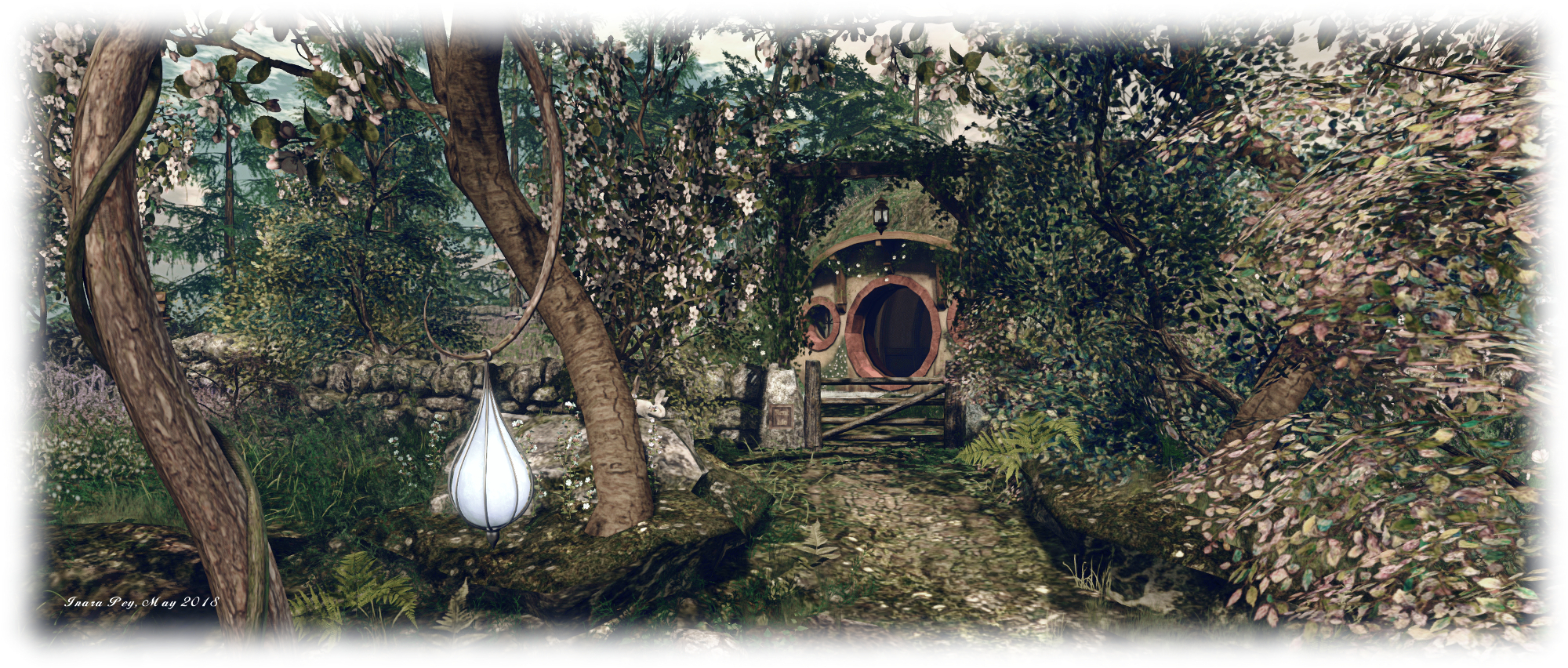
La Clef des Champs; Inara Pey, May 2018, on FlickrLa Clef des Champs

Deer and horses are to be found scattered around the region, together with numerous places to sit outdoors and enjoy the setting. These range from swings slung beneath the boughs of trees, to simple park benches to blankets waiting with lavish picnics, to the aforementioned decks and chairs – some of which also have food and drink at the ready. A little to the north of the windmill island sits an outdoor stage for music events, gently floating on the water and reached via stepping-stones – although admittedly, I’ve no idea if events are held there.

Elegant in its simplicity, La Clef des Champs makes for a relaxing visit, and rezzing is open for those wishing to use props with their photography – just do please remember to clean up behind you. There’s also a Flickr group for those wishing to submit their finished pictures. And the edge to the region I mentioned at the top of this article? It’s nothing serious for the open-minded; but do keep in mind this is an Adult region in which, although not overt, adult activities can take place.
La Clef des Champs; Inara Pey, May 2018, on FlickrLa Clef des Champs

SLurl Details

The return of The Shire in Second Life

The Shire; Inara Pey, May 2018, on FlickrThe Shire – click any image for full size

We were delighted to receive an invitation from Ima Peccable to visit the newly re-opened The Shire, the enchanting Tolkien-themed region designed by Chocolate Aftermath, and which Ima is now helping to run. As it’s been over two-and-a-half years since our last visit, we grabbed the first eagle flight across the waters and dropped in for a visit.

For me, the great attraction with this region has always been the way it blends considered region design with a very Shire-like feel, where hobbits and Big Folk can mix.

The Shire; Inara Pey, May 2018, on FlickrThe Shire

The new design for the region retains this feel, although the landscape is perhaps further removed from Tolkien’s Shire, being somewhat rugged and suggestive of a coastal region of Middle Earth, complete with multiple small islands lying off the main bulk of the land. There’s also more of an elven feel to the place than perhaps on our last visit, which harkens back to the time of my first visit in March 2015, when the region originally captivated my eye and heart.

I’m not sure whether it is merely a matter of the intervening years playing tricks on me or not, but this new iteration of The Shire seems to have more rental properties on offer than previous iterations. Nevertheless, it still has plenty for the casual visitor to see and appreciate, and the overall design means that it is hard to accidentally transgress into someone’s private space.

The Shire; Inara Pey, May 2018, on FlickrThe Shire

A good many of the rental parcels are located on the outlying islands or on small headlands extending from the main bulk of the land, with its public upland areas located atop the tall cliffs. It is here that the landing point sits within a pair of tree houses linked by a rope bridge and which is home to the rental map for the region. It shares the plateau with a garden area and a windmill, with different paths leading down from the plateau offer assorted ways to explore the region along its public paths.

The rental properties are a mix of hobbit holes and regular houses, while two towers suitable for wizards overlook the land. There aren’t intended for rent (as far as we could tell at least, but appear to offer high perches from which to look out over the land. Also to be found along the paths and trails leading around the region are elven-like gazebos offering places to sit under crystal domes – and in one case at least, a feast fit for a … hobbit; while out on a tongue of land stretching out into the water sits a larger structure, set for weddings or other celebratory events.

The Shire; Inara Pey, May 2018, on FlickrThe Shire

These seeking a place to live in Second Life that has its roots in fantasy but without overburdening rules might want to give The Shire a look; the mix of accommodation is rich and – for those wanting a little extra privacy – extends into the sky, where houses float serenely on little airborne islands of their own. Also scattered around the region are little reminders of Tolkien – such as the spider’s webs to be found here and there providing little echoes of a certain journey through Mirkwood, while mushrooms can also be found, offering another reminder of a path trod by a certain group of hobbits.

The public area of the region seems to be a little more limited that in previous iterations, and the outlying islands, while offering those renting them an added level of privacy, do tend to break up the land somewhat – there’s no direct route from them to the public places should residents wish to enjoy them. However, this doesn’t detract from the peaceful beauty of the region nor the opportunity to take photos or simply relax with a visit. Certainly, for those who wish to rent a parcel within The Shire,  the region has a lot to offer by way of finding a Homely House.

The Shire; Inara Pey, May 2018, on FlickrThe Shire

With thanks to Ima for the invitation.

SLurl Details

A Bay of Dreams in Second Life

Bay of Dreams; Inara Pey, April 2018, on FlickrBay of Dreams – click any image for full size

Solo Arte, the open-air gallery space for art and culture designed by Terrygold, is well-known for art displays and installations, as I’ve frequently covered in this blog. All of the art events at the venue have tended to be on platforms in the sky – Terry has designed a lovely outdoor urban setting, complete with small indoor galleries as well as the street-side areas for art displays, while additional installations can be set-up on their own platforms. This has tended to leave the ground level space of the quarter-region parcel unused where public access is concerned.

Or at least, it has until now. Bay of Dreams is a new ground-level setting Terry has created for people to enjoy – and it stands as another demonstration that you don’t have to have an entire region in order to create something special.

Bay of Dreams; Inara Pey, April 2018, on FlickrBay of Dreams – click any image for full size

“It’s inspired by the Canadian woodlands,” Terry told me as we explored the space. “We will also be hosting some parties and music events here, and people are welcome to explore the woodland paths and come here for a little peace.”

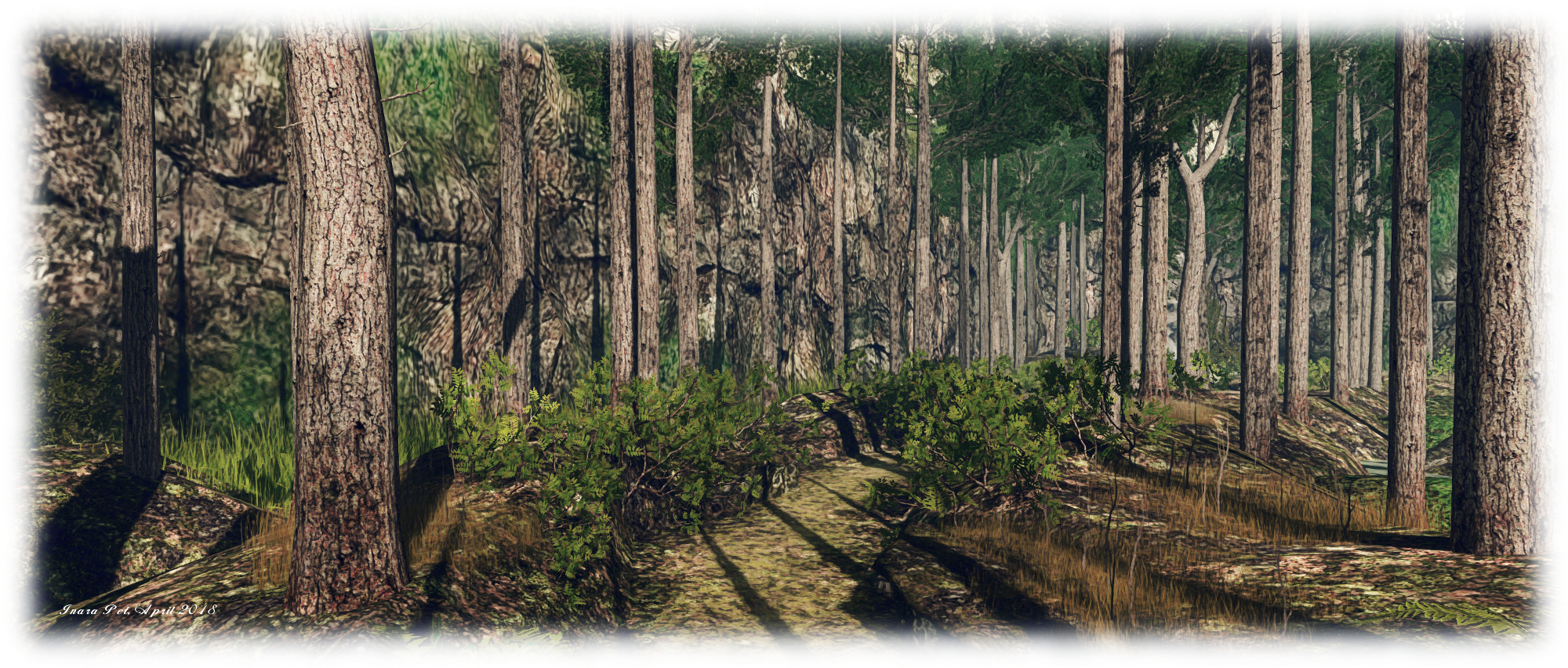
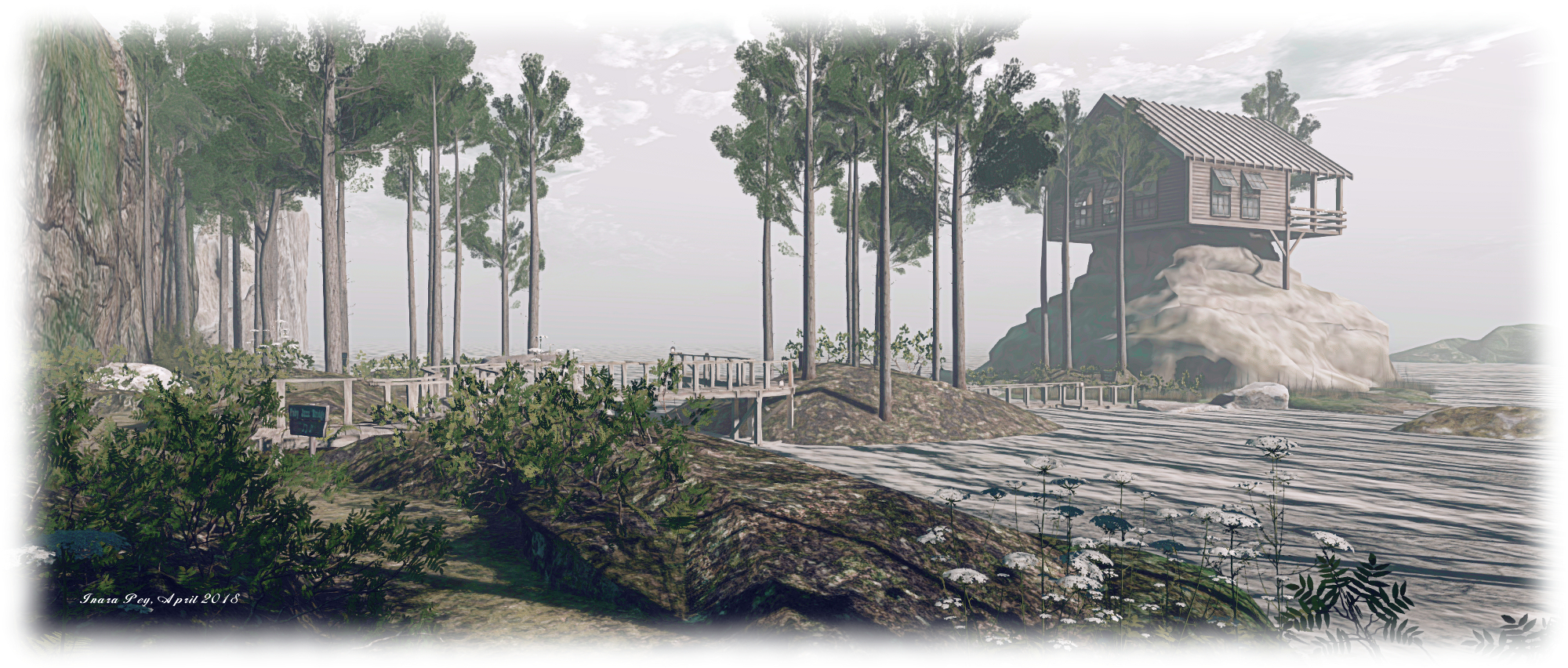
The setting has the feel of somewhere in the Rockies – the parcel is bounded on two sides by curtain walls of rock to separate it from its neighbours, the remaining two looking out over open Linden Water, which one might imagine to be the waters of a lake. Scotts pine vie with the rocky curtains for height, a grassy path winding its way eastwards through them from the landing point, while a raised wooden board walk curls back to the western edge of the parcel and a waterside venue space.

Bay of Dreams; Inara Pey, April 2018, on FlickrBay of Dreams – click any image for full size

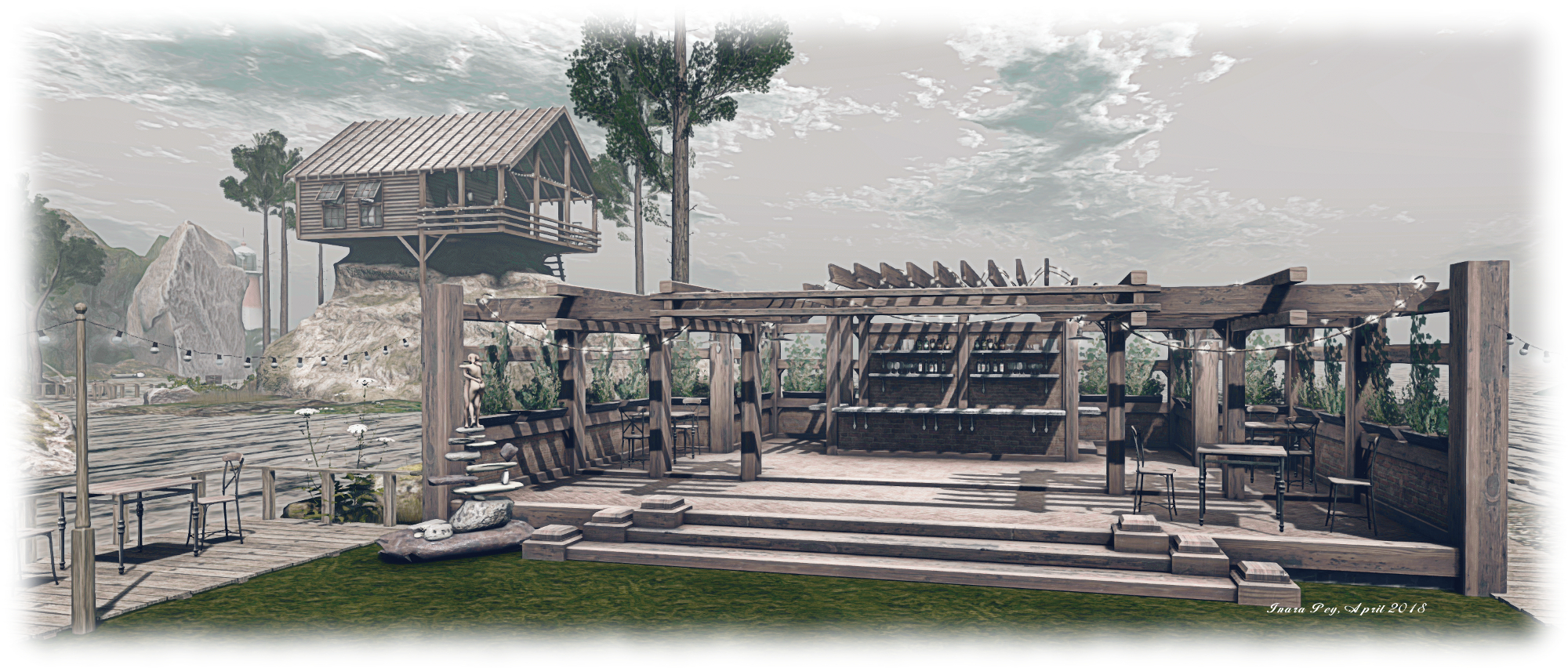
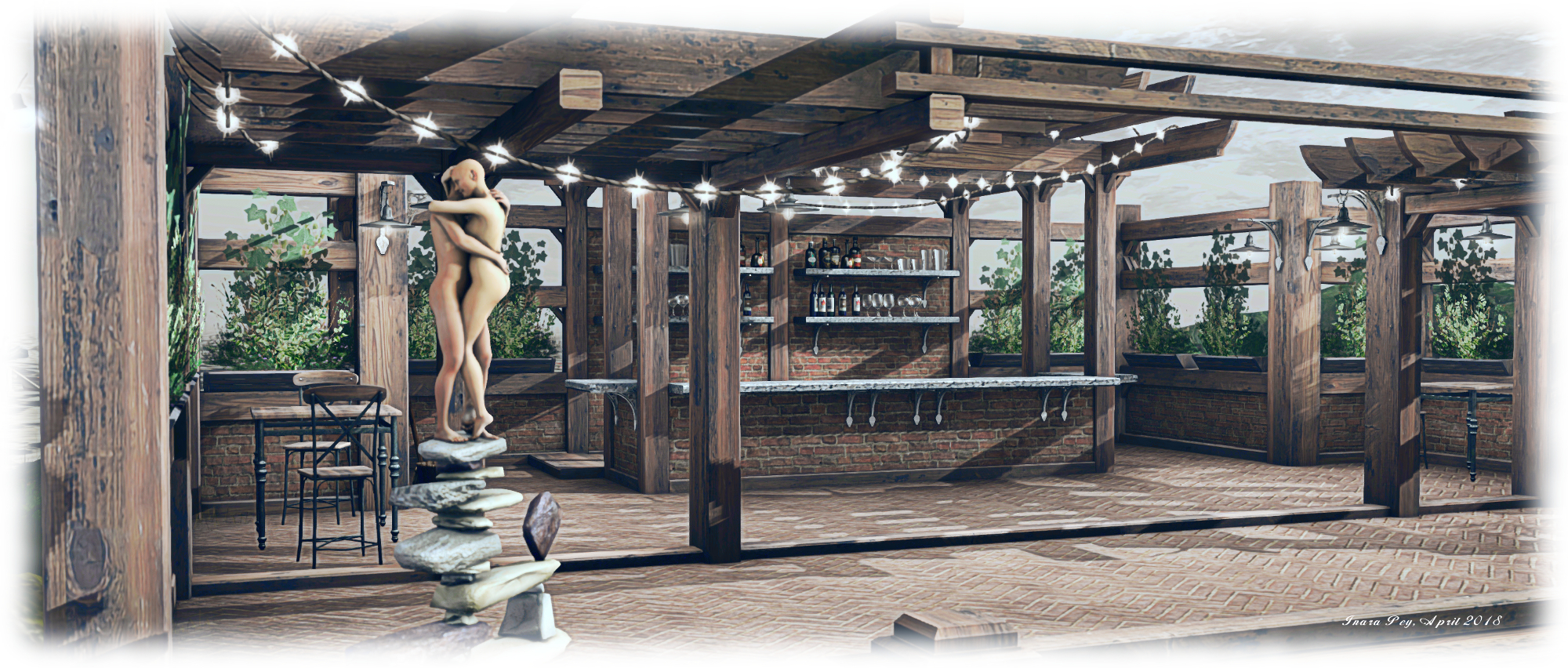
A rectangular, lawned space bracketed to the north and south be a stage area and a pavilion-style bar respectively, and by water to the west and east, this events space is extremely attractive in design and layout. It’s fair to say – if an understatement – to say it embodies an artist’s eye, with simplicity of layout with a balance of design and placement of elements – notably pieces by fellow artists such as CioTToLiNa Xue – to create an elegant venue space. A wooden pier to one side offers a rezzing create where a canoe can be taken for a row out onto the southern waters – just be careful about paddling too far, as you might bounce off the region edge.

These southern waters are dominated by a near-nude rock that rises impressively from them. It is straddled by an equally impressive cabin crouching on study wooden legs rooted in the stone beneath. The cabin can be reached via two platforms at the base of the rock – against which a canoe can be moored – and ladder-like steps. For those who don’t like the idea of rowing to the rock, it can be reached via another wooden board walk.  This extends out from the eastern side of the woodland trail, winding its way over a small island between the shoreline and a the tall rock.

Bay of Dreams; Inara Pey, April 2018, on FlickrBay of Dreams – click any image for full size

Along the path to this board walk can be found a little camp site and a tiny waterfall tucked away under the cliffs bordering the parcel. The trail itself continues beyond the board walk to where a sign points the way to a little cove where people can sit or cuddle – or take a HUD from the sign at the water’s edge and go for a swim.

Bay of Dreams is a charming, extremely well designed environment put together with an eye for detail. It has a balanced elegance about it which gives life to the truism “less is more”. Should you enjoy a visit, please consider a donation towards the parcel’s upkeep, and if you want to keep abreast of events at Bay of Dreams and Solo Arte in general, consider joining the Solo Arte group.

Bay of Dreams; Inara Pey, April 2018, on FlickrBay of Dreams – click any image for full size

SLurl Details

Visiting the Apothecary in Second Life

The Apothecary; Inara Pey, April 2018, on FlickrThe Apothecary – click any image for full size

Update: The Apothecary has closed. Because of this, I’ve removed SLurls from this article.

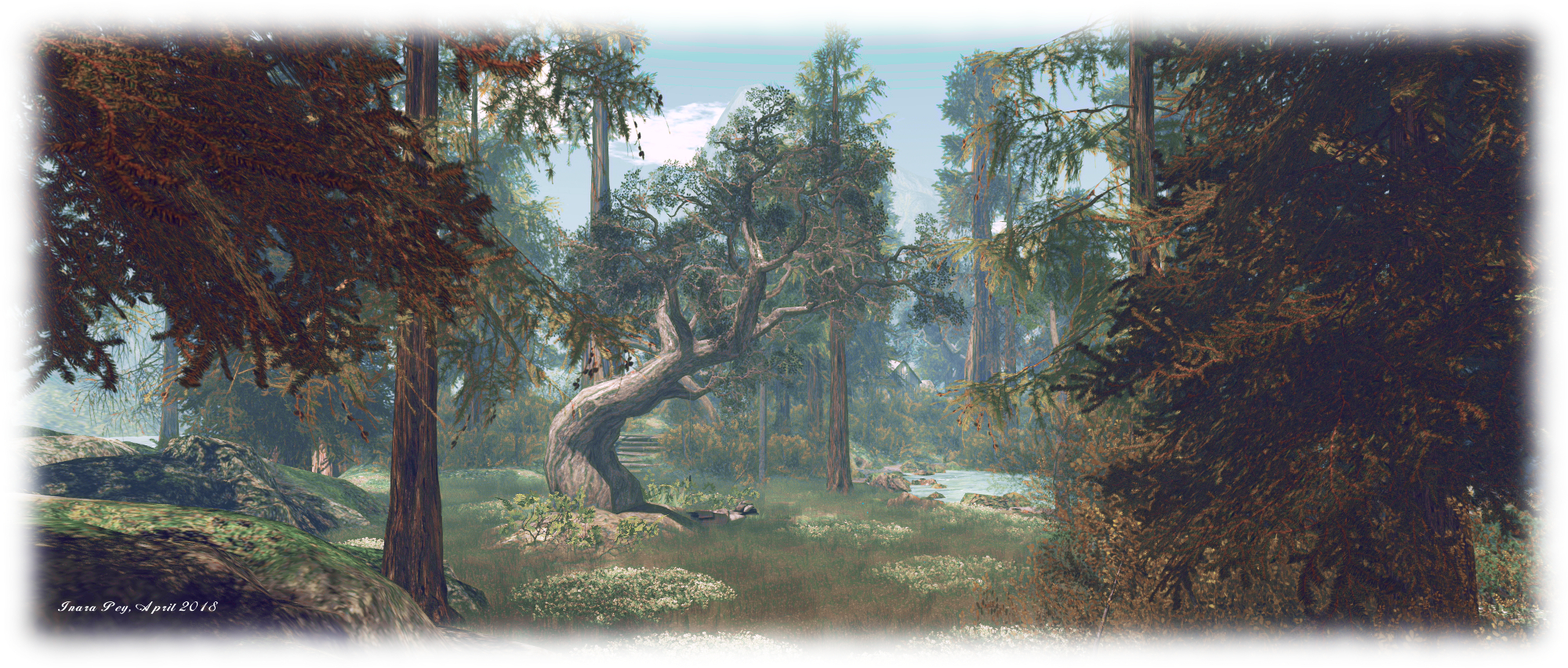
The Apothecary is a new Homestead region design by Harlow Heslop which opened in April 2018. It’s an impressive outdoor design, which immediately puts one in mind of the Great Outdoors of North America, or possibly the wilder reaches of northern Europe or Scandinavia. Buildings are few, the landscape richly wooded with tall redwoods (hence the North American feel to the place) and larch, surrounded by tall mountains.

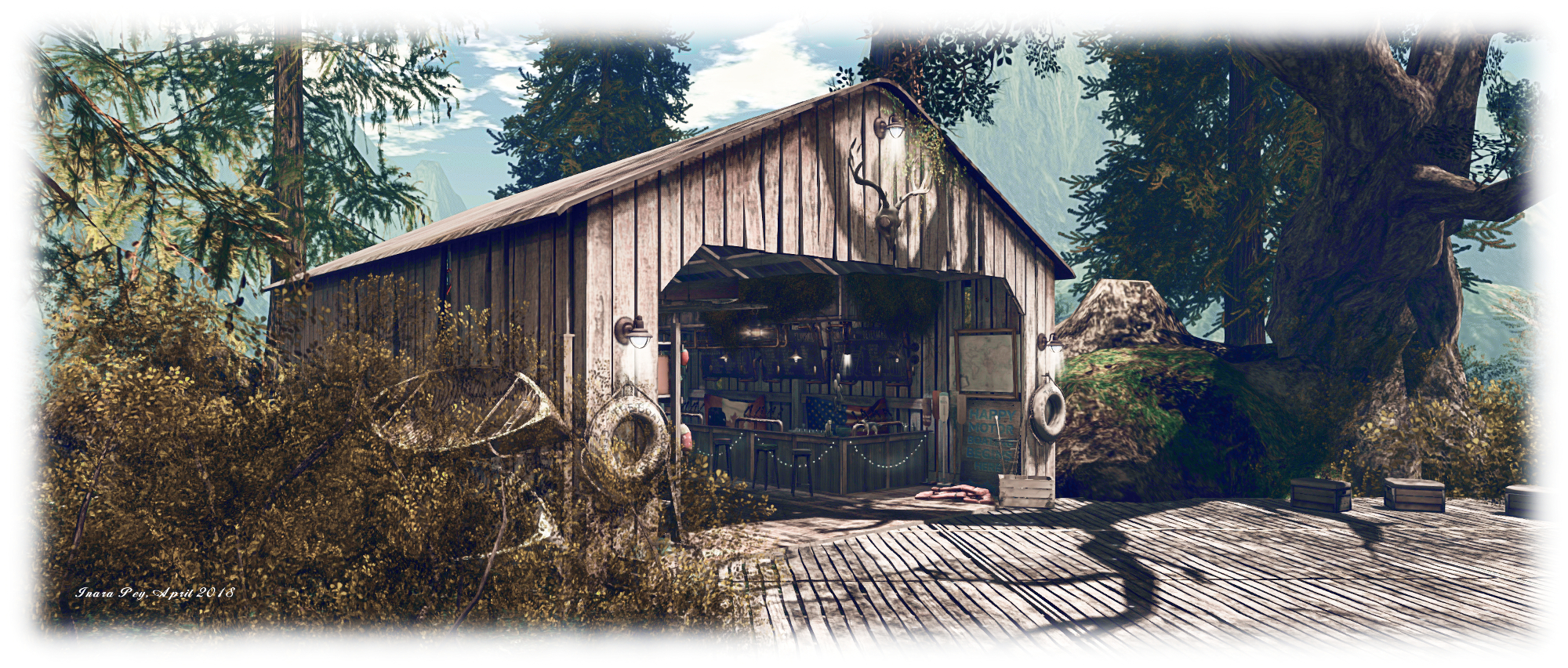
There is no landing point set within the region, but there is a greeter and welcome sign offering information on the region located on a deck in the north-east. This extends out over the water from the rugged coast of one of the three islands making up the landscape. An old barn sits close by, converted into a cosy lounge space complete with stacks of books and drinks on offer.

The Apothecary; Inara Pey, April 2018, on FlickrThe Apothecary

The land rises sharply alongside this, with stone steps climbing the steep slope, passing between the tall trunks of trees to where a wooden bridge watched over by four lanterns floating in the breeze, spans the narrow gorge separating this island from its much larger neighbour, a  folly like building beckoning visitors to cross the bridge to the plateau on which it sits

The drum-like building, complete with a glass-domed roof was once an aquae spadanae, a water spa – although it has been converted from this use. The pool is now a water garden, a large sculpture occupying its centre while around it, old sofas and armchairs offer comfortable places to sit and an upright piano offer an opportunity for music. The building looks to be under repair, given the scaffolding around and over a couple of windows.

The Apothecary; Inara Pey, April 2018, on FlickrThe Apothecary

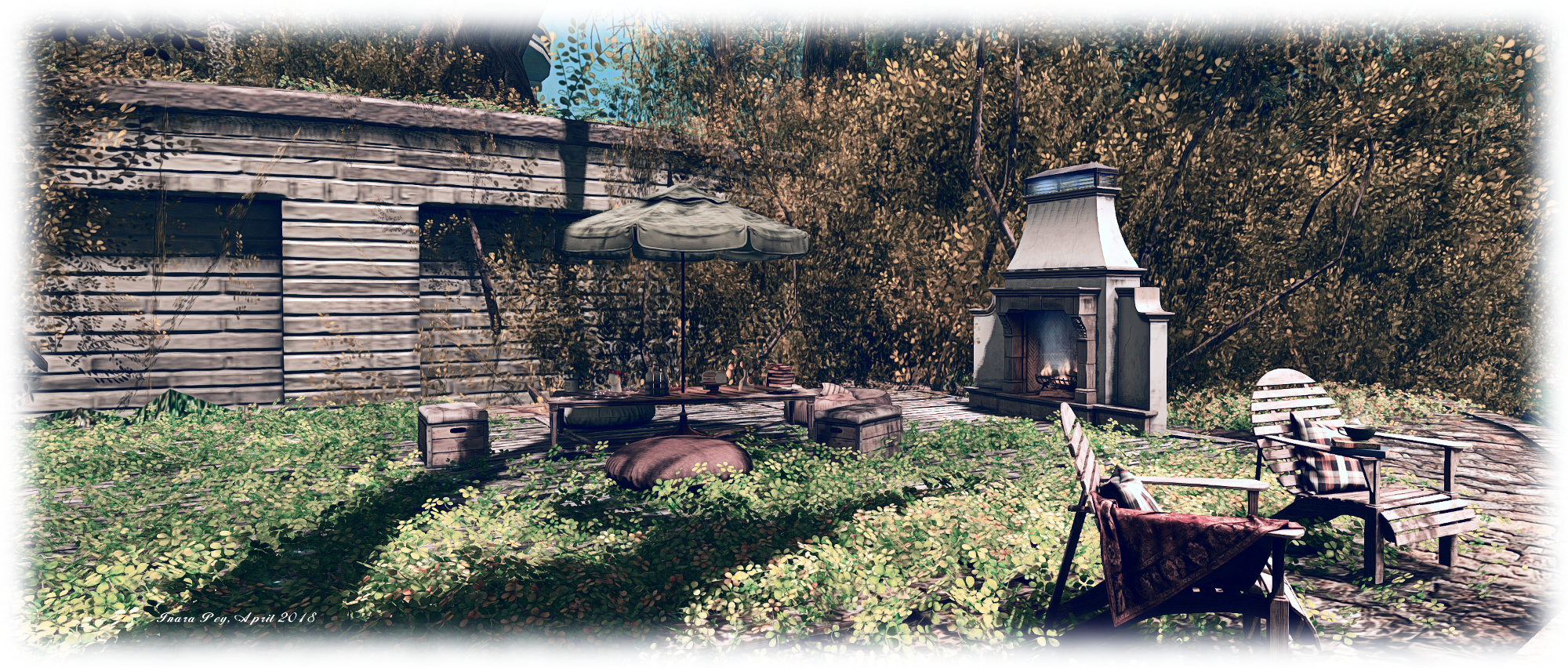
Two paths descend from this plateau, one to a broad step of rock, bounded out its outside by an old path and with another open-air bohemian seating area on its inside, warmed by a fireplace. The second path – marked by stone steps and cobbled paths, offers a route around the rest of the island. Branching at the foot of the hill, one arm of the path leads the way to the Apothecary itself – a grand  old conservatory building, its frame and high roof now without glass, its floors largely overgrown and the bent back of an ancient tree reaching grasping boughs out through its woodwork. A chaise lounge and mossy grand piano sit within, along with the tools of a gallipot’s trade.

The second path leads onward around the island’s curve to another waterfront warehouse and deck. The warehouse is this time sheltering a bar with bar on tap and spirits on the shelves behind it, while the dock appears to be the setting for the occasional DJ events that may be held within the region. It looks out over the water towards the third island in the group.

The Apothecary; Inara Pey, April 2018, on FlickrThe Apothecary

This third island, compact and crowned with trees, is given over to a cosy camp site where couples and groups can enjoy quiet and intimate times.  How it is reached other than by flying, is a mystery at present; while a rowing boat is moored alongside the deck on the main island with oars seemingly at the ready, it is for cuddles only rather than being a source of transportation.

While  I opted for daylight when taking my photos, the region lies under a darkening sky rich in horizon haze. This gives the impression of the land sitting in either post-sunset dusk, or a pre-sunrise morning. The introductory notes indicate that The Apothecary will evolve over time, so I suspect it could be a place we return to from time-to-time as it changes. Those wishing to rez props for their photographs, or who wish to keep abreast of changes make to the region or DJ events held there, can join the local group for a modest fee of L$175. Those taking photos are invited to share them through the region’s Flickr pool.

The Apothecary; Inara Pey, April 2018, on FlickrThe Apothecary

SLurl Details

  • The Apothecary (Havana, rated: Adult)

Salar de Uyuni in Second Life

Maison de L’amitie: Salar de Uyuni

Update September 2019: Maison de L’amitie has relocated.

Maison de L’amitie, the Homestead region held by Corina Wonder, is generally associated with beautiful landscapes such as this 2017 coastal setting. So I was a little surprised when good friend (and region discoverer) Shakespeare, sent me a slightly cryptic IM suggesting I go take a look. Intrigued, I hopped over – and surprised by what I found.

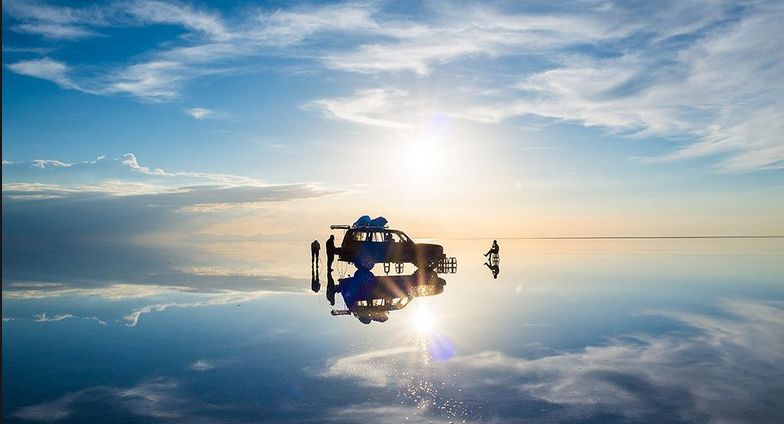
Sitting on an endless, plain sit two Jeeps, one of which is occupied by a Labrador dog. Overhead is a blue sky under which fluffy clouds are passing, reflected in the shallow waters covering the plain – and that is all there is. I was initially mystified until I read the About Land description: Inspired by Salar de Uyuni.

Maison de L’amitie: Salar de Uyuni

Located in the Daniel Campos Province, in south-west Bolivia, Salar de Uyuni is the world’s largest salt flat, covering an area of some 10,582 square km (4,086 sq mi), sitting at an elevation of 3,656 m (11,995 ft) above sea level. It was formed as a result of the evaporation of prehistoric lakes.

Despite its extreme size, and with the exception of Isla Incahuasi located in the centre of the flats, the elevation within the region varies by under one metre (3.3 ft) across its entire area. This, coupled with the shallow covering it during the winter months, have led to Salar de Uyuni being referred to as the “world’s largest mirror”, and is frequently the subject of photographs that (if you’ll pardon the pun) reflect this fact – as seen below.

Salar de Uyuni. Credit: Takashi Nakagawa

It is in celebration of such images that Maison de l’amitie has been made over: a near-perfect flat expanse over which hangs a perfect sky, the two Jeeps emphasising the mirror-like finish. It’s a simple, elegant setting which, after the initial surprise of its bareness, can captivate. However, in order to full appreciate it, do make sure that you hop into you viewer’s preferences and go to Graphics > (Advanced) and make sure the Water Reflections option is set to Everything.

Another thing Salar de Uyuni is famous for is humorous forced perspective photographs, such as the one shown below, by Danish traveller Miriam. It would be interesting to see if Second Life users can use Maison de L’amitie’s tribute to the region in a similar manner.

Salar de Uyuni via Adventurous Miriam

Despite its apparent harshness, Salar de Uyuni is an extraordinary place – potentially one ripe for features to be added to Maison de L’amitie – although adding too many could spoil the impact. The salt flats are, for example, a major breeding ground for several species of flamingos; whilst located close to their expanse is the train cemetery, recalling the time when trains used to haul minerals from the region to the Pacific coast ports.

A uniquely curious setting, one that has can exercise a strange draw on the eye.

Maison de L’amitie: Salar de Uyuni

SLurl Details

Spring and romance at Luane’s World in Second Life

Luane's World; Inara Pey, April 2018, on FlickrLuane’s World – click any image for full size

It’s been two years since I first visited Luane Meo’s Luane’s World and some fifteen months since a last visit to the neighbouring Luane’s Magical World – so a re-visit to both was long overdue.

Luane’s World, home to Luane’s store of the same name, tends to change with the seasons, offering visitors something new to see as each year progresses. At the time of our April visit, the region was sporting a springtime look, rich in greens on boughs and underfoot, with just a hint of summer blossoms to be seen and flowers blooming in the grass. A visit begins (as always) at the store, located in the north-east corner of the region.

Luane's World; Inara Pey, April 2018, on FlickrLuane’s World – click any image for full size

From here, three paths mark possible routes of exploration. Two, marked by stepping-stones, lead the way south and east and south and west, respectively offering routes to  Luane’s Magical World or out into Luane’s World itself. A third dirt-topped paths bends north-east, leading to Luane’s World – Live the Dream, a third Homestead operated and designed by Luane. However, as this is largely private rental properties (enquiries to Luane), we opted to respect people’s privacy and keep out, despite the public paths leading partway around the region.

The path point south-west into Luane’s World leads you along the banks of the waterway which cuts between the region and Luane’s Magical World from the south, feeding into a large hearted-shaped pool of water sitting at the centre of the region.  The path circles this pond, carrying itself over the little channel feeding it to offer the way to an old windmill on one side, and the way past a cosy little café to where it branches, leading the way past a tree house to a beach that curves around the north and west of the region.  Above the beach to the west, the land rises a little, providing space for an old fort, watched over by a lighthouse sitting just off the coast.

Luane's World; Inara Pey, April 2018, on FlickrLuane’s World – click any image for full size

Throughout the region are plenty of places to sit, cuddle and relax – such as the little cottage on the little southern island or scattered across the beach.

Across the water to the east, reached by either stepping-stones or a wooden bridge, is Luane’s Magical World. Hidden by a veil of mist, this is definitely a place for lovers and romance. Frosted tree a spread across waters frozen in time. In this, it remains similar to the first time we visited in December 2016. However, beneath the boughs, the environment has changed – most obviously in the frozen water replacing the snows.

Luane's World; Inara Pey, April 2018, on FlickrLuane’s Magical World

There is no set path through this region, it’s a place to wander and let go of time – although fallen leaves suggest footpaths to follow. Lights glow from the frozen trunks and branches, whilst waiting to be found throughout the region are places to sit and cuddle. These range from an old greenhouse to beds under nets to a hanging chair suspended from a leaf and watched over by unicorns, to a tent guarded by albino elephants.

Elsewhere, under a table of rock at the northern end of the region there are tunnels and caverns awaiting exploration, while those seeking a celebratory meal will find it in an old gazebo, or if a romantic dance is preferred, the impressive ruins of a Gothic chapel offers a stone flagged floor and dance machine.

Luane's World; Inara Pey, April 2018, on FlickrLuane’s Magical World

Luane’s World and Luane’s Magical World can be visited individually or together, depending on your mood. Both offer plenty of opportunities to share time together, and both are beautifully designed (as always) by Luane, and make for memorable visits. Should you take photos during your visit, consider adding them to the Luane’s World Flickr group.

SLurl Details