Eclipse: more than a little place in Second Life

Eclipse Tiny Place; Inara Pey, June 2018, on FlickrEclipse Tiny Place – click any image for full size

Update: Eclipse Tiny Place has closed. SLurls have therefore been removed from this article.

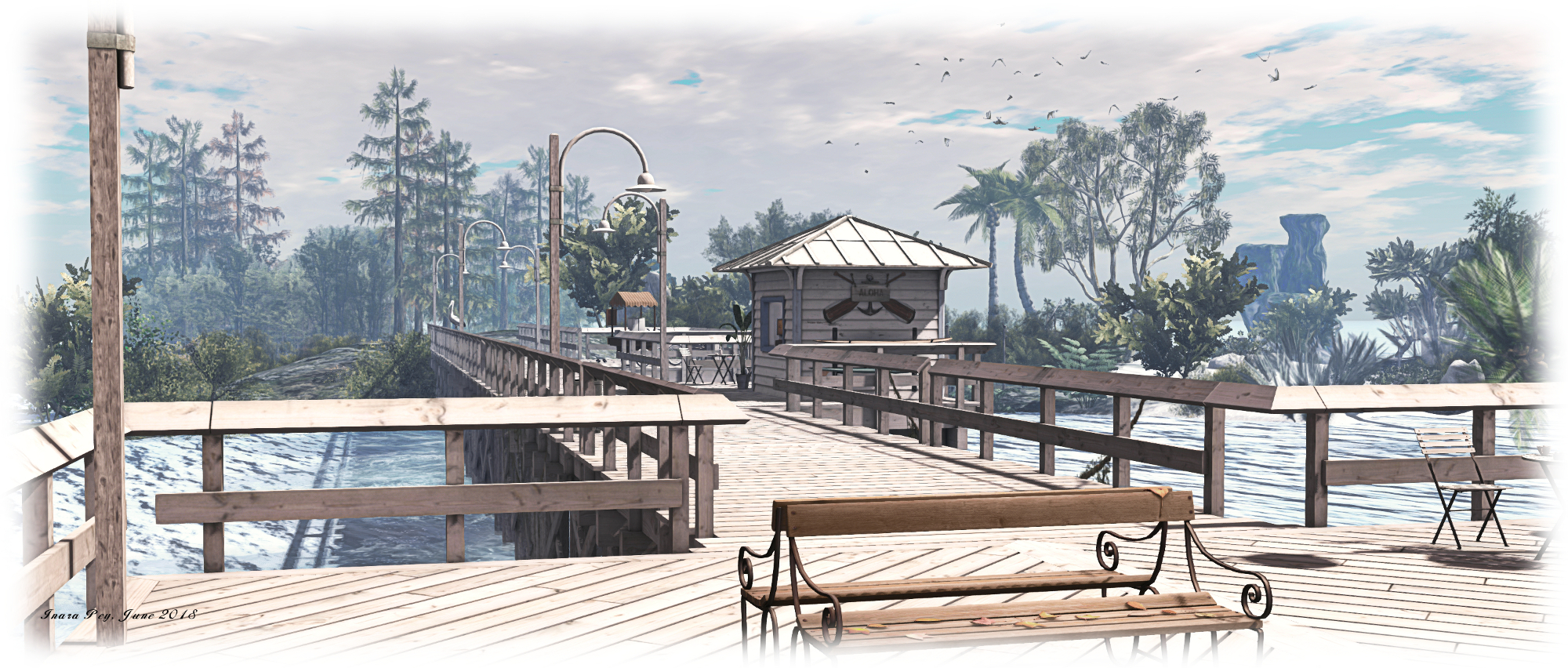
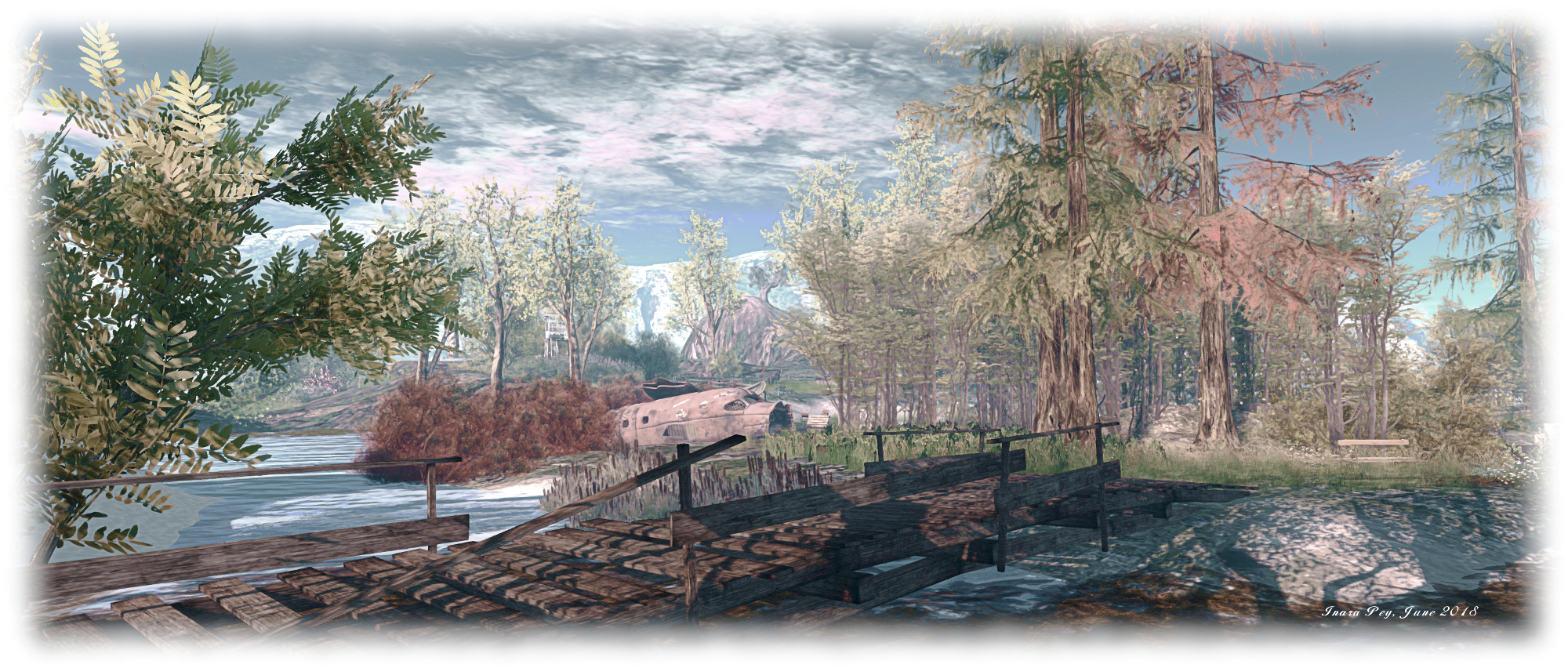
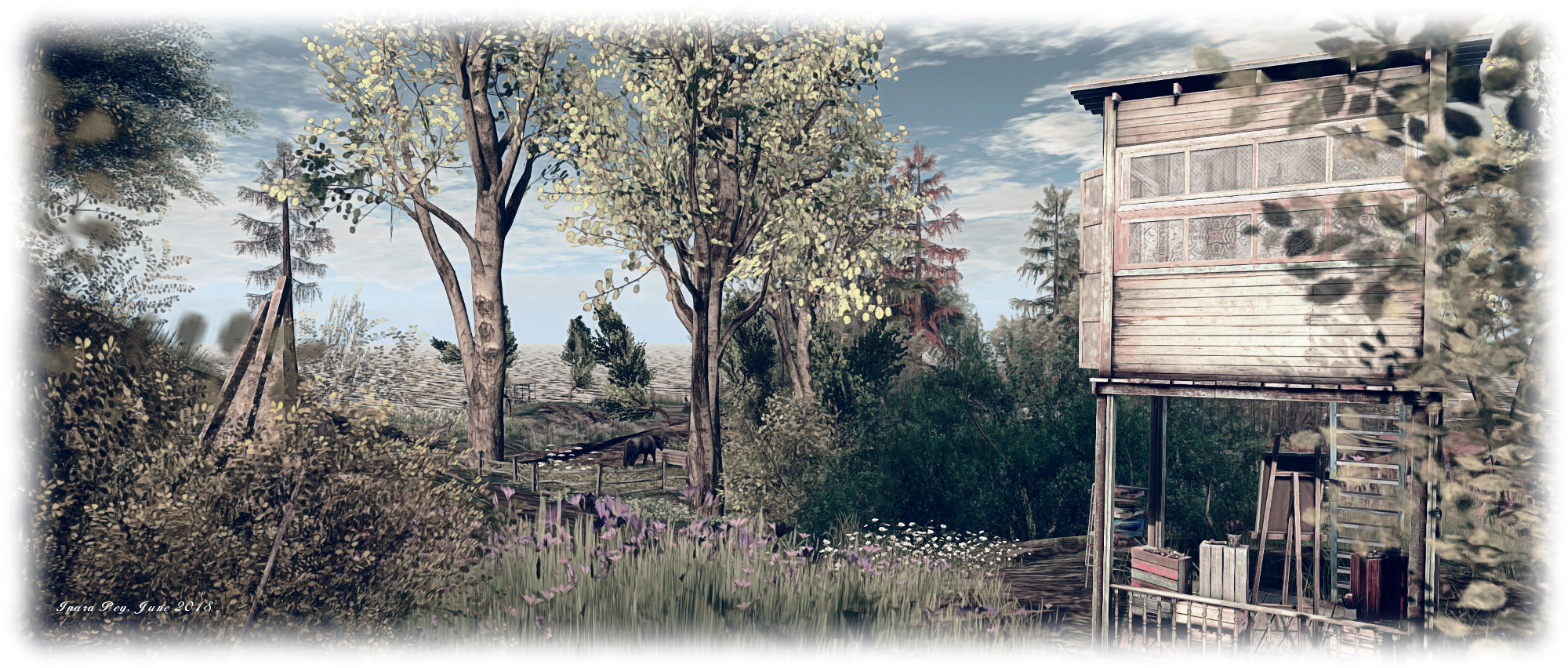
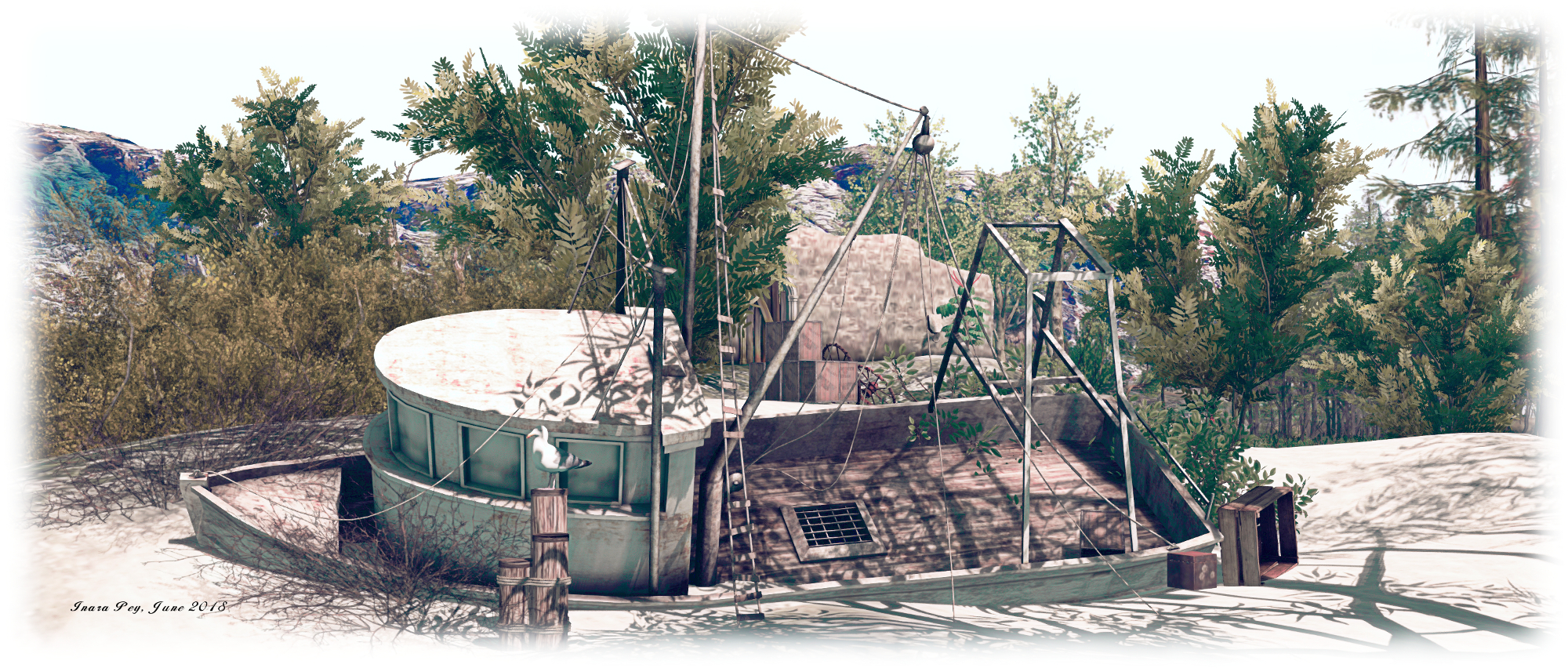
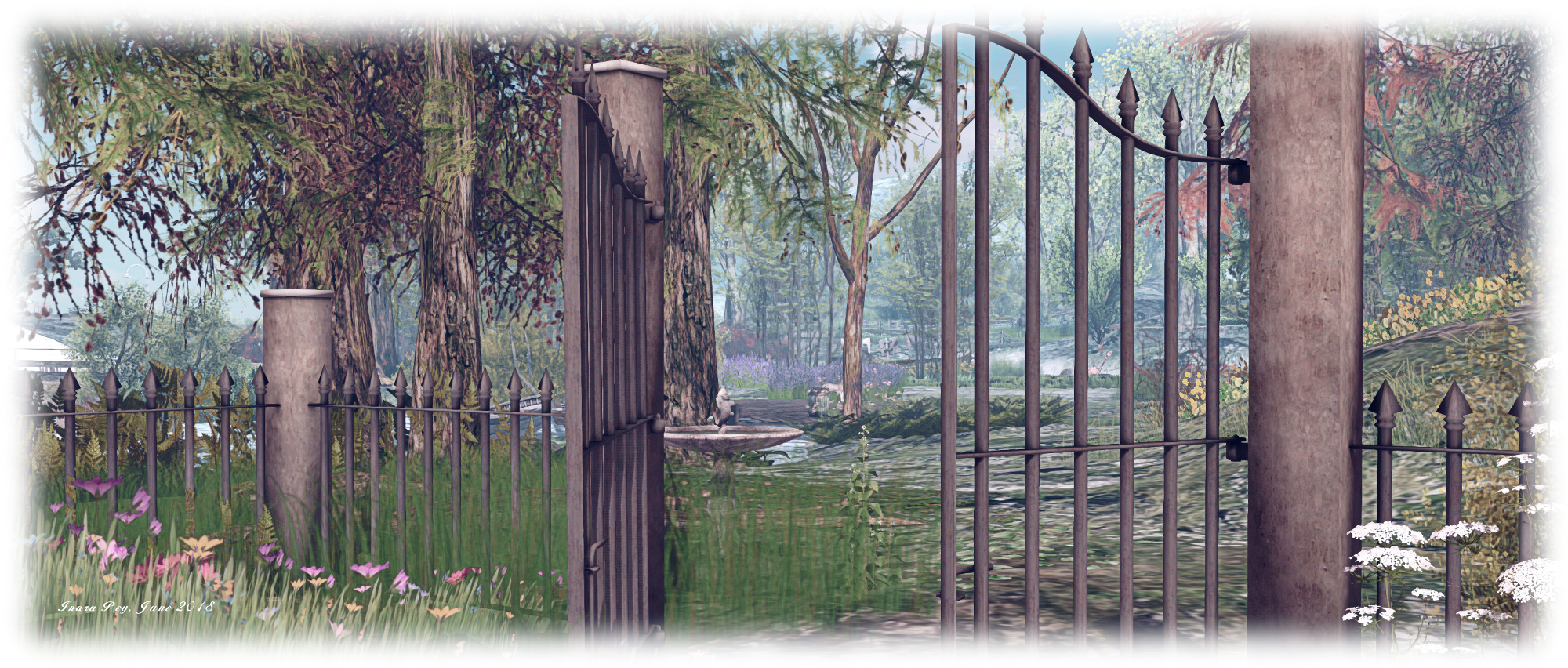
It’s the kind of place brought to mind when visiting Eclipse Tiny Place, a superbly designed 1/6 of a full region offered for public consumption by Lagoa. Despite its size – under 11,000 square metres, this is a parcel that offers almost something of everything for people to enjoy.

Occupying the north-east corner of the region on which it sits, the parcel is open to the sea on two sides, looking over a broad ribbon of sand arcing around the parcel and onto open waters. The remaining two sides of the land are backed by high cliffs which help create the feeling that this is a location isolated from the rest of the world. Water tumbles from the corner meeting-point of these two rocky walls, cascading in steps into a pool of clear blue water, a broad swathe of which runs north to slip under a rocky arc to the sea.
Eclipse Tiny Place; Inara Pey, June 2018, on FlickrEclipse Tiny Place

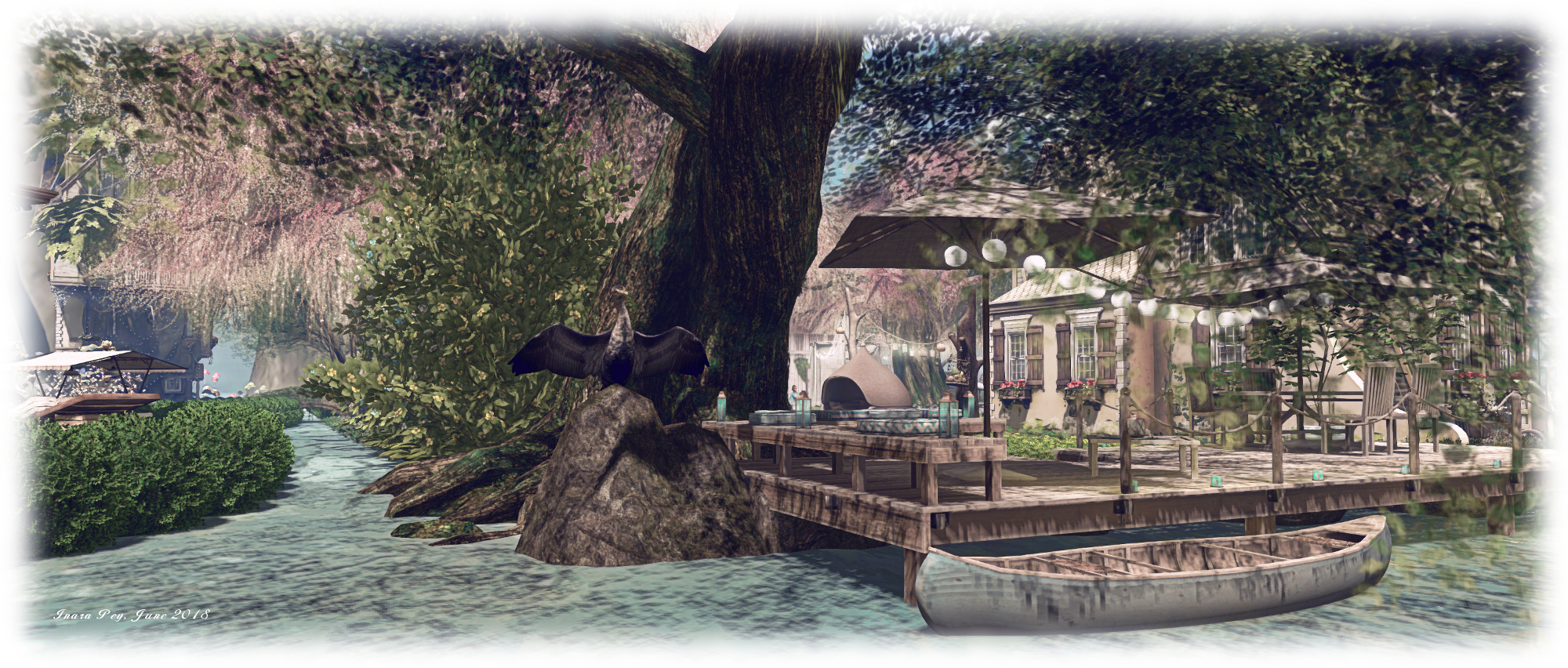
Two islands sit within this channel, each ringed by hedgerows. One is circular and home to an orangery, the other an oval on which sits a tree house – in the most literal sense of the word, the front door being in the trunk of the tree itself. Bridges link these islands one to another and with the rest of the parcel, providing a means for explorers to reach all parts of the parcel that may interest them.

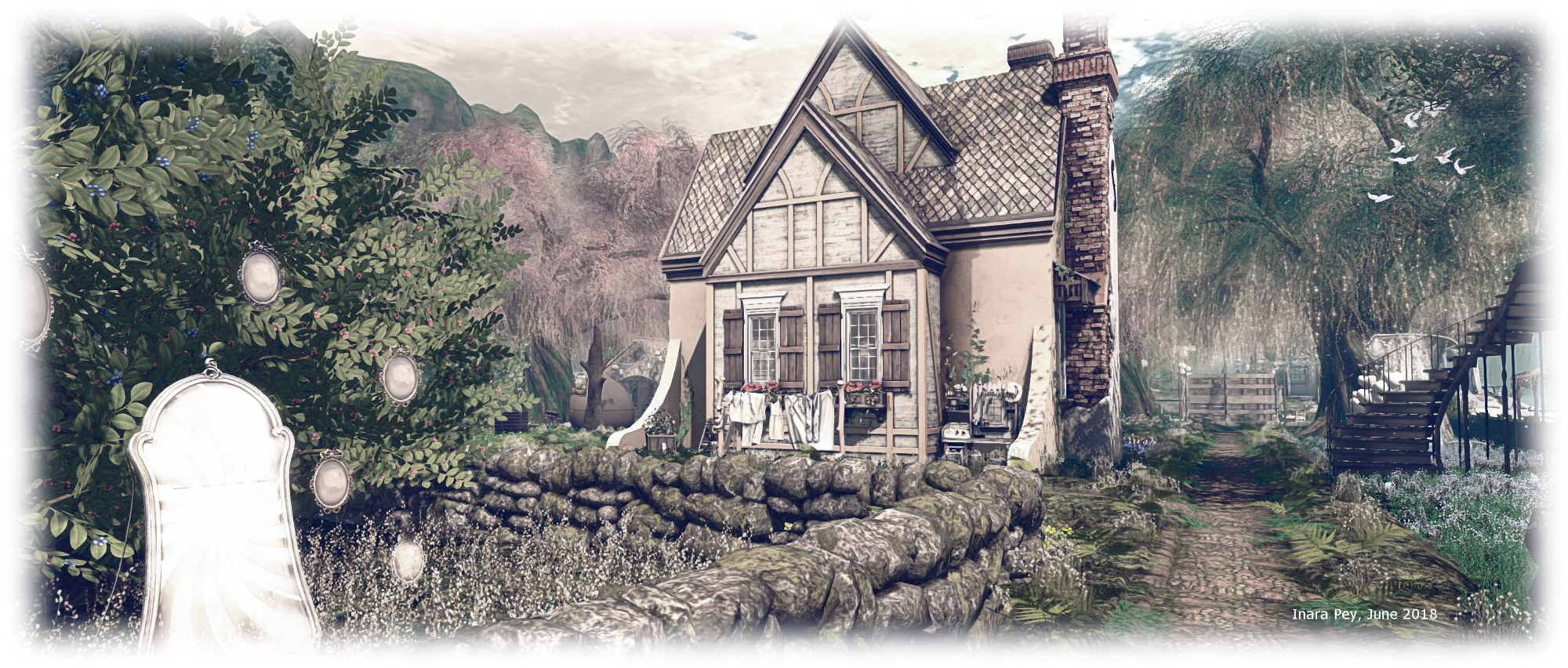
Set out across the rest of the land are as series of garden areas laid out around a house. Paths segregate the various parts of the gardens and offer routes to a pavilion sitting at the southern end of the parcel, separated from the beach by tiered walls of floors.
Eclipse Tiny Place; Inara Pey, June 2018, on FlickrEclipse Tiny Place

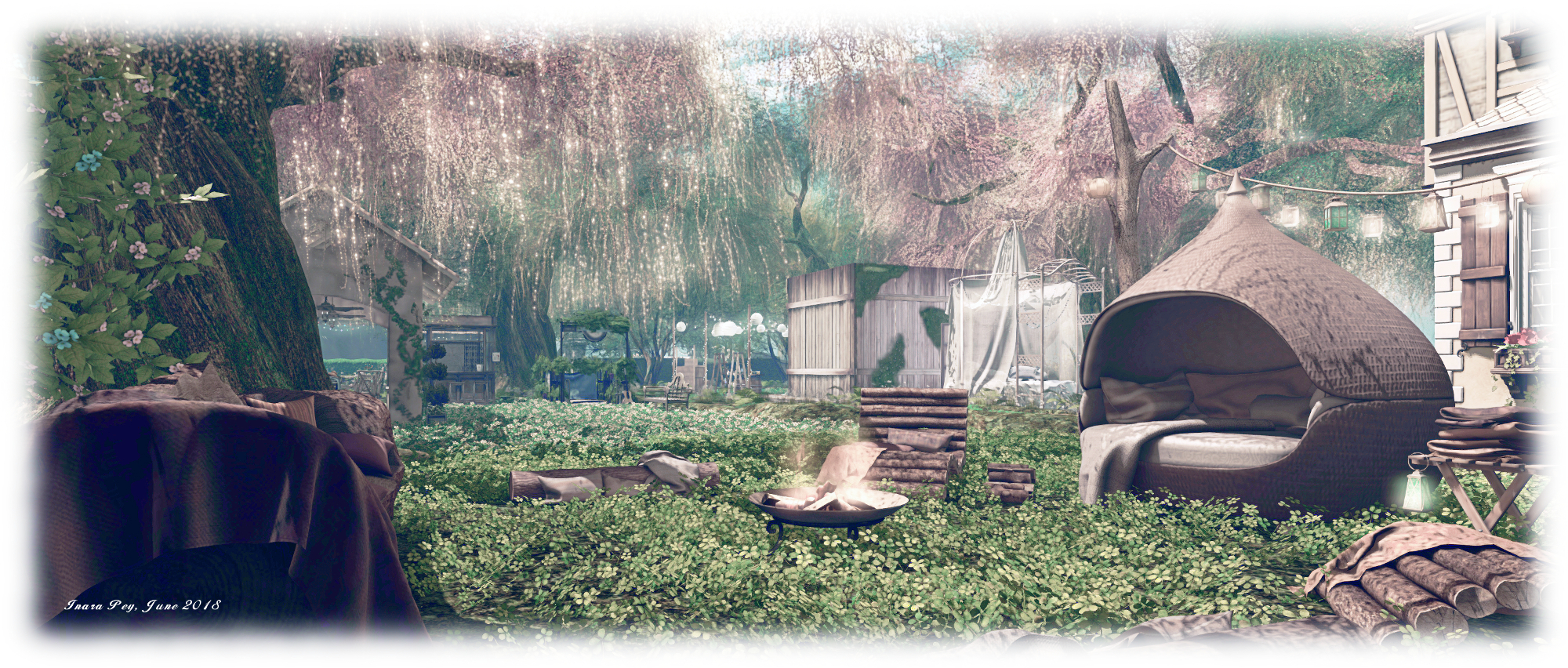
To try to describe this parcel in all its beauty would be an understatement so much has been packed into it – and not just haphazardly; the design and placement of gardens, trees, seating areas, event spaces, buildings, has all been carried out almost flawlessly, making Eclipse Tiny Place the kind of place where visitors genuinely want to spend time. To help with this, throughout the parcel there are many places to sit and enjoy the setting.

Art is also very much in evidence here, from the water-like garden of the tree house to the ruler-straight hedgerows separating the gardens from the sands of the northern beach or the dragons guarding the pavilion mentioned earlier.
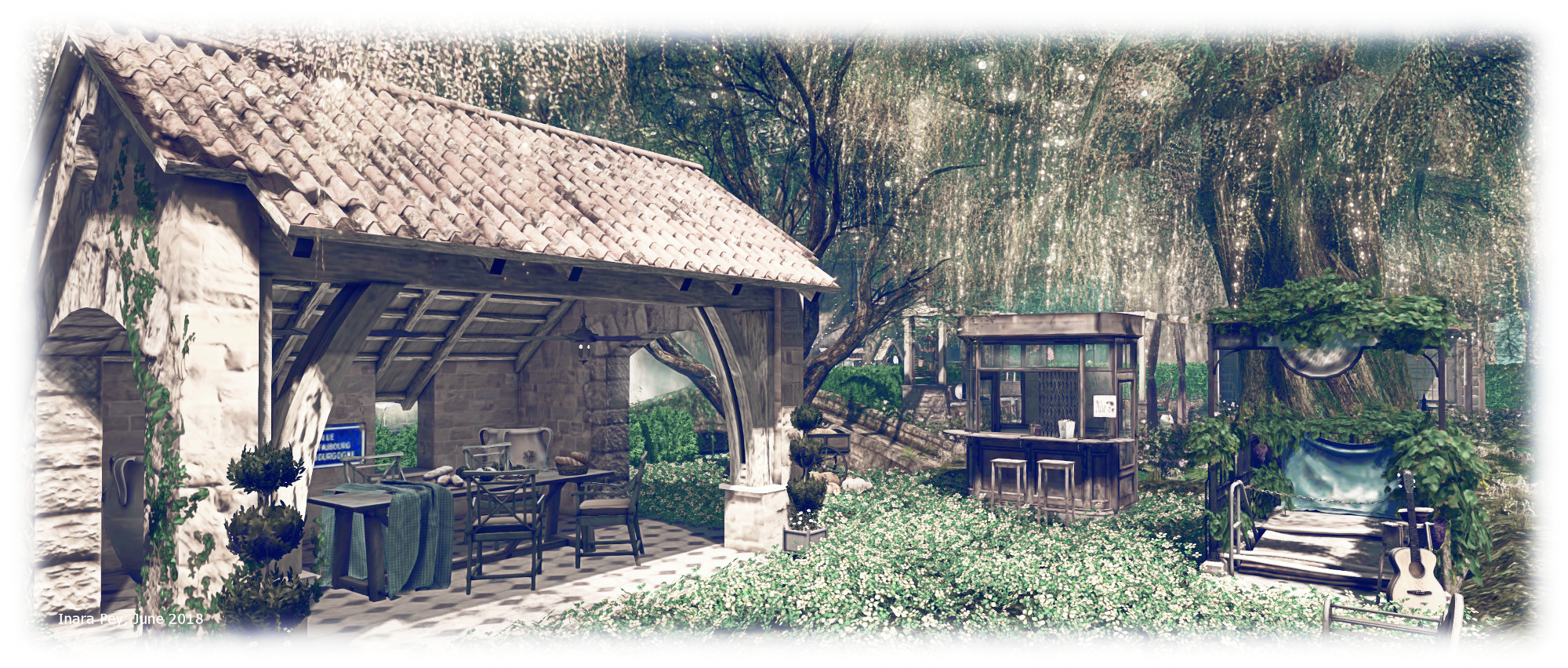
Eclipse Tiny Place; Inara Pey, June 2018, on FlickrEclipse Tiny Place

There are one or two little incongruities to be found: there is no direct path to the beach; instead, visitors have to scramble through hedgerows or climb over walls to reach the sand and the places people might as sit scattered along it. The local waterfowl are also perhaps on the large size 🙂 . A little more depth might also be added through the addition of an ambient sound scape. However, these are minor points.

Even without ambient sounds, there is a depth to Eclipse Tiny Place that really is astonishing. It is another tour de force of what can be done within a relatively small space (although admittedly, the full region on which Eclipse Tiny Place sits does make use of the full 30K LI available to private regions). As such, a visit and spending time exploring is highly recommended.
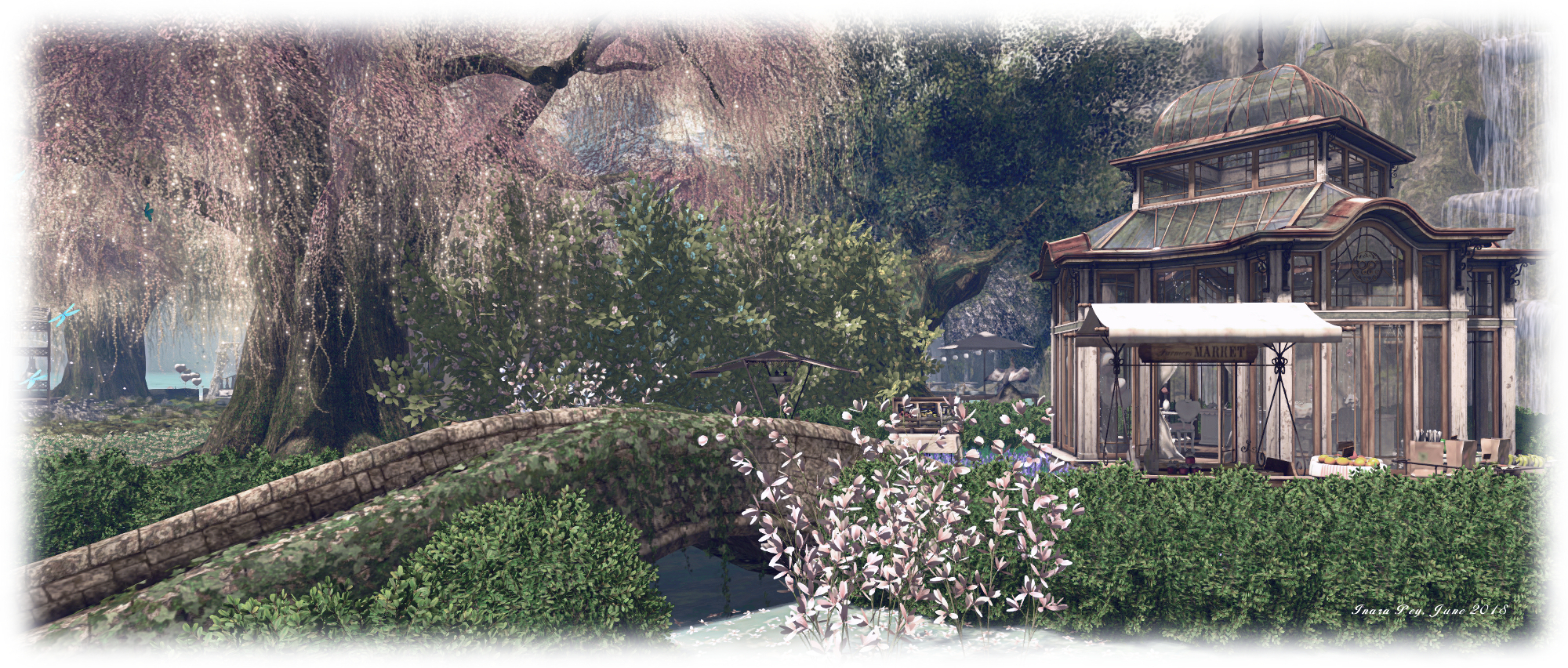
Eclipse Tiny Place; Inara Pey, June 2018, on FlickrEclipse Tiny Place

When visiting, don’t miss the little island floating overhead and the hot air balloon sitting offshore. And should you appreciate your time spent within the parcel, do please consider making a donation towards its upkeep and availability through one of the donation points somewhat cleverly described as food within the gardens and buildings.  And, for those who take photos of their visit, there is also the opportunity to share them via the Eclipse Tiny Place Flickr group.

SLurl Details

  • Eclipse Tiny Place (Lombard Park, rated: Moderate)
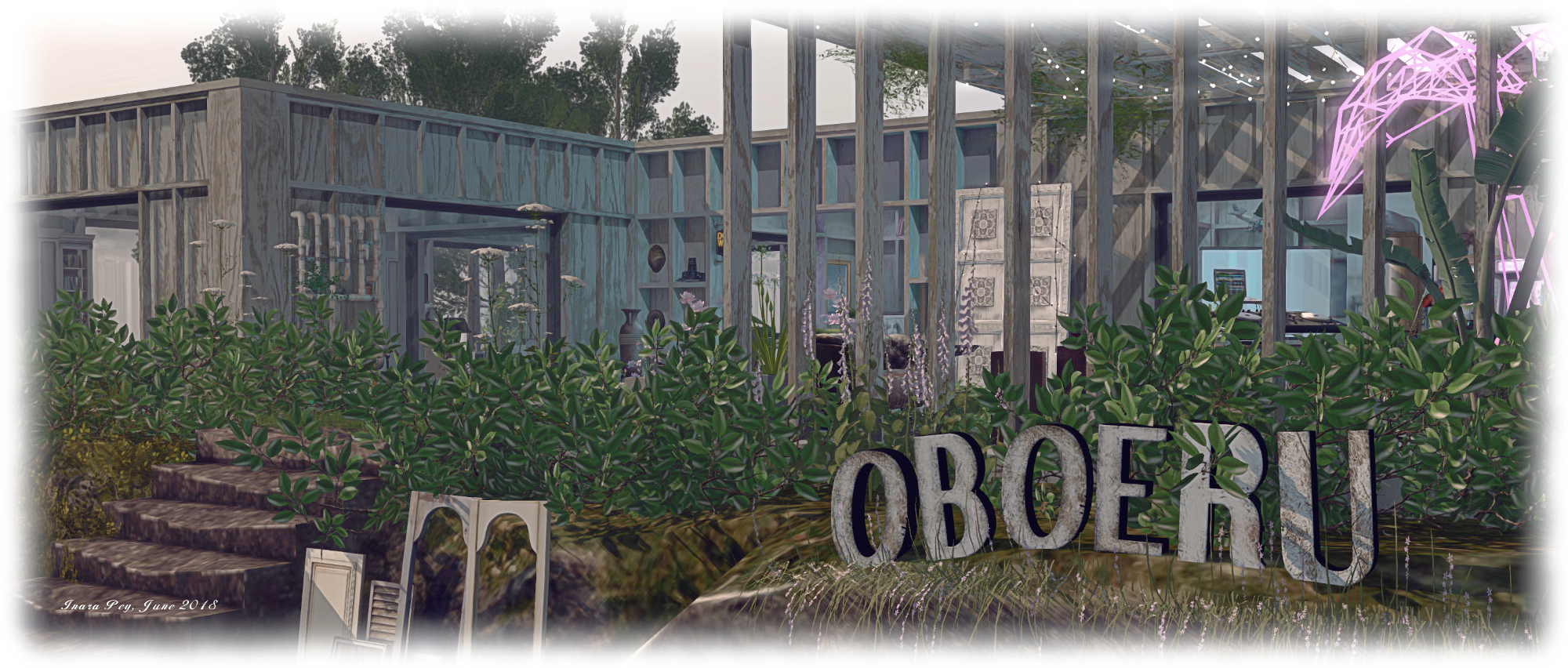
A scene to remember in Second Life

Oboeru; Inara Pey, June 2018, on FlickrOboeru – click any image for full size

Update: Oboeru has closed. SLurl in this article have therefore been removed.

A fog horn plaintively calls in the early morning light, the Sun slowly burning through the dawn haze as it rises over the eastern horizon. Cicada song mixes with that of birds greeting the dawn and the stridulation of crickets, while in the background the dull rumble of waves breaking on a shoreline resonates through the air.

These are the sounds that greet visitors to Oboeru (“Remember” or “learn” in Japanese), a Homestead region designed by  Manis Lane and Axiom (Axiomatic Clarity). This is a place that is hauntingly romantic in its near-desolated nature; a low-slung archipelago, the main island of which has been clawed by long fingers of water, its outliers of varying sizes separated from it by channels which can be surprisingly deep.

Oboeru; Inara Pey, June 2018, on FlickrOboeru

This is a place which seems to brood under the early morning half-light; the deep mewling of the foghorn seeming to cloak the islands in an air of sadness. And yet this feeling of loneliness combines with the rugged setting with its patches of scrub grass, scatterings of copses of tall Scots pine and gatherings of shrubs and bushes, to present a place of mystery tinged with that hint of romance.

A single table of rock rises from the centre of the region, giving shape to the north-south “spine” of the main island. The single-storey building crowning this plateau calls to visitors as they arrive at the landing point, sitting on a knuckle of land to the north. Reaching the building takes a little effort – the plateau is pretty much sheer-sided, but a way up onto it can be found on the southern side

Oboeru; Inara Pey, June 2018, on FlickrOboeru

The building has the look and feel of a clubhouse; outside the front of the place is room to enjoy music and perhaps dance, while the rooms inside offer plenty of space to set on large sofas. Each room has its own bric-a-brac to set a cosily untidy setting for people to relax within; music also a theme indoors as well as outside.

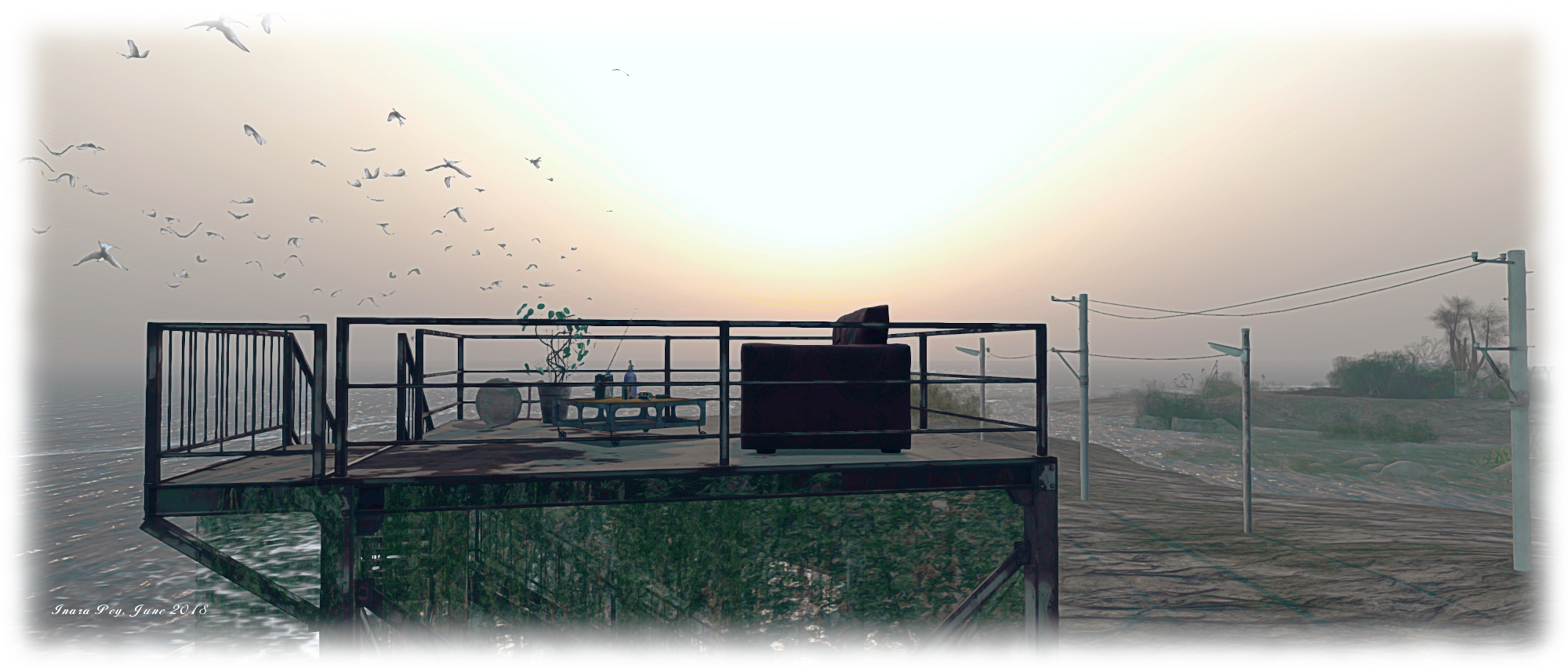
There are a couple of other structures to be found in the region. To the west, and sited to offer a clear view of sunsets over the ocean, stands a tall tower of slowly rusting metal, creepers hanging from its frame as if a giant wave has at some point draped seaweed over it. Metal stairs climb two sides of the tower, offering a way up to its rusted platform, where an old sofa awaits, facing the sea under a canopy of circling gulls.

Oboeru; Inara Pey, June 2018, on FlickrOboeru

The second structure lies to the north-east, on one of the larger outlining islands. This is the ruins of a church or chapel,  windows now without glass, bushes reclaiming the space inside its walls as much as the space around it. Yet it is far from forlorn, and the stairs climbing to the flat roof offer another route up to a place where one can sit and remember or reflect…

There are numerous places to sit scattered over the landscape – from rooftop to tower to chairs amidst flowers. Board walks strike out over water, but sometimes with no direct connection to the land; but be warned, some of the channels the sit within are quite deep, as I’ve noted, so wading out to a board walk might hold a surprise.

Oboeru; Inara Pey, June 2018, on FlickrOboeru

Oboeru is an atypical region in its styling and approach. There is – as I’ve noted – something hauntingly beautiful about the entire region – the design, the windlight, the aural sound scape. Not a region to be missed.

SLurl Details

  • Oboeru (Landscape Dialog, rated: Moderate)
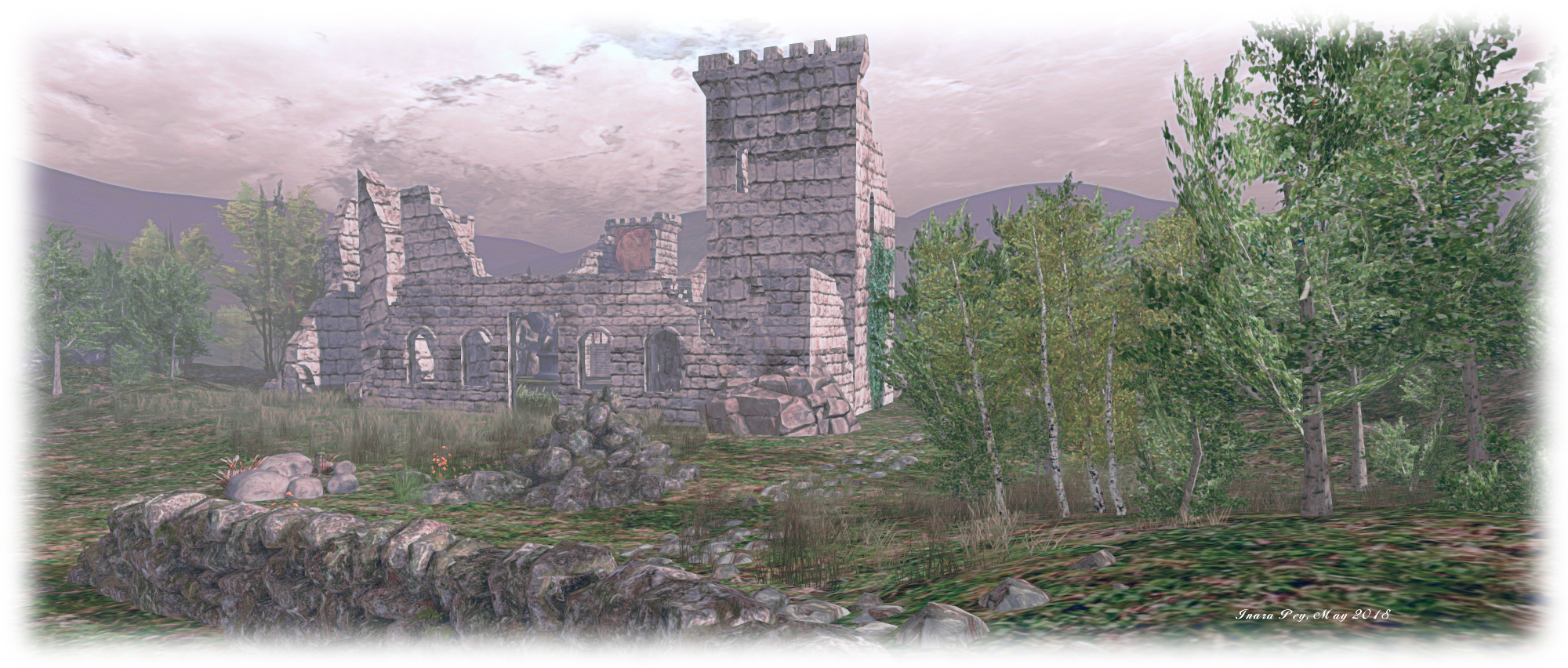
With thanks to Miro Colas for the pointer to Oboeru

Looking into Devin’s Eye in Second Life

Devin's Eye; Inara Pey, June 2018, on FlickrDevin’s Eye – click any image for full size

Miro Colas recently tweeted me with a suggestion that Caitlyn and I pay a visit to Devin’s Eye, a Homestead region which recently opened in Second Life. As the name was familiar to me, we hopped over to take a look, confirming in the process that Devin’s Eye is the work of Roy Mildor and Ally Mildor (Ally Daysleeper), and represents something of a continuation of their work as we first came across it in Devin, back in January 2017, offering as a does the opportunity to visit two sim-wide locations  – one on the ground, and the other in the air. (As a point of note, Devin still exists, but appears now to be under private ownership.)

The ground level location offer a rugged island setting with offshore mountain ranges to the east and north. The landing point is located towards the centre of the island, close to a cove that cuts into the island from a narrow neck of a channel spanned by a log bridge, with a smaller and entirely land-locked body of water close by.

Devin's Eye; Inara Pey, June 2018, on FlickrDevin’s Eye

The south-eastern quarter of the region is given over to a rocky highland area, rising in steps to coastal cliffs that shelter in their landward lee, and somewhat incongruously, a motorcycle repair shop. The land before this slopes gently away towards the inland waters, largely denuded of trees but given over to growths of tough grass and shrubs, with the remnants of another barn and the bulk of a farm tractor sitting upon it.

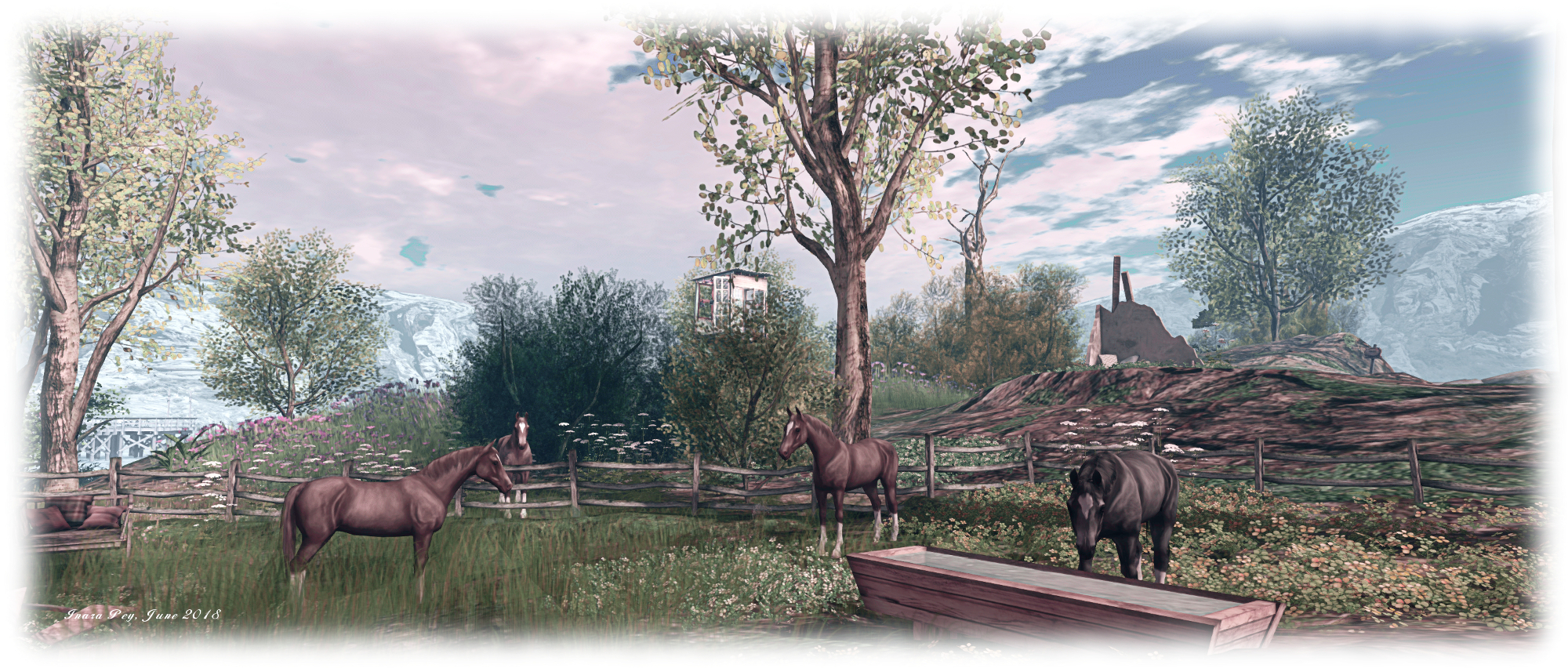
These uplands continue northwards along the east side of the region, becoming gradually more verdant, becoming the home of grazing horses and coloured by shrubs and plants whilst offering several places visitors can sit and snuggle both on the ground and up in a wooden tower.

Devin's Eye; Inara Pey, June 2018, on FlickrDevin’s Eye

To the west and north, the rocky lowland flow around the landlocked pool and watery coves to reach sandy beaches as fir and temperate deciduous trees slowly yield to palm trees out on the sandy headlands. Bridges of various types offer ways across the different bodies of water, connecting sand with sand or to the gently rising uplands to the south.

There is much to be found here. The open nature of the landscape, largely devoid of set routes through it, encourages visitors to explore. So it is that in wandering, visitors might come across a little clearing here where the opportunity to dance is offered, or find a bubble car rezzer there, allowing them to float over the landscape from above (the usual PAGE UP/DOWN, arrow & WASD + E/C keys to rise, descend and move), whilst elsewhere might be found a little camp site or beach-side chairs might be found, or a rowing boat to cuddle on… These are just some of the many attractions  the region has to offer.

Devin's Eye; Inara Pey, June 2018, on FlickrDevin’s Eye

For the more active, there’s the opportunities to walk out along the pier to the north or go for a swim using the rings in the surf along the beaches or to ride the zip line ride running down from the southern uplands.

When taken as a whole, Devin’s Eye at the ground level can initially can come over as a curious potpourii of themes and scenes  which might in other circumstances clash one to another – the random wreckage of a plane crash, the motorcycle repair barn on its rocky shelf, the random placement of railings, the more coherent placement of fishing boat hulk and beach, together with the offshore scenes of boats at anchor, and so on. Yet the simple fact is – it all works, the different ideas and settings flowing together naturally to offer visitors something unique to enjoy.

Devin's Eye; Inara Pey, June 2018, on FlickrDevin’s Eye

The upper level of the region – referred to as Devin 2 – can be reached via a number of teleport boards scattered across the ground level setting (one most notably placed alongside the landing point), which also offer quick hops to various points at ground level.

Devin 2 is remarkably similar to its former namesake at Devin, presenting an area which might be taken as a part of the Sahel Zone of Africa, with rolling dunes, some of which are covered in a thin but tough mat of grass, scattered trees and a lone watering hole where the local wildlife – elephants, zebra, rhinos, gazelle and giraffe – come to drink and seek shade while camels troop by. Only the cheetah appear to be looking for more than a drink and a rest as they pad towards the little dazzle of zebra. For those so inclined a dune buggy rezzer is available here – but as the landscape joins almost seamlessly with a region surround, keep an eye on your direction and distance from the region’s four sides if you want to avoid collisions!

Devin's Eye; Inara Pey, June 2018, on FlickrDevin’s Eye

As with Devin, Devin’s Eye offers visitors a rich environment to explore and discover and with plenty to do. Should you enjoy your visit, please consider a donation towards the region’s continued availability as a public place.

SLurl Details

Relaxing in Cape Florida in Second Life

Cape Florida Lighthouse and Park; Inara Pey, June 2018, on FlickrCape Florida Lighthouse and Park – click any image for full size

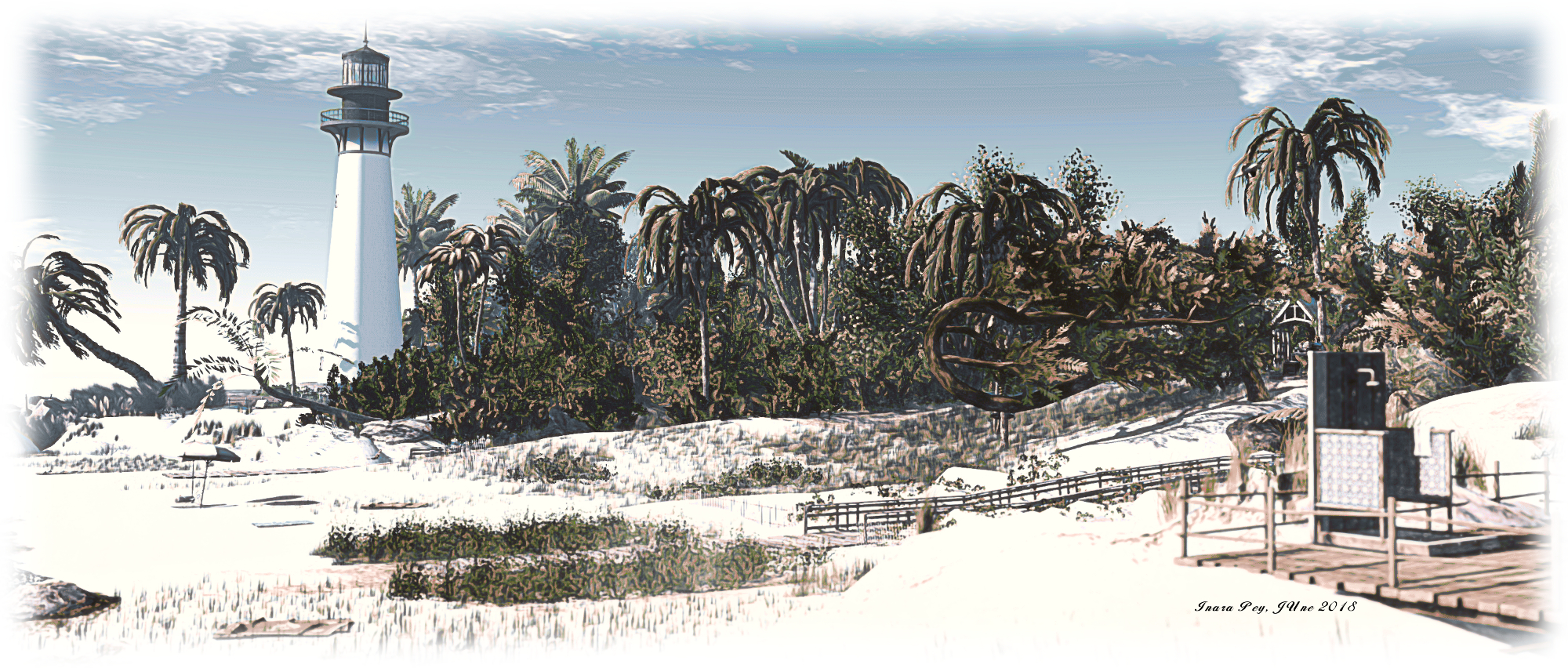
Cape Florida Lighthouse and Park is a homestead region designed by Shen Molinaro, specifically designed for people to visit, enjoy and to relax in. It offers plenty of walks, both along its sandy beaches and inland along paved paths, wooden board walks and over raised earthen trails that wind over grass and under bough. Also on the beaches and under the boughs of trees and palms, can be found places to sit or hang out along with opportunities to enjoy board games, take a bicycle ride or have a swim (look for the HUD givers as well as the rings out on the surf).

The region is somewhat modelled after the Cape Florida Light and the Bill Baggs Cape Florida State Park, at the southern end of Key Biscayne in Florida. The lighthouse has a long history, and is the oldest standing structure in Greater Miami. Today it is operated by the US Environmental Protection Agency.

Cape Florida Lighthouse and Park; Inara Pey, June 2018, on FlickrCape Florida Lighthouse and Park

I’ve no idea how well the region reflects the park, as I’ve never had the good fortune to visit the latter; but the lighthouse presents a fitting homage to its physical world namesake, and the beaches echo those from which popular photos of the lighthouse have been taken. However, accurate physical resemblance to Bill Baggs State Park isn’t important: the region stands on its own as a  place of natural SL beauty.

The beaches run along the west and north sides of the region, the northern beach becoming quite expansive before it reaches the white finger of the lighthouse topped by the black “nail” of its light. Grass grows on the undulating beaches, vying with trapped seaweed to break-up the whiteness of the sands. Rocky outcrops also break up the sands, several of which have snagged flotsam deposited by the sea during high tide; there are also numerous places to sit and watch the ebb and flow of the tide – be it on sun loungers, deck chairs or blankets.

Cape Florida Lighthouse and Park; Inara Pey, June 2018, on FlickrCape Florida Lighthouse and Park

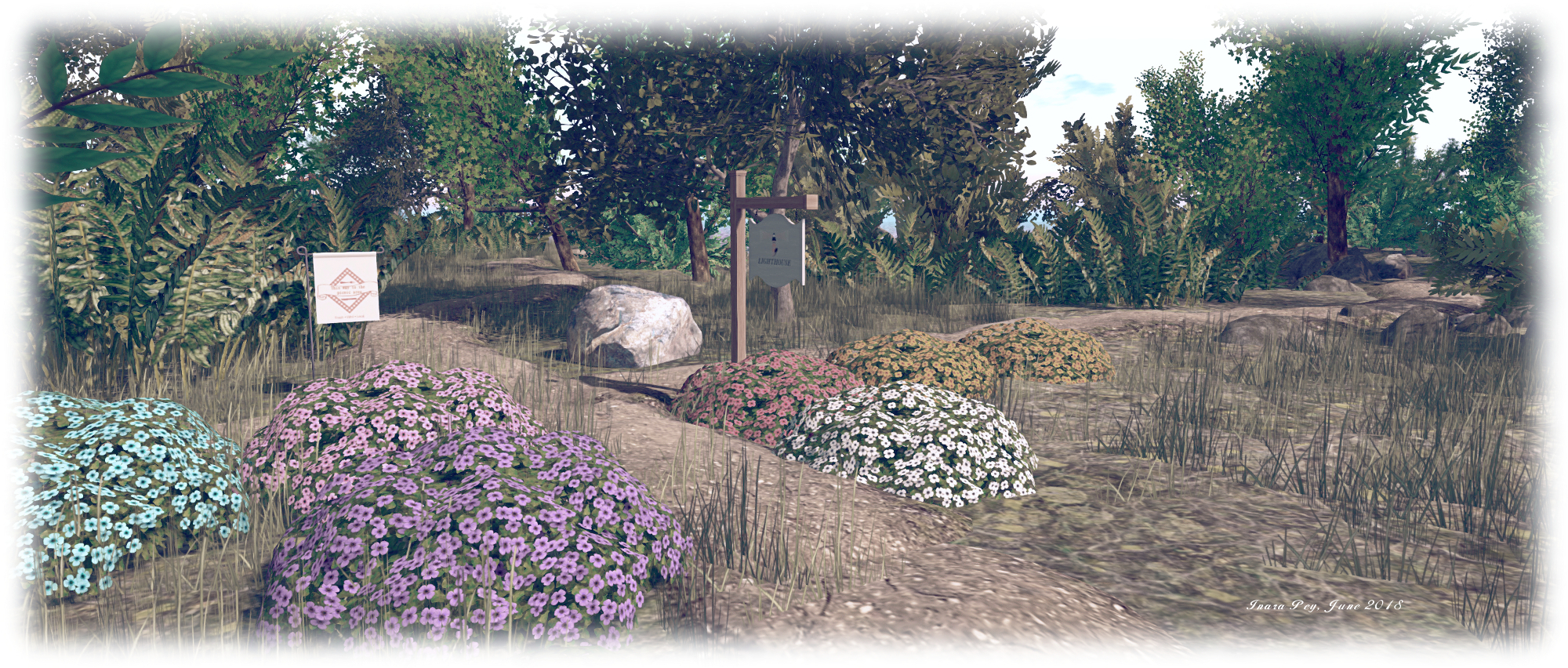
Behind the beaches, the land rises gently – not to any great height, but enough for the sand to give way to a more solid covering of grass spread beneath the boughs of tress and palms. It is here, among the trees that the majority of the board walks and paths can be found, offering multiple routes to different destinations. The latter includes the octagonal bulk of a great greenhouse overlooking the southern coastline, the glass long gone from its heavy wooden frame, a small cabin, a partially walled terrace, a paved terrace under a triangular awning, and more besides.

To the east of the park is a tiled roof gazebo offering shade, food and refreshments, one of several decks that hug the coastline sitting below it. On one of the latter, set above the south-western tip of a beach on a rocky overlook, offers a couple of spiKKo tables for those looking to play a game. Just above one of the beaches, tucked away near the old church gate marking the way to (or from!) the paved terrace and its awning, in a chess table. A little stall can be found here as well, offering a range of fresh fruit.

Cape Florida Lighthouse and Park; Inara Pey, June 2018, on FlickrCape Florida Lighthouse and Park

The paths and board walks, with their twisting and winding and frequent intersections, help to give a feeling that the park is larger than the region on which it sits. This is further helped by the use of trees, bushes and shrubs to hide views of the coastline.

Those wishing to rez props for photography can do so by joining the region’s group. It might also be worth playing with windlight settings – I confess to flicking my viewer over to a couple sky options provided by Stevie Davos as a part of his cloud and sky series (see here for more), as I found the default windlight left me feeling a little chilly whilst exploring the region. When wandering as well, make sure you have local sounds enabled; Shen has provided a rich sound scape to fit the region and breathe further life into it.

Cape Florida Lighthouse and Park; Inara Pey, June 2018, on FlickrCape Florida Lighthouse and Park

A beautifully conceived and executed region which invites people to tarry whilst visiting.

SLurl Details

A Woods Club in Second Life

Woods Club; Inara Pey, June 2018, on FlickrWoods Club – click any image for full size

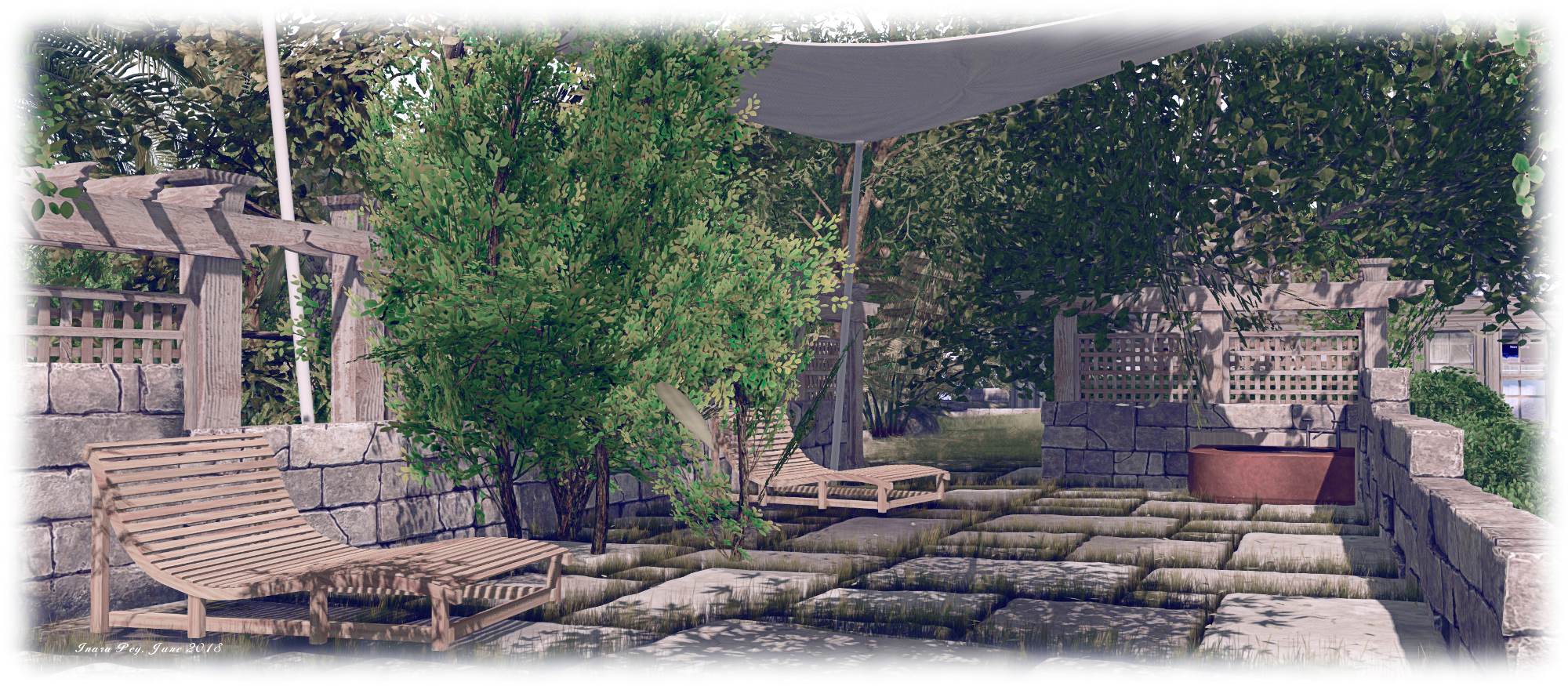
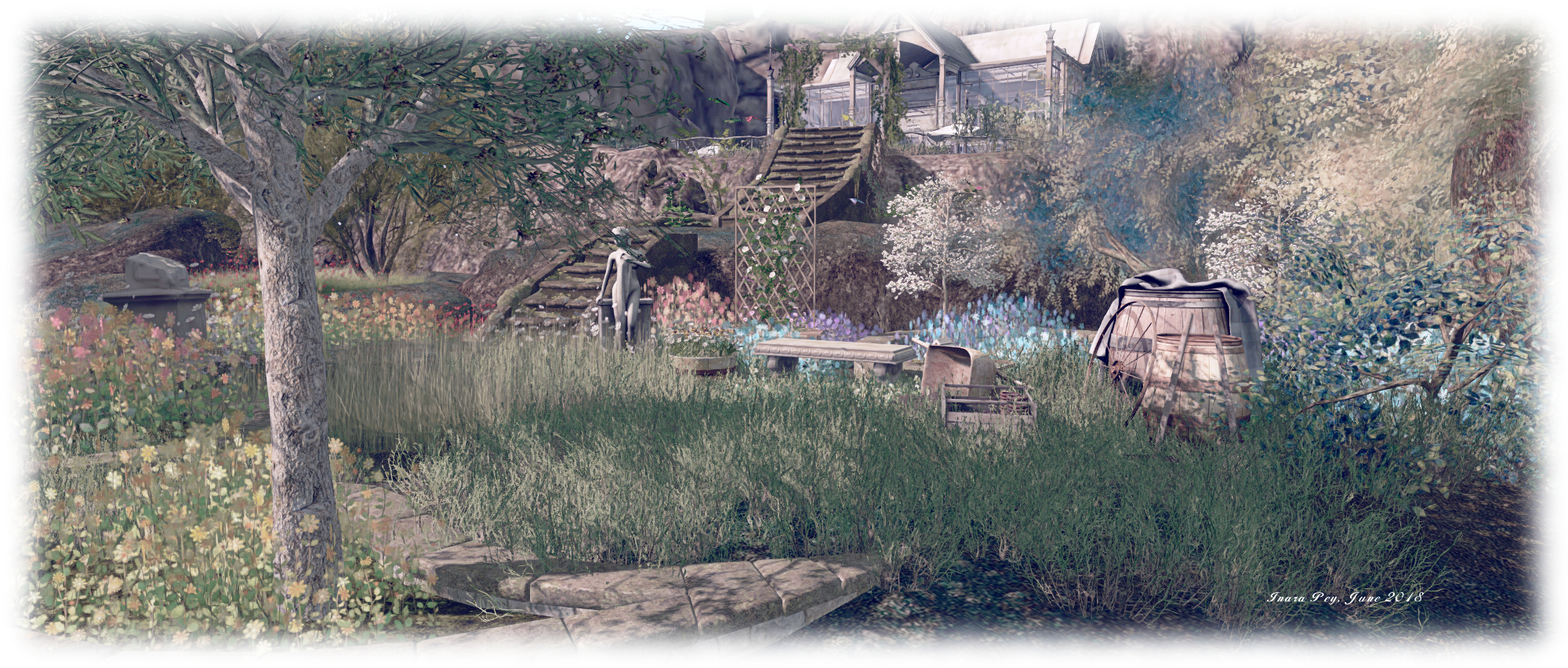
Woods Club is a picturesque quarter region designed by Secoia Harley Vita (Secoia Vita) and Viktor Galli, and which Shakespeare pointed us towards in late May. Ostensibly the home of a small club going by the name of the parcel, it offers a lot more to see and appreciate.

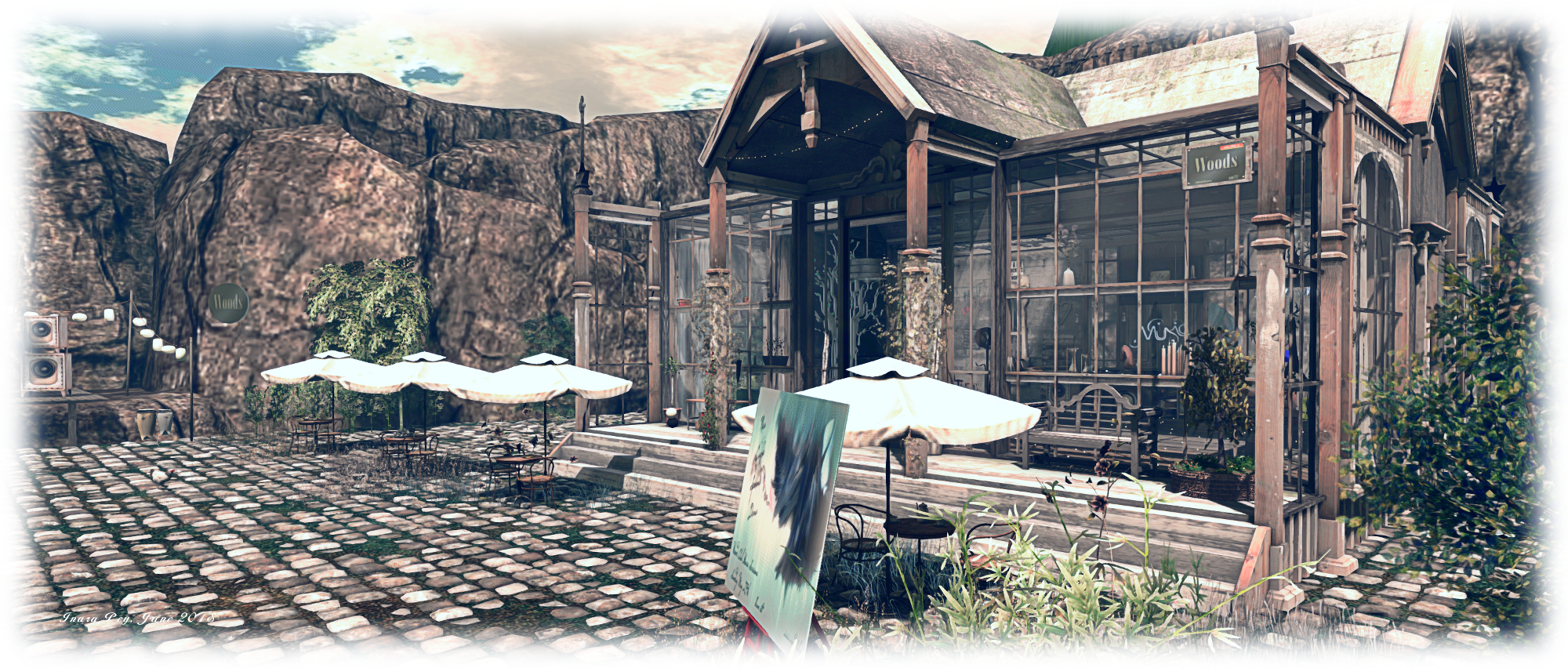
Established in 2008, the club offers music every weekend between 08:00 and 14:00 SLT, with a mix of deep tech, tech house, deep house, funky, tribal, indie dance, progressive, techno and more. It’s located on a plateau courtyard sitting with its back towards the centre of the region, with two rocky arms reaching out to the western and southern coastlines – the parcel occupying the south-western corner of the region.

Woods Club; Inara Pey, June 2018, on FlickrWoods Club

Dancing can be enjoyed both indoors and outdoors – there’s an outdoors stage to one side of the plateau, and there is also plenty of seating to be found as well. Take care when out on the cobbled terrace area, or you might trip over Clarice or Chuck Norris (a cockerel who presumably brooks no nonsense…). Steps under an ivy-wrapped arbour provide a way down off the plateau to where a colourful, if a little overgrown garden sits. This looks out over a ribbon-like pond to the sea to the west, and eastwards over a small stream running out from the pond.

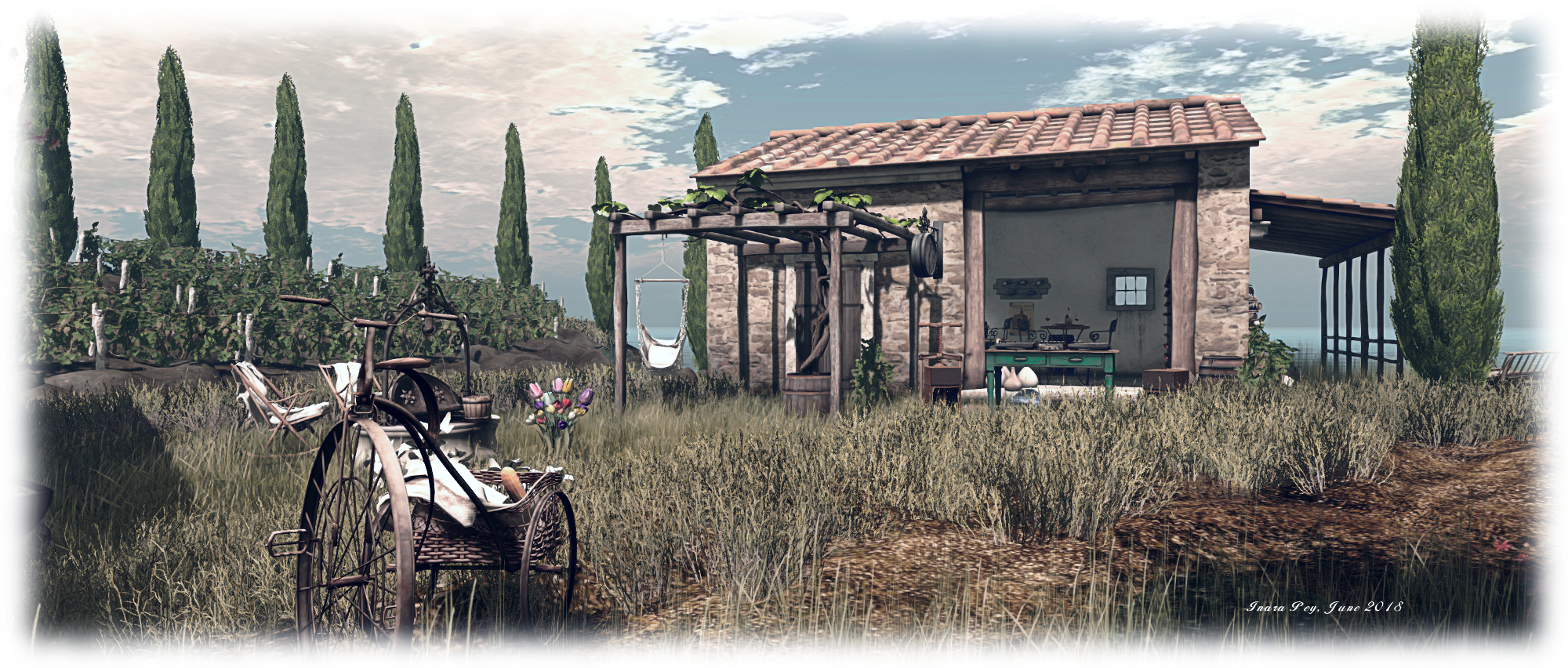
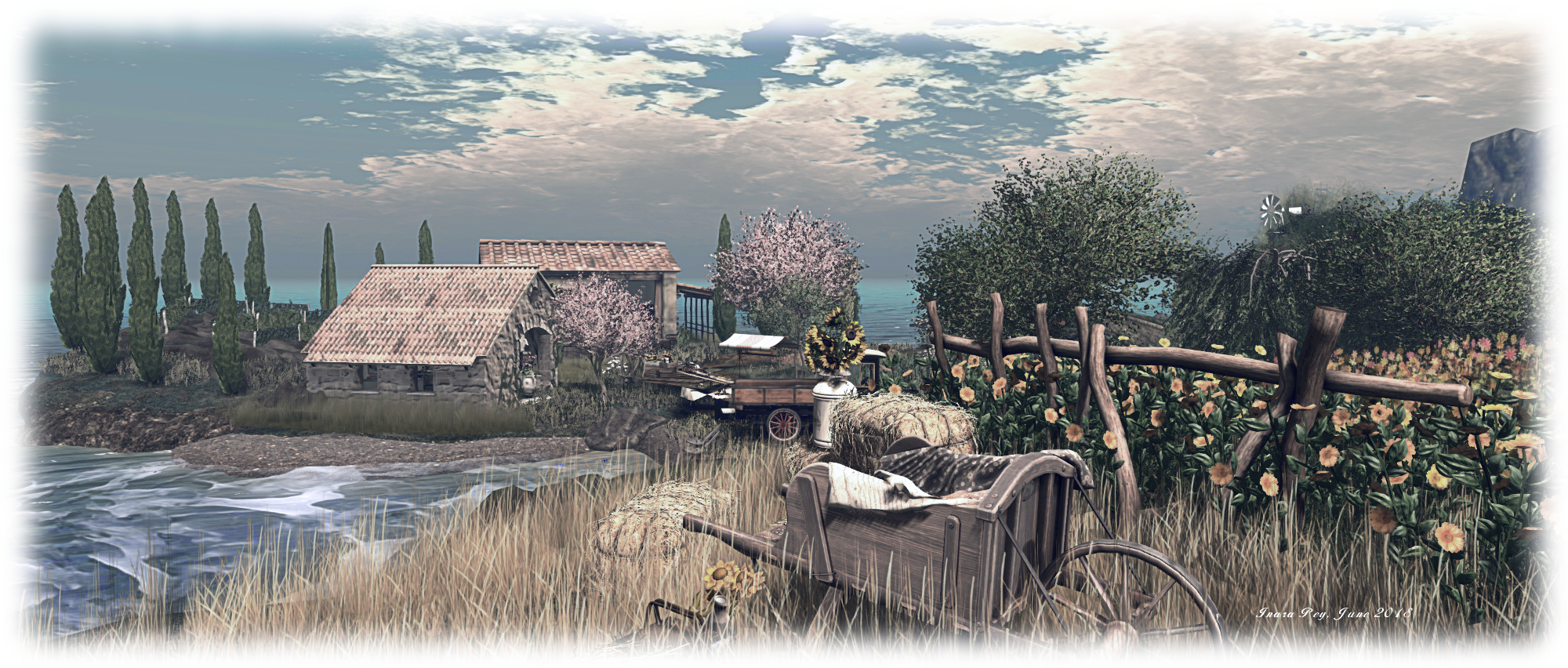
Pointing the way between stream and pond is a tree-lined track, reached via a rocky incline, and which ends in the hump back of a stone bridge spanning the water. This offers the way to where a barn sits alongside a little vineyard guarded by tall cypress trees standing between it and the sea. The barn has been converted into a little wine bar, and faces a garden kitchen across tall grass growing around an old well.

Woods Club; Inara Pey, June 2018, on FlickrWoods Club

The track meanwhile, branches from the little bridge, one arm turned past the wine bar and kitchen to lead to a little fresh produce market beyond which visitors might find a little shaded picnic spot, a second facing it across the narrowing stream.  A rocky arch spans the neck of the stream, a shale beach of a little inlet, it’s mouth almost completely blocked by the rectangular forms of low boulders.

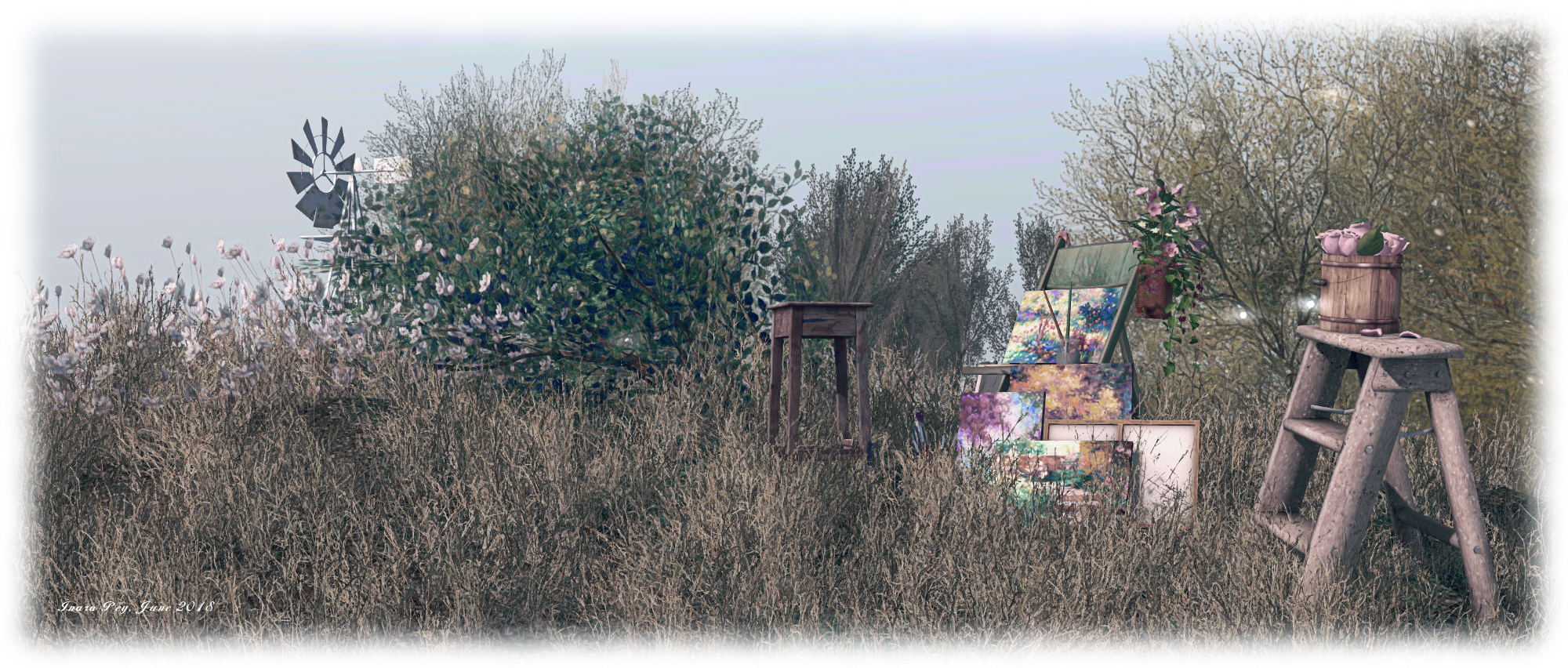
The other arm of the track runs northwards, pointing the way to another garden-like area sitting among the rocks and rugged grass, the talk finger of a windmill market its presence. Puppies and goslings share a common interest in steel tubs of water here, while old milk churns have been converted into planters. Beyond these, a swing bench under an awning of corrugated metals awaits visitors, a second, smaller pond sitting just above it. With a little care, the intrepid can make their way around the side of this pond, then over the grass and rocks, then past a painter’s little outlook to arrive back at the garden below the club.Woods Club; Inara Pey, June 2018, on FlickrWoods Club

Throughout all of this, there is a wealth of detail to find and enjoy – be it the little field of sunflowers sitting up on a headland, a wheelbarrow converted into a snug little outdoor bed next to them, or the deck chairs on the gravel beach, the rowing boat on the narrow pond, or simply appreciating just how naturally the garden areas have been brought to life. For the active, dancing can also be had down at the wine bar – but do keep an eye out for John Travolta strutting his stuff in the grass!

Woods Club is a genuine pleasure to visit, even if the weekend music selections aren’t to your taste. There are plenty of opportunities for photography, or simply to chill out and relax. Should you enjoy your visit, do please consider making a donation towards the parcel and club’s continued presence,  via the bongo drums alongside the outdoor stage.

Woods Club; Inara Pey, June 2018, on FlickrWoods Club

SLurl Details

A touch of Scotland in Second Life

MindPillars, a Scottish themed Sim; Inara Pey, May 2018, on FlickrMindPillars, a Scottish themed Sim – click any image for full size

When first encountering its name, MindPillars, a Scottish Themed Sim would appear to give itself away from this title: a region with a Scottish lean in its design. However, this still leaves a number of questions open  – where in Scotland? Highlands? Lowlands? islands? When in Scotland? Modern times? Times past? These, and questions like them, demand people pay the region a visit to find out; and the truth is MindPillars has touch of Brigadoon about it, as well as a twist of Scottish legend and myth.

The landing point, while set, is not enforced. However after Caitlyn and I spent an hour exploring, I do recommend you use it, as per the SLurl above, as it will deliver you to Geata Fhoingail (Fingal’s Gate) towards the western side of the region. An arch cut through living rock, the landing point features a map of the region ( and sharing the same west-east orientation), highlighting the 30 points of interest located across the region. In this, Fingal’s Gate is appropriately named: geata fhoingail might also be translated as “foyer gate”.

MindPillars, a Scottish themed Sim; Inara Pey, May 2018, on FlickrMindPillars, a Scottish themed Sim

It worth noting that the 30 points of interest draw on a broad range of locations from physical world, myth, history and legend – and not all of them are necessarily Scottish in nature. Penn an Wlas, for example, translates as “Land’s End” – a location in England’s Cornwall.  Touching the map will present you with a series of options, including a note card, Storyteller’s HUD,  and a copy of the map of the region. Available in English and German, the HUD will attach to the top left of your screen, where it will initially remain passive.

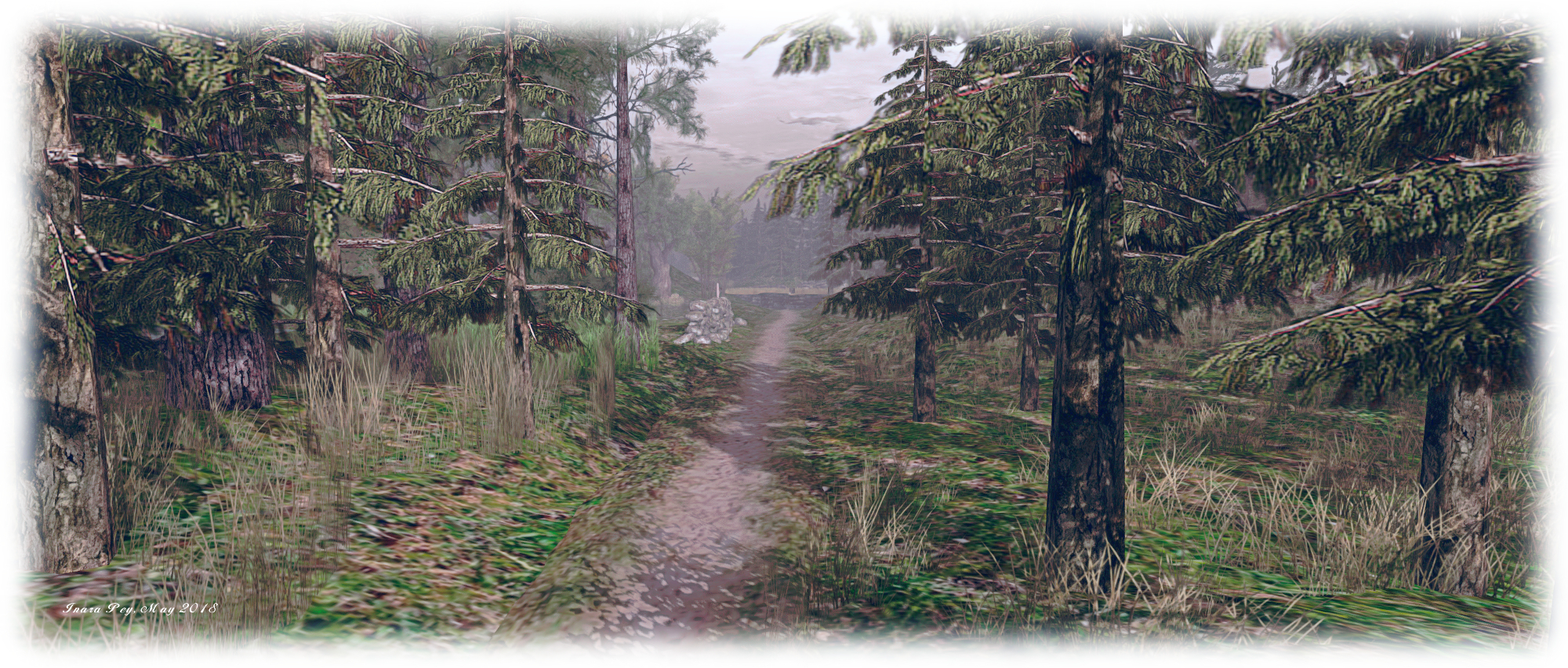
Where you go from here is up to you – there are trails and paths winding throughout the region – although you might want to keep an eye on your location via the region co-ordinates displayed at the top of the viewer: the region joins “seamlessly” with the outlying surround – complete with paths appearing to wind off into the distance – so you can end up walking into a region boundary if you’re not careful! The effect, however, is to make the region look and feel a lot bigger – as well as give it a feeling of being in the middle of Scotland.

MindPillars, a Scottish themed Sim; Inara Pey, May 2018, on FlickrMindPillars, a Scottish themed Sim

As you explore, you’ll come across signs (and sometimes rocks) highlighting each of the 30 points of interest around the region. If you’re wearing the HUD, proximity to these signs will trigger a text chat invitation to tell you a story about the location. However, with or without the HUD, you can touch them to display a menu offering you the map, the HUD and a note card with the location’s story. Some of the signs also include a lamp labelled Public Transport Available. Touching these will either rez a donkey and cart you can ride in, or offer a choice of routes before rezzing the transport.

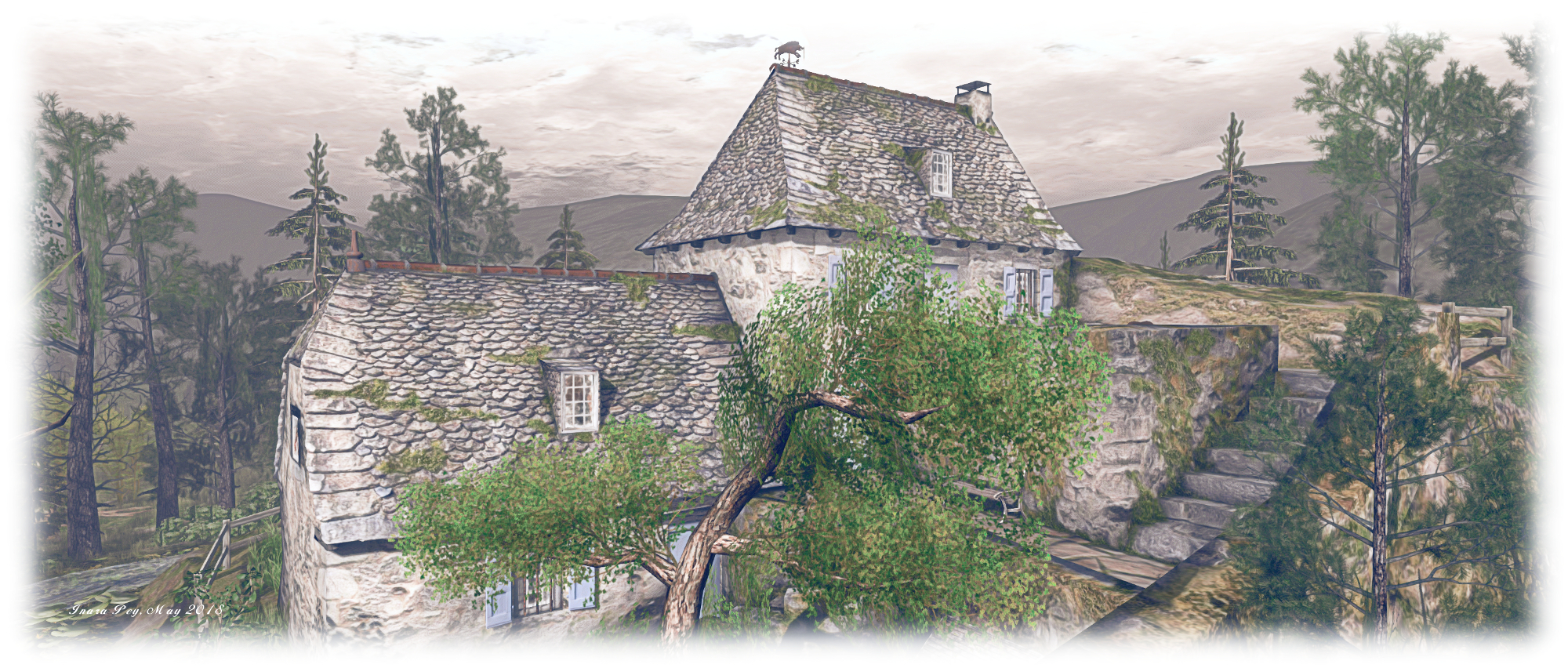
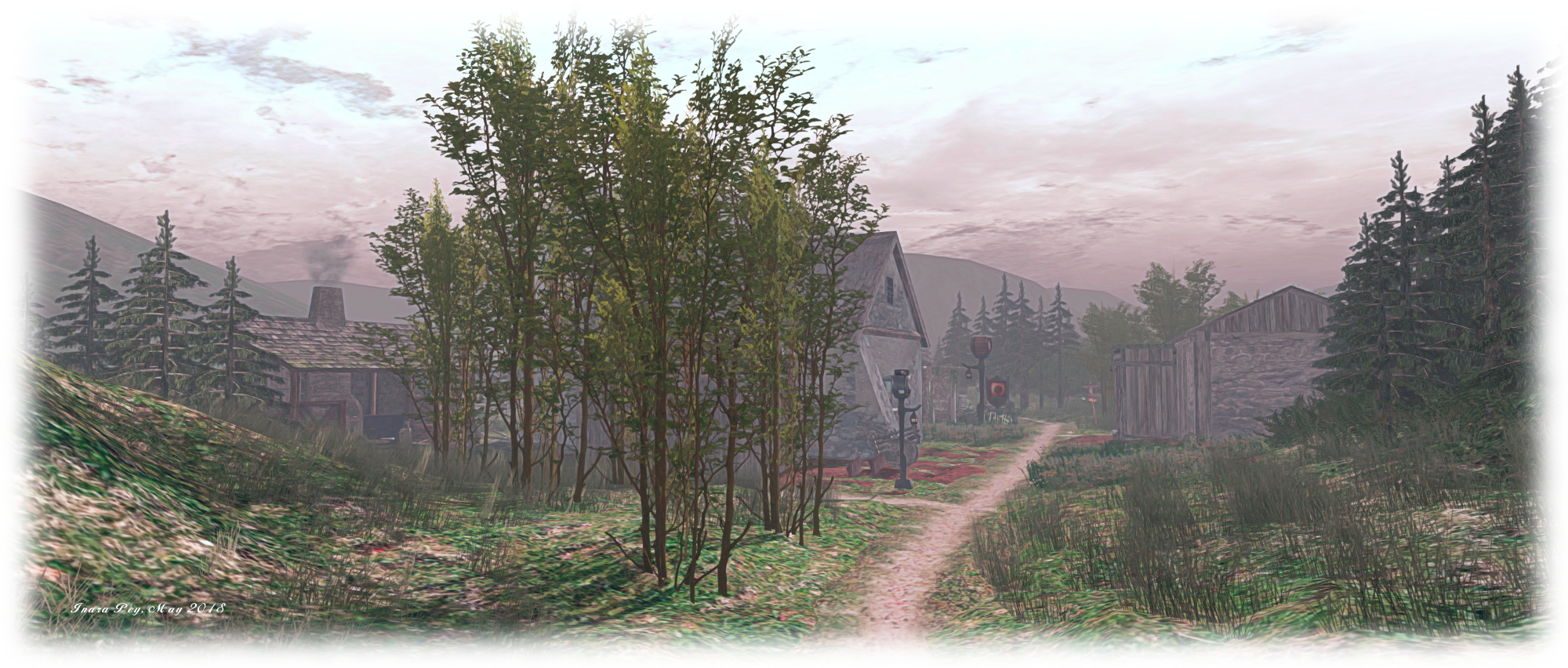
Setting out along the paths will reveal the setting is broadly medieval in tone – as seen in the clothing of the “locals”. As well as the village, there are a number of other buildings to explore, such as Gorm Coinneach Maineir to the south-east, or Crow’s Court in the mist, or the ruins of a castle. There are also hidden places to be found – such as in the graveyard – for those willing to follow the suggestion given in About Land to click on things. I’m just not sure that accepting a tankard of whiskey is a good idea; not if you’re planning to keep walking or want to avoid the charge of being drunk in charge of a donkey cart … or flying dragon… 🙂 .

MindPillars, a Scottish themed Sim; Inara Pey, May 2018, on FlickrMindPillars, a Scottish themed Sim

Designed by Gaelle Ravenheart (Gaelle Joubert) and Carsten Ravenheart, MindPillars is ideal for those seeking something a little different by way of region design, and a hat tip to Shakespeare for dropping me a landmark.

SLurl Details