Urban scenes in Purple Crayons

Purple Crayons, Private Property; Inara Pey, February 2015, on Flickr“The Lost Town” – Purple Crayons (Flickr) – click any image for full size

Update, February 26th: I’ve received a note saying that Purple Crayons and Square Pegs in Round Holes will be closing on March 5th, 2015.

My recent visit to The Lost Town, Jordy B. Zipdash’s build on Rawh’s homestead region of Square Pegs in Round Holes, reminded me that I had yet to blog about another of Rwah’s builds, that of Purple Crayons, which I visited a little while ago, but had yet to write about; so I decided to correct that oversight.

Rwah charmingly describes Purple Crayons as a place where “colouring outside the lines is the norm,” and “nothing makes much sense, where there is little reason or rhyme as to why, it just happened.” The result is a build with mixes urban, rural and coastal builds into an interesting and photogenic whole, and which offers the curious much to explore.
Purple Crayons, Private Property; Inara Pey, February 2015, on Flickr“The Lost Town” – Purple Crayons (Flickr) – click any image for full size

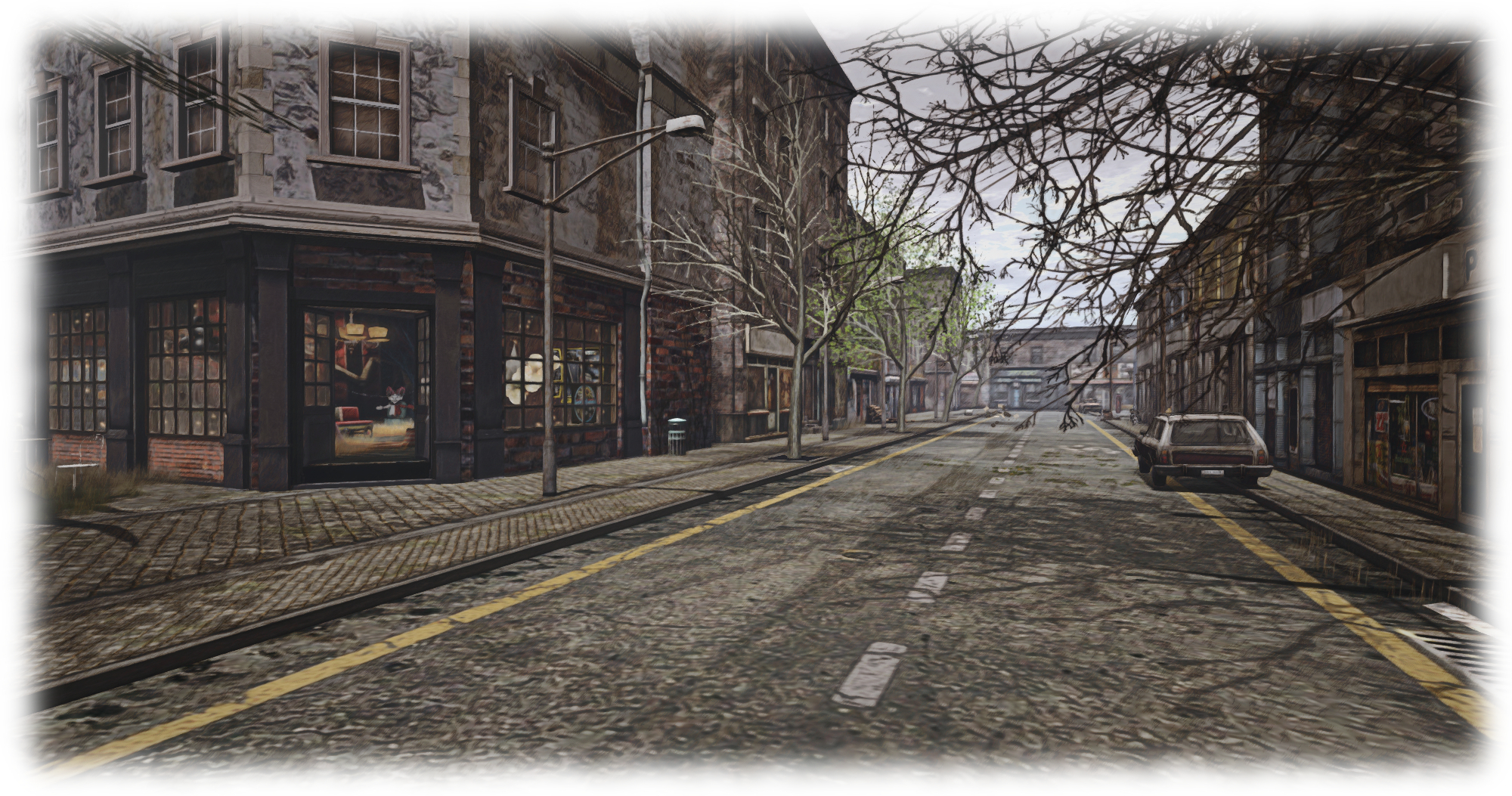
Visitors arrive at the mouth of a tunnel, from which stretches a paved road lined on either side by somewhat run-down shops; clearly a place which has seen better days. Several of the premises lining the street are façades, but equally, several are not, and can be entered. It’s worthwhile taking a little time to discover which these are, as some contain small art gallery spaces, including a studio by Thorn Arisen, who offers evocative portraits of SL avatars and life through his Flickr stream.

One of the things that makes Purple Crayons so natural in appearance is the “stepped” nature of the urban build; above and behind the main street is a raised section of the town, reached via steps. It is something that helps give the place more of that feeling there there is no rhyme or reason to the design of this little urbanised corner of the world – it just happened.

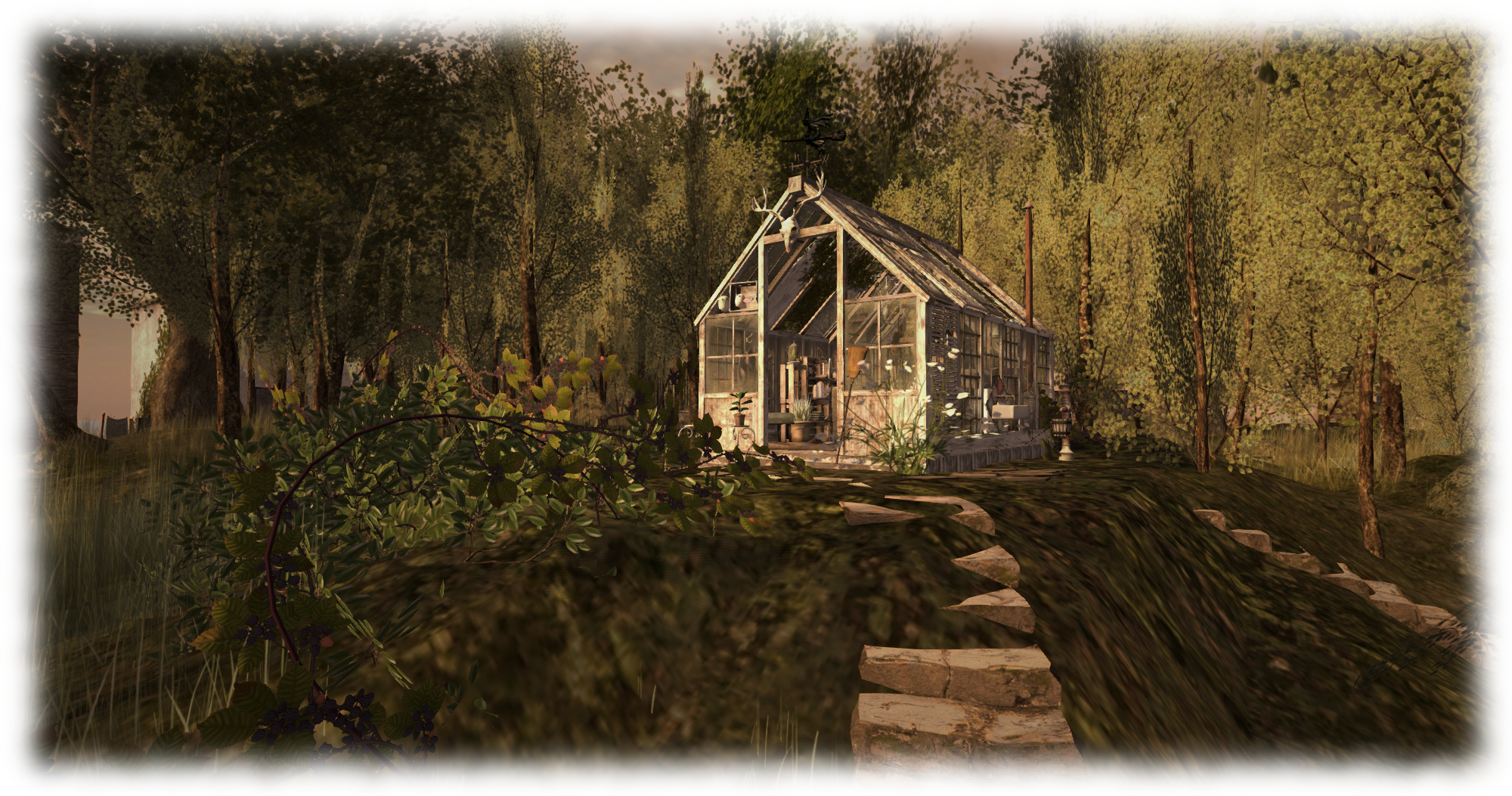
Beyond the buildings sits a small area of woodland which separates the urban grunge from a pristine beach to the north, complete with a prim little pier which appears to be far better maintained than the buildings in town. The beach itself seems to grow a little shabbier the further it travels to the east and west and approaches the edges of the town. To the east, for example, sits another wooden jetty, this time with was appears to be a slightly beaten-up bar promising Girls! Girls! Girls! To the west, shade from the sun is provided by the hulk of an old bus.
Purple Crayons, Private Property; Inara Pey, February 2015, on Flickr“The Lost Town” – Purple Crayons (Flickr) – click any image for full size

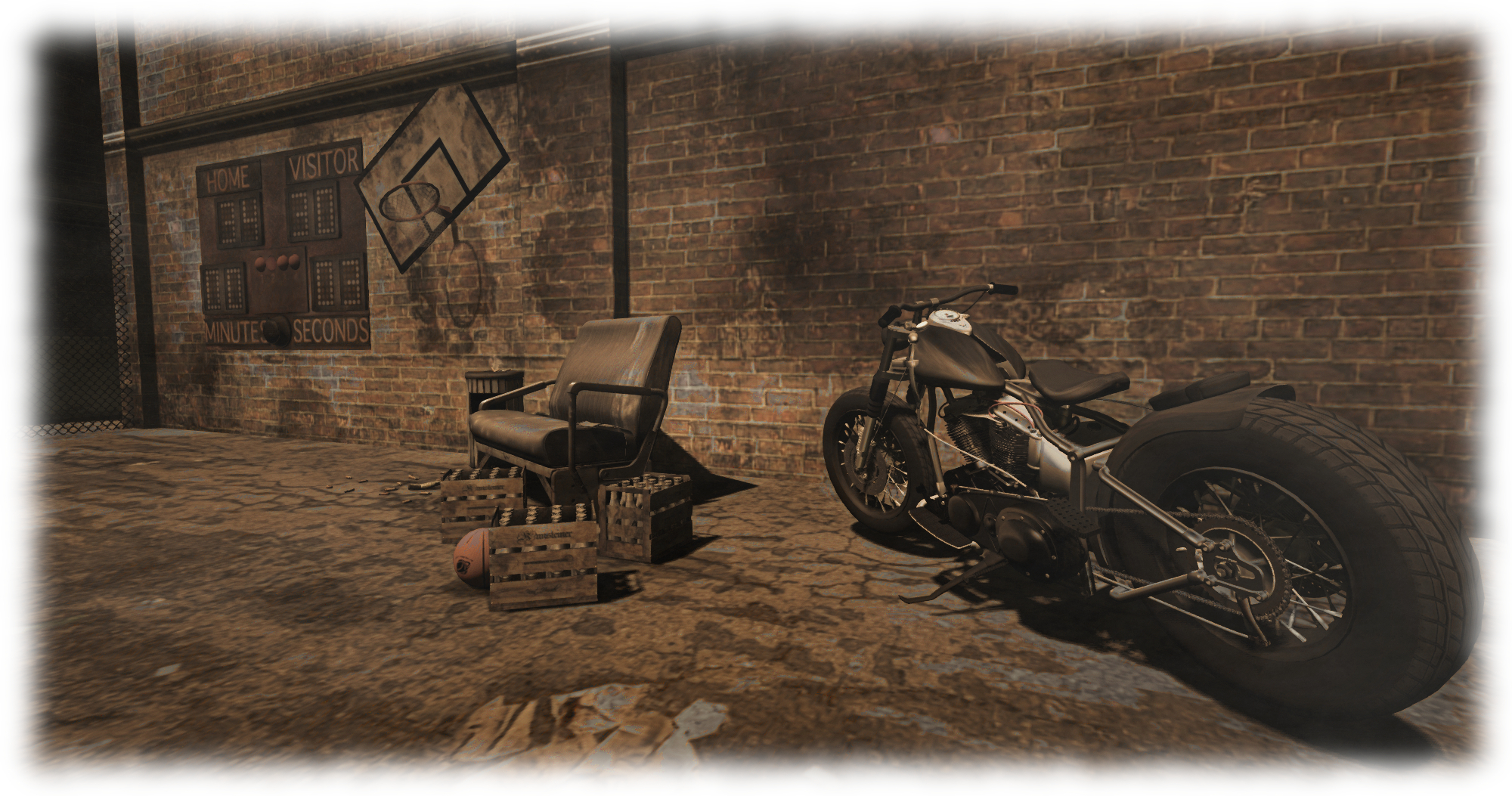
Yet there seems to be more here than meets the eye; the questions is, is it intentional, or purely happenstance, as the region’s description might suggest? The aforementioned bar, for example, is anything but, and if you look around carefully enough, a story seems to suggest itself, perhaps involving lost love and regret. The walk through the woodland to the pristine beach to the north also nudges the subconscious into perhaps making connections and drawing conclusions: past times of happy picnics, carefree vacations, all separated from the present just as the beach is separated from the town by the trees.

Or perhaps it really is just a design of contrasts, without intent, existing simply to be enjoyed. Only you can decide.

With rezzing open, and auto-return set to 30 minutes (but, as always, do please clean-up behind you anyway), Rwah invites people to make use of Purple Crayons for the photography, if they wish, and provides a few simple rules she asks people to observe during their visit.  Do abide by them and enjoy your explorations.
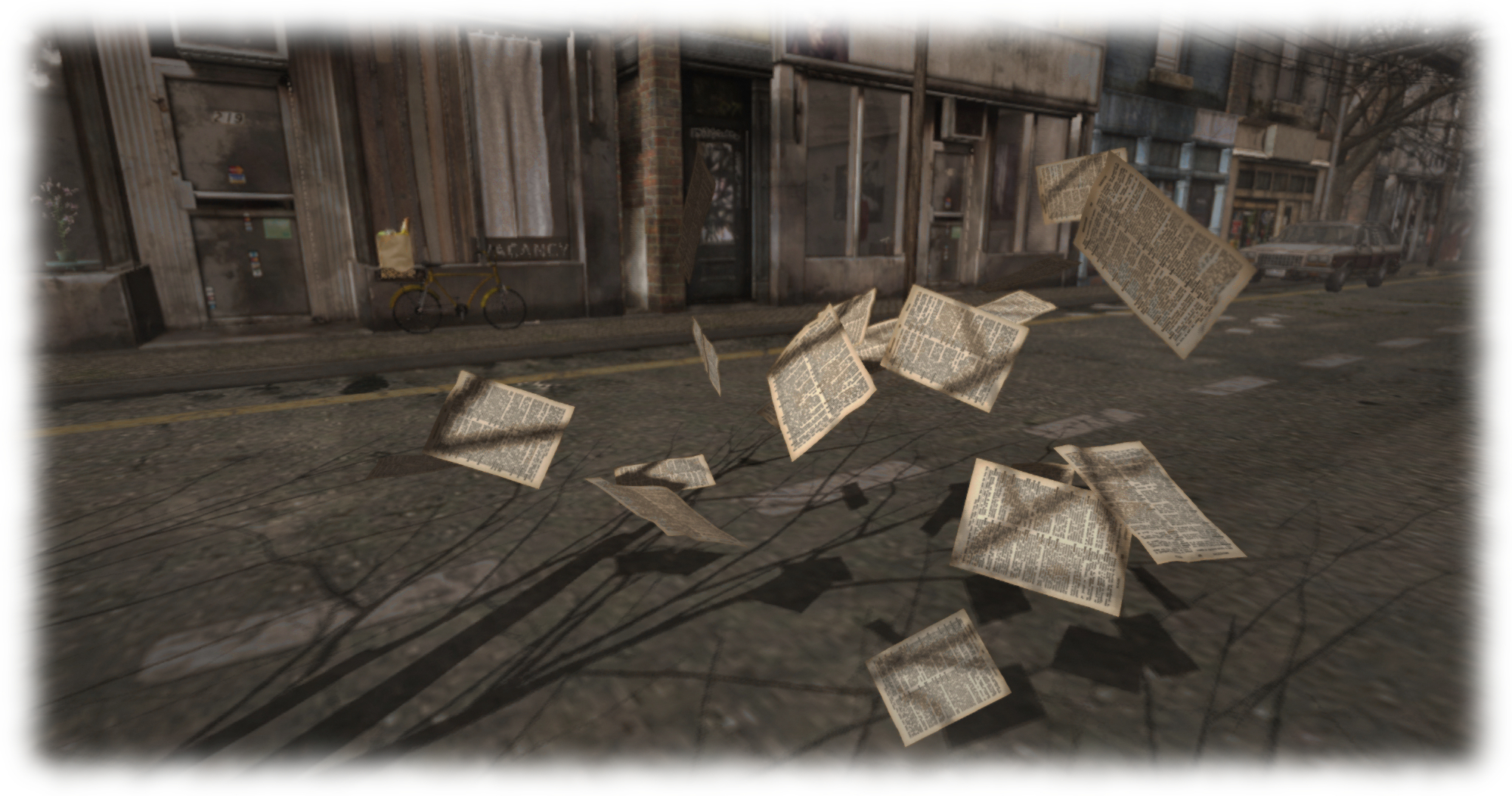
Purple Crayons, Private Property; Inara Pey, February 2015, on Flickr“The Lost Town” – Purple Crayons (Flickr) – click any image for full size

Related Links

In the hall of the Centaurs

The Centaurs' Hall
The Centaurs’ Hall – click and image for full size

Ziki Questi posted word that there’s a new build on Verdigris, home of the fabled (and quite lovely) Vintage Village by Oriolus Oliva (a place I last wrote about in July 2013), what’s more, it’s by none other than Haveit Neox, someone whose work in SL I’ve come to really appreciate and enjoy over the last few years.

The Centaurs’ Hall was apparently put together fairly rapidly, the majority of it being put in place in just three days from the start of the month, which is really quite remarkable given the complexity and beauty of the build.

The new build occupies the opposite side of the gorge above which Vintage Village is perched, the great wooden bridge built by Oriolus linking the two. When first viewed, there is something of a similarity between both the Vintage Village and The Centaurs’ Hall. Both occupy hilltop locations bordering the deep gorge which cuts through the region, and both are built out over huge piers rising skyward, their weight cantilevered to a degree: the Vintage Village in a south-north direction, The Centaurs’ Hall along an east-west line.

The Centaurs' Hall
The Centaurs’ Hall

However, that the two are different builds quickly becomes apparent as you cross the amphitheatre that forms the entrance to The Centaurs’ Hall; Haveit’s distinctive style is unmistakable, not only in the architecture, but in the overall harmony of design and use of textures and colour, and the presentation of space.

Inside the arched vaults of the Hall there is much to see, including a reproduction of The Miniature Goal, originally displayed at the Art India Galley exactly a year ago (see my review), and included here on Ziki’s suggestion. Follow the dusty tracks through the upper halls and they well lead you past some of Haveit’s glorious sculptures to the Czardas Greenhouse. While there might not be a lot of floor space available for dancing, this great room with its huge, glass-panelled walls and ceiling, offers plenty of food and drink in keeping with the origins of the name upon which it draws. Beyond the greenhouse, a broad stone terrace, dizzyingly set over the waters at the edge of the region, offers a panoramic view across the gorge to the Vintage Village.

The Centaurs' Hall
The Centaurs’ Hall

This is a quite a magnificent build, one while compliments the vintage village perfectly. Long may both continue together.

Related Links

A visit to a Lost Town

Square Pegs in Round Holes, Kashmir Dreams; Inara Pey, February 2015, on Flickr“The Lost Town” – Square Pegs in Round Holes (Flickr) – click any image for full size

Update, February 26th: I’ve received a note saying that Square Pegs in Round Holes and Purple Crayons, Rwah’s other region (see my post on it), will be closing on March 5th, 2015.

When I last visited Square Pegs in Round Holes, the region hadn’t long been opened. As I reported at that time – September 2014 – it was largely a water-based region, with a series of islands visitors could explore. Since then, much has changed.

Rwah, the region holder has decided to offer the homestead region to those builders with a serious desire to build a region-sized installation which can be enjoyed by the public at large. To start things off, Jordy B. Zipdash was invited to create something in the region, and he came up with a darkly atmospheric build in the form of The Lost Town.

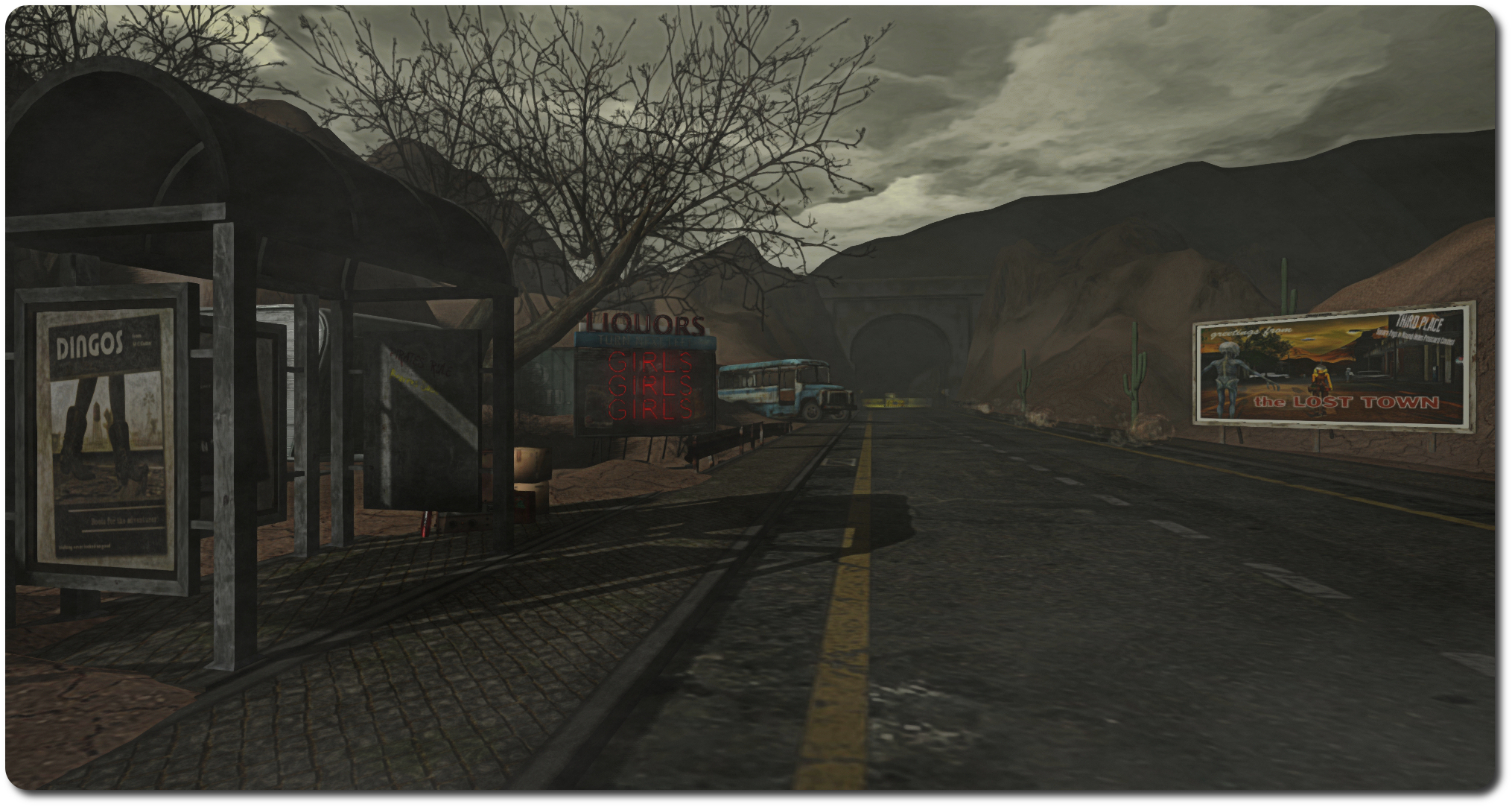
A lonely wind moans its way down a long road from a distant tunnel, passing between the careworn buildings of a run-down town. Tumble-weeds roll their way across the asphalt at the wind’s behest, while tall hills, bare rock denuded of vegetation, hem the town in, their bulk adding a sinister edge to the fading light.

Square Pegs in Round Holes, Kashmir Dreams; Inara Pey, February 2015, on Flickr“The Lost Town” – Square Pegs in Round Holes (Flickr) – click any image for full size

At the far end of town, the road makes a hard right turn before running arrow-straight to the mouth of another tunnel, passing a deserted trailer park and other human detritus before finally leaving this shabby corner of the world behind.

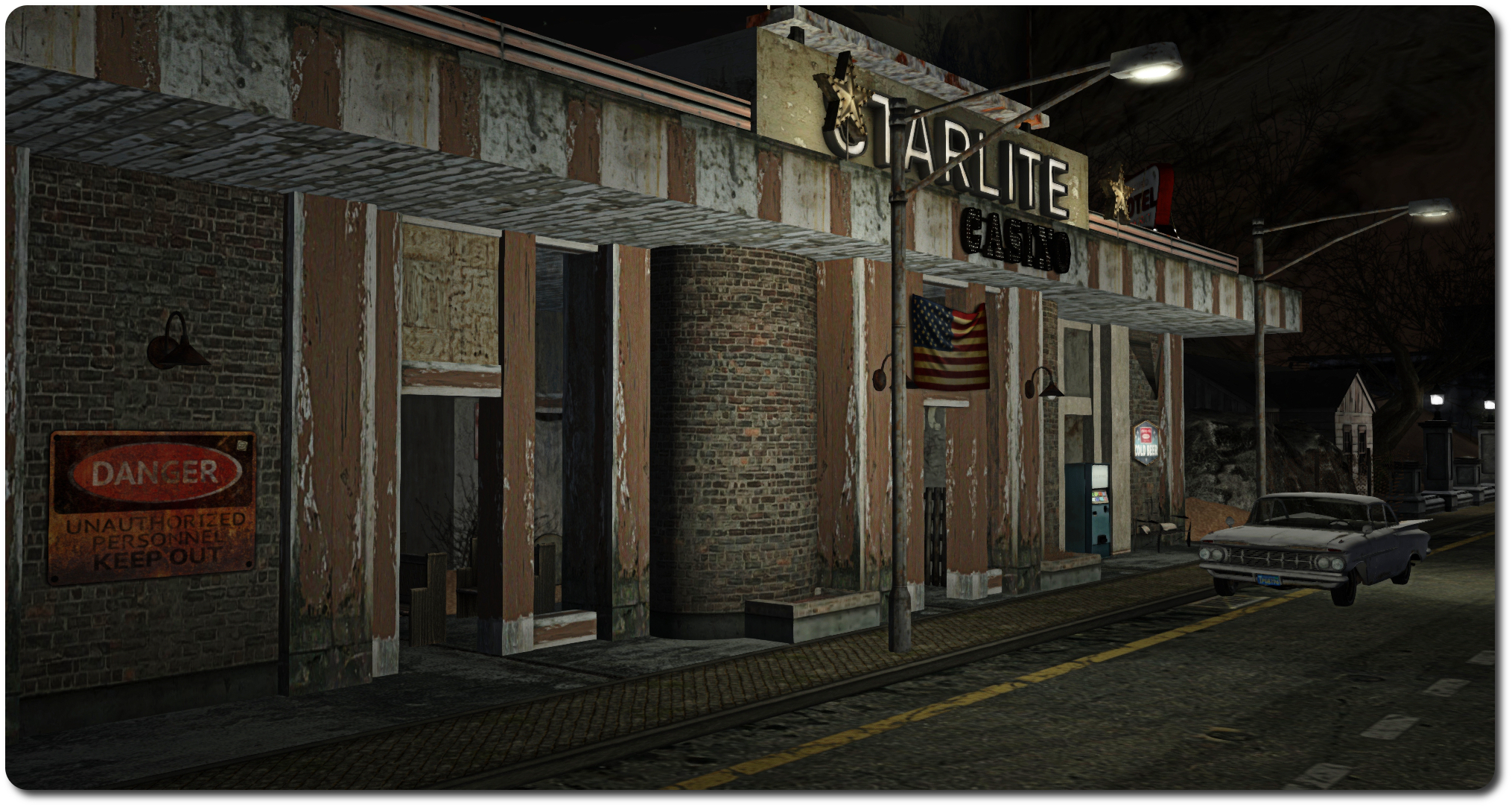
This might once have been a thriving town; there’s the imposing form of a bank on one side of the street (long-since converted to a bar), and the place even boasted a casino – the Starlite, although this has also gone through something of a transformation, becoming some kind of church; and even this seems to be well beyond any regular use, the desert sands drifting in through a back doorway and taking up residence between the pews.

But this isn’t to say the town is deserted; across the road from the shell of the old casino sits a small store and three well-maintained houses, the gleaming form of a car sitting on the driveway to one of them. Fires glow in the hearths of both places, and all have a feeling of cosy warmth about them, and by day look as if they’ve been lifted from quiet suburbia. Even so, within them, things seem a little odd; where are the occupants, given all three houses appear to have been in recent use? And why are all three bedrooms devoid of any furnishings whatsoever…?

Square Pegs in Round Holes, Kashmir Dreams; Inara Pey, February 2015, on Flickr“The Lost Town” – Square Pegs in Round Holes (Flickr) – click any image for full size

“Have you ever heard of a little mining town called Centralia?” Jordy asks by way of citing the inspiration for this installation. “If not, fire up your  search engine and read up on the place and how it came to be a little deserted town. Here in the Lost Town, the same abandonment happened.  Not by fire or elemental damage  but something far more sinister.”

Indeed, the air of mystery here, with its sinister undertones, is hard to avoid. It comes not only in the perpetual, wind-shrouded dusk that lies over the place, but also from the signs and portents hidden within some of the buildings. However, to find the whole truth, you may well have to venture out into the desert, beyond the little lake with its dilapidated barn. but be careful! “Don’t venture out too far in the desert,” Jordy warns, “Mighty strange goings-on out there, if you ask me.”

So don’t say he didn’t warn you…

Related Links

To visit a Misty Isle

Tuck's Misty Isle, Devonair; Inara Pey, February 2015, on FlickrTuck’s Misty Isle (Flickr) – click any image for full size

I was led to Tuck’s Misty Isle by Hans Inshan, who posted some gorgeous photos she’d taken on the Bitacora Vajera blog. While I can’t hope to match Hans’ photographic skills, I nevertheless wanted to hop over and see the island for myself.

The Tuck in question is Little Tuck, aka Pete Applemoor – a fact which came as something of a surprise to me as Pete, IIRC, visited my Fallingwater inspired build a number of times while it still existed in Second Life. As such, it became a delight to explore his region.

Tuck's Misty Isle, Devonair; Inara Pey, February 2015, on FlickrTuck’s Misty Isle (Flickr) – click any image for full size

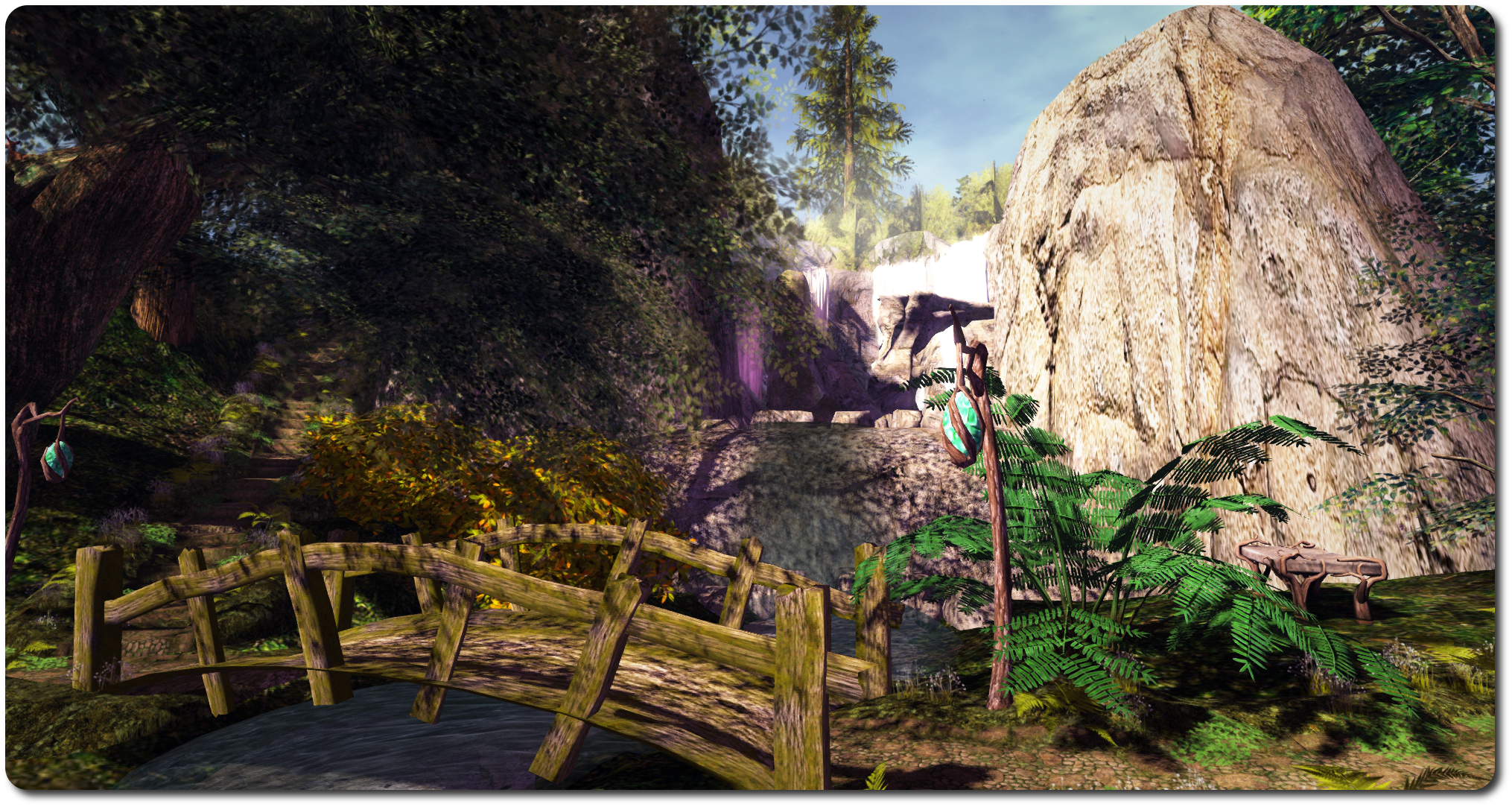
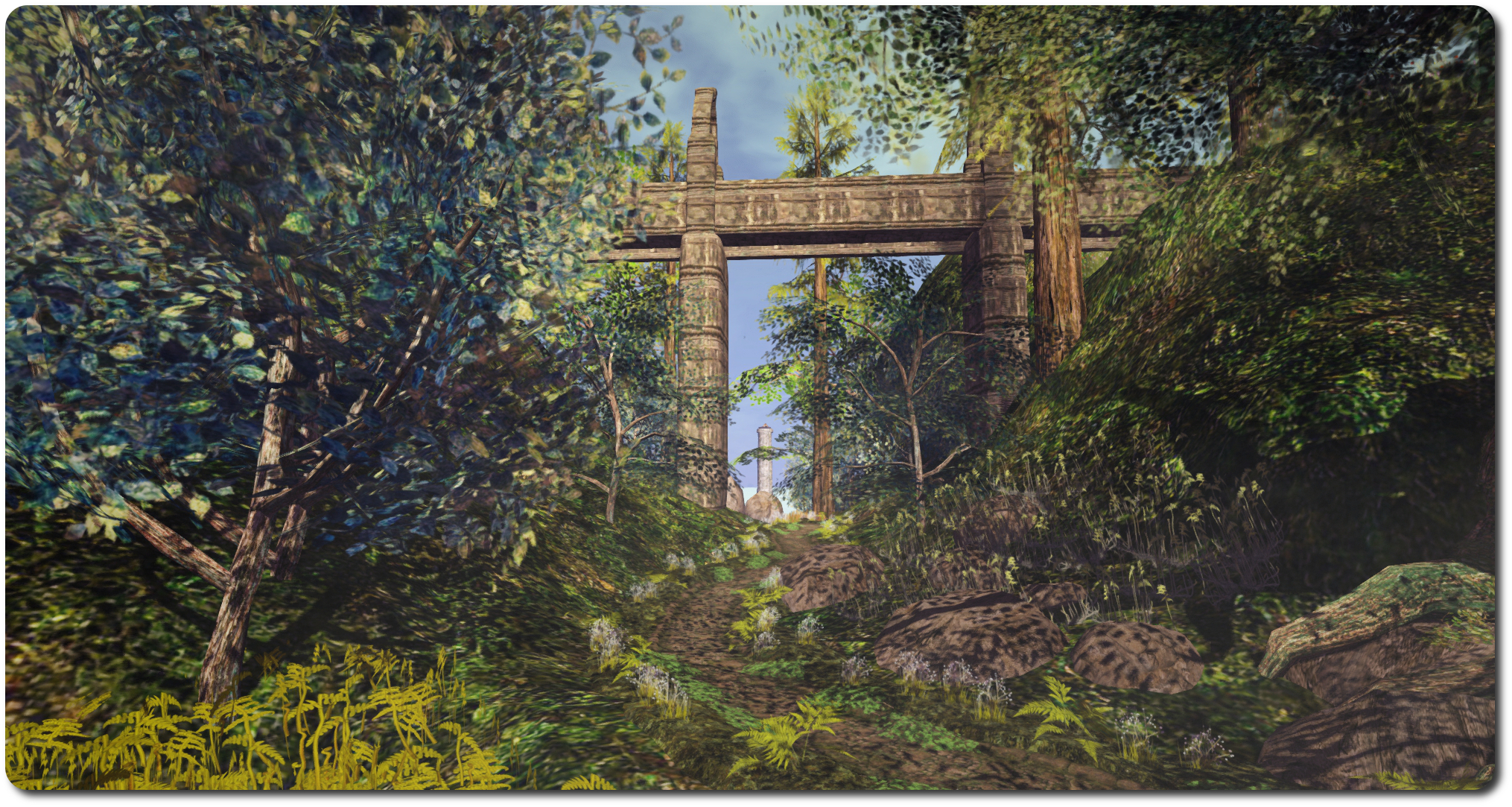
This is a rugged, wooded isle with fortress-like high cliffs guarding the majority of its shoreline, the landscape within split by a deep river gorge that curls its way from a set of high falls  through the heart of the island to arrive at the sea. Those reading the region’s description will learn the Misty Isle was once the domain of an ancient civilisation, the ruins of which can be found throughout, and is now the home to fae, pixies, elves, merfolk, nymphs and more.

Evidence that the place is still occupied can be found in the well-worn trails and tracks that lead the visitor inland for the landing point, and up into the hills: torches burn brightly along the edge of the paths, and all the bridges are in good repair. So someone must be around to keep the former lit and the latter safe for others to cross.

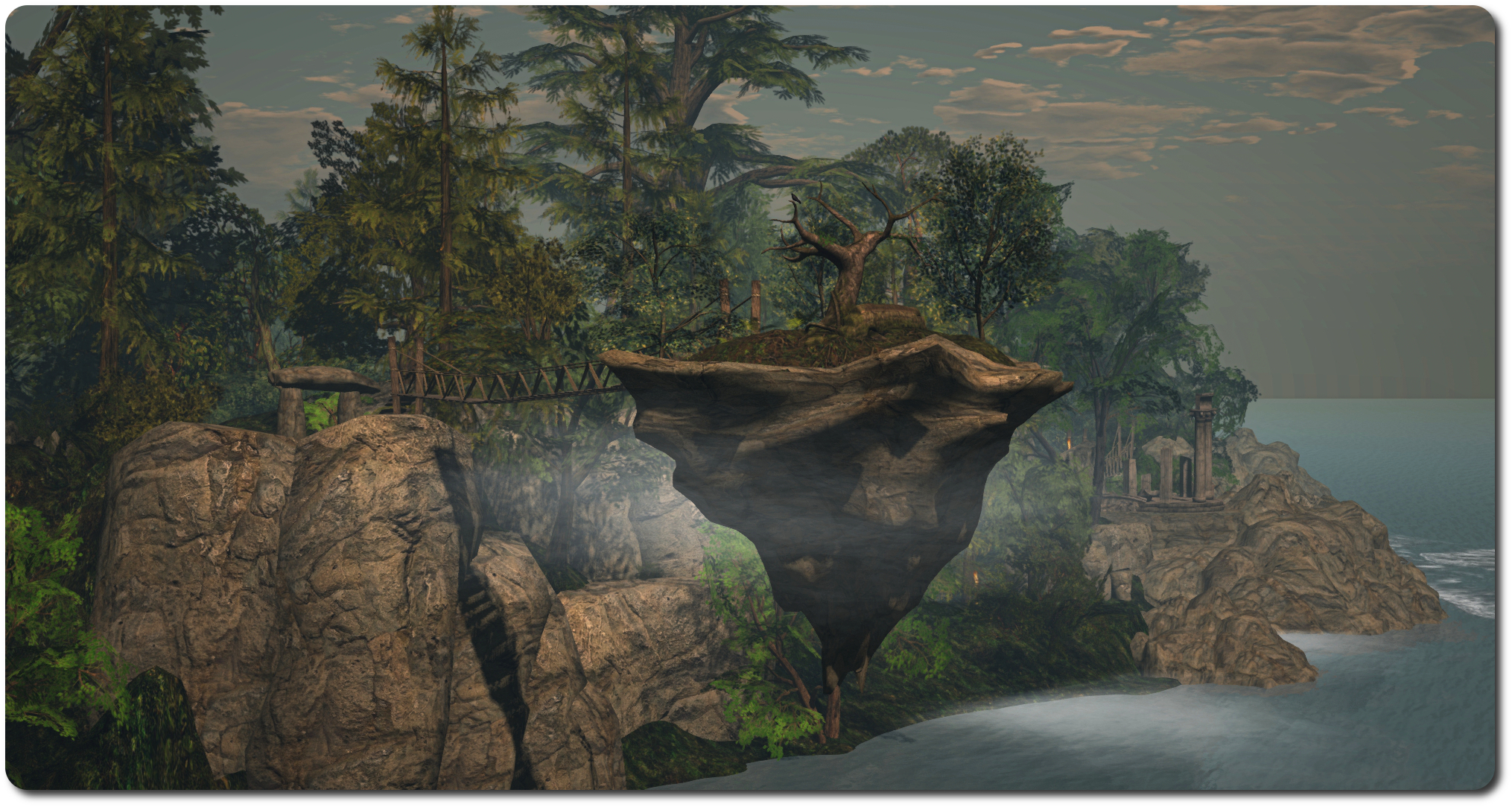
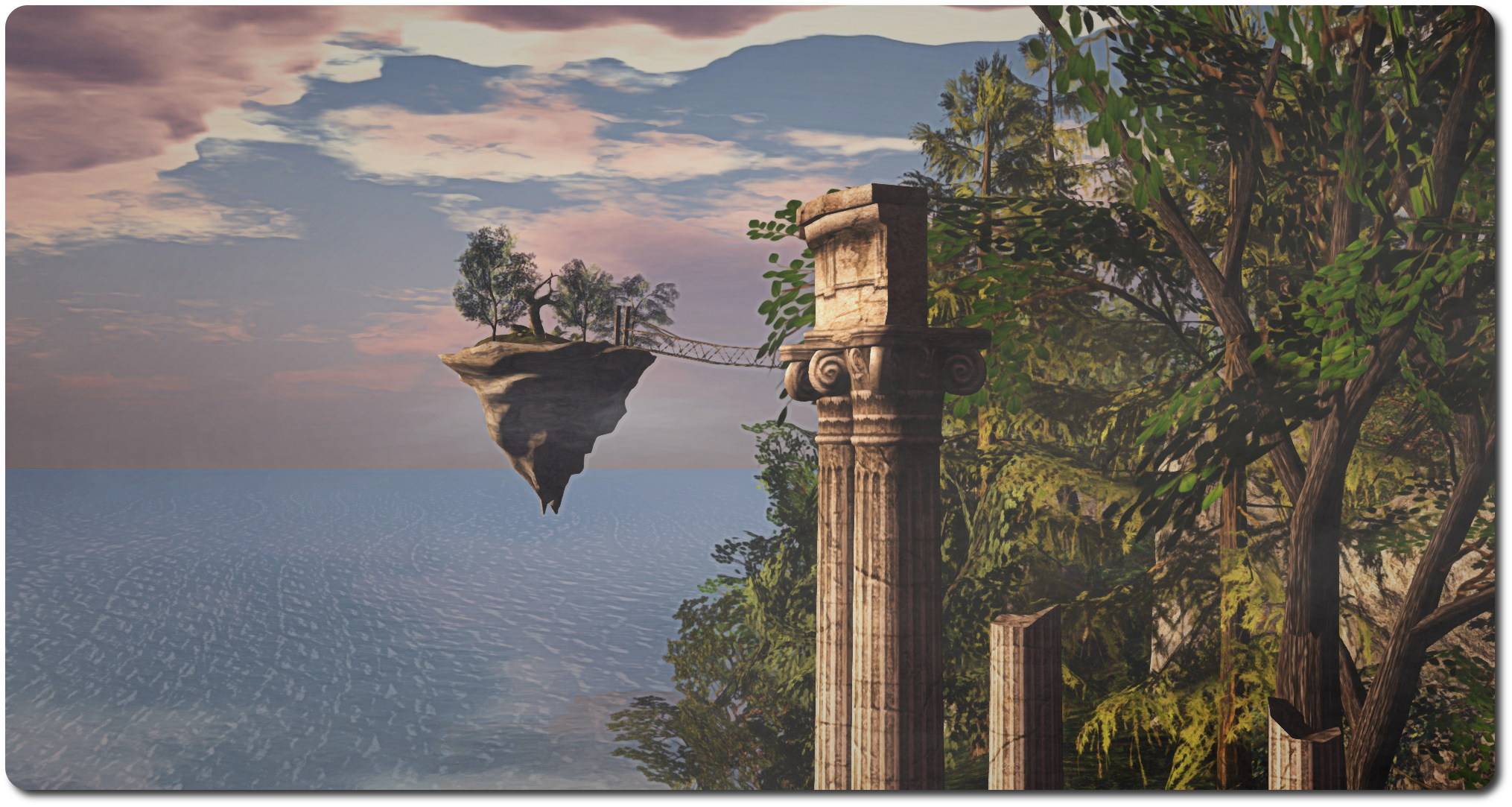
There is also a sense that some of the ruins still see use, and the small island floating serenely in the air just off the coast, reached by one of the aforementioned bridges, speaks of a powerful magic still very much at work here. In fact, keep your eyes open as you explore, and you’ll find places where you can experience the power of the magic yourself as you float over the water at the foot of the falls or above the the island’s single wooden village.

Tuck's Misty Isle, Devonair; Inara Pey, February 2015, on FlickrTuck’s Misty Isle (Flickr) – click any image for full size

Wildlife can be found throughout the island – foxes, bears, deer, pelicans and more, and along with them can be found places to sit or dance or simply enjoy the view. After all, as the description tells us, this is a place for contemplation and for enjoying the company of those close to us.

Tuck’s Misty Isle does exactly what it says on the tin: offers a place to relax in, explore and enjoy, whether on your own or with a friend or two. Rezzing is open if you want to have a prop or two when taking photographs, but do please pick things up behind you. And do consider showing your appreciation for any visit you make through one of the numerous donation points scattered across the island – it all goes towards keeping it open for all to enjoy.

Tuck's Misty Isle, Devonair; Inara Pey, February 2015, on FlickrTuck’s Misty Isle (Flickr) – click any image for full size

Related Links


OnLive open SL Go Island

SL Go user? Now you can get help and personal assistance through the SL Go Island - and it's a good place for escaping the worlds, as well!
SL Go user? Now you can get help and personal assistance at the SL Go Island – and it’s a good place for escaping the worlds, as well!

Important note: The SL Go service is to be shut down on April 30th, 2015. For more information, please read this report.

On Wednesday, February 4th, Dennis Harper, OnLive’s Product Manager for SL Go kindly invited me to preview the new SL Go island in Second Life, which is designed to offer users of the the SL Go service a in-world place they can visit should they need assistance.

SL Go Island officially opens its doors for business at 10:00 SLT on Thursday, February 5th, 2015, and is modelled along similar lines to the Firestorm Support Island, which originally opened in August 2012 (see my review on it).

The idea for such a in-world venue was originally suggested during the special Firestorm Q&A meeting, alongside the idea for the SL Go support group, which launched in January 2015.

The landing point offers information and clickable signs for obtaining assistance - and more
SL Go Island: the landing point offers information and clickable signs for obtaining assistance – and more, with the SL Go greeter bot standing alongside

SL Go island offers a rural environment, with the landing area acting as the support hub. Here information boards and signage provides initial assistance.

A main board offers basic information, while thee signs hanging from it will take visitors to the OnLive Support web page, the support forum, and – for those who have yet to try it, a link to the SL Go sign-up page. A further sign allows SL Go users who have not already done so to join the in-world SL Go support group.

However, it doesn’t end there. On the table under the main noticeboard sit s small silver bell. If a member of the SL Go support team isn’t already on the island (they all tend to spend a fair amount of time there) or near the landing point, ring it, and personal help should be forthcoming.

SL Go support staff can frequently be found at the beach bar ....
SL Go Island: support staff can frequently be found at the beach bar ….

The rest of the island, all of which has been designed by  OnLive web engineer and Second life resident Jersey Silent, is given over to walks among the trees and down to the beach. Here sits a bar (providing support is thirty work!), and if folk aren’t around the landing point, they can generally be found here. There are also a number of spots scattered around the island, make it a welcoming place for those who wish to sit and relax.

SL Go Product Manager, Dennis Harper, in-world

“I really like it here,” Dennis said to me as he and Jersey showed me around. “If you want to find me, I’m usually at the beach bar, it’s a great place to relax, although there’s a cool swamp on the other side, which is also nice to visit after a day at the beach. But we’ve tried not to make it anything fancy – just a place to hang out.”

“But don’t forget, for the fastest and most timely support for SL Go, visit us on SL Go Island!” He added.

Wandering the island with Dennis and Jersey, I  couldn’t help but notice the care take to keep things open, relaxed, and as welcoming as possible. Jersey’s Landscape blends content from a number of designers who are bound to be familiar to many visitors, and she’s taken a huge amount of care to provide open spaces and quiet little spots for visitors to enjoy.

So – if you’re an SL Go user and need help, or if your curious about SL Go, or if you just want somewhere new to wander and spend time in, SL Go island may offer the perfect solution!

Timeless peace in The Outer Garden

The Outer Garden, Calm Beach; Inara Pey, January 2015, on FlickrThe Outer Garden, Calm Beach (Flickr) – click any image for full size

The Outer Garden, floating high over a quarter of a full sim region, is a true delight. Designed by Bisou Dexler, it is a tour de force demonstration that less is very often more as it presents visitors, and especially photographers, with an absolute treasure of a place to visit.

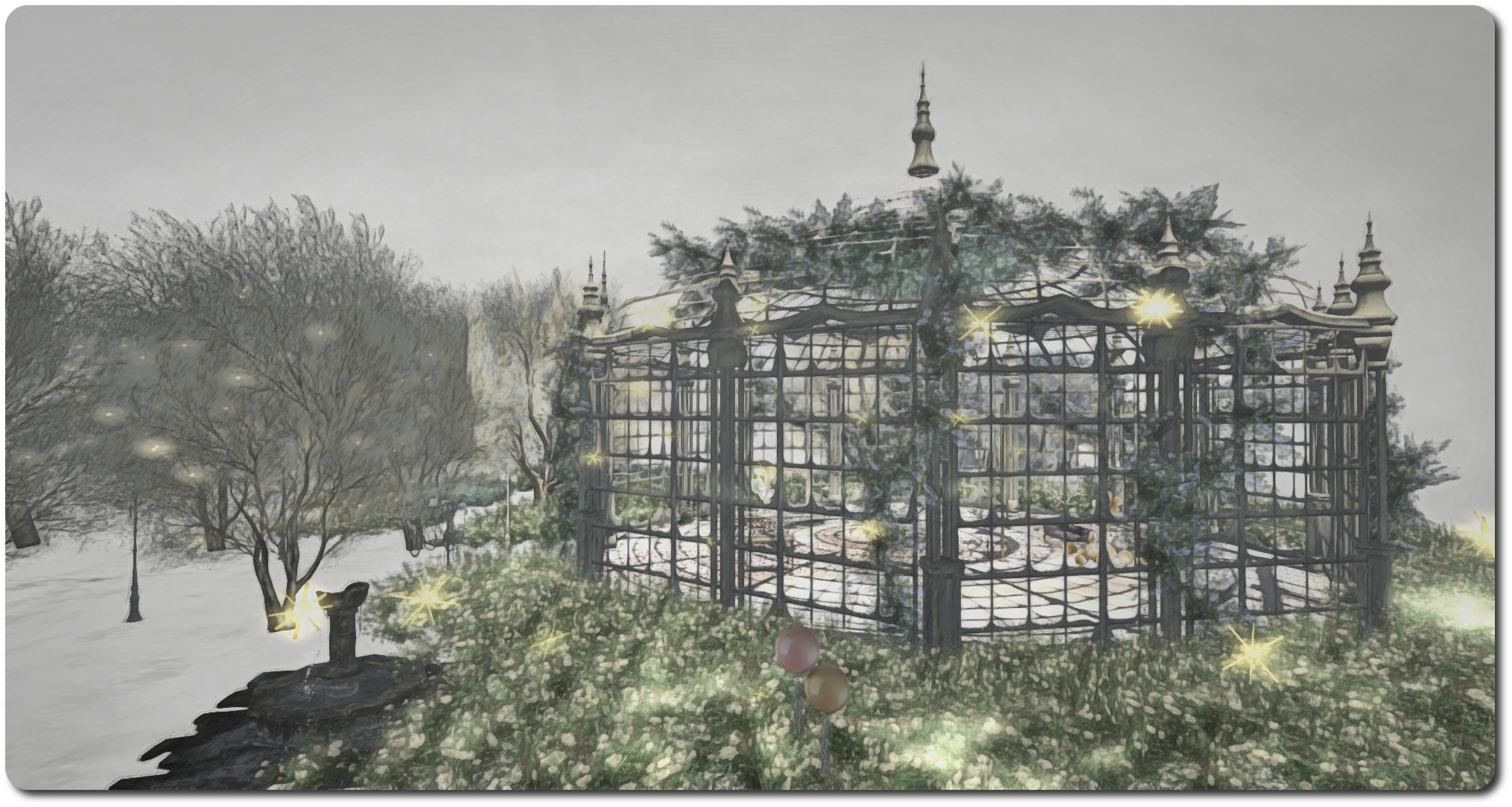
Central to the design is a huge pavilion of glass what I take to be wrought iron, a structure evocative of Victorian beauty, hung with climbing roses and surrounded by a lake of bright rose bushes set against the snowy white ground. Around this can be found a series of little scenes which can either been seen as a part of the whole, or form self-contained elements of their own, while inside the pavilion lies a romantic heart.

The Outer Garden, Calm Beach; Inara Pey, January 2015, on FlickrThe Outer Garden, Calm Beach (Flickr) – click any image for full size

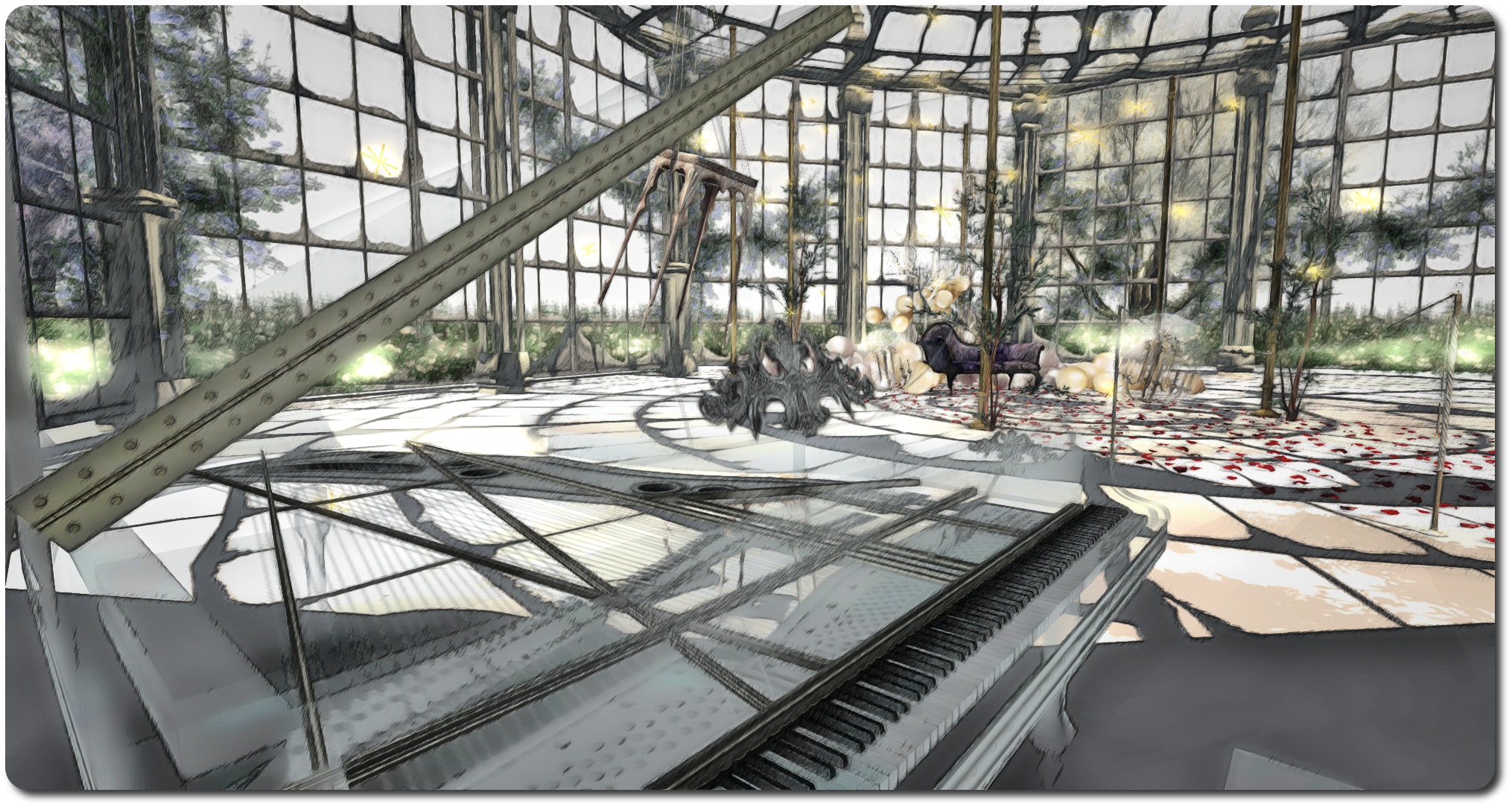
Here one finds an aisle leading from the great doors to a single chaise lounge, the red petals of roses forming a soft carpet on the white floor. Close by, the ghostly form of a glass piano sits, waiting to be played or to play for visitors. Candles light the space on an evening, together with a sprinkling of  golden stars floating in the air under the high dome, while balloons are gathered near the piano and the seat, like clouds hovering at the horizon.

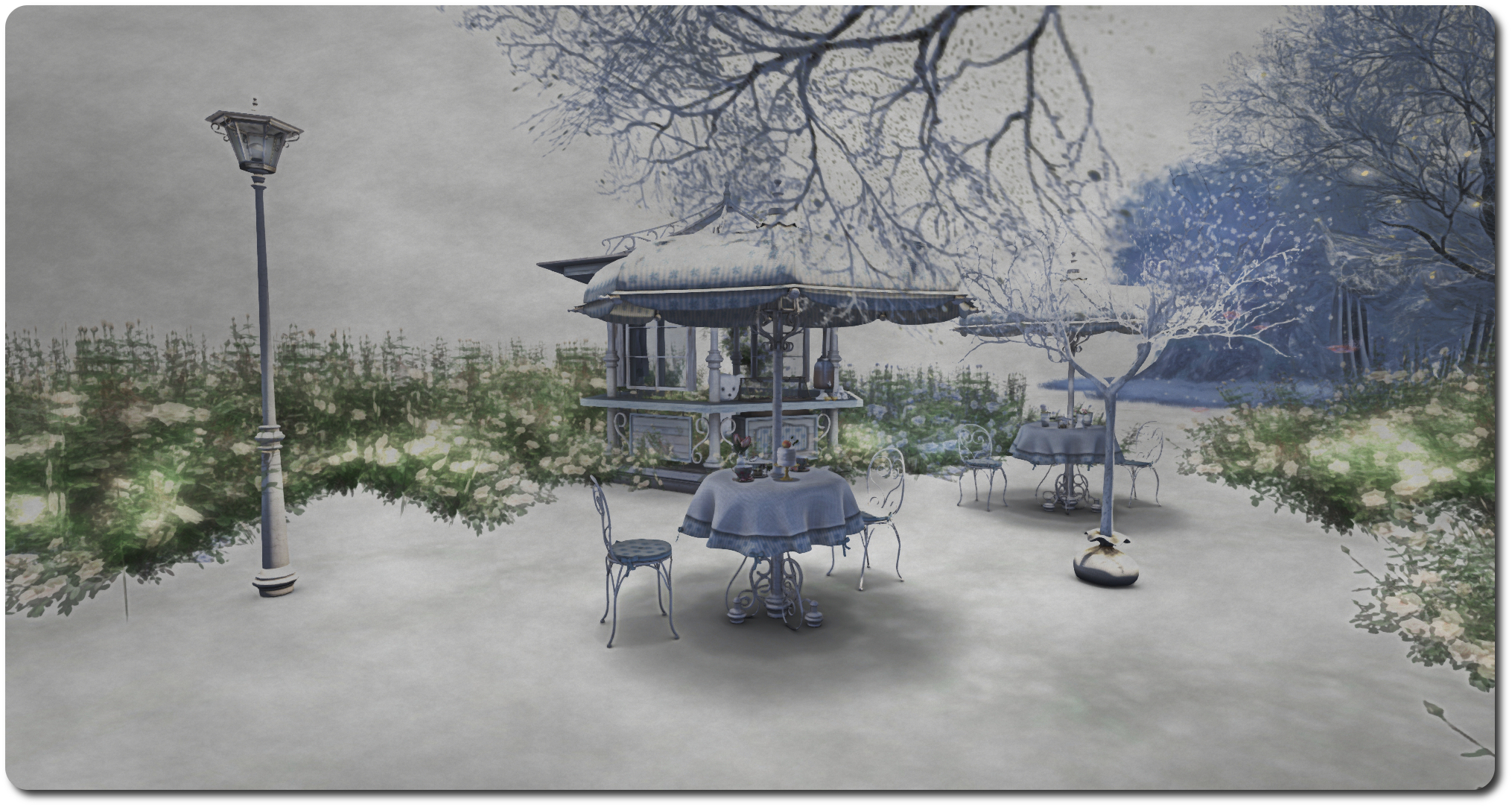
Outside, ices and cakes can be found not little tables next to an ice cream gazebo staffed by a a little white teddy bear, the translucent forms of butterflies hovering wisp-like between the tables. A little further away sits a little copse, a little hideaway nestling inside.

The Outer Garden, Calm Beach; Inara Pey, January 2015, on FlickrThe Outer Garden, Calm Beach (Flickr) – click any image for full size

There is a beautiful ethereal quality to The Outer Garden, partially due to the use of light (especially a subtle use of glow); this gives the entire scene a soft look that might be described as “timeless” or “other-worldly”, and which leads to opportunities for some clever photographic effects when mixing the right appearance with the surroundings. Just watch, for example, as someone can seemingly disappear into the rose bushes surrounding the pavilion as they walk away from you, their form gradually softening and fading the further they get from your camera.

The Outer Garden is an absolute treasure; if you’ve not already been there, it is a place I thoroughly recommend you add to your list of places to visit.

The Outer Garden, Calm Beach; Inara Pey, January 2015, on FlickrThe Outer Garden, Calm Beach (Flickr) – click any image for full size

Related Links