Among the Moles of Lumenaria

Meauxle Bureaux
Meauxle Bureaux – click images for full size

Ciaran Laval recently posted about the return of Lumenaria, Kayle Matzerath’s fabulous and whimsical build from Fantasy Faire 2013.Once the location of shops and stores, it now serves as home to the Moles of the Linden Department of Public Works – so it’s become a kind of mole Town, you might say.

As a fan of the build, and of Kayle’s work in general – as anyone who has seen my SL garden knows! – I decided to fly over and take a look for myself earlier in the week. I say “fly”, as the region the Moles occupy can be reached directly from my house, via a flight across Blake Sea and then down the coast of Satori. So I hopped into G-NARA and headed south-east.

Meauxle Bureaux
Meauxle Bureaux

The last time I’d spent time in this part of the virtual world, it looked like the Moles were working on a little string of islands for Petites along Souverain, Laugier and Fernandes, just off the coast of Satori. These islands have long gone (or have possibly moved, I’m not sure which), and the “Mole Town” occupies a new region – Meauxle Bureaux – sitting alongside of Souverain and Fernandes, which offer waterside access to the town via the Mole marina in Fernandes and a jetty in Souverain. After landing on the waterway, I left G-NARA moored at the marina area (at least until auto return kicked-in).

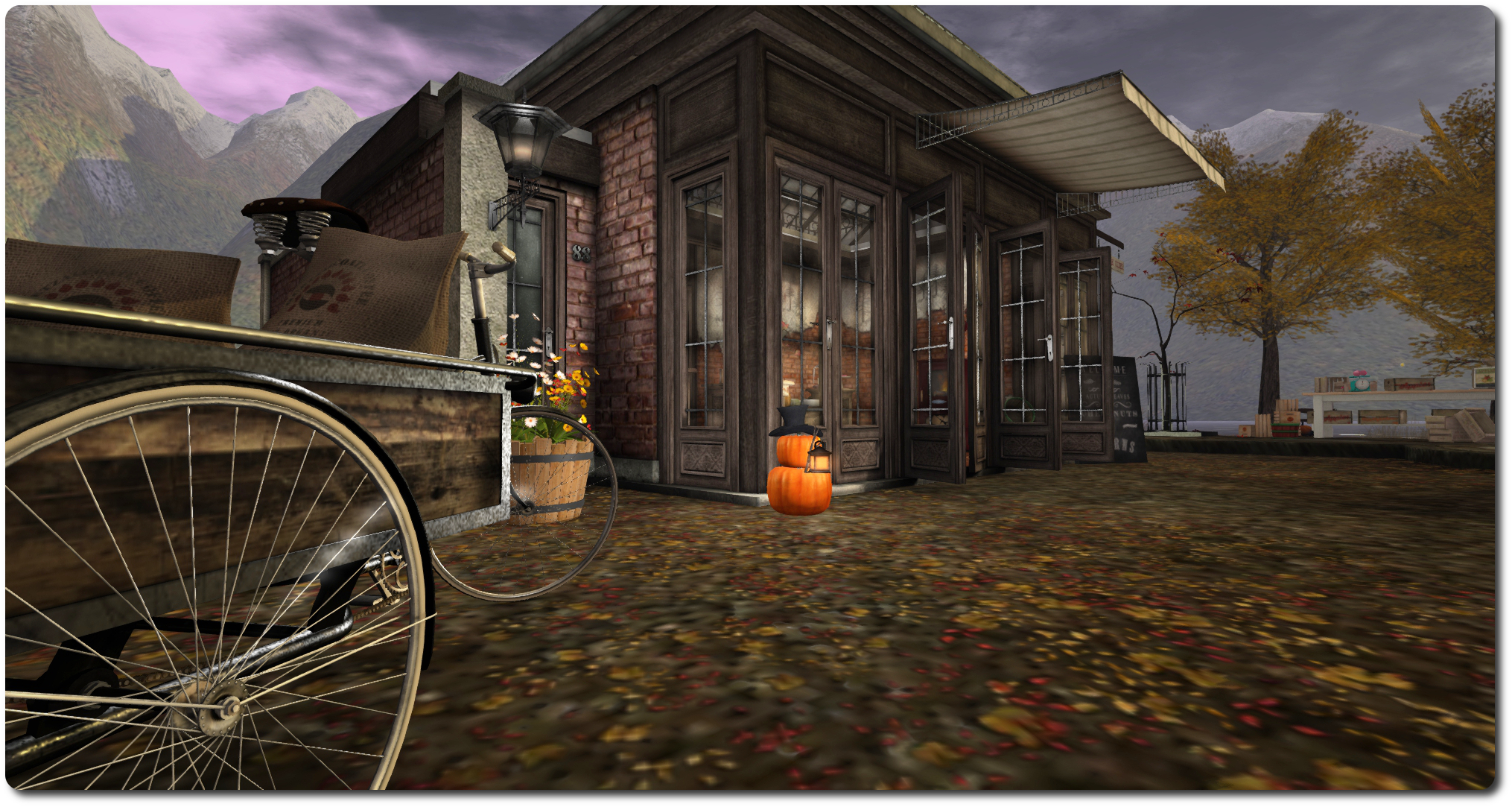
The town is pretty much as it appeared at Fantasy Faire, the same twisty little streets leading up to the great hall, the same gaily coloured rooftops and the same formal park area – even the windlight is the same. However, the Moles are now in residence, as the signs outside the doors of many residences announce. They seem to be a healthy bunch; on the stone paved streets sit market stalls offering fresh fruits and produce, as well as flowers for the green-fingered … clawed …. Moles, and bicycles appear the be the prefered method of wheeled locomotion.
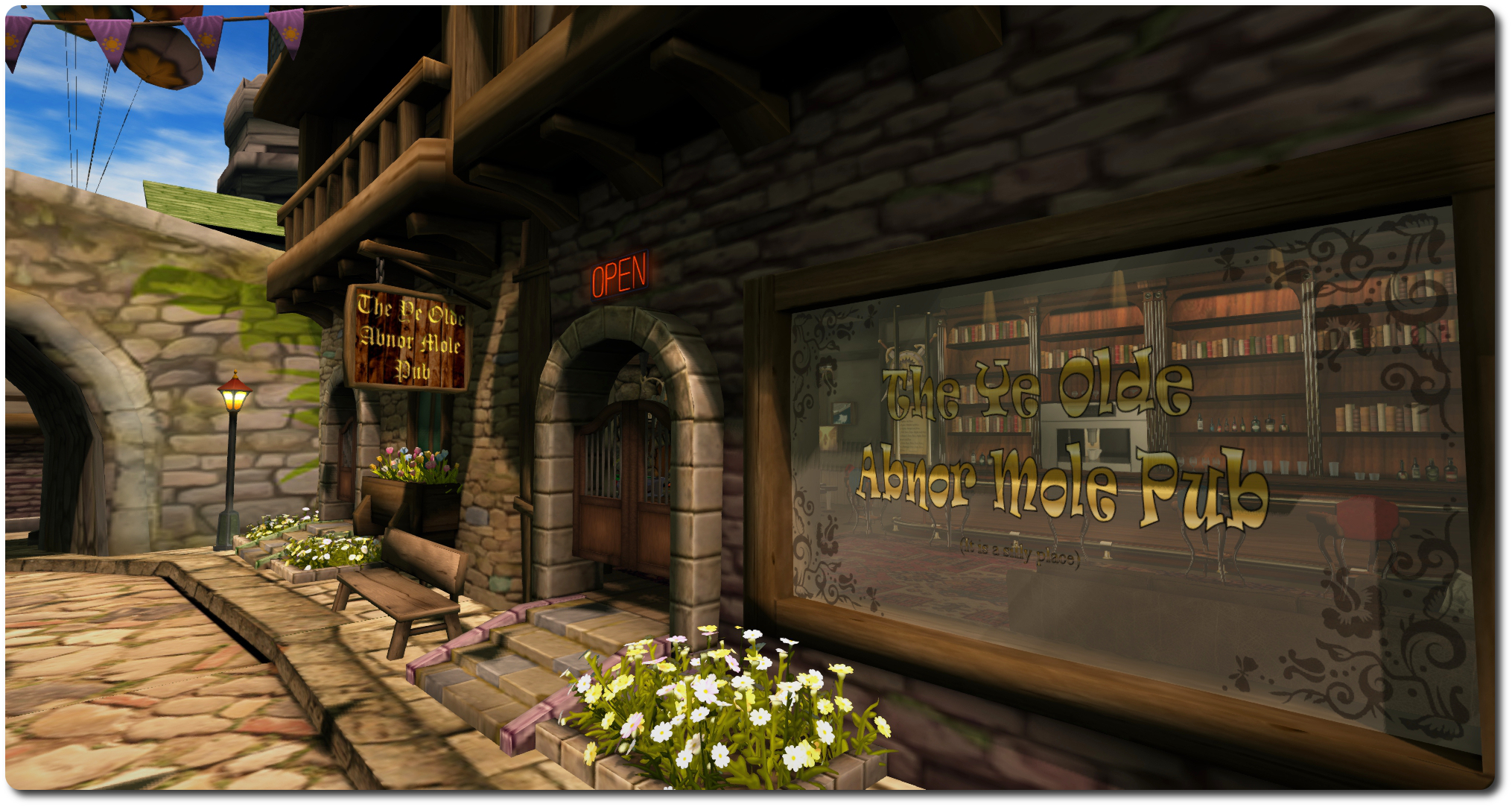
Meauxle Bureaux - rum, rum, rum, rum ...
Meauxle Bureaux – rum, rum, rum, rum …

However, all the good-for-you edibles doesn’t mean the Moles live a life of abstinence, as Ye Olde Abnor Mole Pub demonstrates. Here locals and visitors are offered the chance to sit down and enjoy a drink or three, play the odd board game or challenge each other to a friendly game of pool. Given the menu on the wall, I’ve little doubt that there may also be the odd bout of impromptu and Pythonesque singing breaking out should anyone happen to ask what’s available to eat. It starts out with fish and rum before proceeding through the likes of rum, apples, seagull and rum and fish, rum, rum, apples and rum, to eventually arrive at rum, rum, rum, rum, rum, rum, rum, bananas, rum, rum, rum, and rum, with a note that bananas are, in fact, off. Enjoy the greeting when visiting as well!

Meauxle Bureaux
Meauxle Bureaux

The humour continues out in the street, where an obelisk can be found, upon which is writ is letters large and golden, four of the Good Neighbour Commandments for Second Life Mainland, which may raise a smile when being read – click on the picture to the right for a sample.

LDPW builds are celebrated in the main hall, and clicking on the pictures will deliver a SLurl for those interested. There’s also a gallery of Moles to be found there as well. Lindens also have their spots in the town; Michael Linden, for obvious reasons, has a little place on the “quieter” side of town (in that some of the houses are still unoccupied), while the ever-charming Shaman Linden has a little studio tucked away near the marina entrance.

That the Moles have had homes in SL is not new – sail the waters around some of the mainland continents, for example, and you’ll likely bump into those belonging to Moles past and present. However, seeing a little town like this, where they can congregate and spend time away from the rigours of banging prims together and carving mesh, adds a lot to their presence in SL which, despite being oft critiqued, forms a valuable service. That the town is a re-use (with the creator’s full knowledge and approval, I might add) of a very popular build that may otherwise have lain forgotten and lost, makes a visit to Meauxle Bureaux doubly pleasant.

My only real complaint is that the rezzing areas at the marina and quayside seems to be restricted to land group members. I had hoped to re-rez G-INARA or possibly my Loonetta 31 and do a spot more flying or sailing in the area to see what else may have popped-up; unfortunately attempts left me informed that I didn’t have the right to do so, leaving me with no choice but to use the more boring method of teleporting back home. Nevertheless, a fun visit, and one I’ll doubtless repeat the next time I fancy a long-haul sailing trip!

Related Links

A trip to Holly Kai park

Holly Kai Park
Holly Kai Park

I’ve not had too much free time in SL of late; visits have comprised attending meetings or visiting destinations for blog articles and little else. It’s that time of year when demands are being made on my time elsewhere, and even my reserve of articles “in preparation” is starting to look a wee bit thin.

However, I did get the opportunity to go sailing of late, and decided to make my way to Holly Kai, part of the Hollywood estates north of Blake Sea. Until recently I had my home on a corner parcel in the region, and while flying over it a while back, I’d noticed that there was some large-scale redevelopment going on. So, curious to know more, I boarded my little Loonetta 31, Exotix 2, and set out to poke my nose in.

Holly Kai Park
Holly Kai Park

For those unfamiliar with Holly Kai, it’s a residential region, with several private parcels located around a central public park area – and it was this area (together with some modifications to the parcels) that I’d seen undergoing redevelopment. The work has been undertaken by a small team comprising Fred Uralia, Autumnx Rain and Conte Alchemi (who has been responsible for the park’s design), the aim being to enhance the park and offer it as a suitable stopping-off place for those sailing through or exploring the waters to the north of Blake Sea. And I have to say, the results are impressive.

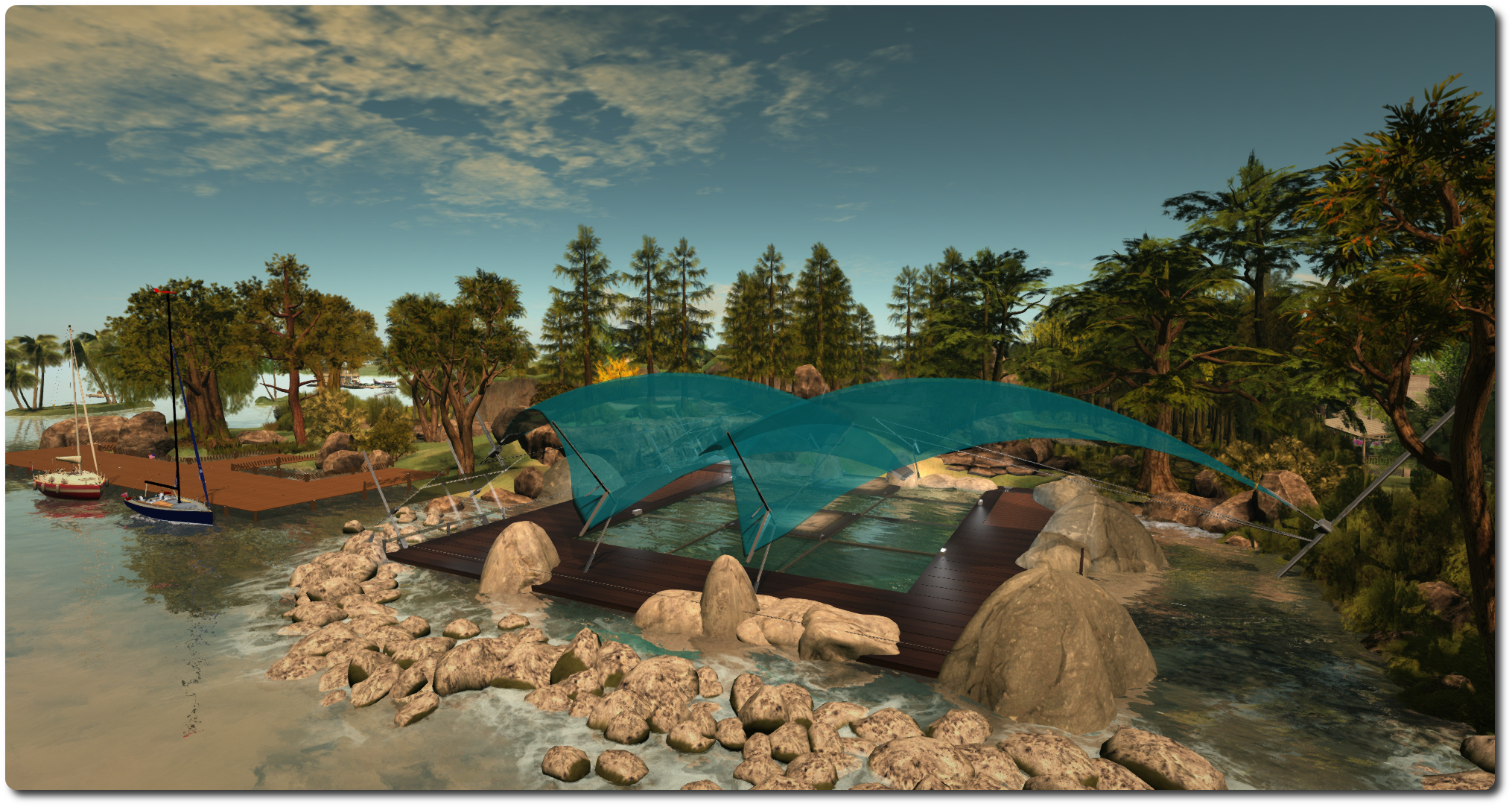
The new park combines a tropical beach area with a summer green park through which streams flow, water falls from rocky banks, trails wind through trees and around rocks, and moorings offer plenty of space for boats to tie-up alongside for a while. It runs from west to east through the middle of the region, with the beach area to the west, although this does admittedly have one of the mooring areas sitting between it and the open waters, although the strategic positioning of palm trees means that it doesn’t spoil the view per se.

Holly Kai Park
Holly Kai Park

One the east side of the region is a further mooring area, this one located alongside an events / party area built out over the water. Between this and the beach sits the main park, separated from the latter by the sweep of a stream as it runs between steep rocky banks. Here visitors can wander as thy please, following the trail that leads the way around the river bank, or climbing the slope up to a flat, grassy plateau and a weathered wooden deck overlooking the river, while another path winds through tall oak and beech trees, linking the park and beach together.

For those exploring the waters north of Blake Sea, Holly Kai park offers a relaxing stop-off point for any trip – auto return is set to 60 minutes, which should allow good time for exploring, and boats can be rezzed at the mooring areas.

The park officially opens on Saturday, November 8th, but visitors are already welcome. Once open, the park will feature an open-air art display, with pieces from artists displayed throughout the grounds, and pieces and artists rotated every so often to keep things fresh.

Holly Kai Park
Holly Kai Park

All told, a lovely new addition to the waters around Blake Sea, and one worth watching.

Related Links

The Trace: a fond adieu

The Trace, The Trace; Inara Pey, November 2014, on FlickrThe Trace, The Trace (Flickr)

I last wrote about The Trace, Kylie Jaxxon’s homestead region, back in April 2014. At that time, it put me in mind of a beautiful watercolour, wonderfully composed and offering visitors a visual delight.

Since then, the clock has turned onwards, the seasons have changed, and now – for a short while longer, at least – The Trace offers a visitors the splendour of autumn and, with pumpkins scattered near the orchard cafe, a herald of a winter to come. I say “for a while longer”, because Kylie recently announced that The Trace will be closing – hopefully only for a while – as she focuses (rightly) on matters of health. The region will be closing its doors on Wednesday, November 5th, so if you have been planning on paying it a visit, now is the time to do so.

The Trace, The Trace; Inara Pey, November 2014, on FlickrThe Trace, The Trace (Flickr)

When I last visited The Trace, it resembled a low-lying coastal region which put me in mind of New England or England’s Norfolk (offshore islands not withstanding!). The region still has something of a coastal feel to it, but this one perhaps in more northern latitudes, sitting as it does within a ring of rugged hills and snow-capped peaks, open to a distant sea on one side, where it’s easy to imagine the occasional fishing boat sailing into the bay, seeking shelter when the weather turns grim.

The arrival point sits atop a rocky bluff in the north-east of the region, overlooking the bay on one side with the region spread below it on the other. Here sit a couple of railway carriages, sans their bogies (but still sitting on lengths of railway line), but joined together to form a cosy little waiting room, where we’re informed that trains to The Trace are on time, even if those going anywhere else are delayed – which is very fortunate, as this is a place you’ll definitely want to tarry over. For those (like me) from England, road signs on the walls give the place a familiar (and in the case of Baker Street, Old Kent Road and Lambeth Walk, a musical) feel.

The Trace, The Trace; Inara Pey, November 2014, on FlickrThe Trace, The Trace (Flickr)

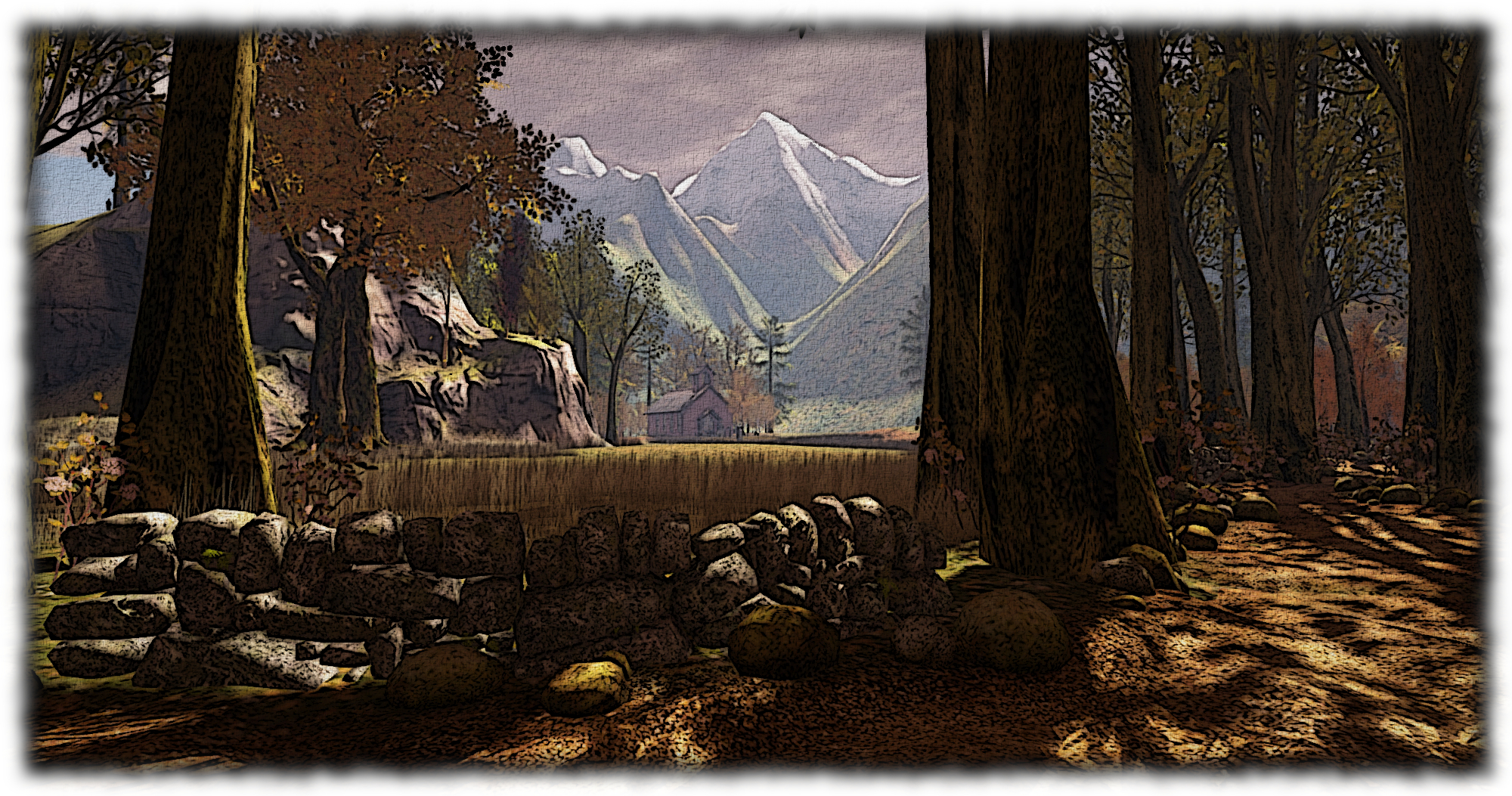
Below the bluff as a wonderful autumn pastoral scene, mixing open fields with cart tracks lined by dry-stone walls, a little cafe and apple stand at the Oakville Orchards, an old barn, a little summer-house built over the water, a church off in the distance, and more besides, also wrapped in the colours of autumn as meteorites blaze across the evening sky. As always with Kylie’s designs, places to sit can be found scattered through the region, and I’ve little doubt they are appreciated by visitors; the tranquility experienced here really des encourage one to stay.

Hopefully, if all goes well, The Trace may return to Second Life in the future; but in the meantime, I commended those who haven’t already visited it to use the short time that’s left to do so. to Kylie, I can only say this (in addition to all the very best wishes and hopes in her fight back against illness): thank you so much for sharing you creations with us, and for the joy you’ve given to so many through your work, your photography and writing – and for your support.

The Trace, The Trace; Inara Pey, November 2014, on FlickrThe Trace, The Trace (Flickr)

Related Links

Enjoying the tranquility of the Back 40

The Back 40, Richfield; Inara Pey, November 2014, on FlickrThe Back 40, Richfield (Flickr)

The Back 40 has closed, SLurls have therefore been removed from this article.

I’ve often remarked that you don’t require an entire region – full or homestead – to create something very special, and I’ve blogged about a number of places in Second Life that prove that very point, such as Melinda Palianta’s beautiful Crystal Oak Falls, where she presents the wonderful gardens around her house for visitors to enjoy. Or perhaps the Moonlight Teahouse, the work of SL entertainer Myron Byron, or Kusanagi by Framboise Werribee.

I recently came across another such treasure which, like the Moonlight Teahouse and Kusanagi, sits in a mainland region. Called The Back 40, it is the work of “Dicky” Dick Spad, and it’s an absolute must for anyone with a love of nature.

The Back 40, Richfield; Inara Pey, November 2014, on FlickrThe Back 40, Richfield (Flickr)

Sitting just off Route 8A on the continent of Satori, and so reachable by road for those who fancy a drive, The Back 40 covers a mere 3568 square metres. But within that space, it presents visitors with a delightful woodland setting, complete with local wildlife, opportunities for wandering, places to sit, and of course the chance to take pictures – something Dick welcomes in the About Land description for the land, where he also invites people to come and relax.

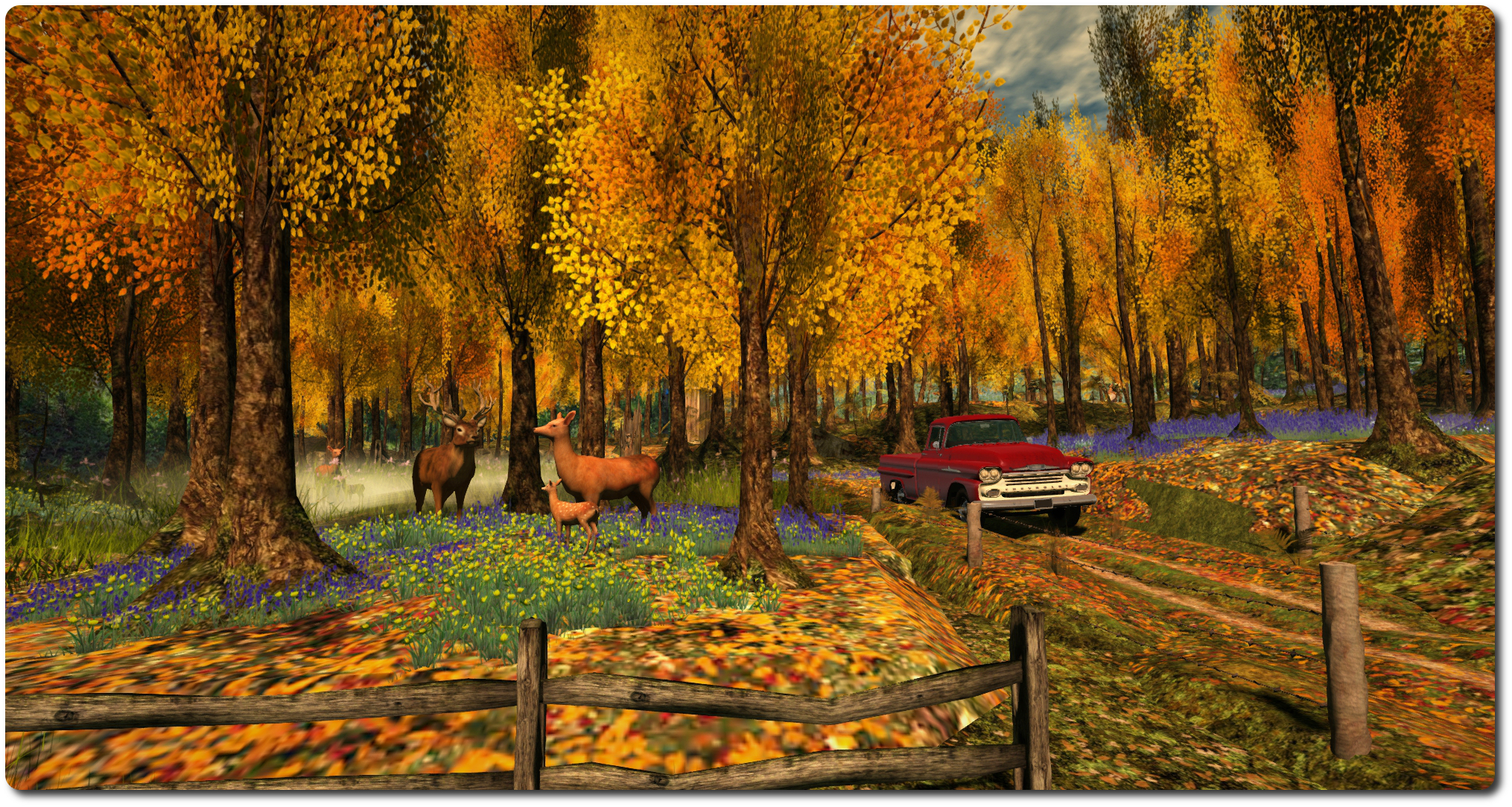
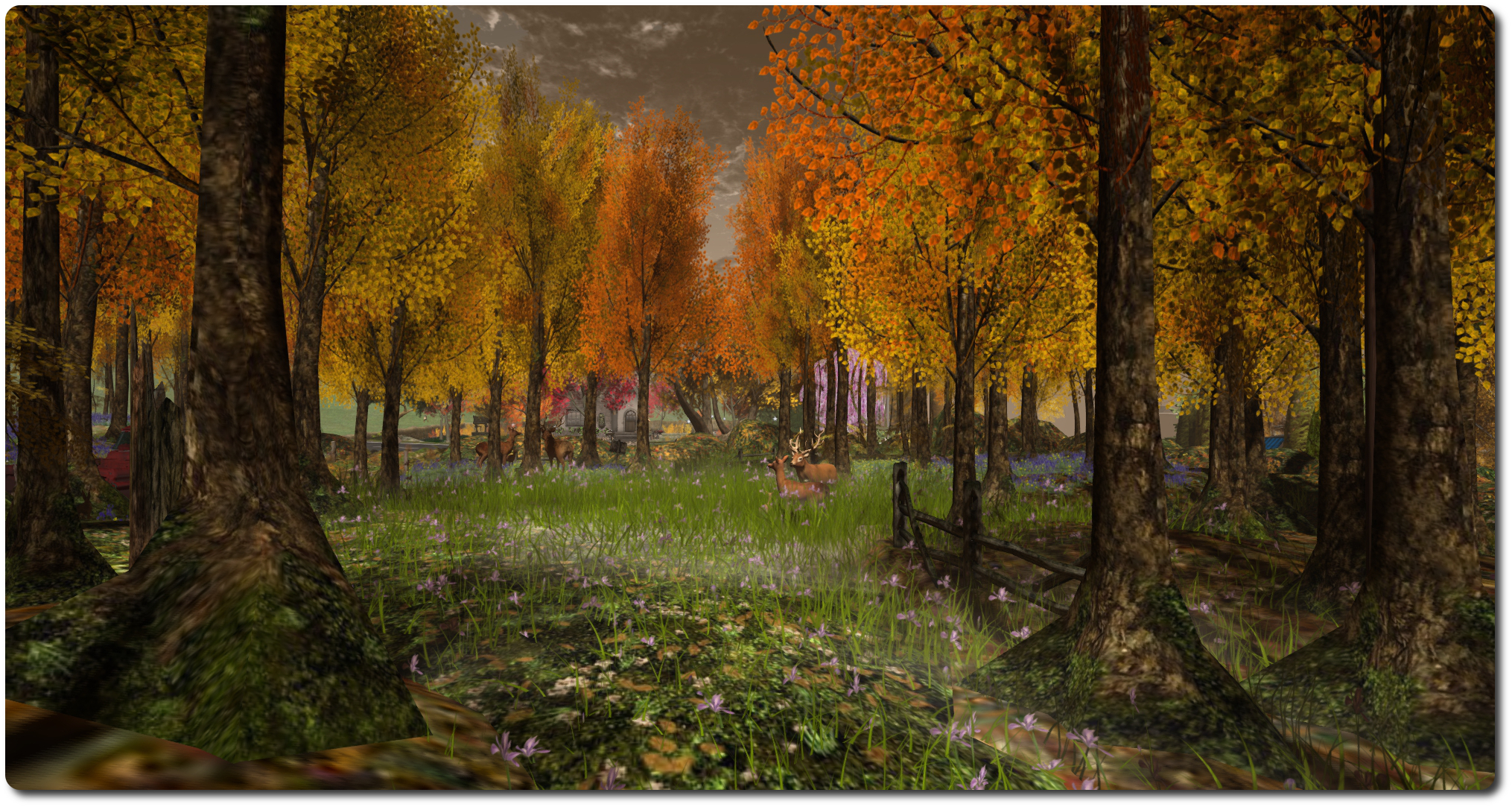
The parcel really doesn’t require that much of a description, as it speaks well enough for itself. Extensive use is made of Alex Bader’s terrain scenery, which presumably allows the woodlands to change colour with the seasons, if desired. Right now they are rich with the golds, reds, oranges and greens of autumn. Mist rolls between tree trunks and over the long grass, offering a photogenic opportunity for those who love misty morning  / evening scenes. Care has also been taken to blend the woodlands into the surrounding area, so they appear quite natural, with a couple of screens have been used to good effect on two sides of the land to add a further sense of depth.

The Back 40, Richfield; Inara Pey, November 2014, on FlickrThe Back 40, Richfield (Flickr)

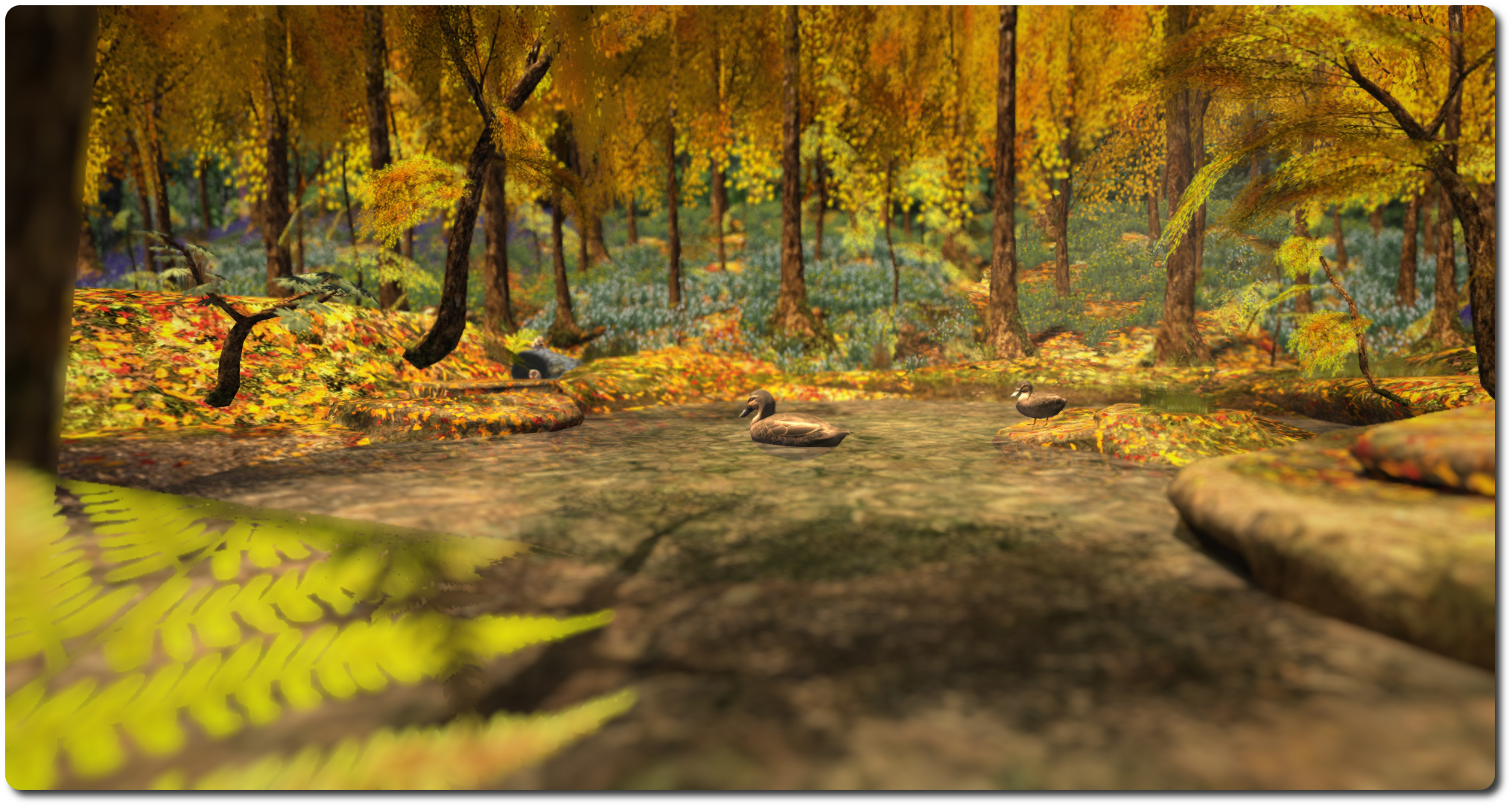
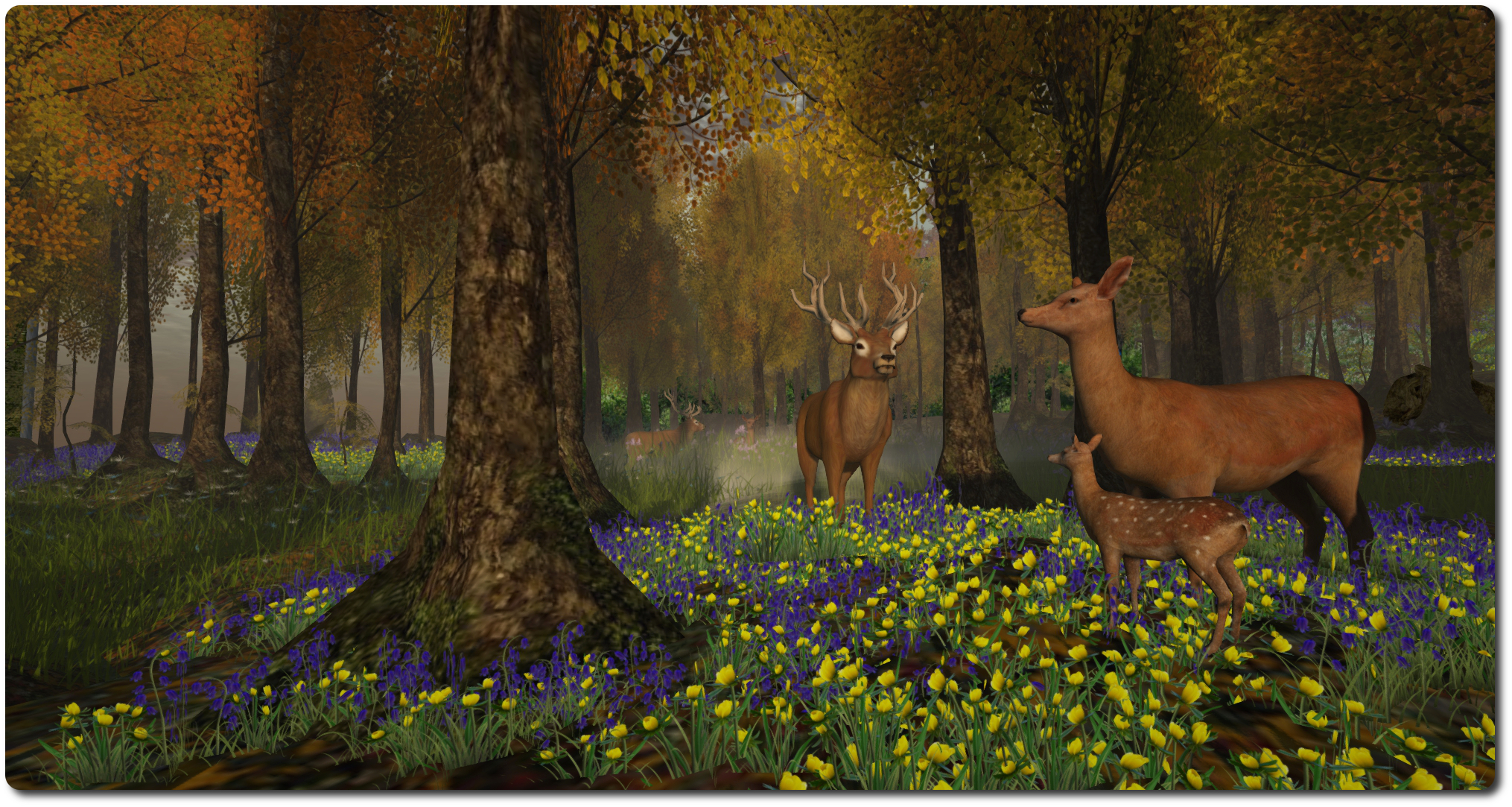
There’s a considerable amount of detail packed into the scene, some of it obvious, some of it perhaps easily missed if time isn’t taken in exploring, and there is plenty of wildlife to be found. It’s also worth having local sounds enabled, as Dick has taken care in blending bird song and deer calls into the scene, again adding to the immersive feel.

All told, a lovely corner of Second Life, well worth a visit.

The Back 40, Richfield; Inara Pey, November 2014, on FlickrThe Back 40, Richfield (Flickr)

Kite flying in Second Life

Black Kite
Black Kite

Nigh on two years ago I blogged about Black Kite, the home of Black Cloud (Theblackcloud Oh), and a region open to visitors to enjoy. In the intervening time I’ve been back there on a number of occasions, drawn in part by the fact that it is a water-themed region. As regular reader know, I have something of a soft spot for such places.

Truth be told, not a lot has changed with the region in that time – and that shouldn’t be taken as a critique in any way, because that’s certainly not how it is intended. That Black Kite continues in look and feel as the months go by, so does the feeling of comfort and familiarity one gains with each subsequent visit. When so much can be subject to chop and change within Second Life, it is sometimes nice to have anchor points which can be returned to and enjoyed without the uncertain surprise of change; hence another reason for my visits.

Black Kite
Black Kite

For my part, I love how Black Kite mixes the natural and surreal, presenting an environment which is at once familiar and yet faintly alien. A place where wooden board walks and telegraph poles sit alongside the twisted, ball-topped forms of snake trees, and water droplets rise by the dozen from around armchairs sitting in the water while fish swim through the air indoors.

In my original post about Black Kite, I commented that it is very a much a place where one can get away and simply *be”. It still is; here are places – such as the aforementioned chairs – where one can sit and / or share with a friend or two. Nor are you restricted to ground (or water!) level: ladders provide access to the rooftops of several of the wooden buildings scattered across the region,  where additional chairs and benches might be found.

One of the delights of the region is that almost everything is carefully spaced across the region that conversations and the scenery can be enjoyed without the feeling of being overheard or sitting within earshot  / view of someone else’s privacy.

Black Kite
Black Kite

For those of a photographic bent, the default windlight presents Black Kite beautifully – but it is also a place where twiddling with settings can yield some quite unexpected and delightful results. A Flickr group is available for those you like to share their shots.

Visitors are free to wander where they will when visiting Black Kite, but if you’ve never dropped-in before, do be aware that Black Cloud has her private house in the north-east corner of the region, so do please respect her privacy.

I couldn’t resist a further attempt at doing a little video recording while visiting the region, so I’ll leave you with that – and a reminder of the Black Kite SLurl.

Related Links

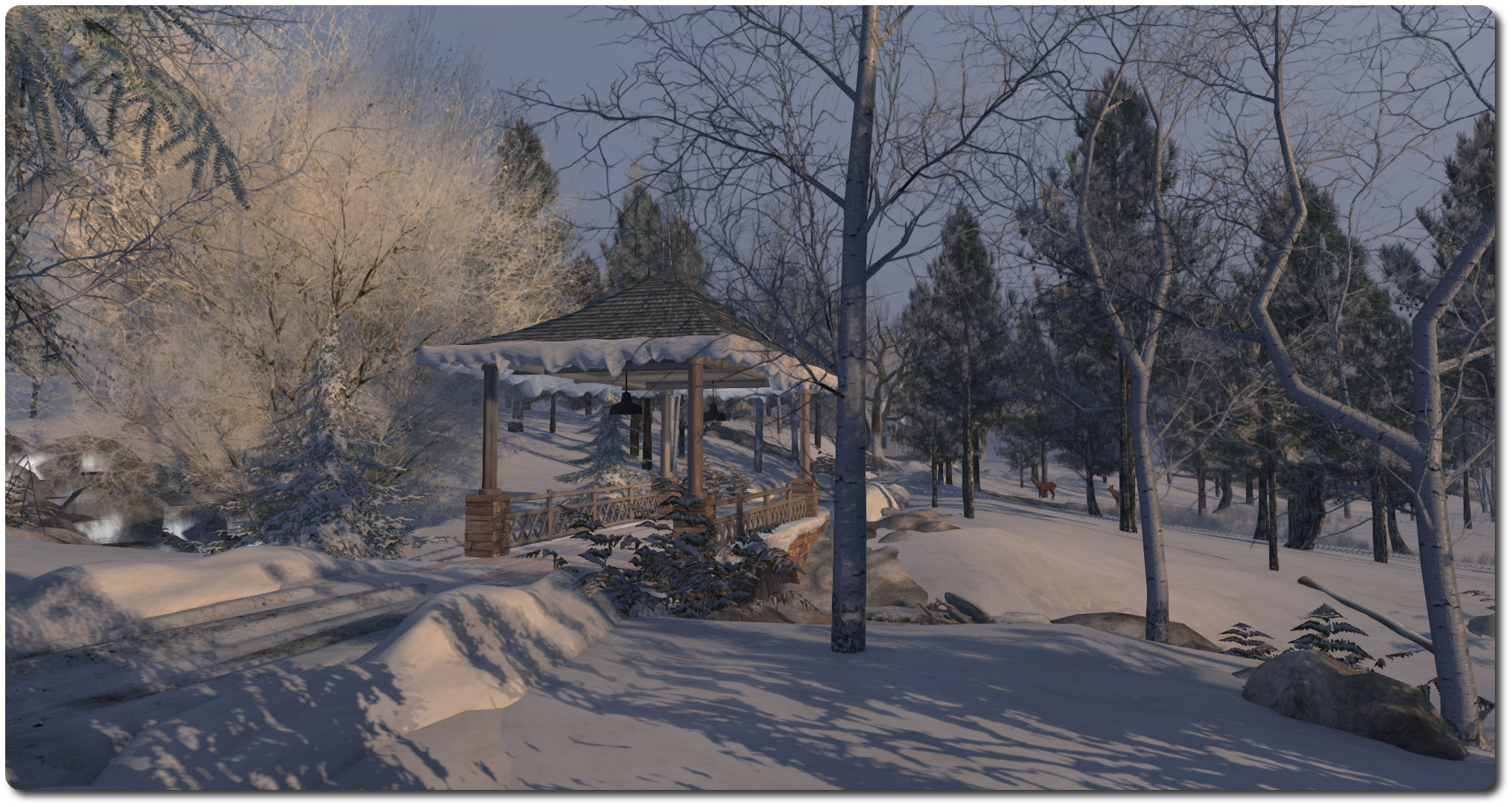
Taking an early winter’s walk

The Pines at Jacob's Pond, Jacob; Inara Pey, October 2014, on FlickrThe Pines at Jacob’s Pond, Jacob (Flickr)

I last visited The Pines at Jacob’s Pond in February 2014, when an early spring was in the air. Now, with many regions embracing an autumnal feel in keeping with the turning of the seasons in the northern hemisphere in the physical world, The Pines has embraced a wintry scene.

The Pines at Jacob's Pond, Jacob; Inara Pey, October 2014, on FlickrThe Pines at Jacob’s Pond, Jacob (Flickr)

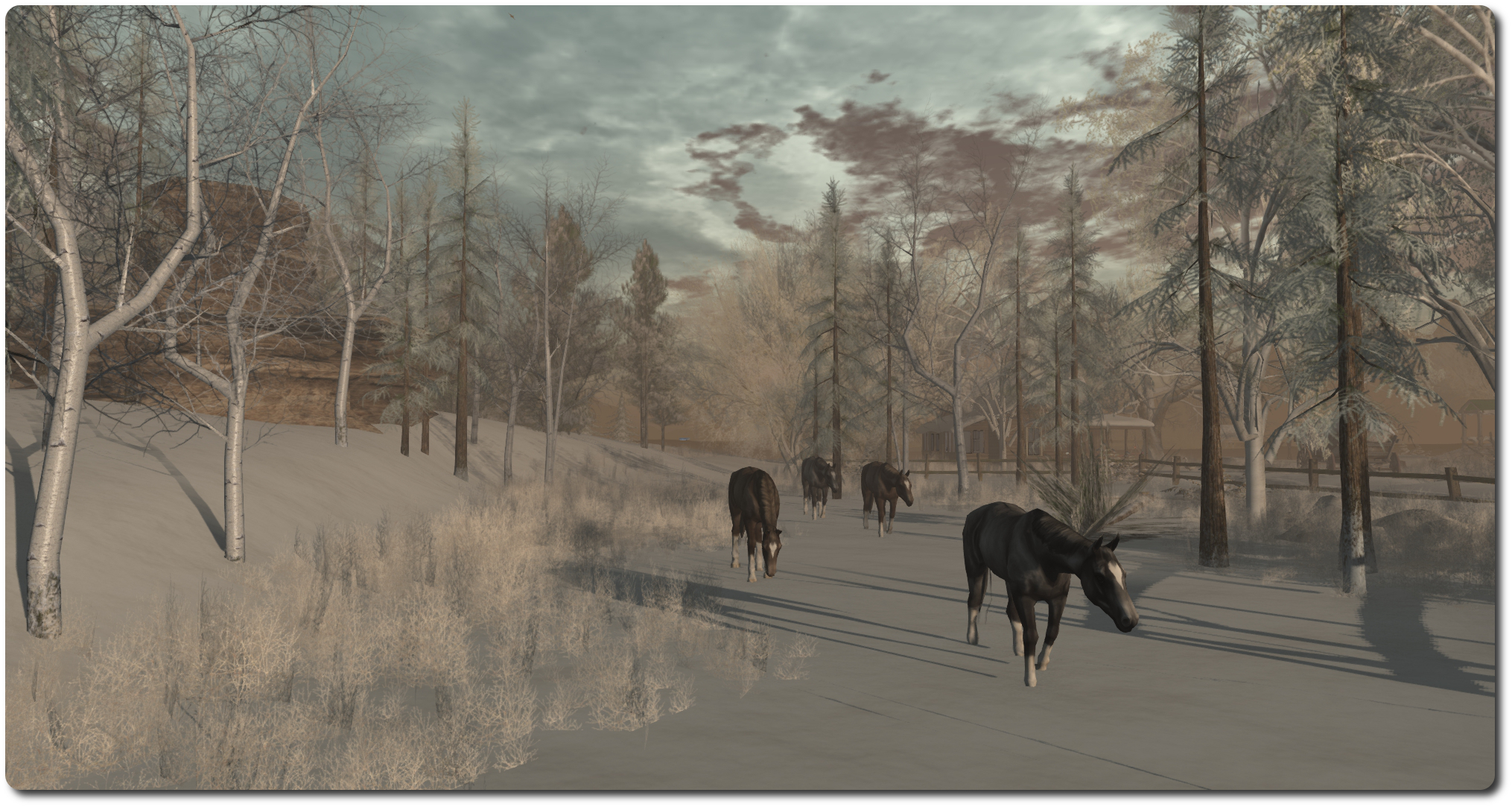
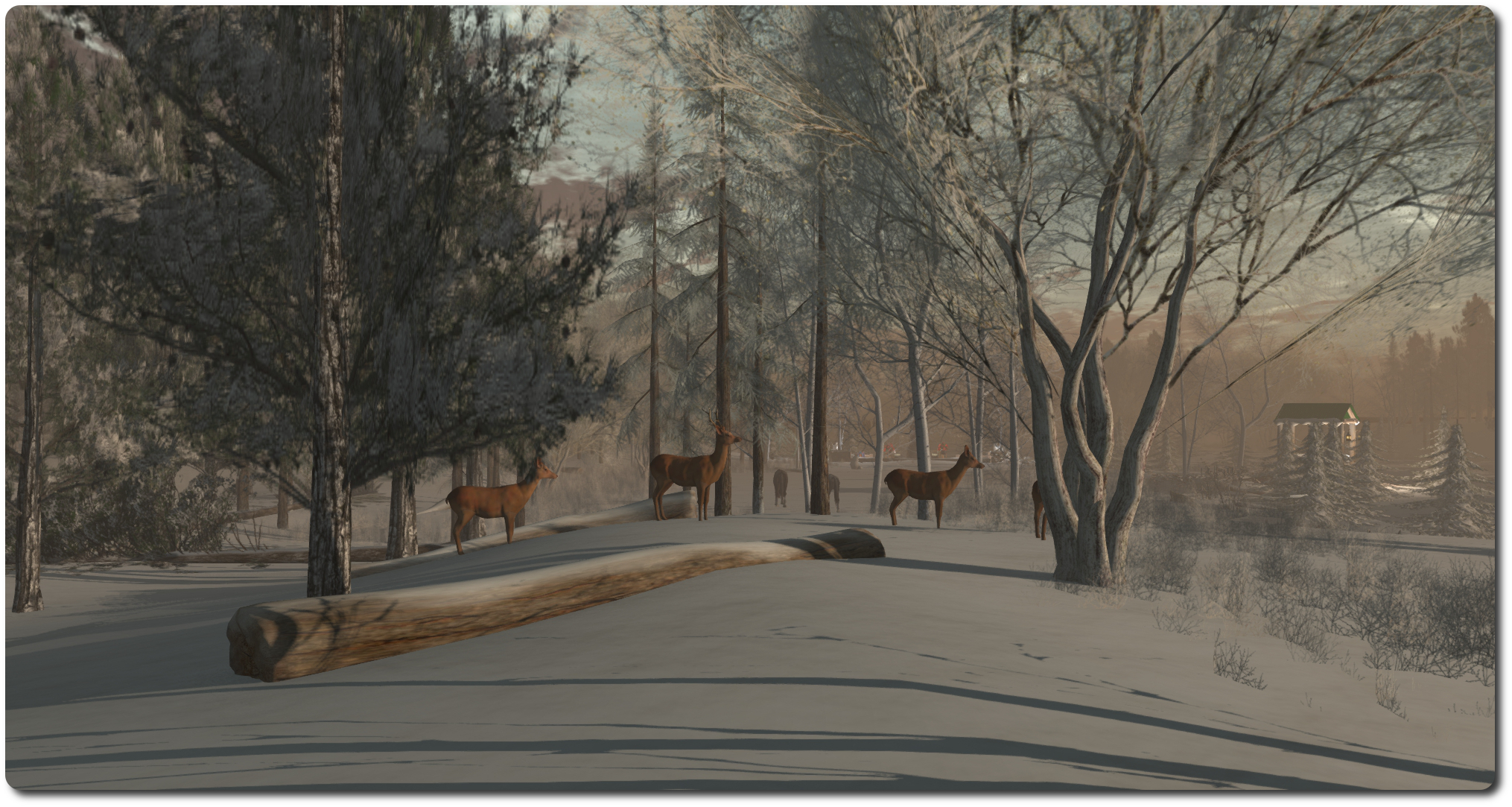
The new scene brings with it a new design for the region. The lake is frozen, snow lies heavy on the surrounding farmlands and in the boughs of the trees; deer forage for grass and horses exhale colds of warm breath into the cold morning light.

The Pines at Jacob's Pond, Jacob; Inara Pey, October 2014, on FlickrThe Pines at Jacob’s Pond, Jacob (Flickr)

Dacotah Longfall, who designs Jacob’s Pond, offers a warm welcome to visitors arriving in the small cabin on the south side of the region, inviting them to enjoy her backyard – and noting that clothing is optional. With the snow on the ground and the misty look to the air, I’m not sure this is advisable!

The Pines at Jacob's Pond, Jacob; Inara Pey, October 2014, on FlickrThe Pines at Jacob’s Pond, Jacob (Flickr)

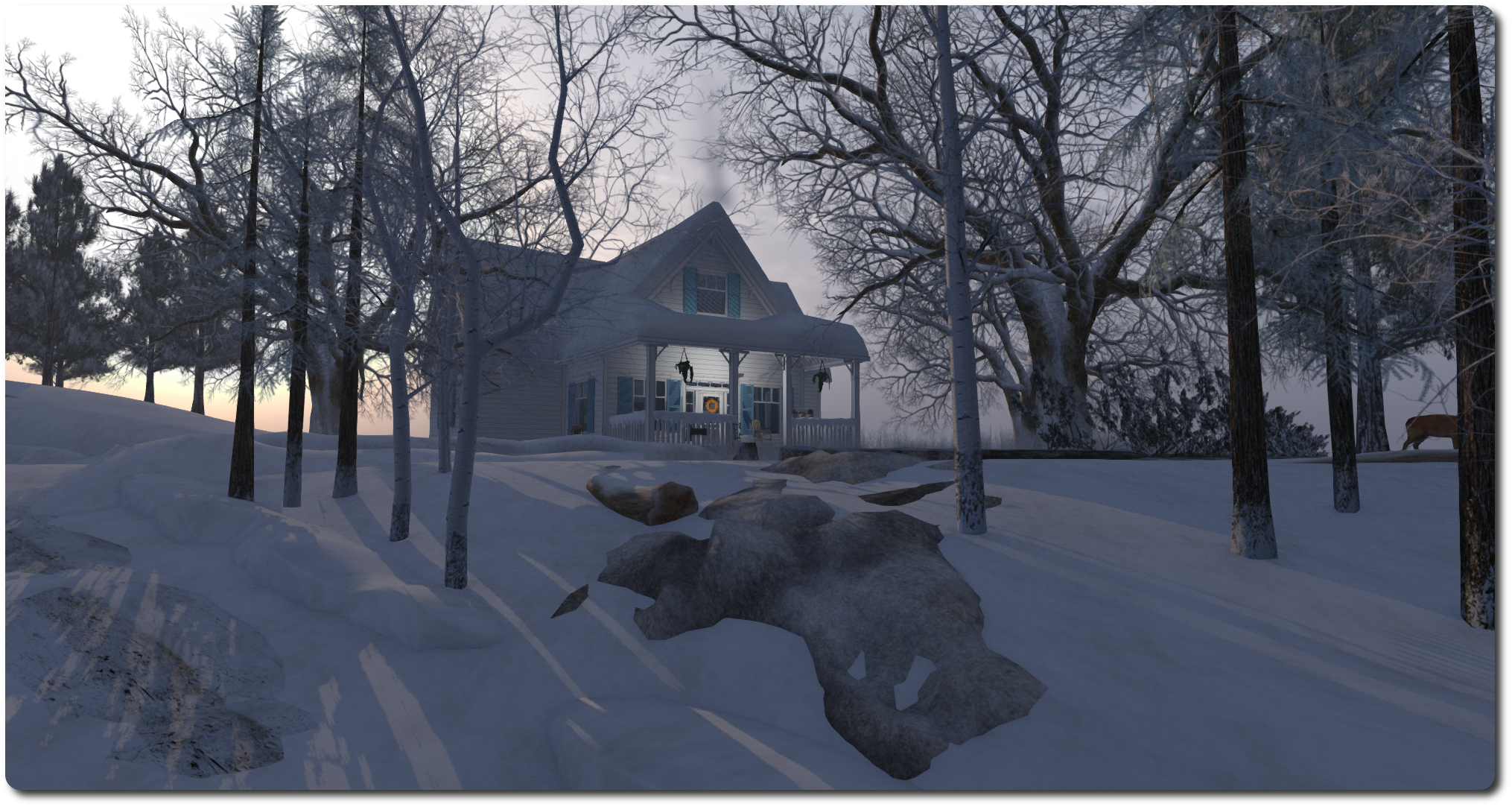
Snowy paths wind across the region, with lamplit bridges helping to guide the way over the frozen streams, guiding the way around the lake and to the barn, and to farmhouse up on the hill to the north. These don’t have to be followed, visitors can wander as they please, and – as ever – there are plenty of opportunities for photography.

All told this is a another delightful redressing of a region which never fails to please. It might seem a tad early for thinking about the depths of winter, but The Pines at Jacob’s Pond presents the perfect image of snow and crisp skies we probably all love.

The Pines at Jacob's Pond, Jacob; Inara Pey, October 2014, on FlickrThe Pines at Jacob’s Pond, Jacob (Flickr)

The Pines at Jacob’s Pond forms a part of the End of Time group of regions, if you’ve not visited the estate, I can only recommend that once you’ve explored The Pines, you pop across to Nu Haven, Tide, Eotia, Wabe, Crow, and Gyre. All make for wonderful exploration.

Related Links