From Warwick to Fourmile

I’ve been a member of English Heritage for a very long time, and have used my membership to visit some fantastic historical sites around the country – particularly Yorkshire and Northumberland (wherein sit my favourite castles such as Norham, Warkworth, Ford, and (of course) Alnwick.

While it is not operated by English Heritage, I’ve also had many a visit to Warwick Castle in the Midlands, where my English Heritage membership has eased the pain of the entrance fee (which amounts to over £100 for a family of four) as well (although I tend to prefer its great rival, Kenilworth, just down the road, and which is an English Heritage site).

Anyway, I mention this because I recently paid a visit to Fourmile Castle in Second Life. The work of Ee Maculate (a name I just love, and which is now sitting as my second favourite SL avatar name after (the now departed) Slightly Offcourse), Fourmile Castle was apparently inspired by a visit to Warwick Castle by Dr. David Wood, the man behind Ee Maculate. Not that Fourmile is intended to be a direct representation of Warwick Castle (although there are some common points between the two). Rather, the visit to Warwick served to inspire Dr. Wood to start ian in-world project for 11-16 year-olds to show how castles tended to grow over time and become not only a strategic centre, but also a commercial one as well, sometimes growing to encompass an entire small town or large village within its walls.

Fourmile Castle

In this, Ee Macluate has succeeded very well. Starting from a single Mainland region, Fourmile Castle now covers a goodly acreage of both the neighbouring Maceday and Cavenaugh regions, with the castle walls encompassing houses and places of business, with more – in keeping with how things often were – beyond the walls. With Cavenaugh bordering the Sea of Fables (itself a place I recently forayed into by boat), the castle even boasts its own modest harbour.

Fourmile Castle

When you arrive at the castle, you do so at one of the main entranceways. Take heed of the signage when you do – there are no info notecards, but the signs provide a wealth of information – such as the castle being both open to the public and a residential area, with many of the houses in and around it available for private rent. The sign also advises you to be on the lookout for tiny Anywhere Doors, which can help teleport you more easily from one point of interest to another in the same location.

Fourmile

Where you go after arrival is up to you – there are footpaths to follow both inside the walls and outside, and there is much to see whether you keep to them or not. As with many a real castle, Fourmile appears to have grown organically over time, with new walls appearing, new walkways, houses, places of business….alleyways, stairs and so on being added over time to create quite a warren of places to tour on foot. Like Warwick, the castle boasts elements from a range of historical periods; the chapel features the tomb of a Cavalier alongside that of a Norman knight. Also like Warwick, Fourmile has its own watermill and sits on the bank of a river which forms a natural defensive point.

Fourmile

Most of the rental houses lie either just outside the castle grounds or within the outer curtain wall, but outside of the castle proper. Many are already rented, so visitors are asked to respect the privacy of those living in Fourmile. Unrented homes are signed as such, and the castle store includes information on rent. All homes are within their own parcels and parcel privacy can be enabled for tenants.

The castle itself is reached either over drawbridge or through double portcullis entranceways (which had me looking up for signs of murder holes as I passed through). Here you’ll find towers, a chapel, a throne room, dungeons, stables, stairs, secret rooms, tunnels – there really is a lot to discover. For the particularly hardy, there is a 3D maze (with the recommendation you tackle it in Mouselook), and there is also the castle store, as mentioned above.

Fourmile

All of the rental properties appear to offer reasonable space, with the houses outside the castle walls being models by Maxwell Graf, which give the castle surrounds a unique feel.

Also outside the walls are a couple of henges, complete with fires burning in their centres as well; whether for warmth or ritual is hard to tell! Whatever their purpose, they are not out-of-keeping with the castle as a whole, and add further points of interest to any visit.

Fourmile

If there is anything at all to be regretted about a visit to the castle, it is in the fact that it really does bring home one’s regret that Mainland regions don’t have the kind of covenants (or some form of estate control) to limit the placement of stonking great (and perennially ugly) skyboxes within spitting distance of the ground. It’s almost impossible to get a snapshot which encapsulates the size of the build without also ending up with someone else’s eyesore in the frame. Even a couple of the images here have been somewhat judiciously “edited” by means of tight control over draw distance…

Fourmile

This aside, the only minor problem I had during my visit was that some of the Anywhere Doors were non-responsive. Whether this was due to lag (a rolling restart was in operation across the grid at the time of my visit) or other reasons, I’ve no idea. Either way, it did little to spoil my enjoyment and appreciation for the castle and Ee’s work in bringing it together.

Fourmile is very much worth a visit and a wander – and can be reached by teleport, road, air or water (the latter thanks to the Fourmile harbour in Cavenaugh, and arrival by air made possible by a neighbouring airstrip!).

Fourmile Castle

Related Links

(Click here to see slideshow full-screen)
Wizardhat: dance, explore, contemplate, admire

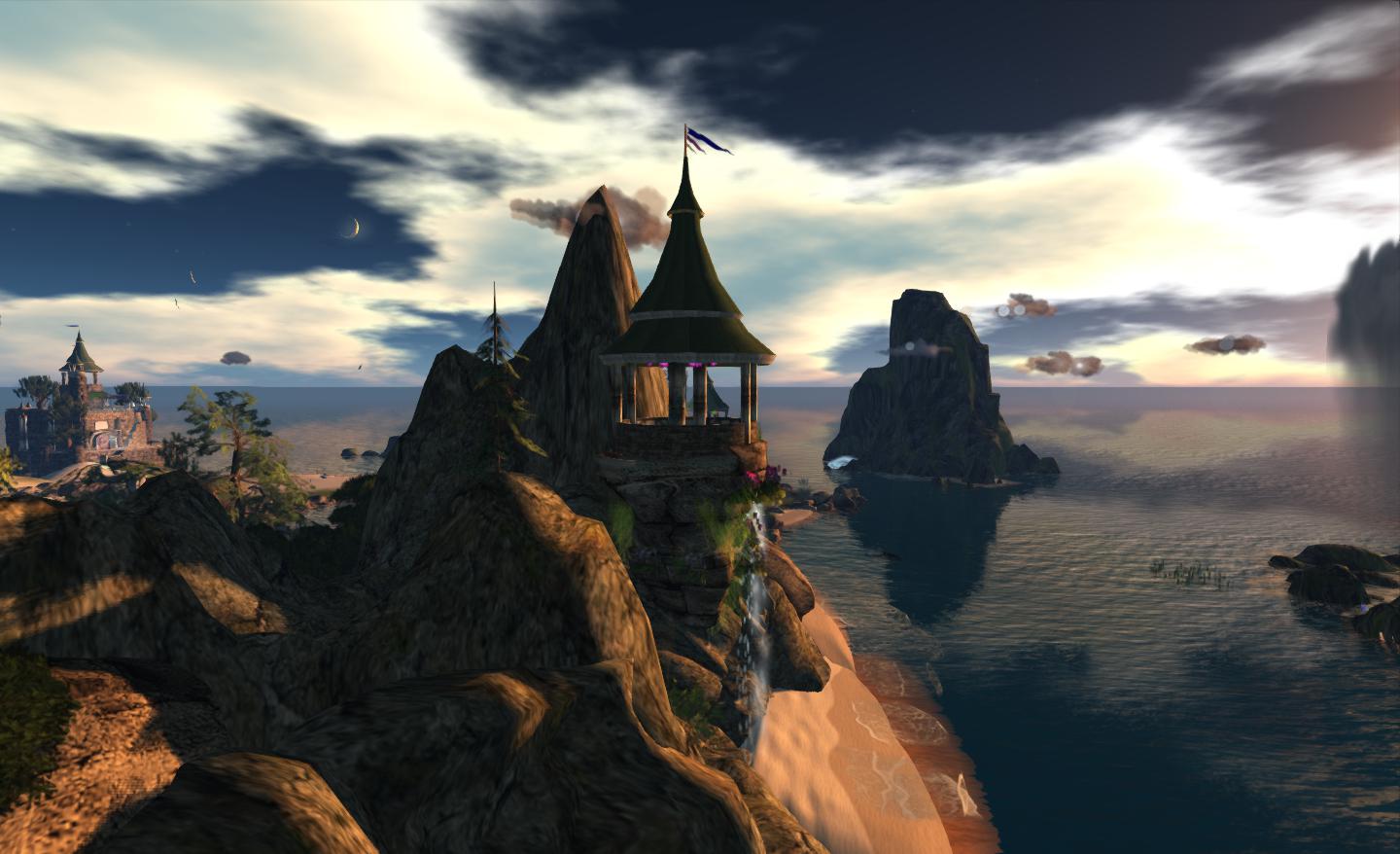
Rati dAlliez is a Homestead region operated as a part of dAlliez Estates. It is home to Wizardhat Studios and the creation of Karencreek Melson and WizardHat Mornington. It is open to the public for visits, and offers plenty to see and do, from dancing with a partner, through admiring the work of the artists, to taking a trip out in a small sailboat.

Wizardhat Studios

It is a region which has both atmosphere and whimsy, mixing reality with a dose of fantasy. There is no windlight preset on the estate, but given the design, complete with a storm threatening, I felt that the Fine Day windlight preset helped give the region an additional depth, with deep blue skies which (to me) blended more smoothly with the offshore storm to the north than the default SL blue sky. Which is not to say other presets don’t also work.

Wizardhat Studios

Sweeping vistas of sky, land, and ocean together as one. Tranquility reigns over a land of dreams. Wander, dance, sooth the eye and soul, magic happens here. A living painting and a work of art where the whole is greater than the sum of its parts.

So states the Destination Guide write-up for the region, and truth be told, Rati dAlliez is a living painting, one which encourages your participation, whether it be wandering through the flowers, dancing across a meadow or in a floating tower, swinging under the boughs of a tree or sunning yourself with the polar bears enjoying the beach – themselves very much the mark of an artist’s touch of humour.

Wizardhat Studio

It’s a place I’ve been spending a bit of time at of late, sitting and pondering on matters such as the question of my premium membership, as well as on Second Life and my place within it as a whole.

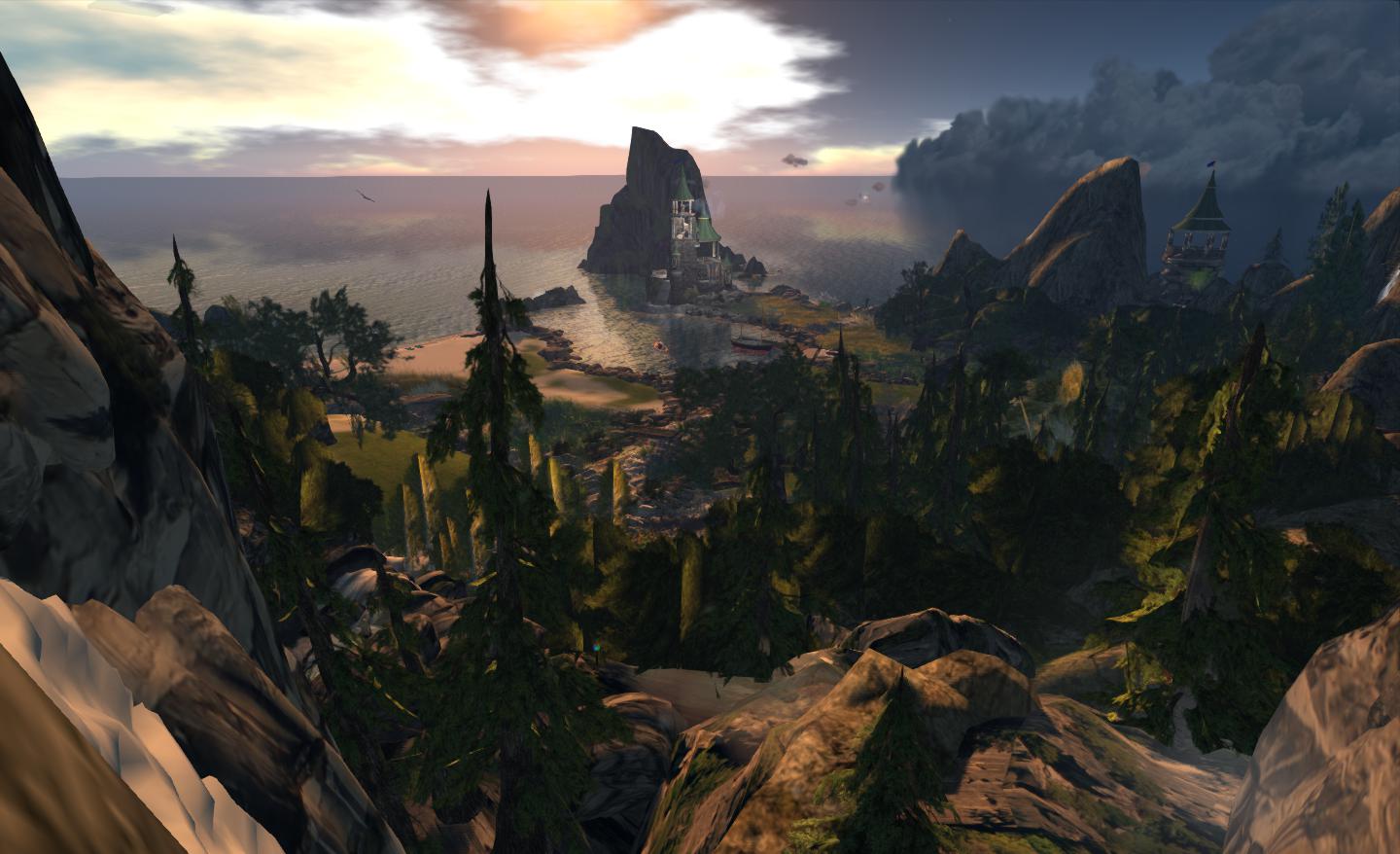
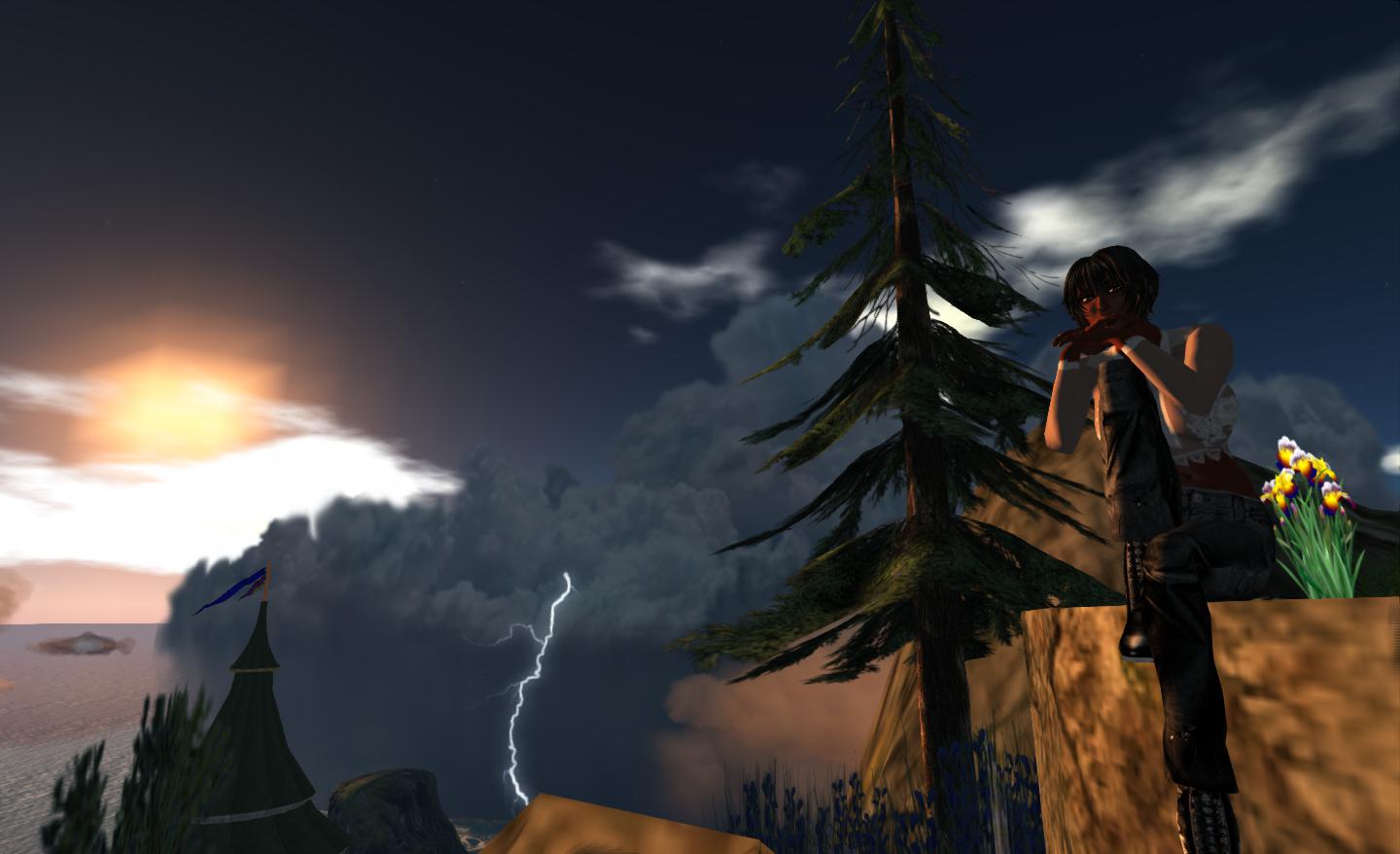
When it comes to thoughts about Second Life, the island might be seen as something of a metaphor when it comes to the bleaker outlook some ascribe to SL’s future (and which I do sometimes feel myself). On the one hand, we have the wonderful build of the island itself, yet looming on the horizon are roiling storm cloud split by lightning, almost personifying the issues SL does face is terms of falling region numbers, high tier, retention issues, all of which present a potentially stormy future for the platform.

The calm before the storm?

Yet walk just a short distance across the island, and it all does become much brighter and calmer, and a reminder that Second Life has weathered many a storm without the sky falling in completely; and while it cannot be denied that some things will have to change over time, all is not yet lost.

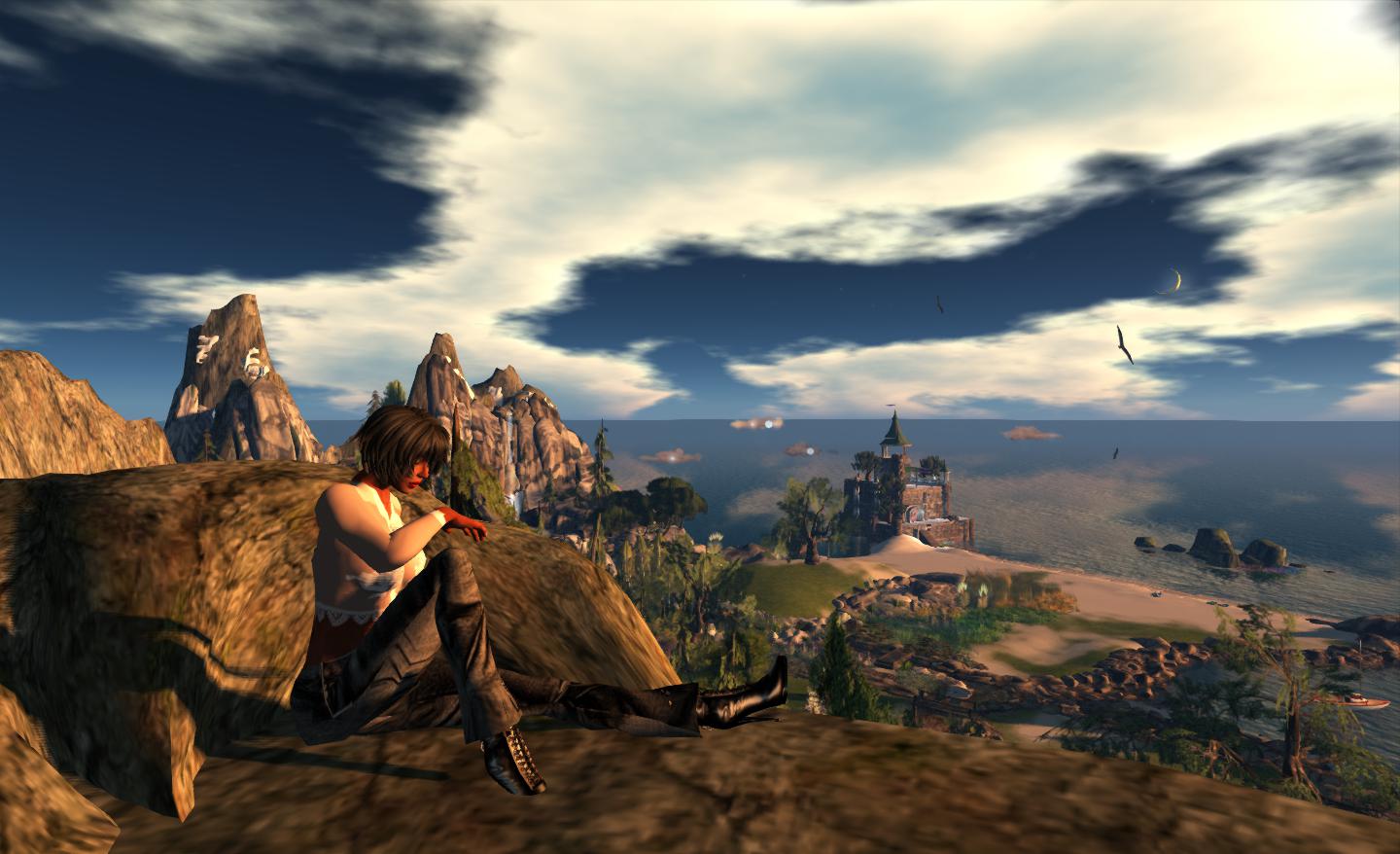
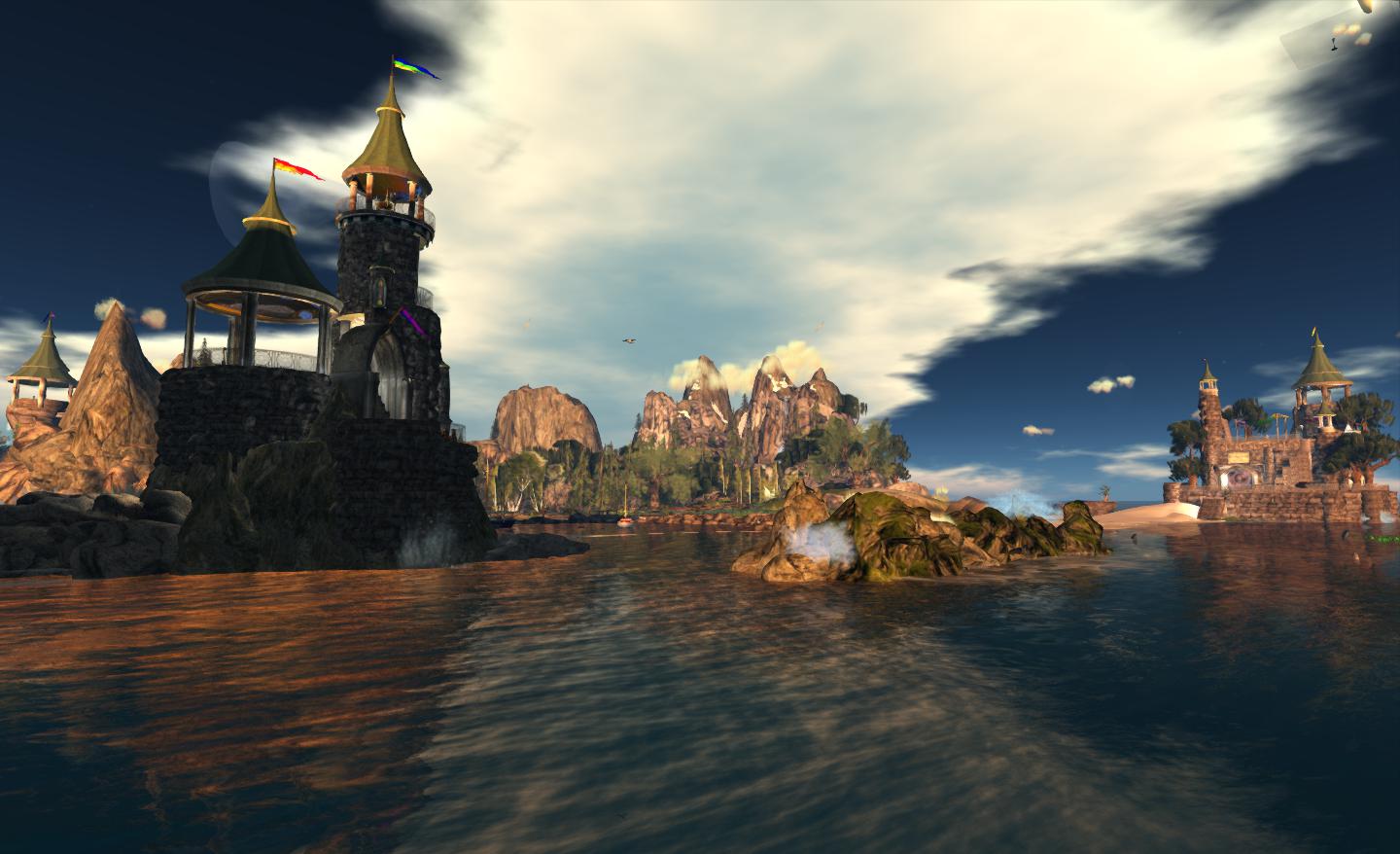
I love the eclectic mix of expression the region offers, from the storm-crowded horizon to the north through the mountains to the east and south-east to the little habour itself, nestled between the two tall towers. It is a place where thoughts do come easy, whether high in the mountains or lying on a hammock.

Wizardhat Studios

Of the two towers on the coast, one offers places for couples to enjoy a dance. The climb to the top might require a little patience as the ramp is a little tight, but the seat and the top offers coupled the opportunity to just sit and chat or enjoy the view. The second, slightly larger tower (castle?) forms a studio for Wizardhat Mornington’s artwork as well as also offering places to sit or to dance with a friend or loved one.

Wizardhat Studios

This is perhaps the beauty of Rati dAlliez; whether you want to enjoy a little romance, have a little fun exploring, share a swing with a friend or just sit and contemplate the world (or worlds), there is something here which is likely to appeal. If you visit, you may well bump into one of the Wizardhat Studios group members; if so, don’t forget to say hello; they may not all be as they seem, but messages do reach the right people!

And if you find me sitting atop a mountain and I don’t reply to your call; it’s not because I’m ignoring you, it’s probably because I’m wrapped in thoughts I can’t always articulate very well on these pages.

Wizardhat Studios

Related Links

The beauty of a Scribbled Heart

Update August 19th, 2013: Scribbled Hearts has returned to Second Life in its own region. Find out more in my review!

There are many beautiful and inspiring regions throughout Second Life, some of which I’ve explored through the pages of this blog. Thanks to Ziki Questi, I discovered one more recently, which completely captivated me.

Water Reserve is the home of Scribbled Hearts, a collaborative group with a focus on photography, one of whom, Randi Lenroy, is responsible to landscaping the region. There are two small stores to be found here, *. emm { shop }, operated by Snowy Melody and Clementine Ishtari’s Hello, September. However, Water Reserve is not simply a sim-with-stores-and-landscaping.

It is a work of art.

Water Reserve: Scribbled Hearts

From the moment you arrive, it is evident that everything in the region has been put together with considerable thought, artistry and an eye which looks at the world oftentimes through the lens of the camera. Everything is composed to present a stunning array of photo opportunities and a place which can be truly and completely appreciated and savoured. Just make sure you accept the local windlight settings on arrival, as they are very much a part of the region’s beauty and atmosphere.

Water Reserve: Scribbled Hearts

This is a place where you can wander and admire for its simplicity and for its attention to detail. While it may well have been carefully designed, it is nevertheless entirely natural – perhaps the most life-like natural setting I’ve ever seen in Second Life.

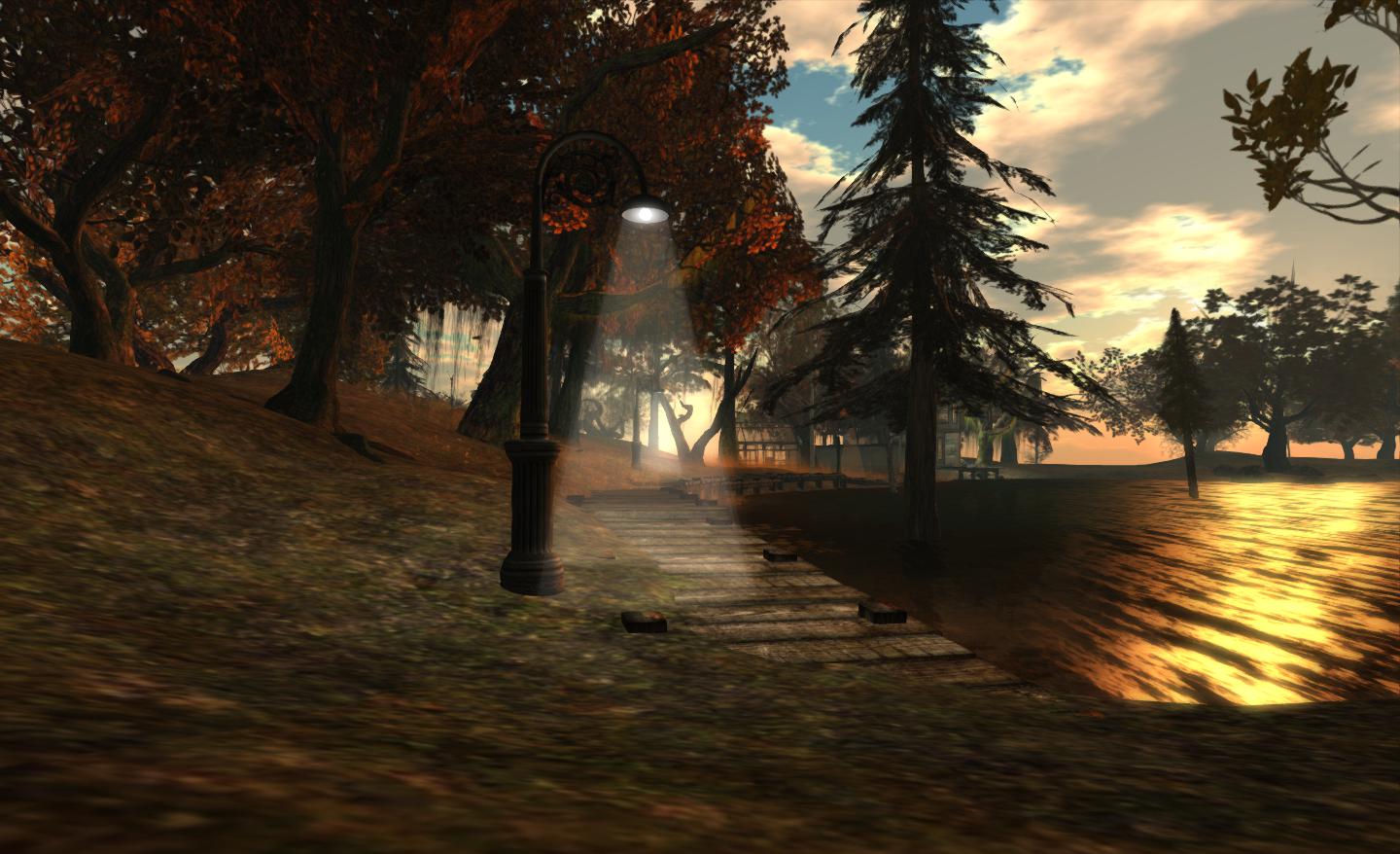
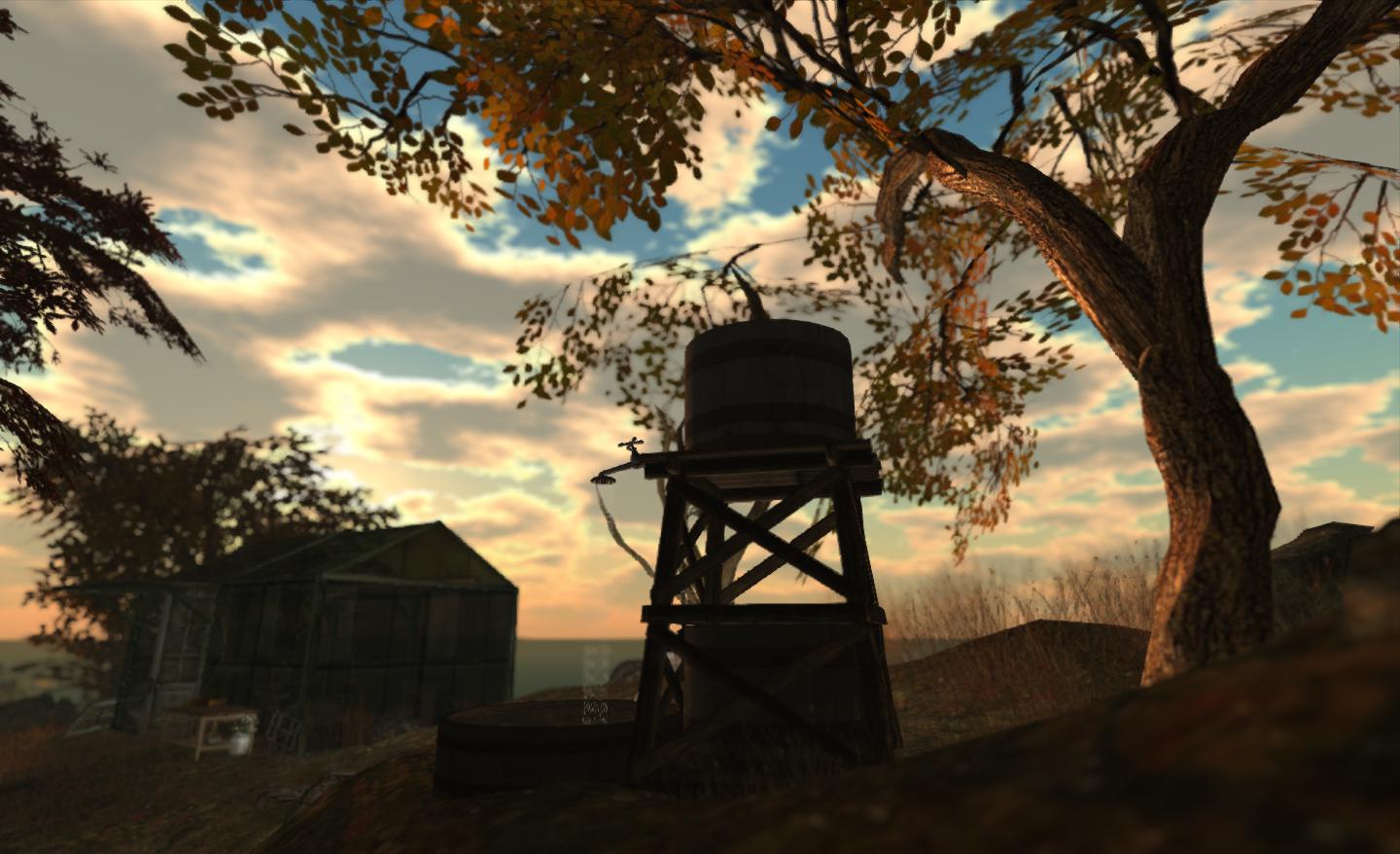
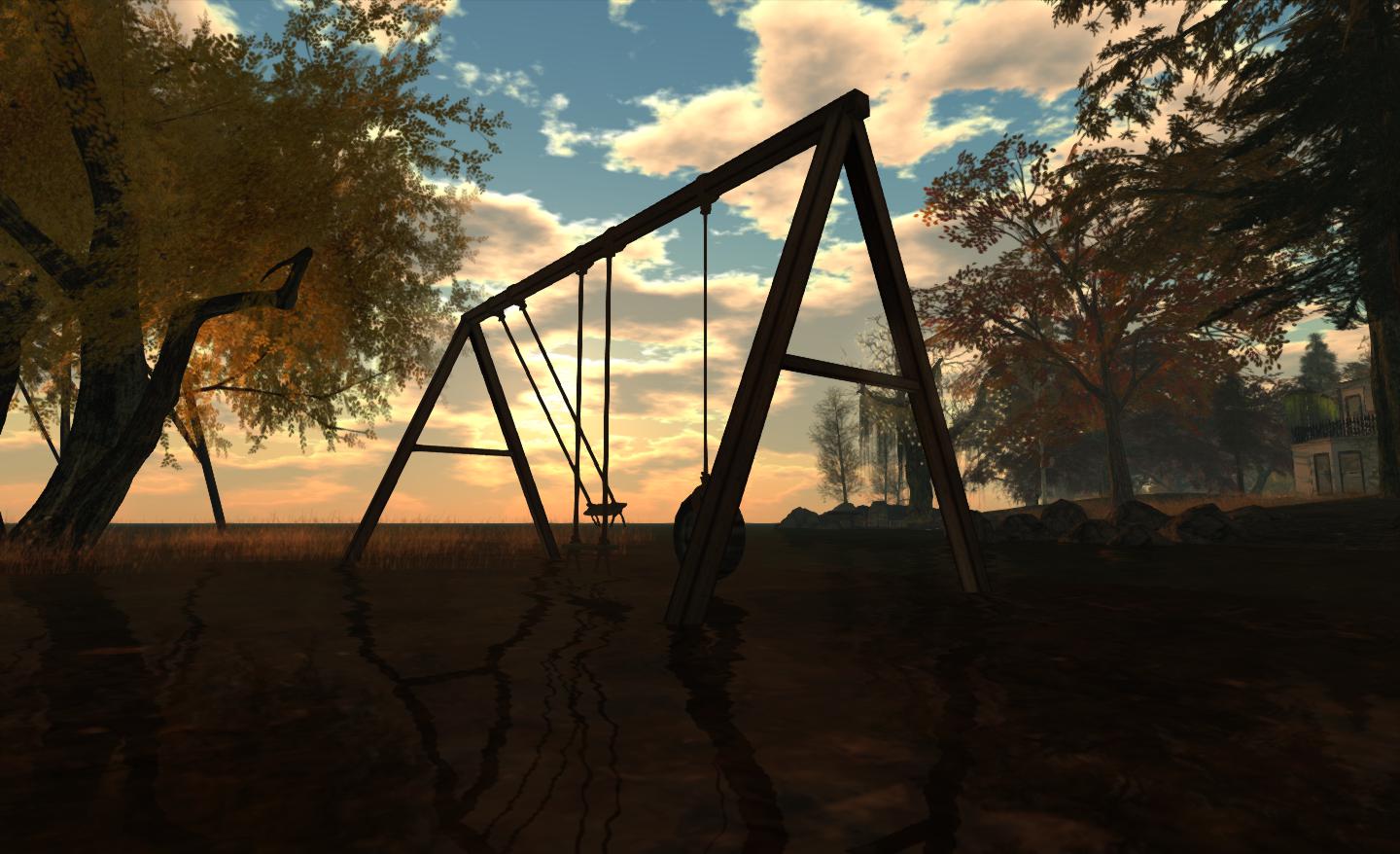
I’ve no idea if the region is updated to suit the season, but right now it is autumn at Water Reserve, the sky is lit by a beautiful September sun dipping towards the horizon, the trees are mostly golden brown, with the odd fir-tree standing as a green sentinel, and as you walk under the trees, falling leaves tumble and swirl their way to the ground.

Water Reserve: Scribbled Hearts

There are trails here to be followed, together with wooden walkways, or you can stroll at your leisure – the entire region is open to public visits. Rezzing is allowed (Autoreturn set at two minutes) if you have anything you’d like to use as either a photo prop or as something to sit on somewhere and admire the view.

Water Reserve: Scribbled Hearts

The stores here are small and blend perfectly with their surroundings – so much so that it is easy to miss the fact that they are stores.

I’ve been in a solitary mood of late, preferring to spend much of my time in SL on my own rather than among people, and Water Reserve suits that mood perfectly. Which is not to say it should be only experienced alone; there is much here that demands to be shared with a close friend or two. But it did speak to my prevailing mood and resonate with thoughts and feelings, particularly given the autumnal look and feel to the island and my frequently-changing moods towards Second Life.

Water Reserve: Scribbled Hearts

This is a region which has done more than scribble a message on my heart – it has written it in indelible ink. It will on yours as well.

(view slideshow full-screen)
Related Links

Nouveau steampunk with a rural seasoning

I first visited Steelhead, albeit very briefly, earlier this year when I was poking my nose into mazes around Second Life and dropped in on the Southwest Gate Hedge Maze of Nevermoor. I had a quick look around at the time and added Steelhead to my list of places to review for my series on SL destinations – something I finally managed to do over the past few days.

Steelhead is described as “an American Victorian Steampunk Community in the Second Life Nestled in the Coastal Pacific Northwest”. It’s a group of seven regions, which bring together commercial, residential and role-play elements in a themed community focused steampunk and which bring together an eclectic and fascinating range of themes.

Steelhead Port Harbour

There are a number of teleport points through the community, so rather than scatter them across this article, I’ll list them at the end.

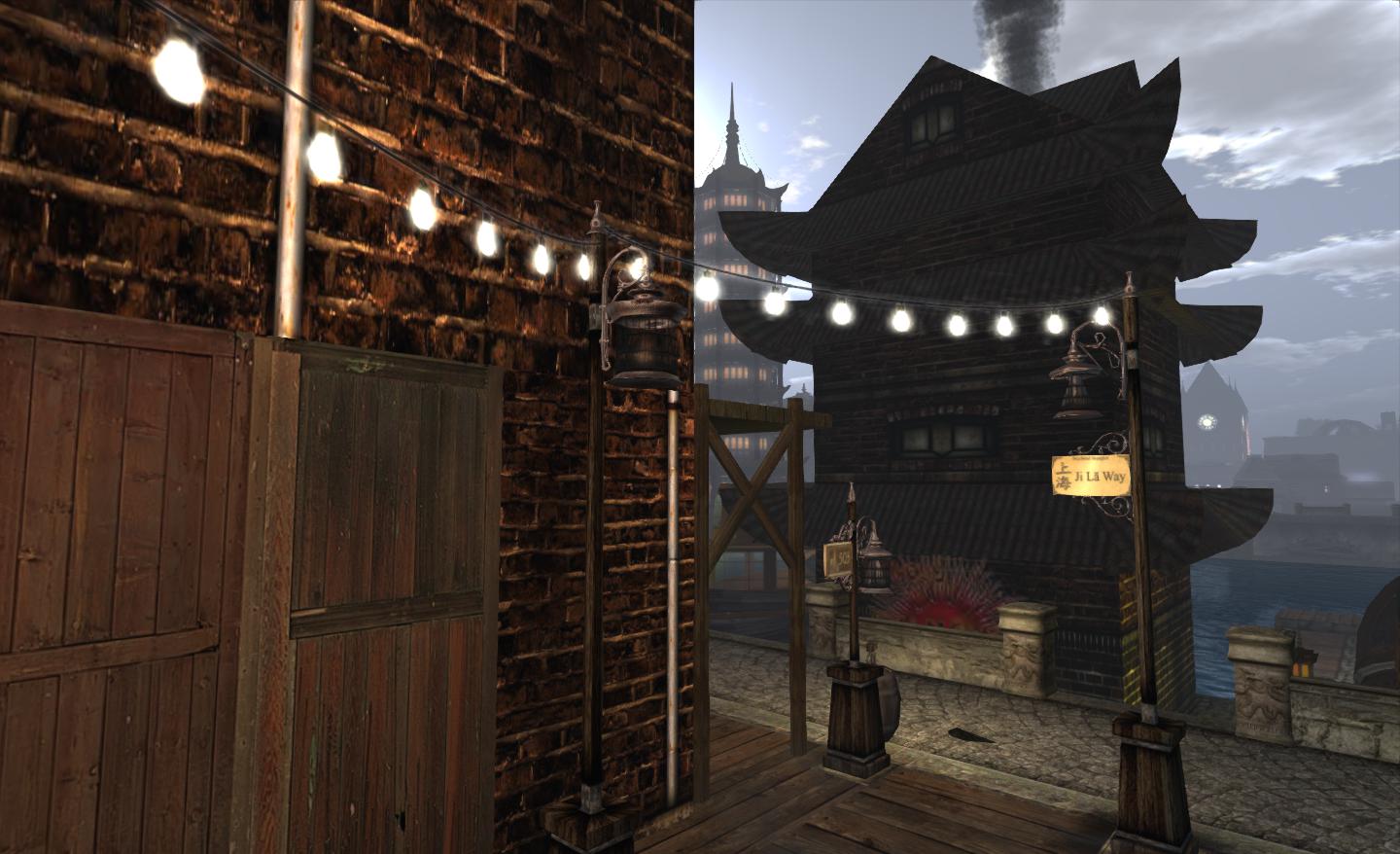
Steelhead itself is the commercial centre for the community. here you’ll find the train station, stores and wide streets and the town hall, wherein a weekly meeting of residents is held to discuss community matters. To the west of this is Steelhead Shanghai, a fascinating “Sino-steampunk” region which brought to mind photos I’ve seen of the Hong Kong harbour front circa the 1920s (although Hong Kong admittedly never had dirigible junks sitting on the waterfront).

Steelhead Shanghai

Steelhead Harborside is mostly residential, and offers a nice walk along footpaths bordered by houses which keep to the theme of the community, and across bridges over canal-like waterways which give the place a very homely and attractive feel. To the north sits Steelhead Nevermoor, which brings a touch of mystery and magic to the estate (and which I most enjoy exploring at night). It is also where you can find the maze mentioned at the top of this article.

Steelhead Nevermoor

Continue reading “Nouveau steampunk with a rural seasoning”

A Nordic adventure

Having opted to get out on the water recently, and following Indigo Mertel’s suggestion that sailing is one of the best ways to explore SL, this week I set out to navigate the further reaches of Blake Sea and the surrounding regions. Along the way I discovered Second Norway, a group of around 17 regions which celebrate life in Norway, providing both a themed environment for people living there and a wide range of public spaces which can be enjoyed by residents and visitors alike, all of which can be explored by road, water and air.

While not attempting to be a representation of any single place in Norway, Second Norway does include several features from its real-life namesake, and offers up much which is representative of the Norwegian countryside and Norwegian heritage, all of which combine to make it a fascinating visit.

Arriving in Second Norway via Blake Sea

My first encounter with the SL / rl cross-over came on sailing into the main harbour area, which features a recreation of a row of multi-hued buildings on the waterfront in Bergen. This is forms one of the social hubs in the regions, hosting a range of events as well as being within easy reach of a number of nearby attractions.

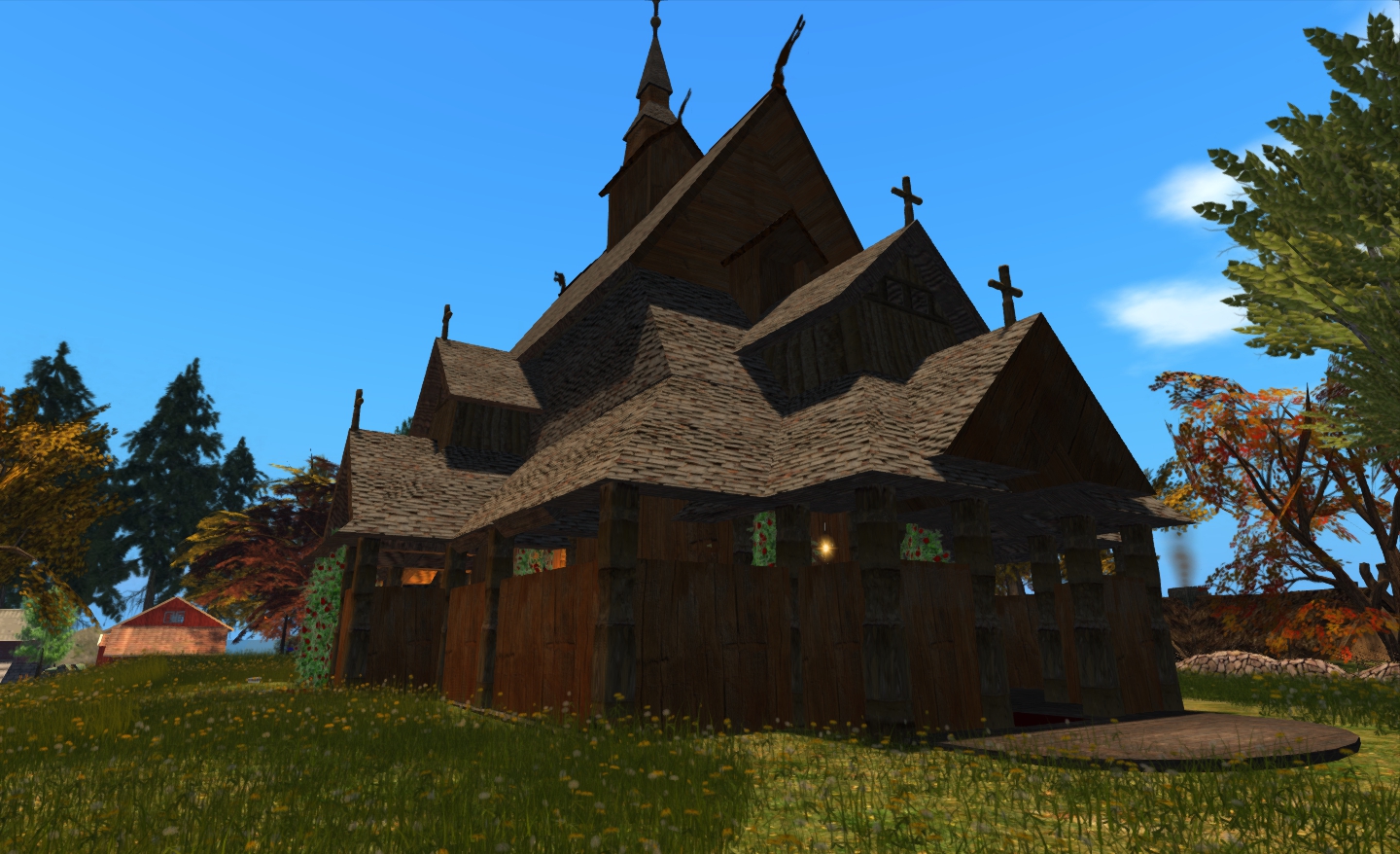
One of these, on the hill overlooking the quayside and colourful shops, is a replica of the triple nave stave church at Borgund, which is believed to be one of the best-preserved examples of a stave church in Norway, having been originally built some time between 1180 and 1250. The church in Second Norway is the very first build undertaken by Ey Ren, one of the co-founders of the modern Second Norway community, and a leading figure therein along with Mialinn Telling.

The stave church in Second Norway

It is a fabulous build, and provides a wonderful focal-point for visits and for SL photographers, and appears to be used for special ceremonies such as weddings. The attention to detail, both outside and in is a delight, and I found myself drawn back to it several times during my visit. I love the alter, and the traditional bell structure located outside.

The stave church, Second Norway

A short walk from the church and bell, shaded by trees, is a memorial installed by residents of Second Norway to remember the 77 people who lost their lives in the terrible events of 22 July 2011, in both Oslo and on the island of Utøya. It is a simple affair, and all the more moving for being so, bearing an inscription of a quote from one of the survivors of that black day.

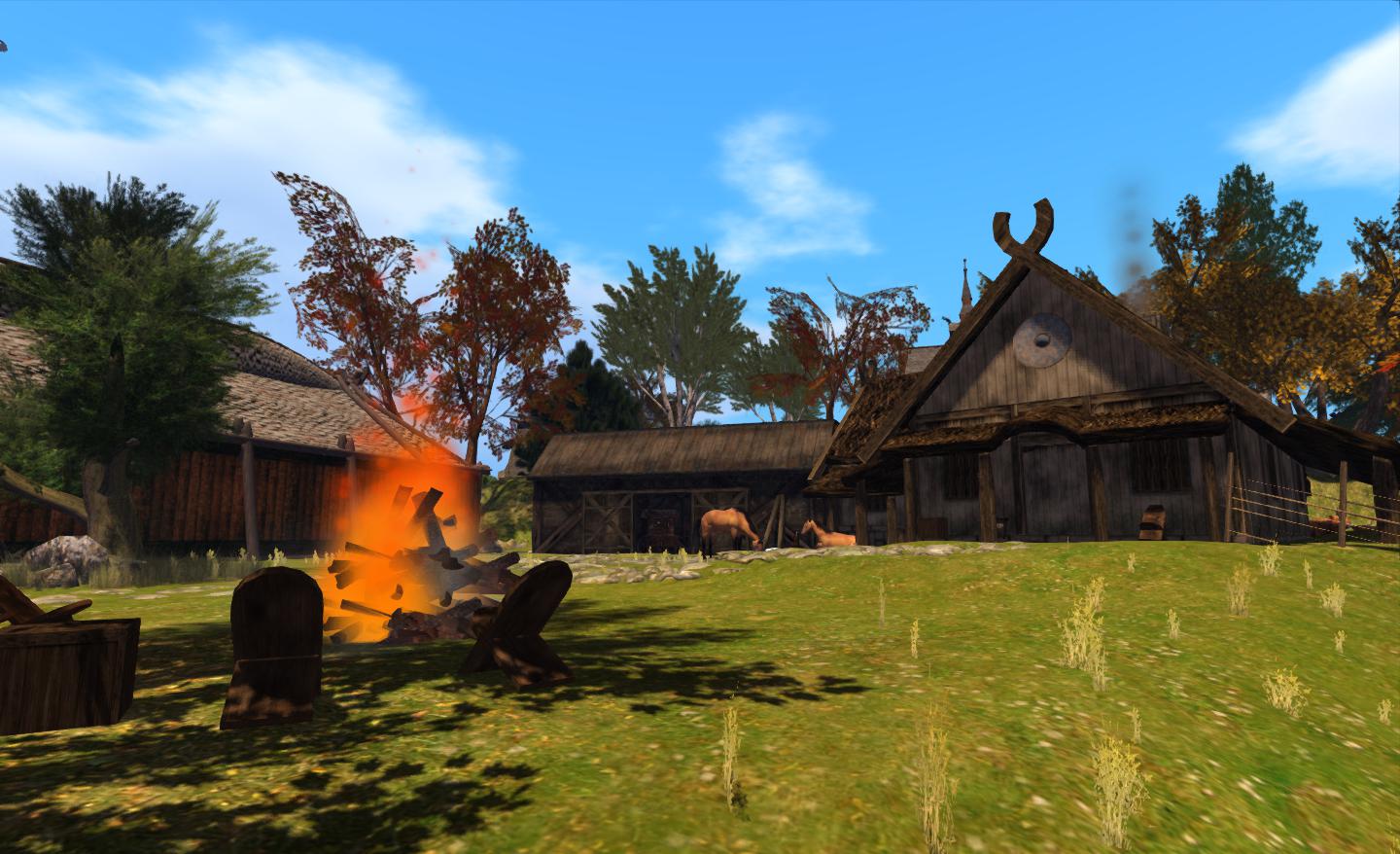
Just down the hill from the church is another point of historical interest – part of a traditional viking village, a virtual living museum, the long house of which is used to host both events and exhibitions.

The viking village in Second Norway

From here I opted to take to the road to continue my explorations. Second Norway includes a comprehensive road system which goes both overland and underwater, thanks to a tunnel system. A section of the roads is modelled on Norway’s Atlantic Sea Road, and is a great drive to take. I initially started out using my ubiquitous Neuspa, partially because I felt its amphibious capabilities would be useful if I happened to fall off the road into the neighbouring waterways, and partially because some of those involved in Second Norway are into biking, and I wanted to share something of their experience when out on the open road. I did, however, also take my Autoworks 43S GT for a spin (which did encounter a few issues with road section seams).

Please use the page numbers below right to continue reading this article

‘Twas a dark and stormy night….

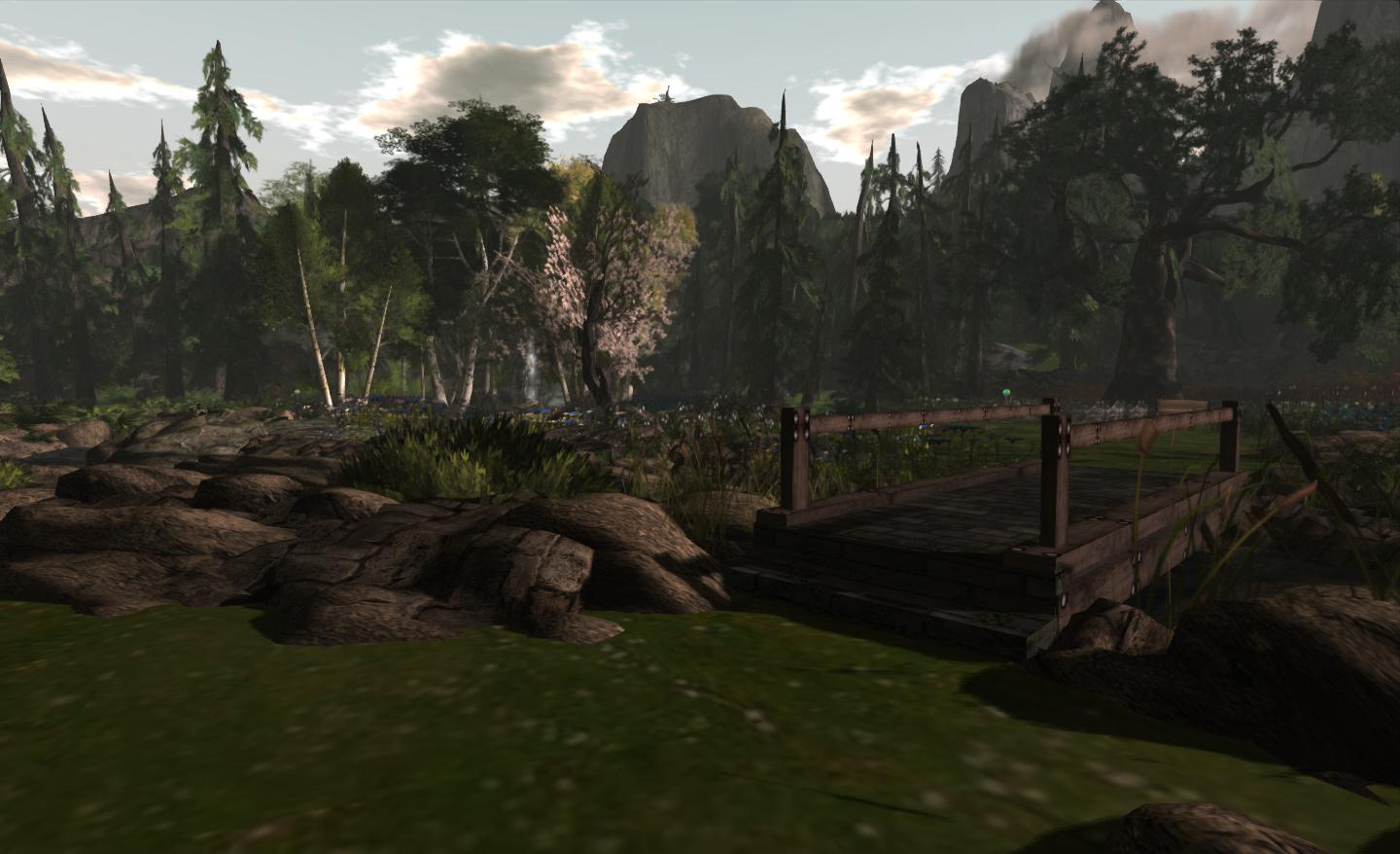
Hidden in an ancient forest above the Miskatonic river deep in the Massachusetts wilderness is Arkhamville Manor. Constructed in the late 16th and early 17th century by Count von Ripanuvich on land shunned by the Mohegan it was a retreat and fortress for those investigating occult matters the like of which were considered blasphemous in Europe.

So begins the dark, perhaps treacherous tale of Arkhamville and its inhabitants. It is a tale of the occult, of people forced to flee their European roots lest the Church denounce them for their dark studies, and who settled in the relative seclusion of Massachusetts, establishing a fortress mansion and community of workers from which they continued their search for immortality, to be bestowed by one of the elder gods.

Arkhamville

With the mansion and the village came rituals and construction, carried out under the noses of the more Puritanical and God-fearing surrounding villages and coastal towns. On down the years the work continued – not always harmoniously –  with descendents of those original occultist immigrants ever seeking that elusive key to the secret of immortality.

Now, in much more recent times, one Jedediah Dexter, who previously left (or perhaps was forced to leave) the community 30 years previously, has returned – only to meet a violent end, and leaving you facing a question.

Who killed him?

Arkhamville

Arkhamville, which opened on October 1st and will continue through until November 1st, is a Halloween-hunt-murder-mystery, which encourages visitors to play a part in the forsaken community and discover the truth behind the murder.

It is a collaborative effort on the part of an impressive list of participants, lead by Kitto Flora and Rafe Holder, who came up with the story for the event, and  Shauna Bonetto, who has donated a full region for the project. Many of those who have contributed to the project are also active participants in the story, and help to bring both it and Arkhamville to life.

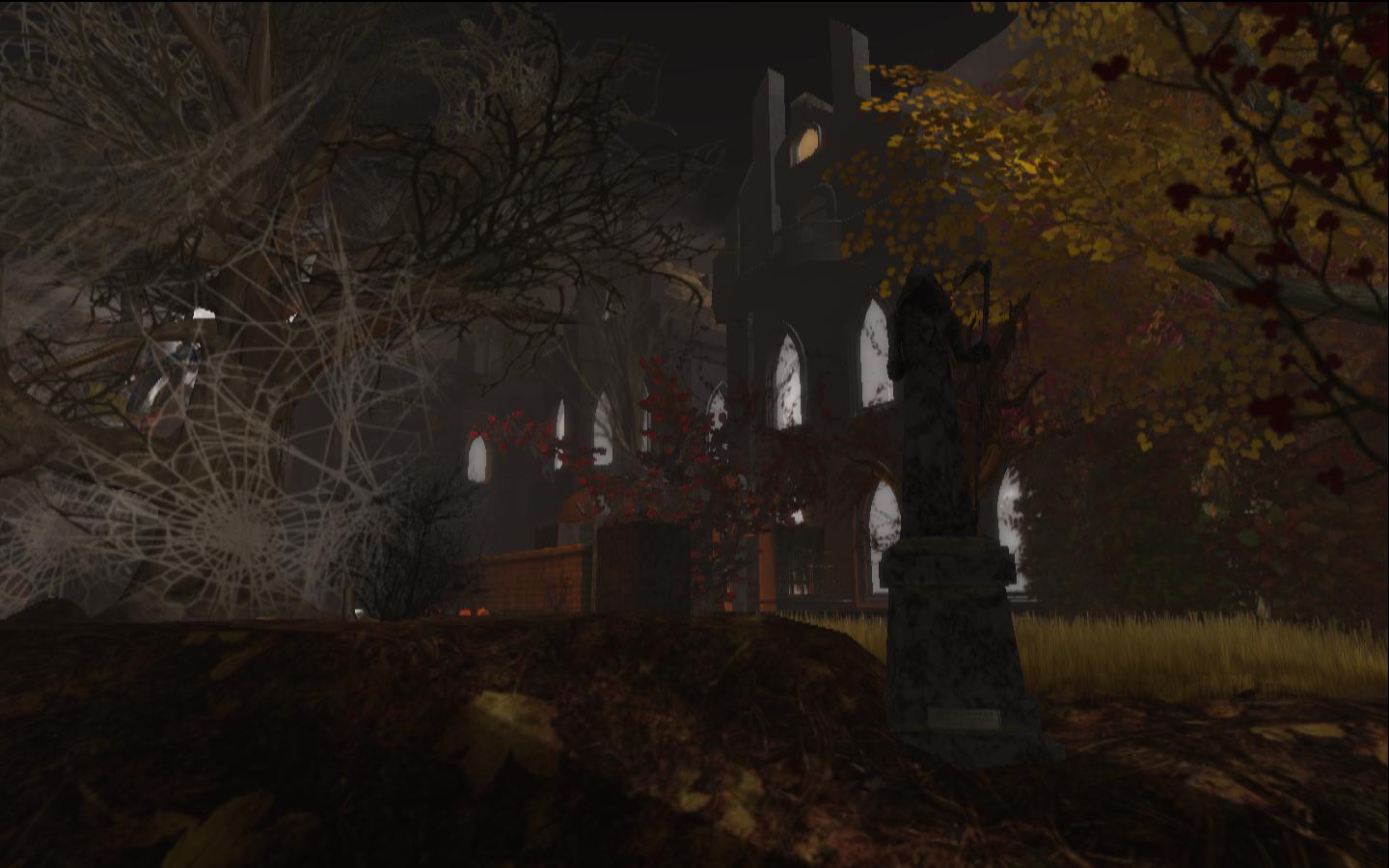
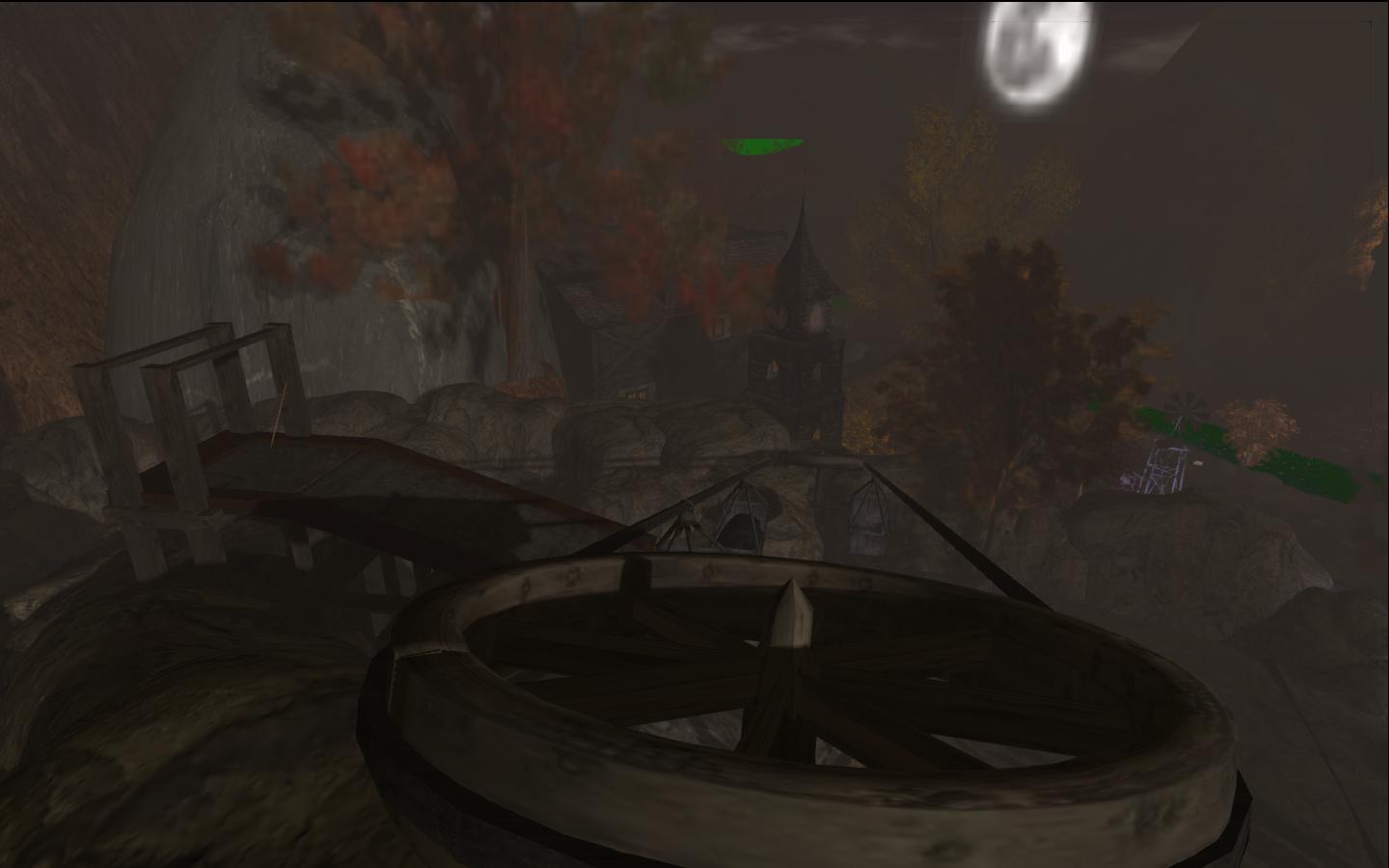
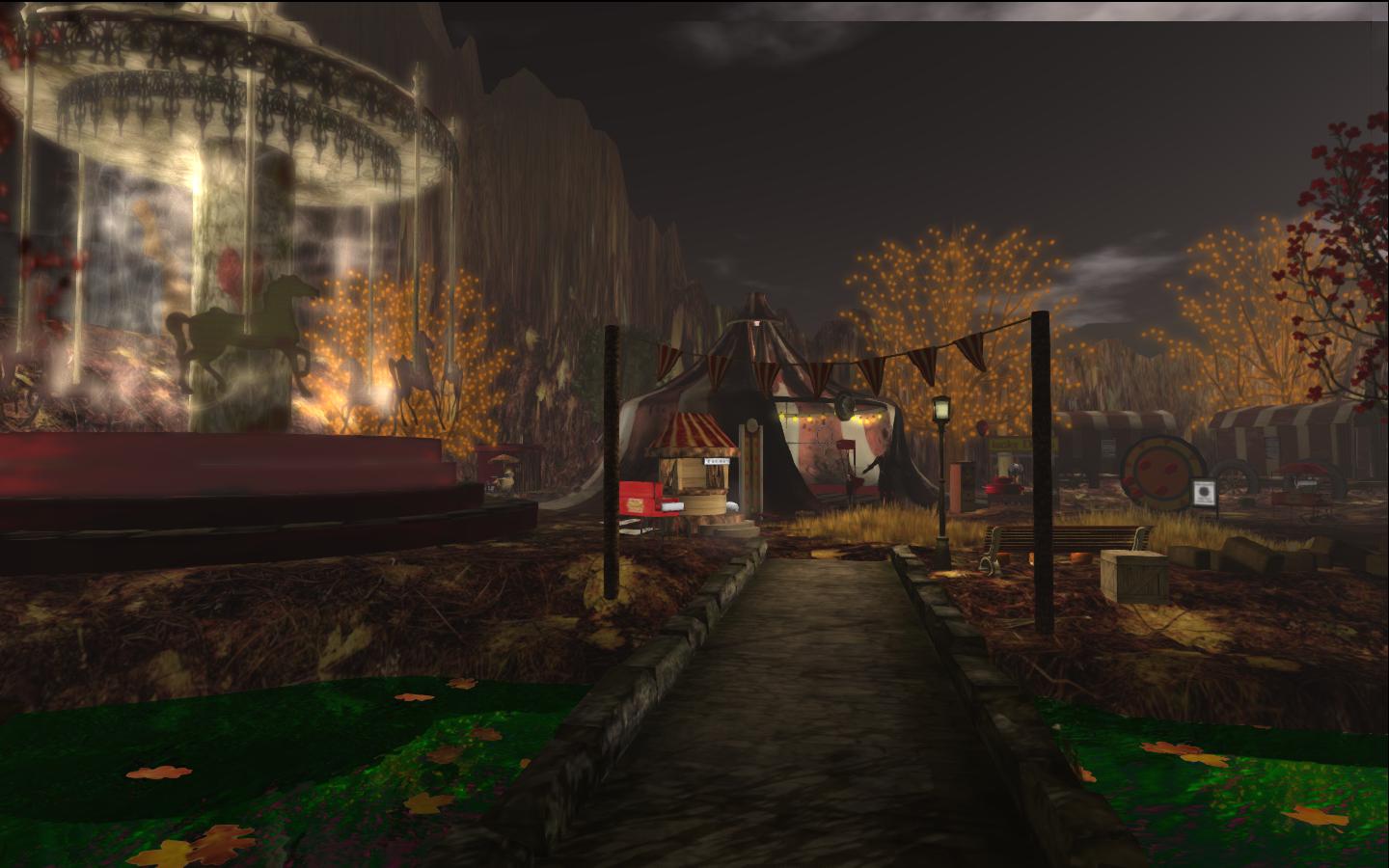
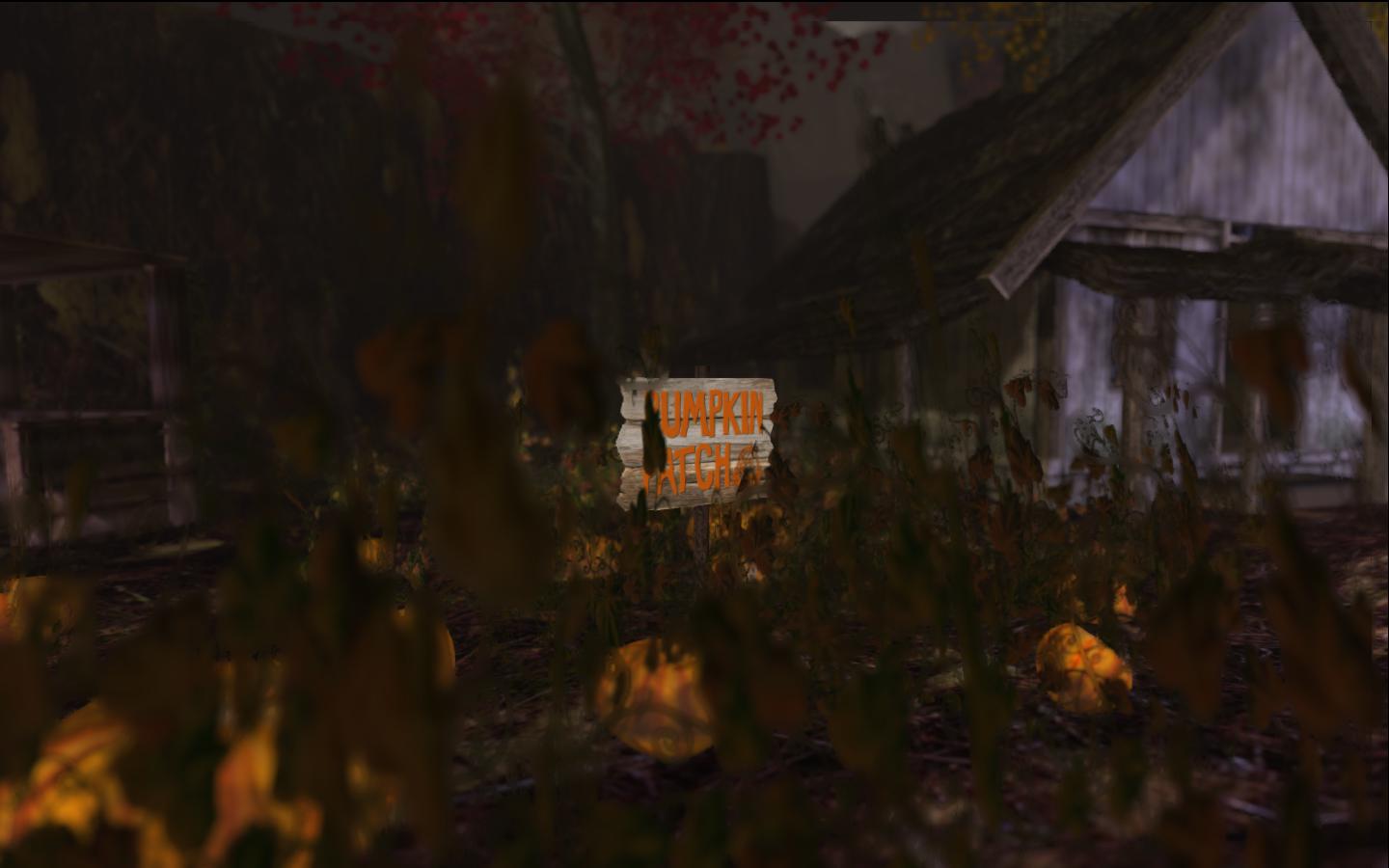
The region itself is all you’d expect of a murder mystery set around the time of Halloween. Beneath dark, brooding skies, beset with fast-moving clouds perhaps heralding a coming storm are all the required ingredients: mysterious manor house, lights all ablaze, on a hill, a mysterious and not altogether welcoming fun fair, a hunched church with dank graveyard beside it, and up on the hill, above even the wheels and bins of an old conveyor system, a place of dark magic, with cairns made of skulls and a blood-red ramp leading to a mysterious gazebo watched over – literally – by two gnarled white, and leafless, trees.

Arkhamville

When you arrive, make sure you collect your game items from Trooper Eddie. These comprise a notecard with the back story, a police pass, which will track your progress in your investigations, and a choice of optional Arkhamville costumes (one male, one female). Personal scripts are capped, so you may also receive a warning that you need to remove items or (I assume) face ejection if you don’t – those receiving the message have 6 minutes to comply, with reminders about every 2 minutes.

Warnings like this can dampen enthusiasm for a place, but at least this one is sedate, rather than a brief warning followed by the royal order of the boot. I was slightly over the limit, and removing a couple of HUDs I knew I’d not need while in the region solved the issue for me.

Arkhamville

There are no actual rules as to how you should proceed – although a good place to start is with the body (which I’ll leave you to find – it shouldn’t be that hard :)). From here it is a case of following the clues, meeting “residents” of the mansion and the village and finding out what you can.

I’m not going to give too much away, partly because that’ll obviously spoil things if you’ve not yet spent time in Arkhamville, but mostly because I haven’t yet solved the mystery myself. Suffice it to say that there is a fair amount of interaction with “people” and things in Arkhamville, and as an investigator, you don’t always get your own way – those who know anything about matters are prone to make demands of you first.

Arkhamville

Arkhamville is already proving very popular; during my visits, there were rarely less than 22 people in the region. This can make things a tad laggy, so if you tend to run in deferred with shadows, etc., active, you may want to consider setting your lighting options to NONE other than when taking snapshots.

Certainly, if you’re interested in sleuthing away an evening, Arkhamville can easily draw you in.

Related Links

Arkhamville was a featured build on the Beaverville region for Halloween 2012 and is now closed.